
One advantage of having been present at the birth, so to speak of formal Philippine film studies is that I could initiate some of the activities that preoccupied global practitioners for a while, then proceed to repudiate these activities’ premises (usually still pursuant to foreign trends, especially when no local colleagues pick up on the provocations). The most insistent instances of these oscillations between creation and deconstruction occur in evaluative film activities, and for good reason: as the supposedly inferior, younger counterpart of literature, film is regarded as forever self-limited in terms of discursive ability and potential for complexity, and even its advantages over canonical lit (mainly its incontestable long-term popularity) render it comparable at best to lit’s pulp and trash manifestations.
11011These are utterly erroneous and definitely irrelevant premises, of course. But when we seek out canon-construction exercises in cinema, we find people reverting to these assumptions, whether by (sometimes unconsciously) upholding them or by openly contesting them—which effectively acknowledges their ascendancy. I’ve stopped wondering whether a critically conscious mode of practice can be devised, and within the modes I’ve devised, what I would recommend (to myself and the others I can persuade) is to stop short of certain commonplaces: the touchstones that we associate with even our most casual or fun-filled attempts at canon formation, that tend to trip us into conforming to standards that our better judgments caution us against.
11011Like any self-serious film scholar, I began creating canons in the usual areas; in increasing degrees of conflictedness, these would be instruction, criticism, and award-giving. Canons are unavoidable in teaching because of the requirements and limitations of the semestral arrangement in higher education: only so many weeks, with concomitant impositions on reading and screening lists, for the average university-level course. The properties of the lecture class and (barring an instructor’s inability to comprehend screen cultural studies) the possibility of insightful majors speaking up: these ensure that the subject’s particular canon need not permanently impair the students’ understanding of film issues, whether aesthetic or social in nature. Award-giving, the other extreme, is even more obviously a matter of any film appreciator exercising basic logic, since the inconsistencies are so conspicuous that one would need to devise grandiose structures of collective narcissism (as in the statement “We have the most prestigious and incorruptible awards ever”) to override the reality that award-giving may be profitable or glamorous but is, at bottom, a false claim to critical supremacy.
11011The middle term, criticism, is where I have found the most productive, and most difficult, issues to resolve. I may have been able to avoid the tendency of the least-reflective critics circle members in their performance of what we can term awards-speculative writing (embarrassing rubbish like “This performance should win an award”), but my festival reports wound up with rankings, specified or otherwise, of from-best-to-worst entries; my period-enders (usually of specific years, sometimes of entire decades) also proceeded to list outstanding entries. But in order to declare an end to my predilection for comparative assessments, I laid out sample canons for the widest possible areas of coverage: highlights of 1980s releases, for example, or winners for awards categories for all films from the beginning of local cinema to the present, meaning the early 1990s. (These exercises, including the next one I will be describing, appeared in my second book, Fields of Vision, while the personal listings may be found in my digital edition-only release, Millennial Traversals.)
Interpolations
At a point when I had refined my film-criticism classes to include quantitative-analysis methods (always controversial in terms of findings), I asked an enthusiastic batch whether the idea of a canon survey project appealed to them. This was the same group of students that couldn’t wait to get into cultural production, some of whom gave up completing their degrees for the sake of exploring and exploiting breaks that they knew may never come along again, fully and frankly aware that nothing their teachers could provide them would be comparable to what they could learn in the field. (As a then-recent former student, deep down inside I had to agree.)
11011We formulated, finalized, and reproduced questionnaires, and drew up a list of “critical” practitioners using the widest possible definition—i.e., not just regular critics but also film-production personnel who exhibited a capacity for artistic assessment and growth in their output. Nearly thirty, or about half of the potential respondents, turned in their personal list of ten best Filipino films, all except in two cases ranked from first to tenth, with a few (including myself) deviating from the round-figure total. When the results were tallied, another issue came up: how would a respondent rank the other films that she may not have mentioned but that she might have also seen? We wound up creating a second questionnaire comprising the “master list” of all the films mentioned by the respondents, intending to send these back to those who had participated, asking them to further rank the rest of the films not on their respective lists.
11011One can imagine the nightmarish demand we would have been making on the respondents, forced to split hairs until they could rank whatever they had seen among the eighty-plus titles we confronted them with. Fortunately the semester was scheduled to end in a couple of weeks, so I had to conceal the relief I felt when the students said that sending out copies of the new questionnaire, awaiting the answers, and retrieving the sheets would definitely cause the project to spill over beyond the deadline for submission of grades. I submitted the report to the publication where I was declared the “resident critic,” National Midweek, which made it their cover feature and their bestselling issue ever. Perhaps unsurprisingly, I saw the procedure replicated by blogger-aggregators during the new millennium. A bit more surprisingly, I received an email invitation to participate in Sight & Sound’s archetypal decadal survey for 2002, probably facilitated by a British Film Institute-connected lecturer at New York University’s Department of Cinema Studies who appreciated the copy of Fields of Vision that I gave him. (This person, Questions of Third Cinema co-editor Paul Willemen, as well as my dissertation adviser Robert Sklar and national-university mentor and fellow Sight & Sound respondent Ellen J. Paglinauan, have all passed away, as have nearly thirty percent of the National Midweek survey participants.)
11011The Sight & Sound exercise affirmed for me that the National Midweek survey was more correct in its differences: in combining the tallies for critics and practitioners (the second of which S&S limited strictly to directors), I came up with just one listing instead of separate critics’ and directors’ choices; more important, in taking into account the individual rankings provided by the respondents, it became possible to tabulate not just the movies most often mentioned (including, separately, those mentioned as top-rankers) but also arrange these according to their relative worth for each respondent. But the Sight & Sound survey also provided its own curious lesson—and that is, certain people from all walks of life, all over the world, pay attention to film canons. The magazine printed my specific choices on the same page that it discussed the top-ranking film, Citizen Kane (“The Critics” 29), and included my explanation of why I preferred to downgrade the Orson Welles film (“too whiney-white-guy precious” was my dismissive remark).
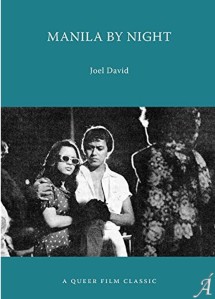
11011Reports regarding the survey results, from blogs and discussion boards as well as “legit” outlets like Slate and The Guardian, mentioned my list for including a porn film (in fact I listed two, three if we include Pier Paolo Pasolini’s Salo in the category), although only once, in an email from an Australian scholar, were my other choices mentioned: a Bollywood film, an American B-movie, a structural-materialist piece, two documentaries (one radical-left and the other fascist-right), and standard choices for a film scholar (Jean Renoir’s La regle du jeu) who happened to hail from the Philippines (Ishmael Bernal’s Manila by Night). In reality, mine was not the only listing that featured a porn film or two, since the very first porn feature, Gerard Damiano’s Deep Throat, also appeared on the comprehensive listing. (I provided a more detailed narration of the process on my blog, titled “Sight & Sound ’02.”)
Final (so far) Canon
My Sight & Sound submission, the only one I participated, coincided with the completion and defense of my doctoral dissertation. Upon returning to the Philippines, my concerns focused on repaying the student loans I had accumulated during graduate school—an impossible mission so long as I confined my prospects to the national university. I make no secret about finding the political intramurals dispiriting and pathetic, considering the never-sufficient amount of money at stake. Upon stumbling on a near-ideal overseas arrangement with which I could conduct research and publication without worrying excessively about time and funding, I set up the archival blog by which I hoped to make available my published materials without requiring researchers either to track them down via distant repositories or to purchase them at exorbitant rates.
11011After laying out a workable plan for attaining tenure, I was contacted by Jo-Ann Q. Maglipon, an acquaintance from my post-collegiate freelance period, now an entertainment editor about to retire and working out some legacy activities. No need to look farther than your field, I told her; see how new media has led to an explosion of personal and group canons, almost entirely on Philippine cinema? Since your publication (Summit Media’s YES! magazine) has its annual “canon” of beautiful faces and power players, we can come up with the ultimate local film canon, if you’re willing to sponsor a one-shot long-term project. I explained how I took charge of a local survey project, inspired by Sight & Sound, and how the most ambitious internet-era aggregator websites were conducting similar projects. I mentioned the predicament I and my students faced with the National Midweek survey—how the attempt at (in effect) ranking everything could raise unnecessarily oversubtle pettifoggery, reducing discussions to explaining why film b comes between a and c and not in either position or elsewhere, instead of expounding on a film’s merits and limitations without accounting for its precise position on a linear spectrum from best to, say, hundredth-best.
11011Two special arrangements had to be finalized: in order to ensure that one person’s idiosyncracies wouldn’t mark the project as a whole, a screening committee whose members would be readily available from beginning to end of the project should be constituted; and in order to determine the inclusion or exclusion of borderline titles, a system of multiple screenings of titles in contention should be arranged, with films being watched as often as necessary until the body arrives at a sufficient consensus on whether a film deserves to belong or not to the final canon list. Ideally the committee should have comprised Philippine film experts; less ideally, though still passably, the members should be film enthusiasts—a qualification that could encompass a vast majority of the population. Fortunately, though the YES! staff could be considered less than (qualified) experts, they were more than mere aficionados. I came on board as project consultant, while Maglipon, with the time she logged with celebrity interviews, showbiz coverage, and entertainment editing (plus all the film-screening that those activities entailed) would definitely be a Philippine-cinema specialist.
11011I should beg the reader’s indulgence in outlining the process, if only for posterity’s sake. I started by compiling the then-recent 2012 Sight & Sound survey (where Citizen Kane was finally toppled, after forty years of dominance, and where nine Filipino titles showed up), plus all the canonical listings—the PinoyRebyu blog survey, Mel Tobias’s One Hundred Acclaimed Tagalog Movies (with titles alphabetized), the Facebook Cinephiles! Group’s “Top 100 Favorite Films Poll Results” (with twenty-five Filipino movies, slightly less than France’s and over four times less than the US’s), the Busan International Film Festival’s Asian Cinema 100 (edited by Kim Ji-seok and Kim Young-woo, with four Filipino titles), plus the list of awards handed out by the Filipino Academy of Movie Arts and Sciences (including its two-year predecessor, the Manila Times’ Maria Clara Awards) and the two critics groups, the Manunuri ng Pelikulang Pilipino and the Young Critics Circle (all of which are available online on either the organizations’ websites or information-database websites such as Wikipedia and the Internet Movie Database); finally, titles usually listed in global retrospectives, starting with those that appear in the government encyclopedia (Tiongson, Philippine Film) and the Manila International Film Festival’s Focus on Filipino Films, would constitute a core or standard canon.
11011For the sake of completion, the YES! project team considered even films shortlisted or nominated whenever and wherever the information was available, cross-checking the list against the available filmographic listings in Maria Carmencita A. Momblanco’s thesis and Nicanor G. Tiongson’s Urian anthologies. The task may have sounded daunting, but was considerably lightened by another, more tragic requisite: only films available in reasonably viewable audiovisual quality may be considered, since we envisioned any canonized film itself as sole empirical proof, regardless of awards, acclaim, oversight, or controversy. On the other hand, any movie included in the standard canon which generated reservations (either during or after the moment of its inclusion in the canon) would be marked as “must rewatch”; certain titles may be boosted by historical significance, but all had to meet a reasonable measure of entertainment value and discursive insight. The final “outer” boundaries were defined by technical requirements: the films had to be feature presentations, full-length with a minimum of sixty minutes’ running time, and inclusively and recognizably Filipino even with the participation of foreign capital, talent, and/or setting.
Film-Canon Discourse
I was aware that I had to find metadiscursive literature that could enable me to provide useful bases for the project as well as situate the activity in contemporary conceptual currents. We were apparently building on the “scientific” totalizing taxonomies attempted by Andrew Sarris (himself building on French projects) and updated by Jonathan Rosenbaum, but the launch of the project was benefited by two extremely useful recent texts. The first was a book-length study by James F. English, The Economy of Prestige, which discussed, among other things, the rise of “modern” awards (starting with the Nobel Prize), the role of controversy, and the tendency toward proliferation. The second, Paul Schrader’s “Canon Fodder,” was a would-have-been book, abandoned by the author but with the most crucial findings published in Film Comment.
11011Schrader’s self-imposed challenge was supposedly a film-focused volume patterned after The Western Canon (34). The book by the late Harold Bloom has been a fairly recent publication, so its denunciation of political correctness premised on identity politics benefited from seeming radical in terms of countervailing then-prevalent revisions and revaluations of the literary canon. Schrader does not pinpoint a singular material reason for dropping the book project despite having received a commencement fee from the publisher. But his avowed reason, that “my foray into futurism had diminished my appetite for archivalism” (35), appears to detract from the fate that befell The Western Canon: despite its reviewers’ acknowledgment of the author’s critical seriousness and acuity, its intent to restore the literary canon as it used to be known never really took off. Instead, the book was inexorably conscripted as one of the more sober manifestos of the conservative faction of the still-ongoing US culture wars. At best, its effect was to retain the titles that dominated the so-called DWM (dead white male) canon; it certainly did not stop people from expanding the canon by including titles by authors who used to be ignored or excluded as a matter of course.
11011Since Schrader apparently had no urge to deconstruct the Bloom volume, his output would have been patterned after the same introductory apology, a call to observe fixed, impossibly eternal aesthetic values, and a reading of the “objectively” top-of-the-line titles. I was momentarily inspirited by his selection of La regle du jeu as his all-time-best, but the rest did feel like Sight & Sound redux, where any cinema-studies freshman can instantly identify the title based on the auteur entry: Yasujiro Ozu (Tokyo Story), Charles Chaplin (City Lights), Robert Bresson (Pickpocket), Fritz Lang (Metropolis), Welles (one guess), Jean Cocteau (Orphée), Jean-Luc Godard (Masculin-Feminin), Ingmar Bergman (Persona), and Alfred Hitchcock with Sight & Sound’s recent post-Citizen Kane champ, Vertigo (48). Despite Schrader’s acknowledgment of Rosenbaum’s limitation, wherein the latter (in Essential Cinema) “discusses hundreds of films, describing many as ‘classics’ [yet] for the life of me, I’ve been unable to discover the criteria by which he culls these films” (42), he runs into his own culs-de-sac by first over-defining the canon, tracking the idea from scriptural applications through Hegel’s tautological insight that “the philosophy of Aesthetics is the history of Aesthetics” (Schrader 34), to the canon’s rise and subsequent fall, replaced with the “rise of the non-judgmentals” (40). From here he observes Bloom’s imposition of a set of criteria, describing his specifications for film as “refurbished” (42) when in fact it resembles Bloom’s retrospective efforts: that is, given these long-uncontested titles, these are the criteria that can be propounded and maintained, or (from another perspective) imposed.
11011The seven standards that Schrader lists have varying degrees of applicability: beauty, strangeness, unity of form and subject matter, tradition, repeatability, viewer engagement, and morality (44-45). The first and last (beauty and morality) are too amorphous and problematic when narrowly defined, while unity betokens a classical bias. The others would be qualities that similarly informed the YES! magazine project, still in different degrees of urgency. As mentioned earlier, repeatability would be the method we relied on—well, repeatedly. Strangeness would be the value I found myself upholding, but the rest of the youthful members understandably focused on viewer engagement. Tradition had to be invoked in a few cases, usually with polemic texts whose topicality (e.g. anti-dictatorship politics) had long elapsed. One solution I devised was to combine the less-preferred titles so that one could strengthen the other. By doing a series of such combinations, I was able to maintain the round number of one hundred entries up to a point. However, the logic (not to mention the citations) tended to become too defensive in several of these instances. In the end, the title was slightly revised to accommodate the larger figure: SINÉ: The YES! List of 100+ Films That Celebrate Philippine Cinema.
Future Views
Each of the canon-forming exercises I conducted had the express purpose of providing an “ultimate” example. However, when we look at the instance of the basic recognition provided by awards (and studied, as earlier mentioned, by James F. English), we find some strange, counter-intuitive trends. First is the issue of controversy: scandals supposedly and inevitably befall awards that exist long enough to become institutions (English 187-96), like the Nobel Prize, Booker Prize, Oscars, Cannes Film Festival Awards—and in the Philippines, the Orders of National Artist and National Scientist, the National Book Awards, the Film Academy of Movie Arts and Sciences (FAMAS) Awards, and (as in the US) the critics’ awards handed out by the Manunuri ng Pelikulang Pilipino and the Young Critics Circle. English maintains that, although a controversy may be able to maim and possibly defeat a newly installed award, stronger, long-term awards in fact actually benefit from controversy and are strengthened by it. (This accounts for my bemusement whenever I attack my former colleagues in the MPP and observe the members’ responses—manifested at one point in an earlier roundtable, on film criticism, in these same pages: per English, and per existing evidence, the Urian should simply get strengthened, although I could never imagine myself demanding the members’ gratitude for it.)
11011Awards, of course, will always be theoretically capable of discontinuing themselves, temporarily or permanently, for some reason or other. The other issue is ultimately and definitely irresolvable, and more distressing for people concerned with order, integrity, and logic. Members of a certain generation were able to witness this in the Philippines. The intervention of the Marcoses in film activities led to the government rectifying the FAMAS by decreeing the formation of the Film Academy of the Philippines. During the FAP inauguration in 1982, the Director-General of the Experimental Cinema of the Philippines, Imee Marcos, declared that the FAMAS would be dissolved, since its claim to being an academy was anomalous and, by then, unnecessary. Joseph Estrada, who was gunning for the first Hall of Fame as Best Actor multi-awardee, led the lobby for its maintenance (he got his HoF prize the next year, along with a simultaneous HoF as Best Producer); he also won a post-Marcos presidency, but that ought to be a separate discussion.
11011Since the Catholic Mass Media Award was arguably the revival of a pre-martial law set of Church-sponsored media awards, the only other film award set up during the martial-law period was the Urian, with some of its members forming the Manila Critics Circle to administer the National Book Award. The FAP had its own problematic procedures; on a more advanced level, so did the Urian. After the ouster of the Marcoses, a breakaway FAP group formed. I helped found the Young Critics Circle as an alternative to the Urian, then broke away once more to organize Kritika (which lasted for only three years, since all of its members departed for foreign countries for work or graduate studies). More film groups formed (educators, online critics, etc.), with breakaways and breakaways-of-breakaways being threatened or actually being realized. Since this trend resembles the persistence of local canon-forming surveys decades after the National Midweek report, I can conceivably imagine another future, intensive, consensus-driven canon-forming activity in future, possibly even within my lifetime.
11011One might say that an authoritarian regime (like the Marcos martial-law dispensation) would have the ability to control the proliferation of awards; however, English reasonably adopts the assumption that liberal democracy will be the once-and-future system, and concludes, rather persuasively, that there may be some slowdowns, but there will essentially be no end to awards proliferation (50-68).[1] Within the larger ironic framework that canon discourses will be occasionally capable of scholarly contribution on the meta level, the theoretical endlessness of awards (and hence basic canon) formations will shape up as the primary challenge, or at least the primary distraction, to the future of film discourse.
Note
[1] Another foreign trend that still has to take root in the Philippines is that of ratings aggregation (as famously featured by Rotten Tomatoes) as well as awards aggregation (à la Metacritic). The 2017 edition of the latter lists 58 annual non-festival awards in the US, 38 of them handed out by self-identified critics circles. At the present time, these types of functions are performed by a number of Filipino film buffs on Facebook, with such blogs as Pinoy Rebyu, Film Police Reviews, and #Pop #Culture #Diva providing casual summaries of local and foreign ratings, awards, and/or festival results.
Works Cited
Bloom, Harold. The Western Canon: The Books and School of the Ages. Harcourt Brace & Co., 1994.
“The Critics.” Sight & Sound, volume 12, issue 9, September 2002, pp. 28-36.
David, Joel. Fields of Vision: Critical Applications in Recent Philippine Cinema. Digital edition, Amauteurish Publishing, 2014.
———. Millennial Traversals: Outliers, Juvenilia, & Quondam Popcult Blabbery. Digital edition, Amauteurish Publishing, 2016.
———. “Sight & Sound ’02.” Amauteurish, 30 May 2014.
Kim Ji-seok and Kim Young-woo, eds. Asian Cinema 100. BIFF Special Programs in Focus Series, Busan International Film Festival, 2015.
English, James F. The Economy of Prestige: Prizes, Awards, and the Circulation of Cultural Value. Harvard University Press, 2005.
Manila International Film Festival. Focus on Filipino Films: A Sampling, 1951-1982. Brochure for a retrospective as selected by “Filipino Film Screening Committee,” Metropolitan Manila Commission Information Group, 1983.
Momblanco, Maria Carmencita A. “Philippine Motion Pictures, 1908-1958: A Checklist of the First Fifty Years.” Thesis, (2 volumes), University of the Philippines, 1979.
Rosenbaum, Jonathan. Essential Cinema: On the Necessity of Film Canons. Johns Hopkins University Press, 2004.
Sarris, Andrew. The American Cinema: Directors and Directions 1929-1968. Da Capo Press, 1996.
Schrader, Paul. “Canon Fodder.” Film Comment, volume 42, issue 5, September-October 2006, pp. 33-49.
Tiongson, Nicanor G., ed. Philippine Film. Volume 8 of the CCP Encyclopedia of Philippine Art. Cultural Center of the Philippines, 1994.
———, ed. The Urian Anthology. Decadal compilations covering 1970-1979 (Manuel L. Morato, 1983); 1980-1989 (Antonio P. Tuviera, 2001); 1990-1999 (University of the Philippines Press, 2010); and 2000-2010 (University of the Philippines Press, 2013).
Tobias, Mel. One Hundred Acclaimed Tagalog Movies. Peanut Butter Publishing, 1998.












 ORCID ID
 Ámauteurish!