
Warning: contains text-heavy uploads as well as occasional analytic discourse, adult content, polysyllabic words, and dry humor. Click here to go to the latest listings. Desktop mode is recommended, but for easier reading on a mobile device, click here.
Ámauteurish! is the open-access repository of the collected work of and/or by Joel David, set up and maintained as a single-source personal archival website. It includes out-of-print publications and links to still-available articles, with occasional relevant public-domain material. For a comprehensive list of posts uploaded since 2014 up to the preceding year, also in reverse chronological order, please click here (July to December 2025 will also be found below). In case the top-page menu is inaccessible, here are the sections and their features:
♦ Abouts – provides extensive descriptions of the rationale as well as of the author;
♦ Books – contains my out-of-print books and links to published books, as well as edited volumes, chapters in anthologies, and papers in proceedings;
♦ Articles – a landing page that leads to listings of all materials published in journals and all other types of periodicals;
♦ Reviews – contains my commentaries on films as well as occasional books and plays, arranged according to title of production (Auteurs & Authors reorders this same list according to each work’s creator);
♦ Remarks – contains my articles and statements published since 2016, opening with “Mega-Meta: A FilmCrit Folio”;
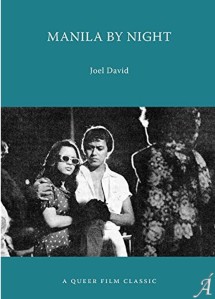
♦ Extras – would be mostly my non-written output, plus selected ephemera and juvenilia, opening with a “Special Folio on Manila by Night (1980)”; and
♦ Queries – provides a means by which I can be reached, as well as answers to some questions asked here and in other venues.
♦ Not included in the menu but a compilation of several sections above would be this Chronologically Arranged Listing of Publications, with its own accompanying Empiricals page.
First-time readers: This current section serves as the home (or front) page of the blog. Buttons for sharing on Facebook or Twitter, or by email, will appear at the bottom of each page of the browser version, along with copyright and other essential notices. In general, when an entry’s permanent listing in this blog is unspecified, it will be found in its appropriate subcategory in the Extras section.
Researchers: Endnote numbers provide same-page two-way jumps – from any endnote number in the body text to the endnote itself, and from the latter’s numerical indicator back to the endnote’s position in the body text. As a demonstration, kindly click on the endnote number at the end of this paragraph.[1]

January 2026
January 1 – My first journal-editing task in Korea, as copyeditor for the special issue of Cross-Cultural Studies (Winter 2025) titled Judith Butler and Korea, from Kyung Hee University’s Center for Cross-Cultural Studies, formally announced on social media (link to the Korea Journal Central website). Professor Butler was in the country right after the coup attempt that led to the ouster of the previous President, so she was not just in the news but also in a lot of academic discourses.
December 2025
December 24 – With only the semi-official Japanese production Dawn of Freedom (directed by Abe Yutaka, with Gerardo de Leon as assistant director) as the only World War II entry in Canon Decampment for a long time, I finally stumbled across a title that might be able to match it: Irving Lerner’s Cry of Battle (1963), an adaptation of Benjamin Appel’s novel Fortress in the Rice and saddled with a host of controversies that nevertheless apparently left its sense of integrity intact. The video I posted was recorded from an Italian TV broadcast, but inasmuch as I could not access a copy of the English-language release, I downloaded this available one and (inexpertly) subtitled it. Happy viewing, such as it is.
December 20 – “To Track Down a Rare Film Title” is my account of searching for a copy of Vilgot Sjöman’s Jag Rodnar (I Am Blushing), which he filmed in the Philippines in 1981, for my Canon Decampment project. I failed to secure a copy, but then a detailed storyline helped me decide that not a lot would be missed.
December 12 – I saved a digital file a few years ago of Letter to Jane: An Investigation About a Still, the 1972 Groupe Dziga Vertov entry by Jean-Luc Godard and Jean-Pierre Gorin. Before Artificial Intelligence enabled websites to offer affordable (sometimes free) transcription and translation service, I attempted subtitling it with the English-language voiceover that Godard provided; I was dismayed at the way he raised some of his points, but I focused on the exercise at hand, using an Excel spreadsheet, providing columns for start and end times, and entering the text using standard courier measurement to ensure the text would fit the proper length of the screen. After I was satisfied by the result, I generated a burned-in version … after which the AI innovations arrived. Then I had to attend to various other tasks (a plan to transfer to another overseas university halted at the final minute by the global pandemic, then preparations for retirement) and forgot entirely about the file. Since I was uploading materials to my Internet Archive page, I remembered the file, extracted it from the external drive where I saved it, and uploaded it. Here it is then, for what it’s worth.
December 3 – I processed and saved for my personal reference copies of the films that won top prize in the two editions of the Manila International Film Festival, in an Internet Archive page titled after the event. These titles were 36 Chowringhee Lane (Aparna Sen, 1981) from India, and My Memories of Old Beijing (Wu Yigong, 1983) from China.
November 2025
November 13 – “The Petty Politics of Anonymity” is an elaboration of a point I raised on social media, regarding a “viral” critic’s insistence on anonymity.
October 2025
October 14 – A post on my Facebook page, occasioned by the deprecatory coverage of Phillip Salvador’s appearance at the demonstration considered “legit” (meaning opposed to the return from The Hague of former President Duterte). [Photo from a news service I failed to note, since I wasn’t expecting to draft a commentary when I saved it.]

The Imperfect Filmic Appositeness of Ka Ipé. I had a few queries about what’s happening to Phillip S. I’m flattered people think I might have a direct line of communication with him but the only time we exchanged pleasantries was over 4 decades ago, when he gushed over winning his 1st film award and I was still with the group that handed it out. I’m aware of course that he recently ran for political office on former Pres. Duterte’s endorsement and flopped dismally.
11011He wasn’t the 1st showbiz personality to make wrong political decisions, and he won’t be the last. People with their own reasons might remember that the late Nora Aunor tried to run for governor and lost before she left for her extended US sojourn, and that she also wound up endorsing right-wing candidates upon her return. I guess the sensible response is that her impressive track record as artist overrides such miscalculations, with the implication that Ka Ipé doesn’t have that kind of record to his name ever since Lino Brocka was unable to continue his training and stopped providing him with serious roles because he died.
11011That’s where people are sorely mistaken though. When I looked up the trends I missed because I was away for most of the 1990s, I wasn’t surprised to find that he persisted in film work and that he specialized in the much-maligned action genre. What floored me when I went over those samples was that he continued refining his craft and made sure that his roles were as carefully developed as the most sensible industry star could command. His colleagues may have had more projects or hits, but none of them had as solid a record as he did. Believe it or not, he must be the only Brocka protege who became an even better performer after his association with the director.
11011His last few film projects were no longer action outings – Adolf Alix’s Madilim ang Gabi and Joel Lamangan’s Isa Pang Bahaghari. Again easily dismissible by know-it-alls who’d say that the first one was just a reprise of Bayan Ko and the second was Bona mixed with Palipat-lipat. He was again partnered with the actresses Brocka cast (Gina Alajar and Nora respectively) and he’d lost his action-star physique by then, but where he was adequate at best in the original projects, he proved himself equal to the challenge this time around.
11011If he was even more impressive than he used to be, why wasn’t he getting any recognition? I wouldn’t know how to explain this since I wasn’t around, but the plain fact is that whichever genre dominates automatically gets downgraded during its time, with critics acknowledging the genre’s contributions only after it’s gone; that happened to the sex films, that should happen to the post-Golden Age action films, and that will also happen to the millennial rom-coms when they get superseded by whatever genre proves feasible next.
11011We can keep mocking Ka Ipé for insisting on finding his station in the dreadful world of Pinas politics. Or if you had money to spare, you could try investing in a well-considered project with him. I can guarantee that he’ll excel in only one of those attempts, and it’s not the one where less expert performers than him have found their calling. That’s why I refuse to participate in laughing at his predicament. He might get offered the role of an overseas professor in a film project and get his revenge at me while having fun with the performance, something I should have seen coming.
Friends asking for a useful canon of Phillip Salvador films are in (some) luck, since I might be close to completing my coverage of the late 1990s action films. Here’s what came up, chronologically arranged according to director: Lino Brocka’s Jaguar (1979); Bona (1980); Cain at Abel (1982); Bayan Ko: Kapit sa Patalim (1984); and Orapronobis (1989); Mel Chionglo’s Playgirl (1981); Marilou Diaz-Abaya’s Karnal (1983); Augusto Salvador’s Masahol Pa sa Hayop (1993); Toto Natividad’s Ka Hector (1994); Joey del Rosario’s Kahit Pader Gigibain Ko (1998); and Adolfo Alix Jr.’s Madilim ang Gabi (2017). In addition, one should watch out for Brocka’s Mananayaw (1978), which still has to be recovered; Mike Relon Makiling’s Ako ang Hari (1981), considered lost but one can keep hoping; and an extensive list of titles where various awards bodies nominated his performances, posted on his Internet Movie Database page.
October 8 – I created a page at the Internet Archive but completing it is taking a while. For now, it has the Ramon Estella titles that I was able to transcribe and translate though they will definitely benefit from native speakers’ inspections. The page is titled Malay-Language Films by Filipinos. Will continue uploading all the materials I was able to source from the now-gone YouTube postings of the Singapore Film Archives (now the Asian Film Archives). A few titles by Estella as well as by Eddie Infante are missing, but the large majority has been preserved in quality that ranges from acceptable to excellent – entirely the reverse in the case of our contemporaneous studios, to state the obvious. I might announce the page on the blog’s sidebar once its contents are complete.
August 2025
August 21 – A post I uploaded on my Facebook page, with reference to the picture below.
Fissures in recent Pinas film history: claims can more easily be made when the primary materials are gone. Like Nestor U. Torre’s lighthearted storytelling (never published but reported in Angela Stuart Santiago et al.’s must-read Pro Bernal Anti Bio) that Ishmael Bernal’s first directorial credit was Ah, Ewan! Basta sa Maynila Pa Rin Ako! (1970), which is attributed to its producer Eddie Rodriguez (AKA Luis Enriquez) in publicity materials. This was because Ishma repudiated the project, partly because he was bullied by people in production – again another unpublished claim although I described it in depth on my blog’s corrigenda pages on my Manila by Night monograph.
11011Here’s a trickier detail involving Bernal’s more famous contemporary. Lino Brocka directed Fernando Poe Jr. only once, for Lea Productions’ Santiago! (1970), also because he was allegedly traumatized by FPJ’s treatment; I don’t know if Gino Dormiendo (RIP) ever wrote about it, but the stories were supposedly harrowing. Only proof we have is that they never worked together again despite Santiago’s success, although he agreed to direct Susan Roces for a takeoff on Maruja for FPJ’s production outfit.
11011If you look at Lino’s filmography page at the Internet Movie Database, you’ll find that his earliest non-directing credit was for writing the script for Chaning Carlos’s Arizona Kid – which is proof, as I mentioned elsewhere, that he worked with Chiquito before he directed Dolphy. (AK also featured Mamie van Doren, which makes it a valuable historical document, despite a poorly transferred copy on YouTube; for now we’ve got a fascinating unruly-women trilogy along with Dovie Beams in Maharlika as well as Christine Jorgensen in Kaming mga Talyada, both significant presences in their own right and extensively written about elsewhere.)
11011Then I found this credit again, which I remembered when I first saw a print of The Ravagers in the early 1980s. This could only refer to Lino, unless a movie worker with that name hung around in the mid-’60s long enough to make just one film. Directed by Eddie Romero and produced by his Hemisphere Pictures, Ravagers starred our country’s favorite American B-film actor John Saxon and … FPJ. So there’s your connection, Ravagers to Santiago (to Gumising Ka Maruja), one National Artist working with another. Not to forget that Romero’s a NatArt too, and gurl have I got questions about him, but that should be tackled in a post all its own.
July 2025
July 30 – “Madonna of the Revolution” is the blog version of my review of Arjanmar H. Rebeta’s Lakambini, previously published in The FilAm.

Lovie Poe & Elora Españo as Gregoria de Jesús, searching for the remains of her husband Andrés Bonifacio, in Lakambini. [Screen caps from Pelikulove by Joel David]
July 25 – The latest issue of the Forum for World Literature Studies (vol. 17, no. 2, June 2025) has just come out. An open-access journal indexed in Scopus and the Clarivate Analytics database, it features the papers delivered during the Critical Island Studies colloquium held during the previous winter break in Seoul. My lecture on Philippine film criticism, titled “Predicaments of Prestige: Negotiations and Symbolic Violence in Philippine Cultural Film Practice” (click for a PDF extraction), is included.
July 18 – From files provided by James de la Rosa, Pelikula Atbp.’s indefatigable collector, I was able to process a PDF of the January 1982 issue of Entertainment Times: RP Showbiz’s Trade Paper. A joint publication of the Movie Workers Welfare Fund and the Philippine Motion Pictures Producers Association, the issue focused on the then-ongoing Manila International Film Festival.
Sample Endnote
[1] Endnotes will be located at the end of an article’s body text, before any list of works cited. To return to the position of the endnote indicator in the body text, please click on the number immediately preceding this note.











 ORCID ID
 Ámauteurish!