
[Click here (recommended) for desktop mode.]
Asedillo
Year of Release: 1971
Director & Screenwriter: Celso Ad. Castillo
Producer: FPJ Productions
Cast: Fernando Poe Jr., Barbara Perez, Jose Romulo, Carlos Padilla Jr., Rebecca, Imelda Ilanan, Paquito Diaz, Lito Anzures, Angelo Ventura, Jose Villafranca, Vic Varrion, Mario Escudero, Resty Sandel, Ding Salvador, Robert Talabis, Ruel Vernal, Cristina Reyes Johnny Long, Robert Talby, Miguel Lopez, Nonoy de Guzman, Belo Borja, Norma Anzures, Elvie Escaro, Pancho Pelagio, Luis Benedicto, Tessie Cantry, Geny Enriquez, Cesar Bakal, Romeo Mabutol, Ben Escalante, PMP Riders, Dencio Padilla Jr., Andy Nicholas
Schoolteacher Teodoro loses his job as a police chief after being falsely accused of stealing by corrupt local officials. He founds a rebel labor group that aims to help the poor but is denounced as a troublemaker by the authorities. Though Teodoro clears his name and gains his hometown’s support, his enemies stop at nothing to take him down.
A genealogical line can be drawn from Gerardo de Leon through Celso Ad. Castillo to Ronwaldo Reyes, although conventional wisdom might argue that the returns tend to diminish the farther we get from the maestro. In fact it’s Reyes, better known as Fernando Poe, Jr., who links up directly with the other two: his father had worked on a few de Leon projects (including the controversial Dawn of Freedom, 1944), while Poe himself had Kamay ni Cain (Hand of Cain, 1957), Apollo Robles (1961), Ako ang Katarungan (I Am Justice, 1962), The Walls of Hell (1964, co-directed with Eddie Romero), and Juan de la Cruz (1976, unfinished) as his filmographic associations. With Castillo, Poe had done Ang Alamat (The Legend, 1972); he can also boast of at least one de Leon-worthy achievement in his own Ang Maestro (The Teacher, 1981). Asedillo is where Castillo’s and FPJ’s now-dated masculine heroics found full expression as populist entertainment. The visual style predictably overwhelms FPJ’s commercially determined persona. But the material abides, drawn from a real-life account during the period of intermittent anti-colonial resistance during the American occupation. Such distant global-political issues have rarely been given popular attention and continue to fascinate as samples of lost history. Nick Joaquin narrated the possibly apocryphal account of how FPJ’s Muslim fans rioted when his character was killed in the film, but this can be read today as a demonstration of the love for country and preference for populist narratives by the star who would have been Philippine President.
Back to top
Return to Canon Decampment contents
Go to alphabetized filmmakers list
Daluyong at Habagat
English Translation: Surge and Tempest
Year of Release: 1976
Director: Celso Ad. Castillo
Screenwriter: Mauro Gia Samonte
Producers: Associates and Celso Ad. Castillo Company, Sampaguita Pictures
Cast: Vic Vargas, Ricky Belmonte, Pinky de Leon, Lito Anzures, Alma Moreno, Rez Cortez, Joonee Gamboa, Angel Confiado, Mario Escudero, Pedro Faustino, Subas Herrero, Odette Khan, Nello Nayo, Ruel Vernal, Miniong Acosta, Joe Baltazar, Belo Borja, Ben Dato, Nonoy de Guxman, Ysmael Laguna, Marvin Mercado, Robert Talby, Vic Varrion, Tony Villar
Igus’s father dies when the bombshell he’s defusing for Don Anselmo Araneta explodes. Igus asks Don Anselmo for hazard-pay funds for his father’s burial but gets given an inadequate token amount. His wife, Cielo, resorts to nightclub hostessing to raise the money they need but Igus flies into a rage at her workplace when he finds out. Cielo falls seriously ill but Don Anselmo dismisses Igus this time since his son, Jake, is about to get married. Igus takes Jake’s bride hostage but Jake is able to track his hideout. Igus manages to shoot Jake and paralyze him, but he is caught by police and thrown in jail. He gets paroled for good behavior but the Aranetas are bent on meting their own kind of punishment on him, while Cielo returns to the only kind of job available to poor abandoned women like her.
Set right after the devastation of World War II and the frenzy of recovery induced by a newly independent republic, Daluyong at Habagat might sound like a compendium of the worst possible circumstances that could befall an urban proletariat family of its time and place; even more incredibly, the story is based on actual events. Celso Ad. Castillo mounted a steep uphill climb for legitimacy, after a lengthy period as a commercially successful specialist in action and sex films. Critics seemingly could not be persuaded that anything of import could come of D&H, although they also acknowledged its director’s impressive visual acuity. Their negligence resulted in shabby treatment for what has turned out to be a far more daring critique of Philippine society and governance than any film produced in over a decade. The parallels drawn between a gang lord and a wealthy industrial capitalist, as well as the mounting confrontations among organized crime, unionized workers, and state-supported bourgeoisie raise the issue of just how well an earlier critical generation was paying attention. A framing account, where a reporter draws out Igus’s narrative from the recollection of his widow, results in the usual stating of the obvious, but it also enables viewers from the present to witness how an entire set of toxic class and gender values is capable of destroying lives as a matter of course, most tragically those of the most vulnerable members of society.
Back to top
Return to Canon Decampment contents
Go to alphabetized filmmakers list
Burlesk Queen
English Translation: Burlesque Queen
Year of Release: 1977
Director: Celso Ad. Castillo
Screenwriters: Mauro Gia Samonte & Celso Ad. Castillo
Producer: Ian Film Productions
Cast: Vilma Santos, Rosemarie Gil, Rolly Quizon, Leopoldo Salcedo, Roldan Aquino, Joonee Gamboa, Chito Ponce-Enrile, Dexter Doria, Yolanda Luna, Rio Locsin, Celso Ad. Castillo, Estrella Kuenzler, Pat Ilano, Mervyn Samson, G.V. Misa, Grace Zaldivar, Bino Garcia Jr., John Ad. Castillo, Bayani Casimiro, Romy Brion, Canuplin, Popoy, Poleng Mendoza, Nora Linda, Samuel Almariego, Neverly Brothers, Brown March, Bing Bigotillo, Fakir
Chato assists striptease star Virgie Nite for a living. Eventually, she aspires to be just like Virgie and is able to do so when a window of opportunity arrives. Chato’s disabled father urges her to stop but she ignores him. She even falls in love and elopes with a mayoral candidate’s son. But when a series of personal setbacks occur, Chato takes some drastic measures as a means of defying the abuses that fate has dealt her.
Celso Ad. Castillo was perhaps the most ardent disciple of Gerardo de Leon’s visual innovations. But in appropriating GDL’s predilection for the perverse, Castillo tended to miss out on de Leon’s sympathy for women characters. That is, until a well-loved child star and wholesome teen idol decided to level up by going the so-called bold route. Brimming with raw talent and soulful innocence, Vilma Santos rendered the character of a woman awakening to both economic hardship and sexual desire as if these had been actually happening to her, which they well might have been. Her performance, capped by a rarely equaled climactic monologue, pulls together the film’s uneven production elements; the pathos her character experiences serves to justify the movie’s condemnation of cultural hypocrisy—a then-daring critique mainly because of the martial-law situation—while ostensibly championing striptease as a performing art. Even in Burlesk Queen’s fast-deteriorating video format, with all celluloid copies destroyed by unimaginable negligence,[1] Santos makes the movie worth revisiting, as a precursor of the strong-woman roles that she would also be dominating thereafter.
Back to top
Return to Canon Decampment contents
Go to alphabetized filmmakers list
Celso Ad. Castillo’s Totoy Boogie
Alternate Title: Totoy Boogie
Year of Release: 1980
Director & Screenwriter: Celso Ad. Castillo
Producer: Lea Productions
Cast: Eddie Garcia, Marissa Delgado, Rossana Ortiz, Pia Moran, Dennis Roldan, Lloyd Samartino, Roderick Paulate, Anita Linda, Celso Ad. Castillo, Irish Buendia, Martin Marfil, Luis Benedicto, Alma Bonnevie, Erwin Garcia, SOS Daredevils, Joe Quirino, Alfred Yuson, Samuel Almariego, Rosemarie de Vera, Maribeth Biscara, Alfred Yuson, Discor Dancers
Totoy and his parents live in a dilapidated building in a seedy section of Quiapo district, where their Estacio’s Academy of Modern Dance subsists beside the Buddhist Yaw-Yan Temple. Working-class customers along with the occasional slumming rich matron attend for lessons on ballroom skills from boozehound Peping (Joe Estacio’s nickname), famed for his skills during his younger days, with Totoy sometimes helping to demonstrate some difficult steps. While hanging out at one of the discos where he shows off his abilities, he notices the zippy, frisky moves of Susan and realizes he’s fallen for her after he gets to know her. Although she readily makes out with him, Susan maintains a steady relationship with a rich bully and introduces to Totoy an icy lady who hires him as her personal dance instructor. Realizing how his parents have kept him from a more exciting future in showbiz, Totoy quarrels with his father and moves out on his own. Talent agents start noticing him and he gets a tempting proposition from a famous film director.
Totoy Boogie’s a difficult film to take to heart. It has the same end-of-an-era treatment that Celso Ad. Castillo expended on Burlesk Queen, but it’s too carefully done, and consequently too languidly paced, to make a strong first impression. Not surprisingly, after its box-office failure, he never attempted anything like it again. Yet Castillo firmly belongs to that Pantheon of Filipino filmmakers who’ve fully earned the right to pursue material as seemingly personally indulgent as the crises in and transformations of mass-patronized art forms induced by shifting global trends. The unexpected revelation, for those who allow TB to function the way its creator must have preferred, is that it delivers his usual concerns with class differences and affinity for working-class culture, but undergirds the presentation with utter compassion for the protagonists contending with the trauma of inevitable change. The benevolence will be undeniable in the characterization of the title character’s parents, with Eddie Garcia and Marissa Delgado delivering exquisite performances that will be (and have been) easy to overlook; but Castillo was also careful enough to realize where he could falter, which is where TB attains a measure of integrity that, say, the preceding attempts of Lino Brocka could not match. This is where he introduces queer supporting characters of both genders, who’re saddled with the defeatist resolutions then expected by an authoritarian system where women still had to stake their claim on historical development. He cast Rosanna Ortiz in the role of lesbian ballbuster (even using her nickname, Osang, as the character’s own), succeeding in turning Totoy’s flighty and promiscuous girlfriend into a more responsible individual. More sensationally and subversively, the director who successfully hits on Totoy first appears on TV crowing over his achievement with Asedillo (1971) and remains unnamed. His real-world identity as well as his features are of course Castillo’s, treating his followers to the closest he’d ever gotten to his dream project, Ang Lalakeng Nangarap Maging Nora Aunor (The Man Who Dreamed of Becoming Nora Aunor). As cishet as it’s possible to get, he nevertheless intended to direct and star in it, thus leaving the rest of us to wonder what other flights of imagination he could have left behind, if he’d been accorded the proper recognition due his uniquely off-kilter genius.,[2] [Warning for audiences: the original print of TB might be imperilled by copyright issues, regardless if the original soundtrack adds to the film’s distinctive quality; watch out for any remastering that remixes the musical numbers, or better yet, try securing any older, though possibly deteriorated, video transfer.]
Back to top
Return to Canon Decampment contents
Go to alphabetized filmmakers list
Uhaw na Dagat
English Translation: Thirsty Sea
English Title: Burning Seas
Year of Release: 1981
Director & Screenwriter: Celso Ad. Castillo
Producer: Bancom Audiovision
Cast: Gloria Diaz, Elizabeth Oropesa, Isabel Rivas, Dennis Roldan, Roland Dantes, Lito Anzures, Eddie Garcia, Yehlen Catral, Irish Buendia, Marilou Dytioco, Max Laurel, Gil Guerrero, Paeng Giant, Miniong Goliath, Eddie Killer, Popeye, Angel Face, Mar Gutierrez, Buli-Buli, Ipe Crisostomo, Oca Barako, Domingo Gaciong, Rey Big Boy, Egoy, Arsenio Palomar, Jun Turko, Joe de Cazale, Mar Razon, Jimmy Durante, Eddie Alberto, Johnny, Albia, Rene Miranda, Orlando Miguel, Ric Esguerra
Magda lives with her two younger sisters, whose conduct she oversees, on an island where they are the only inhabitants. Before leaving to fight in World War II, their father had instructed them to raise goats but not for food. So when a boatload of famished sideshow performers sends their speech-impaired muscleman Golem to capture a kid for a meal, Adelfa, the middle sister, threatens him with the only gun they possess. Golem falls for and pursues Adelfa, who in turn eventually accepts him. Crisanto, a straggler from the war, arrives on the island to seduce Magda so he can claim the treasure that the women’s father told him about. Only the youngest, Teresa, is shielded from worldly temptations. Eventually, Satur, who has also learned of treasure on the island, arrives with enough firepower to overcome all resistance.
Whatever egotism Celso Ad. Castillo might have displayed was always tempered by (or even understood in the context of) his eccentricity. His carnivalesque sensibility enjoyed free rein in his sex-themed projects, which provided him with opportunities for humor, playfulness, and occasional idiosyncratic insight—major advantages for an artist confronted by moralistic censorship. With the then-forthcoming Manila International Film Festival offering the prospect of major profits, Bancom Audiovision gave Da Kid unprecedented access to a blockbuster budget, large cast, and enough fireworks for a month of New Year’s Eves, all of which he lavished on his otherworldly scenic resort in Siniloan Municipality in Laguna Province. Uhaw na Dagat may just as well stand in for all the Castillo-as-perverse-visionary films, from Nympha (1971) through Ang Pinakamagandang Hayop sa Balat ng Lupa (The Most Beautiful Animal in the World, 1974) to Virgin People (1984), although these also deserve at least a single going-over, with Nympha requiring every possible recovery effort alongside Castillo’s astounding horror entry Kung Bakit Dugo ang Kulay ng Gabi (Night of the Zombies, 1973). Even Uhaw na Dagat has wasted away over the decades in a slipshod video transfer, proof that its period of emergence boasted of a cornucopia of film delights but with certain titles privileged over the rest by virtue of their favorable standing with local and global tastemakers.
Back to top
Return to Canon Decampment contents
Go to alphabetized filmmakers list
Paradise Inn
Year of Release: 1985
Director: Celso Ad. Castillo
Screenwriters: Celso Ad. Castillo & Oscar Miranda
Producer: Amazaldy Film Production
Cast: Lolita Rodriguez, Vivian Velez, Michael de Mesa, Dennis Roldan, Jinggoy Estrada, Robert Arevalo, Armida Siguion-Reyna, Lito Anzures, Rodolfo “Boy” Garcia, Lucita Soriano, Odette Khan, Bomber Moran, Joseph de Cordova, Bing Davao, Mary Walter, Virginia Montes, Renato del Prado, Jaime Fabregas, Jestoni Alarcon, Vic Varrion, Jean Carlos, Vicky Suba, Lucy Quinto, Luis Benedicto, Cris Daluz, Nick Alladin, Mylene Angelo, Telly Babasa, Joe de Cazale
Ester runs Paradise Inn, a nightclub on a hilltop, but wants to shield her daughter Daria from the dissolute lifestyle that led her to this fate. Daria elopes with Al, whose family is prepared to accept her despite her family background. Ester, however, scandalizes Al’s family, forcing Al to break up with Daria. When Al decides to run for mayor against the incumbent Anton, Ester convinces the latter to get rid of the competition. Meanwhile Anton’s wife, Sonia, wishes to get rid of Paradise Inn in order to reclaim her husband. The carnal and political dynamics of the situation lead to a confrontation where no one can claim to have a satisfactory resolution.
Celso Ad. Castillo was more forward-thinking than people realized at the time. Moralists, including left-leaning ones, may have been relieved that Paradise Inn was a departure from his turgid though consistently amusing hard-core melodramas, if not exactly a return to the progressive treatments of historical figures. In fact, the symbolic elements, as well as the retention of prostitution as discursive material, indicate an intent to provide a summation of his filmmaking concerns at this stage, a sort of updating of Burlesk Queen. Yet the closest to a political reading, circa the mid-1980s, suggested a few crucial disruptions with the conflict between two strong-women figures. If the long-suffering proprietress was Corazon Aquino, why did she continue to practice her work as a sex professional? If the self-righteous privileged challenger was Imelda Marcos, why did she have (unlike the real-life former First Lady) the entire Catholic support group behind her? The benefit of hindsight allows us to see that Castillo was talking about the future, rather than the present, in terms that Lino Brocka would eventually adopt after his falling out with the post-Marcos dispensation. Undoubtedly Paradise Inn was far from an empty exercise in high cinematic style then, although those surface values—inclusive of peak achievements by, among others, cinematographer Romy Vitug and actor Lolita Rodriguez—continue to guarantee as much spectatorial pleasure today as they did then.
Notes
[1] One of the final clarifications made by Teddy O. Co concerned the rediscovery of a print in a private Western collection. Negotiations for the recovery of an item that is part of the country’s patrimony will have to be conducted; unfortunately the Philippine government at that point still had to carry out its duty.
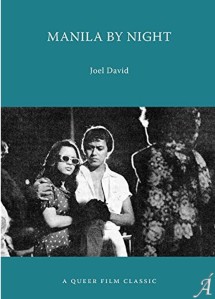
[2] Under a more supportive system, Celso Ad. Castillo might have been able to realize his ironic-reflexive dream project, and possibly provide the Philippines with a few more salient queer film-texts made by a straight filmmaker, where the treatment of outlaw sexuality becomes a means of pursuing sociopolitical critique. In the same year of Totoy Boogie, Ishmael Bernal staked his claim on queer film discourse with Manila by Night, with subsequent attempts by straight-male filmmakers suffering from the expected lack of empathy compounded by intellectual limitations. Women directors as well as queer filmmakers of all genders persisted in credible and authentic imaging into the present millennium. Interestingly, the year after Castillo died in 2012, an action director, Romy Suzara, provided one final and remarkably heartfelt entry in Tinik (Thorn), his penultimate film. For a survey focused on bisexual sexualities in Philippine cinema, see the article I contributed to the Journal of Bisexuality, titled “Di/Visibility: Marks of Bisexuality in Philippine Cinema,” volume 19, issue 3 (September 2019), pp. 440–454, DOI:10.1080/15299716.2019.1656474.
Back to top
Return to Canon Decampment contents
Go to alphabetized filmmakers list
Á!












 ORCID ID
 Ámauteurish!