
[Click here (recommended) for desktop mode.]
Lupang Pangako [incomplete]
English Translation: Promised Land
Year of Release: 1949
Director: Susana C. de Guzman
Screenwriters: Quin Velasco & Susana C. de Guzman
(From a story by Susana C. de Guzman)
Producer: LVN Pictures
Cast: Leopoldo Salcedo, Mila del Sol, Eusebio Gomez, Tinno de Lara, Engracio Ibarra, Armando Canseco, Lila Luna, Maria Norma, Vita Ortega, Horacio Morelos, Felipe Ortega, Amado Rivera Jr., Bayani Casimiro, Angge, Pablo Vergara
[Note: spoilers provided] Wandering the streets of Manila, Capt. Eduardo Rosales, a World War II veteran, finds an army buddy pretending to be a blind beggar. After introducing himself, they walk together and discover another former fellow soldier busking on the sidewalk, with two kids whom he pretends to be his own; the busker dismisses the kids with the money they collected but regrets his generosity when Eddie admits he’s broke. They proceed to meet still another of their mates who operates a small eatery, where Eddie discloses that he was just discharged from a hospital after being diagnosed with a terminal illness. He tells the group that he has to inform the parents of their late comrade of the death of their son. While walking to their distant provincial home, where they work as tenants, he gets hit by the car of Cora, the spoiled orphaned heiress, who gets out and scolds him. On his way to the tenants’ home, he faints before Cora’s residence, where she learns about his terminal condition. But since she was guaranteed ownership of the family property only if she gets married, she offers Eddie some money if he agrees to a sham union. Eddie successfully negotiates for a higher price plus use of a fertile tract of land, and invites his comrades to form a farming cooperative, calling the place Lupang Pangako (Promised Land). He also thwarts the unscrupulous designs of Cora’s suitor, who pretends to still be wealthy so he could marry her and claim her wealth for himself. Cora berates Eddie when she realizes that her own tenants are abandoning their work on the farm in order to join his cooperative, but he insists on his husbandly prerogative and forces her to live in a farmhouse. With the help of women farmhands, Cora discovers the appeal of living directly off the land and attends a community celebration as one of her people. Missing portion (from “Lupang Pangako,” Melcore’s CinePlex Blog, November 16, 2020): Cora’s family doctor visits the couple, treats Eddie’s condition, and finally declares that Eddie has fully recovered. The couple realize that their pragmatic arrangement was the right one for each of them after all, and agree to live in wedded bliss in the company of tenants who have become their equals.
The first Filipina director of note, Susana C. de Guzman’s credentials were aspersion-proof. The clan she belonged to was famed not for wealth but for tremendous talent, so it was no surprise that after she retired from filmmaking, two of her nephews would commence their film careers—director Ishmael Bernal and composer George Canseco. Her brother Constancio’s music was always better than the films he worked on, though fortunately he scored several of her films including the current one. Her uncles Severino Reyes and Lope K. Santos (whose K was the Tagalog spelling for Canseco) were colossi of nationalist literature, so the question should not be why Lupang Pangako turned out to be so exceptional that it deserves to be canonized despite its missing last sequence, but why she detoured shortly afterward into wholly dismissible fodder. Meanwhile her own novelistic skill and Marxist sympathies render LP a cut above most other Philippine samples, with its exposition favorably comparable to the similar opening portion of Yu Hyun-mok’s Obaltan (Aimless Bullet, 1961), also a treatise on the consequences of war from the perspective of ordinary citizens. And rather than allow the shrewish heiress to be tamed by her disciplinarian husband, as the Brit bard would have handled it, de Guzman allocates the task to the plantation tenants’ womenfolk. The film’s missing portion only covers the solution to the plot’s primary setback, namely its male lead’s terminal illness, so in fact the entire work resembles a genuine socialist realist text, all the more extraordinary for showing up in a US neocolonial stronghold.[1] [Important tech note: Several LVN films, including a few listed in this volume, were transferred using the inexpensive method of telerecording—i.e., projecting celluloid material on a screen and recording the sound and image with a video camera, resulting in flickery images; as of this time, no institution has volunteered to take charge of repairing this problem.]
Note
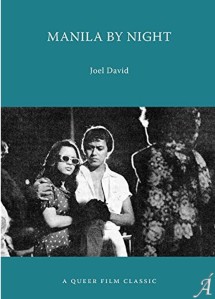
[1] A cogent summary of Susana C. de Guzman’s prodigious clan is provided in Bayani Santos Jr.’s “[Ishmael] Bernal as Auteur: Primary Biographical Notes” (in Kritika Kultura, vol. 19, August 2012, pp. 14–35). The likeliest reason for the crackdown on progressive expressions in cinema would be her studio’s enthusiastic participation, via its owner’s son Manuel de Leon, in the US State Department’s intervention in the film cultural policies of the Southeast Asian region even through the 1960s, after the other countries had lost interest (Lee Sangjoon, Cinema and the Cultural Cold War: US Diplomacy and the Origins of the Asian Cinema Network, Cornell University Press, 2020, p. 12). Re socialist realism, a warning I sounded out elsewhere: a Philippine film author, whose points were endorsed by a Western author, nesciently claimed that the two most significant city films of the Second Golden Age, Lino Brocka’s Maynila: Sa mga Kuko ng Liwanag (Manila in the Claws of Light, 1975) and Ishmael Bernal’s Manila by Night (1980), were samples of socialist realism. One can only hope these purportedly progressive Orthodox-left experts have since read up on historical trends in global cinema and readjusted their clownish misperceptions.
Back to top
Return to Canon Decampment contents
Go to alphabetized filmmakers list
Á!












 ORCID ID
 Ámauteurish!