
[Click here (recommended) for desktop mode.]
Greatest Performance [unfinished]
Year of Intended Release: 1989
Director & Screenwriter: Nora Aunor [as Guy]
Producer: NCV Films
Cast: Nora Aunor, Tirso Cruz III; Julio Diaz; Kristoffer Ian de Leon; Fe de los Reyes; Rez Cortez; Lara Melissa de Leon, Jet Montelibano, Butch Elizalde, German Moreno, Michael de Mesa, Tony Carreon, Miguel Tanciangco, Bella Flores, Nonoy Zuñiga, Bobby Taylo
Laura’s body is carried out of an auditorium where a young unnamed fan wanders backstage to dwell on his memory of her. Laura’s life unfolds as her success as a singer enables a lifestyle of debauchery, which people in her social orbit exploit. She lives with Cholo, a violence-prone musician who turns to drugs out of frustration from his lack of success in managing her career. Her propensity to get stoned by herself results in a traumatic incident where a gang of men invite her to their table and drug her in order to gang-rape her; she attempts to gun them down afterward but gives up and intensifies her addictive behavior. After her attempt to stage a concert at a small-time fashion venue results in her band members brawling with unruly audience members, she pleads with an amorous producer. But when the latter attempts to sexually assault her, Cholo shows up and shoots him dead. After Cholo lands in jail and a sheriff confiscates her band’s musical instruments because of their inability to cover their bank loan, she binges out on liquor and drugs, with Briccio picking her up and taking her to a rehab clinic. Briccio convinces her to stage an anniversary concert as her way of announcing her intention to turn over a new leaf, but Cholo escapes from jail and hooks up with her, inciting Briccio’s psychotic condition.
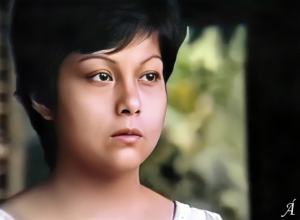
Possibly the most irregular entry in this entire canon listing, Greatest Performance underwent the exceptional journey of embodying Nora Aunor’s ultimate auteurist aspiration: she was producer, director, writer, lead actor, and singer. Exasperated by the creative pressures weighing on the project, she encountered rejection from the Metro Manila Film Festival, which had always been receptive to her proposals in the past and even after this case. Having already spent around ₱3 million, a significant fortune that time, she decided to scrap the entire undertaking—easier to accomplish then because of the celluloid nature of the footage. Film critic-archivist Jojo Devera, one of her confidants, managed to secure a low-end video transfer, which she also wished to destroy when she learned of its existence. With her demise in March 2025, the film may now be counted as public-domain material, with the implicit acknowledgment that Aunor did not wish for its persistence.[1] As it is, the transferred copy still requires sound effects, some dubbing and trimming, editorial transitions, and closing credits (a clear signal not just of its provisional nature but also of Aunor’s well-known timidity is her director-writer credit, which uses her nickname “Guy,” as well as her producer’s credit designated with only her initials). Nevertheless it tracks a Todesroman (a coming-of-death story, as opposed to the coming-of-age Bildungsroman) in a performing artist’s life, using a fictionalization of experiences that she acknowledged as part of her personal history in a series of interviews that she granted upon her return in 2011 from her extended US sabbatical. In fact her store of first-person narratives was capable of yielding even more controversial material, but the undeniable intertext for which GP could serve as corrective was an earlier MMFF project that purported to depict the life of a successful singer, but which proceeded from the preposterously hoary, not to mention sexist, perspective that a female pop-culture figure’s success is less worthy than the life of a male doctoral candidate. GP does not reject the moralistic premise, a decision that potentially weakens its ideological position, but it does show an insider’s intimate familiarity with the extremes and dangers that a dissipated star’s life could sink to, and configures the men in the central character’s life as destructive forces. Moreover, it furnishes the singular element that Aunor insisted on acknowledging, all the way to the end of her existence: the support of her fans. In GP only one admirer (played by her biological child) interacts with the singer’s life, but the fan’s loyalty, helplessness, and insistence on being present during her career peaks speaks volumes about the high regard Aunor placed on her followers. GP might yet reemerge as a closer-to-finalized sample, especially with forthcoming developments in artifical-intelligence solutions, but even in its present damaged condition, its embodiment of the Noranian predicament will prove rewarding to any appreciator of Philippine film stardom. Almost needless to add, astute directorial judgments are literally evident in her setups and cutting points, with even the most minor performers carefully coached for the roles they assume. The dialogues are borderline-démodé, but then nearly her entire performance is either reactive or silent—an acknowledgment of the strength that her directors admired: hard to believe, considering Aunor’s formidable track record, but the film’s “greatest performance” title is fully earned, even in terms of the final number she sings. If the MMFF authorities had any inkling of the historical document that they so casually dismissed, they would have realized that all the later accolades they granted Aunor could never compensate for the near-loss suffered by GP.
Note
[1] For a special issue of Kritika Kultura devoted to Philippine film stardom, for which I was preparing an article on Nora Aunor, I learned about the existence of Jojo Devera’s video copy of Greatest Performance and asked permission from Aunor, via Ricky Lee, to conduct a close reading of the material, with the assurance that the resultant study would be strictly academic; she granted her permission. (The KK article is titled “Firmament Occupation: The Philippine Star System” and appeared in the August 2015 issue, pages 248–84, with DOI:10.13185/1656-152×1653.) A few years later, Devera organized an informal group comprising critics and tech experts to request, via video conferencing, that she allow the completion of the film, even without her participation. Here she drew the line and made it clear that as far as she was concerned, she was over the project and that she did not wish any further work to be done on it. With Aunor’s death in March 2025, Devera has been overseeing possibilities for readying GP for public consumption, with the participation of Adolfo Alix Jr., who directed her last few film projects.
Back to top
Return to Canon Decampment contents
Go to alphabetized filmmakers list
Á!










 ORCID ID
 Ámauteurish!