The National Pastime – Genres: Horror/Sex/Action

Where Has All the Horror Gone?

Those who condemn the vengeful comeback of fantasy films might in all hastiness overlook the merits of a related but surprisingly rarer genre, the horror movie. Now of course the average Filipino film release, especially in these times, can be a frightening experience in itself, but redundancy would probably be an incidental reason for the scarcity of genuine horror items in contemporary local cinema. The more logical route begins with the sorry state that obtains for films that are serious per se; if realistic or at least naturalistic works that do not contain any potential for erotica, violence, or humor find difficulty in acquiring acceptance among the movie-going masses, what more the sober treatment of supernatural issues? Presuming that the typical film viewer would first have to be either convinced or coerced into watching an artistic presentation, she would then have to be further academically prepared to be able to understand the significance of social, physical, or psychological ramifications within a dramatic framework. To demand that she carry this understanding into the realm of the abstract, which is what the best among horror movies enable the competent viewer to do, would be asking for too much as it already is.

11011Hence lovers of the horrific, if ever they do exist among our film practitioners, may have just given up the ghost in the meantime that proponents of realism attempted to resurrect the local audience’s appreciation of or at least tolerance for “seriousness.” When a tendency toward naturalism surfaced, notably because of the art-for-art’s sake orientation of practitioners who emerged during the eighties, supernaturalism in cinema eventually took hold – but only according to the strict commercialist terms of fantasy. Nevertheless there have been noteworthy samples of horror films that are still available, and therefore viewable, on video if not in the original celluloid. Because of the absence of centralized institutional film preservation, most of the gory – er, glory-day productions during the sixties will just have to be run through. Titles like Gabi ng Lagim and Maruja indicate how fertile that period has been for the horror genre, and in fact these two specific works are still subjects for remakes and sequels today.

11011But as in the experience of other Westernized cultures, the decline in horror movies was brought about by a laxity in film censorship – in our case, the late chairman Guillermo de Vega’s experiment in libertarian permissiveness during the early seventies that eventually became known as the bomba era. The connection between sex and horror is more than just skin-deep. With the British Hammer studio case as model, horror films used to provide opportunities to present carnal elements that would normally be disallowed by the establishment (and therefore powerful but not too imaginative) censor: the bite may be taken to mean the act of love, the initiation into a supernatural state may signify the acknowledgment of desire, and death may inarguably be seen as the ultimate orgasm, with the usually long and pointed killing instrument a phallic symbol – one need not be aFreud or too Jung to realize this.

11011With the emancipation of sex as a valid concern in cinema, horror, the fear of what may be real but unknown, has had to own up to its own given terms. The advantage here is that the genre could now discourse with the more abstractified perspective pointed out earlier, but the disadvantage, also already pointed out, is that the loss of innocence would also entail a fall from grace: no longer could the genre count on the commercial attraction of eroticism, since the audience would expect and demand that the latter be treated similarly on its own terms this time.

11011This mixed blessing has concrete evidence within the Filipino context to support it. Before the bomba era only the late Gerardo de Leon, among the serious directors, made a noteworthy (perhaps the worthiest for the period) contribution to horror filmmaking with the vampire movie Ibulong Mo sa Hangin, although another late master, Manuel Conde, had earlier succeeded with out-and-out and even way-out (of local folklore) fantasy treats.

11011During the seventies, horror films were fewer and farther between – some years in fact had no horror entries whatsoever – but what occasionally turned up was more often than not a commendable attempt. Celso Ad. Castillo, who in terms of visual proficiency was being touted as heir apparent to de Leon, has been the most prolific among our living major movie directors, with ironically a mere three titles – Kung Bakit Dugo ang Kulay ng Gabi, Patayin Mo sa Sindak si Barbara, and Maligno – all done during the middle part of the seventies. Lino Brocka did a Maruja film during the same period, but it was debuting directors who since then made must-see Pinoy horror items: Lupita Aquino-Kashiwahara with Magandang Gabi sa Inyong Lahat, Mike de Leon with Itim, Mario O’Hara with Mortal, Butch Perez with Haplos, Briccio Santos (in his first 16mm. work) with Damortis.

11011To this list we could add Tata Esteban’s experimental Alapaap, plus specific portions of Peque Gallaga’s Oro, Plata, Mata, but more important would be the observation of the phenomenon of several of the post-bomba era’s major directors introducing themselves to the public in such a manner. Several explanations may be ventured, but all of them more likely lead to and from one another, in the process serving as a collective of causes. The audience may have been regarded as more receptive to works on the supernatural by first-timers rather than by veterans, since the former wouldn’t have any pretensions or self-consciousness brought about by success within the industry. The producers, risking as they do their investment in newcomers, figure that they would do well to avoid the genres dominated by established personages in the industry, and go for a type that used to enjoy a substantial following, in the hope that the awareness of pleasurable horror viewing had merely been dormant in the public’s consciousness. The directors would then appreciate this compromise between the commercial imperative of fantasy and their cherished desire to be serious, and so regard projects as artistic rather than commercial challenges.

11011Final proof that horror filmmaking is such a basic and appealing form of exercise in the medium lies in the fact that the future’s promising directors, who unlike their forerunners do not need to conduct their practice training in the expensive commercial format, are virtually turning alternative film (super-8mm., 16mm., and video) into frontiers for the exploration of the unknown. Would this mean they’d stand more than the ghost of a chance come their day of reckoning with the gods of big-time production? Vive l’esprit de corps!

[First published November 3, 1986, in New Day]

Back to top
Return to The National Pastime contents

Causes for Cerebration

Tiyanak
Directed by Peque Gallaga and Lore Reyes
Written by Don Escudero, Peque Gallaga, and Lore Reyes

Babaing Hampaslupa
Directed by Mel Chionglo
Written by Ricardo Lee

Two recent releases by the country’s most successful production outfit way before and ever since the 1986 revolution indicate the strategy by which our major filmmakers aim to recover their pre-revolution notions of dignity and self-respect. Whether or not these individuals are aware of what they’re doing, the formula seems expedient enough to be applied to the larger problems posed by video entertainment as an alternative to movie-going. The prevailing line of action is also sensible enough to be implemented with a minimum of logistical complications: just get the crowds back into the theaters first, then do what you want while giving them what they like. As a corollary, if they don’t like what you’re doing, either forget it or go ahead anyway, but at your own risk.

11011This might seem like something so logical that it must have been done before already, but as far as I can recall or surmise (into my own and the industry’s prehistory), our audiences have been so generally congenial toward the medium of movies that they always took to it even during periods of crises as serious as, for one, the imposition of martial rule during the early seventies. The only other period when Filipinos may have avoided the movie-houses en masse would be during the Japanese occupation; but then the occupation forces didn’t seem to worry too much about this decline in indulgence in a national pastime (they never took steps toward a full-scale revivification of the local industry) and besides, the people’s rejection of anything officially endorsed by the Japanese extended to all other forms of media as well.

11011If the invaders knew any better they would have been worried sick: for a fiesta-loving populace to forgo its usual entertainment could presage a darkening of the national temper; in the face of the expulsion of the Americans and their influence, this could only, and did, mean war. In contrast, the panic occasioned among film producers during the almost year-long dead stretch right after February 1986 was just a case of overreaction, fueled by good old-fashioned business greed. True, there was a decline in movie attendance worldwide, but this was because of a far less political upheaval, the video revolution. Locally the reasons could not be more threatening than a post-crisis sobering up, a taking stock of the complex moral issues involved in the ouster of a strongman who represented a generation of accepted values and attitudes.

11011The hindsight afforded by close to three years of observation allows me the audacity of remarking that the public’s movie-going habit would have resumed once its euphoria had subsided, but the futility of this sort of speculation is obvious. Meanwhile we’ve had a quite maddening succession of reoriented outputs, calculated to lure back moviegoers in numbers comfortable enough to warrant the maintenance of what remains a major national industry. With Tiyanak and Babaing Hampaslupa, the items attempt to go a step beyond the ordinary, but without outwardly distinguishing themselves. Where it seems to matter (the box office, of course), the camouflage has been successful. Moviegoers attended as usual, were treated to more than the average rehash of commercial viabilities, but without losing their minimum share of generic entertainment.

Janice de Belen, as an infertile mother, with her demon foundling in Peque Gallaga & Lore Reyes’s Tiyanak (1988).

11011On a more articulatory level, Tiyanak and Hampaslupa work by taking their makers’ cerebrations into current standardized formats, instead of forcing the formats to adapt to content (as would have been the ante-revolutionary case), or merely doing an excellent job with the givens (post-revolutionary, until about now). It should also be pointed out that, perhaps due to the halfway nature of such products, these kinds of films were commercially far riskier to make, before 1986, than out-and-out successful formula or artistic works. Would it be timely now to rejoice in the bridging of this crucial gap between film commerce and, uhm, art? I’d nurture my misgivings first, minor as they may appear within this sociopolitical context. Tiyanak serves its ecological punch early on, then holds it for some impressive special effects display and not-so-impressive hysterics, until it could let go with a closing follow-up. Hampaslupa does better in infusing its class concerns all the way to the lachrymal end, but at the expense of simplifying the other class extreme.

11011The filmmakers of both titles have been active in the exploration of the art-and-commerce options I outlined earlier, and whichever between their two approaches is more effective depends on your preference in entertainment. Tiyanak would appeal to those who like their serious and fancy stances clearly delineated from each other, while Hampaslupa is made for those who go for fusion. Hollywoodish vs. Europeanesque would be the pedantries one could put to use in pointing out the differences between the two. Not bad for items that could make you scream or cry as you realize these more discussible points, and not so bad for an industry that used to churn out highly innovative films with admirable regularity a couple of years back. This ought to be one way for us not to take such strokes of luck and talent for granted, from hereon.

[First published December 21, 1988, in National Midweek]

Back to top
Return to The National Pastime contents

Down but Not Out

Nektar
Directed by Francis Posadas
Written by Eric and Susan Kelly Posadas

Tubusin Mo ng Dugo
Directed by Pepe Marcos
Written by Jose Carreon

This year’s first local entries classifiable under the troublesome categories of bold and action indicate some bright spots ahead for post-revolution Philippine cinema. To review recent cultural developments, bold and action films used to be the closest that our serious filmmakers utilized in working out compromises with their financiers; comedy and melodrama were simply considered incapable of presenting “messages,” and therefore generally unworthy of aesthetic attention. I recall how, in a period of only occasional filmic achievement (which was most of the time, then as now), I would go to a name director’s bold or action entry in the hope of encountering sensible discourse, but would disabuse myself of such a notion when it came to comedies and melodramas.

11011Then came 1986, and notwithstanding pessimists’ claims, things did change, even in the local film scene. Comedy and melodrama took the forefront in both box-office and artistic terms, while bold films permutated into the hard-core quickies reminiscent of pre-martial law times, and action movies ventured in the opposite direction – real-life stories done with the ultimate in production costs. Nektar and Tubusin Mo ng Dugo, bold and action films respectively, seem to point toward a return to the median, as it were, for these temporarily lost film types. I’ll readily own that I might be too optimistic about the first title, but the second can be taken as a case for generic survival: instead of breaking as far away as possible from the films that seem to be doing well, why not figure out how best to adopt the factors that excite the mass viewership about them?

11011Hence, the spectacle of witnessing some form of industrial osmosis, with a bold film attempting to take on the plot complications and technical competence of melodrama, and an action film spiced (spiked, even) with comic routines. I’d like to be kind enough, at least in print, in pointing out that, the way most current bold films go, Nektar could have been worse. It’s bad enough as it is, but you could sense an aspiration toward, well, making sense. The story’s our well-worn odyssey of the Virginal Barrio Lass getting corrupted by the Big City, with the melodramatic, or at least komiks-influenced, twist of Morality Triumphing in the End. Before you start groaning in your creaky theater seats, let me remind you that this material has proved remarkably resilient through the decades, with each movie generation having its own claim to posterity in a least one such topical example: Maynila: Sa mga Kuko ng Liwanag honors the moviemakers of the seventies in this way, although of course Nektar could only hope to distinguish its own specific period in time, and no more.

11011There’s an even more painful aspect to the movie, and that’s the care, believe it or not, with which it was executed. Nektar must be the most carefully made bold film since Takaw Tukso two years ago – but one must be careful to take this in the context of the common run of such films, rather than the quality of the specific titles being compared. The difference, and this is where Nektar fails, is that its makers have just not been up to the challenge, meaning the effort shows in the final product. It becomes almost embarrassing to see a movie so sincere yet nevertheless substandard in all respects. A few portions do stand as set pieces, specifically the heroine wandering in the Luneta by night, and then much later discovering how her supposed savior betrayed her.

11011Of course this only makes the rest of the movie almost unbearable in its pursuit of a reasonable but overworked story framework. I guess in the final analysis, a little figuring out about the specific nature of filmwork could have helped: Maynila, although it resembles Nektar on paper, salvaged itself by opting for a semi-documentary approach; in the other direction, melodrama films contain the potential for degenerating into camp, which though not as promising at least provides a provocative element of fun. How sad to fall in between, losing the interest of both serious observers and escapists – unless a hard-core version exists somewhere; but then that takes the fun out of knowing you did a good movie and showing it to friends and potential acquaintances. In which case how sad again, etc.

11011After Nektar, Tubusin Mo ng Dugo emerges as a minor cause for celebration. Pepe Marcos, a former editor (who also doubles for the same function in his films) who turned director four years ago, first came up with a passable debut, also a Rudy Fernandez starrer, in Sumuko Ka … Ronquillo! Neither practitioner has come up with totally execrable work since, but in Tubusin I’m happy to report a rarity of sorts – their best individual work so far. The qualifications should not be far behind though. Tubusin’s still a customary product, made for no greater shakes than the usual action entertainment contained in its main plotline. Normally I’d say it suffers from an imbalance in story development, but in fact this is where its strong point emerges. Instead of the usual establishment of good guys being lined up against bad guys, Tubusin takes an expository detour and provides a picaresque description of the lead character’s misadventures within a shrewdly observed social milieu.

11011Yessir, your average martyr of a mother happens to be a nag, your friendly neighborhood police chief resorts to third-degree, and your noble working-class savage gambles and drinks when he can, and even sets himself up for an occasional hustle! I was bewildered, to put it mildly, and then I started to wonder how long such a good thing could last. My worries were answered as soon as they occurred to me. Turned out that the mother feared for her son’s future, ditto the police chief, and though the hero-son gets to sire a family of his own, his involvement – unwilling, of course – in a big-time crime syndicate leaves him without much choice, were it not for the long, long arm of the law, yawn, yawn. I should have suspected something amiss after the hero rapes his best friend, a butch lesbian, and she forthwith disappears; what do you know, she reemerges much later, converted by her heterosexual encounter and therefore happily married to a poor unsuspecting atmosphere person.

11011Meanwhile a few instances of the early part’s humor, coupled with some really fierce action sequences, manage to pull the reluctant viewer through; the mass audience will of course be more forgiving, so I guess I ought to be honest about my admiration of how perceptive the filmmakers of Tubusin have been in their appropriation of current commercial preferences in a film genre that would otherwise have been as good as obsolete. In the end, Tubusin will be remembered mainly for just that – revitalizing a film type to conform to the mood of the times. Like Nektar, it will have acquired the box-office profits it intended to make in the first place, although with much less outrage about competence and entertainment appeal. We should all be so glad Armageddon might somehow take longer than tomorrow.

[First published February 17, 1988, in National Midweek]

Back to top
Return to The National Pastime contents

Moments of Truth

Anak ng Cabron
Directed by Wilfredo Milan
Written by Conrad Galang

Afuang: Bounty Hunter
Directed by Mike Relon Makiling
Written by Amado Lacuesta Jr. and Tony Tacorda

Would it be precipitate to claim that the action movie as a function of social realities – an activity that obtained during the early years of the sixties and eighties – is once more coming into its own? The outputs so far this year seem to promise as much, what with an appropriate adaptation to the concerns of the times. During the late fifties and early sixties, with the likes of Cesar Gallardo and the late Gerardo de Leon leading the way, local action films undertook the depiction of underworld characters with the requisite tragic comeuppance; the attempts succeeded so well that the legal and physical mechanisms of film censorship were expanded to effectively outlaw such so-called gangster movies. The result? A spate of imitations of Western and superspy stories, complete with wholly incongruous production values (American Indians and formal wear in the tropical Orient) and performers (Caucasian blondes servicing not-so-appealing locals).

11011Similar political strictures during the seventies added a relatively closer but still alien form, the martial-arts movie. Suddenly Filipino film actors became more Chinese than the Chinese themselves, those on the mainland at least. Only during the latter part of the decade did both filmmakers and audience develop an understanding between them sufficient to codify (in the actual, not the semiotic, sense) martial-law situations into metaphorical setups such as prisons, slums, and urban-to-rural transitions. The problem for the Pinoy action movie since the two-year-old political “revolution” is this time more a matter of entertainment appeal rather than the old dilemma of getting social themes through a too-touchy censorship system. This is where the genre’s strength and weakness lies: on the one hand, the extremes of realities necessary to initiate an action, whether a chase, flight, or vendetta, presume an awareness of current social situations; on the other hand, this selfsame seriousness of purpose can prove (and has often done so) to be too high-handed for commercial comfort.

Phillip Salvador as Arsenio Cayanan, a mixed-race American mestizo who became known for a life of crime, in Pepe Marcos’s Boy Negro (1988).

11011A few weeks ago a Rudy Fernandez-starrer, Tubusin Mo ng Dugo, went a long way, in box-office terms, in taking cues from the recent successes of comedy entries. This time two other titles, Anak ng Cabron and Afuang: Bounty Hunter, try to introduce innovations of their own, and seem to be reaping rewards for the mere act of doing so. Between the two, Anak ng Cabron seems to be the more conscientious effort but winds up the less appreciable, precisely because of the aforementioned dangers of dissimulation. The premise – a society with a completely anarchic law-and-order arrangement – is attractive, and the execution even more so: the level of utter technical competence displayed herein is what all local films should strive for, at the very least; perhaps with enough international markets opened, the surface polish that characterizes Anak ng Cabron can be more willingly accomplished by the rest of the industry.

11011Unfortunately a lesser proportion of care was extended the movie narrative’s basic essentials. It would sound patently unfair, not to mention pedantic, to point out that an Aeschylean potential in the theme of a son inheriting his father’s personality defects remains undeveloped – but that’s only because the movie on the whole managed to evade the issue of ideas through a reliance on comic touches and an admirable expansion of geography. These of course are still backup devices that don’t really address questions of internal logic – like why should the women in this film hate so intensely someone who projects himself better than they do? At least Rudy Fernandez in Tubusin Mo ng Dugo was provided the self-awareness of using his physical charm to his advantage, even if only in the limited context of hustling. I could understand a neurotic mother and a dumb leading-lady character rejecting a movie-goon type, but Ace Vergel?! Perhaps a more psychologically provocative explanation for meanness than mere heredity (which was the achievement-of-sorts of another Vergel-starrer, Carlo J. Caparas’s Pieta) could have helped some.

11011Afuang: Bounty Hunter commits exactly the same things Anak ng Cabron does, but performs one over the latter through the application of a clever strategy. Where Anak ng Cabron sought to convey a vision of peace-and-order breakdown by simply assuming that it exists in the here and now, Afuang situates itself in an actual time frame – the period of transition between the past and present political dispensation. Production limitations aside, the notion of vicariously reliving those days with someone who actually went through the process still manages to evoke the minimal interest required for paying proper attention. Afuang then manages to be crafty enough to engage the viewer in a game of wondering how much of the onscreen resolution matches the real-life exploits of its lead character. Before you know it you’ll have gotten over the tension of hoping the Afuang you’ve identified with would make it through the change of regimes, largely because of the catharsis of his vengeance on the wrongdoers who may or may not have actually crossed his path the way they did in the movie.

11011The inevitable problem with character presentations in true-to-life stories still holds true in the case of Afuang: the way the guy talks, you’d suspect that it was this sermonizing, rather than his rectitude, that did him in during the latter period of Marcos rule. And as in Anak ng Cabron the women, the Mrs. Afuang especially, are converted into provocations for the lead character to enunciate, albeit hesitantly (as befits a real man, hah!), his philosophical stance; in short you don’t expect to find ladies here, you get gentlemen burdened with social ills and nags, not necessarily in that order.Between this given and the otherworldly solutions explored by Western cinema (Raging Bull et al.), there remains a number of minor points that should still be raised for commendation in the movie: the usual reliability of Phillip Salvador, the discovery of action-star potential in the actor playing his sidekick (Mon Godiz), and the casual implication of five-star hoodlum (now international fugitive) Fabian Ver in the dognapping racket that turned into the dreaded carnapping syndicate of not-so-long-ago.

11011Enterprises like Afuang are in danger of catching flak from still-present and ever-sensitive sources; sadly their appeal rests on this factor, rather than merits that don’t depend on extra-filmic developments. Nevertheless we could do worse with our entertainment, and meanwhile we need to accumulate anew an appreciation of social insights that the audience can share according to its level of maturity. If the outputs are at least as entertaining as what we’ve been getting lately, then who’s to complain?

[First published March 23, 1988, in National Midweek]

Back to top
Return to The National Pastime contents

Bioflicks

Operation: Get Victor Corpus, the Rebel Soldier
Directed by Pablo Santiago
Written by Jose F. Lacaba

Balweg: The Rebel Priest
Directed by Butch Perez
Written by Amado Lacuesta Jr.

Kumander Dante
Directed by Ben (M-7) Yalung
Written by Ricardo Lee

With the release of Kumander Dante, a unique cycle of the depiction on film of local political rebels has been completed. It would take another complex of factors – the 1986 political upheaval and the differences that accompanied it – to enable us to witness another series of purportedly biographical treatments of the stories of bigger-than-life outlaws. More’s the pity then, since at this stage we have neither reached the cultural maturity to appreciate experimentalist deviations form avowed fact, nor acquired the political confidence to remain above the run of discourses about significant contemporary personalities. As far as current industry standards go, the trio of titles dealing with military renegade Victor Corpus, rebel maverick Conrado Balweg, and former underground leader Bernabe Buscayno (a.k.a. Commander Dante) are actually superior entries. They have been produced by major outfits with fittingly above-average budgets, and the concern for industrial legitimacy can be seen in both the production values as well as the large casting these projects exhibit.

11011The reason for such carefulness, however, is the same factor that accounts for ultimate disappointments about these works, once the extremes of film ideals are applied. We still consider people newly returned from beyond the pale of the law as possessing an admirable amount of physical vulnerability; they may be visibly present among us, but are still hounded by the conflicts they’re supposed to have left behind. This makes them intriguing enough to warrant features in a popular medium or two, but at the same time provides the makers with the fear of possible retaliation by the subjects’ enemies as well as discrediting by the subject themselves.[1] Proof of this split-level approach lies in the creative credit listings for each project: name writers were commissioned to write the first-draft scripts – the blueprint, as it were – but commercially oriented (and therefore industrially safe) directors were called in to execute the final products; in the instance of Kumander Dante, the producer himself opted to do the film. In this regard the most conscientious filmmaker would naturally manage to come up with the most acceptable output of all, and not surprisingly Butch Perez pulls off a near-coup of sorts with Balweg: The Rebel Priest.

Phillip Salvador as Conrado Balweg, a former reverend who founded and led the the Cordillera People’s Liberation Army, in consultation with director Butch Perez.

11011The achievement, however, is strictly technical, and in fact at certain moments I was just as overwhelmed at the epic excesses of Operation: Get Victor Corpus, the Rebel Soldier and the historical parallelisms of Kumander Dante. The latter, in addition, provides the clearest indication of art-and-life cross-purposes: it isn’t so much the approximation of the real-life occurrences that gives the necessary jolt to these works, but rather the afterthought that reality could be more dynamic and enduring in the long run. Sure, Corpus, Balweg, and Buscayno may not look as perfect as their screen counterparts do, but at least they possess the means to pursue, redirect, or even negate their own objectives, whereas those contained in the filmic representations of their lives will remain as is for all time, or at least as long as the stocks can be preserved. It’s a no-win situation actually. The only way to correct the impressions of the originals, should Corpus et al. decide to change courses in midstream, would be to update their stories via new film projects. In this sense Corpus himself or, to be more accurate, his screen character, enjoys the benefit of an open ending; any sequel to his story could still reasonably proceed from the original.

11011Yet there may be a more feasible option – one that upholds the integrity of the medium even, if necessary, at the expense of the subjects concerned. Early this year I made what seemed like a hyperbolic statement at the time, to the effect that a late 1987 release, Kumander Gringa, was in most ways the best political Filipino film since the revolution. If anything, the completion of the serious political-rebels cycle confirms this assertion, without necessarily sacrificing the requisites of box-office appeal and the star system. Of course, no one in his right mind would ever make the mistake of identifying Gringo Honasan with the character(s) portrayed by Roderick Paulate, but then this is precisely what makes Kumander Gringa more film than documentation. Political rebels in themselves provide enough real-life issues to last more than a mere couple of movies; on the other hand, a one-project affair, a do-or-die proposition, need not always prostrate itself on the altar of verisimilitude, especially when other options could be just as entertaining, if not more, and thereby possibly truer to the purposes of the medium.

[First published October 26, 1988, in National Midweek]

Note

[1] At the end of the published version of the review, three disclaimers by the story consultants (Monico Atienza, Bonifacio Ilagan, and Marvyn Benaning) of Kumander Dante, the scriptwriter also of Kumander Dante, and the scriptwriter of Victor Corpus were printed. Each statement, in effect, said that the story or script that these individuals had written was not observed by the director of the finished film.

Back to top
Return to The National Pastime contents

An Update

The resurgence of horror in local films proved about us fleeting as post-1986 prosperity. This lends some credence to the psychoanalytic view that audiences would look for horrifying experiences in fictional works if they didn’t have enough of it real life; the corollary – audiences deriving their quota of horror from real life – can and should only be regarded with sadness and outrage.

11011The move toward down-to-earth explicitness in turn-of-the-revolution sex films proved no match for the heavenward turn of officiated (and legislated, as may be seen in the new Constitution) morality; the new repression, however, may help induce a new round of creative, well, gap-searching, similar to that of the Marcos era’s bold trend.

11011Action films have been called to reprise their historically contingent function of reflecting their audience’s experiences and aspirations. The heroes this time are younger, less reluctant about emotional displays, and more attentive to women; and some villains are of an entirely new breed – heroes of yesteryears, actually, including Americans and elected government officials. Once this last genre moves beyond articulating current conditions, to clarifying them for the benefit of the audience and prescribing possible courses of action, people (those in power, especially) better start worrying. Fortunately for the forces of reaction, our local film practitioners still have to prove their expertise in propaganda, and so do our audiences, in terms of their capability of responding to such efforts.

[First published October 24, 1990, in National Midweek]

Back to top
Return to The National Pastime contents


The National Pastime – Issues 1

Censorship and Other Compromises

A curious aspect in the local experience of film censorship is the fact that, in the rare instance of libertarian restraint on the part of government, the eventual clamor by the influential members of society has been for more censorship, not less.[1] This contrasts dramatically with historical developments in other media of expression, in which at least one side – the so-called progressive segment of society – welcomes the granting of freedom and strategizes whenever possible for the institutionalization of newly acquired benefits. The differences can be perceived from concrete examples of recent origin: where the Experimental Cinema of the Philippines exists only in ignominy, castigated toward the end by the very same concerned artists who helped set it up, the “alternative” elements in print and broadcasting today dominate their respective media, rising from the status of glamorized underdogs by waging and then winning their wars on the circulation and advertising fronts.

Film & theater activist director/actor Behn Cervantes (1938-2013) in an anti-censorship rally.

11011The salient distinction arises from the fact that film, more than any other form of mass media, is an industrial product, notwithstanding the assertions of a number of enlightened filmmakers. For indeed, who is the filmmaker? The director (as pronounced in occasionally mystifying foreign critical terms) is generally regarded in artist circles as the central intelligence, but she usually merely interprets an earlier work, that of the scriptwriter – who in turn may have derived more than just ideas from another source, but for simplification’s sake let us stop here. The writer’s ideas would be almost always embodied in, if not argued by, a character or group of characters, which in industrial parlance translates to actors. The actors, unlike the director, do more than interpret: they provide the motive for the movie to advance to production by assuring, through their box-office draws, returns on investment. And where would a movie project be without investment in the first place? If producers were concerned more with credits than with profits, one wonders if the politics of auteurism (a movement which ascribed final credit for a film to its director) would ever have prospered. The authentic auteur – a producer-director-writer-performer, rarely found even in alternative formats – is the exception who proves the rule.

11011This industrial nature does not prevail as strongly in print, broadcasting, or theater, which are generally conceded to be writers’ domains. Where a singular source of responsibility can be pinpointed, it becomes easier to enforce ideals from within the community of artists. Hence the tendency among writers (in print, especially) toward censoriousness – a creature totally different from the monstrosity of censorship – toward one another, particularly the ones perceived as abusive. Filmmakers, or more accurately the makers of film, on the other hand, tend to exculpate themselves by pointing to one another, or if it becomes unprofitable or too late to do so, then perversely they turn on the hapless moviegoing masses on whom they rely to patronize their products.

11011The issue in basic law should therefore be modified, more so at present when that same law is being redrafted, to whether industrial expressions should be given the same status as individual expressions when it comes to the enjoyment of constitutional rights. Of prime importance here is the consideration that industrial output presumes a profit motive and results from several possible compromises, responsibility residing in a collective of individuals that breaks up as soon as the industrial process is completed (i.e., after the money has poured in). The previous regime’s schizoid approach in exercising film censorship and at the same time exempting an official entity on the one hand, and endorsing film classification and exempting taxation on the basis of quality on the other hand, may in retrospect seem too scatterbrained to be effective. But waste not the lessons of history, as the sage said, or else be doomed to repeat it. Already becoming evident is the imposition of a parochial (Catholic aristocratic big-business) stringency in film censorship, being challenged by or challenging a resort to alternative circuits (countryside moviehouses, replacing the Manila Film Center) by film practitioners desperate for easy profits.

11011If anything, Marcos-era government control over the film industry indicated that a reliance on extremes – total censorship and total freedom at the same time – promoted excesses on both sides. Of more instructive value are the well-received, though not entirely officialized, innovations in the toleration of film classification and the granting of incentives to quality output. And herein may lie an even more profound lesson for dealing with larger sociopolitical issues: the solution to a compromise-laden problem (represented in our discussion by film as an industrial product) may be found, not in the extremes applied to uncompromised challenges (censorship or exemption from it as in the case for written works), but in the best available compromise as well (classification and incentives for quality in film). Now if our national problems could be just as easily simplified….

[First published September 15 1986, in New Day]

Note

[1] In a subsequent study, Lynn Hunt pointed out that the concept of obscenity, the elimination of which is the state’s motive for exercising censorship, became part of Western legal discourse after the propagation of printing technology – see “Obscenity and the Origins of Modernity, 1500-1800,” The Invention of Pornography: Obscenity and the Origins of Modernity, 1500-1800, ed. Lynn Hunt (New York: Zone, 1996): 9-45. Prior to this way of thinking, graphic sexual descriptions, access to which was then-confined to aristocrats and church officials, was described without the need to call in state control mechanisms – e.g. erotica.

Back to top
Return to The National Pastime contents

Film Reviewing and Criticism

Film students’ faces are almost always wide-eyed and expectant, understandably because of the stimulating nature of their subject matter. The few occasions they predictably go blank are when I’d drop a French-derived theoretical terminology, or when I make my standard assertion that film criticism, as it’s been known elsewhere, doesn’t really exist in the country. Why so? the questions begin. The entertainment sections of dailies and magazines feature comments on current and forthcoming titles – maybe not regularly but often enough to convince even disinterested observers of their presence.

11011The confusion over the differences between the reviewing and the criticism of films had been taken up and resolved in international circles some decades back, but for certain cultural and circumstantial reasons, we find ourselves with the impression that film criticism goes on as is where is, and suffices for purposes of appreciation of the medium. Said reasons operate as a complex, but I guess one could make the effort of disentangling them for easier scrutiny. Taking the typical nationalist reflex of finding others to blame first, one could come up with enough of an argument with which to exculpate fellow practitioners. The state of medium-specific film theory, which is in a proper sense the purest form of film criticism, arrived at a dead end a long time ago with the practical perfection of the medium, and to ensure that formal film studies would still benefit from the momentum of dynamic film theorizing, the academicians took over.

11011Now certain intensively intellectual disciplines, mathematics and philosophy for instance, benefit greatly from what has come to be known as ivory-tower activity. But film happened to be fun to study yet correspondent with real life at the same time: it’s an art form with a sociopsychological dimension, true, but it also has technological, industrial, and political aspects no less essential to its development. So when the era of real interaction between the theory and practice of film reached its maximum, with the admirable collaboration of critics and filmmakers (and at least one instance of a combinative genius in Sergei Eisenstein), filmmakers branched off into collecting their moral and financial dues for their years of risky experimentation, while critics sought refuge in churning out propositions for the medium that couldn’t find productive applications beyond the self-promotion of their proponents.

11011The more practicable methodologies include auteurism, structuralism (currently trying to make a comeback under Marxist guises), semiotics, and so-called Third World film criticism, which is actually a rehash of phenomenological propositions. I label these “practicable” because they could (and did) prove to be useful for film classification and a certain though often irrelevant type of evaluation; but heaven knows how many more filmmakers steeped in these schools of thought will be venturing forth with at first the conceit of holding the key to the next phase of the evolution of cinema and finally winding up with a body of pretentious, at best inoffensive, but never really vital, work.

11011How then does one determine if a theory deserves a status of serious consideration not just in film study but in practice as well? Simply put (though difficult to propagate), when it can be formulated as a proposition for a creative strategy, and when the application in turn yields insights into the original formulation and suggests further directions in speculation within and without the theory’s framework. Hence Eisenstein’s reflections on montage resulted in his Battleship Potemkin, and in the other direction Jean Renoir’s Rules of the Game aided André Bazin in spelling out the whys and wherefores of deep focus.

11011On the other hand, the Cahiers du Cinéma school of auteurism (ironically associated with Bazin) resulted in a movement of wonderful personal films from the proponents themselves – no big deal but then again this reflects more the sincerity of the New-Wave critics-turned-directors rather than the soundness of their fury; in their wake, all the way to the present, came a glut of aspiring filmmakers whose notions of personal import derived from imposing on their audience a “mark” of some sort or other – a prop here, a stylistic device there – in the hope that the accumulation of these little quirks would amount to something more than indulgence, which of course rarely became the case. You can imagine how much more impossible it becomes for a pro-structuralist or -semiologist to come up with the Next Leap Forward in film theory, just by marveling at the inordinate complexities and near-obscurity of the basic texts.

11011And now Filipino film scholars have all this to contend with – a list of readings sounding terribly erudite but rarely with the disclaimers of their failure in practice; this plus the fact that the local industry has hardly progressed beyond the basic montage-vs.-mise en scène debate in cinema, and most probably never will, because of the characteristics of technology and market. And we haven’t even begun to consider the dynamics of writing on film in the Philippines.[1]

Back to top

State of Local Criticism

Much as we love to deplore the current state of poverty in film criticism, the Philippine situation isn’t really all that unique. Of course advertisers resent it when the pages they run their layouts in publish negative notices of their products. Of course readers burdened with elementary-school grammatical capabilities (observed for local newspaper writing) wouldn’t bother to read polysyllabic and syntactically playful analyses of what in the first place they regard as entertainment. Of course editors need to protect their advertisers and please their readers. And of course film writers will be lucky to find a way out, if not through, all this, dealing along the way with various impositions and influences peculiar to their status as members of intelligentsia.

11011Most people hereabouts seem to agree that film commentary is largely a matter of endorsing a worthy product and repudiating a worthless one. In fact the local reviewers’ group, the Manunuri ng Pelikulang Pilipino, points up this consumerist thrust in its organizational documents, and then some: in cases where film elements attain similar levels of competence, the members are expected to prefer titles with more “social” orientations.[2] As to how this has reflected on the group’s current claim to significance – the Urian awards for achievements in film – a highly specific case inquiry has to be done first.

11011The inadequacies of film commentary for consumerist purposes reveal themselves through time and practice, and the fact that the Manunuris still have to own up to this reveals how much of their time they have wasted and their practice neglected. The industry turns out only so many films a year, each intended to recoup investments from an audience of the impossible maximum of sixty million, the newborn, handicapped, and aged included. To tell readers who care to pay attention that a certain product isn’t worth patronizing is tantamount to telling off an entire system that wouldn’t have any other way of recovering losses and therefore alerts itself to offensive moves from any front, regardless of the purity of motivations.

11011Then we come around to the vicious cycle where most moviegoers couldn’t care less about aesthetics to begin with, only with entertainment values, and so the film reactor committed to working within a journalistic grind gets reduced to selectively evaluating films (only the praiseworthy ones), or compromising her criteria to conform to the less antagonistic aspects of film appreciation. This presumes that the film critic-aspirant possesses the minimum of an academically acceptable sensibility to begin with, but in practice the entire setup is so pervasive and aggravating that beginners in the craft of writing on film rarely even acquire insights on possible areas of exploration and development.

11011Hence the sorry state of film criticism extends to not just the circumstances surrounding the practitioners, but the condition of the practitioners themselves. One defense, as seen in the Manunuri stipulation of criteria, lies in the distortion of consumerist prerogatives to the point where film is perceived as something that’s intended to further the welfare of its patrons: not only is film comment supposed to distinguish the products to be patronized from those to be shunned, the highest form of recognition is also reserved for the title that keeps the best interests of society in mind, as if the obverse (society keeping in mind the best interests of its art forms) could be placed in subordination. Another and more insidious corollary from the ranks of the self-proclaimed critics, at least the organized ones, is based on the assertion that the filmmakers themselves don’t come up with discussible films often enough anyway; this attitude has served to justify the perpetuation of the Urian awards despite the well-known divisive effects it promotes in the community of film artists. The Manunuri’s arrogance in this regard has attained a height of sorts with the group’s cancellation of this year’s ceremonies because of the supposed paucity of instances of quality in film output during the previous year.

11011Lost in this enumeration of excuses is the purpose itself of film criticism: to provide for the development of film through refinements, if not advancements, in film theory and aesthetics. In practical purposes, the biggest losers aren’t really the financiers, who have found ways and means of either buying out or arm-twisting disobliging commentators; nor are the so-called critics either, given the facility and the mechanisms at their disposal to present rationalizations for accusations against their performances. It’s the film practitioners who in the final analysis are left without any means of critical support, eternally in peril at both ends of filmmaking activity: from the producers on the one hand and prospective film commentators on the other. If any substantial discourse about film has to be done, it can only be accomplished largely from within the ranks of the filmmakers – and such has already been the case, in the instances of individual artists so far. The body of work of the likes of Ishmael Bernal and Ricardo Lee, to name two, reveals a clear progression in working out approaches to the medium; a competent, eager, but naïve film researcher, however, might manage to search high and low for parallel discussions in print regarding the directions these individuals have taken and might take, but will never come up with an accurate articulation of their concerns beyond what they or the evidence of their works will be able to state.

Back to top

Reviewing vs. Criticism

A major instance of inadequacy that still has to be pointed out was how, in the case of Ishmael Bernal, local film critics never really managed to pinpoint, even within a wide latitude of accuracy, the director’s actual intentions for the use of the medium in his 1976 film Nunal sa Tubig. The material answer arrived four years later, too powerful for anyone to ignore – in the masterpiece that was Manila by Night. Issues on Nunal sa Tubig then centered on the validity of adopting devices perceived as Western to treat what was alleged to be non-Western material. The debate may have carried some weight in politicized discussions, but hardly merited attention within a strictly pro-artist approach, wherein devices necessarily possess neutral significance and are intended to be measured by how effectively they lend themselves to dramatic exploitation.

11011In hindsight, however, this deficiency in analysis ironically assumes a positive import, stemming from the fact that a controversy ever occurred at all, even if only regarding a peripheral aspect of film. Today the attitude among the more serious film commentators seems to presume that the medium deserves no further figuring out apart from what can already be acquired from available references – a viewpoint antithetical to what a practitioner like Bernal, for all his professed indifference on this score, is undeniably occupied with, on the basis of his continuing output.

11011Most urgently a call needs to be sounded out for an awareness of the relative worth of film criticism vis-à-vis reviewing.[3] The formation of the Manunuri can be credited with having elevated the status of reviewing over public relations work, but then the next stage has been long overdue. Commentaries on film need not always conform to the journalistic expediencies of outscooping competitors, providing the latest on every film output that comes along, and taking stock of space and market limitations at the expense of ideational progress. It should go without saying that such an approach will still have its place in our cultural setup, just as film publicity still finds excuses for being; but criticism of film – essential, learned, and forward-looking – cannot be delayed just because current conditions don’t seem to warrant it: no one expected film reviewing to gain public acknowledgment either, until the Manunuri came along.

11011By way of starting out, it would help to reiterate the differences between film reviewing and criticism by drawing from the more advanced discipline of literature: reviewing would involve the articulation of the writer’s reactions to a particular work or number of works, with a popular aim in mind such as endorsing or condemning the work, encouraging or disparaging the filmmaker, or even merely expressing a personal opinion; criticism, on the other hand, requires a more advanced treatment, with the objective of discussing, from a philosophical perspective, problems pertaining to the potentials or limitations of the medium, whether as art form or industry. A particular work or number of works may be employed as springboard in criticism, although a hypothetical question may serve just as well. For where in film reviewing validity is dependent upon the work under discussion, criticism does not require comparison with any title mentioned in the course of discussion to determine the strength of the points being raised: the primary test lies in the logical acceptability of the relationships established among the ideas in question, as well as the applicability of the said ideas in basic film practice.

11011I’d also like to point out the way in which film criticism will eventually get the state of local film commentary out of the rut it finds itself in at the moment. From the critic’s point of view, any movie is worth criticizing because of the industrial nature of filmmaking; no film can ever be finished without its having raised an issue relevant to modern existence, whether aesthetic, technical, moral, social, financial, political, psychological, etc. But then any piece of criticism demands further discussion, and so any film being subjected to criticism will, or at least should, always be worth watching. The challenge for the essentially subjective individual is to arrive as closely as possible to this objective analysis. A simple or simplistic film, a failure in terms of innovation in any way, will be easier to evaluate than a more complex one, which could go on providing insights even decades after its initial presentation; with criticism firmly in place, film commentators will be able to reserve for themselves the prerogative of subjecting their initial perceptions to revaluations.

[First published January-March 1989 in National Midweek]

Notes

[1] The situation described from this paragraph onward obtained before the emergence of so-called new media, i.e. the internet era. For a more recent explication of the concerns of this essay, see “Pinoy Film Criticism: A Lover’s Polemic” in Manila Review 4 (February 2014): 49-32.

[2] This elaboration of a presumably progressive adjustment of New Criticism’s form-vs.-content criteria for significance may be found in all texts by the organization that describe its annual movie awards – mainly brochures and the decadal “Urian” anthologies (the first, for ex., was titled The Urian Anthology 1970-1979, with the rest adopting this pattern).

[3] Most of the points raised here echo the writings, directly or otherwise, on the differences between reviewing and criticism, as elucidated in the output of practitioners during the so-called “Golden Age of Movie Criticism: The 1950s through the ’70s” in American Movie Critics: An Anthology from the Silents Until Now, ed. Phillip Lopate (New York: Library of America, 2006): 207-504.

Back to top
Return to The National Pastime contents


The National Pastime – Actors: Muhlach/Paulate/Aunor

Niño’s Comeback

Kontra Bandido
Directed by J. Erastheo Navoa
Written by Ruben de Guzman

Disclaimers from the participants’ publicity machinery notwithstanding, the 1986 Metro Manila Film Festival raised expectations of more substantial film fare than what was available to the public just before the event. From the foregoing any hack psychologist could infer that I’ve conducted at least a casual survey of what was showing then, and more than that … all right, so I slummed around some. And all right again, so I enjoyed the item in question – a two-hours’ wonder called Kontra Bandido. The trouble with this kind of experience is that no amount of aesthetic defense can justify even the mere act of paying attention to such a slim, inconsequential product. Film critics, when they feel like critics, fall back on social-scientific constructs to discuss what after all would be typical industrial output; but then again, expertise in the dynamics of society is supposed to take secondary place to an understanding of the nature and purpose of beauty, as far as the critic is concerned.

11011Hence our dissatisfactory condition of having film critics either lacking for titles to subject to proper scrutiny or, as is more often the case, lacking in the skills with which to approach works with artistic merit, because the very dearth of worthy titles has prevented what growth they may be capable of. The cleverer ones revert to what aspires to be social criticism, but only wind up at best halfway toward science and nowhere near art. Needless to add, the effect on a so-far passive audience would be miseducational; the small consolation we derive from the observation is that this passivity obtains only in the case of art criticism.

11011So my two-centavos’ worth on Kontra Bandido (the other ₱7.98 went to making the government and theater owner and producer happy) runneth thus: Niño Muhlach’s comeback picture did well in providing ample acting support to offset the star’s deficient appeal, coming as he does midway between cute kid and marketable teenybopper. The genre’s a tricky one, combining action with comedy, but succeeded, at least according to my vulnerable sensibility when I saw it, because of several departures from local convention. The outsiders who take over the requisite Everytown are not identified as political rebels (their leader is addressed with “Ka” or comrade, which is forgivable considering the lengths to which propaganda movies will condescend), although they wear fatigue uniforms. They’re more like paramilitary protection racketeers, especially when toward the end a benevolent father figure turns out to have two-timed the outsiders’ leader. Although said leader fails to appropriate this disclosure to provide himself with decent motivation, the father is not consigned to the oblivion of guilt, but is instead set up for sacrifice.

11011In the end, all who have indulged in violence, including our boy wonder and his well-meaning cohort, are wiped out by the same principle with which they attempted to attain justice – nearly all, that is, since the Muhlach character is provided, apparently as an afterthought, with a playmate more acceptable than the catechism teacher he has been lusting after. Aside from Janice Jurado, who plays the teacher with amusive hypocrisy, comic relief is provided by Bernardo Bernardo, whose nth portrayal of a gutsy queen in a presumably man’s world may be able to sustain a more diverting (and longer, if we throw in Roderick Paulate) discourse on the emergent gay phenomenon in Philippine cinema.

11011Not much, I’ll admit, but at least the significances (or significations, just to show how much I know) therein may prove useful for some future chronicler of pop history. Unlike – sigh – this review.

[First published February 11, 1987, in National Midweek]

Back to top
Return to The National Pastime contents

Gross, Gaudy, & Gay

Ako si Kiko, Ako si Kikay
Directed by Mike Relon Makiling
Written by Jake Cocadiz

The evolution of the gay persona in cinema has been a rather strange one, and not just because of the nature of the subject matter. To begin with, active artistic (or even just artsy) enterprises have been known to be relatively tolerant of the queer predilection – in fact, one area of debate rages as to whether the milieu causes the condition, or the condition defines the milieu. Lost in the brouhaha is the essential observation that artists, who after all may just be craftspeople who want to do good, need to keep in touch with the dual forms of sexual persuasions within themselves to be able to represent both sides in the war between the sexes. In the process, and to the occasional consternation of either sex, a distinct form – more accurately, a complex of several distinct forms – of sex-based characteristics has emerged.

11011The situation, of course, can be threatening, especially within the strictures of the Judeo-Christian tradition predominant in Western and Westernized civilization. But after the long and painful dismantling of institutionalized oppression against certain creeds, races, and sexes (women specifically), gay liberation promises to constitute the wave of the near future – with a downright effective propaganda potential in the community of artists. Beyond social context, film, as the most active art form of the times, has reflected the shifts in the portrayal of the gay condition in a manner which can be described as doubly realistic: for not only is the medium itself the most effective reflector of reality known to man (the generic, not the sexual, creature), the delineation of homosexuality in it can be considered a matter of the filmic and sexual practitioner’s portrayal of herself or (forget not gay males) himself.

11011And so where were we? Ah yes, Ako si Kiko, Ako si Kikay: gay Filipino movie characters, numerous enough to constitute a menagerie all to their fabulous selves, have definitely come a long way since the exploitative presentations of Dolphy some decades back. The conflict, if we were to take this kind of output seriously, was literally evident in the last Dolphy movie, the Facifica Falayfay sequel, in which the gay junior was developed according to updated stereotypical logic and then given the traditional resolution of going straight in the end; I wonder how many of the mass viewers got the point, much less appreciated it. The crucial turnabout was attempted by a ten-year-old Dolphy entry, Ang Tatay Kong Nanay, but the lead star’s persona could not break away from the box-office expectation of having the gay-male character seek solutions to his problem apart from the conventional options of going straight, celibate, crazy, or dead.

Dolphy and Roderick Paulate, as father and son (and real-life predecessor and successor as straight actors portraying gay characters) in Romy S. Villaflor’s Mga Anak ni Facifica Falayfay (1987).

11011A more likely watershed has been Manila by Night, which was revolutionary in several other senses as well. Conveniently released at the turn of the current decade, it has helped mark the era of a new type of approach to gay portrayals, with the characters being at the very least logical (Kaya Kong Abutin ang Langit), at the most humane and endearing (Palipat-Lipat, Papalit-Palit, Moral, and Scorpio Nights). The gay characters in these subsequent titles, however, essay supporting roles only, and here is where the hitch obtains: the compromise so far for having a lead gay-male character is providing the same with comic treatment.

11011In a sense this isn’t as bad as it sounds, since this approach makes the, er, guys easier to appreciate (especially when portrayed by purportedly straight, and therefore open-minded, performers), and more fun to behold besides. The obvious limitation is in the number of types available for depiction: quiet, unassuming ones, who’ve distinguished the movies earlier mentioned, lose out to loud screaming clowns – Mahinhin vs. Mahinhin, Paru-parung Buking, Lalake Ako!, and now Ako si Kiko, Ako si Kikay. Granting the entire scenario as a given framework, the best one can say of Ako si Kiko is that, well, lead performer Roderick Paulate is well on his way to developing an accomplished persona in his own right. His (pardon the term) faggotry is technically impressive, a welcome result of extensive training in the craft, comparable to Nora Aunor’s underdog – minus the potential for serious acting afforded by roles for the latter. The project itself is the sort of fluff, lighthearted and lightheaded, that enables any well-honed craftsperson to run away with the action, and Paulate doesn’t waste whatever opportunity has been made available to him.

11011On the whole the accomplishment doesn’t amount to much, particularly when one considers the dramatic potential in two supporting characters: the first is the domineering aunt, a reincarnation of the mother in the original Facifica Falayfay, who engineers and defends the upbringing of the gay character. The other’s the kookily flirtatious female, the realization of Kikay’s fantasies, implausible in herself (derived as she was, Nutty Professor-style, from a chemistry genius’s successful experimentations), but spiritually embodying the ultimate aspirations of the transvestic queen. The movie attempts a parallel by having Kiko similarly imbibe the potion and turn into a macho-bagets counterpart, but the resultant commentary is beside the point; I suppose, the commercial consideration of providing the authentic female with an authentic male partner aside, the filmmakers must have lost a crucial amount of courage, rather than imagination, in pursuing the contrast in sensibilities between femininity and gayness. Not to despair, though: in Paru-parung Buking, the queen (played by Paulate’s only other real competitor, Bernardo Bernardo), backs out of a sex-change operation after his conscience, in a fittingly campy Garden of Eden setting, quite simplistically warns him of the immorality of tampering with inborn essences.

11011This notion of the gay condition as being a compromise between two sexual orientations is in itself inaccurate and inadequate, so unfair as it may sound, one begins hoping for another Manila by Night or at least a character-intensive project for the likes of Paulate. Otherwise we may find genuine talent going the way of industrial dictates – by way of Kikay in succeeding Dolphy, or of Kiko in having a place among several other straight comic roles. For plurality’s sake let’s hope something turns up, aside from Paulate’s penciled eyebrow.

[First published September 30, 1987, in National Midweek]

Back to top
Return to The National Pastime contents

Chauvinist’s Nightmare

Kumander Gringa
Directed and written by Mike Relon Makiling

One cultural paradox of our current national existence is the fact that at this point, close to the second anniversary of the February 1986 revolution, our favorite mass medium still has to yield an unqualified triumph in political discourse. Once in a while, or sometimes too often, the movie industry would come up with an alleged true-to-life depiction of a still-living and militaristically significant political personality. The samples so far have proved to be viable for box-office business, but understandably self-serving for their respective subjects; in short, bad for the spirit in the long run. I hope this sufficies to demonstrate the minimum of cynicism in my appreciation of Kumander Gringa as our most successful post-revolution political movie so far. True-la-la, as the lead character (or more accurately one of two) would say: the item, like its subject matter, is far cleverer than what it would have us believe.

Roderick Paulate as the triumphant gay doppelgänger in Kumander Gringa.

11011To begin with, Kumander Gringa arrives on the (high) heels of Ako si Kiko, Ako si Kikay, which features not only the same director, Mike Relon Makiling, and performer, Roderick Paulate, but also the same comic premise – that of two characters identical in physical appearance but worlds (well, sexes actually) apart in orientation. Notice the twin defensive measures resorted to here, in terms of intention: not only is the undertaking a comedy, it also features the least offensive of Pinoy stock comic characters. And just in case this still couldn’t serve to appease the moralists in our midst, it further halves the lead character in two, the better to drive home the contrast between sexual differences, playing as it does the comic gay against his straight and serious counterpart.

11011But where Ako si Kiko was content to exploit this condition for strictly commercial comedic ends, Kumander Gringa pursues a far more ambitious and ultimately more appreciable, if not actually radical, course. Where the aforementioned biopictures were content to simplify political arguments by reformulating the left-vs.-right conflict into a center-vs.-extreme argument, Kumander Gringa provides sex-based embodiments for each side of the debate. Instead of the good-guy peace-lover caught between the bad-guy war-freaks on both sides of the political fence, we’ve got the gay lead straddling the contradictions between the more realizable concepts of civism and militarism, as represented by traditionally defined women on the one hand and similarly self-imposed men on the other. For the first time in any major local movie, both sides are made to succumb to the camp aspects of the gay option.[1]

11011The limitation of this sort of approach should be obvious to any perceptive social observer. It’s still too schematic to allow for innovation within specific sexual orientations, whether conventional or queer. Where our current biopictures attempt one over run-of-the-mill action movies by imbuing the psychologically motivated protagonists with political significations, the likes of Kumander Gringa in turn transform these political valuations into sexual differences. The approach is actually more analytical than dramatic, and in the final reckoning all these titles share the common property of editorializing in the wrong medium. They strive for the attention-getting appurtenance of thematic novelty without having fine-tuned (and as a consequence they cover up) the essential mechanisms of character and plot development. Using rhetoric metaphor, the machine looks new and therefore potentially workable, but it could never run itself into the long-term required for classical stature.

11011That would of course be tantamount to expecting Dostoyevskian rewards from a Mills & Boon paperback, and in fact I’d go as far as conceding that a Mad magazine feature would be closer to the nature of Kumander Gringa. But the mere fact that the discussion could initiate this level of polemics indicates that Mike Relon Makiling and Roderick Paulate, and by association contemporary Philippine motion-picture comedy, might be going somewhere. Kumander Gringa will also offer some slight film-educational, or more appropriately performing-arts, insights, particularly on the cruciality of the comic performer’s contribution. Again this carries on where Ako si Kiko, Ako si Kikay had left off, this time with the lesson more pronounced. What I mean is that, compared with most of Roderick Paulate’s previous gay-persona outings, Kumander Gringa to begin with has dangerously weak histrionic support: no Nida Blanca, Tessie Tomas, Nova Villa, not even a Maricel Soriano in close range, just a bunch of well-meaning and congenial talents eager to do their best but whose capabilities definitely fall outside the lead star’s caliber.

Roderick Paulate as a gay military recruit forced to act as a deep-penetration agent impersonating a macho rebel leader in Mike Relon Makiling’s Kumander Gringa (1987).

11011The risk Makiling took in response to this limitation has paid off in most parts, of which the financial aspect isn’t yet the least. In Kumander Gringa Paulate comes into his own in a definitive manner, proving for all practical purposes that he’s the prime comedian of the day, fully capable and confident in getting away with even the worst conventions his specialized kind of craft can proffer. Shrewdly, as it turned out, Makiling built the movie’s highlights on scenes intended to be carried by one, the other, or both of Paulate’s characters, and in fact allowed his star the bravura opportunity of creating a character-within-a-character, with the gay lead barely though riotously managing to impersonate his macho counterpart.

11011But instead of leaving Paulate to assume the burden of taking the movie to climax in this one-upmanship manner, Makiling eased the project itself onto parodic territory. I wonder how aware the filmmakers were of how close to radical the movie’s climax was, wherein the gay survivor delivers the lines and actions so far reserved for our most revered male movie personae. The incongruity is downright outrageous, but no one who has ever been moved, as I’d sometimes been, with all those mythologizing endings in our action movies will fail to feel that almost-reflexive swell of emotion. On the other hand, if everything were deliberately done, at least as much as would be enough to hold up under this sort of scrutiny, then the movie couldn’t have been as casual, as disarming even, as it turned out to be.

11011Then again on further thought the literal notion of disarmament is made a vital part of Kumander Gringa’s denouement. I guess clever’s the word, and I mean it as a compliment, true-la-la, but somehow I couldn’t help suspecting that there might be more where this came from.

[First published January 13, 1988, in National Midweek]

Note

[1] One of the films made in the wake of the groundbreaking success of Mar S. Torres’s 1954 Dolphy starrer, Jack en Jill, was Tony Cayado’s 1962 Kaming mga Talyada, where seven effeminate brothers are transformed into masculine heterosexuals via army training coupled with the endangerment of their potential objects of desire; the very last shot, however, depicts their hyper-masculine commanding officer as having been “infected” with the effeminacy that he had sought so desperately to eliminate in his charges, as he follows the now-normativized couples with a distinctly waddling gait. That it took a quarter of a century before this (for want of a better term) condition could be acknowledged as vital enough to induce its proponent to undertake heroic action and transform an entire army camp into happy campers may be read in two ways: as merely a reaction to the recent spate of (again pun incidental) straight-faced people-power heroicizing biofilms; or, on a broader scale, as an expression of relief that the masculinist nightmare of martial rule has finally been dispelled.

11011A further development must also be brought up here: the final doppelgänger roles essayed by Roderick Paulate was in Maryo J. de los Reyes’s Bala at Lipistik in 1994. This takes a step back from political discourse and focuses on the several comic predicaments that may be the stock-in-trade of the action film set-up, notably the abduction of the gay twin after being mistaken for his long-lost toxic-masculine gangster brother. Where it compensates is in the crucial aspect absent in the Makiling films: the beauty-parlor proprietor is partnered with a gay-for-pay stud, who proves chivalrous enough in upholding his sugar parent’s social respectability, despite the standard resolution where he has to settle for the best biological female who comes his way and require his same-sex partner to acknowledge the arrangement.

Back to top
Return to The National Pastime contents

Child’s Play

Takot Ako, Eh!
Directed by Mario O’Hara
Written by Mario O’Hara and Tito Rey

Poor Nora Aunor. Whether as a result of the trauma of her identification with the late unlamented Marcos regime or not, the fact remains that she parlayed her brood on the public when it was still suspicious of any move she would make thereafter. As it’s turning out, it wasn’t just her timing that was off; it’s the material as well – the content, if you will, of her latest career move, which has amounted to fostering on an apparently bewildered following all of her legal children. To be sure, the tots do seem to possess an acceptable amount of potential; at the very least, they could get by anywhere else on their unique brand of charisma, definitely drawn from their privileged intimacy with the only world-class multimedia phenomenon our culture has ever had the good fortune to witness.

11011Aye, but that’s where the rub sets in. For why should the selfsame phenomenon ever decide for the very public that made her possible in the first place? Granting that her decision to campaign for the Marcoses was borne out of an abiding political naïveté (which I did and still do believe was the case), should the disapproval of an understandably outraged populace signal that her time on the stage (or tube or screen) of public life is up? Besides, if the promotional build-up of her kids had been already planned before the hue and cry of her disastrous sorties, there arises another, even more vexed issue – that of pushing a number of innocents into a situation which they may have good reasons for not preferring, if granted the maturity and independence of the proper coming-of-age status.

11011The long and short of it is that Nora Aunor hasn’t yet given the public her fullest, judging from the upward arc of her recent performances, whether histrionic or vocal. If the masses seem to have lost a considerable amount of their admiration for her, then maybe it was high time that a reassessment of her public image were done anyway. If I may say so, better this new atmosphere of cynicism than the indiscriminate adulation everyone used to lavish on her. The solution lies in her coming to grips with a more critical audience through a no-nonsense display of that apparently bottomless reserve of talent she seems to be holding forth at the moment, rather than allowing a bunch of harmless but comparably less contributory minors take on the front lines for her. Meanwhile they’re here, all four of them, and every sensible movie fan should be caught up (as I am – a movie fan, that is) in the dilemma of wanting all those other poor orphans lying around to be adopted by such a distinctive mother, yet not wanting to have any more of such children turn into instant celebrities before their time. They’re all lumped together (and boy, do I mean lumped!) in their mother’s latest production, Takot Ako, Eh!

11011Actually I don’t intend my misgivings to mean that you should take the movie’s title as a piece of literal advice. The kids put up a brave struggle, I must admit their guts if nothing else (they’re mostly too young anyway) are worthy of their association with Aunor; and even she most carefully defers to them, by appearing in a low-key cameo and bowing out almost too soon before her presence begins to take hold. And that’s precisely where the trouble lies, friends. The kids couldn’t do yet without their mamma lending support, but if she did lend them enough, she’d surely wind up blotting them out. As a result, Takot Ako, Eh! suffers from a forward drive in its narrative, where the siblings, who play siblings, take too long to lead to a return to life of their dead mother, played by you-know-who; and when she does arrive, she just doesn’t stay long enough to develop dramatically.

The Nora Aunor brood in Mario O’Hara’s Takot Ako, Eh! (1987), left to right: Ian de Leon (her son by Christopher de Leon) and Lotlot de Leon, standing; Matet de Leon, Jimmy Fabregas (playing the kids’ father), and Kiko de Leon, sitting.

11011Not that I’m taking this entire outing seriously now, but you’ve got a team functioning here that’s capable of some impressive work, and in fact has done it before (in their previous effort, Tatlong Ina, Isang Anak, in fact). Aside from the weakness already pointed out, the sci-fi premise also demands a lot of imaginative stretching, not to mention state-of-the-art special effects, both of which are served short in this instance. Too bad; the material in Takot Ako, Eh! is far less pretentious than last year’s “Halimaw sa Banga” episode, and for that reason alone I kept waiting for the oportunity where it could serve to prove, as the full-length Halimaw did not, that all a horror movie need do to justify its existence and our appreciation of it is provide a good scare, regardless of our much-abused preoccupation with “social” messages.

11011The only evidence that Takot Ako, Eh! could not have been made by just anyone with the right money and resources lies in one extremely exclusive instance. This would take a whole lot of paring down and possibly a radical revision of the exposition, but if our point of reference is Halimaw, then you’d now have the best installment available for that omnibus product. I’m referring to the subplot involving Caridad Sanchez as a way-out househelp, not quite in her right mind yet not quite obtrusive enough to arouse anyone’s suspicions. Before the time machine brings back the Nora Aunor character it first spews out Dracula (a wonderfully with-it Richard Merck), who like all the previous males on the scene doesn’t really fall for the maid’s advances, but, unlike the rest, doesn’t have the advantage of remaining intact during daytime and going without blood.

11011When Sanchez starts turning on the charm for her captive lover, all hell, for him at least, breaks loose, and one wishes for the most part that the final Countdown hadn’t been sooner. And to return to where we started: wasn’t this the kind of role – the maid, I mean in particular – that Nora Aunor became famous for? A character performer like Caridad Sanchez can think of nothing about shifting from serious to comic interpretations within more or less similar characterizations (check out two temporally disparate Lino Brocka films, Santiago and Ano ang Kulay ng Mukha ng Diyos? plus her critically underrated salvo in Marilou Diaz-Abaya’s Alyas Baby Tsina, for a sober accounting of the lady’s prowess); on the other hand, a Nora Aunor can only work on a highly involved plane of acting, in fact as in film. Forced to a distance (considering her bygone stature as the superstar of Cebuano cinema), Sanchez takes full advantage by playing to the hilt, damn the consequences, and involves everyone else in her having fun even at her own expense; Nora Aunor offers a weak substitute of herself, four of them in fact, and politely takes her place in the background. Somewhere there’s a metaphor for the human capacity for excessive celebrity, and the sadness of losing a precious sort of genius when the condition begins to take its toll.

[First published November 25, 1987, in National Midweek]

Back to top
Return to The National Pastime contents

An Update

The sobering of the national temper found its way into the essentially comic-fantastic genre discussed in this section, zeroing in on scatological details and the breaking of class-based sexual barriers. Given this type of requirement, authentic histrionic talent plays a role secondary to such criteria as physical deficiencies or bourgeois perfection. Meaning it won’t suffice to be just a well-prepared newcomer anymore, at least for the meantime. You’ll have to have something laughably wrong with your appearance, or else (if you’re female) an air of unattainability about you. The abstract notion of a pathetically unappealing male comedian being romantically linked, even if only in the movies, with a well-bred girl gone wild may not sound funny to you and me, but we can easily speculate that audiences who regularly undergo a sufficiently strong measure of social brutalization will eventually demand a proportionately desperate degree of entertainment. In terms of the particular examples already discussed, gay characters may have to straighten up or risk reverting to objects of offensive ridicule, while underdogs will have to bite; in short, (fictional) people will have to be what they’re really not for the moment, until matters beyond studio control begin to loosen up once more.

[First published October 24, 1990, in National Midweek]

Back to top
Return to The National Pastime contents


The National Pastime – Directors 1: Romero/de Leon

The World According to Aguila

Aguila
Directed and written by Eddie Romero

Daniel Aguila’s world consists of the 7,000-plus islands that make up the Philippines. Here he has led an existence that could provide sufficient material for any major movie. Enter Eddie Romero, film director-writer. Aside from technical expertise, ambiguity has been his most manifest trait. But never has this been more pronounced than in his story of Aguila. Previewed last Jan. 15 at the San Miguel Auditorium, Aguila the movie had its expected share of misgivings – both from its audience, which had its standards graciously low, and from its presenters, who reportedly discouraged subsequent comment. Such skepticism could be traced to the movie’s delicate financial future. At ₱6 million, it is the most expensive production in local movie history. Considering that is has to earn at least thrice that amount to break even, its failure as an economic enterprise is virtually foregone. But however it performs at the box office, Aguila will be in good company. Two other productions, Palawan and the re-edited version of Ang Alamat ni Julian Makabayan, will soon be exhibited but may hardly break even.

Newspaper layout ad for Eddie Romero’s Aguila (1980).

11011What sets Aguila apart from these two others is its quasi-official nature. Intended as the story of the Filipina’s search for herself, it normally would have, in these polarized times, two orientations to choose from: conservatism or radicalism. Eddie Romero, however, steers Aguila clear of any such commitment. His achievement in this regard is the movie’s prime virtue and, paradoxically, its prime fault – depending on one’s own political biases. Aguila is Romero’s fourth movie since his auspicious comeback in 1976. That year, his Gaano Kami Noon … Paano Kayo Ngayon? won the Metro Manila Film Festival and Urian best picture awards, in spite of the fiercest competition ever afforded by any single seventies year. Then came Sino’ng Kapiling? Sino’ng Kasiping? and Banta ng Kahapon, both in 1977. The former was an urbane treatment of marital morals, the latter a commentary on violent election traditions.

11011Romero’s 1977 efforts were better than the average Filipino director’s output, but were overshadowed by the excellence of Ganito Kami Noon. Moreover, some quarters questioned the inconsistency between Ganito Kami Noon and Banta ng Kahapon. For while the former observed radical historian Renato Constantino’s thesis on the evolution of the term “Filipino,” the latter presented the present regime as a favorable resolution of the past – a notion objectively incompatible with its predecessor’s. And yet … and yet there were elements in Ganito Kami Noon which may be seen as reactionary, just as other elements in Banta ng Kahapon may similarly be taken as radical. Recall the former’s contrast between the well-meaning American and the ill-mannered Filipino revolutionary, as well as its uniquely sympathetic depiction of a Chinese national; also the latter’s portrayal of the protagonist’s condition as better off before martial rule and miserable after.

11011This sense of equivocation is heightened in Aguila. Here the apparent attempt is to state that politics is never a matter of dichotomy, that social contradictions may demonstrate dialectical modes of behavior, but not necessarily according to the expectations dictated by academic idealism. Aguila tells the story of a Filipino, Daniel Aguila, born at about the time of the unfinished revolution against Spain. His mother was raped by a corrupt ilustrado, whom she marries for security after her husband gets killed in an uprising. À la the gospel story, Aguila’s adolescent years are left untold. He is suddenly more or less a man accompanying his stepfather and some American officials to Mindanao. There they divest a Muslim tribe of its property, first through duplicity and then through wholesale massacre. Daniel does not take active part in the undertaking; instead he impregnates an infatuated Muslim lass, who later pursues him to entrust to his care his son by her.

11011Back home Daniel gets involved in a legal tussle between an anti-American religious sect and his own townspeople. In the process he gets to know a liberal lady lawyer who gets fined and jailed for contempt of court while defending the sect leader. Because he desires to know this lawyer in another sense, he courts her. Some years after they marry, war against the invading Japanese breaks out, and so does Daniel’s wife – that is, with consumption. His eldest legitimate son joins him in the United States Armed Forces in the Far East (USAFFE), but gets abducted by the Hukbo ng Bayan Laban sa Hapon (Hukbalahap), whose leader proposes an alliance with Daniel’s troops to liberate a strategically located town. The allies succeed, but at the loss of, among others, Daniel’s son’s amazon-lover. True to character, the USAFFE takes over and arrests the Hukbalahap soldiers. Later a Filipino commander confirms Daniel’s fear: Filipinos won the war against the Japanese only for the Americans.

11011Meanwhile Daniel’s half-sister has been having incestuous relations with his stepfather and even broke his illegitimate son’s heart by sleeping with and then spurning the boy. Daniel finds father and daughter alone in their mansion – she figuratively dead of love, he literally dying of it. Now also in the middle age, Daniel settles down by playing around. His mistress begins taking matters seriously and tries to avoid him, but he has become too serious for even himself. So he runs away from it all. His eldest legitimate son takes it upon himself to look for Daniel, thus providing the narrative motivation for the plot. First however he has a taste of pre-martial rule urban unrest, particularly in his experience as an oligarch. He blackmails a seemingly psychotic instigator by threatening to expose her extramarital activities, but the revelation proves unbearable for his son (Daniel’s grandson). Daniel’s son traces the father through Mindanao (encountering, peacefully, his Muslim half-brother), the Visayas, and finally Luzon again. There he finds Daniel Aguila working among the Aetas, who had nourished and protected him as an orphaned child. Having inscribed this dramatic and geographical circle, the movie ends.

11011Although the plot involves a series of flashbacks from the seventies, it actually runs betters than it reads, largely because of good pacing and effective evocation of time and place. Occassionally heavy-handedness sets in when the film makes didactic attempts at value reorientation. Even then, some of the sermonizing is done tongue-in-check. Production design, cinematography, and sound are above par compared with standard industry output, acting is low-key and works well in most cases. About the only glaring technical shortcoming in Aguila is the aging characters’ faulty makeup – which, over-all, the other aspects make up for. Romero’s straightforward style somewhat falters after more than three hours of utility though, notwithstanding the presence of big-time performers. One could even forgive an operatic build-up and a sensational climax for having stayed put that long. Still Romero did not compromise himself on that score. Which brings us back to his orientation: at least one can be thankful for the absence of some of the New Society’s senile symbols and bovine bromides. In the hands of a less capable director – who wouldn’t have been hard to find – Aguila would have been happily doomed.

11011Instead Romero opts for a measure of sad success by playing his politics both ways. Although the Hukbalahap fought for land, its leaders wound up collaborating with the government. Although the early seventies’ activists failed in emancipating labor, that was because they were dubiously motivated. Although the recent past was relatively peaceful, it was also less prosperous. In choosing to be neither bird nor beast in his approach to Philippine politics, does Romero in Aguila reduce himself to opportunistic flitting between irreconcilable camps? On the basis of his humanistic emphasis here and in his earlier films, one may allow him the benefit of the doubt. Like it or not, Aguila is a major Filipino movie, the industry’s first significant output for an uncertain decade. If only for this reason it merits more than mere critical consideration, whether commendatory or condemnatory; healthy public patronage could go a long way toward the encouragement of similarly high-risk ventures in future.

11011As for Romero, one can at least admire the daring by which he tackles complex political ramifications, infusing the attempts with a serene diplomacy surprising for its rarity hereabouts. Having gotten away decently with such issues of extremes in Aguila, what will he come up with next? More important, will his dualistic approach work for him again?

[First published February 2, 1980, in Who]

Back to top
Return to The National Pastime contents

A Decent Fight

Palaban
Directed and written by Eddie Romero

Palaban is no knockout, although it certainly puts up a decent fight. In this movie, director-writer Eddie Romero tackles domestic issues, a concern he seemed to have abandoned after Sino’ng Kapiling? Sino’ng Kasiping? in 1977. Palaban tells the story of a family whose splintered relationships are mended when their affairs get entangled with those of a so-called hospitality girl; in turn the latter, by striving to meet her more affluent counterparts on their level, realizes material, and eventually maternal, success.

11011Their cause of confluence is a child born out of wedlock to the girl and the family scion; the latter’s sister purchases the child to infuse her brother with a sense of responsibility. Impatient with her own strategy of self-development with which to impress the family, the girl decides upon the drastic solution of kidnapping her son. Apprehended before she could leave town, she discovers that the lawyer who volunteered to defend her in court was the estranged husband of her lover’s sister. The lawyer, in defending his client, presents in the process his case to his wife and manages to effect a reconciliation between them. The movie ends with the girl winning the baby, and the couple each other, with the antagonists befriending each other as a gesture of gratitude for their mutual maturation as social animals.

11011Such a story calls for a careful and conscious consideration of character – a requisite not fully developed in the movie. When the lawyer maneuvers the courtroom discussion in the direction of his domestic affair, the audience is prepared to sympathize with him only as far as his wisecracking and dropping of double ententes are concerned. In fact the same courtroom scenes, considering the tongue-in-cheek tone of the preceding scenes, render all the succeeding ones anticlimactic. After the lawyer’s self-conscious sermonizing, it somehow seems inappropriate to return to the same surface-level satire the movie had earlier indulged in. Moreover, as in its publicized take-off movie Kramer vs. Kramer, Palaban’s courtroom scenes misrepresent the legal process. For one thing, the child was never called in to testify, and for another, the judge ruled too readily in favor of the natural mother despite the latter’s lawyer’s off-tangent oratories. The most glaring oversight, however, lies in the movie’s ignorance of the legal mother’s best defense: that of questioning the claimant’s attorney – he after all being her estranged husband. It might be asking too much to expect perfect legal logic from Palaban, just as it is demanding too much to expect the same from the law. A real bargain from the movie may best be realized by simply sitting back and enjoying one of our better local film craftspersons at work. This way disappointments can be safely averted, inasmuch as Palaban proffers competent cinematic skills and commendable values which never seek to call undue attention to themselves.

11011There may be nothing really outstanding about the performances, but then casting never was Romero’s forte. At least Palaban has glamorous actors who manage to whet sensation-hungry moviegoers’ appetites through parallelisms between their screen and real-life existence. Then there are Romero’s peripheral parodies of social slip-ups: the propensity for scandal, the condescending attitude toward recently successful aspirants, the excessive regard for English as an indicator of upward social mobility. Romero has even taken pains to improve his poor command of Filipino – a defect which made Aguila’s high-flying surmises soar perilously close to absurdity. His use of language in Palaban, though sometimes well-nigh without what the situations actually call for, is nevertheless consistently adept, providing an otherwise loose plotline with a semblance of tightness.

11011In all, Palaban is one of Romero’s better-crafted films since his remarkable comeback four years ago. If since then he has been badly wanting in his treatment of material, with Palaban he has at least proved that the same cannot be said about his stance, even when fighting trim.

[First published June 28, 1980, in Times Journal]

Back to top
Return to The National Pastime contents

Romero’s Flip-Flop

Hari sa Hari, Lahi sa Lahi
Directed by Eddie Romero (Philippine version),
Hsiao Lang and Chou Lili (Chinese version)
Written by Hsiao Lang and Eddie Romero

As far as local achievements go, Eddie Romero’s career would be comparable to those of a select group of artists for whom nationality has become a secondary issue, having lived as they did relatively meaningful and meaningfully productive lives. A great work or two, a distinct aesthetic progression in one’s game plan, plus an abiding faith in humanity – I suppose most prodigies initially believe they could do better, but from the evidence available to us, the most old guards could hope for would be a little more time on this earth, if only to be able to advance to another stage in their effort. And so the most senior among our active film directors decreed some time ago that he deserved a better reputation (and the treatment that presumably accompanies it) than just a Hollywood “B” listing, regardless of the reverse snobbery involved. He chose to implement this transition in his very own homeland – to the mutual advantage of himself and our heritage, in the form of Ganito Kami Noon … Paano Kayo Ngayon? Here his heretofore underrated (outside of specific industry contexts) skills as storyteller complemented the reasonably attainable demands of period filmmaking – a balance that was never to be his privilege again.

11011Aguila and Kamakalawa, which along with Ganito Kami Noon were supposed to constitute a trilogy on the search by the Filipino for her national identity, fell by the weight of either one or the other factors that Romero required to be able to maximize his capabilities. The first had storytelling requirements that were way beyond his admittedly superior but still conventional approaches, while the second could only be accomplished within a setup that afforded the latest in special-effects technology. Nevertheless a trilogy of impressive Romero film-stories still exists – that is, if we replace Aguila with Sa Atin and Daigdig (directed by the late Cesar J. Amigo but produced and written by Romero, as per the film’s credits), and only the unforgiving would preempt a truly accomplished practitioner’s prerogative of demanding more from himself.

11011Here we go anyway. Hari sa Hari, Lahi sa Lahi obviously belongs to Romero’s phase of going respectable, in the specific sense of big-budget, Hollywood-glossy acceptability. And for the first time I should be happy to report that he has managed to attain it. Yet I couldn’t help wishing that Romero, old and wise as he should be, own up to the fact that in striving for something that we may not even need in the first place, he could get shanghai’d along the way, and we along with him. I’m sure that deep within the recesses of his honorable person, he knew that all the multimillion-peso undertaking would amount to, at best, would be a commemoration of a minor political event between two neighboring Asian countries, and that the considerable but still discussible upheavals that took place in the intervening centuries could not be raised directly enough for relevant dramatic purposes, for salient diplomatic reasons.[1]

11011Plus there was also a danger that he may not have anticipated, although the final product practically assaults the viewer with the fact of its presence: that down-home truths, which would only be a self-respecting narrative artist’s last recourse, could get swept away and rendered useless, if not ridiculous, by the excesses of visual spectacle. This is one among many possible instances in the exasperatingly complex medium of film where a good sense of story won’t suffice, unless good sense itself were exercised in the first place. Then again, who’d presume to tell a master what he should have done? With the utmost deference I believe that Romero should try taking seriously the only-apparently humble dimensions of the industrially limited filmmaking practice whence he emerged. Significance in a work, as all available examples in the medium so far indicate, is more a matter of enlarging one’s concerns from within rather than supplying mind-boggling resources from without. Ganito Kami Noon proves one aspect of it, the positive side, while Hari sa Hari, Lahi sa Lahi demonstrates the other. And from all appearances and purposes, what is desirable in this instance also, and quite happily, happens to be the more feasible.

[First published September 23, 1987, in National Midweek]

Note

[1] I was precipitate in attempting to pinpoint available faults in Romero’s work. In State and Society in the Philippines (2nd ed., Lanham: Rowman & Littlefield, 2017), Patricio N. Abinales and Donna J. Amoroso reference Cesar Majul’s account of how “Sulu was visited by Chinese Muslim traders and Arab missionaries who began to spread the faith in the late 14th century,” and mention Paduka Batara as “the Sulu ruler who died in China [and] left two sons to be raised among Chinese Muslims” (Chapter 2) – a major historical milestone by any standard.

Back to top
Return to The National Pastime contents

Exceptions

Kamakalawa
Directed and written by Eddie Romero

Kisapmata
Directed by Mike de Leon
Written by Mike de Leon, Clodualdo del Mundo Jr., and Raquel Villavicencio

Two movies – one by an old-school director and another by a considerably younger one – serve to demonstrate the classic conflict between theme and technique. Eddie Romero’s Kamakalawa is prevented from being entirely effective by its defective production values; Mike de Leon’s Kisapmata, on the other hand, very effectively says little. Kamakalawa is Eddie Romero’s third ambitious production since his auspicious comeback in 1976 (the other two are Ganito Kami Noon … Paano Kayo Ngayon? and Aguila). Set during the local pre-Spanish era, it tells the story of Kauing, a commoner who becomes involved in the intrigues among gods and noblemen. His adventures begin with the assassination of the reigning sultan by a rebel datu, upon which the princess calls on him to accompany her in summoning loyalist reinforcements. The mission is temporarily abandoned, however, as Kauing decides to save some elves and noblemen from the tyranny of the river goddess, in the process unwittingly seducing her. Meanwhile the sea god has to maintain his dominion over people, if not over nature. The river goddess, for her part, will have nothing to do with such to-dos, so long as her territorial concerns are left in order. Inevitably the sea and mountain gods confront and destroy each other, just as their respective mortal armies do. The river goddess’s downfall lies in her love for Kauing, which the fire god will not permit; to solve her predicament she embodies Kauing’s true love, the princess. In like manner, the surviving populace abandons its conflicting causes and acknowledges Kauing for his confidence in and compassion for humankind – a portrait of the leader as less concerned with than ignorant of politics, yet accomplished in the skills of diplomacy.

11011There is considerable intelligence in the interrelation of divine and temporal issues in Kamakalawa – at least enough to justify the combination of various local mythologies into a new and original whole which will annoy no one except purists. When, for example, the forest god beckons vampires to vanquish his peeves, the realization of a hierarchy among supernatural creatures, which makes them no better than their moral counterparts, is made clear, regional incompatibility notwithstanding. Even Philippine pre-Spanish society in Kamakalawa is somehow tailored to fit the filmmaker’s imaginative fabric. In a specific instance, Kauing, a tiller of soil (“clodhopper,” as the international version’s subtitles translate), proves his prowess over a haughty nobleman by first sparing his life in a royal bout and then saving him from various enchantments wrought by the gods of nature. The consideration of chronology – of the emergence of peasants only after the decline of indentured slavery and its attendant nobility – hardly matters anymore, subsumed as it is under the filmmaker’s interest in the superiority of productive forces over non-productive ones.

11011Filmic brilliance, however, cannot be confirmed to conceptualization alone. As in any other artistic medium, substance could be either enhanced or subverted by style. In the case of Kamakalawa Romero’s statements are not exactly negated by his direction; nevertheless, considering their scope and magnitude, they have not been handled with the high degree of expertise they deserve either. The most embarrassing examples of technique getting in the way in Kamakalawa are in its use of special effects. To put it kindly, the in-camera tricks and special laboratory processes employed in the movie are inferior to those of local fantasy films of lesser budgets. Care could have been exercised in minor matters such as the depiction of proportions among gods, mortals, and elves, the exploration by Kauing of the river goddess’s lair, or the appearance of a musical ghost. If these instances sound interesting, then the movie’s supernatural highlights are definite downers. The climatic showdown between the forest god and the sea god is appalling – but not because the protagonists lay the landscape to waste; their weapons do not behave like the flashes of lightning they are supposed to be, their clashes are mere washouts, the havoc they wreak could be outdone by faulty firecrackers.

11011This is not to say, however, that Kamakalawa is downright disastrous. As pointed out earlier, Romero’s healthy humanism is reason enough for the movie to be seriously taken. No other local director would have the sagacity, not to mention the audacity (considering the speaker’s ridiculous costume), to furnish a character, the fire god, with a monologue on power, existence, and eternity – and make it sound sincere enough for comfort.

11011Kisapmata, meanwhile, has everything it takes – and more, if one were to quantify Vic Silayan’s performance – to succeed where Kamakalawa fails. Taken as independent contributions to a creative collective, the various filmic elements of Kisapmata are, without exception, exceptional. In audiovisual terms, nothing in the film is obtrusive or inadequate – a balancing feat by any technical standard. Hence while watching the movie the viewer would be drawn along from beginning to end by correct composition and consistent visual tone; one would be helped along by sparse but purposeful auditory exploits; one would even be moved by the performances of individual members of the cast. On the whole, however, Kisapmata is nothing more than a narration of the events that lead to a father’s killing of his wife, daughter, son-in-law, and self; any relevant issue – incest, obsession, fascism, rebellion – is treated as an incidental angle, then quickly cast aside in the pursuit of plot.

Mike de Leon (b. 1947), the next Filipino talent to be featured at the Cannes Film Festival, after Lino Brocka.

11011Consider, say, the incest angle. The act itself is suggested by the father’s entrance into his daughter’s bedroom, with a little help from an earlier confrontation between the mother and daughter confirming the practice within the family. This is a discreet manner of presentation of a social taboo, which no doubt facilitated the movie’s passage through the eye of our rusty censorship needle. Whether it serves the movie’s purpose is a different consideration altogether. In fact the graphic depiction of another social taboo – the killing of kinsfolk – would not be in keeping with this attempt at adumbrating a comparatively lesser aberration. The social issues are just as inadequately treated. Lip service is paid to progressive concerns, such as references to political detention centers and acceptance of police corruption. Mere mention, however, is not the same as discussion: for all the complexity of the issues raised, the movie’s singular dialectic begins and ends with the father’s fatal obsession with his daughter.

11011This disturbing dichotomy between technical wealth and thematic poverty is best exemplified in the relationships among the characters. For in Kisapmata, the excellence of individual performances provides an illusion of successful characterization where there actually is none. The practice of incest, for example, should have introduced psychological changes in the daughter beyond normative dimensions. As it turns out, she responds to her mother’s calls for aid and rebels when she finds out that these are pretenses planned by her father; also, in spite of her conventionality (she resorts to religion regularly), she submits to another man – her husband, with whom she had premarital relations – without discernible traumatic consequences. The father, played with a plethora of nuances by Vic Silayan, comes on as an imposing figure right from the start, and remains that way throughout. In this regard, his fateful outburst at the movie’s climax may be safely logical – but not, by any means, tragic. A serious oversight on the filmmaker’s part prevented the evolution of the father into an understandable figure; before the shootout he is simplistically dismissed by his family as a psychotic. But since he is made to carry out the climax literally and figuratively singlehandedly, his character, to say the least, should have been provided with subjective developments.

11011Creating sympathy thus for the father would have been less bold than the incest angle, but it would have made the shootout at the end cathartic instead of simply shocking. In this sense Kisapmata can be regarded as representative of the Hollywood influence on contemporary Philippine cinema: technique-conscious, paradoxically to a fault. A return to thematic awareness in the manner of old guards like Romero would be more welcome – presuming, of course, that the filmmaker concerned is already capable of technical competence to begin with.

[First published November-December 1981 in The Review]

Back to top
Return to The National Pastime contents

Waiting for Godard

Batch ’81
Directed by Mike de Leon
Written by Mike de Leon, Clodualdo del Mundo Jr., and Raquel Villavicencio

Batch ’81 was a major movie in the making. Almost two years have elapsed between its conception and exhibition, and it was (and remains) MVP Pictures’ biggest budgeted production. Behind it is the same creative team responsible for two promising ventures, 1980’s Kakabakaba Ka Ba? and last year’s Kisapmata. As an added sidelight, it figured in what appears to be the fashion as far as serious local film projects go: a conflict between director and producer which, needless to add, should be of no consequence in evaluating the finished product. At its premier screening last March, the movie held up to reasonable expectations accordant to director Mike de Leon’s past works. Although the version was subsequently declared an “answer print” – that is, subject to further revisions, it exhibited an extremely expert flair for technical proficiency in both aural and visual aspects.

Ricky Sandico as a fraternity neophyte in Mike de Leon’s Batch ’81 (1982).

11011Among local directors no one has been perhaps as conscious (or, for that matter, as adept) as de Leon when it comes to filmic sound and music. The definitive proof would be his comedy-musical Kakabakaba for its overt emphasis on these elements; nevertheless all other de Leon films (apart from the abovementioned, these include Itim, 1976, and Kung Mangarap Ka’t Magising, 1977) demonstrate considerable competence in the same direction, and Batch ’81 is no exception. Sound à la de Leon seeks to establish a distinct dimension, related but not subordinated to the film’s visual content. Furthermore it ignores conventional differences between itself and music, occasionally merging and then resolving in sometimes startling, always effective turns. In Batch ’81 de Leon also makes literally visible progress. Its cinematography is the most satisfying of any de Leon film so far, preferable to the prettiness of the earlier works or the novelty of the later ones. Here de Leon derives expressive significance from his use of light – or, more accurately, his disuse of it. This becomes apparent, on more levels than one, in the fraternity rumble sequence, wherein a sense of dreadful finality is emphatically evoked through the gradual dominance of shadows.

11011Impressive production values alone, however, do not a masterpiece make. In this regard de Leon can be credited with having chosen for Batch ’81 more serious subject matter – the fraternity as a microcosm of society – than those of his previous films (in receding order: thriller, musical, romance, and horror). Also, in Batch ’81, several literate tributes (as distinguished from outright plagiarism, in which the reference, without the benefit of adoptive context, is appropriated as an original device) are made to similarly serious exertions in foreign cinema. All these considerations are, of course, so far still secondary, dealing as they do with what may be seen or heard but not with what may be understood, and it is at this point that the film’s difficulties begin. For there is no real exploration of fraternity life in Batch ’81 beyond what may be arrived at through good research. Sensational but irrelevant incidents are substituted for related but presumably less provocative ones. As a consequence, more time is spent on the depiction of initiation rites than on lead character Sid Lucero’s motive for membership at all costs, when in fact it is his obsession that leads to an escalation of the level of violence in the neophytes’ experience.

11011The only clues ever afforded the audience concerning his peculiar trait are contained in his interactions with women. Here again the observance of character is minimized to make way for catchy detail – the arrogance of his pill-popping mother, for example, or the latent resentment of his hypercritical steady – which, instead of elaborating on the issues at hand, provokes an impression of unwarranted misogyny. As a result, the successful performances of the actresses in Batch ’81 run against the roles. Armida Siguion-Reyna and Charito Solis, as the respective mothers of Sid and his roommate, have only their presence to present in what essentially are walk-on (or, more appropriately, talk-on) parts, while Chanda Romero manages to make use of comic timing and an uncanny regional accent to warm up her stereotypically cold-blooded role as a whore hired by fraternity masters to devirginize a neophyte. In contrast the actors, at least some of them, have the benefit of more sympathetic roles; curiously the less likeable ones come off better, particularly Mark Gil as Sid and Mike Arvisu as Abet, both hard-liners of their respective warring fraternities.

11011A considerate consensus would probably ascribe this contradiction to some form of ethical nihilism on the part of de Leon, in which his anti-heroes attain fulfillment by refusing to become heroes. On the other hand, he may only be wanting in the craft of characterization – which may explain why Kisapmata, which had better performers, was better acted than Batch ’81. To put it another way, Batch ’81’s “bad” characters are easier to understand simply because they are less ambiguous than the rest. Such reliance on technical virtuosity as a determinant of dramatic development has resulted in fact in a duality of mutually exclusive narratives which share the same highlight – the murder of Sid’s roommate – and nothing else. The technical narrative, on the other hand, begins with Sid’s application for fraternity membership, proceeds through the parallelisms between his persistence and his roommate’s pusillanimity, and ends with the survivors’ initiation. Meanwhile the literal ending, in which the new members undertake the hazing of the next batch of neophytes, demands an entirely different set of developments all its own.

11011The obvious conclusion here is that technique, when allowed to proceed at its own pace, is liable to lose dramatic drift. By this account de Leon is, if not anything else, still a technician – a terrific one, no doubt, perhaps the country’s best; but once the industry has responded to the standards of technical excellence which only he has been able to meet so far, can he continue to count on craft alone?

[First published June 16, 1982, in Who]

Back to top
Return to The National Pastime contents

Return to Form

Bilanggo sa Dilim
Directed by Mike de Leon
Written by Jose Almojuela, Mike de Leon, and Bobby Lavides

Having done something like ten audiovisual works in about as many years, Mike de Leon should be this year’s celebrated candidate for artistic re-evaluation. The fact that of his works, only six are in commercial 35mm. format while the rest are in alternative film (super-8mm. and 16mm.) and video formats makes for even more relevant discussion, with the latest – a “videomovie” titled Bilanggo sa Dilim – all set to open the first Independent Film and Video Festival at the Wave Cinema in Cubao next week. Bilanggo sa Dilim has more things going for it than a Mike de Leon credit (although an influential circle of admirers would be content with that alone); it is the first local Sony Solid Video production to be released, with a couple of others already in the can (or should we say the cassette?) and a lot more in the planning stage (studio?).

Joel Torre in Mike de Leon’s Bilanggo sa Dilim (1986), the country’s first studio-produced video movie.

11011Typically the work – I hesitate to call it “film” – like the best of de Leon’s early achievement is the sort of thing that makes technique-conscious practitioners reach for the latest product manual or brochure, so as not to be left behind by the standards of competence it sets anew. In fact, with technical competence being the rare commodity it is these days, I wouldn’t be surprised if observers of Filipino audiovisual works again typically take to Bilanggo sa Dilim as if it were this year’s only qualified entry in the cinema-as-art competition that we so enjoy imposing on our film practitioners. And yet, in the sense that the work is opening an alternative film festival and should therefore be considered in that context first, I agree. Grudgingly, that is; for when in the recent past everyone seemed enamored with Mike de Leon’s displays of virtuosity (enhanced among insiders by a reputation for eccentricity), I had to endure some amount of difficulty in going against the grain, pardon the pun, just to be able to point out that other filmmakers were involved in even more substantial artistic and narratological innovations. I would say the height of irony in de Leon’s career took place when he abandoned his fondness for experimentation with the plastics of the medium and undertook the most conventional serious project he had set for himself – the agitprop film Sister Stella L. – and acquired in return the strongest round of raves and cheers (not to mention trophies) he had ever received yet.

11011So this time around I am genuinely resisting the temptation of going overboard in hailing Bilanggo sa Dilim as Mike de Leon’s return to form, in more ways than one, simply because it is his first videomovie, and his commercial-film record indicates a clear capability on his part to outdo himself. Those who have handled video will respond more readily to the precocity of Bilanggo sa Dilim, and might therefore understand my sense of panic-tinged admiration: video, as we have known it, has never been this accomplished, at least from within our national borders; after Bilanggo sa Dilim, how else could one dare to approach the medium with aesthetic intent? My past reservation about de Leon’s inadequacy (which after all may have been a mere hesistancy) in exploiting the dramaturgical potential of audiovisual media still holds to a certain extent for Bilanggo sa Dilim. Again, though, I must make clear that I measure his sense of drama against his flair for novelty, and not by the admittedly sorry standard obtaining in the commercial industry. For his latest, he has taken an extraneous source – a John Fowles novel – as the basis for his story, and though on the whole his adaptation is less conceited than, say, that of Karel Reisz’s version of The French Lieutenant’s Woman, I can safely bet (not having read Fowles’ The Collector) that, from the onscreen evidence, it is de Leon’s bravura orchestration of video’s exasperatingly resistant instruments that saves the adaptation from a too-obviously literary premise. In one singular instance he completely subverts the language of film as we have come to know and accept it – when, in the climactic chase scene, he cuts to a high-angle slow-motion shot of the protagonists; basic cinematographic conditioning ascribes a connotation of detachment for high angles and that of relaxation for slo-mo takes, but in Bilanggo sa Dilim the combined usage of both techniques produces a startling realization of the beauty inherent in outbursts of violence. This is not in itself an original discovery – Arthur Penn and the late Sam Peckinpah, to use Hollywood-based examples, were once accused (an honorable distinction in artist circles) of using the same thing – but it points to something that apparently has never been carefully considered before in local practice: that video, instead of acting as an adjunct to film, can in fact attain more effective peaks of expression by breaking free of the rules of conventional usage, in the manner of the more advanced items in cinema.

11011That in itself should ensure for Bilanggo sa Dilim more than just incidental stature in an already reputable body of aesthetic achievement in Philippine cinema. The responsible de Leon observer, however, could in addition take notice of the fact that, although the director forsook his credit for his last film, he took care not to do the same with his newfound skill in handling actors. Whereas in the past he used to rely on the relative expertise of his performers as a given, in Bilanggo sa Dilim he has been able to draw out the same harmonious ensemble acting that may be the only claim to posterity of Hindi Nahahati ang Langit; in addition, he allowed one of the protagonists to develop with a sympathetic sensuality (name me any other Mike de Leon film that exhibits this virtue!) that, coupled with the appropriate resources of Cherie Gil, has resulted in the first honest-to-goodness flesh-and-blood character (as opposed to performance) in any de Leon opus yet.

11011I would like to believe, for snobbery’s sake, that Mike de Leon was merely flexing his capabilities, so to speak, so as not to overstretch himself in the new medium. He has done better, if not entirely satisfactory, efforts in the commercial mode, but I’d rather play safe and say that come the time when the first de Leon work of unqualified greatness, in whatever format, is revealed to the public, I wouldn’t want to be caught off guard in failing to anticipate it. It may be on the order of a more thematically cogent Kakabakaba Ka Ba? or dramatically valid Batch ’81 or presentationally daring Sister Stella L. Or it may be a completely different concern altogether – in which case your prediction will be as good as mine, and we can only hope it matches Mike de Leon’s. Meantime we have an effective melodramatic thriller in our midst, and in the alleged format of the future at that, and maybe we should all be so grateful that its proportions were not major enough to completely overwhelm us.

[First published September 22, 1986, in New Day]

Back to top
Return to The National Pastime contents


Fields of Vision – Worth the While

Prior to uploading this Fields of Vision article, originally published in National Midweek, an interesting twist occurred: for the first time since I started graduate studies, I had the now-rare luxury to go over any film that interested me, since for the first time since I started teaching, I was able to arrange a half-sabbatical for myself. I decided to re-view (with the option to review) the possible entries in the Filipino film canon, and was startled by how many fine films were taken for granted during the 1980s, simply because too many others were already being celebrated even in other lands; I also wrote elsewhere that cultural critics during the first half of that decade felt obliged to tamp down their enthusiasm, since the call of the times was to denounce the Marcos dictatorship, which had cast its lot, for better or worse, with the local industry. My contemporary colleagues confirmed this discovery of an embarrassment of cinematic wealth, so I sought to rectify the earlier write-up by adding some titles I’d rediscovered, winding up with about a quarter new entries, as well as identifying all the films’ directors. To jump to specific years, please click here for: 1980; 1981; 1982; 1983; 1984; 1985; 1986; 1987; 1988; or 1989.

Three teachers are simultaneously handling the basic introductory film course at the national university for academic year 1990-91, and one inspired afternoon we all got together to coordinate our syllabi and agree on certain activities. One of these was the preparation of two sets of film clips, one on foreign films and another on local ones. I remarked that I was preparing a similar listing of Filipino film highlights to prove that, regardless of the few ups and greater downs it underwent, film as a medium still contained the country’s most consistent artistic achievements. My list was slightly different from what we were preparing – we were concentrating on what I had earlier called the second Golden Age of the latter Marcos era, 1976-86, while I was drawing largely from the scope of my then-forthcoming first anthology of reviews and criticism, namely the ’80s.

11011Surprisingly, although we had some differences when it came to deciding what scenes from what foreign titles to include, we were almost entirely in agreement regarding the Filipino films. Herewith are the scenes I listed for myself, with two urgent clarifications: first, I pinpointed each one in the context of remembering the entire film; and second, several of these films contained more than just one memorable moment – hence the notion of scene listings or film clips is still essentially a compromise. Also, since it would be easier to recall characters in terms of the actors who played them, it’s the actors’ names I used instead. I first tried to classify some of these (a lot of them were endings in their original works), but later I realized that the principle of time could best be employed in indulging in the persistence of memory. Mostly I searched for moments that were satisfying in the emotional rather than in the plastic cinematic senses, and arranged these chronologically according to year of release, with titles within the same year arranged alphabetically.

1980

Daria Ramirez regretfully walks out on her lover Fernando Poe Jr., then watches from a distance as he looks for her and gives up in Eddie Romero’s Aguila.

11011Reluctant to confront the reality of her enslavement to small-time film idol Phillip Salvador, Nora Aunor accedes to her neighbors’ invitation to drink and winds up momentarily forgetting her insurmountable sorrows in Lino Brocka’s Bona.

11011Amy Austria, just recovered from trauma-induced catatonia after killing her male oppressors, promises to name her baby after Gina Alajar as a means of forgiving her promiscuous and unscrupulous best friend in Marilou Diaz-Abaya’s Brutal.

11011Dressed for a sunbathing session, Chanda Romero’s conversation with boyfriend Ronaldo Valdez leads to dissatisfaction with his hesitation to commit to their relationship in Danny Zialcita’s Ikaw at ang Gabi.

11011Bogus nuns, led by their Mother Superior Nanette Inventor, start with a religious hymn that breaks out into a disco number in Mike de Leon’s Kakabakaba Ka Ba?

11011Mia Gutierrez confronts her sister, Hilda Koronel, for whom her abusive husband Jay Ilagan still holds a flame, in Laurice Guillen’s Kasal?

11011Lesbian drug pusher Cherie Gil discusses true love with gay couturier Bernardo Bernardo at the sauna parlor where blind masseuse Rio Locsin, the former’s girlfriend, works in Ishmael Bernal’s Manila by Night.

11011Lloyd Samartino, upon realizing that the upper-class lifestyle he wanted demanded compromises he could not afford, watches his dance-instructor parents enjoying themselves and decides to obey his father’s admonition to take over the family profession in Celso Ad. Castillo’s Totoy Boogie.

11011Timid nymphets Dina Bonnevie, Maricel Soriano, and Snooky Serna finally find the courage to gang up on Mark Gil, their oppressors’ henchman, in Joey Gosiengfiao’s Underage.

Back to top
Return to Fields of Vision contents

1981

Phillip Salvador, anxious about the fate of his missing son, discovers the infant on Smokey Mountain, dead on a mountain of garbage, and breaks down in Mike Relon Makiling’s Ako ang Hari.

11011Amy Austria chases lecherous executive Eddie Garcia with a bolo knife, threatening to castrate him; after he jumps out the window and is immobilized by an injury, she tells him to wait for her so she could finish him off in Junn P. Cabreira’s Cover Girls.

11011Charos Santos, a victim of incest who’s disallowed by her father-lover from leaving the family with her husband, dreams of being a bride in a house full of running water in Mike de Leon’s Kisapmata.

11011After suffering abuse and manipulation (including a near-fatal abortion procedure) in the hands of her manager and producer Charos Santos-Concio, Gina Alajar decides to take matters into her own hands by dictating her terms as a top-grossing star in Lino Brocka’s Kontrobersyal.

11011Rural migrant William Martinez arrives at Rizal Park for the first time and meets an entire range of offbeat characters, some of whom had appeared in previous Ishmael Bernal films, in the same director’s Pabling.

11011Rudy Fernandez shares a tender moment with his bride Tetchie Agbayani on their wedding night, both blissfully unaware of the politically catalyzed violence that will soon rip their town and family apart in Romy Suzara’s Pepeng Shotgun.

11011Annoyed at how her colleagues hold their former mama-san Mary Walter in such high regard, Alicia Alonso reminds her and them of how violently she had been introduced to a life of prostitution in Mel Chionglo’s Playgirl.

11011Johnny Delgado decides to kill his unfaithful wife Gina Alajar and himself after realizing that their shared guilt in murdering one of her lovers will forever haunt them in Laurice Guillen’s Salome.

1982

After investing so much in her prize cock that friends and family abandon her, Nora Aunor discovers to her dismay that it can’t win a major derby and mourns its death in front of cockfight onlookers in Pablo Santiago’s Annie Sabungera.

11011After favored son Christopher de Leon mourns his dead mother during her burial, his brother and now blood-feud enemy Phillip Salvador shows up and weeps over his loss of a family, and also over the fact that he nevertheless maintained filial affection for the mother who rejected him in Lino Brocka’s Cain at Abel.

11011Chanda Romero’s supreme confidence in her desirability overrides the comic limitations of her Southern accent and fake sophistication as she proceeds to seduce late-blooming virgin Ward Luarca in Mike de Leon’s Batch ’81.

11011Eddie Infante realizes that Rio Locsin, who had enchanted the town’s eligible bachelor, is the ghost of his sweetheart who had perished at the hands of the Japanese Imperial Army during World War II in Butch Perez’s Haplos.

11011Brutalized sex worker Gigi Dueñas, who returned to her hometown to set up a whorehouse to avail of the tourists lured by her childhood friend’s popularity as faith healer, captivates a group of curious local boys by stripping and performing magic tricks with her body and dancing with them in Ishmael Bernal’s Himala.

11011Vic Vargas manfully apologizes to his best friend Paquito Diaz, who accepts it with just enough pride intact in Lino Brocka’s In This Corner.

11011Rodolfo “Boy” Garcia reconciles with rebellious son Albert Martinez in Ishmael Bernal’s Ito Ba ang Ating mga Anak?

11011Four female friends – unrequited lover Lorna Tolentino, talentless but determined singer Gina Alajar, gay husband’s ex-wife Sandy Andolong, and overburdened wife Anna Marin – kill time at their university building’s steps in Marilou Diaz-Abaya’s Moral.

11011Two clans of the sugar gentry flee from invading Japanese soldiers who have burned their cane fields in Peque Gallaga’s Oro, Plata, Mata.

11011Mark Gil, frustrated with his gay relationship with a lumpen macho, casts a longing glance at Christopher de Leon while the latter drunkenly confesses his disappointment with the former’s best friend, Dina Bonnevie, in Lino Brocka’s Palipat-Lipat, Papalit-Palit.

11011Christopher de Leon meekly cleans up the plates broken in a fit of exasperation by his live-in mistress Vilma Santos in Ishmael Bernal’s Relasyon.

11011Illegitimate daughter Lorna Tolentino attempts one final conciliation with her legitimate half-sister Vilma Santos; unsuccessful, she decides to abandon the family abode in Eddie Garcia’s Sinasamba Kita.

11011Tough-minded lesbian lawyer Nora Aunor forgets her aversion to romantic commitment when she sees alluring showgirl Vilma Santos shimmying in front of her in Danny L. Zialcita’s T-Bird at Ako.

1983

Starlet Lito Pimentel and Len Santos, his gay manager, unconsciously demonstrate to Christopher de Leon, who’s estranged from Vilma Santos, how true lovers quarrel and then reconcile in Ishmael Bernal’s Broken Marriage.

11011Stranded foreign exotic dancer Amparo Muñoz teaches conservative lass Gloria Diaz how to seduce a man by flirting with her ardent admirer Rey “PJ” Abellana in Jehu Sebastian’s Hayop sa Ganda.

11011Tony Santos Sr. relates to his son Phillip Salvador his fulfillment in retiring as an honest though poor policeman in Lino Brocka’s Hot Property.

11011Destructively domineering father Vic Silayan chides his dead wife on her grave for abandoning him in this life in Marilou Diaz-Abaya’s Karnal.

11011Rebel leader Lito Lapid, after deciding to await his firstborn as his wife undergoes labor among Aeta tribespeople, enjoys the quiet rural dawn prior to making his last stand in Celso Ad. Castillo’s Pedro Tunasan.

11011Long-suffering mother Charito Solis finally decides to turn against her criminally abusive son Ace Vergel, in favor of her adopted daughter Vivian Velez, in Carlo J. Caparas’s Pieta.

11011When her grieving mother Nida Blanca blames the death of her husband on adoptive son Jaypee de Guzman, Maricel Soriano finds herself torn between the emotional demands of her mother and the needs of her brother in Maryo J. de los Reyes’s Saan Darating ang Umaga?

Back to top
Return to Fields of Vision contents

1984

Ilocana Gloria Romero and Visayan Nida Blanca maintain hypocritical geniality as next-door neighbors while plotting to outdo each other in terms of material success and involving their husbands and children in the process in Maryo J. de los Reyes’s Anak ni Waray vs. Anak ni Biday.

11011Dindo Fernando loses his equanimity in court after his client and former girlfriend Vilma Santos decides to incriminate herself by telling the truth in Marilou Diaz-Abaya’s Baby Tsina.

11011William Martinez, Herbert Bautista, J.C. Bonnin, Raymond Lauchengco, and Aga Muhlach partake of hijinks and ’80s New Wave pop culture as they explore the world of adolescent masculinity in Maryo J. de los Reyes’s Bagets.

11011Barrio boys bravely line up for the traditional unanesthetized circumcision ritual in Boatman.

11011Gina Alajar escapes from prison by seducing her security escort and then handcuffing him to a bed in a mausoleum in Mario O’Hara’s Bulaklak sa City Jail.

11011Unaware that his older sister Nora Aunor suspects his involvement in gangland violence, Dan Alvaro submits to her care and counsel in Mario O’Hara’s Condemned.

11011Maricel Soriano enumerates to her elder sister Gina Alajar the several frustrations in slum life as her justification for aspiring to higher social standing in Maryo J. de los Reyes’s Kaya Kong Abutin ang Langit.

11011Gold-digging manipulator Eddie Garcia attempts to seduce lonely widow Gloria Romero, whose loneliness blinds her to his coarseness and greed, by plying her with liquor in Laurice Guillen’s Kung Mahawi Man ang Ulap.

11011Marilyn Concepcion and birthday celebrator Nora Aunor, Filipina nurses working in America, cry together from too much laughter and homesickness in Gil Portes’s ’Merika.

11011Alicia Alonzo pacifies her squabbling neighborhood friends by advising them to touch an amount of money whose sheer bulk they had never seen before in their lives in Abbo Q. de la Cruz’s Misteryo sa Tuwa.

11011Claudia Zobel (in a still photo) enumerates the deaths of great men after her own meaningless killing in Mel Chionglo’s Sinner or Saint.

11011Naïve nun Vilma Santos, mentored by her namesake Laurice Guillen, nervously takes her place in a picket line for the first time in Mike de Leon’s Sister Stella L.

11011Just like her two younger sisters, conservative barrio lass Janet Bordon sings Maria Grever’s “Tipitipitín” (a.k.a. “Ladrón de amores”) after losing their virginity to stammering stranger Ernie Garcia in Celso Ad. Castillo’s Virgin People.

11011Single mother Gina Pareño, realizing that English will not be enough for corporate-climbing in Makati, works on her Spanish in Ishmael Bernal’s Working Girls.

1985

Former student activist Gina Alajar verges on a hysterical breakdown as she cradles the slain body of Phillip Salvador, her worker-husband driven by poverty to commit crime for her sake, in Lino Brocka’s Bayan Ko: Kapit sa Patalim.

11011Frustrated from having to service too many demanding women, gigolo Al Tantay vents his exasperation with their limited cooking abilities by enumerating, to his elderly lover Rita Gomez, a wide variety of edible fish species in Ishmael Bernal’s Gamitin Mo Ako.

11011Exasperated banker Mario Taguiwalo recites a litany of local middle-class irritations he’ll be leaving behind when he migrates to the US in Ishmael Bernal’s Hinugot sa Langit.

11011Oppressed mother Nida Blanca and her son Aga Muhlach discover each other’s identity after years of separation in Lino Brocka’s Miguelito: Batang Rebelde.

11011Vivian Velez emerges as house favorite in the face of her mother Lolita Rodriguez’s disapproval, in her very first dance performance in Celso Ad. Castillo’s Paradise Inn.

11011Security guard Orestes Ojeda, aware of his wife Anna Marie Gutierrez’s infidelity to him, cries like a child to her prior to carrying out bloody vengeance in Peque Gallaga’s Scorpio Nights.

11011After her citified friend Sarsi Emmanuelle convinces her that her objection to worldly desires is unnecessary and unhealthy, Maribel Lopez begins discovering her body’s sensual potential in Elwood Perez’s Silip.

11011A ghostly band of adventurers sing “Atin Cu Pung Singsing” as they sail down the Pampanga River in Peque Gallaga’s Virgin Forest.

1986

Forced into gladiatorial hand-to-hand combat by sleazy-rich yuppies, Dan Alvaro defeats the reigning champion (working-class like him) but refuses to kill him in Mario O’Hara’s Bagong Hari.

11011Obsessive paranoid Joel Torre, tormented by the memory of a girl he killed and another he has kidnapped, goes into a hallucinatory nightmare in Mike de Leon’s Bilanggo sa Dilim.

11011Single parent Gloria Diaz tries her best to cheer up her kids upon their arrival at their rundown new residence in Celso Ad. Castillo’s Ang Daigdig Ay Isang Butil na Luha.

11011Gino Antonio and Jaclyn Jose, live-show performers and lovers, discover that a neighbor has accidentally witnessed them in bed and continue their lovemaking anyway in Chito Roño’s (a.k.a. Sixto Kayko’s) Private Show.

11011Jaclyn Jose, the only one among two couples who has fallen in love with the person she married, breaks down upon confirming her husband and best friend’s affair in William Pascual’s Takaw Tukso.

11011Married couple Michael de Mesa and Anna Marie Gutierrez match the former’s best friend, fugitive Joel Torre, with the latter’s schoolteacher chum, Betty Mae Piccio, during a picnic in Peque Gallaga’s Unfaithful Wife.

Back to top
Return to Fields of Vision contents

1987

Gay soldier Roderick Paulate eulogizes his straight doppelgänger, a fallen rebel leader, in Mike Relon Makiling’s Kumander Gringa.

11011Successful executive Lorna Tolentino declares her intention to maintain at all cost her grip on hesitant lover Jay Ilagan in Lino Brocka’s Maging Akin Ka Lamang.

11011Before an audience of otherworldly creatures and earthlings, Alfredo Navarro Salanga states his preference for staying in the supernatural world to residing in Cubao in Peque Gallaga and Lore Reyes’s Once Upon a Time.

11011Susan Roces gives vent to her emotions as her husband Eddie Gutierrez moves in with his mistress Charo Santos-Concio in Mel Chionglo’s Paano Kung Wala Ka Na.

11011Vilma Santos, dressed in black along with her mother- and sister-in-law, prepares to attend the funeral of Tonton Gutierrez, an intellectually disabled man whom she was forced to marry for convenience by her manipulative boyfriend, but with whom she eventually fell in love in Eddie Garcia’s Saan Nagtatago and Pag-ibig?

11011After her family discovers her trade, Celeste Legaspi attempts suicide but has to defer it several times to attend to the needs of her late prostitute-friend’s baby in Mario O’Hara’s Tatlong Ina, Isang Anak.

1988

Tough-as-nails Malou de Guzman teaches a demure Maricel Soriano how to become an effective bus conductor in Mel Chionglo’s Babaing Hampaslupa.

11011Presidential aspirant Laurice Guillen and her supporters celebrate the departure of a dictator in Robert Markowitz’s A Dangerous Life.

11011Bank teller Jaclyn Jose, flush with the exhilaration of freedom from big-city concerns, runs through a clearing in the wilderness in the dead of night as her bewildered boyfriend Mark Gil follows in Chito Roño’s Itanong Mo sa Buwan.

11011After confiding his apprehension to his sister Snooky Serna regarding her safety in the hands of her sadist husband, she winds up comforting her brother Anjo Yllana in Maryo J. de los Reyes’s Kapag Napagod ang Puso.

11011After years of avoidance, working-class couple Ricky Davao and Jackie Lou Blanco strive for civility with their upper-class counterparts and former swapped partners Edu Manzano and Dina Bonnevie in Carlos Siguion-Reyna’s Misis Mo, Misis Ko.

11011Matriarch Mary Walter explains to her brood of grandchildren how deforestation forces creatures of the woodlands to dwell among humans in Peque Gallaga & Lore Reyes’s Tiyanak.

11011Bargirl Debbie Miller, realizing that her boyfriend Rudy Fernandez needs money, decides to give him her earnings in exchange for a night of intimacy with him in Pepe Marcos’s Tubusin Mo ng Dugo.

1989

Nora Aunor admits her generation-spanning love, twisted by class conflicts, for Tirso Cruz III in Elwood Perez’s Bilangin ang Bituin sa Langit.

11011Tito Arevalo, charismatic leader of a band of right-wing fanatics, basks in his belief that God is on his side as his own family suffers in Peque Gallaga and Lore Reyes’s Isang Araw Walang Diyos.

11011Macho dancers Daniel Fernando and Alan Paule, the former discovering his sister in a brothel and the latter anxious to comfort him, resort to homosexual tenderness in Lino Brocka’s Macho Dancer.

11011Former rebel priest and government apologist Phillip Salvador grieves silently for his illegitimate son murdered by right-wing vigilantes in Lino Brocka’s Orapronobis.

11011Cancer victim Vilma Santos pays tribute to a beautiful morning before death claims her in Ishmael Bernal’s Pahiram ng Isang Umaga.

Á!

Back to top
Return to Fields of Vision contents


Fields of Vision – One-Shot Awards Ceremony

This attempt at what I originally titled “Great Philippine All-Time One-Shot Awards Ceremony” (with due acknowledgment of Alfred A. Yuson’s marvelous Great Philippine Jungle Energy Café [Quezon City: Adriana, 1988]) arose directly from the objections I raised with the Manunuri ng Pelikulang Pilipino or Filipino Film Critics Circle’s reliance on fixed-category annual award-giving. The intent was semi-satirical, indicated by the titles (of the article as well as the award itself – so kindly avoid quoting in earnest any of the results as a “Joel David Award” or some variation thereof). This was originally printed in National Midweek’s February 20, 1991, issue (pp. 28-29), but by the time it was anthologized in 1995 in Fields of Vision, I wished I had updated it with a category I thought I could subsume under, or list after, Cinematography. Just for the sake of demonstrating the flexibility of the exercise, I added the new award, for Production Design, for the digital edition, and note that the post-Manunuri group I helped organize uses a variation of the description I provided in the Performance category.

With the 1980s’ decade-end approaches the prospect of yet another season of award-giving. Traditionally there’ve been two questions associated with this practice – both of which lend themselves to a whole lot of seemingly intellectual and deliciously controversial debates: first, who’ll be the top-grosser(s) in tems of trophies? and second (and more important, in the eyes of serious observers), which body will be the most credible in its choices?

11011I must admit I’d indulged once or twice in these issues in the span of my short critical career thus far; moreover, I found the ready response of readers, regardless of their professed distance from my position, spirit-stirring. Actually I suspect any Filipino critic will be overwhelmed by any form of reader response, judging by the sheer rarity of feedback activity in this field. On the other hand, after an entire decade of witnessing award-sweepers and award-giving bodies multiplying like loaves in fishnets, one eventually gets to wondering about the purpose of the miracle: it’s fish that belong in fishnets, and loaves that ought to be on well-serviced tabletops. In short, when what we need are various species of opinion, what we get are not-too-dissimilar spheres of judgment rendered in the exact same format of formal ceremonies that dispense sets of identical statuettes.

11011I suppose an entirely new distinction lies in store for the first award-giving body that owns up to this state of affairs. If it weren’t too painfully paradoxical, I’d suggest a trophy-in-waiting for the first such body that consciously and willingly folds up, in recognition of the superfluity of having too many, and even functionally overlapping, award-giving groups, as well as the need to advance filmic discourse beyond the scope of absolutist pronouncements.[1] Toward this end I’d also strategize by exploiting another parallel paradox, the ultimate awards ceremony, the one that should end all others, at least up to this point in history. This we can do by opening at least the most basic categories to all existing achievements in Philippine cinema, deciding on winners to the best of our ability, then holding the main event. Since the last would be the most difficult for me to accomplish, I’d like to presume, on the basis of my being this idea’s proponent, the sole execution of the first two procedures.

Back to top
Return to Fields of Vision contents

So without much ado, not even your usual performance numbers and acceptance speeches, attend herewith the Joel David Awards for Excellence in Philippine Cinema:

Best Film. Regal Films’ Manila by Night (1980), a vote seconding that of the biggest majority of Filipino film critics and experts – including myself and supervised by myself again – the survey results of which helped sell out the magazine that published it. The film had one of the most precarious origins among local movies, with the original version banned and later mangled and its title changed (to City after Dark) by Marcos-era censors.[2] The integral version was later released, this time by another Marcos-era film body, the Experimental Cinema of the Philippines, due to a providential cultural quirk: the ECP had to justify its exemption from censorship and taxation by resorting mainly to artistically defensible activities.

11011It won’t be much of a surprise then to discover that some of the other winners in this here’s batch were in some way or other connected with the organization; not that I was once connected either (I was with the public relations department), but this was also the period in which local artistic expertise was at an admirable acme. Manila by Night is figuring out as the central example of a formal discourse on local cinema that I’m attending to and I’m sure that most other types of theoretical activity won’t be able to deny its masterliness as well.

Best Direction. Logically, the best film is always the best-directed. Ishmael Bernal, whose censored version of Manila by Night won the Urian best-film prize, lost in the best director category by a slim margin for an unusual reason: the film had a defective plastic surface, which was compounded by its mangled condition. This form of logic was subsequently and successfully challenged by the release of the integral version (apparently intended for the film’s aborted international screening), which benefited greatly from careful laboratory supervision. No more cruel twists of fate this time, the wind being presumably clear of cultural and critics’ politics: Ishmael Bernal in Manila by Night has done the most impressive local directorial job ever – thus far.

Best Screenplay. I cast my vote for Ricardo Lee in Moral in 1982, along with only one other member in that year’s Urian body, and I could say that if there ever was a Manunuri member who had integrity and renown, it was (and still is) him, Bienvenido Lumbera. Moral itself can be defended in retrospect as its year’s best film, but on the level of the category under discussion, the screenplay’s been published in book form for everyone to judge for herself. Lee has labored under a lot of early conquests and later rebuffs, with his pre-Moral scripts for Jaguar (co-written with Jose F. Lacaba) and Salome winning Urian awards and the back-to-back book edition of Brutal and Salome copping a special prize from the first National Book Awards batch of the Manila Critics Circle.

11011Moral (an ECP Film Fund-subsidized product and official Manila International Film Festival entry) is cast in the same multiple-character mold as Manila by Night, but it delimits itself by concentrating on fewer and female characters and compensates thorugh a whole lot of impressive characterization and intelligent structuring. The screenplay (and its published version) did not receive any recognition whatsoever, except from the Metro Manila Film Festival, which also holds the distinction of awarding by its lonesome the next category’s winner.

Best Performance. When we speak of actor, actress and their respective supports we actually refer to performance one and all. In this category the winner was easy for me to determine as early as the year she was competing for the Urian – and, as in the instance of Moral, she lost. No other performance, male or female, lead or supporting, comes close, and all later screenings of whatever other films may be in contention bear this out: the entry, produced by ECP and directed by Ishmael Bernal and scripted by Ricardo Lee, is Himala, and the performer is, of course, Nora Aunor.[3]

11011For the record, several times did a vociferous La Aunor bloc demand a recount in the Urian, but we just could not muster the extra vote that would alter the decision. Himala qualified for the same international festival where Manila by Night almost competed, but the ECP refused to send the actress on her terms; again, she lost by a single vote. I may be perceived as kind in championing such lost causes, but my fearless prediction is that history will be far kinder. Already Himala, wherever it is being re-screened, is eliciting the same reaction: what a difficult role, and what a transcendent performance.

Back to top
Return to Fields of Vision contents
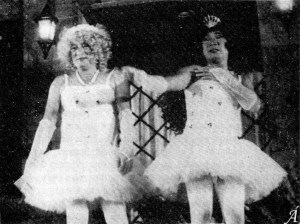
Best Cinematography. The best Filipino cinematographer who ever lived has died, but not before perfecting his transition from black-and-white to color, and attaining his peak – and that, by simple extrapolation, of Philippine cinema as well. All that had to happen was for Peque Gallaga, who did the epic ECP production Oro, Plata, Mata, to recruit Conrado Baltazar, who was then already being credited for making a series of Lino Brocka films noirs seem larger than they actually were, for Regal Films’ Virgin Forest.

11011The film itself incribed a semi-circle in Gallaga’s career by being screened at the ECP venue, the Manila Film Center, where his earlier release (also by Regal), the sex film Scorpio Nights, had acquired for him a strong measure of notoriety from both establishment and opposition moralists. Virgin Forest, despite being Gallaga’s best film ever, bore the brunt of the backlash, Baltazar’s work along with it. Baltazar’s expertise can be gleaned by inspecting a near-contemporaneous project, Marilou Diaz-Abaya’s Sensual (1986), where he made credible use of (feminine) colorist textures worthy of Romy Vitug, although he never found another such oppurtunity on the same scale: both Gallaga’s and Brocka’s next significant epics, Isang Araw Walang Diyos and Orapronobis respectively (curiously dealing with the same subject matter of rural vigilantism), were to be made almost simultaneously the year after his death.

Best Production Design. How fitting that a belated addition acknowledges the variability of film presentations. The winner in this category, in contradistinction to the rest, never had a regular theatrical run. This was not so much because it was shorter than most regular releases (since, as most film historians will be capable of confirming, early films tended to observe far shorter screening times than they do today); it was because the product itself was unclassifiable by standard-release categories, with fictional and documentary elements, and with its achievements ascribable to both the filmmaker as well as the subject/performer, attaining the status of “art film” not just aesthetically but by literally presenting the subject’s art work onscreen.

11011The complete title of the work as originally released in 1991 was Yuta: The Earth Art of Julie Lluch Dalena, with Hesumaria Sescon listed as director, although the Internet Movie Database shortens the secondary title to The Earth Art and includes Dalena as co-director. The members of the Manunuri ng Pelikulang Pilipino declared this their “best short film” for the year, but Kritika, the short-lived critics’ organization I participated in, listed it and Elwood Perez’s Ang Totoong Buhay ni Pacita M. as Gold Prize winners.

Best Editing. A kink came up in this category, after a discussion with a film expert who, for some important reason, shall remain unnamed. My choice was Lino Brocka’s Orapronobis, which was edited, as per its credits, by George Jarlego and two non-Filipinos, Sabine Mamou and Bob Wade. The complication isn’t so much the fact that the film may have been finished counter to its makers’ preference, although some amount of hush-hush talk to this effect once circulated. The issue dwells more on the reality that certain types of material may seem less expertly edited precisely because of the greater ambitions they aspire toward. Manila by Night and Moral, for example, may be sprawling and ambiguous in parts, but this could only certainly be ascribed to the necessity of letting go of pure or perfected technique in order to allow some non-plastic aspect of the material to develop.

11011In this respect my source suggested Mike de Leon’s Kakabakaba Ka Ba?, which won the Urian directing and editing trophies over Manila by Night. I find both positions valid: Orapronobis is as editorially perfect as anyone has ever gotten hereabouts while Kakabakaba is as editorially ambitious in the same sense. Both were done by brothers, Kakabakaba by Ike Jarlego Jr. The phenomenon of tie-giving has its place in our awards system, so my preference is for both titles – and, in effect, for the gifted clan that has been putting together some wonderful films for several generations now.

Back to top
Return to Fields of Vision contents

Best Sound. Another clan holds fort in this area, the Reyeses. Luis and his son Ramon teamed up for some impressive sound-studio results, mostly in Mike de Leon films. The elder Reyes had also worked with, among others, Gerardo de Leon, while the younger one continues the tradition with some of our better filmmakers. Technically I’d say that a Gallaga film, Oro, Plata, Mata, which credits Ramon Reyes for sound, would be one of the best I’ve seen – and the best I’ve heard, in the strictly plastic sense.

11011But in an interview with Ramon himself, he avowed that his ideal of good film sound is one that draws from the more difficult live-recording option than from the more controlled studio-dubbed system. Over the years I’ve learned to appreciate what he meant: you give up some amount of crispness and clarity in exchange for ambience and authenticity, and a good soundperson can always make the tradeoff preferable. Reyes held up as an example Brocka’s Maynila: Sa mga Kuko ng Liwanag, which he and his father worked on, and I still have to find a better live-sound (and living-vision, which is of course directorial) film. Even the music, done by the precocious Max Jocson, was as unprepossessing yet eerily natural as the film’s aural design. The Reyeses earned a well-deserved trophy from the 1975 Filipino Academy of Movie Arts and Sciences for this film, and they earn mine all the way too.

Best Music. I’d settle for a Jocson score, with its incomparable admixture of minimalist principles and observance of the primacy of natural film sound. On the other hand, we’re really speaking of music here as distinct from sound, so I guess this could justify a score that heralds itself as unabashedly Orphic, capable if necessary of existing independently of the film that it accompanies.

11011The many times I watched Tikoy Aguiluz’s Boatman, whether at the MFC, a downtown theater, or on videotape playback, it’s the lush, expressive, achingly beautiful music I always wound up appreciating. Jaime Fabregas did some other highly competent scoring before and after this film, and even won an Urian for a relatively minor accomplishment in Scorpio Nights. Boatman was in the running the last year I was a voting member, but the prejudice against “bold” MFC films was then going too strong. This time around Fabregas in Boatman still gets my vote, man.

Sequitur

The problem with such state-of-the-art criteria is that early-state entries get excluded. The earliest awardee, Brocka’s Maynila, is from only fifteen years back, while the latest (prior to a post-publication addition), Orapronobis (another Brocka film), still has to be locally released. As problematic proof of its cyber-age existence, Orapronobis also happens to be the first Filipino film made available in laser-disc format.

11011Maybe someone else should come up with a qualified set of awards, like the best silent work (if anyone can remember or find any such thing) or black-and-white title. I would be very much embarrassed to hand out qualified awards though, much less receive them. I would rather stick to my list, and draw up a new one once the scenario changes too significantly to be ignored. Who knows? It could be as soon as the next couple of film releases, or as far away as, heaven forbid, the closing credits of our lifetime.

Back to top
Return to Fields of Vision contents

Notes

[1] In fact the last critics group I participated in, named Kritika, stopped functioning after a few years of handing awards using pragmatic, liberal, and flexible criteria of selection and recognition. The reason was simple and straightforward: the members had to leave for overseas residence – work, migration, or (in my case) study. The innovations I remember were: specifying a category only if the year’s output demonstrated productivity in it, designating more than one winner if such a number proved deserving, and specifying any number of output for any artist who merited the recognition. Individual citations were contained in a critical summary for the year under consideration.

[2] Queries from all over (including from foreign scholars) proceed from the appropriate title for the film: it appears that the members of the Manunuri ng Pelikulang Pilipino insist on using other titles – City after Dark and even Manila after Dark, which never appeared on any of the film’s celluloid or print credits. Since these people took charge of cultural and educational institutions after the collapse of the dictatorship of Ferdinand Marcos, the movie’s censored title, rather than Manila by Night, kept appearing in “official” records. The historical narrative though remains transparent and unambivalent: when the producers applied for a permit in 1979, the local censors board, after imposing a total ban for months, disallowed any reference to Manila in the film as one of the conditions for its release, so the badly mangled print screened in Philippine theaters in November 1980 had the City after Dark title.

11011Weirdly enough, the MPP opted to nominate this version for its annual awards and effectively penalized it by withholding the award for director from Ishmael Bernal (personal disclosure: this was my first year as a voting member, and my questioning of awards logic since then has only intensified through the years). So this is the version that the MPP wishes to uphold? Sadly the group, despite its claims to the contrary, is so anti-reflexive that we may never find out exactly what goes on in its members’ brilliant minds. Worth reiterating here is the fact that even the Marcos government’s own official film agency restored the Manila by Night title when it allowed the integral version to be screened at its venue.

[3] This selection, a reaffirmation of a throwaway subsection in The National Pastime’s opening essay “A Second Golden Age,” was so widely echoed that it became entrenched as some form of virtual dogma during the internet era. It was referenced when the film and the central performance were separately recognized in region-wide assessments that I only remotely became aware of afterward. My own reassessment of Nora Aunor’s record pointed to a different-though-related outcome, which I outlined in “Firmament Occupation: The Philippine Star System” (Kritika Kultura 25, August 2015, pp. 248-84): while her superiority to all other Filipino film performers had been evident for the past several years, Himala was one of several peaks in a run that has arguably continued to the present, spilling over to stage, television, and new-media presentations.

11011An Aunor peak can be defined as a major project whose achievement is enlarged or boosted by her delivery. The coverage is admittedly slippery, since flawed or outright potboiler material can be rendered amusing, engaging, or at least tolerable because of her skills display. For this reason, I would now opt to identify an entire body of work, ironically culminating in her abandoned auteurist project, Greatest Performance, where the title’s claim is adequately fulfilled. As for the possible personal reasons for any of the Manunuri members’ downgrading of Aunor, the group’s very first major awardee for female performance – these deserve further interrogation but lie beyond the scope of this commentary.

Back to top
Return to Fields of Vision contents


Fields of Vision – The Last of Lino

The standard opposition in Philippine film culture between Lino Brocka and Ishmael Bernal existed mostly in the minds of film observers and practitioners who were invested in the stature of one or the other, despite the fact that both filmmakers expressed fondness for each other and engaged in, at its worst, a friendly rivalry. The differences between them unfortunately infested critical opinion, magnified in malignant proportion when European filmfest agents swooped into town and decided that the politically naïve director who nevertheless boasted of polished surfaces would be preferable to the campy and boisterous sophisticate who had a deeper understanding of and preference for Third-cinema traditions.[1] Although initially less threatening to his global marketers because of his reliance on generic Hollywood models and steadfast opposition to Ferdinand Marcos’s martial-law dictatorship, Brocka inevitably outgrew his mid-career orientation and made perceptible stabs at narrative complexity, thematic ambiguities, and spectatorial appeal – qualities that were associated with Bernal, just as Bernal made a disturbing turn into orthodox leftism. That both adventures were cut short before their protagonists realized what ends they would lead to is one of the many tragedies that, in the minds of many of us, confirmed the end of a significant era. This semi-autobiographical piece was originally drafted as the epilogue to my second volume of film articles, Fields of Vision.

My affinity with Lino Brocka became more literal than I could have ever imagined after he had died. My instinctive response was to declare a study of his works as master’s thesis topic, but I eventually had to face the fact that, apart from the formidable resources the attempt would require, this was also my way of evading the reality of the loss his death had engendered. Meanwhile I had requested my librarian mother to clip whatever biographical information was available, and it was she who discovered that Lino’s father’s first wife was the Bicolano Brocka that we were somehow related to. What impressed me was the distance between us – a remoteness that could only be bridged, had he still been alive, by a complex social formality. Strangely, it was such a formality that characterized the few interactions I had with him. The first time we were introduced, I had just published my first (and fortunately last) John Simon-inspired review, which happened to deal with his then-latest release, Angela Markado.[2] I’d been forewarned by accounts, from acquaintances and the media, of his temperamental responses to criticism, but we carried on as if I had commented on something as irrelevant to our concerns as the weather.

11011Maybe he understood my obsession with trying out as many approaches to film writing and analysis as possible; in any case, my encounter with him opened to me the possibility that the artists I was dealing with could be concerned with the same thing, differences in media practice notwithstanding. Having witnessed what Lino and his colleagues, in their pursuit of knowledge through praxis, had to endure from commentators who were more concerned with their own personal criteria of correctness than with the artist’s learning process, I had the dubious benefit of knowing right from the start that I was placing myself in a somewhat similar situation.

11011The interventions of history were of not much help either. The machinators of martial rule were clever – and I grant this as someone who was privileged to work within the Marcos administration – but they necessarily left little room for cultural sophistication, beyond the basic and ultimately frustrating application of guerrilla principles. Hence mass media were approached by their practitioners with an understanding reminiscent of First-World appreciation circa the 1950s, when US media institutions were both monopolistic and discomfortingly allied with government. Artistry in the classicist sense constituted the surest acceptable defense for subversive practice, so in general the more mass the medium (and therefore the more subject to establishment interests), the harsher the critique toward it; such a view also conveniently induced a critical attitude toward the government, since this was the entity that exercised control over media.

11011Practice in media was therefore regarded as compromise at best, and nowhere was this principle more in evidence than in film. Competition-oriented awards served to emblemize this essentially watchdog function, providing a much-needed alternative to financial and political incentives. The 1986 people-power uprising, in its dismantling of the structures of cultural patronage in film, similarly obliterated the modes of practice that were utilized to counter the excesses of the dictatorship. The question Who/What is the best artist/product of the season? (effectively akin then to asking who or what best embodied opposition to the dictatorship) has given way to Why should only one winner at a time be proclaimed in so many categories, why these categories in the first place, and why this set of winners at this time?

Back to top
Return to Fields of Vision contents
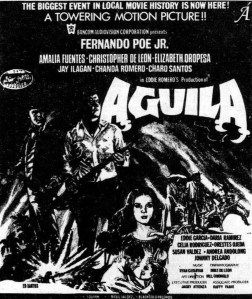
11011Using the development of Western critical thought as framework, I realized that entire schools had passed us by, in the meantime that we had to rely on early useful ones. One’s mission could then be facilitated by simply flash-forwarding (or should we say push-processing?) to the present, accepting contemporary theorists’ assertion that past approaches had proved flawed and were thereby generally dismissible. Other people had other ideas – Lino Brocka, for one. Where it would have been easy for him, given his international stature and local clout, to simply assimilate state-of-the-art competence, he preferred to run the gantlet in wooing back the mass audience that had accounted for his early triumphs in the industry. This meant a modification of his film-noir expertise and a whole lot of melodramatizations, so much so that prior to his resumption of foreign-financed production, he was being written off by most critical quarters as no better than the other Marcos-era talents, who were regarded as more decent in their preference for inactivity over crass practice.

11011Lino possibly had as many tragedies as there were who loved him. To my mind, his greatest was expiring right on the verge of what could have been an astounding artistic take-off, judging from the evidence of his last few serious local works: Hahamakin Lahat, Gumapang Ka sa Lusak, Sa Kabila ng Lahat, and the still-unreleased Orapronobis, plus the projects that had to be taken up by others – Huwag Mong Salingin ang Sugat Ko and Lucia and, in play form, Miserere Nobis and Noli Me Tangere; and these were just the ones that had already attained some measure of development – many more of equal or greater ambition were allegedly being considered. At no other time, in terms of his mastery of the medium and understanding of its mass appreciators, was he better qualified to stake a claim as major Filipino artist than when he bowed out. Many of us local critics managed to sharpen our faculties at the expense of Lino’s less-than-able output; but much more was lost to us by his death.

11011His own contribution to my convictions appears to be more lasting. I managed to somehow catch the tail end of formal awareness and appreciation of whatever media one happened to be interested in – film and literature, in my case. This has somehow enabled me to relate with a small and highly select number of local critics who extend their notion of praxis to include artistic production, inform their critical practice with an understanding or at least the pursuit of what constitutes effective expression in the local context, and believe in the importance of historical continuity for our specific purposes. One would think at first that between, say, a believer who comes in straight from the latest cultural theories and someone who exhibits the qualities mentioned above, the distinctions would be too subtle as to be negligible. Recent organizational practice, however, has demonstrated that the differences can be both salient and crucial.

11011In the final analysis, one needs to reckon with the current state of cultural maturity and proceed from there. Artists may be up for annihilation in the West, and well they may be, given the overly extended period of their ascendancy. But to impose the same attitude here, where people still exhibit difficulty in distinguishing true artists from bogus ones and cannot even always count on cultural institutions for assistance in this regard, would be tantamount to misguided zealotry. To go about busting canons is perfectly called for, if the canons have themselves been drawn up with the maximum possible systematization and thoroughness. But with all our available ones so far shot through with methodological imperfections, then the act of assisting in creating better ones first will prove more helpful in refocusing attention on issues of credibility, reliability, and defensibility. The critique of such a listing (of which I hope the ten-best survey appearing in this volume will be the first definitive one for Philippine cinema) will of course be more difficult and complex, but this only means a more advanced and rewarding discourse in the long run.

11011I could not always hope to convey the fun I had in what was in a sense a new adventure every time; I could certainly indicate here though the heavy-heartedness with which I accept that such a mode of practice cannot be sustained forever, at least not while our concrete local condition remains the way it is and has been for as long as I remember. Sometimes I still find it hard to believe that certain foreign practitioners have built careers on the basis of one or a few others of these occasionally all-too-easy attempts at film coverage and analysis, but then even Lino himself realized, sometimes to everyone’s discomfiture, that material existence was never always fair.

Back to top
Return to Fields of Vision contents

11011What comes after this work will, or at least should, strive to be something as different as this was from the first. It could be more tightly structured and cognizant of recent philosophical issues, or it could be either one or the other or nothing like anything I mentioned. Whether my colleagues in criticism like it or not, my cue has somehow already been set … by among others Lino Brocka, who never allowed anything humanly surmountable to get in the way of what could have been merely fun. What a way to go.

Notes

[1] It should no longer surprise observers from this period that the person being referenced here was Cannes Film Festival publicist and selector Pierre Rissient, who died in May 2018. Wolf Donner and Moritz de Hadeln, directors of the Berlin International Film Festival, were more appreciative of Third-cinema traditions – and therefore supportive of filmmakers like Kidlat Tahimik and Ishmael Bernal – but were far less influential than Rissient. I managed to mention a further so-far undiscussed issue in my monograph Manila by Night: A Queer Film Classic (Vancouver: Arsenal Pulp Press, 2017): “Brocka, like his serious films, was formal, reserved, and masculine in deportment; Bernal was boisterous, catty, inclined to camp, and effeminate. Although both acknowledged being homosexual, Brocka … went through a phase of being ‘discreet,’ forbidding queer behavior at the Philippine Educational Theater Association and quarreling with journalists who played up his gay inclinations. Whether this implies that homophobia played a factor in the Cannes festival’s gatekeeping is up to scholars of gender to tease out” (99n15).

[2] A problematic aspect of Lino Brocka’s personality, evident in the many interviews he granted and (mostly) compiled in the posthumously published volume Lino Brocka: The Artist and His Times (ed. Mario A. Hernando, Manila: Sineng Pangkultura ng Pilipinas, 1993), is that he refused to acknowledge any error that may have arisen in his filmmaking or real-life output. Yet his subsequent works would evince that he had reconsidered those same positions and was striving as best he could to rectify them. In the instance of his films panned by local critics, he would point out how foreign film festivals provided those specific titles with raves and prizes. Local reception to Philippine releases that bypass the process of securing audience patronage in order to garner overseas esteem has shifted considerably since then: filmmakers no longer need to evade censorship, and have been known to disparage Filipino audiences to court the sympathy of foreign commenters and viewers. It would certainly not be meaningless to speculate that Brocka, had he still been around, would be the first to repudiate this state of affairs.

Back to top
Return to Fields of Vision contents


Fields of Vision – Positions

1. ASEAN Affair

Anyone old enough to have participated in our last supernational film activity, the Manila International Film Festival (MIFF), will now be suffering a seven-year itch that the recently concluded 1990 ASEAN Film Festival will barely be able to alleviate. Part of the reason lies in the unfair observation that the countries that constitute the Association of Southeast Asian Nations don’t have film industries as active as ours; two of them, in fact – Brunei Darussalam and Singapore – don’t even have film industries at all.[1] In maintaining that we happen to have the most impressive system and products of film within the organized region, we at once find an area, no matter how economically dispensable, where we reign supreme, and at the same time allow ourselves the indulgence in the reverse modesty we so masochistically enjoy inflicting upon ourselves: shucks, fellas, we the best? – it’s only film, see, and we don’t even take it seriously, really….

11011You didn’t miss much if you weren’t at any of the free screenings at Robinsons Galleria; you’d only have acquired some insights, if you were there, on the popular preferences and concerns of our regional neighbors, something our archipelagic isolation has rendered secondary to media-raised Western issues. Moreover, you’ll only confirm that we excel where others don’t, which isn’t particularly impressive when you consider that they excel where we don’t either; and to pursue this materialist line of thinking to its painful and paranoid conclusion, it may appear that our better-developed neighbors simply conceded, in true Oriental fashion, some silly recreational businesses to us, so as not to make us appear too backward.

11011Excel we did anyway, and that is something that ought to be put on record, something no one – warped logician, commercialist financier, negligent government official – can take away from us. Malaysia’s Hati Bukan Kristal [The Heart is Not a Crystal] (dir. Rasas Ahmad Alauddin, scr. Adibah Amin) and Indonesia’s Taksi [Taxi] (dir. & scr. Arifin C. Noer) both flounder in melodramatic mush, notwithstanding the claims of the delegates of their respective countries that each was one of their best outputs last year; Taksi, in fact, boasts of having won all the major prizes in the Indonesian Film Festival. Both entries revel in romanticized fantasies of social and sexual desiderata that resolve in comfy establishment positions. In Taksi two men in love with a singer-actress have to live with her insistence on emotional and financial self-reliance, while her managers (and admirers) must accept the potentially career-destructive confirmation of her married status. Hati Bukan Kristal starts off with a journalist getting piqued by an enterprising female colleague; a dangerous and sensational assignment brings them together, and guess what happens next.

11011The Thai film, Puk Pui [Tell Them We’re No. 1] (dir. & co-scr. Udom Udomroj, co-scr. Thongkao Makampon) affirms what was warmly evident even during the MIFF: that our latitudinal fellow Asians have a way with the camera and with cinematic storytelling. They seem to be driven more though by angels than by demons, as we tend to be. Puk Pui isn’t anywhere near the social-epic accomplishments of Luk E-san [Son of the Northeast] (dir. & scr. Vichit Kounavudhi), which won an MIFF special jury prize as well as the Office Catholique Internationale de Cinema award. Comparatively, Puk Pui is linear in its narratory design, detailing the coming-of-age pains and pleasures of a lower-class boy who somewhat accidentally acquires the reputation of being a jinx; in being rejected by most everyone he encounters (save for a female classmate who, like him, loves to dream big), he manages to interact with a wide variety of social types, urban, and rural. His age group and unusual affliction help justify a string of humorous incidents and running gags, including some of the most charming bits of movie slapstick this side of the globe.

11011Add some years of cruel and bitter hardship to these characters, and you’d be close to the material of the local entry, Gumapang Ka sa Lusak [Dirty Affair] (dir. Lino Brocka, scr. Ricardo Lee). Close, I said, but not all there. Gumapang Ka doesn’t have the grim surfaces that the Indonesian and Malaysian entries exhibit, apparently in order to drive home their preoccupation with realist issues; neither does it proffer the delicacy and good cheer of the Thai movie. What it has, relative to the other entries, is an irruptive delirium made entrancing by a deadly serpent’s-eye finish, put together with something akin to the witchery of twentieth-century Erinyes. The ironic thing is that all the festival entries, Gumapang Ka included, were custom-made products paraded in a venue where innovation is, or at least should be, the prime criterion for success. What the ASEAN event should try exploring is the expansion of audience interest and critical participation, via the standard resort to award-giving; the ASEAN capital whose turn it is to sponsor the festival could be made to shoulder all expenses and responsibilities for such a competition. Before this could be implemented, of course, the countries should agree to the usual terms of fair play and the unusual exemption from any form of censorship. The entries may be further contracted, should they win certain prizes, to participate in a tour of exhibition in all the member-countries; as in the MIFF, the host country may be allowed to enter two films for competition.[2]

11011Coming from a country whose entries have been demonstrating clear superiority for some time, such a proposal might meet with charges of self-serving motivations. Moreover, the organizers themselves might not want to see one another in a competitive context. What needs to be emphasized, however, is the importance of arousing the interest of the festival’s intended beneficiary, the ordinary Asian movie-goer, so a free-for-all in this instance might be preferable to a safe-for-some.

[First published April 17, 1991, in National Midweek]

Notes

[1] The same year this article came out, Singapore started film production, an activity that continues to the present.

[2] A half-decade after this event, Korea launched the Busan International Film Festival. It eventually supplanted other global film festivals, including those from the ASEAN region, as the international festival that ASEAN countries consistently participated in. (Not surprisingly, Korea’s ASEAN outreach is also the most active in the East Asian region.)

Back to top
Return to Fields of Vision contents
2. Carnival Cinema

Cinevision 2000 the presentation was called, but the site itself called to mind the provincial fairgrounds of my childhood, gone to seed. Situated within the carnival area of the Philippine Center for International Trade and Exhibition (Philcite), Cinevision 2000, which was actually billed “Adventures of America,” could be reached from the nearby Philcite entrance by walking (but more often squeezing) through an open-air platform and a succession of kiddie and adult rides, the non-existent pathway obscured even further by food and souvenir booths of various sizes.

11011On a less frenzied night you could probably make out, once inside, the dome that ought to be held as ultimate proof of how fanatic you can be about filmic presentations. You wouldn’t feel too lonely as fanatic though, since the Cinevision screenings are regularly jampacked with more enthusiastic (and thereby less pretentious) carnival thrill-seekers. Running for the entire length of the Philcite carnival season, Cinevision 2000 constituted the only unique film event of Christmas 1989. Wave Cinema, which featured video movies, closed down its singular Cubao venue two years ago; the Rizal Park Planetarium operates year-round and doesn’t really offer movies, unless an audiovisual mishmash of penlight projection and slide show proves extraordinary enough for you to forgive the crudeness of it all.

11011The carnival charged five pesos for entrance, while the Cinevision 2000 booth made the same amount per head per presentation; since there were three (presentations, not heads) in all, and since I shamelessly admit to film fanaticism, my, well, only adventures of America thus far cost me a reasonable twenty pesos, roughly a third of what I could have spent watching all the concurrently showing Metro Manila Film Festival entries.

11011One item in my recent past motivated me strongly enough to brave the Christmas crunch, despite the fact that I was otherwise too yellow, in the original sense, to do regular shopping: in a First-World country about a year ago, I realized the most exciting and insightful audiovisual treats in a fairground. One of these was a 360-degree movie presentation highlighted by continuous panoramas, facilitated by projecting the images through slits between screens. The exhilaration of movement mellowed quickly, however, since only the forward-moving portion provided the delight of discovery; the scenes blurred by the sides, and receded wearily in back. Moreover, the novelty of an uninterrupted horizontal line of vision wore off with the instinctive preference for a frontal point of view, and served to raise the next logical question: once one decided on a consistent lateral orientation, what would be seen beyond the upper or lower screen edges?

11011The answer brought the experience back to the familiarity of regular movie-going: nothingness, the masking off of the “reality” of the screen, intended (as per early expressionist theory) to draw the audience into the screen’s center, but also essentially a reminder of the literal limitations of the frame. Cinevision 2000 in this sense improved over the overseas production by opening up the perpendicular boundaries, and by negating the backside view by a most basic device – seating the audience. To be sure, the means by which this was facilitated was far from sophisticated. A circular portion of the carnival site was sectioned off with a domelike structure, with the smaller center elevated and covered with canvas. Half of the inner portion of the dome was painted white, the other black; the edge between colors arched exactly from one side to its opposite. A gigantic 70mm. 180-degree “Sensoscope” projector was tilted upward toward the white side, but where you sat (roughly at the center) your entire frame of vision would be encompassed by the screen.

11011All three films – fifteen-minute entries titled “Cavalcade of Thrills,” “Horizon,” and “Wild Wild West” – contained similar elements of non-stop point-of-view motion from various elevations of land, sea, and sky, including climactic roller-coaster somersaults. “Wild Wild West,” the best of the lot, opened with what appeared to be an authentic old-time black-and-white silent film featuring a sheriff-vs.-varmint shootout, its fadeout dissolving into a tunnel scene that emerged into a Sensoscopic car chase. None of the films observed a narrative, although two of them had voice-overs in German that the audience was willing to ignore. All were blatantly manipulative, with one instance of what seemed to be a mountainside car-race participant’s falling off a cliff and soaring over the shoreline – a helicopter shot that initially observed the contours of the road to mislead the audience into believing it was driving rather than flying. The Filipino movie-goers’ high threshold for filmic experience was evident in more than just the turnout of crowds. Each and every turn leap, spill, and near-miss was rewarded by squeals of excitement; considering that the moviemakers obviously aimed at cramming as many such gimmicks as possible into their products, each screening amounted to a virtual screamathon, rewarding for the psyche but definitely not for the eardrums.

11011After an entirely overwhelming first salvo, however, I began wondering if this sort of innovation could be put to good use the way conventionally proportioned screens lend themselves to film magic. A minor difficulty would be the confirmation of distortions at the edges once the camera stops moving to allow actors to do their thing. Greater trouble may lie not with the stars but with the too-perfect simulation of reality: if the illusion achieves a totality previously denied by black borders, what’s to prevent the viewers from contributing their share to the action? From another perspective, this may be one way of rationalizing the financial infeasibility of attempting this kind of format locally. A future carnival, in a future festive season, might yield a presentation whose potential would outweigh any objections or reservations regarding its effectiveness. After all, when we speak of cinema, this was how it really started – as a mere fairground sideshow that refused to fade away.

[First published February 7, 1990, in National Midweek]

Back to top
Return to Fields of Vision contents

3. Classroom as Theater

One of the predicaments I still have to solve as a teacher of film is the formulation of a proper response to colleagues who do not teach film whenever they go into their standard lamentation of how appalling the decline in student literacy has been. On the one hand, I do not have much of a choice except to agree. One of my undergraduate courses was journalism and during our time, the exceptional competence in English or Filipino that we associate with our most outstanding graduates today was the norm. (“Our time,” not to unduly alarm anyone, was about a decade ago.) On the other hand, the discussion of causes invariably points toward the very subject matter I teach, which is film in its expanded audiovisual sense. Most everybody who believes in being somebody feels compelled to consider a preference for audiovisual language as an illegitimate, or at the very least sub-academic, pursuit. The conclusion does not require considerable leaps of logic to reach: the great masses of our people exhibit this preference for nonprinted material – film, komiks, TV, radio, theater (including religious rituals) – and, if we assume that these media could also function as languages, they may even be literate in those terms. But since the same sector of the populace is uneducated (inadequately educated, actually), then literacy in these kinds of media would not be such a big deal compared with the ability to read and write.

11011Official educational policy has upheld this view for close to a century now or ever since film, the first and most successful audiovisual medium ever, has been in existence. To be sure, literature, whether oral or written, has had a longer and in many ways more glorious history and deserves the strongest possible emphasis in any educational system. However, the evidence of the past ninety-plus years cannot be ignored either: people continue to be lured away from the two (or maybe even three) Rs. During our time our teachers complained that their generation wrote better, as we are now saying to our students, and as our students who will go into teaching will surely be saying to their students.

11011The trend contrasts impressively with whatever observation we can make about film. Actually since virtually the entire first half of the life of Philippine cinema has not been preserved, we can only talk about the latter half, comprising the 1950s up to the 1990s. If our literature and, by controversial extrapolation, our readers got worse or at least did not get better, our films (and our moviegoing audiences?) on the other hand definitely improved over the years. The average Filipino goes to the movies and also “reads” komiks, watches TV, listens to the radio, and so on; that much we all grant. But then again, average Filipino students, who necessarily constitute a smaller portion of the populace, are different in the sense that they go to school, where they are made to read and write; afterward they go out of school, sometimes for good, and then behave much like average Filipinos. That is, they go to the movies, “read” komiks, watch TV, listen to the radio, and so on.

11011It would not do those who set our educational policies any good to resist this reality. Film, or film language if you will, is much too accessible, mainly because it is profitable – and when we begin talking about economics these days, that could not be too much of a good thing. What we should start with is what we already actually have. Some of it is not bad at all: film language is real, meaning it allows for easier translation and a whole lot of crosscultural interactions, in comparison with the printed word. Moreover, the level of film literacy of Filipinos is arguably superior to those of their neighbors in the immediate Asian region, if we go by the percentage of quality outputs available locally in relation to those of nearby countries and (a more contestable criterion) the level of Westernization in local film technique.

11011The movies have lately been assuming part of what the educational system has been unable to accomplish because of the latter’s still essentially elitist orientation. Local cinema has, at one time or another, criticized militarism (and, by association, the previous fascist dictatorship), advocated democratic processes, upgraded the image of women and queer folk, and provided an awareness of the existence of a colonial past. It continues to supply its audiences, majority of whom are impoverished, with insights into their conditions and with reflections on their dearest aspirations. Recently, it has also embarked upon the risky venture of castigating the white man and the traditional politician, simply by casting these types as villains rather than heroes this time around.

11011It has also proved capable of other things that some of us would consider unacceptable or even harmful, but then this all boils down to the fact that, officially, we do not take this, our national pastime, seriously. We teach our students how to read and write, and when possible to read and write well. We also assume they know how to choose the films to watch, and we may even be correct. But as to choosing the films well – well, they haven’t complained about still being in the dark in their approaching hundredth year of solitude, have they?

[First published October 17, 1990, in National Midweek]

Back to top
Return to Fields of Vision contents

4. Film Critics Speak
[Prepared with Mauro Feria Tumbocon Jr. & Patrick D. Flores]

To begin with, we observed that the entire spectrum of existent Filipino criticism is evident in film; in short, cinema is the most widely discussed art form in the Philippines. Practically all publications acknowledge this widespread interest by devoting regular sections to film, and film commentary is also making inroads in television and radio. It is the level of commentary, however, that leaves much to be desired. As far as general impact can be gauged, we can safely state that serious film evaluation is performed and sustained primarily by the handing out of awards by various bodies. We cannot deny the publicity mileage this generates, especially since the sheer number of award-giving winners could go on for as long as the very last trophy during the very last ceremony still has to be handed out.

11011There are six established award-giving groups, as of last count, some of them clearly overlapping in claims and functions. Although one could argue the relative merits of each, we would rather take the larger and more controversial stance of stating that film discussion, although heavily promoted, is also seriously trivialized by award-giving. There is no focus of discussion, except the comparative aesthetic achievements of the nominees – and even then the fact that film is too complex an aesthetic system to be subjected to this treatment is glossed over. We would also like to point out that the movie industry labors under government neglect, particularly when compared with the institutional support provided by the Marcos dictatorship. We do not endorse the kind of self-serving and overscaled meddling suffered by our practitioners during the latter years of the dictatorship. On the other hand, we agree with some of the industry’s advanced sectors that relief from taxation and censorship, as well as cash incentives for quality productions, no matter how occasional, resulted in an atmosphere of sanguinity then, and would still be welcome features today.

11011At this point we would like to go into one particular, and that is – the need to implement an honest-to-goodness system of film classification, one that does not result in the tampering of the work on anyone’s part, and that also presumes the liability of the practitioners strictly within the context of absolute freedom of expression. Meaning to say, one should be held responsible for violating our existing laws on the limits of expression, but one should also be allowed to complete the process of expression to begin with. We welcome the role that education plays in making the audience more aware of the nature and potentials of its favorite mass medium. However, we believe that the availability of such education is too elitist to be truly effective. A student first has to reach college and study in particular schools, mostly the expensive ones, in order to be able to take courses dealing with film. To specialize in the field, the student has available to her only one school, the national university. For advanced studies, she has to go abroad.

11011We enjoin all our fellow film critics to persist in popularizing film discussion without trivializing it. We seek to encourage sober discussions in as wide a spectrum of our audiences as possible, and recognize the cruciality of the role that Filipino film artists have been playing in conducting dialogues, no matter how limited, among themselves, with film commentators, and with the audience. In cooperation with our educational institutions as well as the mass media, we call for the expansion and development of local film scholarship, in order to provide a firm basis for popularizing film commentaries.

11011Lastly we would like to maintain the manifold advantages of expanding opportunities in film. Government could help a great deal in facilitating our filmmakers’ participation in foreign festivals and markets, counting the costs in terms of additional income and prestige rather than the personalistic self-image of whoever happens to wield power at the moment. We need to have more schools offering film courses and full-blown degrees in the field, as well as higher studies specializing in the medium. We envision the resulting network as a possible venue for alternative film products, with an eventual bearing on mainstream production. We also stand as one with our colleagues in pursuing the thoroughgoing professionalization of criticism in the Philippines, so as to enable serious film commentators to practice and grow in the craft without the distractions of unrelated income-generating activities or the temptations of public relations work that could compromise the formation of well-informed, carefully thought out and expertly articulated opinions on film.

[First published October 3, 1990, in National Midweek]

Back to top
Return to Fields of Vision contents

5. Shooting Crap

When Joey de Leon claims he couldn’t care less about critics’ complaints regarding his use of toilet humor, the issue doesn’t revolve on the soundness of his argument. Toilet humor, as used in the context of this debate, is unofficially understood to be a sub-category of obscenity – in direct opposition to our moral guardians’ shibboleth of wholesomeness. By extension, the argument goes, toilet humor, as a form of obscenity, is socially undesirable and therefore should be subject to suppression. No one has ventured to raise the issue of legality so far, although this would clinch the controversy in a convenient way. Anyone, de Leon included, could easily answer that the antiquated nature of our censorship laws renders such an approach amorphous at best; still, the issue at stake remains unarticulated.

11011Joey de Leon gets away with toilet humor – has the right to it, in a manner of speaking – simply because he has been so darn successful of late. During the early days of his trio with the Sotto brothers he might have taken the pounding with, well, a grain of salt; their always moderate and occasionally pleasing box-office returns could serve to ease the sting somehow. But now he has struck it rich, and it’s not so much the power he holds over the characteristically purchasable movie press: appearances to the contrary, he’s not that crude, and he need not be so in the first place. It’s the implication of so fail-safe a formula on so financially frank a system, when any project without de Leon’s pretensions to satire – without de Leon himself, even – could now be assured of record-shattering box-office returns by merely purveying shit jokes on primetime.

11011In short, the moguls owe so much quantifiable gratitude to Joey de Leon for this good-as-gold discovery. Not even Imelda Marcos’s pera-sa-basura [money-in-trash] projects could prove as conclusively as Starzan et al. did that the sound of cash registers ringing could compensate for the fumes of unflushed concepts. And even if a movie writer had enough sense (and guts) to dismiss the big-timers’ current sanguinity with what may eventually be known as the de Leon formula (endless swigs of castor oil following entire plateloads of goodies, with a movie crew on the alert), a rebuttal happens to be waiting in the wings from the opposite direction. The logic runneth thus: to question a person on the basis of principle is a simple thing to do, but when that principle happens to enjoy popular support, then the possibility of claiming to be better than the majority, antithetical to the democratic premise of raising questions on their behalf in the first place, emerges. This puts the de Leon “critic” in a position too awkwardly similar to that of the cultural censor, who derives his raison d’être from the perverse notion that the people, even (or especially) in a democracy, could not know what is good for them.[1]

11011There may be two ways out of the impasse that both sides find themselves ranged against at the moment. One is that of historical materialism – which basically posits that nothing lasts forever, least of all a thing of no real value. Just as Dolphy’s piss jokes and Tito, Vic and Joey’s snot jokes saw their respective heydays come and go, so will Joey de Leon’s fecal fixations – if not in the near future, then along with de Leon himself, may his sould find peace (no critics in heaven?) come the time. The trouble with this attitude is of course its superciliousness, consciously partaking as it does of the same judgmentalist approach that it initially seeks to distance itself from. The only other option, which may seem the least desirable because of its passivity, used to be impossible to adopt because of the polarizing consequences of the previous political dispensation; if Marcos were still around, the toilet-humor controversy would have been resolved in favor of one side or the other, eventually depending on the perceived benefits to the state.

11011It may be time for a little more sophistication then. How about regarding such devices as attempts at cultural innovations, the breaking down of taboos in preparation for possibly more serious discourses in future? Part of my reservations about de Leon’s objectors is the sneaking suspicion that the campaign would not have taken on a strong degree of outrage had Starzan, if not the rest, been a Critically Defensible Work of Art. But what if, then? Would we have expended all our intellectual resources defending a crap scene (as was proved aesthetically viable in an early Wim Wenders exploit, Kings of the Roads) – eyeball-to-eyeball with Manuel Morato if necessary, just because art’s sake was at stake in this instance?

11011One way of looking at the situation is through the perspective of guerrilla strategy. Filipino film censors have traditionally been suckers for artistic provocation; the best way to get their danders up in the past was to inject an offensive aural or visual detail in an otherwise integral prestige project. But beyond the delight of watching them mouth the most culturally illiterate justifications for the imposition of already ill-advised policies, the consequences – stricter censorship procedures, mangled or banned products – were definitely too exorbitant for all those involved. Since in their view the less artistically minded products pose proportionately less harm to the community, why not allow such items to take the lead in toppling the ramparts of convention? Come the time when a real and responsible filmmaker will find it absolutely necssary to put in a cussword or a toilet scene or a subversive idea, the precedents would have been set, the producers would have been satisfied, the masses would have been bored with the usual treatment, and everyone might be a bit happier with the attempt. Had Ishmael Bernal done Manila by Night (whose entire toilet pick-up scene, among countless others, was deleted in the original release) late last year, he might have to thank, among others, Joey de Leon for the trophies he’d now be collecting.

[First published April 4, 1990, in National Midweek]

Note

[1] Viewers of the TV program where Joey de Leon found himself fending off attacks from both political positions would have recognized Manuel L. Morato, designated chief censor by then-President Corazon Aquino and subsequent candidate for the presidency, representing the conservative sector; and Behn Cervantes, theater and film director, critic, actor, and professor, and former political detainee, representing orthodox progressives.

Back to top
Return to Fields of Vision contents
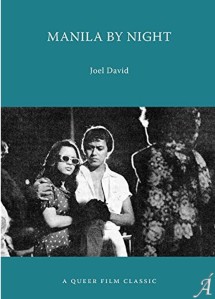
6. Fleshmongering

One of the early distinctions, dubious though it seems, of the 1990s is our latest designation of what we’d all known the past two decades or so: that the sex film is marketed primarily for its audience’s carnal titillation. Ever since institutional controls on the treatment of sex eased up (though gave up would be the more satisfactory description) during the ’60s, our film practitioners had been relying on a series of merely suggestive, sometimes even coy, labels for what were in a sense products of a worldwide and continuing cultural revolution. The first word was bomba, drawn from the political turbulence of the period of its emergence, the pre-martial law years. One would expect that the original namesake – the pro-activist sector, not Roger Arienda (whose nickname would not have stuck had his public ignored him) – would have resented the industry’s adoption of one of its virtues to refer to a diametrically opposed form of passion, personal rather than social. Instead, both sides seemed to have arrived at an understanding that they had more in common as subversives committed to certain material ends, and so demonstrators then were not averse to patronizing the latest sex flick, just as the more sensible bomba practitioners, particularly Ishmael Bernal, Lino Brocka, and Celso Ad. Castillo, would turn out socially critical subjects once 1081 had effectively closed the season of open expression for both camps.

11011Bold, the next term, served to consolidate a number of mildly descriptive labels, among which “wet look” proved to be the most graphic (and therefore most popular). “Bold” is of course antediluvian relative to bomba; even Gerardo de Leon’s FAMAS record-setter, Huwag Mo Akong Limutin, which copped out on an abortion scene (reputedly its most shocking feature), was called worse things by the censors – and this was during the 1950s.[1] But what revitalized the genre, allowing it to even surpass its predecessor, was precisely the aforementioned social consciousness that our filmmakers developed along the way. No bold film was ever as, well, frontal as the typical bomba movie was; on the other hand, no bomba product could equal in significance the best martial law-era movies that employed sex either as additional come-on or as legitimate topic for filmic discourse.

11011The decline of the Marcos regime made possible an approximation of the bomba era, while the fall of the Marcoses led to a complete backslide. Obviously “bold” wasn’t bold enough anymore. The acronym penekula (from penetration + pelikula) was coined ex post facto, with the renewed moralism generated by the 1986 revolution plus the cheaper resources afforded by video combining to making graphic sex films too notorious and small-time for a reputable and long-term undertaking. And so we now have sex trip, although where it will take us is really the big question. The name is still too novel for generalized considerations, associated as it is with an aspirant-to-major studio, Seiko Films, which still has to pay its dues for industrial success by way of awards-worthy projects. If the term sticks, it won’t be the first time a studio engineered a classifiable trend in movie-making: if my memory serves me right, Regal Films, then also a struggling outfit, identified itself with bold-film production, to the point of incurring the ire of a culture-meddling Imelda Marcos.

11011The main difference, however, is that all these titles – bomba, bold, even penekula – managed to redeem themselves with projects memorable for more than just their extent of skin exposure, while “sex trip” just happens to be more frank a description than the rest.[2] Nothing on the order of Nympha, Pagdating sa Dulo, or Tubog sa Ginto from the bomba era, Aliw, Brutal, Burlesk Queen, Karnal, Moral, Salome, Sinner or Saint, or Manila by Night from the bold period, or Boatman, Private Show, Scorpio Nights, or Takaw Tukso prior to (but within the spirit of) the penekula trend can serve to so far justify the sex-trip films as worthy of, say, aesthetic appreciation by the year 2000. Not even the emergence of a performer comparable to Yvonne, Chanda Romero, Rio Locsin, Amy Austria, Lorna Tolentino, or Jaclyn Jose, or the spectacle of an established star like Eddie Garcia, Vic Vargas, Rita Gomez, Vilma Santos, or Gina Alajar trying on genre for the possibility of career enhancement.

11011A kind remark is in order, though, and it is the recognition of the fact that the sex-trip trend is laboring under a severely imposing tradition. Any self-respecting artist would think twice, to say the least, before allowing her product to be called, under whatever currently fashionable appellation, a Pinoy sex film. What the name “sex trip” has going for it, however, is something stronger than a mere sense of history: there appears to be the promise of profit in the term, not to mention the convenience of an abbreviation. How far the potential can be contracted, pardon the puns, should give way to every imaginative attempt at its expansion.

[First published April 18, 1990, in National Midweek]

Notes

[1] Sharing this admittedly anecdotal detail regarding what may be Gerardo de Leon’s other major missing film (aside from Daigdig ng mga Api): the scriptwriter of Huwag Mo Akong Limutin, Jose Flores Sibal, turned out to have been a distant relative on my father’s side. We had our first and only conversation literally on the eve of his departure as migrant to the US – I didn’t know then that I would have my own opportunity to pursue graduate studies in the same country a few years later, and got too busy when I arrived to be able to contact anyone. Before he left he turned over a copy of his script for the missing de Leon title, which I read before depositing the manuscript with the University of the Philippines Film Center. It deserves a more extensive discussion, but I might opt to provisionally echo the same response when I read how dismayed Petronilo Bn. Daroy was when he managed to watch Daigdig before it got lost. The narratives that de Leon was handed could only hope to touch on sensitive material (agrarian reform in Daigdig, abortion in HMAL). Daroy was the best culture critic of his generation and de Leon the best Filipino film stylist who ever lived. Cold War culture abhorred any hint of resistance to contemporary patriarchal authority – which is why one will have to search elsewhere for evidence of a successful collaboration, starting with de Leon’s subsequent project with Sibal, the period adaptation of José Rizal’s El Filibusterismo.

[2] The sex-film trend that succeeded Seiko Films’ sex-trip was termed titillating film, intended to designate more open anatomical depictions, including female and male genitalia. This predictably resulted in conflicts between liberals and moralists, with the Catholic church (via the interventionist Cardinal Sin) weighing in at one point. Significantly, both sex-trip and titillating-film trends constituted the first instance of more than one sex-themed fad being initiated by the same studio (Seiko Films, whose hype was handled by seasoned publicist Oskee Salazar – per Mauro Feria Tumbocon Jr., founding chair of the Young Critics Circle and founding director of the US-based Filipino Arts & Cinema International). José B. Capino, in “Soothsayers, Politicians, Lesbian Scribes: The Philippine Movie Talk Show,” ascribed the new trend to “more relaxed censorship laws” (Planet TV: A Global Television Studies Reader, eds. Lisa Parks and Shanti Kumar [New York University Press, 2002], 262-73).

11011Caution should be exerted in the historical exercise of recollecting the acronyms carefully and cleverly formulated by Salazar. ST for sex-trip was meant to evoke a jokey Taglish vulgarism, “standing titi” or erect penis (the masculine counterpart of HP or “happy puki”), while titillating film was shortened to TF and nothing more; the immediate pop-culture referent in this case was “talent fee” – an utterly innocuous expression, inasmuch as the transgression was already performed in the very descriptor “titillating,” as suggested in the foregoing ST. The claim by a film authority that the actual abbrevation was TT Film must be regarded as culturally illogical and therefore spurious, erroneous, and presumptive.

Back to top
Return to Fields of Vision contents

7. Firmament Occupation

Generally but strangely regarded as one of the perennial problems of Philippines cinema is what has come to be called the “star system.” Stars, or extremely successful movie performers, demand astronomical figures that invariably limit a project’s allocations for other aspects of production. The obvious logical lapse in this formulation is the way performers are distinguished from the rest of the elements of film – as if directing, scriptwriting, cinematography, editing, and clapboard operation, among other activities, can contribute to a movie’s excellence, while acting cannot. Worse, this assumes that characters, the central feature of commercial cinema and a whole lot of non-commercial movies as well, are separable from all the other things that go into the completion of a filmwork.

11011The problem lies in the fusion of two highly charged terms to a situation that isn’t remediable by any long shot, much less a close-up. “Stars” exist wherever intense human activity is complemented with high visibility; cinema happens to be the most obvious and permeative modern-day example, but one can have stars in other contexts too – politics, academe, religion, fashion design, smuggling, entomology, etc. The absurdity of aspiring toward a star-less ideal can be seen in the execution of a political system that averred as much: first, the masses themselves became the supposed stars; eventually, the leaders, in the guise of representing their constituencies, assumed for themselves positions of prominence. The other word, “system,” is the one that compounds the problem. As far as movie histories anywhere have exhibited, there may have been vacillations between a studio system and an independent system (and a trend toward total government intervention locally during the latter part of Marcos rule), but there has never been so far such a thing hereabouts as a star system. Strictly and analogously speaking, a star system depends, in full material terms, on the existence of stars – meaning, stars not only facilitate productions by the guarantee of their presence, but also provide the wherewithal for the productions themselves.

11011The combination is crucial. A star may have been the entire motivation for a particular project, while on another occasion she may have engaged in film production, but unless she invested her own money in the first instance and carried enough box-office clout to be the movie’s main attraction in the second, then she would never have been essential part of the movie system; she’d be just a star, if that were semantically possible, in the first place, or a star who happened to produce in the second.[1] In the beginning it wasn’t all that simple, precisely because matters were much simpler then. Anyone who had both money and ego could go into movie-making: one could cook up her own project, assemble a production staff, direct them and herself, and collect the returns in good time. The giants of early Hollywood cinema – Charles Chaplin, D.W. Griffith – and their local counterparts – Jose Nepomuceno, Vicente Salumbides, among others – were virtual one-person studios, with every possible filmmaking skill, including lead performing, arrogated unto one and the same individual.

11011To a certain extent we still have devotees of this almost-ancient era who try to keep the faith when they can: America’s Woody Allen and our very own … well, Celso Ad. Castillo. Filmmaking, however, and turn-of-the-millenium life too, have becoome too complex and fast-paced and expensive to allow for integral approaches to anything, especially creative endeavors. This we saw for ourselves with the story of our studio system. The producers, three of them actually, who had enough foresight and managerial skill to allow for specialization and long-term planning, eventually dominated the industry, giving rise to a so-called Golden Age of stability and consistency of output during the 1950s. But because the Big Three moguls refused to recognize the even more specialized claims of movie workers, including stars, to extreme fluctuations in income, insisting instead on fixed salaries as the basis for industrial professionalism, the less principle-obsessed outfits were able to bid for the services of the talents who mattered, and consequently toppled the system of studios.

11011These more pragmatic producers, who called themselves independents, gave rise once more to the possibility of self-production, this time with a more lucrative twist: not only would a star entitle herself to the proceeds of her own film, she would also be able to guard against creative sabotage and, most important, boost her stocks further in the market for acting services. The rate of a Fernando Poe Jr. or a Dolphy would now be computed on the basis of the profits either of them could realize if the FPJ or RVQ production houses took charge of the projects, rather than how much their previous films had made for their respective financiers. Hence what we have at present is really a historical confluence of two opposing systems – studio domination (three major outfits) and independent production, with a highly distinctive and restricted (and aging) star subsystem subsumable under the latter; there also happens to be an even smaller but less definite circle of performers who produce films, but not necessarily themselves in these films, and much less themselves to sell such films.

11011Are these categorizations always significant? Not so much in the consideration of how the presence or absence of a star in her own production provides any form of psychological (or now-emergent ideological) modifications, but more in the area of pinpointing what constitutes a problem for study, rather than an occasion for well-worn rhetoric. Take out censorship or taxation, and you could conceivably realize some forms of improvement in film production, if not in film quality; Marcos-era experiments in industry control provided more-than-adequate proof of the workings of such dynamics. Eliminate stars, and if they don’t get replaced, then maybe the movie system itself has burned out.
[First published May 30, 1990, in National Midweek]

Note

[1] I was not surprised to learn later that this insight had already been articulated, although I first heard the name Edgar Morin as the co-director of Jean Rouch of the pioneering cinema vérité entry Chronique d’un été (1961). In a later class on film stardom, I read an English translation of his 1957 book Les stars – which was not the first time a notion I’d worked out turned out to have been affirmed (or challenged) by a previously articulated idea.

Back to top
Return to Fields of Vision contents

8. Blues Hit Parade

What may soon evolve into a form of cultural schizophrenia, if it isn’t at that stage already, is the current contrariety of attitudes toward the state of Philippine cinema. On the one hand are the pessimists, who resumed their lamentation once it became clear that the four-year-old 1986 revolution was not going to result in anything on the order of the best outputs of the Marcos years; on the other hand, the optimists point out that, after the revolution’s alarming dead stretch, local movie producers never had it so good, with one box-office record after another being broken in rapid succession. I must stress at the outset that my sympathies lie with the latter group, and that the lure of lucre just happens to be one obvious and too-practical reason. For too long the critics of Filipino movies took their calling in an adulterated sense – i.e., judging severely instead of judging fairly, which is the primary definition of criticism. What we may be hearing now is a reassessment of the worsening portion of Marcos rule as the glory years of local cinema, but if you go back to that era, you may have difficulty distinguishing the condemnatory tone of critical writing then from what you may be able to find today.

11011The upshot is that since our industry practitioners were not made aware of the excellence of their collective performance then, they had to accept the rejection of their situation along with the system that spawned whatever merits it contained. In short, after the change in political administration, everyone was completely in the dark as to where to begin: a return to active institutional support (Marcos’s example) was out of the question, while on the other hand the movie-going public seemed to have fled along with the regime, leaving almost a year-long period of nothing but box-office traumas.

11011Congratulations then are in order for our industry leaders, for the success of their concept of a turnabout. I feel confident enough to even bet that no other local industry has managed its own resurrection in as financially triumphant a manner as did our movie practitioners. Balancing the absence of absolutely reliable box-office reports with the assurance that no one in her right mind would readily boast of grand profits owing to an ornery tax situation, the recent feats of box-office records being broken much more often than they ever used to be would be something quite phenomenal. And yet … this time our critics are on target in bemoaning the decline in quality of our movies, and we have enough reason to fear that the enthusiasm of local producers may be verging on recklessness. The reason hinges on the correlation of both factors: box-office returns are not enough precisely because of the absence of quality in the outputs that facilitate these returns – not so much because of the absence of long-term or overseas profitability, much less a non-material consideration of the implications on cultural hygiene.

11011The danger of relying primarily on lighweight material to draw in heavyweight profits lies in the demonstrable possibility that what used to be relatively lighweight may not turn out to be so anymore, especially if it proves profitable enough. The mechanics can result in some truly panicky complications: quickies make more money, so more people want to be in on the action, thereby spreading thin the amount of cash available for profits. Among the interested parties would be the government, which can (and did) increase its share through taxes, thereby diluting even further the profitability of easy movie-making. The possible scenario veers between less box-office winners (and record-setters) and cheaper quickies – with the worst case combining both. And the closer we approach either situaton, the farther away we get from the possible solutions. The decline in local, or more accurately Metro Manila-based, profitability points to the potential of exploring the only regional market that has proved historically viable: the Cebuano-language circuit, now worth another serious consideration because of the economic resurgence of the South; Cebuano movie production, however, petered out in the past precisely because the region could not provide the profits that Metro Manila can offer, so this results in a closed circle, with everyone left out.

11011The other option is the exportation of our products, and here we must initially contend with both our colonial sense of inferiority plus the slow pace of returns – possibly necessitating the offering of initial titles as sacrifices to the altar of long-term investments. Once these are surmounted, an even greater hitch emerges: the international-scale quickie would of course be Cecil B. DeMillean beside its Pinoy counterpart, and coming from our premise that big-budget production would be too infeasible at this point, camote cultivation might not seem so small-time an alternative after all. A sadder consequence awaits those who appreciate film for reasons that render mammon secondary. The big, proud, expensive movie would be as much a part of the past as the mammoth, its appropriate namesake, while the modest achievement will become too costly to produce on a regular basis. We can fantasize about Hollywood brats coming to the rescue of our masters the way they did elsewhere – until we wake up and realize that the countries these now-needy filmmakers represent once worked hard to create a favorable impression on the international film community, while all we every really did was produce quickies to break our box-office records, with our own government making sure that the profits did not outstrip its capacity for “sharing” them.

11011Ah well. Maybe then we can all learn to read and write in a common language and arrive at some plateau of achievement, before we discover how to level it down once more, but that would be another (non-filmic) story.

[First published June 27, 1990, in National Midweek]

Back to top
Return to Fields of Vision contents


Fields of Vision – Ten Best Filipino Films Up to 1990

Before this report came out as the cover story of National Midweek, canonical surveys of Philippine cinema were extremely delimited, essentially dismissible novelties. The most extensive one I remember was a national daily’s Sunday supplement asking a handful of respondents to list their three “best” films – without any attempt at tabulating the results and arriving at (the semblance of) a group consensus. Among the several quantitative exercises I decided to undertake, this was the one that took off and refused to be shot down despite the limits that inhered even here, the very first attempt. Although these are discussed at length in the article, it still bears pointing out that: the circle of respondents is not homogeneous – a positive quality in terms of diversification of choices, but an essential flaw in the sense that the relative exposure of individuals might have been too wide for comfort; this means that some people might have seen more available (and a few later-unavailable) titles and would therefore be potentially better-informed than others. In discussing the results with some of my colleagues, we speculated that the ideal, in terms of having an “informed” circle, would be to get together a team and watch all the possible canonical candidates to be able to have common premises for deliberation. None of the succeeding internet-era exercises has done this, although all of them attempt to update the list below and a few managed to gather a larger number of respondents. Hence even if my intention was to provide as many examples of film canonizations in order to dispense with them and move on to serious critique, an “ultimate” canonizing project still remains to be accomplished.[1]

Click the pic to open a PDF scan of the original article.

11011The by-line for the article was “Joel David, with Melanie Joy C. Garduño”; when it was anthologized in Fields of Vision, I included Violeda A. Umali, professor of communication research at the national university, as project consultant, as well as the list of students who conducted the survey.[2] Looking over the now-faded respondents’ submissions, I noticed how I later discussed the answers that my Midweek colleague, Raul Regalado, submitted, and noted in his sheet that he preferred one film to be upheld over the rest of his equally ranked choices. The adjustment has been incorporated in the report below. The Midweek publication date was July 4, 1990 (pp. 3-9), while the inclusive pages in Fields of Vision (which added the helpful qualifier “Up to 1990” in the title) were 125-36.

Ten best lists are sure to secure attention and controversy. The procedure – taking a survey of acknowledged authorities in the field concerned and tallying the data to arrive at a final ranking – is fraught with booby traps, beginning from the issue of whom to take into account as respondents, through the validity of the statistical methods employed, right down to the presentation of results, if not the results themselves. Any activity with intense cultural participation will inevitably provoke the issue of standards and, compared with the challenge of critical writing, survey-taking would seem to be a more exact, though perhaps less lasting (and, in addition, too guiltily easy) resort. The entire science of statistics can be arguably ascribed to this innate passion for comparative evaluation, and nowhere in recent years has this been more heatedly exhibited, outside of economics, than in film.

11011The standard reference in film listings is the decadal survey by the British magazine Sight & Sound, which has been responsible for the reputation of Orson Welles’s Citizen Kane as the best movie of all time – at least for the past three decades, and never mind if the second best onward could not seem to be established, or if one’s viewing gets upended by great expectations unfulfilled.[3] All other critical institutions have their own means of bestowing rank, most visibly the outstanding achievement trophies proffered by every major award-giving body.

11011In the Philippines, similar attempts at duplicating the Sight and Sound activity have been made, except that the statistical universe, small as it already is, has never been represented comprehensively enough; mostly the respondents were confined to the survey-taker’s circle of acquaintances, if not the survey-taker herself bothering to inform the public of her own opinions and preferences. In 1982, as secretary of the Manunuri ng Pelikulang Pilipino, I undertook such a project limited exclusively to the members of what was then after all the country’s only organized group of film commentators. In the end, after collating and tabulating everything, I had to conclude that the number of respondents was still not enough – that on the basis of sustained industry evidence, there was still a critical community somewhere left unrepresented; leakage of the results found its way to the movie press, but I decided that at that point, silence would be the more sensible course of action to take.

11011Between then and now two crucial developments intervened: the Philippines’s first and so far only degree program in film was opened at the University of the Philippines, providing me with the opportunity of exploring (in my various preparations and sometimes with my students) the various forms and directions of critical thinking in local film practice; furthermore, the February 1986 revolution, for a complex of reasons whose long-term worth still has to be determined, placed an effective halt to the intense and concentrated artistic output in cinema which I had elsewhere called our second Golden Age.

11011In my third year of handling the UP film criticism course, I decided that the students, what with the consistent upgrading of our curriculum’s theoretical foundation, might be ready for a ten-best exercise. Proposed as a class project, the activity generated sufficient enthusiasm for an entire class of about twenty to publish forms and follow up the responses of more than fifty people, using our expanded definition of film critic, to wit: published film criticism (which should be differentiated from film reviewing) is only a small, perhaps even relatively insignificant proportion of true critical activity; most criticism may in fact be unarticulated by both audiences (which would be nearly impossible to tease out, except in terms of box-office patronage) and artists, who provide proof of their capabilities in the progressions evident in their output. Hence the list consisted of a number of practicing writers on film (including Manunuri members), plus those film artists whose body of work could be defensibly classified as exhibiting critical exploration and growth. Necessarily directors and scriptwriters constituted this grouping, with a much lesser number of producers, performers, and technicians.

11011For a number of reasons not everyone could be surveyed. Within the time frame of the first semester of Philippine academic year 1989-90, some respondents were out of town or the country, or were otherwise indisposed by their work schedules. The whereabouts of a few could not be determined, and some (mostly those contacted by mail) just did not bother to reply. Certain personalities declined on the bases of delicadeza (tact or propriety in Filipino) and apprehension over the consequences of such an undertaking. All in all twenty-eight individuals submitted their lists of Filipino films ranked from best to tenth-best, with three providing no ranking, another three submitting less than ten and six submitting more – the most of which was seventeen. The complete list of lists, so to speak, with titles enumerated per respondent, makes up Table 1.

11011Numerical values equivalent to the ranking given were assigned the films, with averages given for those titles stipulated to have equal rank (for example, three titles all ranked first would each carry a value of two, the number corresponding to the middle rank). A total of eighty-one titles was tallied, with thirty-three or over forty percent being mentioned only once, and two top-notchers being mentioned sixteen times. To provide as much equal opportunity to each film as possible, as well as clarify the relative rankings of those mentioned against those which the respondents may have seen but did not rank, we planned a second phase in which the complete listing would be returned to the respondents, for them to indicate those which they had seen and to rank these further as carefully as possible. Again, time constraints overtook the execution of such a plan inasmuch as several respondents delayed in submitting their lists. In the end the waiting period took a good part of the semester, necessitating the cancellation of the second phase and leaving the tabulation for me to accomplish.

11011The list of titles mentioned, in alphabetical order, is given in Table 2, with year of release and director(s) following in parentheses, and films mentioned only once being marked by an asterisk. As might be expected, the most number of films, about thirty, comes from the current (1980s) decade, with even one unreleased title, Orapronobis, listed (Mel Chionglo, who had viewed only the rushes, also gave it special mention). The preceding decades decline in terms of frequency of mention – sixteen titles from the 1970s, nine from the ’60s – until we come to the 1950s, where twenty-three films are named; this may be attributable to the long-standing reputation of that era as the first Golden Age of Philippine cinema. Another surprisingly strong showing, considering that a good part of the decade suffered a shutdown in production because of the war, was the listing of three titles from the ’40s. On a sadder note is the inclusion of one of the three pre-war features still in existence (the only film from the ’30s figuring in the survey); relative to this would be the need to raise an alarm about the condition of all remaining Filipino films – some of which have seen their very last screening (Hanggang sa Dulo ng Daigdig at a Manila Film Center retrospective), exist only in reduced format (Sa Atin ang Daigdig in 16mm.), failed to have their negatives preserved (Sisa being only a duplicate of another positive), or worst of all, persist only in the memory of those who have seen then (Daigdig ng mga Api, among several others).[4]

11011Thirty-two directors were mentioned, about a dozen of them deceased. Gerardo de Leon heads the list with twelve complete films plus two installments in omnibus projects, followed equally by Ishmael Bernal and Lino Brocka with nine each, Mike de Leon with six, and Lamberto V. Avellana and Peque Gallaga (one codirected with Lore Reyes) with four apiece. Three titles each are ascribed to Marilou Diaz-Abaya, Manuel Conde, and Gregorio Fernandez, while Celso Ad. Castillo, Cesar Gallardo, Eddie Romero, and Mar S. Torres share two titles each. Those mentioned once include Tikoy Aguiluz, Cesar J. Amigo, Augusto Buenaventura, Tony Cayado, Behn Cervantes, Abbo Q. de la Cruz, Armando Garces, Laurice Guillen, Lupita Aquino-Kashiwahara, Mario O’Hara, Gil Portes, Maryo J. de los Reyes, Chito Roño, Manuel Silos, Octavio Silos, Artemio Tecson, Carlos Vander Tolosa, and Robert Ylagan. Aside from Gerardo de Leon, those credited with episodes in omnibus films are Avellana, Manuel Silos, and F.H. Constantino.

11011Given these results, two approaches were possible, providing in effect a two-step procedure. One, the first, was to tabulate the frequency of mention of each film; all the films scored frequencies of two and above except for thirty-three as already mentioned. Next was to total the ranks of each film and divide this by the number of respondents, to get the average ranking. With this operation it would be possible to order each title according to its relative position on a scale from the smallest (i.e., the closest to a perfect “1”) to the largest average ranking, which turned out to be “17.” A comprehensive list would be too baffling without the breakdown and computation of figures, and too overdone with these, so as a sample demonstration, Table 3 contains the ranking of the thirty-three films which had only one respondent each.

11011In the end there were three types of ranking possible, two of them conforming to the top-ten mode of requirement. The first, with nineteen films in all, is a tabulation of the respondents’ number-one choices. The second is a ranking according to the frequency of mention of individual titles: the top films Ganito Kami Noon…Paano Kayo Ngayon? and Maynila: Sa mga Kuko ng Liwanag shared sixteen respondents, while the tenth, Moral, had eight, which quite neatly turns out to be half of the maximum. The third and, in the best way, final ranking is that done after the computation described earlier had been carried out, and the list confined, like the earlier ranking, to films mentioned by eight respondents and above; necessarily this would contain the same titles as the second ranking, but rearranged in consideration of the individual values accorded them by the respondents.

11011The value of the first ranking, the number-one choices, is that these are the titles that the respondents felt strongest about during the survey; it would be safe to say that each individual respondent wouldn’t mind finding her choice of number one making it to the magic circle, if not the very top. The second ranking is more independent of subjective opinion, since the films mentioned here presumably came about after the more emotional issue of determining the top-rank holder had been settled. On the other hand, such a ranking did not take into account the relative opinions of each respondent: most, for example, mentioned Ganito Kami Noon and Maynila, but does this mean they’d give either title top-rank as well? The answer is provided by the so-far final ranking, in which Manila by Night, mentioned by ten, turned out to be higher in their esteem.

11011In keeping with further categories formulated by James Monaco for a decade-wide survey, I checked the individual respondents’ respective lists against the final ranking and came up with originality quotients, wherein none or the least number of choices tallied with the results, and accuracy quotients, wherein all or the most number of choices did.[5] Agustin Sotto had a perfect originality quotient – more remarkable since he also had the most number of titles, seventeen. Next in line were Marra PL. Lanot with one choice out of ten, Armida Siguion-Reyna with two, and Ishmael Bernal, Vic Delotavo, Nestor U. Torre, and Romeo Vitug with three each (although Torre listed only five Filipino films in all). No one on the other hand had a perfect accuracy quotient, but Butch Francisco, Christian Ma. Guerrero, and Nicanor G. Tiongson came up with seven correct titles, followed by Mario Hernando with six, and Marilou Diaz-Abaya with five out of seven. Petronilo Bn. Daroy, Laurice Guillen, Nick Lizaso, and I also scored with five choices, while all the rest – Mario Bautista, Mel Chionglo, Isagani Cruz, Nick Cruz, Justino Dormiendo, Jose F. Lacaba, Bienvenido Lumbera, Antonio Mortel, Tezza O. Parel, Raul Regalado, Eddie Romero, and Raquel Villavicencio – selected four each, roughly the average performance of the entire body of respondents taken as a whole.

11011The final outcome can of course be subjected to criticism in various ways, but at this point I believe two things must first be pointed out: the individuals who submitted their lists took the risk of opening themselves to all manner of dissension, and not everyone would have the courage or conviction to do the same; more important, such results as presented should be regarded as the beginning of healthy debate, rather than the final word on the matter. Among the urgent by-products that should begin to see light would be the already-mentioned need for archival preservation of this vital aspect of our cultural heritage, and the development of the practice of revaluation, which may be generally (and mistakenly) perceived as too much of a luxury for these times of crises that we live in. A more or less regular revision of a ten best list would belong to this agenda, and that should probably be the primary context of this existing ranking – as the first, not the last, of its kind.

Back to top
Return to Fields of Vision contents

Table 1. List of Individual Choices

Mario Bautista [submitted 2 titles listed as #10]: 1 – Maynila: Sa mga Kuko ng Liwanag; 2 – Nunal sa Tubig; 3 – Ikaw Ay Akin; 4 – Minsa’y Isang Gamu-gamo; 5 – Insiang; 6 – Manila by Night; 7 – Bayan Ko: Kapit sa Patalim; 8 – Sister Stella L.; 9 – Bukas…May Pangarap; 10.5 – Brutal; 10.5 – Moral.

Ishmael Bernal: 1 – Sisa; 2 – Anak Dalita; 3 – Kundiman ng Lahi; 4 – Sawa sa Lumang Simboryo; 5 – Tinimbang Ka Ngunit Kulang; 6 – Boatman; 7 – Burlesk Queen; 8 – Moral; 9 – Kisapmata; 10 – Genghis Khan.

Mel Chionglo: 1 – Jaguar; 2 – Batch ’81; 3 – Bona; 4 – Kisapmata; 5 – Himala; 6 – Salome; 7 – Maynila: Sa mga Kuko ng Liwanag; 8 – Oro, Plata, Mata; 9 – Burlesk Queen; 10 – Sister Stella L.

Isagani Cruz: 1 – Itim; 2 – Jaguar; 3 – Ganito Kami Noon…Paano Kayo Ngayon?; 4 – Himala; 5 – Manila by Night; 6 – Genghis Khan; 7 – Maynila: Sa mga Kuko ng Liwanag; 8 – The Moises Padilla Story; 9 – Badjao; 10 – Portait of the Artist as Filipino.

Nick Cruz, S.J.: 1 – Biyaya ng Lupa; 2 – Sakada; 3 – Sister Stella L.; 4 – Insiang; 5 – Miguelito: Batang Rebelde; 6 – Hinugot sa Langit; 7 – Batch ’81; 8 – Himala; 9 – Broken Marriage; 10 – Ganito Kami Noon…Paano Kayo Ngayon?

Petronilo Bn. Daroy: 1 – Genghis Khan; 2 – Nunal sa Tubig; 3 – Manila by Night; 4 – Ganito Kami Noon…Paano Kayo Ngayon?; 5 – Anak Dalita; 6 – Oro, Plata, Mata; 7 – Orapronobis; 8 – Insiang; 9 – Hubad na Bayani; 10 – Sawa sa Lumang Simboryo.

Joel David [submitted 11 titles]: 1 – Manila by Night; 2 – Moral; 3 – Ganito Kami Noon…Paano Kayo Ngayon?; 4 – Malvarosa; 5 – Maynila: Sa mga Kuko ng Liwanag; 6 – Sa Atin ang Daigdig; 7 – Miguelito: Batang Rebelde; 8 – Kakabakaba Ka Ba?; 9 – Virgin Forest; 10 – Himala; 11 – Orapronobis.

Vic Delotavo [submitted 14 titles]: 1 – Daigdig ng mga Api; 2 – Hanggang sa Dulo ng Daigdig; 3 – El Filibusterismo; 4 – Noli Me Tangere; 5 – Ifugao; 6 – Sanda Wong; 7 – Dyesebel; 8 – Medalyong Perlas; 9 – Bicol Express; 10 – Sawa sa Lumang Simboryo; 11 – Ganito Kami Noon…Paano Kayo Ngayon?; 12 – Oro, Plata, Mata; 13 – Insiang; 14 – Pahiram ng Isang Umaga.

Marilou Diaz-Abaya [submitted 7 titles]: 1 – Manila by Night; 2 – The Moises Padilla Story; 3 – Tinimbang Ka Ngunit Kulang; 4 – Kisapmata; 5 – Moral; 6 – Ganito Kami Noon…Paano Kayo Ngayon?; 7 – Badjao.

Justino Dormiendo: 1 – Maynila: Sa mga Kuko ng Liwanag; 2 – Nunal sa Tubig; 3 – Salome; 4 – Kisapmata; 5 – Oro, Plata, Mata; 6 – El Filibusterismo; 7 – Daigdig ng mga Api; 8 – Biyaya ng Lupa; 9 – Insiang; 10 – Badjao.

Butch Francisco: 1 – Oro, Plata, Mata; 2 – Kisapmata; 3 – Manila by Night; 4 – Hinugot sa Langit; 5 – Maynila: Sa mga Kuko ng Liwanag; 6 – Ganito Kami Noon…Paano Kayo Ngayon; 7 – Anak Dalita; 8 – Batch ’81; 9 – Biyaya ng Lupa; 10 – Relasyon.

Christian Ma. Guerrero [submitted 12 titles]: 1 – Burlesk Queen; 2 – Maynila: Sa mga Kuko ng Liwanag; 3 – Ganito Kami Noon…Paano Kayo Ngayon?; 4 – Biyaya ng Lupa; 5 – Anak Dalita; 6 – Oro, Plata, Mata; 7 – Himala; 8 – Insiang; 9 – Itim; 10 – Aguila; 11 – Virgin Forest; 12 – Misteryo sa Tuwa.

Laurice Guillen: 1 – Sisa; 2 – The Moises Padilla Story; 3 – Insiang; 4 – Oro, Plata, Mata; 5 – Salome; 6 – Biyaya ng Lupa; 7 – Kisapmata; 8 – Ifugao; 9 – Anak Dalita; 10 – Burlesk Queen.

Mario Hernando: 1 – Anak Dalita; 2 – Biyaya ng Lupa; 3 – Maynila: Sa mga Kuko ng Liwanag; 4 – Manila by Night; 5 – Ganito Kami Noon…Paano Kayo Ngayon?; 6 – Sister Stella L.; 7 – Batch ’81; 8 – Kisapmata; 9 – Nunal sa Tubig; 10 – Bayan Ko: Kapit sa Patalim.

Jose F. Lacaba: 1 – Daigdig ng mga Api; 2 – Anak Dalita; 3 – Sawa sa Lumang Simboryo; 4 – Nunal sa Tubig; 5 – Himala; 6 – Insiang; 7 – Ganito Kami Noon…Paano Kayo Ngayon?; 8 – Salome; 9 – Brutal; 10 – Bona.

Marra PL. Lanot [submitted without any specification of order]: 5.5 – Bona; 5.5 – Brutal; 5.5 – Himala; 5.5 – Hinugot sa Langit; 5.5 – Inay; 5.5 – Jaguar; 5.5 – Kung Mangarap Ka’t Magising; 5.5 – Sakada; 5.5 – Tatlong Taóng Walang Diyos; 5.5 – Tinimbang Ka Ngunit Kulang.

Nick Lizaso: 1 – Noli Me Tangere; 2 – Tatlong Taóng Walang Diyos; 3 – Himala; 4 – Itim; 5 – Ganito Kami Noon…Paano Kayo Ngayon?; 6 – Badjao; 7 – Anak Dalita; 8 – Oro, Plata, Mata; 9 – Kisapmata; 10 – Anak Dalita.

Bienvenido Lumbera: 1 – Maynila: Sa mga Kuko ng Liwanag; 2 – Nunal sa Tubig; 3 – Ganito Kami Noon…Paano Kayo Ngayon?; 4 – Kisapmata; 5 – Noli Me Tangere; 6 – Isumpa Mo, Giliw; 7 – Kundiman ng Lahi; 8 – Biyaya ng Lupa; 9 – Kadenang Putik; 10 – Bayan Ko: Kapit sa Patalim.

Antonio Mortel: 1 – Minsa’y Isang Gamu-gamo; 2 – Badjao; 3 – Anak Dalita; 4 – Noli Me Tangere; 5 – Kisapmata; 6 – Itim; 7 – Himala; 8 – Oro, Plata, Mata; 9 – Ito ang Pilipino; 10 – Isang Araw Walang Diyos.

Tezza O. Parel [submitted 9 titles]: 1 – Himala; 2 – Moral; 3 – Jaguar; 4 – Maynila: Sa mga Kuko ng Liwanag; 5 – Itim; 6 – High School Circa ’65; 7 – Kakabakaba Ka Ba?; 8 – Kisapmata; 9 – Broken Marriage.

Raul Regalado [submitted in alphabetical order but subsequently specified one “all-time favorite”]: 1 – Moral; 6 – Boatman; 6 – Burlesk Queen; 6 – Kakabakaba Ka Ba?; 6 – Ganito Kami Noon…Paano Kayo Ngayon?; 6 – Manila by Night; 6 – Maynila: Sa mga Kuko ng Liwanag; 6 – Private Show; 6 – Scorpio Nights; 6 – Virgin Forest.

Eddie Romero: 1 – Tinimbang Ka Ngunit Kulang; 2 – Kisapmata; 3 – Manila by Night; 4 – Moral; 5 – Scorpio Nights; 6 – Maynila: Sa mga Kuko ng Liwanag; 7 – Hinugot sa Langit; 8 – Salome; 9 – Tatlong Taóng Walang Diyos; 10 – Paradise Inn.

Armida Siguion-Reyna: 1 – Insiang; 2 – Maynila: Sa mga Kuko ng Liwanag; 3 – Miguelito: Batang Rebelde; 4 – Hinugot sa Langit; 5 – Virgin Forest; 6 – Brutal; 7 – Relasyon; 8 – Bayan Ko: Kapit sa Patalim; 9 – High School Circa ’65; 10 – Working Girls.

Agustin Sotto [submitted 17 titles]: 1 – Mga Ligaw na Bulaklak; 2 – Sanda Wong; 3 – 48 Oras; 4 – Geron Busabos: Ang Batang Quiapo; 5 – Hanggang sa Dulo ng Daigdig; 6 – Juan Tamad Goes to Congress; 7 – Luksang Tagumpay; 8 – ₱1,000 Kagandahan; 9 – Apat na Taga; 10 – Jack en Jill; 11 – ROTC; 12 – Sino’ng Maysala?; 13 – Cofradia; 14 – Dyesebel; 15 – Badjao; 16 – Giliw Ko; 17 – Ibong Adarna.

Nicanor G. Tiongson [submitted 11 titles]: 1 – El Filibusterismo; 2 – Ganito Kami Noon…Paano Kayo Ngayon?; 3 – Maynila: Sa mga Kuko ng Liwanag; 4 – Insiang; 5 – Jaguar; 6 – Broken Marriage; 7 – Anak Dalita; 8 – Himala; 9 – Moral; 10 – Oro, Plata, Mata; 11 – Sisa.

Nestor U. Torre [submitted a list of “15 Good Movies” including 10 foreign titles]: 1 – El Filibusterismo; 2 – Ganito Kami Noon…Paano Kayo Ngayon; 3 – Itim; 4 – Manila by Night; 5 – Maynila: Sa mga Kuko ng Liwanag.

Raquel N. Villavicencio: 1 – Tinimbang Ka Ngunit Kulang; 2 – Maynila: Sa mga Kuko ng Liwanag; 3 – Biyaya ng Lupa; 4 – Badjao; 5 – Sakada; 6 – Ganito Kami Noon…Paano Kayo Ngayon?; 7 – Minsa’y Isang Gamu-gamo; 8 – Jaguar; 9 – Itim; 10 – Insiang.

Romeo Vitug: 1 – Biyaya ng Lupa; 2 – Anak Dalita; 3 – Hanggang sa Dulo ng Daigdig; 4 – Sawa sa Lumang Simboryo; 5 – Insiang; 6 – Relasyon; 7 – Salome; 8 – Burlesk Queen; 9 – Paradise Inn; 10 – Karnal.

Back to top
Return to Fields of Vision contents

Table 2. Alphabetical List of Titles
[Asterisks indicate films mentioned only once – see next Table]

Aguila (1980, Eddie Romero)*
Anak Dalita (1956, Lamberto V. Avellana)
Apat na Taga (1954, Mar S. Torres)*

Badjao (1957, Lamberto V. Avellana)
Batch ’81 (1982, Mike de Leon)
Bayan Ko: Kapit sa Patalim (1985, Lino Brocka)
Bicol Express (1957, Gerardo de Leon et al.)*
Biyaya ng Lupa (1959, Manuel Silos)
Boatman (1984, Tikoy Aguiluz)
Bona (1980, Lino Brocka)
Broken Marriage (1983, Ishmael Bernal)
Brutal (1980, Marilou Diaz-Abaya)
Bukas…May Pangarap (1984, Gil Portes)*
Burlesk Queen (1977, Celso Ad. Castillo)

Cofradia (1953, Artemio Tecson)*

Daigdig ng mga Api (1965, Gerardo de Leon)
Dyesebel (1953, Gerardo de Leon)

El Filibusterismo (1962, Gerardo de Leon)

Ganito Kami Noon…Paano Kayo Ngayon? (1976, Eddie Romero)
Genghis Khan (1950, Manuel Conde)
Geron Busabos: Ang Batang Quiapo (1964, Cesar Gallardo)*
Giliw Ko (1939, Carlos Vander Tolosa)*

Hanggang sa Dulo ng Daigdig (1958, Gerardo de Leon)
High School Circa ’65 (1979, Maryo J. de los Reyes)
Himala (1982, Ishmael Bernal)
Hinugot sa Langit (1985, Ishmael Bernal)
Hubad na Bayani (1977, Robert Ylagan)*

Ang Ibong Adarna (1941, Manuel Conde)*
Ifugao (1954, Gerardo de Leon)
Ikaw Ay Akin (1978, Ishmael Bernal)*
Inay (1977, Lino Brocka)*
Insiang (1976, Lino Brocka)
Isang Araw Walang Diyos (1989, Peque Gallaga and Lore Reyes)*
₱1,000 Kagandahan (1948, Gregorio Fernandez)*
Isumpa Mo, Giliw (1947, Gerardo de Leon)*
Itim (1976, Mike de Leon)
Ito ang Pilipino (1966, Augusto Buenaventura)*

Jack en Jill (1954, Mar S. Torres)*
Jaguar (1979, Lino Brocka)
Juan Tamad Goes to Congress (1959, Manuel Conde)*

Kadenang Putik (1960, Cesar Gallardo)*
Kakabakaba Ka Ba? (1980, Mike de Leon)
Karnal (1983, Marilou Diaz-Abaya)*
Kisapmata (1982, Mike de Leon)
Kundiman ng Lahi (1959, Lamberto V. Avellana)
Kung Mangarap Ka’t Magising (1977, Mike de Leon)*
48 Oras (1950, Gerardo de Loen)*

Mga Ligaw na Bulaklak (1957, Tony Cayado)*
Luksang Tagumpay (1956, Gregorio Fernandez)*

Malvarosa (1958, Gregorio Fernandez)*
Manila by Night (1980, Ishmael Bernal)
Maynila: Sa mga Kuko ng Liwanag (1975, Lino Brocka)
Medalyong Perlas (1956, Lamberto V. Avellana, F.H. Constantino, Gerardo de Leon, and Manuel Silos)
Miguelito: Batang Rebelde (1985, Lino Brocka)
Minsa’y Isang Gamu-gamo (1976, Lupita Aquino Kashiwahara)
Misteryo sa Tuwa (1984, Abbo Q. de la Cruz)*
The Moises Padilla Story (1961, Gerardo de Leon)
Moral (1982, Marilou Diaz-Abaya)

Noli Me Tangere (1961, Gerardo de Leon)
Nunal sa Tubig (1976, Ishmael Bernal)

Orapronobis (1989, Lino Brocka)

Oro, Plata, Mata (1982, Peque Gallaga)

Pahiram ng Isang Umaga (1989, Ishmael Bernal)*
Paradise Inn (1985, Celso Ad. Castillo)
Portrait of the Artist as Filipino (1966, Lamberto V. Avellana)*
Private Show (1985, Chito Roño)*

Relasyon (1982, Ishmael Bernal)
ROTC (1955, Octavio Silos)*

Sa Atin ang Daigdig (1963, Cesar J. Amigo)*
Sakada (1976, Behn Cervantes)
Salome (1982, Laurice Guillen)
Sanda Wong (1955, Gerardo de Leon)
Sawa sa Lumang Simboryo (1952, Gerardo de Leon)
Scorpio Nights (1985, Peque Gallaga)
Sino’ng Maysala? (1957, Armando Garces)*
Sisa (1951, Gerardo de Leon)
Sister Stella L. (1984, Mike de Leon)

Tatlong Taóng Walang Diyos (1976, Mario O’Hara)
Tinimbang Ka Ngunit Kulang (1974, Lino Brocka)

Virgin Forest (1985, Peque Gallaga)

Working Girls (1984, Ishmael Bernal)*

Back to top
Return to Fields of Vision contents

Table 3. Ranking of Films Mentioned Only Once

1    Mga Ligaw na Bulaklak

2.5  Ikaw Ay Akin
2.5  48 Oras

4.5  Geron Busabos: Ang Batang Quiapo
4.5  Malvarosa

7    Inay
7    Kung Mangarap Ka’t Magising
7    Private Show

10    Isumpa Mo, Giliw
10    Juan Tamad Goes to Congress
10    Sa Atin ang Daigdig

12    Luksang Tagumpay

13.5  ₱1,000 Kagandahan
13.5  Medalyong Perlas

17.5  Apat na Taga
17.5  Bicol Express
17.5  Bukas…May Pangarap
17.5  Hubad na Bayani
17.5  Ito ang Pilipino
17.5  Kadenang Putik

23.5  Aguila
23.5  Isang Araw Walang Diyos
23.5  Jack en Jill
23.5  Karnal
23.5  Portrait of the Artist as Filipino
23.5  Working Girls

27    ROTC

28.5  Misteryo sa Tuwa
28.5  Sino’ng Maysala?

30    Cofradia

31    Pahiram ng Isang Umaga

32    Giliw Ko

33    Ang Ibong Adarna

Back to top
Return to Fields of Vision contents

Table 4. Ranking 1: Number-One Choices

Thrice mentioned:

Maynila: Sa mga Kuko ng Liwanag

Twice mentioned:

Biyaya ng Lupa
Daigdig ng mga Api
El Filibusterismo
Manila by Night
Sisa
Tinimbang Ka Ngunit Kulang

Once Mentioned:

Anak Dalita
Burlesk Queen
Genghis Khan
Himala
Insiang
Itim
Jaguar
Mga Ligaw na Bulaklak
Minsa’y Isang Gamu-gamo
Moral
Noli Me Tangere
Oro, Plata, Mata

Table 5. Ranking 2: Frequency of Mention

1.5. Ganito Kami Noon…Paano Kayo Ngayon?
1.5. Maynila: Sa mga Kuko ng Liwanag

3.5. Insiang
3.5. Kisapmata

5.5. Anak Dalita
5.5. Himala

7.5. Manila by Night
7.5. Oro, Plata, Mata

9.    Biyaya ng Lupa

10.  Moral

Table 6. Ranking 3: Integration of Individual Rankings

1.    Manila by Night
2.    Maynila: Sa mga Kuko ng Liwanag
3.    Anak Dalita
4.    Biyaya ng Lupa
5.    Ganito Kami Noon…Paano Kayo Ngayon?
6.    Moral
7.    Kisapmata
8.    Himala
9.    Insiang
10.  Oro, Plata, Mata

Note

[1] After I drafted this introduction for the digital edition, Pinoy Rebyu, a website managed by Skilty C. Labastilla of the Ateneo de Manila University, started performing an aggregational function for contemporary Filipino film critics and has been impeccable so far in this capacity. Professor Labastilla is also a member of the Young Critics Circle.

[2] The survey team comprised Jesselyn Aldea, Jonathan Aligada, Andrea Angala, Concepcion Ante, Michael Antigua, Alejandro “Kim” Atienza, Felisa Basco, Ely Buendia, Joseph de Guzman, Elaine Eleazar, Nolan Estacio, Raul Guerrero, Domingo Landicho Jr., Gerard Legaspi, Jenina Limlengco, Rafael Lukban, Marjorie Neri, Lorenza Salcedo, Patricia Sim, Jennifer Tanseco, Cristina Uykim, Joanne Ybiernas, and Manolito Zafaralla.

[3] While preparing to finalize my dissertation, I received an email from Sight & Sound, inviting me to participate in the 2002 survey cycle. I decided to take a stab and wound up with some unexpected results, which I wrote about in “Sight & Sound 2002,” in Part II: Expanded Perspectives of Millennial Traversals: Outliers, Juvenilia, & Quondam Popcult Blabbery (Quezon City: Amauteurish Publishing, 2019), pp. 88-94 (also available online as the May 2016 issue of UNITAS: Semi-Annual Peer-Reviewed International Online Journal of Advanced Research in Literature, Culture, and Society).

[4] Since then, all the other semi-available titles mentioned in this list are, for all intents and purposes, missing: Hanggang sa Dulo ng Daigdig has not been recopied while Sa Atin ang Daigdig disappeared via the all-too-typical case of an irresponsible borrower losing the last tracked VHS copy.

[5] Originally titled “What’s the Score? The Best of the Decade” and published in the July 1978 issue of the Canadian magazine Take One, the survey covered the decade 1969-78. James Monaco reprinted the article as “Critics and Critical Choices: The Best Films of the Decade,” in American Film Now: The People, The Power, The Money, The Movies (revised edition, New York: New York Zoetrope and New American Library, 1984), on pages 441-53, with the table of originality and accuracy quotients appearing on page 452.

Back to top
Return to Fields of Vision contents


Fields of Vision – Speculations

1. Family Affairs

Pido Dida (Sabay Tayo)
Directed by Tony Cruz
Written by Tony Cruz and Roger Fuentebella

The contrast between opposing opinions on Kris Aquino’s first film, Pido Dida (Sabay Tayo), indicates the extent of the polarization between official and independent pronouncements on local culture. Those who want or need to maintain a favored status take the cue from Aquino’s doting mother – who, the more ardent appreciators point out, was just continuing what her late husband, who happens to be our own modern-day Messiah, had started – in proclaiming the presidential daughter’s performance, and the movie by association, adequate at the very least. Those who can afford to do otherwise, for whatever motive possible, resort to any pronouncement along the rest of the spectrum, from adequate downward. In the end Pido Dida’s adequacy will remain unresolved, largely because of the political coloration that has attended its critical reception, compounded by the favorable box-office response. On the surface the film appears to be easily dismissible per se, but this may be the key to the alienation of the elite, especially the intelligentsia, from the masses: if we condemn an item as unacceptable out of our concern for its consumers, what does it make of us (and the item in question) when the consumers themselves refuse to listen?

11011The fascinating thing about this entire enterprise is that the crucial commercial element in Pido Dida, comedian Rene Requestas, manages to acquit himself, well, adequately, notwithstanding the heaviest creative burden he has been made to bear in his career thus far. In his past films, Requiestas had proved himself inimitable in his capability to draw humor from event the most mediocre lines and situations given him. In fact, his success en solo has given cause for worry to his discoverer, Joey de Leon, as well as relief to the latter’s toilet-humor detractors. Requiestas proves for our place and time what Pauline Kael discovered about Barbra Streisand: not that ugly is (or will ever be) in, but that talent is beauty. No other Filipino of movie-star status has had such a reliable record of stage performances behind him, save perhaps for Roderick Paulate; but where the latter was eventually delimited by his screaming-meemie persona, Requiestas, by his everyday-person projection, would be ideal for the versatility once appropriated by Dolphy – from Requiestas’s current (and deplorable) ugly-clown gimmick to perhaps a foray into Paulate territory or an assumption of a dramatic, possibly even sexy, role, with his falsies all in place of course. If I may be allowed to invest my two-cents’ worth, Requiestas seems to me to consist of far richer potential than anyone before him.

11011But talent, as Dolphy himself once discovered, can only go so far, especially in a medium as inevitably collaborative as film. We should only hope that in Requiestas’s case he (or his managers) opt for expanding his repertoire to include other approaches to film performance, rather than building on a so-far bankable but increasingly depletive type of role. He could wind up as an industry fixture like Dolphy, recycling past glories in customary productions every so often, though not often enough … but why be merely comfortable when you can be terrific? Pido Dida in itself could constitute a serious warning notice for the Requiestas credit, with the creative team ostensibly out to run down his gifts with the most unimaginative and sluggish lines and situations available – ugly-face jokes, cutesifications, indiscriminate inside references to politics and show business, and worst of all, a patronizing beauty-and-beast romantic angle with Ms. Guess-Who.

11011On the other hand the movie could also signal the emergence of a reliable competitor to the conservative young-star iconography of Sharon Cuneta. With Aquino, we have the same right-wing political wealth and back-up source, plus the additional advantages of prettiness and earnestness. The terrible reality of this kind of image-building exercise is that it doesn’t much matter to what end these girls have opted to devoted what talent they happen to possess; they could probably even get away with taking its development for granted, as Cuneta has so far managed to do.[1] The ideal entertainment ethic would be for us to relegate these strays from the political corral to their proper positioning according to their potential for contributing to Philippine culture – i.e., straight to the slaughterhouse of collective memory. Unfortunately this presumes that our non-political systems could afford to ignore the influence of establishment politics.

11011So in the meantime that our producers and audiences try to upgrade, consciously or otherwise, their capacity for intelligence and independence, we remain at the mercy of the dictates of those who couldn’t really care less about the quality of our creature comforts. In Pido Dida we see this principle played out in the manner by which a leading lady in a comedy gets handled like a leading lady, instead of a comedienne. Nothing funny that the Aquino character does is of her own volition, unless it be to emphasize her already obvious pictorial superiority to her leading man. In the end this kind of approach – a political decision, actually – becomes (a no-no in comedy) predictable: we get to know when the laughs are coming, indicated as they are by Requiestas’s presence, and when we’re only supposed to smile, which is when Aquino’s around. And when funnybone responses are determined by factors beyond the work’s inner mechanism, then the responses aren’t really that much fun in the end.

11011It should be of national interest to see the Kris Aquino persona evolve alongside her mother’s political career. If the Sharon Cuneta model is any indication, the daughter could have a better chance of outshining her politician parent, though the latter need not fade away entirely, so long as she learns in turn how to pick up a trick or two from her fair-haired child. We couldn’t do away yet with politically sponsored as aspirants to showbiz stardom, but perhaps a worse scenario – two aspirants instead of only one – might be the next best thing after all: either their rivalry repositions one or the other to a more enlightened political stance, or it rages to the extent of eventually consuming them both, symbols of impositions by an uncaring elite on our popular preferences.

[First published October 24, 1990, in National Midweek]

Note

[1] This remark must have sounded irresistible at the time. Since then Sharon Cuneta has demonstrated how precipitate (and therefore unfair) it was. She had been in the process of completing her four projects with Lino Brocka and was about to hire herself out to producers other than Viva Films, solidifying her independent-woman stature in a number of Star Cinema productions before attempting a series of noteworthy digital-indie projects. Jerrick Josue David, film scholar and close Cuneta observer, coined the term “dulsita,” a portmanteau of “dulce” (sweet) and “maldita” (catty) to describe the adjustment she made in her persona, as a way of preparing the public for the less-wholesome characters in the roles she took on. See his “Dulsita, ang Kabuuan ng Kontradiksyon ng Imahen ni Sharon Cuneta sa Pelikulang Pilipino [The Totality of the Contradicting Images of Sharon Cuneta in Philippine Cinema],” Kritika Kultura 25 (August 2015): 314-43.

Back to top
Return to Fields of Vision contents

2. Sequacious and Second-Rate

Pido Dida 2 (Kasal Na)
Directed by Tony Cruz
Written by Tony Cruz and Roger Fuentebella

Anak ni Baby Ama
Directed by and written by Deo J. Fajardo Jr.

One of the most significant developments in film criticism in 1990 was the emergence of a most unlikely practitioner. Not only was she typically unqualified for the job, she was also coming in from an unexpected fall from popularity. As history would now have it, all Cory Aquino had to do was proclaim herself satisfied with her daughter Kris’s first film, Pido Dida (Sabay Tayo), and Mother Lily had an all-time box-office top grosser. Mrs. Aquino’s lot, however, seems to be confined to beginner’s luck, and it did not take long to be redemonstrated this time. The Pido Dida sequel, subtitled Kasal Na, fared far worse than reasonably expected – which was nowhere near the original’s performance in the first place. No amount of claims to the contrary can reverse the eventual verdict of its financial failure: the Regal publicity machinery’s premature announcement that Part 2 was doing better than Part 1 may have endeared the moviemakers to the First Family, but not, it seems, to the moviegoing masses.

11011A more basic irony has been superseded in the wake of the film’s resounding disappointment. President Aquino pronounced the sequel better than the first, and incredible as it may sound, she was right. Not that improving on the original Pido Dida was such a big deal to begin with. All one had to do was provide some structural solidity to the plot, subject the sequence of events to dramatic logic, and minimize the leading lady’s condescension to her partner – and one would instantly realize certain (nonmoral) values that were lacking in the first part. Of course this does not make Pido Dida 2 preferable to the original. For one thing, the charm in Part 1 lay in the unpredictability of the story’s direction, whereas in Part 2 we know too much about Kris Aquino (and her mother) to wonder whether her character would break up with her leading man, unbeautiful though he may appear beside her. Consequently Rene Requiestas’s clowning loses much of its effectiveness, because its potential challenge to prevalent norms and tastes is overwhelmed by our awareness of Aquino’s Christianly resolve. She, or rather her character, will suffer his infirmities and even his animosities, like a Good Filipino Housewife; she will languish when he walks out on her, even if he really did not intend to; she will even bear his child and promise us a Part 3, whether we like it or not, although fortunately it is cash-conscious Lily Monteverde who will have the final say.

11011The only positive thing we can note about this whole enterprise is that its improvement over its predecessor, so obvious that Cory Aquino was able to perceive it, was quite easily done. The insight can even be extended to the current state of Philippine cinema. The rampaging commercialism that has characterized Mrs. Aquino’s stint in power has bequeathed unto us a glut of monstrously successful quickies, whose profitability makes the prospect of sequential projects attractive, while their paltriness makes it easy to come up with a comparatively less offensive successor.

11011The real problem however is how to be more than merely less offensive. A concurrently released sequel, Anak ni Baby Ama, suggests some possible strategies. What the newer title did right, which Pido Dida 2 could never have done at this time, was get together a set of talents far removed from the fifteen-year-old Bitayin si … Baby Ama! In this case, they placed in charge the lead actor’s manager, Deo Fajardo Jr., instead of the original’s Jun Gallardo, who has been inactive lately; Fajardo handled his ward Robin Padilla’s first star vehicle, and appears to possess some heretofore unnoticed aptitude for action-film direction. Less judicious, however, was Fajardo’s assumption of the project’s script requirements, especially since the original’s scriptwriter, Humilde “Meek” Roxas, has managed these past few years to make provocative and expert vehicles for entertainment out of ordinary action-film assignments.

11011Then of course they put a performer with all the pretty-boy appeal of Rudy Fernandez in the original, but with a capability for histrionic stylization that had proved successful for the likes of James Dean and Marlon Brando some generations back. Robin Padilla’s reliance on diagonal postures, macho mannerisms, and constipated line readings works because of the actor’s consistency, particularly in a context where most everything else lacks such a quality. Believe me, we could do worse with our action-film stars, and with the rarity of someone who knows how to act (offhand I can only think of Phillip Salvador), someone who knows how to perform might be acceptable enough as an alternative.

11011Anak ni Baby Ama also manages some psychoanalytic twists, specifically with the lead character’s search for his parents. His epiphany in this case is not foregrounded as prominently as in Carlo J. Caparas’s Pieta, but that is not the only missed opportunity here: somewhere during the exposition, the character encounters a liberated and combative (as in trained in the martial arts) woman, who becomes his love interest, but who unaccountably goes to pieces when her sleazy-rich family decides to kill the couple’s unborn child. Her brother overcomes his hatred for her boyfriend in his desire to exact vengeance on her killers, but he dies before we get more than just a passing acknowledgment of their class-crossed bonding. Finally, the lead character gets thrown in jail, suggesting a scenario richly reminiscent of his father’s, whose legend actually started with his life in prison … and the movie ends.

11011It’s like Philippine history, in a sense, full of promises that never reach fulfillment. But I rather like the way in which the biggest copout of all – closing the presentation just when the excitement reaches a new plane – also manages to point to a different kind of sequel, one (like Pido Dida actually) that deals with the same character(s). I look forward with as much excitement to an Anak ni Baby Ama 2 as I dread a Pido Dida 3, although I hope that those who will be behind any such projects would have the foresight to do them not just better, but only right.

[Submitted in 1991 to National Midweek; unpublished]

Back to top
Return to Fields of Vision contents

3. Woman-Worthy

Kasalanan Ba’ng Sambahin Ka?
Directed by Chito Roño
Written by Jose Javier Reyes and Raquel N. Villavicencio

Hahamakin Lahat
Directed by Lino Brocka
Written by Ricardo Lee

Can the specificities of a film genre dictate the nature of roles available to actors according to their sexual differentiation? In the instance of a specific local genre, melodrama, it appears that not only the nature of the roles but the advantage of the performer is predetermined in a manner opposed to the original foreign norm. Two of the better releases in 1990 by the country’s top competitors for studio supremacy prove this point indirectly, by applying for us one outstanding performance each – both by female actors essaying distinctively female roles.

11011Viva Films’ Kasalanan Ba’ng Sambahin Ka? has Vivian Velez in what is definitely the peak performance thus far of an underappreciated career, outstripping (quite literally too!) her achievements in her productions, Pieta and Paradise Inn. Regal Films’ Hahamakin Lahat has the reliable Vilma Santos in a successful (in popular terms) modification of her other-woman persona, placing her work here on the order of Tagos ng Dugo and Pahiram ng Isang Umaga. Both films can be roughly classified as melodramas of the Filipino variety, specifically by their emphasis on moral issues, complicated plots, and strong female roles – characteristics that serve the thesis that local melodramas are, for want of a better term, prejudiced in favor of women, complaints from feminists notwithstanding.

11011This principle contrasts somewhat with the Western, specifically Hollywood, example. Foreign melodramas seem perfectly capable of providing male actors with roles that are as important, if not more, than those of actresses. Of course, the element common to melodrama in general is its consciousness of female, or feminine, spectators: Western and Westernized “women,” in the generic sense, are supposedly trained to be more receptive to moral issues, as opposed to the assignation of social and economic concerns to “men.” But the question is why men can be made central figures in, say, Hollywood melodramas but not in the Philippines, or Metro Manila. I believe the answer lies in the way the genre was recast in the process of its adoption and development hereabouts. The Oriental aspect of local culture exhibits a preference for the ornate or, to put it another way, an abhorrence for plainness. This is reinforced in film by the habit of disregarding screening schedules or, in practical terms, of allowing the members of the audience to enter anytime and stay as long as they please.

11011Hence in Philippine cinema in general, classical construction, with its emphasis on the buildup of a distinct and distinctive narrative line, is considered infeasible, since a viewer who arrives somewhere at the beginning will feel let down by the relative absence of tension, while another who arrives toward the end will be baffled by the same quietude that presently opens the work. The rule is to hit as strident a tone as early as possible, and sustain the effort until the exhaustive, not to mention exhausting, finish. Now if this form of requirement were to be stuffed with machismo, the local expression of masculinity, the emotional overload would require safety releases that melodrama, with its policy of moral containment, will not be able to satisfy. Fortunately one or another imported genre, the action film or the sex film, allows, in more ways than one, for the necessary outlet, in terms of violence or virility respectively.

11011Where do Kasalanan Ba and Hahamakin fit into this scheme of things? For starters, both push the ideals of femininity in Filipino melodramas to the opposite moral extreme: the lead characters here are not your traditional faithful-loving-long suffering types, but are as bad as contemporary local female bad can be. The Kasalanan Ba protagonist delineates a psychopathic obsession for a lover over whom she has no legal claim whatsoever, while the one in Hahamakin takes advantage of her superior sociopolitical standing to further her gains in sex and money. The first directs its concerns inward, toward the machinations of the morbid mind, while the second moves outward, into the politics of gender and class stratifications. Yet it is the same object of personal redemption – the ideal masculine catch – that qualifies both discourses on female independence. The Vivian Velez character resists all attempts at matchmaking, while that of Vilma Santos resolves not to fall emotionally for her flavor of the moment; in the end, when Mr. Seemingly Right happens along, all their notions of self-sufficiency get discarded like so much excess baggage, as off they go after the walking incarnation of the True Meaning of Life.

11011The cop-out is not as serious as it sounds, especially if viewed from a vantage point apart from the female sex itself, mainly because in the end, it is still the men who are made the targets of fulfillment, rather than the other way around. The difference between this instance and that of a Pinoy action film, where the male protagonist idealizes a female object, is that in the latter case, the object can never remain purely sexual; she – it now, really – has to evolve into one of a few possible matriarchal archetypes (motherhood, motherland, maybe mother tongue though never mother-in-law) in order to justify the requisite and inevitable bloodletting. The approach suggests further possibilities for modifying, and possibly improving, the genre. Kasalanan Ba and Hahamakin could have been the vehicles for this sort of exploration, except that both seem to have been assuming an unfair share (considering the talents behind them) of commercial considerations.

11011Kasalanan Ba, possibly in order to distance itself from a similar American hit, Fatal Attraction, infused its story with a provocative psychological background, which resulted in a fascinating alternation between suspense and drama. The intelligent expectation is for these two inclinations to combine in the end, one intensifying the other in a way that Fatal Attraction never managed to. Unfortunately the less substantial (though more cinematically impressive) element, suspense, dominated at last. In the case of Hahamakin, the presence of big stars must have used up whatever else could have been allocated for the expansion of the story’s physical resources. Compared with the director-writer teamup’s previous effort, Gumapang Ka sa Lusak, Hahamakin manages to go deeper into the psyche of the female oppressor (a secondary character in the earlier film, which concentrated on the victim instead). On the other hand, several crucial establishing details in the latter work had to be relegated to lines of exchanges, and a demonstration of how social cancer spreads through the body politic is never pulled off, precisely because the filmmakers had to confine themselves to the major characters.

11011Nevertheless both recent films, plus Gumapang Ka, represent our state-of-the-craft when it comes to melodrama moviemaking, and I can think of no higher compliment than posing a challenge for the future: since every conceivable female lead role has been explored, with varying degrees of success, in local melodrama, and since action films have long allowed for strong women characters even in lead capacity, how about refashioning the former genre to suit nonfemale leads? The clash between gender and genre might yet result in certain long-overdue insights into love and anarchy as only a truly confused culture can make it.

[First published October 17, 1990, in National Midweek]

Back to top
Return to Fields of Vision contents

4. Demachofication

Kristobal
Directed by Francis Posadas
Written by Humilde “Meek” Roxas

This early I think one could make a case for Ferdinand Marcos’s ill-advised campaign strategy of relegating women (presumably including his then-opponent Corazon Aquino) to the bedroom as the turning point, from the popular perspective, of the local confrontation between the sexes. By clear though perhaps unwitting association, the defeat of the Marcos machinery could also have signaled for Filipinos the end of Old-World machismo, if not anything else. It was a hard-won and well-earned victory, although by whom may be an entirely different issue altogether. The feminist sector would have been the logical responder to this kind of challenge, but as it turned out, it was an entire nation that reacted. I’m sure one day a cultural historian will argue that, with Marcos laying it on the line, machismo never stood a, well, Chinaman’s chance; the Oriental aspect of Filipino culture – non-confrontational and motherly – were mutated into overpowering forces, anti-confrontational and matriarchal, that may yet require another complex of factors to induce a mellowing down. Meanwhile machismo, as proof of its desperation, sought refuge in its traditional hotbed: right-wing military causes, religious revivalism, and, relevant to our discussion, male-dominated pornography.

11011What it failed to reckon with, however, was the all-encompassing range of Oriental thought processes; in particular, the off-limits aspect of the concept of private property this time had to give way to a perceived need to institute improvements in existing set-ups, though certainly not to the extent of upsetting the set-ups themselves. Such isolated phenomena then as the military closing ranks behind a female leader, who in turn has appointed a number of well-received female subordinates and proclaimed a female general; the moderate Catholic sector appropriating the strategies of televangelism and even developing a strong fellowship of devotees in show business; and the banishment of the penekula-film trend to the dustbin of disreputable circuits and cheap formats and its replacement with an entirely new innovation in the mainstream sex genre – all these, along with the more minor spectacles of action stars shedding tears in their films, male writers outdoing women in the finer literary forms of fiction and poetry (and women conversely excelling in journalism), point to one and the same announcement: machismo, as it used to be known, is out.

11011One may at first wonder how a sex trend in films could ever be non-macho since it could never be pro-woman to begin with. Actually the nature of an artistic medium inherently provides ways out of such blind alleys. In terms of the sex-trip (ST) trend, the upgrading of women performers constituted the first indication that a wholly different kind of creature was afoot; this can also be seen in terms of the aspiration of the movie-goers toward better economic circumstances, and explains the outrage (more intense this time, it seems, compared with the reaction to the penekula trend) of opinion leaders as partly due to a class-based threat. With all the old Pinoy sex films, we were at the very least assured that the masses were indulging in decadence among themselves, as was evident in the types of actresses they patronized; but in the ST films they’ve come to prefer upper-class morsels, a prospect that wouldn’t be far removed from seeing one’s classmate or girlfriend or sister or (if one were older) niece or daughter reclining on a bacchanalian platter.

11011But then another ST feature emerged in time to temper the potentially explosive (pardon the pun!) preference for well-bred beauties. For the first time since the late-’60s bomba era, when sexual themes became organized obsessions in local cinema, the image of the male actor has begun to matter. Of course in a sense it was always imperative that the sex-film stud be well-equipped, but this requirement used to be defined according to body build, hirsuteness, vocal gruffness, and other such indicators of what a “real” man would envision another “real” man to be. The ST trend drastically modified this requisite by adding something that non-“real” men, including women, would demand: classically dictated beauty. Gone are the Tito Gallas and George Estregans (literally too, bless their souls) of yore, and in, in more ways than one, are a couple of actors with faces and complexions pretty enough to compare to their leading women. A debate is bound to arise regarding whose main responsibility for such a change it was – increased female attendance for sex films, or the predominance of gays in industrial practice; meanwhile the phenomena of classy women and pretty men in sex films – these things remain, and where they could go from here is boldly suggested by the latest ST product by the trend’s instigator, Seiko Films.

11011Kristobal manages to push ST closer to its logical extreme ironically by disguising it as another genre – i.e., an action film. Here the women are depicted as man-eaters, often in worse (or better) than the usual cannibalistic sense, always ultimately willing to bring their imperturbable male partners to dizzying rounds of pleasure. In fact, all things considered, what the male lead and his main antagonist have in common are their pulchritudinous miens and an environment of hot and hungry women. Contrary to the expected moralist slant, the wayward lasses in Kristobal are not served their share of comeuppance. One of them dies, but she does so along with her true love; another mourns the loss of her loving though aging husband, but she had earlier partaken of both the hero and his mortal enemy (separately, of course) precisely as a result of her marital dissatisfaction. The hero finds no rest from either gangsters or willful voluptuaries: his provincial girlfriend abandons him only after making sure that his interest in her doesn’t match hers in him while his city-slum steady, whose tomboyish ways he had successfully suppressed, is happy enough to stand by him even during lovemaking.

11011This kind of dismissal of moral adventurism would normally have met with a strong measure of denunciation, if not actual censorship. Kristobal, however, manages to justify its cavalier treatment of sexual issues by situating its male characters in life-and-death complications that reduce sensual experience to the status of a much-needed diversion. Only once, when the hero’s long-lost kid brother taunts the antagonist by disclosing how he’d laid the latter’s girlfriend, does the sexual underpinning become part of the main concern; even then the act serves as nothing more than an insult, quickly exceeded by the hero’s discovery of his brother’s identity and consequent assumption of the role of sibling guardian-protector. What all of this points to is the possibility of more sophisticated discussions of sex and morality in local cinema – which is not the same as advocating a return to the dated Freudian or Marxist treatments our past achievements in the genre used to appropriate. Take out all the action ingredients in Kristobal and you’d have the premises of a European art film or naturalist novel, not to mention an American porn comedy. That in itself already says a lot about the Filipino’s threshold for new and cleverly packaged statements on life – and love.

[First published September 26, 1990, in National Midweek]

Back to top
Return to Fields of Vision contents

5. Men and Myths

Bala at Rosaryo
Directed by Pepe Marcos
Written by Olivia M. Lamasan and Humilde “Meek” Roxas

The danger in becoming aware of the ancient conflict between so-called high art and mass culture is the acquisition of the convenient misimpression that both sides are essentially irreconcilable. Nowhere in modern times has this dialectic been more successfully demonstrated than in cinema, and the Philippines is no exception: on the one hand we have the world-renowned (a past Guinness edition, to be specific) movie-going habit of our people, and on the other lies what must be another world record, given our context of film output, viewership, and Third-World status – an excess of movie award-giving bodies.[1] What this has resulted in is a positioning of a handful of “prestige” practitioners, favored for some reason or other (and not always fairly, it must be stressed) by one or more award groups, vis-à-vis, well, The Rest. The first always strive to put in some well-meaning elements in their output, while the rest remain content with the politics of survival.

11011A whole lot more improvement – and by this I refer to criteria of both art and commerce – would be realized if both sides dispense with this deplorable dichotomy. Our film-as-art practitioners were forced to explore local popular preference by the breakdown of official cultural pretensions wrought by the 1986 revolution; the larger challenge remains of convincing the much-maligned “commercialist” majority that quality can be both fun and profitable. A recent random release illustrates this point. Bala at Rosaryo is done by the same producer-director team that gave us the most significant lesson in the mergence of imaginativeness and mass appeal in action films after EDSA, the unfortunately underrated Tubusin Mo ng Dugo. Pepe Marcos et al.’s strong suit still surfaces occasionally in their recent effort, but the entire enterprise bogs down from the combined weight of defective structuring (the material was komiks-derived) and conventional moralizing – nothing that a good rewrite couldn’t have remedied.

11011Actually Bala at Rosaryo comes close to literate entertainment precisely when it veers too close to its danger points – i.e., when the plot detours into its gangster-and-virgin subconcern and the protagonists pretend that their respective positions of righteousness and mercy matter above everything else; the mass audience, who of course see through the charade, are titillated by its interplay with our folk-Catholic wisdom, which means they know that both parties are merely undergoing a courtship ritual whose sexual climax will offset the initially dominant religious stance. These “encounters” between the avenging hero and the pretty novice who falls for him are, well, blessed with a dramatic tension heightened by the use of satirical humor, particularly when the hero mistakes the hell-driving sister for his blood-feud enemy and, later, dreams of sexually conquering her under the usual tacky circumstances (he takes a bath under a waterfall and discovers her there), only to be awakened by the very object of his lust.

11011Meantime the peasant-class hero also has to contend with a too-circumstantial involvement with a landed family’s internal conflict. The fact that he’s used by the villain as scapegoat for a fratricidal crime doesn’t hold up too well; of course he’s paroled as reward for good behavior, and look Sis, it doesn’t ever occur to him to blackmail his tormentor once the facts clear up. Eddie Garcia bears his mark of Cain with gleeful malice; he’s finally been given full rein to go to town with his trademark hamminess and the result is one of those rare instances where the performance gets better as it gets worse. How can a pair of stuffy symbols surmount such infernal inspiration? Bala at Rosaryo attempts an answer by showing us the sound and fury of Good Overpowering Evil in the End. It’s strictly a technical answer, though, and I’m sure most viewers would prefer a full-scale resurrection of the Eddie Garcia character to a sequel of the now-sanctified union of the purged-to-pureness couple. Or maybe if we restore to them their original-sin sense of guilt, and this time exploit their fall from grace for all the laughs that modern existence could wring from it, I’m sure Garcia would make a terrific serpent.

[First published June 6, 1990, in National Midweek]

Note

[1] Several years later, a study of the “modern” award (with the Nobel as precursor) argued persuasively that the future portends proliferation, not streamlining: “Prizes, an instrument of cultural hierarchy, would themselves come increasingly to describe a hierarchical array, a finely indexed system of greater and lesser symbolic rewards, the negotiation of which constitutes a kind of second-order game or subsidiary cultural marketplace” (54). See James F. English, The Economy of Prestige: Prizes, Awards, and the Circulation of Cultural Value (Cambridge, MA: Harvard University Press, 2005).

Back to top
Return to Fields of Vision contents

6. Ma(so?)chismo

Barumbado
Directed by Willy Milan
Written by Humilde “Meek” Roxas

Kasalanan ang Buhayin Ka
Directed by Francisco Posadas
Written by Humilde “Meek” Roxas

The return of the Filipino action movie betokens a turbulence beneath the seemingly workaday surface of post-Marcos society. Those who’d counter that action films had never ceased being a local moviehouse staple since the 1986 revolution better take a closer look: our real-life “biographical” pictures could more properly be classified as a sub-genre of melodrama, owing to the requisite attitude of fearing the living or revering the dead – and thus paying tribute in the end to the subjects’ self-proclaimed or perceived virtues in contrast with their enemies’ moral shortcomings. Unlike the period biofilms of the 1970s, these self-serving titles were closer in spirit to the Marcos propaganda features of an earlier decade; I guess historical distance must have been its crucial element here, wherein the filmmaker collaborates rather than creates, and more often than not allows someone who cares more about himself than about good cinema to take over what would in the end be a filmic product.

11011The first inkling I had that our action movie-makers were on to something new was when a 1988 release, Tubusin Mo ng Dugo, combined the usual elements of suspense and bloodletting with a cynicism so intense it was funny. The fact that it never got noticed by any of the year’s award-giving bodies could in fact serve as proof of its headway-making contributions vis-à-vis our evaluators’ inert insistence on pre-revolutionary criteria of excellence. Then a veteran action-movie scriptwriter, Humilde “Meek” Roxas, made a couple of titles last year that, though inferior to Tubusin, met with better reception: Ang Pumatay Nang Dahil sa Iyo and Joe Pring. This year he has upped his winning streak with two more appreciable consecutive releases, Barumbado and Kasalanan ang Buhayin Ka.

11011Between the two, Barumbado appears to have the surer potential: unlike Kasalanan, it isn’t komiks-derived and misogynist. Surprisingly, however, it’s Barumbado that leaves a whole lot more questions unanswered, which perhaps make a case for the subordinateness of fashionable assertions to basic issues of form and sensibility. Barumbado isn’t responsibly feminist, to begin with, but it attempts a treatment midway between the old traditional pro-male approach and the newly traditional pro-female slant. The situation dwells on the Oedipal relationship between an attractive man-hungry mother and her sexy young son, who blames his propensity for rowdyism (not to mention the seduction and kidnapping of a young coed) on her public conduct.

11011Most stages in the development of the mother-and-son story are provocative at lease and moving at most; in fact, an attempted bravura staging of the son breaking down in public while haranguing his mother turns out underdeveloped rather than unnecessary, mainly because of the lead actor’s excessive mannerisms and the utilization of a more capable Pinky de Leon (who plays the mother) as a mere reactor. What gets overdeveloped instead is the hero’s inevitable enchantment with the evils of gangsterism, which conveniently exploits his walk-out on his mother as pretext. This of course is entirely in keeping with the dictates of machismo in action films, wherein professional conflicts are expected to carry more weight than psychological complications. A love angle, in which the hero beds the daughter of his mother’s policeman-lover, comes to a climax without mother and son being drawn together by the psychosexual implications: the policeman’s retaliation, in fact, gets wiped out (in terms of screen time and explosion effects) by a showdown between the hero and the gangsters he has turned against.

11011Kasalanan provides a more straightforward account of a man confronted with a more personalized form of social menace. We are asked to accept two abuses of license – that the hero is gifted with an unusually acute sense of hearing, and that the good Samaritan who accidentally saves and assists him used to be the common-law wife of his mortal enemy. The first implausibility works out in a satisfactory way primarily due to an intelligent and persuasive delivery by Cesar Montano, who in fact helps carry the story over a few other loopholes through the serendipity of his talent. One could in fact go on discoursing on the invaluable merit of personal matureness and formal histrionic training, and only as an afterthought remember that Kasalanan got by at the expense of its female characters: either they’re too weak (Ms. Good Samaritan conceals her past from the hero and her son; the hero’s fiancée becomes his enemy’s kept woman; the enemy’s original moll waxes insane from jealousy) or, far worse, too strong (the enemy belongs to a brood of male gangsters controlled by a brown Bloody Mama).

11011In terms of feminist readings the choice then is between an acknowledgment of, or at least a concession to, women’s issues in a less-than-satisfactory product on the one hand, and a roughshod dismissal in a highly entertaining diversion on the other. At the risk of sounding safe or even insensitive to urgent questions, I’d like to think that enough room exists for both types: just as content needs to be overhauled, quality has to be improved – and more often than not, one or the other could be the sole accomplishment of the moment. The fact that both titles made a killing – at the box-office, specifically – points to the gladsome receptiveness of the mass audience toward simple virtues of filmic treatment and execution, even with one exclusive of the other. Even better is the prospect of a future project which combines responsible female characterizations with expert and entertaining storytelling; remember, the common factor in Barumbado and Kasalanan happens to be the person in command of both functions. It could only be a matter of patience, fortune, and manful inspiration.

[First published May 23, 1990, in National Midweek]

Back to top
Return to Fields of Vision contents

7. I.O.U.

Kahit Singko Hindi Ko Babayaran ang Buhay Mo
Directed by Jesus Jose
Written by Joji Vitug

Lito Lapid during his heyday was somehow worth watching if only for the promise of a well-made action epic. The subject himself had something to do with the semi-serious attention: among successful local action stars, he alone was (and still is) readily identifiable as Pinoy in the traditional brown-skinned, not-too-tall, well-stocked model. The closest a Lapid movie ever came to fulfillment was Celso Ad. Castillo’s Pedro Tunasan, although a handful of smaller works, notably Mario O’Hara’s Kastilyong Buhangin, were more systematic in maximizing his competence as actor. Given a two-decade-long career that was mostly characterized by his absence from the moviemaking scene, he must have decided to go the way of Fernando Poe Jr. by taking matters into his own hands and directing a project starring himself.

11011The risk seems to have paid off so far in the literal monetary sense in Kahit Singko Hindi Ko Babayaran ang Buhay Mo, much better at least than in Pedro Tunasan, wherein Lapid was producer. The influences of Castillo and Poe (who was directed by and has also considerably drawn from the former) are very much in evidence, particularly in the build-ups toward scenes of violence and the staging of agitated masses of people moving across picturesque panoramas. Where Castillo retains an upper hand over his actor-successors is in his appropriation of Gerardo de Leon’s diagonal deep-focus compositions, which in turn were adapted from international trend-setters long before most of us were born. Kahit Singko is the usual morality play that lends credence to the generally unsatisfactory thesis that our action films are ascribable to the komedya tradition. The characters are rounded out as far as one-dimensional premises would allow them to, and interact according to rules of conflict that pit goodness against evil; one or the other triumphs in the end (this time it’s goodness), but in Kahit Singko I somehow came to realize why such a profoundly dissatisfying simplification of dramatic issues is more deeply rooted in this genre than in any other.

11011Provide the characters with the requisite reasonable motivations, and you negate the necessity of looking for other solutions to resolve their conflicts. Meaning to say, once the situation becomes dramatically valid, then all you’d ever really need is a dramatic resolution – and if you append the climactic apocalypse that action aficionados always expect, your movie would have ended way before the last frame. If on the other hand you deprive the audience of real dramatization, you could hook them until the finish with increasing doses of violence and give them a semblance of having closed the issues through the sheer relief of eliminating the cause of any further shootouts. There’s one easy way of ensuring that the formula always seem new, and this is what has contributed to the perpetuity of the genre: the constant updating of issues. In Kahit Singko, two related thrusts enable the film to make a bid for historical, or at least journalistic, significance: the use of an elected government official as villain, and the portrayal of a law officer as torn between loyalty to political authority (his professional superiors) and principle (his family). A provocative contrast is set up between the hero and his best friend, also a policeman, who succumbs to an overwhelming barrage of invitations to petty corruption.

11011The movie doesn’t pursue its concerns to their logical extremes, which is why I couldn’t be enthusiastic enough given its critical slant. The weak-willed police partner gets killed off almost as soon as he agrees to play dirty, his fate foreshadowed by what happened to an even more notorious colleague within the same precinct. Our hero’s moral dilemma actually arrives at a pinnacle at this point, but he’s pushed back to the comfortable side of righteousness by the bad guy’s psychotic actuation in having the rest of the policeman’s family massacred during a wake already caused by his goons. The Lapid character does a Dirty Harry – surrendering his badge prior to going on a rampage – without a realization of the underlying appeal of the Clint Eastwood creation. Dirty Harry succeeds precisely because he’s true to his name: the liberal-humanist “system” of justice has taught him, a subversive from within, to resort to brutal and illegal methods in dealing with crime. Kahit Singko’s avenger turns out to be too much of an angel to be distinguishable from the rest of the canon, beyond the fact that he looks like Lito Lapid.

11011Along the way we get treated to the simpler pleasures of listening to a small-person’s debate on human rights and to all the characters addressing the central object of hatred as “Congressman.” In the moviehouse where I saw the film, a trailer from a rival production outfit showed another villain whom everyone called “Mayor” and whose wife looked and behaved like Imelda Marcos. The forthcoming title was by Lino Brocka, and I could swear that the unusually quiet attention being paid to it by the lower-class audience who filled the theater meant that they were busy making serious connections, as we all ought to be doing, between one movie experience and another yet to come.

[First published June 6, 1990, in National Midweek]

Back to top
Return to Fields of Vision contents

8. Mudslung

Ibabaon Kita sa Lupa
Directed by Toto Natividad
Written by Joji Vitug

Ayaw Matulog ng Gabi
Directed and written by Carlo J. Caparas

It’s not as if the practice had never been done before. Fact is, the occasional politically controversial movie during the Marcos martial-rule era would make direct or indirect reference to then-reigning officials, acquiring in the process the generous admiration of serious observers for the sheer audacity of doing so. Either our observers have been too overwhelmed by the relatively expansive democratic space still available at present, or our officials have somehow managed to increase their threshold of tolerance for criticism. However you look at it, politician-bashing in Philippine cinema never had it so good. I first caught wind of the phenomenon after the nth consecutive hit of Lito Lapid since his latest comeback – a feat in itself even when viewed against the actor’s track record, incidentally. Since I somewhat smugly expected another rapid-Lapid flash in the pan, I felt obliged to check out what was making him blaze a lot longer than usual.

11011Kahit Singko Hindi Ko Babayaran ang Buhay Mo demonstrated everything I expected – simplified moral choices, arcane lines of dialog, and a whole lot of safer stunts, if that were possible, from a heavier-set though still natural performer. The crucial difference actually lay outside Lapid himself, in the manner by which the villain was addressed: “Congressman,” and this in a contemporary setting. Then came the Congress-aspiring mayor and his Lady Macbeth of Gumapang Ka sa Lusak, which was different, I thought, because of the Lino Brocka credit, although even Orapronobis didn’t have anything this frontal. The latest Lapid title, Ibabaon Kita sa Lupa, made me regret my earlier affectation, since at the moment only a true-blue Lito Lapid fan can outdo this critic in confirming whether the actor’s political mudslinging was a conscious strategy from the very beginning of his latest comeback.

11011Ibabaon is a somewhat less inspired job than Kahit Singko, which also says something about Lapid’s creative capabilities (he directed the latter). Something’s too technical about the more recent release, with most of the movie’s impact derived from tightly paced sequences and showy prosthetics. Ibabaon’s potential, however, is richer in the sense that attempts are made to depict the goings-on in the boardrooms of municipal councils and, more important, to involve the lead character on a personal level with the villain, also a mayor this time. This is facilitated by making the mayor’s son the hero’s childhood chum, and promptly compromised by a loud silent-era delivery by the performer in question. Worse, the hero himself stays passive too long after his refusal to participate in his employer the mayor’s deadly shenanigans. Nevertheless, the fact that Lapid scored financially one more with Ibabaon might yet give him the distinction of being the first local action star to sustain a career at the expense of political officials.

11011Not that anyone else would mind. Rudy Fernandez, for example, pits against himself, in his latest film, Ayaw Matulog ng Gabi, no less than a provincial governor. To perhaps put one over the Lapid series, the villain is treated the same way that of Gumapang Ka was. That is, just as the latter’s conjugal rulers were given enough distinguishing characteristics to identify them as similar to our twenty-year-long First Couple, so was Ayaw Matulog’s main bad guy obviously based on someone who made the tabloids for some time in the recent past: in the papers, as in the movie, he took on a pretty mistress, beat her up during fits of derangement, accused his men of having affairs with her, and cursed in Ilocano. The real-life mistress, a one-time movie actress (as if our ontologies weren’t confusing enough), had a happier ending: true to her escapist origins and duties, she simply upped and ran, or rather flew, away, and to the United States at that; and if she’s now in Hollywood, I’ll refuse to be surprised.[1] The Ayaw Matulog heroine parallels the larger disappointment of the movie as a whole. She pines away all throughout the story for a lover from whom she was snatched away on their wedding day, and all the governor’s men couldn’t get them apart in the end.

11011Ayaw Matulog proves the antediluvian principle that something, in this case some people, can be too good to be true. Both the leads are intercepted in their quite pathological obsession to consummate their romance by two different characters, both male. His turns out to be a golden-hearted toughie, while hers, as already described, is a soft-hearted bully whom only a previously battered woman could understand and accept; since our moon-crossed lovers insist on their one last lay even at the expense of overriding the more psychologically interesting situations provided by their respective co-actors, they probably deserve their fatal reunion, though goddess knows we could have been spared their later-than-last encounter in the afterlife. Still, whatever else one may venture to add by way of criticism, Ayaw Matulog, like Ibabaon and all the other politician roasts I’ve sampled thus far, were fragrant enough to meet with the strong patronage of the mass audience, so a few more insights in this direction might prove valuable. For all we know, the next election superstar may yet be the candidate who took the trouble to inspect, if not relish, a series of seemingly escapist fare.

[First published September 19, 1990, in National Midweek]

Note

[1] The real-life travail of Maria Theresa Carlson (ironically known as a comedian) continued beyond this point. She kept returning to her husband, only to bolt once more with lurid tales of violence, drug use, and group sex, with her spouse countering that she suffered from psychological problems. In 2001, at 34 and a mother of six, she died under mysterious circumstances, after falling from the balcony of her residential building. The Anti-Violence against Women and Children Act, passed by Congress in 2004, was initiated by a women’s coalition that included the activists whom she contacted to report her case, prior to denying the charges she claimed.

Back to top
Return to Fields of Vision contents

9. Movable Fists

Walang Awa Kung Pumatay
Directed by Junn P. Cabrera
Written by Jun Lawas and Enrique Mariano

Iisa-Isahin Ko Kayo
Directed by Francis Posadas
Written by Erwin T. Lanad

Apoy sa Lupang Hinirang
Directed by Mauro Gia Samonte
Written by Joe Carreon and Mauro Gia Samonte

Action films are back with a vengeance. Actually, Filipino action films, wherever they happen to be around, are almost always with vengeance – as a central theme, that is. It wasn’t of course always thus. What I remember of old action films was their emphasis on the instability of their violent characters’ psychological constitution, the premise dwelling on the officiated view that normal people commit no harm. Once in a while an action film would dare to be different by presenting a normal person misunderstood by the establishment (Robin Hood must have been the prototype in this instance), but this only served to reverse the preceding attitude rather that challenge it. I guess the contemporary Pinoy action film can be traced to the first item that acknowledged that a character can (and should) change in the course of her development, even if necessary to the extreme of the opposite of her original self. It may be difficult, perhaps impossible, to pinpoint a singular source, although by the end of the ’70s what was once daring and occasionally subversive (remember Maynila: Sa mga Kuko ng Liwanag?) became commonplace enough to become a staple ingredient in the action-film formula.

11011What we’re witnessing at the moment is the local consequence of what obtains once a once-suppressed tendency becomes, to use the appropriate poststructuralist terminology, dominant: said idea, in observance of the inevitable dialectical mode of progression, demands to be successfully challenged in its turn, just as it had once successfully challenged the very idea it had supplanted. In concrete terms, this can be observed in how the vengeance pattern, which had taken the place of the psychotic-gangster approach, is now undergoing permutations and qualifications with each action-film output, rather than its formerly straightforward application. With three recent action releases, just as many distinct reformulations of the vengeance principle are presented us. Walang Awa Kung Pumatay provides the easiest innovation – a technical one, which I doubt was deliberately worked out right from the start. The project’s premises seem to be safely dismissible: a fair-to-middling story, inadequate budget (resulting in below-average production values), and mannered delivery from its lead performer, Robin Padilla.

11011But instead of devoting attention to improving its most reliable and inexpensive element, the filmscript, Walang Awa opted to fall back on expert editorial execution, and in this manner managed to somehow salvage its one other weakness. In the year or so since his emergence, Padilla quickly learned the ham-acting local action stars use to enhance the excessive stylization required by the genre. In his case, however, Padilla built on his cutesy-boyish features, which in overextended takes (as what happened in his previous film, Barumbado), gives rise to an obnoxious projection – Sean Penn, as it were, trying to impress the critics. In Walang Awa, Padilla’s mannerisms, like the film’s defective production values, are cut right before they cross the line separating bravura from brazenness. What ensues is a lead performance charming in spite of itself (and the film as well), capable of carrying the uncritical appreciator over abundant moral, sexual, and geographic blunders, and making the requisite shootouts seem like impressive set-pieces by their contrast with the foregoing deficiencies and their deployment of Padilla’s lissome maneuvers.

11011Iisa-Isahin Ko Kayo has a heavier-set lead actor traversing the same Lethean course as Walang Awa. In fact, Iisa-Isahin lead Ronnie Ricketts suffers the burden of being too handsome in the conventional macho tradition, replete with broad features that don’t seem disposed toward nuances; his role in the film has been tailor-made for his capabilities – a whole lot of hell-raising, instead of strategizing, constitute the responses to what essentially are workable conflicts. It is in this instance, however, that the film manages to extenuate its efforts. Both Walang Awa and Iisa-Isahin need to have done better by their respective materials, although in a sense the same statement holds true for local action films in general: add a perceptible amount of beyond-competence complexity to an action-film framework and you’ll have something like a Peque Gallaga epic, which wouldn’t be classifiable anymore under the same genre, as defined by current standards.

11011The difference between Walang Awa and Iisa-Isahin is that the latter’s creators didn’t wait until their footage had been accumulated before figuring out their project’s salience. Iisa-Isahin appropriates, on a smaller scale, the strategy used by Wilfredo Milan in Anak ng Cabron some years back: I must say that the attempt works better this time around, since the film starts with a relatively realistic tone and builds up toward a totally anarchic climax, with some semiotic insights – notably one involving the Supreme Court building’s symbol of Blind Justice – neatly worked in. Yet the requisite of proper dramatic treatment eventually does Iisa-Isahin in: the good-guy police lead’s brutality is justified by his excessive enthusiasm for the implementation of law and order; the bad cop’s moll, whom he abducts, admires him for not responding to her sexiness, eventually deciding to save him at the expense of her life; and just to make sure that we all get on the side of righteousness, a couple of street kids are thrown in to save the hero and comfort his hostage and get killed by the goonies. We all know that some cops and tarts and street urchins can’t be as bad as they may seem to be in real life, but can they ever really be so wholesome as to individually profess wonderment at all the evil around them?

11011The last title, Apoy sa Lupang Hinirang, is the most interesting among the three, primarily because its makers did their homework where it mattered – at the conceptual level – and effectively exploited a once-sacrosanct ideological framework in the process. Students of Philippine political history will readily recognize the consistent and expert observation of the orthodox Marxist analysis of local class relations here, though only the most fanatically committed will fail to make out the glaring cynicism with which it was appropriated. Apoy also manages to get by with an entirely inexpedient set of actors by making them perform what their too-pretty features seem useful for: kissing and coupling, with the political interventions serving as obstacles to the literally sexual climax, which is quite demurely suggested in the end. I cannot help but approach the film with the ambivalence of cold comfort, since its source is anything but aesthetic. On the one had I’d survived those days when the merest acknowledgement of Apoy’s political framework could physically endanger its advocate, so my nostalgic response originates from witnessing formerly forbidden but still-familiar material being presented not just in a creative manner, but in a popular medium as well. On the other hand, its insufficiency in redeeming the work in question, which may not necessarily negate its adequacy in real-life practice, assures me, as it should assure those who worry about the current decline of culture as the national priority it should be, that there still exist problems that politics alone won’t solve.

[First published November 28, 1990, in National Midweek]

Back to top
Return to Fields of Vision contents

10. Class Clamorers

Too Young
Directed by Peque Gallaga and Lore Reyes
Written by Don Escudero, Peque Gallaga, and Lore Reyes

Shake, Rattle & Roll II
Directed by Peque Gallaga and Lore Reyes
Written by Don Escudero, Peque Gallaga, Lore Reyes, and Dwight Gaston

Biktima
Directed by Lino Brocka
Written by Butch Dalisay

Ama … Bakit Mo Ako Pinabayaan?
Directed by Lino Brocka
Written by Pablo Baltazar

On the basis of their output, Lino Brocka and Peque Gallaga (with co-director Lore Reyes) have been our major filmmakers since the February 1986 revolution up to this point in the turn of the ’90s in local filmic history. Both came up in 1989 with the first major works of the post-Marcos era, Brocka with Macho Dancer and the Gallaga-Reyes team with Isang Araw Walang Diyos. More interestingly, both also happen to occupy opposing positions on the political spectrum, Brocka somewhere on the left and Gallaga-Reyes closer to the center or, relative to Brocka, on the right. That these two parties have survived the highly commercialized imperatives of the present movie-making system points to two possible – and again opposing – conclusions: either they’ve sold out or they’ve found the right recipe with which to serve up what are essentially unpalatable preparations of political panaceas. Whichever conclusion seems more valid may be a function of your personal preferences; but presuming (like I do for myself) that it’s safer in such uncertain times as these to defer such espousals, then your view of our current major practitioners may now depend on which of their products you happen to have most recently seen.

11011Again, as if these coincidences weren’t enough, both filmmaking sides managed to release two films each within a time span of about a month; and to complete the similarities of their polarities, the first releases were dismal flops while the next ones, both Metro Manila Film Festival entries, were the Christmas season’s top-grossers. There was also some karmic balance observable, although I honestly wouldn’t know what to make of this kind of insight: financially, the earlier Gallaga-Reyes film fared worse than that of Brocka, while on the other hand the latter’s MMFF entry trailed the former’s. More important, for the purposes of critical analysis, are the lessons that may be drawn from the films themselves. The Brocka and Gallaga-Reyes flops were politically pointed, while their MMFF hits were subdued; in fact, the least political film of the four, Gallaga and Reyes’s Shake, Rattle & Roll II, happened to be the highest-grossing, while the same team’s Too Young, which is arguably the most politically involved, performed least satisfactorily box-office-wise.

11011I ought to clarify this early, however, that Too Young and Brocka’s Biktima are far from being accomplished pieces, even as political tracts. Too Young’s centrist (circa some years back and therefore now relatively reactionary) perspective is employed merely to catalyze some quite impressive suspense sequences, while Biktima begins with a suspenseful premise – a psychotic sex-killer on the loose – only to commandeer itself onto dismally simplistic routes of proto-feminist agitation. Even at this stage the filmmakers’ strengths shine through their works’ weaknesses. In Too Young, Gallaga and Reyes outclass the current competition, excepting perhaps Chito Roño, in their depiction of the sport and glamour inherent in suspense. The film takes Isang Araw’s patronage of Coryist concerns into an urban context, but suffers from the reduction in the number of major players. This may be less the filmmakers’ fault than the producer’s, Too Young obviously having been originally intended as a coming-of-age film for its young lead actress.

11011On the other hand, the contrivance of maneuvering the charmed-living lead character into a lower-class milieu, where she meets her first-kisser and protector-to-be, well, smacks of contemporary political naïveté. All of a sudden the movie abandons its intrigue-laden expository complication along with its affluent locale, and turns into a slum-set Pollyanna fantasy made credible (though still not validated) by expertly seriocomic ensemble deliveries. The return to big-business issues in a literal corporate setting then becomes much too obligatory, given the already-established premises, and predictable, what with our heroine supposedly morally uplifted by her conciliation with society’s noble savages, one of whom even escorts her to face her murderous antagonists. The problem lies not so much in this well-worn (and dangerously vainglorious) aggrandizement of the lower over the upper classes on the basis of romanticized notions of proletarian communalism vis-à-vis top-level selfishness. Too Young suffers from the knowable disparity between its depiction of the Presidential Commission on Good Government (and the administration it represents) as a bastion of ethical propriety, and the evidence of its checkered half-decade existence. Again, it’s history in this case that betrays Gallaga and Reyes: the project was begun during a time when it was too early to draw such qualified conclusions and released only now, when everyone knows still not everything, but better than nothing.

11011Biktima is, all right, victimized by an excessive cocksureness of approach that apparently deemed intellectual detachment, not to mention casual humor, dispensable. The fault may be as much the performer’s, though: it is hard to sympathize with someone who is prevented from connecting with her co-actors, especially when the co-actors are made to embody urgent social issues. The isolation of Sharon Cuneta’s persona from the dynamics of the narrative is literalized by her stand-offish garb, and is even more painfully pointed up by the public-breakdown scene of Gina Alajar, who shows how wonderfully she can relate with what is actually a mere montage of reactions while delivering a monologue that requires her to mercilessly cut herself open before an audience of strangers. Brocka exhibits more creative control in Ama … Bakit Mo Ako Pinabayaan? (he is credited as writer in the movie’s print-publicity materials). Here the strategy is to allow the younger set of characters to indulge in sexual (and thereby less harmful) tugs-of-war while leaving class-based clashes to their respective sets of parents. Ama attains moments of poignancy in this manner, despite its komiks origin, as it continually takes care to provide the oldies with at least a minimum of motivations and self-clarifications.

11011The material of Ama contains the rarely realized potential of socializing domestic conflicts, the filmmaker having triumphed in this kind of challenge before, particularly with Miguelito: Batang Rebelde. What a pity then to have the current release falter with the convenient coincidence of having the long-lost stepsister seduce – unwittingly, love being literally blind in this instance – the wealthy daughter’s boyfriend. And what a waste to have to return to such a silly circumstance, after drawing the class lines admirably taut, just to supply the requisite happy ending; symbolic of the cop-out is the decision to have the blind daughter see with her adoptive father’s eyes – at the cost of killing off the elder character. The latter is delineated by Robert Arevalo with a pathos rare even for a Brocka movie (the only other example I can recall offhand is Tony Santos in Hot Property). The other 30-something-plus performers – Anita Linda, Ricky Belmonte, Suzanne Gonzales – are restrained just as deplorably, though not as violently, from realizing their fullest potentials, to favor the younger stars’ goo-goo coquetries.

11011As proof that I’m not being over-belligerent, there’s only one case where the four encounter one another, occasioned by the Arevalo character having killed the upper-class stepbrother and thereby being visited in jail by his own and his victim’s families. The exchange of invectives and recriminations is at once both high melodrama and social-realist statement, powerful enough to negate some of the children’s hysterics, and totally worthy of the Brocka credit. If Ama were divided into self-contained episodes, as Shake, Rattle & Roll II had been, then the aforementioned sequence would be the best short entry of the lot. As they stand (or screen), however, you can take your pick between the occasionally substantial but ultimately spurious values of Ama, or the entirely dismissible yet highly entertaining presentations of Shake, Rattle & Roll II. The Gallaga-Reyes bonbonnière observes the pattern of the original Shake, Rattle & Roll (where Gallaga directed only one episode, the Rosauro de la Cruz-written “Manananggal”) of providing a love story followed by a comedy and closing with an all-out horror piece.

11011As in the case of the original, it’s “Multo,” the love story, that succeeds the least; the depiction of sex onscreen has been liberalized enough since the ’60s to carry the topic over into franker generic discourses, and so “Multo” has typically fallen back on a special-effects-enhanced blood-and-guts approach less horrific than repulsive in consequence. “Kulam,” the comic piece, draws a lot from the chemistry between its leads, Daisy Romualdez and Joey Marquez, and simulates the fake-but-fun terror of a fairground ride; there’s an indulgent bit of movie-movie cross-reference, consisting of inserts from an earlier Gallaga-Reyes film, Tiyanak, that only serves to remind us what we could have expected had we opted not to box the filmmakers in the short format. “Aswang” is a considerable improvement over “Manananggal” technique-wise, but again, as in “Kulam,” the likelihood of advancing onto significant long-term implications is short-circuited for the sake of providing shock, schlock, and (true to the Yuletide spirit) fireworks. One measure of the Gallaga-Reyes expertise is the fact that no other filmmaker at the moment can cause an audience to scream on the basis of protracted static compositions or reaction shots, as exemplified in the highlights of both “Aswang” and Too Young. Too bad the opportunity to parlay such skills on truly worthwhile projects seems contingent on whether the artists can first assure their patrons of financial returns. Much like getting caught between the devilry of moguls on the one hand, and the deep brown sea of movie-going masses on the other.

[First published February 13, 1991, in National Midweek]

Back to top
Return to Fields of Vision contents

11. Sedulously Cebuano

Eh … Kasi … Bisaya!
Directed by Junn P. Cabreira
Written by Cabreira & Associates

There are less divisive forms that regionalist fervor could take other than a staunch refusal to use Tagalog-sourced Filipino. The obvious logical recourse is to use whatever language happens to be appropriate – and in narrative discourse that’s set in most of the Visayas and Mindanao, this would usually entail Cebuano. There’s a type of narrative presentation that used to thrive in the region (and occasionally beyond) that also happens to have an industrial base perfect for the drive toward economic expansion in the South. We’re talking about Cebuano-language cinema, of course, which historically has been the only viable local alternative to Manila-based film production. The difference thus far has been strictly geographic and linguistic, but that doesn’t mean that more preferable differences couldn’t be worked out, or that more appealing similarities couldn’t be enhanced.

11011The latest Cebuano production, Eh … Kasi … Bisaya!, may be forgiven on a number of counts, all premised on the reality that the last Visayan film was released about eight years ago – too far back for anyone to even imagine the possibility that the region was doing its own films as early as the 1930s, reigning supreme over Manila and even foreign films whenever and wherever they happened to compete. Several major Filipino film talents, mostly in the field of acting, were recruited from Cebuano cinema, and a whole lot of innovations in terms of production and promotions has been tried and tested in the region. Somewhat more qualifiable are the titles themselves, the more reputable ones including the late Natalio Bacalso’s Salingsing sa Kasakit, Emmanuel H. Borlaza’s Anino sa Villa Lagrimas, Amado Cortez’s Gimingaw Ako…, and Leroy Salvador’s Badlis sa Kinabuhi. The cause of dissatisfaction can be traced to the fact that the Cebuano market, although highly dependable, is not as large (and therefore not as profitable) as that for Tagalog films.

11011Hence, it’s the cost-cutters who’ve attracted more attention: the past two decades, for example, saw the likes of Borlaza’s The Batul of Mactan, which revived regional production through its combination of a faded Manila star, Eddie Peregrina, and a rising one, Chanda Romero; Joe Macachor’s Ang Manok ni San Pedro, which was shot in super-8mm. and blown up, grains and all, to 35mm., thus inexpensively providing the region with its first color film; and Borlaza’s Rosaryohan sa Kasakit, the last Cebuano film previous to the current one, which enabled its producers to invest handsomely afterward in Manila-based production with Shake, Rattle & Roll, then lose disreputably with a less-than-adequate skin flick.

11011With Bisaya! a form of incentive long denied the Manila-based industry has supposedly been extended: the film was reportedly exempted from paying taxes. If this is true (or legally possible), then we ought to see more financiers following the example of the Bisaya! producers, plus perhaps an Iloko-language film or two, what with northern regional production boasting of a grand total of two titles on record (Karayo in 1941 and Soldado in 1978, as per a report by film historian Teddy Co).[1] Cinema should always go beyond reviviscence whenever possible, and one can only hope that Cebuano cinema could eventually serve to demonstrate its people’s claims to self-sufficiency. Any incentive granted to Bisaya! may be made to apply to future Cebuano productions, this time with emphasis on qualitative achievements. Even better, a Cebuano-language film retrospective can and should be organized, prior perhaps to the holding of a Cebuano-language film festival consisting of all-new entries.

11011Manila-based practitioners may find reasons to work in the South, and these should not necessarily be always monetary in nature. Cebuano officials might find that the idea of offering greater creative freedom could prove to be the crucial turning point in upgrading the stature of Cebuano-language cinema from a mere adjunct of Manila’s to a valid global capital in itself. Some future producer might want to retain the regional language in a Manila release, providing translations through subtitles.[2] Other just-as-urgent measures would be the provision of formal film education and training in Visayan schools as well as the completion of a comprehensive filmography of Cebuano-language films drawn, since not all such films were released in Metro Manila, from regional sources instead. The possibilities for growth are numerous, and we haven’t even begun to consider what themes and materials can be put to good use, given such a conscious and feasible alternative to Manila centralism. Bisaya! itself hints, daintily as it were, at the intrusions of both Manileños and Manilanized Visayans in the lives of ordinary Southern folk, and it isn’t even half-serious to begin with … or is it? In any case, we could hardly go wrong with expanding our boundaries of national film practice, tinood lagi, and there are entire islands of speakers, a linguistic nation practically, waiting to hear and see themselves onscreen once more.

[First published November 28, 1990, in National Midweek]

Notes

[1] See Teddy Co, “In Search of Philippine Regional Cinema,” Movement: Towards a New Visual Literacy 2.1 (1987): 17-20.

[2] Circa the present (2014), the emergence of the more accessible digital format resulted in a number of significant regional-language film texts. Strangely, however, these works originated as proposals selected and funded by Manila-based film festivals. With the recent introduction of the country’s second full-blown film program in Cebu, appropriately enough, it may be a matter of time before full-steam regional production can get under way once more. In contrast with the spectacle of the Cebuano-language prints of Bisaya! being pulled out of Manila theaters after non-Cebuano-speaking audiences complained that they couldn’t understand the dialogue, it would also be a far simpler and less costly matter to ensure that the releases feature translations for non-Cebuano viewers.

Back to top
Return to Fields of Vision contents