Fields of Vision – Creations

1. Three Careers

Umiyak Pati Langit
Directed and Written by Ed Palmos

Bago Matapos ang Lahat
Directed by Joselito “Abbo” de la Cruz
Written by Ralston Jover and Segundo Matias Jr.

Ganito Ba ang Umibig?
Directed by Laurice Guillen
Written by Emmanuel H. Borlaza

Time was when support for new filmmakers did not seem premised on the familiarity of their surnames or the influence of their recommenders. This was during the late ’70s, when film producers felt they could afford to take risks, up to the early ’80s, when the Marcos government, as part of its desperate bid for survival, courted the favor of the movie industry with institutional forms of support unseen before or since in these parts. Today we find a number of these hitherto new-blood directors, those who persisted for some reason or other, circulating with much difficulty in the obstructed or bypassed arteries of the movie system; others manage more easily by simply going with the flow. The latest outputs by three such survivors indicate as much: all were reasonable box-office performers, but at the same time they also demonstrate just how far gone our film artists now are from their original ideals.

11011All three benefited from early institutional backing. Ed Palmos was (and remains) the only scholar-trainee of presidential aspirant Joseph Estrada’s Movie Workers Welfare Fund to have practiced as a mainstream filmmaker. Joselito de la Cruz won first place in the second edition of the Experimental Cinema of the Philippines’ scriptwriting contest, and shrewdly insinuated himself as his project proposal’s director. Laurice Guillen organized acting workshops for guild members of the Film Academy of the Philippines, activities that flourish up to the present.

11011The cynical could retort that these three examples, who may represent the rule rather than the exception, actually were industry presences to contend with even before their institutional exploits: Palmos had directed several feature films before his Mowelfund scholarship; de la Cruz was a familiar fixture in some films by Ishmael Bernal, and essayed a strong supporting role in one of the first-year ECP productions, Peque Gallaga’s Oro, Plata, Mata; Guillen, prior to dabbling in dubbing and character parts for the movies, was regarded as a formidable theater talent and, like Palmos, had also directed several feature films prior to becoming further known through the Actors Workshop Foundation.

11011The difference among them lay in the amount of recognition each had achieved. Each started with a prestige project – Palmos with Saan Ka Pupunta Miss Lugarda Nicolas? (co-directed with Armando Silverio) in 1975, Guillen with Kasal? in 1980, and de la Cruz with Misteryo sa Tuwa in 1984. Palmos and de la Cruz scripted their respective debuts, but only Palmos, among the three, was to pursue this traditional auteurist line of action, as well as create alternative-style short-format works.

11011With heretofore neither an unqualified artistic breakout nor a major box-office hit to his name, Palmos became part of the independent-circuit roster of directors, of which Gil Portes may be considered the most successful member so far as of these early ’90s. None of Palmos’s works can be called reasonably budgeted; save perhaps for his second, Nang Bumuka Ang Sampaguita, all of his films prior to the present one exhibited a scrimping on resources that merely magnified the ambitions they could not sustain.

11011Umiyak Pati Langit, in being more realistic regarding the mergence of scope and resources, has turned out to be the most unified of Palmos’s films. Of course this formal homogeneity was achieved at the expense of innovativeness, so it should not be surprising that Umiyak counts as just another competent tearjerker, just as it has become a moderate hit. In both senses one may call it Palmos’ best, although in another less transient manner, it far from fulfills the promise of its filmmaker’s early works, when a project’s budget could be wagered on the possibility that it could yield gains, in at least the artistic, if not the commercial, sphere.

11011De la Cruz’s case betokens some caution, but in the other direction: no one else among the three, perhaps even among contemporary Filipino film directors, has regressed so relentlessly. Misteryo’s triumph on paper stemmed from its then-daring critique of social institutions, to which one in particular – the military – was quick to take exception. De la Cruz simply accommodated the textual changes stipulated through the ECP hierarchy, but no amount of production values (the film was the outfit’s biggest-budgeted ever and won critics’ awards for technical achievements) could cover up the essentially fascistic impression of having one character, the military commander, play both moral guardian and avenging angel in an entire town of ignorant and avaricious natives.

11011Misteryo was followed by a less morally offensive outing, ironically a sex film, Hubad sa Mundo. The outlook this time was more consistently cynical, albeit pettish and perverse as well. Hubad deserved a better fate than either Misteryo or Bago Matapos ang Lahat, de la Cruz’s latest, but it floundered midway between the graphic sex films that were then being forced to countryside theatrical-circuit exhibitions, and the glossy productions that were strangely not making as much money right after the February 1986 revolution; having neither graphic sex nor sufficient gloss, what has been de la Cruz’s best work thus far remains forgotten for the moment.

11011Bago Matapos is therefore the equivalent of a trump in a three-card deck, not bad considering the odds. It is also a tramp of a trump, slovenly in areas as basic as screen continuity and histrionic consistency. More seriously, it exposes the filmmaker’s persistence in dealing with social deviancies, only to eventually top off his presentations with old-hat moralist resolutions. Unlike in his first two works, de la Cruz fails to invest Bago Matapos with the surface sheen that somehow helped to precondition his past audiences regarding his biases by suggesting, through the refinements of his production, whose side of the issue he was on – i.e., the goody-two-shoe officer rather than the scheming underling in Misteryo, the squeaky-clean stud rather than the sex-crazed criminal in Hubad. In Bago Matapos the forces are represented by the “other” sex, but still in polar opposition: man-eating woman competes with true-hearted lass, and guess who gets the prize – a conservative bachelor, no less – in the end?

11011In short de la Cruz seems to have boxed himself in a position wherein he would accept, at least by big-time establishment standards, the unconventional option of small-time work, and at the same time maintain his conventional attitudes toward psychological issues; in the face of new trails having been blazed long ago by some of his elders (and contemporaries even), his refusal to venture new answers to old questions raises the much older, and sadder, question regarding the ultimate value of his efforts.

11011Guillen among the three enjoys a stature made more enviable – and worthy of further study – by he fact of her sex. The present system, in being adverse to, or perhaps just ignorant about, the existence of qualified talents whose number has accumulated in the meanwhile, has consequentially practically closed the door of opportunity to female talents in non-exhibitory capabilities. Even the Laurice Guillen credit as the current film generation knows it is far removed from that of her early films: gone are the psychoanalytic explorations of characters and the investigations of levels of reality that made the likes of Kasal?, Salome, and Init sa Magdamag provocative intellectually, if not always dramatically.

11011The turning point was Kung Mahawi Man ang Ulap, a komiks adaptation that proved to be her biggest hit and that proffered her a subgenre (of melodrama) that has virtually never failed her in her career since. The most that one could do in this kind of game is to tinker with the mechanics of amusement – a frustrating option if you’re coming in form, say, Salome, but not when you’ve dismissed the past as a permanent bygone era. Hence, the early ’80s aside, Guillen can be safely ensconced as our komiks adapter par excellence with a string of titles that could profitably (and how!) provide lessons on how to undertake this still-tricky procedure.

11011Ganito Ba ang Umibig?, her latest, marks another high point since her adaptational detour. Aside from Celso Ad. Castillo’s underrated Ang Daigdig ay Isang Butil na Luha, this must be the only Romero Vitug-shot project that’s visually appealing but not postcard-pretty. Unlike Daigdig, which balanced Vitug’s usual luster with atypical (for Vitug material) social-realist settings, Ganito Ba holds back the flourishes, in effect allowing the middle-class ostentations to predominate the presentation. Moreover the movie follows through Guillen’s use of original sound – a not-so-sensational discretion, considering our existent level of technology, but still a daring decision in the context of inside resistance to the practice’s promised advantages.

11011The fact that the director has elicited better performances in the past should not get in the way of appreciating what are actually current rarities like well-performed male roles and an above-average delivery from a That’s Entertainment alumna. One might wish oneself blue all over for the equivalent of Gina Alajar’s performance in Salome, or that of Guillen herself in her now-rare screen and even rarer stage appearances, but that would be risking a reproof on the basis of her, well yes, postmodern output. Forget the past, count your blessings, list your qualifiers, foremost of which should be the assertion that … really, that’s entertainment.

[First published March 27, 1991, in National Midweek]

Back to top
Return to Fields of Vision contents

2. Directors-Editors

Kaaway ng Batas
Directed by Pepe Marcos
Written by Jose N. Carreon, Henry Cruz, and Humilde “Meek” Roxas

Angel Molave
Directed by Augusto Salvador
Written by Humilde “Meek” Roxas

The title of director being the coveted position it is in Westernized cinema, owing to the wide-ranging influence of the so-called auteur theory, it comes as no surprise to find artists in “lower” ranks aspiring toward it. An endless discourse can be provoked by the challenge to resolve which filmmaking credit could best qualify for eventual directorship, myself vouching (for what it’s worth) for the writer, since it’s she who, in the creative sense, starts the film for the director to finish; in fact, when reduced to modern theoretical semantics, the director can be regarded as an extension of the writer in the process of the creation of the filmic text, although an opposing viewpoint could also argue that the writer is merely the starter and the director the perfecter.

11011In Philippine cinema I clinch my contention, all too easily I’ll allow, by pointing to our world-league filmmakers – Ishmael Bernal, Lino Brocka, and Eddie Romero, plus Mario O’Hara – as proof that the director capable of scriptwriting stands heads and shoulders above the rest. One can of course easily qualify this statement by naming former cinematographer Mike de Leon, production designers Mel Chionglo and Peque Gallaga, and actors Eddie Garcia and Laurice Guillen (plus the late Manuel Conde and Gregorio Fernandez), although I can, if I cared to, retort that de Leon, Chionglo, Conde, and Fernandez also dabbled in scriptwriting at some point in their respective careers.

11011Then we arrive at the special case of Gerardo de Leon, who won industry awards as both director and editor of the then-controversial but currently lost black-and-white film Huwag Mo Akong Limutin.[1] In actuality a good director is expected to be familiar with all phases of production, although the stiff rivalry for such a coveted position has elevated the requirement somewhat; competence and, better yet, excellence, would constitute indubitable proof of one’s familiarity with any technical aspect in question, and so we stand in awe before the likes of the late maestro, who pioneered in visual innovations as well during his time.

11011The danger of course is that one’s expertise on the technical level can be so complete that it could leave other, possibly more crucial elements behind. I believe this thesis can be productively pursued in the case of Gerry de Leon, although examples from the here and now can bring home the same point. Two recent films, for example, were directed by former editors, who also happened to edit the said latter works. Both of them had come up with better works before – Pepe Marcos with Tubusin Mo ng Dugo in 1988 and Augusto Salvador with last year’s Joe Pring – although we could just as easily maintain that both titles were simply above-average genre pieces.

11011Kaaway ng Batas features the same Tubusin Mo performer, Rudy Fernandez, just as Angel Molave features Joe Pring actor Phillip Salvador; both share the same writer, Humilde “Meek” Roxas, who also did Joe Pring, while Kaaway ng Batas features Tubusin Mo scriptwriter Jose N. Carreon as a co-writer. Given its slightly larger accumulation of talent, one would expect Kaaway ng Batas to be the better film. Yet the most that could be said about it is that it’s the better-edited film, and even on this score you’ll have to go into a whole lot of defensive pure-film elaborations.

11011What then are we saying here? That a good movie may not always be technically perfect, while a technically impressive work may not necessarily result in superior over-all achievement? It’s a measure of how urgently we need to reorient our views on film art when even this kind of basic insight, so old-hat most foreign critics wouldn’t be caught dead wearing it, has to be upheld constantly in local media commentaries, filmmaking circles, and now in film-education institutions. Perhaps a more effective way to start straightening this twisted line of thinking would be to streamline the number of local award-giving bodies and then rectify each one, in the direction of critical thinking rather than the present winner-take-all method.

11011In the consideration of Kaaway ng Batas and Angel Molave, what needs to be pointed out is how one set of filmmakers, that of Kaaway ng Batas, opted for a strictly generic approach, while the other strove for achievements above and beyond the call of commerce. In this regard what we’re actually measuring is the total success of a safe venture vis-à-vis the partial accomplishment of a risk-taker. When you think about it in abstract terms, the logical conclusion is valuable enough to suggest beyond-aesthetic applications: for an enterprise to make good even partially outside of the usual, it first has to be competent within the usual. Hence it would only be fair to state that Angel Molave provides what (or the equivalent of what) Kaaway ng Batas gives, and then some.

11011The “some” is what gives it more than just casual significance. Primarily Angel Molave is furnished a social dimension, rather than the personalized vengeance motive typical of contemporary action films, Kaaway ng Batas included. Consequently, latter-day run-of-the-mill action releases have had to overcome the expectations of increasingly jaded aficionados of the genre by escalating their level of violence against their protagonists, in order to justify more intensive reprisals. Angel Molave has taken a welcome way out of this literally vicious cycle, by directing its violence not just inwardly (into the psyche of its lead character), but also outwardly, toward the distressing issue of pedophilic white slavery. One need not identify then with the movie’s protagonist in order to appreciate the vileness of the villains in his story; the strategy is crucial, since the story itself takes in the urban-based white-slavery development more as an accidental detour rather than the logical outgrowth of the lead’s struggle with his purse-proud father-in-law, a provincial racketeer.

11011Nevertheless, despite this possibly unwitting cleverness, the movie ensures sufficient credibility by way of powerful performances rather than flashy special effects or high-gear editing. The daughter-victim is invested with childlike fright and bewilderment by Katrin Gonzales, instead of standard bathetic sentimentalities. Efren Reyes Jr. goes for broke in playing villain, and is provided with some of the most obscene lines of dialogue ever uttered in local cinema: invaluably, “obscene” in this instance does not denote the presence of obscenities, but rather the heartbreaking taunt that this kind of evil, one performed, can never be eliminated, that (as he puts it) its perpetrator’s face will always be laughing through its victim’s eyes.

11011There is a danger in the lead role turning out to be merely reactive to such an overpowering turn of events, but Phillip Salvador gives out one of his best performances in an already commendable career, drawing extensively from past highlights (including Gina Alajar’s crazed breakdown in Bayan Ko [Kapit sa Patalim], where he co-starred), allowing his technique to stand out but not apart from the dramaturgical requirements of every scene.

11011One may of course object that the movie’s ending, wherein the by-now long-lost father-in-law makes peace with Angel Molave, is too comfortingly conciliatory. I say that, after the foregoing events, any form of comfort would never be enough, and would therefore in a sense be always welcome; after Molave blows up his tormentor to smithereens, the lawmen who’ve been after him for his defiance of the rules of justice agree to cover up his final and bloodiest act of retribution. That may be of some (but again not enough) comfort to Molave, but its implications for both our peace-and-order institutions as well as for us, their supposed beneficiaries, are far from reassuring. And that in itself demonstrates how the raising of painful issues, whether these be resolvable or not, can be made preferable to the painless treatment of commonplace realist fantasies.

[Submitted in 1991 to National Midweek; unpublished]

Note

[1] Sharing this admittedly anecdotal detail regarding what may be Gerardo de Leon’s other major missing film (aside from Daigdig ng mga Api): the scriptwriter of Huwag Mo Akong Limutin, Jose Flores Sibal, turned out to have been a distant relative on my father’s side. We had our first and only conversation literally on the eve of his departure as migrant to the US – I didn’t know then that I would have my own opportunity to pursue graduate studies in the same country a few years later, and got too busy when I arrived to be able to contact anyone. Before he left he turned over a copy of his script for the missing de Leon title, which I read before depositing the manuscript with the University of the Philippines Film Center. It deserves a more extensive discussion, but I might opt to provisionally echo the same response when I read how dismayed Petronilo Bn. Daroy was when he managed to watch Daigdig before it got lost. The narratives that de Leon was handed could only hope to touch on sensitive material (agrarian reform in Daigdig, abortion in HMAL). Daroy was the best culture critic of his generation and de Leon the best Filipino film stylist who ever lived. Cold War culture abhorred any hint of resistance to contemporary patriarchal authority – which is why one will have to search elsewhere, starting with de Leon’s subsequent collaboration with Sibal, the period adaptation of José Rizal’s El Filibusterismo.

Back to top
Return to Fields of Vision contents

3. Maryo J. and Mr. de Los Reyes

My Other Woman
Directed by Maryo J. de los Reyes
Written by Joey Reyes and Jake Tordesillas

Underage Too
Directed by Maryo J. de los Reyes
Written by Jake Tordesillas

Among the local film directors who emerged during the late ’70s, none was invested with expectations greater than Maryo J. de los Reyes. The reasons were clear even then: de los Reyes had what was the closest possible to an industry internship (mainly by way of the movie-struck Philippine Educational Theater Association) and audiovisual training (broadcasting, actually, since film still had to be introduced at the University of the Philippines). Moreover, in his first year as filmmaker, he managed to come up with two commercially successful yet temperamentally opposed pieces (both Agrix-produced and starring Eddie Rodriguez) – the youth film High School Circa ’65 and the adaptation of the stage play Gabun (Ama Mo, Ama Ko), a moralist tragedy. The years since have seen him straying rarely from these two extremes, and perhaps even his real-life persona has already assumed as much: as his faculty colleague at the UP College of Mass Communication, I have quickly learned to deal with one Maryo J., toward whom students and teachers gravitate for much-needed moments of merriment, and with another Mr. de los Reyes, over-achieving president of the UPCMC Alumni Association, teacher, film and TV director, evangelizer even.

11011Early in de los Reyes’s career as director (and in mine as critic as well), I made the mistake of echoing the then- and still-fashionable charge that he has done nothing more significant than his first film. The statement becomes harder to defend the more we view High School in relation to de los Reyes’s subsequent body of work, although here most observers would simply point to the successors of Gabun: Tagos ng Dugo, Kapag Napagod ang Puso, and most recently My Other Woman, all post-1986 titles. Contrary to current critical opinion, I maintain that the more enduring of de los Reyes’s films are the ones he made as Maryo J. The trouble is that these happen to be more numerous too, and that some of the better ones are distinguished by innovations outside of their intrinsic merits: Annie Batungbakal contains Nonoy Marcelo’s only mainstream-format animation effort, while it and Bongga Ka ’Day feature some of the best Hotdog music, satirical pop for now people, ever made; both films plus a number of others feature Nora Aunor as comedienne – a skill that has definitely enriched the artist’s repertoire.

11011De los Reyes’s breakthrough work is of course Bagets, a move that modernized the surface characteristics of youth-oriented outings; with it, a whole set of then still-foreign trends – notably new-wave rock, androgyny, and gay-lingo appropriation – tumbled down from an elitist perch and became fair game for the rest of the urbanized local masses. Bagets then was dismissed for being too flighty, and I suppose it can still be dismissed at present for being too, well, politically retrogressive, particularly in its handling of authoritarian and feminist issues. But it had something that no Maryo J. film, not even the only-apparently love-triangular High School, could boast of: the ability to weave several disparate character-based lines of action into an integral work.

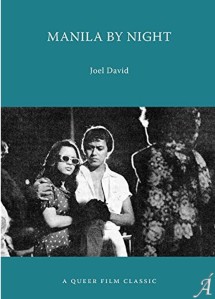
11011Again, the accomplishment could only pale in comparison with the local explosion of the multiple-character format led by Ishmael Bernal with Manila by Night. Nevertheless, de los Reyes, or rather Maryo J., has proved that he can still keep the flame even this late and with the shorter fuse provided by such a project as Underage Too. The obvious question is why he reserves this relatively modern approach for such easy-going projects, then reverts to a conventional storytelling mode for more serious material, My Other Woman included.

11011One possible explanation can be deduced from the sensibility common to the major de los Reyes films. All of them, regardless of whether they belong in the lineage of High School or that of Gabun, exhibit the same moralist imperatives; at the most, they can be perfectly regarded as saints in sinners’ clothing, with the resolution leaving little doubt as to their nature. Hence one could speculate that de los Reyes equates seriousness with conservatism, possibly owing to the traditional definition of classicism; the corollary – modernism being associated with frivolity and light – is also supported by the subject matter reserved for the Maryo J. movies.

11011Yet examples that prove otherwise abound. De los Reyes himself has one title that probably deserves more critical attention than Bagets – Anak ni Waray vs. Anak ni Biday, which uses the same traditional narrative approach that his more serious films employ; apart from its intelligent integration of local film lore, Anak ni Waray provides a form of entertainment worthy of the more inspired moments of our black-and-white master filmmakers. On the other hand, you have the aforementioned serious multi-character films that prove that one can (should, even) seek to update material with recent advances in form and treatment, or that one may also furnish radical forms of expression with similarly novel subject matter.

11011This much can be said about de los Reyes mainly because he clearly has the potential shared by so few in our day and age, to merge difficult form with serious content. And those films, if and when they arrive, will be worthy of a true virtuoso’s entire credit; let no one then say these would have been made by either Maryo J. or Mr. de los Reyes.

[Submitted in 1991 to National Midweek; unpublished]

Back to top
Return to Fields of Vision contents

4. Persistence of Vision

Bakit Kay Tagal ng Sandali?
Directed by Chito Roño
Written by Orlando R. Nadres

Someone sooner or later has to correlate the current paucity of fresh filmmaking talent with the decline in filmmaking quality, and I think we’ve had enough time – about an academic generation since the 1986 revolution – to arrive with confidence at such a conclusion. The political irony in this case should not be lost on any concerned observer: never was the movie industry more democratic in giving breaks to genuine talents than during the dictatorship, unlike in these, uh, democracy-spaced times. As further proof, the last of the major film talents to have emerged in these here parts is Bakit Kay Tagal ng Sandali? director Chito Roño – whose debut film, Private Show, was completed way before February 1986 but was released afterward only because of a series of freak (and again ironic, Roño being the son of a Marcos-era minister) occurrences.

11011Only now does it seem like a near-miracle that most of our best and brightest actually emerged within a few months of one another – Lino Brocka, Ishmael Bernal, Jun Raquiza, Peque Gallaga, Butch Perez, Elwood Perez, Romy Suzara, and Danny Zialcita during the early ’70s, Behn Cervantes, Mike de Leon, Lupita Kashiwahara, Mario O’Hara, and Gil Portes during the mid-’70s, and Mel Chionglo, Abbo Q. de la Cruz, Marilou Diaz-Abaya, Laurice Guillen, Maryo J. de los Reyes, Pepe Marcos, and Wilfredo Milan during the late ’70s and early ’80s. Of course one can point to at least two worth-watching newcomers since Roño’s debut – Augusto Salvador and Carlos Siguion-Reyna – but until anyone between them comes up with a follow-up comparable to their first films (Siguion-Reyna, in fact still hasn’t followed up so far at all!), I’d rather stick to the larger issue: that one or even two sparrows don’t a unit make.

11011Figuring out the possible reasons and disentangling them in order to effect a reversal would be worth a discourse in itself, so meantime I guess the next best thing to do would be to point out what we’ve been depriving ourselves of. This I think can be done by inverse implication – i.e., appreciating anything done by the above-named that deserves attention, so as to connote that we could have more such delights if we only had more such names around in the first place. Fortunately certain significant pronouncements can already be made about the last of the majors, this early in his career. This is because Roño clearly belongs to the whiz-kid category – an elite circle in these parts, comprising those whose expressive skills alone could ensure a holistic, if essentially flawed, creation; other names we can count herein are Peque Gallaga, Mike de Leon, and, closer to the fringes, Laurice Guillen.

11011Roño bears comparison with Gallaga, the most accomplished (in career terms) of the lot, since both of them, to begin with, exhibit a flair for intense, operatic camera-gestures. Not surprisingly, it is Gallaga who, among all Filipino filmmakers, has the most impressive track record in epic filmmaking, stylistically surpassing those of earlier masters like the late Gerardo de Leon and Celso Ad. Castillo. And then again, when we think of problematic film statements, we also refer to the works of the stylists and the whiz-kids, especially Gallaga. For nowhere than in the creative process is such a situation as “too good to be true” possible: the McLuhanesque aphorism about the medium being the message can get carried to the logical extreme of there being no more message (of import, that is) within an over-elaborated medium. Bakit Kay Tagal ng Sandali? upholds Roño’s distinction – that among his peers, only he has been able to apply a visual quotient comparable to Gallaga’s, with a psychological bent of an order never seen since the heyday of Castillo. The effect, when you think about it, is pretty awesome. All our major directors, including the whiz kids, require appropriate resources in order to achieve epic feats; in contrast, Roño simulates the properties of the epic by enlarging what are actually modest givens.

11011These skills were on display as early as the first phase of his career, when he did a series of projects for a number of independent producers. The next phase began when he finally decided, after a series of burns and false starts with other independents, to work with a mainstream outfit, Viva Films. Kasalanan Ba’ng Sambahin Ka? saw him barely maintaining his equanimity, what with a commercialist cop-out in the end. Bakit Kay Tagal, however, more fully exhibits the director’s creative potentials, perched as it is (like the earlier film) between dismissible material and an invaluable, or at least instructive, skills display, with no let-up in the balancing act and a successful steerage of material toward the requisite build-up and denouement.

11011It would even be possible to appreciate Bakit Kay Tagal as komiks-sourced material, though not in the old sense, wherein the adapter was expected to temper the excesses of the origins. Hence, while Lino Brocka, for example, has been and should be esteemed for his capability to invest visual and episodic (and therefore non-rational and fragmented) material with literary values, Roño in Bakit Kay Tagal may similarly be complimented, albeit for taking the entirely opposite tack – the more dangerous, if usual, one of observing rather than defying the material’s convolutions and disproportions. Normally this approach falls flat but works commercially anyway, since it allows the multitude of komiks readers to recognize in the film the story that they’ve been following in print. Successful local stylistic exercises – Gallaga’s Oro, Plata, Mata, Mike de Leon’s Kakabakaba Ka Ba?, and some lesser works by Castillo – prove that local artists and subject matter could lend themselves to medium-based indulgence, but the lesson provided by Bakit Kay Tagal is that what lies behind these triumphs is actually the komiks spirit.

11011Bakit Kay Tagal may therefore be regarded as a long-overdue definitive adaptation of komiks material, in terms of the nature, rather than the literary potential, of the original form. A certain thematic strain runs through the film – the satisfying, if overworked, thesis of how class conflicts induce moral transformations in those who survive them; although the proletarian characters win over the rich ones, the movie invokes conservative caution by qualifying that the change in status also alters one’s social constitution – in short, the higher one climbs the class ladder, the more individualistic one becomes (or has to be). There is nothing unique about the sequence of events in this particular story, apart from what can be expected in an adequately structured tale; the actors themselves don’t add much to their roles, since their characters are developed according to contrasting though predictable extremities, either from rich and proud to humble and dead, or from poor and downtrodden to heritable and haughty, with a measure of redemptive repentance in the end. Such grandiosity of vision has been the standard recourse of komiks writers, who compensate it seems for the unwieldiness of their medium by cloaking their stories with all-encompassing draperies, which in turn are rendered flimsy precisely by their functional universality.

11011As mentioned earlier, in the hands of a less capable (read: typical) director, the inherent limitations of this type of material would have been readily discernible: mere filmmaking competence would focus the viewer’s attention on the more perceivable mechanism of the work instead of its bigger but essentially abstract statements. Bakit Kay Tagal manages to direct viewership concerns where it matters – to the larger though fundamentally trite abstractions, instead of the lapses and illogicalities. I cannot overemphasize the fact that the solution in this instance is really a stylistic one, since this should constitute a warning in itself. The fact that a Filipino filmmaker can finally surmount the deficiencies of her material through sheer skill may be good news in our context, but one only has to look across the Pacific, to Hollywood, to see how an early blessing could easily and naturally metamorphose into a latter-day curse.

11011In fact, if there’s anything Roño’s achievement in Bakit Kay Tagal imparts, it’s the realization that his approach is far more difficult than the traditional one; in practical terms it would be physically and financially easier to fashion and execute a well or even over-developed script than to figure out how to continually abstractify flawed material using limited technical resources. The key to Bakit Kay Tagal’s effectiveness lies not in how the project required terrific casting and brilliant technical back-up (with a concomitant budgetary complement), but in how the filmmaker provided the illusion of a seamless whole, using technique (matched transitions, expertly timed dissolves, purposeful camera movements) to promote an unusual sensibility.

11011In the end I guess it would be fair to state that it’s the substance of the style and not the style itself that salvages Bakit Kay Tagal from the unenviable fate of faithful komiks adaptations. The best elements of our most highly praised naturalist product, Oro, Plata, Mata, can also be found herein: an authentic sense of aristocracy, a predisposition toward perverse progressions, a subtle awareness of classic film traditions. Yet Oro, Plata, Mata, which is of more ambitious stuff than Bakit Kay Tagal, could not sustain its strong initial impact. Bakit Kay Tagal I feel will be able to get by primarily because of lesser expectations, but it ought to make us all hope for the day when a Roño project would have the ideal combination of major budget and sober material, to enable him to improve on what may already be good enough instead of merely making do with what can never be momentous to begin with.

[Submitted in 1991 to National Midweek; unpublished]

Back to top
Return to Fields of Vision contents

5. Cool Film

Hot Summer
Directed by Mel Chionglo
Written by Ricardo Lee

Every film aspirant makes no bones about wanting to become a director – a finding borne out by casual exchanges between film schools as geographically and economically disparate as those of New York University and the University of the Philippines. The dream can be traced to as recently (relative to the history of film) as the 1950s, when a batch of French critics claimed to have theorized the primacy of the director’s role in filmmaking, then promptly proved their point by becoming brilliant directors themselves. The trouble with these critics-turned-directors’ experience is that their filmmaking career – which had so strong an impact that it became an international movement with a still-in catchword, New Wave – occupied them for the rest of their lives so far (the best-known of them, François Truffaut, is dead). If they allowed themselves or were provided the luxury of returning to criticism, they would definitely have made some major changes, if not turnabouts, in their initial theoretical posturing – unless, of course, they chose to ignore the evidence of their output.

11011Meanwhile their writings, which they called the politique des auteurs and which American importers upgraded in their translation as the auteur theory, proceeded to wield some influence in ivory-tower circles. Actually our example of film directorship now becoming a coveted position was a positive contribution during a time when cinema was not being taken seriously partly because it was regarded as a collective output: then-existent art and literary theories presumed that the singularity of artistic vision best resided in an individual maker. So if film had just one creator, then it could now count as one of the true arts, with its own potential for classicist significance.

11011Since auteurism originated in the First World, its harmful tendencies were negated largely by the financial and technological resources available in such parts: directors, in short, could compete with one another in an expensive medium precisely because their economic conditions could afford it. And since the Philippines used to be a developing country (during a time when the category still had to be articulated), our admiration for filmmaking brilliance has been conditioned to be equated with directorial flair. This is the reason why no still-to-be-established director could get away with self-effacement. On the other hand, the logic of well-developed material becomes clear and acceptable only in the case of established filmmakers. In the local Parthenon of auteurs, circa the last decade or so, we bow the knee to Bernal and Brocka and never question why their skills in film plastics do not compare with the best moments of their next-in-line, who are ordered according to stylistic scintillations.

11011There have been some casualties in this approach to evaluation, and I’d venture to single out two Filipino directors: Gil Portes, who’s peerless when it comes to matching material with independent industrial sources, and Mel Chionglo, who has opted to work within the mainstream. Both have quietly managed to accumulate sober, if not so flashy, bodies of work that I believe conform to the requisites of our current Third-World status. Between the two it is Chionglo who seems to be working consciously at mapping his work according to the demands of material without seeking to break away, for whatever possible reason, from it. One walks away from a Chionglo film with the memory of a good dramatic statement, rather than a series of cinematic highlights. The only time when he managed a distinctly directorial triumph was in Bomba Arienda (with the late Conrado Baltazar in charge of cinematography) – and, in retrospect, the result only confirmed where the director’s assets lay: Chionglo, thus, far, has been too much of a thinker to even consider laying primary stress on what every thinking person knows is after all only a movie’s secondary value, its surface.

11011It is material that grips the likes of Chionglo and Portes, just as Brocka and Bernal now get by on the basis of how well they temper their skills according to what they want or have to say. Hot Summer, Chionglo’s latest, demonstrates for us what advantages this kind of sensibility holds in store for us. No major expectations are raised and a lot of indulgence is begged for in the beginning, when the conventions of the genre are being painstakingly worked out. Give this material to the equivalent of a Hollywood brat and you’d have some adequate fireworks, or at the very least some fine old camp entertainment.

11011But then all a Hollywood practitioner ever really need do is build up on these superficies – I’d even go to the extreme of stating that once you decide on this course of action, then that’s the only option left. A Third-World “star” director is many times jeopardized in this respect. For not only would it be difficult to convince a local producer to part with more than the usual share of money for what amounts to artistic indulgence, the local audience could also be baffled by an approach that requires multi-media sophistication and familiarization with analytical tools in film appreciation (presumably more abundant in rich countries). Worst of all, a last-minute change of mind to abandon the previous strategy in favor of the age-old verities of classical unities and a sense of proper thematic development would result in an even more baffling, if not downright disappointing, outing, due to the incompatibility of the sensibilities invoked. In Hot Summer, no such dangers loom ahead. The worst I could observe is the over-reliance on subjective cut-ins, which generally don’t work beyond the level of novelty because of their function as flashbacks; in Paano Kung Wala Ka Na, a previous Chionglo melodrama, made for the same producer and with the same writer, the cut-ins constituted real innovations because of their intended simultaneity with the action at hand, with the viewer left to wonder as to their correspondence with objective reality yet satisfied with their emotional impact.

11011Nevertheless the device in Hot Summer has been wisely confined to the movie’s expository portion. Once the entire framework has been set up, the finishing touches admirably point up a sound internal logic at work, employing the same principle of sensible character-based development observed in Paano. There’s a feeling of heaviness, though, that could only be traced to the two films’ separate intentions: Paano’s harmonious resolution vis-à-vis Hot Summer’s tearjerker function. The movie itself labored under desperate (and in this sense ill-advised) repackaging coupled with post-earthquake jitters, although we could consider this a physical mainfestation of Mel Chionglo’s dilemma. We need to be assured that a director’s at work, but we cannot accommodate the notion that it takes intelligence, daring, and discipline to recognize and uphold the importance of filmic material, for a change.

[First published September 5, 1990, in National Midweek]

Back to top
Return to Fields of Vision contents

6. Long Flight

Birds of Prey
Directed by Gil Portes
Written by Ricardo Lee, Clodualdo del Mundo Jr., Herky del Mundo, and Gil Portes

Class distinctions in Filipino film appreciation used to be so crucial that practitioners were forced to point them out and discuss them. Among the enduring terms was bakya, an originally derogatory reference to the mass audience allegedly incapable of appreciating worthier items – meaning a select number of local films and the entire corpus of foreign films.

11011Bourgeois bias notwithstanding, the awareness engendered by the classification led to the conscious assimilation of the latest in foreign technology and techniques by local practitioners. This awareness also finally brought about a long-overdue crossover of appreciation of both foreign and local products by moviegoers from both sides of the tracks. Today only those on the extremes – the hopelessly snooty or the pathetically parochial – would pass judgment on a film on the issue of its country of origin; more typical are easygoing movie fans who would just as readily patronize a local product as they would an import, depending upon non-originative factors like availability, entertainment value, word-of-mouth endorsement, etc.

11011Of course certain problems remain. “Imports” hereabouts denote Hollywood products, with a few Hong Kong items thrown in – hardly the ingredients necessary for a truly nourishing native cultural diet. Moreover, a dispiriting common denominator has emerged, where films for exhibition, regardless of country of origin, must fall within a range of high-to-manic entertainment value, strictly surface competence (such as glossy visuals and/or fast pacing), plus an absence of or even outright disdain for social issues. In effect, the local film scene has become an extension of Hollywood’s, with Hong Kong as the model toward which the system seems to be striving.

11011The cause lies in the strategy for survival of the industry vis-à-vis the threat of total foreign domination: develop and maintain a financial and demographic latitude of profitability, at all costs. The success of the attempt since the 1986 revolution (when it seemed that no Filipino wanted to enter a moviehouse ever again) can be seen in the smug stability of the production houses that kept the faith. (Curiously, most studio and distribution leaders are Chinese Filipinos, which serves to obliquely confirm the Hong Kong-as-model thesis.)

11011There are alternatives to outright commercialism, but it seems they are not as yet being taken. For example, no one seems ready to try regional film production once more, despite the economic upgrowth of the South. Likewise, alternative formats may still be too exotic for the populace, while independent productions tend to be resisted by the major studios, and therefore also by big-time theater owners and distributors. Productions meant for foreign festivals could make a profit beyond ego-satisfaction if these could be harnessed for distribution purposes, but there may not be enough local capability, not to mention determination, in pursuing this course of action: certainly an independent outfit, and much less a major one, would prefer the surety of local exhibition to the gamble of investing overseas.

11011Lately two products have taken the foreign-festival option one logical step beyond, by having themselves financed by foreigners. Lino Brocka’s Orapronobis has been the more conspicuous case, owing to its and its maker’s penchant for controversy and confrontation with local realities. The other title, Gil Portes’s Birds of Prey, finished before but screened locally after Orapronobis, is no less significant if only because of the surprise it springs on longtime observers of Philippine cinema. Birds of Prey serves to confirm what industry practitioners may have lost sight of due to the confidence brought about by the self-sufficiency of local production and exhibition – that the success of self-containment may be better expanded by spreading outward, across local boundaries, rather than by breaking box-office records. In business terms, the point of diminishing returns is considerably closer in the latter case. Moreover, foreign currency during these times would generally have the upper hand over our peso. Thus what a foreign financier may expect to produce on a shoestring budget may be transformed by a local practitioner, used to production constraints, into a highly accomplished result.

11011Birds of Prey exhibits a directorial expertise unrealized so far in any of its director’s earlier efforts. Its most serious weakness, a reliance on dialogue to convey a longitudinal thematic progression, is mitigated in great measure by a delivery of mute conviction by Gina Alajar, aided by a mostly highly skilled support ensemble. Beyond its already noteworthy intentions, it also manages to inject a whole lot of local color, as well as foreign locations understated in the usual Hollywood output, derived from the use of characters as strangers in the lands they choose to visit.

11011An even more exciting filmic potential is suggested by the movie, perched as it is between Portes’s past tentativeness in the medium and a potential for mainstream technical competence. Where the average accomplished director would have enhanced local-color footage in the spirit of “heightening” reality, Portes in Birds of Prey falls back on the discipline of documentary training. He does this by making careful selections of available locations (or shooting what’s available then selecting afterward), taking care to preserve the rawness of the material even if this leads to inadequacies vis-à-vis conventional criteria of plastic excellence.

11011The tension occasioned by still-evident documental skills on the one hand and a striving toward surface gloss on the other may have worked in favor of Birds of Prey. This would seem so at least in the narrow context of the movie’s Third World-vs.-US conflict. That the home country morally triumphs over (though it materially loses to) its neocolonizer proves that certain matters may be more urgent, if painful, than sheer physical comfort. And just as it may be time for all good folk to face the challenge of healing the nation from within instead of seeking to be cured elsewhere, good movie practitioners should similarly be prepared to embark anew on the search for more effective ways of extracting truth from the heretofore unexplored depths of Philippine reality, if necessary, in the opposite direction of Birds of Prey’s logical destiny – easily achievable and establishment-sanctioned expertise.

[First published April 4, 1990, in National Midweek]

Back to top
Return to Fields of Vision contents

7. Indigenous Ingenuity

Andrea, Paano Ba ang Maging Isang Ina?
Directed by Gil M. Portes
Written by Ricardo Lee

I knew that I’d be involuntarily associated with the project, so I took the opportunity to formalize my participation. It all started when the members of the film-student organization I was advising, unabashedly Nora Aunor fans, could only talk about (and work on) the comeback project of the actress. Never had the heretofore insurmountable challenge of breaking into the local movie industry seemed so easy – due largely to the endorsement of my coadviser, Ricardo Lee, who was also the scriptwriter of the project. My only previous direct experience in a mainstream production was in a Vilma Santos-starrer, where I was, among other things, an atmosphere person. They had inserted some lines for a human-rights lawyer character in the Nora Aunor movie to demonstrate the desperation of the character in seeking help to recover her baby. The lawyer was supposed to be unable to do anything for her, so my role was to have been limited to a one-scene exchange; imagine, I told myself, only two full-length film exposures in my life thus far, and these with Vilma Santos and Nora Aunor….

11011The day after I did the role, the production folded up, reportedly because the original financier backed out. And with its director Gil M. Portes scheduled to leave for New York soon after, everyone was pessimistic about the film ever getting finished. I relate all this because I never really understood, until this project, how precarious serious filmmaking can be, especially in these times. With a record-setting eleven trophies from the Metro Manila Film Festival (MMFF), plus a Gold Prize, Special Critics Prize, and Individual Achievement awards (Lee and Aunor) from the first batch of the Young Critics Circle winners, it is dangerously easy to assume that the movie, now known as Andrea, Paano Ba ang Maging Ina?, had been fated to be a winner from the start.

11011It is also just as dangerously difficult to dislike Andrea. The worst thing I can say, in all objectivity, about the film is that it may be existing way past its time. This is, in fact, its primary distinction: not since the boldest years of the Marcos era has there been an overtly anticommercial local production – independently (and indigently) sourced and featuring nonbankable perfomers in nonformulaic material. Rarer still is the circumstance of such an effort reaping such rewards, and I mainly mean the post-Metro filmfest box-office restitution rather than the various prestigious distinctions that invariably followed. The MMFF contribution to Andrea’s fortune may be more than incidental in this regard. For all its past oversights – and these were many and cruel, directed even at some of Andrea’s makers – the MMFF has also honored, exclusively even, some of the better outputs of the local film industry: Celso Ad. Castillo’s direction of Burlesk Queen and Vilma Santos’s performance therein (both the director’s and actress’s best ever), Nora Aunor’s performance in Himala (her best and that of Philippine cinema as well), and Ricardo Lee’s screenplay of Moral (still another all-time best entry).

11011The value of the MMFF results, which no other award-giving institution possesses, lies in their capability to improve the financial performance of any film on which they bestow recognition. This adds a unique combination of sum and substance to the event’s moral obligation to render credible and well-considered judgments at all times. Conversely, no amount of postfestival revaluation had been able to recuperate whatever results were consequentially incurred by its negligence of such entries as Lino Brocka’s Bona (starring Nora Aunor), Bukas … May Pangarap (with the same director-writer team as Andrea’s), and Chito Roño’s Itanong Mo sa Buwan. As for Andrea, the measure by which the film has succeeded may at least partly be at the MMFF’s expense: not only had some of its personnel previously suffered the lapses in judgment of the jurors of the festival, the director and writer themselves have on record an entry, Birds of Prey, that was disallowed participation some years back on the basis of the ridiculous and inconsistent technicality of its having been financed by foreign sources. Meanwhile, what we have on hand is a product that happens to serve as the juncture of three auteurs – director, writer, and lead performer – at felicitous turning points in their respective careers.

11011Portes is the Andrea talent whose reputation advances with the film, from project originator to metteur en scène. Actually, though Andrea may be his best, it is not his coming-out film: that distinction belongs to his previous Nora Aunor-starrer, ’Merika, the project that immediately preceded Bukas … May Pangarap. (Andrea, Bukas, and Birds of Prey also feature Gina Alajar, who starred in the latter two as well as in another underrated Portes-Lee collaboration, Gabi Kung Sumikat ang Araw [1981]). The misfortune of Gil Portes is that his flair for uncovering independent production sources has attracted more attention than his growth as a filmmaker. No other Filipino, not even Celso Ad. Castillo, has been able to sustain a directorial career for years on the basis of a few modest hits, and more recently, despite a string of financial flops. Not surprisingly, the major production houses, having drifted toward increased commercialization since the February 1986 Revolution, have closed their doors to the likes of Portes. Other serious filmmakers, notably Brocka (and Lee, to a certain extent), have managed to maintain mainstream status only by accepting the givens and working within them.

11011The filmmakers marginalized by this shift in the system of local production have practically inhibited themselves – except for Portes. At one point, both he and Brocka sought foreign funding for their respective pet projects, and both similarly found themselves up against the Aquino administration’s deviously self-effacing censorship tactics. Birds of Prey and Orapronobis may yet find their way onto local screens, but meanwhile both Portes and Brocka again made a show of how film artistry could be made to fit opposing modes of production: where Brocka’s Gumapang Ka sa Lusak is 1990’s outstanding mainstream film, Andrea is the same year’s outstanding independent entry.

11011Significantly, both films were scripted by Lee, and may therefore provide, if only in a literal sense, a common basis for evaluation. Gumapang Ka marks a high point in the appropriation by serious artists of commercial elements in putting across what may be considered a non-commercial theme – that of the depravity of traditional politics. In forced contrast, Andrea proves that a non-commercial approach to commercial (at least in the latent sense) material is feasible. In fact, the more optimistic could argue that at no other point in our recent history would non- or maybe even anti-commercial products prosper that at present, given the mainstream saturation effected by the predominance of monolithic studios since February 1986.

11011In the case of Lee, the twofold scriptwriting triumph of 1990 (not counting a number of more conventional works, including Brocka’s Hahamakin Lahat [1990]) can be creatively attributed to his return to more literary pursuits, especially journalism and fiction. The scene where Andrea has to hold back her emotions during her husband’s wake, as well as the heroine’s death-by-assassination in both films, all recall similar portions in the scripwriter’s latest, essentially unclassifiable work, the metafictional “Kabilang sa mga Nawawala.” Necessarily, the overall impact of “Kabilang,” where the author had total personal control, is greater, though it still has to be played out more thoroughly since its medium’s potential for popular response is disadvantaged compared to film.

11011But what Andrea (more than Gumapang Ka) supplies is in effect a preparation for the unqualified treat of works like “Kabilang.” The film constitutes a throwback to a point – perhaps our filmic past, as well as a beyond-Hollywood expansion of appreciation – where cinema defines itself more in terms of dramatic and thematic richness than in the accumulation of plastic-perfect points. Most buffs and historians (the distinction tends to blur in the case of film) would identify this ideal as neorealist, although Andrea, truer to its time and place, evinces a sophistication, not to mention a performance, far removed from the extremes allowed by the 1940s Italian movement.

11011What will probably outrage partisan viewers of opposing persuasions in another political clime is the same thing that has managed to impress those in today’s: Andrea, though it deals with the plight of a specific stripe of political animal, actually winds up repudiating not the political line, but the notion of politics itself, in order to facilitate a dramatic (as opposed to a purely intellectual) catharsis. Again this resembles the resolution in “Kabilang,” where the child, this time as central character, is orphaned as much by social intransigence as by his mother’s insistence on countering this force. Andrea, centering as it does on the title-character mother, provides the temperance factor in the person of the lead’s best friend. The ploy is slyly though transparently manifested in the standing agreement between the friends to override their ideological differences for the sake of friendship. Andrea’s subsequent martyrdom is all the more ennobled by her submission to solomonic wisdom: at considerable personal anguish, she decides to leave her son to her friend, for the brighter future the latter offers (in contrast to the bleakness of her own), and because the child has revived the friend’s married life.

11011The movie’s tearjerker outcome is thus provided a crucial dimension of ambiguity: Andrea may have suffered in the hands of a mean-spirited society, but her son will not. Her death provides not only a well-deserved spiritual release for herself, but the necessary means for her son (and his adoptive parents) to start anew. Andrea may therefore be taken as a plea to reconsider a return to unorthodox modes and material in filmmaking. Using this sort of approach has seemed reckless in the past, but it in fact appears now to have been so simply because serious filmmakers seemed intent on alienating the mass audience at all costs. Andrea stands as evidence that given the proper kind of creative and industrial strategizing, local viewers are now ready to be won over to attempts at uncompromised artistry.

11011On a symbolic plane this argument can be extended to Andrea actress Nora Aunor. I do not refer alone to the fact that, if there ever were an auteuristic performer, Aunor is our one and only. Andrea may yet represent the renascence of the actress, after a series of popular rejections (starting at EDSA) traceable to her ill-advised participation in the Marcos-Tolentino presidential campaign. Aunor has died spectacularly before on film – in Himala, a previous association with Lee. The movie, in retrospect, eerily presages her fall from grace owing to the mortal combination of her awareness of her populist origins and her rebellion against any expectation attendant to this.

11011Andrea is Nora Aunor’s long-overdue phoenix-like reemergence and successfully contravenes her ugly-duckling ex-superstar has-been status. No way can she hope for a return to the glory days of her teen-idol years; that much was already evident as early as Himala, where she boxed herself, by the sheer magnitude of her histrionic genius, into a category all her own. Andrea proves that she did not waste the intervening years, traumatic though they may have been for her; if anything, it was the years that wasted her – but only, and strictly, on a physical level. In fact the performer in Andrea can be regarded in many ways as superior to the still-too-pretty and sexually tentative creature embodying Himala’s Elsa. Her via dolorosa segment in the earlier film was a triumph of technique, amorphous at best, whereas in Andrea, which consists of one long journey to a final heartbreak, the pain can be visualized as a line traveling straight from her heart to the viewer’s.

11011Just how precisely accomplished is Nora Aunor as an actress?[1] In the past I would have answered this by sizing up her Himala performance against that of any perceived competitor’s, but this has proved to be too obvious with time. Meanwhile I had been given in Andrea what amounted to a monologue in Filipino, which I had to memorize in a few minutes. Since my memory and my command of the language are both my gravest performative disadvantages, I inquired about the setup required and learned that that scene would consist of one long take, with close-ups for the final one-sentence exchanges. A bottle of beer, one camera rehearsal, and scores of memory aids later, I still could not get beyond the first sentence without directorial prompting. But during the take I connected for the first time with those eyes, and the lines all came to me naturally and clearly, requiring no retakes whatsoever. I marveled at this phenomenon; I was entirely aware of, apprehensive about, and alert to the warning of how strong co-actors tend to upstage weak ones. I was also conscious of the possibility that the opposite could hypothetically exist. But I never expected to so casually come across a performer whose very strength could bolster, rather than demolish, everyone else’s. That’s a tale which, like Andrea, I would not mind turning into a legend.

[Submitted in 1991 to National Midweek; unpublished]

Note

[1] Surprisingly, my attempt to answer this question led to verbal denunciations in the national university, including from my own colleagues (who should have known better, but then the place has never moved much past its status as a bastion of self-proclaimed progressive orthodoxy). The incongruity between advocating for Marxist praxis yet feeling disgusted about practitioners who refuse to cling to the immaculacy of criticism by immersing in the activities of their objects of criticism – whether artists or audiences – accounts in large measure for the persistently sorry state of critical practice in the country.

Back to top
Return to Fields of Vision contents

8. No End in Sight

Kung Tapos Na ang Kailanman
Directed by Lino Brocka
Written by Gina Marissa Tagasa

It must be the wish of every well-meaning observer of local cinema to have even the most commercial genres dominated by sensible talents. The perceptual problem, however, is that the acquisition of expertise in generic moviemaking comes only over time with the accumulation of experience, regardless of the filmmaker’s orientation. Moreover, the convenience of distinguishing expressly commercial from obviously noncommercial (or what everyone loves to call “artistic”) works oversimplifies the job of evaluating the output of an individual practitioner. By now, all but the most conservative (in pure-film terms, that is) admirers of Lino Brocka realize that the marriage between our most active serious director and the most commercially successful genre of the moment has been consummated with a series of post-revolutionary (1986) projects, and only the truly cynical would grumble that the reception, in the form of one box-office celebration after another, has been too lavish for these times.

11011The courtship was actually a step toward symbolic reconciliation: Brocka’s original break with his mother studio, Lea Productions, had been facilitated by a series of hit melodramas, with a few flirtations with “bold” (meaning sexually explicit, then called bomba), action, and musical suboptions. The breakup (with both studio and genre) was cemented through a breakaway, a series of box-office risks that at the time constituted his calling card to international recognition. His return to commercialism logically reflected an alienation from the mainstream, so for a long time Brocka was, in more ways than one, neither here nor there – too ascetic in his foreign-festival titles and too desperate in his masses-only outings to be able to relate to those observers and practitioners who happened to be Filipino.

11011Brocka proved more successful with film noir, a style whose limitations were immediately suggested by his first attempt, Jaguar. Whatever else the movie contributed to local action cinema – the use of shadows and slum settings, greater attention to the characterization of villains, the persona of Phillip Salvador – Filipino moviegoers refused to see it. Despite, or maybe even because of, its resort to social issues, the genre itself was too difficult to work over: action stars eventually get set in highly specific manners, lines of narrative are required to observe limited modulations of development, and character relationships always have to maintain strict dialectical symmetry.

11011After a series of mild hits and resounding misses, Brocka hit his stride with Maging Akin Ka Lamang (1987). Since then, his instinct for melodrama has been practically infallible. To be sure, his innovative urges were kept to a minimum, but some attempts were perceptible to those who cared to figure them out: improvisatory line feeding in Natutulog Pa ang Diyos (1988), control of hysterics in Kailan Mahuhugasan ang Kasalanan? (1989), and inversion of Sharon Cuneta’s sugar-and-spice image in Babangon Ako’t Dudurugin Kita (1989).

11011Relative to the aforementioned, Brocka has taken his greatest risks with Kung Tapos Na ang Kailanman (1990). I managed to count two minor ones, the integration of musical numbers into the plotline and the provocation of the somewhat taboo premise of an Electra-complex rivalry for the same man (reminiscent of Insiang) – and one significant gamble tantamount to a long-overdue transgression of the rules of local practice. The predominance of komiks over filmic material had something to do with the exhaustiveness of adaptations and takeoffs, notably in Filipino melodramas. Since picture stories had all the advantages of having the last, and even later than the last, development because of their multi-installment nature, contemporary popular storytelling has assumed never-ending forms of anticlimactic stages, introduction of new dramatis personae and complications, and diversifications into all types of genres.

11011These are not necessarily liabilities in themselves, and the collective efforts of competent local film practitioners since 1986 seemed to have lain in the direction of maximizing the givens rather than branching out from or violating them. Kung Tapos Na marks the first clear and effective (in box-office returns) departure from the norm of completing the storytelling process by pursuing every suggested lead and tying up all plot points to make one self-sufficient package. The advantages immediately suggest themselves, although one wonders why no one seemed to have figured out at least the financial implications early enough. It took a series of profitable sequels in recent action and comedy films before a melodrama project summoned enough guts to deliberately dangle certain story elements in order to allow for a whole new range of possibilities in a whole new possible hit project.

11011One important moral here is to reformulate aesthetic advantages in commercial terms. At this point in komiks-controlled cultural history, no one can ever hope to convince any local producer of the narratory merits of precipitate endings, even in order to extend the visual language skills of the Filipino moviegoer; the trick, if it ever should amount to one, would be to propose the literally rich potentials of such an innovation, and then take a step at a time, as was the case with Kung Tapos Na. Given the benefit of hindsight, it seems only Brocka could have pulled off the sleight-of-hand required to end the presentation before schedule yet give the impression of having provided the complete range of emotional progressions that overdeveloped stories normally induce. I venture to say that his skill in related fields was indispensable in this instance. The climax of Kung Tapos Na actually consists of a confrontation among those at the corners of the central love triangle distanced by the intervening media of television (which prevents the married couple from physically interacting with the performer) and stage (which allows the performer to attain a form of culmination along with his special viewers).

11011The tension of wanting to communicate yet not being able to, where even the husband’s mortal illness debilitates him to the point of near-muteness, ensures the effectiveness of the forthcoming emotional wallop, presented as it is in the form of understanding glances and music and thus lending an enigmatic silence preferable to the usual verbalizing these types of films utilize. I can imagine the mass audience eagerly awaiting a Kung Tapos Na II where what was left unspoken at the close of the original could be finally articulated in the sequel’s expository portion. Meanwhile Brocka, Filipino director par excellence, has become to melodrama what Ishmael Bernal became to comedy some time ago and Peque Gallaga (with Lore Reyes) to horror-fantasy recently. Such matches, full of light and spark, could just as well have been made in tinsel heaven.

[Submitted in 1991 to National Midweek; unpublished]

Back to top
Return to Fields of Vision contents

9. Head Held High

Gumapang Ka sa Lusak
Directed by Lino Brocka
Written by Ricardo Lee

When Lino Brocka walked out on the 1986 Constitutional Commission it seemed like an act of futility, a typical if outsized artist’s tantrum. Predictably, the Concom carried on, drafting a document that met with popular approval, thereby paving the way for the return of authentically elected officials to power. What we mostly failed to realize was that Brocka intended to continue conducting his side of the political debate in the venue where his expertise lay – the mass medium of film – and more menacingly, that his decision to do so would be accompanied by a quantum leap in his creative faculties. Both developments have been long overdue. Political discourse in local cinema since the 1986 revolution tended to falter by the tradition of anti-Marcos dissent, which tended to be either too frontal for comfort (especially the artist’s) or too subtle to be appreciated in relation to the work’s over-all merits. Brocka himself took a leading role in this kind of perilous undertaking, but the business of surviving in an extensively controlled local industrial system as well as developing an international audience must have distracted him from paying full attention to the nature and potentials of his medium.

11011Of course he was not alone; he merely led in his specific field, and I maintain that the fact that many were able to follow proves that the Marcos government, for all its hard-nose ways, had a soft spot for film. Philippine cinema thereby assumed a schizoid character, awfully harmless in its commercialist aspects and awesomely threatening in its serious phases. The gravest possible consequence then was the displeasure of government authorities. But when these cultural boneheads were ousted by people power (only to be replaced by a similar set), the long-term effects of this split-level one-on-the-other approach became clear: the film artists could not relate with their audience, who in turn quickly learned to reject all old-time attempts at serious film presentations.

11011Hence the much-lamented dry spell in serious (normally associated with politicized) filmmaking. Even the real film artists took on a good measure of critical scolding for openly indulging in generic movie-making, at best turning out items that could be considered good only if one accepts the premises of mainstream local cinema. In Brocka’s case, this meant a string of extremely successful melodramas that could never quite break away from the imperatives of mass entertainment, save perhaps for the first, Maging Akin Ka Lamang. And even then….

11011Well since then Brocka came up with the still-to-be-released Orapronobis, and has followed up with his latest hit, Gumapang Ka sa Lusak, and in the purest filmic terms both titles are indistinguishable from his post-revolution crowd-pleasers. In both cases he also drew from his Marcos-era specialization in film noir, but basically he has hewn close to the plot twists and character entanglements that commercially rehabilitated him. In so doing, he advanced a proposition audacious even for himself: Philippine politics, per Brocka’s latest, is more than just a matter of intrigues and chases and shoot-outs; it is actually one big noisy and unending melodrama. Everyone gets to participate; unlike in Brocka’s gangster films, the political figures are this time identifiable and given active roles to play. The gods have now been invested with feet of clay, very wet ones at that.

11011It is an indication of the gap between our officials and the masses they claim to represent when no one among the former thus far has raised a peep about the wholesale (and well-deserved) defamation being visited upon them by our movie-makers. All of a sudden, politicians have become commercially viable – as villains. The two Brocka films are merely among the better-intentioned ones so far, and something must also urgently be said about the way the mass audience laps it all up. For too long, and especially since 1986, the Filipino movie-goer has been the object of scorn among the intelligentsia, who find no difficulty tracing the sorry state of local cinema to its market. No matter that the producers happen to agree; even the highest Marcos cultural official, Madame Iron Butterfly, prescribed the production of wholesome love stories among the true, the good, and the beautiful (though pretty would do), following the collapse of the martial-law era’s “developmentalist” requisites. In short, everyone agreed (many still do) that the movie-going masses are too bull-headed to take even themselves seriously. No bitter pill will they swallow, unless candy-coated and brightly colored; in which case why risk the danger of contaminating their brazen delights with the acridity of nourishment? Actually the evidence of past artistic works occasionally making money belies this notion, just as the people can take disapprobation if they have to: after all, who elected those officials in the first place?

11011Brocka’s Gumapang Ka sa Lusak, which has completed the filmmaking process from inspiration to exhibition, evinces a careful working out of viewership psychology, particularly when placed in the context of its director’s body of work. Inside information alleges that the project was originally intended as a sequel to Jaguar, which was written by Gumapang Ka’s Ricardo Lee and Orapronobis’s Jose F. Lacaba. Jaguar was a Brocka landmark in the strict sense that it was scripted by his most productive collaborators and first enabled the country to be represented in the Cannes Film Festival competition; in another equally significant area, the box-office, it flopped. The Jaguar re-viewer though will readily realize that Gumapang Ka is more than just a decade removed from its predecessor. As already mentioned, it’s not as straight-faced as one would be led to expect, given the scary social premises of Jaguar. Gumapang Ka is as grave as Brocka has been known to be, make no mistake; yet its lead character, who this time is female, and who dies along with the (re-named) Jaguar character, gives out what may arguably be the most blissful smile ever seen in local cinema, right before she expires.

11011A happy ending? In a serious film? By Lino Brocka?! And there’s more: you can even play the game of name-that-historical personage. I went as far as recognizing Dovey Beams and Rolando Galman and Carlito Dimailig (Imelda Marcos’s bolo-wielding assailant, here transmuted into an elderly woman), plus the female lead’s assumption of the former First Lady’s amnesiac attitude toward her childhood destitution, and still had enough room in my head to allow for a catch in my throat when her moralist admonition was replayed over the last shot of the “next” Jaguar – her naïve and sentimental and, yes, comic-Platonic lover. The most obvious explanation is that with Orapronobis, Brocka remembered to grow in his medium; with Gumapang Ka, he remembered to relax. Not since Jaguar has there been a dramatically involving villain in a Brocka film, and in Gumapang Ka there are even three of them: the Marcos couple and Fabian Ver equivalents. And where in the past his stories could not allow for loose ends, or otherwise resulted in an embarrassment of loose ends, here the frills – the in-jokes, the performance numbers, the open ending – are part of an expertly constructed design.

11011The means by which such frivolity in the midst of social grimness could be facilitated harkens back to Brocka’s disillusionment with politics. He returned to showbiz, of course, and in Gumapang Ka he set one against the other. The politicians dominate the opening gambit (like they always do in real life), with the mayor plucking his mistress from a checkered career in sex films and the couple recruiting their main henchman from a stable of stuntmen. But by living out her fantasy of justice, the mistress attains a moral triumph that makes her payment with her life, not to mention that of many others, seemingly worth the price. In this manner does Gumapang Ka attain its unique brand of salvation. As opposed to Jaguar it doesn’t run away from fantasy, but instead utilizes non-credible elements to build an expansive yet sturdy framework that allows for a whole lot of valid connections with historical reality. The fact that this approach happens to sit well with local audiences indicates some drastic re-thinking for media practitioners in the immediate future.

11011As if that weren’t bonus enough, Gumapang Ka also proffers generally high-caliber performances. Dina Bonnevie stakes a privileged position in an already impressive roster of local female lead performances, with hers ranking the highest in sensuality; never had she been so effective before. Her antagonists provide the flint by which she lights her fire: in a reversal of the real-life conjugal dictatorship, Eddie Garcia exhibits the charm and Charo Santos-Concio the intelligence. Come to think of it, the Gumapang Ka production outfit was once suspected of executing Imelda Marcos’s conceits for Philippine cinema, using funds whose release were made possible by her all-encompassing influence. How ironic that in violating her vision and almost her person, the producers have managed to come up with their best picture so far.

[First published June 20, 1990, in National Midweek]
Back to top
Return to Fields of Vision contents


The National Pastime – A Second Golden Age

When Ishmael Bernal used the exact same term “Second Golden Age” in his last major interview, with Aruna Vasudev (16-23), I knew that it had effectively supplanted Bienvenido Lumbera’s coinage “New Philippine Cinema” in his “Problems in Philippine Film History” (193-212).[1] Not that that was my intention though; in fact I deliberately maintained a non-titular preference for the uncapitalized “second,” even though I succumbed to standard capitalization practice later. The essay was the opening salvo (to use Patrick D. Flores’s review description) in a series of provocations that I was hoping would initiate productive, even dissentious, exchanges. Yet even the negative responses to The National Pastime seemed willing to accept, or maybe reluctant to question, the premise behind the assertion that the martial-law era ironically provided a fecund playing field for cinema, or shall we say Ciné-mah.

11011My own attempt at questioning the Golden Ages idea was (to me) too late, too rushed, and too reasonable (see “The Golden Ages of Philippine Cinema: A Critical Reassessment”), even if it also happened to be the first to do so. On the other hand, my elaboration of the aesthetic issues raised in the present article (via Fields of Vision’s “The ‘New’ Cinema in Retrospect”) appears increasingly defensive and interminable, the longer I look back on it. Nevertheless I submit that the following article encapsulates Marcos-era film policy and its overall-favorable impact on film practice, as well as film observers’ urgent need to find useful historical frameworks for further applications (and incidentally, to fellow Nora Aunor fans: “Performances of the Age” is only a section of the present article, not a stand-alone write-up). “A Second Golden Age” was originally published in the October-December 1989 issue of the Cultural Center of the Philippines journal Kultura (pp. 14-26 – p. 14 is below), then edited by Bien Lumbera; its title was modified by the publisher of The National Pastime (where it appeared on pp. 1-17) to include the parenthesized phrase “An Informal History.” To jump to later sections, click here for:


Click the pic to open a PDF scan of a photocopy of the original article.

Talk has been current, but not ardent enough, about the recent conclusion of a second Golden Age in Philippine cinema. Of course the notion of a Golden Age has its share of reputable disputants. No less than Eddie Romero, who surged forward at the start of what may be considered our filmic Golden Age II, cited ancient Greece in claiming that no such period of clear and concentrated artistic achievement could be reasonably circumscribed anywhere. On the other hand lies a just-as-ancient necessity of defining parameters for purposes of easier classification and, more important, to enable contemporary observers to draw significant lessons therefrom. Presuming that Golden Ages do exist, no other period becomes more needful in finding out how and why they do than that immediately following the conclusion of such a one.

11011More to the point of Romero’s argument, however, would be the obvious difficulty in pinpointing specific periods of artistic productivity. The flowering of Athenian culture could be studied intensively within the context of entire centuries of ancient Greek life; true, certain important artists and philosophers were contemporaries of one another – but this was more of the exception, the rule being one major practitioner being followed, chronologically speaking, by another who would either break away from the elder’s school or tradition, or venture completely on her own in a new, unpredictable direction.

11011The soundness of Romero’s assertion actually derives from the fail-safe construction of his logic. Nothing in human history can ever compare to the Greeks’ cultural exploits – and so, if we grant that they never had a Golden Age, then there never could have been any such thing since. Rather than despair over our modern-day limitations in the face of such insurmountable criteria of excellence, I believe we could do well enough in assessing ourselves for more sober, though perhaps less immortalizing, reasons. By this account a Golden Age need not be a wholly intensive and sustained national outbreak of cultural creativity. A limited period in a specific field, defined according to the concentration of output relative to periods preceding and succeeding it, should prove adequate for the moment.

Back to top
Return to The National Pastime contents

Golden Age I

The first Golden Age in Philippine cinema has had slightly varied reckonings of its exact duration.[2] All, however, agree to the inclusion of the entire decade of the 1950s. The most important feature of this period was the political stability brought about by postwar reconstruction and the aggressive suppression of the Communist insurgency, paralleled in film by the stabilization of the studio system.

11011That this phase ever came to a close indicates the short-sightedness of the solutions being applied. Reconstruction commits itself only to the attainment of a previous level of accomplishment (in this case the prewar situation), whereas insurgency addresses itself to the overthrow of a government on the basis of a problem – agrarian reform – more persistent that its leaders’ understandable aspirations to political power. The movie industry’s studio system, in seeking to institutionalize professionalism and (incidentally?) control the means of distribution, overlooked the natural inclination of talents, including stars, to seek more abundant means of remuneration outside the system if necessary, as well as the willingness of independent production outfits to forsake the studios’ long-term advantages and meet the demands of talents in return for faster and more immediate profits.

11011Hence the interval between the first and the second Golden Ages saw the rise of the independents and the superstars, backgrounded by the revitalization of the peasant-based insurgency and an engineered economic instability that paved the way for the imposition and eventual acceptance of fascist rule.

Back to top
Return to The National Pastime contents

A Near-Golden Age

The declaration of martial law in 1972 promoted hopes for an end to the country’s political and economic difficulties. It also may have forestalled a creative resurgency in local moviemaking, brought about through a subsequently admitted social experiment by censors chief and presidential adviser Guillermo de Vega, who was later assassinated under mysterious circumstances.

11011A casual view of the products of the pre-martial law seventies reveals what we might have been headed for: socially conscious and psychologically frank products, without a compulsion to alienate the vast majority of moviegoers, even in the most artistic instances. Apparently neutral or even antipathetic projects actually allowed for a lot of leeway in the selection of material and permutations of form and expression. Most significant was the proliferation of bomba or hard-core sex films, the direct result of de Vega’s extreme libertarianism; but just as important were the counter-reactions, the musicals and love triangles, that provided relief in opposing formats, even for serious practitioners. Moreover, regional (Cebuano-language) cinema had mellowed at the latter portion of a wondrously long curve, providing assurances of alternatives for Manila-based practitioners (which included Emmanuel H. Borlaza and Leroy Salvador), as well as an additional stable for the recruitment of onscreen talent, notably the Amado Cortez – Gloria Sevilla and Eddie Mesa – Rosemarie Gil clans.

11011Ismael Bernal came up with the last major black-and-white Filipino film and the most important debut of his generation with Pagdating sa Dulo. Lino Brocka, who was to share with Bernal the rivalry for artistic supremacy in the Golden Age that was to come, rebounded quick with a pair of highly inspired komiks-adapted titles for his studio base, Lea Productions, namely Stardoom and Tubog sa Ginto, plus an otherwise effective Fernando Poe Jr. epic, Santiago. This era, rather than the mid-seventies as commonly supposed, also signalled the maturation of Celso Ad. Castillo. In another Poe-starrer, Asedillo, as well as in a horrific bomba entry, Nympha, he exhibited a fascination for unconventional visual values and thematic daring, properties that were to serve him well during the latter part of the decade.

11011Other names associated with academe- and theater-based artist circles made their mark with relatively serious attempts, including Elwood Perez with Blue Boy and Nestor U. Torre with Crush Ko si Sir. Perhaps more significantly, a number of scriptwriters who were to figure prominently during the forthcoming Golden Age first emerged here, with either solo or shared credits: Torre with his debut film, Bernal with Luis Enriquez’s Ah, Ewan! Basta sa Maynila Pa Rin Ako!,[3] and Orlando Nadres with Tony Cayado’s Happy Hippie Holiday. Brocka, after writing for Luciano B. Carlos’s Arizona Kid, provided breaks for several scriptwriting aspirants, among them Nadres with Stardoom, Mario O’Hara with Lumuha Pati mga Anghel, and Alfred Yuson with Cherry Blossoms.

11011Right after Marcos’s martial-rule clampdown, and in a sense a consequence of the aforementioned near-anarchic (and therefore procreative) bent, came names like Peque Gallaga and Butch Perez with Binhi, Romy Suzara with Tatlong Mukha ni Rosa Vilma, Jun Raquiza with Dalawang Mukha ng Tagumpay, and George Rowe with Paru-Parung Itim, Nora Aunor’s first production, serious film, and (it wasn’t to be the last such combination) box-office flop. Rolando Tinio wrote for Bernal’s Now and Forever and Ricardo Lee, using the pseudonym R.H. Laurel, for the late Armando Garces’s Dragnet.

Back to top
Return to The National Pastime contents

Pre-Golden Age II

Critics currently carping at the discernible decline in the quality of film output relative to the period prior to the 1986 revolution should actually have more to be grateful for, aside from the usual evolutionary benefits of better technology and more formalized media, even film-specific, education. At least an excess of film awards, a heritage of the just-concluded second Golden Age, ensures that truly deserving products will now have a greater chance of acquiring recognition, no matter how belated. In the first half of the seventies all we ever really had was the Filipino Academy of Movie Arts and Sciences (FAMAS), then suffering a downswing in sensibility from which it has never fully recovered; and so, despite the long list of titles mentioned above, its early seventies best-film winners were forgettables like Kill the Pusher, Mga Anghel na Walang Langit, Nueva Vizcaya, and Gerardo de Leon’s regrettable Lilet.

11011Keeping the faith were Bernal, Perez, and Joey Gosiengfiao with their usually combinative Sine Pilipino/Juan de la Cruz Productions; Castillo with his horror films; Raquiza with his thrillers; Suzara with his sober dramas; and Nora Aunor with her admirable acting vehicles, including the only project that could boast of crediting both de Leon and Lamberto Avellana, the omnibus Fe, Esperanza, Caridad.

11011It was Brocka, however, who returned from a period of inactivity with two productions that combined the then-impossible characteristics of being both major and personal, Tinimbang Ka Ngunit Kulang in 1974 and Maynila: Sa mga Kuko ng Liwanag in 1975. The direct beneficiaries of this renewal of artistic consciousness in film included Brocka himself, with his three-in-one Tatlo, Dalawa, Isa; Perez with his three-in-one Isang Gabi, Tatlong Babae!; Gosiengfiao with the last Filipino black-and-white movie La Paloma, ang Kalapating Ligaw; Castillo with his careful revivification of the bomba (later to be called “bold” and initiated with the wet look) in Ang Pinakamagandang Hayop sa Balat ng Lupa; and Bernal with Mister Mo, Lover Boy Ko.

Back to top
Return to The National Pastime contents

Golden Age II: Beginnings

Maynila could properly serve as the marker for the second Golden Age of Philippine cinema. It was a more precious and accomplished work than the same director’s Tinimbang, and ushered in a tendency toward new talents and novel projects that was to intensify in the coming year. Brockas’s triumphs, overwhelming even the FAMAS, can be regarded as the conclusive cause, especially in the light of his current and still single-handed renewal of filmic consciousness, this time on an international scale, with his post-’86 works Macho Dancer and Orapronobis.

11011There are, however, other attributable semi- or even non-industrial reasons for the phenomenon. The relative sanguinity brought about by the sudden infusion of foreign loans (before these assumed malignant proportions), coupled with the enforced stability of early martial rule, encouraged several newly prosperous entities to invest their money in a business that could be both glamorous and profitable. The youthful mass audience of the early seventies was prepared for a divergence and diversification of its favorite diversion, which was to culminate in a sophistication of its command of visual language that may still be extant at present. De Vega’s widow, Ma. Rocio, took over after his death and, for some reason or other, saw fit to return to his pre-martial law policy of libertarianism – which the military was to exploit as an excuse for its small-scale takeover of film-censorship prerogatives.

11011Maynila’s impact was meanwhile long-ranging enough, boosted as it was by the earlier success of Tinimbang, and a whole new breed of filmmakers came to the fore; in chronological order: Lupita Concio (later Kashiwahara) with Alkitrang Dugo, Eduardo Palmos co-directing Saan Ka Pupunta, Miss Lutgarda Nicolas?, Behn Cervantes 1976’s first debutant with Sakada, O’Hara with Mortal, Dindo Angeles with Sinta! Ang Bituing Bagong Gising, Gil Portes with Tiket Mama, Tiket Ale, sa Linggo ang Bola, and Mike de Leon with Itim.

11011And these were just the ones who either started big or had major follow-up projects. A cursory look at the 1976 Filipino filmography would reveal a handful of other new names which would probably be of interest to those determined to delve deeper into the dynamics of the period. Again, however, the writers ought to sustain more productive study than the also-rans: Clodualdo del Mundo Jr. was responsible for the adaptation of Maynila from the novel by Edgardo Reyes, who himself was to cross over presently into the medium with Bernal’s Ligaw na Bulaklak. Preceding them were newsmen Antonio Mortel and Diego Cagahastian, who co-wrote Mister Mo, Lover Boy Ko, and fictionists Alberto Florentino and Wilfredo Nolledo, who were to be joined shortly by Jose F. Lacaba in Gosiengfiao’s omnibus Babae … Ngayon at Kailanman. Mauro Gia Samonte was to write for Castillo’s Tag-ulan sa Tag-araw, Jorge Arago for Bernal’s Nunal sa Tubig, and Marina Feleo-Gonzalez for Kashiwahara’s Minsa’y Isang Gamu-gamo. Lamberto Antonio collaborated with O’Hara on Brocka’s Insiang, Roy Iglesias with Eddie Romero on the latter’s Ganito Kami Noon … Paano Kayo Ngayon?, and Gil Quito with del Mundo (and Ricardo Lee without credit) on Mike de Leon’s Itim.

11011Sakada would have been the military establishment’s typical target for repression, but it unfortunately enjoyed the endorsement of de Vega; Danilo Cabreira’s Uhaw na Bulaklak, Part II served the purpose even better, deflecting as it did potentially confrontational politics toward the issue of moral rectitude; typically again, both titles had new writers—Lualhati Bautista and Oscar Miranda (with an uncredited Reuel Aguila) for the former, Franklin Cabaluna for the latter.

Back to top
Return to The National Pastime contents

Guideposts for the Times

Three developments, all of the same kind, served to temper the disheartening reality of the military’s assumption of local film censorship. The fact that the reconstituted body announced itself as “interim” in nature, implying an eventual return to civilian rule, was belied by its initial action of enforcing stricter measures, to the point of requiring the approval of storylines and screenplays and imposing a code that seemed deliberately directed against the output of serious practitioners. An entire catalog of anecdotes, sometimes humorous and often infuriating, primarily comprising dialogs between military censors and intelligent film practitioners, awaits documentation and will definitely help in particularizing the naïveté and arrogance of Filipinos suddenly imbued with power and influence.

11011The already mentioned developments actually consist of the introduction of award-giving mechanisms by three sectors that were to make bids of varying degrees of urgency on mass media in general, and film in particular: the Catholic Church, government, and intelligentsia. The Catholic sector, in reviving its Citizens’ Award for Television, expanded it to encompass locally existent media of communications. Significantly, the first best-film winner of the Catholic Mass Media Award was Nunal sa Tubig, which had seen rough sailing with the censors. The government, for its part, centralized all the annual city festivals in the newly organized metropolitan area in one major undertaking held during the lucrative spell between Christmas and New Year. The first few editions were either idealistic or disorganized or both, so that sensible film producers tended toward a policy of reserving prestige productions for this season. Despite occasional protestations from the bloc of foreign-film distributors and an ill-advised attempt to require developmental messages during the late seventies, the Metro Manila Film Festival (MMFF) has endured as the government’s singular contribution to the pursuit of quality in local cinema, its awards being coveted not so much for the prestige they bestow as for the free and favorable publicity they afford otherwise commercially imperiled releases.

11011The third, and for our purposes the most important, film awards for this period consist of those handed out by the reviewers’ circle, the Manunuri ng Pelikulang Pilipino (MPP), organized in 1976 and barely in time for the first flowering of the second Golden Age. The Urian awards, as these were called, served to recall and amplify the impact of the first MMFF in their echoing of the latter’s best-picture choice, Ganito Kami Noon. In fact the FAMAS, so as not to be left too far behind, selected another MMFF entry, Minsa’y Isang Gamu-gamo, for its top-prize winner, and observed the Urian’s dark-horse selection of Nora Aunor as the year’s best actress for her performance in her latest flop-production, O’Hara’s Tatlong Taong Walang Diyos. The Urian remained the most serious award-giving body for the most part of its first decade of existence, employing a system of viewing assignments, repeated screenings, and exhaustive deliberations that would have proved perfect had it been implemented conscientiously and consistently. Whatever the turnout of the MPP’s choices for any given year, the fact remains that its nominations were generally reliable reflections of the industry’s achievements in the medium, and thereby serve as better indicators of the state of the art than the awards themselves.

11011This point was to be driven home as early as the next year of its existence. Where the MMFF actually defied the cultural establishment, which responded by withdrawing the prizes it handed out to Castillo’s Burlesk Queen, the Urian responded against the film as a representation of the MMFF’s process, selecting an academically defensible but less artistically vital entry as its year’s winner, and coming around to the Burlesk Queen filmmaker by awarding his next-year entry, which like the previous year’s winner was period and epic in scope. Such subjectivity of vision, coupled by a preference for underdog nominees, prompted Brocka, the fourth best-director awardee, to castigate the group and reject its future commendations. Nevertheless, as mentioned earlier, the MPP’s process right up to the deliberation of prizewinners was refined enough to ensure the accommodation of accomplishments that were major by the reasonably highest possible standards of filmic evaluation.

Back to top
Return to The National Pastime contents

Four Peaks

By this account it becomes evident that the performance output of the local film industry’s best and brightest tended to observe peaks and valleys, instead of a consistent (and therefore easily predictable) plateau or slope. The first was of course the already described beginning, that yielded Maynila on one end and Ganito Kami Noon on the other. The second was a good four years after, when the highest artistic point of the Golden Age and, by reasonable extension, of Philippine cinema thus far, was attained with Bernal’s Manila by Night. Afterward major-status entries on the order of Bernal’s innovations with filmic milieu arrived with regular frequency, with Marilou Diaz-Abaya’s Moral two years later; Brocka’s Miguelito: Batang Rebelde still another three years after would close the era, curiously with the same director who helped open it.

11011This regularity of productivity was in fact cut short by the 1986 revolution, in much the same way that Proclamation 1081 ended the early seventies’ creative outbursts. Sociopolitical upheavals may be the most obvious, but definitely not the only, similarities between the periods in question. Prior to 1986, as before 1972, an era of moral permissiveness held sway in cinema. Immediately after the upheavals, audiences tended to shy away from moviegoing, and had to be lured back with blatantly commercial products that all but outlawed conscious attempts at artistry. The second Golden Age in this regard was distinguished by some of the riskiest filmmaking projects in local history: during the turn of the decade, one movie after another vied in laying claim to being the most expensive Filipino production ever, with audiences seemingly willing to reward these efforts if only for the sheer audacity of the claims.

11011Each artistic peak mentioned, in fact, also had clusters of other big-budget, even period productions attending it. Maynila was period by necessity, since early martial rule forbade derogatory references to the Marcos regime;[4] Ganito Kami Noon combined an ideological concern – the origin of “Filipino” as a historical designation – with the period of its metamorphosis, the transition from Spanish to American colonial rule. Romero was to further flesh out his pursuit of the identity of the Filipino with some other big-budget and period titles: Aguila, which covered the current century; Kamakalawa, which was situated during the pre-Spanish mythological era; and Hari sa Hari, Lahi sa Lahi, which was begun during but released after the Golden Age, and set also during the pre-Spanish era of regional trade relations. None of these other movies attained the balance between technical competence (Aguila would have been the closest) and storytelling superiority (Kamakalawa excelled only in this aspect) manifested by Ganito Kami Noon, and meanwhile Romero, who was a movie-generation removed from Brocka and Bernal, was exceeded in medium-based modernization by the practitioners who were to follow.

11011Brocka, on his part, responded to international exposure with a deliberate and sometimes disconcerting minimalization of his filmic abilities. Insiang, Jaguar, Angela Markado, Bona, PX, Cain at Abel, and Bayan Ko: Kapit sa Patalim (in order of release) all may have followed Maynila chronologically, but actually antedate it in terms of the filmmaker’s capability of matching sweeping social concerns with an appropriately expansive vision. Aside from this, their distinction of having had international exposure in various festival venues here and abroad could perhaps only develop a case for Brocka as an auteur in the now-conventional sense of the word, where one work will have to be viewed in relation to all the rest before it could be appreciated. Miguelito, on the other hand, as a vastly improved reworking of Tinimbang Ka, is a contemporary but still-critical view of the body politic with its social and, more important, dramatic distensions intact, rather than deflated to microcosmic dimensions as Brocka had been wont to do in the case of the other films.

11011Bernal benefited the most from the effervescence of this period, mapping out a strategy that may have seemed erratic during the time but which denotes in retrospect the most impressive directorial figuring out and working over of the medium since Gerardo de Leon adopted the principles of deep-focus realism. Like de Leon, Bernal proceeded to adopt a foreign trend, this time the then-emergent character-based multi-narrative process, first experimenting with limited success in Nunal sa Tubig then introducing commercial elements on a more modest scale in Aliw. The greater profitability of the latter, in terms of both audience and critical reception this time, most likely emboldened him enough to return to large-scale businesses in Manila by Night, which in turn may have overstretched his technological capabilities somewhat but also served to accommodate his contributions to an international filmmaking mode, in a way that de Leon never managed to.

11011Manila by Night in effect proved that a personalized and multi-stylized approach to this manner of presentation of subject matter was possible, and that the filmmaker could choose to oppose the expectation of a final and logical conclusion and still justify an open-endedness in terms of his material. After such an accomplishment a more conventionalized orientation overtook Bernal – one that drew from the domestic dramas and comedies he directed prior to Manila by Night, the most memorable being Ikaw Ay Akin. His only other epic-scale project since, Himala, recalled Nunal sa Tubig in its choice of material (the eternal countryside, as contrasted with the contemporary big city in all of his other films), but the treatment this time observed classic unities rather than the versatilities which had brought him attention in the first place. Bernal’s other multi-character projects fared even less triumphantly, among them Ito Ba ang Ating mga Anak?, Working Girls, and The Graduates. A Working Girls sequel, released after the Golden Age, so dismayed everyone involved that Bernal has since tended to inhibit himself from such ventures, concentrating instead on small-scale projects where he had considerable success right after Manila by Night: Relasyon, Broken Marriage, and Hinugot sa Langit, among others.

Back to top
Return to The National Pastime contents

New Generation

Expediently for Brocka and Bernal, as well as Romero and, in a sense, Castillo before them, the second Golden Age lent an aura of legitimacy to the infusion of new blood into the system. Early on Mike de Leon and O’Hara persisted with always prestigious and occasionally remunerative projects; with the arrival of the eighties, the splashy debuts of women directors Marilou Diaz-Abaya and Laurice Guillen recalled the heyday of Kashiwahara, then already inactive.

11011It was Peque Gallaga, however, who demonstrated that even newcomers could buck the system and turn it to their advantage: first he won the scriptwriting contest of the Experimental Cinema of the Philippines (ECP) for the storyline proposal of Oro, Plata, Mata, then acquired the right to direct it, and saw it right through copping a special jury prize from the Manila International Film Festival (MIFF) as well as major Urian awards, including best film. Curiously, however, succeeding aspirants could not duplicate Gallaga’s procedure; the closest anyone came to doing so was in using the ECP venue, the Manila Film Center (MFC), as Tikoy Aguiluz did for Boatman, rather than directing ECP productions, as Pio de Castro III and Abbo Q. de la Cruz were to discover after finishing Soltero and Misteryo sa Tuwa respectively; in this instance the dynamics of governmental support for the industry supplied the causative factors, and a thorough investigation of the matter would yield invaluable lessons for the future.

11011Before Gallaga’s virtual one-man coup, the female directors managed to call attention to themselves as viable entities; but how much of the appreciation was prepared by prevalent feminist sentiments still has to be quantified. Guillen had a modest and well-appreciated hit with her first film Kasal?, then after a box-office trauma went on to a more notable achievement with Salome, which won the Urian best-film prize. Diaz-Abaya, on the other hand, saw her first production, Tanikala, sink to the depths of anonymity – and her investment along with it, but rebounded vigorously enough with the MMFF multi-awardee and box-office placer Brutal.

11011In common with the early ascendency of these two was their scriptwriter, Ricardo Lee. Coming from a shared distinction (with Jose F. Lacaba) for Brocka’s box-office bomb but Urian winner and Cannes Film Festival competition entry Jaguar, Lee had his first solo masterstroke with Brutal and followed up in an even bigger way with Salome. His association with Bernal cemented as consultant for Manila by Night and writer for Ito Ba, Relasyon, and Himala, he proceeded to devise a female-humanist (typically mistaken for early-wave feminist) milieu movie, Moral, which Diaz-Abaya directed. Moral stands as the only other Golden Age product clearly in the same league as Manila by Night; the other possible sharers of this category would be Miguelito and, from the first Golden Age, Gregorio Fernandez’s Malvarosa – both of which suffer inadequacies that disallow declarations of unqualified masterliness within the terms of the multicharacter format. Thereafter Lee’s collaborations with Diaz-Abaya would result in relatively less satisfactory products, particularly Karnal and Alyas Baby Tsina. He subsequently realized higher degrees of literacy in cinema in his scripts for Mel Chionglo’s Sinner or Saint and Chito Roño’s Private Show, produced at the tail end of and released after the Golden Age; more fulfilling accomplishments, however, were awaiting him in other film-related media, notably journalism, metafiction, and playwriting, all of which he would turn to after the Golden Age.

11011The other directors fared fairly enough in establishing a respectable level of artistic sensibility in their works. Gallaga had a slightly better epic than Oro, Plata, Mata in Virgin Forest, which met with a counter-reaction probably inevitable considering the earliness and eagerness of the initial response that greeted him. After dabbling in melodrama with Unfaithful Wife, he would make one last epic, the fantasy feature Once Upon a Time, which had the misfortune of being released during the period of transition following the Golden Age, when no movie could hope to recoup its investments. Thereafter he would concentrate on and rise in favor again for expertly handling the horror genre, which would facilitate his return to epic filmmaking with Isang Araw Walang Diyos.

Back to top
Return to The National Pastime contents

Fringes of the Avant-Garde

Gallaga deserves a more lasting recognition for his revitalization of the sex film in Scorpio Nights, released at about the same period as his Virgin Forest and Aguiluz’s Boatman, and for the same venue, the MFC. In being less defensive about its social conscience, Scorpio Nights turned out to be a more effective evocation of proletarian decadence than any local erotic movie ever made.

11011Two significant directors, Castillo and Mike de Leon, reached their prime in the medium during the middle part of the Golden Age, then settled for relative obscurity afterward. Castillo came out with a series of mostly sex films that never matched the precocity of Burlesk Queen, while de Leon observed the Stanley Kubrick model, emulated to a lesser extent by Gallaga, of dabbling in one genre after another. His comeback in 1980 after a three-year hiatus resulted in a major-status movie that has managed to outlast all his other works so far, the political absurdist comedy-musical Kakabakaba Ka Ba? Along with Brocka, de Leon became a prominent figure at Cannes, where his subsequent output – the thriller Kisapmata and propagandistic Sister Stella L., plus Batch ’81, his misanthropic contribution to milieu delineation – were exhibited to mostly favorable commentaries. After an excursion into melodrama that disappointed him but not his financiers, de Leon shifted, right with the close of the Golden Age, to video with a feature, Bilanggo sa Dilim, that exemplified his directorial coming-of-age.

11011O’Hara similarly advanced in expertise as the period wore on. After making a financially fruitful comeback (after an absence about as long as de Leon’s), he came up with a partially successful milieu movie, Bulaklak sa City Jail, and followed up a previous action-thriller, Condemned, with another, Bagong Hari. Mostly O’Hara continued his association with Nora Aunor, who had more resounding results with Brocka and Bernal, but nevertheless managed to augment her store of talent with O’Hara.

11011One last directorial debutant, Chito Roño, whose Private Show came out almost too late for the Golden Age, bears comparison with the aforementioned names. In the period to come, Brocka, by virtue of his conscious holding back, may have already reprised his role as harbinger of what ought to turn out to be another, or at least an extension of the previous, Golden Age. Chionglo, Gallaga, O’Hara, Roño, Diaz-Abaya, and Guillen are in a position to assume artistic leadership, with Bernal, Castillo, and de Leon making authoritative contributions alongside Brocka, and Romero upholding the value of verified virtues in the craft.

11011The writer will be privileged with greater responsibility, as indeed almost all of these enumerated individuals are capable of scripting their and others’ works if desirable or necessary. Ricardo Lee will continue holding forth as a major non-directing filmmaker, with del Mundo, Lacaba, and newer members like Jose N. Carreon (Ikaw Ay Akin, Broken Marriage), Jose Dalisay Jr. (Miguelito), Rosauro de la Cruz (Scorpio Nights, Virgin Forest), and Amado Lacuesta Jr. (Hinugot sa Langit, Working Girls) regularly providing thematic worth and structural strength. A number of other writers, including Armando Lao and Bibeth Orteza, may have had apprenticeships during the Golden Age, but would seem to have considerable opportunities of playing the field thence.

Back to top
Return to The National Pastime contents

Performances of the Age

Award-sweeping became the in thing, what with the addition of more and overlapping bodies to the already flourishing FAMAS, Urian, MMFF, and CMMA – to wit, the Philippine Movie Press Club (PMPC), with its Star trophy, and the Film Academy of the Philippines (FAP). Two of these, the FAP and the FAMAS, claim to be industry-based recognitions, although the FAP is more systematically organized according to guilds; this advantage of legitimacy also brings with it the disadvantages of the prevalence of popularity choices,[5] just as between the Urian and Star, the former may comprise a number of serious critics, but the latter possesses the humility necessary for thoroughgoing review and evaluation processes.

11011Despite the propensity of these groups, both collectively and as individual bodies, in setting records for favored artists, the outstanding performance of the period belongs to that of Nora Aunor in Himala, which was honored only by the MMFF. Aunor had been possessed with a search for superior acting vehicles, and threw away a lot of her own money in the process, since in essence she mostly had to run against the preferences of her mass supporters. With Brocka she made perceptible strides in ensuring her lead over the rest of the pack, particularly in Ina Ka ng Anak Mo and Bona. But all that was really required of her was a project that had enough scope to demonstrate her far-reaching prowess, with a minimum of editorial manipulation. In Himala the director and writer seemed to have agreed to a mutual stand-off, thus amplifying the theatrical potential of an expansive locale with protracted takes; stage-trained talents ensured the competent execution of histrionic stylizations, with the climax set on an open-air platform before a hysterical audience. It was a truly great actress’s opportunity of a lifetime, and Nora Aunor seized it and made it not just her role, but her film as well.

Nora Aunor on the set of Ishmael Bernal’s Himala (1982).

11011Not since Anita Linda in Gerardo de Leon’s Sisa (circa the first Golden Age) had there been such a felicitous exploitation by a performer of ideal filmmaking conditions – and in this instance, Himala has the decided advantage of being major-league and universal. Other consistent stand-outs during the period – and these would be formidable enough as they are – demand to be taken in terms of body of work, not any individual movie: Vic Silayan for Ligaw na Bulaklak, Kisapmata, and Karnal; Gina Alajar for Brutal, Salome, Moral, and Bayan Ko; Nora Aunor for whatever title she appeared in during the eighties, regardless of budget, intention, or box-office result. Record-setters of this period, specifically Phillip Salvador, Nida Blanca, and Vilma Santos, deserve mention if only for the skills and supreme good fortune necessary in attaining their respective feats. Among newcomers, only Jaclyn Jose of Private Show seems to hold forth promise of an order comparable to most of those listed herein.

Back to top
Return to The National Pastime contents

Institutional Developments

What factors could have contributed to this concentration of creativity? The only trend that could be cited with confidence is something commonly perceived as a hindrance, its claims to patronage notwithstanding: active governmental intervention. The irony here can be traced from the very beginning (of the second Golden Age, that is) – the militarization of film censorship, and even beyond, if we were to particularize the controls on culture that the declaration of martial law brought about. With the fullest possible flowering of the Golden Age during the turn of the decade, the irony could not but have been heightened further. The government then set in motion the machinery of total institutional support that was to be known presently as the Experimental Cinema of the Philippines, eventually housed at the aforementioned Manila Film Center (MFC).

The Manila Film Center, site of some of the best and worst excesses of the Marcos dictatorship.

11011To be sure, a compounded series of half-hearted inclinations betrayed the ultimate objectives of the ECP. First it was founded not to respond to any industrial necessity, but to legitimize the then-First Lady’s Manila International Film Festival. Then, to appease a First Daughter angered by the kidnapping of her paramour, control of the legitimizing body was turned over to her; this must have been perceived as a shrewd decision, since Imee Marcos-Manotoc, perhaps partly out of her rebellion against her parents, had been soliciting the advice of Marcos oppositionists in culture, most of whom had castigated the first MIFF. The granting to her of ECP was expected therefore to placate both her and too-outspoken Filipino film artists.

11011Palace politics in this regard kept the Marcos family too busy among themselves to pay attention to the moves of film practitioners. Film producers meanwhile were lured by the prospect of greater returns on investment with the introduction of an international venue (specifically the MIFF’s film market module) on these very shores. Hence films with big budgets and attendant artistic ambitions began to see the light of, er, theatrical exhibitions.

11011Marcos-Manotoc herself proved to be sincere about her responsibilities, at least during a crucial early phase of her assumption of ECP leadership. The rejection of the MIFF was just a signal to Malacañang of her sincere intentions. By then she had several projects running simultaneously, most of which had a highly favorable impact on film as artistic endeavor. Witness: the production of scriptwriting contest winners, subsidies for worthy full-length film proposals, tax rebates for deserving productions, exhibition of otherwise shunned or banned releases, plus a number of relatively minor benefits – first-rate screening venues, a library of film titles and books, short-film competitions with cash incentives, book and journal publications, archival research and preservation, seminars and workshops, etc.

11011The arrangement was too good to be true, and eventually succumbed to the regime’s self-destructive tendencies, embodied in this instance in the irrepressible Imelda Marcos. Once Marcos-Manotoc had been distracted by her election to the so-called legislature, the ECP quickly went moribund, with funds hemorrhaged for the alleged promotion of MIFF in foreign countries and with the MFC operated according to a prohibitive maintenance cost. This meant that not only would all charitable functions cease, including film productions and subsidies, but also only sure-fire highly profitable titles, which then as now denoted hard-core sex films, could be exhibited at the MFC’s exclusive venues.

11011The expected denunciation by the industry of the ECP’s exemption from censorship and taxation, premised on the grounds of unfair competition, was reinforced in part by a bid for survival by the censors body, which with the ECP had reverted to civilian status; a retaliation was also in order, since the ECP under Marcos-Manotoc had initiated moves to outlaw film censorship. All this controversy served to act as check on the choice of films for MFC exhibition, ensuring that the new leadership would resort to artistic quality (the very same excuse invoked for the MIFF), if nothing else, as defense. The outcome, in practical terms, was a handful of local erotica, including the previously mangled Manila by Night, unmatched in art consciousness relative to any other period in local history.

11011The Marcos government, however, could not stem the tide of the anti-dictatorship movement, especially as fortified by the outrage over the Aquino-Galman assassination, and the post-Imee ECP proved to be a most attractive target. In the end the by-now predictable, and thereby ineffectual, Marcos solution of establishing new institutions or transforming existing ones to conform ostensibly to legal requisites was applied to the ECP. The body was dissolved and another one, the Film Development Foundation of the Philippines (FDFP), set up in its place, without any change in the organization itself, save for its avowal of now being less public in nature; in fact it was intended to enjoy the best of both worlds – semi-private and thus exempt from censorship, semi-public and thus exempt from taxation.

11011That the FDFP did not differ from ECP except in name would have induced a renewed struggle for the formation of a truly responsive organ for institutional support, but at this point the nation’s attention was diverted by the snap elections that led to the people-power uprising that in turn expelled Marcos, shut down his film institution for good, and drew to a close the second Golden Age of Philippine cinema.

Back to top
Return to The National Pastime contents

Intrinsic Reasons

The futility of pinpointing institutional causes, a legacy of materialist orientations which even artists are prone to resort to, becomes evident when we take other national experiences into consideration. In South American countries, whose colonial and religious histories most closely resemble the Philippines’ own, artistic creativity has always been a direct function of political freedom. The same observation applies to contexts closer to home – in neighboring Asian countries. One would expect that the combination of both features – Hispanization and Orientalism – would only strengthen this correlation between the practice of politics and the production of art.

11011Not only do the Marcos years disprove this extrapolation; the few years since provide enough dramatic contrast to further affirm this deviation from an otherwise logical deduction. Part of the answer may lie in the Machiavellianism of the Marcos regime, its perverse pleasure in playing cat-and-mouse games with its opponents. In the case of industry-based artists, who themselves are no strangers to such dialectics between ideals and realities, this inculcates a disposition toward subtlety and the sublime.

11011This answer could of course cut both ways. A practitioner may just as well be cowed by the double jeopardy of having to please both an immediate boss and an Orwellian Big Brother, and if the displeasure of either may already mean the loss of career and prestige – in short, everything for the artist – then the displeasure of both would amount to sheer terror, if not paralysis. In actuality, a number of local filmmakers did exhibit indications of the latter syndrome, but these may on the whole be balanced by the others who found favor with either a producer or the regime, in certain cases one against the other.

11011In the end we could only grant that a major factor for the occurrence of the second Golden Age lies in the superstructure itself – more concretely, in the confluence of film artists who somehow attained a level of individual maturity and collective strength within roughly a common time frame – a force, in effect, capable of transforming what would normally be political and industrial liabilities into aesthetic assets.

11011This situation couldn’t be too phenomenal; a similar one was realized in Italy during the neorealist era’s inception during the twilight of the fascist regime of Benito Mussolini.[6] Locally, the trend toward the organizing of artists, systematization of training (resulting in one extreme in the introduction of formal film studies at the State University), and the expansion of art consciousness in alternative film and related formats all betoken this contemporaneous ripening of occasional genius, regular expertise, and general resourcefulness in the country’s most popular mass medium. Final and conclusive proof of course lies in the works themselves – over a decade’s worth of major contributions to the art of cinema, on the whole outstanding by any standard, awaiting a comprehensive presentation to a global community that remains all the poorer for not having had the opportunity to strike the proper acquaintance so far.

Back to top
Return to The National Pastime contents

Notes

[1] Even a foreign “history” volume like Bryan L. Yeatter’s mostly dispensable write-up observes a 1974-85 periodization (129-65) that acknowledges a “Second Golden Era” without any clue about its provenance – a sign that the idea had become paradigmatic. As recent a text as Neferti X.M. Tadiar’s Things Fall Away (in Chapter 8, endnote 36), on the other hand, erroneously ascribes the Second Golden Age idea to Bienvenido Lumbera’s “Brocka, Bernal and Co.: The Arrival of New Filipino Cinema.” Based on a conference paper, Lumbera’s article was drafted in 1998 and made use of the term “New Filipino Cinema” (132, 135), a slight modification of his earlier catchphrase, “New Philippine Cinema,” that appeared in a number of his previous articles. Nowhere in any of Lumbera’s texts does “Second Golden Age” show up.

[2] The original argument for the existence of a First Golden Age was articulated by Jessie B. Garcia, in his article “The Golden Decade of Filipino Movies,” originally published in three issues of Weekly Graphic in April-May 1972 and reprinted in Readings in Philippine Cinema, ed. Rafael Ma. Guerrero (Manila: Experimental Cinema of the Philippines, 1983), pp. 39-54.

[3] In fact the long-cherished record of a National Artist for Film may have to be revised, or at least qualified. Culture critic Petronilo Bn. Daroy wrote that “Although his name was retained in the credits [of the Ah, Ewan! Basta sa Maynila Pa Rin Ako!] as director, [Ishmael] Bernal, on the first day of the showing of the film, was compelled to disown it” (Bernal et al. 6); the publicity layout, as if in response, bore the name of Luis Enriquez (Eddie Rodriguez’s actual name). No way of confirming what name appeared on the film credits is possible, since the film is considered lost; Nestor U. Torre, however, provided an inadvertent confirmation: “No, I told the film students – and they were ‘shocked’ to hear it – it wasn’t Pagdating sa Dulo [that was Bernal’s debut], as they had been taught in their film history subjects, but a Virgo Productions movie titled (take a deep breath) Ah, Ewan! Basta sa Maynila Pa Rin Ako!

[4] A disclaimer, in the form of the year “1970” superimposed on one of the opening shots of Maynila: Sa mga Kuko ng Liwanag, was deleted in the film’s global release, thereby situating the narrative in martial-law present. The insertion – described in Bienvenido Lumbera’s review as “[having] reset the time to the turbulent opening year of the 1970s” (201) – enabled the film to be passed by the censors during its initial release in July 1975, on the argument that the poverty depicted onscreen belonged to the old system (dubbed a “sick society” by Marcos, to contrast with the New Society ushered in by PD 1081). Its subsequent deletion, on the other hand, gave foreign observers the impression that the film had dared to critique the martial-law administration, effectively overwhelming it to the point of sweeping the industry awards for its year of release. In “The Brocka Battles,” Jo-Ann Q. Maglipon provided further proof of how Brocka was able to trick Imelda Marcos (the country’s de facto chief film censor) to allow his films to be exhibited at the Cannes Film Festival: he considered casting Imee Marcos in Insiang and convinced Sean Connery to plead with Mrs. Marcos to allow Jaguar to be exported, as proof that censorship was not practiced in the Philippines (125-27).

[5] During the launching ceremony for the Film Academy of the Philippines, Imee Marcos, then-recently appointed Director-General of the Experimental Cinema of the Philippines, announced that the FAP would be replacing the Filipino Academy of Movie Arts and Sciences (inasmuch as the latter was an academy only in name). Joseph Estrada, then still the mayor of San Juan City, had just won two FAMAS awards, each one his fifth as producer and as actor, thereby qualifying him for elevation to its Hall of Fame in two capacities (a historic first-and-only achievement) during the next year’s ceremony. He therefore waged a campaign in favor of maintaining the FAMAS, forcing film authorities to agree to allow the new academy and the old pseudo-academy to continue; ironically, the FAP would also experience its own schism in the new millennium, resulting in two sets of awards claiming to emanate from the same organization.

[6] My last conversation with Imee Marcos took place during her term as Congressperson representing her father’s Ilocos Norte district, in her office located at the University Hotel in Diliman; I was also serving as founding Director of the national university’s film institute and was invited to discuss the Experimental Cinema of the Philippines. She pointed out (rightfully) that the Philippine film industry managed to recover from the trauma of the late-millennium Asian financial crisis coupled with the phaseout of celluloid production, by adopting the strategies introduced by the ECP via its departments. I mentioned that the only previous country famed for introducing a FIAPF A-rated international film festival as well as a crucial support organization was Italy, during the regime of Benito Mussolini. I then ventured to point out the similarity between the name of the defunct ECP and the still-operational Centro sperimentale di cinematografia. She laughed and said it was a deliberate move on her end to give the Marcos film agency such a name, to find out how many people could pick up on the joke. (It was also possible that her then-rebellious streak may have been a factor, but I was aware that she had already reconciled herself to her parents’ legacy, for better or worse, by then.)

Back to top
Return to The National Pastime contents

Works Cited

Bernal, Ishmael, Jorge Arago, and Angela Stuart Santiago. Pro Bernal Anti Bio. Manila: ABS-CBN Publishing, 2017.

David, Joel. “The Golden Ages of Philippine Cinema: A Critical Reassessment.” Millennial Traversals: Outliers, Juvenilia, & Quondam Popcult Blabbery (Part I: Traversals within Cinema). Special issue of UNITAS: Semi-Annual Peer-Reviewed International Online Journal of Advanced Research in Literature, Culture, and Society 88.1 (May 2015): 1-15.

Lumbera, Bienvenido. “Brocka, Bernal and Co.: The Arrival of New Filipino Cinema.” Re-Viewing Filipino Cinema. Mandaluyong City: Anvil Publishing, 2011. 124-35.

———. “Maynila: Sa mga Kuko ng Liwanag: A Review.” Revaluation 1997: Essays on Philippine Literature, Cinema and Popular Culture. Manila: University of Santo Tomas Publishing House, 1997. 200-03.

———. “Problems in Philippine Film History.” Revaluation 1997: Essays on Philippine Literature, Cinema and Popular Culture. Manila: University of Santo Tomas Publishing House, 1997. 177-87.

Maglipon, Jo-Ann Q. “The Brocka Battles.” Lino Brocka: The Artist and His Times. Ed. Mario A. Hernando. Manila: Sentrong Pangkultura ng Pilipinas, 1993. 118-54.

Tadiar, Neferti X.M. Things Fall Away: Philippine Historical Experience and the Makings of Globalization. Post-Contemporary Interventions series. Durham: Duke University Press, 2009.

Torre, Nestor U. “Ishmael Bernal’s Life Was His ‘Performance.’” Philippine Daily Inquirer (September 19, 2011). Posted online.

Vasudev, Aruna. “Cast in Another Mould.” Interview with Ishmael Bernal. Cinemaya 27 (April-June 1995): 16-23.

Yeatter, Bryan L. Cinema of the Philippines: A History and Filmography, 1897-2005. Jefferson, NC: McFarland & Co., 2007.

Back to top
Return to The National Pastime contents


Fields of Vision: The Digital Edition

Fields of Vision
Fields of Vision: Critical Applications in Recent Philippine Cinema came out in 1995, when I had just finished my master’s and started doctoral work at New York University. I’d dropped by Ateneo de Manila University Press right after The National Pastime came out in 1990, to see if they might want to sell copies in their book shop, and instead got something better: an assurance that they would publish my next volume. I compiled the pieces I took out from the original manuscript submission to The National Pastime, then I realized that there were too many reviews of foreign films and that the new volume required something else to distinguish itself from its predecessor. So I axed the non-Pinoy film reviews and requested a deadline extension, and for the next couple of years I undertook a series of non-standard approaches in my capacity as National Midweek’s “resident film critic” – multi-film commentaries, a canonical survey, an awards exercise, a scenes listing, meta-analyses, and so on; I was hoping to do at least one semiotic reading of any scene or scenes in any then-current release, but I couldn’t find anything I could focus on.

11011I left for the US for my Fulbright-funded graduate studies as soon as I submitted the new manuscript in late 1992. I requested (and got) a detrital cover design, something in the spirit of the B’s, with my then-roommate Roger Hallas providing a cover photo of an “indeterminate” scene (actually the Jardin du Luxembourg) and an author’s pic taken at the Museum of Modern Art. Coordinating by snail-mail from the other side of the planet, however, had its drawbacks: the section intros I wrote got compiled as the book intro, since the introductory essay I drafted never arrived; these are restored in the appropriate sections below, as is the aforementioned intro. I was unable to monitor media responses to this and my next volume, Wages of Cinema, because I was US-based when they were published. I was sent a clipping of a review written by the late Nicasio D. Cruz, SJ, that opened with

Reading Joel David’s Fields of Vision can produce a feeling like that generated by a lively intellectual conversation: the sense of challenge and excitement that comes from an encounter with a fine mind thinking deeply about important matters. One may disagree with some of his opinions and applications, but one can hardly avoid being stimulated by the scope of David’s scholarship and reasoning.

11011This book is a learned and provocative work, precisely because it raises so many questions that get at the heart of the challenges on the study of Philippine cinema. That it does not answer all the questions it raises is far less important than that it calls the reader into the conversation on different terms. (“Unfocused View of RP Cinema,” Philippine Daily Inquirer, June 14, 1996, page C2)

I responded to the negative points in the mostly positive write-up via a letter to the editor that I later realized was disproportionately harsh.

11011The book was the first (and sole) nominee, and subsequent winner, in the film criticism category of the Manila Critics Circle’s National Book Awards. It was cited in some of the “final” pre-digital film-studies texts, including The Oxford Guide to Film Studies (ed. John Hill and Pamela Church Gibson, New York: Oxford University Press, 1998) and Robert Stam’s Film Theory: An Introduction (Malden, Mass.: Blackwell, 2000). [Book cover design: Fidel Rillo; cover & author’s pics: Roger Hallas; press director: Esther M. Pacheco; dedicatees: Prescy & Maria Prescy, Demetrio, & Jose’s Aristides, Gamaliel, Leonides, & Aaron. For larger image, please click on picture above or below.]

Back to top

The Digital Edition (2014)
Cover design by Paolo Miguel G. Tiausas
“Bomba” © 2019 by Mina Saha

National Library of the Philippines CIP Data

David, Joel.
11011Fields of vision : the digital edition / Joel David. — Digital Edition. — Quezon City : Amauteurish Publishing, [2014], © 2014.

Electronic resources
ISBN 978-621-96191-4-1 — Digital Edition
Original printed copy published in 1995 as Fields of vision : critical applications in recent Philippine cinema by Ateneo de Manila Univ. Press

110111. Motion pictures — Philippines. 2. Motion pictures — Philippines — History and criticism. I. Title.

US Copyright Office Certificate of Registration:
TXu 2-255-112

Back to top

Contents of the Digital Edition
© 2014 by Amauteurish Publishing
All Rights Reserved
[For a PDF scan of the book edition’s preliminaries, click here.]

Introduction (as originally drafted) & Section Intros

Part 1: Panorama

The “New” Cinema in Retrospect

Part 2: Viewpoints

A. Creations

Three Careers
Umiyak Pati Langit (1991)
Bago Matapos ang Lahat (1991)
Ganito Ba ang Umibig (1991)
Directors-Editors
Kaaway ng Batas (1990)
Angel Molave (1990)
Maryo J. and Mr. de los Reyes
My Other Woman (1990)
Underage Too (1991)
Persistence of Vision
Bakit Kay Tagal ng Sandali? (1990)
Cool Film
Hot Summer (1989)
Long Flight
Birds of Prey (1988)
Indigenous Ingenuity
Andrea, Paano Ba ang Maging Isang Ina? (1990)
No End in Sight
Kung Tapos na ang Kailanman (1990)
Head Held High
Gumapang Ka sa Lusak (1990)

B. Speculations

Family Affairs

Pido Dida (Sabay Tayo) (1990)
Sequacious and Second-Rate
Pido Dida 2 (Kasal Na) (1991)
Anak ni Baby Ama (1990)
Woman-Worthy
Kasalanan Ba’ng Sambahin Ka? (1990)
Hahamakin Lahat (1990)
Demachofication
Kristobal (1990)
Men and Myths
Bala at Rosaryo (1990)
Ma(so?)chismo
Barumbado (1990)
Kasalanan ang Buhayin Ka (1990)
I.O.U.
Kahit Singko Hindi Ko Babayaran ang Buhay Mo (1990)
Mudslung
Ibabaon Kita sa Lupa (1990)
Ayaw Matulog ng Gabi (1990)
Movable Fists
Walang Awa Kung Pumatay (1990)
Iisa-Isahin Ko Kayo (1990)
Apoy sa Lupang Hinirang (1990)
Class Clamorers
Too Young (1990)
Shake, Rattle & Roll II (1990)
Biktima (1990)
Ama, Bakit Mo Ako Pinabayaan? (1990)
Sedulously Cebuano
Eh…Kasi…Bisaya! (1990)

C. Positions

ASEAN Affair
Carnival Cinema
Cinevision 2000 (1989)
Classroom, as Theater
Film Critics Speak
Shooting Crap
Fleshmongering
Firmament Occupation
Blues Hit Parade

Part 3: Perspectives

Worth the While
Ten Best Filipino Films Up to 1990
One-Shot Awards Ceremony

Afterpiece: The Last of Lino

Back to top


The National Pastime: The Digital Edition

National Pastime
The National Pastime: Contemporary Philippine Cinema was published by Anvil in late 1990. It was launched the next year at the University of the Philippines’s Faculty Center Auditorium, with Ishmael Bernal and Ricardo Lee as guest speakers; I have not had a self-authored book launched since then until 2017. The original manuscript was in two hard-bound volumes, but the publisher instructed me to reduce the amount by half, source as many photos as possible, and prepare a glossary as well as section updates. I would have preferred none of these modifications, but they did help attract people to the volume. I insisted on black-and-white cover printing (which characterized the rest of my solo publications), used an immoderately romantic photogram I created for a student exhibit, and requested National Midweek’s resident photographer Gil Nartea to take my pic.

11011Cinemaya: The Asian Film Magazine wrote in its Spring 1991 issue that the book “chronicles and comments on trends in Filipino cinema that only an insider to the ethos can evoke…. A polemical introduction leads on to articles on the recently concluded Golden Age in Philippine cinema (1975-1985), the first having occurred in the ’50s. [The articles] illumine not only the films/actors/genres/directors under review but also an era, its atmosphere, its debates – all this with a welcome sprinkling of humor. A valuable companion to Philippine cinema” (67); in the introduction, Bienvenido Lumbera wrote: “David stands apart as a reviewer because he has been touched by film theory as no other regular critic hereabouts had been…. The vast and variegated array of feature films serving as specimens in his account of the continuities and disruptions in the contemporary Philippine film industry convinces us of his assiduousness and earns him credulity…” (x).

11011A few other favorable comments came out in Philippine Star, Manila Times, Kabayan, and Philippine Collegian.[1] The National Pastime was listed as one of the entries in the Film volume of the second edition of the Cultural Center of the Philippines Encyclopedia of Philippine Art (Vol. 6 [Manila: CCP, 2017]: 386-87); it was shortlisted for the essay category of the Manila Critics Circle’s National Book Award, where another Anvil publication, Ambeth Ocampo’s Rizal without the Overcoat, won out. [Contents below exclude the book edition’s glossary – now rendered even more superfluous in the wake of Wikipedia. Book cover design: Albert Gamos; photogram: Joel David; author’s pic: Gil Nartea; inside pics acknowledgments: Ricky Lo, Cesar Hernando, National Midweek; publishing manager: Ma. Karina A. Bolasco; dedicatees: Ma. Theresa de Villa, Ma. Luisa Doronila, Esther Esguerra, Eleanor Hermosa, and Bernadette Pablo (whose name was inexplicably omitted in the printed version). For larger image, please click on picture above or below.]

Back to top

The Digital Edition (2014)
Cover design by Paolo Miguel G. Tiausas
“Bomba” © 2019 by Mina Saha

National Library of the Philippines CIP Data

David, Joel.
11011The National pastime : the digital edition / Joel David. — Digital Edition. — Quezon City : Amauteurish Publishing, [2014], © 2014.

Electronic resources
ISBN 978-621-96191-2-7 — Digital Edition
Original printed copy published in 1990 as The National pastime : contemporary Philippine cinema by Anvil Publishing

110111. Motion pictures — Philippines. 2. Motion pictures — Philippines — History. I. Title.

US Copyright Office Certificate of Registration:
TXu 2-255-114

Back to top

Contents of the Digital Edition (Reillustrated)
© 2014 by Amauteurish Publishing
All Rights Reserved
[For a PDF scan of the book edition’s preliminaries, click here.]

A Second Golden Age

Directors 1: Romero/de Leon

The World According to Aguila
Aguila (1980)
A Decent Fight
Palaban (1980)
Romero’s Flip-Flop
Hari sa Hari, Lahi sa Lahi (1987)
Exceptions
Kamakalawa (1981)
Kisapmata (1981)
Waiting for Godard
Batch ’81 (1982)
Return to Form
Bilanggo sa Dilim (1986)

Issues 1

Censorship and Other Compromises
Film Reviewing and Criticism

Genres: Horror/Sex/Action

Where Has All the Horror Gone?
Causes for Cerebration
Tiyanak (1988)
Babaing Hampaslupa (1988)
Down but Not Out
Nektar (1988)
Tubusin Mo ng Dugo (1988)
Moments of Truth
Anak ng Cabron (1988)
Afuang: Bounty Hunter (1988)
Bioflicks
Operation: Get Victor Corpus, the Rebel Soldier (1987)
Balweg: The Rebel Priest (1986)
Kumander Dante (1988)
An Update

Back to top

Alternative 1: Formats

Short Subjects
Mga Kuwento ng Pag-ibig (1989)
3 Mukha ng Pag-ibig (1989)
Triumph in 16mm.
Damortis (1986)
Movie(?) of the Year
Ang Lungsod ng Tao Ay Nasa Puso (1987)
Perils of Politics
A Dangerous Life (1988)
High-Flying
Imelda: Paru-parung Bakal (1989)
An Update

Actors: Muhlach/Paulate/Aunor

Niño’s Comeback
Kontra Bandido (1986)
Gross, Gaudy, & Gay
Ako si Kiko, Ako si Kikay (1987)
Chauvinist’s Nightmare
Kumander Gringa (1987)
Child’s Play
Takot Ako, Eh! (1987)
An Update

Directors 2: O’Hara/Gallaga

Major Bid
Bulaklak sa City Jail (1984)
O’Hara Strikes Again
Tatlong Ina, Isang Anak (1987)
Beyond the Stars
Oro, Plata, Mata (1982)
Moral (1982)
Searching for Options
Kid…Huwag Kang Susuko! (1987)
Film as God
Isang Araw Walang Diyos (1989)

Issues 2

Film since February 1986
People-Power Cinema
Studious Studios
An Update

Back to top

Genre: Melodrama

Return of the Melodrama
Kung Aagawin Mo ang Lahat sa Akin (1987)
Mellow Drama
Paano Kung Wala Ka Na (1987)
Failed-Safe
Walang Karugtong ang Nakaraan (1987)
Reversals
Misis Mo, Misis Ko (1988)
Progressions
Isusumbong Kita sa Diyos (1988)
Kapag Napagod ang Puso (1988)
Nagbabagang Luha (1988)
Campout
Natutulog Pa ang Diyos (1988)
Paano Tatakasan ang Bukas? (1988)
Sa Puso Ko Hahalik ang Mundo (1988)
Slugged Out
Imortal (1989)
Ang Bukas Ay Akin: Langit ang Uusig (1989)
An Update

Alternative 2: Media

Underground, in the Heat of the Night
Home Sweet Home
In My Father’s House (1987)
Film-Writing
Si Tatang at mga Himala ng Ating Panahon (1988)
An Update

Directors 3: Bernal/Brocka

Valiant Try
Aliw (1979)
Renewal of Appreciation
Manila by Night (1980)
An Awakening
Pahiram ng Isang Umaga (1989)
Just another Exercise
Angela Markado (1980)
Text vs. Texture
Macho Dancer (1989)
After the Revolution
Orapronobis (1989)

Ethics First

Moving Picture: World’s Shortest Prequel

Back to top

Note

[1] A listing of excerpts:

• “This marvelous book by a young critic follows closely on the heels of the product of a senior Manunuri [Emmanuel Reyes’s Notes on Philippine Cinema], but does not suffer in comparison. David’s strengths lie in his wide reading, deep thinking, tireless research, and patient viewing. He is not afraid to show his bias, nor does he hesitate to judge if a film is worthy or unworthy of serious study. Although originally written for instant publication in mass newspapers and magazines, these essays transcend journalism and generally reach what David himself calls film criticism as opposed to mere film reviewing” (Isagani Cruz, Philippine Star, Feb. 28, 1991, p. 10).

• “One thing that David is capable of doing, and doing better, for that matter, than any other film critic hereabouts, is the uncanny ability to locate a film in the context of a director’s body of work, and in some cases, even against the backdrop of industrial practices. Herein lies one of David’s probable contributions to Philippine film criticism: the recognition of the fact that film is an industry which has its own rules and priorities. In fact, the industry should listen to David once in a while because he seems to speak for it…. Surely, David’s grasp of film technique and operations and his sensitive feel for film’s industrial character make him one of a kind in the arena of the untalented. For a first effort, actually a decade of work, an opening salvo maybe, David’s work will surely find a comfortable place in Philippine film criticism’s galaxy of stars. David is young, bright, smart, nice, and definitely miles ahead in intelligence and sensibility” (Patrick D. Flores, Manila Times, March 17, 1991, p. B10).

• “So far I find most of David’s ideas startling…. But if I were to make any conclusion at this point, it’s that I can’t help but agree with what he says” (Mauro Feria Tumbocon Jr., Kabayan, Dec. 17, 1990, p. 4; trans. from Filipino).

• “[David] combines traditional cinematic knowhow with keen understandings of semiotic, postmodern and at times neo-Marxist theories plus an appreciation of cinema’s popular nature” (Reginald Vinluan, Philippine Collegian, Jan. 29, 1996, p. 7).

Back to top


Wages of Cinema – Sexualities

Continue reading


Wages of Cinema – Specificities

I. Viable Lessons from another Third-World Model

A project of making comparisons between the Philippines and Brazil may not appear too productive at first, considering the geographic separations – i.e., continental (the Philippines in Asia, Brazil in America), oceanic (the Philippines by the Pacific, Brazil by the Atlantic), and hemispheric (the Philippines north of the equator, Brazil south). The two countries, however, may have more in common between them than what, say, the Philippines may have with any other non-Asian nation. Both had Latinate colonizers – Spain in the Philippines, Portugal in Brazil – and were subsequently subject to US neocolonial interventions; the Philippines, in fact, was the US’s first and only colony allowed to nominally retain a measure of national sovereignty and to eventually attain postcolonial status, with Viet Nam unsuccessfully targeted as a second prospect.

11011Although Cinema Novo leader-practitioner Glauber Rocha could write that Brazil was “the only Latin American country that never had a bloody revolution like Mexico, or the baroque fascism of Argentina, or a real political revolution like Cuba, or guerrillas like those found in Bolivia, Colombia, or Venezuela” (“Tricontinental Filmmaker” 78), all of which were common to Philippine historical experience, it would still be possible to point out that the earlier mentioned factors resulted in mixed European and American influences in the national cultures of both countries, as well as systems of economic dependency and political vulnerability, most clearly manifested in their common experiences of military dictatorships supported, if not instigated, by the US.

11011Another basic problem in undertaking this type of comparative study is the fact that most poststructuralist frameworks, while allowing for the syntagmatic juxtapositioning of cultural elements regardless of categories of origin, stop short of allowing definitive prescriptions in the realm of cultural policymaking – a cautionary measure understandably suitable to the First-World contexts where such ideas evolved. Third-World existences, however, do not allow for too much interplay between critical analyses and cultural implementation, beyond what available institutions allow; such limitations may be ascribed to both the countries’ inevitable concern with and prioritizing of economic development and the consequently underdeveloped state of their cultural institutions. One poststructural framework, however, was formulated in similarly indigent circumstances in the USSR; not surprisingly, it appears to hold a potential applicability for the drawing out of lessons from the Philippine and Brazilian cultural experiences.

11011Although utilized primarily for literary analysis, M. M. Bakhtin’s concept of dialogism, by its very formulation, allows for a resistance to the marginalization of the Other that characterizes monologism (292-93). His assertion – that “the single adequate form for verbally expressing authentic human life is the open-ended dialog. Life by its very nature is dialogic. To live means to participate in dialog” (293) – allows for a wider interpretation of what constitutes a cultural unit for analysis, as well as a more comprehensive purview of both source and destination of analytical insights. A more direct formulation of this principle would be to state that, “while dialogism at its root is interpersonal, it applies by extension to the relation between languages, literatures, genres, styles, and even entire cultures” (Stam, Subversive Pleasures 14).

11011A historically viable model, however, would not allow for the Philippines and Brazil relating explicitly with each other, since the level of direct cinecultural exchange between the two never progressed beyond the minor instance of a Filipino production company shooting Gil Portes’s Carnival Queen, a take-off on Marcel Camus’s Black Orpheus (1959), during the samba festival in 1981, with Filipino soft-core actress Alma Moreno and teen idol William Martinez delineating an incestuous dimension to Ricardo Lee’s adaptation. What actually makes possible the act of relating the Philippines and Brazil to each other is both countries’ position as Third-World nations interacting with, or rather (from a different perspective) struggling against, the First World. In this regard it becomes imperative to further define the First World as encompassing both Europe and the US, with all the attendant cultural differences obtaining between the two entities – e.g., in a filmic context, European art cinema vis-à-vis classical Hollywood narrative respectively.

11011Such a fragmentation of an entity traditionally regarded as monolithic can be seen as merely a reverse application of the “monolith’s” fragmentation of its Other: i.e., since the First World had treated the Third World as comprising discrete national units, a conception initially acceded to by the Third World in formulating its oppositional response, the problematics of Third-World relations (not only in relating to the First and then-Second Worlds but also in Third-World countries interacting among themselves) may be traced to the underdeveloped nations’ naturalization of the overdeveloped nations’ essentially self-serving contrivance. One objection that may be raised to this approach, aside from the admonishment from insisting on using the term Third World, is that it requires essentializing certain properties not only of the First-World entities, but those of the Other countries under discussion as well. On the other hand, the need to arrive at more-than-provisional political prescriptions justifies a reformulation of the postmodernist view

that there is only one correct way to discourse on race and culture…. To proclaim pluralism, relativism, oppositionality or anything else instead is just to promote the newest form of essentialism. This is a conjuring trick which signals a pretense to moving away from essentialist thinking while actually moving back toward it. (Blythe 211)

Such a suspension of anti-essentialist principles can be regarded as the start of an understanding of colonialist discourse “through an analysis that maps its ideological function in relation to actual imperialist practices. Such an examination reveals that any evident ‘ambivalence’ is in fact a product of deliberate, if at times subconscious, imperialist duplicity” (JanMohamed 80).

11011To begin with originative instances, film was first presented in Brazil on July 8, 1896 (Johnson and Stam, “The Shape of Brazilian Film History” 19), nearly eight decades after political independence but within the period of “British free-trade imperialism” (17); Filipinos were able to account for an experience of film as early as 1897, during the eve of the Filipino-Spanish War, which was to transmute during the turn of the century into the Fil-American War. As a result, the American government, worried about the growing tide of anti-imperialist sentiment among US citizens, declared the end of the war (with the US winning, as per the prescriptions of Manifest Destiny) only four years after, in 1902, while still sending troops to the Philippines for the next twenty years to supposedly handle isolated instances of banditry; about two decades before V.I. Lenin declared film as the official medium for revolutionary propaganda in the USSR, the private and public American colonial sectors enacted the same thing, though not for the same purpose, in the Philippines.

11011In the opposite direction, the essay “Towards a Third Cinema,” which subtitularly proposes the “Development of a Cinema of Liberation in the Third World,” has been regarded as an attempt at reversing this relation of cultural domination, specifically against neocolonialism (Solanas and Getino 19). It could also can be situated within a struggle against the premises and terms set by a cultural machinery that was expressly utilized during its still-developing stages for First-World (though not always anti-Third World) purposes. Even the Third Cinema essay attests as much, in the contradiction of its call to resist the “fully rounded film structured according to the metrics imposed by bourgeois culture” right after having succumbed to the aesthetic boundaries imposed by presumably the same repressive (Western) cultural source in the essay’s valorization of realist values (23).

11011The handling of a medium that combined intensive capitalist contributions with an extensive mass outreach resulted in an appreciation, and subsequent accommodation (though rarely an appropriation), of critical Third-World film products by First-World entities which may be interpreted as indicative of internal discursive dissension within mutual liberal democratic spaces. Philippine filmmakers critical of Ferdinand Marcos (and his consequent representation by the Left as a US “puppet”), for example, preferred to make their marks in the European festival circuits – the late Lino Brocka and Mike de Leon in Cannes and Ishmael Bernal and Kidlat Tahimik in Berlin in the 1980s, following the lead of Manuel Conde in Venice in the 1950s – rather than in the country’s neo-/colonizer, the US.

11011The situation, however, led to Brocka and De Leon for a time (and Kidlat and a current wave of independent practitioners ever since) making movies that catered more to the tastes of European cineaesthetes rather than of the Hollywood-influenced star- and genre-oriented Filipino moviegoers. Rocha himself interpellated the Third Cinema discourse by warning that “The fact that Cinema Novo is well received abroad in no way justifies the difficulty it has in getting accepted in Brazil” although he problematically though predictably maintained that “the fundamental problem … lies with the public” (“History of Cinema Novo” 25). One may grant that Rocha is privileged by his having gone farther in attempting to reach his local market, since he had earlier enumerated an ambitious agenda for Cinema Novo, namely

a production and distribution organization independent of established points of view or ideas, and the freedom to make films which provide a cinematic expression of Brazilian politics and culture. We all have the same political and economic objectives but a great diversity of styles because we are against the principles of academism. (Crowdus and Starr 5)

He had also believed that Italian neorealism and the French New Wave were “practically destroyed by American distribution which [had] bought off all the cineastes except Godard and a few others,” thus making all the more necessary the founding of institutions to counter the collusion between “big Brazilian commercial film production syndicates” and foreign, specifically American and European, film distributors (6).

11011To further understand such an overriding concern for what may be called institutional safeguards, it would be necessary to delve into the systemic and historical experiences of Brazilian cinema – an inspection that would yield even more startling parallels between it and that of the Philippines. Vera Cruz, described as “the most complete realization Brazil has known of the film industry myth” (Galvão 271), was founded in 1949 to produce “a cinema ‘just like foreign’ cinema, which could be shown with pride to audiences throughout the world” (273-74). At first glance this could be tied in with the establishment of the Philippine studio system during roughly the same period (after the Japanese occupation and during the American reoccupation), which led to the cartel-like control of production and distribution during the 1950s controversially designated as the first Golden Age of Philippine cinema (Garcia 39); this monopoly, however, was busted by the Philippine Supreme Court using – a then-common practice – the US Supreme Court decision on the Paramount case as model.[1]

11011A likelier Filipino counterpart to Vera Cruz was the founding of still-existing Viva Films, as a response to both the control by Chinese Filipinos of the major production companies, as well as the call by then First Lady Imelda Marcos for local films to depict her version of the “the true, the good, and the beautiful.” Viva Films launched the daughter of urban warlord Pablo Cuneta, forty-plus-year-long mayor of once-prosperous Pasay City in Metro Manila, as its signature star in glossy vehicles that featured rich families troubled but not overwhelmed by lower-class villains. After the February 1986 uprising that toppled the Marcos dictatorship, Viva Films was sequestered by the ad-hoc Presidential Commission on Good Government but cleared after no proof could be determined of its having been funded by government money siphoned through the Cultural Center of the Philippines. Ironically, the post-’86 Viva Films contracted the services of Lino Brocka, who directed Sharon Cuneta in rags-to-riches and antihero roles, as well as other stars in hit projects that openly castigated the Marcoses; moreover, the studio itself linked up with one of the two major Chinese Filipino-controlled distribution circuits (the others consist of shopping malls, also owned by Chinese Filipinos, and countryside sex-film circuits, alleged by Corazon Aquino’s censors chief Manuel Morato as military-operated).

11011From this narrativizing can be seen the feasibility of a major studio – three in fact, similar to the 1950s system – thriving within a non-monopolistic system, rather than the Philippine ’50s studio system (and Vera Cruz) representing monopolistic setups that demanded to be challenged. Another factor, that of government involvement, has already been mentioned in passing but actually is indispensable to the film history of both countries. Brazilian state intervention in the local film industry was initiated by the relatively democratic regime of Getulio Vargas in the 1930s and proceeded through periods of military oppression to the present (Johnson 11); Philippine film institutional support, on the other hand, was facilitated by Marcos in impressively variegated forms – including international-festival sponsorship, subsidies for feature and short subjects, production of scriptwriting-contest winners, censorship-exempted exhibitions, archival research and preservation, and tax rebates for aesthetic achievements – after he had implemented martial law.

11011The difference points to how subsequent political generations in both national instances have tended to prefer, or perhaps be less suspicious of, a form of state support which can be associated with democratic processes. This can be seen in how post-Marcos dispensations have so far refused participation in the Filipino movie industry beyond the traditionally restrictive institutions of censorship and taxation. State support, of course, need not always be an end in itself for culture-policy activism. Despite a practically uninterrupted presence in the Brazilian filmmaking scene, for example, the state, as per Randal Johnson’s finding in his study of the industry, “has failed to reconcile its cultural and industrial responsibilities” (15).

11011Outside of the Brazilian government’s concerns certain film-production sectors have still managed to thrive. Johnson mentioned as owing nothing to state support Brazil’s Golden Age (1908-11) and the burlesque musical comedy or chanchada genre’s heyday between 1940 and 1960, plus the pornochanchadas produced by exhibitors to satisfy the quota for national films (14). The Philippines could point to a significant pre-Marcos era of practice that has not been ultimately tainted with the stigma of institutional support: the free-enterprise emergence of one-man (rarely one-woman) auteurs from the 1910s until the Japanese occupation, the “Golden-Age” studio system starting in the late 1940s and the independent producers who replaced the major studios in the 1960s, plus the current uneasy balance between big studios and occasional independents. Regional cinema (based in Metro Cebu rather than Metro Manila), however, has depended on tax exemptions to make a feasible comeback in the 1990s after its latest fadeout during the ’70s, while uncommercial art films are in effect controlled by European financiers. Hard-core sex films, which made an appearance twice – first during the build-up toward the declaration of martial rule and again during the impending deposition of the dictatorship – can now be ascribed to the Marcos machinery’s attempts at cultural engineering, whether to incite public outrage at the breakdown in morality during a period of intensified labor and student activism in the first instance, or to deflect the public’s attention from the growing anti-fascist movement in the second.

11011Although this emphasis paid to governmental activities in the cultural production of film may appear too deterministic in a developed society, it should be seen that, perhaps most especially in the Third World,

Modern forms of cultural politics often have their origins and raison d’être in the governmentalization of culture: that is, the objectives to which they are committed are a by-product of the governmental uses to which specific forms of culture have been put just as those objectives can only be met via modifications to existing governmental programs or the development of new ones. (Bennett, “Useful Culture” 71)

More important for the purposes of this essay, the consideration of cultural-policy contexts will not so much enrich a critical project as suggest what form such a project could take if it is to be envisioned as feasible. To put it another way,

It is only by using the kinds of correctives that would come from putting “policy” into cultural studies that cultural studies may be deflected from precisely those forms of banality which, in some quarters, have already claimed it while also resisting the lure of those debates whose contrived appearance of ineffable complexity makes them a death trap for practical thinking. (Bennett, “Putting Policy into Cultural Studies” 33)

The need, however, to particularize in terms of which national cinema is being discussed and how the critical construction of this cinema and its problems relates to the other arises from the insight that,

in identifying conformities and uniformities, we are seeking and foregrounding likenesses and then projecting those likenesses onto “reality” or history or culture as all there can be and all there is. We need to understand that in so doing, we too are playing a part in suppressing difference and in making singularity invisible and unspeakable. (Bannet 49)

11011In the face then of the mainstream-vs.-independent opposition, with its ambivalent institutional interventions, that characterizes (with the expected specificities) the cinemas of both countries, the singular aspect of the Brazilian historical experience that can still be counted as a genuine contribution to Philippine film history would be what has been comprehensively described as “alternative aesthetic traditions both inside and outside of Europe” (Stam, “Symposium” 34). This connects with Bakhtin’s writings, this time on the carnivalesque, as well as with modernist cannibalistic or anthropophagic art, plus several other heretofore unrecognized principles that “have in common [the] notion of turning tactical weakness into strategic strength” (Stam 34). Three of these traditions may be held up for closer inspection in the Philippine context:

  1. The carnivalesque, particularly in its extremist emphasis on bodily functions, can be seen as challenging the overriding Vatican-determined Catholic morality in the Philippines, virtually a form of cultural colonization which has resulted in the dubious spectacle of progressive forces occasionally uniting with reactionaries in condemning instances of toilet humor, graphic sex, or gross-out special effects-reliant violence.
  2. Cannibalism as a conceptual approach forces the reconsideration of what has been termed “originality as vengeance,” wherein cultural resistance to the effects of Western colonialism was (mis)construed in terms of the purist pursuit of themes, treatments, and stylistics in art and literature that were unimplicated by any form of precedent, especially from the West. The notion of “eliminating the foreign and recuperating the national” is particularly difficult, if not impossible, not only because it is again shared by both left and right in conflicting terms (Stam and Xavier 281), but also because it presumes the requisite of industrial advancement in a medium as technology-dependent as film.
  3. Rocha’s hunger aesthetics, which he opposed to films that were “artistically pretentious, politically innocuous, and commercially disastrous” (“Hunger Aesthetics” 9), can be positioned against the sensibilities of the currently emerging independent filmmakers in Manila, who consistently seek to prove their worth to producers, critics, and audiences by out-Hollywooding, so to speak, established practitioners in the hope of beating the latter at their own game. Rocha’s stipulation that “a precise ‘political’ line from a cultural and an economic point of view” be held as a key to the success of Cinema Novo’s hunger-aesthetics experiment (9) need not be taken in conjunction with his call for the development of more effective means of reaching a local audience through culture-specific means; furthermore, the fissures in traditional and alternative modes of practice suggested by the practice of cannibalist and carnivalesque filmmaking do not allow for the apparently orthodox Marxist conception of political correctness implied by the imposition of political lines, precise or otherwise.

11011What Rocha has pointed out in terms of audience studies can actually be reconfigured in terms of market expansion beyond historically unsuccessful or limited/-ing boundaries. For the Philippines, this means a reconsideration of the worth of any potential outlet, starting with European art circuits (including festivals and German television), in terms of the response of a primarily Filipino mass audience. To reformulate the problem, Philippine filmmakers have been viewing themselves as part, or worthy, of the West, refining their oppositional discourse in terms of which First-World centers are more responsive to the country’s progressive political aspirations. What has been missed out in the leap from a national identity to a foreign audience is the more immediate audience, that of the regional Asian community; perhaps the notion of what is Asian in relation to the Philippines may be even more difficult to resolve than the First-World question, but at the moment all the possible geographic subformations except for Central and South Asias, Indochina, and the Three Chinas (Taiwan, Hong Kong, and the mainland, currently construed in the US as the Asian cinema) have the advantage of including the Philippines in them: the Far East, Southeast Asia, Australasia, Indo-Malaya and Indo-Polynesia, and Asia-Pacific.

11011The postcolonial inquiry into issues beyond national boundaries need not negate other Philippine issues overridden during and by neo-/colonialism. Apart from radical audience studies in popular culture, the study of racial representation is another aspect that can be paralleled with both Brazil and the US (see Stam, “Slow Fade to Afro”). By virtue of their country’s condition as the most colonized in the region (apart from Spain and the US, Britain, the Netherlands, and Japan had had short and sometimes geographically delimited periods of occupation), Filipinos have come to associate racism with Western values; in fact, a counter-racist attitude directed against caucasians may be sensed in current popular-culture products circa the 1990s, while the anti-Japanese sentiment resulting from World War II (encouraged by the Americans, as was the anti-Spanish sentiment after the Filipino-Spanish War) has combined with racism against the Chinese, originally induced by the Spaniards purportedly to discourage the “indio” populace from engaging in entrepreneurship.

11011Moreover, the pre-Hispanic myth of the Malayan baker-god preferring the brown man over the undercooked white and overcooked black men feeds into the emergent critical attitude toward caucasians, aggravates the dominant chauvinism against fair-skinned Asians (Indo-/Chinese, Japanese, Koreans) and Africans (specifically Arabs, compounded by the non- or anti-Christian nature of their religious politics), and does nothing for the residual contempt held for blacks, including the native-Filipino Aetas, forced to live as nomadic highlanders (most famously on the recently erupted Mt. Pinatubo) because of lowland encroachments on their tribal properties. The issue of modern-day Filipino racism can be raised by tracing its origins to the various Christian catechisms which are controlled by the conservative segments of both the Vatican and the US Protestant groups, its immediate result being the multi-levelled discrimination practiced against those perceived as non- or anti-Christian – the Chinese and Indians in the metropolitan centers, Muslims in the rural south, and ethnic minorities throughout the archipelago.

11011In fact the issue of race can prove crucial in forging a new dimension to Filipino identity in terms of regional as well as Asian cinema, which may consider as starting point the example of the New Latin American Cinema as supposedly “a social practice that revels in the diversity and multiplicity of its efforts to create an ‘other’ cinema with ‘other’ social effects as a prerequisite of its principal goal to reveal and analyze the ‘reality,’ the underdevelopment and national characteristics, that decades of dependency have concealed” (Lopez 311). One further area of outward exploration would be the equivalent of diasporic literature, after the fact that the Philippines’s primary export since its economic slippage from the fastest developing to the least-developed Southeast Asian nation has been human labor. In New Latin American Cinema terms, “Geographic and cultural displacement has fostered decentered views on identity and nationality, stressed the dialectics of historical and personal circumstance, and validated autobiography as a reflexive site” (Pick 195) – advantages that benefited not just films produced in exile, but those done in local industries as well.

11011The implication of this enrichment and modification of discourses on Philippine national identity is a renewal of critical efforts away from the currently fashionable deconstructive revaluation of progressive artists toward a truly concerted effort on the part of both critics and practitioners. Texts in this sense can still serve deconstructive purposes, but not for the manner in which they expose the limits of their authors inasmuch as the resultant observation validates the opposition to both works and their authors by the forces of reaction; rather, as propounded by Scott Nygren, “Once recognized, the doubleness inhabiting texts cannot be ‘gone beyond’ in the sense of reestablishing a new syncretic universal transparency of meaning, but idiosyncratic sites can be explored which foreground the displacements of meaning engendered by double contexts” (174). One possible methodology, apart from the available outmoded formalist approach and the unproductive deconstructive strategy, would be Nygren’s recommendation to

somewhat arbitrarily identify … relatively stable areas of activity that function to orient (to use a deliberately loaded term) current work. First, applying the techniques of literary and textual analysis to the domain of cultural studies is now long established but still remarkable…. Second (or as a variation on or partial split within the first), the reorientation of political and ideological analysis toward the domain of cultural forms remains pivotal. (174)

No doubt such a project will engender its own resistance, possibly even from the same sectors that staked claims to radicalism during their time, just as, say, the “cinema of garbage” practitioners were dismissed by Cinema Novo filmmakers after the former viewed the latter as a new establishment force (Xavier 35-36). What remains to be seen is how cinema, which had proved to be vital in discourses on the Marcos dictatorship, will still be able to find a role in the future of Philippine culture.

Note

[1] I must indicate here a failure on my end of determining whether this bit of information, accepted by media experts during an earlier time, was in fact a definitive reality. The Law on the Media textbook used at the national university approached the study of Philippine media law as premised on the observance of legal decisions made in the US legal system. How such an assumption remained acceptable, several decades after postcolonial independence and during the (then) beginning of military dictatorship, went over the heads of students who were after all training for practice in a different field. A more definitive confirmation of the non-existence of a decision on the vertical integration of film production came out much later, in a comprehensive study on Asia-Pacific Antitrust for the Global Competition Review (see Alquisada et al.).

Works Cited

Alquisada, Pamela Joy, Aris L. Galupa, and Norma Margarita Patacsil. “Philippines: Overview.” Asia-Pacific Antitrust Review 2014 section. Global Competition Review (2014). https://globalcompetitionreview.com/review/the-asia-pacific-antitrust-review/the-asia-pacific-antitrust-review-2014/article/philippines-overview.

Bakhtin, M.M. Problems of Dostoevsky’s Poetics. Ed. and trans. C. Emerson. Manchester: Manchester University Press, 1984.

Bannet, Eve Tavor. Postcultural Theory: Critical Theory after the Marxist Paradigm. New York: Paragon House, 1993.

Bennett, Tony. “Putting Policy into Cultural Studies.” Cultural Studies. Ed. Lawrence Grossberg, Cary Nelson, and Paula Treichler. New York: Routledge, 1992. 23-34, Discussion 34-37.

———. “Useful Culture.” Relocating Cultural Studies: Developments in Theory and Research. Ed. Valda Blundell, John Shepherd and Ian Taylor. London: Routledge, 1993. 67-85.

Blythe, Martin. “‘What’s in a Name?’: Film Culture and the Self/Other Question.” Quarterly Review of Film and Video 13.1-3 (1991): 205-15.

Camus, Marcel, dir. Black Orpheus. Scr. Jacques Viot and Marcel Camus. Dispat Films, Gemma, & Tupan Filmes, 1959.

Crowdus, Gary, and Wm. Starr. “Cinema Novo vs. Cultural Colonialism: An Interview with Glauber Rocha.” Cineaste 4.1 (Summer 1970): 2-9, 35.

Galvão, Maria Rita. “Vera Cruz: A Brazilian Hollywood.” Johnson and Stam, Brazilian Cinema 270-80.

Garcia, Jessie B. “The Golden Decade of Philippine Movies.” Readings on Philippine Cinema. Ed. Rafael Ma. Guerrero. [Metro Manila]: Experimental Cinema of the Philippines, 1983. 39-54.

JanMohamed, Abdul R. “The Economy of Manichean Allegory: The Function of Racial Difference in Colonialist Literature.” “Race,” Writing and Difference. Ed. Henry Louis Gates Jr. Chicago: University of Chicago Press, 1986. 78-106.

Johnson, Randal. The Film Industry in Brazil: Culture and the State. Pittsburgh: University of Pittsburgh Press, 1987.

Johnson, Randal, and Robert Stam, eds. Brazilian Cinema. Austin: University of Texas Press, 1982.

———. “The Shape of Brazilian Film History.” Johnson and Stam, Brazilian Cinema 17-51.

Lopez, Ana M. “An ‘Other’ History: The New Latin American Cinema.” Sklar and Musser 308-30.

Lumbera, Bienvenido. Revaluation: Essays on Philippine Literature, Cinema and Popular Culture. [Quezon City]: Index, 1984.

Nygren, Scott. “Doubleness and Idiosyncrasy in Cross-Cultural Analysis.” Quarterly Review of Film and Video 13.1-3 (1991): 173-87.

Pick, Zuzana M. The New Latin American Cinema: A Continental Project. Austin: University of Texas Press, 1993.

Portes, Gil, dir. Carnival Queen. Scr. Ricardo Lee. Amore Films, 1981.

Rocha, Glauber. “The History of Cinema Novo.” Trans. Jon Davis. Framework: A Film Journal 12 (Winter 1979): 18-27.

———. “Hunger Aesthetics vs. Profit Aesthetics.” Trans. Jon Davis. Framework: A Film Journal 11 (Autumn 1979): 8-10.

———. “The Tricontinental Filmmaker: That Is Called the Dawn.” Trans. Burnes Hollyman and Robert Stam. Johnson and Stam, Brazilian Cinema 77-80.

Sklar, Robert, and Charles Musser, eds. Resisting Images: Essays on Cinema and History. Philadelphia: Temple University Press, 1990.

Solanas, Fernando, and Octavio Getino. “Towards a Third Cinema: Notes and Experiences for the Development of a Cinema of Liberation in the Third World.” Trans. rev. Julianne Burton and Michael Chanan. Twenty-Five Years of the New Latin American Cinema. Ed. Michael Chanan. London: Channel Four Television, BFI Books, 1983. 17-27.

Stam, Robert. “Slow Fade to Afro: The Black Presence in Brazilian Cinema.” Film Quarterly 36.2 (Winter 1982-83): 16-32.

———. Subversive Pleasures: Bakhtin, Cultural Criticism, and Film. Baltimore: Johns Hopkins University Press, 1989.

———. “A Symposium on Popular Culture and Political Correctness.” Ed. Andrew Ross. Social Text 36 (1993): 1-39.

Stam, Robert, and Ismail Xavier. “Transformations of National Allegory: Brazilian Cinema From Dictatorship to Redemocratization.” Sklar and Musser 279-307.

Xavier, Ismail Norberto. “Allegories of Underdevelopment: From the ‘Aesthetics of Hunger’ to the ‘Aesthetics of Garbage.’” Diss. New York University, 1982.

Back to top
Return to Wages of Cinema contents

II. Race as Discourse in Southeast Asia Film Ethnographies

The discourse of race is arguably the core of the controversy over film ethnography in the West, particularly in the aspect, unresolvable as it is, of the definition of the term ethnographic film that pertains to the activities of Others, i.e. “non-western people doing non-western things” (Banks 120). The spread of this kind of blanket category could include film samples from the “non-western” continents of Africa, South America, and Asia, particularly the Southeastern areas comprising ethnic groups in Indonesia and Papua New Guinea. This essay focuses on the Southeast Asian coverage by ethnographic film practitioners, for two reasons: first, that a development or progression, to use unsatisfactory euphemisms, can be drawn for productive lessons in the area of both race and film ethnography; and second, these cultures are where my geographic affinities lie.

11011Significantly, a number of film ethnographers who engaged in the more frontal and pressing racial issues pertaining to African and South American cultures also made works set in Southeast Asia. By “also” I do not mean to say that issues of race where I come from are not as important as anywhere else, but that these issues are informed by an ambivalence derived from an exoticizing of the Orient. Henry Louis Gates Jr. provides the means by which this could be further explained:

Race has become a trope of ultimate, irreducible difference between cultures, linguistic groups, or adherents of specific belief systems which – more often than not – also have fundamentally opposed economic interests. Race is the ultimate trope of difference because it is so very arbitrary in its application. The biological criteria used to determine “difference” in sex simply do not hold when applied to “race.” Yet we carelessly use language in such a way as to will this sense of natural difference into our formulations. (“Writing ‘Race’” 5)

Where European and American colonial and neocolonial interests became more widespread, then, the practice of racism has been marked with less ambivalence – in Africa, because of the slave trade and direct appropriation of resources, and in South America, because of direct and then indirect control of economic systems through the use of local elite groups. In Asia, the one instance where Western racism has had an effect on the formation of a national culture was that of the Philippines, which was the only Asian country ever colonized by the US, after an earlier occupation by the Spaniards; one might argue that almost all the other Asian countries were similarly colonized by other Western powers, but the Philippine experience is marked by an absence of a pre-colonial civilization as developed as were those of its neighbors. Another way of looking at this is that prior to the 16th-century arrival from the Pacific West of the Spaniards, the spread of civilizing influence in the region was in the opposite direction, from India and China through Indochina toward the Indo-Malayan peninsula, with the Philippine islands as the prospective point of culmination.

11011Hence no other Asian country has put up less resistance to the influx of Western culture than the Philippines did – a fact that is acknowledged in Western and other Asian countries’ patronization of popular-culture performers and products from the country. The notion of an ancient civilization providing a form of resistance to Western culture, however, cannot be as simply described as in Abdul R. JanMohamed’s contention that “in the hegemonic phase (or neocolonialism) the natives accept a version of the colonizers’ entire system of values, attitudes, morality, institutions, and, more important, mode of production. This stage of imperialism does rely on the active and direct ‘consent’ of the dominated” (81). In the case of the Philippines, the process of reliance on Western culture became increasingly economic in nature as the country’s status declined from the fastest-developing to the least-developed in Southeast Asia; ironically, although the populace has managed to equate the country’s suffering with the degree of US-conducted intervention (as evidenced in a 1980s box-office film trend in depicting white characters as movie villains), the dependency on expertise in popular-culture forms, including the use of the English language, has also never been stronger than it is at present. Tzvetan Todorov implies that in analogous cases a cycle may be in place, owing, in the Philippine example, to the country’s unique political predicament:

Racism (like sexism) becomes an increasingly influential social phenomenon as societies approach the contemporary ideal of democracy. A possible explanation of this fact might be that in traditional, hierarchical societies, social differences are acknowledged by the common ideology; hence, physical differences play a less crucial role. (371)

The “contemporary ideal of democracy” is something that other Asian leaders, notably former Prime Minister Lee Kuan Yew of Singapore, maintain as inapplicable for the Oriental temperament of the Philippines. On the other hand, right-wing and militaristic tendencies alike have been incapable of prospering in electoral exercises since the restoration of democratic institutions after the so-called revolution of February 1986; in this instance, the voters’ preference for candidates who, regardless of their political or economic competence, present themselves as democratic alternatives may be attributed to the historical trauma brought about by what the Philippine Left termed the “US-Marcos dictatorship.”

11011This consideration of the Philippine experience can be taken as one possible springboard for approaching certain ethnographic films on Southeast Asia. Undeniably, the ones set in Bali, Indonesia, work within the framework of a possibly resisting, or at least intervening, ancient culture, while Cannibal Tours, for example, set in Papua New Guinea, assumes that the native culture would give way to the West were it not for the West’s interest in maintaining it. Margaret Mead, perhaps unwittingly, set up an oppositional relation between the two cultures, particularly in certain installments of her Character Formation in Culture series. Not only did she have films on one or the other – “Trance and Dance in Bali” and “First Days in the Life of a New Guinea Baby,” with the settings defined in the titles – she also used other footage or combined some from existing titles in a work intended for comparative study: “Childhood Rivalry in Bali and New Guinea,” where such disputably irrelevant differences as sibling rivalry and mothers teasing their babies are set against the anthropologist’s own observation that such acts are “rarely seen in America.” Mead’s contextual bias gets foregrounded with an even more problematic presentation called “Bathing Babies in Three Cultures,” where the Bali and New Guinea segments are not only made to sandwich those of the US, but also suffer in comparison to a then-and-now demonstration of how American practice inevitably improved over the course of a decade.

11011James Clifford may have made the generalization in “On Ethnographic Allegory” that allegory, in the instance of ethnographic film, serves a narrativizing function (100), but JanMohamed goes further in the direction of race discourse:

The imperialist is not fixated on specific images or stereotypes of the Other but rather on the affective benefits proffered by the manichean allegory, which generates the various stereotypes…. The manichean allegory, with its highly efficient exchange mechanism, permits various kinds of rapid transformations, for example, metonymic displacement … and metaphoric condensation…. (87)

The Mead films in this respect come close to a manichean perspective in the verbal juxtapositioning of a culture with that of the West; the literal centering of the US in “Bathing Babies” then sets forth Mead’s agenda as straightforwardly as it could possibly get, although its value for the cultures under both political and filmic subjugation is just as diminished by this confirmation. From a different direction, however, Mead can also be seen as functioning in response to the limits delineated by the practice of the likes of Robert J. Flaherty and even Dziga Vertov. Although Vertov’s practice made no claims for realist documentation, Man with a Movie Camera could be seen as an advancement of certain principles that could be derived from Nanook of the North; obviously, since these principles could impressively further the aesthetic projects of constructivism, their usefulness for ethnographic filmmaking remained all the more doubtful. By in effect reining in Flaherty’s tendency toward narrative aestheticism, Mead may have been hoping to find a more credible approach to ethnographic filmmaking in the opposite direction.

11011Timothy and Patsy Asch, occasionally with Linda Connor, concentrated on Bali for their part, as Dennis O’Rourke dealt with New Guinea for Cannibal Tours. Thus what may be called the Asch films can be seen vis-à-vis O’Rourke’s, although further and differing concepts in race discourse inform either side. JanMohamed provides a useful typology in his study of colonialist literature that makes a distinction between the “imaginary” and the “symbolic” (84). By way of definition, he states that “The emotive as well as the cognitive intentionalities of the ‘imaginary’ text are structured by objectification and aggression. In such works the native functions as an image of the imperialist self in such a manner that it reveals the latter’s self-alienation” (84).

11011Almost as if describing Mead’s films, he clarifies further that the power of the “imaginary” field binding the narcissistic colonialist text “is nowhere better illustrated than in its fetishization of the Other … by substituting natural or generic categories for those that are socially or ideologically determined” (86). “Symbolic” text writers, “on the other hand, are more aware of the inevitable necessity of using the native as a mediator of [Western] desires. Grounded more firmly and securely in the egalitarian imperatives of Western societies, these authors tend to be more open to a modifying dialectic of self and Other” (85). It might be readily apparent from this definition that the Asch and O’Rourke films under consideration both conform to a Western egalitarianism in a manner overridden by Mead’s projects. In fact, prior to interrogating the limits of the practice, it would be instructive to see just how it constitutes a form of progress over “imaginary” texts:

The “symbolic” text’s openness toward the Other is based on a greater awareness of potential identity and a heightened sense of the concrete socio-politico-cultural differences between self and Other. Although the “symbolic” writer’s understanding of the Other proceeds through self-understanding, he is freer from the codes and motifs of the deeper, collective classification system of his culture. In the final analysis, his success in comprehending or appreciating alterity will depend on his ability to bracket the values and bases of his culture. (93)

11011Between the Asch films and that of O’Rourke, though, a further distinction can be drawn through the same framework being propounded by JanMohamed in his enumeration of two types of “symbolic” texts: the first type “attempts to find syncretic solutions to the manichean opposition of the colonizer and the colonized” (85). The “syncretic solutions” in the Asch films on Jero consist of conscious deployments of image and text against the grain, so to speak, of the complicities of Western filmmaking style enumerated by David MacDougall. The problem, however, is that a wholesale analysis of how Western filmmaking has played into the hands of dominant ideological interests actually leaves no space for creative (as in manipulative) intervention, since the history of filmmaking, in terms of its technological developments at least, is virtually inseparable from what may now be amorphous but still politically salient twentieth-century Western culture.

11011This echoes Clifford’s critique, in “On Orientalism,” of the totalizing effect of Edward Said’s (anti-)Orientalist vision, specifically in his (Clifford’s) conclusion that “There is no need to discard theoretically all conceptions of ‘cultural’ difference, especially once this is seen as not simply received from tradition, language, or environment but also as made in new political-cultural conditions of global relationality” (274). The Jero films abide by the avoidance of complicit stylistics in the use of long takes which situate the center of reflexivity in the filmmaker – in this case the male cameraperson – with the soundtrack taking extra care to assure viewers of the subject’s credibility within her own cultural context. Such displacement of creative prerogatives results, on the one hand, in an increased understanding of the dynamics of the culture under observation; it also, on the other hand, leads to a cul-de-sac in responding to the next order of questions: how, for example, could such an otherwise Western-exposed culture still believe in trance healing, and more important, what do the filmmakers themselves think of such challenges to scientific logic?

11011Cannibal Tours approaches a culture closer to that of the Philippines, in the sense that both it and New Guinea share about the same distance from the generalizable Indochinese and Indo-Malayan source of the original Eastern cultural spread, thereby resulting in an openness toward, or helplessness against, Western imperialist influences. In implementing (unawares?) JanMohamed’s second type of “symbolic” text, O’Rourke appears to have realized

that syncretism is impossible within the power relations of colonial society because such a context traps the writer in the libidinal economy of the “imaginary.” Hence, becoming reflexive about its context, by confining itself to a rigorous examination of the “imaginary” mechanism of colonialist mentality, this type of [literature] manages to free itself from the manichean allegory. (JanMohamed 85)

O’Rourke’s original contribution to race discourse is twofold in this regard. First, his reflexivity draws not from Asch (who in turn had appropriated Jean Rouch’s practice), but from fictional cinema, wherein the reflexive subject is rarely the cameraperson and more likely a stand-in for her, usually in the form of an individual or group engaged in artistic, literary, or media activity. Second, his disengagement from the manichean allegory is facilitated in a similar manner, by transposing the struggle between the West and the Other to a conflict between Westerners themselves – i.e., the tacitly enlightened though visually absent filmmaker vs. the visually present unenlightened tourists – that in effect restores a manicheanism reversed in its alignment of the enlightened view with the voice of the Other.

11011A progressive rupture in Cannibal Tours comes to the fore precisely with the filmmaker’s distantiation from the reflexive subject – i.e., the tourists – in favor of the film subject, the native ex-cannibals. A poststructural doubleness, explicable in race discourse as a function that repositions “difference from a dialectical or oppositional otherness within a closed system to a plural process of conflict and exchange where the ideological determinants of a system themselves come into question” (Nygren 174), arises from the awareness that the filmmaker, by being racially a member of the same society that constitutes the reflexive subject, may be implicitly criticizing himself as well. I would argue, however, from an admittedly more extreme (and perhaps ultimately futile) position, namely that of the interests of the natives themselves, on the basis of the principle that

any cross-cultural project must be compound and reversible: no universal system or grand récit (to use Lyotard’s term) exists that transcends cultural difference, but no cultural specificity thereby escapes critical evaluation. Cross-cultural reading is always at least double, and articulates both cultural situations, that of the reader and that of the read, unavoidably and simultaneously. No absolute truth-value can ever inhere in any reading or metareading, but cultural difference can at times be most clear at idiosyncratic junctures that undermine and multiply the imaginary transcendence of unitary approaches. (Nygren 184)

The “idiosyncratic juncture” in Cannibal Tours may be seen as embedded in the formal devices the filmmaker has resorted to. Since the cinematic terms utilized by the presentation – irony, alienation, authorial intervention, in short an impressive arsenal of modernist devices – were actually formulated in Western literary practice, it would require a more advanced Westernization of the native subjects in order for them to fully understand and appreciate the filmmaker’s intentions. Moreover, this would not necessarily indicate for them a role as agents of change, since the truly active subjects in the triangulation of the native subject, reflexive subject (the tourist), and filmmaker are the last two. To make things worse, the kind of change being advocated is implicated by the nature of the critique: that is, since these devices connote an intellectual receptivity and bourgeois genteelism, the immediate solution appears to be tied in with becoming better, more sensitive, not to mention more generous, tourists. The nature of the idiosyncratic avers as much, since it is regarded as

the illuminating or captivating detail where desire comes into play, where psychoanalytic configurations inform the text, and the unconscious of the text emerges…. Power, desire, and knowledge are inextricably interwoven in the intertextual fabric that constitutes social process. The result of such a project may risk subordination within the tropes of an unreflexive postmodern or poststructural analysis, but we should be wary of any moves in cross-cultural work, especially those projecting themselves as “new,” which do not go so far even as this. The risk instead would be a lapse back to empiricist, logocentric, humanist assumptions already irretrievably problematized by contemporary critical methodology. (Nygren 184)

One could say for the sake of both subjects caught up in the reverse manicheanism that both sides would have benefited from an awakening to the nature of the economic and political dependency that has typified colonialism’s legacies; this may have lessened the excitement of witnessing the natives complain about never getting enough money from their trade, or the tourists patronize the natives too readily, but it may also have generated certain more feasible and fundamental courses of action on both sides.

11011The racial issues raised by Cannibal Tours similarly feed into a postmodern ambivalence – not in the form of a postracism, but rather Etienne Balibar’s concept of neoracism, which

fits into a framework of “racism without races” … whose dominant theme is not biological heredity but the insurmountability of cultural differences, a racism which, at first sight, does not postulate the superiority of certain groups or peoples in relation to others but “only” the harmfulness of abolishing frontiers, the incompatibility of lifestyles and traditions; in short … a differentialist racism. (21)

One logical extreme of such a situation is the erasure of the old meaning of race, as opposed to a still-current operability of racism as

the name given to a type of behavior which consists in the display of contempt or aggressiveness toward other people on account of physical differences (other than those of sex) between them and oneself. It should be noted that this definition does not contain the word “race,” and this observation leads us to the first surprise in this area which contains many: whereas racism is a well-attested social phenomenon, “race” itself does not exist! Or, to put it more clearly: there are a great number of physical differences among human groups but these differences cannot be superimposed; we obtain completely divergent subdivisions of the human species according to whether we base our description of the “races” on an analysis of their epiderms or their blood types, their genetic heritages or their bone structures. For contemporary biology, the concept of “race” is therefore useless. This fact has no influence, however, on racist behavior: to justify their contempt or aggressiveness, racists invoke not scientific analyses but the most superficial and striking of physical characteristics (which, unlike “races,” do exist) – namely, differences in skin color, pilosity, and body structure. (Todorov 370-71)

The difficulty in facing up to this challenge of newer though no less insidious forms of social injustice appears overwhelming only if the perceived solution were to be arrogated unto one kind of agency – the same social group that promotes this injustice in the first place. The call on the part of contemporary ethnographic filmmakers to provide prospective subjects with the means to film themselves, and perhaps even train the camera on their providers’ social group, becomes even more urgent in this regard:

When the voice of that which academic discourses – including cultural studies – constitute as popular begins in turn to theorize its speech, then … that theorization may well go round by way of the procedures that Homi Bhabha has theorized as “colonial mimicry,” for example, but may also come around eventually in a different, and as yet utopian, mode of enunciative practice. (Morris 41)

Whether or not political movements based on such principles lead racism out of its neoracial modality toward a still-seemingly utopian condition of postracism, the only way to find out is by constantly finding ways out.

Works Cited

Asch, Timothy, and Patsy Asch, dirs. and scrs. A Balinese Trance Seance. Timothy Asch & Patsy Asch, 1978.

———, dirs. and scrs. Releasing the Spirits: A Village Cremation in Bali. Timothy Asch & Patsy Asch, 1979.

Asch, Timothy, Patsy Asch, and Linda Connor, dirs. and scrs. Jero on Jero: A Balinese Trance Seance Observed. Timothy Asch, Patsy Asch, & Linda Connor, 1980.

Balibar, Etienne. “Is There a Neo-Racism?” Trans. Chris Turner. Race, Nation, Class: Ambiguous Identities. Immanuel Wallerstein, co-author. London: Verso, 1991. 17-28.

Banks, Marcus. “Which Films are the Ethnographic Films?” Crawford and Turton 116-29.

Clifford, James. “On Ethnographic Allegory.” Writing Culture: The Poetics and Politics of Ethnography. Ed. James Clifford and George E. Marcus. Berkeley: University of California Press, 1986. 98-121.

———. “On Orientalism.” The Predicament of Culture: Twentieth-Century Ethnography, Literature, and Art. Cambridge: Harvard University Press, 1988. 255-76.

Crawford, Peter Ian, and David Turton, eds. Film as Ethnography. Manchester: Manchester University Press, 1992.

Flaherty, Robert J., dir. and scr. Nanook of the North. Les Frères Revillon & Pathé Exchange, 1922.

Gates, Henry Louis Jr., ed. “Race,” Writing and Difference. Chicago: University of Chicago Press, 1986.

———. “Writing ‘Race’ and the Difference It Makes.” Introduction. Gates, “Race” 1-20.

JanMohamed, Abdul R. “The Economy of Manichean Allegory: The Function of Racial Difference in Colonialist Literature.” Gates, “Race” 78-106.

MacDougall, David. “Complicities of Style.” Crawford and Turton 90-98.

Mead, Margaret, dir. and scr. Character Formation in Culture. Margaret Mead, 1951-52.

Morris, Meaghan. “Banality in Cultural Studies.” Logics of Television: Essays in Cultural Criticism. Ed. Patricia Mellencamp. Bloomington: Indiana University Press, 1990. 14-43.

Nygren, Scott. “Doubleness and Idiosyncrasy in Cross-Cultural Analysis.” Quarterly Review of Film and Video 13.1-3 (1991): 173-87.

O’Rourke, Dennis, dir. and scr. Cannibal Tours. Institute of Papua New Guinea Studios, 1987.

Todorov, Tzvetan. “‘Race,’ Writing, and Culture.” Trans. Loulou Mack. Gates, “Race” 370-80.

Vertov, Dziga, dir. and scr. Man With a Movie Camera. Dovzhenko Centre & VUFKU [Ukraine], 1929.

Back to top
Return to Wages of Cinema contents

III. Ideas on Philippine Film: A Critical Survey

Philippine cinema originated as a direct contribution of the country’s colonizing powers – i.e., it was introduced by the Spaniards during the eve of the revolution against Spanish rule, and popularized by the American government in order to assist in its propaganda campaign against the anti-imperialist Filipino rebel army. In both instances the independence fighters were either outwitted (Spain sold the colony to the US for $23 million in the Treaty of Paris and staged a mock battle in Manila Bay to surrender to the American, rather than the Filipino, forces) or successfully suppressed. A relevant by-product of these political frustrations has been the still-continuing linguistic divisiveness in the country, wherein the Constitutionally mandated languages are derided by nationalists as being either foreign (English and, until the 1986 “people-power” uprising, Spanish) or unrepresentative (formerly Manila-centered collaborationists’ Tagalog rather than the numerically superior Cebuano, and since 1986 the still Tagalog-based Filipino). Thus the emergence of cinema can be seen as representing these two sources of tension in national intellectual discourse: on the one hand, it has served as a cultural binding force – a national language, in effect – that has overridden the perhaps unresolvable issue of which among the orally and literarily available languages should take precedence in national applications; on the other hand, its technological nature serves as a clearer reminder than any traditional language can of the country’s defeat in the face of foreign intrusions.

11011Philippine film criticism, like the country’s film industry, has exhibited the tendency to emulate the model of the US, its primary colonizing power (other foreign power sources in the country would be Japan, in the economic sphere, and the Vatican State, in the religious sphere). Unlike local movie industry practitioners, however, Filipino film critics have demonstrated an ambivalence toward acknowledging the ascendency of their models for practice, especially since the rise of the nationalist movement in response to the US’s Cold-War politics and Ferdinand Marcos’s fascistic policies during the 1960s. Nevertheless it is the position of this essay that trends in Philippine film criticism can be outlined according to the general developments of classic, modern, and poststructural schools of approaches in the West.

11011Both the “poetics of fracture” and metacritical method are ascribable to the project of deconstruction, but it would also be helpful to consider William Ray’s caution not to let go of historiographic significances, since “talking about ‘the past’ (can become) a perfectly ‘natural’ way to talk about ourselves; exposing the belief systems of a former age becomes a reasonable strategy for examining our own” (210). One possible (though definitely still deconstructible) means of providing a historical grounding for this type of metacriticism would be to place the critics under consideration within the context of the institutions with which they identified themselves – either as founders or as members. This resort to a structural approach may appear too rudimentary, but it has proved crucial to Philippine practice, as may become evident later.

11011Early film criticism, in the Philippines as in the US, was an outgrowth of an essentially journalistic imperative to provide newspaper readers with increasingly expert accounts of a recently opened film’s merits and/or weaknesses. In fact, decades after making declarations as to which productions were the best of their periods (or of all time, up to that point), the country’s most powerful newspaper group, the Manila Times Publishing Company, instituted the first-ever prizes for Philippine movies, the Maria Clara Film Awards,[1] in 1950. Two years later the Filipino Academy of Movie Arts and Sciences, or FAMAS, was organized to serve as a local award-giving counterpart of Hollywood’s Oscars; interestingly, the founding of the FAMAS was spearheaded and controlled not by the industry, but by the movie press, with the Maria Clara awards dissolved to seemingly give way to the more legitimate group (Lumbera, Pelikula 17-18). This would eventually lead to the current redundancy of having the FAMAS and, since 1982, the Film Academy of the Philippines, which actually comprises guilds within the industry, both dispensing annual trophies. Further proof of film commentators’ need to devise a structure for influence is the existence of other (sometimes overlapping) groups – another (apart from the FAMAS) for the movie press, one for television-based reviewers, one for the Catholic Church, two for local governments (through annual film festivals), and two for film critics.

11011The FAMAS can be regarded as the original organized purveyor of formalist sensibilities in Philippine cinema, with the period of its flourish coinciding with the rise in influence of New Criticism in the US and the Philippines. In fact, the very notion of handing out awards for excellence is itself reducible to the now-problematic issue of formalism – a subject that has had to be grappled with by the critics’ groups in their own awards announcements. Among the leading lights of the FAMAS (and its one-time chair) was the late T.D. Agcaoili, a fictionist, journalist, scenarist, director, and sometime movie teacher and censor; such an agglomeration of grave, even conflicting responsibilities can be traced to the practice of early film practitioners of covering as many fields of specialization as they can, owing to both the lack of trainees then as well as the need to compensate for financially unstable but still necessary functions. Agcaoili, however, became best known as a reviewer-critic, and was at one point considered for an Outstanding Achievement Award by a latter critics’ group, which in the end decided against handing him the prize because of his support for Marcos’s martial law-era cultural policies. Due perhaps to this multiplicity of responsibilities, Agcaoili was unable to venture beyond an unattributed echoing of classicist principles, with such pronouncements as “Proper composition of motion will normally guarantee sound static composition but it must be clearly understood that this will be due not to the direct application of the principles of graphic art, but to the more general canons of esthetics germane to good cinema” (134) and “The film or cinema (and by this is understood the entire body of techniques…) is a time-space art with a unique capacity for creating new temporal-spatial relationships, projecting them with the incontrovertible impact of reality” (138).

11011Alternatives to the ensuing dominance of such ideas were consistently generated in academe, specifically the state-run University of the Philippines, which was founded by the US government during the early years of its occupation. At the forefront of this challenge to establishment-sanctioned aesthetics was the revitalized (pro-China rather than the earlier pro-Soviet) Marxist movement, whose ideologue was a former UP student and teacher, Jose Ma. Sison. Using the nom de guerre Amado Guerrero, Sison maintained that the malaise suffered by the country was due to a combination of imperialism, feudalism, and bureaucrat capitalism, and that a revolutionary struggle must be waged on the peasant front, with the interests of all other forces including the proletariat and bourgeois intellectuals subordinate to this main task (276-86); because of his organizational activities in founding the Communist Party of the Philippines and linking up with the New People’s Army and the National Democratic Front, Sison had to engage in his theorizing underground, on the run from then already emerging Marcos fascism. The so-called Marxist-Leninist-Mao Zhedong movement found aboveground expressions in student activism, as well as on the cultural front; interestingly, a simultaneous experiment in the libertarian lifting of film-censorship controls, which resulted in the proliferation of graphic sex movies, was imputed by Guillermo de Vega (who was later mysteriously assassinated) to Marcos’s martial-rule game plan (see Film and Freedom[2]).

11011Guerrero’s anti-imperialist critique of Philippine culture was paralleled in the aboveground texts of Renato Constantino, who virtually dismissed Filipino films as “reflective of a Westernized society” (Synthetic Culture and Development 31).[2] A more extensive analysis was proffered by Bienvenido Lumbera, who was imprisoned during the early martial law years for alleged subversion. In proposing a revision of Philippine film history from a nationalist perspective (in “Problems in Philippine Film History”), Lumbera was first to point out the exploitation of film as an adjunct of colonialism and its eventual acceptance by the masses as a primary medium of communication and entertainment; he posed the decline of the studio system during the 1960s (following the collapse in Hollywood during the ’50s) as a threat in the production of quality projects, and heralded the founding of the Manunuri ng Pelikulang Pilipino, of which he was a member, as a step toward assisting the practitioners of what he termed the new Philippine cinema. The MPP succeeded in breaking the stronghold of the corruption-ridden FAMAS by introducing the Urian awards, distancing itself from the earlier body by emphasizing both the thoroughness of its nomination and deliberation processes, and its modification of formalist criteria in social-realist terms thus:

In the case of two films which are equally well-made, the film with the more significant subject matter is to be preferred….

11011Accordingly, the content of a film is considered superior if it is a truthful portrayal of the human condition as perceived by the Filipino, and if it deals with the Filipino experience to which the greater number of moviegoers can relate. (“MPP Criteria” 3)

11011The MPP for the most part provided a refuge of sorts for critics of various orientations and persuasions, including formalists who obviously felt that association with the FAMAS would affect their credibility; the most prolific among these was Isagani R. Cruz, who prescribed the three elements of technical excellence, literary value, and cinematic sense (3-10) as his criteria for dispensing ratings from zero to five stars. Lumbera, along with his UP-based colleagues Nicanor G. Tiongson and Petronilo Bn. Daroy, devised a proto-modernist means of approaching films as cultural products, with a then-pioneering consideration of spectatorial activity. This consisted of pinpointing elements shared between film genres and traditional theatrical forms, thus implicating the former with the outmodedness and backwardness of the latter (see Tiongson 94-137, R. Guerrero 83-108). The net result of such efforts was not so much the arrival at reader-response analyses, as in the rejection of what was merely popular, as the FAMAS did, with the additional benefit of replacing the FAMAS’s bourgeois formalism with a more progressive canonical build-up. A dissenting opinion was expressed, still from within the UP and, for a time, the MPP circles, by Alice Guillermo, who described as problematic “the insistence [by Lumbera et al.] … on the role of the theater, which may give one the mistaken impression that cinema is to be considered as an extension or development of the theater” (97).

11011One last critical practitioner, though a non-MPP member, falls within this locus of left-leaning contemporary Philippine film praxis: short filmmaker Nick Deocampo, who has been the director-general of the Movie Workers Welfare Fund (Mowelfund) Film Institute, or MFI, since his completion of a Fulbright grant at New York University during the mid-’80s. In Short Film, his primer for what he appropriated as his version of the new Philippine cinema, Deocampo once more replaced the known canons formalized by first the FAMAS and then the MPP, with one that played up the contributions of short-film or alternative filmmakers: “Due to [the] brevity and independent set-up [of short-film productions], a filmmaker can express his [sic] visions in an undiluted way, untroubled by commercial demands. Only in an independent set-up can this new cinema be created” (104). Deocampo’s consistent self-valorization of his documentary output as the best in its class, coupled with his disparagement of his perceived institutional competitors, has tended to diminish his reliability as a disinterested participant in film politics. Moreover, his positioning of the MFI against the movie industry raises issues in itself, since the Mowelfund was founded and is still led by movie actor-producer and (circa early 1990s) current Philippine Vice President Joseph Estrada, with funds drawn from mainstream industry taxes; also, the MFI’s productions all observe a progression from technical crudeness to Western state-of-the-art sophistication complemented with obscurantist political or psychoanalytic attitudinizings.

11011A final category of MPP membership would be one comprising critics who have been considering questions of the applicability of cultural studies frameworks and practices in the Philippines. The more active among this group have found it necessary, for some reason or other, to break away from the MPP, with a number reorganizing and inviting other active practitioners to form an organization openly critical of the older group. Perhaps as befits those who venture onto multivalenced and even contradictory contemporary directions, the originally unified MPP and post-MPP renegades have also found themselves divided into two main argumentative camps, with the promise of further divisions in store for the future.

11011Emmanuel A. Reyes can be taken to represent the MPP member who conducts his critical practice with contemporary, specifically structuralist, suppositions, within the limits imposed by the MPP’s awards practice (winning in turn an Urian prize for one of his short films). Using David Bordwell’s concept of the classical Hollywood narrative as a springboard, Reyes attempted to redefine Philippine films as reliant on a number of factors in relation to Hollywood practice: scenes rather than plots, overt rather than subtle representations, circumlocutory rather than economical dialog, and the centrality of the star rather than her or his performance (15-25). Aside from the possibility that his grasp of Hollywood classicism may be challenged alongside his confusion with it of certain properties that more properly belong to the new American cinema, Reyes winds up sounding not very different from Isagani R. Cruz where it matters most for local readers – i.e., in his reviews.

11011Both individuals reduce their responses to either liking or disliking the product in question without offering up an inspection of their respective subjective positions, then justify their pronouncements by taking a quick opinionated rundown of elements apparently based on the MPP’s awards categories – direction, screenplay, performances, cinematography, production design, editing, and sound and music. In that order. Such a methodology has become the routine framework of a number of other MPP members now profitably reviewing films on television, where they give out not just five-star-maximum ratings but also yearend awards that may be read as a means of lobbying for certain choices within the larger group.

11011One, admittedly more optimistic, way of viewing this diversification of critical efforts centered on Philippine film discourse would be the recognition of the absence of a common political incentive – which in the past was provided by the call to resist the repressiveness of the Marcos militarist and pro-foreign-interventionist machinery. By reconsidering the dynamics of the current situation, certain priorities could be agreed upon, starting perhaps with the indifference of the post-Marcos dispensations toward culture (especially popular forms), as well as the return of a democracy-threatening form of moralism in the guise of religious-fundamentalist dogmatism in political dialogs. The greater nationalist challenge – that of coping with the effort of reversing the trend of underdevelopment, along with the latter’s consequential furtherance of social repressions and inequalities – suggests itself as a forthcoming and all-but-overwhelming project that promises to tax all practitioners, including critics, of Philippine popular culture in their accountability to their country’s crisis-ridden history.

Notes

[1] Maria Clara is the name of the frail and ultimately tragic romantic interest of the lead character in Jose Rizal’s novel, Noli Me Tangere; Rizal was declared the national hero by the American colonial government because he opposed Spain (and was martyred in the process) and pressed for reform rather than independence. For a long time historians believed that the first Philippine films were two simultaneous rival projects on Rizal’s life, both produced by Americans during the late 1900s. This was superseded by the contestable discovery during the ’80s that foreign films (or possibly prototypes thereof) were first exhibited in 1896 and produced (with still-existing paper prints in some cases) in 1897 by a Spaniard, Antonio Ramos (De Pedro 26-27). Perhaps inevitably, movies based on Rizal’s life or his fiction dominated the Maria Clara prizes.

[2] No confirmation of a decision by martial-law strategists to capitalize on pornographically induced moral panic actually appears in de Vega’s book. Instead, readers have had to read between the lines, where the proliferation of bomba movies is configured as a problem that the New Society resolves. The same pattern of libertarian censorship policy resulting in explicit sex films, in order to make a crackdown on social behavior appear preferable, occurred during the mid-1970s buildup toward the militarization of media-control agencies (including the board of censors) as well as during the series of protests over the assassination of Benigno S. Aquino Jr. – in which the anticipated crackdown was preempted by the people-power revolt.

[3] I would like to acknowledge Patrick D. Flores, for drawing my attention to this little-known fact via a report in a 1990 seminar on Philippine art and society under Brenda V. Fajardo. The review of the literature of Philippine film criticism also takes off from the structure of the aforementioned paper. This bit of information must now be qualified by an alert I received from Nestor de Guzman, who pointed out an unusual addendum to a footnote in Renato Constantino’s Insight & Foresight: after using the figure of the most successful star in Philippine film history, Nora Aunor, to affirm his conviction that the industry aspired to Hollywood-style conservatism and profitability, he acknowledged that Aunor herself had come out with progressive film productions, both in the year prior to the book’s publication: Mario O’Hara’s Tatlong Taóng Walang Diyos and Lupita Kashiwahara’s Minsa’y Isang Gamu-gamo (Constantino, Insight & Foresight 130n3*).

Works Cited

Agcaoili, T.D. “Movies.” Philippine Mass Media in Perspective. Ed. Gloria D. Feliciano and Crispulo J. Icban Jr. Quezon City: Capitol, 1967. 133-61.

Constantino, Renato. Insight & Foresight. Quezon City: Foundation for Nationalist Studies, 1977.

———. Synthetic Culture and Development. Quezon City: Foundation for Nationalist Studies, 1985.

Cruz, Isagani R. Movie Times. [Metro Manila]: National Book Store, 1984.

Deocampo, Nick. Short Film: Emergence of a New Philippine Cinema. [Metro Manila]: Communication Foundation for Asia, 1985.

De Pedro, Ernie A. “Overview of Philippine Cinema.” Filipino Film Review 1:4 (October-December 1983): 26-27.

De Vega, Guillermo. Film and Freedom: Movie Censorship in the Philippines. Manila: De Vega, 1975.

Guerrero, Amado [pseud.]. Philippine Society and Revolution. 1970. Hong Kong: Ta Kung Pao, 1971.

Guerrero, Rafael Ma., ed. Readings in Philippine Cinema. Manila: Experimental Cinema of the Philippines, 1983.

Guillermo, Alice G. Images of Change: Essays and Reviews. Quezon City: Kalikasan, 1988.

Kashiwahara, Lupita, dir. Minsa’y Isang Gamu-gamo. Scr. Marina Feleo-Gonzalez. NV Productions, 1976.

Lumbera, Bienvenido. Pelikula: An Essay on Philippine Film. Tuklas Sining monograph. Manila: Cultural Center of the Philippines, 1989.

———. “Problems in Philippine Film History.” Revaluation: Essays on Philippine Literature, Cinema and Popular Culture. [Quezon City]: Index, 1984. 193-212.

“MPP [Manunuri ng Pelikulang Pilipino] Criteria for Film Evaluation.” Tiongson 3.

O’Hara, Mario, dir. and scr. Tatlong Taóng Walang Diyos. NV Productions, 1976.

Ray, William. Literary Meaning: From Phenomenology to Deconstruction. Oxford: Blackwell, 1984.

Reyes, Emmanuel A. Notes on Philippine Cinema. Manila: De La Salle University Press, 1989.

Tiongson, Nicanor G., ed. The Urian Anthology 1970-1979. Quezon City: Morato, 1983.

Back to top
Return to Wages of Cinema contents

IV. Practice Makes Perfect: Alternative Philippine Cinema

Independent film practice in the Philippines can be productively regarded as an emerging site of contention in film discourse. The reason for this is more a matter of the assertions and actuations of the independent film practitioners themselves rather than the acknowledgment – so far withheld – of Filipino movie-going audiences. In fact it would be historically inaccurate to state that independent film practice had never existed before, even if one were to set aside the still-implicated categories of industrial filmmaking and government propaganda. During the so-called first Golden Age of Philippine Cinema in the 1950s, full-length features by the likes of Lamberto V. Avellana and Gerardo de Leon were regular prizewinners in Asian film-festival competitions, but film shorts by the same directors were what Filipinos were known for in Europe; moreover, outstanding directors even then, notably Manuel Silos, also underwent the equivalent of apprenticeships via the making of film shorts for commercial exhibitions alongside main features.

11011Nevertheless it was only with the arrival of the 1980s that short-film practitioners, through a select number of governmental training institutions, started calling attention to their activities by situating themselves in opposition to commercial cinema. This coincided with two other developments that would later confirm the preferential treatment accorded cinema provided by an otherwise culturally repressive fascist dictatorship, in sharp contrast with the indifference toward the medium exhibited by leaders under the current so-called democratic dispensation.

11011The first development was the setting up of an umbrella state institution, the Experimental Cinema of the Philippines, that provided support activities to the extent of, among other things, exempting films from censorship and taxation, funding projects deemed worthwhile by the organization, and holding an annual international film festival. The other was the recognition acquired by Filipino filmmakers once more in Europe, and this time for full-length features. Both forms of practice came to a head when two of the Filipinos celebrated in the Cannes Film Festival, Mike de Leon and the late Lino Brocka, criticized the government’s Manila International Film Festival for its financial excesses and criminal treatment of workers injured or killed during the construction of its film-palace venue.

11011These two instances also figured significantly in short-film practice in the Philippines, both since the practice, as already mentioned, was sponsored and subsidized by government institutions, and also since the practitioners themselves were to aspire for international recognition via the same European route. The question Why Europe? was never raised at any time before or during this period, but certain speculative replies can be ventured in retrospect. In discussing the three-way debate among Edward W. Said, Fredric Jameson, and Aijaz Ahmad, Michael Sprinker concludes that “The national question, in literature as in politics, cannot be resolved except by situating it within the context of international determinations that exceed the limits imposed by the nation and national culture” (28). Sprinker however describes commitment to nationalism as “a murderous ideology” (28) in the context of the education of transnational citizens; whether this implies the reverse for postcolonial subjects – i.e., that for them a rejection of nationalism can be just as murderous – is out of the coverage of this essay. All that can be maintained is the recognition of the country under consideration, in this case the Philippines, vis-à-vis a colonial past that has resulted in its alienation from Asian culture, especially in its Oriental aspects.

11011The backgrounding that this framework entails is that of the suppression of native historical consciousness by the Spanish colonizers during their three-century occupation, then of the suppression in turn of the ensuing Filipino consciousness of European influences by the American colonizers who supplanted the Spaniards during the turn of the current century. “Consciousness” in this specific instance refers to the traces that enable the naturalization of a politically imposed social ideology, as opposed to the demonizing prescriptions of, for example, the Spaniards in describing pre-Hispanic Philippine society as barbaric, or the Americans in describing the Spaniards (and later the Japanese) as abusive and exploitative. In short, when the imperative of seeking legitimacy for their practice in film presented itself, Filipinos, even progressive artists, tended to think not of their own, but of the West; but in terms of the West, the US, as the country’s former colonizer and then neocolonizer, could not be considered an acceptable context for recognition, due to the guilt, described by Homi K. Bhabha, “that sonorously resists the symbolic organization of the paternal metaphor” (65).

11011One interesting example would be the chronology in the international advancement of the career of Lino Brocka – that is, how he proceeded from France to Spain, where one of his minor works, Angela Markado (1980), won a prize at the San Sebastian Film Festival, and then to other European countries before his first American retrospective in New York City, occasioned by a Time magazine rave over Orapronobis (1989) at the Cannes Film Festival. Apart from bringing to public light his falling out with his Cannes promoter Pierre Rissient, the event also demonstrated a trajectory of avoidance by the colonial subject, in this case Brocka, of the colonial center/present (the US) ironically by accepting a colonial margin/past (Spain in particular but also Europe in general) as an alternative, however provisional.

11011In another and paradoxical sense, this may also have been the crucial factor in facilitating the acceptance by the same subject (Brocka) of the inevitability of his momentum as a rising international film figure in the direction of the very geographical center (the US) accepted as the foremost cultural capital by the country whose presumably progressive interests he was fighting for. The logic of Brocka’s chosen course can be rationalized in retrospect in the realization of how his credibility in the colonial center would (and did) ironically give him leverage in his struggle against its ruling-class agents in his own national context.

11011Filipino short-film practitioners were encouraged by the fact that even before Brocka was invited to the Directors Fortnight at Cannes, Kidlat Tahimik had won the critics’ prize at the Berlin Film Festival a few years earlier for his first film, Mababangong Bangungot (1977), which he had shot in 16mm. non-sync format. Unlike Brocka, Mike de Leon, Ishmael Bernal, Peque Gallaga, the late Gerardo de Leon, and the other Filipinos who followed suit in various European venues, Tahimik managed to acquire a distribution arrangement in the US through Francis Ford Coppola’s Zoetrope company,[1] and has remained the only such case of a Filipino filmmaker getting such a treatment, to the contestable point where Marxist American critic Fredric Jameson would valorize his piece as a structuralist model for Third-World cinema (186-213). By the mid-to-late ’80s, a historical cycle had been circumscribed with Filipino short-film practitioners once more getting recognized in Europe, first with Nick Deocampo for his trilogy titled Ang Lungsod ng Tao Ay Nasa Puso (1986, formerly titled Film Trilogy on the Theme of Poverty and Prostitution) at the Brussels Super-8 Film Festival, then with Raymond Red for his super-8mm. program, for which he was described by British film critic Tony Rayns as his most impressive discovery in “the richest pool of young talent in Asia” (4). Rayns tellingly provides as his basis for appreciation the observation that

there is none of the imaginative constraint that generally brackets such films as “worthy.” And many of the films whose prime concerns are not social or political succeed in blending a distinctly Filipino cultural identity with a larger awareness of issues that gives them a real cosmopolitan edge. Filipino independent cinema has as wide a range as any other independent film culture in the world. (4)

11011With Tahimik virtually unknown in the Philippines, Deocampo and Red constitute the two most prominent figures in local short-film practice. Red has managed to cross over into full-length filmmaking, with his products exhibited at commercial venues, although again it is more his preceding foreign recognition that distinguishes him rather than his apprenticeship in short films, his shooting in 16mm. for subsequent expansion to 35mm., or his choice of select venues.[2] Deocampo’s significance is altogether different, since he first gained recognition for documentary film practice and has persisted in both articulating and appropriating short film practice as the alternative to commercial filmmaking. Before commencing graduate studies at New York University, Deocampo published his book Short Film[3] and edited Movement, a film journal; upon his return, he assumed the directorship of the Film Institute of the Movie Workers Welfare Fund, founded and still headed by current Philippine Vice President Joseph Estrada, and initiated a number of short-film festivals, workshops, and production projects.

11011Consistent in Deocampo’s agenda is his positioning of himself as the primary exponent of alternative film practice in the Philippines, as well as the more semantically disturbing designation of this practice as independent, despite the fact that mainstream Philippine film dynamics have been traditionally premised on a conflict between major studios and non-major outfits also called independents. His latest international-scale writing, for the Queer Looks anthology, merely reprises this egotistic slant in appropriating gay filmmaking as a revolutionary challenge to the long-deposed fascist regime, and of himself as the frontliner in Filipino gay-film practice. Deocampo’s claim that his “awakening to [his] sexuality coincided with the unfolding of a social upheaval” (“Homosexuality as Dissent/Cinema as Subversion” 401) may be stretching the truth to its limit, since by his own admission “Oliver,” the first installment in his super-8mm. trilogy, was done a full four years before the February 1986 uprising which he (as does Estrada) valorizes as revolution.

11011Even more problematic is Deocampo’s schematization of Philippine film history as observing a teleology of parallel progressions after the introduction of the medium by both colonizing nations and the groundwork done by Filipino pioneers: on the one hand are “Master Film Directors” who presumably pass on their mantle of authority to “Contemporary Film Directors” in commercial cinema, while on the other are those of the “Early Short Film Movement” (contemporaneous with the “Masters”) followed by “Filipino Avant-garde Filmmakers” (alongside the contemporary directors), leading to the “Contemporary Short Film Movement,” which has no counterpart in the other camp (Short Film 94). To further drive home his point, Deocampo constructs a Filipino filmography which inevitably begins with temporally short works produced during the 1890s onward, continuing throughout history while eliminating the full-length samples, and culminating with the proliferation of affordable amateur-format works during the ’70s onward with the popularization of super-8mm. by Kodak Philippines. This recalls Stephen Heath’s objections to technological determinism, which

substitutes for the social, the economic, the ideological, proposes the random autonomy of invention and development, coupled often with the vision of a fulfillment of an abstract human essence – and some of the wildest versions of this latter are to be found in accounts of the (then aptly named) “media”…. (226)

11011The forced fragmentation of Philippine filmmaking practice suggested by Deocampo’s developmental chart is made possible by an elision of the colonialist nature of the medium, not only in the fact that film and its predecessors were introduced by the Spaniards, but also, and more important, by the exploitation of it by the Americans to propagandize US imperialist ideology in the wake of continued resistance on the part of Filipino revolutionaries against the replacement of the Spaniards by the Americans as the country’s colonial power. Like Tahimik, and like Brocka before the latter broke away from Rissient, the short-film practitioners under the aegis of Deocampo’s Mowelfund Film Institute (MFI) have tended to make works geared toward the preferences of an audience that can be generally constituted as European, rather than American or even Filipino.

11011This assertion assumes even more significance the more ambitious the project involved, since this would entail bigger grants from sources usually based in Germany, with France conceded as the turf of the likes of Brocka. Thus the transition in the Philippines from super-8mm. to 16mm. (or rather Kodak Philippines’s much-protested phasing out of super-8mm. during the mid-’80s), as well as the introduction of video, have both been appropriated by the MFI in experimentalist film terms, with well-known German art-film figures like Christoph Janetzko and Ingo Petzke supervising workshops and the Goethe-Institut Manila facilitating funding and eventually owning the rights to the productions. Marginalized as a result of this exclusive lifeline to both national and international institutional support systems were the genuine degree-granting programs in Philippine academe, as well as the media activities of non-government organizations, whose ethnographic documentations and advocacy projects constitute a fund of underevaluated works.

11011The problem for Philippine film critical thinking lies in catching up with the standardized classical Hollywood, European art, and Third(-World) cinema divisions (Bordwell 205, Willemen 4-7), and advancing toward strategies more appropriate to the Philippine situation, rather than the delimiting assignation of Hollywood values to commercial practice and European art to short filmmaking. The reliance on broad geographical categories may not bode well for long-term and historically specific applications, as can be seen in the reinsertion of the US as a postcolonial system in The Empire Writes Back (Ashcroft et al. 15-16).

11011A realignment with contemporary ideas in Third-World discourse might help point the way for Filipino film scholars caught in this predicament. Perhaps the most promising one for cultural applications lies in the reconfiguration of development alternatives toward alternatives to development, describable as “a historical possibility already underway in innovative grassroots movements and experiments” (Escobar 27). Such a concept can be opposed to, for one thing, Deocampo’s historical determinism presumably drawing from the US model in situating alternative film practice against the mainstream with the vision, currently being realized, of eventually supplanting established practitioners. Since the evidence of both Deocampo’s and Red’s ideological and stylistic evolution appears to be approaching those of mainstream practitioners, the questions of whether this comprises a strategic phase, or whether this strategy is necessary or desirable in the first place, have to be raised.

11011Certain characteristics in so-called post-development alternatives, four of them in particular, present themselves: first, a consideration of subaltern political domains rather than, say, the hegemony exercised in both national and international circuits by Mowelfund Film Institute; second, the relation of exteriority of a social movement with the state instead of counting on the latter for institutional assistance – an arrangement that had been generously granted ironically with the least generous administration in Philippine history, then denied by its democratic successors; third, the creation of social phenomenologies through a social movement’s own organizing processes instead of relying on prescriptive models drawn from other areas of practice whether within or outside Philippine film culture; and finally, the politicization of discourses on needs, as initiated in Third-World contexts by non-government organizations in contrast with or even opposition to state responses, thus necessitating continual contact with grassroots culture (Escobar 42-46). The prospect of a further alternative to the mainstream-vs.-alternative dichotomy, actually handed down by Western film history, can be summed up thus:

In the long run, it is a matter of generating new ways of seeing, of renewing social and cultural self-descriptions by displacing the categories with which Third World groups have been constructed by dominant forces, and by producing views of reality which make visible the numerous loci of power of those forces; a matter of “regenerating people’s spaces” or creating new ones, with those who have actually survived the age of modernity and development by resisting it or by insinuating themselves creatively in the circuits of capital and modernization. (Escobar 48-49)

The curtain need not be drawn on film development in the Philippines, although the long and continually posed question of what direction it should take may now have to be superceded by the search for an altogether different form.

Notes

[1] Contrary to the romanticist and patronizing impression that Zoetrope may have picked up Mababangong Bangungot out of appreciation for its intrinsic merits and/or admiration for its Berlinale coup, an institutional connection, the University of the Philippines Film Center, would supply the link missing in this relation: Coppola was shooting Apocalypse Now in the Philippines from 1975 to 1978, and was extensively supported by the UPFC, whose circle included Eric de Guia (Kidlat Tahimik); subsequently, UPFC Director Virginia Moreno wrote a reverential and thinly disguised roman à clef, The God Director (apparently unpublished), that alluded to both Coppola and his tropical film-set.

[2] As earlier mentioned, Manuel Silos typified the early-cinema trend of trying out film shorts before doing full-length works; Mike de Leon and Carlitos Siguion-Reyna are examples of movie-business scions who produced 16mm. shorts before embarking on mainstream careers. Dik Trofeo, a cinematographer-turned-director, produced films during the late ’70s and early ’80s in 16mm. blown up to 35mm. through his 1635 Productions; even earlier, during the mid-’70s, was the instance of a regional-Cebuano sample, Jose Macachor’s Ang Manok ni San Pedro, which was shot in super-8mm. then expanded to 35mm. (Co 20). Kidlat had a poorly attended retrospective at the Manila Film Center, the government’s censorship-and-taxation-exempted venue, during the early ’80s.

[3] Deocampo’s book’s subtitle, Emergence of a New Philippine Cinema, arrogated Bienvenido Lumbera’s just-as-problematic historical designation “New Forces in Contemporary Cinema,” periodized from 1976 to the present, circa ’84 (Lumbera 207).

Works Cited

Ashcroft, Bill, Gareth Griffiths, and Helen Tiffin. The Empire Strikes Back: Theory and Practice in Post-Colonial Literatures. London: Routledge, 1989.

Bhabha, Homi K. “Postcolonial Authority and Postmodern Guilt.” Cultural Studies. Ed. Lawrence Grossberg, Cary Nelson, and Paula A. Treichler. New York: Routledge, 1992. 56-66, Discussion 66-68.

Bordwell, David. Narration in the Fiction Film. Madison: University of Wisconsin Press, 1985.

Brocka, Lino, dir. Angela Markado. Scr. Jose F. Lacaba. Four Seasons Films International, 1980.

———, dir. Orapronobis. Scr. Jose F. Lacaba. Bernadette Associates International & Special People Productions, 1989.

Co, Teddy. “In Search of Philippine Regional Cinema.” Movement: Towards a New Visual Literacy 2.1 (1987): 17-20.

Deocampo, Nick. “Homosexuality as Dissent/Cinema as Subversion: Articulating Gay Consciousness in the Philippines.” Queer Looks: Perspectives on Lesbian and Gay Film and Video. Ed. Martha Gever, John Greyson, and Pratibha Parmar. New York: Routledge, 1993. 395-402.

———. Short Film: Emergence of a New Philippine Cinema. Metro Manila: Communication Foundation for Asia, 1985.

———, dir. and scr. Ang Lungsod ng Tao Ay Nasa Puso. Hagmut Brockmann, Communication Foundation for Asia, and Mowelfund Film Institute, 1982-87.

Escobar, Arturo. “Imagining a Post-Development Era?: Critical Thought, Development and Social Movements.” Social Text 31-32 (1992): 20-56.

Heath, Stephen. “The Cinematic Apparatus: Technology as Historical and Cultural Form.” Questions of Cinema. Bloomington: Indiana University Press, 1981. 221-35.

Jameson, Fredric. The Geopolitical Aesthetic: Cinema and Space in the World System. Bloomington: Indiana University Press, 1992.

Lumbera, Bienvenido. Revaluation: Essays on Philippine Literature, Cinema and Popular Culture. [Quezon City]: Index, 1984.

Macachor, Jose, dir. Ang Manok ni San Pedro. Scr. Marcos Navarro Sacol. Narciso Arong & Domingo Arong, 1977.

Rayns, Tony. “New Cinema in the Philippines.” Movement: Towards a New Visual Literacy 2.1 (1987): 3-4.

Sprinker, Michael. “The National Question: Said, Ahmad, Jameson.” Public Culture 6.1 (Fall 1993): 3-29.

Tahimik, Kidlat, dir. and scr. Mababangong Bangungot. Zoetrope Studios, 1977.

Willemen, Paul. “The Third Cinema Question: Notes and Reflections.” Questions of Third Cinema. Ed. Jim Pines and Paul Willemen. London: British Film Institute, 1989. 1-29.

Back to top
Return to Wages of Cinema contents

V. A History of the History of a History-to-Be

The cinema is arguably the United States’s most significant cultural legacy in its only successful East-Hemispheric colonial adventure, in the Republic of the Philippines during the first half of the current century; the only other possible American contribution to Philippine (post)colonial culture would be the imposition of the English language, but one might opt to measure influence here in terms of its effects on national unification, for better or worse – and even then, in linguistic terms, Filipinos “speak,” or more actually read, film language better than any of their national languages (currently English and Filipino, previously English, Tagalog, and Spanish).

11011The importance of an expanded definition of language in this instance can be seen in Simon During’s depiction in “Postmodernism or Postcolonialism Today” of decolonized communities’ search for identity as both “closely connected to nationalism” and centered around language, “partly because in postmodernity identity is barely available elsewhere” (458). Moreover, “The question of language for postcolonialism is political, cultural and literary, not in the transcendental sense that the phrase as différend enables politics, but in the material sense that a choice of language is a choice of identity” (458-59). An understanding of film as it pertains to Philippine culture will therefore prove more useful in evaluating Filipino identity, apart from assuring generations of language teachers that whatever flaws the Filipino character supposedly possesses may not necessarily arise from a weak command of language.

11011The evolution of film as the equivalent of a national language in the Philippines may be unfortunate in certain respects, owing primarily to the inferior status granted the medium in the Western-sourced high-low humanist framework that constitutes the liberal (i.e., secular or Catholic-independent) extreme of local education, as well as to the universalist-language claims made for it in Orientalist discourses in classical film theory. The association of film with colonialism also compounds the situation, in that no language-use alternative could be developed as a counterpart the way that, for example, Filipino is currently being consciously deployed as an alternative to foreign and regional languages despite its technical absences of codification, standardization, etc. Filipino historian Renato Constantino, who was constantly quoted on issues of colonialism and neocolonialism in Roy Armes’s Third World Filmmaking and the West, has made only one reference to Philippine cinema – and a dated one, at that – out of a voluminous textual output, and then merely to deride it as “reflective of a Westernized society because [Filipino films’] themes are too often copied from foreign successes and because the majority of scriptwriters and directors view Philippine life through the lenses of their Western upbringing” (Constantino 31; see endnote 3 in “Ideas on Philippine Film: A Critical Survey” for an essential qualification).

11011In this regard it may not be surprising to find that no history – in the traditional comprehensive, definitive, and authoritative senses – of Philippine cinema exists, even as the centennial of the near-simultaneous invention of film and its intervention in Philippine history approaches. Available historicizations, however, have proliferated during the past two decades, or roughly since the start of what has been called the second Golden Age of Philippine cinema during the country’s period of fascist dictatorship (Davíd 1-17). The more important of these historicizations raise the issue of purposiveness, or what Michel de Certeau has expressed as the dilemma between conditions of understanding and lived experience (35), spelled out by Robert Sklar in “Oh! Althusser!” in the following formulation: “Film historians have tended to emphasize institutions and processes, while radical social historians, not necessarily neglecting either of those subjects, have nevertheless placed their emphasis on the lived experiences of people” (28). De Certeau’s carefully circumscribed valorizations of analyzation (8) as well as practicability, historicity, and closure (21) derive from his premise that “The signified of historical discourse is made from ideological or imaginary structures; but they are affected by a referent outside of the discourse that is inaccessible in itself” (42). More important for specific instances such as the Philippines’s own, he maintains that

a “historical” text (that is to say, a new interpretation, the application of specific methods, the elaboration of other kinds of relevance, a displacement in the definition and use of documents, a characteristic mode of organization, etc.) expresses an operation which is situated within a totality of practices…. A particular study will be defined by the relation that it upholds with others that are contemporaneous with it, with a “state of the question,” with the problematic issues exploited by the group and the strategic points that they constitute, and with the outposts and divergences thus determined or given pertinence in relation to a work in progress. (64)

11011To activate a more historiographic accounting of history, which De Certeau understandably idealizes over historicization, it might be helpful to engage in tandem the still currently appreciated principle of conjecture and the more controversial one of functionalism, along with their respective qualifications. The former may be seen in Carlo Ginzburg’s accentuation of the “imponderable elements” of instinct, insight, and intuition (including its sense-based “low” form) as the strengths of the conjectural paradigm (124-25), while the latter has recently been reconsidered by Dick Eitzen as inadequate for deterministic purposes but still useful for long-term critical applications in film (83). Thus, for purposes of this study, what may be opposed to conjecture would be standard prescriptions for interpretations of historical data on film, while the functional may be constituted within the problematic of Philippine cinema as an originally colonial tool that calls for a reconformation, if ever possible, toward its subjects’ postcolonial interests.

11011Such a framework, although “safe” within certain contexts of Western academia, surprisingly turns out to be more radical than what have been attempted in Philippine film history so far. Apart from the usual and expected narrativizations of Philippine cinema made for contextualizing narrow institutional purposes (mostly festival brochures and commemorative volumes published by now-defunct studios), there are also a number of personal accountings of the story of Philippine cinema; among these could be counted, in fact, the very first Filipino film book, published in 1952 by silent-film auteur Vicente Salumbides, described by Santiago A. Pilar in “The Early Movies” as “a former extra of Lasky Studio’s Famous Players, Hollywood” who returned to the Philippines during the mid-1920s (15). Mostly these texts, generically categorizable as expanded memoirs, wind up pointing up their respective authors’ aggrandizements.

11011More useful, although outside the prescriptive realm of this essay’s framework, would be the comprehensive filmographies claimed as ongoing projects by a number of institutions but with only one actually available, a two-volume library-science master’s thesis by Maria Carmencita A. Momblanco, that covers the period 1908-58; The Urian Anthology 1970-1979 (see Tiongson) contains an appendix that covers the 1970s. Limited filmographies are presumably maintained by the major production houses, two – both active during the first Golden Age mostly covering the 1950s – of which may be sourced, also as appendices, one in a book (Mercado on LVN Studios) and the other in a film undergraduate thesis (Manuel on Premiere Productions).

11011The most significant historicization projects, however, are those being undertaken by Bienvenido Lumbera and Agustin Sotto, both of whom are members and former chairs of the Manunuri ng Pelikulang Pilipino (MPP) or Filipino Film Critics Circle. Both have had their texts published by the Sentrong Pangkultura ng Pilipinas (SPP) or Cultural Center of the Philippines, and have worked on an introductory video documentary on Philippine cinema with Sotto as director and Lumbera as scriptwriter.[1] Lumbera’s textual version, titled “Pelikula: An Essay on Philippine Cinema,” appears in the Tuklas Sining volume, but the two have written more detailed historicizations in simultaneously published monographs both also titled Pelikula, Sotto covering the period 1897-1960 and Lumbera 1961-92.

11011Common to these attempts are two tendencies that are inescapably part of the positivist heritage of liberal-humanist discourse: that of pinpointing an originary moment and that of supplying a periodization that facilitates the discussion of historical issues according to temporal segments that provide narratible openings and closures. The “zero-point” for Philippine cinema has shifted considerably from Salumbides’s celebration of the first film produced and directed by a Filipino, Jose Nepomuceno’s Dalagang Bukid (Country Lass) in 1919, to 1897, when former Film Archives of the Philippines Director Ernie A. de Pedro set the date at January 1 (26) and Sotto, dismissing this (after changing the date to January 8) as “merely a presentation of stills and chronophotographs,” setting instead September 18 as the introduction of “the Lumiere cinematograph along with several Lumiere films” (Pelikula 1897-1960 4).

11011Elided in this contestation over what Janet Staiger, in another historical context, labeled “first-itis” (155) is what she also described, in her essay “Mass-Produced Photoplays,” as

historical representation [being] more complex, mediated and non-linear. Locating single causes also becomes impossible. This means that, in an individual instance, specific historical inquiry will be necessary to understand the impact of the particular practices operating at that time and place on the formation of specific films or groups of films. (153)

Sotto in his Pelikula attempted to move beyond his zero point by mentioning 1895 as the year when “Manila had its first electric plant installed with the help of Japanese electricians” (4), but this is obviously a literal and linear gesture. In fact the complexity of defining a zero point itself within this context can be expressed by starting with the foreign nature of the medium and problematizing each and every step at Filipinization: even with Salumbides’s appreciation of Filipino capital, talent, and audience, on one possible level, there remained then (and mainly still does) the foreignness of the apparatus. The difficulty of zero-point discourses thus stems from the deflection of agential prerogatives away from the supposed beneficiaries of any progressive history; in the Philippine context, the latter could be constituted as not merely spectators of film, but subjects and resisters of American colonization as well.

11011For this same reason periodizing also poses dangers in its premise that historical processes observe discrete linear progressions. Even in Fredric Jameson’s suggestion that period theory be applied to film discourse – i.e., a teleological transition from realism to modernism to postmodernism – his qualifications are so insistent and effusive that virtually any attempt at periodization based on his schema is rendered suspect (Signatures of the Visible 155-56). Within Sotto’s and Lumbera’s respective historicizations, positional problems present themselves in differing ways: those of Sotto call for a radical reorientation on the author’s part while those of Lumbera suggest specific reorientations within the texts themselves.

11011These tendencies may be traced on the one hand to Lumbera’s longer experience in cultural politics and former involvement in organized-left radicalism, with a triangulated trajectory from US graduate studies in the 1950s through political detention during Ferdinand Marcos’s martial-law regime in the 1970s to the winning of the Ramon Magsaysay Award, the Asian equivalent of the Nobel Prize, in 1992; Sotto, on the other hand, was involved in the introduction of Lino Brocka and Mike de Leon to international attention via the Cannes Film Festival while holding a favored position in Imelda Marcos’s Manila International Film Festival, then took charge, after the Marcoses’ downfall, of the SPP’s Coordinating Center for Film, under the patronage of another MPP colleague, Nicanor G. Tiongson. Not surprisingly, it is Sotto who is most often mentioned in foreign writings on Philippine cinema (Armes 152 and Stein 55, on which more later) and who maintains international visibility as official Philippine correspondent of the International Film Guide.

11011The arbitrariness of Sotto’s periodization becomes evident in his other published historicization, “History of Philippine Cinema,” apparently a slight revision of his Pelikula monograph, wherein he simply numbers his periods, nine in all, from first to last. His choices are determined by a primarily technical definition of Philippine cinema, thus resulting in the isolation of the foreign-dominated periods and in a sense conflating World War II Japanese-occupation cinema with those of the Spanish and Americans during the turn of the century, but also controversially claiming that the Japanese introduced “a new role for film – propaganda” (Pelikula 1897-1960 33). The 1992 donation to the Philippines by Japan of a new print of Abe Yutaka’s long-unseen Dawn of Freedom (1944) can be seen as overturning both the quality and level of pre- and post-World War II Philippine-set pro-/American propaganda in terms of budgetary amplitude, technical excellence, and the surprising reconfigurations of ideology (Filipinos as their colonizers’ equals) and gender (Asian men openly physicalizing their mutual solidarity, rather than American men saving the lives of Filipino males and winning the sexual attention of Filipina characters).

11011Sotto also characterizes early American producers as riding on Filipino nationalist sentiments to the extent of “unfortunately … [meeting] with resistance from the censors” (8) and early Filipino filmmakers as “still [having] a lot of learning to do” (13). His ideological motive emerges when he relates how Filipinos had to leave for Hollywood and “returned years later to make their mark in Philippine cinema” (14) after which “films with a nationalist slant [could once more find] favor with the moviegoing public” (32). This attitude is reinforced by his description of “film [weaving] its magic on the masses” (14) and his brief discourse on the bakya or wooden-shoe syndrome as

[encapsulating] the sensibility of those living below the poverty line. It expresses the deep-seated aspirations of the unschooled in very unique ways…. While there are doubtless genuine expressions in the bakya, it, however, tends to excuse illogicalities and anachronisms in plots and favors toilet humor and the mockery of the physically disabled. (“History of Philippine Cinema” under “Eighth Period”)

Sotto’s genteelisms, shared in one respect by Lumbera in his admonition against the use of toilet humor in comedy, actually diverge in origin from Lumbera’s implicit self-criticism in the latter’s attribution of this particular device as “traceable to an unimaginative dependence on a popular stage tradition best abandoned in film” (Pelikula 1961-1992 27). Granting that Sotto’s pro-European career moves preclude accusations of pro-US colonial mentality, what may be raised instead is a classical cinema-inflected case of technophilia as a source of solutions “for problems which ultimately are political, economic, cultural, and moral in kind” (Smart 63), relatable to Stephen Heath’s objections to technological determinism, which “substitutes for the social, the economic, the ideological, proposes the random autonomy of invention and development, coupled often with the vision of a fulfillment of an abstract human essence” (226).

11011Lumbera in this respect commands a more recuperable outlining of what he once titled in separate essays the “Problems” (in Revaluation) and “Prospects” (in Tiongson, Urian Anthology) of Philippine cinema. A standardized though still essentially problematic history may yet be constructed from his propositions, with three of his well-known shifts serving as cautionary examples: from an acknowledgment of the influence of Philippine theatrical traditions (“Problems in Philippine Film History” 197-98) to the abovementioned repudiation; from a valorization of the role of martial-law censors “with a membership that was generally sympathetic to the artistic problems of filmmaking” (“Problems” 207) to a more activated role allowed local scriptwriters in their exploitation of the censors’ “stipulated submission of a finished script prior to the start of filming” (“Pelikula: An Essay on Philippine Cinema” 217); and from a denunciation of pre-martial law sex films (“Problems” 203) to the declaration that “one may now make a case for the bomba[2] film as a subversive genre in which the narrative pretends to uphold establishment values when it is actually intent on undermining audience support for corrupt and outmoded institutions” (“Pelikula” 216). Lumbera’s limits are apparent in his appreciation of the monopolistic studio system of Philippine cinema’s first Golden Age, which was patterned after Hollywood’s pre-Paramount-decision era of production outfits owning their own moviehouses – effectively enforcing a cartel against new competitors and rebellious employees and providing a sympathetic platform for right-wing agitators within the industry itself. Even Sotto, while echoing Lumbera’s lamentation on the rise of independent producers following the collapse of the studio system during the 1960s, qualifies that “this was also the period when the top directors shot their best works” (“History of Philippine Cinema” under “Ninth Period”).

11011Lumbera’s more political orientation is also proscribed, like Sotto’s, by his construction of Filipino audiences as passive spectators. Such an assertion may be attributable to the need to position Philippine film history vis-à-vis the largely great-men approaches of US and world film writing – or, perhaps more accurately, to the perception of US and world film history as consisting significantly of great-men approaches. In writing on Italian cinema, Jameson noted that auteurism can still be utilized as a form of historicist methodology by using it to project backwards “over a body of texts originally produced and received … within the [then] new historical episteme of high modernism” (Signatures of the Visible 199) – thereby situating auteurist discourse within “the art-film or foreign-movie period (the early 1950s to the early 1960s)” (200) which is replicated in the Philippines’s second Golden Age of the mid-’70s to the mid-’80s. The filmmaker, even in the expanded sense of including the producer, need not be opposed in this wise to the spectator, as Angela Dalle-Vacche, also writing on Italian cinema, suggests, on the basis of a spiritual factor common to Latinate countries:

…the human figure [can be used] to explore this tension between culture and nature, abstract ideals and material pressures. This is not surprising in a culture where, over the centuries, the unchallenged hegemony of Catholicism has encouraged the cherishing of transcendent values, in contrast to a reality of poverty and struggles. (206)

An operative rejection of the binary between filmmakers and spectators is carried out in another study of Italian cinema, that of Giuliana Bruno; more important, the latter’s project deals with historical interpretation on the basis of traces rather than the existence of primary filmic samples, a condition akin to nearly the entire pre-World War II situation as well as the entire Cebu-based regional cinema in the Philippines (see Co).

11011Another film context that might be studied productively in relation to that of the Philippines is Quebecois cinema, which, though First World-situated, counts itself, as per Paul Warren in “The French-Canadian Cinema,” as being Catholicized and Hollywoodized and struggling under the larger formation of Canadian cinema (3-4); for its part the latter, at least as of the late 1970s, was in need of its own comprehensive historical account within a culturally emergent-nation context (Harcourt 2-3). Writing on French cinema during the Vichy government, Evelyn Ehrlich describes how a cultural blossoming could occur during a period of subjugation (x), a notion further developed by William Pietz in an essay on Cold-War discourse that noted how the demonizing by Americans of the Russians took the form of Orientalizing the latter (59):

When the will to power (to power for the sheer sake of power) is embodied in the political state, ideology is at last revealed as the sheer will … to control at will all that is most private and personal…. And yet it was this ultimate revelation of the essence of ideology that made it possible for intellectuals for the first time to stand beyond ideology. By recognizing the truth of totalitarianism and embracing an enlightened anti-communism, the intellectual arrived at the end of ideology as such, thereby perfecting [her] vocation as an intellectual, that is, as a critic of the ideological corruption of the intellect. (56)

11011The precise placement of contemporary Philippine political history is itself fraught with contradictions and could benefit from an awareness of available categorizations of marginalized national conditions and a marshalling of their respective agendas (a summation of which is provided in Shohat and Stam 25-27). Madhava Prasad, in asserting a nationalist frame of reference as a preferred basis for “subaltern” or localized analyses (64), critiques Gayatri Spivak’s conceptualization of essentialism as subtheoretical in its strategic mode and thereby (mistakenly regarded as) unworthy of direct discursive practice (66-67). With a fuller recuperation of essentialist imperatives, Prasad manages to frame certain Third-World nationalisms as actually counter-nationalisms (78) – an observation that can be applied constructively to certain periods and phases of Philippine history.

11011The resultant resemblance with Western models of nationalism enables the comparative evaluation of Third- and First-World experiences without necessarily falling into the trap of sharing the same goals. A far more difficult implication would be the corollary of First-World or First-World-based authors undertaking pro-Third World discourse: certainly Aijaz Ahmad, whom Prasad cited in her formulation of Third-World counter-nationalisms (from, it must be noted, First-World perspectives), would not allow the appropriation by Fredric Jameson of the prerogative of essentializing the Third World in opposition to the First. Certainly too, and more tellingly, nothing has prevented Jameson from pursuing this prerogative beyond literature to cinema, upholding, of all things, a locally little-seen Filipino movie, Kidlat Tahimik’s Mababangong Bangungot, as a worthy structural sample (Geopolitical Aesthetic 186-213). Felicidad C. Lim, a Filipina, has responded to Jameson’s celebration of the “third term” in Marxist interpretation (i.e., the “history of the modes of production” or the economic over the political and the social – Jameson 213) by stating that

Such a framework leads to crucial elisions and misrepresentations of the conditions of Third-World production, ironically engendering another scholarly colonization of the fictions produced by the Third World under the rubrics of “cognitive mapping” or of “a new political culture” in the desperate effort to decolonize and resist oppressive forces that refuse to be simply and necessarily discovered and positioned. (7)

11011Ironically Jameson’s disquisition on Mababangong Bangungot represents a radical departure, ideologically speaking, from the typical run of foreign-written commentary on Philippine cinema. Armes’s and the Brocka-film analyses of Cahiers du Cinéma critic Charles Tesson (rpt. in Guerrero and in Hernando) and Positif’s Alain Garsault (rpt. in Hernando) appear heavily reliant on Sotto, with Garsault quoting a universalist passage from Filipino literary critic Lucila Hosillos; John D.H. Downing’s anthology on Third-World cinema, for its part, solicited from a foreign-based source, in effect reproducing the prevalent foreign perspective that valorized a Filipino filmmaking community idiosyncratically centered on Brocka.

11011In contrast, Elliott Stein’s report on the Philippine-cinema module of the 1983 Manila International Film Festival surprised Filipino film observers when it came out because its reading strategies turned out similar to what may be regarded as representative of then-prevalent local sentiment. Pending a closer inspection of these foreign authors’ respective circumstances, one may be able to posit for the meantime a reverse exemplification of Prasad’s prescription – i.e., that it may also be the postcolonizing country’s representative who has the potential of understanding her or his country’s former colony, but that going the distance in making the trip – literally in this case – could spell the difference between an inapposite though highly developed argument (e.g. Jameson’s) and an accurate though unscholarly critical reportage (Stein’s). These special instances of what Henk Wesseling has titled “Overseas History” open into two approaches – one a historical macrosociology which “singles out a specific social phenomenon or topic … and analyzes this in various historical contexts” (88) and the other a more traditional attempt

to distinguish a certain pattern in the development of modern history and [consider] the writing of history as the description of concrete historical processes and events. History is also studied in a comparative way but within the framework of chronological developments. There is more interest in the differences between various developments and the uniqueness of certain events than in their similarities. (88)

Between then the necessary production of a Philippine film history among Filipinos and the always-historical intervention by non-Filipinos in Philippine film discourse, what remains to be seen is how the inevitably forthcoming shape(s) of the history of Philippine cinema will respond to the forces that aim to influence its emergence.

Notes

[1] The CCP Encyclopedia of Philippine Art’s eighth volume, titled Philippine Film, opens with revised versions of Lumbera’s introductory monograph on Philippine cinema, Sotto’s historical account of the first half and Lumbera’s of the second half of Philippine cinema (Tiongson 18-49).

[2] Literally pump or bomb (from the Spanish), intertextually associable with pre-martial law political bombast arising from intensified social conflicts; among the many possible references, two specific ones would be the bombing of the anti-Marcos opposition’s electoral rally as well as the flourishing of a hard-hitting radio commentator, Roger Arrienda, who adopted the moniker “Bomba,” was incarcerated during martial law, underwent a fundamentalist religious conversion, and ran for President against Marcos, in which the latter (and Arrienda) lost to Corazon Aquino.

Works Cited

Armes, Roy. Third World Filmmaking and the West. Berkeley: University of California Press, 1987.

Bruno, Giuliana. Streetwalking on a Ruined Map: Cultural Theory and the City Films of Elvira Notari. Princeton: Princeton University Press, 1993.

Co, Teddy. “In Search of Philippine Regional Cinema.” Movement: Towards a New Visual Literacy 2.1 (1987): 17-20.

Constantino, Renato. Synthetic Culture and Development. Quezon City: Foundation for Nationalist Studies, 1985.

Dalle-Vacche, Angela. From the Statuesque to the Protean: The National Body in Italian Cinema (1934-1982). Diss. University of Iowa, 1985. Ann Arbor: UMI, 1985. 8527967.

Davíd, Joel. The National Pastime: Contemporary Philippine Cinema. Pasig City: Anvil, 1990.

De Certeau, Michel. The Writing of History. Trans. Tom Conley. New York: Columbia University Press, 1988.

De Pedro, Ernie. “Overview of Philippine Cinema.” Filipino Film Review 1.4 (Oct.-Dec. 1983): 26-27.

Downing, John D.H., ed. Film and Politics in the Third World. New York: Autonomedia, 1987.

During, Simon. “Postmodernism or Postcolonialism Today.” Postmodernism: A Reader. Ed. Thomas Docherty. New York: Columbia University Press, 1993. 448-62.

Ehrlich, Evelyn. Cinema of Paradox: French Filmmaking Under the German Occupation. New York: Columbia University Press, 1985.

Eitzen, Dick. “Evolution, Functionalism and the Study of American Cinema.” The Velvet Light Trap: Review of Cinema 28 (Fall 1991): 73-85.

Garsault, Alain. “Slum Triptych: The Struggle for Dignity: A Review of Jaguar and Bona.” Trans. Carolina S. Malay. Hernando 180-81.

Ginzburg, Carlo. “Clues: Roots of an Evidential Paradigm.” Clues, Myths, and the Historical Method. Trans. John and Anne Tedeschi. Baltimore: Johns Hopkins University Press, 1989. 96-125.

Guerrero, Rafael Ma., ed. Readings in Philippine Cinema. Manila: Experimental Cinema of the Philippines, 1983.

Harcourt, Peter. Movies and Mythologies: Towards a National Cinema. Toronto: Canadian Broadcasting Corp., 1977.

Heath, Stephen. “The Cinematic Apparatus: Technology as Historical and Cultural Form.” Questions of Cinema. Bloomington: Indiana University Press, 1981. 221-35.

Hernando, Mario A., ed. Lino Brocka: The Artist and His Times. Manila: Cultural Center of the Philippines, 1993.

Jameson, Fredric. The Geopolitical Aesthetic: Cinema and Space in the World System. Bloomington: Indiana University Press, 1992.

———. Signatures of the Visible. New York: Routledge, 1990.

Lim, Felicidad C. “Perfumed Nightmare and the Perils of Jameson’s ‘New Political Culture.’” Philippine Critical Forum 1.1 (1995): 24-37.

Lumbera, Bienvenido. “Kasaysayan at Tunguhin ng Pelikulang Pilipino (The History and Prospects of the Filipino Film).” Tiongson, Urian Anthology 24-47, English abstract 22-23.

———. “Pelikula: An Essay on Philippine Cinema.” Tuklas Sining: Essays on the Philippine Arts. Ed. Nicanor G. Tiongson. Manila: Cultural Center of the Philippines, 1991. 190-229.

———. Pelikula: An Essay on the Philippine Film: 1961-1992. [Manila]: Cultural Center of the Philippines Special Publications Office, 1992.

———. “Problems in Philippine Film History.” Revaluation: Essays on Philippine Literature, Cinema and Popular Culture. [Quezon City]: Index, 1984. 193-212.

Manuel, Joseph Dauz. “Premiere Productions, Inc.: A Historical Study.” Thesis. University of the Philippines, 1993.

Mercado, Monina, ed. Doña Sisang and Filipino Movies. [Quezon City]: Vera-Reyes, 1977.

Momblanco, Maria Carmencita A. “Philippine Motion Pictures, 1908-1958: A Checklist of the First Fifty Years.” Thesis, 2 vols. University of the Philippines, 1979.

Nepomuceno, Jose. Dalagang Bukid. Words and music by Hermogenes Ilagan and Leon Ignacio, 1919.

Pietz, William. “The ‘Post-Colonialism’ of Cold War Discourse.” Social Text: Theory/Culture/Ideology 19-20 (Fall 1988): 55-75.

Pilar, Santiago A. “The Early Movies.” Guerrero 8-17.

Prasad, Madhava. “On the Question of a Theory of (Third World) Literature.” Social Text 31-32 (1992): 57-83.

Salumbides, Vicente. Motion Pictures in the Philippines. Manila: V.S., 1952.

Shohat, Ella, and Robert Stam. Unthinking Eurocentrism: Multiculturalism and the Media. London: Routledge, 1994.

Sklar, Robert. “Oh! Althusser!: Historiography and the Rise of Cinema Studies.” Resisting Images: Essays on Cinema and History. Ed. Robert Sklar and Charles Musser. Philadelphia: Temple University Press, 1990. 12-35.

Smart, Barry. Modern Conditions, Postmodern Controversies. London: Routledge, 1992.

Sotto, Agustin. “History of Philippine Cinema (1897-1969).” Pelikula at Lipunan: Festival of Filipino Film Classics and Short Films. [Quezon City]: National Commission for Culture and the Arts Cinema Committee, Film Academy of the Philippines, and Movie Workers Welfare Fund, 1994. N.pag.

———, dir. Pelikula. Scr. Bienvenido Lumbera. Cultural Center of the Philippines, 1990.

———. Pelikula: An Essay on the Philippine Film: 1897-1960. [Manila]: Cultural Center of the Philippines Special Publications Office, 1992.

Staiger, Janet. “Mass-Produced Photoplays: Economic and Signifying Practices in the First Years of Hollywood.” Movies and Methods, Volume II: An Anthology. Ed. Bill Nichols. Berkeley: University of California Press, 1985. 144-61.

Stein, Elliott. “Manila’s Angels.” Film Comment 19.5 (Sept.-Oct. 1983): 48-55.

Tesson, Charles. “The Cult of the Image in Lino: A Review of Tinimbang [Ka Ngunit Kulang], Maynila[: Sa mga Kuko ng Liwanag], and Dung-aw.” Trans. Ma. Teresa Manuel. Guerrero 236-39. Rpt. in Hernando 160-62.

———. “Gerardo de Leon: An Amazing Discovery.” Trans. Federico Miguel Olbes. Guerrero 195-99.

Tiongson, Nicanor G., ed. Philippine Film. Vol. 8 of CCP Encyclopedia of Philippine Art. Manila: Cultural Center of the Philippines, 1994. 9 vols. + index.

———, ed. The Urian Anthology 1970-1979. Quezon City: Manuel L. Morato, 1983.

Warren, Paul. “The French-Canadian Cinema: A Hyphen between Documentary and Fiction.” Essays on Quebec Cinema. Ed. Joseph I. Donohoe Jr. East Lansing: Michigan State University Press, 1991. 3-14.

Wesseling, Hank. “Overseas History.” New Perspectives on Historical Writing. Ed. Peter Burke. University Park, PA: Pennsylvania State University Press, 1991. 67-92.

Back to top
Return to Wages of Cinema contents


Wages of Cinema – Subjectivities

I. A Question of Appositeness: Structuralism to Poststructuralism

At a certain point in Philippine academic experience, terms like structuralism and poststructuralism and their related methodologies of semiotics and deconstruction tended to be lumped together with everything that was not “traditional,” with such contemporary Western ideas arriving in one overwhelming wave. One way of looking at this specific cultural phenomenon is in terms of how the country was caught up in the collaboration between the dictatorship of Ferdinand Marcos and his supporters in the US political and business establishment, which in effect forced a dichotomization between the so-called forces of democracy (the pro-US and pro-Marcos sectors) and those of Communism (all anti-Marcos sectors, including pro-US oppositionists like the assassinated ex-Senator Benigno S. Aquino Jr.). Hence in terms of practicable applications, no space was allowed for anything between an orthodox Marxist position and a right-wing ideology that each defined the other – i.e., the Marxists characterizing the enemy with Mao Zhedung-inspired accusations of imperialism, feudalism, and bureaucrat capitalism (see Guerrero) and the Marcos regime countering that their opponents represented godlessness, political tyranny, and economic stagnation.

11011The February 1986 “people-power” revolt that ousted Marcos and installed Aquino’s widow Corazon in his stead provided sufficient leeway for most sociocultural critics and academicians (who were mostly the same individuals) to update themselves on trends and developments in Western cultural and critical theory. Hence the initial split between the “old” circles of classicalists and formalists and the “new” ones of neomarxists and cultural-studies advocates, including structuralists and poststructuralists, with a number of social-realist practitioners finding themselves within either the “new” group or neither of the two. The distinctions between the structuralist and poststructuralist schools in the Philippine experience, however, emerged only during the early 1990s, with film critics divided between those who utilized recognizably structuralist principles in their use of semiotics and genre criticism, and those who deliberately formed an organization to announce their engagement in what they termed was a “deconstructionist project,” which resulted in a full-blown media controversy with the (presumably) structuralists and social realists aligned with artists against the deconstructionists.

11011The value of looking into the shifts in methods from structuralism to poststructuralism within this specific cultural moment lies in how one may relate the salient elements of these ideas within a new situation, inspecting these in terms of both the demands of the situation as well as the effectiveness of the methods in their original contexts of emergence. In terms of the larger “cultural studies” grouping, Ferdinand de Saussure is acknowledged as having laid the groundwork with his theory of language, primarily with the compilation of his lectures in Course in General Linguistics (Turner 13); Hodge and Kress include C.S. Peirce and Sigmund Freud (Social Semiotics 14-15), but nevertheless still begin with Saussure, whose contributions include the concept of the arbitrariness of signs, the construction of “value” by semantic oppositions (or binary principles), the recognition of syntagmatic and paradigmatic structures in a code, and the assertion that transformations in structures and relations are derived from material and social life (Saussure 21-35). Saussure maintains that writing “exists for the sole purpose of representing speech” and that “spoken forms alone constitute the object” of linguistics as science (23-24), in effect giving priority to spoken forms over written forms, as well as to language over speech, since language can supposedly become the object of scientific inquiry due to its being a closed system. He concludes that “the statement that everything in language is negative is true only if the signified and the signifier are considered separately; when we consider the sign in its totality, we have something that is positive in its own class” (120). This view provided a vital backbone of semiotic structuralist theory, which balanced the potentially upsetting acceptance of the instability of meaning with the retroversion toward an essential center in the nature of the sign itself, after signifier and signified had been matched.

11011Using these ideas introduced by the so-called founding fathers of semiotics, Hodge and Kress managed to come up with what they considered a more enabling deployment of semiotic principles, first in “Functional Semiotics” and then in Social Semiotics. These applications, however, have as few things in common with poststructuralism as much as they do with structuralism, so it might be more appropriate to look into Hodge and Kress’s ideas after a consideration of deconstruction. Norris traces the roots of the latter practice also to structuralism, as well as New Criticism (v-vi), mentioning such philosophers as Saussure, Immanuel Kant, and Roland Barthes during the latter’s poststructuralist phase. The main proponent of deconstruction is Jacques Derrida, who first gained prominence as a critic of structuralism, and specifically of Saussure’s book. Derrida centered his critique on Saussure’s hierarchization of speech/writing as reflecting a “metaphysics of presence” (Writing and Difference 279), bearing no difference with the relegation of writing to a secondary position relative to spoken forms as observed by philosophers from Plato onward. The word phonocentrism was what Derrida used to refer to the supposition permeating Western philosophy premised on an illusion of the hierarchy “hearing/understanding-oneself-speak,” although he also conceded the usefulness of Saussure’s formulation of the language/speech hierarchy (279). Derrida, however, argued that the very practice of writing itself abides by Saussure’s assertion – i.e., that the written mark differs only in being inscribed in more durable substance:

If writing signifies inscription and especially the durable institution of a sign … [then] writing in general covers the entire field of linguistic signs. In that field a certain sort of instituted signifier may then appear, “graphic” in the narrow and derivative sense of the word, ordered by a certain relationship with other instituted – hence “written,” even if they are “phonic” – signifiers. (Of Grammatology 44)

After reversing Saussure’s original hierarchy, Derrida advances to the next, wherein he expounds on the nature of the semiotic sign:

whether in the order of spoken or written discourse, no element can function as a sign without referring to another element which itself is not simply present. This interweaving results in each element, whether phoneme [spoken] or grapheme [written] – being constituted on the basis of the trace within it of the other elements of the chain or system. (Positions 26)

This, per Derrida, is différance, “a structure and a movement no longer conceivable on the basis of the opposition presence/absence” (27), which is ignored by phonocentric thought in its insistence upon the self-presence of the spoken word. Différance in effect exposes the continual drive to privilege presence and therefore conceive of meaning as positively present within language – a tendency which Derrida labeled logocentrism, which may be simplified as the desire, perpetrated by Western philosophy, for a structuralist center (Anderson 141).

11011Although he also critiqued the structuralist position of another theorist, Claude Lévi-Strauss, Derrida acknowledges that the latter was “working toward deconstruction” (Writing and Difference 286) because of his reliance on inherited conceptual oppositions and his prescription of a so-called hermeneutic aimed at decentering such oppositions. In this respect he cites Lévi-Strauss’s discontent (which he shared, of course) with the concept of the structuralist center, premised on its delimitation and arrest of “play,” which operates prior to the presence/absence opposition as well as the possibility of center or structure (Barthes 144). Derrida’s dissatisfaction with logocentrism takes shape in his formulation of a violent hierarchy, differentiated from the binary opposition utilized by the structuralists in that it involves the coupling of two concepts, one (“a”) supposedly the origin of or superior to the related other (“b”), expressed in the relation “a/b.” In a strictly schematical manner, the process of deconstruction proceeds by first reversing violent-hierarchical terms; the new relation in turn should be seen as begetting its own instability, thereby rendering futile the hierarchization project and leading to an inspection of further hierarchies as provoked or implied by the negation. Derrida himself cautions that “to remain in this phase [of the reversal of the violent hierarchy as expressed in its original formulation] is still to operate on the terrain of and from within the deconstructed system,” necessitating an interminable process of deconstructing whatever new relations may develop, since “the hierarchy of dual oppositions always establishes itself” (Positions 42).

11011In relating deconstruction to the structuralist project, however, Eagleton points out that the former

has grasped the point that the binary oppositions with which classical structuralism tends to work represent a way of seeing typical of ideologies…. The tactic of deconstructive criticism … is to show how texts come to embarrass their own ruling systems of logic; and deconstruction shows this by fastening on the “symptomatic” points, the aporia or impasses of meaning, where texts get into trouble, come unstuck, offer to contradict themselves. (133-34)

Eagleton provides a striking historical background for poststructuralism in general in his tracing of its emergence to the short-lived euphoria and long-term disillusionment that attended the momentary triumph and eventual collapse in 1968 of the student movement in Europe. Using France as his locus of inspection, he reports that,

Unable to provide a coherent political leadership, plunged into a confused mêlée of socialism, anarchism and infantile behind-baring, the student movement was rolled back and dissipated; betrayed by their supine Stalinist leaders, the working-class movement was unable to assume power…. Unable to break the structures of state power, poststructuralism found it possible instead to subvert the structures of language. (141-42)

11011As in the case of semiotics, several other authors discovered, partly from examples provided by Derrida himself, that the principles of deconstruction (actually poststructuralism in a larger sense) had been propounded by a number of estimable forerunners. These include Nietzsche, who in his theory of rhetoric had stated that language, in a categorical rupture, is first consciously conceived of as always, at once, and originally figural or rhetorical, rather than referential or representational – in short, no primordial or unrhetorical language exists. Rhetoricity, which is language’s most distinctive feature, necessarily undermines truth and “opens up vertiginous possibilities of referential aberration,” thus turning the linguistic sign into the site of ambivalent and problematic relations between referential and figural meaning (de Man 10). This antedates the Saussurean principle of the instability of the relations between the elements of the sign, and in fact prefigures Derrida’s idea of a floating signifier (as against structuralism’s sliding signifieds), wherein meaning can never ever really be established. Another philosopher, Heidegger, was supposedly more inclined toward a related activity, destructive hermeneutics, wherein a critic opens the text, inquires into it through time, disarticulates its spatial point of view, and brings into the open the indefinite or vague insights into being that lie hidden in tradition – or the reenactment of the truth of being in an activity of retrieval or repetition, called Wiederholen (Leitch 69-83 passim); a distinction in this regard can and needs to be made between the destructive Heidegger and the deconstructive one upheld by Derrida. American practitioners, especially de Man, have avoided issues of ontology and metaphysics, restricting themselves to close textual analysis; by this means they also manage to avoid claims of situating grammar and rhetoric at the site of the beginning of being and presence. As far as they can make out, only implication persists, resulting in the articulation of ideas while (not before or after) texts are being read (Eagleton 145). Although the Yale-based deconstructionists started out by reacting to their own practice of New Criticism, Derrida has complained that their usage promotes an institutional closure which serves the dominant political and economic interests of the US (Eagleton 148). As Eagleton further qualifies,

Derrida is clearly out to do more than develop new techniques of reading: deconstruction is for him an ultimately political practice, an attempt to dismantle the logic by which a particular system of thought, and behind that a whole system of political structures and social institutions, maintains its force…. The widespread opinion that deconstruction denies the existence of anything but discourse, or affirms a realm of pure difference in which all meaning and identity dissolves, is a travesty of Derrida’s own work and of the most productive work which has followed from it. (148)

11011In problematizing the activity of deconstruction, various writers have admitted to further problematics. Norris banks on the view of Ludwig Wittgenstein that “such skeptical philosophies of language rest at bottom on a false epistemology, one that seeks (and inevitably fails) to discover some logical correspondence between language and the world” (Norris 126). He also points to objections “from within,” in Harold Bloom’s response to skepticism by insisting on a persuasive will, and in Murray Krieger and Gerald Graff’s allegation of the similarity between the methods of deconstruction and New Criticism – objections that Norris himself admits were “ephemeral and fruitless,” echoing as they did the initial resistance to structuralism in America (127-31). Yet whether one opts to search for a further alternative to deconstruction, or to remain within the framework of the theory, accepting the (entirely unsatisfactory) alternatives it generates from within the text, one must agree with Norris that

deconstructionist theory can only be as useful and enlightening as the mind that puts it to work…. Deconstruction has marked out a new domain of argument for the age-old quarrel between “literature” and “philosophy.” The claims of analysis have never been pressed so far…. Nor has criticism ever taken on such courage, intellectual and stylistic, in asserting its claim as a self-respecting discipline of thought. To ignore that claim is to close one’s mind to something other, and more, than a short-lived swing of critical fashion. (132)

11011In terms of application to popular culture, it may be useful to consider Eagleton’s qualifications about the appropriateness of poststructuralism within primarily its originative context. The total negation of a structuralist center may prove appropriate to a national situation wherein political structures, including progressive ones, may have attained a degree of stability strong enough to withstand thoroughgoing critical revaluation. No matter how shot through with cynicism the deconstructionist approach regards such fixed loci of ideologies and organizations, the fact remains that such institutions may still be in place, imbued with historical experience, and (at least hypothetically) can be seized, reoriented, and mobilized for certain, if possibly always limited, ends of social change. In the Philippines, with its undeniably Third-World economy, the differences between, say, Heideggerian destruction and Derridean deconstruction may still be applicable for superstructural purposes, but may perhaps prove too subtle or sophisticated for materialist realities. In short, a truly deconstructive political methodology may prove useful to a certain extent, but one would wonder what kind of progressive build-up would be possible if new structures – whether of thinking or of action – would be subjected to deconstructive demolition in order to arrive at the next, essentially still deconstructible stage of development.

11011Perhaps a combination of poststructuralist creativity and structuralist caution might be one logical way out of this quandary. One could apply the basic analytical tools of pinpointing existing binary oppositions as representing violent hierarchies, reversing these relations, negating the hierarchies and seeking or establishing new ones in their stead – then call for a truce, a necessarily temporary one, for the purpose of allowing the new contradictions to work on whatever historical errors can be rectified as well as permitting as large as possible a sector of the populace to catch up with the “developments,” with as wide a reader-response base as possible serving as the ideal for discursive participation. This ought to tie in with the other problematics of Philippine popular culture, especially the tendency toward a Metro Manila-based centralism and the limited effectiveness of critical activity. The first problem requires solutions which lately have started to be explored – i.e., regional and international expansions, both of which are generating new problematics of their own. At this point, however, too strong a critical condemnation of as-yet developing outreaches may simply result in a collapse of such efforts and lead back to a possibly even stronger metropolitan hold on cultural consciousness; this is not the same as stating that all expansive efforts should be encouraged regardless of their perceived worthiness, but that the ideal of decentralization should take precedence as a controlling vision, at least for the moment.

11011The problem of critical effectiveness may be seen in terms of the Filipino public’s selective preference for some media over others, and in their responsiveness toward some forms of evaluation over the rest. To use certain concrete examples, Filipinos it seems would rather pay attention to developments in mainstream cinema and popular music than to occurrences in, say, literature, theater, the visual arts, even alternative music and independent filmmaking; within their preferred media of expression, they would also rather observe press wars and awards nights (which sometimes amount to the same thing) than, say, read books or critical articles, even if these deal with exactly the same products. Hence critical practice has to be organized if it intends to respond to these challenges; it must assume an ethical purpose – provisional at best, subject to continual assessment – that draws on historical precedents and relies on institutional alliances whenever possible, for the purposes of maximizing visibility and assisting marginalized critical and artistic practitioners; it may have to indulge in award-giving as a strategic option, seeking ways and means to nudge the concept toward authentic and recognizable critical expression. All these activities may be regarded as having benefited from deconstructionist principles, but only to the extent of plowing the lessons back into grounds for more fertile political practice. Once all this becomes standardized critical procedure – a pipe dream for any Filipino critic, at this point – then it may be time once more to unsheathe, as it were, the scalpel of deconstruction for further (and, one would hope, radical) critical surgery.

Works Cited

Anderson, Danny J. “Deconstruction: Critical Strategy/Strategic Criticism.” Ed. G. Douglas Atkins and Laura Morrow. Contemporary Literary Theory. Amherst: University of Massachusetts Press, 1989. 137-57.

Barthes, Roland. Mythologies. Trans. Annette Lavers. New York: Noonday, 1972.

De Man, Paul. Allegories of Reading: Figural Language in Rousseau, Nietzsche, Rilke, and Proust. New Haven: Yale University Press, 1979.

Derrida, Jacques. Of Grammatology. Trans. Gayatri C. Spivak. Baltimore: Johns Hopkins University Press, 1976.

———. Positions. Trans. Alan Bass. Chicago: University of Chicago Press, 1978.

———. Writing and Difference. Trans. Alan Bass. Chicago: University of Chicago Press, 1978.

Eagleton, Terry. Literary Theory: An Introduction. Oxford: Blackwell, 1983.

Guerrero, Amado [pseud.]. Philippine Society and Revolution. 1970. Hong Kong: Ta Kung Pao, 1971.

Hodge, Robert, and Gunther Kress. “Functional Semiotics: Key Concepts for the Analysis of Media, Culture and Society.” Australian Journal of Cultural Studies 1.1 (1983): 1-15.

———. Social Semiotics. Ithaca: Cornell University Press, 1988.

Leitch, Vincent B. Deconstructive Criticism: An Advanced Introduction. New York: Columbia University Press, 1983.

Norris, Christopher. The Deconstructive Turn: Essays in the Rhetoric of Philosophy. London: Methuen, 1983.

Saussure, Ferdinand de. Course in General Linguistics. Trans. Wade Baskin. New York: McGraw-Hill, 1959.

Turner, Graeme. British Cultural Studies: An Introduction. New York: Routledge, 1992.

Back to top
Return to Wages of Cinema contents

II. The Multiple-Character Film Format

The study of movement in cinema is fraught with the formalist associations that were originally laid out by critical projects in classical film theory. Signification itself carried over as a primary concern in semiotic structuralism (Williams 37), but the relative recency of poststructuralist thinking tends to induce a defensiveness in this type of undertaking. This essay presumes the possibility of a contemporary conceptual insertion in structuralism, and admits to an intention of valorizing its findings as an exception to the current dehierarchization of film structure as a vital component of understanding the sociopolitical importance of the medium. Michéle Barrett, in “The Place of Aesthetics in Marxist Criticism,” critiqued the stunting of aesthetic discourse brought about by the combination of the concepts of ideology and rejection of the subject (698-702), and argued that distantiation from the mystique of art can actually be facilitated by aesthetic theorizing, as suggested by Max Raphael, through the democratizing effect of emphasizing skills and the process of conceptual reconstitution (702-04).

11011The aforementioned dismissal of formal, and specifically structural, explorations into cinema can be traced to the failure of efforts to harness film form for purposes of social action. Of special interest, for linguistic reasons that will be explained later, is the account of social realism, which had purported to induce a “movement,” as it were, from film form to social thematics to progressive political action, especially in its institutionalized manifestations (Sklar 169). Perhaps the predicament in the social realist project can be literalized by imagining a trajectory from the material vehicle (film in this case) to materialist results (politics), mediated by an ideological shift from passive acceptance (of both the entertainment and the prevailing political condition) to active resistance. It is this last element that may be seen as the site of deconstructive aporia: it isn’t so much the entertainment that was expected to be rejected, but rather the spectator’s oppressive situation; in this regard, the film in question was expected to function as an abstract equivalent of the catapult – indeed, this was consonant with the machinistic implications of the Soviets’ constructivist manifestos (Christie 4). The emphasis placed on easily apprehensible film texts by the policies of socialist realism made all the more obvious the requisite upward linearity that would facilitate a hurling of the viewer’s sentiments toward a drive for social change.

11011What matters for purposes of this study is not so much the direction of the social-realist narrative trajectory as the fact that it had to be linear. The complexity of social formations, within the social-realist framework, lay outside the film text itself; the latter was to serve as merely the catalyst toward behavioral change, or perhaps at most the explicator of what would be a supposedly more (complexly) real social situation following the viewing experience. Concomitant with this requisite would be the imperative of viewer identification, which would observe a similar principle of lesser is better: one character could stand by (usually) himself, or could allow the presence of an antagonist or a non-/romantic interest (as in buddy/girlfriend) or both (in the same personage or in different ones), but with the narrative eventually collapsing onto still a primary individual subject.

11011Such a policy predominated mainstream film practice through the classical Hollywood narrative tradition, even during the modernist phase in theater and literature where such conventions were being challenged. The issue in analyzing how Edmund Goulding’s Grand Hotel, for example, pares down its initial proliferation of dramatis personae to the question of what effect Baron von Geigern (John Barrymore) would have on Grusinskaya (Greta Garbo) and Flaemmchen (Joan Crawford) is not so much whether such an eventual conventionalization was integral to the original theatrical source but whether the play would have been adapted, and in such a manner, if such a conventionalization were either absent or impossible to expedite. The deemphasis on number of characters actually served to maximize a device drawn from theater and literature – i.e., characterization; in fact, with the rejection of linearity in European avant-garde and New Wave film movements later, one means used by filmmakers to sustain identificatory viewership impulses was the conscious deployment of characterization, whether in the outward objectification exemplified on one extreme by documentary practice, or in the inward subjectivities made possible through the appropriation of literary principles of stream-of-consciousness.

11011From the foregoing historicizing the problematic can be suggested of whether a social formation, or its equivalent, can be engendered within the film text itself. The distinguishable expository portion of Grand Hotel advances a possible model, with its reliance on the synchronic potential (in the Saussurean sense) of the narrative rather than on its diachronic properties. However, with such an appropriation since then of the formula in community-set films (usually serving as teen-idol vehicles), the protagonist-with-romantic interest model or the Grand Hotel-type love-triangle model tended to prevail; the 1970s saw an even more patriarchally governable model in the disaster movie, which proffered a cast of characters whose ages averaged beyond teenhood and who usually relied on a similarly middle-aged white male hero for salvation (Ryan and Kellner 52-57).

11011It was also during the 1970s that Robert Altman initiated a series of investigations into the nature of film sound via his Lion’s Gate system, that resulted in an aural equivalent of deep focus – i.e., with several types of sounds recognizable one from the other yet simultaneously presentable to the spectator. With the subvention of the multiple-character exposition throughout the whole film, complemented by the placement of a community, so to speak, of characters (rather than characters with objects or just objects alone) in deep focus and their simultaneous delivery of dialog on the soundtrack, what became a critically heralded culmination was his mid-’70s release, Nashville. In this particular instance, movement from film form to theme was facilitated ironically by the inevitable weakening of classical character development: in order to present what the film claimed was twenty-four (possibly even twenty-five, if one were to include the orally ubiquitous Hal Philip Walker) characters within the standard mainstream maximum of two hours, none of the characters was as fully developed as “character” in the classical sense, although most of them were successful as types. Such an absence of “full” dramatic involvement, intensified by the constant shifting of identification from one character to another, makes possible the configuration of a social formation – in fact, a social character – within the diegesis itself. Movement in this respect could be plotted out as proceeding from a number of dramatic lines of action predicated on individual characters, with the said lines converging in the end not in any of the diegetic characters, but in the abstract character suggested by the geographic designation of the title “Nashville.”

11011In “Can People Be (Re)Presented in Fiction?,” Darko Suvin enumerates characters, types, and actants as the three kinds of agential levels in narrative craft (679, 686). Characters interrelate dialectically with the historical concepts of types and developed along with capitalist notions of property, money economy, etc.; they once broke through hierarchies and dogmas but do not suffice anymore in depicting contemporary corporative individualities, and in effect they tend to engender new monopolistic and stereotypical production (688). Stanley Cavell in “Types” goes further by upholding the use of types in cinema on the premise that the medium creates not (real) individuals, but individualities (297-99). Within the concerns of such a film sample as Nashville, however, what might be said is not that no room exists for characterization whatsoever, but that such a preoccupation, although possible given lesser major types and/or longer running time, would still be secondary to the conveyance of the social milieu-as-character. As with any structuralist device, there also would be the danger of recuperation, particularly in the manner by which the abstract character “Nashville” can be forced to observe the impositions of not just Aristotelian formalism but ideological containment as well within terms similar to that of capitulation in innovation described by Barbara Klinger in “‘Cinema/Ideology/Criticism’ Revisited” (87-89).

11011At this point it may be pertinent to the definition of the multiple-character format to ask just how many subjects would define a presentation as multiple. Granting the twin assumptions of each character having separate but equal importance and engendering competing imperatives of spectatorial identification, it would be possible to center on a minimum of three (one being traditional, two possibly dialectical but not literally “social”). In the instance of Nashville, however, the mere arrival at the minimum of three major characters reveals a more complex social operation at play. One might triangulate, for example, among Triplett (Michael Murphy), Linnea (Lily Tomlin), and Barbara Jean (Ronee Blakley) by observing how Linnea’s life gets affected by Triplett’s attempt to mount a concert which in turn results in Barbara Jean’s death, but the movie neither presents their interaction according to this formulation nor isolates them in such a way as to make possible this schematization. In fact, a more accurate rendition would be to see how the other characters, even if we grant them a stature minor compared to these three, still manage to mediate among the relations of these major ones: between Linnea and Triplett come Linnea’s husband Delbert (Ned Beatty), who helps Triplett while neglecting his own family; between Triplett and Barbara Jean come her manager Barnett (Allen Garfield), who resists the former’s attempts to include her in his concert but who gets manipulated into acceding by force of circumstance. Between Barbara Jean and Linnea there exists a more complicated link provided by Connie White (Karen Black), Barbara Jean’s rival, and Tom (Keith Carradine), Linnea’s extramarital fling; although both are recording stars, it is possible to link Connie White with Barnett (who has to both thank her and appease Barbara Jean in the process) and Tom with Delbert, who provides Triplett with the opening by which to convince him (Tom) to attend Hal Philip Walker’s rally by denigrating country-music performers. What this results in is a second order of character interaction that may turn out to be just as self-sufficient as the original threesome – and one can further extend this exercise into a multi-faceted foregrounding and reforegrounding of groups of characters, three at the least in each instance.

11011Although considerations of compositions and sound-mixings in perspectival depth were crucial to the execution of such a structure, film editing may play a more consequential role beyond the limits of Eisensteinian montage, described by V.F. Perkins as defining rhythm according to shot length rather than visual content (410). For such internal discursive purposes, editing can be linked with the concept of figuration – the moments in a text when the audience itself actively generates meaning (Andrew 158-59). Fredric Jameson in “Cognitive Mapping” identifies figuration with representation, attributing its spatial properties with the stages in the development of capital and proposing that spatial analysis be extrapolated as both imaginary representation and aesthetic necessity (348-51, 353). The multiple-character format as exemplified in Nashville enhances this potential with its devaluation of inanimate objects (or plastic subjects) and their replacement with active human figures, thus defining the social environment according to social subjects rather than, say, industrial conditions as in the case of film noir or gothic atmospherics in the case of horror.

11011It therefore becomes possible to further analyze signification by distinguishing between formation of meaning and the generation of discourse, with meaning residing in the individual subject’s presentation and discursive potential arising from the simultaneous appearance (and delivery of dialog) of discrete subjects, as well as in shifts in identification from one subject to another. Since these latter shifts tend to occur much more often as a matter of principle (what with the need to “cover” more characters), the impetus toward abstractification, or moments of figuration, becomes a controlling practice for active viewership. Perhaps one way of illustrating this principle is the means by which still-shot B&W films from the 1960s like Chris Marker’s La jetée, Nagisa Ôshima’s Yunbogi no nikki, or Michael Snow’s One Second in Montreal enable the provocation of responses by precisely refusing to encode their meanings in onscreen motion but “move” anyway from one shot to the next: the absence of literalized signification is irrupted by the sudden transitions – sheer jump-cutting, so to speak – that suggest meanings but leave the spectator to fill in the discursive spaces.

11011David Mickelsen in “Types of Spatial Structure in Narrative” echoes the Saussurean axiom in observing that emphasis on “spatial form minimizes the temporal dimension” (67). He further postulates degrees of spatiality according to the usual deployment of “leitmotifs or extended webs of interrelated images,” the use of the “multiple story…. [to] force the reader to cope with simultaneous actions,” and, in its “true” form, the elimination or at least severe attenuation of chronology (69). The limits of Mickelsen’s formulation can be seen in his hierarchization of narrative focus upward from individual to society to style (70-72). His donnée, however, can also be separated from the present study by virtue of its formal particularization in the novel rather than in film, evident in his critique of the “multiple story” as “eroding temporal progress and replacing it with a more static entity” (68) – a property overridden by the constant time-based unfolding of the film text. In “Spatial Form” Joseph Frank notes that “Temporality becomes … a purely physical limit of apprehension, which conditions but does not determine the work and whose expectations are thwarted and superseded by the space-logic of synchronicity” (207), referring to, apart from Eisensteinian montage, Alain Robbe-Grillet’s assertion of “the present of the indicative” as the only single grammatical modality available to cinema (210).

11011As critical tool, the multiple-character format may mirror the precepts of semiotic structuralism, as already explained, but it also facilitates an advancement toward poststructural areas via genre discourse. Whether the format in itself is a genre yields ambivalent responses, outside of Andrew Tudor’s empiricist dilemma in “Genre and Critical Methodology” of the need of requiring proof of the existence of certain criteria but with such criteria requiring derivation from already existing entries (121). With Nashville as an archetypal sample, one can say both that its structural describability lends itself to generic codification, but that such a formally derived criterion as film structure also tends to diffuse the format’s generic stability: as an actual example, Nashville itself has been classified in separate volumes by the National Society of Film Critics as either a comedy (see Byron) or a musical (“Genre Classics” 350). Opposing, say, style to structure, one can also witness differences between films noirs and musicals in the first instance and, more important, how such structure-dependent genres as melodramas and documentaries could be more closely related to Nashville.

11011The most obvious conclusion here, one that may be granted for purposes of advancing this essay’s argument further, is that Nashville’s exemplification, exceptional though it may be, renders the multiple-character format more of a super- or meta-genre, or perhaps a specific and specialized instance of what Adam Knee in his essay has labeled “The Compound Genre Film.” Knee characterizes the compound genre as one that “concurrently engages multiple distinct and relatively autonomous horizons of generic expectation” (141), but his categorization allows for more postmodern slippages among various generic approaches rather than the underlying structural preconditions typifying the multiple-character film format. One way of conflating the super-generic nature of Nashville with Knee’s compound-genre specificities is suggested in the fissures that occur when individual characters appear to depart from the uneasy norm of dominant libertarian values espoused, if one may resort to anthropomorphism, by the social character: Barbara Jean, for example, could be seen as embodying tragedy, Sueleen Gay (the untalented singer) tragicomedy, Opal (the BBC twit) comedy, Kenny Fraiser (the assassin) suspense, and so on. No doubt these internal generic distinctions could be made to surface by stronger stylistic differentiations (thus enabling the association of each character with a generic motif), but this also serves to demonstrate the means by which the format itself could advance in the permutational sense.

11011In closing it might be interesting to consider just how political this type of film format could get. Pier Paolo Pasolini in “The Cinema of Poetry” stressed that the discursive potential of film would be directly metaphorical (549-50), while Christian Metz in “Current Problems of Film Theory” modifies this insight by saying that filmic metaphors are actually metonymic, each diegetic element symbolizing the whole of its context and playing on forms of contiguity within the same figure (578). Michael Ryan and Douglas Kellner push this difference to an extreme by claiming that metaphor and metonymy are related filmic rhetorical strategies, with the former referring to the vertical/idealizing axis of presentation and the latter, the horizontal/materializing (and therefore more politically useful) axis (312-13). Not surprisingly, it is Ryan and Kellner who give critical prominence to Nashville for its tendency to materialize (rather than idealize) in its refusal to collapse into the singular hero or binary hero-antihero modes of presentation. In the end, however, their argument falls into the trap of structural fetishism by adding to the multiple-character property such other traits as open-endedness, distantiation, generic playfulness, and demythologization within mainstream film undertakings (269-82) – all this right after clarifying that

the criterion for judging such matters should be pragmatic, one that measures the progressive character of a text according to how well it accomplishes its task in specific contexts of reception. What counts as progressive varies with time and situation, and what works in one era or context might fail in another. Moreover, the notion of progressive is always differentially or relationally determined. (268)

This results in their enforcement of a contrast between two other multiple-character samples (which they label “group” films) that came out during the early 1980s, John Sayles’s Return of the Secaucus Seven and Lawrence Kasdan’s The Big Chill, as possessing differing progressive values despite their being consciously on the same subject of yuppie-era post-radicalism. Ryan and Kellner’s utilization of formalist criteria to make politicized pronouncements – Sayles’s film is decentralized and open-ended and therefore progressive while Kasdan’s is focused on a single character and resolves in an “extreme narrative closure” and is therefore reactionary (277-79) – not only elicits differences that elide the more striking structural similarities between the two projects, but also demonstrates the limits of investing formal devices with political capabilities – a return to social realism with the violent hierarchy of classicism over modernism reversed rather than eliminated this time around.

11011The multiple-character format cannot be granted, by itself or in combination with other devices, political valuations; with sufficiently creative usage, it enables the showcasing within the filmic diegesis of a distinctive social milieu, which in itself may or may not be “progressive” in political terms. Altman himself returned to it every so often, most recently with Short Cuts, but the reason why Nashville remains a cut above the rest (of his oeuvre, at least) has to do with vision, empathy, conviction, and a number of other factors that happened to have had the unique historical advantage of converging within a structural approach that allowed the movement of socially unaware fictive subjects within and in relation to their specific social context with their clarity and strength and passion intact and manifest enough for the spectator to constructively and constructionally draw from.

Works Cited

Altman, Robert, dir. Nashville. Scr. Joan Tewkesbury. American Broadcasting Co. & Paramount Pictures, 1975.

———, dir. Short Cuts. Scr. Frank Barhydt and Robert Altman. Gary Brokaw/Avenue Pictures & Spelling Films International, 1994.

Andrew, Dudley. Concepts in Film Theory. New York: Oxford University Press, 1984.

Barrett, Michèle. “The Place of Aesthetics in Marxist Criticism.” Nelson and Grossberg 697-713.

Byron, Stuart, ed. The National Society of Film Critics on Movie Comedy. New York: Grossman, 1977.

Cavell, Stanley. “Types; Cycles as Genres.” Film Theory and Criticism: Introductory Readings. Ed. Gerald Mast, Marshall Cohen, and Leo Braudy. 4th ed. New York: Oxford University Press, 1992. 294-99.

Christie, Ian. “Soviet Cinema: A Heritage and Its History.” Introduction. The Film Factory: Russian and Soviet Cinema in Documents. Trans. Richard Taylor. Ed. Richard Taylor and Ian Christie. Cambridge: Harvard University P, 1988. 1-17.

Frank, Joseph. “Spatial Form: Thirty Years After.” Smitten and Daghistany 202-43.

“Genre Classics.” They Went Thataway: Redefining Film Genres (A National Society of Film Critics Video Guide). Ed. Richard T. Jameson. San Francisco: Mercury House, 1994. 347-54.

Goulding, Edmund, dir. Grand Hotel. Scr. William A. Drake (based on the novel by Vicki Baum and adapted for the stage by Max Reinhardt). MGM, 1933.

Jameson, Fredric. “Cognitive Mapping.” Nelson and Grossberg 347-57, Discussion 358-60.

Kasdan, Lawrence, dir. The Big Chill. Scr. Barbara Benedek and Lawrence Kasdan. Columbia Pictures, Carson Productions Group, & Columbia – Delphi Films, 1983.

Klinger, Barbara. “‘Cinema/Ideology/Criticism’ Revisited: The Progressive Genre.” Film Genre Reader. Ed. Barry Keith Grant. Austin: University of Texas Press, 1986. 74-90.

Knee, Adam. “The Compound Genre Film: Billy the Kid Versus Dracula Meets The Harvey Girls.” Intertextuality in Literature and Film: Selected Papers From the Thirteenth Annual Florida State University Conference on Literature and Film. Ed. Elaine D. Cancalon and Antoine Spacagna. Gainesville: University Press of Florida, 1994. 141-56.

Marker, Chris, dir. and scr. La jetée. Argos Films & RTF, 1962.

Metz, Christian. “Current Problems of Film Theory: Mitry’s L’esthétique et psychologie du cinéma, vol. II.” Trans. Diana Matias. Nichols 568-78.

Mickelsen, David. “Types of Spatial Structure in Narrative.” Smitten and Daghistany 63-78.

Nelson, Cary, and Lawrence Grossberg, eds. Marxism and the Interpretation of Culture. Urbana: University of Illinois Press, 1988.

Nichols, Bill, ed. Movies and Methods: An Anthology. Los Angeles: University of California Press, 1976.

Ôshima, Nagisa, dir. and scr. Yunbogi no nikki. Sozosha, 1965.

Pasolini, Pier Paolo. “The Cinema of Poetry.” Trans. Marianne de Vettimo and Jacques Bontemps. Nichols 542-58.

Perkins, V.F. “A Critical History of Early Film Theory.” Nichols 401-22.

Ryan, Michael, and Douglas Kellner. Camera Politica: The Politics and Ideology of Contemporary Hollywood Film. Bloomington: Indiana University Press, 1988.

Sayles, John, dir. and scr. Return of the Secaucus Seven. Salsipuedes Productions, 1980.

Sklar, Robert. Film: An International History of the Medium. New York: Abrams, 1993.

Smitten, Jeffrey R., and Ann Daghistany, eds. Spatial Form in Narrative. Ithaca: Cornell University Press, 1981.

Snow, Michael, dir. and scr. One Second in Montreal. Michael Snow, 1968-69.

Suvin, Darko. “Can People Be (Re)Presented in Fiction?: Toward a Theory of Narrative Agents and a Materialist Critique Beyond Technocracy or Reductionism.” Nelson and Grossberg 663-96.

Tudor, Andrew. “Genre and Critical Methodology.” Nichols 118-26.

Williams, Raymond. Marxism and Literature. New York: Oxford University Press, 1977.

Back to top
Return to Wages of Cinema contents

III. Genre Pastiche in the Horror Film

Postmodernism, during its early introductory phase, was seen as a means by which marginal groups could enable themselves in deconstructing, at least theoretically, structures oppressive to their existence – inclusive of literary and cultural canons, if not the act of canon-formation itself (Harper 4-5). Only later would the theoretical dilemma emerge of there being no center, where loci of power tend to be invested with the same significance as those of the margins (in a relation of interdependence – Harper 16), and would thereby negate the need not just for scholarly destruction (a notion contrasted with deconstruction) but also for institutional dismantling. Within a life-or-death issue such as the HIV epidemic, for example, activist movements, in giving voice and support through government funding to gay men, have largely neglected (predominantly lower-class) non-gay drug users and non-white gay men, thus pointing up the nature of American institutional biases (Dada 86).[1]

11011Critical perspectives on postmodernism proceed from the issue of the artificiality of constructed boundaries. Hence the principle of synchronicity, manifested in literary applications through the reiterability of certain forms and practices that just-as-insistently undergo shifts and transformations in their transitions from one sociocultural context to another, has become one of the central concerns in postmodernist controversies. Just as emblem theorizing has recognized that what is depicted means more than it portrays, yet that the originary classical texts function differently for latter-day readers (Daly 38-39), the condition of literariness has maintained the anchoring of generic forms in socio-historical processes; equally important, for purposes of this essay’s discussion, is the fact that “a dominant ideology and hegemony … is the project of the literary performance to unveil and perhaps overflow” (Bolongaro 305).

11011The coexistence of irresolveable differences has applied to what would once have been opposed to the ideal of literariness itself – i.e., the literary genre. In The Political Unconscious, Fredric Jameson characterized genre as consisting further of the irreconcilable properties of modality on the one hand and fixed form on the other, or a tension between the semantic and the structural respectively (108-09). His proposed manner of resolving this binary was to allow structural analysis to open out onto

the semantic raw materials of social life and language, the constraints of determinate social contradictions, the conjunctures of social class, the historicity of structures of feeling and perception and ultimately of bodily experience, the constitution of the psyche or subject, and the dynamics and specific temporal rhythms of historicity. (147)

Elsewhere, in Signatures of the Visible, Jameson invokes Pierre Bourdieu in ascribing to a “‘legitimation crisis’ in the Hollywood aesthetic” the cause of what he termed “the end of genre” in film (182), as a result of the twin consequences of rationalizing aesthetic activity and consumption as well as the privileging by classes in power of the prerogative of defining and imposing aesthetic concepts in cinema. This essay, however, is of the view that, while Jameson’s pessimistic viewpoint would be crucial to an understanding of the limits faced by the politicization of genre discourse, it would be even less productive to abandon the politicizing project altogether. A measure of encouragement can in fact be drawn from Simon During’s critique of the application of dialectical principles to postmodernity, in that

as soon as one allows the notion of the “positive” or “progressive” to reappear in analysis, the object one has in view is not postmodernity but a stage on the historical journey to the light…. In order to name postmodernity as a cultural dominant expressing itself in postmodern artifacts Jameson has to assume the coming to power of neo-imperialism, and to inflect postmodernity positively he has, for a moment, to become complicit with it. (451)

A different way of expressing this predicament, from the position of the marginalized sectors referred to earlier, would be in the arrival of postmodernism and its message of the inevitable futility of radical action just when the marginalized themselves had managed to acquire the realization and means through and within modernism to effect institutional change (Lovibond 394).

11011As a US film produced during the 1980s, Near Dark can be appreciated in terms of these particular junctures in postmodern discourse. In the volume From My Guy to Sci-Fi, Carolyn Brown’s essay “Feminist Literary Strategies in the Postmodern Condition” notes that as a result of feminist literary and cultural efforts, a multiplication of histories and narratives has formed part of the postmodern dissolution of history (114). In further particularizing what may be termed postmodern literariness, Leslie Dick in her essay “Feminism, Writing, Postmodernism” in the same volume suggests three indicators of postmodern texts: they challenge the modernist high-low polarity, they use strategies of plunder and purloinment, and they exhibit an anti-purist, mixed media, or hybrid approach (206). In these terms, Dick positions genre products on the lower end of the high-low spectrum (where the higher end would be equivalent to the ideal of literariness) because they discard originality as final measure of value. Moreover, she associates genre appreciation with subcultures and notes that, since genres tie in with institutions, they tend to rigidify, sediment, or collapse onto themselves. The two ways out she proposes are either to revive the generic institution (as Francis Ford Coppola did with the vampire film in Bram Stoker’s Dracula) or to extract its forms without getting involved in it (207-09).

11011It is this second option that provides the focus of this essay. The notion I would like to develop is that of Near Dark as a sample of not just the extraction of generic forms, but their admixture in two opposite directions: one would be complementary, in that the result (on the bases of both critical and commercial responses) has turned out to be pleasurably cohesive; the other would be collisional, in that detectable in the finished product is a disturbing and urgent ideologically discursive undercurrent. Ostensibly a vampire film, Near Dark also exhibits elements that are associated with action films, specifically gangster and Western films, as well as with family and young-adult melodrama and with the horror film’s slasher/stalker sub-genre. We can also find coming-of-age and road-film and soft-core situations in it, but most important in terms of this essay is the manner in which the science-fiction premise gets marshalled and subsumed in the interest of a project that can be labeled feminine rather than feminist.

11011An inspection of the major genres mentioned might be called for at this point. Horror is what may be termed the controlling generic framework of Near Dark, since the basic elements of the presence of the monstrous and the incitement of fear and disgust, as per Noel Carroll (37-41), are pervasive and unmistakable. Yet in order to facilitate a scientifically understandable fictional resolution, the vampires in Near Dark are never portrayed as any different from unusual but still comprehensible human characters. Their feats of strength are not supernaturally assisted, and we are even invited to doubt whether these same feats are supernaturally derived since, although the vampirical characters deteriorate under sunlight, they can just as well be regarded as suffering from extreme sensitivity to exposure to the sun, the way certain natural or synthetic forms of matter could evaporate or explode under the same condition. Most significantly, they are not even depicted as sporting fangs – and what for, really, since humans have been known to inflict serious bites with only their available sets of teeth. In fact, these characters’ monstrousness, as noted by Alain Silver and James Ursini in The Vampire Film (198-99), is subsequently qualified: it would not be so much their drinking of blood as their propensity to indulge in luring their individual victims and terrorizing entire helpless groups when they go on their feeding spree that defines them as falling outside the pale of current social acceptability in the Western (hemispheric, not just American) context. Barbara Creed in The Monstrous Feminine notes the presence of devices in horror films associable with the slasher film (124), but in Near Dark the female castrator replaces the male stalker, and the victims who undergo abject terror are mostly men who are away from their families rather than women who had just indulged in illicit sex.[2]

11011The positivist rationalization of the traditional supernatural premise of vampirism helps to complement the movie’s action-genre properties, and in fact with Near Dark Kathryn Bigelow was regarded as worthy of the skills of “the best contemporary action directors – Walter Hill, John Carpenter, you name him,” in the esteem of the L.A. Reader critic and National Society of Film Critics member Henry Sheehan (276). The same writer also attributes its success as popular entertainment to its comparability with the lost-generation rebel-without-a-cause tradition in Hollywood social problem films (275). Yvonne Tasker, writing on action films in Spectacular Bodies, regards Near Dark as a departure in genre but not in approach from the rest of Bigelow’s oeuvre. Tasker in fact regards the film as more of an action sample that uses horror primarily to achieve what she calls a doubling, or a displacement of identification (156-57). To illustrate her point, she notes how Caleb’s real family is splintered, and how his adoptive monstrous family is actually more whole, with two mothers in the person of the motherly Diamondback and in Mae, who suckles Caleb with her blood (signalling anxiety in Gothic texts – see Copjec 27) while weaning him away from her and toward performing his own killing.

11011It can be argued that in fact, with the film’s resolution, what gets added onto Caleb’s family is not so much a mother as a traditionalized woman, Caleb’s prospective wife and Sarah’s prospective elder sister. With the draining away of Mae’s vampirical fluid, what remains is the wholeness of her femininity; this is something that Caleb and his father would be able to use to counterbalance the tomboyish confidence of Sarah and her potentially unhealthy identification (by admittedly dated norms) with her father and brother to the point of decorating her room with men’s hats and guns. The reversal of sympathy for characters (in this case, in fact, a family) originally intended to function as villains derives from Susan Rubin Suleiman’s description of the “overflow” effect, where the narrative “tells so much and so well that it ends up producing contradictory meanings that blur the limpidity of its own demonstration” (206). Suleiman’s qualification that such an effect, especially in authoritarian fiction, may only be momentary, can be situated in Murray Smith’s critique of Laura Mulvey’s “Visual Pleasure and Narrative Cinema” through his assertion that identification in cinema need not necessarily result in or be synonymous with sympathizing, nor do identification and/or sympathizing have to be triggered by point-of-view shots (48-49).

11011Opposed in this wise to the character of Mae would be the figure of Caleb, the hero of the plot, who may be seen as a character in a Western adventure. Jack Nachbar in “Riding Shotgun” quotes John G. Cawelti on the literary Western in maintaining that the central characteristic of the film formula is the epic moment of confrontation between the pioneer and the wilderness, with the civilized hero caught between the two and forced to employ barbaric codes in order to win (102-03).[3] Caleb finds himself in more of a reverse situation, in his being more of an increasingly barbaric hero who resorts to the ultra-civilized principles of modern medicine in order to save the situation for himself and Mae. It would appear from these few genre-oriented readings so far that Near Dark’s ideological problematic lies in its happy-ending resolution, one that upholds the traditional family over the rebellious grouping. Anna Powell describes the “good” family in Near Dark as romantically represented by Caleb, the male as threatened by evil, in this instance Mae’s “bad” family (138-39). The parallel that Powell draws between Caleb and Jonathan Harker in Dracula, however, breaks down when we bring in history when and where available – with reference in particular to two verifiable certainties: one, that Vlad Tepes, the historical Dracula, was no different in his resort to cruel practices from the examples of other monarchs during his time (viz., the 15th and 16th centuries); and the other, that the purpose of the visibility of his shocking acts – that of preventing the retaliation of other equally cruel and arguably more traitorous members of the same nobility, who had subjected him to a few severe and possibly traumatizing experiences during his youth – was to consolidate his political gains and enable the stabilization of the Romanian empire (Giurescu 22-23).

11011In terms then of its status vis-à-vis authoritarian fictions, to use Suleiman’s literary categorization of the ideological novel and the title of her study, one can draw from Suleiman’s insight that genres may function as ideological configurations coded by narrative (203). Suleiman mentions three means by which authoritarian fictions may be subverted, all of them arguably figurable in Near Dark – the use of irrelevant details (as in the intrusion of “outside” or non-horror genres), the overstatement of certain concerns (as in the violent excesses), and the avoidance of pursuing certain other questions (as in the ambiguities of the ending for feminist political approaches) (206-07).

11011The question, however, of whether Near Dark becomes a progressive sample just because it exhibits some attempts at subverting an authoritarian framework can be answered using Barbara Klinger’s definition of the progressive genre in her take on the influential Cahiers du Cinéma editorial “Cinema/Ideology/Criticism.” Klinger defines progressive genres as possessing three qualities: a pessimistic world view; stylistic self-consciousness and formal excess; and the valuation of “anticlassical” difference (80-86). Of these three criteria, I would say that Near Dark conforms unambivalently with an aspect of the second – that of formal excess – especially in its stereotypical depiction of the threat and enigma of female sexuality. There would of course be the danger of reductiveness in Klinger’s essay, in that her stipulation of rules for the existence of a genre, even if defined as progressive, could result in subjecting activities, whose political significance is always-already contextual, to formulaic prescriptions. The safest conclusion one may make on Near Dark, given the foregoing considerations, is that the film may definitely not be considered an authoritarian fiction because of a number of its subversive gestures, but that it may not necessarily be a progressive genre sample either.

11011Perhaps a more workable framework can be seen in Adam Knee’s essay, “The Compound Genre Film.” Knee differentiates this type of work from the genre hybrid, an organically derived entity in which two or more sets of generic conventions have somehow become one; and from the sub-genre, the seemingly natural development within one genre of certain characteristics which happen to be shared by another genre. Knee defines the compound genre film as one that “concurrently engages multiple distinct and relatively autonomous horizons of generic expectation; the extent to which these horizons remain distinct is the extent to which we perceive the text as being compound in its generic nature” (141-42). He mentions an “inescapable level of self-consciousness” as the most important corollary of multiple generic affinities, stating that “when two or more sets of generic expectations are thrust together, each one immediately becomes a marked element, and a new level of discourse is of necessity opened up” (142). Knee’s final question, however, appears to be the most significant in our consideration of Near Dark – that is, whether a multiplicity of generic voices remains intact or whether discursive tensions are nullified through a final large-scale condensation. Knee equates the latter with a “traditional unified resolution,” and my take on Near Dark is that it winds up closer to the condition of exhibiting a multiplicity of generic voices rather than conflating these in the end the way that films like Robocop and Gremlins, to use Knee’s examples, manage to do.

11011In fact I would venture to argue that, although the film moves into a number of genres which are authorially and spectatorially associated with men such as the horror-slasher, gangster, Western, and even soft-core art film (during its depiction of the flow of bodily fluids as a function of the sex drive), it is finally the feminine romantic love-story boy-gets-girl genre that facilitates the movie’s narrative closure. The irony of this ascendency of the generic feminine is that it permits the male character to apparently triumph over the forces associated with his female object. But then his traditional family, as mentioned earlier, never really manages to fulfill its maternal lack, just as the “masculine” genres in Near Dark had to lend themselves over and in most cases even overturn some of their premises in order to ultimately give way to a non-masculine genre in the end.

11011To return then to the issue of postmodernism raised at the beginning, it can be seen that Near Dark exhibits both subjective fragmentation, as embodied in its pastiche of genres, as well as subjective alienation, which is manifested in its content. Phillip Brian Harper, however, describes postmodernism in “The Postmodern, the Marginal, and the Minor” as valorizing fragmentation over alienation, both in the historical subsequence of postmodernity after modernity and as descriptive of the manner in which postmodernism has both broken away from yet continued the aesthetic traditions of modernism (21). In its exhibition of modernist traces within its postmodernizing imperative, the film manages to observe the parody of criticality (problematized as a bourgeois and thereby castrated version of modernist criticality – see Kuspit 56-57) on the formal level and vestiges of the alternative of critical modernism (described as a combination of Marxism and critical theory that can meet the postmodernist critique of modernism – see Marsh 95) on the discursive level. One might wonder whether a perfect balance between the two options might be possible, or even desirable, or whether even the nature of this combination is anything new just as the opposite – discursive critical modernism with traces of formal postmodernism – had been around for some time in the film practice of the French New Wave and its aftermath. One might also take note of a phenomenon that may be tantamount to a return of the repressed, given that the issues that modernism raised were not so much answered as exploded, its fragments made to fit the patterns of the postmodernist mosaic: the comeback of the concerns of modernism, minus the stultifying overpresence of its formal dimensions, perhaps this time enabling its questions to stand out in stark relief.

Notes

[1] The issue between AIDS-media discourse and the transfusion of blood as either a means of or a measure against vampiric infection in Near Dark would be the obvious means of developing this crucial and urgent point. I could not, however, bring in some of the issues and materials I had on the subject of AIDS without taking a detour from the discussion of postmodern aesthetics toward that of queer politics and representation. Another take on the queer content of Near Dark appears in the next end note.

[2] One could raise a few idle questions, in the movie’s barroom massacre sequence, of whether the fact that the first victim, the waitress, was the only woman on the scene prior to the arrival of the vampires, takes the direction of misogyny or of a different kind of perversion; in fact, if the intertextual insight that the victims had been guilty of illicit sex were to be pursued, then who were the male victims carousing with? – since all they had with them at the time was the waitress performing as a servant, not as an equal. The potential queerness of the situation is further inflected by the uninhibited homoeroticism of Severen, who licks off with his finger the blood on Caleb’s mouth and is depicted as the only other adult vampire, apart from Mae, who graphically bites a victim – who, like Mae’s, is male; in contrast, Caleb refuses to take the male victim (arguably his double) assigned to him, attractive though the latter was, but (we may speculate) because the act, apart from its repulsiveness, required a same-sex physical intimacy.

[3] Nachbar eventually concludes that, in mirroring “a similar splitting in the American consciousness,” the Western story has “[blasted] out … into new directions and into new forms…” (112). At the same time, however, he acknowledges that what he enumerates as anti-Westerns, (realist) new-Westerns, and personal-Westerns have always constituted recurrent trends in the genre’s continuing attempts at revitalization. Toward the end he presages both the breakaway impulses and the problematics embodied in films like Near Dark by asking “Without a vision where is purpose? Where is meaning?” (112).

Works Cited

Bigelow, Kathryn, dir. Near Dark. Scr. Kathryn Bigelow and Eric Red. F/M & Near Dark Joint Venture, 1984.

Bolongaro, Eugenio. “From Literariness to Genre: Establishing the Foundations for a Theory of Literary Genres.” Genre 25 (Summer/Fall 1992): 277-313.

Brown, Carolyn. “Feminist Literary Strategies in the Postmodern Condition.” Carr 112-34.

Carr, Helen, ed. From My Guy to Sci-Fi: Genre and Women’s Writing in the Postmodern World. London: Pandora, 1989.

Carroll, Noel. The Philosophy of Horror or Paradoxes of the Heart. New York: Routledge, 1990.

Copjec, Joan. “Vampires, Breast-Feeding, and Anxiety.” October 58 (1991): 25-43.

Creed, Barbara. The Monstrous Feminine: Film, Feminism, Psychoanalysis. London: Routledge, 1993.

Dada, Mehboob. “Race and the AIDS Agenda.” Ecstatic Antibodies: Resisting the AIDS Mythology. Ed. Tessa Boffin and Sunil Gupta. London: Rivers Oram, 1990. 85-95.

Daly, Peter M. Literature in the Light of the Emblem: Structural Parallels Between the Emblem and Literature in the Sixteenth and Seventeenth Centuries. Toronto: University of Toronto Press, 1982.

Dick, Leslie. “Feminism, Writing, Postmodernism.” Carr 204-14.

Docherty, Thomas, ed. Postmodernism: A Reader. New York: Columbia University Press, 1993.

During, Simon. “Postmodernism or Postcolonialism Today.” Docherty 448-62.

Giurescu, Constantin C. “The Historical Dracula.” Dracula: Essays on the Life and Times of Vlad Tepes. Ed. Kurt W. Treptow. New York: East European Monographs, 1991. 13-27.

Harper, Phillip Brian. Framing the Margins: The Social Logic of Postmodern Culture. New York: Oxford University Press, 1994.

Jameson, Fredric. The Political Unconscious. Ithaca: Cornell University Press, 1981.

———. Signatures of the Visible. London: Routledge, 1990.

Klinger, Barbara. “‘Cinema/Ideology/Criticism’ Revisited.” Film Genre Reader. Ed. Barry Keith Grant. Austin: University of Texas Press, 1986. 74-90.

Knee, Adam. “The Compound Genre Film: Billy the Kid Versus Dracula Meets The Harvey Girls.” Intertextuality in Literature and Film: Selected Papers from the Thirteenth Annual Florida State University Conference on Literature and Film. Ed. Elaine D. Cancalon and Antoine Spacagna. Gainesville: University Press of Florida, 1994. 141-56.

Kuspit, Donald. “The Contradictory Character of Postmodernism.” Postmodernism: Philosophy and the Arts. Ed. Hugh J. Silverman. London: Routledge, 1990. 53-68.

Lovibond, Sabina. “Feminism and Postmodernism.” Docherty 390-414.

Marsh, James L. “Ambiguity, Language, and Communicative Praxis: A Critical Modernist Articulation.” Modernity and its Discontents. Ed. James L. Marsh, John D. Caputo, and Merold Westphal. New York: Fordham University, 1992. 87-109.

Nachbar, Jack. “Riding Shotgun: The Scattered Formula in Contemporary Western Movies.” Focus on the Western. Ed. Jack Nachbar. Englewood Cliffs: Spectrum, 1974. 101-12.

Powell, Anna. “Blood on the Borders – Near Dark and Blue Steel.” Screen 35.2 (Summer 1994): 136-56.

Sheehan, Henry. “Near Dark.” Produced and Abandoned: The Best Films You’ve Never Seen: Reviews by Members of the National Society of Film Critics. Ed. Michael Sragow. San Francisco: Mercury House, 1990. 273-77.

Silver, Alain, and James Ursini. The Vampire Film: From Nosferatu to Bram Stoker’s Dracula. 1975. New York: Limelight, 1993.

Smith, Murray. “Altered States: Character and Emotional Response in the Cinema.” Cinema Journal 33.4 (Summer 1994): 34-56.

Suleiman, Susan Rubin. Authoritarian Fictions: The Ideological Novel as a Literary Genre. New York: Columbia, 1983.

Tasker, Yvonne. Spectacular Bodies: Gender, Genre and the Action Cinema. London: Routledge, 1993.

Back to top
Return to Wages of Cinema contents

IV. Auteur Criticism: A Non-Recuperative Reappraisal

Auteur criticism arguably straddles the historical distinctions between classical and contemporary theorizing in film, in the sense that it had a totalizing vision behind it (typical of classical theory projects), but that it also lent itself to an immediate and comparatively simple deconstruction of its basic assertions, as befits any self-aware postmodern position. Its premise – that any film is ascribable to an individual creative intelligence – was merely a confirmation of what informed critics and practitioners were already long aware of; its larger implications, however, could be and were marshalled for political agendas by its original French proponents in their bid for industrial supremacy, and it is the view of this essay that such a transgression of the aesthetic boundaries traditionally ascribed to film theory may have contributed to the quick and vocal opposition that followed the formulation and propagation of auteurism. For this same reason it would be most interesting to trace the history of auteurism to its arrival and spread in the US, since one sure way for any issue in cinema to assume global significance is to have it course through Hollywood.

11011Film authorship underwent a transformation, from the politique des auteurs to the auteur theory, in its initial transition from France to the US. “A Certain Tendency of the French Cinema,” François Truffaut’s Cahiers du Cinéma essay, did not so much define directly a new policy as oppose one already in existence, the French cinema’s tradition of quality, for its supposed failure to provide film directors with genuinely creative options in the practice of their profession (233-35). A measure of the success of Truffaut’s implicit proposition can be seen in the reaction of Cahiers founder André Bazin, who cautioned that “there can be no definitive criticism of genius or talent which does not first take into consideration the social determinism, the historical combination of circumstances, and the technical background which to a large extent determine it” (251). The politique des auteurs, however, proved capable of international dissemination, not the least because it supplied a means of confluence for like-minded critical writers to bond together and make their own films, with the ostensible purpose of demonstrating the possibility of imbuing each body of work with the individual filmmaker’s personality. Yet the Cahiers critics were more fortunate (or shrewd) in their appropriation of certain technical innovations, including “fast filmstocks, lightweight cameras, new lighting equipment, and the liberation from the Hollywood set that all this implied” (Monaco 10), that made it possible for their films to be more financially feasible, and therefore potentially more profitable, than the studio-bound projects of which they were critical in the first place.

11011In heralding the arrival of the “auteur theory” in the US, Andrew Sarris more than mistranslated the politique des auteurs; he also, in The American Cinema, made no acknowledgment of Bazin’s caution against the excesses of formalism, although at one point he did launch into a diatribe against the French for their auteurist appreciation of Jerry Lewis (240-44). Sarris’s project can be seen as even more retrograde than that of the Cahiers du Cinéma, particularly in his hierarchization of mainly American (or US-exhibited) filmmakers topped by a “Pantheon.” Although John Caughie remarks that Sarris’s reconfiguration of industrial interference as constituting the source of creative tension between an auteur and his material had facilitated “the ‘auteur-structuralist’ shift” (“Andrew Sarris” 61), it would be more accurate to state that Sarris had actually been resistant to objections to his propositions; in a footnote, Caughie enumerates the celebrated exchanges among Sarris, Pauline Kael, and the British publication Movie. Kael’s “Circles and Squares: Joys and Sarris,” although rarely paired nowadays with Sarris’s “Notes on the Auteur Theory in 1962” or “Toward a Theory of Film History” (his introduction to The American Cinema), manages to provide both a rejection of Sarris’s premises as well as a call to be “pluralistic, flexible, relative in our judgments” – in short, eclectic, defined (though unproblematized) as “the selection of the best standards and principles from various systems of ideas” (Kael 308). A more socially inflected critique was that of John Hess, who responded not to the practice of Sarris but to that of Cahiers by historicizing the politicization of French cinema after the Resistance and describing the Cahiers group’s attempt to remove film from this area of concern as “culturally conservative, politically reactionary” (109).

11011That the equivalent of a French New Wave, dubbed the New American Cinema in retrospect, was emerging during the late 1960s, the same period of the publication of Sarris’s book, may have reinforced this impression of the practical – though not the critical – viability of auteurism. Auteur-structuralism, as already mentioned, represented a rectification of the politique des auteurs in terms more useful for politically responsive critical applications. Drawing from the structural anthropology of Claude Lévi-Strauss, which in turn was based on the studies of linguistics of Ferdinand de Saussure and of phonology by Roman Jakobson, auteur-structuralism (alternately called cine-structuralism) was attributed by Charles Eckert to English practitioners (152). Brian Henderson, in “Critique of Cine-Structuralism,” echoes Geoffrey Nowell-Smith in defining the approach as the uncovering “behind the superficial contrasts of subject and treatment in a director’s work [of] a structural hard core of basic and often recondite motifs” (167), disputes Peter Wollen’s conceptualization of the auteur as “not a conscious creator but an unconscious catalyst and even … that the auteur-structure is only one code among many” (176), and recommends “the principle of intertextuality” to overthrow the empirical and metaphysical tendencies of structuralism itself (179-80).

11011From this stage, auteurism encountered historical materialism, which in effect resulted in “a decentering of the authorial role” (Lapsley and Westlake 112). A number of European theorists may be credited for laying the groundwork for poststructural analyses in film in particular and culture in general, but the target area of application remained Hollywood. The infusion of Marxist concerns about the workings of social contexts in both the production and reception of films ensured that the earlier formalist slant could now be more easily discarded. David Bordwell, Janet Staiger, and Kristin Thompson’s monumental project, The Classical Hollywood Cinema, can be seen as an ironic culmination of Sarris’s attempt to valorize Hollywood cinema, in the sense of upholding the historical prominence of Hollywood practice yet rejecting the reducibility advocated by both formalism (including auteurism, in its predilection for artistic genius) and orthodox Marxism (in its prescription of economic determinism). Staiger’s contribution, “The Hollywood Mode of Production to 1930,” started with the structuralist principles of Cahiers contributor Jean-Luc Comolli and the poststructuralist critique of John Ellis, maintaining that,

rather than considering Hollywood’s mode only as the historical conditions allowing a group style to exist, we must also see production practices as an effect of the group style, as a function permitting those films to look and sound as they did while simultaneously adhering to a particular economic practice. (88)

11011This historical materialist approach duly observed the shifting emphases in individual contributions to film production through a period of time as the study’s organizing principle, from (as examples) the director system through the director-unit system to the central producer system all before 1930, and from the producer-unit system through the package-unit system to alternative modes afterward. Although agreeing that this approach vastly improved on original auteurist concerns, Robert Lapsley and Michael Westlake also argue that

it falls short of integrating Hollywood into the larger social formation, and in this fails to validate the potential of the notions of structural causality, relative autonomy and overdetermination…. While acknowledging the possible determination in the last instance of the economic, there is no final synthesis relating the various practices within Hollywood either to one another or to those external to Hollywood. (117-18)

11011Other permutations of auteurism, however, did not distend the original proponents’ premises in vouching for the recognition of contexts of production, as auteur-structuralism did. Instead, these sought to simply extend auteurism’s applicability to areas outside the romanticist notion of the filmmaker as artist:

1. Comolli, with Jean Narboni, argued in “Cinema/Ideology/Criticism” (originally published in Cahiers) for a recategorization of films according to their handling of ideological content and artistic form, expressing a preference for those that combine progressive accomplishments in both areas, but also giving more value to those that deal with regressive ideology in an ambiguous manner rather than those whose explicit political thrusts “do not effectively criticize the ideological system … because they unquestioningly adopt its language and its imagery” (26-28). This view would have the effect of replacing the as-it-were “merely” artistic filmmaker with that of the creatively political practitioner, and can also be regarded as a legitimizing factor in the recuperation of artists such as Alfred Hitchcock, whose ambiguities were once regarded as reinforcing the moralist trajectory of his narratives (see Sarris’s appreciation of his technical skill and consequent ability to convey pleasure in The American Cinema 57-58) rather than as fissures that indicated potentially subversive attitudes.

2. A number of mostly formalistically inclined critics extracted from the auteur-structuralist position of acknowledging the contribution of other participants in the filmmaking process by substituting the director as primary creative force with other members of the team – e.g., the scriptwriter (see Corliss), the star (see Dyer), the producer (see Pye), even “the system” (see Schatz). Such studies tend toward either a specialized or a speculative proposition of analyzing a body of work according to an alternative formal origin, rather than proposing a once-and-for-all replacement of the film director with one or the other possible candidates in film production.

3. A return to the consideration of the director’s role has been facilitated by reader-response studies, this time converting the empirically definable filmmaker into the spectator’s formation of the “filmmaker,” a necessarily tentative and changeable entity. One step beyond this has of course led to the rejection of any filmmaker, even the spectator’s own, in place of the spectator herself as the source of meaning. Such studies would understandably refuse to grant auteurism any place in their psychoanalytic schematizations, except in the strictly diachronic account as outlined here.

11011Admittedly these developments, especially the last, can be seen as proceeding from auteurism in mostly chronological fashion; the causal relations presented in this essay (a number of which were drawn from other studies) cannot be taken as definitive, if the present postmodern situation is to be upheld as the culmination so far of film studies in the West. Yet, to return to the concern mentioned at the start of this essay, auteur criticism in the US, even in the now seemingly primitive formalist extreme propounded by Sarris, can be seen as having had an enabling function in other contexts, if only by sheer reactive imperatives. Its effects outside of the US – and the First World that the US represents – can be traced in the emergence of Third-World consciousness and the subsequent development of forms of national resistances to political and cultural colonizations. Even such a study of Third-World filmmaking from a First-World perspective as Roy Armes has conducted includes a discourse on “individual authorship” (73-86) that does not seek to deconstruct auteurist concepts in the manner that, say, Truffaut’s or Sarris’s texts invariably provoked.

11011An explanation could be constructed from the Foucauldian concept of the “discursive formation – not simply an allegory or imaginative vision, but a gestative political structure which the Third World artist is consciously building or suffering the lack of” (Brennan 46-47). This formation can be and has been traditionally conceived in terms of power relations between the (neo)colonized and the (neo)colonizer, with resistance movements impelled to set up counter-structures of their own in order to challenge the dominant order. Auteurism can therewith be seen as the means by which the formerly politically disenfranchised Third-World cultural artist was invested with an authority that could lend itself to the more immediate purposes of social change.

11011Within this context, the initial dilemma encountered by First-World critics of not finding a progressive political agenda from auteurism’s original aesthetic program was not applicable; the very fact that Third-World film practitioners could now be regarded as authority figures (using the liberal-humanist framework that was even then being derided in the West) was cause enough for the institution of repressive measures in Third-World national experiences by governments that were often in (neo)colonial collusion with First-World powers. The Brazilian Cinema Novo movement, as a case in point, adhered to the model of critically articulate filmmakers that the Cahiers critics-turned-filmmakers represented, even as they criticized their New-Wave counterparts for the latter group’s alleged political insensitivities (Solanas et al. 11).

11011To some extent the problematics of Third-World auteurism can be formulated alongside the American, or actually Hollywoodian, account, in so far as most national film industries hold up Hollywood as both commercial ideal and primary competitor. Thus issues of representation, for example, can be enriched by intertextual analyses of both local and Hollywood samples. The larger challenge for what may be termed Hollywood’s outside Other, however, lies in the globalization of Hollywood itself, concomitant with the call by scholars in Western countries for the erasure of national boundaries. In cinema this had long ago been realized in the incursion of American film products in most parts of the world, a tendency exacerbated by the so-called video revolution; but a reversal of direction is also emerging, with still exploitative relations in place. This can be seen in how certain US perceptions of Chinese cinema, for example, has not only collapsed the still-existing national differences among Hong Kong, Taiwan, and the People’s Republic of China, but has also expected “China” to supply the ideologically and stylistically regressive epics that would prove too costly for US and even European joint ventures to produce.

11011Certain possible solutions are being explored in the post-developmental scenarios that would modify the priorities of market development that have served to expropriate the gains of social movements in the past. Cinema would still be capable of inserting itself in the prospect of “new spaces opening up in the vacuum left by the colonizing mechanisms of development, either through innovation or the survival and resistance of popular practices” (Escobar 27). Discourses that concentrate on “the fulfillment of the democratic imaginary,” on “cultural difference, alterity, autonomy and the right of each society to self-determination,” and on “radical transformations of the modern capitalist order and the search for alternative ways of organizing societies and economies” (Escobar 47-48) can be posited against the teleology of modernity, of which cinema had been an important tool in the West. How Third-World entities in the post-developmental era will utilize concepts of film authorship, if not cinema itself, will perhaps be the next stage in the narrative of the US’s heritage of auteurism.

Works Cited

Armes, Roy. Third World Film Making and the West. Berkeley: University of California Press, 1987.

Bazin, André. “On the politique des auteurs.” Trans. Peter Graham. Cahiers du Cinéma, the 1950s: Neo-Realism, Hollywood, New Wave. Ed. Jim Hillier. Cambridge: Harvard University Press, 1985. 248-59.

Bordwell, David, Janet Staiger, and Kristin Thompson. The Classical Hollywood Cinema: Film Style and Mode of Production to 1960. New York: Columbia University Press, 1985.

Brennan, Timothy. “The National Longing for Form.” Nation and Narration. Ed. Homi K. Bhabha. London: Routledge, 1990. 44-70.

Caughie, John. “Andrew Sarris.” Introduction to “Extract from Andrew Sarris, ‘Notes on the Auteur Theory in 1962.’” Caughie, Theories of Authorship 61-62.

———, ed. Theories of Authorship: A Reader. 1981. London: Routledge, 1990.

Comolli, Jean-Luc, and Jean Narboni. “Cinema/Ideology/Criticism.” Trans. Susan Bennett. Nichols 22-30.

Corliss, Richard. Talking Pictures: Screenwriters in the American Cinema. New York: Overlook, 1974.

Dyer, Richard. Stars. London: British Film Institute, 1979.

Eckert, Charles. “The English Cine-Structuralists.” Caughie, Theories of Authorship 152-65.

Escobar, Arturo. “Imagining a Post-Development Era?: Critical Thought, Development and Social Movements.” Social Text 31-32 (1992): 20-56.

Henderson, Brian. “Critique of Cine-Structuralism.” Caughie, Theories of Authorship 166-82.

Hess, John. “La politique des auteurs, Part One: World View as Aesthetic.” Jump Cut 1 (May-June 1974): 103-23.

Kael, Pauline. “Circles and Squares: Joys and Sarris.” I Lost It at the Movies: Film Writings 1954-1965. 1965. New York: Marion Boyars, 1994. 295-319.

Lapsley, Robert, and Michael Westlake. Film Theory: An Introduction. Manchester: Manchester University Press, 1988.

Monaco, James. The New Wave: Truffaut, Godard, Chabrol, Rohmer, Rivette. New York: Oxford University Press, 1976.

Nichols, Bill, ed. Movies and Methods: An Anthology. Berkeley: University of California Press, 1976.

Pye, Michael. Moguls: Inside the Business of Show Business. New York: Holt, Rinehart & Winston, 1980.

Sarris, Andrew. The American Cinema: Directors and Directions 1929-1968. 1968. New York: Octagon, 1982.

———. “Notes on the Auteur Theory in 1962.” Film Theory and Criticism: Introductory Readings. Ed. Gerald Mast, Marshall Cohen, and Leo Braudy. 4th ed. New York: Oxford University Press, 1992. 585-88.

Schatz, Thomas. The Genius of the System: Hollywood Filmmaking in the Studio Era. New York: Pantheon, 1988.

Solanas, Fernando, Bertrand Tavernier, Rene Vautier and Guy Hennebelle. “Round Table: The Cinema: Art Form or Political Weapon?” Framework: A Film Journal 11: 10-15.

Staiger, Janet. “The Hollywood Mode of Production to 1930.” Bordwell et al. 85-153.

Truffaut, François. “A Certain Tendency of the French Cinema.” Trans. Cahiers du Cinéma in English. Nichols 224-37.

Back to top
Return to Wages of Cinema contents

V. A Cultural Policy Experience in Philippine Cinema

The autobiographical voice can be used to upset stable notions of the subject. That voice can tell not only of the past but of the difficulties that fragment and unsettle the narrative flow. And against [a] rather generalized account of the problems inherent in speaking, the autobiographical voice may yield specific instances of struggle against the ideological centering of the subject. (Probyn 115)

The final account of an object says as much about the observer as it does about the object itself. Accounts can be read “backwards” to uncover and explicate the consciousness, culture and theoretical organization of the observer. (Willis 90)

Overquotation can bore your readers and might lead them to conclude that you are neither an original thinker nor a skillful writer. (Gibaldi and Achtert 56)

In 1982, at the age of 23, I was designated Head of the Writers Section of the Public Relations Division of the Experimental Cinema of the Philippines. Barely three years earlier I was in semi-hiding while finishing my bachelor’s degree in journalism at the University of the Philippines, on account of my aboveground involvement as managing editor of the student paper, which had run exposés on, among other things, the identity of the thrill-killer (a nephew of Ferdinand Marcos) of a UP student, as well as Imelda Marcos’s plan to raze down slum shanties (blamed in the Marcos-controlled press on arsonists) in order to construct recreation and commercial centers in their stead. I was also in charge of a propaganda unit of the student underground, and it was always ironically safer to assume that the military intelligence was aware of the fact, given the ease with which activist circles could be infiltrated. Upon getting my degree I was invited, along with a select few, to observe a newly opened guerrilla zone in the Cordillera mountains north of Manila; we had to carry arms, move along steep trails and cross the Chico River (whose proposed dam the Igorot and Kalinga tribes were opposing) by night, partake of the tribes’ viands consisting of insects, dog meat, and carabeef, and hide in rice granaries when the local militia raided the villages.

11011I backed out of my underground commitments after that experience, partly because I decided (as might be expected of a petit-bourgeois intellectual, as per classical Marxist prescriptions) that I much preferred to write, but also because the whole cause of our difficulties in the student movement – sudden shifts in assignments, reversals in criteria for evaluation, special projects without follow-up instructions – was laid bare for us by the New People’s Army officials who were our guides: the Communist Party of the Philippines was undergoing one of its most serious political upheavals ever, one which would result in a split between those who advocated the implementation of Mao Zhedong’s policy of encirclement of urban centers from the countryside and those who believed in carrying guerrilla warfare into the cities via assassinations of selected enemy targets (Abinales 40-43). I was too young to be overwhelmed by the implications of such challenges, but I also was not old enough to overcome my feeling of betrayal over the fact that such vital (and, I felt, life-threatening) information was withheld from me and my comrades, ostensibly to ensure our complicity with whoever happened to be in charge of our cell systems.

11011I therefore proceeded to undertake legit media freelance assignments, though I also had to avoid my earlier specialization in political and economic issues. Culture it had to be, then, which in Philippine terms is virtually synonymous with movies. True to my orthodox Marxist orientation, I preferred film reviewing to society-page reporting, and by 1980 I was invited to join the Manunuri ng Pelikulang Pilipino, which was then the only other award-giving body for local cinema, as opposed to the corruption-ridden Filipino Academy of Movie Arts and Sciences or FAMAS. About this time the eldest Marcos offspring, Imee, was negotiating with the MPP and the Concerned Artists of the Philippines, headed by such Marcos oppositionists in culture as Cannes Film Festival mainstay Lino Brocka, in order to get their cooperation in setting up the institutional support system that would become the Experimental Cinema of the Philippines. I got in through the recommendations of contacts in both the MPP and the CAP.

11011The fact that this was an activity that could fall under the rumpled rubric of cultural policy could not have occurred to me then. By the standards of the still-in-place Marxist-Leninist-Mao Zhedong Thought that I was coming from, I had compromised my ideals the moment I severed my links with the underground; anything I did aboveground, even in conjunction with people who might still have been in touch with subterranean personalities, was my own Cross to bear or nut to crack, mixed idioms notwithstanding. About a decade later, halfway around the world, I might have taken heart from Tony Bennett’s suggestion that

Cultural studies might envisage its role as consisting of the training of cultural technicians: that is, of intellectual workers less committed to cultural critique as an instrument for changing consciousness than to modifying the functioning of culture by means of technical adjustments to its governmental deployment. (Bennett, “Useful Culture” 83)

11011Bennett of course was drawing from a number of assumptions that had transformed certain principles that may have been originally attributable to Marx. In terms of my field of involvement, for example, Stuart Hall was already then writing that popular culture may be formulated in terms of “the people versus the power-bloc: this, rather than ‘class-against-class,’ is the central line of contradiction around which the terrain of culture is polarized” (238). Bennett’s take on this formulation of the field of contestation for the cultural activist would have sounded strange to any Marxist engaged in political tasks then: cultural policy, he declared, would entail cooperating with ideological state apparatuses (ISAs) “rather than writing them off from the outset and then … criticizing them again when they seem to affirm one’s direst functionalist predictions” (“Putting Policy into Cultural Studies” 32).

11011Philippine politics under martial law would have been reconcilable with this perspective, but only through a roundabout process. Genuine opposition then (as contrasted with the state’s series of official opposition parties) was divided between the so-called national democrats or natdems (an alliance comprising the CPP, NPA, and the National Democratic Front, a coalition of aboveground left-leaning organizations) and the considerably smaller circle of social democrats or socdems, identified with the also-then-outlawed Social Democratic Party. It would be possible to relate the agitation within the natdems to defy Maoist dogma by taking the revolution into the cities with the socdems’ better-funded and more visible Light-a-Fire Movement – i.e., first attempts at what the Marcos regime declared was urban terrorist bombings. Natdem support was Third-World-based, if China were to be taken on its claim to being part of the Third World, while the socdems, whom the establishment press branded as steak commandos, were living (it up?) in exile in the US. The natdem line on Marcos was that he was a US-supported fascist, while that of the socdem – in order to whip up US support – was that he was a Communist. In retrospect, and with a little stretching, both were technically correct: Marcos was as much a reactionary authoritarian who sanctioned the brutal oppression of disenfranchised groups (though this was minor compared with his other abuses), while his apparently pathological quest for affluence and system of crony capitalism led him to using fail-safe legal justifications for the takeover by government of the most profitable economic institutions in the country, converting these into monopolies.

11011Hence, if the Marcos regime were not Communist, as the socdems charged, but pseudo-socialist in terms of state control of capital, then would it not be possible to work out ways and means of furthering leftist ideals within, say, a receptive government institution such as the ECP? As I had already related, this way of thinking could never have occurred to me, and my guess is that it might have sounded, to use Fredric Jameson’s term in his reaction to Bennett, obscene to Bennett himself, had he found himself in such a context. This is not to dismiss however Bennett’s inquisition into the thorny/muddy (the Philippines is tropical) realm of cultural policy. Closer to what most of us then were sensing, and managed to confirm by our participation, was Bennett’s oral response to a conference question thus:

Even where the government – in the sense of the party in power – is conservative, it does not follow that the bureaucracies that they [sic] superintend function like seamless webs and that there are no contradictions within them…. One of the most instructive aspects of the experience of working with government cultural agencies is to realize that – whilst Althusser says they function via the category of the subject – some of them just don’t seem to function at all! There’s a real lack of coordination between different branches of government and this makes many openings that can be utilized. (“Putting Policy” 36)

Again, though, it would not be entirely accurate to say that Marcos’s martial-law machinery was as inefficient as all that – after all, the man had held onto the presidency for over two decades during which he (in a manner of speaking) singlehandedly made himself one of the richest men – and his wife the richest woman, per a 1980s Fortune edition – in the world at one point, while reversing an entire country’s status from the fastest-developing to the least developed in Southeast Asia. More to the point is the personalistic nature of Philippine social relations, traceable to the communal values of the country’s rural and tribal communities; among the first things about Filipinos that foreigners notice, for example, are (traditionalist) Filipinos’ unabashed tactility as well as embarrassment over the handling of wealth and private property – hence, to indulge the issue further, Marcos’s renown for having or forcing his way with women and his infamous concealment of his financial and real holdings.

11011As far as the ECP went, people were participating with ears attuned to the goings-on in Malacañang Palace, the presidential residence. It was consistently observable that Imee Marcos was as contemptuous of her mother as she was attached to her father. Imelda in turn was vocal about her desire to get some genuine European royalty interested in Imee; when the latter had an affair with a sportsman from an oppositionist family, who (to make matters worse) was married to a beauty queen who was widely speculated to have been one of Marcos’s conquests, things started falling into place. In a way, this foreshadowed the succession of hubris and stop-gap measures that characterized the assassination of socdem figure Benigno Aquino Jr. (hubris) and the call, under international pressure, for snap presidential elections (stop-gap) which resulted in the so-called people-power revolution of February 1986.

11011What happened in 1982 was the kidnapping of Imee’s lover, Tommy Manotoc, by the NPA, according to the military, though of course this was already getting recognized as a knee-jerk reaction on the part of the government (Aquino’s assassin, also assassinated, was to be similarly identified as a Communist gunman). Mysteriously, Imee got back both her man, in a crudely staged rescue mission, and the position of Director-General of the ECP – which everyone expected to be headed by Imelda or John J. Litton, her (and Jack Valenti’s) subordinate. Imee’s fulfillment in her role as wife and mother-to-be was something which both cultural activists (aligned in Imee’s camp) and Imelda’s loyalists sought to take advantage of; so long as Imee held the top position, however, it was “our” camp that mostly won out in the end.

11011On two levels, then, we at the ECP had to contend with Hall’s observation that

If the forms of provided commercial popular culture are not purely manipulative, then it is because, alongside the false appeals, the foreshortenings, the trivialization and short-circuits, there are also elements of recognition and identification, something approaching a recreation of recognizable experiences and attitudes, to which people are responding. (233)

Our admittedly not-conscious application of this principle had to do with both working within, through, or out of the range and breadth afforded by palace intrigues, and at the same time providing at least a semblance of actual support for the ECP’s constituencies whenever possible. The degrees of successful possibilities also varied between mother and daughter: in Imelda’s case I could only hope to put in a few words of universal encouragement to artists’ struggles against authoritarian systems in her Manila International Film Festival speech welcoming Xie Jin, then recently “rehabilitated” by the People’s Republic of China; in the case of Imee (who asked for material on extremely short notice), I could sneak in, for example, a promise that she would provide subsidies for independent film projects, then derived secret satisfaction in learning that some filmmakers called on her next day to seek fulfillment of her pledge. This was not to denigrate the symbolic achievement in marshaling Imelda’s MIFF, however. Despite Bennett’s claim that “the programmatic, institutional, and governmental conditions in which cultural practices are inscribed … have a substantive priority over the semiotic properties of such practices” (“Putting Policy” 28), it might be possible to re-assess the expulsion by Imee of the MIFF from the ECP as resulting in comparable status for both institutions, and providing the ECP with less of the goodwill (along with the notoriety of the Manila Film Center’s scaffolding collapsing on about 200 workers, many of whom had to be buried or killed in order for the construction to be completed on time) that the first MIFF had engendered.

11011In terms of the ECP’s camp (pun incidental) positions, then, the MIFF, as already mentioned, was Imelda territory, as were the Film Archives of the Philippines and the Film Fund, which provided subsidies for mainstream film projects. The service groups – public relations, where I functioned, and theater management – were in good hands, as far as we were concerned – meaning these were controlled and staffed by people from Imee’s circles in theater or the UP (where she and I were non-acquainted classmates before my activist years); more significant in terms of industry impact were the Film Ratings Board, which rebated the taxes of quality (measured according to plastic aesthetic worth) productions, and the Alternative Cinema Department, which produced full-length works by new directors and screened heretofore unavailable, censored, or banned foreign and local productions. One consideration in evaluating the efforts expended in attempting to implement progressivity in these areas is Hall’s admonition to avoid thinking “of cultural forms as whole and coherent: either wholly corrupt or wholly authentic. Whereas,… [in actual practice,] they play on contradictions” (233). Accordingly, it would be possible to say that, for example, the trend in sex films initiated by the MIFF, while denounced by both the censors and the left (including the MPP and the CAP), also made it possible for a number of filmmakers to come up with critiques of contemporary Philippine society using frameworks of social decadence (Scorpio Nights, dir. Peque Gallaga, 1985), protofeminist consciousness (Company of Women, dir. Mel Chionglo, 1985), or neocolonialist intrusions (Boatman, dir. Tikoy Aguiluz, 1984); moreover, in order to prove that the libertarian spirit applied to more than just sexual themes, previously suppressed films (notably Manila by Night, dir. Ishmael Bernal, 1980 and Sakada, dir. Behn Cervantes, 1976) were granted permission to be exhibited at the Manila Film Center. On the other hand, the breaks provided new talents by the Alternative Cinema Department also proved to be a mixed blessing, but in the opposite direction; the newcomers turned out to be either politically uncommitted or incapable of surviving in the industry at large. A more rewarding activity was the same department’s unofficial mobilization, along with the CAP, of film artists in a series of mass actions against censorship. The irony of one government institution agitating against another was not lost on the chief censor, the late Maria Kalaw-Katigbak, who promptly invoked the fact of her being a presidential appointee and therefore on the same bureaucratic level as Imee Marcos.

11011The Aquino assassination led to a number of responses: the abandonment by Imee of her ECP responsibilities (supposedly to concentrate on her legislative assignments, although it became clear eventually that she was preparing to emigrate with her new family); the defection of a number of key personnel – some to opposition media, others (including myself) to the government’s less high-profile media center; and, finally, the dissolution of ECP, to be reconstituted as the Film Development Foundation of the Philippines under Litton – an entity which set about screening quickie sex films without regard to their sources, and sending its officials to trips abroad to solicit support for an MIFF that was already announced as not forthcoming in the foreseeable future. One way – perhaps the easiest – of accounting for this ultimate instability in what has turned out to be the only largely positive contribution of the Filipino government to its film industry is to maintain that bigger political considerations overrode such smaller cultural concerns. This leads us to Jameson’s dissent with Bennett’s call for participation in ISAs, stemming from the former’s view that culture

is not a “substance” or a phenomenon in its own right, it is an objective mirage that arises out of the relationship between at least two groups. This is to say that no group “has” a culture all by itself: culture is the nimbus perceived by one group when it comes into contact with and observes another one. It is the objectification of everything alien and strange about the contact group. (Jameson 33)

From the preceding account we can discern that the “two groups” in Jameson’s stipulation did not, perhaps even could not, remain consistent over time: first were the us-and-them formation of the Imee-vs.-Imelda camps, which almost instinctively coalesced into the ECP vis-à-vis the higher government organ (constructible in this sense as the Office of the President of the republic) as a response to the Aquino assassination, leading in the end – of the Marcos dictatorship, that is – to a still-to-be-problematized government-vs.-the people/the opposition binary. This fluidity, in the delimited sense used here, somehow serves to confirm Ian Hunter’s critique of the implications of Hall’s concept of articulation:

The notion of a general struggle between contending classes or “rival hegemonic principles” over ideologies or cultural meanings becomes unintelligible. Instead of appealing to the ideological articulation (in either sense) of class interests, we must look to the differentiated array of organizational forms in which cultural interests and capacities are formulated, if we are to engage with the forms in which they are assessed and argued over. (Hunter 118)

11011Hunter poses an even more difficult challenge in cultural practice, especially when such practice is ongoing, when he opines that “It is necessary to abandon the ethical posture and forms of cultural judgment invested in the concept of culture as complete development and true reflection” (115); in the ECP experience, this became manifest in the concurrence between the MPP and CAP on the one hand and the Board of Censors for Motion Pictures, which in turn called on a then-oppositionist Catholic Church to denounce the proliferation of sex-genre films at the Manila Film Center. The puritanism of the left has continued to play into the hands of media-control advocates consisting of both commercialist producers and always-interested conservative politicians, including members of the clergy. The absence of any form of support (apart from box-office responses) for sex films resulted in the marginalization of both their production and distribution after the February 1986 “revolution” – i.e., they continued to be produced, but only as B-items for exhibition in provincial circuits that could not be restrained by the censors (who wield police powers) because, as Corazon Aquino’s censors chief alleged, these circuits were military-operated. What may be necessary here is therefore an appreciation, on the part of responders, especially those in academe, of the “play on contradictions” mentioned by Hall (233) in the continuing popularity of the sex-film genre, beyond its strictly pornographic dimensions.

11011A further direction – that of the spectator – is implied by Meaghan Morris in her consideration of colonialist interventions:

When the voice of that which academic discourses – including cultural studies – constitute as popular begins in turn to theorize its speech, then … that theorization may well go round by way of the procedures that Homi Bhabha has theorized as “colonial mimicry,” for example, but may also come around eventually in a different, and as yet utopian, mode of enunciative practice. However, I think that this can happen only if the complexity of social experience investing our “place” as intellectuals today – including the proliferation of different places in and between which we may learn and teach and write – becomes a presupposition of, and not an anecdotal adjunct to, our practice. (Morris 41)

What this in effect suggests is the creation of a divide, if necessary, between what Philippine academicians and the media (which is heavily influenced by representatives from academia) hold onto as moral even in their most radical political agenda, and what “the people,” properly problematized, believe anyway, as manifest in their insistence on such supposedly disreputable film fare as escapist fantasies, blood-and-guts violence, stops-out melodrama, and graphic sex outings. Simon Frith’s recuperatory reformulation of the high-low dichotomy might prove to be a more workable starting point, rather than the poststructural extreme of discarding all measures for excellence as implicated by their formulators:

If one strand of the mass cultural critique was an indictment of low culture from the perspective of high art (as was obviously the case for Adorno, for example), then to assert the value of the popular is also, certainly, to query the superiority of high culture. Most populist writers, though, draw the wrong conclusion; what needs challenging is not the notion of the superior, but the claim that it is the exclusive property of the “high.” (105)

11011Of relevance here might be the concept of subcultures, so as not to fall into the trap of homogenizing the movie-going masses:

The study of subcultural style which seemed at the outset to draw us back towards the real world, to reunite us with “the people,” ends by merely confirming the distance between the reader and the “text,” between everyday life and the “mythologist” whom it surrounds, fascinates and finally excludes. It would seem that we are still, like Barthes, “condemned for some time yet to speak excessively about reality.” (Hebdige 140)

While therefore it may be necessary to accept Jameson’s description of the intellectual’s necessary and constitutive distance from classes of origin and chosen affiliation, and from social groups as well (40), it would also be useful to consider the principles, rather than the prescriptions, that underlie Bennett’s pronouncements on cultural policy:

If we are to write an adequate history of culture in the modern period, it is to the changing contours of its instrumental refashioning in the context of new and developing cultural and governmental technologies that we must look. This is not to say that the changing coordinates of “culture’s” semantic destinies are unimportant. However, it is to suggest that these derive their significance from their relations to culture’s governmental and technological refashioning. (“Useful Culture” 77)

How these tensions apply to a Third-World context characterized by a triple form of neocolonial (US) political, (Japanese) economic, and (Vatican-State) religious dependence is the question that Filipino cultural activists will have to seek answers to. I could, to be flippant about it, complete my tour of these colonizing influences by visiting the Vatican; or, more seriously, I could return to the Philippines and assume once more a role in cultural policy, or remain in academe and provide critical responses to developments in local culture. Where I come from, I can only productively engage in one activity at a time. Like those of the Philippines, my (mis)adventures still have to be played out.

Works Cited

Abinales, P. N. “Jose Maria Sison and the Philippine Revolution: A Critique of an Interface.” Kasarinlan: A Philippine Quarterly of Third World Studies 8.1 (3rd qtr. 1992): 5-81.

Aguiluz, Amable IV, dir. Boatman. Scr. Rafael Ma. Guerrero and Alfred A. Yuson. AMA Communications, 1984.

Bennett, Tony. “Putting Policy into Cultural Studies.” Cultural Studies. Ed. Lawrence Grossberg, Cary Nelson, and Paula Treichler. New York: Routledge, 1992. 23-34, Discussion 34-37.

———. “Useful Culture.” Blundell et al. 67-85.

Bernal, Ishmael, dir. and scr. Manila by Night. Regal Films, 1980.

Blundell, Valda, John Shepherd, and Ian Taylor, eds. Relocating Cultural Studies: Developments in Theory and Research. London: Routledge, 1993.

Cervantes, Behn, dir. Sakada. Scr. Oscar Miranda and Lualhati Cruz. Sagisag Films, 1976.

Chionglo, Mel, dir. Company of Women. Scr. Raquel N. Villavicencio. Athena Productions, 1985.

Experimental Cinema of the Philippines. The Second Edition. Unpublished annual report. Metro Manila: ECP Public Relations Division, 1984.

———. Year One. Annual report. Metro Manila: ECP Public Relations Division, 1983.

Frith, Simon. “The Good, the Bad, and the Indifferent: Defending Popular Culture from the Populists.” Diacritics 21.4 (Winter 1991): 102-15.

Gallaga, Peque, dir. Scorpio Nights. Scr. Rosauro de la Cruz. Regal Films, 1985.

Gibaldi, Joseph, and Walter S. Achtert. MLA Handbook for Writers of Research Papers. 3rd ed. New York: Modern Language Association of America, 1988.

Hall, Stuart. “Notes on Deconstructing ‘The Popular.’” People’s History and Socialist Theory. Ed. Raphael Samuel. London: Routledge, 1981. 227-39.

Hebdige, Dick. Subculture: The Meaning of Style. London: Routledge, 1979.

Hunter, Ian. “Setting Limits to Culture.” New Formations 4 (1988): 103-23.

Jameson, Fredric. “On Cultural Studies.” Social Text 34 (1993): 17-52.

Morris, Meaghan. “Banality in Cultural Studies.” Logics of Television: Essays in Cultural Criticism. Ed. Patricia Mellencamp. Bloomington: Indiana University Press, 1990. 14-43.

Philippine Collegian. Weekly student newspaper. Quezon City: University of the Philippines, 1978-79.

Probyn, Elspeth. “True Voices and Real People: The ‘Problem’ of the Autobiographical in Cultural Studies.” Blundell et al. 105-22.

Willis, Paul. “Notes on Method.” Culture, Media, Language. Ed. Stuart Hall, Dorothy Hobson, Andrew Lowe, and Paul Willis. London: Hutchinson, 1980. 88-95.

Back to top
Return to Wages of Cinema contents


Wages of Cinema Preface

The main psychological barrier in presenting a third volume of similar material for publication is the naturalized Western tendency to attribute the last installment of a three-part structure to it. It would be, if not the best (after good and better), then at least the resolution, after exposition and development. How I wish that were so in the case of this, my third book on cinema in the Philippines. Oddly enough, the earlier motives that I could not overcome in the first two books – The National Pastime and Fields of Vision – have somehow managed to inscribe themselves in the present volume. These consist of two related tendencies that perhaps typify the situation of writing (in the traditional sense) in our cultural context: where, for larger historical reasons, cultural production has outpaced critical analysis, writers with ambitious critical projects will often enough find themselves in the predicament of having to set the very same groundwork that good criticism seeks to probe into, modify, and even repudiate; partly as a consequence of this difficulty, I have always regarded my findings as provisional, subject to further discoveries both on the empirical level and at the theoretical level as well.

11011These qualifications I hope should temper the enthusiasms, positive or negative, that may arise in response to the present volume. Readers who might want to insist on building (or demolishing) what can now be called a body of work on the basis of a progression (or regression) from reviews in the first book, old critical approaches in the second, and new theoretical discourses in the current one are of course entitled to do so. It might even be possible to read a similar attempt at structuring in Wages of Cinema, in the book’s observation of a teleological mapping of postmodernist concerns in cultural theory, with an internationalist component coming in from left field, as it were. I’d wonder, however, if real life could be just as definitive.

11011For one thing, I had always considered foreign-film commentary crucial to the critical practice of any sufficiently cosmopolitan national cinema, and therefore I endeavored to produce reviews of then-current foreign-film exhibitions alongside my usual (and now extensively anthologized) articles on local cinema. Perhaps I should have published an intermediate volume of such reviews, but the absurdity of reading them out of their sociohistorical context was compounded by the danger of regarding these pieces as circulating within and measurable against the canons of Western film criticism. In fact, I had had chapters comprising foreign-film reviews in each of my previous books, but my reservations regarding their effectiveness vis-à-vis the articles on local cinema won out.

11011The current volume’s essays, in contrast, were produced in the course of roughly an academic generation, initially as papers that sometimes made their way to conferences and occasionally as texts written for purposes other than academic credit, minus the few constraints (and many fulfillments) of working within an active national and industrial imaginary. The pressures I had to deal with in overseas graduate studies had to do with the general one of survival, the more specific one of growing in seriously differential ways from my cultural roots (a fact that never failed to frustrate and confound me whenever I visited the Philippines), and the peculiar one of trying to meet my non-Filipino readers, including faculty advisers, in terms, including choices of film texts, that they could be capable of responding to.

11011Hence I should indulge in my standard gripe that foreign students get a rawer deal in the First World, particularly if their disadvantages are compounded by circumstances of race, class, and sexuality, but then I should also be the first to know that there are enough exceptions around to challenge this notion; moreover, I have somehow come to suspect such universalizing tendencies as not entirely free of false modesty and reverse egotism – something on the order of one’s being ennobled by having suffered more than others did.

11011As far as I can relate, then, my growth as an academic (which did not start only after I left my home country – an obvious point which I feel cannot be overemphasized) did not strictly observe the pattern presented by this book. That is, I did not start out obsessed with “Subjectivities,” refining these further with “Specificities,” and finally graduating (as I have not, yet) with “Sexualities,” just as I never began consuming and commenting on foreign movies only upon leaving the Philippines. It might be more accurate to say that I was always sexual and subjective from the start, and am still concerned at present with questions of history and cultural distinction – questions that fortunately tend to cut across barriers of nation, culture, and period. On an even more literal level, if one were to chronologize the essays compiled here, one would have to keep leaping from one category to another, even crossing halfway around the world at certain points.

11011These categories then are necessarily artificial designations – a fact that applies not just to the basic principle of screen cultural studies in general, but to the purposes of the individual essays in particular. More than in the case of my previous books, I find myself wishing each one (some more than others) were inventive and self-sufficient enough to stand independent of the rest. In the end, I find myself countering that such is the function of a collection, where each piece serves to complete and is completed by the others, and where any exceptions should actually be the ones that do not belong. My personal favorites (perhaps the most fluid qualifier of all) seem to be the ones that happen to raise issues that critical writing and analysis can never hope to answer by themselves. A psychoanalyst might be able to establish deeper and darker reasons for such an outlook; to the best of my knowledge, the only thing I can recognize on my part is a desire to keep at it, meaning productive discourse, with the prospect of failure a necessary risk and that of success an outcome of good timing, better luck, and the best possible readership (“best” here denoting as much generosity and patience as intellectual ardency). Given such undue fatalism, even I might not be able to tell what kind of critical project I could be able to come up with next. This finally is where the reader steps in.

New York City
August 1997

Back to top
Return to Wages of Cinema contents


Wages of Cinema: The Digital Edition

Wages of Cinema
Wages of Cinema: Film in Philippine Perspective was published by the University of the Philippines Press in 1998. If ever a publication of mine could have made use of the then-unavailable open-review process, a digital platform would have been it. I’d wanted a long-form writing project that departed significantly from the earlier books, and built up from mostly reviews in the first publication and mostly critiques in the second. On the other hand, UP Press director Laura Samson, whom I’d known since my days as aspiring campus journalist, was helping me conceptualize a volume that would raise recent concerns in film theorizing.

11011Whenever I decided to subsequently expand any of the materials here, I wound up confirming what I’d known from the beginning: that several of these pieces could stand improvement, and a few of them would never be considered as publishable as when they appeared in the context of their respective designations here. Nevertheless the book, showing up as it did toward the first hundredth year of the Philippine revolution, scored a few “centennial” prizes and distinctions.

11011I’d originally also prepared an annotated bibliography, drafted for a directed-readings course under my dissertation adviser, the late film historian Robert Sklar. Since it would have occupied the equivalent of three of the regular articles, I decided to retain only the bibliographic entries and look instead for an occasion to restore the fuller file. Unfortunately this was one of the rare moments I was adjusting computer hardware usage – from DOS to late-adapting Windows, with the notorious Iomega ZIP drive as a means of storage, prior to my subscription to an online storage service – and it was too late when I realized that I had deleted the original copies in my regularly emptied home and office hard drives. It wasn’t the first – or even last – time that I had lost an important file, but it was one of a few instances of carelessness that I keep regretting to this day. Since, come to think of it, the book’s final “Selected Bibliography” section overlapped with the individual articles’ lists of works cited, I decided there was no further point in maintaining it here.

11011Wages of Cinema was the only time a publisher coordinated closely with me in completing a book volume; in 2020, she passed away (though not from the then-raging pandemic) just as I was intensively going over the digital-edition manuscripts of my 1990s publications. Though she didn’t insist on a closing statement from me for the 1998 print edition, I felt that a tribute to her contribution to my growth as a public intellectual should serve as the epilogue that once never was.

11011The print edition had an introduction by Luis V. Teodoro, then the dean of the national university’s college of mass communication, that read, in part, “Since he began writing in the 1980s, the critical efforts of Joel David have been among the most consistent as well as the most comprehensive, addressing such diverse and necessary concerns as audience response and the Filipino documentary. ¶“Not all academics are necessarily equal to the effort. But in David we have someone whose involvement in and love for the medium have created a body of work that in this particular time both Philippine cinema as well as the study of it sorely needs” (page x). [Book cover design: Arne Sarmiento; book design: Mona Lisa S. Escara; editorial & production supervision: Laura L. Samson; dedicatees: Bliss Lim, Lauren Steimer, Roger Hallas, Theo Pie. For larger image, please click on picture above or below.]

Back to top

The Digital Edition (2014)
Cover design by Paolo Miguel G. Tiausas
“Bomba” © 2019 by Mina Saha

National Library of the Philippines CIP Data

David, Joel.
11011Wages of cinema : the digital edition / Joel David. — Digital Edition. — Quezon City : Amauteurish Publishing, [2014], © 2014.

Electronic resources
ISBN 978-621-96191-3-4 — Digital Edition
Original printed copy published in 1998 as Wages of cinema : contemporary Philippine cinema by UP Press

110111. Motion pictures — Philippines. 2. Motion pictures — Philippines — History. I. Title.

“By Way of an Epilogue” © 2020 by Amauteurish Publishing

US Copyright Office Certificate of Registration:
TXu 2-255-106

Back to top

Contents of the Digital Edition
© 2014 by Amauteurish Publishing
All Rights Reserved
[For a PDF scan of the book edition’s preliminaries, click here.]

Preface

Subjectivities

A Question of Appositeness: Structuralism to Poststructuralism
The Multiple‑Character Film Format
Nashville (1975)
Genre Pastiche in the Horror Film
Near Dark (1984)
Auteur Criticism: A Non‑Recuperative Reappraisal
A Cultural Policy Experience in Philippine Cinema

Specificities

Viable Lessons from another Third‑World Model
Race as Discourse in Southeast Asia Film Ethnographies
Cannibal Tours (1987)
Ideas on Philippine Film: A Critical Survey
Practice Makes Perfect: Alternative Philippine Cinema
A History of the History of a History‑to‑Be

Sexualities

Gender as Masquerade in the Vietnam‑War Film
Indochine (1992)
Film in the Light of the “History” of Sexuality
Pornography & Erotica: Boundaries in Dissolution
In the Realm of the Senses (1975)
Super 8½ (1995)
Womanliness as (Masculine) Masquerade in Psychoanalytic Film‑Texts
Dressed to Kill (1980)
Raising Cain (1992)
Postcolonial Conundrum: Third‑World Film in Perverse Perspective
Manila by Night (1980)

By Way of an Epilogue

Back to top


Fields of Vision – The “New” Cinema in Retrospect

I had intended this article to be properly pre-anthologized – that is, published in an appropriate venue before its inclusion in Fields of Vision. Unfortunately, the only publication ready and willing to consider it could not maintain its letterpress printing contract due to lack of funds. Since my book manuscript submission deadline was drawing near, it became the first in a long line of scholarly essays I’d written that skipped the journal peer-review process (notably everything in my next book, Wages of Cinema) – although the university press did provide a set of review comments for me to go over. This explains the presence of too-hasty assertions that should have awaited proficient finessing, as well as an embarrassing over-reliance on introductory texts and foreign-film samples. Nevertheless the basic thesis – that martial law-era Philippine film practice observed the mainstream Hollywood-vs.-European “art cinema” dichotomy – provides a panoramic view of local film triumphs from the perspective of its practitioners, who went about their activities, for better or worse, with this consciousness in mind. The essay appeared in the Filipino film critics circle’s 1990s collection but it strangely failed to print the dedication that I maintained as my only condition for its inclusion. To jump to later sections, please click here for:

Genesis;
French New Wave;
Outward Ripples;
Sample Influences (neorealism, cinema verité, film noir);
Sample Influences (ethnographic sources, folk & popular sources, nostalgia);
Sample Influences (surrealism & Expressionism, metaphysics & occultism, pure film);
Sample Influences (reflexivity, film opera, radical politics);
Sample Influences (sexual libertarianism, feminism, multiple-character format);
Looking Further; and
Note & Works Cited.

For Ellen J. Paglinauan

Even when the number of acknowledged quality outputs in Philippine cinema reached a comparatively high level in the mid-1970s, no one had ventured to point out in detail the influences traceable to the international movement known as the New Wave. However, both critical and creative practice did seem premised on this unvoiced realization – that art cinema (which can be reconfigured as a genre unto itself) was a superior order of production deserving recognition and the highest form of support in terms of film-project proposals. Bienvenido Lumbera, writing in 1976, did suggest a beginning of sorts (translation mine):

On the other hand, the Western film industry underwent a revolution, originating in France, of movies classified as “New Wave,” [which] changed the old ways of making movies. It freed directors from traditional techniques, thus giving use to a renewal of energy and consciousness in filmmaking. The arrival of such modern influences from the West in Philippine cinema was slow. But in the last few years of the preceding decade [ca. 1976] can be glimpsed the surface characteristics of the effects of such movies. The anarchic attitude toward social conventions and outmoded institutions, the uninhibited treatment of sex, the colloquial and daring use of language, the on-the-move camera – these typify what our movies today were able to acquire from exposure to products coming from Europe and the United States. (Lumbera, “Nunal sa Tubig Revisited,” 42)

Lumbera further states in the same article,

The effect of the nationalist movement and the cinematic revolution from the West can be seen in the content and technique of four of our new directors [Lino Brocka, Behn Cervantes, Ishmael Bernal, and Jun Raquiza]. According to their relative impact, these films may be classified into two groups – first, those tending toward clarifying topics relevant to a society in ferment; and second, those tending toward treating Filipino topics with techniques drawn from the Western cinematic revolution. (43)

11011This constitutes the only critical reference to the New Wave by any member of the Manunuri ng Pelikulang Pilipino and evidenced in the only Urian Anthology published thus far by the group. Although the term “New Wave” was (and occasionally still is) used in reviews and informal or verbal commentaries, no local critic seemed willing or prepared to assert that the recently concluded burst of creativity in Philippine cinema could in fact be considered a consequence of a larger current in world cinema. Possible reasons may have stemmed from an inadequacy in dealing with the topic, or a fear of confronting charges of disparaging local talent by unfavorably juxtaposing their output with their alleged foreign models.

11011Nevertheless, a few facts call our attention to the reality of foreign influence in local filmmaking. First of all, our filmmakers (and a good part of our audiences) remain exposed to foreign films, even if mostly from Hollywood. The trend had merely been exacerbated during the eighties by the orientation of the short-lived Manila International Film Festival (MIFF) and the so-called revolution in video technology which increased the availability and accessibility of movie products. Second, some of the more creative talents in Filipino film were formally educated in foreign film schools, which by the seventies had generally assimilated the principles and techniques of New Wave cinema. Third, New Wave-influenced filmmaking provided a crucial means by which Filipino filmmakers could justify their criticism of the martial-law regime and its policies.

11011Filmmaking itself presupposes a Western orientation more inevitable than in the case of other art practices – ultimately because the medium is dependent on First-World technology. Crucial approaches to film technique rely on technological advancements, as in the chronological introduction of sound, color, wide gauges, portable equipment, computerization, video dissemination (including television broadcasting), and digital storage. Since the arrival of such innovations however takes time, particularly in a Third-World setup like ours, the technology comes along with demonstrations (usually in popular feature film format) that prescribe how it may best be exploited.

11011The catch of course is that such applications are entirely from Western perspectives, and attempts at challenging the resultant criteria merely wind up alienating both the local Westernized elite as well as the lucrative Western market. This has led to an extreme of responses, from a wholehearted welcoming of both technology and technique to their wholesale rejection, as exemplified in acts of censorship from the state and the church.

11011French literary theorist Roland Barthes, in an excerpt from Writing Degree Zero, mapped out the available options by equating language with a valueless horizon that provides a distant setting of reality (31-38). He distinguished this from style, which he defined as a self-sufficient language with roots in the author’s mythology. Both supposedly exist in a familiar repertory of gestures commonly perceived as nature.

11011With this assumption of both language and style as objects, one’s mode of writing becomes a function that correlates creation and society. Human intention, in short, links form with history. And although literature cannot exist prior to writing, the history of writing exists – since a writer’s modes are established through history and tradition – “at the very moment when general history proposes – or imposes – new problematics of the literary language, [for] writing still remains full of the recollections of previous usage” (36-37). In effect, what is implied is that a second-order memory of works persists even amid the generation of new meanings.

11011Furthermore, in his essay “Introduction to the Structural Analysis of Narratives,” Barthes proposed that narrative language be liberated from the impositions of linguistics in two ways: first, by considering discourse, rather than the sentence, as the basic unit; and second, by recognizing the existence of levels of meaning – that is, functions, actions (with characters as actants), and narration, all bound in progressive integration. In turn, functions become the basic unit of discourse, with groups of functions, defined as sequences, performing syntactical roles (251-95).

11011Barthes also provided characters with a primary structural status, beyond the secondary agency-of-action significance bestowed by Aristotelian poetics. The problem of subject can thereby be approached with a “multiplicity of participations,” where narrative communication involves the sorting out of the speaker from the writer from the character. An ultimate form of narrative can be capable of transcending contents and forms, or functions and actions as defined, while a narrative system can contain both distortion and expansion, mimesis and meaning.

11011While such a structuralist orientation finds its limits – acknowledged eventually by Barthes himself – in determining the nature of intertextual (and in this instance, intercultural) influences, it provides us with a means by which certain texts (in this context, films) may be compared and examined. The more basic units, functions, or their groupings can be approached according to the characteristics that allow such film texts to be classified or organized, genre being the most obvious one. For the moment, it may be enough to recognize that interactions between cultures and their respective texts do not occur in a rudimentarily reflective manner, much less in directions fully autonomous of power relations. Toward the end of this study, questions regarding further areas of consideration raised in the process of analysis will be brought up. Unfortunately, the answering of such questions will just have to be done in separate future efforts.

Back to top
Return to Fields of Vision contents

Genesis

The New Wave, as it originated in France, may be seen as constituting positive and negative responses to the so-called French tradition of quality. The basic motivation behind such a practice resembled Hollywood classicism in that it centered on the seamless presentation of an idealized form of reality, observing certain principles associable with domi­nant belief (Bordwell and Thompson 50-60). Film, unlike still photography, was and remains limited by the amount of exposure time allotted equally to each and every frame; hence, it is incapable of the accurate reproduction of reality theoretically realizable in the still cam­era through slow exposures balanced with extra-light-sensitive film stock.

11011Since Hollywood aimed for industrial stability and ideological purity during the early half of the century, when film was largely “slow” in responding to light, it became necessary to increase the amount of light being used for cinematographic purposes to compensate for the medium’s tendency to reduce natural or available light during record­ing and projection. The resultant image was unreal, which gave rise to another problem: if the shifts from one image to another allowed the audience to become aware of the artificiality brought about by the (eventually standardized) excessive lighting, their mesmerization – and, consequently, their appreciation – of the film would be affected.

11011The final step in perfecting classical aesthetics lay then in directing the shots and joining one to another in a manner that observed screen continuity. This illusion, this unreality that was being promoted as a new, filmic reality had to be maintained through steady shots and movements that flowed into one another with a minimum of visual distraction and a maximum of natural appearances (Bordwell et al. 194-213). One extreme of genteelism employed by Hollywood practitioners had the camera cutting from one speaker to another without crossing the axis of conversation between the two, observing the Western ethical dictum of respecting the space between gentlefolk engaged in face-to-face conversation.

11011The historical upheavals that convulsed the Hollywood community, culminating in the McCarthyist witch-hunts after the postwar collapse of the American alliance with the Soviets, was congruent with this obsession with lawful order and propriety. The Motion Picture Producers and Distributors of America, colloquially referred to as the Hays office, issued production guidelines that “made absurd demands on filmmakers … [to the extent of prohibiting] the depiction of double beds, even for married couples” and censoring expletives as ambiguous as “God,” “hell,” and “nuts” (Monaco, How to Read a Film 230). Moreover,

one of the greatest surprises awaiting a student of film first experiencing precode movies is the discovery that in the late ’20s and very early ’30s films had a surprisingly contemporary sense of morality and dealt with issues, such as sex and drugs, that were forbidden thereafter until the late ’60s. The effect is curiously disorienting. (230)

Back to top
Return to Fields of Vision contents

French New Wave

In The New Wave, Monaco traces the movement’s beginnings to the call in 1948 of Alexandre Astruc, a young novelist, critic, and filmmaker, “for filmmakers to realize the full power of their art so that it could become ‘a means of writing just as flexible and subtle as written language’” (5). Astruc called this approach Le camera-stylo or “The Camera-Pen.” A group of male acquaintances fre­quenting the Cinémathèque Française, which was then under the management of its founder, Henri Langlois, was to venture into film reviewing, criticism, and theorizing in the pages of the Cahiers du cinéma, a journal edited by André Bazin. They then proceeded to apply a loose and sometimes conflicting set of ideals – some already existent, most developed along the way – directly in film activity.

11011The group was made up of Claude Chabrol, Jean-Luc Godard, Jacques Rivette, Eric Rohmer (nom de camera of Jean-Marie Maurice Scherer), and François Truffaut. As Cahiers writers, they were influenced by the tenets of film realism and valorization of neorealism by Bazin. However, through Truffaut’s articulation, they also propounded a “rather passionate, organic – sometimes wild” theory of their own, based on the twin concepts of the politique des auteurs, which posited a central creative intelligence derivable in a given filmmaker’s body of work, and film genres, “the set of conventions and expectations which [a film] shares with other films of its kind” (Monaco, The New Wave 7).

11011In application, this caused the Cahiers group to enter into a paradoxical relationship with Hollywood cinema: on the one hand the critics and directors-to-be rejected all the technical strictures advocated by classicist practice; on the other, they professed admiration for the products dismissed by the Hollywood establishment as representative of crass commercialism. They opined, in effect, that although the films of such underappreciated practitioners as John Ford, Samuel Fuller, Howard Hawks, Alfred Hitchcock, John Huston, Don Siegel, and Raoul Walsh were no match for the wide popularity and award-worthiness of the prestige productions churned out by the major outfits for Academy Award considerations, they possessed the necessary personal factor that set them apart from the assembly-line nature of the bigger productions. In short, each of these films could be studied according to the “signature” of its filmmaker – acknowledged by the auteurists as the film’s director – as well as in relation to the filmmaker’s other films (on a vertical axis) and against other products belonging to the film’s genre (horizontal axis) (Monaco 8).

11011As filmmakers, the Cahiers critics-turned-directors benefited from opportune developments in film technology, including “fast [or more light-sensitive] filmstocks, lightweight cameras, new lighting equipment, and the liberation from the Hollywood set that all this implied” (Monaco 10). They not only drew uninhibitedly from past instances of the silent-cinema movements (especially Soviet montage, German Expressionism, and French avant-garde surrealism) and the sound-era samples of American film noir and the then-current Italian neorealism; they also innovated with methods considered unconven­tional at the time, such as jump cuts (notably in Godard’s Breathless), available or natural lighting, hand-held camera work, and graphic imagery. Chabrol was to specialize in film noir and Rohmer in literary comic romances. Truffaut was to implement, to wide acclaim, his proposal of “exploding” genres by combining them, while Rivette would explore the relationship between the medium and theater. Godard would experiment, in what is generally conceded as the most ambitious project among the five, with the multiplexity of film language and its political ramifications, even crossing over at a certain point to the medium of video.

Back to top
Return to Fields of Vision contents

Outward Ripples

Although its avowals were nothing short of revolutionary, the New Wave was also fortunate enough – or shrewd enough, given the cultural sophistication of the French audience – to be commercially feasible. To begin with, its technical requirements were far more modest compared with industrial standards, so much so that some of the mem­bers of the Cahiers group, who were decidedly young and middle-class, were able to arrange the financing of their own and the others’ debut films. Moreover, their penchant for technical and thematic daring, coupled with an inspiration derived from commercial Hollywood films, made their works appealing as alternatives to the studio-bound, dialogue-reliant, and stodgily predictable mainstream releases.

11011That the French public did happen to be receptive to the ensuing cultural controversies is generally overlooked in most accounts of the movement. Perhaps this is because the Cahiers group, in founding the New Wave, started out by asserting auteurism, thus calling attention to the film artist rather than to the audience. The importance the group gave the artist, as Monaco (The New Wave 7) asserts, lay in the upgrading of the status of cinema. From a mere industrial product, with Hollywood epitomizing the ideal dream factory, faceless and mechanical, it became a medium of personal artistic expression worthy of serious critical analysis, on a footing with achievements in literature and the fine arts. The obvious problems with the popular and mass nature of the medium that this view raised would be addressed later by theoreticians advocating new approaches to mass media and popular culture. Meanwhile, auteurism sufficed to provoke reconsiderations about the characteristics and potentials of cinema as represented by Hollywood.

11011More important, for our purposes, is the fact that New Wave ideas and methods were more easily exportable than the movement’s Hollywood counterparts, since the latter tended to be tied down to technological developments (i.e., to import a new Hollywood technique also meant importing the new machine that facilitated it). As a consequence of the New Wave, cinema was revitalized in several European countries. Italy, for example, which was already profiting, culturally and monetarily, from neorealism, progressed to the personal spectacles of the younger neorealists such as Federico Fellini and Michelangelo Antonioni.

11011From the perspective of Hollywood, all this was mainly arthouse material, although the success at the box office of several imports subsequently required a reorientation among American practitioners too. Not only was auteurism adopted (and duly shot down, in a celebrated exchange between proponent Andrew Sarris and dissenter Pauline Kael – see Mast and Cohen 650-79), a “new” American cinema could be perceived in the number of products defying the Hays office guidelines during the middle and late sixties. Not surprisingly, this spirit of exuberant libertarianism extended to and was complemented by events in other spheres of American life, including struggles pertaining to civil rights, the Vietnam War, sexual liberation, and feminism.

11011The Philippines, dependent all this time on American economy and culture, arrived at roughly the right stage for the introduction of New Wave approaches via Hollywood. Lumbera divides Philippine film history into four periods: beginnings and growth (1897-1944), recovery and development (1945-59), rampant commercialism and artistic decline (1960-76), and the emergence of new forces in contemporary cinema (1976 up to the early eighties) (“Problems in Philippine Film History” 193-212). I would propose later the use of the February 1986 People Power Revolution to mark the close of what I have termed the Second Golden Age, which also started in the mid-seventies (David, The National Pastime 1-17).

11011With the period in question, a number of profound political con­tradictions involving cinema achieved fruition. Martial law was declared in 1972 by the late Ferdinand Marcos, who utilized film as a crucial component of his presidential campaigns (hence, although seeking to systematically control mass media, he provided moviemaking with both exemptions and incentives, in effect nurturing this medium while sup­pressing the others). About the beginning of what has been alternately called the New Philippine Cinema and the Second Golden Age, the censors board was purged of its civilian chair and members, and replaced with military officials and underlings. By the start of the eighties, a comprehensive support institution, the Experimental Cinema of the Philippines (ECP), had been set up.

11011Typical of the manner in which the regime tripped itself up, which local film artists in turn were quick to exploit, was the military’s takeover of censorship prerogatives. In my interview with Lumbera, he says,

The censors demanded to see a complete script before they could give a permit for shooting, so they could scrutinize film projects as early as the preproduction stage. Studios turned to journalists and creative writers in order to be able to impress the censors. Young filmmakers and writers saw here an opportunity to break into the industry and inject some seriousness in terms of content. (Qtd. in David, “Bienvenido Lumbera” 21-22)

11011With the New Wave representing a challenge (actually already successful by then in First-World practice) to classical Hollywood narrative cinema, progressive film artists in the Philippines may have drawn an analogy between this clash of cultural forces and their own struggle against the dictatorship (which encompassed their struggle against the neocolonial support the regime was getting from the US). As I have earlier implied, this adoption of New Wave strategies, however, may or may not have been consciously undertaken. Nevertheless,

in the end we could only grant that a major factor for the occurrence of the Second Golden Age lies in the superstructure itself – more concretely, in the confluence of film artists who somehow attained a level of individual maturity and collective strength within roughly a common time frame – a force, in effect, capable of transforming what would normally be political and industrial liabilities into aesthetic assets. (David, The National Pastime 17)

Back to top
Return to Fields of Vision contents

Sample Influences

What follows is a list of certain categories associated with or resulting from the New Wave movement, whether as other movements, trends, genres, or revivals. Sample foreign and local products depicting certain similarities are cited, but more important are the instances where the local versions demonstrated modifications or differences. The list of categories and titles is not intended to be comprehensive. Such a task may not be possible, or even meaningful. In any case, a true-blue cultural historian with the adequate (profilmic) orientation could certainly accomplish much more.

1. Neorealism. Actually predating the French New Wave, neorealism as a movement was utilized during its time (1940s in the United States, 1950s in the Philippines) to challenge the supremacy of Hollywood classicism. The difficulty lay in the strictures imposed in the US accruing from Cold War politics. In our case, the princi­ples of neorealism were observed strictly for prestige products, particularly entries to (and winners of) international festivals, directed by the likes of Lamberto V. Avellana, Gregorio Fernandez, and Manuel Silos from LVN Studios. True, non-LVN practitioners like Gerardo de Leon, Cesar Gallardo, and Eddie Romero were able to reach local audiences, but this was toward the collapse of the studio system, when the breakdown in production controls led to the decline in quality associated with independently produced movies.

11011André Bazin in the second volume of What Is Cinema? recognized in Italian neorealism an effective implementation of his articulation of realism (16-40). Bazin enumerated the use of nonprofessional actors, actual locations, modest budgets and technologies, and sociopolitical themes as neorealism’s main characteristics, supplanting the Hollywood-inspired superspectacles that typified Italian cinema prior to World War II. Like the French New Wave, Italian neorealism succeeded because of the pragmatism of its approach and the international acclaim that augmented the profits gained from its products. Owing to the geographical and philosophical affinities between French and Italian film critics and practitioners, neorealism, already at an “aesthetic impasse” (Bazin 47), became naturalized as one of the many features of the New Wave.

11011Similarly, the “new” Philippine cinema had an auspicious realist beginning when one of its major practitioners, Ishmael Bernal, wrote and directed his debut film, Pagdating sa Dulo (1971), in a manner reminiscent of his mentor, Avellana.[1] A peak was realized in Celso Ad. Castillo’s Burlesk Queen (1977), which was more Italian in its stridency and theatrical sensibility than any other Filipino neorealist sample before or since. The preference of the local audience for Hollywood gloss prevailed, however, and much of what may have been passed off as neorealist-inspired works, usually dealing with stories of lowlifes such as gangsters and prostitutes, may actually be regarded as crudely made exploitation products which sought legitimacy via their purveyance of sociopolitical awareness.

2. Cinema verité. Some confusion has been encountered in the local adaptation of foreign documentary trends such as direct cinema and cinema verité: In their original senses, direct cinema seems to have implied direct access to life, while cinema verité allowed or encouraged the intervention of the filmmaker as part of the ‘truth’ being presented. In practice the two terms became rapidly confused with each other” (King 216).

11011Advancements in approaches to documentary filmmaking were primarily British in origin, from John Grierson’s public-service “First Principles” in the 1930s to Lindsay Anderson’s more formalistically accommodating “Free Cinema” in the 1950s (see “The Nonfiction Film Idea” section in Barsam 13-80). In a sense, the latter movement may also be seen as a response to the New Wave’s catholicity, all set to expand the boundaries set by Grierson by making distinctions between direct cinema and cinema verité.

11011The fact that the latter term has prevailed implies that the distinctions may not be too crucial in the end. What matters more, especially in the local context, is the fact that nonfiction film in general has encountered resistance at the box office, more than it had in the US, where documentaries occasionally turned in profits through the­atrical releases. The last Filipino full-length 35mm. documentary film [ca. the mid-1990s], in fact, was Gil Portes’s 1979 release, Pabonggahan. Two possible implications may be drawn from here: first, the already obvious entrenchment of the classical Hollywood tradition; and second, the need to evolve methods and approaches to transform Philippine experience into the medium of commercial film – a difficulty that obtains even in the practice of feature filmmaking.

11011Local realists, particularly Castillo and Lino Brocka, have been able to indulge in a predilection for cinema verité by incorporating documentary footage in some of their projects. In Pagputi ng Uwak, Pag-itim ng Tagak (1978), Castillo uses shots of rural Holy Week rituals to underscore the passion and suffering of his star-crossed lead charac­ters, a rebel leader and his lover, a plantation heiress. But where Castillo needed to polish his real-life footage in order to match the rest of his well-lit shots, Brocka has remained faithful to the cinema verité dictum of minimizing technical manipulation. In Maynila: Sa mga Kuko ng Liwanag (1975), urban squalor is amplified by initially being shot in black and white. This is segregated from the rest of the film to serve as its credit sequence, but the first fictional character is planted in the last black-and-white shot, which turns into color as the narrative begins.

11011This marriage of nonfiction and fiction encounters more difficulty in scenes in Bayan Ko: Kapit sa Patalim (1985) where the main characters appear in the midst of an actual anti-Marcos rally (cf. the staged version toward the climax of Maynila): the difference between the expert professionalism of the actors and the self-consciousness of the rallyists tends to distract from an otherwise well-intended presentation. In Sister Stella L. (1984), done by Brocka’s fellow film activist (and Maynila cinematographer) Mike de Leon, rally footage is appended as a form of coda. This serves to heighten an increasingly realistic presentation, with the dramatis personae directly addressing the camera toward the end. Brocka’s last completed film, Sa Kabila ng Lahat (1991), contains a relatively seamless integration of documentary and fictional footage, facilitated by the reflexive device of setting its characters in the profession of media documentarists.

3. Film noir. Another pre-New Wave trend was film noir. Because Chabrol, one of the founding practitioners of New Wave cinema, opted to specialize in it, film noir also came to be associated with the French New Wave. The association was strengthened by the fact that the term (literally, black film) is French, and that Godard’s Breathless, a film-noir sample, is generally regarded as the first New Wave film, although it was actually preceded by Truffaut’s The 400 Blows. Breathless was also scripted by Truffaut and exhibited, more than The 400 Blows did, an awareness of film tradition (Monaco, The New Wave 113).

11011The French acknowledged Hollywood gangster films as the source of their film-noir aesthetic – although again, strictly speaking, gangster films were a Hollywood staple only during the first few years of the 1930s, until the Hays office decided to intervene and forbade overt gangster humanization. What became associated with gangster cinema later was actually an assortment of police, detective, spy, crime-caper, and combinative (with horror, musical, comedy, and other genres) narratives. Only after the successful New Wave film-noir revival did Hol­lywood filmmakers feel compelled to reclaim what they felt was their own – which in turn started the trend in film violence that marked the impact of the New Wave on American cinema during the late sixties.

11011Aside from crossing continents, the gangster film also underwent a semantic shift in becoming film noir, from a generic to a stylistic designation. As specified by Paul Schrader, one of its theorist-practitioners, film noir in effect could deal with subject matter beyond gangsterism, so long as it maintained the genre’s stylistic properties of utilizing darkness and shadows to evoke an impression of contemporary social alienation and personal peril (“Notes on Film Noir” 169-82). Essential to this definition is the climatic properties of the temperate countries where film noir flourished – the misty atmosphere and grimy surfaces caused by smog and cold weather that tended to acquire bright­ness and sharper detail in tropical settings.

11011Hence Philippine samples of film noir, if faithful to the original models, may have appeared too foreign for local audiences to identify with, as evidenced in the poor showing at the box office of Brocka’s Jaguar (1979) and Angela Markado (1980) (Conrado Baltazar, cinematographer) and Marilou Diaz-Abaya’s Alyas Baby Tsina (1984) (Manolo Abaya, cinematographer). Brocka, who pioneered in the introduction of film noir aesthetics in the country, later settled for a less authentic (relative to the foreign example) version, retaining the shadows but dispensing with the haze, in what has now become the industry norm for gangster films. In a sense, this merely recalls the earlier black-and-white Filipino gangster films, with the historical continuum disrupted by the transition to color (and the revision in aesthetics this entailed) and complicated by the decline in quality consciousness already mentioned.

Back to top
Return to Fields of Vision contents

4. Ethnographic sources. Considered an important element of early documentary filmmaking, ethnographic sourcing saw filmmakers such as American Robert Flaherty going to Inuk country for Nanook of the North and anthropologists such as Margaret Mead and Gregory Bateson traveling to Southeast Asian islands such as Bali in Indonesia (Heider 27-30). Grierson’s critique of “shimmying exoticisms,” particularly in Flaherty’s work, led to the following conclusion:

Theory of naturals apart, it represents an escapism, a wan and distant eye, which tends in lesser hands to sentimentalism. However it be shot through with vigor of Lawrencian poetry, it must always fail to develop a form adequate to the more immediate material of the modern world…. Loving every Time but his own, and every life but his own, [Flaherty] avoids coming to grips with the creative job in so far as it concerns society. (Grierson 19-22)

11011Along with American World War II propaganda, Grierson’s call for authenticity resulted in a spate of documentary subjects that were literally closer to home and to the filmmaker’s personal concerns. The tension in this position was provided at about the same time, but from the opposite camp, in what have ironically emerged as the most im­pressive wartime documentaries ever made – Leni Riefenstahl’s Nazi-glorifying Triumph of the Will and Olympia.

11011By the time the New Wave rolled in, opinion was once more swinging to the other, more humanistic end, reinforced significantly by Bazin’s orientation. This swing complemented the internationalist projection of the New Wave, with most of the founding practitioners subsequently adapting on occasion the works of non-French (English, American, German) authors, and with Godard directly synthesizing global issues in his so-called Dziga-Vertov, or intensely political and anti-Hollywood, period. Other French and European filmmakers went further in taking as subject matter the upheaval in the colonies of their respective countries, especially in Africa and Latin America (see Gillo Pontecorvo’s The Battle of Algiers and the Caribbean-set Burn!).

11011In other cases they had no choice, as when dictatorial regimes in East, Southeast, and Southwest Europe overtook democratic spells of creative film production. As in the flight from Nazism of some of the more outstanding German film Expressionists, many of these practitioners sought refuge in Hollywood, but others produced their projects in whatever country obliged them at the moment, or organized coproductions involving as many as five financiers of various nationalities. Finally, international recognition bestowed on non-European films, starting with those from Asian countries like Japan, India, and the Philippines, added to the legitimization of non-Western topics for film discourse.

11011The equivalent of ethnographic subjects in Philippine cinema would be issues that are not urban-centered or -related inasmuch as Manila – and at one time or other in the past, Cebu and Baguio – has been the primary center for Filipino film production. The logical problem – presumption of familiarity with but actual alienation from the subject matter, leading to an unacceptable mix of naïveté and condescension – is compounded by the logistical and budgetary difficulties caused by out-of-town and even interisland exotic locales. A perfect example from the early part of “new” Philippine cinema is Gerardo de Leon’s last completed film, Banaue (1975).

11011During the latter portion of Marcos rule, the depiction of tribesfolk became commercially viable on local screens. But this was due to the cynical encouragement from martial law authorities, who exempted from censorship open sexual practices and female breast exposures if shown as part of tribal customs and costumes. Certain products like Ed Palmos’s Ang Babae sa Ulog (1981) and Lito Tiongson’s Hubad na Gubat (1982) took advantage of this ruling, but these premature forays into tribal topics did not convince audiences of the authenticity of the portrayals. When a controversy over ownership of intellectual property led to the simultaneous release in 1979 of Celso Ad. Castillo’s Aliw-iw: Ang Pinagtaksilan ng Panahon and George Rowe’s Ang Dalagang Pinagtaksilan ng Panahon, both works flopped dismally. Since then, such subject matter has been generally considered financially infeasible.

5. Folk and popular sources. Folk sources of material for filmization observe roughly the same rationale outlined for ethnographic sources. Both contain the same tension between exotic and realist elements, and both have lately been delimited, but this time in differing ways. Folk sources, which during a more restrictive past provided recyclable subject matter, now have to compete with a wider array of potential topics containing just as much (if not more) sex, violence, and fantasy fulfillment. As in the Euro-American bluebird-of-happiness and Japanese 47 rōnin stories, Philippine cinema used to have its Ibong Adarna tale, of which every film generation until the sixties expected to see a sober version. In fact, a pre-war Ibong Adarna film first betokened the arrival of color in the country. With the easing of limitations on choice of topic and increasing sophistication on the part of the local film audience, folk sources were utilized, but in a distant, self-referential manner, often expressed in the form of comic treatments.

11011On the other hand, popular sources have managed to constitute a staple, specifically in print-to-film crossovers provided by so-called komiks stories. The melodrama genre, for example, is practically dominated by the komiks sensibility. Most local melodramas are komiks adaptations, but even the original ones are infused with certain elements carried over from the printed medium, notably the episodic developments and changeability of character traits. Certain types of komiks film material have also tried to assume the appearance and origin of folk sources. Notable contemporary examples are Jun Raquiza’s Zuma films (1985 and 1988), but earlier sources, particu­larly movies featuring the Dyesebel or Darna heroines, have proved even more durable. Recycling, however, will probably become more and more difficult in the future, partly because earlier versions may now be stored (in videocassette and probably digital format later) and thereby serve as bases for comparison (for example, a future Dyesebel version will have to reckon with the graphic nudity of the 1990 installment). Rather than play the intimidating game of meeting rising expectations, producers seem to be resorting to the contemporary Hollywood strategy of doing sequels and spin-offs instead – perhaps until the industry becomes financially capable of outdoing its past achievements.

6. Nostalgia. Period films have been a staple of most major national film centers, with the Guinness Book of World Records listing for many years the Hollywood product Gone with the Wind as the box-office winner of all time. As for nostalgia films in particular, they became a realization in mass media only with the advent of rock ‘n’ roll. This is primarily because rock ‘n’ roll and the more generic rock music that followed were successful expressions of the antiestablishment sentiments of Western youth – who would later grow up to become nostalgic baby boomers. The success of George Lucas’s American Graffiti made possible the transformation of the period film into not merely an accurate reconstruction of a bygone era, but also an evocative recol­lection of its emotional essences. In a sense, American Graffiti was predated in the West by Truffaut’s autobiographical Antoine Doinel cycle (including his debut, The 400 Blows), a series of standardized works whose power lay in their capacity to summon a specific indi­vidual’s well-remembered and fully felt past. Moreover, as Monaco says,

it is through the control of his idiom that Truffaut overcomes the potential excesses of his sentiments. It is the dialectic be­tween what he says and how he says it that allows him to make a private film about film language at the same time as he makes a public film about the loves and labors of Antoine Doinel (The New Wave 36)

11011The difficulty with nostalgia, especially for a Third-World country, is similar to the problem faced by the filmmaker dealing with ethnographic or folk sources: the creation of an inaccessible or nonexisting (actually a bygone) reality. Unlike the other possible sources of film scenarios, however, nostalgia holds a stronger appeal to an audience because it refers to a personal past, internal rather than external, its link with viewers supplied by the viewers themselves, via the simple process of memory. This explains why nostalgia pieces remain more popular than other kinds of period films which require larger production budgets. In fact, even certain “epic” melodramas or action films are scripted to contain expository passages or flashbacks that depict past periods, while wholesale nostalgia productions like Maryo J. de los Reyes’s first film, High School Circa ’65 (1979), have been proving profitable for their financiers.

11011It would be easy to postulate that if the production of nostalgia pieces were financially possible, then there would be more local period films made. An alternative, however, has been suggested again by postmodern US experience, where the demand for nostalgia became so insistent that a form of instant recycling has emerged. For instance, a fad or trend product is packaged with a nostalgic slant, thus ensuring that those who patronize it will not only have strong or fond memories of it in the future (when it can be reissued) but also be motivated to remain faithful to it, perhaps even endorse it to family and acquaintances. In film terms this translates to applying romanticization techniques (soft or shallow focus, color desaturation or B&W sepia tinting) and devices to contemporary subjects, thus presenting the present as if it were already past. Again, a de los Reyes film, Bagets (1984), has proved successful in this kind of pursuit.

Back to top
Return to Fields of Vision contents

7. Surrealism and Expressionism. One paradoxical element about film history is the fact that postrealist developments preceded real­ism. Actually the seminal filmic tendency was to capture reality in motion – an imperative based on the historical subsequence of cinema as, in effect, an extension of photography. But since early cinema could not be real enough, lacking both color and sound, prevalent notions of the fine arts naturally took over in countries where “high art,” as it was then considered, was in cultural dominance – such as surrealism in France and Expressionism in Germany. Between the two, Expressionism was to have a wider impact, partly because the severance from reality of its milder samples was not as extreme as that of surrealism and partly because its practitioners transplanted themselves to the world film capital, Hollywood, after their exile from Nazism. Expressionism also found its way to France – through the stylizations of both Hollywood musicals and gangster films. Surrealism, meanwhile, remained largely an avant garde concern, with only one practitioner, Luis Buñuel (whose career spanned several countries and all the major phases of cinema – silent and sound, pre-New Wave and after), managing to make an impression on the mainstream.

11011Buñuel’s first films, Un chien Andalou and L’age d’or (the first codirected and the second coscripted with Salvador Dali), can be called surrealist primarily because of their imagery. However, their content was conventionally expressed, at least enough to generate widespread controversy, with the second film getting banned for its frank anticlericalism. After a more experimentalist middle phase that included some well-received documentaries, Buñuel embarked upon his last salvo, a series of commercial successes that were at the same time critical and festival winners – Belle du jour, the trilogy comprising The Milky Way, The Phantom of Liberty, and The Discreet Charm of the Bourgeoisie, and his last film, That Obscure Object of Desire (see Mellen). Viewed in this regard, the Buñuel oeuvre demonstrates a progression from a “fine” visual application of surrealism to a more literary and ideological thrust, wherein the visual aspect appears to be generally real or at least generic enough but the plot, characterization, theme, and logic could be entirely out of the ordinary.

11011Unfortunately, in the Philippines, surrealism remains fixated on the visual plane. Hence, where Buñuel was able to construct entire comedies out of surrealist material, graphic surrealist touches in Filipino movies are employed strictly for comic interludes, one of the better examples being the musical numbers in Mike de Leon’s Kakabakaba Ka Ba? (1982). Perhaps with a boost from a New Wave offshoot, film opera (subsequently listed), mature Buñuelian surrealism may yet be locally realized. Already the works of film opera practitioners Peque Gallaga (with codirector Lore Reyes) and Chito Roño indicate promise in this direction.

8. Metaphysics and occultism. The fascination with the exotic, cou­pled with the profitability of spiritual treatments, has resulted in a dialectical quandary. Since Christianity had been appropriated by Western political enterprise, how can progressive artists satisfy the supposedly innate quest for visionary enlightenment? Thus spiritual impulses in the films of the founders of the New Wave were expressed in metaphysical terms, largely through the pursuit of ambiguities and the deployment of a style that after the movement’s spread was eventually labeled “transcendental.” Other followers, especially those in Hollywood, were in turn compelled to seek possible answers in other systems of belief, whether supernatural or pseudoscientific. The upshot was a spate of extremely commercially viable American science-fiction products, including the output used by the so-called Hollywood Brats to wield some clout in the industry – Lucas’s Star Wars trilogy and Steven Spielberg’s Close Encounters of the Third Kind and ET the Extra-Terrestrial.

11011It would take a considerable economic miracle before such feats could be duplicated here, but meanwhile a pre-Star Wars Hollywood top grosser, William Friedkin’s The Exorcist, strongly suggested that deviations from regulated religious expressions could result in greater financial profitability. Hence, while the approximation of a transcendental style – more in the sense of “[eschewing] conventional interpretations of reality” than “[maximizing] the mystery of existence” (Schrader, Transcendental Style in Film 10) – had been pursued for a time by Ishmael Bernal, occultism found its way in the local horror genre, which had previously been Judeo-Christian or lower-mythological (or a combination of both) in nature.

11011Curiously, after Castillo confirmed the feasibility of new approaches to the horror genre with a trilogy comprising Bakit Dugo ang Kulay ng Gabi? (1974), Patayin Mo sa Sindak si Barbara (1974), and Maligno (1975), many similar efforts were done during the Second Golden Age by debuting directors: Lupita Kashiwahara with Magandang Gabi sa Inyong Lahat (1976), Mike de Leon with Itim (1976), Mario O’Hara with Mortal (1976), Butch Perez with Haplos (1982), Briccio Santos (in his first 16mm. work) with Damortis (1986), Tata Esteban’s experimentalist Alapaap (1984), and selected segments of Peque Gallaga’s Oro, Plata, Mata (1982). Among these new names, it is Gallaga who, along with Lore Reyes, has opted to specialize in horror filmmaking, but with the incorporation of the more indigenously sourced older framework, possibly because of the generally uneven showing of occultist items, Mortal and Itim having been outright failures at the box office.

9. Pure film. Montage was the first film theory that claimed to be unique to the medium. It involved the application of dialectical principles to the (ca. silent era) elements of shots and cuts. Each shot was considered as existing either in relation or in opposition to other shots, so the juxtaposition of one with the rest constituted the synthesis of filmmaking (Andrew 51-53). Such an approach was modified to a great extent by two later developments: the arrival of sound, since the details of a scene that would have been normally shown in successive shots were now suggested instead by their sounds; and the introduction of deep focus, the basis of Bazin’s theory of realism, where the details that needed to be seen were now visually perceivable in a single shot because of the expansion of the plane of action to include foreground and background.

11011Montage, however, acquired a romanticist aura in Western democracies because of its suppression in the USSR in favor of the formalistically old-fashioned socialist realism (which was itself arguably highly romanticist from the get-go). Hence, montage has historically managed to persist, but in a less vital form, as in the television practice of indicating a temporal transition through a series of shots. The founders of the New Wave maintained a notion of cinema as primarily, sometimes exclusively, visual, since most foreign films in Langlois’s Cinémathèque were not dubbed or subtitled in French and therefore had to be appreciated mainly for their visual content. Most films by the members of this group contain passages distinguished by either the absence of dialogue or the relegation of human sound to secondary importance.

11011Bernal is the only major Filipino director who has used montage in this manner. Most local directors resort to TV-style montage, in which the visuals are usually accompanied by theme music. Bernal’s primarily visual (and thereby partially or entirely silent) works – Nunal sa Tubig (1976) as a whole, most aspects of his portion in Bakit May Pag-ibig Pa? (1978), and the ending of Ikaw Ay Akin (1978) – raised the question of the appropriateness of a style that was branded by some members of the Manunuri ng Pelikulang Pilipino as “Western” in nature (see Lumbera, Pelikula 240-43). A more practical reason why the attempt has not persisted to the present is the fact that the said films, despite the presence of commercial elements like sex and superstars, were disappointments at the box office. A permutation of pure film, however, can be seen in a newer type of execution, film opera, which will be tackled later.

Back to top
Return to Fields of Vision contents

10. Reflexivity. Film semiotician Christian Metz, in “Mirror Construction in Fellini’s 8 1/2,” used the term “inescutcheon construction” in referring to “works of art that are divided and doubled, thus reflecting on themselves” (300-02). On the other hand, translator Michael Taylor opted for the term used in the essay’s title (mirror construction) to avoid the somewhat delimiting description of “a smaller shield placed at the center of a larger shield, and reproducing it in every detail, but on a smaller scale.” Metz so valorized 8 1/2 that if one were to adhere strictly to his well-argued appreciation, there would be one and only one movie conforming to his ideal at that point – none other than the very same film he was discussing. To be able to use Metz’s insights more productively, it may be better to look toward as wide a definition of this principle as possible, which Robert Stam offers in both his usage of the term “reflexivity” and his definition of it as “the process by which texts … foreground their own production, their authorship, their intertextual influences, their reception, or their enunciation” (xiii).

11011To be sure, the New Wave critics-practitioners were more expansive in their willingness and capability to exploit their considerable store of knowledge on film. Every film they made, in a manner of speaking, was a film on film (that is, the principles of the medium). One of the Hollywood directors held in high regard by them, Billy Wilder, had come up with Sunset Blvd. during their emergence – an act ascribable, according to Stam, to the filmmaker’s awareness of an earlier Cahiers debate on the capability of screenwriters as film authors (89). Fellini, for his part, had virtually threatened to wrest the sensation they had caused with his literally “personal” masterpiece. In the end, Godard, during his Dziga-Vertov period, directly and ag­gressively confronted the issue of how films create what they say, while Truffaut, already in open conflict with Godard by then, directed what may be regarded as the equivalent of New Wave classicism, Day for Night, a film more obviously (and in this sense, less formally) about the making of a film than 8 1/2.

11011Metz acknowledged the existence of films that “only partially deserve to be called ‘mirror-construction’ works.” On the other extreme, he maintained that good reflexive films should be “doubled in on themselves,” thus suggesting that the outer and inner films reflect endlessly on each other. Between these two options lie a number of suc­cessful films on filmmaking, and perhaps the best example in Philippine cinema is still Bernal’s (preferred) debut entry, Pagdating sa Dulo (see neorealist section). Brocka attempted a satirical attack first with Stardoom (1971) and much later with Kontrobersyal (1981).

11011If we expand a consideration of the reflexive device to include other forms of mass media, then both filmmakers had actually been using self-referential portions in some of their better-received works. These, in chronological order, are: Bernal’s Nunal sa Tubig, Manila by Night (1980), Himala (1982), and Broken Marriage (1983); and Brocka’s Jaguar and Bona (1980) (preceding Kontrobersyal), Palipat-lipat, Papalit-palit (1982), Bayan Ko, Macho Dancer (1989), Orapronobis, Gumapang Ka sa Lusak (1990), and Sa Kabila ng Lahat. Practically all the other major filmmakers of the Second Golden Age, including Celso Ad. Castillo, Mike de Leon, Peque Gallaga, Marilou Diaz-Abaya, Laurice Guillen, Mel Chionglo, Maryo J. de los Reyes, and even post-Second Golden Age practitioners, like Chito Roño and Carlos Siguion-Reyna, had at one time or another similarly employed such techniques in strictly isolated instances.

11. Film Opera. As related in the introduction, the New Wave helped revitalize film activity in several European capitals, even in those which had recently undergone intensive aesthetic explorations in film. Italy is probably the best example. Before the war, Italian cinema had relied on superspectacles patterned after (and presumably determined to exceed) Hollywood. These historical fictions were highly reliant on

a taste, and a poor taste at that, for sets, idealization of the principal actors, childish emphasis on acting, atrophy of mise en scène, the dragging in of the traditional paraphernalia of bel canto and opera, conventional scripts influenced by the theater, the romantic melodrama and chanson de geste reduced to an adventure story. (Bazin 18)

The parallelisms with the Philippines under the Marcos regime are truly revealing. Fascist rule in both cases sought to provide as much incentive as possible for filmmaking, including the founding of such institutions as the Centro Sperimentale at Rome (Experimental Cinema of the Philippines in Manila) and the Venice Film Festival (Manila International Film Festival in our case).

11011Unlike in the Philippines, however, sensible film production in Italy outlasted the regime. This it managed to do by a transformation that amazed even observers who were already familiar with the French New Wave phenomenon. The younger neorealist practition­ers, led by Fellini (with La dolce vita and the reflexive 8 1/2) and Michelangelo Antonioni (with his existentialist trilogy L’avventura, La notte, and L’eclissi), returned to the aesthetics of the previous era, but with their neorealist and New Wave-influenced sensibilities intact. This resulted in visual spectacles that, instead of carrying the custom-built trademark of earlier Italian cinema, were intensely personal in nature, either immensely involving in the case of Fellini or strongly alienating in the case of Antonioni.

11011Perhaps the most concrete proof that the neorealists had reverted to the past was that Luchino Visconti, one of the original neorealist filmmaking trinity that included Vittorio de Sica and Roberto Rossellini, had made nothing since except realistic films revolving around the theme of social decadence (Monaco, How to Read a Film 273-75). Even including more modest undertakings by the likes of Pier Paolo Pasolini and Francesco Rosi, the next generation of Italian filmmakers has continued the trend, starting with Bernardo Bertolucci and Marco Bellochio (who first earned for their works the descrip­tive term film opera), Ermanno Olmi and the brothers Vittorio and Paolo Taviani, and Lina Wertmuller and Liliana Cavani.

11011The emotional and theatrical affinities between Italians and Filipinos, overlaid by the expressive nature of the Latinate culture introduced by the Spaniards, no doubt contributed to the confidence of our local serious practitioners in adopting a neorealist pose, which however proved no match for the vitality (or, as blinkered nationalists would argue, vulgarity) of American film products. Film opera, in this respect, has enjoyed greater audience acceptance than neorealism, although, again, certain film sectors would look askance at an alternative that seems premised on certain characteristics of the very thing it seeks to supplant. Peque Gallaga has been the closest we have had to an authentic Italian film opera “composer,” with a trilogy of epics – Oro, Plata, Mata, Virgin Forest (1985), and (with Lore Reyes) Isang Araw Walang Diyos (1989) – that revel in panache without too much strain on credulity.

11011More than their Hollywood counterparts, Filipino practitioners feel compelled to assert a status as “major” by indulging in stylized operatic gestures. Castillo has done so with a series of sociosexual metaphors, Bernal with Gamitin Mo Ako (1985), Brocka with Macho Dancer, Mike de Leon with Batch ’81 (1982) rather than the rock-operatic Kakabakaba Ka Ba?, Marilou Diaz-Abaya with Karnal (1983) and Alyas Baby Tsina, Laurice Guillen with Salome (1981), even Maryo J. de los Reyes with Tagos ng Dugo (1987) and Elwood Perez with Bilangin ang Bituin sa Langit (1989). Among the newer generation, however, it is Chito Roño who, with Private Show (1986), Itanong Mo sa Buwan (1988), and especially Bakit Kay Tagal ng Sandali? (1990), seems capable of executing a kind of film opera that is intrinsic to the filmmaker’s style, not dependent on the usual (and expensive) distension of resources.

12. Radical politics. A significant event during the French New Wave years was the attempted ouster of Henri Langlois from the Cinémathèque Française by then Culture Minister André Malraux. It was early winter 1968 during the government of Charles de Gaulle:

Led by Godard, Truffaut, and their colleagues, the French film community took to the streets in support of the orotund, genial packrat. Not a few historical commentators regard those February demonstrations as the first manifestation of the spirit that was to bloom in May and June of that year. A political revolution had begun with an argument over film! (Monaco, The New Wave 11-12)

Of course, by this time the response by the Cahiers group was not entirely unexpected. Alain Resnais, considered a fellow proponent of the New Wave, though not a critic-articulator like the others, came up with Hiroshima mon amour in the year The 400 Blows was released. His was a more overtly political film debut than those of any of the Cahiers critics. Resnais followed through with La guerre est finie, about the aftermath of the Communist antifascist resistance in Spain. The New Wave founders similarly exhibited a left-leaning political sensibility that almost never really became the focal point of their works, except for Godard. This occasioned the predominance of Marxist poli­tics (plus a renewal of Freudian psychoanalysis, as we will see later) in all the other national contexts where the New Wave was to take hold.

11011The Philippines was ripe for such a confrontational positioning between film artists as good guys and the martial law government as the villain, with the audience as the perceived victims and industry bigwigs as essential enemies but also potential tactical allies. The New Wave fortunately provided, in a system that claimed to be liberal and democratic, the best kind of defense available: artistry. It had been successfully invoked in the US to justify the importation of an allegedly immoral European movie, Vilgot Sjoman’s I Am Curious (Yellow), and the libertarian indulgence (whether in terms of importation or production) that followed extended to politically controversial ma­terial. Filipino filmmakers followed suit during the early seventies with a series of sex films, but after martial law, political commentaries accompanied the revival of sexual treatments in local cinema.

11011Brocka was, of course, the instigator in this regard, with Maynila: Sa mga Kuko ng Liwanag expanding on the small-town critique proffered by Tinimbang Ka Ngunit Kulang (1974); Jaguar, PX (1982), Miguelito: Batang Rebelde (1985), and Bayan Ko were all to follow in an increasingly open denunciation of Marcos rule, but even less overtly political works like Insiang (1976), Bona, Angela Markado, and Cain at Abel (1982) implicated the regime for its ethos of violence and the widespread poverty in the country. Right after Maynila but before the militarization of the censors board, Filipino filmmakers were emboldened to embark on political (and sexual) critiques on film. Behn Cervantes did Sakada (1976), which was subsequently banned, and much later shared a stint in prison with Brocka, who was then agitating for his own prohibited work, Bayan Ko. Lupita Kashiwahara dealt with the abuses traceable to the presence of US military bases in Minsa’y Isang Gamu-gamo (1976), shortly before going into self-exile, ironically in the US. Mike de Leon followed Brocka’s example (and shared his Cannes limelight) with a series of politically consistent though generically disparate titles – Kakabakaba Ka Ba?, Kisapmata (1981), Batch ’81, and Sister Stella L. Castillo, whose Burlesk Queen angered the cultural establishment for its castigation of moral hypocrisy, tackled rural unrest in Pagputi ng Uwak, Ang Alamat ni Julian Makabayan (1979), and Pedro Tunasan (1983).

11011Bernal’s near-abstract approach in Nunal sa Tubig did not distract its critics from noting its execration of the government’s industrialization policies, while his formally innovative discourse (see last section) on lumpenproletarian issues, Manila by Night, was also banned and subjected to the worst mangling of any local movie ever. Subsequent Bernal titles, notably Ito Ba ang Ating mga Anak? (1982), Himala, Relasyon (1982), Broken Marriage (1983), Hinugot sa Langit (1985), and the post-Second Golden Age Pahiram ng Isang Umaga (1989), shared a melodramatic bent, but within an atypical framework of social disillusionment. Other filmmakers – notably O’Hara with Kastilyong Buhangin (1980), Bulaklak sa City Jail (1984), Tatlong Ina, Isang Anak (1987); Gil Portes with ’Merika (1984), Bukas … May Pangarap (1984), Andrea, Paano Ba ang Maging Isang Ina? (1990); Roño with Private Show, Itanong Mo sa Buwan, Bakit Kay Tagal ng Sandali?; Diaz-Abaya with Brutal (1980), Moral (1982), Karnal, Alyas Baby Tsina; and Guillen with Kasal? (1980) and Salome – worked in a similar vein.

11011However, even Romero’s Ganito Kami Noon … Paano Kayo Ngayon? (1976), which was criticized for being too conciliatory for the interests of nationalism, drew from leftist historian Renato Constantino’s thesis on the evolution of the term “Filipino” (147-48). Gallaga, whose epic trilogy (see film opera section) was deemed reactionary, provided sufficient political ambiguity in portraying the moral decline of the bourgeoisie, the mercenary motives of imperialists, and the inhumanity of right-wing fanatics. Final proof of the politicization of local film artists lay in the antiestablishment attitudinizing assumed ironically by a class of works, sex films, reviled by opposition forces themselves for supposedly contributing to the regime’s objectives of providing a semblance of free­dom while at the same time forcing the mass audience to lose sight of the issues at hand.

Back to top
Return to Fields of Vision contents

13. Sexual libertarianism. A straightforward approach to sexual topics had long been a component of European, and especially French, art and literature, fortified by the rise of the realist movement. In cinema, the inhibition brought about by the public nature of the medium, compounded by its susceptibility to establishment control, was swept away, along with other unreasonable (and perhaps a few reasonable) restrictions, by the New Wave. The resulting openness had an air of defiance about it at first, later settling down to nonchalance. In cases, however, where the threat of repression remained, the depiction of sexuality retained its tone of defiance, as witness the sex films from the US, Italy, and the Philippines against those, for instance, from France and Sweden: “If, in today’s sex films, the ‘pornographic’ element predominates, this is because they are produced within the context of a sexually repressed society. The huge financial success of the hardcore films cannot be explained in any other manner” (Vogel 219-20).

11011In the Philippines, the usually exploitative genre of sex films was itself exploited by Ferdinand Marcos, who may yet prove to be the most accomplished media manipulator among all Philippine presidents thus far. Lumbera (“Pelikula” 216) has suggested a reconsideration of the premartial law bomba film as “a subversive genre in which the narrative pretends to uphold establishment values when it is actually intent on undermining audience support for corrupt and outmoded institutions.” The description, however, may apply more appropriately to the late Marcos-era movies exhibited, often exclusively, at the Manila Film Center (MFC). Sometimes out of sheer desperation, these managed to reflect artistic aspirations, if not genuine artistry, in their presenta­tions.

11011Among the bomba era’s quality outputs, only a handful – Castillo’s Nympha (1971), Bernal’s Pagdating sa Dulo, and Brocka’s Tubog sa Ginto (1971) – may be considered worthy of comparison with the MFC’s integral presentations of Bernal’s Manila by Night and Gamitin Mo Ako, Diaz-Abaya’s Moral and Karnal, Gallaga’s Oro, Plata, Mata, Scorpio Nights (1985), and Virgin Forest, Castillo’s Paradise Inn (1985), Mel Chionglo’s Sinner or Saint (1984), and Tikoy Aguiluz’s Boatman (1984), among many others. Even well-received post-Second Golden Age titles like Roño’s Private Show and William Pascual’s Takaw Tukso (1986) were apparently also intended for exhibition in the same (but now defunct) venue. From the intervening period (referred to as the “bold” era) are titles that include Bernal’s Mister Mo, Lover Boy Ko (1974), Ligaw na Bulaklak (1976), and Nunal sa Tubig, Castillo’s Burlesk Queen, Diaz-Abaya’s Brutal (1980), and Guillen’s Salome. Brocka, although repudiating the MFC, did not shy away from such subject matter, as evidenced in Insiang and a number of lesser works that include Init (1978), Hot Property (1983), and White Slavery (1985).

11011More significant was Brocka’s tackling of homosexuality at regular intervals, from his early Tubog sa Ginto to Ang Tatay Kong Nanay (1978) in his middle period (with peripheral gay characters in Maynila, Mananayaw [1978], and Palipat-lipat, Papalit-palit [1982]) to Macho Dancer in 1989. The gay character assumed a more realistic, if not always sympathetic, treatment during the Second Golden Age, scoring points in otherwise straight milieux in Scorpio Nights and Moral, and assuming lead-character capability, in all his flaming glory, in Manila by Night. Gays managed to sustain high visibility afterward, but at the risk of comic treatments bordering on ridicule, culminating in the rise and fall of Roderick Paulate. Lesbians also had their share of exposure, but in a different manner.

14. Feminism. An unintentional byproduct of the sexual libertarianism of the New Wave was its catalysis of questions on women, especially in Hollywood cinema. At a time when dominant views and values held sway, women’s roles could be seen from a lesser-of-two-evils perspective: better a weak woman character, who at least conformed to Judeo-Christian prescriptions, than an exploited actress.

11011But with the successful breaking down of barriers on basic taboos such as the filmic presentation of nudity, foul language, and sexual activity, the so-called defenders of morality premised their case partly on the exploitation of women as sex objects. The return to an era of repression, however, never came about, since most international New Wave entries were artistically superior and because these same films, not to mention countless inferior ones, proved good for business. Hence, the issue of the exploitation of women, once it was raised by latter-day feminists, assumed an urgency that was informed with an enlightened perspective without the puritanical objectives of the earlier objectors.

11011In a comprehensive study of political film theory, Robert Lapsley and Michael Westlake argue that

the politics of gender has effectively displaced the politics of class within film theory. The impetus for this shift came from the resurgence of the women’s movement in the late 1960s, when, in addition to such longer-standing concerns as women’s economic exploitation, political exclusion, and cultural disadvantaging, questions of feminine identity and of the representation of women were perceived to be of central importance. (23)

Lapsley and Westlake continue by describing the feminist project in cinema in two consecutive albeit possibly overlapping stages (23-24). First, there was consciousness raising, comprising “a denunciation of the greater part of Hollywood’s output,” the conduct of debate regarding the value of current American films claiming to be responsive to women’s criticisms, and the recovery of “a lost history of women’s filmmaking in various capacities … paralleled by a condemnation of the industry for its near-total domination by men in these crucial productive sectors.” Second, there was a diverging of ways into poststructuralism on the one hand, where “there is no possibility of a final word, no encompassing meta-discourse,” and into a potential impasse on the other hand, attributable “to the anti-essentialism common to both structuralism and poststructuralism” and posing to those inclined in this direction the risk of appearing to indict or critique patriarchy “only on the grounds of some kind of aesthetic preference” (30-31).

11011In the Philippine context, a residual form of female predominance, attributed to pre-Hispanic ideologies (see Infante), may be acknowledged as the source of the shape and direction of certain significant aspects of contemporary cultural, religious, and social life, including the current ascendancy of women in political affairs. By way of proof, most old Filipino films (at least those still in existence) provided major roles for women. The emergence of feminist film consciousness during the 1980s has only served to strengthen women characters, and threatens to demolish the last bastions of machismo in local cinema (that is, the action and sex film genres). It is also possible to assert that gay awareness has somehow served to complement female, if not feminist, imperatives in cinema, as witness the increase in sexual aggressiveness now allowed women protagonists, coupled with the demand for physically desirable male performers (compared with those of earlier film decades) even in action and sex films.

11011Alongside this heightening of feminist (or at least womanist) awareness was the breakthrough of two women directors, who managed to live up to the unfairly higher expectations brought to bear on their sex: Laurice Guillen and Marilou Diaz-Abaya. The two followed the more politically positioned Lupita Kashiwahara (and Minsa’y Isang Gamu-gamo scriptwriter Marina Feleo-Gonzalez) of an earlier film generation. Guillen and Diaz-Abaya, the latter especially, profited from an association with Ricardo Lee, who began a series of discourses on the Filipina with the scripts he wrote for both directors. The two leading Philippine female stars, Nora Aunor and Vilma Santos, also came around to appropriating strong roles and investing these with competent, sometimes brilliant, interpretations. The rest of the major Filipino directors and actresses followed suit, and the transformations have been practically all-encompassing. Now martyr wives or mothers are expected to eventually take command of their fates and families. The women of action heroes may still settle for supporting capacities, but compensate for lessened screen exposure by coming on strong (as domineering wives and mothers and demanding girlfriends or mistresses). Even morally wayward seductresses are no longer expected to always redeem themselves through tragic comeuppances.

11011Diaz-Abaya’s Brutal was hailed upon its release as the first feminist Filipino film, although it was actually preceded by a number of prowomen, if not strong-women, titles including Bernal’s Mister Mo, Lover Boy Ko, Lumapit … Lumayo ang Umaga (1975), Dalawang Pugad … Isang Ibon (1977), Lagi na Lamang Ba Akong Babae? (1978), and Aliw (1979); Brocka’s Insiang, Inay (1977), Mananayaw, Rubia Servios (1978), Ina, Kapatid, Anak (1979), and Ina Ka ng Anak Mo (1979); Danny Zialcita’s Hindi sa Iyo ang Mundo, Baby Porcuna (1978); O’Hara’s Tatlong Taóng Walang Diyos (1976); Castillo’s Burlesk Queen; and, of course, Minsa’y Isang Gamu-gamo. Brutal, however, offered a systematization up to that point of the character types of women in local cinema (and popular culture as well), plus an unqualifiably prowomen synthesis of the contradictions they encounter in Philippine society.

11011It would help to recall that alongside the other local films on women released before Brutal were several Hollywood titles with an analogous orientation, notably Martin Scorsese’s Alice Doesn’t Live Here Anymore, Paul Mazursky’s An Unmarried Woman, Woody Allen’s Annie Hall, Martin Ritt’s Norma Rae, and the Jane Fonda starrers, Alan J. Pakula’s Klute and Comes a Horseman, Hal Ashby’s Coming Home, Fred Zinnemann’s Julia, and James Bridges’s The China Syndrome. These, perhaps more than the debut of American filmmakers Claudia Weill, Joan Darling, and Joan Micklin Silver, helped confirm for Philippine filmmakers and audiences the viability and validity of women as subjects in cinema.

11011Succeeding Brutal was a more formally daring (see next section) film by the same director, Moral, and by Guillen, Salome. All three titles were scripted by Lee. Diaz-Abaya’s subsequent films on women, though, seemed to have been sidetracked by an obsession with film opera stylizations, in effect presenting purportedly realist material in an unrealistic, albeit impressive, manner. Bernal, for his part, overtook Brocka with highly sympathetic depictions of the plights of various Filipina professionals caught up in social contradictions: the middle-class mistress in Relasyon, the rural faith healer in Himala, the business-district employees in Working Girls (1984), and, in 1989, the dying executive in Pahiram ng Isang Umaga. Mike de Leon delineated a nun’s awakening toward political activism in Sister Stella L. O’Hara had underworld types in Condemned (1984), Bulaklak sa City Jail (the only notable feminist film scripted by a woman during this period), and Tatlong Ina, Isang Anak. More important, the censorship-exemption spell instituted by Marcos profited to a significant degree from such consciousness, notwithstanding the expressions of outrage from moralist sectors. The relevant titles men­tioned in the sexual-libertarian section, for example, were more often than not careful in providing women characters with sufficient motivations and humane (if not politically viable) resolutions.

11011Complainants, of course, zeroed in on the exceptions, which similarly profited from a cynical exploitation of women’s issues in order to justify graphic portrayals of female anatomies in near or outright pornographic situations. Another problem was the appropriation of feminist exigencies in the pursuit of reactionary-propagandistic ploys. Finally, the portrayal of lesbianism also lagged behind the gains posted by male gays in local cinema. Zialcita’s T-Bird at Ako (1982) saw its queer female character being converted by a casual encounter with an exponent of machismo, a treatment to be repeated in Pepe Marcos’s Tubusin Mo ng Dugo (1988) and reveling in its inequity in the various Roderick Paulate films that paired the star with Maricel Soriano (that is, the lesbian turned straight while the gay remained gay in the end). Meanwhile, the lesbian in Moral, though not condemned outright, was also accorded less significance than the gay male couple who interacted with one of the major characters. Most other lesbian characters, including one in Diaz-Abaya’s Alyas Baby Tsina and a leading role in Ben Yalung’s Basag ang Pula (1983), were assigned villain roles, while another in Carlo J. Caparas’s Celestina Sanchez, Alyas Bubbles (Enforcer: Ativan Gang) (1990) observed tragic film-noir progressions. Only in recent releases, notably Chionglo’s Isabel Aquino: I Want to Live! (1991) and Portes’s Class of ’91 (1991), have lesbians acquired recognizable dimensions and maintained their sexuality consistently throughout – possibly a long-overdue indication of better things to come.

15. Multiple-character format. The adaptation of novelistic techniques to film, heralded by Bazin in his critique of the neorealist film The Bicycle Thief (58-59), actually had much farther to go even then. Stream of consciousness, for example, could not be effectively carried over into classical cinema beyond the too obviously literary voice-over narration of the character(s) involved. A similar dilemma appears in the issue of how best to portray, if it were ever possible in the first place, magic realism in film. On the other hand, the medium was a natural from the very beginning for many other storytelling devices, particularly the usage and development of symbols, the shifts in perspectives and points of view, and the poetization of even the most realistically mundane imagery.

11011An older story format was the multiple-character narrative, utilized in bare linear form in such canonic Western samples as The Decameron and The Canterbury Tales. Cinema proved receptive to this method, with the French themselves coming up, on the eve of the New Wave, with works like Max Ophuls’s La ronde and Rene Clair’s Beauties of the Night. But then novelists, with complementary efforts from playwrights, were seeking to further refine multicharacter presentations in the direction of allowing each character equal emphasis throughout the work, rather than giving them mere episodic prominence that makes way for the next lead and episode. In cinema, this entailed technical developments that were to be attempted during the New Wave and perfected in its American arrival.

11011Bazin’s theory of realism (expounded in “The Ontology of the Pho­tographic Image” and “The Evolution of the Language of Cinema” in 1: 9-16 and 1: 23-40 resp.) postulated the supersedure of montage by deep-focus technique, since the need to cut from detail to detail within a scene could now be fulfilled by simply arranging all the necessary elements according to the maximization of foreground, middleground, and background. Works like Orson Welles’s Citizen Kane and Jean Renoir’s Rules of the Game were cited as exemplifications of this principle. However, Bazin’s assumption rested on the perception that film was a visual medium, no more, no less.

11011It was the Cahiers group’s tinkering with film sound, especially in the works of Truffaut and Godard, that suggested that further innovations could be realized in the aural dimension. While Luis Buñuel’s The Exterminating Angel may be considered a relatively fulfilled precursor, it took an American, Robert Altman, to demonstrate (sometimes at the expense of getting fired from film assignments) the workability of having two or more equally im­portant lines of dialogue delivered simultaneously. From MASH, a Cannes festival winner, he progressed to increasingly complex films. His Nashville had twenty-four characters act and speak out their stories, often at the same time and to stunning effect. Prior to this, other filmmakers had already taken the cue, albeit on smaller scales – Lucas with American Graffiti and Truffaut with his reflexive Day for Night; Altman himself was to attempt the Nashville pattern more than once thereafter, but never seemed to be able to muster the right combination of innocence, exuberance, political sophistication, and affection for character that Nashville displayed.

11011The multiple-character format, in its outward spread, became a supergenre of sorts, since each character could be associated with an appropriate film style or technique unique from the rest. Also, even relatively impoverished industries could utilize it, since all it really required was the careful execution of in-depth composition and simultaneous film sound, both of which are minimum modern-day industrial capabilities in the first place. The Philippines saw a predecessor in Gregorio Fernandez’s Malvarosa (1958), but the first conscious emulation of Altman’s triumph in Nashville can be seen in Bernal’s Nunal sa Tubig and Brocka’s Lunes, Martes, Miyerkules, Huwebes, Biyernes, Sabado, Linggo (1976). Although Nunal sa Tubig was the bigger flop at the box office (partly because it was bigger-budgeted), it also managed to stir up some critical exchanges among the members of the Manunuri, mainly because of its philosophical and pure-film orientation.

11011Between Bernal and Brocka, it was the former who would thereafter pursue the creation of multicharacter Philippine movies, coming up with Aliw, Menor de Edad (1979) Manila by Night, Bilibid Boys (1981), Ito Ba ang Ating mga Anak?, The Graduates (1986), and the Working Girls movies (1984 and 1987). Brocka would make what appears to be a reluctant attempt with Miguelito, while Diaz-Abaya would fare much better with Brutal and Moral. The format it­self characterized the more mature outputs of filmmakers during their career peaks, as can be seen in Gallaga’s epics, O’Hara’s Bulaklak sa City Jail and Tatlong Ina, Isang Anak, Mike de Leon’s Kakabakaba Ka Ba? and Batch ’81, and de los Reyes’s Bagets and High School Circa ’65. Even extremes of mainstream outputs, like Castillo’s sex films and Zialcita’s comic melodramas on the one hand and alternative format and media items on the other, attest to the flexibility of the approach and the maturation of an audience capable of attending to what is after all a complex audiovisual narrative presentation.

Back to top
Return to Fields of Vision contents

Looking Further

Running through this enumeration of fifteen samples of film trends are a number of insights (not to mention film titles) that tend to recur. Three of these may be taken up as areas for further consideration, inasmuch as their bearing on Philippine cinema extends to the present, and any modifications or qualifications of their respective conditions would tend to have great impact on local cinema as both artistic and industrial endeavor.

11011The first concerns what may be termed the Hollywood route. The influences of international film movements have, for better or worse, consistently entered the local mainstream through their Americanized versions. In a sense, this can be argued as investing non-Hollywood innovations with inherent disadvantages relative to Hollywood classicism. In fact, at least one local argument, that of Emmanuel A. Reyes, avers that our prominent neorealist and social-realist titles actually observe the norms of classical Hollywood narrative cinema, while the mainstream products are inclined to violate certain principles of the “unified, logical and tight structure of the classical narrative” (9). This view glosses over the fact that it was the local mainstream that sought to emulate Hollywood, and that its peculiarities were merely provisional concessions to local audience demands, since further “developments” since then have tended to approach the Hollywood ideal. Moreover, classical unities were properties generally shared by the output of both Hollywood and neorealist practitioners, so one would need to look into other aspects of the work (the choice of subject matter, first of all) in order to arrive at final distinctions.

11011At the moment the pressing challenge from observing the Hollywood model lies in industrial, rather than aesthetic, terms. American film currently can be approached as an extension of video and television, and the implications for product realignment have been overwhelming. Films produced according to such a system should ordinarily be more intimate and make allowances for possible breaks in packaging and broadcasting. In addition, topics should be selected and treated according to how well they can balance attention in relation to both presentation and other home-viewing activities, without either one succeeding in distracting the viewer from the other. In the Philippines, the incursion of film producers into TV may betoken an acknowledgment of the Hollywood trend, but whether this means a coping with or a copping out – is the question.

11011The next problematic area comprises physical and cultural contexts. To be sure, certain specialized sectors of the Philippine audience – film artists, educators, buffs even – maintain awareness of the original circumstances and ideologies behind particular movements in cinema, especially when these present implications for local applications. Both the spread of video and the increasing mobility in and affordability of overseas travel conspire to promote a more accurate global awareness of trends and situations alien to one’s own specific contexts. But since we acquire our filmic innovations (along with the requisite technologies) more or less directly from Hollywood, with a view toward such other Asian film centers as Japan and Hongkong necessarily as much Hollywood-bound as Hollywood-devouring, the transformation of a non-American influence becomes all that much harder to trace, much less rationalize. How much of the change between, say, a New Wave feature and the Philippine version was furnished by Hollywood, and how much simply resulted from the attempt to make it acceptable to Filipino viewers? More important, what is the significance of any specific innovation of foreign non-American origin, and how will it fit and fare in this country, assuming it arrives one way or another?

11011The last area concerns the role of institutions. Without doubt the intervention of government during the Marcos years affected the course of local film aesthetics and production, just as the growing wave in current film education promises to play a similar part in future. The relationships are more complex and contradictory than they might ap­pear on the surface. It is easy to conclude, for example, that the Marcos government was actually supportive of Filipino film artists, on the basis of the consistently high quality of output during the Marcos years. Historical responsibility however requires us to go be­yond an inspection of the products themselves, to the policies and machinations of the institutions in force during the period. In certain cases, admirable projects were produced despite overt restriction and covert harassment, then the restricting institution would turn around and encourage some form of productive or even creative activity and yield just as admirable productions. Further complicating this issue is the role in both local production and local and foreign exhibition played by an entity that, for the sake of convenience, may still be called Hollywood, and represented in the Philippines by a highly in­fluential lobby of foreign-film distributors.

11011All that this makes clear is the reality that the study of Philippine cinema still has some lengths to go in order to provide more useful lessons and insights for the future. The scope and complexity may appear daunting, but perhaps what should be kept in mind is the fact that there has been no medium more controversial, popular, and rewarding – and in several senses as well.

Back to top
Return to Fields of Vision contents

Note

[1] Ishmael Bernal’s first directorial assignment was Ah, Ewan! Basta sa Maynila Pa Rin Ako! (whose script he had written) from 1970. He rejected the credit when the film came out, but by then his name appeared on the now-lost film. Print materials for the movie list Luis Enriquez (real name of actor-producer Eddie Rodriguez) as the movie’s director.

Works Cited

Andrew, J. Dudley. The Major Film Theories: An Introduction. New York: Oxford University Press, 1976.

Barsam, Richard Meran, ed. Nonfiction Film Theory and Criticism. New York: Dutton, 1976.

Barthes, Roland. “From Writing Degree Zero.” Sontag 31-61.

———. “Introduction to the Structural Analysis of Narratives.” Sontag 251-95.

Bazin, André. What is Cinema? Vols. 1 & 2. Trans. Hugh Gray. Berkeley: University of California Press, 1968 & 1971 resp.

Bordwell, David, and Kristin Thompson. Film Art: An Introduction. Reading, MA: Addison-Wesley, 1979.

Bordwell, David, Janet Staiger, and Kristin Thompson. The Classical Hol­lywood Cinema: Film Style and Mode of Production to 1960. New York: Columbia University Press, 1985.

Constantino, Renato. The Philippines: A Past Revisited. Quezon City: Tala, 1975.

David, Joel. “Bienvenido Lumbera: Critic in Academe.” National Midweek (April 4, 1990): 20-22, 46.

———. The National Pastime: Contemporary Philippine Cinema. Pasig: Anvil, 1990.

Grierson, John. “First Principles of Documentary (1932-1934).” Barsam 19-30.

Heider, Karl G. Ethnographic Film. Austin: University of Texas Press, 1976.

Infante, Teresita R. “The Woman in Early Philippines and Among the Cultural Minorities.” Thesis. University of Sto. Tomas, 1975.

King, Allan. “Structured Fictions” (excerpt from a 1971 interview by Alan Rosenthal). Realism and the Cinema: A Reader. Ed. Christopher Williams. London: Routledge & Kegan Paul, 1980. 216-18.

Lapsley, Robert, and Michael Westlake. Film Theory: An Introduction. Manchester: Manchester University Press, 1988.

Lumbera, Bienvenido. “Nunal sa Tubig Revisited.” The Urian Anthology 1970-1979. Ed. Nicanor G. Tiongson. Metro Manila: Morato, 1983.

———. “Problems in Philippine Film History.” 1976. Revaluation: Essays on Philippine Literature, Cinema and Popular Culture. Quezon City: Index, 1984. 193-212.

———. “Pelikula: An Essay on Philippine Film.” Tuklas Sining: Essays on the Philippine Arts. Ed. Nicanor G. Tiongson. Manila: Sentrong Pangkultura ng Pilipinas, 1991.

Mast, Gerald, and Marshall Cohen, eds. Film Theory and Criticism: Introductory Readings. 2nd ed. New York: Oxford University Press, 1979.

Mellen, Joan, ed. The World of Luis Buñuel: Essays in Criticism. New York: Oxford University Press, 1978.

Metz, Christian. “Mirror Construction in Fellini’s 8 1/2.” Great Film Directors: A Critical Anthology. Ed. Leo Braudy and Morris Dickstein. New York: Oxford University Press, 1978. 299-304.

Monaco, James. The New Wave: Truffaut, Godard, Chabrol, Rohmer, Rivette. New York: Oxford University Press, 1976.

———. How to Read a Film: The Art, Technology, Language, History, and Theory of Film and Media. Rev. ed. New York: Oxford University Press, 1981.

Reyes, Emmanuel A. Notes on Philippine Cinema. Manila: De La Salle University Press, 1989.

Ryan, Michael, and Douglas Kellner. Camera Politica: The Politics and Ideology of Contemporary Hollywood Film. Bloomington: Indiana University Press, 1988.

Schrader, Paul. “Notes on Film Noir.” Film Genre Reader. Ed. Barry Keith Grant. Austin: University of Texas Press, 1986. 169-82.

———. Transcendental Style in Film: Ozu, Bresson, Dreyer. Berkeley: University of California Press, 1972.

Sontag, Susan, ed. A Barthes Reader. New York: Hill & Wang, 1982.

Stam, Robert. Reflexivity in Film and Literature: From Don Quixote to Jean-Luc Godard. New York: Columbia University Press, 1992.

Vogel, Amos. Film as a Subversive Art. New York: Random, 1974.

Back to top
Return to Fields of Vision contents