Category Archives: Book

Canon Decampment: Khavn

[Click here (recommended) for desktop mode.]

1—Ang Pamilyang Kumakain ng Lupa

English Title: The Family That Eats Soil
Year of Release: 2005 / Color with Sepia
Director & Screenwriter: Khavn
Video Documentary: Eric Jose Pancho
Animation: Ulysses Veloso & Jan Sarmiento
Producers: Filmless Films, Be Movies Productions, Hubert Bals Fund

Cast: Carlo Catap, Hamid Eton, Elizabeth Marin, Gil Mendoza, Hazel Magno, Edward Vitto, Gigi Duque, Christian Guzman, Jocelyn Sibayan, Khavn, Flortecante Dayao, Ariel Mamburan, Jaymar Valenciano, Cris Villanueva, Kristine Kintana, Maricel Gajasan, Israel “Oblax” Balignasay, Adonis de la Cruz, Tasyo Caubalejo, Eric Jose Pancho, Joy Domingo, Vincent “Enteng” Viray, Pedro San Goku, Elmo Redrico, Marc Mendoza, Roy Mark “Omar” Gerez, Marlon dela Cruz, Merv Espina, Erenesto Garcia, Jessie L. Liwanag, Mario R. Monte, Salvador C. Ticman Jr., Norman Wilwayco, Narding de la Cruz, Kelly de la Cruz, Eva Bagao, Jansen Bagao

A family, comprising father, mother, brother, sister, and baby, converge at the dining table to partake of their meals, with their dead grandfather at the head. In the course of a whole day’s consumption, the various members also attend to their other concerns. The father poisons babies in a hospital, the brother tortures Chinese-Filipino entrepreneurs, the daughter gives vent to her lustful imagination, the baby, who objects to the serving of soil, is a bookie during cockfight sessions. Occasionally the grandfather gets up, recites poetic passages, and wanders around the city on foot, oblivious to the amusement of bystanders, while the mother, who has two doctoral degrees, is described as the family’s housemaid; later she narrates a documentary on city life, lapsing into Spanish, with her speech translated into German subtitles.

2—Ang Napakaigsing Buhay ng Alipato

English Title: Alipato: The Very Brief Life of an Ember
Year of Release: 2016 / Color with B&W
Director: Khavn
Animation: Rox Lee & Khavn
Screenwriters: Khavn & Achinette Villamor
From a story by Brillante Mendoza
Producers: Kamias Overground & Rapid Eye Movies

Cast: Dido de la Paz, Khavn, Daniel Palisa, Bing Austria, Marti San Juan, Robin Palmes, Felix Opena, Danny Capawa, Champ, Rey Cardines, Wendell Mata, Marco Omana, Christian Mata, Clarence Sumalinog, King James Banaag, John Paul Langcas, Rodel Hate, Jimboy Layson, John Felix Tumarong, John Mark Ogarinola, Joanna Roselio, Angelo Brillo, Katrina Lacodini, Khavn, Ali Doron, Beth Chai, Girly Alvarez, Rina Doron, Othela, PJ Garcia, Lorein Garcia, Rosie, Wilson Quintero, Gina Balahibo, Justine Hipolito, Rolly Montivis, Maria Vasinopa, Fausta Celtino, Rosita Macabenta, Ariane Canonoy, Monaliza Layson, Perla Bichanino, Milagros lacodini, Ivory Alajar, Caezar Acol, Kristine Kintana, Charita Castinlag, Manuel Abejano, Danny Banaag, Ferdinand Diaz, Ric Resuello, Jet Nunez, Marco Polo, Santie Navarro, Rolando Salem, Joseph Pelaez, Bartolome Nati, Danny Dominera, Brigitte Salvatore, Rey Paraon, Grace Soriano, Eliza Mendoza

In Ulingan, a slum territory where residents scrape by through coal production, street kids form a group and call themselves D’Gang Kostka. They make spending money by robbery, even invading a grocery, engage in shootouts with police officers, and kill at will. After one of their members is rubbed out, their leader, called Bossing, decides that they should focus on only bigtime jobs. They target the Central Bank but Bossing is caught and lands in jail for close to three decades. Upon his release, his gangmates request that they divide the loot but Bossing claims that the police took it. The gang members start getting killed, starting with Porkchop, who impregnated Bossing’s girlfriend Diding while he was in jail. A mentally unstable grandmother reports the events to the police, and their involvement strains relations within the community.

Ang Pamilyang Kumakain ng Lupa was barely noticed in the Philippines and would have been completely forgotten had its director not thought of commemorating its 20th anniversary with a modest rescreening. Asian Movie Pulse ran a reappraisal by Epoy Deyto that remarked how its digital video technology invests it with “both datedness and foresight that makes it more exciting to see today.” The implication is that its original exhibition in foreign film festivals bewildered its audiences—an effect that Khavn may have aimed for. No other local filmmaker has dared to be as thematically unruly and formally audacious, with a visionary reimagining of the metropolis as “Mondomanila” (an infernal counterparting of William Faulkner’s Yoknapatawpha County). APKnL serves its three-square-meals structure with a helping of surrealist abjection in excessive degrees. The medium could only bear so much at this stage in its development, so at one point the screen yields to swirling abstractions; those willing to savor the experience will be rewarded with provocative insights and barbed humor, sometimes with extended payoffs: the family’s meals may not look like they literally contain soil, but the final treat prepared by the mother plays on the baby’s cockfight role, which is colloquially called “Kristo” because of the way that bookies extend their arms to signal the bettors. About a decade later, Ang Napakaigsing Buhay ng Alipato had a limited theatrical run, boosted by the triumph of Balangiga: Howling Wilderness. ANBnA partakes of many of the same elements of its predecessor, with several crucial twists. Digital media had advanced to the point where it could supplant celluloid film, and Khavn attained enough rapport with local talents and skill in offbeat storytelling. Proof of this might require either attentive viewing or a second screening, since the surface details occasionally refuse to be restrained by realist principles, and the historical past remains imbricated as well: “Alipato” was the well-known alias of Luis Taruc, who led the Philippines’s mid-century resistance to Japanese occupation as well as the postwar peasant rebellion. The film’s strategic shift might be more definitely marked with its narrative ellipsis, when the young hoodlums transition into wasted grownups who welcome their leader’s release from prison. At this point their decisions understandably become more deliberate and their actions more carefully planned, with the narrative becoming more naturally focalized (even when a black goat’s head assumes an omniscient-observer function at one point); the movie’s genre roots thereby become apparent, but rather than looking for ways to hide them or resist them, the film embraces and nurtures these elements and extends this same generosity of spirit to characters who were introduced as too callow and intractable in their early years to worry over. An impressive achievement by any standard, worth one’s attention especially during moments when daring and sophistication are in short measure anywhere else.

Back to top
Return to Canon Decampment contents
Go to alphabetized filmmakers list

Pusong Wazak: Isa Na Namang Kwento ng Pag-ibig sa Pagitan ng Kriminal at Puta

English Title: Ruined Heart: Another Lovestory Between a Criminal & a Whore
Additional Languages: German, Japanese, Spanish, French (in song lyrics)
Year of Release: 2014
Director & Screenwriter: Khavn
Producer: Kamias Road & Rapid Eye Movies

Cast: Tadanobu Asano, Nathalia Acevedo, Elena Kazan, Brenda Mage, Mico Madrid, Vim Nadera, Long, Jocas Ortiz, Mark Anthony Robrigado, Lhie Santos, Marvin Muñoz, Andre Puertollano, Khavn, Ymi Kris, Edgar Noble, Daizuki Laxa, Vincent Cando, Cristy Atienza, Christoff Ken, Allen Fuertes Lopez

The Criminal, apparently a Japanese living in the slums of Manila, contends with the conflicts among various gangs without hesitating to resort to violence. He maintains a Lover but falls in love with a Prostitute, while a “GodFather” hovers in their presence, reciting verses. Their lives of crime, betrayal, and reprisal proceed apace as expected in the underworld, intercalated with desperately lighthearted musical celebrations, until one day the Criminal finds and follows an unusual winged figure wandering in a cemetery.

The breakout works of Khavn, periodizable at about a decade in the past, remain suspended because of a predicament peculiar to his stature as a globally recognized indie-cinema figure: he may be able to solicit funding from overseas sources, but the material he works with is so insistently and specifically culture-based that foreign evaluators, even those receptive to his output, never truly get what they’re about. Hence the positive responses to Pusong Wazak predictably ascribe its triumph to Christopher Doyle (famed for his association with Wong Kar-Wai), with snide remarks on the order that he’d done better work in the past. The misgivings do have a foundation in Pusong Wazak’s approach to narrative storytelling, although it typifies Khavn’s strategic reliance on genre elements and fierce affection for Pinoy lumpenproles; it may be more accurate to maintain that Doyle has rarely had the cinematographic opportunities that he realized in this undertaking. For a more definitive basis of comparison, one could consider Tropical Manila, made in 2008 by Lee Sang-woo, an associate of Kim Ki-duk: the spectacle of a Korean gangster trying to blend in a local slum raises too many verisimilitudinous issues that defeat the film even after it has fully explicated his presence. In contrast, Tadanobu Asano only needs to insinuate, via his presence, the hundred-plus features where he played variations on his character (for example in Miike Takashi’s Ichi the Killer, 2001), then openly revel in the circumstances that even locals might find too anarchic for everyday survival; he may sport a broken arm, for example, but he uses it to paint, and later flees from gangsters while taking a video selfie with the same appendage. Nothing is too wild or strange for this assemblage of people, and their casual acceptance of copulation and bloodletting, accompanied by expertly wrought tunes that range from tacky to discordant to sublime, build up to a vision that might be the fulfillment of Celso Ad. Castillo’s carnivalesque fabulations but stakes its own claim on the national imaginary nevertheless.

Back to top
Return to Canon Decampment contents
Go to alphabetized filmmakers list

Desaparadiso: Corrido at Buhay na Pinagdaanan nang Tatlong Principeng Magcacapatid na Anac nang Haring Fernando at nang Reina Valeriana sa Cahariang Berbania

English Title: Desaparadiso: Corrido and the Lives Lived of the Three Prince Brothers, Children of King Fernando and Queen Valeriana of the Kingdom of Berbania
Year of Release: 2015 / Color with B&W and Sepia
Director & Screenwriter: Khavn
Adopted from the folk tale Ibong Adarna: Corrido at Buhay na Pinagdaanan nang Tatlong Principeng Magcacapatid na Anac nang Haring Fernando at nang Reina Valeriana sa Cahariang Berbania and from Jose F. Lacaba’s “Ang mga Nawawala (The Disappeared)” from Sa Panahon ng Ligalig: Tula, Awit, Halaw (In a Time of Turmoil: Poems, Songs, Adaptations (Anvil, 1991); title from a poem by Frank Cimatu; translations by Jose F. Lacaba & Dodo Dayao
Producer: Kamias Overground & Hubert Bals Fund

Cast: Dante Perez, Chris Pasturan, Raye Lucero, Ian Lomongo, Albert Valencia, Kayla Miller, Laiza Solasco, Abby Poblador, Alex Crisologo, Luis de Belen, Albert Valencia, Shun Villalobos, Wilson Quintero, Padeys Revilleza Cojano, Clarence Joy de Guzman, Renz Marie Nollase, Pinky Lamasan, Dan Palacpac

During the era of enforced peace and order imposed by Ferdinand E. Marcos’s declaration of martial law in 1972, a working-class family endures the news of the disappearance of their eldest son by conducting as much normality as they could endure. Titles tell the story, since the family members maintain absolute silence: Pedro, eldest son of Fernando and Valeriana, disappears on the date that Executive Order 1081 is announced; on the first anniversary of his disappearance, the second son, Diego, leaves home to search for his brother; two more years afterward, the youngest, Juan, does the same. Dressed as a wandering prince, Juan finds himself in an enchanted forest where he continues to seek his brothers, encountering along the way a leprous hunchback as well as his mother as Queen Adarna, who sings a string of well-known kundimans (folk-music ballads).

The authenticity of lived experience during a period of fascist rule in a culture like the Philippines’s rests with a steadily depleting number of survivors. The regime’s panoptic reach, for one thing, could make use of advances in surveillance technology as well the old standbys of informers and eavesdroppers. Along with the trauma of losing a loved one to a possibly indeterminate fate, the response of silence as a means of coping with heartbreak has never been depicted before or since in the few local treatments of the era, but its veracity can be affirmed in several accounts, notably the Quimpo family’s Subversive Lives: A Family Memoir of the Marcos Years (Anvil, 2012). Desaparadiso operates as an ambitious intertextual attempt to interweave recent history with the Adarna Bird folktale, familiar to all schooled Filipinos, with several adjustments and reversals, then laces the narrative overreach with popular music from the intervening decades. The effect would be absurd and laughable to viewers clueless about Philippine history and structures of feeling, but proof of how well it works lies in what is far and away the most effective cinematic rendition of the well-known protest warhorse “Bayan Ko” (“My Country,” Constancio de Guzmán & José Corazón de Jesús, 1929).

Back to top
Return to Canon Decampment contents
Go to alphabetized filmmakers list

Balangiga: Howling Wilderness

Language: Waray
Additional Languages: Cebuano, English
Year of Release: 2017
Director: Khavn
Screenwriters: Jerry Gracio, Khavn, Achinette Villamor
Producer: Kamias Overground

Cast: Justine Samson, Pio del Rio, Althea Vega, Warren Tuaño, Daniel Palisa, Jun Sabayton, Lourd de Veyra, Roxlee

Kulas and his grandfather flee the US Army’s retaliation for the Filipino revolutionaries’ attack on their camp at Balangiga. They aim to go to Kulas’s parents at Quinapondan, avoiding even worse conflict at Borlongan. Along the way, Kulas takes along a toddler, Bola, the only survivor of a village massacred by the Americans. Kulas takes upon himself the challenge of keeping together Bola (whom he calls his brother), his grandfather, his pet chicken, and his water buffalo Melchora, but the ravages of war insist on drawing his attention to the reality of apocalyptic suffering and death.

Khavn had been known as one of the few Filipino directors better known outside his home country. Because of the receptiveness of foreign film festivals to his output, he managed to become the country’s most prolific auteur, with (as of 2018) over 50 feature films and 100 short films in less than a quarter-century, including the longest-ever Pinoy movie, the 13-hour Simulacrum Tremendum (2016), by his own account a “poetic documentary.” In the past few years, however, his punk aesthetic’s anarchic-yet-romantic anti-authoritarian thrust started exhibiting an accessibility to local mass audiences, duly noted by online commentators. Mondomanila: Kung Paano Ko Inayos ang Buhok Ko Matapos ang Mahaba-Haba Ring Paglalakbay (Mondomanila, or: How I Fixed My Hair after a Rather Long Journey) won major awards as a work-in-progress at the 2010 Cinemanila International Film Festival, just as Balangiga: Howling Wilderness first earned raves as a three-hour festival cut, then swept both the top prizes of the local critics and original academy award-giving bodies as a two-hour intermediate version, before finally being released as a 1.5-hour feature. Also worth watching are Pusong Wazak: Isa Na Namang Kwento ng Pag-ibig sa Pagitan ng Kriminal at Puta (Ruined Heart: Another Lovestory between a Criminal and a Whore) from 2014, and what may be the closest to an anarchist local feature, Ang Napakaigsing Buhay ng Alipato from 2016. Balangiga holds its own place in the Khavn oeuvre by providing a more accessible (though still painful and rage-filled) account of an eight-year-old’s coming-of-age during the historical moment when the US openly showed its genocidal intentions toward a local population bent on resisting its colonial agenda. Ravishing landscapes strewn with human and animal remains, dreams whose surrealist content turns nightmarish, specters of the deceased who insist on mingling with the living: these announce the unexpected emergence of a fully formed and fearless artistic intelligence, ready to take his place in the crowded (though rarely intensely gifted) field of populist filmmaking.

Back to top
Return to Canon Decampment contents
Go to alphabetized filmmakers list

Á!


Canon Decampment: Matthew Abaya

[Click here (recommended) for desktop mode.]

Vampariah

Language: English
Additional Language: Filipino
Year of Release: 2016
Director & Screenwriter: Matthew Abaya
With Lawrence Yagomour as consultant
Producer: I Don’t Care Productions

Cast: Kelly Lou Dennis, Aureen Almario, Scott Mathison, Arlene Boado, Jeffrey Lei, Roberto Divina, Desciple, Alex Benjamin, Daniel Miller, Ken Shaw, Jason Bustos, Abe Pagtama, Vin (Kaiju), Ryan Liguid, Gabi Dayer, Mahalya Kim, Jamie Nalla, Roczane Enriquez, Jordan Lacey, Will Schindler, Alan Smithee

An elite US-based secret squad of military-type hunters seek out monsters to destroy. Mahal, the most highly skilled member of her unit, wonders why her commander refuses to give her the more dangerous assignments. Bent on avenging the killing of her parents, she goes to the Philippines to hunt down the manananggal (self-segmenting viscera-sucking vampire) that she blames for the tragedy. She finds other monsters, including an East Asian jiangshi (reanimated hopping corpse), but her quest leads her back to the US, where she discovers that a particularly violent and powerful manananggal named Bampinay has been terrorizing the male population in the city where Mahal operates.

The Philippines’s still-underappreciated B-movie tradition is revived and updated for the present millennium by Matthew Abaya, in what remains an uncanny debut feature. The best output of Gerardo de Leon and Eddie Romero toyed with identity politics, a form of activism based on categories such as race, gender, age, ethnicity, etc.; another way of looking at it is by considering it an extension of Marxist principles to cover areas other than, or in addition to, social class. Vampariah (evidently a portmanteau of “vampire” and “pariah”) is stamped all over with identity consciousness, but it also administers sufficient doses of laughs, stunts, special effects, skin exposure, and synergetic myth-making to keep the pickiest fanboys satisfied. Yet Abaya brings to the table a resource that de Leon and Romero could only approximate at best: a first-hand understanding of race- and gender-based Otherness that only a Filipino-American, schooled in updated cultural and critical theories, would have the ability to process within the framework of a creative project. The standard masculine trope of hunter and hunted finding common causes between them would already be a subversive notion, but Abaya intensifies the situation by making the protagonists not just women, but also people of color, and essentially undead. The B-movie project is critically vulnerable to accusations of being too syncretic, or dependent on the fusion of disparate sources, to be genuinely original; predictable in its reliance on genre formulas; and often more fun to anticipate and discuss than to actually watch. Vampariah works out these limitations by embracing them with a vengeance and demonstrating, to both the Filipino and the American communities that Abaya straddles, how being mixed and indeterminate brings advantages and pleasures that the squarest citizens on either side will never be capable of imagining, to no one else’s misfortune but their own.

Back to top
Return to Canon Decampment contents
Go to alphabetized filmmakers list

Á!

Canon Decampment: Lawrence Fajardo

[Click here (recommended) for desktop mode.]

Amok

Additional Language: Cebuano
Year of Release: 2011
Director: Lawrence Fajardo
Screenwriters: John Paul Bedia & Lawrence Fajardo
From a story by Lawrence Fajardo
Producers: Cinemalaya Foundation, Pelikulaw, Wild Coyote Pictures

Cast: Mark Gil, Dido de la Paz, Garry Lim, Spanky Manikan, Nonie Buencamino, Efren Reyes Jr., Archi Adamos, Lui Manansala, Ermie Concepcion, Suzette Ranillo, John Arceo, Rolando Inocencio, Acey Aguilar, Nico Antonio, Patricia Ismael, Ku Aquino, Tuxqs Rutaquio, Akira Sapla, Wovi Villanueva, Xavi Hemady, Bryan Cabase, Ivy Rivero, Lowell Conales, Michelle Nollora, Amante Pulido, JM Bermudez, Nino Verbida, Angel Pasiderio, Noel Taylo, Annaluz Cornelio, Gary Gonzales, Dina Ofrancia

At the intersection of Metro Manila’s circumferential Epifanio de los Santos Avenue and arterial Taft Avenue, denizens who live and/or work in the vicinity or pass through it are forced to make major adjustments because of a series of gunshots. Manuel meets his son Samuel so they can return to their hometown and plan the young man’s sports plans. Belen watches over her unruly daughter Mai Mai, who’s momentarily distracted by young street rappers, while roasting and selling street food. Efren’s helping his nephew Makoy apply for a job then discovers that the latter’s application materials are forged. An elderly woman agrees to commit arson in her slum neighborhood in exchange for payment by Sarge, a corrupt police officer. A former stuntman fucks a streetwalker he picked up but when he discovers her Adam’s apple, he realizes she was transgender and refuses to pay her. A middle-aged man is driving his wealthier sister while arguing with her about his life choices. A gay pimp is taking a handsome youth he picked up to a party of wealthy queers but the cabbie refuses to drive them there because of the distance he has to cover. A former police officer takes leave from his pregnant wife, a clothes seller, to play the native variation on billiards where chips are used instead of balls; when a younger player wins the old man’s money and teases him, the latter pulls out a gun, points it at the player menacingly, and walks away. The traumatized younger man throws up, his mood darkening despite his companion comforting him, and he seeks out the ex-policeman, knife in hand.

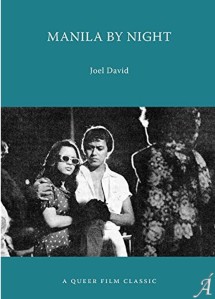
Despite the absence of any photographic evidence of a traffic circle having once been located at the intersection, Pasay Rotonda maintains its attraction and indispensability as the juncture of tradition (the old government buildings and churches of Quiapo and Baclaran along Taft Avenue) and modernity (the business district, now city, of Makati and the Manila Bay Reclamation Project along EDSA). Featuring, among other distinctions, four barangays (districts) located at each of its four corners, the area understandably remains congested at all hours of the day and night, with nearly everyone on their way to or from major destinations. More than most films that feature multiple characters, Amok requires intensive familiarity with its circumscribed locale as well as its dramatis personae. The fact that it was made by a filmmaker who migrated from the Visayas to the metropolitan capital provides the first clue to its sharply observed yet carefully measured approach: the further the character perceives her distance from the center, the more articulate she is about the manner in which the city (via some middleperson or other) mistreats her. One might readily remark, upon an initial viewing, that the plot’s cynicism is revealed when the few characters who benefit from a happy ending do so by claiming some reward that they believe is owed them. Yet the one reflexive representative, a bitter has-been stuntman (genially embodied by Mark Gil), ironically and comically finds an opportunity for high-profile visibility in being shot. The larger impression of a community brought together by an unexpected crisis makes Amok the closest that Philippine cinema has come to replicating the achievement of Ishmael Bernal’s Manila by Night (1980), a revelation that signifies great promise in its filmmaker’s forthcoming output.

Back to top
Return to Canon Decampment contents
Go to alphabetized filmmakers list

Posas

English Title: Shackled
Additional Language: Cebuano
Year of Release: 2012
Director: Lawrence Fajardo
Screenwriter: Zig Madamba Dulay
Producers: Quantum Films & Cinemalaya Foundation

Cast: Nico Antonio, Bangs Garcia, Arthur Acuña, Nor Domingo, Jake Macapagal, Hector Macaso, John Lapus, Wendy Valdez, Susan Africa, Jelson Bay, Raul Morit, CJ Ramos, Jonathan Tadioan, Andy Bais, Ermie Concepcion, Phillip Nolasco, Ofelia Fernandez, Nino Verbida, Honorio Santiago, Rain Robles, Michael Bautista, Raul dela Cruz, James Jaime, Cris Garrido, Ricky Tangco, Dodie Baingan, Philip John Buena

Jess is a pickpocket who works the busy lower-class district of Quiapo to support his mother and send his sister to school. When he spots a new iPhone model owned by well-off Bangs, he stalks her in a busy mall and lifts the item. After selling it to Musngi, his regular fence, and getting told off by his girlfriend because she has work to attend to, he’s spotted on the street by Bangs, who flags some police officers to chase Jess. Bangs promises to reward the police when she gets the phone back because it contains important business information, but in reality she’d recorded a fuck session with her boyfriend on it. Led by Inspector Domingo, the police take Jess to a private room to torture him until he admits to the larceny. Jess leads the police to Musngi, and they also try to convince Bangs to drop her charges because of the hassle that a trial process will entail.

Posas, in a sense, resumes the exploration of the squalid urban milieu initiated the previous year in Amok, but over a wider geographical area and with the number of major characters reduced to basics. The creative challenge consequently shifts to attaining a reality effect, especially considering how the narrative elements appear to replicate those of standard procedural thrillers. The film conditions a readily progressive perspective by focalizing the plot on the least significant entity, that of the petty thief who slips up once and pays the same price that big-time hardened criminals acquiesce to as a matter of course. In a manner of speaking, the police officials who extract a pledge from him to accept their protection (in exchange for sharing half his profits, of course) may be regarded as allies who encourage him to upgrade his hooliganism so as not to be left behind in the criminality profession. The manner in which they begin to instruct him though will prove distressing to any casual observer, more so to informed subjects: the water cure, introduced to Philippine constables and applied to anticolonial resistance fighters by the US military as part of their subjugation campaign. The variation depicted in Posas is a streamlined and less potentially fatal procedure, but (as attested by the performer) it was still traumatizing enough in efficiently rendering the drowning experience. Yet this merely constitutes the gateway to an even more terrifying process, one that crystallizes the commitment to a life of crime as a step into a point of no return. All the nonsensical commentary about how Posas sold itself short by attempting to revive a genre that had already spent itself only wound up revealing the hypocrisy of its premise: as an indie production, Posas worked out its contribution not by adopting an anti-genre stance, but by expanding on the limits of the genre’s conventions.

Back to top
Return to Canon Decampment contents
Go to alphabetized filmmakers list

Imbisibol

English Translation: Invisible
Additional Language: Japanese
Year of Release: 2015
Director: Lawrence Fajardo
Screenwriters: Herlyn Gail Alegre & John Paul Bedia
Adapted from the play by Herlyn Gail Alegre
Producers: Sinag Maynila, Solar Entertainment

Cast: Allen Dizon, Ces Quesada, Bernardo Bernardo, JM de Guzman, JC Santos, Onyl Torres, Angelina Kanapi, Ricky Davao, Fred Lo, Naoki Takai, Shinpei Suzuki, May Alleman, Kaz Sawamura, Masaharu Imamoto, Oyee Barro, Cynthia Luster

Four Filipino migrants in Japan, acquaintaces of one another, attempt to seek more fulfilling personal and professional options while continuing to support their families back home. Linda attempts to help undocumented migrant Pinoys by providing them with loans and rented spaces despite her Japanese salaryman husband’s insistence on evicting them to avoid trouble with the government. Benjie, an illegal resident, works on two jobs to support his family at home but has been wearied down, affecting his relationship with his long-term same-sex partner. Manuel, an aging male entertainer who services elderly women and performs in pornography productions, has to face the prospect of aging as well as his addiction to gambling. Rodel, a naïve and idealistic newcomer, has been encountering friction and rivalry with his supervisor, another Filipino, at work. Their difficulties come to a head and threaten their survival strategy of remaining invisible in a foreign land.

Among the dozens of new directorial talents to have emerged since the new millennium, Lawrence Fajardo is the one who opted to specialize in multiple-protagonist narratives—a challenge so overwhelming that only a few filmmakers have been able to pull it off, much less focus on it for most of their projects. After a series of noteworthy attempts, highlighted by the impressively staged Amok (2011), where the trajectories of several bullets fired by the same gun disrupt several characters’ lives, he confronted the essentially literary challenge of the format and returned to theater, where he had trained. He utilized the same skills deployed by the local master of multicharacter filmmaking, Ishmael Bernal, in allowing for improvisation and revision in accordance with his performers’ strengths. Not surprisingly, although Imbisibol is set in wintry Japan, delineating the difficulties of overseas workers who need to make themselves inconspicuous so that government authorities would not suspect their illegal-residence status, the movie manages to luxuriate in the warmth of its charcters’ occasional camaraderie and concern for fellow expats’ well-being. It also holds the possibly unnoticed distinction of being the best local adaptation of a stage play. The movie builds up to a devastating conclusion, but allows the glow from one particular character, a gay TNT (tago-ng-tago, or constantly hiding migrant), to suffuse what would have been a chilly resolution. Bernardo Bernardo draws from his own personal history, as former US migrant and, earlier, as an actor who portrayed Bernal’s alter-ego in Manila by Night (1980), before his own career was cut short by terminal illness.

Back to top
Return to Canon Decampment contents
Go to alphabetized filmmakers list

Á!


Canon Decampment: Jerrold Tarog

[Click here (recommended) for desktop mode.]

Heneral Luna

English Translation: General Luna
Additional Languages: English, Spanish
Year of Release: 2015
Director: Jerrold Tarog
Screenwriters: Henry Francia, E.A. Rocha, & Jerrold Tarog
Producer: Artikulo Uno Productions

Cast: John Arcilla, Mon Confiado, Arron Villaflor, Jeffrey Quizon, Paulo Avelino, Joem Bascon, Archie Alemania, Arthur Acuña, Alex Vincent Medina, Marc Abaya, Alvin Anson, David Bianco, Nonie Buencamino, Mylene Dizon, Edgar Ebro, Julia Enriquez, Ketchup Eusebio, Anthony Falcon, Dennis Marasigan, Leo Martinez, Allan Paule, Bing Pimentel

A generally faithful account of conflicts in the ranks of the Philippine revolutionary army, during the transition from Spanish to American colonization. President Emilio Aguinaldo and his cabinet disagree about what strategy to adopt regarding the Americans’ offer of help in routing the Spanish army. One faction is calling for trade relations with the US, but General Antonio Luna prefers to redirect against the Americans their largely successful campaign against Spain, to ensure that the country remain free from foreign occupation. When the fledgling government learns that the Americans have already started attacking major centers in the Philippines, Luna leads the charge against the new colonial aspirants. When he discovers that reinforcements from the Aguinaldo camp arrive too little and too late, Luna’s well-known hot temper leads to him to burn a few bridges with some of his former allies.

Instances—anywhere in the world, not just in the Philippines—where independent players manage to beat mainstream studios at their own game are so rare that their emergence provides filmmakers and audiences with always-welcome optimism. What adds to Heneral Luna’s significance is its historical record as a social-media phenomenon, following earlier pop-culture samples like TV’s AlDub kalyeserye (a semi-improvised courtship narrative) and prefiguring the successful run of the least conventional candidate, Rodrigo Duterte, during the 2016 presidential election. Heneral Luna distinguished itself further primarily because, a few dissenting voices notwithstanding, it delivered on its promise of providing a now-rare combination of rollicking entertainment, substantial sociopolitical insight, and that emotional intangible that today’s young Pinoys call “hugot”—roughly equivalent to the millennial generation’s “hardcore emo.” Jerrold Tarog opted to revive a formerly popular but now-moribund genre, the historical period film, and invested it with humor, magic realism, and the several loose threads that typify any controversial historical account. The movie provided an abundance of meme-worthy lines, with the pithy “Bayan o sarili?” [Nation or self?] consolidating the movie’s arguments as well as its prescription for the future. Of better subsequent import would be Tarrog’s announcement that, because of the movie’s unexpected success, two other period projects on similarly larger-than-life controversial leaders, Gregorio del Pilar and Manuel L. Quezon, have been slated for production. High-caliber production values attest to Tarog’s whiz-kid stature in taking charge of specific aspects of production, including editing and music.

Back to top
Return to Canon Decampment contents
Go to alphabetized filmmakers list

Á!


Canon Decampment: Antoinette Jadaone

[Click here (recommended) for desktop mode.]

That Thing Called Tadhana

English Translation: That Thing Called Meant-to-Be
Additional Languages: English, Ilocano
Year of Release: 2014
Director & Screenwriter: Antoinette Jadaone
Producers: Cinema One Originals, Epicmedia, Monoxide Works, One Dash Zero Cinetools

Cast: Angelica Panganiban, JM de Guzman, Joem Bascon, Carlos Castano, Joenel Canaria, Bianca Balbuena, JR Miano, Joi Bayan, Kelvin Dy, Martin Mayuga, Jane Torres, Marjarey Kasey Politico, Monique Ladimo

At the airport on his way home from overseas work in Rome, Anthony Lagdameo sees Mace Castillo unable to check in her luggage because of excess weight. He offers to carry some of her possessions since he will be traveling light. Mace is affected by tearjerker scenes in the movie that she watches, and confesses that her boyfriend had dumped her for another woman. Anthony opts to keep her company to help nurse her broken heart, even when she expresses a drunken wish to take a trip all the way north to Baguio. They discover along the way that Mace’s dream was to write short fiction, while Anthony’s was to be a book illustrator. Their further interactions reveal a mutual compatibility with each other, but the results of such a quick-blooming romance will sometimes be unpredictable for both of them.

The several crossovers from independent to mainstream film practice generally failed to find sustainable exemplars. That Thing Called Tadhana has been the most influential of the lot, and the reasons are immediately apparent: a strong, articulate woman meets-cute with an understandably smitten man, both unfazed by the prospect of overseas employment yet sharing some past experience of heartbreak, venturing into less-familiar scenic spots while exchanging wit-laden insights into each other’s situations, ending with a bittersweet lack of closure that heightens their newly formed romantic bond. One may wonder how such a plain, by-now predictable formula can continue to yield such a well-received series of follow-up projects, but TTCT is long-ago enough to provide us with clues. The first would be a light directorial touch, reminiscent of the French romantic comedies (notably those of Eric Rohmer), successfully appropriated by Richard Linklater for his Before trilogy (1995-2013) as well as by Korean filmmaker Hong Sang-soo. The next would be a feminist spin on the manic pixie dream-girl, a Hollywood stock character who winds up being domesticated by the man she falls for; TTCT’s self-ironic neurotic lead female refuses to yield to her male partner’s bemused stoicism, instead winning him over to her impulsively free-spirited approach to life. A special touch that only TTCT has been able to pull off so expertly that the entire movie takes on the quality of a well-remembered pleasant dream is when the heartbroken woman reaches for an ideal of true love via John Lloyd Cruz’s character in Cathy Garcia-Molina’s One More Chance (2007). The reflexive touch is unobtrusive mainly because of the credible manner in which Antoinette Jadaone succeeds in integrating it into the narrative. (Not surprisingly, her earlier indie project and full-length debut, Six Degrees of Separation from Lilia Cuntapay [2011], foregrounded this process by letting the main subject play herself in a mock-documentary.) TTCT affirms its innovative roots by being lesser-budgeted than its progeny, but overflowing with so much spunk and wisdom that it still manages to surpass all the rom-coms that it had since inspired.

Back to top
Return to Canon Decampment contents
Go to alphabetized filmmakers list

Á!

Canon Decampment: Erik Matti

[Click here (recommended) for desktop mode.]

On the Job

Additional Language: English
Year of Release: 2013
Director: Erik Matti
Screenwriters: Erik Matti & Michiko Yamamoto
Producers: Star Cinema Productions & Reality Entertainment

Cast: Joel Torre, Gerald Anderson, Piolo Pascual, Joey Marquez, Michael de Mesa, Leo Martinez, Angel Aquino, Vivian Velez, Shaina Magdayao, William Martinez, Rayver Cruz, Empress Schuck, Lito Pimentel, Rosanna Roces, Al Tantay, Niño Muhlach, Joel Saracho

Tatang and his cocky protégé Daniel are let in and out of jail by the powers-that-be to work as hired killers. Handling their cases are local cop Joaquin and promising National Bureau of Investigation agent Francis. But the pursuit of justice becomes complicated when Francis realizes that his search for the truth can lead him to permanently sever his ties with his politician father-in-law.

Changes in technology can no longer be called revolutionary during a time when companies upgrade their electronic products as a means of capitalist survival; but the digital shift in Philippine cinema can be granted a measure of progressive agency if it manages to revitalize a long-dormant genre such as, in this case, the action film. On the Job upholds the critical social commentary that the best action samples purveyed during the genre’s heyday, roughly from the 1960s to the people-power revolt in 1986: as examples, in the present canon listing alone, we have films such as Gerardo de Leon’s The Moises Padilla Story (1961), Cesar Gallardo’s Geron Busabos: Ang Batang Quiapo (1964), Celso Ad. Castillo’s Asedillo (1971), Romy Suzara’s Pepeng Shotgun (1981), and several entries by Lino Brocka. On the Job depicts a heretofore clandestine situation so abhorrent and extensive that even recent real-life discoveries of similar and worse conditions still enable the movie to retain its shock factor—a tribute to Erik Matti’s skill at delineating congested urban spaces steeped in paranoia, betrayal, and ensuing heartbreak. In fact, because of the intensity of the movie’s vision of the state as failed and abusive provider, the narrative’s cold-blooded resolution regarding the denial of fatherly commitment provides cathartic relief, since it is a flesh-and-blood criminal father (Joel Torre in peak form) who grieves as he executes his professional duty at the expense of his chosen son. Along the way we get treated to impressive set-pieces, harrowing chase sequences, mile-a-minute repartee, even lust and tenderness—so for those inclined to linger further, the complex allegory advanced by the film becomes worthy of contemplation.

Back to top
Return to Canon Decampment contents
Go to alphabetized filmmakers list

Á!


Canon Decampment: Hannah Espia

[Click here (recommended) for desktop mode.]

Transit

Additional Languages: Hebrew, English
Year of Release: 2013
Director: Hannah Espia
Screenwriters: Giancarlo Abrahan & Hannah Espia
Producers: Cinemalaya & Ten17P

Cast: Irma Adlawan, Jasmine Curtis-Smith, Ping Medina, Marc Justine Alvarez, Mercedes Cabral, Yatzuck Azuz, Perla Bronstein, Omer Juran

As Israel begins deporting the children of foreign workers, Filipinos Janet and her brother Moises hide their kids so they can remain in the country, with their respective Israeli employers sympathetic to their plight. Janet, a maid, clashes with her daughter Yael, who struggles to define her identity. Moises, a caregiver, looks for ways to make his son Joshua a legal resident. But an unfortunate incident will cause massive changes for these four individuals.

The most persuasive argument to be made for university-administered formal film training lies in this type of output, a debut film made by a fresh graduate, a woman who’d been partly foreign-based. The expected technical limitations will be evident to anyone who watches just for the purpose of cataloguing them, but the filmmakers turn their weakness into an advantage. Although resembling several foreign films that deal with the subject matter, including an Israeli entry, Shira Geffen and Etgar Keret’s Meduzot (Jellyfish, 2007), Transit compensates by using surface plainness as an opportunity to interweave globalization issues, fragmented time and space, and multiple characters. The result, as expected, is discursively complex; but the unexpected bonus is that the film is emotionally affective as well. The multicharacter film text has become one of the distinctive specializations of Filipino filmmakers, but Transit takes this format a step forward by applying the principle of multiplicity not just to the number of characters, but to the concepts of time and space as well.

Back to top
Return to Canon Decampment contents
Go to alphabetized filmmakers list

Á!


Canon Decampment: Jade Castro

[Click here (recommended) for desktop mode.]

Zombadings 1: Patayin sa Shokot si Remington

English Translation: Zombadings 1: Kill Remington with Fear
English Title: Remington and the Curse of the Zombadings
Additional Language: English, “Swardspeak” [Philippine gay lingo]
Year of Release: 2011
Director: Jade Castro
Screenwriters: Moira Lang, Jade Castro, & Michiko Yamamoto
Producer: Origin8 Media

Cast: Martin Escudero, Lauren Young, Kerbie Zamora, Janice de Belen, John Regala, Roderick Paulate, Daniel Fernando, Angelina Kanapi, Eugene Domingo, Leandro Baldemor, Odette Khan, Ward Luarca, Bayani Agbayani, Jess Evardone, Joseph Fernandez, Andre Salazar, Marian Rivera

As a kid, Remington’s inconsiderate behavior toward gays causes a grieving cross-dresser to curse him to a future as a queer man. Fifteen years later, the curse starts to take effect as it changes how he looks and acts, despite his pursuit of a “normal” heterosexual lifestyle. Coincidentally, several gay men die one after another, of causes unknown. Realizing that he might be vulnerable to the same fate, Remington goes on a paranormal quest with his girlfriend and his best male friend (who willingly accommodates his conflicted other personality) to find out how to lift the curse and possibly stop the series of deaths.

By the time Zombadings demonstrated its creditable box-office clout, local film-industry observers were ready to accept the ability of so-called independent-film projects to challenge mainstream entries. What was exceptional about this particular piece, though, was its spirit—and not just in terms of its fantasy-based premise: it was the first and, as of this writing, the only local digital-indie movie to set aside both its expected high-art ambitions as well as its competitors’ mainstream appeal. Instead, it turned to a tradition in Philippine film practice, one that had generally paralleled the art-vs.-commerce struggle that vied for the public’s attention but always stayed under the radar, as it were: the much-derided B-movie, where all manner of crowd-pleasing genres clashed without worrying about their mutual incompatibilities, and where the complete lack of respectability allowed their practitioners to engage in occasionally innovative treatments of overlooked subjects. Zombadings brings together comedy, horror, action, musical numbers, transvestism, soft-core (same-sex) erotica, science fiction, family melodrama, and just plain old-fashioned weirdness; demands that its cast of veterans and newcomers, notably Martin Escudero in the title role, be good-natured sports in ridiculous-though-fun parts; and sneaks in an unexpectedly hefty critique of social intolerance and personal hypocrisy.

Back to top
Return to Canon Decampment contents
Go to alphabetized filmmakers list

LSS

Alternative Title: Last Song Syndrome
Year of Release: 2019
Director: Jade Castro
Screenwriters: Siege Ledesma & Jade Castro
Based on a story by Jessie Lasaten, Emman A. de la Cruz, Nikkie del Carmen, Siege Ledesma, Jade Castro
Producers: Film Development Council of the Philippines & Globe Studios

Cast: Gabbi Garcia, Khalil Ramos, Ben & Ben, Tuesday Vargas, Bernard Palanca, Elijah Canlas, Iana Bernardez, Mika Manikan, Eian Rances, Ameera Johara, Jam Rances

Zack and Sarah are millennials saddled with their own domestic problems who notice each other on a bus ride because of their love for the music of Ben & Ben. After the ride, Zack contends with his heartbreak over a crush who’s unavailable because of her on-again, off-again relationships, and provides much-needed company for his quirky single mother and her determination to find for him a suitable partner. Sarah, for her part, has to give up her dream of success as a singer-songwriter in order to help her younger brother finish his studies. The two navigate the complex challenges thrown their way by modern living until another chance encounter, also centered on Ben & Ben, brings them together once more.

Before she succumbed to an illness that cut off her mid-career productivity, Marilou Diaz-Abaya expressed her concern for the then-ascendant independent-cinema scene: that its practitioners looked down on mass audiences and, consequently, on their preferred genre in film—which for the past decade-plus meant romantic comedies. She explained how celluloid-era directors had to be careful in planning their projects down to the last shot, because of the great expense involved; for this reason, connecting with the audience, she said, should be a non-negotiable feature of filmmaking practice. Fortunately, a number of indie figures, most of them (not surprisingly) women, seemed to heed her call and began the time-honored tradition of introducing innovations and refining them while maintaining the genre’s appeal, which was (per Diaz-Abaya) allowing people to hope for something better. After Antoinette Jadaone’s That Thing Called Tadhana (2014) made strong femininity, sensitive masculinity, and ambivalent closures viable, LSS attempts a mode of seemingly meandering storytelling closer to the Euro art-film inspiration of indie projects, fuses this with TTCT’s still-useful elements, and draws from director Jade Castro’s confidence in investing seemingly trivial, even corny, developments with dignity, respect for the audience, and faith in his performers—who respond in turn by providing a reality effect all throughout what appear to be random twists and turns of events. The use of profound ironies as well as the subtlety of the film’s class, gender, and sexual politics would elicit admiration from the likes of Ernst Lubitsch, if the rom-com master were still around today, while its stylistic fluidity would be worthy of comparison with none other than Diaz-Abaya in peak form. Philippine cinema welcomes a brighter future, once everyone takes a breather and figures out what makes an apparently casual yet strangely satisfying affair like LSS work.

Back to top
Return to Canon Decampment contents
Go to alphabetized filmmakers list

Á!


Canon Decampment: Marlon N. Rivera

[Click here (recommended) for desktop mode.]

Ang Babae sa Septic Tank

English Title: The Woman in the Septic Tank
Additional Language: English
Year of Release: 2011
Director: Marlon N. Rivera
Screenwriter: Chris Martinez
Producers: Cinemalaya, Martinez Rivera Films, Quantum Films, & Straight Shooters Media

Cast: Eugene Domingo, JM de Guzman, Kean Cipriano, Cai Cortez, Jonathan Tadioan, Carlos Dala, K.C. Marcelo, Cherry Pie Picache, Mercedes Cabral, Lani Tapia, Eric Cabahug, Melvin Lee

Film-school graduates Rainier, Bingbong, and Jocelyn are raring to make what they envision as their Oscar-worthy debut movie, Walang Wala (Impoverished). As they discuss the film’s various possible treatments, they succeed in getting acclaimed actress Eugene Domingo to be their leading lady. However, a series of misadventures threatens to sabotage the project even before their cameras start rolling.

One of the first cautionary comedies about the Filipino film industry’s wholesale embrace of the digitalization of the medium was unsparing, prescient, and (true to the nature of the project) guffaw-a-minute funny. The tale of a clueless middle-class team whose members set out to make their mark in foreign film festivals by documenting what they believe are typical Third-World scenes might have failed in halting other local filmmakers’ cynical exploitation of contemporary social miseries. In this instance, however, it served adequate notice that Filipino observers were on to the trend. The current blurring of the boundaries between “mainstream” and “indie” projects may yet be considered Ang Babae sa Septic Tank’s most constructive contribution. On the basis of its international acclaim, we may meanwhile conclude that Euro-American responders have remained prepared to accept the movie’s criticism of their own foreign venues as the primary enablers of what has become known as the “poverty porn” trend. Septic Tank has also proved to be capable of sustaining its own sequel, with Ang Babae sa Septic Tank 2: #ForeverIsNotEnough (also by Marlon Rivera) released during the 2016 Metro Manila Film Festival; a trilogy-of-sorts was realized via a seven-episode TV series titled Ang Babae sa Septic Tank 3: The Real Untold Story of Josephine Bracken [the American-adopted Irish woman who became national hero Jose Rizal’s common-law wife] (2019, dir. Chris Martinez), with Eugene Domingo the mainstay in the entire set of presentations.

Back to top
Return to Canon Decampment contents
Go to alphabetized filmmakers list

Á!


Canon Decampment: Remton Siega Zuasola

[Click here (recommended) for desktop mode.]

Ang Damgo ni Eleuteria

English Title: Eleuteria’s Dream
Alternate Title: Ang Damgo ni Eleuteria Kirchbaum
Language: Cebuano
Year of Release: 2010
Director: Remton Siega Zuasola
Screenwriters: Maria Victoria Beltran & Remton Siega Zuasola
Producers: Cinema One Originals & Panumduman Pictures

Cast: Donna Gimeno, Gregg Tecson, Lucia Juezan, Emelda Mabusay, Ara Chawdhury, Daday Melgar

Eleuteria is a young lady who is reluctant to fly to Germany where a rich old man is waiting to claim her as his mail-order bride. However, her mother convinces her that this is the best way she can support their poor family. As she walks toward a harbor en route to the city airport, with her boyfriend pleading with her to stay, she has to choose between her family’s welfare and her own happiness.

A tour de force made even more remarkable by the fact that the material is set on far-flung Olango Island, part of an eponymous island group in Cebu Province and famed as a bird sanctuary. The actors speak in Cebuano and the action unfolds in real time. Remton Siega Zuasola was brazen enough to appropriate, in his first feature-length release, the single-take strategy of a few (appropriately celebrated) Western models.[1] Ang Damgo ni Eleuteria stakes its interests in an issue as vital to the survival of the Philippine nation as it has also become the concern of citizens in more affluent economies: the uprooting of Filipino citizens, occasionally against their will, as constituent elements in the country’s labor-export machinery, its only viable new-millennium industry.

Note

[1] The single-take film can arguably be ascribed to the very first commercially successful instances of cinema, little over a hundred years ago: the Lumière brothers’ so-called actualities, each comprising about a minute’s worth of unedited footage. This may be one of the reasons why people familiar with film history appreciate long unbroken shots. Since commercial-gauge celluloid film could only be exposed continuously for up to ten minutes at a time, Alfred Hitchcock had to use artificial devices (usually panning or zooming into dark surfaces) to mask the cuts in Rope (1948). Because of the extreme difficulty of executing narrative dramas this way, as well as audiences’ unfamiliarity with the technique, most single-take efforts during the pre-digital period were confined to experimental arthouse releases such as Andy Warhol’s eight-hour Empire (1964), a stationary shot of New York City’s Empire State Building, and Michael Snow’s 45-minute zoom Wavelength and whirling-camera La region centrale (The Central Region, 1971). The digital format enabled actual or simulated single takes and provided several notable samples: Mike Figgis’s commercially released Timecode (2000), with four full-length single takes presented in four interactive frames simultaneously; Aleksandr Sokurov’s Russkiy kovcheg (Russian Ark, 2002), where a ghostly narrator, represented by the camera, wanders through Saint Petersburg’s Winter Palace and encounters people and events over the past three centuries; and Alejandro G. Iñárritu’s so-titled Birdman or (The Unexpected Virtue of Ignorance) (2014), a mixed-genre film with reflexive elements that won the US Academy Award for Best Picture. In the Philippines, Zuasola’s subsequent films as well as Pepe Diokno’s Engkwentro (Clash, 2009) were also single-take features.

Back to top
Return to Canon Decampment contents
Go to alphabetized filmmakers list

Á!