
Click here or use the back button to return to the main Queries page.
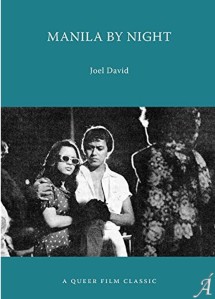
[1] I’d really not want to further extend what has become one of the longer answers in this Q&A series, except that both films in question were already a (bureaucratic) concern of mine decades before the question-sender took notice. When I realized that the then-percolating anti-dictatorship movement forced the cultural establishment of Ferdinand Marcos to a position of permanent enlightenment as one of its defenses, I suggested to an official in my workplace, the Experimental Cinema of the Philippines, to screen the uncensored version of Manila by Night. To my surprise, I was called back not long after and instructed to start the processing of documents necessary for the film’s release. I was also apprised of the agency’s willingness to screen Sakada – in effect, the two most celebrated censorship cases of the martial-law regime. Bernal was of course delighted that his work would finally be shown in its integral version and with its intended title rather than the censors-designated City after Dark. On the other hand, all the people involved in Sakada provided the same answer: they did not want it screened at the Manila Film Center. I deduced that this was in line with the call jointly made by Cannes filmfest entrants Lino Brocka and Mike de Leon to boycott the MFC, and left it at that.
Back to top
Back to “Submit a Question”
[2] Some time ago, I discussed Dovie Beams and her appearance in the inescapably scandalous book written by Hermie Rotea, titled Marcos’ Lovey Dovie. Even though standard practice allows me to append “[sic]” after the book title’s first word, I regard the act as not only incredibly petty, but also contestable: within certain stylistic traditions, this way of indicating the possessive may still be considered correct.
Back to top
Back to “Submit a Question”
[3] Tibák is activist argot (also the title of a 2016 release, dir. Arlyn dela Cruz), drawn from a type of verlanism prevalent among local working-class urbanites since the 1960s. Similar to Pig Latin, a verlan transposes a word’s final syllable to first position (hence the French l’envers, or the inverse, becoming vers-l’en or verlan). In the case of tibák, the full word for activist, aktibista, is first clipped (to aktib) and then verlanized. The first sample of extensive verlanism in Philippine film titles originates from the Spanish-derived Guwapo (dir. Teodorico C. Santos, 1954, with an English appropriation-cum-translation in 1959, Carlos Vander-Tolosa’s Handsome), re-emerging thereafter as Pogi (dir. Marcelino Navarro, 1967) and preceding by several decades its diminutive, Guwapings: The First Adventure (dir. Jose Javier Reyes, 1992). Pogi itself was promoted with an alternate title, the then-current entirely verlanized expression Pogi Dehin Goli, which roughly means “Mr. Handsome[, who] Never Bathes.”
11011The first nomenclatural instance of film-specific verlanism occurred even earlier, in 1962, when Chiquito’s first self-directed credit, for Dra-Kulas (which also puns on Kulás, a name that connotes servility or slowness), tendered the nom de camera “To-chi-qui.” The comedian would use the verlanization throughout the rest of the 1960s, replacing it thereafter with either his formal name (Augusto V. Pangan) or its initials. Trivia Traps (a pre-IMDb insight brought up decades ago by historian-archivist Teddy Co): The better-known comedian verlan today may be “Pidol,” inasmuch as Lino Brocka himself collaborated on one of Dolphy’s serious projects; the lesser-known fact is that the first Brocka non-directing credit was actually for cowriting a Chiquito film, Luciano B. Carlos’s The Arizona Kid (1970). As for Dolphy’s own verlanistic contribution, this will require a tricky bit of recollection on my end, involving lost films. He had a 1967 release titled Sitsiritsit Alibangbang (dir. Romy Villaflor), but the tongue-twisting children’s folk ditty was actually sung in verlanized verses in another film from the same year, Buhay Marino (dir. Armando Garces) – and not by Dolphy but by his costar Timi Yuro: “Sitsit-sirit, bangbang-ali, to-salagin, bang-salagu,” and so on.

Evidence that some people might have remembered: possibly to avoid trouble with the much older, semi-notorious Alibangbang nightclub, a landmark in Cubao, the owners of this newer spot verlanized the name and apparently had better success, as evidenced in its use of a suffix. [Photo by Jilson Tiu, published in Philbert Dy, “A Love Letter to Cubao,” Spot.ph, March 31, 2024]
11011Related terms such as kakosa (literally fellow thing, possibly partially drawn from “Cosa Nostra,” the actual name for the Sicilian Mafia) and kalaboso (from the Spanish for dungeon) have only been appearing as recent TV episode titles, although the truncated Kosa did serve as the title for a Rudy Fernandez vehicle (dir. Jun Gallardo, 1980). To return to something even earlier, verlanism was of course ongoing even before the term itself was coined, as I realized when I heard a streetwise character mutter “tepok” (from “patay” or dead) in Susana C. de Guzman’s unfortunately truncated prog masterpiece Lupang Pangako (Promised Land, 1949). And to end by moving forward, with something contemporary (for me, at least): the newish slang word “igop” is a mirroring, or backward spelling, of a verlanism, a rare case of slang upon slang.
Back to top
Back to “Submit a Question”
[4] The foreign country where I’ve lived longest is the Republic of Korea, which made the so-far unmatched leap from decades of colonial decimation capped by total wartime devastation (an experience shared with Pinas and Vietnam), to full-fledged membership in the Organization for Economic Cooperation and Development, in little more than a generation. Using Three-Worlds terminology, this meant progressing from Third-World to First-World status in record time, without even the Euro-modelled benefit of a colonized population to exploit; I still have to meet any intelligent Korean who’s embarrassed by the kind of past her country underwent (and why would she even, right?). To push matters further, I occasionally attempt to nettle backward foreign visitors by stating that Korea’s neighbor to the north is really more of a feudal monarchy than a Second-World system, despite what the orthodox left in the Philippines avers every so often, and that more socialist ideals can be observed and attained in South Korea. This is the primary reason I managed to tolerate living here, and why moving northward constitutes my idea of an unmitigated nightmare.










 ORCID ID
 Ámauteurish!