
[Click here (recommended) for desktop mode. Click to jump to: Ikaw Pa Lang ang Minahal, 1992; Ang Lalake sa Buhay ni Selya, 1997; and Tatlo … Magkasalo, 1998.]
1—Hihintayin Kita sa Langit
English Title: I Will Wait for You in Heaven
Year of Release: 1991
Director: Carlos Siguion-Reyna
Screenwriter: Racquel Villavicencio
(Adapted from the 1939 William Wyler film Wuthering Heights)
Producer: Reyna Films
Cast: Richard Gomez, Dawn Zulueta, Jackie Lou Blanco, Michael de Mesa, Eric Quizon, Vangie Labalan, Jose Mari Avellana, Guila Alvarez, Gio Alvarez, Jomari Yllana, Judy Cobar, Jeffrey Coronel, Ramir Arce Romero, May Gorospe, Lynn Cruz, Sonny Viana, Ricky Yu, Alfon Miranda
While growing up, Carmina and her adopted brother Gabriel develop feelings for each other, much to the disapproval of her real sibling Milo. When their father dies, Milo relegates Gabriel to the status of family servant. Despite her commitment to her true love, Carmina is forced to marry the wealthy Alan as Gabriel seeks his fortune elsewhere. Years later, Gabriel has become rich himself and vows to get back at those who made him suffer.
English Translation: You’re the Only One I’ve Loved
English Title: Only You
Year of Release: 1992
Director: Carlos Siguion-Reyna
Screenwriter: Racquel Villavicencio
(Adapted from the 1949 William Wyler film The Heiress)
Producer: Reyna Films
Cast: Maricel Soriano, Richard Gomez, Eddie Gutierrez, Charito Solis, Armida Siguion-Reyna, Dawn Zulueta, Guila Alvarez, Reyelmin Eduardo, Adrianne Escudero, Richard Reynoso, Ramir Arce Romero, Robert Natividad, Susan Medina, Ramon Reyes, Reddie Boy Escudero, Jean Garcia, Zeny Constantino, Nestor Cortez, Eufemia Azuelo, Edwin Briones, Joel Carreanga, Rosalie Escudero, Millie Escudero, Mela Quisumbing Escudero, Teddy Umali, Johnny Garutaro, Joey Morales, Joseph Tociero
As sole heir to a vast fortune, naïve Adela has all the money she needs. However, all she longs for is the love of her father Maximo, who in turn disdains her, blaming her for her mother’s postpartum death. When a stranger named David courts her, she is quickly smitten. Though Maximo warns her that her suitor is only after her wealth, she elopes with David. Soon, she realizes that this act of rebellion will teach her the harsh realities of life and love.
The presence of “the foreign” has tended to raise contentious exchanges about what exactly constitutes Filipinoness. The success of these two adaptations of Classical Hollywood movies, themselves adapted from 19th-century English-language novels (Emily Brontë’s Wuthering Heights and Henry James’s Washington Square), might confirm nationalist author Renato Constantino’s assertion, in Synthetic Culture and Development (1985), that Philippine cinema was merely “reflective” of the West. On the other hand, one may respond by pointing out that because of its universality, film is arguably the least Filipino mass medium, and therefore the valorizing of originality would be a futile pursuit. Moreover, there have been other avid non-Western moviegoers aside from Filipinos. For now, we may regard the success of these twin attempts as evidence of a cosmopolitan strain in our mass audience—a quality that enables them to find nostalgia in rural-set narratives, identify with protagonists of either gender who leave defeated yet return triumphant, and take pleasure in complex narratives, grand production values, and operatic gestures. In such a globalized mode of practice as ours, adaptations of non-indigenous material will be unavoidable; hence we can certainly do worse than have models, with Hihintayin Kita sa Langit and Ikaw Pa Lang ang Minahal as our long-standing state-of-the-craft, that may serve as challenges for future filmmakers to emulate, resist, or outdo.
Back to top
Return to Canon Decampment contents
Go to alphabetized filmmakers list
English Title: The Man in Selya’s Life
Year of Release: 1997
Director: Carlos Siguion-Reyna
Screenwriter: Bibeth Orteza
Producer: Reyna Films
Cast: Rosanna Roces, Ricky Davao, Gardo Versoza, Alan Paule, Eva Darren, Crispin Pineda, Gigi Locsin, Cednic Millado, Macky Villalon, John Nielsen Apilado, Virgie Lopez, Manny Mendoza, Loraine Torrado, Cyrill Torrado, Kristofer Curameng, Sunny Castillo, Richard Melu, Dennis Selis, Marilyn Mortiz, Joseph Buncalan, Joey Luna, Irene Medez, Alex Orlanda, Peregrino Tadem, Vicky Pagaron, Jerome Gampani, John Elizar Pascua, Resty Isabel Valido, Joseph Olfindo, Jun Leyva, Ernesto Lavariño, Nestor de la Peña, Lina Trinidad, Anita Edu
Bobby, Selya’s virile but promiscuous boyfriend, disappears from her life when she tells him that she’s pregnant with his child. The desperate public-school teacher travels to his hometown to look for him but is informed by Piling, his landlady, that he just left and she has no idea where he went. Ramon, the owner of the boardinghouse and a principal at the local high school, is also undergoing a difficult breakup with his married lover. Aware of the rumors that Ramon’s gay relationship has caused in the conservative community, Piling devises a scheme where Selya can rent a room and teach at Ramon’s school. She also brings the two together, lying to Ramon that she informed Selya of his preference. A visit from Ramon’s ex causes discord in the newlywed’s life together, but this is minor compared to the sudden reappearance of Bobby.
If we count Rufa Mae Quinto as a comedy specialist, then Rosanna Roces was the country’s last sex-film star. Following the trajectory that all her predecessors aspired to achieve, she agreed to appear in distinctly serious projects, starting with two outings in the same year at Reyna Films. One of these, Ligaya ang Itawag Mo sa Akin (They Call Me Joy), met with acclaim and a slew of recognitions, despite the fact that the entry was too early-wave feminist to be considered useful for gender analysis, much less activism; even right-wing moralists would find its positions on sex work acceptable—so no wonder the elderly critics group embraced it. Downgraded in comparison was her other project, Ang Lalake sa Buhay ni Selya (The Man in Selya’s Life), which may have been misperceived as belonging on the same order as the other film, as well as a corrective to her bawdy and witty public persona. Such an oversight burdened ALBS with baggage it never intended to bear. The key is in looking over the (married) director-writer partnership’s initial collaboration, Misis Mo, Misis Ko (Your Wife, My Wife, 1988), as well as an earlier script by the same writer, Lino Brocka’s Palipat-lipat, Papalit-Palit (Changing, Exchanging, 1982): not only is ALBS queer in sensibility, as the earlier two were, it is also essentially a comedy of manners despite its occasional stroll into melodramatic territory. Roces holds her own in light-handed ensemble work, actually a more difficult performing challenge than tragic drama, while the theater-trained Ricky Davao (recently deceased) elucidates a delicate balance of desire, frustration, and hope, often in impressively modulated combinations. One of our best-achieved queer texts, sneaking and persisting under the radar, just as it should.
Back to top
Return to Canon Decampment contents
Go to alphabetized filmmakers list
English Translation: Three … Sharing
English Title: Three
Year of Release: 1998
Director: Carlos Siguion-Reyna
Screenwriter: Bibeth Orteza
(Based on a story by Jun Lana)
Producer: Reyna Films
Cast: Ara Mina, Tonton Gutierrez, Rita Avila, Gina Alajar, Sharmaine Suarez, Eva Darren, Roy Rodrigo, Philip Lazaro, Mailes Kanapi, Kaye Congmon, Lorraine Fernandez, Reggie Gonzales, Sam Intano, Audrey Ignacio, Joel Olivera
Elsie and Tito, a newly married couple, find their union destabilized by Tito’s fiery temper and continuing attraction to his mistress, Susan. Alice, who had a discreet affair with Elsie before the latter got married, resumes their acquaintance—to the consternation of Barok, an out lesbian who pines after Alice. Elsie finds Alice hard to turn away, not only because of Tito’s abusive behavior but also because she finds out that her ex-lover has a terminal illness. Tito’s discovery of the women’s conflicted relationship induces a shift in his regard for his wife, as well as a fascination in and growing respect for the love that women are capable of providing each other.
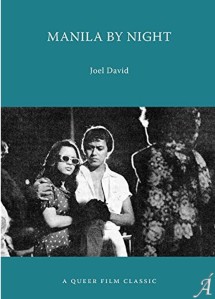
The imaging of lesbian desire in Philippine cinema has encountered the same difficulties that beset queer folk in conservative cultures everywhere. Since women are recipients of the male gaze, their bodies are allowed to be objectified, but love or sometimes even physical intimacy between them may be permitted only up to the point where male characters have to exercise their prerogative of owning their female partners. Lesbians in Philippine cinema have been more fortunate than their counterparts in other non-Western film cultures, with some depictions departing from the usual tragic or murderous or forcibly heterosexualized (“correctively raped,” to use the right-wing oxymoron) types of characters. The fountainhead of modern queer imaging in local films would be Ishmael Bernal’s Manila by Night (1980), where the butch lesbian figure is nevertheless punished by the narrative for her drug-peddling activities. Mel Chionglo’s Isabel Aquino: I Want to Live (1990) may perhaps be the closest to a politically correct adaptation of a real-life narrative, while Sigrid Andrea Bernardo’s Ang Huling Cha-Cha ni Anita (Anita’s Last Cha-Cha, 2013) is an exemplary and charming coming-out tale. Between these two samples, Tatlo … Magkasalo (1998) proves how difficult the journey has been. Its central female characters comprise a married woman conflicted by her bisexuality, a dying lesbian unable and unwilling to let go of her now-unavailable former partner, and an openly man-hating butch woman attached to both once-and-future lovers and creating difficult triangulated relations. Yet the narrative finds a way to reconcile all these impossible desires, ironically by allowing the straight male to realize, via a process of enlightenment, that his sexual exclusion matters less than the privilege he has of observing how women capable of same-sex love work out their differences among themselves. This makes understandable how Tatlo initially generated disapproving responses among PC observers as well as critics who tend to reject genre products. More recent observers have been attuned to its upholding of queer values, along with a cautiously realistic handling of class differences, where women without men have to constantly endure borderline-poverty conditions: the movie’s social contribution consists in asserting that the realization of radically novel familial relations, no matter how short-lived, is worth the cost of suffering the rejection of patriarchal systems.
Back to top
Return to Canon Decampment contents
Go to alphabetized filmmakers list
Á!












 ORCID ID

