
[Click here (recommended) for desktop mode. Click to jump to: Diosa, 1982; Bagets, 1984; Kaya Kong Abutin ang Langit, 1984; Anak ni Waray vs. Anak ni Biday, 1984; Dinampot Ka Lang sa Putik, 1991; Magnifico, 2003.]
Schoolgirls
Year of Release: 1982
Director: Maryo J. de los Reyes
Screenwriter: Jake Tordesillas
Producer: Regal Films
Cast: Snooky Serna, Dina Bonnevie, Maricel Soriano, Edu Manzano, Joel Alano, Edgar Mande, Mitch Valdes, Anita Linda, Louella, Benggot Pe Benito, Melvi Pacubas, Mary Walter, Balot, Matimtiman Cruz, Alma Lerma, Domingo Landicho, Estrella Antonio, Manny Castañeda, Rina Peredo, Willie Natividad, Donna Sanchez, Sandy Andolong, Ricky Davao, Soxy Topacio, Eric Borbon, Ed Villapol, Tessie Tomas, Lito Pimentel
Three teenage girls contend with the various challenges and constraints of college life while parrying the insults of mean girls. Margot insists on her prerogative to play the field even after a squarish young professor takes an interest in her. Sora decides to drop an abusive boyfriend when an apparently well-fixed folk singer pursues her. Matthew is frustrated in courting Margot so he confides in tomboyish Ella, who thinks no guy will notice her because of her homely appearance. Tet, their former teacher, acts as their life coach but also has difficulty in maintaining a partner because of her high standards.
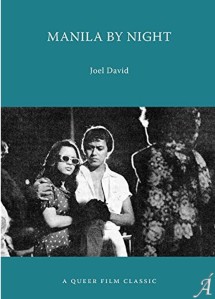
Unexpectedly banned by the militarized censors board when it was submitted for approval in late 1981, Schoolgirls may be seen as a victim of circumstances beyond its control. Regal Films was still in the government’s crosshairs after the brouhaha over Ishmael Bernal’s Manila by Night’s disallowment from participating in the Berlin International Film Festival led to bad press overseas for the regime. The “dry run” for the Manila International Film Festival was raising expectations for a liberal spell (meaning, among other things, no censorship), so the country’s right-wing agents desperately needed one last show of force on the cultural front. The fact that the film turned out to be a slightly risqué though essentially wholesome romp, more of a sequel to Joey Gosiengfiao’s Underage (1980) than Underage Too (1991, also directed by Maryo J. de los Reyes), may have led to the all-around dismissal of the presentation, aside from the obvious conclusion that the female Regal Babies had a longer-running marketability potential than their male counterparts. Yet Schoolgirls has endured better than it had any right to. De los Reyes’s immersion in the teen wing of progressive Philippine theater, complemented by his application of film techniques in his university teaching, enabled him to unfurl a complex, class-crossed, women-positive, and gender-evolved narrative with a rowdy bunch of quirky characters and a contagious and inexhaustible sense of joie de vivre.
Back to top
Return to Canon Decampment contents
Go to alphabetized filmmakers list
English Translation: Goddess
Additional Language: Spanish
Year of Release: 1982
Director: Maryo J. de los Reyes
Screenwriters: Soxy Topacio, Khryss Adalia, Jake Tordesillas
Producer: Regal Films
Cast: Lorna Tolentino, Lloyd Samartino, Alfie Anido, Tita Munoz, Jenny Ramirez, J. Antonio Carreon, Ed Villapol, Venchito Galvez, Francisco Cruz, Willie Natividad, Donna Sanchez, Alberto Villaruz, Raoul Casado
During the colonial occupation, a Spanish soldier encounters a bejeweled diwata or nature spirit. After they make out, he steals her ornaments. In the present time, Don Jaime, tycoon-owner of Alegre Amalgamated, writes a note and keeps it in a box before killing himself. He cedes the business to his elder son Jun and a 30-hectare rural property to the younger Teddy. Jun begins a casual affair with Katrina, whom he picks up in a disco, and calls off his impending marriage. Meanwhile Teddy, while on research in his hometown for his thesis in anthropology, pursues the origin of a legend in the aptly named Barrio Alitaptap, where a forest king supposedly slapped his promiscuous daughter and her scattered gemstones turned into fireflies.
Of all his attempts at paying tribute to classical-era film trends, Diosa is Maryo J.’s only effort to reconnect with period fantasy, though still rooted in the present and using the past only as background material. It’s necessarily a mixed bag, but contains evidence of Regal Films matriarch “Mother” Lily Monteverde’s all-out support, considering her even more nostalgic affinity for old (though still not entirely then-lost) cinema. But what made the film too easy to dismiss when it came out renders it indispensable to the present, when its major creatives have passed away. Although we can be grateful that Gregorio Fernandez’s Prinsipe Teñoso (1954) has been preserved, nothing else of its kind remains. And now that our scholars and audiences might finally be capable of welcoming queer-camp appreciation, Diosa will be ready for its closeup. A forest fairy unapologetic about soliciting carnal pleasure from unsuspecting mortals who’re sometimes too eager to claim everything she possesses, capable of wreaking epochal havoc when men overstep their privilege? Plus she’s able to formulate a critique of colonization and spare anyone able to comprehend and placate her rage. Her predominance has been long overdue.
Back to top
Return to Canon Decampment contents
Go to alphabetized filmmakers list
English Translation: Pubescent Kids
Year of Release: 1984
Director: Maryo J. de los Reyes
Screenwriter: Jake Tordesillas
Producer: Viva Films
Cast: William Martinez, J.C. Bonnin, Herbert Bautista, Raymond Lauchengco, Aga Muhlach, Eula Valdez, Jobelle Salvador, Chanda Romero, Yayo Aguila, Baby Delgado
Arnel is burdened by his family’s wishes for him. Tonton has been a high school repeater for the past four years. Adie falls in love with his neighbor even if she is married. And while Toffee is neglected by his actress mother, Gilbert deals with a philandering father. As these five friends finish their last year in high school, they undergo a fun-filled but ultimately meaningful journey toward adulthood.
Youthfulness has held an overwhelming universal fascination in the photographic arts, supposedly because we see our reflections fixed in the artwork at a moment that is always past, even as we continue to approach mortality. In fact the formula that fueled the Bagets juggernaut had already been in place as early as the 1960s, with Sampaguita Pictures effectively commodifying it by casting the Stars ’66 group members in so-called smorgasbord projects. Ishmael Bernal initially demonstrated how to devise narratives that successfully maintain multiple-character lines of action and resist depicting singular heroes (or dual heroes and anti-heroes) for Seven Stars’ Siyete Belyas and Regal Films’ Regal Babies casts. After a few film exercises of his own, Maryo J. de los Reyes was primed to handle Viva Films’ so-called Bagets batch: his first film, High School Circa ’65 (1979), signalled his willingness to deploy a large circle of characters, while his disco series with Nora Aunor (five films starting with Annie Batungbakal in 1979) developed his mastery in handling feel-good musicals. The plot of Bagets does not resolve into anything out of the ordinary, but the celebratory mood—drawn from an appealing mélange of pastel designs, New-Wave music, MTV-style montage, gay lingo, and freshly scrubbed second-generation film personalities—provided a much-needed momentary diversion from the then-gathering anti-dictatorship storm, and still proves irresistible today.[1]
Back to top
Return to Canon Decampment contents
Go to alphabetized filmmakers list
English Translation: I Can Reach Heaven
Year of Release: 1984
Director: Maryo J. de Los Reyes
Screenwriter: Jake Tordesillas
Producer: VH Films
Cast: Maricel Soriano, Gina Alajar, Charito Solis, Liza Lorena, Ronaldo Valdez, Jaime Fabregas, Michael de Mesa, William Martinez, Arlene Muhlach, Francis Martinez
Having grown up poor, Clarissa ardently desires to live in luxury after being exposed to the lavish lifestyle of her godmother, Monina Gardamonte. The girl’s ambitions eventually consume her after Therese, Monina’s daughter, dies. Clarissa manipulates Monina to adopt her so that she can be the new heiress of the Gardamonte fortune. Driven by greed and eager to turn her back on her past, a heartless Clarissa will stop at nothing to reach her goals.
The downtrodden woman who finds her own inner strength and discovers the pleasures of excesses archetypically reserved for men sets herself up for the worst kind of tragic comeuppance. The appeal of melodrama is in providing ordinary mortals like us, the movie attendees, with a handle on the process, able to identify with the misbehaving heroine without having to suffer her inevitably unhappy ending. The hard-knock personal background of former child star Maricel Soriano provided some intertextual credibility in her rags-to-riches-to-dust role here (and no spoilers actually: the movie begins with the end). Along the way the captive viewer will be treated to the spectacle of a nice young girl turned into an awful older-than-her-years woman, desperately rejecting her past and mouthing lines that mingled with the more serious slogans against a dictatorship already in decline: “Ayoko ng masikip! Ayoko ng walang tubig! Ayoko ng mabaho! Ayoko ng walang pagkain! Ayoko ng putik! (I hate cramped spaces! I hate running out of water! I hate smelly places! I hate going hungry! I hate filth!).” Maryo J. de los Reyes had an unusually productive year in 1984, with an often-overlooked title also worth tracking down, Anak ni Waray vs. Anak ni Biday, produced as a tribute to the First Golden Age studios of LVN and Sampaguita, and channeling the spirit of musical-comedy expert Manuel Conde; it features the lead stars in Kaya Kong Abutin ang Langit (plus movie queens Nida Blanca and Gloria Romero as the title characters) in fine mettle.
Back to top
Return to Canon Decampment contents
Go to alphabetized filmmakers list
Anak ni Waray vs. Anak ni Biday
English Translation: Southern Lady’s Daughter vs. Northern Lady’s Daughter
Additional Languages: Ilocano & Waray
Year of Release: 1984 / Color with B&W
Director: Maryo J. de los Reyes
Screenwriter: Jake Tordesillas
Producer: Regal Films
Cast: Nida Blanca, Gloria Romero, Snooky Serna, Maricel Soriano, Nestor de Villa, Luis Gonzales, Gabby Concepcion, William Martinez, Chichay, Bella Flores, Zeny Zabala, Rez Cortez, Louella, Debraliz, Opalyn Forster, Donna Sanchez, German Moreno, Ike Lozada, Lillian Laing, Dencio Padilla, Balot, Flora Gasser
In the 1950s, two couples—Biday and Eli, and Idang and Narcing—are declared co-winners in a dance contest. Biday, an Ilocana, and Idang, a Waray, marry their respective partners and become next-door neighbors in a middle-class subdivision. Both couples have daughters (Susie and Amy respectively) who are courted by Eddie and Joey, while Eli and Narcing fool around with Carol and Patricia, two rich widows. Bella and Zeny, the widows’ daughters, have set their sights on Eddie and Joey, so it’s up to the married mothers and their daughters to win back their men.
Anak ni Waray vs. Anak ni Biday opens with a dedication to the founders of LVN and Sampaguita, the two most popular studios of the First Golden Age of Philippine cinema (roughly coinciding with the 1950s). LVN could boast of having the most gifted local auteur of comedies and musicals in the person of Manuel Conde (as well as the period’s master of melodrama in Gregorio Fernandez), but Sampaguita was the country’s counterpart of Metro-Goldwyn-Mayer Studios, which claimed to have “more stars than there are in heaven.” AnW v AnB may be seen as nothing more than a compendium of standard musical and comic (and occasionally fantastic) elements associated with its sources of inspiration, executed in top-flight cineliterate fashion: nostalgic appreciators could have a field day identifying the procession of references evoked in the characters’ names, not to mention having the elderly but still-sprightly couples, along with the femmes fatales, portrayed by actual stars of the time. The fathers could only initially afford to ride a tricycle to work, then upgrade to a calesa (horse-drawn carriage) to rush their parturient wives to hospital, thus signaling the filmmaker’s intent to provide a critique of gentrification; but then the horse proceeds to comment on the action and secures another throwback to old-time cinema (by way of komiks material). Already known for his handling of multiply performed scenes right from the start of his filmmaking career, Maryo J. de los Reyes piles on additional skills accumulated from his disco series (mostly starring Nora Aunor), orchestrates frenetic quarrels and chases, and stages arch exchanges undergirded by familial warmth amid comic confusion. AnW v AnB never steps beyond the gay old time it celebrates, but it also remains true to its belief that our now-rare old films were indeed worthy of the adulation that their audiences lavished on them.
Back to top
Return to Canon Decampment contents
Go to alphabetized filmmakers list
English Translation: You Were Merely Scooped Up from the Mud
Year of Release: 1991
Director: Maryo J. de los Reyes
Screenwriter: Jose Javier Reyes & Jake Tordesillas
(From a story by Jose Javier Reyes)
Producer: Regal Films
Cast: Maricel Soriano, Christopher de Leon, Charo Santos-Concio, Monsour del Rosario, Maritoni Fernandez, Luis Gonzales, Sylvia Sanchez, Orestes Ojeda, Ronnie Henares, Bennette Ignacio, Gloria Romero, Eddie Arenas, Dexter Doria, Malou de Guzman, Glenda Garcia, Angela Figueras, Oliver Osorio, Eric Francisco, Naty Mallares, Nonoy Gates, Alfonso Garcera, Dennis Baltazar, Aries Bautista, James Cooper, Petit Calupitan, Joey Hipolito, Gina Leviste, Lollie Mara, Renato del Prado, Frederick Peralta, Cloyd Robinson, Eva Ramos, Lucy Quinto, Bella Flores, Jordan Castillo, Tita de Villa, Dinky Doo Jr., Arlene Tolibas, Melanie Tiangco, Tony Angeles, Dido de la Paz, Albert Gonzales, Jimmy Long
Ambet agrees to participate in a warehouse burglary so he can help alleviate the financial straits that his family’s confronting. When he gets arrested, his wife Malou leaves with their son for Manila to seek better financial opportunities. Her supportive neighbors invite her to work as a nightclub dancer, but at a stag party, Edmond notices her discomfort and extends some support toward her. His girlfriend and sister call attention to Malou’s class difference but Edmond insists that he can help her overcome her social limitations, until she points out that many of their conflicts are irreconcilable.
Regal Films had always had a long-running streak of nostalgia for Philippine film trends of an earlier era, a tendency that intensified after the fall of the Marcos Sr. regime led to an alarming decline in film attendance. Instead of taking into account these industrial and generational dynamics, critics of that time reverted to their usual lamentation of the absence of aestheticized and politicized material. Dinampot Ka Lang sa Putik may be regarded as one of the more brazen attempts, with its earnest and straightforward treatment of a class-conciliatory narrative, Cinderella without the wonder-tale elements. This, however, is where ignorance of its talents’ maturity fails the serious observer: with over a decade in intensive film practice and even longer in theater work, Maryo J. de los Reyes was more than ready to accept the challenge without reverting to the usual satirical or ironic fallback. Complemented by actors who’d been essaying these roles long enough to deliver them with nary a false note, the result is recognizably superior maize—possibly not recommendable for regular consumption, but perfect for any occasion when only the best kind of corn will do: gorgeous, savory, unexpectedly nutritious to boot.
Back to top
Return to Canon Decampment contents
Go to alphabetized filmmakers list
Year of Release: 2003
Director: Maryo J. de los Reyes
Screenwriter: Michiko Yamamoto
Producer: Violett Films Production
Cast: Lorna Tolentino, Albert Martinez, Jiro Manio, Isabella de Leon, Mark Gil, Celia Rodriguez, Gloria Romero, Tonton Gutierrez, Amy Austria, Cherry Pie Picache, Danilo Barrios, Susan Africa
Despite coming from a poor family plagued by many misfortunes, youngster Magnifico wants to build a nice coffin for his grandmother. He also goes to great lengths to take his little sister, who has cerebral palsy, to a local carnival. As he gets different people to help him, Magnifico reciprocates their kindness in a way that gradually changes his community.
Philippine celluloid production bowed out in grand style with the release of two epic productions, by filmmakers who even have similar-sounding names. In contrast with Mario O’Hara’s Babae sa Breakwater (2003), Magnifico proffers a linear tale focused on domestic issues, its central character a young innocent whose acts of kindness transform his family and community. A number of observers marveled at how a male-centered narrative could still pack an old-school wallop this late in history, but the reasons are all on open display, so to speak: compassion even for the most deeply flawed characters, wonderful performances revolving around the precocious Jiro Manio in the title role, and relaxed, hand-on-heart storytelling expertise. Maryo J. de los Reyes keeps his narrative engine ambling along, occasionally pausing for us to savor its sharply observed character sketches, until a sudden plunge takes everyone to a place of no return. The analogy with developments in film technology is undeniable, but to wish for a different ending would be to deny the inevitable, and Magnifico shows us how grace and humor can make the journey worth the while.
Note
[1] Terminological notes in order of mention: A. Siyete Belyas literally means “Seven Beauties,” although belyas in Tagalog is also a euphemism for sex workers. The compound term belyas-artes is literally “fine arts” (from the Spanish), but with the alternative meaning of belyas, it could also denote “indecent or vulgar conduct.” B. The other four Nora Aunor disco films are: Bongga Ka ’Day (You’re Fab, Sis, 1980), Totoo Ba ang Tsismis? (Is the Rumor True?), Ibalik ang Swerti (Restore the Luck), and Rock and Roll (all 1981). Subsequent non-disco-themed Maryo J. films with Nora Aunor were Minsan, May Isang Ina (Once There Was a Mother, 1983), the “Querubin: Maria Leonora Theresa” episode of Mga Kwento ni Lola Basyang (“Cherubim” in The Tales of Grandma Basyang, 1985), I Love You Mama, I Love You Papa (1986), and Naglalayag (Silent Passage, 2004). C. The director had possibly the highest hip quotient among local filmmakers during his heyday, as evident even in the string of wordplay that bagets begets: originally a diminutive of bagito or fresh teen, its configuration was deconstructed in order to generate several variations. Hence from an amalgamation of bago (new) and gets (to pick up or acquire), period slang proffered nagets (already obtained), pagets (deluded about one’s attractiveness), lagets (constantly available, with lagi contracted for the first syllable), and forgets (no longer desirable); the same year in fact yielded Erpat Kong Forgets (My No-Longer Desirable Father, dir. J. Erastheo Navoa), which featured the most popular of the Bagets actors.
Back to top
Return to Canon Decampment contents
Go to alphabetized filmmakers list
Á!












 ORCID ID

