
[Click here (recommended) for desktop mode. Click to jump to: Superpsychocebu, 2016.]
Aberya
Additional Language: Cebuano
English Translation: Hitch
Year of Release: 2012
Director: Christian Linaban
Screenwriters: Christian Linaban & Ara Chawdhury
(Inspired by a short screenplay by Ariel Llanto)
Producers: Cinema One Originals, Dream Arts Productions, Epicmedia Productions
Cast: Will Devaughn, Mercedes Cabral, Nicholas Varela, Iwa Moto, Publio Briones III, Gil Maningo, Marilou Lucente, Winsse Villanueva, Jeffrey Ogario, Ralph Padilla, Gabby Nazareno, Syrel Lopez, Darling Dame, Ione Blanche Enriquez, Ara Chawdhury, Steph Jarina, Paolo Varela, Alex Uypuanco, Bambi Beltran, Misha Anissimov, Faith Bernardes, Boy Rupita, Arman Tajanlangit, Edgar Kalinawan, Richard Hearsay, Junjun Paraiso, Homer Medici, Nathaniel Rubio, Kahlil de Pio, Cedric Butron, Ligaya Rabago, Tom Jopson, Anton Java, Roma Oyson, Christian Linaban, Aldrin Sanchez, Raul Luche Jr., Raulito Mendiola, Khriss Bajade, Ada Jimenez, Gerard Miguel Aribe, Gelo Sanjorjo, Vince Rabanes, Josh Salvacion, Frances Villa, Robbi Villa
Four Cebu-based characters’ stories unfold as each one is introduced. Lourd Villegas is a Filipino-American concerned for his parents’ home country’s welfare and future. He schedules several girlfriends, one for each day of the week, but considers getting serious with Angel, a Manileña. Unknown to him, Angel is actually an escort for Congressman Sta. Maria, who’s running on the promise of moral renewal. Angel hangs out with Sta. Maria’s son Mike, who introduces her to various substances, many of which he concocts himself, and provides her with what he calls a Delorean, which makes her transform into a nun named Sister Celeste. Because of her heightened state, Celeste confesses some of her transgressions to Mike, but his father’s more worried because of the discovery of a porn video on the internet that has his son’s name even though he wears a mask. Eden, his partner in the video, attracts Mike, in whom she thinks she might have found a way to evade the scandal that already got her fired from her nurse’s job.
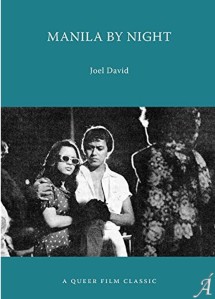
The one time that a Philippine production was described as inspired by Max Ophüls’s La ronde (The Round, 1950, adapted from Alfred Schnitzler’s 1897 play Reigen) was in an annual country report by the late Agustin Sotto for the now-defunct Film International, when he mentioned Ishmael Bernal’s then-banned Manila by Night (1980). The reference was inadequate and inaccurate, since the Bernal film was arguably far more significant and innovative and departed in many ways from a sample that the director never acknowledged, unlike Robert Altman’s Nashville (1975). The millennial regional production of Christian Linaban’s Aberya was in its own turn compared by reviewers to Quentin Tarantino’s Pulp Fiction (1994), premised on its La ronde-like structure of morally compromised characters who pass around heterosexual favors as casually as they consume recreational drug cocktails concocted by Mike, a Congress official’s stoner kid. Once more the comparison is misleading and reflects more on the observers’ inadequate understanding than anything else. As its title suggests, archness is far from any concern of Aberya’s, although irony is arguably an inevitable component of this type of narrative material. The film begins with a citizen who’s several times removed (as a free-floating Philippine-American) from the place for which he professes concern, an urban center distinct from and subservient to the so-called imperial capital of Metro Manila. The characters with whom he interacts, both women, bring up the drug dealer who’s also both supplier and indifferent lay, although their sexual carelessness results at one point in a scandal that disrupts the equilibrium that they all take for granted, as fairly comfy middle-class subjects. For all their lighthearted and cynical affect, they’re still unable to resist responding to the slings and arrows that the ideal of financial comfort and emotional maturity launches at them—which is how they find a convergence that they might have hoped for but can’t afford to maintain. In being so low-key in dispensing its perceptivity, Aberya demonstrates how cinematic potential can be more productively realized in setting enough distance from the country’s cultural center.
Back to top
Return to Canon Decampment contents
Go to alphabetized filmmakers list
Language: Cebuano
Year of Release: 2016
Director & Screenwriter: Christian Linaban
(From a story by Christian Linaban & Nicolo Manreal)
Producers: Panumdaman Pictures & &
Cast: John Dino, Wes Bacareza, Christian Saavedra, John Mark Maglana, Rapi Sescon, Angelica Gamolo, Joshua Aquino, Lyka Flare Ruela, Steph Jarina, Zerah Esmero
Tired of the usual safe means of getting high, a man approaches Pancho, an adventurous friend who believes in living outside the norm. Pancho recommends a friend who might be able to tell him how to access a drug called Superpsychocebu, which made everyone who tried it unable to forget the experience. The seeker goes to meet Sexy Samson, who commissions a promo video and tells him to seek out a beach-dweller named Beauregard. The latter takes him on a boat ride and professes the life-changing properties of Superpsychocebu, recommending that he look for Hesus, with an unnamed but unpredictable girl driving him to the forest where he lives. Also calling himself Joshua, Hesus transforms into several personalities before handing the sought-after substance to the seeker, who becomes a famous personality and calls himself Idol.
Viewers who approach Superpsychocebu thinking that it would be more of the director’s previous film, Aberya (Hitch, 2012), might find themselves adrift at several points in the viewing experience, as the lead character turns out to be. Calling it the country’s first stoner film also won’t withstand scrutiny after sufficient acquaintance with Pinas film history, with several titles from the 1970s onward from the likes of Celso Ad. Castillo, Peque Gallaga, Tata Esteban, and even Christian Linaban already laying claim; maybe calling it “the first stoner’s film” might be defensible, if it didn’t sound too nitpicky. All this is by way of cautioning that Superpsychocebu should be approached differently from any of the aforementioned samples, including the foreign models that set the template. For despite its appropriation of the habits and optics associated with drug culture, the film’s social world is incidental, a means for its lead character to journey toward, or actually tunnel into, the pursuit of the ultimate high. Like any kind of commitment, such a goal would inevitably prove frustrating, as psychoanalysts from Sigmund Freud to Jacques Lacan once determined in their studies of desire. Yet the only means that narrative texts can complete their journeys is to pretend that desire is attainable, and to celebrate its acquisition. Superpsychocebu “rewards” its hero, starting with the name he bestows on himself, but it also raises complications attendant to his new-high existence, which points to the mystery without having to ask it: where will the next high come from? Philippine critics have been trained to downplay such issues as insufficiently philosophical, much less political, but the mere fact that a millennium-era regional film has raised it, suggests that the repudiation itself brings up the essential critical question of who benefits from policing the issues we allow ourselves to confront.
Back to top
Return to Canon Decampment contents
Go to alphabetized filmmakers list
Á!











 ORCID ID

