Author Archives: Joel David

About Joel David

Unknown's avatar
Teacher, scholar, & gadfly of film, media, & culture. [Photo of Kiehl courtesy of Danny Y. & Vanny P.]

Canon Decampment: Bobby A. Suarez

[Click here (recommended) for desktop mode. Click to jump to: Red Roses for a Call Girl, 1988.]

They Call Her … Cleopatra Wong

Alternate Titles: Cleopatra Wong; Female Big Boss
Language: English
Year of Release: 1978
Director: Bobby A. Suarez [as George Richardson]
Screenwriter: Romeo N. Galang
(From a story by Bobby A. Suarez)
Producer: BAS Film Productions

Cast: Marrie Lee, George Estregan, Dante Varona, Johnny Wilson, Kerry Chandler, Franco Guerrero, Alex Pecate, Philip Gamboa, Danny Rojo, Bobby Greenwood, Jesse Lee, Joaquin Fajardo, Victor Romero, Joe Cunanan, Steve Havarro, Avel Morado, Romy Misa, Bernie Bernardo, Joe Canlas, Tony Castro, Mark Sherak, Clem Persons, Paul Mejares, Robert Mendez, Buddy Philipps, Don Gordon Bell, Robert Mallet, Skip Kriegel, Mike Youngblood, Bill James, John Stewart, Thunder Stuntmen, PIS Stuntmen

Instructed by Manila Interpol, Cleo hies off to Singapore to investigate the proliferation of fake currencies across the major ASEAN countries; she passes herself off as a counterfeiter so she could be picked up by a middleman. After subduing him and his goons, she’s then assigned to Hong Kong, to track the arrival of fake money in jars of strawberry jam. This leads her and her Interpol detectives to a convent in Baguio, where they attempt to uncover the mystery of why a religious order would engage in a global criminal operation.

Long appreciated more outside than within his home country, Bobby A. Suarez turned out to be just the right candidate to export for overseas film production. An ardent B-movie aficionado, familiar with the latest contrivances that popular entertainment had on offer, he lucked out with an assignment that enabled him, though on an apparently tight budget, to shoot in three countries with a large cast. The resulting poverty-row epic featured some of the wildest flights of imagination ever witnessed in a Filipino-directed action film, complemented by the wit and charm of Singaporean actress Marrie Lee, who was sharp enough to know that the entire enterprise shouldn’t be taken too seriously, but provides just the right amount of nimble-footed intensity to be able to foreground the work’s campy elements. Subsequent Suarez projects affirmed his belief in the transnational crime-control function of Interpol, but Cleopatra Wong marks the point right before his professional competence and influential outreach overpowered the several mésalliances that managed to proliferate in the present narrative.

Back to top
Return to Canon Decampment contents
Go to alphabetized filmmakers list

Red Roses for a Call Girl

Alternate Titles: The True Confession of Diana; Rose Tattoo
Language: English
Year of Release: 1988
Director & Screenwriter: Bobby A. Suarez
Producer: BAS Film Productions

Cast: Maria Isabel Lopez, Robert Marius, Werner Pochat, Julia Kent, Manfred Seipold, Amanda Amores, Pia Moran, Arnold Mendoza, Vangie Labalan, Don Gordon Bell, Werner Pochath, Nigel Hogge, Vic Santos, Mike Cohen, Joseph Zucchero

In Germany, a streetwalker named Marian gets abducted because she hasn’t been able to repay the money she owes her pimp, Ringo. The same woman, who now calls herself Barbara, reappears at the Ninoy Aquino International Airport and makes the acquaintance of Klaus Timberg, who arrives because his profligate son, Peter, is given over to drag racing and nightlife. Klaus secretly hires a local sex worker, Diana, to induce his son to fall in love. As it turns out, Diana’s procurer is Ringo, who relocated to evade criminal prosecution in Germany. When Barbara, via Klaus, learns about this, she attempts to seek vengeance; Klaus’s predicament gets even more complicated when Peter discovers that Diana is really a sex professional.

The first notable element in Red Roses for a Call Girl is how it departs from the usual war-set or futuristic action (and even horror) material that foreign coproductions insisted on when they selected the Philippines as location for their film investment, in the wake of the initial success of the Marcos-era Manila International Film Festival. Opting for a loose reworking of La Dame aux Camélias by Alexandre Dumas fils, Bobby A. Suarez instead devised a low-budget drama that nevertheless expands on the original’s themes of exploitation, familial bonds, and cross-cultural romance. The far-from-ideal production values and performances (excepting the native talents, unsurprisingly) accrue their own level of charm, the way that Third World ventures occasionally succeed in doing, in contrast with the Hollywoodish aspirations of the typical local productions of the period.

Back to top
Return to Canon Decampment contents
Go to alphabetized filmmakers list

Á!


First Blush

Unang Tikim [First Taste]
Directed by Roman Perez Jr.
Written by Mariane Maddawat

Launched during the start of the current decade, the Vivamax arm of Viva Films swiftly dominated the subscription streaming services of Philippine cinema and never let up since. The answer will be obvious to anyone who checks out Netflix and several other so-called over-the-top (meaning bypassing middle agencies) services: specialized products, less costliness for the consumer, absence of censorship. It also doesn’t take a lot of figuring out to determine what material the service focuses on, which is what the majority of homesick overseas kabayans demand – sex, as much as the average film presentation can contain without devolving into gonzo pornography, softcore style.

11011Philippine-based recognition mechanisms still have to give Vivamax its due,[1] but an American film festival, the FACINE International, already gave its grand prize last year to Lawrence Fajardo’s Erotica Manila: Foursome, a concatenation of TV-style shorts. Its gold winner for short film was a hard-hitting satire titled “How to Make an Effective Campaign Ad,” directed by Roman Perez Jr., who also took charge of the first theatrically released Vivamax project, titled Unang Tikim (literally First Taste, officially translated as First Time).

The first couple, Yuna and Becca. [Unang Tikim, Pelikula Indiopendent & Viva Films; screen cap by author]

Back to top

11011So far the film has attained the stature of moderate box-office performer, running into its second week in selected venues – certainly a far more preferable fate than the usual theatrical flop that characterizes even major releases nowadays. More surprising is the type of theme tackled by Unang Tikim: sex, as expected of a Vivamax production, but with the primary relationship transpiring between two women. To be sure, positively depicted lesbian narratives are not new to Philippine cinema, although they occur with far less frequency than gay-male stories. Marilou Diaz-Abaya, the first woman-filmmaker National Artist, arguably started the trend in 1986 with Sensual, also a “bold” (or sex-themed) venture like Unang Tikim.

11011The primary points to make regarding other early attempts at recuperating same-sex love stories between women is that first, they were mostly featured as subplots in straight-centered narratives; and second, they had to contend with the usual homophobic demonization of gay women in local releases. (I can only remember one other premillennial release, Mel Chionglo’s I Want to Live from 1990, as another woman-positive presentation; an earlier “event” movie, Danny L. Zialcita’s T-bird at Ako [Lesbian and Me] from 1982, resorted to visiting violence on its lesbian character, although it nevertheless features a sharply observed turn from another National Artist, Nora Aunor.)

The rival couple, Yuna and Nicco. [Unang Tikim, Pelikula Indiopendent & Viva Films; screen cap by author]

Back to top

11011The digitalization of film production during the millennial era brought with it a number of well-realized women’s love stories, most of it from independent producers, with Sigrid Andrea Bernardo’s 2013 Ang Huling Cha-Cha ni Anita (Anita’s Last Cha-Cha) standing out for being a coming-of-age tale, the distaff counterpart of Aureus Solito’s Ang Pagdadalaga ni Maximo Oliveros (The Blossoming of Maximo Oliveros) from 2005. In a remarkable category all its own is Joel Lamangan’s Sabel, a 2004 film based on the seemingly incredible though real life-based odyssey of a woman who started out as an easy-going teenager, entered the nunnery after giving birth, married the prisoner who raped her, then emerged after a long disappearance as a rebel warrior committed to a female spouse. (Sabel and I Want to Live were both scripted by yet another recent National Artist, Ricky Lee.)

11011Unang Tikim constitutes a throwback to the earlier sexualized treatments of lesbian film narratives, with one character’s bisexuality providing the crisis in the plot. It also desists from dealing primarily with “developments” in which one or the other character suffers physical homophobic retaliation – possibly a lack when we inspect actual lesbian stories, but strangely affecting in this case because of the respite it provides from the usual judgmental approach. The fact that Perez, in less than a decade of practice, has overseen well over a dozen film projects, alongside Vivamax’s determination to mount a widescreen-worthy attraction, has resulted in a work of ineffable sensuality and beauty.

Held by Nicco, Yuna finds support from Becca. [Unang Tikim, Pelikula Indiopendent & Viva Films; screen cap by author]

Back to top

11011What must have added to non-Vivamax viewers’ fascination is the fact that an impressive stable of talents has been residing in the studio – most of them necessarily excluded from mainstream TV-centered programs because of their readiness to bare flesh and engage in activities that may be considered less-than-wholesome, to put it mildly. The film embraces the central female couple’s class difference and even occasional bouts of rage alongside their expressions of passion, but always with a tenderness in its approach to their pain; when such respect for the humanity of Others is extended to the male interloper in their story, that kind of treatment makes total sense in the course of the unfolding of their difficulties.

11011The only complaint one might raise about Unang Tikim is how the measure of its throwback is too far off in the past,[2] so that the complications provided by more recent lesbian film romances seem to be way in advance of the characters’ fates. As if to dig in further, it provides a closure that nearly elevates its realistic material to the realm of the fantastic. But in terms of a narrative tradition that cannot boast of having enough happy endings, what the film purveys deserves to be regarded as an intervention worth maintaining.

Notes

First published August 23, 2024, as “A Lesbian-Positive Film” in The FilAm.

[1] On August 18, 2024, after I had drafted and submitted this review to The FilAm for publication, the Young Critics Circle announced that they were nominating Lawrence Fajardo’s Erotica Manila: Foursome, the same aforementioned FACINE gold prizewinner, for their Film Desk’s annual competition in all their available categories except first film. One of the few instances where I was glad to be proved wrong by my homegrown colleagues.

[2] Upon the filmmaker’s recommendation, I watched a previous film he made, titled Sol Searching (2018), and was appalled at the critical negligence it suffered, despite its clear superiority to nearly all the other titles released during the same period. In a social-network post, I speculated that this may also have been due to the work’s throwback properties, reminiscent of unpolished celluloid material as well as the “developmentalist” media policies of the early martial-law period during the presidency of Ferdinand Marcos Sr.

Back to top


Canon Decampment: Abbo Q. dela Cruz

[Click here (recommended) for desktop mode.]

Hubad na Pangarap

English Translation: Naked Ambition
Year of Release: 1987
Director: Abbo Q. dela Cruz
Screenwriter: Armando Lao
Producer: Golden Pearl Production

Cast: Michael de Mesa, Julio Diaz, Anna Marie Gutierrez, Lola, Vangie Labalan, Archi Adamos, Dante Castro, Chris Daluz, Tony Angeles, Tony Martinez, Stella Strada II, Jesse dela Paz, Lina Anota, Dick Morados

Miguel arrives at his rural rest house with several of his swinger friends, including a good-time girl with whom he hooks up. When his volatile girlfriend Cindy arrives, she throws a fit and drives all the visitors away, allowing Miguel to appease her by making out with her. All by themselves, they turn their attention to the place’s caretakers, Nelia and Ador, a poor but attractive couple engaged to each other. Miguel and Ador are childhood chums, but Miguel’s interest in Nelia starts to strain their friendship. Cindy’s exploitative regard toward Ador meanwhile leads to a bloody resolution in which the police are forced to intervene.

Abbo Q. dela Cruz’s debut film, Misteryo sa Tuwa (Joyful Mystery, 1984), was a film maudit that will always be worth at least one viewing, but that will probably be defensible as strictly a late-era Cold War masterpiece—patriarchal, myopic, and desperate. It was so overblown that it came close to shutting down the film production division of the Experimental Cinema of the Philippines, which nevertheless came up with one last debut piece, Pio de Castro III’s Soltero (Bachelor, 1984), a film that replicated its shortcomings, albeit on a decidedly more intimate scale. Dela Cruz had better timing with his sophomore project, written by one of the winners of the next batch’s scriptwriting contest (which were never produced because of the preceding year’s follies). The Misteryo sa Tuwa connection provides the first step in comprehending the offbeat properties of Hubad na Pangarap: its misanthropy is unmistakeable, but this time more carefully skewed against its privileged characters, so that its ineluctable misogyny is favorably contrasted with its masculine characters’ meanness or feeble-mindedness. The libertarian spell occasioned by ECP-screened entries also fostered the busting of the final Catholic taboo against displaying the male form, so HnP enables a more-than-game Julio Diaz to cocktease not just his onscreen female master but an unsuspecting general audience as well. More productively, the film can be regarded as the middle entry in a trilogy scripted by Armando Lao, bookended by William Pascual’s Takaw Tukso (Constant Craving, 1986) and Chito S. Roño’s Itanong Mo sa Buwan (Moon Child, 1987), depicting increasing narrative complexity where working-class masculinities are confronted with and confounded by the well-laid schemes of the femme fatale.

Back to top
Return to Canon Decampment contents
Go to alphabetized filmmakers list

Á!


Canon Decampment: Emmanuel Dela Cruz

[Click here (recommended) for desktop mode.]

Sarong Banggi

English Title: One Night
Additional Language: Bikol
Year of Release: 2005
Director & Screenwriter: Emmanuel Dela Cruz
Producers: Cinemalaya Foundation, UFO Pictures, Cutting Edge Productions

Cast: Jaclyn Jose, Angelo Ilagan, Greg Rodriguez III, Alchris Galura, Miguel Iñigo Guño, Jam Rodriguez, Miguel V. Fabie III, Tanya Guerrero, Ronald Diama, Ester Reyes, Josephine M. Abelgas, Victor Cusi, Roger Macusi, Cesar P. dela Cruz, Jean dela Cruz, Mica Torre, C.J. dela Cruz, Rose Beltran, Monster Jimenez, Mario Cornejo, Josel Garlitos, Marlon Despues, Jing Villaruel, Ariel Carullo, Lorena Landicho, Lilia Villena

On the eve of his birthday, Nyoy is brought by his friends to the vicinity of Manila’s red-light district. They made an arrangement with Jaclyn so that Nyoy can have his first carnal experience. When they see her from a distance, they’re realize that she’s older than she claims to be so they decide to ignore her and proceed to a bar where they pick up a younger girl to pair with Nyoy. The girl however prefers a more exciting partner, so she allows herself to be picked up by another man in a convenience store. When Nyoy realizes he’s been abandoned by everyone, he returns to the open-air restaurant where Jaclyn sits by herself and invites him to join her.

Essentially a two-hander once Nyoy and (the reflexively named) Jaclyn start their interaction, Sarong Banggi attains a rare look at awkward intimacy that evolves into a harsh, deromanticized glimpse of the inner life of a fallen woman. Key to its achievement is Jaclyn Jose’s ruthless attack, allowing the once-hopeful but now regret-ridden character to take over without any hint of the performer perfecting her craft—which paradoxically makes perfection possible. By underlining some of her lines with contrapuntal behavior, she enables the narrative to reach places without requiring expository explanation. A plot twist that would have defeated lesser artists becomes a marvel of multistratified delivery: does she cry from disappointment, joy, horror, or self-pity? The composure that she forces herself to assume afterward similarly raises questions that she wisely avoids opting to answer. Aware of how exceptional this approach to character is in local cinema, Emmanuel Dela Cruz requires Angelo Ilagan, Jose’s scene partner, to maintain sympathetic naïveté throughout, while packaging the presentation in expressionist flourishes that serve to contrast with the depths of the abyss that Jose fearlessly plunges into.

Back to top
Return to Canon Decampment contents
Go to alphabetized filmmakers list

Á!


Canon Decampment: Roman Perez Jr.

[Click here (recommended) for desktop mode.]

Sol Searching

Year of Release: 2018
Director: Roman Perez Jr.
Screenwriters: Roman Perez Jr. & Norman Boquiren
Producer: Universal Harvester

Cast: Pokwang, Joey Marquez, Gilleth Sandico, JM Salvado, Conrado, Raffy Tejada, Raul Morit, LotLot Bustamante, Mayen Estañero, Troy Aquino, Francis Magundayao, Jelson Bay, Chokoleit, Lee O’Brian, Paulo Rodriguez, Sue Prado, Hector Macaso, Chad Kinis, DJ Maki Rena, DonJake Consuega, Vic Romano, Sky Labastilla

Elementary school teacher Sol collapses after swilling liquor on the job and stressing herself with the students’ usual infractions, but fails to recover. Her colleague and best friend Lorelai makes it her mission to ensure that Sol gets an extended wake, where her long-missing husband is expected to show up, followed by a decent burial. Unfortunately Sol is a non-entity in their small town, her family property grabbed by influential claimants, whom she in turn antagonized by agitating for farmers’ welfare. Initially only Bugoy, the student whom she saved from parental abuse, assists Lorelai, but eventually the other players in the school and town hall come around to help solve Lorelai’s predicament while ensuring that their personal agendas can also be pursued.

An entry that’s guaranteed to surprise close observers of contemporary Philippine cinema, since it left no traces behind save for a popularity prize at a now-defunct film festival and the usual positive notices automatically bestowed on anything that spells “indie production.” One possible clue as to the eventual critical dereliction visited on it lies in its throwback properties: its crude surface is reminiscent of celluloid-era hack work, while its thematic preoccupation with localized developmental issues creates disturbing associations with early martial-law media policy during the regime of the elder Ferdinand Marcos. Yet the achievement of Sol Searching lies in the way in which it subverts developmentalist requisites while deploying stouthearted wit and humor, in delineating a narrative that would be recognized as tragic in any context. The creative tension generated by the material encourages broad delivery from a cast that, large as it already is, increasingly proliferates toward the end; yet these risk-taking touches are substantiated by further forays into rewarding twists and revelations. A forward-looking throwback then, as good as it’s possible to get.

Back to top
Return to Canon Decampment contents
Go to alphabetized filmmakers list

Á!


Afflictions

The Hearing
Directed by Lawrence Fajardo
Written by Honelyn Joy Alipio

The twentieth edition of the Cinemalaya Independent Film Festival actually featured a number of entries that betokened its coming of age, inevitably disappointing certain sectors who would have preferred more of their type of cinema than see other samples being given equal time. One could construct a formal spectrum ranging from documentary to mainstream-starred feature and find various netizen voices clamoring for each one while deriding all the rest as unworthy of inclusion.

11011This may actually be a positive indicator of the event’s inclusivity (or its cynicism, if one were to adopt a more negative stance). Each of the entries was marked by its configuration of what “independence” meant for its own specific application, with the real-world intimidation of an entry that had to be consequently pulled from exhibition effectively rupturing the limits of this mode of practice: Lost Sabungeros, a documentary on 36 missing cockfighting enthusiasts, was announced as cancelled without any definite reason, fueling speculation regarding the intervention of prominent business and/or political figures implicated in the report’s findings.

11011Having no direct access to any screening, I can only provide cursory notes on critical responses to some of the entries as well as provisional commentary on one text made available by its production group. Advocates for reality-based film production have glommed onto Alipato at Muog (Ember and Fortress), directed by JL Burgos, about the well-known abduction and disappearance of his brother Jonas in 2007. Hysterical responses have also been expressed regarding Kip Oebanda’s Balota (Ballot), on the adversity endured by a public-school teacher tasked with delivering election results, played by deglamorized TV and movie star Marian Rivera (“the masses are stupid … putangina” went one contradiction-laden writeup). Several other commentators who foregrounded their ideal of neorealist-inspired indie practice (i.e., no professional performers, narrative drawn from real life, advancing a social problem that proper legislation could solve, if only) endorsed Richard Jeroui Salvadico and Arlie Sweet Sumagaysay’s Tumandok, on a Visayan Ati community’s struggle to raise funds to legalize their land claims.

Back to top

Lucas stares accusingly at Father Mejor, with the other townspeople unaware of the tension. [The Hearing, Cinemalaya, Pelikulaw, & Center Stage Productions, screen cap by the author]

11011As it turned out, The Hearing, the only entry to which I was granted access, embodied some of the most problematic responses in the commentaries of festival observers. No one denied the timeliness and urgency of its message, yet even its most enthusiastic responders couldn’t get over the fact that it wasn’t as polished as a feature film ought to be.[1] Its exceptional condition reminded me of an entry during the 2008 edition, Ellen Ongkeko-Marfil’s Boses (Voices), which was the festival’s only advocacy film – and the only movie excluded that year from a festival prize. That period of over a decade and a half in the past was certainly more saturated in indie idealism, with a self-declared film authority dominating the since-suspended Cinemalaya Film Congress in order to ensure that any hint of mainstream accommodation be exposed, denounced, and sidelined.

11011The Hearing will certainly bear close scrutiny as a bellwether of how far attitudes have shifted, if they ever did at all. So far, film analysts still feel stumped by their standard academic preparation in evaluating a work according to its several elements – a vexatious paradox, to say the least, since all those elements had already been brought together in order to arrive at a finalized work. The key to approaching such a film is in recognizing how its function as an advocacy piece aligns it more closely with the documentary than with feature-filmmaking tradition. As such, any viewing pleasure it provides will only happen to be coincidental.

Back to top

Asked to demonstrate how the violation occurred, Lucas relives his trauma all over again. [The Hearing, Cinemalaya, Pelikulaw, & Center Stage Productions, screen cap by the author]

11011The mise-en-scène immediately makes this purpose apparent. In keeping with its reduction in resources, the film’s characters are situated front and center, with the camera functioning as conversation partner. The strategy motivates the verbal exchanges, as it would in a regular feature film; but since the main character is speech-and-hearing impaired, his point-of-view shots are rendered with severely muted sounds, wherein his companions take time to use gestures or request sign-language users to convey their statements to him. The fact that the film refuses to violate his infirmity by, in effect, jump-cutting to the verbal articulations of his companions demonstrates how this type of advocacy filmmaking upholds the documentary project in accepting what historical reality has provided. We (as audiences) will just have to find our filmic pleasures in other ways.

11011The film also acknowledges the narrative’s real-life origin in skipping over the character’s judicial triumph – a gift of a grand jump-cut if there ever was one. We witness the siblings attempting to amuse themselves, and their parents taking in their children’s happiness while demonstrating some anxiety over a future in which they had isolated themselves from the largesse provided by clerical privilege; devastation eventually arrives in the form of statistical information flashed right before the closing credits. The Hearing offers no easy way out for its audience, inasmuch as its own characters had none of their own either. What it provides in exchange is the close, admittedly uncomfortable, association with the kind of person we would normally take pains to avoid if we could. The few sad moments it extracts ought to count as fair exchange.

Note

First published August 12, 2024, as “An Unpolished Film with a Timely Social Justice Message” in The FilAm.

[1] In February 2025, Lawrence Fajardo completed a tuned-up version of the film, effectively reducing its running time by about ten minutes. This may be considered the equivalent of a (so far unannounced) director’s cut. See the reconsidered review by Jojo Devera, “Passion and Compassion,” in his Sari-Saring Sineng Pinoy blog (uploaded February 13, 2025).

Back to top


Mother Knew Best

One of the first things that elderly netizens remarked when news of Lily Monteverde’s death broke out last August 4 was “how fittingly dramatic,” or variations thereof. Her husband, Leonardo “Remy” Monteverde, had died barely a week earlier. Even the later qualification that “Mother” Lily was also in serious intensive-care condition when it happened and therefore may not have known that she was already a widow – this did not deter old-timers who remembered her as founder and long-term manager of Regal Films (later Regal Entertainment), the most successful production outfit in Philippine film history.

Lily Monteverde (1939-2024) [photo courtesy of Philippine Entertainment Portal]

11011By the time of her death, Mother Lily had attained a measure of respectability that she seemingly did not hanker for during the heyday of Regal Films. Her latter-day prestige was due to her expansion into hotel ownership and management, showcased by the dankly massive Imperial Palace Suites at the juncture of Tomas Morato and Timog avenues in Quezon City, as well as her persistence in maintaining two film franchises. The first of these was the middlebrow Mano Po Chinoy melodramas, comprising seven theatrical releases (eight if we include the queer-comic variation Manay Po, more if we pile on two TV series) all produced during the current millennium. The second, more historically significant contribution was the omnibus Shake, Rattle & Roll horror series, seventeen as of last count including a single-installment special, a number of which are worth some attention and the most recent of which came out last year.

Back to top

11011The first SR&R film came out in 1984, featuring directors and stars associated with Regal Films (including Ishmael Bernal’s notable “Pridyider”) – except that … it wasn’t Regal-produced. The massive success of the formula induced the producers to unwisely invest in productions for censorship-exempt screenings at the Manila Film Center, then already confronting audience fatigue and backlash from the oppositionist Catholic Church, as represented by Jaime Cardinal Sin. Preceding them, Regal Films had already followed closely on the heels of relative newcomer Viva Films, countering Celso Ad. Castillo’s full-female-nudity in Isla (1985) with a film directed by Peque Gallaga, the Experimental Cinema of the Philippines’s breakout talent; his Scorpio Nights (remade in Korea by Park Jae-ho in 2001 as Summertime) was the first studio-produced Philippine film that contained an actual meat shot, courtesy of lead actor Orestes Ojeda.

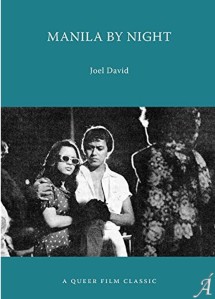
11011Mother Lily of course had to endure a whole slew of scolding, initially from the moralistic elements of the Marcos Sr. dictatorship, until its orientation shifted to a libertarian policy, motivated first by its eagerness to stage and maintain the Manila International Film Festival (A-rated by FIAPF, a filmfest-ranking agency) and, later, by its determination to present itself as a culturally enlightened political force after the global outcry over the assassination of Senator Benigno S. Aquino Jr. during his return from US exile. The final censors chief appointed by the regime, in fact, contested the authority of the ECP and announced that she intended to ban Chinese and clergy from film-production activity and from appearing onscreen. Mother Lily’s production of Bernal’s Manila by Night, forbidden from competing in the Berlin International Film Festival during the early 1980s and released in censored form as the retitled City after Dark, was similarly restored and screened at the MFC.

Scolder & scoldee, reconciled
[photo courtesy of Philippine Star]

Back to top

11011Not surprisingly, stories swirled around her, a few of which sounded fantastic (like the Chinese- and clergy-hating censors chief) but were still confirmable. Who would believe today, for example, that Imelda once actually advocated for eliminating censorship and instituting divorce? The swing in the then-First Lady’s formerly pious persona could be easily tracked to her locking horns with Cardinal Sin as well as with Manuel Morato, who would eventually serve as top censor for Corazon Aquino. With the prospect of regime change becoming increasingly certain from one day to the next, it would be no surprise that Mother Lily would opt to cast her lot with Cory Aquino, to the extent of accommodating her youngest daughter’s dreams of becoming a film performer.

11011The aftermath of the people-power uprising of February 1986 provided definitive proof of Mother Lily’s prowess. Known as some of the world’s most active filmgoers, Filipinos quickly tired of the insistent middle-class celebrations of the so-called revolution and had to be lured back by any means necessary. Regal Films initiated a two-pronged approach, aimed to capture both the younger and women viewers on the one hand as well as the older and male segment on the other. For the first group, she contracted from TV a child star, Aiza Seguerra, and slated projects for theater-trained Roderick Paulate, who was peerless in his queer comic performances; her more mature solution, however, ran into opposition from the right-wing Morato as well as the conservative-academic left: she provided several projects for Joey de Leon, often teamed with another theater veteran, Rene Requiestas, that turned on their willingness to purvey extreme toilet humor.

11011The millennial generation, primed for anything that champions indie film values, prefers to celebrate Mother Lily for her pito-pito (literally double-seven) projects, which provided fixed budgets for filmmakers desperate for getting breaks in the then-infamously exclusivist film industry. While this strategy certainly foreshadowed the current digital era’s plenitude of opportunities, pito-pito must be seen as the final gasp of a production system still dependent on exorbitant celluloid costs. Only a small handful of these projects were worth long-term appreciation, with the best of them actually enjoying larger budgets and more extensive production periods. In combining the most transgressive elements in being both Chinese and Pinay, Mother Lily ought to be better remembered for the neurotically frenetic, shockingly profane, penny-pinching and multitasking movie-fan producer that she was during her glory days, rather than the solemn and respectable doyenne she turned into in the end.

[First published August 9, 2024, in The FilAm]

Back to top


Slang, Cant, & Colloquialisms from Manila by Night (1980)

Several erroneous definitions and/or etymyological explanations of Filipino slang have been sprouting online. This is a compilation drawn from the endnotes of Manila by Night (Regal Films, 1980) that may help clarify some terms by situating them in the time frame referenced in the text. The full post may be found in the special issue of Kritika Kultura devoted to the film. A copy of R. David Zorc & Rachel San Miguel’s Tagalog Slang Dictionary (De La Salle University Press, 1993), mentioned in certain instances below, may be found in the Extras section’s Fil(m)ipiniana list.

Acheng. A regional variation on Ate (elder sister); the seemingly French resonance has made it a preference for gay (and women) “femme” speakers.

Award. Ironic usage, a reference to failure or long-suffering condition, thereby resulting in a mock-worthy public performance of personal drama that deserves recognition.

Baclaran. At the end of the former red-light district, stretching all the way into the seedier environs of Pasay City, is the shrine of Our Lady of Perpetual Help in Baclaran; because of its location, underworld figures (gangsters and sex workers) as well as working-class citizens attend its novenas and Masses.

Bayside. A popular night club along Roxas Boulevard.

Bongga. A slang term, usually used as a compliment meaning stylish, outlandish, extravagant, awesome.

Boots Anson-Roa. A film and TV actress, known for playing wholesome women characters.

Consciousness Three. A reference to Charles Reich’s then-influential bestseller The Greening of America (1970), wherein a utopic condition is attained consisting of the counterculture’s embrace of personal happiness over material success.

Datung. Dough [from “the tong” or extortion money] in gay lingo; semantically shifted from the original meaning of tong as the US-based Chinese underworld organization. The query for demanding money, “ang datung” or “an’ datung” (the payment), has been clipped to “anda,” which puns on the Spanish verb for moving forward. The Tagalog Slang Dictionary however ascribes the term “datung” to the Cebuano word for rich, “dato” (page 37).

’Day [rhymes with “guy”]. A shortening of the regional term “inday” (girl), adopted initially as gay lingo and now mainstreamed.

Del Pilar vs. Boulevard. Del Pilar Street is in what used to be central Ermita’s red-light district, which was patronized mostly by American servicepersons stationed at the former US Naval Station Sangley Point (now the Cavite Naval Base), joined by Japanese sex tourists during the Cold War period. (Ironically, some of the Philippines’s original batch of colonial-era sex workers were migrants from Japan.) [Roxas] Boulevard, although running parallel a few blocks away, directly faces Manila Bay and thereby exudes respectability because of its ideal location; the US Embassy and a number of five-star hotels and upscale apartments are located on this strip.

Echeng. From “echos,” to mooch or sponge or sweet-talk.

Evita. A name that references the eponymous Andrew Lloyd Webber and Tim Rice musical (then banned in the Philippines) on Eva Perón, Argentina’s controversial First Lady, whose life had too many parallels with that of Imelda Marcos. In a later disco scene, Festival’s dance version of the musical’s most popular hit will be played.

Joanne Drew. A shortening of Joanne Drew Figure Salon (Australia-based, founded by Joan Andrews), a popular slimming facility for Manila socialites. The character who mentions it would be referring to her lower waist area, including her crotch.

Juwawa. Gay-lingo Frenchification of the Tagalog “asawa” or spouse; currently shortened to (and mainstreamed as) “jowa.” See page 67 of the Tagalog Slang Dictionary.

Kumakain ng kuhol. Literally “eating [freshwater] snails,” a local delicacy which requires sucking and use of the tongue to get at the flesh of the cooked mollusk; in reference to the character’s aggressive use of his tongue in deep (or French or tongue) open-mouth kissing.

Kyeme. Spanish-sounding gay-lingo coinage (quieme) that means “nonsense.”

Mare [MA-reh]. A shortening of “kumare,” feminine of “kumpare” (from the Italian comare, godmother; and compare, godfather) – best friend; technically, a person who stands as Catholic-baptismal godparent of one’s child, i.e., someone who’s trusted enough to take care of the godchild if the parent is incapacitated or dies.

Misericordia. Red-light street for less-wealthy locals and Chinese visitors in Chinatown district. “Huwag kang madaan-daan sa Misericordia (Don’t let me find you in Misericordia)” implies that the speaker may have started work there and upgraded to a sauna parlor as massage attendant while maintaining her residence in the area.

Mogs. Short for Mogadon, a hypnotic prescription sedative popular among drug users.

Pangasinan [pang-GAHsinan]. A northern coastal province, 4-6 hours away by bus north of Manila, named and known for salt (“asin”) as well as seafood products including the fermented fish or krill paste called bagoong [bago-ong], used as condiment.

Rhapsody. An extension of “rap-sa,” verlanization of “sarap,” the Tagalog word for pleasure.

Rosa Rosal. A film actress who first became famous for her femme fatale roles, then starred in a number of prestige projects during the studio system era of the 1950s. She became known to a new generation of admirers for her humanitarian work with the Red Cross as well as for hosting her own TV charity program.

Sensation. [Provisional, pending confirmation] One of the euphemisms that emerged for polite-society discussions of sex in then-gendered massage-parlor activities, pertaining to any of client-preferred positions where the masseuse performs with her hand, mouth, breast, and/or vagina on a passive recipient. Filipinized in the Tagalog Slang Dictionary to “senseysyon” (page 125) and equated with orgasmic release.

Seven Seas. A popular motel chain providing two-hour room rentals for quickie sex.

Shotgun. Same sense as American slang: weed shotgun is performed with the lit part of the joint held in the mouth, while the other end is positioned in the recipient’s mouth or nostril (with hands forming an air tunnel); when the holder blows, the recipient will be able to inhale a stronger whiff.

Soraya. A dated reference, possibly referring to a Muslim-like appearance because of the turban that the character is wearing (provided by Paul H. Roquia and Ka Deniz Reyes of the Facebook Pinoy Film Buffs group); also possibly a playful corruption of “suray,” untidy or disarranged (as suggested by Nestor de Guzman of the same group).

Sward. Not the rarely used English term for grassland, but a Filipino coinage for “gay male,” free of the pejorative associated with traditional terms; ascribed to film critic and director Nestor U. Torre. Though sward is phonetically articulated [i.e., swahrd], the Tagalog Slang Dictionary claims “sword” as its origin, referencing its double-edged nature (page 135).

Toro/Torero. From the Spanish for “bull,” connoting studly expertise as well as bullfighting, since inexpensive live sex is performed in the round (like a bullring), where the central couple is expected to display a variety of unusual and athletically demanding positions before the torero climaxes. See as well the Japanese title of Nagisa Oshima’s In the Realm of the Senses: Ai no corrida, literally “bullfight of love.”

TY. Pronounced “tiway,” an acronym of the letters abbreviating “thank you,” occasionally used as a verb (“tiwayin,” to pay with verbal thanks; to exploit).

Type. A double-clipped form of “Type ko [my type],” in turn a clipping of “Yan ang type ko [that’s my type].”

Vito Cruz. A still-existent street toward the end of the former red-light district of Ermita, which had also catered to American servicepersons during the period when the US had military bases in the Philippines. Because of its farther location (closer to the seedier portion of Pasay City), it catered to older and/or non-Caucasian clientele.

Back to top

Á!


Canon Decampment: Sheron R. Dayoc

[Click here (recommended) for desktop mode.]

Halaw

Alternate Title: Ways of the Sea
Additional Languages: Cebuano, Tausug, Zamboangueño Chavacano
Year of Release: 2010
Director & Screenwriter: Sheron R. Dayoc
Producers: Cinemalaya Foundation & Los Peliculas Linterna Studio

Cast: John Arcilla, Maria Isabel Lopez, Arnalyn Ismael, Ross-Ann Dalkis, Aljimar Hajilol, Rodaine Avalie, Hadja Nursiya Darangina, Edgardo Sumicad Jr., Randy Amodia, Hadji Amman Sahi, Nasri Tawasil, Anelyn Carino, Justies Love Matchon, Reden Silven, Fharwis Amil, Joel Bustamante, Maimuna Mutos

Hernand encounters a whole set of difficulties in organizing his latest attempt to transport Philippine natives illegally to Malaysia on a motorized outrigger boat, via the southern backdoor. Some of the young women he recruited to work as entertainers got cold feet and backed out, while Khalil, who’s in charge of one of their stopovers, wants to collect on a loan he lent out earlier. Mercedes, a veteran hospitality worker, joins their group and provides assurance and confidence to some of the understandably anxious women. Their passage through the Malaysian area of responsibility is fraught with danger, with their prospective country’s coast guard on the alert for their type of intrusion.

The reason why Halaw endures over the passage of time has to do with the several balancing acts it executes in delineating its passengers’ sea trip (in contrast with the road trips of New American Cinema); since there can only be pitifully few possible conclusions at the end, none of them worth accepting, the journey becomes the whole point of the narrative. The collection of passengers is distinguished by social gaps that each one tries to overcome, as casually and painlessly as possible, though this turns out to be easy only for the most privileged among them. At the head of their group are two Manila-bred Tagalog-speaking migrants (played by the “name” members of the cast): Hernand has his hands full ensuring that everyone gets on board, while Mercedes uses wilier ways to persuade the understandably reluctant female recruits. At the other extreme is a prepubescent girl, Daying, identified by the others as a Badjao native; she may be the only character who does not speak her native tongue, since no one else would understand her—but she also literally upstages everyone by performing the celebrated Pangalay dance. These rounds of simple, lighthearted distractions, including exchanges of gossip, jokes, and beauty tips, will be recognizable to any native confronted by the looming prospect of overseas alienation and danger. Most of the action increasingly takes place in the dark, since the group has to travel by night through pre-electrified islands. The film provides a visual counterpart to forestall the anguish that inevitably awaits, by enabling us to occasionally glimpse natural scapes of quiet beauty, with none more ravishing than the very destination that marks their transformation from citizens to illegal entities.

Back to top
Return to Canon Decampment contents
Go to alphabetized filmmakers list


Canon Decampment: Mikhail Red

[Click here (recommended) for desktop mode. Click to jump to: Neomanila, 2017.]

1—Birdshot

Year of Release: 2016
Director: Mikhail Red
Screenwriters: Mikhail Red & Rae Red
Producers: Pelikulared, Tuko Film Productions, Buchi Boy Films

Cast: Mary Joy Apostol, Manuel Aquino, John Arcilla, Arnold Reyes, Dido de la Paz, Elora Españo, Ronnie Quizon, Rolando Inocencio, Suzette Ranillo, Angelica C. Ferro

A busload of passengers is passing through an abandoned field at night. Next day, Maya is taught by her father Diego, the sole tenant of a plot of farmland, to handle a gun. Against her father’s warning, she crosses the fence of a forest sanctuary and, once inside, shoots and kills an endangered Philippine eagle. In order to investigate the whereabouts of the missing animal, Domingo, a rookie police officer, is instructed by his station commander to drop his investigation of the disappearance of a bus of farmers who were planning to go to Manila to protest the harsh conditions that landowners, in collusion with corrupt government officials, were imposing on them. Domingo persists in following up the earlier case but is pressured into focusing on the disappearance of the eagle, leading him on a collision course with Maya and her father.

2—Neomanila

Year of Release: 2017
Director: Mikhail Red
Screenwriters: Zig Madamba Dulay, Mikhail Red, Rae Red
Producers: TBA Studios, Artikulo Uno Productions, Buchi Boy Films

Cast: Timothy Castillo, Eula Valdes, Rocky Salumbides, Jess Mendoza, Ross Pesigan, Angeline Andoy, Angeli Bayani, Ron Villas, Raul Morit, Shandii Bacolod, Donna Cariaga, Astrid Hernandez

Toto’s capable of running fast because as a street kid, he earns a living from snatching. His older brother, imprisoned for some unspecified petty crime, asks him to report a well-known drug pusher, since one of the standard covert practices in fascist President Rodrigo Duterte’s war on drugs is palit-ulo (literally head-swapping), where a suspect surrenders a higher-ranking criminal in exchange for favors or freedom. After his girlfriend informs him that the guy he has to find is dead, a plainclothes narc named Irma, who was his mother’s friend, checks up on him. When he discovers next day that his brother’s jail was bombed, he confronts the gang that he suspects of the act but they proceed to mess him up. Irma saves him from getting killed and, since he no longer has any family left, he accompanies her on the extrajudicial rubouts that she and her partner and lover Raul have to accomplish. However, Toto is still unused to cold-blooded killing and protests when one of their targets is a mother who brought her infant child with her.

The problems that confront the country’s dispossessed offer no reprieve regardless of political regime. This principle plays out in the two consecutive works by Mikhail Red that happened to straddle the end of the last liberal-democratic President and the start of the first authoritarian President since the earlier Ferdinand Marcos. As it turned out, Birdshot was set in a distant rural locale while Neomanila was in a slum community adjacent to the business district. The promise that Birdshot’s filmmaking talent holds forth is a throwback to the heady days of the then still relatively benign years of the 1970s military dictatorship of Ferdinand Marcos, when the country’s most gifted aspirants could propose subject matter that implicitly criticized the political system by insistently focusing on narratives of survival. This resulted in a few instances of verisimilitude that martial-law authorities were quick to seize on, so Filipino filmmakers during the Second Golden Age managed (for the most part) to be subtle and ambivalent whenever their material came too close to mirroring real-life events. Such considerations no longer impinge on the generation of talents since then, so Birdshot’s presentation of a local reality so insulated that the disappearance of a busload of politically significant passengers can be successfully hidden from outside investigators, does not fully square with the traumatic real-life horror of the 2009 Maguindanao massacre that it apparently references. The narrative’s seriocomic factual incident of an older male peasant shooting down an endangered eagle to be able to cook tinola, or poultry stew with green papaya and chili leaves, is transformed here into the case of a young maiden similarly unaware of the consequence of killing wildlife—in a government sanctuary that she entered surreptitiously, against her father’s injunction. The plot opts instead to turn on character transformations that affect the protagonists: frustrated by his superior officers’ corruption, an idealistic policeman vents his anger on the wildlife-killing suspect’s father by torturing the latter; the daughter then responds by killing the policeman, along with any prospect for moral clarity. Neomanila’s dramatis personae, in contrast, respond to the terrors of an openly oppressive political system either by banding together in gangs or, where family is still available, by fulfilling whatever filial injunctions may be passed on to them. When the protagonist, still barely an adolescent, finds himself divested of relations and rejected by his would-be homies, he turns toward parental figures who welcome him for his ability to run, during the historical moment when emergency situations could profit from such a skill. None of these safety-in-numbers options works out satisfactorily for anyone concerned—although the movie’s canniness lies in how it offers glimpses of affective connection between substitute mother and abandoned son, enough to prepare us to empathize with the latter’s insistence that children are any war’s true victims, and to dread the easy prospect of rupture. The country’s film output as a whole attains a certain salience during periods of authoritarian repression, although this property will still have to be described, explained, and evaluated; when cinema of the Duterte drug-war gets defined, preferably in comparison with the Marcos martial-law era, Neomanila deserves to be one of the foremost items to be sampled.

Back to top
Return to Canon Decampment contents
Go to alphabetized filmmakers list

Á!