Author Archives: Joel David

About Joel David

Unknown's avatar
Teacher, scholar, & gadfly of film, media, & culture. [Photo of Kiehl courtesy of Danny Y. & Vanny P.]

Farewell Farewell, Bernardo Bernardo

Rapid Pinoy pop-culture quiz: name another media celebrity with a double name. Aside from the usual nickname or fancy given name (Jonjon, Zsa Zsa, or, for political controversy, Bongbong), only a sufficiently elderly local observer might be able to remember Justo Justo. And unlike Bernardo Bernardo, Panfilo C. Justo opted to use a pseudonym by reduplicating his family name.

11011More recent friends of Bernardo would also know that he specified a second name, also reduplicated: BB, coined (as he once told me) to facilitate conversations in Facebook and FB Messenger.[1] Born on January 28, 1945, BB was too young to remember the intensification of World War II, leading to an ending, about half a year after his birth, where there were in fact no winners except for the abruptly wealthy Americans. The recollections of his elders must have induced in him a resolve never to face any historical crisis without contributing his share to social change, for better or worse.

11011This much can be seen in his choice of college major: journalism, then-available (circa the mid-1960s) only at the University of Sto. Tomas, with the national university still laying the groundwork for its own media program. In addition to his stint as editor-in-chief of the Varsitarian, Bernardo struck an imposing Adonic figure, tall, smart, and confident; his moreno features only served to heighten his appeal – and not surprisingly, the performing arts started knocking on his door and never stopped calling on him till the end.

11011Before he succumbed last March 8 to a particularly severe bout with pancreatic cancer, BB had made a name for himself as the most successful crossover actor in the country, conquering stage, film, and television (in that order) and expanding his reach to global stages and festivals, while also directing and producing some of his projects. Name a Philippine National Artist still alive during BB’s active years, and chances are that the name “Bernardo” will appear in the roster of participants, twice. Mauro Feria Tumbocon Jr., director of the Filipino Arts & Cinema International (FACINE), confirmed in private that the Annual Filipino International Film Festival was planning to recognize him with a life-achievement award during its twenty-fifth anniversary celebration in San Francisco this year.

11011Regarded in retrospect, Bernardo was always a step or more ahead of his colleagues. He parlayed his facility in English into lead roles at Repertory Philippines, known for its restaging of US theater and musical hits. By the time the production of the West End musical Miss Saigon scouted for Filipino talents, zeroing in on Rep and discovering Lea Salonga in the process, he had long moved on. He first sought a more remunerative arrangement via the then-burgeoning dinner-theater scene, and stood out in the multicharacter sequel of Boys in the Band at Century Park Sheraton, where he was “flaming enough to burn the ballroom down,” as he described in an interview I had with him, titled “Manay Revisits Manila by Night.”

Back to top

11011Ishmael Bernal, who had seen his performance, was then on the lookout for an actor who could play one of the lead roles in Manila by Night, intended to be the second-anniversary presentation of Regal Films as a production outfit. The character, Manay, was meant to represent the “conscience” of the film – a flawed one, it must be added, since the project entailed an encompassing and necessarily dystopic vision of the city under militarized dictatorship. Nighttime was when everything repressed by prevailing social institutions during martial rule could emerge – prostitution, drug transactions, queer assignations, live-sex shows, drag displays, hypocritical masquerades, political corruption, police abuse, polyamorous promiscuity, and so on.

11011The other requisite that made the role of Manay the most challenging in the film was that, like the rest of the other characters, it was intended to be improvised by the actor in conjunction with the director as well as a number of script consultants, with help from the very denizens that Bernal modeled his characters on. In “Manay Revisits Manila by Night,” Bernardo describes his process of collaboration with Bernal: “Although it is true that there were no conventional shooting scripts provided, there were definitely scraps of paper on the set with key dialog for the film character’s objectives for the day. On a typical shoot, with Bernal’s approval, I would ad-lib during blocking rehearsals to bookend the philosophical riffs of Manay that Bernal wrote. Bernal understood that this process helped me to give the dialogue a more conversational, spontaneous feel.”

11011When contemporary filmmaker Lawrence Fajardo, who has been specializing in the multicharacter film narratives that Bernal pioneered in, opted to return to his theater roots, he picked out a play, Herlyn Gail Alegre’s Imbisibol, and cast Bernardo in a role intended for a straight actor. Realizing that BB’s strengths lay in camp and humor, Fajardo requested him to collaborate in revising and improvising Benjie, a character several steps removed from Manay: older, impoverished, sickly, working overseas as an undocumented laborer, whose only happiness lay in the domestic relationship he shared with his same-sex partner (played in the film by Ricky Davao). When the film version was completed, shot on location in Hokkaido, Bernardo won his second critics prize for performance (the first was of course for Manila by Night) – the only actor since Vic Silayan to win in all the instances he was nominated.

11011In effect, BB was drawing from his experience as a health worker in the US, where he had gone into self-exile after enduring stereotyping in his film and TV roles because, ironically, of his triumph with his Manay character. An avowedly queer subject, he had also had, after all, his share of heterosexual romances, including a years-long high-profile affair with Chanda Romero. Younger acquaintances familiar with his occasional cross-dressed socnet pics needed a double-take or two to grasp the full measure of his boundary-busting, genre-challenging, culture-crossing persona, what with some of his female contemporaries admitting to having had crushes on him.

Back to top

11011A more direct deduction one could make regarding his facility in various professional capacities is that he was always fully prepared, in practice as well as in theory: his professional record yields an enviable number of academic qualifications, including scholarships and graduate degrees at prominent American universities, as well as faculty stints in US and Philippine educational institutions.[2] During the past couple of years he would mention work on a memoir as his legacy project, and posted some wonderful little-known anecdotes on his Facebook wall as samples.

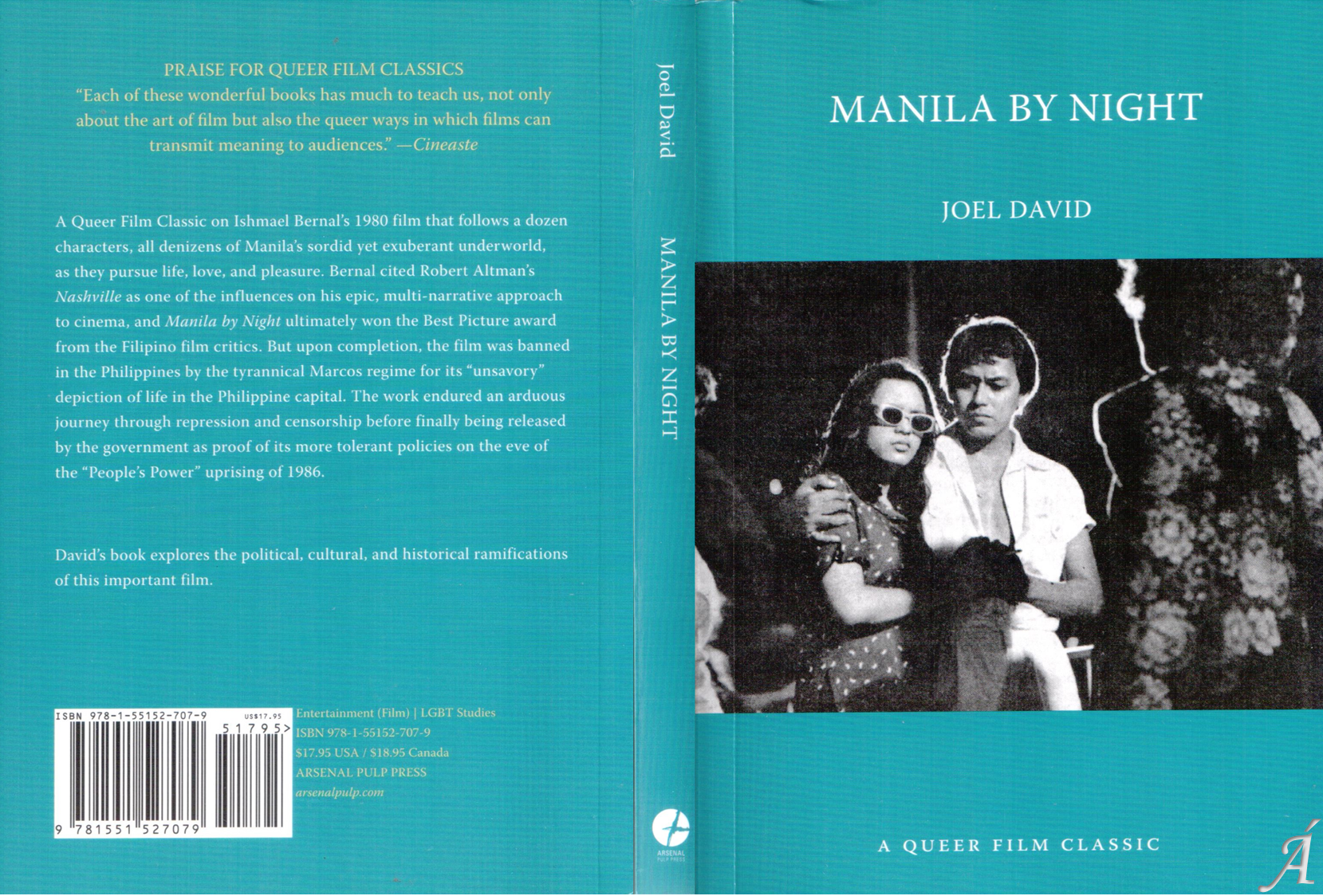
11011This was about the same time that he came out, as it were, in another sense – in support of the presidential candidacy of Rodrigo Duterte. Such a political stance set him off against several of his friends in literature and the arts. As someone who refused to capitulate to polarized positions, I was able to continue corresponding with him, and saw how his motives were as earnest as when he linked up decades ago with Bernal, Lino Brocka, and the other founding members of the Concerned Artists of the Philippines against the Marcos dictatorship. He read the drafts of the book I was working on (titled Manila by Night: A Queer Film Classic, published by Arsenal Pulp Press in Vancouver, where “Manay Revisits Manila by Night” appears as an appendix), and suggested some helpful changes and corrections.

11011During the final revision, I informed him that I expanded the book’s conclusion, saying in effect that not only had nothing changed since the Marcos years, but that the plight of the country’s poor had worsened. To drive the point home, I juxtaposed some scenes from Manila by Night with drawn-from-headlines photographs of extrajudicial executions, and offered Bernardo the opportunity to revise anything in his interview by way of responding to this harsh indictment of the Philippine political system. He took an unusually long time before he finally replied, on FB Messenger: “I’ve decided not to make a statement regarding the current state of affairs in Manila under the new dispensation. After those years of depression in the US, I think it’s healthier for me to cling to a more hopeful outlook. Eyes wide open. [Smile] Love the book, Joel. [Heart] So proud and honored to be a part of it. Maraming, maraming salamat.”

11011Before we consign Bernardo to a historical past, a few things ought to remind us that he deserves to be around longer. Manila by Night remains the only major Filipino film still awaiting restoration and the memoir he left behind still has to be published. FACINE also recently announced that he’ll be the first posthumous awardee of their Golden Harvest prize – an indication that when BB left, he made sure we would all be enriched by his presence.

Notes

First published March 21, 2018, in two parts, as “Farewell Farewell, Bernardo Bernardo” and as “Toward the End, a Hopeful Outlook for the Philippines,” in The Filam.

[1] Posted in Ámauteurish! as “Bernardo Bernardo: Exchanges on Facebook Messenger.”

[2] Many thanks to Sari Dalena (director of the University of the Philippines Film Institute) and Ina Avellana-Cosio (UPFI researcher) for information on Bernardo Bernardo’s extensive academic background.

Back to top


Bernardo Bernardo: Exchanges on Facebook Messenger

As of mid-March 2018, about a week after Bernardo Bernardo died, all my exchanges with him on Facebook Messenger were inexplicably erased. Fortunately, I had just been tasked with writing an appreciation of him for The FilAm,[1] and I thought of copying and saving our entire FB Messenger history in order to review our history of interactions on the social network. Born January 28, 1945, BB (as he preferred to be called not long after he opened his FB account) had an inherently prominent – and increasingly controversial – presence, marked by his open support for the presidential candidacy of Rodrigo Duterte. When these exchanges began, he was still US-based, working in a hospital. At one point, he took a visit to the Philippines, and wound up staying all the way till the end. Part of the narrative was his gradual immersion in academe and his concern (articulated on his FB postings) for preparing a legacy, primarily in the form of a memoir. All these things showed up in our exchanges.

11011I will always regret my inability to meet up with him during the several times he expressed a wish for in-person interaction; my excuse was that I was working on a manuscript (eventually published as Arsenal Pulp Press’s Manila by Night: A Queer Film Classic) that featured him and his contributions prominently, whose results he deeply appreciated. I do not maintain this explanation as an adequate excuse, but I present our exchanges anyway as a way of illustrating how Bernardo was always more complex than people assumed he was, premised on his preferred self-presentation as a campy, humorous, occasionally cross-dressed yet consistently loyal-to-a-fault supporter of friends and cherished personages. These exchanges are in English, Filipino, and Taglish, with descriptors in place of emojis; please message me (using this blog’s Queries option) if you need to have any non-English passages translated to English.

February 10, 2011, 7:28 PM

Joel
Hi BB (don’t know how to address you now), si Joel David ito, formerly with the Manunuri [ng Pelikulang Pilipino] and [University of the Philippines] Film Institute. I sent you a friend request under my [then] FB name, Jojo Segovia. I’ll be preparing a book manuscript on Manila by Night for foreign publication, so I’ll be interviewing the major participants within the coming months. Salamat.

February 11, 2011, 1:10 AM

Bernardo
Anytime, Joel. [Smile]

May 28, 2011, 9:37 PM

Joel
Hi BB, was wondering if you’ll be interested in a writing prospect – unfortunately uncompensated. It’s for Ateneo’s journal, Kritika Kultura, recently listed in the prestigious Thomson-ISI database[2] (much coveted among academics, kaya they could afford not to pay the authors, pero universities give the highest [publication awards] for this…). KK’s planning a special issue on Manila by Night and they’ve asked me to take charge of it. I’ve been looking around for the best people for the job – articulate, smart, and intimately familiar with the film and/or the people behind it. So the question I’ll be asking is: will you be OK with doing a scholarly article on the movie? We could discuss things like a useful theoretical framework later, pero meanwhile what might be of interest is: Bernal’s directorial style, how you interpreted your “written” character (inasmuch as storyline lang yata ang basis, hindi screenplay), how Bernal’s preferred performative style differed from other directors’ approaches, ano yung roots nito in theater and film traditions, etc.

11011You could shape it as you wish, but in case you’re unfamiliar with the process, these types of academic journal articles undergo blind peer-reviewing. This means that experts unknown to you (and who don’t know who wrote what) will evaluate your contribution and make suggestions for improvements, using global standards in the field. The call for papers will be released soon, and I’ll post a copy in FB, but I’d want to give you a heads-up just to make sure I’ve covered the most authoritative figures on the topic. I’ll understand if you’ll be too busy for it … I’m hoping that eventually a full-length book could be spun off (The Manila by Night Book, à la The Citizen Kane Book) where other types of writing and even interviews can also be included. Either way I look forward to your involvement. Maraming salamat!

May 29, 2011, 12:59 AM

Bernardo
Joel, I would love to do it. That would be one way of honoring a man who guided me through one of my peak experiences in the performing arts. Similarly, I think you’ll have to guide me through the writing process so I can meet expectations – I’ve never written for academic journals. Thanks!

July 17, 2011, 1:37 AM

Bernardo
Joel, natigok yung PC ko. Ngayon ko lang na-email sa ’yo ang Manila by Night [issue] proposal paper.[3] Pasensiya na. Bernie.

Back to top

September 04, 2011, 8:42 PM

Joel
Hi Bernie, I’ll be checking individually if the people who submitted paper proposals were able to receive my email re updates on the Kritika Kultura forum project. Please let me know kung hindi mo natanggap so I’ll resend it to you, directly this time imbes na group message. Meanwhile, is it OK if I refer the others to your FB postings on Manila by Night (yung 10-part series)? I’ll give them the YouTube links, but I’ll mention that I got wind of their availability from you. Another matter is: we’re being encouraged by the Asian Cinema Studies Society to present our papers (possibly with a special screening of the movie) at their conference in Hong Kong in March. I’m looking at possibilities for funding dahil kasi kung pupunta ka, yung air ticket mo [from US West coast] ang magiging pinakamalaking expense. Sana mai-defray man lang, kung hindi man mareimburse in full, by either the ACSS or Ateneo [de Manila University]. Giving you the heads-up na muna before I send out the info.

September 05, 2011, 12:37 AM

Bernardo
This is exciting! Yes, I received your email re updates on the Kritika Kultura forum and I would be more than happy to share anything about Manila by Night that’s available on my FB postings. I am looking forward to the March conference in Hong Kong. Thanks for the heads-up. Ingatz.

April 09, 2012, 8:04 PM

Joel
Hi BB, I’m just making my final rounds confirming people’s participation in the special issue of Manila by Night. It’s definitely happening, and at this time pati screenplay balak isama, so virtually a collectible book on Phil. cinema na. Yung mga nag-participate sa Hong Kong conference are all presumably still definitely participating, otherwise sayang lang yung pagod at gastos nila. Among the ones who didn’t go (4 people), two have definitely confirmed pero one conveyed his regret because of a sudden increase in workload. I’m just worried that a major gap might emerge that no one else will be able to fill up. Which means I’m keeping my fingers tightly crossed that you’re still on board, OK? I’ll be emailing a general reminder to the authors later this week about the April 30 deadline, and I’m hoping you’ll be one of the addressees. Basic guidelines lang sa academic paper writing – interaction between theory and data (in your case, biographical and experiential). So siguro, what school(s) of performance were you and/or Ishmael observing or advocating, how did this differ from “typical” local approaches, were there adequate critical evaluations aside from award-giving, how about the other performers, etc.?

11011Yung standard text for studying film performances is James Naremore’s Acting in the Cinema, supplanting Pudovkin’s Film Technique and Film Acting. Pero actually yung diskurso ng film performance is more intimately tied with star-text studies because of the peculiar ability of the medium to iconicize its performers. Yung output nina Richard Dyer, Christine Gledhill, and Jackie Stacey ang ilan sa mga useful materials. So on the whole be guided na lang by the (unwritten pero understood) requirement to produce “new” and “useful” knowledge, pati sa paggamit ng theoretical material. What this means is, hindi komo existing and accepted ang ideas e automatically “correct” na, so the scholarly author adopts the position of criticizing standard knowledge if necessary, or explaining why they should be maintained if that’s the case. In the end, what we hope to do is be aware of philosophical tensions in the field of film acting, your take on these debates, and how your findings (experiences) affirm, modify, or disprove (as the case may be) your take. Pag nagkataon, actually, what you’ll be producing won’t be just a first for Manila by Night. As far as I’m aware, it will also be a 1st for film acting discourse in the Phil. Good luck sa pagsulat!

April 10, 2012, 1:00 AM

Bernardo
Let me pull myself together. It’s been a strange ride lately. I’ll have a better idea of what I have by the end of the week.

May 02, 2012, 10:44 PM

Joel
Hi BB, hope you don’t mind, I just need to confirm whether we’ll be expecting a contribution from you for the Manila by Night special issue. The other articles are already trickling in and I have to start forwarding them already to the peer reviewers. In case you’ll be unable to make it this time, you might want to submit independently to Kritika Kultura, or give it to Mau Tumbocon’s new journal. Or, if we spin off the issue into a book, we could conduct an extensive interview with you re working out your performance strategy in Manila by Night. Basta ma-involve ka pa rin sa project one way or another…. But meanwhile, do we wait or hindi na lang muna? Best wishes and much love.

May 03, 2012, 7:04 AM

Bernardo
Joel, I am working on the article but will not be able to meet the deadline. Not happy with the paper in its current form – I realize now that I need input from people who were working with Bernal in the production (Peque Gallaga, Ricky Lee) who could provide alternative perspective on the birth/creation of the character of Manay. Will definitely exert efforts to submit the paper independently to Kritika Kultura – after I’ve sent you a copy for your feedback. The completion of this paper is something that I would really love to accomplish. Thanks for the opportunity. Echoing your sentiments: best wishes and much love! Bernie.

Back to top

May 18, 2012, 9:24 PM

Joel
Will be giving you a realistic assessment of prospects for publication. I’m not really with Kritika Kultura, just editing one issue.[4] If you submit later, they might slate it for much later so that it won’t come out too soon after the same subject already was covered. There are other peer-reviewed journals in the Phils. (Humanities Diliman and Plaridel at UP College of Mass Communication) but KK’s the only one that’s ISI-listed. So if the ISI affiliation doesn’t matter much, the other journals would also make good prospects. Kung ISI talaga ang gusto mo, there are a lot of other ones in the US, on film and performing arts. (Film lang yata ang field na merong ISI-listed na magazines – Cineaste, Film Comment, Sight & Sound, etc.) The other prospect, if it appeals to you, would be a book anthology. I’m planning to spin off the special issue into a separate volume, complete with the script of the film, earlier reviews, and popularized versions of the current journal articles.

11011The only “danger” here is that if your article comes out [in this book first], it would be disqualified from other journal publications. That’s why the usual publication trajectory for an article is to come out in a journal first, before being anthologized. But I’ve been anthologized extensively before, without publishing in journals, and it’s a more satisfying feeling, kasi nga more people read books and these get stored in more places than journals. Sayang lang, for the present issue we’ve had 3 (maybe becoming 4) contributors who won’t be submitting, and deeply felt ang absence. Hope I’ll be able to persuade you again re the book project, if and when it pushes through.

September 13, 2012, 9:31 PM

Joel
Ka BB, have you checked Kritika Kultura? Kahit nag-back out ka from writing, prominent ang presence mo doon. Then remember our exchanges on the lost sequences of Maynila ni Lino? I quoted you extensively there as well. Mag-forward ako ng anumang file if it becomes available. Can I send you a token of something? Don’t worry, I’ll still nag you for an article contribution later pag matuloy ang Manila by Night book edition. If you want anything I could purchase via Amazon halimbawa, pls let me know.

September 14, 2012, 8:30 AM

Bernardo
Ka JD, been reading and re-reading Kritika Kultura. Enjoying what the critics saw that I failed to see. Resonating to shared insights. Trying to understand the language, mostly. [Smile] Nosebleed! I was hoping to read something about the cleansing/washing ritual that major characters went through – Ishma carefully choreographed these scenes – and what the reviewers thought of it. Otherwise, it’s awesome that something of this scale would be written about MbN. Maraming salamat for having initiated this. Re Amazon, sige nga – mag-iisip akoh. Hehehe….

April 08, 2013, 12:34 PM

Joel
Hello BB, may I know what your email address is? Will be sending you something kasi.

Bernardo
Hi, Joel. It’s <anonymized@msn.com>. Ingatz. BB

11011Salamuch po sa inyong sorpresang “something,” Senyor D. [Smile] Suplada ang pagka-datungerah – dollars!… Much appreciated. Amazon is one of my favorite online sources for books, CDs and DVDs…. Bless your generous heart, Joel!

Joel
Combination of reasons to celebrate – I got tenured dito sa university (probably the 1st Pinoy/Pinay to be granted that stature in Korea, according to the former head of Asia Foundation). Plus 2ng articles ko na ang directly nakinabang sa generosity mo with insights and anecdotes – one on Manila by Night, the other on Maynila ni Brocka (remember, the missing callboy sequences?);[5] not to mention the way I also used some of your points in editing the other articles. So in effect you’re saying “salamat” to me for my saying “salamat” to you. [Smile]

11011At naglagay ako ng “future” sa message kasi kung magkaroon ng book version yung Manila by Night, we’ll do extensive Q&As with the surviving major participants – you, Ricky Lee, and Peque Gallaga. I’ll try to find funding sources to compensate you with, pero tentatively, baka free book copies lang muna ang maio-offer ng Ateneo. This time real royalties na ang basis ng pag-calculate ng compensation, since the books will be sold naman.

11011Be well always ha. Whenever I think of my life in America, mostly stress lang ang naaalala ko. Buti na lang you work in the health industry. We’ll keep in touch!

March 14, 2014, 8:20 PM

Bernardo
Joel, nasa Pinas ako. Mukhang nandito ka rin, serendipitous bah? O, magkita naman tayo. Ito ang cell phone ko: [anonymized]. Bernie

Joel
Naku kababalik ko lang sa Korea earlier this month, start na kasi ng spring semester! I was there from June last year kasi half-sabbatical ko (fall sem 2013). If you’re passing by Korea on the way back and have a few hours of stopover, I can arrange to meet you sa airport and maybe show you some parts of Seoul. I’m looking at your postings at mukhang ang sasaya! There’s just that major gap in the performing arts scene kasi nga wala ka na, so for now those reunion pics will have to do. Yang bayan naman natin kasi, ang daling mahalin pero hindi marunong magmahal in return. Hope you’ll be able to meet everyone else! And just BTW, tuloy yung Manila by Night book project, which will include an interview with you!

Bernardo
Sayang. We’ll get together yet. Mau and I are in talks about launching a FACINE L.A. We’ll need resource speakers on Phil. films.

Joel
I promised Mau I’d be there for the 20th anniversary last year but that fell through – hindi talaga nakayanan ng powers ko. But each year that passes gets easier for me. Sige, FACINE L.A., bring it on!

Bernardo
[Laugh]

Back to top

April 14, 2014, 12:58 PM

Joel
Ka BB – would you mind if I request a favor from you? As always and as before, if I quote from you I’ll acknowledge you as the source. It’s for a paper on Nora Aunor that I’ll be preparing for a conference in Macau and as well as for publication. (Also, I’ll find a way to say thanks afterward….) Regarding ito ke Ate Guy. Magandang contrast kasi you started with formal training, sya the other way around. And I ask this purely as someone na walang clue on the specificities of performance. Meron bang difference sa inyong “attack” on role and character? When you interact, how do you work it out? From your observation in the current film project compared with your earlier one (Carnival Song nga ba? yung binanggit ni Mau Tumbocon), ano yung differences, comparing today with 40 years ago? From her films that you’ve seen, were you able to perceive trends, adjustments in her style? And finally, what do you think would be ways that she could improve her performance, if any?

11011Pasensya kung “pinipiga” ko yung opportunity na ito. Rare kasi for a knowledgeable person who can articulate the nuances of performing arts who’s in the position of observing someone like her. (Someone should “study” you too – ang hirap lang kasi walang gustong mag-theorize at mag-critique ng performing arts, not in the sense of theater review, but in the sense of close reading ng performance per se.) Lastly, just for a light exercise, sino yung ika-canonize mo as among the “best” Pinoy performers? Yung elite na circle lang, living or dead, in any medium, excluding you and her (since given na naroon kayo already). Maraming salamat!

Bernardo
Holy Week meditation. [Kiss] I love this. Ano’ng deadline natin?

Joel
Too soon ba kung after Holy Week? Kung oo, kahit after next week (weekend of April 25-26). And I’m reminded of another opportunity, pero this one’s out of my hands. Is there any one (meaning, any institution) that’s maximizing your presence there by requesting you to conduct master classes? (With matching documentation dapat, for posterity’s sake.) You could presumably do it on your own, pero malaki sana’ng magagawa if there’s an org behind it. Pero kung maengganyo ka namang bumalik-balik, that could probably be worked out in a future trip….

Bernardo
Sige. Will work on it. Inspired ang Lowlah. [Kiss]

April 29, 2014, 9:25 PM

Bernardo
Sumabit ang inspiration. Pasensiya na. Naging hectic ang rehearsals, workshops, and shooting – and my laptop died. [Cry] Malabo na ang mata ng Lowlah kaya hindi umubra ang iphone for the write up. Finally got to borrow another laptop. Aabot pa ba?

Joel
Yes na yes. Aabot pa. Many thanks!

Bernardo
Great. [Smile] Thanks. Working on it.

May 04, 2014, 10:42 PM

Bernardo
Please don’t give up on me. The laptop I borrowed froze and has been dead for the last 4 days. I finally picked up my repaired Vaio from SM Megamall this afternoon.[6] Gasping in the heat between rehearsals and classes but happier here. Almost there, Joel. Ilang iri na lang.

Joel
That’s all right. Nahirapan din yung notebooks ko nung dinala ko dyan. Sobrang humidity yata.

August 07, 2015, 9:53 PM

Bernardo
Joel, nasa Maynila ka? Kita naman tayo. My phone number: [anonymized].

11011The Nepaleses [Ruben & Janet] of LA are here as well. Maybe we can all have dinner at Brillante Mendoza’s Filmfest Cafe.

October 27, 2015, 11:29 PM

Bernardo
From Sylvia Morningstar: People, I’m sorry. I just found out that this is a fake story. A friend in the U.S. checked it out with Snopes.com, as I should have. Those who shared this, I recommend you delete as I’m doing now. [Headline: “Pope Francis Endorses Bernie Sanders for President” – USAToday]

Back to top

December 28, 2015, 9:30 PM

Joel
BB, is it OK if I sent you a request for a paid interview? Hindi live (video or aural) recording, strictly written. I just finished typing out the questionnaire. Will await your response before I proceed.

11011I’ll be in Korea through the winter BTW. I’m resolving to myself that during my next trips to Pinas, strictly bakasyonista na ako … although it might take at least a year before that can definitively happen.

December 29, 2015, 1:07 AM

Bernardo
Sure. Join. [Smile] Balita ko you were here kailan lang – tama ba? – hindi man lang tayo nagkita. Next time kitakits. Will wait for your email. Ingatz.

December 29, 2015, 8:17 PM

Joel
Hindi email, BB. Pwede namang i-attach dito yung questionnaire so that’s what I’ll be doing. It’s for a monograph on Manila by Night that I’m writing for Arsenal [Pulp] Press in Canada. There are spaces after each question where you can type your answer. No minimum or maximum lengths, no obligation to answer everything. When you finish, I might raise some follow-up questions. When everything’s over, I’ll arrange to provide you with the equivalent of US$200 for your trouble. [A friend of mine] can contact you and bring it to you in the form you prefer – cash or check, dollars or pesos. Pls don’t feel hesitant about accepting this because it’s part of a budget for the book that my university approved. Pasensya nga actually because we have limits on the amounts we could pay out. So eto na sya, and if you could provide answers within next week, that would be wonderful. Maraming salamat and Advanced Happy New Year! [Attachment provided]

January 10, 2016, 8:24 AM

Bernardo
[Attachment provided] Joel, here you go. Meron akong tatlong tanong na hindi sinagot. Otherwise, all the other questions are covered sa replies ko. Let me know kung okay na. [Smile] Have a good day!

January 10, 2016, 2:42 PM

Joel
Just read your interview responses and they were tremendous! Pwede nang stand-alone Q&A article in fact. How do we arrange payment for this? Would you like a check, in dollars or in pesos, that I can mail to you? Or can [a friend] arrange to meet you and hand over the equivalent amount in pesos? (I’ll be dropping by later this month for a quick research stint – I can hand it to you in person as well.) If you wish to get this out as an article, please let me know. I can place a short introductory description, and it can be with your by-line. I just don’t know any publishers right now so you might do better shopping it around to contacts you might know; any payment they make goes to you as well. The surest way it can be “published” (but no publication fee) is if I post it in its entirety on my blog, minus the unanswered questions. But I’d rather leave all these options up to you. And here too, once more, yung plea namin nina Mau Tumbocon and other friends: please get started on your memoir, or if you have, please finish it soon!

January 10, 2016, 4:09 PM

Bernardo
Thanks, Joel! [Smile] We’ll deal with the publication options a little later. Re the honorarium, I will wait until you get here so we can meet. Actually, if you are interested and can find the time, maybe you can help me finish my memoirs. Maybe the interview format would work best for me. Parang conversation lang (pero I can edit). There’s so much kwento in me kasi. With a list of questions, I can focus on my experiences with the National Artists and other outstanding Pinoys in the performing arts like maybe Artists, Legends, Myths & Queens: Up Close with BB. Or, Confessions of a Former Movie Queen: A Staged Life. What do you think? With questions from you, I can finish faster. For sure. My life in the performing arts involved such luminaries as Lamberto V. Avellana, Ishmael Bernal, Nick Joaquin, Bienvenido Lumbera, Zeneida Amador, Nora Aunor, Vilma Santos, Dolphy, Ryan Cayabyab, Regine Velasquez, Baby Barredo, and so many more. Kalokah!

January 21, 2016, 12:47 AM

Bernardo
[Attachment provided] Hi, Joel, I just sent you a slightly tweaked version of our Q&A. I’ve decided to submit the article to either Gibbs Cadiz of [the Philippine Daily] Inquirer or Ricky Lo of Philippine Star.[7] They’re both my friends and they’ve been very supportive. I thought it would be apt to publish it locally, now that I’m preparing to leave for the Berlinale as one of the leads in Lav Diaz’s Hele sa Hiwagang Hapis. Thirty-six years ago, my Berlinale dream was aborted when Madame Imelda [Marcos, then First Lady] banned MbN from participating. Maybe the title could be, “After 36 Years, Manay Revisits Ishmael Bernal’s Manila by Night.” It would be nice if you can write the intro and about how the Q&A came about. Let me know what you think.

11011Looking forward to your visit. The Universe truly conspires, the honorarium you will give me will be part of my “baon” for the Berlin trip. [Smile] LOL. Thanks!

Joel
Oh I’d be honored! I’ll try to draft something by tomorrow evening. So would you like the honorarium in Deutschmarks or US dollars? (In this case I’ll have to hand-carry it.) Or I could transfer the amount in pesos so it can be handed over to you before I arrive.

Bernardo
Don’t worry about having it exchanged. I’ll probably just deposit it and use my debit card for travel. That is, unless it’s really easy to get Deutschmarks or US dollars where you are. Either way would be fine. [Smile] Excited na akoh!

Joel
I’ll check with my bank tomorrow, then I’ll let you know.

January 22, 2016, 8:41 PM

Back to top

Joel
[Attachment provided] Hi BB, eto na yung text, with an intro that I tried to keep as short as possible. I took out the questions that you didn’t answer, and adjusted some phrases. The most notable is your self-description as “homosexual” during the period of MbN; I placed “queer person” instead, since mas fluid and transgressive ang sexuality ng queer folk; pansexual, omnisexual, and bisexual would be other possible technical terms, but these also indicate “fixed” positions. Please feel free to restore your original terminology if you feel [the change] violates your identity. I also had a sentence that said something like “abangan na natin ang memoir ni BB” but I didn’t know if you wanted that announced this early so I took it out.

11011Re your request that we collaborate on your memoir the way we did the interview, eto yung misgiving ko: I could draw up good enough questions for Manila by Night because that was something I studied closely and obsessively – closing chapter pa nga ng doctoral dissertation ko. Pero I won’t be able to presume that I could do the same for other realms of experience, lalo na sa teatro. Ayokong matulad sa history professor na sumabak sa shooting ng telenobela’t namura ng katakot-takot, tapos magsusumbong sa social network for something na hindi nya dapat basta-basta pinasukan in the 1st place. [Smile] But I can provide you with as much support as I can muster: if you need a reader or editor, and you think I can do the job, I’d be glad to be of assistance, gratis et amore.

11011Re the honorarium, I requested the bank to provide the equivalent of 200 US dollars in Deutschmarks, and they said it would take a day to do that. When I checked today, they said that wala na yung DM currency, euro na (and I should have known so kunwari I knew all along). Also, the equivalent total was 185 euros, which I got in cash. If I’d known na merong 15-euro difference, I would have requested for 200 euros na lang para rounded off, but it would be too late already to do that dahil sa Monday na yung byahe ko. So I’ve got 185 euros in cash, which I’ll hand over to you when we’re able to meet next week.

Bernardo
Maraming salamat, Irog! [Smile] See you when you get here. Safe travels.

11011Just started teaching Acting for the Camera at UP Diliman. Neck deep ang Lowlah sa pag-prepare ng materials for the students. LOL. Habol! [Smile] Also teaching History of Philippine Cinema (that I practically grew up with!) – so that’s a whole lot of research, too. I understand your concerns about the collaboration regarding memoirs. But would be very greatful to have your assistance/feedback as reader/editor when I finally have my memoirs in some kind of reader-worthy shape. In other words, medyo hilo. Kaya pasensiya ka nah. [Smile] Love yah!

Joel
Hay I forgot to add your stint as teacher sa intro! I was on the verge of mentioning MINT College. Too late pa bang maghabol ng sentence sa intro? Kahit gawin na lang 2 paragraphs. Re being hilo – basta masaya, OK lang. Great na nasa UP Diliman ka, dyan na lang kita dadaanan.

11011Dinagdag ko na, last sentence sa intro. Pls correct whatever errors you think are in place. Pakipost din ng link sa iyong page pag napublish na. Ang daming matutuwa, for sure!

11011BB – hinanap ko sa CRS (computerized registration service) ng UP Diliman yung kursong hawak mo pero wala akong makita. Is it under Film, Broadcast Communication, or Theater Arts? I just wanted to know kung ano yung class schedule para ma-block off ko next week. Salamat!

Bernardo
Thursday afternoons 1-4 p.m. ang classes ko sa UP Film Institute right beside Plaridel Hall. Si Sari Dalena ang bagong head. We have a merienda thing for the faculty members to meet @ 4 pm on January 27: Ricky Lee, Roy Iglesias, Ed Cabagnot, and others will be there. Come and join us!

Joel
OK, I will, salamat![8]

January 25, 2016, 12:31 AM

Bernardo
Joel, I’ve meditated upon our Q&A and decided that it belongs in your book and in your blog. “Publish” it anytime. [Smile] BTW, the UPFI merienda is on Wednesday January 27 @ 4pm – just making sure in case my previous hilo message (à la Adele) was unclear. See you, Kapatid!

11011Two minor tweaks: “MINT College” sa Intro and “flat-out fascinating characters” for the final paragraph. [Attachment provided]

Back to top

March 27, 2016, 2:57 PM

Bernardo
Joel, [a film critic] got a link from Lav to watch Hele so he could review the film. Would you like me to try to make arrangements so you can view it online?

Joel
I’ll do that last-minute na lang, if I can’t get an opportunity to watch it in a theater this year. I know most of the critic-bloggers watch that way, but it doesn’t work for me. Nawawala yung dynamic of understanding it along with a real audience. Plus I have to see all of Lav’s other films in order to know where he came from – and that would be like a few days of non-stop viewing. So far yung napanood ko lang were his 2-hour films plus Batang West Side and Norte. So I’ll just make an effort to watch out for Hele. Malamang sa specialized venues siguro like UP Film Theater. If I prefer to write a review and require a 2nd screening, then I’ll contact you or Lav by then. So sorry I’m too far away right now to make a difference. And I also don’t mind not being the first to write a commentary – which can be its own disadvantage. I always make it a point to encourage indie talents who’re able to cross over into mainstream distribution, rather than the ones who prefer foreign-festival screenings. That’s why I reviewed Norte when it came out. Tamang-tama na rin sana for something like Hele, but the stars just didn’t align this time.

Bernardo
Malay mo, baka biglang mapanood mo sa Korea! [Smile]

March 21, 2017, 9:59 PM

Joel
BB, nasa stage na ako of revising the monograph on Manila by Night na ilalabas ng Arsenal Press ng Canada, as (probably) the final entry in its well-received Queer Films Series. Very enthusiastic ang editors, ang daming pinapadagdag na materials kahit lampas na sa maximum word count yung draft. Two of their requests have to do with you: First, they’d like the “Interview with Manay” that we conducted to become part of the book, as an Appendix. Since it’s now posted on my blog, that means I’ll be taking it out from there shortly before the book comes out. Second, which will involve a direct contribution from you – gusto raw sana nila ng “beefcake shot of Bernardo Bernardo.” O di ba?

11011I’m guessing something from publicity shots created especially for Manila by Night, pero kung wala, anything from the same era would do. (Maybe from one of your “naughty” dinner-theater presentations?) I’m guessing “beefcake” means shirtless, at least; but if that makes you uncomfortable, anything sufficiently attractive for the target readership will be OK. Yung editors nung Queer Films Series by the way are Matthew Hays (who’s active on Facebook) and Tom Waugh. Both are well-respected and prolific scholars and professors in the field of queer cinema. Marami kaming binasang output nila when I took my gender courses at NYU grad school. Ito na muna and best wishes as always!

March 22, 2017, 6:43 AM

Bernardo
Masaya at magandang balita to wake up to. Let me see what photo I can dig up that’s fairly close to the MbN period. [Smile] Bests, BB

May 17, 2017, 9:43 AM

Bernardo
[Five pics attached] Hi, Joel – medyo late na ang pagpadala ko nito. I have no high-res copies of these photos but baka may hi-tech solution to improve res? Also, some of these photos were taken some years after MbN was released. Bests, BB

May 17, 2017, 1:10 PM

Joel
No prob – delayed din kasi yung pagrevise ko ng book. I hope they’re not mad with my slow pace.

11011Maraming salamat as well. The pics look smashing! Very BB! [Smile]

July 14, 2017, 9:02 AM

Joel
Hi BB, I was looking for pics of Cherie Gil during the Manila by Night era, then I saw this one, sa isang interview nya sa Spot.ph. Would you mind if I ask: was this for MbN publicity? Or did the two of you appear in a play, dinner theater kaya? [Pic attached]

Bernardo
Hi, Joel – This was for a dinner theater presentation (Neil Simon’s “Barefoot in the Park”). [Smile]

Joel
Many thanks! Meron pang isang “discreet” query. Would you be all right if we include your pic posted on your FB wall with Chanda, and describe the two of you as an item during that time? (If you want something more specific, like live-in partners, pls let me know.) Mas angkop daw kasi sa ideal of queer, rather than gay, yung hindi nagpapakahon sa categories gaya ng race, gender, (in this case) sexuality, etc.

Bernardo
Yes, Joel, it would be quite all right to use the photo and describe Chanda and me as “an item” during that time (two years!) [Smile] Are you in town? If so, kitakits naman.

Joel
Yes, will be here till late August. If you’re watching any of the forthcoming festivals, we can meet up at the theater. Swamped kasi with writing assignments kaya I try to spend whatever free time I have watching whatever’s showing. [Cry]

11011Got word from Roselle Monteverde, BTW: Manila by Night will definitely be remastered next year. Happy yung editors ng Queer Film Classics series – they really want the films in the series to be readily available sa readers nila.

11011I also ran a word count sa libro. After Ishma, pangalan mo yung pinakamadalas mabanggit.

Back to top

Bernardo
I love you na talagah! [Laugh] Hope to see you soon. Met Roselle and mentioned MbN remastering a couple of months back. So did Noel Ferrer. [Heart] Marami tayo na pushing for it. LOL!

Joel
Confidentially – I sent her a letter saying na I got a message from a foreigner who read all the scholarly articles on MbN, kaya binili raw nya yung Blu-ray, pero bakit ibang-iba sa description sa articles? Sabi ko ke Roselle, that’s how I found out na merong 2ng Blu-ray editions ang Maynila ni Lino this year, and it’s confusing Phil. film observers kasi MbN ang well-covered ng maraming scholars (including the Queer Film Classics book I’m finalizing), pero ibang movie yung readily available. And it’s not such a bad film – hindi lang comparable sa achievement ng MbN, which is immense kahit saang study context mo ilagay. As a piece on “network” narrative (term ni David Bordwell), queer politics, 3rd-World aesthetics, thirdspacing – hindi sya patatalo.

11011Yung Maynila, sa women & queer politics pa lang, taas-kilay na. Pretty images nga, pero hindi naman urgent achievement yan sa 3rd-World film texts. Yung sa canon project that I’m working on for [anonymized publisher], pina-tone down ng editor yung writeup ko on Maynila dahil masyado nang kawawa si Lino compared ke Ishma. She didn’t say I was wrong, and my declaration of MbN as the best we’ve ever achieved remained. Be kind na lang daw to Lino, so OK naman, it was the best he could do at that time. I hope Roselle & Mother realize what a precious jewel they have in their hands. Konting push lang, tameme na si Martin Scorsese and the Cannes cabal about who the great Pinoy film talent really was.

July 14, 2017, 8:42 PM

Bernardo
Bow na ako talaga sa iyo. [Heart]

September 15, 2017, 2:00 AM

Joel
Hi BB, am finalizing the Manila by Night manuscript based on editors’ prescriptions. As I must have told you earlier, with Ishma gone, parang ikaw yung naging auteurial focus ng book, and the editors seem to be closet fans of yours (atin-atin lang ha). Nung nakita ng proofreader na ang kapal na ng manuscript because of the Manay interview, binasa lang muna nya, and she decided – yes, we’ll keep it, uncut. O di ba naman. I just mean to ask you a question, at medyo sensitive, considering how polarized and toxic ang political discourse sa Pinas at this moment. Would you like to include an answer to a question about your position regarding local politics? Something like “What do you think about the controversies surrounding the current Philippine presidential administration?”

11011Pwedeng ganung ka-general lang so that you can outline the journey you took, as an anti-Marcos figure (as represented by Manay) from then to the present. If you want, you can formulate the question yourself, and I’ll just find a way to include it in the interview. Or if you prefer, we don’t bring it up na lang at all. I’ll leave this all up to you, basta we remain aware of the movie’s significance and the potential for people to disparage your presence on the basis of political differences. Pag naiplantsa ko na yung revision (which will be the final step before layouting), I’ll make a PDF file and send you a copy. But if you’re considering making a statement, I’ll hold off muna on submitting the revisions until this weekend.

September 15, 2017, 11:55 AM

Bernardo
Still in deep thought about this. [Smile] Right now, I feel like the retelling of the MbN journey during the dark years of Martial Law is significant enough to stand on its own, without touching on the “cautionary tale” aspect and possibilities of “history repeating itself” during the current dispensation. Dark elements abound in the current administration in its first year, but the situation is fluid and evolving in real time. I hesitate because part of me says: maybe it’s too soon to tell, and quite possibly I’m not the right fit for the Cassandra role.

Joel
Hindi rin ako apologetic about the political positions I make, and I believe in letting artistic & literary work stand on its own. Ang nangyari lang kasi, in writing a conclusion to the book, I took some scenes from the movie & juxtaposed them with “ripped from the headlines” photographs (Ade after being strangled tapos si Christina Padual’s pic, Manay & company in the morgue beside a family mourning an EJK victim). It looked a bit provocative, but my position on it was along the line of “development exacts a high price from its people.” I get criticized by friends sa FB for refusing to follow their logic na dahil implicated ang admin, kesyo dapat ibuwag o palitan. Restoration of due process lang for me ang bottom line, with the realistic assessment that seeking justice will take time.

11011I’ll understand if you decide to stand apart from any contemporary issues, because it’s what I’d also do, and I don’t feel comfortable being “topical” for the sake of being relevant alone. Just making sure in case the matter occurs to you and you might have something to say about it. I hope to finish going over the revisions tonight so I’ll try to send you a copy of the draft. Ang dami nang napalitan since the original submission. Mahusay yung editors pero ang kukulit. Obsessed sa simula with the big picture, ngayon naman yung details ang tinutukan, and it continues to influence the content – in positive ways palagi, nakakapagod nga lang. No wonder ang gagaling ng foreign academic books compared sa atin (but pls don’t quote me on this, hahaha).

11011Sorry if I affected your equanimity in any way today. Siguro dahil nanggaling kasi ako sa tarayan over that controversial blacklist issue nung isang foreign-based writer na naglista ng names ng mga taong dapat daw turuan ng leksyon or something because of their support sa admin. The people I recognized on it (kasama ka) were those that I respected, more than a few of my oppositionist friends. Kaya when someone said na dapat bigyan ng halaga ang blacklisting, nag-init ang ulo ko. Fascism can come from anywhere – was my 1st response, tapos in effect ang sinabi ko, I know my bottom line and I know those of my friends, but dialogue is more important than militance. Been there done that na ako sa pagiging dogmatic, and it never amounted to anything good as far as I was able to assess.

11011Sabi ko sa PM to [an FB friend], mas matino pang kausap ang non-trolls na pro-admin kesa ilan sa mga opposition, na kahit kilala mo na e worse pa than trolls. I understand na mas masakit para sa mga nakaramdam ng pagkatalo, pero hindi uubra sa akin yung mag-insist on blind loyalties. Sori napahaba ang exchange. Let’s give the issue more time na lang to work itself out.

Back to top

Bernardo
I love it, Joel. [Heart] But as I said, I’m still thinking about it. Pag medyo malinaw na sa isip ko. Puwede hanggang bukas?

11011I love what you just wrote.

Joel
Yes, tomorrow will be fine. Ang hirap kasi na nasa polarized situation tayo di ba. Drowned out na yung sensible voices. Yun na lang sa MMFF, na naging all-art vs. all-conmerce. Tapos yung pro-art side keeps saying “mabuti pa nung time ng martial law” – e once lang naging all-art ang MMFF noon (year ng Burlesk Queen), highly controversial pa. Mas typical yung 50/50. Even the supposedly commercial films could sometimes have integrity, gaya ng Brutal o Panday. Nawala na yung ganung mode ng filmmaking ngayon because of the uncompromising positions ng mga tao. I know you’re also figuring out these issues of where we came from & where we’re headed, and it’s not easy. Pati yung generation ninyo na dapat sana enjoying their retirement years, caught up pa rin in all these upheavals. (Which is why I’m not looking forward to retirement, haha.) Sige, will await your word tomorrow. Be well lagi & much love.

Bernardo
[Heart]

September 16, 2017, 8:58 AM

Joel
BB, katatapos ko lang, nonstop since yesterday afternoon. Maraming small errors kasi, mostly misplaced punctuation. Hindi talaga magaling sa ganun ang mga puti, hahaha.

September 17, 2017, 2:40 AM

Bernardo
Joelsky, one minor correction lang sa “Manay Revisits Manila by Night”: Bernal was planning to cast me a macho butcher (matadero) in Belyas [Belles].

11011Also, I’ve decided not to make a statement regarding the current state of affairs in Manila under the new dispensation. After those years of depression in the US, I think it’s healthier for me to cling to a more hopeful outlook. Eyes wide open. [Smile] Love the book, Joel. [Heart] So proud and honored to be a part of it. Maraming, maraming salamat.

Joel
Oh now I get it – Belyas was different from The Belles Are Swinging (which you directed, right?). Yes, I agree with your decision. It might make you vulnerable for a while with the people who believe in blacklisting, but let them write their own monograph, di ba. Also, UST agreed to consider the Philippine reprint of the book. So even this early, congratulations na – and hope you finish your memoirs soon! [Smile]

Bernardo
Wonderful! [Smile] Mabuhay and congratulations!

November 23, 2017, 11:37 AM

Bernardo
[Happy Thanksgiving greeting]

January 22, 2018, 6:02 PM

Joel
BB, can you provide me with your mailing address and phone number so I can speed-mail to you a copy of the Manila by Night book that just came out? I might visit Pinas in February pa and I’m not even sure yet about the date, so mas mainam na ipadala ko separately the copy I got for you. Advanced Lunar New Year & Happy Valentine’s Day![9]

Back to top

Notes

[1] To read a copy of the article, please see “Farewell Farewell, Bernardo Bernardo.”

[2] Now owned by Clarivate Analytics.

[3] The proposal title was “Bernardo as Bernal: Conflict, Crises, and the Collaborative Creation of the Manay Character in Manila by Night,” with the author describing himself as “Stage actor, writer, director. Litt.B. Journalism graduate, University of Santo Tomas. MA in Dramatic Arts, University of California Santa Barbara. MA in Education, University of Phoenix.” The content would be

An analysis of the collaborative work and improvisational methods implemented in the creation of the character Manay, the alter ego of film director Ishmael Bernal in Manila by Night. The paper will explore the symbolism and nuances of character developed by Bernal and Bernardo in creating a conflicted and deliberately non-stereotypical gay character to represent the “conscience of Manila.” The author will also present insights on Bernal’s own conflicts and creative crises as an artist under a repressive regime as reflected in the character of Manay.

[4] Four years later (in 2016), I became an International Advisory Board member of KK.

[5] These articles were “Film Plastics in Manila by Night” in KK 19 (August 2012): 36-69 and “Thinking Straight: Queer Imaging in Lino Brocka’s Maynila (1975)” in Plaridel 9.2 (August 2012): 21-40.

[6] Strange coincidence: during my next half-sabbatical in first half of 2017, my laptop – a new, SSD-outfitted Viao – also stopped working. The repair fee was exorbitant, so in retrospect I appreciated the difficulty BB went through. In fact I refused to get it repaired, and opted to purchase my tried-and-tested Dell brand instead.

[7] The article eventually came out in the Slant section of the November 2016 issue of Rogue (pp. 58-61), titled “Bernardo Bernardo on His Mentor, Ishmael Bernal: Lights, Camera, Soul.”

[8] I did manage to meet up with BB finally, but I typically showed up one day later than the date he had specified, and was fortunate enough to bump into him at the institute; my embarrassment about absentmindedly getting the date wrong overcame me then and there.

[9] BB’s condition was deteriorating quickly from this point onward. When I found out that other friends could not get a reply from him either, I held out for the slim possibility that a remission might yet overtake his illness. He would surely have announced it and people would have been glad to pay him a visit again. On the morning of March 8, 2018, his niece Susan Vecina Santos announced on his Facebook page that, at age 73, he had died.

Back to top


Source Exchange for Review of Heneral Luna

I’m including the buildup to the exchange on Heneral Luna between me and Jerrold Tarog, the film’s director and co-writer. I had been introduced to Tarog by Johven Velasco, his mentor at the University of the Philippines Film Institute. He was a major at the College of Music, located beside the College of Mass Communication, and was dropping by for a quick hello. After having been nodding acquaintances for several years (in the course of which Velasco’s sudden departure occurred), I managed to reconnect with him on the social network. [Passages in Taglish were translated to English.][1]

Monday, August 5, 2013, 11:23 AM

Joel
Hi Jerrold, it’s Joel David. Congratulations on the Cinemalaya [Philippine Independent Film Festival] results. Was Sana Dati [which had won best film and director] part of the trilogy that includes Confessional and Mangatyanan? (If so, what’s the title of the trilogy if you don’t mind? I read it somewhere and noted it but I left those notes behind in Korea. Won’t be returning until February next year [when my half-sabbatical ends].) Will there be further screenings lined up for it?

Monday, August 7, 2013, 9:02 AM

Jerrold
Hi Joel. Yes. Last film of what’s called the Camera Trilogy. Theatrical release September 25.

Joel
Thanks! Sent you a friend request.

Wednesday, October 16, 2013, 1:52 AM

Joel
Hello Jerrold, I hope you don’t mind if I ask you directly some questions which I need for fully evaluating Sana Dati. These have to do with the larger work, the Camera Trilogy.

Wednesday, October 16, 2013, 1:52 AM & Tuesday, October 22, 2013, 5:55 PM

Combined Q&A between Joel & Jerrold
1. The 3 films have characters who own & operate cameras. Is that all that unifies these films?

Plot similarities: main character goes to the province, his/her life is changed, comes back with what we expect is a new hopeful outlook on life but actually reaches a compromise. Visual similarties exist particularly in shot composition during certain important events (e.g. the wide two-shot with characters facing each other). They may be trivial but they add to overall visual integrity. I imagine the plots of all three films as clotheslines from which we hang the real concerns of the trilogy, which would be, among other things, the loss of innocence and the resulting compromises we’re forced to make to reach certain truths – maybe there’s some cognitive dissonance at work in the characters’ lives. In Confessional, the conclusions are on a socio-political level. In Mangatyanan, cultural (albeit disguised). In Sana Dati, personal. Side note re Mangatyanan: the film was an attempt at allegorical filmmaking. There’s a reason why Laya’s mother is named Luzviminda. There’s also a reason why Laya chose to forgive her mother instead of her father who molested her.

Back to top

2. I can detect some progressive agenda in Confessional (critique of local-govt political roguery) and in Mangatyanan (womanist agency). What I could see in SD was a reworking of the runaway bride narrative, including the expected containment where she accedes to committing to her conventional future. My other problem was that the main character could get away with being a runaway bride mainly because her class position affords her that privilege, and in the end some empathy is directed toward her bridegroom for having the patience to tolerate her. Am I misperceiving the narrative’s intent?
Except perhaps for Sana Dati’s attempt to subvert Pinoy genre conventions, I hesitate to identify a “progressive” agenda in any of the three films primarily because the stories are founded on very cynical roots. All three films present different levels of “giving up,” accepting loss, and moving on with a handicapped position as starting point. Accept that one is damaged then maybe there’s hope afterwards. If that kind of cynicism can be called progressive, so be it. The resulting empathy for Robert Naval in SD is partly borne out of said attempt to subvert genre conventions. Who expects the perceived bad guy to be the real good guy, after all? As for class issues, upper middle class is the film’s milieu. We cannot fault the characters for existing in a privileged position and having no social agenda within the film’s universe at that particular time the story was told. Maybe if the story started with Robert’s attempt to run for governor and focused on the resulting cynicism borne out of his loss (“You can’t be a public servant and a politician at the same time”) there would’ve been class and social commentaries in the film. But there are none, and the film is happy to exist without one.

3. If my previous observation has some degree of accuracy, would it be wrong to say that the trilogy isn’t actually concerned with progressivity after all? Or that whatever seemed progressive in the previous films was just incidental – that these are really texts that seek to uphold specific middle-class individuals as heroes of their own cine-narratives? I’m asking strictly in the spirit of wanting to know what you had in mind. As you might be aware, this line of questioning does not automatically uphold the artist’s intention as the only correct interpretation, but it definitely counts as a privileged perspective, so I’d greatly appreciate being apprised of what your project was all about. Many thanks!
Mostly answered in #2. They cannot be considered heroes. They are middle-class losers, trapped by selfishness (Sana Dati), emotional trauma (Mangatyanan), or ignorance/cowardice (Confessional). In the end, they reach a 50-50 compromise: Ryan Pastor knows the truth but chooses to keep it hidden, Laya forgives her mother (accepts fate as molested country) but not her father, Andrea Gonzaga says “I love you” to Robert even if it’s not completely true (she looks away from Robert at the last shot).

Saturday, October 10, 2015, 8:52 PM

Joel
Hi Jerrold, warm congrats for the success of Heneral Luna, which (as I told [co-producer] Ting Nebrida) I appreciated highly. I was willing to write a review but I needed a 2nd screening, but then I had to return to Korea before it opened in theaters. I keep trying to caution some academic acquaintances to keep in mind that it’s meant as a popular piece, and was received [by the general public] exactly in that way. But then I’m no longer surprised at their insistence on feeling superior to the work. [Brickbat deleted] I’m writing for another reason as well. I was being asked to revise the biography of Johven Velasco for the Cultural Center of the Philippines’s Encyclopedia [of Philippine Art’s 2nd edition], then I saw a review you wrote of his posthumously published book, titled “Velasco’s Legacy.” I remember Ellen [Ongkeko-Marfil] forwarded this to me, but I don’t remember if this got published, and I also googled the title and your name and apparently it’s unpublished. Would you mind if I posted the review on my archival blog? We’ll put your name and announce it as your article. (There are a few other pieces on the blog not written by me, but they’re all duly acknowledged.) Best regards and I’ll be looking forward to your historical trilogy, whatever shape it takes.[2]

Back to top

Sunday, October 11, 2015, 12:28 AM

Jerrold
Hi, Joel. Wow. Totally forgot about this. It’s all fine with me. Post away. Thanks for taking the effort to caution academic critics. I find it funny that intelligence doesn’t really make one immune from adopting a myopic viewpoint. Most of the criticism thrown at Luna boils down to what the critics wanted the film to be. Somehow they can’t judge the film based on what it was trying to achieve. Anyway, we just laugh it off over here. Let me know if you’d like to see the film again for review purposes.

Sunday, October 11, 2015, 7:31 PM

Joel
Salamat for the green light. Re acad critics – I didn’t caution them directly, just entirely in passing. But when an extended discussion came out, I could sense that some of them were aware of people’s warning about the paradox of claiming to be pro-people while disparaging something the audience “voted” for. The tone became defensive [as a result]. I continued upholding examples of [netizens] who differed with the film’s statements but whose perspective did not include the sense of penalizing any of the people behind the project. [Further disparagement of organized critics] I got immediate clearance from [editor & publisher] Cri-en del Carmen Pastor to review Heneral Luna for her NY-based The FilAm (my usual outlet). The timing seems right because the film will be released end of October in NYC. So could you send me the link to the [screener file]? I promise to keep it confidential and never to download it. Also, in case I rewatch it and I’ve got some further questions, hope you don’t mind if I ask you.

Tuesday, October 13, 2015, 10:08 AM

Jerrold
[After providing link] Do let me know once the review is out. And, yes, I don’t mind answering further questions.

Tuesday, October 13, 2015, 8:34 PM

Joel
Went thru the movie and still appreciated it, warts and all. I can argue it’s your best, but since that’s a matter of opinion, we’ll leave that for the review. If I may ask some questions, which have been raised by some commenters already.

Back to top

Tuesday, October 13, 2015, 8:34 PM & 11:29 PM

Combined Q&A between Joel & Jerrold
1. The worst that can be said about focusing attention on Pinoys as our own worst enemy is that it can have a cynical mercenary effect – i.e., it will make the movie palatable even to illiberal American observers, since their country isn’t condemned as heavily as its actual historical role calls for. Were you aware of this possible accusation and how did you work this out?

I was aware that I was leaving many things out, especially regarding the role the Americans played during the war. But that was the whole point of the opening disclaimer. Luna is less a history lesson and more of an indictment of certain Pinoy traits that have been in existence even before the Americans came. Was it the fault of the Spaniards? Maybe. But in our current state, is it really useful to condemn our colonizers and lay the blame on them for our troubles, or should Filipinos get their act together and move forward since we’re already enjoying certain freedoms we never had before? It’s very important to acknowledge what America did but that would be an entirely different film. Clinton Palanca in Spot.ph said it best: [Luna] is a two-hour treatise on the current state of the nation, couched in costumes and poetic intonations of a fictive 1898.

2. A few people I knew who might have been progressive or sympathetic [toward the film] refused to watch. I later figured out that they were Cavite-based, or were born in Cavite. Personally I’m glad the movie refuses to perform the humanist act of sparing everyone from blame. But doesn’t the film plug into the “we’re too parochial to be a nation” argument by criticizing certain participants according to their place of origin?
I will have to refer to one of the film’s inspirations: Nick Joaquin’s A Question of Heroes, where the author identified cavitissmo and regionalism as instrumental to the collapse of the revolution. I think once people read that and Vivencio Jose’s The Rise and Fall of Antonio Luna, they’ll pretty much understand our take on things. Some historians have told me that regionalism doesn’t exist but I beg to disagree. Regionalism isn’t the cause of our troubles now (probably because traditional and social media have done their part in addressing our commonalities) but, back then, when people would proudly identify themselves by their place of origin, I believe it played a big role. However, you can’t deny that Filipinos are still clannish today. Whether that contributes to our feeble sense of nationhood, I’m not sure. Maybe.

3. This is the closest you’ve gotten to a full-length studio assignment, even if it’s an indie studio [that produced the film]. The indicators would be not just the budget and scope, but also the fact that you were hired to work on a script that was written by the producers. How were you able to make sure that the movie would not wind up the impersonal & mechanical metteur-en-scène type of output? Sorry, these queries sound difficult and may not even be resolvable. But I’ll appreciate any light you could shed. Again, I’m not out to judge harshly (or so I hope). I’m also taking the opportunity to learn from the experience of watching and interacting. Maraming salamat! And congrats several times over!
I actually once did a full-length film for [mainstream outfit] Regal called Aswang. Not too proud of that one though. I asked permission from the producers of HL to rewrite the original script, which was entirely in English. I added more humorous bits (especially the dynamics among Luna, Roman, and Rusca), toned down the more theatrical dialogue, added and deleted scenes, and put in every cinematic flourish I could think of that was appropriate to the piece (including the reference to [General Antonio Luna’s painter-brother Juan’s prizewinning masterpiece] “Spoliarium”). That’s how I always turn an existing screenplay into something more personal – by rewriting it and making it somehow my own. I did that in my [omnibus-horror series] Shake, Rattle & Roll projects too.

11011Thanks a lot, Joel! I didn’t mind the questions at all. It’s a breather from the countless questions that have been asked ad nauseam in god knows how many interviews I’ve had. Hope it helped clarify things.

Back to top

Wednesday, October 14, 2015, 12:34 AM

Joel
Very honest & admirable answers. I always make a point of understanding where an author’s coming from so that I don’t wind up imposing my own should-have-beens in my reading. Sometimes I quote directly, but generally I just use the author’s intention as starting point. I haven’t seen your horror films so that’s a gap in my familiarity with your output. Also the critical treatment that Heneral Luna deserves right now won’t be one more review (like what I’ll be doing) but rather a scholarly article, to be able to inspect the innovative phenomena that it participated in – social media, historical discourse, indie-mainstream intersections, etc. Times like these make me wish Johven were still around, because he would have found the perfect way to attain the perfect critique. That’s also my ethos in film criticism: the effort should always be worthy of the object that it’s studying, otherwise it won’t have a shot at any kind of long-term significance. Once again, salamat for your effort in formulating your answers. I’ve always maintained that the best artists are the ones capable of critical thinking (which is why critics should also understand the artistic process). That plus connecting with the mass audience – a difficult challenge that only few have been able to hurdle. HL’s Exhibit A for that standard of achievement.

Jerrold
Thank you very much, Joel. Yes, I do wish Johven were around. I would’ve wanted to know his thoughts on everything that’s been happening. I truly appreciate your effort in knowing where the creators are coming from. That helps a lot in the discourse. I’ll be looking forward to your article.

Wednesday, October 14, 2015, 8:52 PM

Jerrold
[After reading a draft of the review] I don’t see any inaccuracies. It’s all good with me. Love the closing statement! Haha.[3]

Notes

[1] The review I wrote, “Antonio Luna’s Fall and Rise,” was published on October 15, 2015, at The FilAm.

[2] The other installations in Tarog’s second formal trilogy would be biopics of Gregorio del Pilar – being produced as of first quarter of 2018 and titled Goyo: Ang Batang Heneral [Goyo: The Young General] – and of President Manuel L. Quezon.

[3] Subsequent discussions in this message thread pertained to Tarog’s participation in a foreign film festival as well as his responses to a takedown of Heneral Luna, attributing the rise of fascist sentiment to the film.

Back to top


Page Excerpt of the Bernardo Bernardo Interview

Above (click to enlarge) is the first page of the interview I conducted with Bernardo Bernardo, originally posted on this blog and also titled “Manay Revisits Manila by Night.” It is now an Appendix in my Arsenal publication, Manila by Night: A Queer Film Classic (Matthew Hays & Thomas Waugh, series eds.). Until a Philippine publisher reprints it, the book may be purchased from North American booksellers including the publisher’s website.

Á!


Source Exchange for Review of Vampariah

Vampariah was the closing film of the 2016 Filipino Arts & Cinema International, which I attended as recipient of the Gawad Lingap Sining (Art Nurturer Award). FACINE founder and director Mauro Feria Tumbocon Jr. introduced me to Matthew Abaya, whom I sought out after the screening to congratulate and ask if he didn’t mind my reviewing it. When I told him that that could entail some Q&A exchanges, he indicated his willingness to participate. As soon as I recovered from the trip, I initiated a Facebook Messenger discussion thread that included Mauro Tumbocon. I edited the exchange below to exclude superfluous or redundant material. My own messages are indented. The review itself came out in early 2017.

Wednesday, November 23, 2016, 8:24 PM

Joel
Hi Matthew (with Mau listening in), I know that if I keep aiming to complete prior assignments I’ll never be able to get around to reviewing Vampariah. So I’m writing to you now to see if we can arrange for this. I normally require at least two screenings of any film, since the 1st is where I allow for my subjective take and observation of audience responses and the 2nd is when I write notes. That means I need one more screening – doesn’t have to be theatrical this time; if you have a screener or a link to an online posting, that would be fine. I assure you that it won’t circulate beyond me. The other matter is venue. I have only one ready outlet, the NY-based TheFilAm.net, which is edited by a friend of mine. I usually ask whether the film will be having a Tri-State or North American release so I can refer to it in my review. Other producers or directors prefer a different venue and time frame; they just tell me where and when (for example, for a Philippine daily by such-and-such a date), I write the piece and give it to them or to their contact person in the publication. Since I’m in neither Pinas nor US, I can’t cultivate these contacts myself. But I do prefer to tailor my writing to specific readers (in terms of vocabulary, length, tone, etc.), even in the case of TheFilAm with its 1,500-word limit. I don’t ask for payment because at this time I won’t need it (plus it’s always insultingly low, although I used to rely on the $30-per-review checks I would get as a resident reviewer during the late 1980s). If a check’s available, I always request the editor or producer or director to donate it to any favorite charity. As I prepare the review, I’d also often ask anyone in production (usually the director) about certain background info on the project, or list any issues I might find regarding the text, for them to answer if they wish to. Most critics, and some of my graduate-school classmates, consider this a wrong procedure, but it always worked for me, and I suspect they’ve come around to doing it, if they wanted to be productive in the long term. I still have to meet a film person who felt this interaction was unnecessary, so that confirms for me that it’s just the right thing to do. Will look forward to your response. Best regards.

Thursday, November 24, 2016, 4:09 AM

Matthew
Thank you. You can watch Vampariah again [at this online venue]. Let me know if it plays OK. Thanks again for giving the film a good look. There are many layers to the film and I am happy to talk about them. I don’t think any reviews have been made with the subtext of post-colonialism which is a major theme of the film. With the current climate of political relations between the US and the Philippines, I would be curious as to your interpretation.

Back to top

Thursday, November 24, 2016, 8:48 AM

Joel
Thanks for the link. Just a quick clarification: no, I don’t (wish to) get paid for reviewing. If you’ve got a budget for it, just donate it to a lesbian POC NGO, if one exists. So TheFilAm.net as outlet will be OK with you? (Some of their articles get picked up by Philippine media.) Is there any future screening or release of Vampariah I can point readers to? Last, have you got any write-ups (by you or others) about yourself? Salamat. Hope to get this done soon!

Matthew
Sounds good. As far as future screenings and distribution goes, we are still sorting out distribution options. We are planning more US and international screenings next year. A homecoming to the Philippines is in the works. Nothing is solid yet.

Joel
So would a review be useful at this time or would you prefer to wait? I can work with either option. If you want the review timed for some event, just let me know. Otherwise I’ll just mention your plans for the film as you’d written.

Matthew
Hmmm. Good question. At this time I kind of would like to get as much exposure as we can. We don’t have anything to report for next year just yet but it would be nice to get film festivals and audiences excited to see it happen in their town. I think we are lacking a lot of good reviews on the internet as a whole. At least we have some good radio podcast but nothing in writing. The best one we have is with SF Sonic.

Joel
OK then, I’ll let [the editor] know that I’ll be drafting a review, maybe by next week. She tends to rush me but that’s OK – it forces me to work more quickly.

Matthew
Haha thanks. [laugh]

Joel
Not to be too big-headed about it, but if you read the NY Times review of [Jerrold Tarog’s] Heneral Luna, it sounded suspiciously close to what I wrote for TheFilAm. [link provided]

Thursday, November 24, 2016, 10:30 AM

Matthew
For real? Wow.

Joel
Just my conceit. Or maybe delusion haha.

Back to top

Thursday, November 24, 2016, 12:53 PM

Matthew
I think it might’ve been lifted from your review.

Joel
Some basic insights were what I recognized. I don’t mind, since mine came out 1st, and ideas can’t be copyrighted anyway. Some of my earlier declarations got propagated in the past, but not my 2nd thoughts or reversals about those same ideas – like the statement that the Marcos era constituted a Golden Age of cinema. BTW, where can I find some basic info about you?

Mauro
I love that statement about the Golden Age of [Philippine] cinema.

Matthew
I can send you my bio. Yes I love the Golden Age.

Joel
Sige, pls send me a copy. I tried repudiating that Golden Age statement but it didn’t take off. Maybe I should conduct a stronger self-deconstruction. [smile]

Mauro
It will be all right as long as you are clear about its meaning, and at the same time, are cautious about its use one way or another. It’s also important to periodize our history.

Joel
My point was: the 1st Golden Age “theory” resulted in an underappreciation of 1960s independent cinema, so the 2nd one shouldn’t distract us from inspecting any productive efforts that were done after February ’86.

Mauro
You mean, post ’86 pre-digital.

Joel
Yes, the periods between supposed Golden Ages. Many directors did some of their best output during those moments – Gerry de Leon, [Lamberto] Avellana, [Cesar] Gallardo, [Cesar] Amigo during the 1960s, [Chito] Roño, [Marilou] Diaz-Abaya, [Carlos] Siguion-Reyna, a few others during the ’90s.

Matthew
Wow [smile]. Was ’86 the beginning of digital?

Mauro
Digital may have started in 1999 with Jon Red’s Still Lives.[1]

Matthew
Yeah that’s when I remember digital becoming more a trend.

Back to top

Mauro
Hence 1986 to 1999 is indeed fertile ground for study, the period immediately preceding the surge of independents via digital – which was of course, immediately post-martial law.

Joel
It became standard industry format a few years after, around mid-2000s.

Friday, November 25, 2016, 3:35 AM

Matthew
Check this out [link given]: my film won 2 awards at the same event in the feature-film category alongside [Pedring Lopez’s] Nilalang which is another Filipino monster film. I’m looking for more write ups like this. I picked up three [comments] in the last week and there’s actually no press on it.

Saturday, December 31, 2016, 1:50 AM

Joel
Hi Matthew – I tried to watch [what you provided] but the website said the password was incorrect. (I copied and pasted what you wrote, then I typed it out – same result. I’ll be leaving in less than two days so I’m trying to watch it before I wind up with the Philippines’s slow internet speed.) [After Matthew provides a fix.] Thanks and advanced Happy New Year! Sorry it took me this long to start watching!

Matthew
No worries. We will be going into 2017 with a distributor so it would be really good to have a review.

Joel
I’m also thinking of catching the better entries at the Christmas film festival so that when I make a declaration about Vampariah, I would have a basis for making the assertion. But if that takes too long, then I’ll just draft the review and turn it in to The FilAm.

Matthew
Thank you so much. I definitely want to go back to the Philippines.

Joel
I’ll be there until late July [2017, for a] half-sabbatical. Let me know if you’ll be in town. Maybe you can interest one of the local festivals in showcasing it? Cinemalaya & the Metro Manila filmfest are the ones where non-mainstream entries have a chance of having some audience patronage. Otherwise you’ll be up against the majors in cahoots with the theater owners, and only a handful have been able to buck that system.

Matthew
Will be really nice to get into those festivals but I don’t have a good in [frown]. I need to find a way get their attention. Having more written about the film would be helpful.

Back to top

Joel
Will see what I can do. Plus there’s the stuck-in-the-’60s brand of nationalism, where if you’re not homegrown or home-produced, you get ignored at best or criticized at worst. Better to take careful steps. Mau might also be able to help out. I’ll see what I can do by way of generating some buzz for it.

Matthew
I’ve been told to expect a lot of criticism. I guess the film fights up and [claims] a very interesting spot, being an American movie done by Filipinos who were born and raised here. I appreciate your wisdom on this.

Joel
I’ve seen Fil-Ams go through that predicament before, where they’re never “authentic” enough for either culture. That’s why I found Vampariah’s embrace of the liminal so true & refreshing.

Matthew
Authenticity is definitely an issue related in the film. That’s awesome. [applause]

Joel
It’s raised as an issue in a few other Fil-Am productions, but this is the 1st time where even the stylistic elements demonstrate the struggle. Will show you the draft when I’ve finished it for your comments &/or corrections.

Matthew
Exactly. I definitely feel a strong connection to films like [Rod Pulido’s] Flip Side or [Gene Cajayon’s] The Debut, albeit a very different kind of film.

Sunday, January 1, 2017, 12:55 AM

Joel
Hi Matt (saw this nickname in one website but if it’s wrong pls let me know) – would you mind if I ask some questions about the movie? I’ve looked at the press materials but they weren’t comprehensive (and didn’t have to be). No need for a quick answer, just do it when you have the time. I’m supposed to be in transit myself, from Korea to Pinas, by tomorrow.

Back to top

Sunday, January 1, 2017, 12:55 AM & 7:49 AM

Combined Q&A between Joel & Matt:
1 – The 1st supernatural creature was “Kouji” (from the credits at IMDb) – a creature that hops in order to get around. Is this based on a local or regional “lower” myth in the Philippines? It seems similar to some early Euro accounts of undead movements.
Kouji is a hunter. He dies when Bampinay kills him for trying to hunt down Mahal. Mr Fang is a Chinese vampire called a jiangshi – 殭屍. Hack Daddy refers to him as a kyonshi, which is the Japanese pronunciation. The character uses this word because it is easier for him to pronounce. I always found it interesting that 2 creatures I loved to watch movies about in my teen years, aswangs and jiangshis, never faced off in a movie before. Mr. Fang is somewhat-tragic comic relief. He lost everything and is left to wander aimlessly hunting and being hunted. In the end he is sort of released and begins to recapture part of his humanity.

2 – The hunters stick some yellow sheets with what appears to be Oriental (Chinese?) characters on them. Are these Buddhist prayers similar to how East Asian cultures vanquish their supernatural monsters? There’s also what appears to be shadow puppetry that resembles wayang kulit – let me know if I’m wrong, or if this was unintended.
Mahal apparently has some old magic in her. Vampire films often follow European traditions and it seems she knows how to deal with a Chinese vampire like Mr. Fang. (Mr. Fang’s name is a homage to Mr. Vampire films from Hong Kong.) [The use of] wayang kulit was intentional. I had written this lengthy backstory to be sort of like Scrooge’s haunting by the ghosts of [Charles Dickens’s] A Christmas Carol, but the scene required us to take a dramatic yet bold way to tell a long backstory without running up the production budget. I always wanted to incorporate Asian shadow puppetry in the film. Aureen Almario (Bampinay) and players at Bindlestiff Studio often incorporate [ethnic material] into their stage plays. She was instrumental in the construction of the scene.

3 – The TV aswang explorer who gets killed – was that meant to be a reference to Steve Irwin? More on references – was Blade an influence? (I’m not against the idea of homage.) Because I’m thinking of calling it by the same genre, punk horror. Also, the main characters are “half-breeds.”
“The Cryptid Hunter” John Bates is based on Josh Gates of the show Destination Truth. I used it as a criticism of expats and “whitesplaining.” You can say we killed it.

4 – The monsters that Michele creates – are they zombies, or zombified vampires?
They are both, but mostly missing disinters who don’t agree with a hidden master plan designed by the faceless male voice that controls Michele. [Incidentally,] Michele Kilman is intended to resemble Michelle Malkin.

11011Blade, Underworld, Interview with the Vampire, The Lost Boys, and Bram Stoker’s Dracula must have been my biggest influences.[2] Blade and Underworld feature martial arts, a goth-punk driven score, and a vampire protagonist. It seemed like a great template for a more complex story and capable of making a story about identity relatable. Clearly a homage to my favorite vampire films while introducing something entirely different to the American landscape. It wasn’t merely trying to explain it to non-Filipinos and non-Asians.

5 – Bampinay drawing Mahal into realizing and accepting her aswang nature – was that intended to be an allegory about Fil-Ams completing their identity via Philippine culture? (It’s a complex issue because Pinas culture is itself highly syncretized.)
Yes indeed.

6 – Where did you have your film training and/or apprenticeship?
The bulk was in community college at CSM (now defunct) – same class as fellow Pinoy filmmaker HP Mendoza. I also took more technical classes at the City College of San Francisco, San Francisco State University. I worked on other feature films as an assistant, to build chops. [Additional remark: Thank you. This film does need a little decoding as it has to be left open to its creative interpretation.]

Back to top

Joel
These are all the questions I have for now. I don’t know if you read Tagalog, but the best recent Philippine novel I’ve come across is Ricky Lee’s Amapola in 65 Chapters (Si Amapola sa 65 na Kabanata), which is also queer-themed but involves a cross-dressing performer as the manananggal hero. (I once wrote a review of it.) Once more, no need to rush with the answers. Thanks and Happy New Year.

Sunday, January 1, 2017, 7:49 AM

Matthew
I hope this adds clarity. You both have a Happy New Year!

Thursday, January 12, 2017, 9:17 PM

Joel
The draft I prepared [is attached]. I forwarded to [the editor] Cri-en Pastor because she asked for it over a week ago, but I can still make corrections in about a day, before she uploads it. Wasn’t able to use all the info I compiled (plus my usual small notebook of scribbles) but it’s always better to have more knowledge than you need. It will also be helpful in more scholarly writing I might wind up doing later, or if I have advisees interested in this type of cinema. Many thanks for the help – and pls let me know if there are urgent/serious errors that have to be corrected.

Friday, January 13, 2017, 2:17 AM

Matthew
Thank you so much. I really appreciate that you mention that we are using a subversive genre as a vehicle and a means of empowerment. It is the main takeaway from the film. What do you think will be different from the final [version of the review]?

Friday, January 13, 2017, 4:08 AM

Joel
Unless I warn Cri-en of any serious errors and give her a revised draft, she’ll upload what I submitted. I provide myself the luxury of a more-final-than-final version (including updates and corrections) via my blog. So I’ll see what else I can improve after a while, and incorporate it in the blog version.

Mauro
Perhaps, if okay with Matt, you may as well qualify – “Bampinay” was not his first short film; he has been doing short films since FACINE started 23 years ago, most of them of the horror/sci-fi genre, except for one called “HoMe,” a collage of photos, the text referring to cultural identity and Filipino iconography, which I love much. Matt, you may add to this too.

Back to top

Matthew
Oh yeah. Thanks Mauro. I been also known for music videos [like Mud’s “Careless”].

Joel
Corrected and forwarded the draft already. Don’t be surprised if the publication changes the title. That’s standard practice in journalism, where editors have to fill up available spaces in their page layout. In my books and in my blog, I usually restore the title I suggested if I find it preferable to what the editor prepared. Cri-en said she’ll get it out “tonight” (tri-state area time).

Wednesday, January 25, 2017, 11:35 AM

Matthew
One other thing that’s been hitting me lately in Hollywood is the whole “whitewashing” issue with [the remake of Mamoru Oshii’s] Ghost in the Shell. I made Vampariah to counter that. I hope this one interview I did in NYC comes out where I opened up a lot about that.

Joel
Is this the Japanese anime? I remember watching that after I learned that it was one of the main inspirations for [the Wachowski sisters’] The Matrix.

Matthew
The Hollywood remake. I love the anime.

Joel
Me too. Didn’t know Hollywood remade it, but that’s no longer surprising. Sige, I’ll look it up.

Matthew
Basically I spoke of how 2016 was a challenging year for Asian Am actors and a film like Vampariah if pitched to a Hollywood studio would not get made, mostly for its casting.

Notes

[1] Mike de Leon’s Bilanggo sa Dilim, made in 1986, was produced by the Philippine branch of Sony Solid Video and screened at Wave Cinema in Cubao, which was equipped to screen films shot in video. See my review titled “Return to Form” in The National Pastime.

[2] These films were directed by the following: Stephen Norrington (Blade); Len Wiseman (Underworld); Neil Jordan (Interview with the Vampire); Joel Schumacher (The Lost Boys) and Francis Ford Coppola (Bram Stoker’s Dracula).

Back to top


The Storyline of Ishmael Bernal’s Manila by Night (1980)

I wrote the following synopsis for my contribution to the well-received Queer Film Classics series of Vancouver-based Arsenal Pulp Press. The film I proposed to cover was (what else) Manila by Night. Since overshooting publishers’ expectations and revising by cutting down is easier for me than adding more material, I made the entry as detailed as I could. As expected, the editors (Matthew Hays and Thomas Waugh) told me to drastically reduce what I presented – necessarily violating the plotline: the synopsis now found in the book is an enumeration of the names of the major characters and the most significant events that happened to each one. For those who wish to refresh their memory of the film without having to watch it all over, and who also won’t have the time to go through the full-length screenplay at Kritika Kultura, here’s the account of Manila by Night’s narrative as I had drafted it:

Virgie, a middle-class housewife, rushes her family so they can attend her son Alex’s folk-music performance. At the club, Kano, a lesbian drug pusher, sells some goods to Alex’s friends while Manay, a gay couturier, develops a crush on Alex – whose performance is interrupted by a gunshot and the ensuing melee. Kano proceeds to a massage parlor where a blind masseuse, Bea, is her girlfriend; Kano interrupts Bea’s profanity-laden quarrel with another masseuse, and offers her some weed to calm her down. Along with Gaying, Bea’s Girl Friday, they light up at the parlor rooftop overlooking the city lights where Kano declares her love for Manila.

11011Meanwhile at a Chinese restaurant, Febrero, a taxi driver, picks up Baby, his waitress girlfriend whom he keeps promising to marry. After Febrero drops off Baby and gets home, his wife Adelina arrives, takes off her nurse uniform, and starts having sex with him; one of their children wakes up and, their moment interrupted, they have to prepare baby formula. The next morning, Virgie prepares her children for school, scolding Alex for failing to budget his allowance and warding off her policeman-husband’s amorous advances. Her maid announces an unexpected visitor: Miriam, Virgie’s former co-worker in the sex trade, who requests that Virgie ask her husband to provide police protection for her circle of sex workers; Virgie scolds Miriam for being unable to improve her lot in life.

11011An assistant awakens Manay, the gay couturier, since some guests had already arrived at his atelier; among them is Evita, a name-dropping socialite who regales the other guests with her account of kinky sex the night before. Manay hides the man he brought home for the night and welcomes his lover Febrero, the taxi driver. Febrero asks Manay for money for his sick child and, as Manay hands over some cash, tells him he heard about Febrero’s new girlfriend, a bumpkin waitress. Alex, Virgie’s son, waits for his girlfriend Vanessa’s dismissal from her Catholic-school classes. They go to a motel for sex and drugs and Alex presents her with a necklace, from the money he bought using the additional allowance he wangled from Virgie.

11011Bea, Kano’s girlfriend, bids farewell to her live-in boyfriend Greg Williams, who’s going to Saudi Arabia as an overseas worker, Greg promising to send for her as soon as he gets a foothold in the Middle East kingdom. Nighttime, Manay has gone to Febrero and Ade’s house, to bring them some groceries. He discreetly asks Febrero for a date, helps Ade with her nurse uniform, and offers to take her to the public hospital where she works. In Manay’s car, Ade tells Manay how she loves Febrero for his willingness to take care of her and her children by other men. At the restaurant, Baby is accosted by Sonny, a customer who says she can make more money if she agrees to take on Japanese customers. Offended, Baby breaks away and tells Febrero what the man said; Febrero challenges the pimp to a fistfight but the stranger overpowers him.

11011Alex and his friends try to score some pot from Kano, who tells them to wait for her; the guys go to an outdoor disco where they watch working-class transvestites having a good time. After they complete the transaction with Kano, she recommends that they try out Bea for sex service. At Alex’s home, Virgie massages her husband, but because of her anxiety over Alex’s whereabouts, she pauses to take a tranquilizer. At the massage parlor, Alex, while enjoying a scrub-down and erotic massage from Bea, asks her about her blind condition; Bea replies that she has no regrets about her profession, and that she’s looking forward to working abroad when her boyfriend sends for her. In a slum district, Kano negotiates with some potential clients, then tells them to beat it when she notices plainclothes police trailing her; she evades them by disappearing up a narrow alleyway.

Back to top

11011At a crowded disco, Alex dances with Vanessa but acknowledges Manay’s signals to him. He excuses himself to go to the restroom, followed by Manay, the two of them agreeing to meet up after he brings Vanessa home. In a parking lot, Febrero and Baby are engaged in heavy petting in his taxicab, with Febrero convincing Baby to put out by claiming to love her and promising marriage as usual; their session (and those of other necking couples) is interrupted by a security guard who uses a megaphone to tell everyone to get off “private property.”

11011Meanwhile, after having had sex, Manay makes Alex promise to have no other gay lover; Alex agrees, but asks Manay to get help for Bea’s blindness. Manay goes to the massage parlor as a heart-attack victim is being carried out and bumps into Kano. The two of them have a discussion about true love, with Kano confessing that Bea’s her true love although she couldn’t extract the same level of commitment from her, and Manay stating that he doesn’t believe that love is more than just an illusion. While taking Bea to her home in Chinatown, Manay admits to being cynical about people’s claims while Bea tells him she just ignores anything that’s irrelevant to her; they agree to go later to Ade’s hospital to look for an eye specialist.

11011At the driveway of the hospital where Ade works, Manay, Bea, and Gaying are accosted by a mystic, who tells Bea that she (in an earlier existence) was an infamous 18th-century coquette who broke men’s hearts – hence blindness as her punishment. The three ogle a movie shoot being set up but are shooed away by a policeman. At the hospital reception desk, Manay approaches the head nurse to call for Ade, but the head nurse as well as the other nurses couldn’t find Ade’s name in the employees’ logbook, prompting an exchange of words between them and Manay. Ade is in fact at an abusive rich man’s home, quarreling with the guy because of his jealousy over her promiscuity.

11011At the Luneta, the people’s park, Manay tells Febrero that Ade has been deceiving all of them, while his friends discuss how in love he is with the taxi driver, and as some cultists pray to the spirit of light and a poet extols the city to street urchins. When Febrero gets home he waits for Ade but responds coldly to her advances, causing her to confess how truly she loves him. At Alex’s home, Virgie takes another tranquilizer and goes outdoors; her husband steps out to comfort her, and she tells him how she misses their son’s youthful innocence.

11011Late at night near a desolate slum canal, Kano encounters her girlfriend Bea, but the latter pushes her away. Gaying (Bea’s assistant) explains that Bea’s depressed because Ade turned out to be a fake nurse. Kano comforts Bea by giving her some cough syrup. They step into a pushcart and make love while Gaying steals some underwear from a neighbor’s clothesline. At the red-light district, Febrero and Baby are stranded in a traffic jam caused by a car collision; Baby tells Febrero that she’s pregnant but he erupts in anger, scolding her for failing to take precaution. While cleaning house, Virgie discovers a stick of pot and the stash it came from in Alex’s cabinet drawer, and she and her husband take turns beating him up; all bruised and bloodied, he runs away from home.

11011In the restaurant, Sonny, the same pimp who beat up Febrero, tells Baby that her lover won’t be returning now that she’s pregnant; he points out how the Chinese restaurant owner has thrown out his waitress-girlfriend in the rain, and tells Baby that she should play smart if she wishes to survive. In a residential slum district, as Bea quarrels with a neighbor, her supposedly foreign-based boyfriend Greg Williams suddenly shows up. She follows him indoors and he explains how his labor recruiter abandoned him and his fellow workers in Bangkok, en route to Saudi Arabia, and how he had to work as a waiter while borrowing money so he could come home. Bea snaps at Gaying for having been gone too long, then starts to blame Greg for his failure.

11011Religious devotees bring an icon of Our Lady of Fatima to Vanessa’s family. Virgie asks Vanessa where she could find Alex and Vanessa tells her that he’s staying with a gay couturier. Virgie goes to Manay’s atelier to fetch Alex; while waiting, she listens to Manay’s friend, Evita, narrate how she came down with vaginal herpes and had to fend off a horny doctor who wanted to take advantage of her in the hospital. Manay wakes up Alex and brings him to his mother, but Alex runs out and Virgie goes after him. Manay tells Evita and his gay chums how Alex’s mom used to be a former prostitute who became first the mistress then the wife of a powerful police officer. Outdoors, Virgie pleads with Alex not to run away again.

Back to top

11011At a side street, Baby sees Ade walking by and asks her to get Febrero to help her, saying that Febrero promised to marry her. Ade says Febrero’s married, but not to either of them, and that he also has a gay lover, so she (Baby) would be better off terminating her pregnancy. After unsuccessfully searching for drugs in his room, Alex joins his gang at the breakwater of Manila Bay. They discuss with Kano how exciting they find life in Manila. A troupe of costumed revelers arrives and the druggies decide to join in by undressing and jumping into the water, where they hallucinate about fireworks and being surrounded by floating candles.

11011Unable to share in the spirit of revelry, Baby stays home and, upon being advised by her mother to seek an abortion, confesses that Febrero (who should shoulder the expense) had stopped contacting her. Febrero in turn tails Ade to the inexpensive hotel she enters in her nurse’s uniform, and waits until she emerges, all dolled up for escort work; he continues to follow her to the whorehouse where she finds her clients. Greg takes Bea on a date to a working-class fairground and tells her how he found a job in the city, one which will enable them to work together.

11011At the restaurant, Sonny tells Baby to come with him to look for Japanese customers. He brings her to the same place where Ade works and fetches a Japanese john; when Ade arrives later and recognizes Baby, Ade drags her out to the garden and threatens to kill her if she tells Febrero about her illicit profession. Having selected Baby, the Japanese brings her to a hotel room, but while undressing her she gets nauseated, throws up all over him, and finally faints from the prospect of sex work.

11011In search of drug money, Alex visits Vanessa at her home and asks for the necklace he gave her so he could pawn it; when she refuses he attempts to pull it off her, they tussle, and Vanessa’s mother orders Alex to leave. Alex next goes to Sumpak, a gay bar where Manay and his friends watch go-go boys; after attempting to mooch some cash, Alex is taken by Manay outdoors where the latter berates him for his addiction. At Alex’s home, his family is having Christmas Eve dinner without him. Virgie’s husband tries to cheer everyone up by telling stories about a gay client in the courtroom, but Virgie erupts in anger at her youngest daughter for failing to use her utensils properly.

11011Meanwhile at the tourist belt, Greg is leading Bea to their new workplace, but she hears a hawker announcing a live-sex performance; realizing that she and Greg will be the performers, she kicks and screams but cannot escape from him because of her blindness. Outside the tourist belt cathedral, Baby spots Febrero and runs to him, asking him to help her with her pregnancy; Febrero runs away, and Baby curses him and screams about Ade being a call girl who services Japanese clients. Going home in her nurse’s uniform, Ade walks down an abandoned alley, gets dragged by an unknown assailant and strangled to death, with the New Year’s Eve fireworks drowning out her cries.

11011At the morgue, Manay with his gay friends, along with a grieving Febrero and a drugged-out Alex, asks the mortician to present Ade’s body so they could pay their respects; the mortician shows a corpse of an old woman wearing a nurse’s uniform, causing Manay to argue with him. After checking his records, the mortician apologizes to them and says it’s someone with a similar-sounding name, and that Ade’s body was flown to another island but the funeral parlor will arrange to return it immediately. Febrero faints when he hears the news and Manay runs out and has a nervous breakdown.

11011At the massage parlor, Alex is harassing Bea by borrowing money from her. Kano, being chased by plainclothesmen, runs inside to ask Bea to hide her but the latter refuses. When Kano, followed by Alex, escapes through the rooftop exit, Bea tells the plainclothesmen how to find them. Kano and Alex run through the streets chased by three cops. Alex eludes them by hiding in a dark corner but Kano (who’s their actual target) gets cornered and caught, struggling against her captors. Alex walks toward the people’s park, washing his face along the way in a pail of dirty water. We see glimpses of Baby, heavy with child, returning home from the restaurant, Virgie addicted to tranquilizers, and Manay turning desperately to religious worship. Amid the sunrise, with the city waking up and some people heading for work as others perform Oriental martial exercises, Alex lays down on a bed of flowers and falls asleep.

Á!

Back to top


The First Glory Awards (2017): A Mini-Album

It’s difficult to tell a complicated story, especially one that involves a lot of other individuals and a major formative institution. This will be an attempt to recount a series of occurrences, some of them subjective in nature. It began when the Alumni Association of my alma mater, the College of Mass Communication of the University of the Philippines, announced its own counterpart of the university-wide Alumni Awards. Since the event was sponsored by the family of the CMC’s founding Dean, Gloria David Feliciano (unrelated to me), it was going to be rather awkwardly named the Glory Awards. There were supposed to be ten selections for the first edition, and since I kept up with news about the college via social network, I caught the call for nominees the day it came out.

11011When a former editor and journalism-school classmate of mine contacted me about it, I was inclined to say no. I’d already been feted at the previous year’s FACINE Film Festival in San Francisco, and to me that was a signal honor. Several senior film critics from the Philippines hold loads of distinctions from all over, but none of their life-achievement prizes specified film criticism and scholarship, until FACINE’s Gawad Lingap Sining [Art Nurturer Award] spelled it out for me. I even prepared an extensive lecture, the festival’s first in nearly a quarter-century since its founding, delivered at the City College of San Francisco’s auditorium (famed for its Diego Rivera mural).

11011But my colleague, Daisy Catherine Mandap, told me to do it for the sake of old friends, since it would be an occasion to get our batch together at the UP Journalism Club. I said I’d do it mainly for her, gathered the materials, forwarded them, and forgot all about it. In late October I got word that I had won, and the number of awardees was reduced from ten to eight, making it an even rarer prize. I conveyed my willingness to participate, bought a roundtrip ticket to attend the November 11 ceremony, and tried to refocus on the several writing assignments that spilled over from the spring-semester half-sabbatical that made writing in Manila such a pain in the neck because of internet sluggishness, lack of support for authors, and overpriced cost of living. The motherboard of my three-year-old state-of-the-art laptop died from too many stops and starts and reinstallations, and I was reduced to making even older netbooks try to do the same tasks. (I could only buy a replacement machine in Korea, where my credit card could allow for installment payments.)

11011Three real-world factors blindsided me as I mentally conditioned myself for the awards ceremony. First, the faculty dormitory where I’d stayed since arriving about a decade ago for my tenure-track position announced that it was shutting down for renovation by the end of the year, and would be reopening as a university hotel. That meant I had to prepare to find my own housing for the first time in Korea, with all the concomitant complications that involved (starting with exorbitant down-payment fees). Then the results of my annual physical exam at the university hospital arrived, indicating that the gallbladder stone that I’d been, well, maintaining for a decade or so suddenly and inexplicably doubled in size, approaching what the doctor described as a “danger” threshold. My physician told me how fortunate I was that the condition remained benign through my sabbatical, since he knew the manifold troubles I would confront by requiring a surgical procedure in the Philippines.

11011The surgeon assigned to foreign-language patients responded to my request for a laparoscopy by specifying the day right before the Glory Awards event. It was supposed to be an outpatient procedure, but I couldn’t imagine myself rushing from the hospital to the airport, wounds still fresh, and going onstage and hobnobbing with folks while checking for bloodstains on my shirt. So I requested, urgently, a week’s delay at the hospital – then the third “development” occurred: the organizers of an out-of-town Korean conference on Asian culture, to which I had made a long-standing commitment to participate, contacted me to say that it would happen … during the weekend after the Glory Awards, the same period I had planned to have my postponed operation. When I revised my request for another hospital date, I knew that the staff could have taken this as another of my endless shifts in schedules, and hesitated to respond to my request, considering all the difficulties (from additional tests to scheduling assistants) that this particular arrangement entailed.

Back to top

11011But this was not entirely the reason I felt inclined to postpone my roundtrip to Manila. As the day of the event approached, the reality that the institution I used to work with, from which I felt estranged, crept up and slowly, steadily engulfed me. The fact that Daisy Mandap considered my nomination and win her personal mission as a friend was key to this sentiment. A few years earlier, the college called for nominees for its ballyhooed Gawad Plaridel [Plaridel Award] for the category of community journalism. The last time I worked with Daisy (who’d gone to law school after journalism), at the now-defunct Business Day, she assisted in the collective-bargaining efforts of the employees’ union, continuing to represent them even after they decided to go on strike. As a new hiree, I could not qualify for union membership – and needed the income to repay my undergraduate student loans. Daisy told me it wouldn’t be an issue for her and her allies, which was all the assurance I could ask for. I wound up leaving anyway, because of an exploitative arrangement that a TV host had with the publication, cornering me as a personal researcher while plagiarizing my reports wholesale – including weird structural touches I would introduce to see if the program would still follow, and of course it did (the fact that the episodes I wrote won various local and global awards for the host was instrumental in developing my contempt for pretentious, privileged, hypocritical socialites).

11011Business Day solved its union troubles by shuttering the newspaper and reopening it under a different-though-recognizable name, BusinessWorld, but Daisy found herself blacklisted by the publishers of major local dailies, including the very person who became the first winner of the Gawad Plaridel. She and her husband, Leo Deocadiz, left for Hong Kong, and set up The Sun, a publication with its own foundation aimed primarily at assisting Overseas Filipino Workers. I managed to convince her that we could argue for OFWs as a transient, foreign-based community, and she responded with plans of how to use the Gawad Plaridel prize money for the education of OFW members and their children. She of course became the frontrunner for that year’s award, but after the deadline for announcing the winner came and went, I knew (from a couple of decades of working in the college) that something unsavory was afoot.

11011A few days later the evidence rolled out. All the nominees were declared undeserving, and a new category (in fact an old one), print journalism, was announced, immediately after which a winner – a friend of mine and, more significantly, of the college officials – was declared. I would not begrudge anyone a prize that she or he deserved, but I also believe that those who’ve had their share of recognition don’t need to be grasping for more. The officials happened to belong to an award-giving organization masquerading as a film critics group, and the Plaridel roster wound up affirming the same set of winners that the supposedly separate group (whose chair that year was also dean of the college) had selected. Something like saying that my mother’s choices are excellent because my father opts for them too, although it’s best if you don’t realize that they’re married.

11011This was the reason why the acceptance speech that the Glory Awards organizers asked me to draft kept detouring into a rejection announcement. In the end, with my surgery schedule still unresolved, my exchanges with the awards team approaching conflict territory, and my admissions of dismay worrying my closest friends, I decided to cancel the trip and pay the penalty fee that the airline warned me it would charge. The ceremony went well, from all appearances, and I was deeply moved by friends’ expressions of support. I may be able to admit that I might have been glad to attend, but I’m even surer that, with my killjoy mind-set, the people at the event were much better off without me. I only note here what I told some social-media friends: that unlike Daisy and many others, I’ve been too good at bridge-burning, and a day for reckoning with all that will surely come my way in future. The college, to begin with, is and is not its alumni association, although to my mind, several people now considered senior faculty deserve as harsh a treatment as history will be able to bestow on them – with Daisy’s Gawad Plaridel case just one in a long list of depredations.

Back to top

11011Meanwhile, to fulfill the post’s title, here be the (unnecessarily extensive) nomination document, as well as a few highlights from the event (kindly click on any of the pics for an enlargement):

Philippine Star announcement (above, left; photo by Jun R. Cortez); Pelikulove greeting (above, right; courtesy of Ellen Ongkeko-Marfil).

Personalized notebooks from Ruby Villavicencio Paurom.

Present Glory Awardees (above, left; photo by Joy Buensalido); absent Glory Awardee’s friends (above, right), comprising, left to right, Leo Deocadiz, Daisy Mandap, Ruby Villavicencio Paurom (photo owner), and Bayani Santos Jr.

Lower set of pics above, left to right: Martin Posadas Marfil, Ellen Ongkeko-Marfil, Bayani Santos Jr., Marianne Dayrit Sison, Ruby Villavicencio Paurom, Daisy Catherine Mandap, & Reggie Madriaga Capuno (all photos by Tita C. Valderama).

University of the Philippines Journalism Club circa late 1970s (from the collection of Martin Posadas Marfil).

Video prepared by Alex Arellano;
soundtrack by Noisy Neighbors Inc.;
narrated by JB Tapia
.

Á!

Back to top


Tribute to Bangy Dioquino

Manuel “Bangy” Dioquino Jr. was the founding chair of the Philippine Resource Persons Group (now the Association of Filipino Educators in Korea). Comprising Filipino university professors in Korea, the formation of the Phil-RPG was originally suggested by then-Ambassador Luis T. Cruz, with Consul-General Sylvia M. Marasigan as “handler,” as a consultative support body of the Philippine Embassy in Korea. From less than a dozen members, the roster expanded to nearly a hundred, then dwindled after several exchange programs ended; one of its high-profile activities was a weekly column at the Korean newspaper JungAng Daily. As AFEK, the group maintains more independence from embassy requisites and epitomizes Korea’s acknowledgment of the competence and professionalism of Filipino educators. The return of the founding chair to the Philippines (after half a decade at Kyunghee University), to pursue non-teaching options, occasioned a tribute requested by the Phil-RPG officials from me, as the only other founding member then present. The occasion was held at the Catholic University of Daegu on May 2013. On October 2015, at 55 years old, Bangy passed away from a lingering illness. His condition had not yet been detected during the time I prepared and delivered this speech.

Labor Attaché Fely Bay, Phil-RPG Chair Emely Abagat, and Pinoy Colleagues and Students in Korea:

11011Professor Emely asked me if I could deliver a tribute to our outgoing RPG Chair, Professor Bangy Dioquino. I hesitated for a few minutes – not because I didn’t think Bangy didn’t deserve any accolades – on the contrary, in fact. But the reason I hesitated was because of how closely I identified with the object of our appreciation today. I thought that in his place, I might be able to expect tributes only if I were terminally ill and halfway to oblivion. In fact, these past few years, I had been reflecting on people’s merits and achievements only when I realize that they might not be with us long enough.

11011Fortunately, this is one exception – meaning, Bangy won’t be with us soon, but only on a limited and literal level. In a larger sense, he’ll be even more with us, taking with him and leaving with us a rich collection of fun yet productive experiences, and bearing, for better or worse, the association with the Resource Persons Group as he embarks on a set of new challenges in our country of origin. You will pardon me if I desist from saying home country, because in a real sense, to me at least, any country I elect to stay in is home, and Korea would be it more than any other for now.

11011Emely’s reason for requesting me to talk about Bangy is that I’m supposedly the one to have known him longer than others in our group. That may be true in the sense that we were graduated in the same institution during the 1980s, and so we might have shared a lot of the insights and beliefs that constituted what we could term our sentimental education at the national university. More concretely, when I returned from US graduate studies over a decade ago and resumed teaching, my supervisor then, the late Dean Ellen Paglinauan, recognized my potential in curriculum development and requested me to join the university’s curriculum review committee.

11011I would like to speak a bit about this assignment. The longer I have been exposed to university processes in other countries, the more convinced I am that if we have anything to be proud of in Philippine education, then UP’s curriculum review would be a premier example. The committee comprises heads of units plus a few members elected at large, which was how I initially participated. The committee makes sure that new or revised courses and programs do not overlap with one another, and can be defended against objections by colleagues at every stage – from department to college to committee level, before it is passed on to the entire assembly of professors. I lost a lot of friends because of the fact that I would speak the way I would practice media criticism: with concern for the betterment of the proponents, but with no holds barred about any errors in their presentation.

Back to top

11011In that committee, I noticed one other member who pursued the same goal of speaking frankly in order to perfect, whenever possible, a curricular adjustment: in short, a kindred spirit. Flash-forward to a few years later: when the Philippine embassy in Seoul invited me to the first meeting that would organize the group that later became Phil-RPG, I immediately found the organization’s leader familiar in a way I couldn’t place. It was Bangy who reminded me where we first interacted with each other.

11011We had more opportunities to interact obviously, because of our several commonalities: we were in Korea, we were in the same organization, we were in the same Seoul-and-suburbs chapter, we hung out in Diliman when we were in Metro Manila. He had family relations who were involved in film production and would have been colleagues of mine if I had remained at the University of the Philippines. That plus the fact that his mother was a piano professor and performer made him more conversant with classical and media arts issues than I was with his field. Professor Joy Siapno, another former RPG member continuing to make waves in politics, anthropology, and classical music, was a distant relation of his. I just had to conclude that they had those genes that allow for dexterity in left and right sides of the brain, while I had to content myself with whatever side it is that confines me to my area: the wacky side?

11011Just observing how Bangy can pull together various contacts, and exchange plans and ideas with them, while all I could do was burrow deeper into the images and manuscripts I was supposed to be analyzing, helped me to understand my own limitations. I’ll be able to spill out words useful or otherwise, but that requires the world to stand still in order in order for them to have any kind of observable effect. People like Bangy, on the other hand, will not accept the impossibility of change and will recognize that society is the key to making that happen. Where I would jot down a complaint or an observation, he will reach out to everyone – the embassy, the Honorable Jasmine Lee, Edward and Cookie Reed, the editors of Korea Times and JoongAng Daily, Senator Edgardo Angara, various university and government and private-sector officials in Korea and the Philippines – all in order to move things forward.

11011So in a sense it was inevitable that he would be carried along by some of the waves that he had generated. One of the great historical currents of our time and place – that of overseas employment – carried him here. And while I drop anchor and hope I get moored to this one place, another historical current, which I hope finally builds up into the tsunami of national development, will be taking him back to the Philippines.

11011Ka Bangy, you know that if I could freeze this last half-decade and relish the cycle of semestral hassles and holiday tranquility, with conspiratorial sessions where we could figure out how to improve relations between our countries, and maybe plan what we can do once we achieve Korean reunification … then I would coast satisfyingly toward retirement or death, whichever comes first. But you’ve decided once more to heed the call of our times, and my conscience won’t allow me to say you ought to stay put here. You’ll be taking some of the laughter and the anger and the dark neurotic secrets I’ve shared, and I hope that would be enough. We’ll be gazing from this distance at the struggles and the triumphs that you’ll be accumulating and we wish you the best on your forthcoming journey. Thank you for everything.

Á!

Back to top


Film May Be Dead, but Film Culture Is Alive and Well

Respeto [Respect]
Directed by Treb Monteras II
Written by Treb Monteras II & Njel de Mesa

A little over a decade ago, Philippine cinema succumbed to the inevitable: the outpacing of celluloid production by digital technology, with filmographic and critical evaluators resisting the shift, insisting on recognizing “real” films as opposed to (paraphrasing a Hollywood filmmaker) “TV on the big screen.” As it turned out, the change would be inevitable for the rest of the world as well – the Philippines was merely more vulnerable to this end-time development because it was weaker and poorer than most other active film-producing countries.

11011As in several other cases of national endeavors, our practitioners persisted in the new medium until the rest of the world took notice – almost the same time that our local taste-mongers did. A little-known fact is that the first Filipino video-feature film, Mike de Leon’s Bilanggo sa Dilim, was made over three decades ago, the same year that the Marcos fascist dictatorship was overthrown. Since the country’s full digital turn, all the exciting film developments have occurred in either independent production or in that liminal space where indies and mainstream keep attempting to coexist despite the unavoidable tensions between them.

11011The most prominent crossover examples would be where an indie release unexpectedly reaches a mainstream crowd, previously realized two years ago when Jerrold Tarog’s Heneral Luna kept drawing increasingly larger audiences until it finally assumed blockbuster proportion – the opposite of the usual mainstream crowd-drawers, where the audience numbers tend to dwindle as the weeks go by. The latest example of this left-field conquest is Sigrid Andrea Bernardo’s Kita Kita, a romantic comedy set in Sapporo, Japan, with a “temporarily blind” Beauty (played by Alessandra de Rossi) falling for her unlikely Beast (comedian Empoy Marquez). The movie has been criticized for inadvertently validating a stalker situation, but de Rossi is such a confident and fearless performer that she manages to convince viewers that her character’s resistance and eventual capitulation to her co-performer’s insistent courtship was hers alone to make.

11011The second crossover type of movie is the one where a mainstream actor stretches, so to speak, by gracing an indie project with her or his presence. Of the younger performers, male stars like John Lloyd Cruz and Piolo Pascual have been able to boost their stock by appearing in the European festival winners of Lav Diaz. But when we speak of the previous Golden Age (roughly coinciding with the martial-law period of Ferdinand Marcos), it’s the women who reigned supreme. Local superstar Nora Aunor and her perennial rival Vilma Santos have added Cinemalaya entries to their filmographic lists, and this year it is Sharon Cuneta’s turn, with Mes de Guzman’s Ang Pamilyang Hindi Lumuluha. The film further enhances Cuneta’s bid as mature star-performer, and will be distributed by Star Cinema, the country’s primary mainstream entity, but might be revised based on critical responses from its Cinemalaya screenings (which were nevertheless always full).

11011A third type deserves to be mentioned: a movie that deserves to cross over but gets lost in the shuffle as well as the vagaries of audience preferences. This occurred in the post-Cinemalaya event, the Pista ng Pelikulang Pilipino. Pauwi Na is the kind of movie that could move you despite all your doubts about its surface qualities and its (literally) old narrative, drawn from an early 2000s newspaper report. Each performer is provided with her or his moments of grace, and as in all family histories, the mother is the one that holds the whole unit together. To say that Cherry Pie Picache outshines everyone is not to demean an excellent ensemble; it just affirms what has become increasingly evident since the turn of the millennium – that the former distracted and clueless “bold” newcomer has transformed herself into the performer to beat in local cinema, never hesitant about displaying raw emotions, but also consummate in processing those emotions so that they function in precise increments, in perfect consonance with her co-actors and the plot machinery. Sadly, the PPP screenings I attended of Pauwi Na were always less than half-full, which made the audience’s enthusiastic applause at the end feel like small consolation. If you haven’t seen this movie, do yourself a favor and make the acquaintance of something that is whole and perfect after you’ve uncovered it, instead of the usual perfect-looking product that has nothing much worth treasuring inside.

11011The movie that generates the most excitement, in terms of our discussion, is the one that attempts the example embodied by releases like Heneral Luna: an indie production that, unlike Kita Kita, does not aspire to any existing commercial formula, but instead works out one of its own, introducing the audience to a new form that they could take to heart. In effect, this practice replicates the innovations successfully attempted by such past Golden Age masters as Lino Brocka and Ishmael Bernal (to name the two most prominent ones). Serendipitously, one such release broke out in this year’s Cinemalaya edition, proffering music and street poetry, drawn-from-headlines incidents, and locales that the impoverished majority of movie-goers would be intimately familiar with.

Back to top

11011Titled Respeto, the film is directed by Treb Monteras II (introduced via a cameo in the movie as O.G. Birador), a long-time hiphop events organizer. The local rap scene has been documented in indie films before, most famously in Jim Libiran’s Tribu (2007), which like Respeto also won Cinemalaya’s top prize. This time around, the entry focuses on the YouTube sensation FlipTop Battle League, which is the talent competition (founded by Alaric “Anygma” Yuson, son of poet Krip Yuson) for aspiring Pinoy rap artists. The millions of FlipTop fans will recognize stars of the genre like Abra and Loonie (who play lead and antagonist) and several others, and will immediately understand why the movie has probably the biggest number of words ever uttered in any Filipino release: at the level of basic survival, when one has nothing to one’s name except a multitude of problems, the only wealth that one can lay claim to is one’s words.

11011This is not to say that Respeto has no visual acuity to speak of; on the contrary, it renders the slums of Manila as they’re rarely seen. To say that poverty becomes picturesque in the film would normally be tantamount to accusing the artists of denying the painful realities of depressed and congested living conditions. Yet the quotidian elements in the film help explain why people manage to survive despite poverty and degradation: what Respeto’s images celebrate are not the economic conditions, but rather the sense of community and the striving for betterment of slum residents. An early episode, where the government attempts to demolish the residents’ homes, depicts how the people in the neighborhood – employees, vagrants, even criminals – come together armed with potent yet not-illegal weapons (something that you’ll have to find out for yourself when the movie reaches your screen).

11011The scene ends an extensive expository section where Hendrix (Abra riffing on his comic bully-prone FlipTop persona) engages a hiphop gang in a street showdown and gets chased for smacking his opponent. He and his homies wind up being shooed away by an ornery bookstore owner whom they eventually call Doc because of his ability in improvisational (pre-rap) poetry, known to scholars and old-time enthusiasts as balagtasan. Doc recognizes Hendrix’s hunger for “respeto” and decides to mentor him in the craft of language. The unusual thing about Hendrix is that when he narrates his own experience, he’s able to rap expertly; but in competitive situations, he all but “chokes” (a term for a tongue-tied word warrior). Hendrix’s model, who also becomes his rival, is Breezy G, a mean and brutal champ who refuses to be outdone by anyone, even outside FlipTop scenarios. Driven to desperation, Hendrix decides to short-circuit his lessons from Doc by cribbing some verses tossed away by the old man.

11011The interaction between Hendrix and Doc provides the spiritual core of Respeto. Dido de la Paz compensates for his late introduction by investing Doc with a full range of quirks and contradictions that only become clear to Hendrix (and the audience) when he provides a backstory that turns his relationship with his biological son, a corrupt police officer, into a painful paradox (a word that Hendrix initially does not understand). Respeto moves in and out of anti-realist touches – an exchange between mentor and student that turns out to have been rhymed and metered, or between rapper and girlfriend that talks about each other’s pain entirely without words – but its self-assured stylistic expertise allows its audience to take pleasure, rather than feel resentment, in such liberties. Monteras, here making his feature-length directorial debut, has actually been an old hand in music videos, counting over 300 entries; Monster Jimenez, the film’s producer, had also been a writer and documentary filmmaker, and shares with Monteras a progressive political orientation even in such matters as gender issues.

11011Respeto is Exhibit A in how oppositional and critical politics, highly resisted (for now) by the local population, can be conveyed to the ordinary working-class audience: by using language they understand and places that are recognizable to them, enacted by characters they may have known all their lives. I conducted my own little experiment by bringing a couple of solid pro-administration youths to my second screening, and saw how their delighted response effected a new view toward the negation of due process in the Duterte administration’s deadly drug war. At a time when intellectual responses to policy debates no longer suffice, it is time for true artists, with their freedom from pre-existing ideological biases, to intervene; as Jimenez said in an exchange, “it wasn’t so much a system of ideas that [she and Monteras] were looking for…. We placed the story where violence is so ingrained in the characters’ narratives, they find it no longer shocking and it becomes part of their everyday life.” What Respeto heralds, in an immediate sense, is the emergence of fully formed talents who had been paying their dues in overlooked or disrespected formats. What it may succeed at best is in initiating a long-overdue historical demand for a humane approach to addiction as a serious health problem. This is how change is gladsomely achieved.

[First published August 18, 2017, in The FilAm]

Back to top


Source Exchange for Review of Respeto

This is the exchange from which I drew certain insights and quotes for my review of Respeto. It was initiated on Facebook Messenger, and continued via email. Monster Jimenez answered initially, quoting excerpts from my FB Messenger queries; then after a response from me, Treb Monteras II included his remarks in Monster’s aforementioned response. To make this extensive first set of answers easier to follow via internet browser, I indented my queries and used boldface for Treb Monteras’s interjections.

On Tuesday, August 15, 2017, 11:50:41 AM

Monster
Hi Joel, I’m looping in Treb in case he wants to pitch in.

From FB Messenger

Hi Monster, si Joel David. I’m drafting a review of Respeto, which I saw twice as part of my preparation. It’s for Cri-en Pastor’s The FilAm, a New York-based online mag. I hope you don’t mind if I ask you some questions, since Cri-en’s expecting my article any time soon. First is regarding research or immersion: was there anyone in the production team who resided, or grew up, in Pandacan? If not, how did the project achieve its familiarity with the place?

Monster
It was never really rooted in Pandacan, but I remember Treb really had this location in mind since he passed Doc’s bookstore all the time. It was always going to be Navotas or Manila. But we prioritized Manila because Navotas gets flooded easily plus it’s really faaaar.

Treb
I was late for a meeting with the Respeto team when Waze forced me to take a different route to Makati. That’s how I saw this corner sari-sari store that eventually became Doc’s Bookstore.

From FB Messenger

The FlipTop fans I brought with me during my 2nd viewing identified the same guy that some filmmaker friends said was the director (the person who “choked” during his turn at the mike), but they called him by a rapper name. So Treb Monteras raps, or competes, or is a FlipTop enthusiast?

Monster
Yes OG Birador is our director. Treb Monteras is a big hiphop guy and the main reason why I joined in the first place because I know he’s the only guy who could do this na “legit.” He knew he had to do it because no rapper would be willing to “choke” even if it’s just fiction.

Treb
I’m not a rapper but I used to organize hiphop events back in the early 2000s, but the scene was very different then from what we have now.

From FB Messenger

Did the project participants go over previous depictions of the local rap scene, specifically Tribu? I’m asking because I noticed a distinct difference in the handling of gender issues, with Tribu seemingly unaware of the sexism that it depicted. Respeto I thought had a better sense of gender dynamics, since both protagonists (Hendrix and Doc) were feminized in terms of their power relations. How prominent was the question of gender politics in the pursuit of the project’s completion?

Monster
I love Tribu! But it was never part of the conversation in terms of reference or anything that informed our production. Gender politics was definitely part of the conversation and it’s difficult to process because it’s still dominated by men who think like machos, or at the very least are unaware of their prejudice. So Treb was open enough to let me raise those questions and we tried to address them when we could.

Treb
I have yet to see Tribu. Thankfully, from the very start Monster was very vocal about sexism. Candy’s rape almost wound up on the cutting room floor. We didn’t take it out because it is very essential to Hendrix’s emotional journey. It took us two weeks to fine-tune that scene.

From FB Messenger

Treb Monteras had done some short films before, and you worked on a documentary, if I’m not mistaken. Were these formats crucial to the making of Respeto?

Monster
I don’t think Treb has done any narrative before. He’s done over 300 music videos. I’m a documentary filmmaker, yes. I think it’s safe to say that anything we do helps how we think about our creative work. Treb’s massive work in music videos has helped him for sure. The guy thinks in terms of music and beat, but he is also a natural storyteller. I think in terms of story and narrative, and having written and made films my whole career, I’m obsessed with narrative. But we do share the same political leanings and we wanted to make a movie that meant something to both of us.

Back to top

From FB Messenger

Sorry to be troubling you with questions like these, but I couldn’t find any official internet source that addresses these issues in the film. As a matter of procedure, I always take the trouble to inquire further about a work before I comment on it; I used to get a lot of flak for doing this (during the time when critiques of “intentional fallacies” and declarations of “the artist is dead” were fashionable), but I think I’ve convinced some friends that it works out better. In case you might have some queries about my output, please feel free to go over my archival blog, Ámauteurish!

From FB Messenger [sent later]

Sorry as well for one more follow-up query: the political content in the film tends to skew to a critique of some policies of the Duterte regime. (My FlipTop companions, who were pro-RDD, liked the movie immensely nevertheless.) It also appears that the Doc character had a left background but never rejected it; he presumably ended his activist commitment because of the trauma of torture that he and his family underwent. If the movie were pro-left (the orthodox wing), then it would be pro-admin up to a point; if it were left but not pro-RDD, then its critique would be harsher. Does Respeto have an ideological orientation that can be pegged to any of the currently existing political groups?

Monster
For me, it wasn’t so much a system of ideas that we were looking for. When I received a draft of the film when Treb asked me to join him, it ended on a much more triumphant note. The movie was first conceptualized by Treb many years ago, before I or anyone outside of Davao really understood who Duterte is. The drug dealing and corrupt police were already part of the story then, but when we started working on the film this year, as we kept on revising the script, we arrived at a natural conclusion: this can’t end on a good note. We have right now, in our bloodied hands, a systemic societal problem that allows no one to exit. Nobody escapes and poetry is not enough. We place the story where violence is so ingrained in their narratives, there is no longer the shock but is part of their everyday life. PRRD is sitting on that chair so yes he is definitely a big part of this problematic system.

Hope this helps!

[Sgd.] Monster Jimenez
Managing Director
Arkeofilms | THIS SIDE UP

[Sgd.] Treb Monteras II
Director

Tuesday, August 15, 2017, 7:46:48 PM

Joel
OK, this is tremendous. I’m being (typically) pressured to finish the review ASAP. I’m usually given a 1,500-word maximum – which I tend to exceed up to 2k words. I think you should engage the services of a journalist so you can get your answers in the open, for the enlightenment of the public. It also better helps audiences prepare to view the material. I could help spin this off into a workable Q&A but I’ve got too many deadlines until my sabbatical ends on Aug. 28 – and after that I’ll be too busy teaching, since I requested a double load, or four subjects. If you find a receptive journo, you can forward our exchange to her or him so that she/he can just expand on it. Re the answer on Tribu pala – I might also bring in Ari, which is about (balagtasan-like) improvisational poetry in Pampanga. So Respeto may be the love child of the two films, in a sense. 🙂

11011Treb – if you’re able to provide some important point or two I’ll do my best to integrate it while drafting the review tonight. Many thanks sa inyo and congrats again!

Wednesday, August 16, 2017, 08:38:47 PM

Monster
I thought Treb passed by that bookstore a lot. As it turns out he only saw it during pre-prod! Re Ari. I do love that movie. I really like movies about language because it’s so hard to capture. Again, no reference was made to this movie.

Saturday, August 26, 2017, 11:48:00 AM, via Facebook Messenger

Monster
Hi Joel! I haven’t gotten around to thank you for your great write-up. We’re about to go on a wide release soon and will start sharing some of these features. Just have one correction in your article, or maybe I just misunderstood? OG Birador is not a real person, people might think he is. He’s just the name that Treb took on for that one scene. Anyways, just a heads up.

Wednesday, August 30, 2017, 10:27:00 PM, via Facebook Messenger

Joel
Hi Monster, thanks for the clarification. I remember sending you and Treb a message here on FB Messenger, including a copy of the review I drafted. [Some confidential information had to be deleted from the rest of the paragraph.]

11011Too bad, if FB Messenger didn’t mess up the message I sent you earlier, I could have included the correction in the FilAm article. But then again, I revise and update all my non-journal articles and post them on my blog, so I’ll be doing that for Respeto. I’m thinking of expanding the review a bit so that it doesn’t have to compromise any longer with the word-count limit, aggravated by the forced inclusion of the other film titles. Once I’ve done the revision, I’ll update you and Treb and post it on my FB Wall. BTW, I also posted (on my blog) our exchanges so that researchers can see a fuller view of how the movie was created. I’ll revise that exchange to add the correction you provided just now. Many thanks as always, and I’m looking forward to more output from your team – and from you, as woman filmmaker as well!

Á!

Back to top