Author Archives: Joel David

About Joel David

Unknown's avatar
Teacher, scholar, & gadfly of film, media, & culture. [Photo of Kiehl courtesy of Danny Y. & Vanny P.]

Canon Decampment: Roman Perez Jr.

[Click here (recommended) for desktop mode.]

Sol Searching

Year of Release: 2018
Director: Roman Perez Jr.
Screenwriters: Roman Perez Jr. & Norman Boquiren
Producer: Universal Harvester

Cast: Pokwang, Joey Marquez, Gilleth Sandico, JM Salvado, Conrado, Raffy Tejada, Raul Morit, LotLot Bustamante, Mayen Estañero, Troy Aquino, Francis Magundayao, Jelson Bay, Chokoleit, Lee O’Brian, Paulo Rodriguez, Sue Prado, Hector Macaso, Chad Kinis, DJ Maki Rena, DonJake Consuega, Vic Romano, Sky Labastilla

Elementary school teacher Sol collapses after swilling liquor on the job and stressing herself with the students’ usual infractions, but fails to recover. Her colleague and best friend Lorelai makes it her mission to ensure that Sol gets an extended wake, where her long-missing husband is expected to show up, followed by a decent burial. Unfortunately Sol is a non-entity in their small town, her family property grabbed by influential claimants, whom she in turn antagonized by agitating for farmers’ welfare. Initially only Bugoy, the student whom she saved from parental abuse, assists Lorelai, but eventually the other players in the school and town hall come around to help solve Lorelai’s predicament while ensuring that their personal agendas can also be pursued.

An entry that’s guaranteed to surprise close observers of contemporary Philippine cinema, since it left no traces behind save for a popularity prize at a now-defunct film festival and the usual positive notices automatically bestowed on anything that spells “indie production.” One possible clue as to the eventual critical dereliction visited on it lies in its throwback properties: its crude surface is reminiscent of celluloid-era hack work, while its thematic preoccupation with localized developmental issues creates disturbing associations with early martial-law media policy during the regime of the elder Ferdinand Marcos. Yet the achievement of Sol Searching lies in the way in which it subverts developmentalist requisites while deploying stouthearted wit and humor, in delineating a narrative that would be recognized as tragic in any context. The creative tension generated by the material encourages broad delivery from a cast that, large as it already is, increasingly proliferates toward the end; yet these risk-taking touches are substantiated by further forays into rewarding twists and revelations. A forward-looking throwback then, as good as it’s possible to get.

Back to top
Return to Canon Decampment contents
Go to alphabetized filmmakers list

Á!


Afflictions

The Hearing
Directed by Lawrence Fajardo
Written by Honelyn Joy Alipio

The twentieth edition of the Cinemalaya Independent Film Festival actually featured a number of entries that betokened its coming of age, inevitably disappointing certain sectors who would have preferred more of their type of cinema than see other samples being given equal time. One could construct a formal spectrum ranging from documentary to mainstream-starred feature and find various netizen voices clamoring for each one while deriding all the rest as unworthy of inclusion.

11011This may actually be a positive indicator of the event’s inclusivity (or its cynicism, if one were to adopt a more negative stance). Each of the entries was marked by its configuration of what “independence” meant for its own specific application, with the real-world intimidation of an entry that had to be consequently pulled from exhibition effectively rupturing the limits of this mode of practice: Lost Sabungeros, a documentary on 36 missing cockfighting enthusiasts, was announced as cancelled without any definite reason, fueling speculation regarding the intervention of prominent business and/or political figures implicated in the report’s findings.

11011Having no direct access to any screening, I can only provide cursory notes on critical responses to some of the entries as well as provisional commentary on one text made available by its production group. Advocates for reality-based film production have glommed onto Alipato at Muog (Ember and Fortress), directed by JL Burgos, about the well-known abduction and disappearance of his brother Jonas in 2007. Hysterical responses have also been expressed regarding Kip Oebanda’s Balota (Ballot), on the adversity endured by a public-school teacher tasked with delivering election results, played by deglamorized TV and movie star Marian Rivera (“the masses are stupid … putangina” went one contradiction-laden writeup). Several other commentators who foregrounded their ideal of neorealist-inspired indie practice (i.e., no professional performers, narrative drawn from real life, advancing a social problem that proper legislation could solve, if only) endorsed Richard Jeroui Salvadico and Arlie Sweet Sumagaysay’s Tumandok, on a Visayan Ati community’s struggle to raise funds to legalize their land claims.

Back to top

Lucas stares accusingly at Father Mejor, with the other townspeople unaware of the tension. [The Hearing, Cinemalaya, Pelikulaw, & Center Stage Productions, screen cap by the author]

11011As it turned out, The Hearing, the only entry to which I was granted access, embodied some of the most problematic responses in the commentaries of festival observers. No one denied the timeliness and urgency of its message, yet even its most enthusiastic responders couldn’t get over the fact that it wasn’t as polished as a feature film ought to be.[1] Its exceptional condition reminded me of an entry during the 2008 edition, Ellen Ongkeko-Marfil’s Boses (Voices), which was the festival’s only advocacy film – and the only movie excluded that year from a festival prize. That period of over a decade and a half in the past was certainly more saturated in indie idealism, with a self-declared film authority dominating the since-suspended Cinemalaya Film Congress in order to ensure that any hint of mainstream accommodation be exposed, denounced, and sidelined.

11011The Hearing will certainly bear close scrutiny as a bellwether of how far attitudes have shifted, if they ever did at all. So far, film analysts still feel stumped by their standard academic preparation in evaluating a work according to its several elements – a vexatious paradox, to say the least, since all those elements had already been brought together in order to arrive at a finalized work. The key to approaching such a film is in recognizing how its function as an advocacy piece aligns it more closely with the documentary than with feature-filmmaking tradition. As such, any viewing pleasure it provides will only happen to be coincidental.

Back to top

Asked to demonstrate how the violation occurred, Lucas relives his trauma all over again. [The Hearing, Cinemalaya, Pelikulaw, & Center Stage Productions, screen cap by the author]

11011The mise-en-scène immediately makes this purpose apparent. In keeping with its reduction in resources, the film’s characters are situated front and center, with the camera functioning as conversation partner. The strategy motivates the verbal exchanges, as it would in a regular feature film; but since the main character is speech-and-hearing impaired, his point-of-view shots are rendered with severely muted sounds, wherein his companions take time to use gestures or request sign-language users to convey their statements to him. The fact that the film refuses to violate his infirmity by, in effect, jump-cutting to the verbal articulations of his companions demonstrates how this type of advocacy filmmaking upholds the documentary project in accepting what historical reality has provided. We (as audiences) will just have to find our filmic pleasures in other ways.

11011The film also acknowledges the narrative’s real-life origin in skipping over the character’s judicial triumph – a gift of a grand jump-cut if there ever was one. We witness the siblings attempting to amuse themselves, and their parents taking in their children’s happiness while demonstrating some anxiety over a future in which they had isolated themselves from the largesse provided by clerical privilege; devastation eventually arrives in the form of statistical information flashed right before the closing credits. The Hearing offers no easy way out for its audience, inasmuch as its own characters had none of their own either. What it provides in exchange is the close, admittedly uncomfortable, association with the kind of person we would normally take pains to avoid if we could. The few sad moments it extracts ought to count as fair exchange.

Note

First published August 12, 2024, as “An Unpolished Film with a Timely Social Justice Message” in The FilAm.

[1] In February 2025, Lawrence Fajardo completed a tuned-up version of the film, effectively reducing its running time by about ten minutes. This may be considered the equivalent of a (so far unannounced) director’s cut. See the reconsidered review by Jojo Devera, “Passion and Compassion,” in his Sari-Saring Sineng Pinoy blog (uploaded February 13, 2025).

Back to top


Mother Knew Best

One of the first things that elderly netizens remarked when news of Lily Monteverde’s death broke out last August 4 was “how fittingly dramatic,” or variations thereof. Her husband, Leonardo “Remy” Monteverde, had died barely a week earlier. Even the later qualification that “Mother” Lily was also in serious intensive-care condition when it happened and therefore may not have known that she was already a widow – this did not deter old-timers who remembered her as founder and long-term manager of Regal Films (later Regal Entertainment), the most successful production outfit in Philippine film history.

Lily Monteverde (1939-2024) [photo courtesy of Philippine Entertainment Portal]

11011By the time of her death, Mother Lily had attained a measure of respectability that she seemingly did not hanker for during the heyday of Regal Films. Her latter-day prestige was due to her expansion into hotel ownership and management, showcased by the dankly massive Imperial Palace Suites at the juncture of Tomas Morato and Timog avenues in Quezon City, as well as her persistence in maintaining two film franchises. The first of these was the middlebrow Mano Po Chinoy melodramas, comprising seven theatrical releases (eight if we include the queer-comic variation Manay Po, more if we pile on two TV series) all produced during the current millennium. The second, more historically significant contribution was the omnibus Shake, Rattle & Roll horror series, seventeen as of last count including a single-installment special, a number of which are worth some attention and the most recent of which came out last year.

Back to top

11011The first SR&R film came out in 1984, featuring directors and stars associated with Regal Films (including Ishmael Bernal’s notable “Pridyider”) – except that … it wasn’t Regal-produced. The massive success of the formula induced the producers to unwisely invest in productions for censorship-exempt screenings at the Manila Film Center, then already confronting audience fatigue and backlash from the oppositionist Catholic Church, as represented by Jaime Cardinal Sin. Preceding them, Regal Films had already followed closely on the heels of relative newcomer Viva Films, countering Celso Ad. Castillo’s full-female-nudity in Isla (1985) with a film directed by Peque Gallaga, the Experimental Cinema of the Philippines’s breakout talent; his Scorpio Nights (remade in Korea by Park Jae-ho in 2001 as Summertime) was the first studio-produced Philippine film that contained an actual meat shot, courtesy of lead actor Orestes Ojeda.

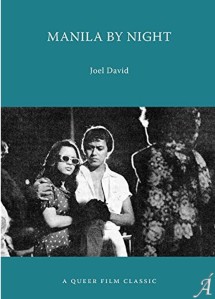
11011Mother Lily of course had to endure a whole slew of scolding, initially from the moralistic elements of the Marcos Sr. dictatorship, until its orientation shifted to a libertarian policy, motivated first by its eagerness to stage and maintain the Manila International Film Festival (A-rated by FIAPF, a filmfest-ranking agency) and, later, by its determination to present itself as a culturally enlightened political force after the global outcry over the assassination of Senator Benigno S. Aquino Jr. during his return from US exile. The final censors chief appointed by the regime, in fact, contested the authority of the ECP and announced that she intended to ban Chinese and clergy from film-production activity and from appearing onscreen. Mother Lily’s production of Bernal’s Manila by Night, forbidden from competing in the Berlin International Film Festival during the early 1980s and released in censored form as the retitled City after Dark, was similarly restored and screened at the MFC.

Scolder & scoldee, reconciled
[photo courtesy of Philippine Star]

Back to top

11011Not surprisingly, stories swirled around her, a few of which sounded fantastic (like the Chinese- and clergy-hating censors chief) but were still confirmable. Who would believe today, for example, that Imelda once actually advocated for eliminating censorship and instituting divorce? The swing in the then-First Lady’s formerly pious persona could be easily tracked to her locking horns with Cardinal Sin as well as with Manuel Morato, who would eventually serve as top censor for Corazon Aquino. With the prospect of regime change becoming increasingly certain from one day to the next, it would be no surprise that Mother Lily would opt to cast her lot with Cory Aquino, to the extent of accommodating her youngest daughter’s dreams of becoming a film performer.

11011The aftermath of the people-power uprising of February 1986 provided definitive proof of Mother Lily’s prowess. Known as some of the world’s most active filmgoers, Filipinos quickly tired of the insistent middle-class celebrations of the so-called revolution and had to be lured back by any means necessary. Regal Films initiated a two-pronged approach, aimed to capture both the younger and women viewers on the one hand as well as the older and male segment on the other. For the first group, she contracted from TV a child star, Aiza Seguerra, and slated projects for theater-trained Roderick Paulate, who was peerless in his queer comic performances; her more mature solution, however, ran into opposition from the right-wing Morato as well as the conservative-academic left: she provided several projects for Joey de Leon, often teamed with another theater veteran, Rene Requiestas, that turned on their willingness to purvey extreme toilet humor.

11011The millennial generation, primed for anything that champions indie film values, prefers to celebrate Mother Lily for her pito-pito (literally double-seven) projects, which provided fixed budgets for filmmakers desperate for getting breaks in the then-infamously exclusivist film industry. While this strategy certainly foreshadowed the current digital era’s plenitude of opportunities, pito-pito must be seen as the final gasp of a production system still dependent on exorbitant celluloid costs. Only a small handful of these projects were worth long-term appreciation, with the best of them actually enjoying larger budgets and more extensive production periods. In combining the most transgressive elements in being both Chinese and Pinay, Mother Lily ought to be better remembered for the neurotically frenetic, shockingly profane, penny-pinching and multitasking movie-fan producer that she was during her glory days, rather than the solemn and respectable doyenne she turned into in the end.

[First published August 9, 2024, in The FilAm]

Back to top


Slang, Cant, & Colloquialisms from Manila by Night (1980)

Several erroneous definitions and/or etymyological explanations of Filipino slang have been sprouting online. This is a compilation drawn from the endnotes of Manila by Night (Regal Films, 1980) that may help clarify some terms by situating them in the time frame referenced in the text. The full post may be found in the special issue of Kritika Kultura devoted to the film. A copy of R. David Zorc & Rachel San Miguel’s Tagalog Slang Dictionary (De La Salle University Press, 1993), mentioned in certain instances below, may be found in the Extras section’s Fil(m)ipiniana list.

Acheng. A regional variation on Ate (elder sister); the seemingly French resonance has made it a preference for gay (and women) “femme” speakers.

Award. Ironic usage, a reference to failure or long-suffering condition, thereby resulting in a mock-worthy public performance of personal drama that deserves recognition.

Baclaran. At the end of the former red-light district, stretching all the way into the seedier environs of Pasay City, is the shrine of Our Lady of Perpetual Help in Baclaran; because of its location, underworld figures (gangsters and sex workers) as well as working-class citizens attend its novenas and Masses.

Bayside. A popular night club along Roxas Boulevard.

Bongga. A slang term, usually used as a compliment meaning stylish, outlandish, extravagant, awesome.

Boots Anson-Roa. A film and TV actress, known for playing wholesome women characters.

Consciousness Three. A reference to Charles Reich’s then-influential bestseller The Greening of America (1970), wherein a utopic condition is attained consisting of the counterculture’s embrace of personal happiness over material success.

Datung. Dough [from “the tong” or extortion money] in gay lingo; semantically shifted from the original meaning of tong as the US-based Chinese underworld organization. The query for demanding money, “ang datung” or “an’ datung” (the payment), has been clipped to “anda,” which puns on the Spanish verb for moving forward. The Tagalog Slang Dictionary however ascribes the term “datung” to the Cebuano word for rich, “dato” (page 37).

’Day [rhymes with “guy”]. A shortening of the regional term “inday” (girl), adopted initially as gay lingo and now mainstreamed.

Del Pilar vs. Boulevard. Del Pilar Street is in what used to be central Ermita’s red-light district, which was patronized mostly by American servicepersons stationed at the former US Naval Station Sangley Point (now the Cavite Naval Base), joined by Japanese sex tourists during the Cold War period. (Ironically, some of the Philippines’s original batch of colonial-era sex workers were migrants from Japan.) [Roxas] Boulevard, although running parallel a few blocks away, directly faces Manila Bay and thereby exudes respectability because of its ideal location; the US Embassy and a number of five-star hotels and upscale apartments are located on this strip.

Echeng. From “echos,” to mooch or sponge or sweet-talk.

Evita. A name that references the eponymous Andrew Lloyd Webber and Tim Rice musical (then banned in the Philippines) on Eva Perón, Argentina’s controversial First Lady, whose life had too many parallels with that of Imelda Marcos. In a later disco scene, Festival’s dance version of the musical’s most popular hit will be played.

Joanne Drew. A shortening of Joanne Drew Figure Salon (Australia-based, founded by Joan Andrews), a popular slimming facility for Manila socialites. The character who mentions it would be referring to her lower waist area, including her crotch.

Juwawa. Gay-lingo Frenchification of the Tagalog “asawa” or spouse; currently shortened to (and mainstreamed as) “jowa.” See page 67 of the Tagalog Slang Dictionary.

Kumakain ng kuhol. Literally “eating [freshwater] snails,” a local delicacy which requires sucking and use of the tongue to get at the flesh of the cooked mollusk; in reference to the character’s aggressive use of his tongue in deep (or French or tongue) open-mouth kissing.

Kyeme. Spanish-sounding gay-lingo coinage (quieme) that means “nonsense.”

Mare [MA-reh]. A shortening of “kumare,” feminine of “kumpare” (from the Italian comare, godmother; and compare, godfather) – best friend; technically, a person who stands as Catholic-baptismal godparent of one’s child, i.e., someone who’s trusted enough to take care of the godchild if the parent is incapacitated or dies.

Misericordia. Red-light street for less-wealthy locals and Chinese visitors in Chinatown district. “Huwag kang madaan-daan sa Misericordia (Don’t let me find you in Misericordia)” implies that the speaker may have started work there and upgraded to a sauna parlor as massage attendant while maintaining her residence in the area.

Mogs. Short for Mogadon, a hypnotic prescription sedative popular among drug users.

Pangasinan [pang-GAHsinan]. A northern coastal province, 4-6 hours away by bus north of Manila, named and known for salt (“asin”) as well as seafood products including the fermented fish or krill paste called bagoong [bago-ong], used as condiment.

Rhapsody. An extension of “rap-sa,” verlanization of “sarap,” the Tagalog word for pleasure.

Rosa Rosal. A film actress who first became famous for her femme fatale roles, then starred in a number of prestige projects during the studio system era of the 1950s. She became known to a new generation of admirers for her humanitarian work with the Red Cross as well as for hosting her own TV charity program.

Sensation. [Provisional, pending confirmation] One of the euphemisms that emerged for polite-society discussions of sex in then-gendered massage-parlor activities, pertaining to any of client-preferred positions where the masseuse performs with her hand, mouth, breast, and/or vagina on a passive recipient. Filipinized in the Tagalog Slang Dictionary to “senseysyon” (page 125) and equated with orgasmic release.

Seven Seas. A popular motel chain providing two-hour room rentals for quickie sex.

Shotgun. Same sense as American slang: weed shotgun is performed with the lit part of the joint held in the mouth, while the other end is positioned in the recipient’s mouth or nostril (with hands forming an air tunnel); when the holder blows, the recipient will be able to inhale a stronger whiff.

Soraya. A dated reference, possibly referring to a Muslim-like appearance because of the turban that the character is wearing (provided by Paul H. Roquia and Ka Deniz Reyes of the Facebook Pinoy Film Buffs group); also possibly a playful corruption of “suray,” untidy or disarranged (as suggested by Nestor de Guzman of the same group).

Sward. Not the rarely used English term for grassland, but a Filipino coinage for “gay male,” free of the pejorative associated with traditional terms; ascribed to film critic and director Nestor U. Torre. Though sward is phonetically articulated [i.e., swahrd], the Tagalog Slang Dictionary claims “sword” as its origin, referencing its double-edged nature (page 135).

Toro/Torero. From the Spanish for “bull,” connoting studly expertise as well as bullfighting, since inexpensive live sex is performed in the round (like a bullring), where the central couple is expected to display a variety of unusual and athletically demanding positions before the torero climaxes. See as well the Japanese title of Nagisa Oshima’s In the Realm of the Senses: Ai no corrida, literally “bullfight of love.”

TY. Pronounced “tiway,” an acronym of the letters abbreviating “thank you,” occasionally used as a verb (“tiwayin,” to pay with verbal thanks; to exploit).

Type. A double-clipped form of “Type ko [my type],” in turn a clipping of “Yan ang type ko [that’s my type].”

Vito Cruz. A still-existent street toward the end of the former red-light district of Ermita, which had also catered to American servicepersons during the period when the US had military bases in the Philippines. Because of its farther location (closer to the seedier portion of Pasay City), it catered to older and/or non-Caucasian clientele.

Back to top

Á!


Canon Decampment: Sheron R. Dayoc

[Click here (recommended) for desktop mode.]

Halaw

Alternate Title: Ways of the Sea
Additional Languages: Cebuano, Tausug, Zamboangueño Chavacano
Year of Release: 2010
Director & Screenwriter: Sheron R. Dayoc
Producers: Cinemalaya Foundation & Los Peliculas Linterna Studio

Cast: John Arcilla, Maria Isabel Lopez, Arnalyn Ismael, Ross-Ann Dalkis, Aljimar Hajilol, Rodaine Avalie, Hadja Nursiya Darangina, Edgardo Sumicad Jr., Randy Amodia, Hadji Amman Sahi, Nasri Tawasil, Anelyn Carino, Justies Love Matchon, Reden Silven, Fharwis Amil, Joel Bustamante, Maimuna Mutos

Hernand encounters a whole set of difficulties in organizing his latest attempt to transport Philippine natives illegally to Malaysia on a motorized outrigger boat, via the southern backdoor. Some of the young women he recruited to work as entertainers got cold feet and backed out, while Khalil, who’s in charge of one of their stopovers, wants to collect on a loan he lent out earlier. Mercedes, a veteran hospitality worker, joins their group and provides assurance and confidence to some of the understandably anxious women. Their passage through the Malaysian area of responsibility is fraught with danger, with their prospective country’s coast guard on the alert for their type of intrusion.

The reason why Halaw endures over the passage of time has to do with the several balancing acts it executes in delineating its passengers’ sea trip (in contrast with the road trips of New American Cinema); since there can only be pitifully few possible conclusions at the end, none of them worth accepting, the journey becomes the whole point of the narrative. The collection of passengers is distinguished by social gaps that each one tries to overcome, as casually and painlessly as possible, though this turns out to be easy only for the most privileged among them. At the head of their group are two Manila-bred Tagalog-speaking migrants (played by the “name” members of the cast): Hernand has his hands full ensuring that everyone gets on board, while Mercedes uses wilier ways to persuade the understandably reluctant female recruits. At the other extreme is a prepubescent girl, Daying, identified by the others as a Badjao native; she may be the only character who does not speak her native tongue, since no one else would understand her—but she also literally upstages everyone by performing the celebrated Pangalay dance. These rounds of simple, lighthearted distractions, including exchanges of gossip, jokes, and beauty tips, will be recognizable to any native confronted by the looming prospect of overseas alienation and danger. Most of the action increasingly takes place in the dark, since the group has to travel by night through pre-electrified islands. The film provides a visual counterpart to forestall the anguish that inevitably awaits, by enabling us to occasionally glimpse natural scapes of quiet beauty, with none more ravishing than the very destination that marks their transformation from citizens to illegal entities.

Back to top
Return to Canon Decampment contents
Go to alphabetized filmmakers list


Canon Decampment: Mikhail Red

[Click here (recommended) for desktop mode.]

1—Birdshot

Year of Release: 2016
Director: Mikhail Red
Screenwriters: Mikhail Red & Rae Red
Producers: Pelikulared, Tuko Film Productions, Buchi Boy Films

Cast: Mary Joy Apostol, Manuel Aquino, John Arcilla, Arnold Reyes, Dido de la Paz, Elora Españo, Ronnie Quizon, Rolando Inocencio, Suzette Ranillo, Angelica C. Ferro

A busload of passengers is passing through an abandoned field at night. Next day, Maya is taught by her father Diego, the sole tenant of a plot of farmland, to handle a gun. Against her father’s warning, she crosses the fence of a forest sanctuary and, once inside, shoots and kills an endangered Philippine eagle. In order to investigate the whereabouts of the missing animal, Domingo, a rookie police officer, is instructed by his station commander to drop his investigation of the disappearance of a bus of farmers who were planning to go to Manila to protest the harsh conditions that landowners, in collusion with corrupt government officials, were imposing on them. Domingo persists in following up the earlier case but is pressured into focusing on the disappearance of the eagle, leading him on a collision course with Maya and her father.

2—Neomanila

Year of Release: 2017
Director: Mikhail Red
Screenwriters: Zig Madamba Dulay, Mikhail Red, Rae Red
Producers: TBA Studios, Artikulo Uno Productions, Buchi Boy Films

Cast: Timothy Castillo, Eula Valdes, Rocky Salumbides, Jess Mendoza, Ross Pesigan, Angeline Andoy, Angeli Bayani, Ron Villas, Raul Morit, Shandii Bacolod, Donna Cariaga, Astrid Hernandez

Toto’s capable of running fast because as a street kid, he earns a living from snatching. His older brother, imprisoned for some unspecified petty crime, asks him to report a well-known drug pusher, since one of the standard covert practices in fascist President Rodrigo Duterte’s war on drugs is palit-ulo (literally head-swapping), where a suspect surrenders a higher-ranking criminal in exchange for favors or freedom. After his girlfriend informs him that the guy he has to find is dead, a plainclothes narc named Irma, who was his mother’s friend, checks up on him. When he discovers next day that his brother’s jail was bombed, he confronts the gang that he suspects of the act but they proceed to mess him up. Irma saves him from getting killed and, since he no longer has any family left, he accompanies her on the extrajudicial rubouts that she and her partner and lover Raul have to accomplish. However, Toto is still unused to cold-blooded killing and protests when one of their targets is a mother who brought her infant child with her.

The problems that confront the country’s dispossessed offer no reprieve regardless of political regime. This principle plays out in the two consecutive works by Mikhail Red that happened to straddle the end of the last liberal-democratic President and the start of the first authoritarian President since the earlier Ferdinand Marcos. As it turned out, Birdshot was set in a distant rural locale while Neomanila was in a slum community adjacent to the business district. The promise that Birdshot’s filmmaking talent holds forth is a throwback to the heady days of the then still relatively benign years of the 1970s military dictatorship of Ferdinand Marcos, when the country’s most gifted aspirants could propose subject matter that implicitly criticized the political system by insistently focusing on narratives of survival. This resulted in a few instances of verisimilitude that martial-law authorities were quick to seize on, so Filipino filmmakers during the Second Golden Age managed (for the most part) to be subtle and ambivalent whenever their material came too close to mirroring real-life events. Such considerations no longer impinge on the generation of talents since then, so Birdshot’s presentation of a local reality so insulated that the disappearance of a busload of politically significant passengers can be successfully hidden from outside investigators, does not fully square with the traumatic real-life horror of the 2009 Maguindanao massacre that it apparently references. The narrative’s seriocomic factual incident of an older male peasant shooting down an endangered eagle to be able to cook tinola, or poultry stew with green papaya and chili leaves, is transformed here into the case of a young maiden similarly unaware of the consequence of killing wildlife—in a government sanctuary that she entered surreptitiously, against her father’s injunction. The plot opts instead to turn on character transformations that affect the protagonists: frustrated by his superior officers’ corruption, an idealistic policeman vents his anger on the wildlife-killing suspect’s father by torturing the latter; the daughter then responds by killing the policeman, along with any prospect for moral clarity. Neomanila’s dramatis personae, in contrast, respond to the terrors of an openly oppressive political system either by banding together in gangs or, where family is still available, by fulfilling whatever filial injunctions may be passed on to them. When the protagonist, still barely an adolescent, finds himself divested of relations and rejected by his would-be homies, he turns toward parental figures who welcome him for his ability to run, during the historical moment when emergency situations could profit from such a skill. None of these safety-in-numbers options works out satisfactorily for anyone concerned—although the movie’s canniness lies in how it offers glimpses of affective connection between substitute mother and abandoned son, enough to prepare us to empathize with the latter’s insistence that children are any war’s true victims, and to dread the easy prospect of rupture. The country’s film output as a whole attains a certain salience during periods of authoritarian repression, although this property will still have to be described, explained, and evaluated; when cinema of the Duterte drug-war gets defined, preferably in comparison with the Marcos martial-law era, Neomanila deserves to be one of the foremost items to be sampled.

Back to top
Return to Canon Decampment contents
Go to alphabetized filmmakers list

Á!


Pinas Cinema’s Golden Ages & Their Discontents

This was the text of a short lecture I delivered at the Korean Federation of Film Archives on June 8, 2024, to accompany a retrospective of nine LVN films made between 1939 and 1960. The event was arranged and hosted by KOFA Programmer Park Se-ho in coordination with the Philippine Embassy in Seoul (under Ambassador Maria Theresa B. Dizon-De Vega, with the assistance of Cultural Officer Anthony Cornista); Charlene Park, a Korean born and raised in the Philippines, translated English to Korean and vice versa.

The term “First Golden Age” was first propounded in 1972 by film journalist Jessie B. Garcia, about a dozen years after the period ended. At least one more Golden Age followed, although if you wish to be comprehensive, there may have been four of these Golden Ages all in all, with the most recent one either still ongoing or already recently ended. The Second Golden Age, which is what the Philippines is better known for, occurred after the imposition of martial law by Ferdinand Edralin Marcos, the father of the current Philippine President, and ended when his dictatorship was dismantled by the people-power uprising of February 1986.

11011I had some difficulty writing about the problem of the Golden Ages concept, primarily because I was the one who declared, periodized, and evaluated the Second Golden Age, in an article I wrote in 1989. It was the lead article in my first book, The National Pastime, so with the expected critical responses that usually arise in a contentious culture, I thought that it would be encounter the most number of deconstructive objections. To my surprise, even the harshest critics of the book assumed that it was the most reliable entry and made no mention of it; the term Second Golden Age has showed up even in foreign publications describing historical trends in Philippine cinema.

11011If I mention the other Golden Ages that various parties have been trying to add to the First and the Second, then you might have an idea of why I find the notion problematic. The official government history, published as an article in the Film volume of the Cultural Center of the Philippines’s Encyclopedia of Philippine Art, argued that the 1930s actually contained a Golden Age as well. Aside from generally making a blanket assertion without providing enough empirical proof, the article also skirts the reality that less than a handful of Philippine production remains from the period preceding World War II. One of these is Zamboanga, a fascinating exotic narrative of South Sea tribal conflicts complicated by American intervention, while the other is LVN’s first film, Giliw Ko, shown during the retrospective, a delightful realistic musical fairy-tale made more poignant by the fact that the country was anticipating the arrival of the storm clouds of World War II.

Back to top

11011But the presence of two watchable though minor entries cannot be extrapolated to assert the existence of a sustained output of quality products, the way that the First and Second Golden Ages are capable of providing enough satisfactory evidence. Fortunately, no one has really taken this eccentric and unrigorous version of history seriously; otherwise, we would have to change our terms and call the 1950s the Second Golden Age and the martial-law period the Third one. The other period, which raises a different set of questions, is supposedly a stretch during the current millennium, when celluloid production transitioned to digital earlier in the Philippines than in most other countries, and several artists came up with productions celebrated even in foreign capitals as worthy of various forms of recognition. The problematics in this case are twofold: first, the previous Golden Ages could only be identified after they were over, since there would be recognizable shifts in the political economy to confidently declare that the factors that led to Golden-Age productivity are largely a matter of past history.

11011The second problem has more serious repercussions. The receptiveness of foreign responders to Philippine cinema is arguably an aftermath of the groundwork laid by practitioners who were active during the Second Golden Age, led by the late Lino Brocka. Several critics including yours truly have raised the issue of Philippine film talents making products expressly for foreign consumption, often without worrying that their aesthetic and topical materials might alienate the Philippine mass audience. This actually betrays the ideals observed by the Second Golden Age talents that they uphold as their models. Brocka, for example, presented his most politically controversial films in Europe as a means of raising their visibility in the home country, so that the local audience would be intrigued enough to defy authoritarian censorship and watch his films in triumphant turnouts. In fact, before his career was cut short by a tragic vehicular accident, he overcame his unstable either-or approach, when he would make politically serious movies only after providing enough profitable potboilers for his producers.

11011The final Brocka films were a throwback to the best practices of Filipino filmmakers as far back as the First Golden Age. The LVN series was fortunate enough to include Gregorio Fernandez’s Malvarosa, which was the type of production that combined serious sociological discourse with impressive and pleasurable generic expertise. Ishmael Bernal and several other Filipino filmmakers were already engaging in this type of film presentation before Brocka came around, and I kept pointing out to my contemporaries in Philippine pop culture how Korea’s own triumph with Bong Joon Ho’s Parasite actually observed the same principles: ensure that a Korean film can be embraced by a Korean audience, first and foremost, and let its Western appreciators come around to its genius afterward. Fortunately, we have a growing number of Philippine practitioners who’ve come to realize that any country’s progressive film practice cannot exist outside of its mass audience.

11011We still have some filmmakers who insist on creating products that no native viewer will ever bother to watch unless they want to indulge in masochism, and most of the academically ensconced local critics similarly feel that their duty is to point out how deficient mass viewers are because they overlook so-called high-art samples. My own conclusion, which you may or may not share, is that they retain a usefulness as examples of pop-culture practice that adhere to outmoded and foreign modes of analyses, the kind of production and criticism that plugs into its own cycle of unsatisfactory and infeasible mutual appreciation, with the attention of less-knowledgeable foreign observers as its only means of validation. Thank you for your attention and happy viewing.

Back to top


Answer to Vilmanianism query

* I’m seriously concerned that you seem to be playing favorites among our top movie icons. I’m referring in particular to your open preference for Nora Aunor and lack of support for Vilma Santos. Even on this thread you admitted admiration for Sharon Cuneta, so that makes your silent treatment with regard to Vilma more obvious. I know that critics have to be up-front about their biases, but how can you maintain objectivity by praising one artist but not her rival?

I’d like to point out, with as little condescension as I could muster, how appreciative I am of your query. To be honest, I read it word for word a few times over, and it must be the only writing sample of its kind: a Vilmanian who doesn’t seem to harbor any racist bias against Nora Aunor. Yes, I did go there, inasmuch as I’d been telling friends these past several years that I intend to point out the toxicity that infests fan appreciations of good old Ate Vi. Just visit any of her Facebook pages or blog fansites and search for any reference to Nora, or look for major news valorizing Ate Guy where a Vilma fan feels like trolling her admirers. You don’t even have to tolerate the usual miseducated insensible enthusiast. Ask who the Vilmanians are among multi-awarded artists or name academicians or authors, schedule an exchange with them, and see how racist bile eventually starts spewing out of them.

11011I remember mentioning, in criticizing the first presidential rejection of Nora Aunor’s nomination to the Order of the National Artist, how she and Vilma embodied a defiance of the Euro fair-skinned preference that the studio system of the First Golden Age promoted. What’s ironic here is that Aunor, as the darker-skinned yet more popular entrant, obviously led the way for the likes of Oriental types like Santos to follow. But that should be a matter for a more intensive interrogation into our culture’s horrifically fundamental(ist) tendencies, which I’ll admit to being unprepared to pursue at the moment.

11011I did mention the National Artist prize though, which I think is the source of all this ongoing attention on the Vi-vs.-Guy rivalry. So we might as well foreground the issue. I don’t really count myself as prejudiced in favor of or against any artist – in fact I remember voting for Vilma more than once in some of those competitions that she seems to relish more than most other people including even Nora herself. She also has several films listed in the decade-plus-long canon project I’ve been working on, although if you compile my mini-reviews of her films and compare them to Nora’s, you’ll be able to track the point where their rivalry started out as a well-matched race, with Vilma often enjoying the upper hand. Then Nora overtook her as well as everyone else and decided to focus on maintaining artistic primacy, while Vilma won more local critics’ prizes and triumphed mainly as a well-loved star, even in her public-service phase.

Back to top
Return to Queries section

11011I don’t think any genuine performing-arts expert will be able to deny Nora’s supremacy, regardless of whatever recognition she may or may not have acquired, the National Artist Award included. Insider allegations about a certain influential elderly critic’s bias against her (which he opportunistically reversed when her rise in prestige seemed unstoppable) seem to be gaining traction and will have a far longer way to go, if karmic justice will manage to have its way. In the meanwhile, it would help clarify matters for Vilma fans if we distill the process of how any aspirant gets selected for the honor. For better or worse, the success of a nominee hinges on the assent of her or his peers, a procedure that any serious academician (like yours truly) would be all too familiar with. This accounts for the several instances this millennium in which the final approbatory authority, the Philippine President, wound up at odds with the experts who forwarded their lists of endorsements. The one time that the Supreme Court had to intervene, the members predictably sided with that aspect of the process that underwent peer validation.

11011How does this square with the Vilmanian drive to get the Order bestowed on Santos? All I can observe from my vantage point is a strategy of noise-making, often heightened to hysterical Nora-bashing proportions by whoever happen to be the movers and shakers of, who knows, possibly Ralph Recto-Santos or his minions. Literal evidence of passing the peer-review process would be any article published in any sufficiently credible peer-reviewed journal, the way that several on Nora Aunor, on all the other National Artist winners, and even a number on Sharon Cuneta can be marshaled as proof of their cultural noteworthiness. Book chapters won’t possess the same valuation hereabouts, especially in an academic culture that still has to attain sufficient competence in university press review.

11011I might as well bring up my own personal experience on this matter, as further proof of why I don’t really feel too affected about the question of maintaining objectivity in this case. About a decade ago, Kritika Kultura, the country’s (and region’s) premiere humanities and literature journal, acceded to my proposal to edit a special forum on Nora Aunor, which serendipitously preceded by a few weeks President PNoy Aquino’s severely criticized refusal to proclaim Aunor a National Artist. The response to the call for articles was overwhelming, not surprisingly, although nearly all the submissions were (also unsurprisingly) hagiographic or polemical in arguing in favor of Aunor as deserving of the award. When these essentially fan submissions weren’t upgraded by their respective authors to peer-reviewable articles, I requested the journal editors to expand the forum topic coverage, from Aunor to Philippine stardom in general. Thereafter I got potentially publishable drafts on Cuneta and Judy Ann Santos and one more performer which unfortunately couldn’t endure the admittedly stringent review process. But above and beyond awaiting specific submissions, I actually identified academicians – in Metro Manila and way beyond, including other islands and countries – known for their admiration of Vilma Santos, and nagged them or got their close friends to ensure that they provided article drafts. Every single one of them eventually pleaded to be excused because of busy schedules.

11011Was there something about our Ate Vi that seemed to preclude scholarly discourse? I attempted a theoretical exercise afterward, but I simply couldn’t formulate a useful argument about her, ironically because she seemed (to me at least) to be too perfect to be problematized. Whether this is the reason why her own scholarly admirers hit a blank wall themselves is not as major a concern for me as several other cultural matters I have to attend to. And just to close this particular exchange, let’s circle back to Vilma’s only remaining historical claim of superiority to Nora: her record number of critics’ trophies. That same circle of critics crows constantly about being ensconced in Philippine academia, so wouldn’t the real question be obvious enough to anyone at this point? As supposed peers, they passed judgments over Aunor in favor of Santos more times than most observers felt would be justifiable. Instead of asking me how I could be objective in handling the differences between these two celebrity performers, which I’ve more than adequately answered already, how about we ask them where their credible scholarly defense of the awards they dispensed favoring Santos can be found? [Posted June 2024]

Back to top
Return to Queries section


Canon Decampment: Jun Raquiza

[Click here (recommended) for desktop mode.]

Krimen: Kayo ang Humatol

English Translation: Crime: You Be the Judge
Year of Release: 1974
Director: Jun Raquiza
Screenwriter: Jose F. Sibal
(From a story by Jun Raquiza)
Producer: Ilocandia Productions

Cast: Jun Raquiza, Gina Pareño, Marianne de la Riva, Maribel Aunor, Shongho, Omar Camar, Tony Gosalvez, Edison Lee, Bob Breult, Eddie Villamayor, Susanna Navarro, Leila Hermosa, Nick Romano, Arnold Mendoza

Newly freed after a stint in jail, Angel discovers that his wallet has been lifted by underage pickpockets. He tracks the thieves to their mastermind Toni, a tomboy who dutifully returns what they stole. As Toni and her den of petty criminals begin to get fond of Angel, he hooks up with Myra, an affluent but rebellious daughter whose parents abandoned her to her vices. Myra consorts with a number of shady characters who drag Angel into their conflicts with her and even attack Toni and her wards, leaving Angel with no choice but to exact revenge.

A deceptively light-handed exercise involving the reconfiguration of generic tropes that has unexpectedly worn well through its half-century of being more admired than respected, Krimen: Kayo ang Humatol refutes Bienvenido Lumbera’s claim that a “new” Philippine cinema started only two years later.[1] Even if we discount the self-serving coincidence that the award-giving critics group he founded was launched in 1976, Lino Brocka’s impactful two-in-a-row juggernaut had already made its mark before then, and enjoyed healthy competition from Ishmael Bernal, Celso Ad. Castillo, Elwood Perez, and the unfortunate Jun Raquiza, who died too early and whose well-received debut, Dalawang Mukha ng Tagumpay (Two Faces of Triumph, 1973)—which featured Nora Aunor in a first of a series of reflexive projects—can no longer be found. Raquiza nearly pulls off the director-actor stunt in Krimen, but had a sufficiently healthy appreciation for good performances to allow Gina Pareño to run away with the presentation. Despite her Toni being saddled with the generic containment of being condemned and punished for her several transgressions against her gender and civic tasks, she navigates the potentially awkward transitions with remarkable aplomb and makes her presence in Krimen an indispensable precursor to her masterstroke in Jeffrey Jeturian’s Kubrador (The Bet Collector) over three decades later.

Note

[1] Bienvenido Lumbera’s periodization, which has no end date, appears in at least two of his most widely quoted sources: “New Forces in Contemporary Cinema” from Revaluation: Essays on Philippine Literature, Cinema and Popular Culture (Index, 1984); and “Brocka, Bernal and Co.: The Arrival of New Filipino Cinema” from Re-Viewing Filipino Cinema (Anvil Publishing, 2011).

Back to top
Return to Canon Decampment contents
Go to alphabetized filmmakers list

Á!


Bold in Heaven

With the announcement of Jaclyn Jose’s sudden demise last March 2, a significant number of mostly middle-aged Filipino film observers were stunned to realize that, in keeping aware of her, a full, challenging, and ultimately triumphant life became their privilege to witness. Even the trajectory of her physical appearance, from anxious young waif to authoritative full-bodied matron, bespoke a life conducted at peak critical tension, constantly in search of solutions to creative challenges and grateful to be afforded the opportunity to find fulfillment in a specialized type of stardom where her work discipline and moral integrity ensured that she would have next to no rivals whatsoever.

Jaclyn Jose in her early waifish phase. [From her Facebook fan page]

11011She was of course intelligent enough to realize from the start that “bold star” status was a title that most women anywhere would find unappealing, if not appalling. But having been born in poverty, and realizing that sex-film production was on full blast because of the Marcos (Sr.) regime’s desperation in looking for ways to discourage mass participation in the burgeoning antidictatorship movement, she realized that this was a unique opportunity that might never come her way again.[1]

11011In a remarkable interview with Ricky Lee, who was writing a number of screenplays for her, she foregrounded the debates her professional self was having with her religious orientation. (Titled “Walang Bold sa Langit” or “Bold Not Allowed in Heaven” and retitled “May Bold Ba sa Langit?” or “Is Bold Allowed in Heaven?” for a later anthology, the piece was reprinted in a number of Philippine outlets as a tribute to her.) She admitted, among other things, that she was hoping to compensate for what she considered were transgressions, by performing the standard penance of good work.

11011In fact, she was already overcompensating even that early. William Pascual, who directed her in the ensemble Chikas [Chicks], picked her out to star in the superior chamber piece Takaw Tukso [Constant Craving], where she outshone the then-best available names for a crime-of-passion melodrama. She achieved the same feat of upstaging more established actors in White Slavery – which happened to be directed by Lino Brocka, who consequently made sure that she would be the sole female lead in Macho Dancer. Chito S. Roño’s debut, Private Show, showcased what was arguably the most challenging “bold” role possible, that of a live-sex performer, which another star, Sarsi Emmanuelle, had already made definitive in Tikoy Aguiluz’s Boatman.

Back to top

11011Private Show was railroaded by the February 1986 people power uprising, since it was the type of extreme sample that could only be screened in the Marcoses’ censorship-exempt venue, the Manila Film Center. More than any of Jose’s earlier work, it contained passages that were also bold in the sense of being expressionist and surreal, expertly (possibly even lovingly) melded with an approach to material that combined naturalism with social critique. When Roño, still with Lee scripting, decided to unfold a diptych with Curacha: Ang Babaeng Walang Pahinga [Curacha: A Woman Without Rest], he cast the post-Marcos era’s top sex siren, Rosanna Roces, but he also provided a climactic moment where Jose’s character reappeared to suggest solidarity – not just between two generations of live-sex characters, but also between the best bold stars of their respective eras.

Jaclyn Jose in a midcareer supporting role, in Marilou Diaz-Abaya’s May Nagmamahal sa Iyo (1996). [Screenshot by Jojo Devera][2]

11011As she had correctly anticipated, roles that featured the character types she specialized in quickly dwindled. Nevertheless Jose had enough acclaim and acting trophies to ensure that she could still be cast in supporting roles, usually as the lead actor’s mistress or lead actress’s best friend. At this stage, she apparently had another round of figuring out (complemented by an intensive theater experience, in Lee’s Pitik-Bulag sa Buwan ng Pebrero or Playing Blind-Guess in the Month of February), and arrived at a workable solution: for minor roles, she would attempt a consistently affectless delivery, then let loose at peak level wherever the character had a dramatic opportunity, usually in her final scene. The approach served to remind audiences and colleagues that she remained a talent who refused to be taken for granted.[3]

11011With the emergence of digital technology and streaming services in the new millennium, Jose was able to secure greater opportunities in her career path. She could once more land an occasional lead role, and explore her potential for class-parodic comedy in TV series. The lesson she provided as exemplar was undeniable to anyone who bothered to take stock: one may already have the rare fortune of emerging fully formed, but longevity can only be attained through hard work, in her case in both analytic and physical terms. From this perspective, her Cannes Film Festival prize merely affirmed what Filipino audiences already realized and admired about her through several decades of familiarity.

11011The few instances where she mentioned feeling abandoned should not be conflated with the tragic circumstances of her death from a bad fall when no one was present to check on her well-being. She’d always known that life would be hard, and that the pursuit of artistic excellence will always be a lonely undertaking. Her initial appearance reminded observers, no doubt including Brocka, of a talented predecessor, Claudia Zobel, who died in a horrific car accident – as Brocka also would a few years later; two other waifish bold stars, Pepsi Paloma and Stella Strada, died by their own hands at the time when Jose was contending with a decline in film assignments. One might wish she lived longer than she did, but we could just as well marvel at how she managed to thrive as long as she had.

Near-contemporaneous nymphets, in order of emergence: Claudia Zobel (1965-84), Pepsi Paloma (1966-85), Stella Strada (1965-84), Jaclyn Jose (1963-2024). [Various screenshots posted and saved from internet sources]

Back to top

Notes

First published March 9, 2024, in The FilAm. The author would like to thank filmmakers Lawrence Fajardo and Ellen Ongkeko-Marfil, and film critics Jerrick Josue David, Jojo Devera, and Mauro Feria Tumbocon Jr., for providing additional insight and information.

[1] Jaclyn Jose’s extraordinarily sharp instincts as performer were complemented by her manager Ed Instrella’s preparation in nationalist theater (with the Philippine Educational Theater Association) and inclination toward independent projects. At their respective career peaks, Instrella’s talents – among whom were Cherry Pie Picache, Julio Diaz, Gardo Verzosa, and Alan Paule – were consistently highly valued for their willingness to immerse in sex-themed films while delivering fine performances. I am grateful to Mau Tumbocon for bringing up this frequently overlooked background detail. I also made a belated appreciative social-media post of her performance in Emmanuel Dela Cruz’s Sarong Banggi [One Night] (2005), which will be part of the Amauteurish Publishing volume of Philippine canon choices titled Canon Decampment.

[2] In his tribute post to Jaclyn Jose’s triumph at Cannes, critic Jojo Devera mentioned that “if I were to choose one small, elegantly wrapped gift [from Marilou Diaz-Abaya] above all others, it would be the role she created for Jose in the ensemble of May Nagmamahal sa Iyo [Madonna and Child] (1996), where she’s both exacting and brilliant. In an immensely sad film, her Editha is one of the saddest things, carrying her disappointment with a show of lightness we know is just an attempt to save face” (Facebook, May 24, 2016).

[3] In his article “Back in Her Element,” film scholar Johven Velasco wrote: “Although she’s gifted with one of local cinema’s most haunting and eloquently mobile faces capable of articulating a gamut of emotions, detractors have criticized her monotonic speech pattern. In due time, she would correct this shortcoming as she did television soap operas and drama series that required a style of acting that contrasted markedly with the subtlety and control that she was becoming known for” (Huwaran/Hulmahan Atbp., University of the Philippines Press, 2009, p. 15).

11011In editing Velasco’s posthumous volume, I queried Ed Instrella (see endnote 1) regarding the Internet Movie Database’s misspelling (since corrected) of Jose’s screen appellation. Instrella clarified that her given name should be spelled without a k – hence, the films that credited her as “Jacklyn” were in error; Mary Jane Guck (Jose’s real name, possibly a deliberate and playful reference to cannabis) expressed her concurrence in an SMS forwarded by Instrella: “nagkakamali lang yung iba pero hayaan mo na [others are mistaken but just let them be]” (February 17, 2008, 4:41 p.m.).

Back to top