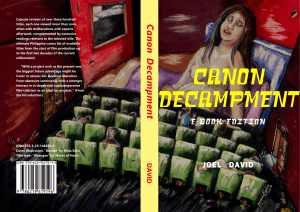
Desktop mode is strongly recommended.
This link will open the PDF version.
The book’s landing page has been retitled
“Chronological Listing according to Auteur.”
As in the book version, articles in any language are included as part of the title to minimize confusion. Each entry is linked to the director’s canon page; this means if other titles are included in her or his list, they will appear in chronological order. Some titles’ capsule reviews might also be combined with related titles in the list. Scrolling, searching, or selecting the film title from an initial listing will be the most useful way to reach your target film, but reading through a director’s other recommended works might also prove to be rewarding.
Click on any of the following to navigate more quickly through this list: B; C; D; E; F; G; H; I; J; K; L; M; N; O; P; R; S; T; U; V; W; Y; Z.
A
٠ Aberya (C Linaban, 2012).
٠ Abomination (Y Laranas, 2018).
٠ A Fanciful Tale of Moro Sea Gypsies—see Zamboanga: A Fanciful Tale of Moro Sea Gypsies (E de Castro, 1937).
٠ Alapaap (T Esteban, 1984).
٠ Aliw (I Bernal, 1979).
٠ Altar (RM Ilarde, 2007).
٠ Alyas Stella Magtanggol (CS Roño, 1992).
٠ Amado Pagsanjan’s Asiong Salonga (P Santiago, 1961).
٠ Amang Capulong: Anak ng Tondo, Part II (T Natividad, 1992).
٠ Amanos: Patas ang Laban (F Posadas, 1997).
٠ Amigo (J Sayles, 2010).
٠ Amok (L Fajardo, 2011).
٠ Anak Dalita (LV Avellana, 1956).
٠ Anak ni Waray vs. Anak ni Biday (MJ de los Reyes, 1984).
٠ Ang Babae sa Septic Tank (MN Rivera, 2011).
٠ Ang Daigdig Ko’y Ikaw (E Reyes, 1965).
٠ Ang Dalubhasa (F Poe Jr., 2000).
٠ Ang Damgo ni Eleuteria (RS Zuasola, 2010).
٠ Ang Huling Cha-Cha ni Anita (Anita’s Last Cha-Cha) (SA Bernardo, 2013).
٠ Ang Lalake sa Buhay ni Selya (C Siguion-Reyna, 1997).
٠ Ang Lihim ni Antonio (J Altarejos, 2008).
٠ Ang Maestro (F Poe Jr., 1981).
٠ Ang mga Tigmo sa Akong Pagpauli (Riddles of My Homecoming) (A Mardoquio, 2013).
٠ Ang Manananggal sa Unit 23B (P Cruz, 2016).
٠ Ang Napakaigsing Buhay ng Alipato (Khavn, 2016).
٠ Ang Nawawala (M Jamora, 2012).
٠ Ang Nerseri (V Acedillo Jr., 2009).
٠ Ang Pagdadalaga ni Maximo Oliveros (A Solito, 2005).
٠ Ang Paglalakbay ng mga Bituin sa Gabing Madilim (A Mardoquio, 2012).
٠ Ang Pamilyang Kumakain ng Lupa (Khavn, 2005).
٠ Ang Panday (F Poe Jr., 1980).
٠ Ang Panday IV (F Poe Jr., 1984).
٠ Ang Panday: Ikatlong Yugto (F Poe Jr., 1982).
٠ Ang Pirata (J Red, 2013).
٠ Ang Tanging Ina (WV Deramas, 2003).
٠ Ang Totoong Buhay ni Pacita M. (E Perez, 1991).
٠ Annie Sabungera (P Santiago, 1982).
٠ A Portrait of the Artist as Filipino—see Nick Joaquin’s A Portrait of the Artist as Filipino (LV Avellana, 1965).
٠ Area (L Ignacio, 2016).
٠ Asedillo (CA Castillo, 1971).
٠ A Short History of a Few Bad Things (K Deligero, 2018).
٠ Asiong Salonga—see Amado Pagsanjan’s Asiong Salonga (P Santiago, 1961).
٠ Aswang (P Gallaga & L Reyes, 1992).
Back to top
Return to Canon Decampment contents
Go to alphabetized filmmakers list
B
٠ Babae sa Breakwater (M O’Hara, 2003).
٠ Babaing Hampaslupa (M Chionglo, 1988).
٠ Babangon Ako’t Dudurugin Kita (L Brocka, 1989).
٠ Babe, I Love You (M Cruz-Alviar, 2014).
٠ Baboy Halas: Wailings in the Forest (B Fiola, 2016).
٠ Badlis sa Kinabuhi (L Salvador, 1968).
٠ Bagets (MJ de los Reyes, 1984).
٠ Bagong Hari (M O’Hara, 1986).
٠ Bakit Kay Tagal ng Sandali? (CS Roño, 1990).
٠ Balangiga: Howling Wilderness (Khavn, 2017).
٠ Bambanti (ZM Dulay, 2015).
٠ Banta ng Kahapon (E Romero, 1977).
٠ Bata Bata Paano Ka Ginawa (CS Roño, 1998).
٠ Batch ’81 (M De Leon, 1982).
٠ Bayan Ko: Kapit sa Patalim (L Brocka, 1984).
٠ Bayaning 3rd World (M De Leon, 1999).
٠ Bayaw (M Parungao, 2009).
٠ Beloved (L Salvador, 1985).
٠ Beloy Montemayor Jr.: Tirador ng Cebu (JP Cabreira, 1993).
٠ Bilanggo sa Dilim (M De Leon, 1986).
٠ Bilangin ang Bituin sa Langit (E Perez, 1989).
٠ Birdshot (M Red, 2016).
٠ Bituing Walang Ningning (EH Borlaza, 1985).
٠ Biyaheng Langit (T Aguiluz, 2000).
٠ Biyaheng Lupa (A Lao, 2009).
٠ Biyaya ng Lupa (M Silos, 1959).
٠ Boatman (T Aguiluz, 1985).
٠ Bomba (R Jover, 2017).
٠ Bona (L Brocka, 1980).
٠ Booba (J Bernal, 2001).
٠ Boses (E Ongkeko-Marfil, 2008).
٠ Boy Golden: Shoot to Kill (CS Roño, 2013).
٠ Boy Pick-Up: The Movie (D Zapata, 2012).
٠ Bridal Shower (J Jeturian, 2004).
٠ Bride for Rent (M Cruz-Alviar, 2014).
٠ Broken Marriage (I Bernal, 1983).
٠ Brutal (M Diaz-Abaya, 1980).
٠ Brutus, ang Paglalakbay (T Illenberger, 2008).
٠ Bukas … May Pangarap (G Portes, 1984).
٠ Bukas Luluhod ang mga Tala (EH Borlaza, 1984).
٠ Bulaklak sa City Jail (M O’Hara, 1984).
٠ Burgos (J Lamangan, 2013).
٠ Burlesk King (M Chionglo, 1999).
٠ Burlesk Queen (CA Castillo, 1977).
Back to top
Return to Canon Decampment contents
Go to alphabetized filmmakers list
C
٠ Cain at Abel (L Brocka, 1982).
٠ Caregiver (CS Roño, 2008).
٠ Celso Ad. Castillo’s Totoy Boogie (CA Castillo, 1980).
٠ City After Dark—see Manila by Night (I Bernal, 1980).
٠ Cleopatra Wong—see They Call Her … Cleopatra Wong (BA Suarez, 1978).
٠ Condemned (M O’Hara, 1984).
٠ Cry of Battle (I Lerner, 1963).
٠ Crying Ladies (M Meily, 2003).
٠ Curacha: Ang Babaeng Walang Pahinga (CS Roño, 1998).
Back to top
Return to Canon Decampment contents
Go to alphabetized filmmakers list
D
٠ Da Dog Show (R Jover, 2015).
٠ Dagitab (G Abrahan, 2014).
٠ Dahil Mahal Kita: The Dolzura Cortez Story (L Guillen, 1993).
٠ Daluyong at Habagat (CA Castillo, 1976).
٠ Dawn of Freedom (G de Leon & Abe Y, 1944).
٠ Ded Na si Lolo (S Topacio, 2009).
٠ Dementia (PM Intalan, 2014).
٠ Desaparadiso: Corrido at Buhay na Pinagdaanan nang Tatlong Principeng Magcacapatid na Anac nang Haring Fernando at nang Reina Valeriana sa Cahariang Berbania (Khavn, 2015).
٠ Developing Stories: Lucia (M Chionglo, 1992).
٠ Di Ingon ’Nato (B Relucio & I Zaldarriaga, 2011).
٠ Die Beautiful (JR Lana, 2016).
٠ Dinampot Ka Lang sa Putik (MJ de los Reyes, 1991).
٠ Diosa (MJ de los Reyes, 1982).
٠ ’Di Puwedeng Hindi Puwede! (F Posadas, 1999).
٠ Double Barrel (Sige! Iputok Mo.) (T Natividad, 2017).
٠ Dyesebel (G de Leon, 1953).
Back to top
E
٠ Ekstra (J Jeturian, 2013).
٠ El Filibusterismo (G de Leon, 1962).
٠ Eseng ng Tondo (F Poe Jr. & A Salvador, 1997).
Back to top
Return to Canon Decampment contents
Go to alphabetized filmmakers list
F
٠ Fan Girl (A Jadaone, 2020).
٠ Florentina Hubaldo, CTE (L Diaz, 2012).
٠ Foster Child (B Mendoza, 2007).
Back to top
Return to Canon Decampment contents
Go to alphabetized filmmakers list
G
٠ Gabi Kung Sumikat ang Araw (G Portes, 1983).
٠ Ganito Kami Noon … Paano Kayo Ngayon? (E Romero, 1976).
٠ Gayuma: Sana’y Mahalin Mo Rin Ako (T Esteban, 1995).
٠ Geisha of Death—see Nilalang (P Lopez, 2015).
٠ Genghis Khan (M Conde, 1950).
٠ Geron Busabos: Ang Batang Quiapo (C Gallardo, 1964).
٠ Giliw Ko (C Vander Tolosa, 1939).
٠ Greatest Performance [unfinished] (N Aunor, 1989).
٠ Gumapang Ka sa Lusak (L Brocka, 1990).
Back to top
Return to Canon Decampment contents
Go to alphabetized filmmakers list
H
٠ Hahamakin Lahat (L Brocka, 1990).
٠ Halaw (SR Dayoc, 2010).
٠ Hamog (R Jover, 2015).
٠ Heneral Luna (J Tarog, 2015).
٠ Here Comes the Bride (C Martinez, 2010).
٠ Hesus Rebolusyunaryo (L Diaz, 2002).
٠ Hiblang Abo—see Rene Villanueva’s Hiblang Abo (R Jover, 2016).
٠ High Tide (T Illenberger, 2017).
٠ Higit sa Lahat (G Fernandez, 1955).
٠ Hihintayin Kita sa Langit (C Siguion-Reyna, 1991).
٠ Himala (I Bernal, 1982).
٠ Hintayan ng Langit (D Villegas, 2018).
٠ Hinugot sa Langit (I Bernal, 1985).
٠ How to Be Yours (D Villegas, 2016).
٠ How to Disappear Completely (R Martin, 2013).
٠ Hubad na Pangarap (AQ dela Cruz, 1987).
٠ Hubog (J Lamangan, 2001).
٠ Hukom Roldan (G Fernandez, 1957).
٠ Huling Balyan ng Buhi o ang Sinalirap nga Asoy Nila (SA Sanchez, 2006).
Back to top
Return to Canon Decampment contents
Go to alphabetized filmmakers list
I
٠ Iadya Mo Kami (M Chionglo, 2016).
٠ Ikasa Mo … Ipuputok Ko (A Salvador, 1990).
٠ Ikaw Ay Akin (I Bernal, 1978).
٠ Ikaw Pa Lang ang Minahal (C Siguion-Reyna, 1992).
٠ Imbisibol (L Fajardo, 2015).
٠ I’m Drunk, I Love You. (J Habac, 2017).
٠ Imoral (A Alix Jr., 2008).
٠ Independencia (R Martin, 2009).
٠ Indigo Child (E Ongkeko-Marfil, 2016).
٠ Init sa Magdamag (L Guillen, 1983).
٠ Insiang (L Brocka, 1976).
٠ Isda (A Alix Jr., 2011).
٠ Iskalawags (K Deligero, 2013).
٠ Itanong Mo sa Buwan (CS Roño, 1988).
٠ Itim (M De Leon, 1976).
Back to top
Return to Canon Decampment contents
Go to alphabetized filmmakers list
J
٠ Jack en Jill (MS Torres, 1954).
٠ Jaguar (L Brocka, 1979).
٠ Jay (FX Pasion, 2008).
٠ Jino to Mari (J Altarejos, 2019).
٠ Jungle Love (SA Sanchez, 2012).
Back to top
Return to Canon Decampment contents
Go to alphabetized filmmakers list
K
٠ Ka Hector (T Natividad, 1994).
٠ Kahit Butas ng Karayom … Papasukin Ko (F Poe Jr. & W Milan, 1995).
٠ Kahit Pader Gigibain Ko (J del Rosario, 1998).
٠ Kailangan Kita (RB Quintos, 2002).
٠ Kakabakaba Ka Ba? (M De Leon, 1980).
٠ Karnal (M Diaz-Abaya, 1983).
٠ Kasal? (L Guillen, 1980).
٠ Kaya Kong Abutin ang Langit (MJ de los Reyes, 1984).
٠ Kembali Saorang (RA Estella, 1957).
٠ Kimmy Dora: Kambal sa Kiyeme (J Bernal, 2009).
٠ Kisapmata (M De Leon, 1981).
٠ Kontrabando (G Fernandez, 1950).
٠ Krimen: Kayo ang Humatol! (J Raquiza, 1974).
٠ Kubrador (J Jeturian, 2006).
٠ Kung Ako Na Lang Sana (JJ Reyes, 2003).
٠ Kung Mahawi Man ang Ulap (L Guillen, 1984).
Back to top
Return to Canon Decampment contents
Go to alphabetized filmmakers list
L
٠ La Paloma (J Gosiengfiao, 1974).
٠ La Vida Rosa (CS Roño, 2001).
٠ Latay (Battered Husband) (R Jover, 2019).
٠ Lauriana (M Chionglo, 2013).
٠ Ligalig (C Montano, 2006).
٠ Ligaw na Bulaklak (I Bernal, 1976).
٠ Lily (K Deligero, 2016).
٠ Lola (B Mendoza, 2009).
٠ Lola Igna (EW Roy Jr., 2019).
٠ Lorna (SA Bernardo, 2014).
٠ LSS (J Castro, 2019).
٠ Lucia—see Developing Stories: Lucia (M Chionglo, 1992).
٠ Luksang Tagumpay [incomplete] (G Fernandez, 1956).
٠ Lumapit … Lumayo ang Umaga (I Bernal, 1975).
٠ Lupang Pangako [incomplete] (SC de Guzman, 1949).
Back to top
Return to Canon Decampment contents
Go to alphabetized filmmakers list
M
٠ Ma’ Rosa (B Mendoza, 2016).
٠ Mababangong Bangungot (K Tahimik, 1977).
٠ Mabangis na Lungsod (A Chui C-S & Yuen B, 1995).
٠ Madilim ang Gabi (A Alix Jr., 2017).
٠ Magnifico (MJ de los Reyes, 2003).
٠ Malvarosa (G Fernandez, 1958).
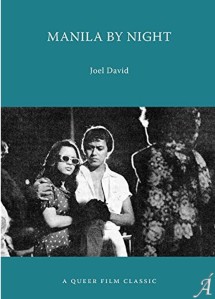
٠ Manila by Night (I Bernal, 1980).
٠ Mariposa: Sa Hawla ng Gabi (R Somes, 2012).
٠ Masahol Pa sa Hayop (A Salvador, 1993).
٠ Masikip sa Dibdib: The Boobita Rose Story (J Bernal, 2004).
٠ Masquerade (DL Zialcita, 1967).
٠ May Minamahal (JJ Reyes, 1993).
٠ May Nagmamahal sa Iyo (M Diaz-Abaya, 1996).
٠ Maynila: Sa mga Kuko ng Liwanag (L Brocka, 1975).
٠ Medusae (P Miras, 2017).
٠ Meet Me in St. Gallen (I Villamor, 2018).
٠ ’Merika (G Portes, 1984).
٠ Metamorphosis (J Tiglao, 2019).
٠ Mga Ligaw na Bulaklak (T Cayado, 1957).
٠ Midnight Dancers—see Sibak: Midnight Dancers (M Chionglo, 1994).
٠ Midnight in a Perfect World (D Dayao, 2020).
٠ Miguelito: Batang Rebelde (L Brocka, 1985).
٠ Milagros (M Diaz-Abaya, 1997).
٠ Milan (OM Lamasan, 2004).
٠ Minsan May Isang Puso (JJ Reyes, 2001).
٠ Minsan Pa (J Jeturian, 2004).
٠ Minsan, Minahal Kita (OM Lamasan, 2000).
٠ Moral (M Diaz-Abaya, 1982).
٠ Moron 5 and the Crying Lady (WV Deramas, 2012).
Back to top
Return to Canon Decampment contents
Go to alphabetized filmmakers list
N
٠ Nasaan Ka Nang Kailangan Kita (M Chionglo, 1986).
٠ Neomanila (M Red, 2017).
٠ Nick Joaquin’s A Portrait of the Artist as Filipino (LV Avellana, 1965).
٠ Nightshift (Y Laranas, 2020).
٠ Nilalang (P Lopez, 2015).
٠ No Other Woman (RS Bayani, 2011).
٠ Nonoy Marcelo’s Tisoy! (I Bernal, 1977).
٠ Norte, Hangganan ng Kasaysayan (L Diaz, 2013).
٠ Notoryus (T Natividad, 1998).
٠ Nunal sa Tubig (I Bernal, 1976).
٠ Nuuk (V Velasco, 2019).
Back to top
Return to Canon Decampment contents
Go to alphabetized filmmakers list
O
٠ On the Job (E Matti, 2013).
٠ On Vodka, Beers, and Regrets (I Villamor, 2020).
٠ One More Chance (C Garcia-Sampana, 2007).
٠ Orapronobis (L Brocka, 1989).
٠ Oro, Plata, Mata (P Gallaga, 1982).
٠ OTJ—see On the Job (E Matti, 2013).
٠ Otso (E Perez, 2013).
Back to top
Return to Canon Decampment contents
Go to alphabetized filmmakers list
P
٠ Paano Kung Wala Ka Na (M Chionglo, 1987).
٠ Pabling (I Bernal, 1981).
٠ Pagbabalik ng Panday (F Poe Jr., 1981).
٠ Pagdating sa Dulo (I Bernal, 1971).
٠ Palabra de Honor (DL Zialcita, 1983).
٠ Pangarap ng Puso (M O’Hara, 2000).
٠ Paradise Inn (CA Castillo, 1985).
٠ Pascalina (P Miras, 2012).
٠ Pauwi Na (P Villaluna, 2016).
٠ Pedro Penduko (G de Leon, 1954).
٠ Pepeng Kaliwete (P Santiago, 1982).
٠ Pepeng Shotgun (R Suzara, 1981).
٠ Pila-Balde (J Jeturian, 1999).
٠ Pinoy/Blonde (P Gallaga, 2005).
٠ Playgirl (M Chionglo, 1981).
٠ Porno (A Alix Jr., 2013).
٠ Posas (L Fajardo, 2012).
٠ Prinsipe Teñoso (G Fernandez, 1954).
٠ Private Show (CS Roño, 1984).
٠ Pusaka Pontianak (RA Estella, 1965).
٠ Pusong Wazak: Isa Na Namang Kwento ng Pag-ibig sa Pagitan ng Kriminal at Puta (Khavn, 2014).
Back to top
Return to Canon Decampment contents
Go to alphabetized filmmakers list
R
٠ Radyo (Y Laranas, 2001).
٠ Red Roses for a Call Girl (BA Suarez, 1988).
٠ Relasyon (I Bernal, 1982).
٠ Rene Villanueva’s Hiblang Abo (R Jover, 2016).
٠ Respeto (T Monteras II, 2017).
٠ Riddles of My Homecoming—see Ang mga Tigmo sa Akong Pagpauli (Riddles of My Homecoming) (A Mardoquio, 2013).
٠ Riding in Tandem (T Natividad, 2017).
Back to top
Return to Canon Decampment contents
Go to alphabetized filmmakers list
S
٠ Sa Puso Ko Hahalik ang Mundo (A Marquez, 1988).
٠ Saan Nagtatago ang Pag-ibig? (E Garcia, 1987).
٠ Salawahan (I Bernal, 1979).
٠ Sa Ilalim ng Cogon (RM Ilarde, 2005).
٠ Salome (L Guillen, 1981).
٠ Samar (G Montgomery, 1962).
٠ Samseng (RA Estella, 1959).
٠ Sana’y Mahalin Mo Rin Ako—see Gayuma: Sana’y Mahalin Mo Rin Ako (T Esteban, 1995).
٠ Sanda Wong (G de Leon, 1955).
٠ Sarjan Hassan (LV Avellana, 1958).
٠ Sarong Banggi (E Dela Cruz, 2005).
٠ Saudagar Minyak Urat (RA Estella, 1959).
٠ Savage Sisters (E Romero, 1974).
٠ Schoolgirls (MJ de los Reyes, 1982).
٠ Scorpio Nights (P Gallaga, 1985).
٠ Segurista (T Aguiluz, 1996).
٠ Sensual (M Diaz-Abaya, 1986).
٠ Serbis (B Mendoza, 2008).
٠ Sibak: Midnight Dancers (M Chionglo, 1994).
٠ Sigaw (Y Laranas, 2004).
٠ Signal Rock (CS Roño, 2018).
٠ Sila-Sila (G Abrahan, 2019).
٠ Silip (E Perez, 1985).
٠ Sindak! (M O’Hara, 1999).
٠ Sinner or Saint (M Chionglo, 1984).
٠ Sino ang Maysala? (A Garces, 1957).
٠ Sisa (G de Leon, 1951).
٠ Sister Stella L. (M De Leon, 1984).
٠ Six Degrees of Separation from Lilia Cuntapay (A Jadaone, 2011).
٠ Sol Searching (R Perez Jr., 2018).
٠ Sonata (P Gallaga & L Reyes, 2013).
٠ Stardoom (L Brocka, 1971).
٠ Still Lives (J Red, 1999).
٠ Stolen Moments (EH Borlaza, 1987).
٠ Sumayaw Ka Salome (L Guillen, 1992).
٠ Superpsychocebu (C Linaban, 2016).
Back to top
Return to Canon Decampment contents
Go to alphabetized filmmakers list
T
٠ Takaw Tukso (W Pascual, 1986).
٠ Talipandas (C Conde, 1958).
٠ Tambolista (A Alix Jr., 2007).
٠ Tandem (K Palisoc, 2015).
٠ Tatak ng Kriminal (E Vinarao, 1993).
٠ Tatlo … Magkasalo (C Siguion-Reyna, 1998).
٠ Tatlong Taóng Walang Diyos (M O’Hara, 1976).
٠ Taufan (TC Santos, 1957).
٠ T-Bird at Ako (DL Zialcita, 1982).
٠ Terror Is a Man (G de Leon, 1959).
٠ That Thing Called Tadhana (A Jadaone, 2014).
٠ The Boobita Rose Story—see Masikip sa Dibdib: The Boobita Rose Story (J Bernal, 2004).
٠ The Boy Foretold by the Stars (D Dulu, 2020).
٠ The Day After Valentine’s (JP Laxamana, 2018).
٠ The Dolzura Cortez Story—see Dahil Mahal Kita: The Dolzura Cortez Story (L Guillen, 1993).
٠ The Escort (M Parungao, 2011).
٠ The Evil Within (LV Avellana, 1970).
٠ The Golden Holiday (Kim B-h, 2020).
٠ The Guys from Paradise (Miike T, 2000).
٠ The Moises Padilla Story (G de Leon, 1961).
٠ The Passionate Strangers (E Romero, 1966).
٠ The Strangers (L Fajardo, 2012).
٠ The Untold Story of Melanie Marquez (A Marquez, 1987).
٠ They Call Her … Cleopatra Wong (BA Suarez, 1978).
٠ Tigasin (I Jarlego Jr., 1999).
٠ Tinik (R Suzara, 2013).
٠ Tinimbang Ka Ngunit Kulang (L Brocka, 1974).
٠ Tirador (B Mendoza, 2007).
٠ Tisoy!—see Nonoy Marcelo’s Tisoy! (I Bernal, 1977).
٠ Tiyanak (P Gallaga & L Reyes, 1988).
٠ Totoy Boogie—see Celso Ad. Castillo’s Totoy Boogie (CA Castillo, 1980).
٠ Totoy Buang: Mad Killer ng Maynila (JE Navoa, 1992).
٠ Totoy Guwapo: Alyas Kanto Boy (T Natividad, 1992).
٠ Tough Beauty and the Sloppy Slop—see Mabangis na Lungsod (A Chui C-S & Yuen B, 1995).
٠ Transit (H Espia, 2013).
٠ Tu Pug Imatuy (A Barbarona, 2017).
٠ Tubog sa Ginto (L Brocka, 1970).
٠ Tubusin Mo ng Dugo (P Marcos, 1988).
٠ Tuhog (J Jeturian, 2001).
٠ Tunay na Tunay: Gets Mo? Gets Ko! (J Bernal, 2000).
٠ Twilight Dancers (M Chionglo, 2006).
Back to top
Return to Canon Decampment contents
Go to alphabetized filmmakers list
U
٠ Uhaw na Dagat (CA Castillo, 1981).
٠ Ulan (I Villamor, 2019).
٠ Underage (J Gosiengfiao, 1980).
٠ Unfriend (J Altarejos, 2014).
٠ UnTrue (SA Bernardo, 2019).
Back to top
Return to Canon Decampment contents
Go to alphabetized filmmakers list
V
٠ Vampariah (2016, M Abaya).
٠ Vince & Kath & James (T Boborol, 2016).
٠ Virgin Forest (P Gallaga, 1985).
Back to top
Return to Canon Decampment contents
Go to alphabetized filmmakers list
W
٠ Wailings in the Forest—see Baboy Halas: Wailings in the Forest (B Fiola, 2016).
٠ #WalangForever (D Villegas, 2015).
٠ Walang Kawala (J Lamangan, 2008).
٠ Wangbu (T Natividad, 1998).
٠ Wanted: Border (R Gibraltar, 2009).
٠ Water Lemon (L Lorca, 2015).
٠ Women in Cages (G de Leon, 1971).
٠ Working Girls (I Bernal, 1984).
Back to top
Return to Canon Decampment contents
Go to alphabetized filmmakers list
Y
٠ Yanggaw (R Somes, 2008).
Back to top
Return to Canon Decampment contents
Go to alphabetized filmmakers list
Z
٠ Zamboanga: A Fanciful Tale of Moro Sea Gypsies (E de Castro, 1937).
٠ Zombadings: Patayin sa Shokot si Remington (J Castro, 2011).
Back to top
Return to Canon Decampment contents
Go to alphabetized filmmakers list
Á!

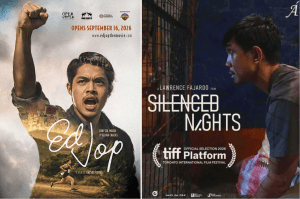 Edjop
Edjop

 A few followers asked when I’ll be following through my threat to do more gossip writing than my well-being will allow. Problem is, I can’t provide something that everyone already knows about, aside from the usual limit of not having enough time. Retirement somewhat eased the latter difficulty, though not significantly and possibly delusively.










 ORCID ID


Full Beast Mode
Beast
Directed by Lawrence Fajardo
Written by Jim Flores
[Click here (recommended) for desktop mode.]
To hear the cacophony of responses to Lawrence Fajardo’s Beast, currently screening in Manila as part of the ongoing Puregold CinePanalo Film Festival, would be tantamount to missing out on its laudable achievements. One might even be inclined to agree with its most extreme appreciators’ declaration that it’s the director’s best work – fulsome praise enough, considering Fajardo’s stature as one of the best Filipino filmmakers in the current millennium.
Lolo Omeng tells Pepe about the legend of the abandoned woman whose tears watered her crops.
Back to top
11011What makes the entry singularly remarkable is its left-field status in the director’s track record. With over forty film and TV titles to his directorial credit, and an even larger number of works he edited (including his own, as in the current case), nothing in the list can be categorized as an apparently children’s tale. The choice of unexpected material may be reminiscent of David Lynch deciding to abandon offbeat topics to narrate a straightforward adaptation of a news item in The Straight Story (1999), and Beast works for the same reason: whether or not Fajardo avoided the material, his accumulation of skills in diametrically opposed subjects could have not only fortified any longing he was repressing, but also inspired him to determine how he could enrich such topics using counter-intuitive skills sets.
In the tale, the lover promises to return from Manila but never shows up again.
Back to top
11011The closest Pinas cinema has come to such a parallel attempt was when action specialist Romy Suzara, toward the end of his career, tackled queer-themed substance in Tinik (2013). His triumph was not as definitive as Fajardo’s, but neither was the attempt an embarrassment for him. One could initiate an appreciation of Beast by stating that it purveys childlike wonder, but ends up far from children’s entertainment. The trailer element that might imprint on viewers would be the spectacle of a water buffalo that speaks adult human language, although this proceeds from the opening episode where the primary character, a farm tenant, narrates a tale to a child who hangs around, like a virtual surrogate son, of a barrio lass whose lover took leave to work in the capital city and never returned: her farm menagerie kept imploring her to move on, but she insisted on looking forward to his reappearance in her life.
The landlord and his lawyer inform Omeng that his land will be sold.
Back to top
11011This premise is simple enough, except that history refuses to be molded into such a neat outline. While the thesis draws from European sources such as tales of the fairy-like vila and partakes of topflight feminist entertainment in Keith Deligero’s little-seen Lily (2016), real-life contemporary abandonment in the country is performed statistically by Filipinas, who comprise the majority of overseas migrant workers. Beast’s creatives are sufficiently mindful of this irony and are careful to incorporate it in their narrative resolution, although for discovery’s sake we should desist from spoiling it for potential audiences.
Bob speaks to Omeng for the first time.
Back to top
11011Bob, the incorrigibly garrulous carabao, is voiced by stage and screen veteran Lou Veloso, who demonstrates how a sufficiently gifted performer may be saddled by costumes or makeup or, in this case, absence from the screen, yet still be capable of a larger-than-life presence. This is facilitated by the dynamic he forms as comic foil to lead actor John Arcilla, who not surprisingly makes every effort to divest himself of the neurotic-strongman persona he assumed in Jerrold Tarog’s Heneral Luna (2015), but winds up rendering a characterization of such rarely realized pathos that it could be easily misrecognized as a documental depiction of typical rural reticence: the fact that Bob first chatters after Lolo Omeng is informed that he will lose what he expected was a lifetime tenancy, suggests the traumatization that our citizens have to find ways of handling on their own.
Omeng takes Bob to Manila to search for a niece who never returned.
Back to top
11011The performative groundwork laid by this theater-honed pair, complemented by the disciplined delivery of an ensemble who might be recognizable to viewers familiar with Fajardo’s multicharacter-reliant work, facilitates one of the more satisfying plot twists in recent local cinema – and we’re not even talking about narrative closure yet, when the story transcends the limitations that historical reality imposes on it. One may or may not come across the director’s own account of how, at some point in postproduction, he stopped worrying about technical finesse. Formalist evaluators may take him to task for it, but it only makes of Beast a genuine throwback to Pinas cinema’s Golden Ages productions, when entertainment (not to mention artistic confidence) was of such paramount importance that audience approval mattered more than critical or festival recognition.
11011In the best Third-cinema tradition, Beast relies on the acceptance of mass viewers out to seek some respite from a harried and cruel existence, and sneaks in political insight of such longstanding usefulness that audiences could wind up wondering just what hit them and return for surer answers and recurrent pleasures.
Published October 11, 2026, in The FilAm, as “A Children’s Tale but Not for Kids.” Beast is produced by Puregold CinePanalo Film Festival, Wild Coyote Pictures, Butlak Banaag Studios, PostPro, Pelikulaw, and Allied Artists of Asia.
Back to top
Leave a comment | tags: Commentaries | posted in Film Criticism