Canon Decampment: Maryo J. de los Reyes

[Click here (recommended) for desktop mode.]

Schoolgirls

Year of Release: 1982
Director: Maryo J. de los Reyes
Screenwriter: Jake Tordesillas
Producer: Regal Films

Cast: Snooky Serna, Dina Bonnevie, Maricel Soriano, Edu Manzano, Joel Alano, Edgar Mande, Mitch Valdes, Anita Linda, Louella, Benggot Pe Benito, Melvi Pacubas, Mary Walter, Balot, Matimtiman Cruz, Alma Lerma, Domingo Landicho, Estrella Antonio, Manny Castañeda, Rina Peredo, Willie Natividad, Donna Sanchez, Sandy Andolong, Ricky Davao, Soxy Topacio, Eric Borbon, Ed Villapol, Tessie Tomas, Lito Pimentel

Three teenage girls contend with the various challenges and constraints of college life while parrying the insults of mean girls. Margot insists on her prerogative to play the field even after a squarish young professor takes an interest in her. Sora decides to drop an abusive boyfriend when an apparently well-fixed folk singer pursues her. Matthew is frustrated in courting Margot so he confides in tomboyish Ella, who thinks no guy will notice her because of her homely appearance. Tet, their former teacher, acts as their life coach but also has difficulty in maintaining a partner because of her high standards.

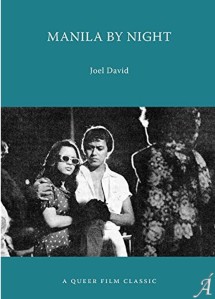
Unexpectedly banned by the militarized censors board when it was submitted for approval in late 1981, Schoolgirls may be seen as a victim of circumstances beyond its control. Regal Films was still in the government’s crosshairs after the brouhaha over Ishmael Bernal’s Manila by Night’s disallowment from participating in the Berlin International Film Festival led to bad press overseas for the regime. The “dry run” for the Manila International Film Festival was raising expectations for a liberal spell (meaning, among other things, no censorship), so the country’s right-wing agents desperately needed one last show of force on the cultural front. The fact that the film turned out to be a slightly risqué though essentially wholesome romp, more of a sequel to Joey Gosiengfiao’s Underage (1980) than Underage Too (1991, also directed by Maryo J. de los Reyes), may have led to the all-around dismissal of the presentation, aside from the obvious conclusion that the female Regal Babies had a longer-running marketability potential than their male counterparts. Yet Schoolgirls has endured better than it had any right to. De los Reyes’s immersion in the teen wing of progressive Philippine theater, complemented by his application of film techniques in his university teaching, enabled him to unfurl a complex, class-crossed, women-positive, and gender-evolved narrative with a rowdy bunch of quirky characters and a contagious and inexhaustible sense of joie de vivre.

Back to top
Return to Canon Decampment contents
Go to alphabetized filmmakers list

Diosa

English Translation: Goddess
Additional Language: Spanish
Year of Release: 1982
Director: Maryo J. de los Reyes
Screenwriters: Soxy Topacio, Khryss Adalia, Jake Tordesillas
Producer: Regal Films

Cast: Lorna Tolentino, Lloyd Samartino, Alfie Anido, Tita Munoz, Jenny Ramirez, J. Antonio Carreon, Ed Villapol, Venchito Galvez, Francisco Cruz, Willie Natividad, Donna Sanchez, Alberto Villaruz, Raoul Casado

During the colonial occupation, a Spanish soldier encounters a bejeweled diwata or nature spirit. After they make out, he steals her ornaments. In the present time, Don Jaime, tycoon-owner of Alegre Amalgamated, writes a note and keeps it in a box before killing himself. He cedes the business to his elder son Jun and a 30-hectare rural property to the younger Teddy. Jun begins a casual affair with Katrina, whom he picks up in a disco, and calls off his impending marriage. Meanwhile Teddy, while on research in his hometown for his thesis in anthropology, pursues the origin of a legend in the aptly named Barrio Alitaptap, where a forest king supposedly slapped his promiscuous daughter and her scattered gemstones turned into fireflies.

Of all his attempts at paying tribute to classical-era film trends, Diosa is Maryo J.’s only effort to reconnect with period fantasy, though still rooted in the present and using the past only as background material. It’s necessarily a mixed bag, but contains evidence of Regal Films matriarch “Mother” Lily Monteverde’s all-out support, considering her even more nostalgic affinity for old (though still not entirely then-lost) cinema. But what made the film too easy to dismiss when it came out renders it indispensable to the present, when its major creatives have passed away. Although we can be grateful that Gregorio Fernandez’s Prinsipe Teñoso (1954) has been preserved, nothing else of its kind remains. And now that our scholars and audiences might finally be capable of welcoming queer-camp appreciation, Diosa will be ready for its closeup. A forest fairy unapologetic about soliciting carnal pleasure from unsuspecting mortals who’re sometimes too eager to claim everything she possesses, capable of wreaking epochal havoc when men overstep their privilege? Plus she’s able to formulate a critique of colonization and spare anyone able to comprehend and placate her rage. Her predominance has been long overdue.

Back to top
Return to Canon Decampment contents
Go to alphabetized filmmakers list

Bagets

English Translation: Pubescent Kids
Year of Release: 1984
Director: Maryo J. de los Reyes
Screenwriter: Jake Tordesillas
Producer: Viva Films

Cast: William Martinez, J.C. Bonnin, Herbert Bautista, Raymond Lauchengco, Aga Muhlach, Eula Valdez, Jobelle Salvador, Chanda Romero, Yayo Aguila, Baby Delgado

Arnel is burdened by his family’s wishes for him. Tonton has been a high school repeater for the past four years. Adie falls in love with his neighbor even if she is married. And while Toffee is neglected by his actress mother, Gilbert deals with a philandering father. As these five friends finish their last year in high school, they undergo a fun-filled but ultimately meaningful journey toward adulthood.

Youthfulness has held an overwhelming universal fascination in the photographic arts, supposedly because we see our reflections fixed in the artwork at a moment that is always past, even as we continue to approach mortality. In fact the formula that fueled the Bagets juggernaut had already been in place as early as the 1960s, with Sampaguita Pictures effectively commodifying it by casting the Stars ’66 group members in so-called smorgasbord projects. Ishmael Bernal initially demonstrated how to devise narratives that successfully maintain multiple-character lines of action and resist depicting singular heroes (or dual heroes and anti-heroes) for Seven Stars’ Siyete Belyas and Regal Films’ Regal Babies casts. After a few film exercises of his own, Maryo J. de los Reyes was primed to handle Viva Films’ so-called Bagets batch: his first film, High School Circa ’65 (1979), signalled his willingness to deploy a large circle of characters, while his disco series with Nora Aunor (five films starting with Annie Batungbakal in 1979) developed his mastery in handling feel-good musicals. The plot of Bagets does not resolve into anything out of the ordinary, but the celebratory mood—drawn from an appealing mélange of pastel designs, New-Wave music, MTV-style montage, gay lingo, and freshly scrubbed second-generation film personalities—provided a much-needed momentary diversion from the then-gathering anti-dictatorship storm, and still proves irresistible today.[1]

Back to top
Return to Canon Decampment contents
Go to alphabetized filmmakers list

Kaya Kong Abutin ang Langit

English Translation: I Can Reach Heaven
Year of Release: 1984
Director: Maryo J. de Los Reyes
Screenwriter: Jake Tordesillas
Producer: VH Films

Cast: Maricel Soriano, Gina Alajar, Charito Solis, Liza Lorena, Ronaldo Valdez, Jaime Fabregas, Michael de Mesa, William Martinez, Arlene Muhlach, Francis Martinez

Having grown up poor, Clarissa ardently desires to live in luxury after being exposed to the lavish lifestyle of her godmother, Monina Gardamonte. The girl’s ambitions eventually consume her after Therese, Monina’s daughter, dies. Clarissa manipulates Monina to adopt her so that she can be the new heiress of the Gardamonte fortune. Driven by greed and eager to turn her back on her past, a heartless Clarissa will stop at nothing to reach her goals.

The downtrodden woman who finds her own inner strength and discovers the pleasures of excesses archetypically reserved for men sets herself up for the worst kind of tragic comeuppance. The appeal of melodrama is in providing ordinary mortals like us, the movie attendees, a handle on the process, able to identify with the misbehaving heroine without having to suffer her inevitably unhappy ending. The hard-knock personal background of former child star Maricel Soriano provided some intertextual credibility in her rags-to-riches-to-dust role here (and no spoilers actually: the movie begins with the end). Along the way the captive viewer will be treated to the spectacle of a nice young girl turned into an awful older-than-her-years woman, desperately rejecting her past and mouthing lines that mingled with the more serious slogans against a dictatorship already in decline: “Ayoko ng masikip! Ayoko ng walang tubig! Ayoko ng mabaho! Ayoko ng walang pagkain! Ayoko ng putik!” [I hate cramped spaces! I hate running out of water! I hate smelly places! I hate going hungry! I hate filth!] Maryo J. de los Reyes had an unusually productive year in 1984, with an often-overlooked title also worth tracking down, Anak ni Waray vs. Anak ni Biday, produced as a tribute to the First Golden Age studios of LVN and Sampaguita, and channeling the spirit of musical-comedy expert Manuel Conde; it features the lead stars in Kaya Kong Abutin ang Langit (plus movie queens Nida Blanca and Gloria Romero as the title characters) in fine mettle.

Back to top
Return to Canon Decampment contents
Go to alphabetized filmmakers list

Anak ni Waray vs. Anak ni Biday

English Translation: Southern Lady’s Daughter vs. Northern Lady’s Daughter
Additional Languages: Ilocano & Waray
Year of Release: 1984 / Color with B&W
Director: Maryo J. de los Reyes
Screenwriter: Jake Tordesillas
Producer: Regal Films

Cast: Nida Blanca, Gloria Romero, Snooky Serna, Maricel Soriano, Nestor de Villa, Luis Gonzales, Gabby Concepcion, William Martinez, Chichay, Bella Flores, Zeny Zabala, Rez Cortez, Louella, Debraliz, Opalyn Forster, Donna Sanchez, German Moreno, Ike Lozada, Lillian Laing, Dencio Padilla, Balot, Flora Gasser

In the 1950s, two couples—Biday and Eli, and Idang and Narcing—are declared co-winners in a dance contest. Biday, an Ilocana, and Idang, a Waray, marry their respective partners and become next-door neighbors in a middle-class subdivision. Both couples have daughters (Susie and Amy respectively) who are courted by Eddie and Joey, while Eli and Narcing fool around with Carol and Patricia, two rich widows. Bella and Zeny, the widows’ daughters, have set their sights on Eddie and Joey, so it’s up to the married mothers and their daughters to win back their men.

Anak ni Waray vs. Anak ni Biday opens with a dedication to the founders of LVN and Sampaguita, the two most popular studios of the First Golden Age of Philippine cinema (roughly coinciding with the 1950s). LVN could boast of having the most gifted local auteur of comedies and musicals in the person of Manuel Conde (as well as the period’s master of melodrama in Gregorio Fernandez), but Sampaguita was the country’s counterpart of Metro-Goldwyn-Mayer Studios, which claimed to have “more stars than there are in heaven.” AnW v AnB may be seen as nothing more than a compendium of standard musical and comic (and occasionally fantastic) elements associated with its sources of inspiration, executed in top-flight cineliterate fashion: nostalgic appreciators could have a field day identifying the procession of references evoked in the characters’ names, not to mention having the elderly but still-sprightly couples, along with the femmes fatales, portrayed by actual stars of the time. The fathers could only initially afford to ride a tricycle to work, then upgrade to a calesa (horse-drawn carriage) to rush their parturient wives to hospital, thus signaling the filmmaker’s intent to provide a critique of gentrification; but then the horse proceeds to comment on the action and secures another throwback to old-time cinema (by way of komiks material). Already known for his handling of multiply performed scenes right from the start of his filmmaking career, Maryo J. de los Reyes piles on additional skills accumulated from his disco series (mostly starring Nora Aunor), orchestrates frenetic quarrels and chases, and stages arch exchanges undergirded by familial warmth amid comic confusion. AnW v AnB never steps beyond the gay old time it celebrates, but it also remains true to its belief that our now-rare old films were indeed worthy of the adulation that their audiences lavished on them.

Back to top
Return to Canon Decampment contents
Go to alphabetized filmmakers list

Dinampot Ka Lang sa Putik

English Translation: You Were Merely Scooped Up from the Mud
Year of Release: 1991
Director: Maryo J. de los Reyes
Screenwriter: Jose Javier Reyes & Jake Tordesillas
(From a story by Jose Javier Reyes)
Producer: Regal Films

Cast: Maricel Soriano, Christopher de Leon, Charo Santos-Concio, Monsour del Rosario, Maritoni Fernandez, Luis Gonzales, Sylvia Sanchez, Orestes Ojeda, Ronnie Henares, Bennette Ignacio, Gloria Romero, Eddie Arenas, Dexter Doria, Malou de Guzman, Glenda Garcia, Angela Figueras, Oliver Osorio, Eric Francisco, Naty Mallares, Nonoy Gates, Alfonso Garcera, Dennis Baltazar, Aries Bautista, James Cooper, Petit Calupitan, Joey Hipolito, Gina Leviste, Lollie Mara, Renato del Prado, Frederick Peralta, Cloyd Robinson, Eva Ramos, Lucy Quinto, Bella Flores, Jordan Castillo, Tita de Villa, Dinky Doo Jr., Arlene Tolibas, Melanie Tiangco, Tony Angeles, Dido de la Paz, Albert Gonzales, Jimmy Long

Ambet agrees to participate in a warehouse burglary so he can help alleviate the financial straits that his family’s confronting. When he gets arrested, his wife Malou leaves with their son for Manila to seek better financial opportunities. Her supportive neighbors invite her to work as a nightclub dancer, but at a stag party, Edmond notices her discomfort and extends some support toward her. His girlfriend and sister call attention to Malou’s class difference but Edmond insists that he can help her overcome her social limitations, until she points out that many of their conflicts are irreconcilable.

Regal Films had always had a long-running streak of nostalgia for Philippine film trends of an earlier era, a tendency that intensified after the fall of the Marcos Sr. regime led to an alarming decline in film attendance. Instead of taking into account these industrial and generational dynamics, critics of that time reverted to their usual lamentation of the absence of aestheticized and politicized material. Dinampot Ka Lang sa Putik may be regarded as one of the more brazen attempts, with its earnest and straightforward treatment of a class-conciliatory narrative, Cinderella without the wonder-tale elements. This, however, is where ignorance of its talents’ maturity fails the serious observer: with over a decade in intensive film practice and even longer in theater work, Maryo J. de los Reyes was more than ready to accept the challenge without reverting to the usual satirical or ironic fallback. Complemented by actors who’d been essaying these roles long enough to deliver them with nary a false note, the result is recognizably superior maize—possibly not recommendable for regular consumption, but perfect for any occasion when only the best kind of corn will do: gorgeous, savory, unexpectedly nutritious to boot.

Back to top
Return to Canon Decampment contents
Go to alphabetized filmmakers list

Magnifico

Year of Release: 2003
Director: Maryo J. de los Reyes
Screenwriter: Michiko Yamamoto
Producer: Violett Films Production

Cast: Lorna Tolentino, Albert Martinez, Jiro Manio, Isabella de Leon, Mark Gil, Celia Rodriguez, Gloria Romero, Tonton Gutierrez, Amy Austria, Cherry Pie Picache, Danilo Barrios, Susan Africa

Despite coming from a poor family plagued by many misfortunes, youngster Magnifico wants to build a nice coffin for his grandmother. He also goes to great lengths to take his little sister, who has cerebral palsy, to a local carnival. As he gets different people to help him, Magnifico reciprocates their kindness in a way that gradually changes his community.

Philippine celluloid production bowed out in grand style with the release of two epic productions, by filmmakers who even have similar-sounding names. In contrast with Mario O’Hara’s Babae sa Breakwater (2003), Magnifico proffers a linear tale focused on domestic issues, its central character a young innocent whose acts of kindness transform his family and community. A number of observers marveled at how a male-centered narrative could still pack an old-school wallop this late in history, but the reasons are all on open display, so to speak: compassion even for the most deeply flawed characters, wonderful performances revolving around the precocious Jiro Manio in the title role, and relaxed, hand-on-heart storytelling expertise. Maryo J. de los Reyes keeps his narrative engine ambling along, occasionally pausing for us to savor its sharply observed character sketches, until a sudden plunge takes everyone to a place of no return. The analogy with developments in film technology is undeniable, but to wish for a different ending would be to deny the inevitable, and Magnifico shows us how grace and humor can make the journey worth the while.

Note

[1] Terminological notes in order of presentation: A. Siyete Belyas literally means “Seven Beauties,” although belyas in Tagalog is also a euphemism for sex workers. The compound term belyas-artes is literally “fine arts” (from the Spanish), but with the alternative meaning of belyas, it could also denote “indecent or vulgar conduct.” B. The other four Nora Aunor disco films are: Bongga Ka ’Day (You’re Fab, Sis, 1980), Totoo Ba ang Tsismis? (Is the Rumor True?), Ibalik ang Swerti (Restore the Luck), and Rock and Roll (all 1981). Subsequent non-disco-themed Maryo J. films with Nora Aunor were Minsan, May Isang Ina (Once There Was a Mother, 1983), the “Querubin: Maria Leonora Theresa” episode of Mga Kwento ni Lola Basyang (“Cherubim” in The Tales of Grandma Basyang, 1985), I Love You Mama, I Love You Papa (1986), and Naglalayag (Silent Passage, 2004). C. The director had possibly the highest hip quotient among local filmmakers during his heyday, as evident even in the string of wordplay that bagets begets: originally a diminutive of bagito or fresh teen, its configuration was deconstructed in order to generate several variations. Hence from an amalgamation of bago (new) and gets (to pick up or acquire), period slang proffered nagets (already obtained), pagets (deluded about one’s attractiveness), lagets (constantly available, with lagi contracted for the first syllable), and forgets (no longer desirable); the same year in fact yielded Erpat Kong Forgets (My No-Longer Desirable Father, dir. J. Erastheo Navoa), which featured the most popular of the Bagets actors.

Back to top
Return to Canon Decampment contents
Go to alphabetized filmmakers list

Á!


Canon Decampment: Danny L. Zialcita

[Click here (recommended) for desktop mode.]

T-Bird at Ako

English Translation: Lesbian and I
Year of Release: 1982
Director: Danny L. Zialcita
Screenwriter: Portia Ilagan
Producer: Film Ventures

Cast: Vilma Santos, Nora Aunor, Suzanne Gonzales, Dindo Fernando, Tommy Abuel, Odette Khan, Leila Hermosa, Johnny Wilson, Dick Israel, Rosemarie Gil, Subas Herrero, Liza Lorena, Alvin Enriquez, Baby Delgado, Johnny Vicar, Rustica Carpio, Anita Linda

Bar dancer Isabel is charged with homicide after killing a man who tried to rape her. Lesbian lawyer Sylvia offers to represent her for free. But while their relationship as client and counsel starts off as professional, things change when Sylvia begins to have feelings for Isabel. As lust mixes with legal concerns, they soon realize that winning their case will be a much more complicated matter.

The next major showdown between the country’s top stars since Ishmael Bernal’s Ikaw Ay Akin four years earlier confirmed that the tables between them had definitely turned. Vilma Santos could still play coquettish and sensuous more convincingly than most “bold” stars of the time, but Nora Aunor could summon conflictive inner lives—lonely, lustful, and Sapphic while being outwardly contented, principled, and sexually disinterested—like only few veteran performers could pull off. Danny L. Zialcita had at least two potentially superior entries: Hindi sa Iyo ang Mundo, Baby Porcuna (The World Is Not Yours, Baby Porcuna), now lost, from 1978; and Ikaw at ang Gabi (You and the Night), somewhat overrated, a year later. He has also become a film-buff favorite for a long list of well-received loquacious melodramas and sex comedies, including Eddie Garcia’s most successful dirty-old-man “Manóy” vehicles. T-Bird at Ako falls squarely between his “quality” and “commercial” attempts, exhibiting the best, as well as the worst, of both options, and intensifying the fireworks between two talents whose histrionic duels would persist into the next millennium.

Back to top
Return to Canon Decampment contents
Go to alphabetized filmmakers list

Palabra de Honor

English Translation: Word of Honor
English Title: On My Honor
Year of Release: 1983
Director: Danny L. Zialcita
Screenwriter: Danny L. Zialcita (as Mike Vergara)[1]
Producer: Viva Films

Cast: Eddie Garcia, Hilda Koronel, Elizabeth Oropesa, Beth Bautista, Amy Austria, Jackie Lou Blanco, Gloria Diaz, Dindo Fernando, Ronaldo Valdez, Tommy Abuel, Mark Gil, Suzanne Gonzales, Virginia Montes, Mario Escudero, Augusto Victa, Tony Angeles, Bert Asuncion, Lucy Quinto, Rolly Papasin, Bert Dizon, Lilian Laing, Christian Espiritu, Josie Tagle

The elderly widower Don Adolfo’s family and employees squabble over their share of wealth while making sure, as he does, to claim their objects of pleasure, illicitly if necessary. His daughter Cristy endures a loveless marriage with David but gets pregnant from her affair with Louie, who administers the Don’s educational institution. Louie’s wife Olivia objects to their new hire, an instructor with a liberal-activist background, incurring the wrath of the instructor’s wife. David meanwhile decides to blackmail Louie so he can start anew with Elma, whose husband Arthur, a lawyer for the school, wishes to collect on the promise he extracted from the instructor’s wife in exchange for his support. Don Adolfo finds comfort in his fiancée Victoria, but his possessive daughter tries to dig up dirt so she won’t have to lose her father.

After several attempts at sex comedies, Danny L. Zialcita welded his immensely profitable approach to a small-town family saga and triumphed with an offbeat, sophisticated entry. The bedroom-to-boardroom roundelay avoids redundancies by adopting a wide variety of class and gender perspectives, and reserves the juiciest revelations toward the end. With the Marcos Sr. authoritarian system still firmly in place, the film could casually portray sexist acts, but it mitigates these blunders with humor and strong-women characterization (including a distaff brawl that’s funny and shocking in equal measure). Its final twist depicts how the titular word of honor gets qualified by several levels of irony; the complaint of most know-it-all commentators at the time that these types of films don’t possess any understanding of the upper-class lifestyle that they exploit, actually reflects on said critics’ own limitations. Palabra de Honor sets out to disparage, not document, its nominal heroes—and succeeds, to the lasting benefit of Pinas pop culture.

Note

[1] For Palabra de Honor and two succeeding films, Danny L. Zialcita used a name that did not have any other Philippine film credit before or after. Some posters and publicity materials, however, listed him as writer. Film archivist and researcher Monchito Nocon pointed out in a private exchange (Facebook Messenger, January 28, 2025) that “Mike Vergara is Danny’s son. His mom, Danny’s wife, was Leonor Vergara. Ergo, that’s really just Danny using another person’s name” inasmuch as the real-life Michael Vergara Zialcita, who’d appeared in some of his father’s previous films, would still have been a preteen at the time. Several possible reasons may have accounted for Zialcita’s decision. Relevant to film criticism would have been the shrill denunciations by members of the critics’ award-giving group for his alleged plagiarism of fairly accessible Western film samples. This behavior, premised on an “originality as [postcolonial] vengeance” slogan that originated in the national university, indicates an unexamined variation of colonial mentality where local authors and artists are expected to restrict themselves in realms of practice that Westerners would describe as tribute or homage if it occurred among themselves.

Back to top
Return to Canon Decampment contents
Go to alphabetized filmmakers list

Á!


Canon Decampment: Peque Gallaga & Lore Reyes

[Click here (recommended) for desktop mode.]

1—Tiyanak

English Translation: Demon Foundling
Year of Release: 1988
Directors: Peque Gallaga & Lore Reyes
Screenwriters: Peque Gallaga, Don Escudero, & Lore Reyes
Producer: Regal Films

Cast: Janice de Belen, Lotlot de Leon, Ramon Christopher, Mary Walter, Chuckie Dreyfus, Carmina Villaroel, Rudolph Yaptinchay, Smokey Manaloto, Zorayda Sanchez, Bella Flores, Suzanne Gonzales, Betty Mae Piccio

Christy, together with her boyfriend Jojo, visits her sister Julie who has become hysterical after suffering three miscarriages. One night, Christy finds a baby in an abandoned home. An excited Julie immediately adopts the child despite objections from her family. Little does she know that whenever it gets dark, the infant she has taken in is not as innocent as it appears to her.

2—Aswang

English Translation: Viscera-Sucking Shape-Shifter
Year of Release: 1992
Directors: Peque Gallaga & Lore Reyes
Screenwriters: Pen Medina & Jerry Lopez Sineneng
(From a story by Peque Gallaga, Don Escudero, Lore Reyes)
Producers: Regal Films & Good Harvest

Cast: Alma Moreno, Manilyn Reynes, Aiza Seguerra, Berting Labra, Janice de Belen, Joey Marquez, Aljon Jimenez, Leo Martinez, Dick Israel, John Estrada, Pen Medina, Rey Solo, Eva Ramos, Orestes Ojeda, Gigette Reyes, Romy Romulo, Lilia Cuntapay, Edison Ang, Mar Mojica, Rudy Castillo, Totoy Magno, Jun Basilio

In the rural town of Talisay, a series of nocturnal attacks terrorizes the townspeople, the latest victim being the randy husband of a pregnant woman, seduced by a beauty who transforms after luring him. When a home in Manila is gang-invaded and the residents killed for the owner’s store of wealth, the daughter and her nanny are taken by the famiy driver to his hometown, which happens to be Talisay. The family’s security guard is identified in media reports as the gang’s tipster, so he suggests that they search for the survivors in the driver’s rural neighborhood. The place’s aswang, who’s also an outsider residing in a hut as an old woman, picks out as much as she can of the newcomers as well as the town residents.

Audiences were lured in by Regal Films’ ridiculously catchy tagline “Oh my god, ang anak ni Janice [the spawn of Janice]”—a canny erasure of the distinction between character and performer. The presentation they experienced similarly toyed with the easily blurred boundaries between the film world and real life: Who wouldn’t pick up any infant foundling? Who wouldn’t take offense at malevolent insinuations about one’s own baby? And who wouldn’t be terrorized by a flesh-hungry monster snacking on moviegoers, even as one watches the onscreen bloodbath as an actual moviegoer? Beyond this affirmation of spectatorial pleasure, Tiyanak purveyed a then-ahead-of-its-time call to ecological responsibility and, via a few subtle stabs at gender exclusion, devised a plot where all the protagonists—from imp to adoptive mother to vanquishing grandmother, plus shaman-chorus—were women. In terms of generic strategy, the movie chose to lean on comedy although it was founded on melodrama. This hybrid of otherwise distinct commercial categories upholds a principle that typifies some of the best—and most of the worst—commercial outings in cinema; called genre pastiche, the approach relies on a process of accretion in which several styles, mostly associated with successful pop-culture products, are brought together in an eclectic manner. This mode of practice exposes the filmmaker’s orientation, and all too often we see texts where political material is handled seriously while producer-imposed requirements are given slapdash treatment. Fortunately, Peque Gallaga and Lore Reyes are true-blue movie buffs, always willing to meet new genre challenges, and making sure to devote as much screen time as possible to audience engagement; not surprisingly, horror filmmaking became their preferred area of specialization. A few years after Tiyanak, they reprised the eponymously titled episode in the second (of a still-continuing) Shake, Rattle & Roll omnibus series. The fuller version suffers from the expected narrative longueurs as well as the necessary demonizing of Others, but the interests in this instance are once more reflexive: Metro Manila tabloids were rife with stories of drug-fueled home-invasion massacres and manananggal sightings in slum areas, building up to the first presidential election after the dictatorship of Ferdinand Marcos Sr. the same month that the film was released. Aswang turned on these historical resonances (hearkening back to the possibly hyperbolic claims of Edward Lansdale[1]), hitched to the otherworldly, borderline-abject beauty of a still youthful-looking Alma Moreno.

Back to top
Return to Canon Decampment contents
Go to alphabetized filmmakers list

Sonata

Additional Languages: Hiligaynon, French, Italian, Czech
Year of Release: 2013
Directors: Peque Gallaga & Lore Reyes
Screenwriter: Wanggo Gallaga
Producers: Film Development Council of the Philippines, Central Digital Lab, Wildsound Studios

Cast: Cherie Gil, Richard Gomez, Chino Jalandoni, Joshua Pineda, Chart Motus, Madie Gallaga, Dante Amaguin, Angel Lobaton, Tanya Lopez, Edouard Garcia, John Gilbert Arceo, Ricky Gallaga, Andrei Jalandoni, Manny Montelibano, Jack Triño, Louie Dormido, Milton Dionzon, Guillermo Gaston, Rudy Reveche, Pamela Henares-Jaladoni, Teresa Estrada, Jonathan Lorenzo Lindaya, Johnrick Ylosorio, Josh Motus, Raingo del Prado, Bull Dilag, Ricky Davao (voice)

When her voice fails her, Regina Cadena retires to her hometown in Bacolod in order to avoid the celebrity limelight. She explains to people who inquire about her condition that the operations performed on her throat only worsened her vocal condition and that she may never be able to sing professionally again. Her contemporary Cora, who’d been assisting the Cadena family since her younger years, goes to the Cadena residence to help Regina restore order to her affairs, since the diva became debilitated by alcohol; she brings her son Jonjon in order to keep him away from her estranged husband. Jonjon makes the acquaintance of Ping, an older kid who’s the son of a tenant family. With Ping’s help, Jonjon takes an interest in the exotic world that Regina came from, brings her treats when he notices she likes them, and fixes the mementoes she wanted to discard. Amused by the kids’ attention, Regina explains opera and, in effect, her life, to them, renames them after famous characters, and eventually makes plans to stage for them an aria from Antonin Dvořák’s lyric opera Rusalka (1901).

Sonata was a passion project of Cherie Gil, who passed away about a decade after its release. Its narrative resembled and, in a sense, reversed, the global trajectory of her experience, when she left a fairly successful career as a character actor in the late 1980s to be a housewife to Israeli violinist Rony Rogoff; her return two decades later coincided with the coming-of-age of digital-format independent film production, endowing her with several opportunities to flaunt her striking middle-age grandeur and upgraded performative ability. As seemingly further preparation for Sonata, she performed the role of the elderly, vocally busted Maria Callas in two English-language runs of Terrence McNally’s Master Class (1995). The film takes place in the idyllic manor in the midsection of Peque Gallaga’s full-length solo debut feature Oro, Plata, Mata (Gold, Silver, Death, 1982), where Gil played the lead character’s rebellious girlfriend who elopes with a gang of bandits. The connection is accentuated with Gil being the first major character to appear as well as the one who delivers the final topical statement, after having ironically gone off the deep end. The contrast with Sonata is more than just budgetary, with OPM being set in two additional locales; where the house is meant to be a refuge for the landed gentry, away from the violence of war (which nevertheless insistently approaches) and the savagery of the wilderness, both induced by the characters’ excessive privilege, in Sonata it functions as a ghostly, conflicted presence, bestowing Regina with the healing she seeks—but only her and no one else. The two tykes whom her character elects to facilitate her re-entry into the society she abandoned in the distant past, provide her with fulfillment and heartbreak with admirable aplomb, with the rest of the cast following suit. But the movie remained hers to claim, and she makes sure that no frame she appears in is wasted, with whatever vanity we might suspect on her part totally earned by the magnanimity she displayed.

Note

[1] Edward Lansdale, a psy-war operative for the Central Intelligence Agency, alleged in his book In the Midst of Wars: An American’s Mission to Southeast Asia (Fordham University Press, 1972) that he undermined people’s support for Communist Huk rebels by kidnapping recruits and sympathizers and hanging them from trees after draining their blood; the natives supposedly concluded that any aswang would be on the prowl for antigovernment insurgents and avoided providing assistance thereafter. In Aswang, the monstrous creature takes on some properties of the manananggal by feeding on a fetus while still in its mother’s womb, but also exhibits werecreatural properties in stalking and attacking people of either gender and is ultimately destroyed, vampire-style, by sunlight.

Back to top
Return to Canon Decampment contents
Go to alphabetized filmmakers list

Á!


Canon Decampment: Peque Gallaga

[Click here (recommended) for desktop mode.]

Oro, Plata, Mata

English Title: Gold, Silver, Death
Additional Languages: Hiligaynon, Spanish, Japanese
Year of Release: 1982
Director: Peque Gallaga
Screenwriter: Jose Javier Reyes
(From stories by Peque Gallaga, Mario Taguiwalo, Conchita Castillo)
Producer: Experimental Cinema of the Philippines

Cast: Cherie Gil, Sandy Andolong, Liza Lorena, Fides Cuyugan-Asensio, Manny Ojeda, Maya Valdes, Lorli Villanueva, Joel Torre, Ronnie Lazaro, Abbo de la Cruz, Mely Mallari, Mary Walter, Agustin Gatia, Arbie Antonio, Kuh Ledesma, Gigi Dueñas, Dwight Gaston, Jimmy Fabregas, Mona Lisa, Manny Castañeda, Ben Morro, Benny Warden

To evade the arrival of Japanese forces fighting in World War II, the Ojedas and the Lorenzos—two wealthy clans based in Negros—leave the city and head to a provincial mansion. As the war rages on, the families then flee to a nearby forest where they try to maintain their affluent lifestyle. But even as they hide from the war, it does not take long before they experience its nightmarish effects.

Peque Gallaga had been taken to task by mostly academe-based politically concerned commentators for his bravura evocation of the plight of the sugar gentry during World War II. This would be the equivalent of the controversy that befell a 1958 novel by Giuseppe di Lampedusa, Il Gattopardo (The Leopard)—a fate that was the opposite of Luchino Visconti’s 1963 film adaptation: the polarized politics of the time proved resistant to accommodating a narrative that focused on the elite, no matter how critical the perspective was. Based on the fireside tales recounted by Gallaga’s elders (with story credits for Gallaga, Mario Taguiwalo, and Conchita Castillo), Oro, Plata, Mata depicts the disruption of a landowning clan’s rural idyll brought about by the incursion of marauding Japanese soldiers, with the mortal conflict actually stemming from the uprising of the family’s exploited workers. Lost in this recollection of theme and controversy is the movie’s singular cineastic triumph: a sensuous and orgiastic fusion of period detail, natural wonder, and grand human folly—with masterly cinematographic handling by Rody Lacap—that had never been witnessed before or since in anybody else’s debut project. About three decades later, Gallaga and his co-director Lore Reyes would revisit the OPM locale with the movie’s lead actress, Cherie Gil, and yield the wise and charming Sonata (2013), quite literally an “art film” in the best sense of the word.

Back to top
Return to Canon Decampment contents
Go to alphabetized filmmakers list

Virgin Forest

Additional Languages: Kapampangan, Ibanag, Chinese, Spanish, Portuguese
Year of Release: 1985
Director: Peque Gallaga
Screenwriter: Rosauro Q. dela Cruz
(From a story by T.E. Pagaspas)
Producer: Regal Films

Cast: Sarsi Emmanuelle, Miguel Rodriguez, Abel Jurado, Arbie Antonio, Jed Arboleda, Bruce Fanger, Bob Zwanziger, Ama Quiambao, Peque Gallaga, Turko, Crispin Medina, Leo Martinez, Ray Ventura, Pepito Bosch, Cris Daluz, E.A. Rocha, Rolando Tinio, Roy Lachica

It is 1901 and as the Philippines’s Spanish colonizers fall, American forces begin to take over. In a remote town, three young people—Chayong, a Chinese businessman’s kept woman; Alfonsito, an insular (native-born Spaniard); and Alipio, a lowly fisherman—are taken prisoner by Filipino mercenaries conspiring with two American officers who plan to capture President Emilio Aguinaldo. The three manage to escape but they soon realize that their differences make them vulnerable to enemies from all sides.

The backlash against Peque Gallaga for the unexpected success of Oro, Plata, Mata (1982) started with the far more ambitious Virgin Forest, which holds the distinction of showcasing arguably the best work of the peerless cinematographer Conrado Baltazar. The film lent itself to controversial responses in its deliberately ambivalent approach to Philippine historical events leading up to the capture of Emilio Aguinaldo (himself a problematic figure) by US colonizing forces, assisted by allegedly mercenary natives. The developments are observed by a trio of outcasts—a mestizo, a fisherman, and a runaway sex slave, who insists on her womanly prerogatives in the face of constant bickering between the two males, each of whom claims her for himself. The trio’s interactions blatantly convey the allegory where the then-emergent nation struggles to reconcile native and foreign forces. The resultant threesome is novel and titillating enough to overpower the real-life incidents. But the years since the movie’s release, with several disappointing attempts at determining the value of Aguinaldo’s contribution, have proved that Virgin Forest’s history-from-below perspective has been the only workable approach so far.[1]

Back to top
Return to Canon Decampment contents
Go to alphabetized filmmakers list

Scorpio Nights

Additional Language: Hiligaynon
Year of Release: 1985
Director: Peque Gallaga
Screenwriter: Rosauro Q. dela Cruz
(From a story by T.E. Pagaspas & Rommel Bernardino)
Producer: Regal Films

Cast: Orestes Ojeda, Daniel Fernando, Anna Marie Gutierrez, Eugene Enriquez, Amanda Amores, Mike Austria

Danny, a student boarder left in the city during summer break, becomes infatuated with the wife of a security guard who lives right below the room he is renting. When the guard returns and has sex with his still-asleep missus, Danny uses a hole on the floor to take a peek. One evening, he pretends to be the guard and succeeds in bedding the wife, who realizes someone else had touched her when her husband later gets with her. She then surprises Danny the next time he gets into her bed, and they are soon thrust into an illicit affair whose passion keeps escalating, oblivious to the dangers that lie ahead.

Controversy continued to hound Peque Gallaga since his distinctive debut, Oro, Plata, Mata (1982); this time it proceeded from the implicit support he supposedly lent the Marcos dictatorship by providing the regime with “decadent” entertainment in the form of this specific sex film for the government’s censorship-exempt venue. The historical paradox of course is that in all genuinely fascist systems, it is the government, not the opposition, that denounces decadence.[2] Since Scorpio Nights actually critiques the socio-economic deprivation that results in the depravity it depicts, its very existence winds up belying its critics’ moralistic impulse. One might wish for a more subversive handling directed at the heart of religious righteousness, which after all is the premise that unifies the movie’s objectors, whatever their political position. However, that approach would have aligned the movie with comedy-inflected Western pornographic-film tradition, and might have caused the product to be dismissed entirely out of hand. Scorpio Nights instead opted to break new ground in its own way, wherein an erotic text intended for mainstream release contained a combined meat-and-money shot toward the film’s close.[3] Evidence of the high regard for the movie among cineastes can be seen in how its spin-offs have been handled: Scorpio Nights 2 (1999) was directed by Erik Matti and Scorpio Nights 3 (2022, more a reboot than a sequel) by Lawrence Fajardo, Gallaga’s fellow Bacolodians and former mentees who each have their own canonical entries in this listing; between either, a sex-and-politics vehicle, titled Sseommeotaim (Summertime, 2001), was made by Korean filmmaker Park Jae-ho as a tribute to Scorpio Nights.

Notes

[1] Lore Reyes, who subsequently became Peque Gallaga’s co-director after the latter recovered from a major health problem, was production manager on several Gallaga films including this one. He provided clarification on several false claims by various internet-era authorities, of which mention must be made of two egregious ones: first, the declaration, supposedly issued by Gallaga himself, that he was present during the shooting in 1982 of the climactic scene of Ishmael Bernal’s Himala—a physical impossibility (to which I can also attest, inasmuch as I was then-employed at the Experimental Cinema of the Philippines), since the ECP scheduled the production of Gallaga’s and Bernal’s films to run concurrently so they could be released around the same time; second, that the dialogue of Virgin Forest contained, after Kapampangan, a high percentage of Ilokano. Familiar with the language, Reyes (who provided the list of languages in the film) said that not a single word could be heard except for the ones that the language shared with Kapampangan.

[2] In preparing an obituary for Peque Gallaga, I inquired about an incident, sensational during the time, where he denounced a number of specific cultural and academic personalities during the Scorpio Nights premiere at the Manila Film Center. The outburst, as it turned out, resulted from an attempt by an MFC official to cut out scenes from the film despite the fact that the venue was censorship-exempt. The encounter between director and official (who was also a film critic and professor) resulted in a violent scuffle and possibly accounted for the downgrading of the film by evaluation bodies, including the then-only film critics circle. See “My Peque Gallaga Interview” in Amauteurish (May 9, 2020), amauteurish.com/2020/05/09/my-peque-gallaga-interview/.

[3] In American pornographic-film practice, meat and money shots are considered genre-defining elements—at least until the emergence of “couples” or made-for-women material. The meat shot is one where male, female, or intersex genitalia can be visibly discerned, preferably in copulation. The money shot is taken when the male ejaculates, meant as documentary proof of the performer’s real-life engagement in the sex act. Those inclined to look further into these ideas are now fortunate to have a large number of scholarly titles; an excellent introductory reading would be Linda Williams’s Hard Core: Power, Pleasure, and the “Frenzy of the Visible” (1989, updated 1999).

Back to top
Return to Canon Decampment contents
Go to alphabetized filmmakers list

Á!

Canon Decampment: Laurice Guillen

[Click here (recommended) for desktop mode.]

Kasal?

English Translation: Wedding?
English Title: The Marriage
Additional Language: English
Year of Release: 1980
Director: Laurice Guillen
Screenwriter: Mario O’Hara
Producer: Trigon Cinema Arts

Cast: Christopher de Leon, Hilda Koronel, Jay Ilagan, Chanda Romero, Gloria Romero, Johnny Wilson, Bobby Ledesma, Mia Gutierrez, Luis Benedicto, Lino Brocka, Menggie Cobarrubias, Janice de Belen, Johnny Delgado, Dindo Fernando, Edgar Mortiz, Phillip Salvador, Charito Solis

In preparing to get married, Joel and Grace strive to be honest with each other about their past. They begin by admitting that they had fallen in love with people in previous relationships: Grace with Ernesto, a dissolute musician who wound up in a loveless marriage with Ellen, and Joel with Lani, an elusive woman who first confessed she loved him but suddenly kept her distance until she vanished from his life. Indulged by his widower father, Joel is amused that Grace’s parents believe their daughter is still a virgin, while Grace is apprehensive that she has not yet let go of Ernesto.

The splash that Laurice Guillen made with her debut film certainly sustains effectively through nearly the half-century since she completed it. She demonstrated not just a solid sense of audience appeal (drawn from her tenure in a long-running daily TV drama), but she also had enough dramaturgical discernment and cinematic sensibility from her years as a highly regarded theater and film performer. One reservation raised about Kasal? is that its material does not provide as much of a challenge as any number of first films before and (most especially) since. Such a remark will seem more ornery at present, when even veteran filmmakers usually betray too much desperation in conveying the pleasures that should have inhered in any successful creative undertaking. Guillen shades what would have been a typical romantic comedy with enough darkness to make us wonder whether the inevitable happy ending will hold for its protagonists what the wedding’s observers believe. Along the way, she draws out indelible readings from a trio of supporting players (Jay Ilagan, Chanda Romero, and Mia Gutierrez) and, in the final sequence, stages a parade of cameos that attests to the warm support she enjoyed from her colleagues in the industry.

Back to top
Return to Canon Decampment contents
Go to alphabetized filmmakers list

Salome

Year of Release: 1981
Director: Laurice Guillen
Screenwriter: Ricky Lee
(From a story by Laura Guillen)
Producer: Bancom Audiovision Corporation

Cast: Gina Alajar, Dennis Roldan, Johnny Delgado, Bongchi Miraflor, Bruno Punzalan, Tony Santos, Armida Siguion-Reyna, Lily Miraflor, Venchito Galvez, Edna May Landicho, Jimmy Santos, Koko Trinidad, Cris Vertido, Pangguy Francisco, Mia Gutierrez

As news of a young man’s murder rocks a sleepy seaside village, all fingers point to Salome as the culprit. Salome argues that she killed the man because he was trying to rape her. Villagers believe that Salome’s seductiveness led the man to his death, as it did to other men on many previous occasions. Macario, her husband, confides his own version of events to a defense lawyer, that upends the other narratives. From such conflicting testimonies, a still-untold story holds the truth behind the crime.

Critic-historian Bienvenido Lumbera once cited Salome as the primary example of the 1980s’ filmmaking generation’s breakaway efforts, from their predecessors’ emphasis on material to the new directors’ exploration of various approaches to reality. The film benefits from a vivacity that preempts its increasingly sordid story and transforms it into a triumph of the picturesque, showcasing Romeo Vitug’s cinematography at its height. Its obvious touchstone may have been Rashomon (1950), but the movie dispenses with Akira Kurosawa’s dated humanism and attempts a more realistically derived release from the conflicting versions of a sensational crime of passion. Gina Alajar serves as the medium—incandescent, unpredictable, and ethereal—through which the tale first unfolds, re-unfolds a few more times over, and then collapses unto itself.

Back to top
Return to Canon Decampment contents
Go to alphabetized filmmakers list

Init sa Magdamag

English Translation: Warmth for the Night
English Title: When Love Burns (title of TV series)
Year of Release: 1983
Director: Laurice Guillen
Screenwriter: Raquel Villavicencio
Producer: Viva Films

Cast: Lorna Tolentino, Dindo Fernando, Joel Torre, Anita Linda, Wendy Villarica, Leo Martinez, Bebong Osorio, Ding Salvador, Franklin Llama, Remy Novales, Melissa Mendez, Elsa Agana, Hon. Conrado J. Lamano, Raquel Villavicencio, Wilma Carbonel, Maribel Lastimosa, Tet Gozo, Boots Enrile, Jun Gonzales, Mon Carpo, Nonoy Zuñiga

When Irene’s lover dies from a bad fall, she abandons the body and assumes a new personality. In her self-identity as Becky, Armand falls for her and plans to marry her. The woman arranged for him by Armand’s family confronts Becky, threatens to expose her past life, and gives her money so she can leave Armand to her (the fiancée). Despite bearing Armand’s child, she obeys and transforms once more into Leah, a socialite. This time she attracts the attention of Jaime, who turns out to be an abusive partner. When Armand encounters her by accident, her skills at evading and masquerading are challenged by the claims made on her by both men.

The mutability of women is understood as their means of coping with a complex and judgmental system that proceeds on the assumption of their guilt in refusing their acceptance of their subservience in relation to men. Init sa Magdamag provides a demonstration of this long-acknowledged principle (first articulated by Joan Riviere in her 1929 article “Womanliness as Masquerade”) by tracking the several transformations of a character who claims to be various persons whenever the stability of her circumstances is challenged or upended. (Remarkably, scriptwriter Raquel Villavicencio does not regard the central character as a dissociative-identity case, which accounts for the character’s deliberate control of her personality shifts.) Regarded as an admirably executed abstraction when it came out, the film has been able to accrete resonances with the sudden designation of Filipinas in public life after the ignoble collapse of the country’s authoritarian experiment—from executive management (including political office) to overseas income-earning. Lorna Tolentino navigates the necessarily extreme and inexplicable shifts in character with scary conviction, embodying each new personality with subtle adjustments in ardor, sharpness, wariness, and honesty, to the point where the unstable mix of passion and frustration of her partners becomes entirely comprehensible.

Back to top
Return to Canon Decampment contents
Go to alphabetized filmmakers list

Kung Mahawi Man ang Ulap

English Translation: If the Clouds Clear Up
Year of Release: 1984
Director: Laurice Guillen
Screenwriters: Orlando Nadres & Lualhati Bautista
(Adapted from the komiks by Gilda Olvidado)
Producer: Viva Films

Cast: Hilda Koronel, Christopher de Leon, Amy Austria, Eddie Garcia, Isabel Rivas, Michael de Mesa, Gloria Romero, Tommy Abuel, Yasmin Ayesa, Ester Chavez, Jimmy Javier, Moody Diaz, Josie Shoemaker, Virginia Montes

Catherine learns that her inheritance from her mother is being used up by her scheming stepfather Pablo. Rita, Pablo’s eldest child, also causes Catherine to break up with her lover, Rustan. Catherine is then wrongfully jailed after killing her stepbrother Jojo, who had attempted to rape her. As she gives birth in prison to Rustan’s son, she longs for the day she will be able to avenge herself.

Laurice Guillen’s first attempt at glossy melodrama has remained her most accomplished, with its advantages foregrounded and its weaknesses minimized. Its departures from standard-issue samples include sympathy for the oppressed, acknowledgment of women’s strength, allocation of dramatic reversals, including the last-minute vengeance of the underdog, and the tempering of villainy via the use of camp drollery, a technique perfected by Regal Films’ inhouse blockbuster directors. At the moment when Philippine culture had grown disillusioned and impatient with authoritarian masculinism, it was small wonder that a major studio, Viva Films—ironically accused of having been assisted by the dictatorial regime—was able to thrive on the purveyance of these specific gender-progressive pleasures. The larger historical irony, for a Marcos-sympathetic outfit, is that in a couple of years, this emergent cultural critique of masculinity arguably contributed to the downfall of Ferdinand E. Marcos’s old-line patriarchal system.

Back to top
Return to Canon Decampment contents
Go to alphabetized filmmakers list

Sumayaw Ka Salome

English Translation: Dance, Salome
Year of Release: 1992
Director: Laurice Guillen
Screenwriter: Joen Chionglo
(From the series by Ric Aquino, as serialized in Superstar Komiks)
Producer: Seiko Films

Cast: Rita Avila, Jestoni Alarcon, Cesar Montano, Daria Ramirez, Joonee Gamboa, Maritoni Fernandez, Barbara Perez, Metring David, Rafael Roces, Guila Alvarez, Christopher Rojas, Malou de Guzman, Joey Galvez, Ernie Zarate, Perry de Guzman

Salome is brought up by an abusive mother, who blames her for impeding her dreams of becoming a famous dancer. She trains Salome to join small-time dance competitions and forces her grown-up daughter to work at a bar and entertain wealthy clients. The mother’s paramour, who expresses interest in Salome, is confronted by his legal wife, resulting in a knife fight where Salome unexpectedly attains her freedom. Despite welcoming the devotion of Fermin, a cab driver, Salome pursues her mother’s dream of material success for herself. Upon spotting wealthy bachelor Leo Vergara, she asks Manolo, an etiquette professional sympathetic to her predicament, to coach her in the social graces necessary to win her target. She keeps her sex-work past a secret but realizes that Leo has a dark backstory all his own.

Like Marilou Diaz-Abaya, Laurice Guillen early enough realized the advantage she possessed as a biological woman director in the male-dominated Philippine film industry—that she could present women’s problems and not be suspected or accused of exploitative or mercenary incentives. Guillen’s preference was to focus on psychoanalytic dynamics, in contrast with Diaz-Abaya’s interest in the sociological, notwithstanding significant overlaps between them. Sumayaw Ka Salome may be regarded as the culmination of Guillen’s interest in exploring womanly trauma, coupled with her triumphant discovery of the ways in which these concerns could be infused in genre assignments. The sign that a confident woman is in charge lies not so much in the presentation of a phallic mother (already a staple in the works of many of her contemporaries), but in the contrast she sets up between the title character and the similarly traumatized rich man she marries: where Leo Vergara could give vent to his overwrought passions everytime he recalls the scandal his still-doting mother visited on him, Salome constantly has to make sure she maintains the same clear mind that enabled her to survive the hazards that confronted her in the past, even when severely battered by the man she decided to honor as her husband. This may be a way of explaining how our women-directed films managed to sustain where the vast majority of action films faltered: the requisite of justifying bloody vengeance by the male hero usually entailed the inundation of unmitigated violence on the women in his orbit, with the presumption that they could neither resist nor avenge themselves, and that the prerogative of retaliation is not theirs to claim either. Sumayaw Ka Salome does not evade this realistic observation, but it nevertheless modifies the generic resolution granting the abuser his self-destructive proclivity instead of enduring the retribution meted out by a heroic avenger.

Back to top
Return to Canon Decampment contents
Go to alphabetized filmmakers list

Dahil Mahal Kita: The Dolzura Cortez Story

English Title: Because I Love You
Year of Release: 1993
Director: Laurice Guillen
Screenwriter: Ricky Lee
(From the biography written by Ceres Doyo and serialized in Philippine Daily Inquirer)
Producer: OctoArts Films

Cast: Vilma Santos, Christopher de Leon, Charito Solis, Nonie Buencamino, Jackie Aquino, Mikee Villanueva, Richard Chaney, Saameer, Jaime Blanch, Eula Valdez, Charles Tolentino, Michael Allen, CJ Ramos, Jason San Pedro, Charlotte Lugo, Percival Mendoza, Mark Anthony Martinez, Neil Laurence, Pocholo Montes, Malou Crisologo, Ernie Zarate, PETA Kalingan Ensemble, Maila Gumila, John Gaddi, Cris Michelena, Shamaine Buencamino, Evangeline Concepcion, Amiel Leonardia, Randy Gamier, Phil Noble, Perlyn Bunyi, Alma Conepion, Christine Bersola, Mimi Yaptiongco, Candy Pangilinan, Gigette Reyes, Mia Gutierrez, Nonong Talbo, Tess Dumpit, Gil Portes, Dennis Adobas, Ross F. Celino Jr., Bong de Leon, Ed de Leon, Gerry Ocampo, Veronica Samio, Rod Samson, Gilleth Sandico

Pregnant by her army-officer boyfriend in her Mindanao hometown, Dolzura Cortez agrees to his suggestion to live with him. When she arrives at his house, however, he introduces another pregnant woman as his wife. She refuses to live with the two of them but he manages to convince her to try it out. After her third child, she decides to leave him and migrates to Manila with her kids. She works at a variety of jobs in the hospitality profession, occasionally going on dates with foreigners for money. She agrees to be a rich foreigner’s kept woman but when another Arabic man tricks her into spending the night with him, her sponsor drops her. She then makes the acquaintance of Paolo, with whom she gets along well; but one day he fails to show up for their date. Although careful about getting regular checkups, she suddenly falls sick from a series of serious infectious diseases and gets diagnosed with a fairly advanced stage of AIDS, since standard tests for sex workers still did not include HIV detection. Paolo arrives from overseas studies to conduct research on the then-new epidemic. He unexpectedly reconnects with Dolzura when he visits her hospital room, and eventually convinces her to be the first “out” patient of the still-misunderstood plague.

The third and so-far final collaboration between Laurice Guillen and Vilma Santos turned out to be their most satisfactory outing, notwithstanding the organized critics’ bizarre persistence in championing them in order to downgrade Nora Aunor: their previous collab, Ipagpatawad Mo (Forgive Me, 1991), earned the dubious distinction of being the only critics’ winner in a year when all the other recognition bodies, including new critics’ organizations, upheld Elwood Perez’s Aunor-starrer Ang Totoong Buhay ni Pacita M. (The Real Life of Pacita M.).[1] The real-life biographical content of Dahil Mahal Kita benefits from the colorfully transgressive existence led by its subject who, as she remarks at one point, strove to elude the clutches of patriarchal domination, only to be swiped by a pandemic illness that lay in wait during one of the moments when her safe practice may have been compromised or overpowered by one of her clients. The film conveys her inevitable and understandable bitterness and provides a mercifully short glimpse of the physical suffering she had to endure, but it also complements Cortez’s generosity of spirit by refusing to pass moral judgment on her choices—some of which were admittedly reckless, but only because of the existence of a then-still-incurable illness; an emblematic epilogue restores the youth and beauty that would have been Cortez’s birthright, in a fairer world. Santos is peerless in embodying the travails of a woman who insists on living as full a life as fate and society would allow, realizing only too late that history will have ways of playing mean tricks on its Others and consequently embarking on a maturation process in order to cope with the situation. Cortez herself was struck down in the prime of her life, as millions of other victims all over the world were; an even more effective pandemic would soon happen along and would have proved far more tragic, if not for the knowledge and guidance that sufferers like her first imparted.

Note

[1] I have written extensively about this matter elsewhere, but in terms of the aforementioned collaborations: Laurice Guillen expressed the only known misgiving about winning the critics’ prize for her direction of her first Vilma Santos film, Kapag Langit ang Humatol (Heaven’s Judgment, 1990). For the next year’s controversial upraising of Ipagpatawad Mo, her direction was overridden despite its fundamental function in the film. Although the best of the three and arguably also the best of its year of release, the only major critics’ prize garnered by Dahil Mahal Kita was for lead performance. For a consideration of the critics’ preferential treatment of Santos at the expense of Nora Aunor, see Joel David, “Predicaments of Prestige: Negotiations and Symbolic Violence in Philippine Cultural Film Practice,” Forum for World Literature Studies 17.2 (June 2025), pp. 272–294.

Back to top
Return to Canon Decampment contents
Go to alphabetized filmmakers list

Á!


Canon Decampment: Romy V. Suzara

[Click here (recommended) for desktop mode.]

Pepeng Shotgun

English Translation: Shotgun Pepe
Year of Release: 1981
Director: Romy V. Suzara
Screenwriter: Edgardo M. Reyes
Producer: Sining Silangan

Cast: Rudy Fernandez, George Estregan, Tetchie Agbayani, Bob Soler, Tony Carreon, Dick Israel, Ruben Rustia, Mark Gil, Joey Padilla

For years, the Sablantes and the Medranos have bitterly feuded with each other. Their conflict worsens after Pepe Medrano accidentally kills Rex, a scion of the Sablantes. When Rex’s brother Manolo is elected as mayor through the use of dirty tricks, he orders for the murder of Pepe’s father. Driven by vengeance, both families refuse to rest until their blood feud has been settled.

Action, the most successful genre during the martial-law period, left only a few entries worth reconsidering, but this one remains exemplary for the subtlety of its critique of tyranny and its dignified sympathy for the persecuted. During the present, when even Hollywood films turn to computer-generated imagery effects as a matter of course, one could continue to marvel at a whole set of now-eroded skills in gunfight effects and martial-arts performances, all deployed with a grace and timing—and the occasional dash of humor—which today’s post-production houses could draw years of lessons from. Pepeng Shotgun also represents the peak confluence of several otherwise always-competent practitioners, from its production company to its director, writer, and lead performer, but the entire enterprise is literally held together by its always-impressive editor, the late Ike Jarlego Jr. During a year when critics were divided between two arthouse samples and wondered what either seemed to have missed, the modest charms and unpretentious skills display of Pepeng Shotgun has endured more satisfyingly because it had the answer: a connection with its audience.

Back to top
Return to Canon Decampment contents
Go to alphabetized filmmakers list

Á!


Canon Decampment: Fernando Poe Jr.

[Click here (recommended) for desktop mode.]

1—Ang Panday

English Translation: The Blacksmith
Year of Release: 1980
Director: Fernando Poe Jr. [as Ronwaldo Reyes]
Screenwriter: Fred Navarro
(Adapted from komiks by Carlo J. Caparas)
Producer: FPJ Productions

Cast: Fernando Poe Jr., Max Alvarado, Lito Anzures, Bentot Jr., Liz Alindogan, Paquito Diaz, Victor Bravo, Vic Varrion, Martha Sevilla, Bert Olivar, Max Laurel

Virtuous blacksmith Flavio is forced to brand innocent children as an order from Lizardo, the evil ruler of the land. One night, a meteor lands near Flavio’s house and is turned by the blacksmith into a dagger that has special powers. This prompts Flavio, his young ward Lando, his elderly mentor Tata Temio, and Temio’s granddaughter Monica, on a quest to stop Lizardo’s reign of terror.

2—Pagbabalik ng Panday

English Translation: Return of the Blacksmith
Year of Release: 1981
Director: Fernando Poe Jr. [as Ronwaldo Reyes]
Screenwriter: Tommy C. David
(Adapted from the komiks by Carlo J. Caparas)
Producer: FPJ Productions

Cast: Fernando Poe Jr., Max Alvarado, Tina Revilla, Lito Anzures, Bentot Jr., Rosemarie Gil, Lillian Laing, Jose Romulo, Ernie David

Lizardo, vanquished in the first film, is revived by black magic and seeks to recover his dominion. Flavio, disturbed by a Black Book prophecy that he will be defeated by a masked warrior, hears about undead corpses terrorizing other towns and seeks them out to provide assistance. On the way, he is overpowered by a monster and awakens in the company of the flying villagers who saved him. He learns that the disturbances are caused not by Lizardo but by another villain, Wanda.

3—Ang Panday: Ikatlong Yugto

English Translation: The Blacksmith: Third Installment
Year of Release: 1982
Director: Fernando Poe Jr. [as Ronwaldo Reyes]
Screenwriter: Fred Navarro
(Adapted from komiks by Carlo J. Caparas)
Producer: FPJ Productions

Cast: Fernando Poe Jr., Dang Cecilio, Max Alvarado, Lito Anzures, Bentot Jr., Monette Garcia, Eddie Gicoso, Pons de Guzman, Romy Guarin, Eric Navarro

A destructive alien lands on earth and wreaks havoc on rural villages. Flavio has to resolve his romantic issues, since two women have fallen for him yet the Black Book has said that he should never marry in order to maintain his role as heroic savior. While searching for lost children, Flavio meets and is slain by the masked warrior, as predicted in the previous film. But his spirit now resides in the Black Book and his allies are able to use it to restore him to life.

4—Ang Panday IV

English Translation: The Blacksmith IV
Year of Release: 1984
Director: Fernando Poe Jr. [as Ronwaldo Reyes]
Screenwriter: Fred Navarro
(Adapted from komiks by Carlo J. Caparas)
Producer: FPJ Productions

Cast: Fernando Poe Jr., Marianne de la Riva, Max Alvarado, Lito Anzures, Bentot Jr., Eddie Infante, Mario Escudero, Robert Rivera, Monette de Guzman, Ruben Ramos, Aida Pedido, Rowell Santiago

An adventurer, Don Cirilo, seeks to prove the existence of evil spirits and accidentally releases a malevolent one—which possesses and resurrects Lizardo. Lando, now grown-up, courts a woman who turns out to be a manananggal (self-segmenting viscera feeder). Flavio is able to transform his sword into a shield via the power of a mysterious asteroid, but his group stumble on an opening that transports them into a new dimension where nightmares can become reality. Upon escaping from this place, he seeks a final showdown with Lizardo.

How ironic that Fernando Poe Jr.’s directorial legacy should be maintained primarily by a quadrilogy of children’s fantasy outings. The less-productive fantasy of what he could have come up with if he had survived the trauma of necessarily dirty electoral politics should not detract us from recognizing that Flavio was the character that his self-conscious, easily parodied, spare and severe performance style matched perfectly. And before we lament that the series slipped irretrievably downhill after Poe had let go of it, we might derive some comfort in the awareness that George Lucas may have continued to hold on to his Star Wars prerogative for a spell, but that never stopped the smart-kid franchise from turning into a cineastic nightmare either. The Poe-directed cycle fares better, with an utter lack of pretension as well as careful attention to pre-digital special effects, during the moment when the expertise of local practitioners was at its height. FPJ supposedly insisted on upgrading Carlo J. Caparas’s realist komiks source to include fantasy and sci-fi elements, and the gamble certainly paid off beyond merely financial terms. Poe was similarly canny enough to start modestly and build up the sequels in increasingly ambitious terms. Although the heroics are unexpectedly old-fashioned, adults need not cringe, inasmuch as the series provides a decent share of humor, scares, strong-women roles, even a few queer-positive turns. Poe’s Panday legacy persisted after he let go of it, with actors-turned-politicians laying claim to the film character, plus a number of television series, including local TV’s first animated one; worth tracking down would be the first non-Poe take-off, Peque Gallaga and Lore Reyes’s Dugo ng Panday (Blood of the Blacksmith, a.k.a. The Blacksmith’s Legacy, 1993), starring the controversial senator Ramon “Bong” Revilla Jr. as the son of Flavio.

Back to top
Return to Canon Decampment contents
Go to alphabetized filmmakers list

Ang Maestro

Additional Language: Spanish
English Translation: The Master
Year of Release: 1981
Director: Fernando Poe Jr. [as Ronwaldo Reyes]
Screenwriter: Fred Navarro
(From a story by Carlo J. Caparas)
Producer: FPJ Productions

Cast: Fernando Poe Jr., Chat Silayan, Mario Escudero, Romy Diaz, Paquito Diaz, Jose Romulo, Mario Escudero, Bert Olivar, Max Laurel, Nello Nayo, Ruben Ramos, Edmund Cupcupin Don Pepot, Don Umali, Lorie Mumar, Carlos de Leon, Michael Pigar, Lito Anzures

Don Roque extracts a promise from swordsperson Maestro Carpio never to instruct any other trainee except his son, Ignacio de la Vega. But that night Hernan de Zuñiga, son of Carpio’s late friend Don Alfredo, arrives with a note from his father requesting that Carpio ensure his son’s expertise in swordfighting. Trained in secret, Hernan grows up to learn that his sister Carmen was abducted by Don Roque and imprisoned in a dungeon. While searching for her, he runs into Amanda, who’s studying swordfighting so she can challenge Ignacio to a duel to avenge her brother.

To say that Fernando Poe Jr. broke out in 1981 as an outstanding director-actor is high praise enough, with the best entry in his Panday series coming out the same year, although certain still-existing work from Gerardo de Leon, Gregorio Fernandez, and Ramon A. Estella from the First Golden Age exceed most work by their contemporaries and can also successfully challenge anything made by FPJ. Yet Da King deserves to be honored for the additional function that no other Filipino auteur excelled in—not (far and away) as performer, but as film producer. Toward this end, his readiness to indulge in syncretistic modes of production can be seen as a means of appealing to the widest possible reach, although it would be unfair and inaccurate to conclude that he repudiated all logic or tradition in his output. Ang Maestro, as an instance, draws mainly from the koboy films (the Pinas counterpart of spaghetti Westerns) that enabled him and his rival-cum-ally, Joseph Estrada, to rule the local box-office during most of the 1960s. The admixture of elements—drawn from such sources as the costume drama, swordfight epic, social realism (with both the hero’s family’s impoverished circumstances as well as the leading lady’s Romani-esque affiliation[1]), and revenge narrative—resolves in a sui-generis product that may be easy for aesthetes to resist, though fortunately movie fans will always be more receptive.

Back to top
Return to Canon Decampment contents
Go to alphabetized filmmakers list

Ang Dalubhasa

English Translation: The Expert
Year of Release: 2000
Director: Fernando Poe Jr. [as Ronwaldo Reyes]
Screenwriters: Pablo S. Gomez & Manny R. Buising
(From a story by Fernando Poe Jr.)
Producer: Millennium Cinema

Cast: Fernando Poe Jr., Nanette Medved, Maritoni Fernandez, Cris Villonco, Paquito Diaz, Ricardo Cepeda, Berting Labra, Bob Soler, Romy Diaz, Zandro Zamora, Johnny Vicar, Marco Polo Garcia, Dindo Arroyo, Gerald Ejercito, R.G. Gutierrez, Bong Francisco, Manjo del Mundo, Nonoy de Guzman, Tony Carreon, Marita Zobel, Maita Sanchez, Cecile Buensuceso, Bon Vibar, Dedes Whitakeer, Dante Castro, Jesette Rospero, Naty Santiago, Nanding Fernandez

Dr. Jaime de Guzman, a military neurosurgeon, suffers survivor’s guilt when his family gets killed during a burglary. He tries to start anew in Cebu with a fiancée and gets attached to her younger sister, Sheila. When the latter requires a sensitive operation, he volunteers for the job, but the girl dies after the procedure. To evade the blame and condemnation heaped on him by Sheila’s family, he flees to Manila and lives anonymously in a slum area. In volunteering to assist in a community clinic, evidence of his skill is discovered by Connie, one of the doctors, with whom he also develops a closeness. When a renegade military gang hides out in the neighborhood and requires his expertise, he recognizes the patient he has to heal and realizes that he has to resolve his past issues.

In terms of the genre practice from which he rarely strayed, Ang Dalubhasa was the last serious Fernando Poe Jr. film and may safely be regarded as the valedictory he unintentionally bequeathed. Its appearance though was so left-field that it barely got noticed except for his usual loyal patrons. The key to its achievement lies in how FPJ opted to confront the one property that distinguished (though “disadvantaged” might be more appropriate) his persona from all other major action stars in the country: his characters’ tendency to aspire toward elite respectability. Unfortunately for progressive-minded observers, he didn’t aim to deconstruct this property this time out; that might have arrived in a later film summation, if he’d managed to survive the soul-crushing consequence of a nasty presidential campaign. The measure of his creative restlessness lay in how he deployed aspiration in order to develop a narrative arc more attuned to his old and weary bearing. Hence aficionados might not be surprised in how regularly his character requires assistance from the allies who accompany him, but most may be astonished in realizing, in retrospect, that he’d managed to avoid staging action sequences for most of the film. Not that he hadn’t tried out something similar before: his lead role in Eddie Romero’s Aguila (1980) was epically complex enough to demand a lot more dramatic highlights from him than he ever tackled before or after. But where Romero wasted the potential of the material on already-crumbling Cold War ideals, Poe invests Ang Dalubhasa with a renewed fondness for the common people along with his usual bemusement and respect for strong women and feminized men. A final sequence where this agglomeration of Others is mingled with performers who usually get cast as villains in his own films, all awaiting his heroic return by gambling to pass the time away, provides enough subtle transgression to make Poe’s untimely departure afterward a grievous loss for Philippine popular culture.

Note

[1] The Sama-Bajau, who inhabit a number of countries in maritime Southeast Asia including the Philippines, are also called “sea gypsies” because of their nomadic lifestyle. They are not, however, Roma descendants, nor are any other ethnic group in the country.

Back to top
Return to Canon Decampment contents
Go to alphabetized filmmakers list

Á!


Canon Decampment: Marilou Diaz-Abaya

[Click here (recommended) for desktop mode.]

1—Brutal

Additional Language: English
Year of Release: 1980
Director: Marilou Diaz-Abaya
Screenwriter: Ricky Lee
Producer: Bancom Audiovision Corporation

Cast: Amy Austria, Charo Santos, Gina Alajar, Jay Ilagan, Perla Bautista, Johnny Delgado, Joonee Gamboa, Nello Nayo, Robert Tongco

Monica is accused of killing her husband Tato and his two friends. Clara, a feminist journalist, believes that there is more to the crime than meets the eye. Since Monica has become too traumatized to talk, Clara gets in touch with Monica’s mother, Tato’s family, and Monica’s best friend Cynthia. As Clara gets closer to finding the truth, a disturbing revelation will determine Monica’s fate.

2—Moral

Additional Language: English
Years of Release: 1982
Director: Marilou Diaz-Abaya
Screenwriter: Ricky Lee
Producer: Seven Star Productions

Cast: Lorna Tolentino, Gina Alajar, Sandy Andolong, Anna Marin, Juan Rodrigo, Michael Sandico, Ronald Bregendahl, Lito Pimentel, Mia Gutierrez, Laurice Guillen, Dexter Doria, Claire de la Fuente, Amy Austria

Four college women become friends with different goals and pursuits. Joey leads a dissipated lifestyle as her way of dealing with an overbearing mother and with her unrequited love for a politically committed activist. The talentless but ambitious Kathy sells her body to attain her dream of fame as a singer. Sylvia longs to work things out with her husband after he leaves her for a gay-bar dancer. Maritess sets her dreams of writing poetry aside to be full-time wife and mother to an old-fashioned male chauvinist. With each other’s support as well as criticism, the ladies try to cope with their respective situations.

Brutal, the first overtly feminist Filipino film, might be showing signs of age by now, but that’s a reflection on how far feminism, or more accurately a variety of feminisms, has journeyed. One might imagine a third- or even late second-wave proponent arching an eyebrow today at how the more transgressive character, the coed call girl—who lives alone, speaks her mind, and insists on her terms even when it comes to sex—is forced to bow before the squarish values of the domestic-violence survivor; or, moreover, how the middle-class journalist is privileged with framing the narrative via her investigative research. Yet the same elements that incited enthusiasm and appreciation among viewers then are still palpable: the cinematographic, almost televisual flatness that facilitates the fluid deployment of flashbacks and flashforwards, the sharp attunement to pop culture, the on-the-mark coaching of performers.[1] Marilou Diaz-Abaya’s follow-up effort, Moral, is that rare occurrence: a commercial project that successfully demonstrates a conceptual abstraction. Inspired by her mentor, Ishmael Bernal, Diaz-Abaya sought out answers to difficult questions whenever her circumstances allowed her, and with producer Jesse Ejercito providing carte blanche, Ricky Lee was able to draft for her a one-of-a-kind narrative that fused Marxist dialectics with dramatic logic, all while observing an ever-evolving process of change through conflict. The result was a multicharacter plot that branched out in unpredictable though never less-than-satisfactory ways—as close to feminist epistemology (the use of gender politics to restructure human knowledge) and radical aesthetics as our mainstream movies have been able to get. Yet the final output has remained as approachable as Brutal, the team’s previous collaboration; this was due to Diaz-Abaya’s elegant, masterly handling, an object lesson in how plastic skills acquire value only in terms of their usefulness in thematic, histrionic, and literary applications. Diaz-Abaya endured a whole set of bum raps throughout her career, but no other non-writing director paid as much attention to the development of material as she did. On the strength of these two early projects, it was no surprise that she managed to garner the admiration of the best writer-directors in the industry.

Back to top
Return to Canon Decampment contents
Go to alphabetized filmmakers list

Karnal

English Translation: Carnal
English Title: Of the Flesh
Year of Release: 1983
Director: Marilou Diaz-Abaya
Screenwriter: Ricky Lee
(From the legal narrative “To Take a Life” by Teresita Añover Rodriguez)
Producers: Cine Suerte & Yalung Group of Companies International

Cast: Phillip Salvador, Cecille Castillo, Vic Silayan, Charito Solis, Joel Torre, Grace Amilbangsa, Crispin Medina, Ella Luansing, Joonee Gamboa, Rolando Tinio, Vangie Labalan, Gil de Leon, Rustica Carpio

A storyteller narrates a tale her mother told her. Narcing returns to his hometown of Mulawin with his wife Puring. Soon, Puring, who looks like her late mother-in-law, attracts her father-in-law’s lascivious attention. Puring’s fate worsens when her friendship with a deaf-mute laborer is mistaken for an affair. When Narcing finally intervenes in favor of his wife, he winds up killing his father and landing in jail. Narcing escapes and hides with Puring but the long arm of the law and the shadow cast by tradition will not allow them to live in peace.

At the point where Marilou Diaz-Abaya resolved to impress observers as a directorial stylist, she enlisted her long-term collaborator, Ricky Lee, and reworked a sensational journalistic account into a period narrative. The project harnessed a number of elements associated with theater classicism—timeless and placeless settings (actually a rural town in the 1930s) for stylized performances with elements drawn from Greek tragedy: hubristic hero and his patriarchal nemesis, an omniscient single-person chorus with her occasional direct-to-audience speeches, vengeful townfolk who torment the central couple, and so on. The technique of appropriating universal strategies is typically associated in contemporary local cinema with the “low” genres of comedy and horror, so to find them used fairly successfully in a high-art project raised issues of adaptation and appropriation, proof that Diaz-Abaya regarded entertainment as capable of bearing discursive ambition.

Back to top
Return to Canon Decampment contents
Go to alphabetized filmmakers list

Sensual

Additional Language: German
Year of Release: 1986
Director: Marilou Diaz-Abaya
Screenwriter: Jose Javier Reyes
Producer: Regal Films

Cast: Barbara Benitez, Charito Solis, Lito Gruet, Chanda Romero, Rolando Tinio, Tony Mabesa, Hero Bautista, Lara Jacinto, Vangie Labalan, Cris Daluz, Josie Galvez, Arvie Antonio, Sarah Alonzo, Romeo Enriquez, Ella Luansing, Crispin Medina, Reiner Uckely, Lyn Francisco, Amy Leah, Filipinas Adnono, Charry Velarde, Marivin Choco, Dante Figueroa, Agnes Vergara, Lucy Baldorado, Elena Santos, Ming-Ming Talens, Donna Pineda, Leslie Reyes, Liza Muñoz, Rhea Flores, Dahlia Delgado, Cherry Vibar

Preparing for college in Manila, Niña grows up in a once-prosperous but now-impoverished rural household. Turing, her mother, insists on discipline and sensible behavior, but her grandmother Lola Senyang indulges her granddaughter’s every whim as well as her own, despite doctor’s and financier’s warnings. Niña develops a close friendship with her childhood friend Elsa, which eventually leads to physical intimacy. But a handsome scion, Ariel, arrives from his foreign sojourn and begins courting Niña, who’s intrigued by him but is warned by Turing of the incompatibility of their class status and resented by Elsa, who fears losing the only person she loved.

A precursor of the next phase of Marilou Diaz-Abaya’s filmmaking career, Sensual exemplifies her readiness to tackle inadequately developed material with the full force of what may have been the most impressive technical arsenal of any Second Golden Age talent. In subsequently abandoning her specialization in women-themed subjects, however, she also gave up a few non-tech skills that no other woman filmmaker in the country had been able to match: an intimate understanding of feminine dilemmas and the conflicted sentiments that heterosexual attraction induces. An additional expertise in depicting lesbian intimacy served her well in her subsequent efforts, notably Milagros (1997). It may be too late to acknowledge her as our primary queer Filipina director, but her record speaks for itself. Sensual adds to these endowments an additional treat—an attempt by cinematographer Conrado Baltazar to appropriate the painterly polychromatic approach of Romy Vitug and succeeding magnificently in his first try. Who knows what further direction he planned to take, whether with Diaz-Abaya or any other director, if fate had not intervened on another movie set two years later?

Back to top
Return to Canon Decampment contents
Go to alphabetized filmmakers list

May Nagmamahal sa Iyo

English Translation: Someone Loves You
English Title: Madonna and Child
Additional Language: Chinese
Year of Release: 1996
Director: Marilou Diaz-Abaya
Screenwriters: Olivia M. Lamasan, Ricky Lee, Shaira Mella Salvador
Producer: Star Cinema

Cast: Lorna Tolentino, Ariel Rivera, Claudine Barrretto, Stefano Mori, Emman Abeleda, Archi Adamos, Cita Astals, Lilia Cuntapay, Cris Daluz, Renato del Prado, Jaclyn Jose, Vangie Labalan, Alma Lerma, Michael Macasio, Gina Pareño, Tom Taus, Rolando Tinio, Gamaliel Viray

Unable to afford caring for her out-of-wedlock son, Louella brings her child to the parish priest for adoption. After a few years of saving money as a nanny in Hong Kong, she uses her employers’ decision to migrate as an occasion to return to the Philippines. Nestor, a police officer who held a flame for her, encourages her to look for the son she gave away. The orphanage where they hope to find him was demolished to make way for highway construction, so they proceed to the next place where the wards were brought. Conrad, a trouble child about the same age as Louella’s son, hums the same lullabye she used to sing to him as a child. Despite a few doubts brought up by Nestor, Louella takes to Conrad, who in turn readily accepts her as his long-lost mother and turns into an exemplary resident of the orphanage. The day she finishes preparing the documents necessary to reclaim her offspring, the orphanage director brings up unsettling news that poses a challenge for Louella and the family she was hoping to form.

Admirers of Marilou Diaz-Abaya’s discursive film treatments must have been taken aback when she came up with a straightforward genre exercise. Except for its moderate budget and use of popular performers, May Nagmamahal sa Iyo shared the same properties that her earlier potboilers exhibited. Yet the passage of time has demonstrated how the film affirmed its director’s unwavering commitment to critiques of class and gender, in addition to her ability to uncover a kernel of truth that may have been difficult to accept but that has since proved essential in our citizens’ confrontation with the detrimental impact of labor export on the family unit. This amounts to a redefinition of what constitutes a real family, with blood relations becoming a secondary, if not dispensable, consideration, and with the country’s women tasked with moving toward this inescapable shift. One can only further admire Diaz-Abaya’s militancy (an unexpected decriptor that can only be perceived in retrospect) when the narrative’s singularly villainous character happens to come from the social class that she represents. Star Cinema has been the most insistent chronicler of overseas Filipino workers’ concerns, with films preceding and succeeding May Nagmamahal; ironically, its least financially successful entry turned out to be the most forward-thinking of the lot, and may now be unreservedly taken to heart by the audience who once hesitated to approach it.

Back to top
Return to Canon Decampment contents
Go to alphabetized filmmakers list

Milagros

Additional Language: English, German
Year of Release: 1997
Director: Marilou Diaz-Abaya
Screenwriter: Rolando Tinio
Producer: Merdeka Film Productions

Cast: Sharmaine Arnaiz, Dante Rivero, Elizabeth Oropesa, Joel Torre, Raymond Bagatsing, Nonie Buencamino, Mia Gutierrez, Rolando Tinio

Nightclub dancer Lagring learns that her estranged father Cirilo has died. Upon hearing her mother worry about paying off the debts he had accumulated, she unexpectedly volunteers to pay these off by working as a maid for their landowner, Nano, and his three sons: married photographer Junie, blind Ramonito, and playboy Bennet. Her alluring charms cause discord among the four men, but she aspires to someday visit the holy mountain of Banahaw.

Marilou Diaz-Abaya bid farewell to women-centered discourses in Philippine cinema with this controversial, demanding release—not surprising, considering her track record in rejecting easy answers to vexed questions. Her subsequent focus on men’s issues never fared as successfully, and several observers consider Milagros a precursor to her comparatively fallow period. Even then, a lesser achievement by Diaz-Abaya’s standards could still yield popular and critical acclaim, as evident in several of her post-Milagros films, notably José Rizal (1998). The first, most urgent issue about Milagros is its refusal to acknowledge feminist political correctness, beginning as it does with a young sex worker who volunteers to repay her late father’s debts, and agrees to a form of indentured slavery by servicing an all-male household. The seeming sordidness is held at an aesthetic distance and enables Diaz-Abaya to build up to a spiritual culmination, with a pilgrimage to mystical Mount Banahaw as the title character’s object of fulfillment. From a career packed with a wide range of approaches to outcast women’s characters—witness Baby Tsina (1984) and Sensual (1986) for a comparative sampling—Diaz-Abaya unsurprisingly manages to endow her wise, stouthearted tragedienne with ironic loverly treatment. An ecstatic finale has had audiences cheering, wondering, protesting, and weeping, sometimes in succession.

Note

[1] One of my pet peeves, elaborated at length elsewhere in this publication, is all about the obsession with originality, expressed in accusations of plagiarism—fortunately less of an affliction today than it used to be. One of the risible charges raised against Brutal by a recently deceased former member of the local critics group was that it filched the structure of Ingmar Bergman’s Aus dem Leben der Marionetten (From the Life of the Marionettes, 1980). In contrast, when De stilte rond Christine M. (A Question of Silence, 1982), by subsequent Oscar winner Marleen Gorris, was screened in Manila, no one brought up the question of why its basic narrative elements closely resembled those of Brutal. Such is the scourge of postcolonial mentality.

Back to top
Return to Canon Decampment contents
Go to alphabetized filmmakers list

Á!


Canon Decampment: Joey Gosiengfiao

[Click here (recommended) for desktop mode.]

La Paloma

Alternate Title: La Paloma: Ang Kalapating Ligaw
English Translation of Alternate Title: Paloma: The Wild Dove
Additional Language: Spanish
Year of Release: 1974 / B&W
Director: Joey Gosiengfiao
Screenwriter: Wilfrido Nolledo
Producer: Juan de la Cruz Productions

Cast: Celia Rodriguez, Orestes Ojeda, Vina Cansino, Mona Lisa, Tommy Abuel, Michael Murray, Angelina Ocampo, Ruel Vernal, Juanito Romulo, Ricky Belmonte, Ruel Vernal, Angge

Following instructions sent her in a letter from her aristocratic lover, Paloma, a famous actress, sets out for his distant manor with her loyal servant. Upon arrival, she discovers that Don Lorenzo de Leon has died; moreover, he was married, and his widow Anida understandably resents her presence. Lorenzo’s mother however insists that she stay on. Joel, an itinerant musician, offers to teach Paloma guitar-playing, but Anida asks him to tend to her garden. The dysfunction between Lorenzo’s mother and wife, with Paloma drawn in, leads to a court case over the disposal of his wealth, that invites the attention of the residents of the town.

The critical consensus on La Paloma upon its release was that it was a noble attempt that somehow fell short. One could more readily see today how the harshness was unfounded. As the closest to an art-film project of the youthful and irreverent Juan de la Cruz Productions, it dared to regurgitate several elements of First Golden Age virtuoso Gerardo de Leon’s Lilet (1971), even appropriating the monochromatic properties of his earlier achievements; notably, that film’s star, Celia Rodriguez (playing La Paloma’s title character), was involved in a long-running press war with Rita Gomez, whom the cognoscenti favored for the same year’s Pagdating sa Dulo (Reaching the Top), Ishmael Bernal’s official debut. La Paloma’s superiority to Lilet would be easier to maintain today, primarily because the campy approach honed by the Juan de la Cruz team trumps the self-conscious seriousness that plagued Manong Gerry since his emergence from the 1950s as a respectable figure. The screenplay furnished by novelist Wilfrido Nolledo revels in the comic-gothic possibilities of the material, imbuing his female characters with wit, cattiness, and a readiness to discard their façades of modesty when hot and hungry hunks wander into view. The older maestro himself was aware that a new generation was emergent and capable of work that experts of his generation could only dream of accomplishing; if only our film critics had been just as prepared.

Back to top
Return to Canon Decampment contents
Go to alphabetized filmmakers list

Underage

Year of Release: 1980
Director: Joey Gosiengfiao
Screenwriter: Toto Belano
Producer: Regal Films

Cast: Dina Bonnevie, Maricel Soriano, Snooky Serna, Jimi Melendez, Mark Gil, Gabby Concepcion, Bella Flores, Celia Rodriguez, Domingo Sabado, Lucita Soriano, Lily Miraflor, Mila Ocampo

After their mother’s death, teenage sisters Celina, Cecilia, and Corazon are taken by their aunt out of their rural home and into a boarding house in the city. Once there, Celina catches the eye of the school heartthrob, Cecilia bonds with her much older teacher, and Corazon develops feelings for one of the male boarders. But a grave incident will test the girls’ maturity despite their young age.

At his peak, roughly during the late 1970s through the early ’80s, Joey Gosiengfiao was considered the primary purveyor of Pinoy film camp. But “camp” then was popularly misunderstood, since in its original sense, it has to be performed in earnest then read against the grain by its audience in order to attain authenticity. Similarly, Gosiengfiao’s significance had been too eagerly preempted. The fact that his films were usually profitable signaled to left-leaning culturati that he’d been implicated by his own drive for box-office success and the enthusiastic patronage of producers. More than the strangely celebrated Temptation Island, which came out during the same year, and 1978’s accomplished though still misogyny-mongering Bomba Star, Underage proves he was capable of reflexive satire, gleefully skewering as it does the conventions of the poor-little-rich-girl formula. It tinkers with enough of the elements—three nymphets rather than the usual overgrown naïf, plus genuinely menacing villains—to also make it an admirable sample of how a genre can be upheld yet transformed by infusing it with elements from seemingly incompatible sources: comedy, the musical, and the sex film, in this instance.

Back to top
Return to Canon Decampment contents
Go to alphabetized filmmakers list

Á!


Canon Decampment: Kidlat Tahimik

[Click here (recommended) for desktop mode.]

Mababangong Bangungot

English Title: Perfumed Nightmare
Additional Language: English (overlaying Filipino)
Year of Release: 1977
Director & Screenwriter: Kidlat Tahimik
Producer: Kidlat-Kulog Productions

Cast: Kidlat Tahimik, Mang Fely, Dolores Santamaria, Georgette Baudry, Katarina, Hartmut Lerch

Kidlat takes his jeepney out of his rural hometown to go on a trip to Cape Canaveral in America and meet his idol, rocket scientist (and former Nazi official) Wernher von Braun. But he ends up in France and Germany, where the modernized surroundings initially leave him in awe. However, the longer his journey takes, the more he realizes that the modernization he admires comes at a price.

The only case in this list of a famous Philippine film virtually unknown in its own country of origin is the exception that proves the rule. Mababangong Bangungot has been taken to heart by a number of foreign observers. These included the Berlin International Film Festival (which gave it critics’ prizes) to Francis Ford Coppola’s Zoetrope Studio (which distributed it in the US), as well as a handful of prestigious commentators including Fredric Jameson and J. Hoberman, who commended it for its complex yet playful portrayal of postcolonial dreams and realities in the Third World. In this respect Mababangong Bangungot was more than just ahead of its time: it represents independent cinema’s less-traveled road, its foreign triumph mimicked by latter-day local aspirants to Kidlat Tahimik’s stature. Unfortunately its populist sentiments and gentle humor are regularly displaced, in today’s typical indie output, by academically esteemed alienating devices such as long and deliberately uninvolving takes, oblique lines of dialogue, obscure class-entrenched issues that often mask conventional approaches—and consequently the wholesale rejection of the native audience’s values and preferences.

Back to top
Return to Canon Decampment contents
Go to alphabetized filmmakers list

Á!