Book Texts – Foreign Film Reviews

Form and Function

Silent Voice (a.k.a. Amazing Grace and Chuck)
Directed by Mike Newell
Written by David Field

Full Metal Jacket
Directed by Stanley Kubrick
Written by Stanley Kubrick, Michael Herr, and Gustav Hasford

The beauty of a work inevitably raises the issue of the purpose of the effort expended in attaining it: the more powerful the result, the greater the call for a purpose. If Einstein had handed over his theory of relativity to artists, the nuclear clouds they would have created would still give rise to the military-industrial complexes responsible for the arms race that threatens the very existence of life at present; the sheer beauty of nuclear explosions would have quickly become irrelevant. Such basic insights into the irony of modern existence aren’t the concerns of the latest no-nukes film, Silent Voice. The movie follows the liberal bent of politicized Hollywood filmmaking that once gave us daring but ultimately unbearable moralistic pieces like John Ford’s Grapes of Wrath (1940), Orson Welles’s Citizen Kane (1941), and the Stanley Kramer titles of the 1950s. The late ’70s saw a resurgence of committed films like Hal Ashby’s Coming Home and Being There (1978 and ’79 resp.) and Martin Ritt’s Norma Rae (1979), with another but more shrill no-nukes effort, James Bridges’s The China Syndrome (1979).

11011The trouble with too politically committed approaches to filmmaking is that the medium itself lies in danger of being regarded as not only divorced from, but even secondary to, the statement being made. Film therewith becomes a medium for essentially sociopolitical discourses, where the audience is expected to respond according to the requirements of mass education—hence the reduction of narratives to “scientific” principles that would yield results according to the greatest common factors. Silent Voice observes this tradition of sincere exploitation for political purposes. The sincerity is exuded right from frame one, but the exploitation becomes apparent only to those who’ve learned to love film experience for its own sake. There’s no doubt in the minds of the filmmakers as to who the good types and the bad types are. To make sure that the arguments against nuclear disarmanent get minimal airing, initially neutral elements like the lead character’s father and the President of the United States, you better believe it, get converted to the cause.

11011I object to the treatment not because I disagree with the movement against nuclear weapons. It’s just that film here is presented as an orchestration of disparate technical elements, and is thereby served with utmost competence. These days it’s still surprising to realize that even in the most technologically advanced circles the actual dramatic potential of film cannot be treated with deference, much less appreciated for what it can achieve. The people you find in Silent Voice aren’t made to act as individuals; they’re all subject to forces beyond them, and so the bravery of the heroes and the villainy of the baddies get unintentionally exonerated in the end.

11011Aside from the obvious convenience this provides of doing away with intelligient characterization, the necessity of raising the obvious philosophical question is dimissed in favor of a happy ending: once all those warheads are dismantled, what’s to keep people of the same persuasion that gave rise to the military-industrial complex from going it on their own, under wraps if necessary? The pre-nuclear age of innocence has been lost forever, but in Silent Voice we are asked to believe that we could go back to it by simply feeling for it. The intention may be laudable, but the impracticality of it all may ultimately prove dangerous for dreamers, whichever side of the camera they may find themselves straddling.

11011The most effective no-nukes movie is still the one that ends with the world getting blown up, with a strong dose of black humor for the faint of heart and stylistic experimentation for the non-believers in the capabilities of film, to make the journey to the end easier to bear. The same brilliance that informed the said work, Dr. Strangelove; or, How I Learned to Stop Worrying and Love the Bomb (1964), can still be gleaned from the same director’s latest output, Full Metal Jacket. Unfortunately Stanley Kubrick manages to sustain this milieu-documentation approach for the extended expository portion of his film, then gives out to universalized points about the horrors of war that pale beside the older film’s comparatively easy achievements in story and character construction. I suspect that adaptational problems (the present movie’s based on the novel of one of the scriptwriters) had much to do with the turnout of what could have been the most innovative war movie yet.

11011Come to think of it, discourses on the failed American involvement in the Viet Nam conflict were made possible through the same wave of committed filmmaking mentioned earlier. Michael Cimino’s The Deer Hunter (1978) may be considered the Godfather of them all, with Francis Ford Coppola’s Apocalypse Now (1979) as something of a fairy godmother. (Full Metal Jacket could then be the love child that suffered disorder and early sorrow.) I guess filmmakers intending to make the definitive movie statement on war will have to contend with the propensity of cinema to work on surfaces—faces, bodies, objects, landscapes, etc.—and that war gives the impression of these surfaces opening up, but only literally and not necessarily in essence.

11011Meaning that in war, someone or something may get blown up, but this doesn’t always provide an enduring truth except in the manner that everyone has become familiar with already. While watching Full Metal Jacket I acquired what I thought was a fanciful notion—why limit ourselves to treating war as a real event? The raw material will suffice to fulfill the requisites of realism, but what’s to stop an inspired film creator from breaking up the space-time continuum that’s getting to be a scourge in imaginative presentations? Then I suddenly recalled having seen Les belles de nuit, a fairly old (1952) film by Rene Clair, in which some characters are endowed with the supernatural ability to move continually through time and space. The suspension of disbelief was made possible through the use of charming humor and song, but along the way some points about love and power were made.

11011The moral of it all? Nothing is ever truly new. It’s what we make of things that provide them with the capability for transformation. Would that we manage to realize this principle even in such a mundane activity as film appreciation.

[First published April 6, 1988, in National Midweek]

Back to top

…And the First Shall Be the Last

The Last Temptation of Christ
Directed by Martin Scorsese
Written by Paul Schrader

If Christ could have seen what his ministry would have led to, he might have become the world’s first existentialist. Much of the worst (aside from the best) aspects of modern civilization are premised on the observance of what is supposedly the definitive compilation of his teachings—the biblical testaments. The irony began as early as Jesus Christ’s own era: before and after the gospels which narrate what is undoubtedly one of the most moving accounts of any historical entity, we find fire-and-brimstone pronouncements alternating with manic-paranoid (and sometimes psychedelic) formulae for “true” salvation. Anne Frank being coopted in the midst of Nazi occupation could serve as a terribly apposite analogy.

11011Modern times have served to heighten the extent to which people would appropriate nobility of the spirit for purposes of the flesh. The US’s Republican Party ethos thrives on the assertions of the ultra-Christian on the basis of a hierarchy—US citizen first, then male, then white, then wealthy, then heterosexual, and so on down the line, arriving last and least at poor black homosexual Third-World Communist woman, where such wondrously exceptional combinations could exist. The Last Temptation of Christ attempts to overturn conservative conventions by presenting Christ as poor, Third-World, possibly Communist, and unconventional in his sexuality, or at least definitely unhomophobic. Historical, including biblical, evidence tends to support these traits, plus one crucial thing left out by central casting—that Christ was in all likelihood dark-skinned.

11011The expectations that Last Temptation raises place it closer to a skeptic’s speculation on what the historical personage may have actually been, necessarily rejecting the traditional sources. This is where its problems, aesthetic and circumstantial, begin, departing from the usual celebrated censorship controversies regarding works with literary merits. Madame Bovary, Lady Chatterley’s Lover, and Ulysses all rested their cases on the skill by which their respective authors justified the use of then-disallowed language and subject matter. Last Temptation takes the cue from the subject himself by constructing itself as an intense if cryptic reflector—one that throws back on any objector her or his own inability to perceive its affirmation of faith in the Abrahamic deity.

11011The method is, of course, admirably postmodern: from Christ’s dictum that “no one comes to the father but by me,” the filmmakers create a “me” that’s exclusively an imaginative one—a literary character, in short, who determines his own course of resolving the challenge of giving himself up for the sake of humankind. Nowhere is the fastness of their faith more evident than in the movie’s most controversial (extended) sequence of the hero enjoying a conventional lifestyle, complete with an active-though-legitimate sex life, before dismissing the entire excursion as a fantasy, his last temptation, and returning to the reality of death by crucifixion.

11011Gifted individuals (real artists especially, I imagine) would agree wholeheartedly with the decision of the Christ character in Last Temptation—that is, better the uncertainty of unconventional choices than the predictability of the normative. But the majority of nominal Christians have not been and can never be as daring, as Christ-like even, as Last Temptation exhorts Christ’s followers to be, and it is in this demonstration of the difference between conformity and individuality as an essentially Christian issue that gets the goat of the chosen flock: how can we expect converts to, well, strengthen the church when such an interpretation of Christ posits that they must seek god’s will not in terms of institutional prescriptions but as they believe they are called? This is the very reason why traditional Christianity is based on the life of Christ plus a surfeit of supposedly similarly holy writings that actually serve to temper, and in several instances overturn, the challenge of his example. Witness how as recently as a few years after Christ’s purported ascension, the former Saul of Tarsus, claiming to have been converted, qualifies (though sets aside would be more accurate) his master’s dictum of unconditional love by disparaging in no uncertain terms intellectuals, dark-complexioned peoples, women, queer folk, and a wide spectrum of nonconformists and nonbelievers alike.

11011Censorships are based on the same perversion of Christ’s offer of salvation through faith: he never wavered in his, but he nevertheless answered all questions and went to the extent of accommodating Thomas. Today’s so-called Christians would have banished such a doubter from the fold if it didn’t seem like such an un-Christianly thing to do, so they perform the next best thing by keeping all possible sources of critical questionings at bay. Unlike its predecessors in literary-censorship cases, the film version of Last Temptation cannot flourish on artistic merits alone. Most of its individual scenes are impressively executed in state-of-the-art-house manner, with attendant emotional content. The entire presentation, though, meanders too much, especially in detailing the hero’s angst and the aforementioned accumulation of a last temptation that doesn’t really turn out all that tempting in the end. All cards were stacked, too safely it seems, in favor of a Christian, or more appropriately (seeing how Christian could refer as much to a televangelist as to a liberation-theology follower) a Christ-based, faith.

11011The next step in this Thomasic exercise of creative doubting would be a work that dispenses with faith altogether, at least for the duration of its presentation, something like Last Temptation minus the main character’s triumph in the end. This would elevate the test of faith to the individual viewer’s personal capability in the face of a convincing testament to the contrary, and incidentally serve to correctly classify Last Temptation as an independent thinker’s confirmation of belief—in a Christ who, like only the best of us and in another sense like no one else, conquers what no one thought would ever be possible before.

[First published March 14, 1990, in National Midweek]

Back to top

Wet Noodles

I Come with the Rain
Directed and written by Trần Anh Hùng

As a scholar of global culture, I was intrigued by a recent release, probably still screening in some theaters. The movie sports at least four titles as of the moment, three of which are translations of its English title, I Come with the Rain (나는 비와 함께 간다 in Korean). The cast list also reads like an actors’ assembly convened by the United Nations, complete with that august body’s usual marginalization of women: an American (Josh Hartnett), Japanese (Kimura Takuya), Korean (Lee Byung-hun), Canadian (Elias Koteas), Chinese (Shawn Yue), Spaniard (Eusebio Poncela), token-female Vietnamese (Trần Nu Yên-Khê, the director’s wife), plus a handful of gun-toting Filipinos and a roomful of naked Filipinas presumably standing in for all the other nationalities left unrepresented.

11011Trần Anh Hùng, who wrote as well as directed, had done a few films earlier, mostly set in Viet Nam (including The Scent of Green Papaya [1993], actually shot in France), and generally well-received by art-film connoisseurs. I Come with the Rain appears to be his bid to acquire hit-maker status, drawing on his ability to interweave a wide array of characters in fascinating Oriental locales. Unfortunately, the attempt misfires so resoundingly that only a marvel greater than what Kimura’s miracle-working character can conjure up will enable the film to achieve wider release elsewhere before it shows up on video and the internet.

11011I Come with the Rain isn’t wanting in good intentions, so I found myself rooting for it to take off even after its hopelessly anachronistic climax. The challenge of maintaining exclusivist high-art aesthetics must have clashed with the thriller genre’s requisite of catering to as wide a viewership as possible, and while this may have resulted in an occasional masterpiece – witness Michelangelo Antonioni’s Blow-Up (1966) or Jonathan Demme’s The Silence of the Lambs (1991) – in this instance what emerged is an indeterminate hybrid comprising several arresting concepts that fail to coalesce in the end.

11011The movie’s narrative signals its problems from the get-go. After a cleverly misdirected opening, where Kline, a detective, is overpowered and vampirically bitten by an angst-ridden serial killer, we flash-forward to a couple of years later, where Kline, now permanently traumatized, is summoned by someone who claims to own the world’s biggest pharmaceutical company. This man is never seen by Kline or the audience, preferring to convey Kline’s assignment via a menacing lens and speaker set.

11011We learn that the CEO’s son, Shitao, has fled to Asia, and Kline has to track him down in his last known whereabouts, an orphanage in Mindanao. Upon reaching the place, Kline is informed by another detective that Shitao had been killed by the henchmen of a powerful mine operator, but Kline replies that he has evidence that Shitao has turned up in Hong Kong, where he intends to go next. Why Kline does not fly directly from Los Angeles to the former crown colony is anyone’s guess – I thought at first that the director was preparing to link the US with its neocolonial stronghold, the Philippines, as well as with its war-on-terror campaign on the country’s Muslim minority.

11011As it turns out, Mindanao’s main function is to provide scenic contrast with the First-World settings of the US and Hong Kong: jungle foliage and fauna, muddy roads, congested slums, sleazy expats, sapphic go-go girls, youthful killing machines, oh my. Far be it for me to espouse political correctness and positive images for any group, but one wonders what a fellow Asian might have in mind when he insists on depicting misery in the Third World: just in case the people living there had no idea how underdeveloped their condition is, perhaps?

11011I Come with the Rain sustains this impressive display of cluelessness upon reaching Hong Kong. The major Asian characters, presumably long-term residents if not natives, speak mostly English even to one another (Lee Byung-hun valiantly compensates with well-timed outbursts of rage, from all those TOEIC review sessions maybe). And if Trần Anh Hùng had any symbolic purpose in casting a Korean to play a sadistic Chinese gangster who literally crucifies a supposedly genuine faith healer played by a Japanese – well, these bouts of against-the-grain inspiration are just beyond me.

11011Trần may have also missed out on the lament of most Hong Kong film scholars – that recent movies made by their own enfants terribles tend to portray a universalized space that is no longer recognizably Hong Kong in character. This is a trend increasingly being manifested in national cinemas that have succeeded in appealing to a global audience, starting with the festival distribution circuit: filmmakers no longer need to connect with their own mass audiences so long as their output can be supported by a large enough number of fans in the West. The fact that I Come with the Rain isn’t home-grown in Hong Kong points up this problem even more egregiously.

11011What makes thrillers and horror films ultimately worthy of attention is their willingness to face abjection, an all-too-human condition that more wholesome genres shy away from. I Come with the Rain provides its share of hair-raising situations, but winds up advocating a redemptive ending modeled on the passion of Christ. How Trần ever came to believe that such a resolution (an Asian Messiah, how radical-chic) would complement his too-precious notion of infusing a “low” genre hybrid with high-art values is a lesson on the dangers of intellectual inattention. Apparently the early-Church memo stipulating that salvation was meant for everyone (the secular definition of “Catholic”) missed him by a millennium or two. I Come with the Rain, sure, but I got trapped in the puddle of my own pretension.

[First published November 9, 2009, as “Clueless Global Hybrid, Now Showing” in JungAng Daily]

Back to top

Two Guys, While Watching Avatar

Avatar
Directed and written by James Cameron

At a screening in downtown Seoul.

11011“I can’t believe you convinced me to watch this movie again. It wasn’t so great the first time we saw it.”

11011“You said you had nothing better to do, so I thought why not get another pair of tickets since we’re already here anyway.”

11011“Yeah but don’t you feel uncomfortable? I mean we’re in a dark hall surrounded by all these foreigners.”

11011“You know you better stop calling these people foreigners. We’re in their country, so here we’re the foreigners.”

11011“I remember in my hometown the cheapest grocery was run by a bunch of these people, and we always called them foreigners. I only figured they were Koreans after I came here.”

11011“Quiet, the movie’s started. Aren’t you going to put on your glasses?”

11011“Thanks, but I got 20/20 vision.”

11011“They’re for the 3-D effect. Just put them on.”

11011“Oh, so that’s how they function. I thought they were meant to dim the brightness on screen. What’s the guy saying? These glasses are cool.”

11011“You mean the hero? He traveled almost six years in deep sleep and when he wakes up it’s 2154.”

11011“That’s just like the time I went to high school. What kind of planet would you call Pandora anyway? Sounds like it was named by some Wiccan tree-hugger.”

11011“I knew an ex-Marine like the main character, all stoic just like that, strong but quiet.”

11011“I envy that kind of manly, totally macho culture. What’s he doing now?”

11011“You mean my friend? It’s a she. Married, with four kids.”

11011“What a shame. I mean, why would they let women join that kind of outfit? It compromises American masculinity. Just like all these foreigners with their feminine culture, where even the guys wear pink.”

11011“I don’t think cultures have genders. And you better be quiet, or they might get offended.”

11011“Are you kidding? They hired us to teach them English, so as long as we talk fast I’m sure they won’t have a clue as to what we’re saying. Get a load of this character, the colonel. Last time we watched I thought he was going to be the hero.”

11011“Well he wanted to destroy the planet to get their resources, so the ex-Marine had to fight him in the end.”

11011“Wait a minute, now I’m getting the drift. The corporation calls in the military so they can acquire this unobtainium thingy, but the movie makes a hero of the guy who stops them, right? And he does it by joining up with these Na’vi people of color?”

11011“Actually everything’s just fictional, so the Na’vi aren’t real people of color because no one on earth right now has blue skin.”

11011“Whatever. Hasn’t anyone figured this out yet? It’s a pro-Taliban movie! No wonder the Na’vi language sounds like Arabic. I can imagine Kim Jong-il smiling while watching this.”

11011“North Korea isn’t Muslim, it’s Communist. They don’t believe in religion.”

11011“You mean there’s a difference? If you’re American, all your enemies are the same. They all want to destroy us, and they’re all foreigners like these people here.”

11011“One more time, they’re not the foreigners, we are, okay? And a lot of destruction in the U.S. was done by locals. Some of them were even in government and the private sector.”

11011“Oh, I know what you mean – the liberals. Hollywood’s their propaganda machine.”

11011“Well this is a Hollywood movie we’re watching. Oh good, here comes my favorite character, the Latina hottie.”

11011“Yah, she really rocks. Too bad the colonel has to shoot her down. But it’s her fault, trying to save these Na’vi sympathizers. Hey, did you notice the resemblance? Na’vi, naughty, Nazi –”

11011“I think you’re over-reading. There’s some interesting psychology in the movie though. See how the colonel keeps calling the ex-Marine ‘son’? Makes it more ironic when they wind up trying to kill each other.”

11011“Just like that mythology guy, Narcissus. I did learn something in high school, after all.”

11011“I guess it’s worth becoming a Na’vi just like the ex-Marine does with his avatar, just to be able to ride one of those flying dinosaurs.”

11011“They’re dragons, man. And hey, they’re purple. James Cameron and his gang must have been ingesting some serious substances when they proposed this project. I mean, whoever heard of jellyfish and mountains that float on air? And trees that function like the World Wide Web?”

11011“Now that you mention it, I kind of like the way the Na’vi communicate with nature by plugging in with special strands in their hair.”

11011“I do that all the time, with my USB flash drive. So that’s really how we’re supposed to feel? That the Na’vi are better than the Americans?”

11011“The invaders are called ‘sky people’ by the Na’vi, but in the future we can’t really be sure if Americans will be in outer space, or if the U.S. will be around at all.”

11011“Don’t tell me you’re taking the side of these hostiles! The U.S. of A. has been here for over 200 years, so why shouldn’t it be around forever? It’s still the king of the world, that’s for sure.”

11011“That reminds me, do you think the movie will win the Oscar? Cameron’s up against his ex-wife, you know.”[1]

11011“Yeah, but she made that anti-war movie, plus he should win because he’s got the bigger hit, and he’s the guy.”

11011“Movie’s over, let’s step outside and get more popcorn.”

11011“Omigosh, my celfone’s gone! It must have dropped out of my pocket on my way here! Great, now I can’t find out where I’m supposed to meet my students this evening, on top of having watched this lousy movie with a bunch of, of … foreigners! What do you suggest we do this time?”

11011“How about we stay on and watch Avatar again?”

11011“Okay.”

Note

Written as a tribute to a long-inactive colleague, Raul Regalado, who led the charge in appropriating creative-writing elements for Pinoy film criticism. Submitted February 2010 to JungAng Daily, originally intended for Oscar awards week. The article was unpublished and the weekly column by Pinoy profs was subsequently dismissed. The unexplained rejection (of a film review?!) ultimately proved – to me at least, and to my perverse amusement – that I was capable of being censored by both conservative-left and right-wing publications.

[1] “I’m the king of the world!” was the most famous quote in James Cameron’s Titanic (1997), which was both Oscar best film and biggest blockbuster of all time, until Avatar surpassed it. The line was supposedly improvised by Leonardo DiCaprio (as tragic-romantic male lead Jack Dawson) and repeated by Cameron when he accepted the Oscar. See Hannah Wigandt, “That Time Leonardo DiCaprio Improvised His Famous Line in Titanic,” TheThings (March 27, 2020). As it turned out, Cameron’s ex-wife Kathryn Bigelow’s 2010 film The Hurt Locker did rout Avatar and enabled her to become the first woman to win best director.

Back to top

Hit in the (Multi)Plexus

Wan-deuk-i [Punch]
Directed by Lee Han
Written by Kim Dong-Woo

The latest Korean blockbuster film is a departure from the disaster releases that had been dominating the local box-office since Bong Joon-ho’s Gwoemul [The Host] set an all-time record in 2006. What is even more surprising about the current hit, Lee Han’s Wan-deuk-i (hereafter Punch), is that it is nothing like its title at all – closer to an air kiss from a distant lover on a dreamy autumn afternoon.

11011Yet Punch also partakes of the same elements that marked the disaster-film cycle set off by Gwoemul: it is insistently and daringly populist, and it looks at Korea during an age of global interaction (on which more later). More important for practitioners of film everywhere, it demonstrates the admirable willingness of Korean talents to grapple with the exigencies of genre production, constantly searching for ways to infuse difficult and complex material with accessible treatments. The manner in which Punch reconfigures melodramatic requisites, for example, exhibits its makers’ expert grasp of the strategies of excess and containment – i.e., one should provide an unusual amount of the genre’s primary element (chills in horror, laughs in comedy, tears in melodrama, sex in pornography, etc.), yet also ensure that the narrative eventually returns to a condition of normality in order for the viewer to achieve catharsis and closure.

11011Surprisingly, the element that Punch elects to overindulge in is the exact opposite of what its genre stipulates. Lee (drawing from a recent best-selling novel) provides a series of comic set-ups that serve to subtly foreground the pathos endured by the characters, so that toward the end, when the central tearjerker scene is staged, one could hear even male viewers unable to hold back their sniffles – a smiling-through-tears tactic more devastating than what manipulative Hollywood dreck like James Cameron’s Titanic (1997), for all their outsize budgets, are able to achieve. The ending, happy but not (yet) triumphant, confirms that although the movie might have masqueraded for the most part as a comedy, it has remained true to its melodramatic ideals.

11011The plot concerns a street-smart young man, Wan-deuk (the Korean title is a jokey variation on his name). Generally well-behaved although unable to control his bouts of rage, Wan-deuk remains devoted to his diminutive hunchback father and struggles to maintain a decent performance in high school. Unfortunately for him, his teacher, Dong-joo, insists on singling him out in and outside the classroom, and harasses him even at home, since he lives across from the rooftop quarters Wan-deuk shares with his father and “uncle,” a mentally challenged man his father befriended and trained for his dance performances. As a child Wan-deuk used to wander the provincial cabaret where his father tap-danced, but since the father believed that his son will have a better future by studying in Seoul, he decided to move there (near Dong-joo’s place, as it turned out) and earn a meager living by selling trifles at markets outside the city.

11011The turning point arrives when Dong-joo, also a minister at a church that assists illegal immigrants, discovers that Wan-deuk’s mother is a Filipina who abandoned her family right after weaning her son from breast milk. The news traumatizes Wan-deuk, who already resents Dong-joo seriously enough to pray in church for his teacher’s demise. The process by which the narrative illustrates how these estranged characters manage to accept one another and discover reserves of strength in themselves is enabled by an impressive traversal of the delicate line separating humor from tragedy, without tumbling over into either extreme.

11011Key to the success of this type of undertaking is the performances. The title character is played by (from the perspective of world cinema) a newcomer, Yoo Ah-in, whose credibility as a mature-beyond-his-years teenager derives from parallel real-life experience as a high-school dropout. The actual lead, however – the character responsible for driving the plot forward – is Dong-joo, played with flourish and acute comic timing by Kim Yun-seok, previously identified with violent, even literally bloody film noirs. The supporting cast – Park Su-young and Kim Yeong-jae as father and “uncle” respectively, and Park Hyo-ju and Kang Byeol as Dong-joo and Wan-deuk’s respective love interests – partake of the same bounteous reserve of colorful representation steeped in what hip-hop artists would describe as dope realness.

11011Even a seeming anomaly like the casting of Yoo Ah-in, whose character looks like neither of his parents (and better than both, actually – star-is-born alert, everyone), makes complete sense for people who marry inter-racially as a matter of course – not among Koreans, but among Filipinos. The fact that he is endowed in several other respects adheres to the biological principle, recognized in Philippine culture (and recently being acknowledged in the US), that positive traits tend to emerge more prominently in hybrid offspring.

11011Yet as mentioned earlier, a successful genre project also requires the curse of containment. In Punch this is brought about in the portrayal of Wan-deuk’s mother, who functions more as cipher than as character, remorseful over her initial abandonment, resolved to make amends to her husband and son, relieved that through them she might finally find some ease over her hardscrabble existence. The rupture in this formulation derives from the fact that the role is essayed by Jasmine Lee, who in real life started as an immigrant wife in Korea but succeeded in becoming a national celebrity after the untimely death of her husband.

11011The source novel’s character was actually Vietnamese, although the temptation to change her nationality to Filipino was understandable: the Philippines has virtually become an extension of the southern island of Jeju-do, the primary warm-weather destination for vacationing Koreans, many of whom choose to stay longer (for English training and business investment), sometimes for good. Yet where most other Asian wives would have remained helpless, hampered by differences in both culture and language, the typically Westernized and English-speaking Filipina would have been able to clamber her way up the social ladder one way or another, especially if she’d had the “good education” that Wan-deuk’s father quietly boasted to his son.

11011A kinder way of responding to this potential shortcoming is by answering that first, gender politics cannot be a national priority in a country that is technically still at war and whose economy lacks a Third World that it can exploit, thus situating its population in a perpetual crisis position even amid its First-World prosperity; and second, a culture whose pre-modern Confucian ideology is even more resolutely patriarchal than its current conservative-Western aspirations has no model for feminist enlightenment anywhere within itself. (Indeed, a previous all-time Korean blockbuster, Lee Jun-ik’s Wang-ui namja [The King and the Clown, 2005], is an example of how internalized misogyny can inadvertently ruin any well-intentioned queer text.) Like Gwoemul, Punch compensates in the next best possible way, by presenting its male characters as society’s Other, feminized in relation to the relatively powerful and wealthy majority. It remains then for Korea’s Asian Others – Filipinos and other immigrant populations – to continue demonstrating how and why gender progressivity is not merely ethical, but in fact beneficial and indispensable in strengthening the strands of the social fabric.

[First published November 28, 2011, as “Punch Tackles Fil-Korean’s Search for Mother” in ABS-CBSNews.com]

Back to top


Book Texts – Pinoy Film Reviews III: Digital Era

Heaven in Mind

Sabel
Directed by Joel C. Lamangan
Written by Ricardo Lee

Sabel is the type of film, now rarely produced, that ought to serve as reminder to local commentators that film criticism is more than just a matter of collecting their share of booty from annual awards-night telecasts. The movie presents difficult analytical and ethical challenges in a deceptively lyrical, bittersweet, and compassionate manner, a throwback to the original ideals of the French New Wave and its immediate aftermath in Prague Spring cinema.

11011What enables the film to withstand critical scrutiny is its daring plunge through the thickets of radical gender politics. Where it winds up is as far from a politically correct normative position as it’s been possible to depict onscreen in local cinema. (Warning to those who prefer their film surprises unspoiled: a few revelations are coming up.) The eponymous central character undergoes an odyssey that takes her in directions even she could not anticipate. Such unpredictability, coupled with the filmmakers’ refusal to pass judgment on her decisions, may be the key to the largely belligerent responses of film reactors so far.

11011How far does Sabel (the movie’s lead character) wind up from the norm? To modify the response of a character made famous by the late Marlon Brando, how many norms have you got? I managed to count class, gender, sexuality, legal status, social respectability, ethnic affiliation, even nomenclature, as the character we first encounter as Sabel insists in the end on being called by some other name. Her extreme self-transformations of identity mark her journey as more than queer, a concept that originally drew from feminist and gay ideals but now stands independent of and occasionally opposed to them. So more-than-queer, in fact, that she embodies the most radical position possible in the identity-political game, that of lesbian theory and practice.

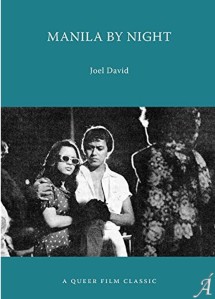
11011At some point in the past I attempted to articulate how, in refusing the reacceptance of norms (also known as mainstreaming) undertaken by the feminist, gay, and now even queer movements, lesbian activism has proved to be the most resistant to civil-rights containment – i.e., the willingness of liberal authorities to provide a place at the table, so to speak, in exchange for good behavior. Although the film-text I was then reading, Ishmael Bernal’s Manila by Night (1980), literalized its queerness by fragmenting its narrative structure, Sabel performs an even queerer reversal by intertwining two strands that I did not imagine could be integrated in the same young-Pinay body: the sexual and the political.

11011In short, where I had simply observed that the political lesbian, by embracing her historical “lack” and exploiting what has been regarded as her weakness by precisely insisting on her right to constant mutation, can be equated with a similar long-running revolutionary, the Third-World guerrilla, the film Sabel presents both options within the same person. And although the twists and turns in the main character’s story could amaze – or dismay – those seeking full understanding from the get-go, the signposts are all in place, ready to be acknowledged if one grants the movie a second screening: the character’s volubility, her bouts of inarticulate rage, her insistence on solitude, her reliance on the support of “sinful” men, her capacity for strategizing, and her recognition of the variable uses for one’s body, starting with her decision, early enough in the narrative, to undress in order to calm down a hysterical male prisoner.

11011In fact, the potentially explosive feminist issue of rape is what provides the film with its most carefully calibrated distinction: although as a nun, Sabel allows her own rape to take place (which, by most legal definitions, decriminalizes the act), she refuses to forgive the land-grabbing lawyer who ravages her lesbian lover. Rape, in this sense, is separated from rough sex by the fine line of personal consent, in much the same way that Freud described the inevitable interrelatedness of pleasure and pain. In this way the movie takes a position regarding the standard American feminist debate on pornography, wherein the right-wing pro-Moral Majority camp insisted on its synonymity with rape and the queer wing took the broader view of considering women’s sexuality a potentially enabling and liberating force.

11011So what have we got so far from the film? A clutch of ironies, actually: a teen slut who falls deeply, near-suicidally, for one of her casual pick-ups; a rebellious daughter who protects her neurotic mom from an abusive husband by setting up his downfall; a nun who turns out to be complicit in her own sexual violation; an absentee wife who admits genuine love for the father of her child; a life-long urbanite who finds solidarity with oppressed tribespeople; an exonerated prisoner who had actually committed the crime she was imprisoned for; a sexual sophisticate who rejects the fashionable trend of lesbian chic in favor of a butch-femme arrangement. Such a head-spinning combination of contradictions makes sense only if we accept that a character could be radical on her own terms, and Sabel’s Sabel proffers terms that are as unorthodox as they come.

11011In comparison with other feminist Filipino films, notably the same scriptwriter Ricardo Lee’s early ’80s output for Marilou Diaz-Abaya plus her more controversial though still indispensable later output (especially Sensual [1986] and Milagros [1997]), Sabel unequivocally demands to be taken as an integral part of the canon. It improves on Brutal (1980) by first seemingly reversing the gender of its investigator, from female to male, then ensuring that this person is sufficiently de-masculinized – as an ex-prisoner castigated by his fiancée’s mother and rendered reverential (feminist, in a sense) by the sacrifice of the nun he thought he had raped and by the love of an ambitious and capable woman – prior to allowing us to share his gaze. More important, it corrects the only sour note in the otherwise pitch-perfect Moral (1982) – the depiction of a minor character, one strong woman, among other strong women, whose only “fault” was that she happened to love other women.

11011Per the Internet Movie Database, this is the director’s and writer’s eighth collaboration. Most of the Joel C. Lamangan films I have seen evinced an admirable willingness to tackle ambitious themes with the heavy-handedness of a self-consciously classically oriented artist. Sabel is that wondrous creature, a work that pulls in issues from all over the map with the skill of an accomplished raconteur, one unafraid to deploy standard-issue devices (jump cuts and quick dissolves, flashback indicators, dramatic echo effects, etc.) for the sake of easing the narrative along. When the genuinely subversive resolution becomes apparent – the conciliation between the less-patriarchalized straight man and his former lover turned lesbian avenger, one accused of murder and the other getting away with it – it registers first as a warm, feel-good moment, sustained by the closure of the other characters’ stories, before the shocking implications take over.

11011Past Lamangan films, whatever their limits, could not be faulted for his direction of actors, but in Sabel he elicits career peaks from all the major performers. Wendell Ramos appears to have correctly judged how to attack his role by utilizing a childish affect during his emotional highlights, instead of the now-hackneyed (and predictable) sensitive-male approach, while Sunshine Dizon demonstrates authority as a medical professional and confidence as a soft-spoken butch lesbian. Most impressively, Rio Locsin turns in a radiant, witty, and mercurial performance as Sabel’s mother, all raw-edged neurotic tenderness that threatens to exterminate anyone unfortunate enough to share screen space with her: when she turns on the charm for her daughter and prospective son-in-law, then turns on him to express her unmitigated disapproval, one can completely understand how he can be spellbound enough to smile through her insults and later consult with her on how to find her missing daughter.

11011How does the lead actress fare in relation to such expert deliveries? It would be nearly impossible to find reference points for evaluation, given the singularity of the character in local cinema. One could attempt a commutational exercise by imagining how, say, the young Nora Aunor could have further enriched the role by lending it the discursive wealth of her persona or how the young Rio Locsin could have added a crucial measure of sensuality, but this also indicates how Judy Ann Santos’s achievement as Sabel is worthy of comparison with our very best talent. I was first appreciative of how unconcerned she was about her looks, considering how far from conventionally beautiful her features are. As she continued to immerse in the difficult metamorphoses of her character, I realized how hard-working this young talent was, and how much justifiable pride she manifested in a job well done. And yes, she does manage to hold her own before the force of nature that is Rio Locsin. If ever, and if only, unapologetically transgressive women characters become a staple in local fiction, Santos’s performance will serve as yardstick not because she was first, but because she made it memorable.

11011One final female auteur has to be cited: she shares story credit for the film, and is its producer as well. Lily Yu Monteverde has never gotten her due as the most productive mogul in our country’s colorful film history, largely because she also has a contradictory reputation as a disruptive producer. But now that even the trashy products of Regal are developing cult reputations, people better start rethinking whether, like Sabel’s, “Mother” Lily’s success wasn’t well earned after all. I’d say, on the basis of previous prestige projects (Mike de Leon’s Sister Stella L. [1984], Lino Brocka’s Makiusap sa Diyos [1991]), the main character’s nunhood phase was her contribution. But the larger contribution was the production itself. When Sabel insists that everything is part of a larger design, one that she later admits she herself could not completely discern, which creator could the filmmakers be referring to?

[First published July 12, 2004, in Philippine Star]

Back to top

Survivor’s Guilt

Boses
Directed by Ellen Ongkeko-Marfil
Written by Froi Medina and Rody Vera

Boses is not the first noteworthy film shut out of awards recognition in Cinemalaya – anyone ever heard of Arah Jell G. Badayos and Margaret G. Guzman’s 2006 Mudraks? It joins a long and still-lengthening list of works, local and foreign, film and non-film, overlooked upon initial release, whose reward(s) would arrive, sooner or later, in the form of belated acclaim, discursive attention, extended shelf-life, or, best of all, a mix of all three. What distinguishes Boses is that it also serves to indicate a peak in the Cinemalaya ideal: the hope that talent from the margins could eventually overrun the mainstream even while playing by the latter’s rules.

11011This may be the reason why the festival jurors may have felt alienated, embarrassed even, by Boses’s accomplishments.[1] Boses takes a grim situation (child abuse), matches it with high-art therapy (classical music), and unfolds the narrative with a strong dose of pleasure, as startling in its effectiveness as it is unexpected, given the nature of its material. In this manner the film betokens not just some of the best moments of the local industry, but also that of Classical Hollywood – the dominant 20th-century film movement that the rest of world cinema attempted to topple, with the European New Wave finally managing the feat just a few decades ago.

11011But what became Boses’s liability also turned out to be the source of its instant turnaround: already the current Cinemalaya top-grosser, it appears capable of attaining blockbuster status, with repeat viewership boosted by word-of-mouth commendation, occasionally hysterical responses even in the staid venues (Cultural Center of the Philippines, University of the Philippines Film Institute) it has graced so far, and star-is-born adulation lavished on its gifted and charismatic child performer, Julian Duque.

11011The trouble with Boses’s context of emergence is that it requires critical observers to weigh the film’s merits vis-à-vis those of the other Cinemalaya entries, especially this year’s winners. One strategy would be to point out the weaknesses of the prize-winners, but this would imply that the goal of figuring out a single “best” film is correct and satisfactory, when all it is, in a situation overwhelmed by an excess of achievements, is individualist in the worst tradition of auteurism (the New Wave “theory” that posited that films can be evaluated according to singular creative contributions, rather than collective efforts). In pursuit of this exercise, a circle of fellow cineastes helped me figure out what ailed the major winners (and, possibly by extension, the current crop of indie practitioners): a valorization of technical supremacy and over-reliance on deconstructive methods by the best-film winner, an endorsement of bourgeois middle-brow ambitions by the best-direction winner, and an infantilizing of outsiders (literalized by depicting them as children, with characters from the nation’s capital providing conflicting versions of modernist enlightenment) by the special jury prize-winner.

11011Yet this type of winner-take-all exercise presents its own form of danger, in the sense that Boses, for all its counter-acclaim, also partakes of some of the winners’ weaknesses. In fact our position as responsible observers makes it necessary to point out that a more radical handling of its material would have us understand, to the point of empathy, the abuser’s dramatic condition, the abused child’s reason for willing to have remained a victim for so long, and the tensions in the social worker’s position of class privilege in relation to abuser and abused. And we still have to bring up its filmmaker’s admission that she had to significantly sanitize the situation, not to mention the language, familiar to real-life child-abuse perpetrators, victims, and therapists. Plus it appears to uncritically question the pro-choice option.

11011With all the ways it might have fallen short, why does Boses remain the favorite of many, me included, anyway? One clue lies in the movie’s first end credit: a dedication to Johven Velasco, a film artist, teacher, and scholar who languished in academe until his sudden and tragic demise about a year ago, unknown to the rest of the world except for a handful of students and friends who swear by his selfless dedication and willingness to share everything he had, even at the expense of his own welfare. The fact that Ellen Ongkeko-Marfil makes this connection between the lives of her characters and that of an actual acquaintance indicates that she recognizes and upholds the power of love, a value that, even more than film pleasure, tends to upset film experts, used as they are to the constant and facile ways it gets exploited in the medium.

11011Indeed the core relationship in Boses, between the young survivor of parental abuse and the violinist who awakens the former’s talent and in the process attains his own closure from a personal tragedy, is what provides, for want of a less corny metaphor, the film’s heartbeat. Not only does the interaction start cute and end passionately, complete with initial misunderstanding, close calls, near-breakdown, and bittersweet separation, it also occasions bravura performances by the actors involved – as thespians and as musicians. Even more surprising, though perfectly logical, was Ongkeko-Marfil’s onstage acknowledgment, during the film’s UPFI screening, that Coke Bolipata and Julian Duque are violin mentor and student respectively in real life.

11011Though Boses benefits immeasurably from the chemistry between the pair’s star turns, the high level of quality displayed by the rest of the film’s cast proves that Ongkeko-Marfil’s background in stage arts (specifically the Philippine Educational Theater Association, where she and Johven Velasco started out) has helped complement the impressive evolution of her cinematic skills. Her earlier films, Angels (2001) and Mga Pusang Gala (2005), already generated appreciative buzz among indie-film observers. With Boses, she hewed close to what Lino Brocka and Ishmael Bernal, misrecognized among indie filmmakers as foreign-festival and anti-mass audience innovators, struggled to achieve throughout their extensive careers: the unapologetic provision of spectatorial pleasure alongside their inevitably intelligent handling of material.

11011The mode that Ongkeko-Marfil chose constituted her gravest challenge to serious film evaluators: melodrama, a type of genre that belongs to the larger group of “body” films, so-called because of their ability to provoke corporeal, as opposed to cerebral, responses – i.e., tear-jerking in this instance, goose bump-raising in horror, sexual arousal in pornography, laughter incitement in comedy. Feminist critics, for the greater part of the last couple of decades, have been spearheading the campaign to recuperate these much-derided genres, but their uphill movement shows no signs of reaching level ground in high-art (and therefore essentially conservative) culture, the indie-film scene included.

11011Boses evinces a systematic working-through of the elements peculiar to the local practice of melodrama, but the mechanisms, subtle as they are, become evident only upon further viewing. I even managed to jot down, in the dark of the screening venue, the Pinoy terms used by native practitioners: kilig, tampuhan, tawanan, kantahan (with violins instead of voices), habulan, and pagwawala, in chronological order as well as according to increasing level of involvement.[2] The penultimate sequence – spoiler alert! – between the teacher and student protagonists encapsulates the film’s earlier depiction of the shifts in their relationship: from farewell bonding, to panic, to relief, to hysteria, to music-making, to a brief comic exchange, to a final display of open-air (and -water) exuberance. One might wish that the performers had been seasoned enough to allow Ongkeko-Marfil to use a single take (a much-abused property of digital technology), but my first impression was that the scene had unfolded in one continuous action covered by multiple cameras (another advantage of the new technology) – such was the brilliance of the said sequence’s nearly wordless conception, grand in its romantic dimension yet sad in its recognition that the just-bonded individuals will never be this close again.

11011In fact the musical number that ends the narrative succeeds precisely because it refuses to provide definitive closure for any of the characters: the teacher will have to contend with his newfound dependence on the validation provided by his prodigy, the child will have to work out his loyalties toward his two needy father figures, the biological father will have to face the reality of his son challenging his vulnerable manhood, the social worker will have to start worrying whether her decision to reconcile the family would work out for the kid, the young girlfriend will have to find a way to attain sexual normality … just as people who have experienced these lives will have to return to places they call home and rethink the relationships they might have taken for granted up to this point.

11011A few films (even Filipino ones) may have incited revolutionary change, but the inward turn that Boses inspires, at a time when many of us have learned to muddle through with severely lowered expectations, ought to be fulfillment enough for the talents behind it. Most local digital practitioners will continue to aspire to attain festival honors in foreign lands, but this is the first movie made by a colleague of theirs that, more than anything else, truly belongs nowhere else but home.

[First published October 16, 2009, as “Boses Is for the World” in Philippine Daily Inquirer]

Notes

[1] An even likelier reason, which I never managed to corelate until now, was the unethical and pretentiously pseudo-Marxist bashing visited on the film by evaluators during the “congress” that the Cinemalaya organizers limit to taste-mongers in Philippine criticism and academia. See the “Indie Cinema Bilang Kultural na Kapital [Indie Cinema as Cultural Capital]” blogpost.

[2] The Filipino terms may be translated, in order of enumeration, as follows: titillation, sulkiness, laughter, musicality, pursuit, and rampaging fury.

Back to top

Sighs and Whispers

Biyaheng Lupa
Directed and written by Armando Lao

The much-ballyhooed emergence of digital film production in the Philippines has brought with it several paradoxes. On the one hand, while it has enabled critics to celebrate the revival of local cinema, the fact remains that genuine industrial-scale production has remained moribund, save for the occasional ultra-commercial event movie that would always, and continues to, embarrass the said critics (on which more later). On the other hand, largely because of the still-evolving shape of the dynamics of production and exhibition, more and more individuals are able to come up with their own releases, here and now, without having to go through the old eye-of-the-needle difficulties posed by then-prevalent but too-expensive celluloid production. Yet, also a consequence of such a sanguinary situation, too few of these would-be innovators see no problem in going over the heads of the local audience, as evidenced in nearly everyone’s eagerness to attain personal artistic validation by opting to make a mark in high-brow, preferably foreign venues.

11011These are problems whose solutions demand immediate attention, if only those in a position to attend to these issues could themselves take a step beyond self-aggrandizement. But one further paradox must be pointed out first, since it may be the most relevant in terms of Biyaheng Lupa. This proceeds from the preceding one, wherein digital production has provided an ever-growing number of prospective filmmakers with directorial breaks – so consistently, in fact, that eventually there might no longer be such a creature as a frustrated filmmaking aspirant. As in writing, where the fairly easy access to a typewriter (now a computer) nullifies any would-be author’s material excuses, so does digital film technology provide any auteur hopeful with a dwindling number of reasons to hesitate in taking her or his first directorial step.

11011Yet the now-unlamented tyranny of monolithic celluloid-dependent production was in fact capable of instilling in some of the best filmmaking candidates certain qualities that today’s film institutions, eager as most of them are to prove the worthiness of their respective trainees, wind up only paying lip service to: a solid grounding in the humanities, a thorough grasp of classical traditions, a philosophical engagement with issues both current and past, an enduring respect for the exigencies of financial risk-taking, and a willingness to engage the mass audience by entertaining and challenging them in turn, or simultaneously whenever possible. For this reason most old-school filmmakers, like today’s young Turks, could come up with creditable first projects … yet the old-timers could also sustain life-long careers by virtue of their intense personal commitment to complete artistic preparation, prolonged by the years, sometimes decades, of awaiting their respective breaks, whereas most of the names populating contemporary Filipino filmographies will be known mainly for the films they first came up with, and will be overstaying their welcome sooner or later.

11011It therefore also makes sense to maintain that the best local debut film, Ishmael Bernal’s Pagdating sa Dulo (1971), had not been surpassed for the past three decades, even in the face of the wild proliferation of first-timers since the turn of the millennium. Pagdating signaled the emergence of a talent distinguished by precociousness, reflexive criticality, intensive interest in social issues, and empathy for Otherness, with comic distance from profound institutional tragedies providing the equivalent of icing on the cake. And it also makes just as much sense to aver that Biyaheng Lupa shares all of Pagdating’s merits and then some, considering the fact that its director-writer, Armando Lao, has had close to a full career in scriptwriting – over a quarter-century, in fact – and had even then already embarked on an unrelated career or two elsewhere beforehand, much like many of the celluloid-era filmmakers once did.

11011A final similarity shared by both debut films resulted in an outcome that should not have happened then, and that has even less justification for occurring today: both display a sense of innovation so thoroughgoing yet so nonchalant that film evaluators have wound up taking the films’ presence, then as now, for granted. It would be newsworthy in itself if any influential institution were to recognize Biyaheng Lupa as the best Pinoy film debut of our time, just as Pagdating sa Dulo held that distinction for decades once people woke up to the fact. What will prove the current weakness of, say, the local critics’ group’s dynamics would be the inadequacy of its current screening methods – a reliance on individual video screeners, mainly, rather than the theatrical exhibitions that once guaranteed that complex film texts would have the potential to maximize their impact by approximating actual viewing experiences.

11011Like no one else except Bernal, Lao has infused his very first outing with a recognizable and fully developed aesthetic philosophy. Those who had been able to follow his scriptwriting career will be able to trace where he had been headed, and how he had managed an extensive self-revaluation and, at the same time, a welcome return to his roots. One could form one’s anticipation based on, say, the earthy handling of William Pascual’s Takaw Tukso (1986), the time-based experimentation of Chito Roño’s Itanong Mo sa Buwan (1988), the tragicomic national allegories of Jeffrey Jeturian’s Pila-Balde (1999), and the reflexivity of Jeturian’s Tuhog (2001), but Biyaheng Lupa would still prove more surprising than what any of these major works could presuppose.

11011Per the filmmaker’s own account, Biyaheng Lupa departs from Lao’s utilization of real-time presentations, notably in his collaborations with Jeturian and Brillante Mendoza. Lao’s real-time narrative strategy was itself a coping mechanism, after the commercial failure of his epic-scale project with Jeturian, titled Minsan Pa (which, like Biyaheng Lupa and Jeturian’s Kubrador [2006], was produced by MLR Films, whose executive producer, Joji Alonso, may yet bid to be the Jesse Ejercito of Pinoy digital productions). Lao has described Biyaheng Lupa as reliant on poetic time, where cosmic principles impinge on the unfolding of the narrative, as opposed to the duration-dependent real time and his earlier deployment of character-based dramatic time. Originally intended as a dramatic-time type of narrative focused on one of the present film’s main characters, the project hibernated, so to speak, as Lao went through his real-time storytelling phase, and re-emerged in the poetically inflected mode it has assumed at last.

11011Lao and his collaborators had endured varying measures of acclaim and grief – sometimes within the same project, as was the case with Mendoza’s 2008 Cannes entry Serbis. Curiously, Biyaheng Lupa both embodies this materialist orientation and transcends it at the same time, via its initial fragmentation of a close-quartered social unit, the passengers of a southbound bus, and the subsequent revelation of the artist’s motive: an amazing reconstitution of this same unit within the terms of the characters’ inner lives and often in spite of their individual selves, to such a degree that when one of them remarks, “My life is not alone,” it serves as a confirmation of what everyone had refused to accept until the fateful end.

11011Biyaheng Lupa sets out its contract with its viewers by asking them to accept its sole artificial element, the premise that people think in terms of words alone, rather than in terms of images or, more likely, in audiovisual stretches. Once we accept this, the film takes us on the journey of several characters – sixteen, if we were to go by the list of major performers, or seventeen if we include the anonymous, unseen ultimate determinant, the bus driver … who may or may not be standing in for the author, but the film’s ontological complications do not end here. At some point during the trip, the conductor operates the ubiquitous video player, and the Biyaheng Lupa producer’s earlier film, the aforementioned Minsan Pa, unfolds. Here the filmmaker may be acknowledging the reduction of finances (from celluloid epic to single-set digital) alongside the increase in scale (from hero-centered love triangle to multi-character dramatic discourse), even as the screen-within-the-screen characters, as stars playing “real” people, interpellate the bus passengers – who in turn “respond” by discussing the presentation, but whose comments reach neither the film being shown nor one another, but the film audience.

11011These polysemic valences come to a head with another video screening, this one more overtly interactive: a sing-along to Louie Ocampo’s pop ballad “Kahit Isang Saglit [Just One Moment],” where the passengers, without their knowing it, literally think of exactly the same thing, thus unconsciously-yet-deliberately forming an extemporaneous community of their own. The measure of Lao’s skill as documentarian is in how he demonstrates this occurrence without the usual humanist throwbacks to shared ideals or unified aspirations. In fact, the characters fall into singing along just as easily as they plot, bicker, judge, reminisce, fantasize, and regret, with one of them even developing at one point a funny-scary paranoid delusion that erupts in a knife-wielding outburst that just as quickly fizzles into abject surrender. One might remark here that, given the radical paring-down of scale and resources, Biyaheng Lupa attempts the same successful delineation of a recognizable Filipino social milieu that Bernal’s Manila by Night (1980) had done, but with more characters, and in reverse: where Bernal started with relative unity and stability and built up toward a monumental breakdown, Lao begins with the more recognizable self-absorbed individuals typical of a harried neoliberal Third-World existence, drifting in and out of their inner lives as they contend with the company of one another.

11011Yet even as they insist on the primacy of their lives prior to and possibly after taking the present trip, a question of haunting arises. The audience is never provided any assurance that the memories conjured up by any of the characters are real (one of them in fact worries that her illegitimate pregnancy will result in the delivery of a monstrous squid-baby, just like her neighbor did before her), which is why when the film follows some of them after they leave the bus, their situations acquire an uncanny quality that never became an issue when they were still taking the trip. On the other hand, most of them are so caught up in their other lives that the proximity of the other passengers results in intrusions that they dismiss, reject, misrecognize (especially in erotic terms), or at best tolerate; in short, while for us the characters’ pre-trip lives might just as well be fantastic, for the characters the other passengers might as well be specters that could dissolve once this transition in their lives has passed.

11011Such insights on transience, destiny, and the abiding power of memory are brought to bear in the film’s bravura climax, simple in conception, casual in execution, yet grand in the best possible way, heralded by a mystifyingly long take of the bus crossing a bridge then pausing in the middle. Without giving away (too much of) this vital closure, I ought nevertheless to remark that we witness a series of rapturous textual ruptures and arrive at one of the most incredible final shots in cinema – and yes, I do include global samples in this declaration: a close-up of the last passenger, her face crowded by translations of the monologues of everyone else around her, building up to her final utterance, devastatingly simple, amusing yet heartbreaking, drawn from a fiction whose reality effect surpasses whatever documentations have been made of life in our wondrous, terrible, much-abused yet constantly hopeful existence.

[First published May 2, 2009, in Philippine Star]

Back to top

On the Edge

On the Job
Directed by Erik Matti
Written by Michiko Yamamoto and Erik Matti

On the Job (hereafter OTJ) commemorates at least one milestone in the still-evolving narrative of Philippine independent cinema: it is the first digital-era action film to attain the genre’s elusive combination of critical acclaim and box-office profitability, reminiscent of the local industry’s social-realist achievements during the martial law period (roughly the ’70s to the mid-’80s). From my sadly delimited perspective, the project seems to have benefited from a serendipitous confluence of its creative forces, director Erik Matti and co-writer Michiko Yamamoto, each attaining a peak in relatively short careers already marked by several high points.

11011One measure of the movie’s impact lies in how it has been able to elicit commentary even from Pinoy reviewers who tend to focus on so-called mainstream releases. This is the key to OTJ’s significance as the latest in a still-rare series of independently produced films that fulfill the dream of a community of practitioners who seek to overrun the studio-dominated mode of production and exhibition. Unlike Aureus Solito’s Ang Pagdadalaga ni Maximo Oliveros (2005), the first digital indie success that turned out to be the exception that proved the rule, all the rest were generically recognizable exercises, notably a pair of comedies (Marlon Rivera’s Ang Babae sa Septic Tank and Jade Castro’s Zombadings 1: Patayin sa Shokot si Remington [both 2011]) and a melodrama (Ellen Ongkeko-Marfil’s Boses [2008]). OTJ claims pride of place in being directed at the patronage-shy male audience while accommodating whatever combination of viewers (female, youth, intelligentsia) still manages to sustain theatrical screenings.

11011In fact the few negative responses to the film dwell on aspects that the movie had no choice but to observe in order to succeed as a genre sample. One might feel that the fact that a woman co-scripted the material might have been nothing more than a stroke of luck for the project, but that would belie the evidence that Michiko Yamamoto was also responsible for the aforementioned Maximo Oliveros and Zombadings, as well as Maryo J. de los Reyes’s Magnifico (2003): if one were to imagine the men her fictions focused on, they would proceed chronologically from son to gay son to grown-up sexually conflicted teen, so there would be no reason to expect that she would be unable to deal (entertainingly) with mature conventional men.

11011What makes OTJ a qualitative leveling up, to use contemporary youth lingo, is not so much its close inspections of father-son relationships (also characteristic of the previous Yamamoto-scripted titles) as the proliferation of dramatis personae representing various social strata and performing diverse conflicting functions. The challenge of rendering these potentially schematic types as recognizable denizens of the urban jungles of Metro Manila was up to the director to realize, and Erik Matti proves himself equal to the task by relying (as Ishmael Bernal before him had been wont to do) on the tension that results from fusing a complex, raging narrative voice with a patient and keenly observed documentarian style, his on-the-prowl camera constantly encircling his major characters the same way that new media (in the form of CCTVs and satellites and camera phones, e.g.) ensure that our private moments might be shared by a voracious viewing public.

11011The icing on the cake is what probably proved irresistible to mass viewers, who are known to re-watch films that treat them to unexpected doses of pleasure: in OTJ’s case, this would comprise the nearly uniform sterling performances by an ensemble of actors who seemed to have been hungry for the opportunity to shine in sharply drawn characterizations, and proceeded to deliver quicksilver line readings, physically exhaustive maneuvers, and emotionally draining demonstrations. Actually it was only during a second viewing where I figured out that it was mainly the performances that accounted for an impression that the movie had set out to tackle Oedipal conflicts in a failed state, despite the fact that of the three sets of fathers in the film, the least visible son was the only one biologically related to his dad, an upstanding (and therefore professionally unsuccessful) police officer. The pair of prisoners who get spirited out by their militarily appointed handlers observe a mentor-student relationship (that occasionally has the potential to virtually replace the student’s own parents, as most teachers can attest), while the police detective that the Senate-aspiring general’s campaign manager assigns to attend to a series of messy clean-up operations is actually an orphan “adopted” by his father-in-law, the campaign manager.

11011If the set-up as presented sounds a mite too complex for a standard-issue actioner, that precisely is the contract the film proffers its media-savvy and issue-starved Pinoy audience, in exchange for headline-worthy acts of violence tempered with unexpected moments of gracious humor. That in itself would be sufficient payoff, but OTJ more daringly builds up its case against the state, where the lowliest character hints at the highest office in the land as implicated in unwholesome underworld skulduggery. The manner in which the father-son tensions are resolved is breathtaking in its cold-bloodedness, yet in both mass-audience and student venues that I attended, the viewers cheered at the end (as foreign-festival attendees reportedly also did).

11011A less forgiving observer might complain that the movie performs as entertainment machine too successfully, trading on its impressive skills display – and while I imagine that for some viewers that would be reason enough to be grateful, I’d hesitate to judge that desire as wrong per se. But I also think that the exchange between OTJ and its audience goes a bit deeper than that: by regarding the viewer as capable of following story threads as endless and labyrinthine as the alleyways and culs-de-sac that the characters keep navigating, hopeful for whatever reward they believe awaits them at the end, OTJ enables its primary audience to realize how Philippine society and its people are imprisoned in an insurmountable system of exploitation. Thwarted by electoral exercises, appalled by high-level corruption, distressed by the prospect of having to follow other people’s commands just to be able to survive – we are what we witness in this sordid, bloody, soul-crushing, painfully funny portrait of the national condition.

[First published September 12, 2013, in The FilAm]

Back to top

A Desire Named Oscar

Ilo Ilo
Directed and written by Anthony Chen

Metro Manila
Directed by Sean Ellis
Written by Frank E. Flowers and Sean Ellis

Transit
Directed by Hannah Espia
Written by Giancarlo Abrahan and Hannah Espia

The present year (2013) will be memorable for Pinoys mainly for the succession of national traumas it proffered, from the usual showbiz decouplings and sex scandals to pork-barrel exposés, militia violence, and record-breaking natural disasters. On the other hand, those who wish to remember whatever positive developments occurred will have enough to account for beyond the first Miss World (and Miss Supernational) beauty queens and the nth boxing triumph of Manny Pacquiao. In fact the equivalent past year, for those old enough to remember, would be 1984, when the country was in the throes of dismantling a discredited (US-sponsored) dictatorship, yet graced with what may have been the most productive Golden Age year for Philippine cinema. As if to compensate for the greater concentration of troubles that befell the republic this year, 2013 supplied not just more wonderful films than usual, but also more festivals to showcase several of these achievements.

11011The rest of the world’s film community must have been taking notes, since the Philippines not only claimed to offer “more fun” in its official tourist announcement, but also actually positioned its citizens in virtually all the inhabited areas of the globe. About one in ten Filipinos, or close to ten million in total, constitutes the official count; no other national economy depends as much on overseas income, even if three other countries (China, India, and Mexico) have, in absolute terms, more overseas citizens and consequently larger remittances. In this respect, the overseas Filipino worker or OFW possesses a status crucial to the survival of her home country, not to mention her usually numerous dependents back home. This fact ties in with several other problems whose solutions lie beyond our reach for now: elected officials, for example, will always be confident about plundering the national treasury since the people in charge of the economy will no longer be able to hold off their money-making activities, the way they did during the Marcos era; if the OFWs withheld their remittances, the pork-barrelists may be frustrated – but only after the OFWs’ families had gone without for too long.

11011Unlike Western and several newly prosperous Asian countries, therefore, the Philippine global presence is far less privileged, manifested by workers in some of the least-preferred stations in their destination countries, rather than by tourists and scholars or professionals on exchange programs. The fascination among foreign cultures with the Pinoys in their midst derives from a recognition tinged with embarrassment and guilt: in an earlier, less-developed period, they could have been us. Hence a lot of conflicted responses to the OFW presence can be explained in terms of how badly the foreign employers wish to deny this reality about themselves, or how sorry they feel for the people who might have been their equal, had history taken other turns (the global response to the victims of supertyphoon Yolanda/Haiyan can also be framed in this way).

11011Meanwhile, part of the pro-filmic renown that 2013 will be marking was the announcement that three official submissions to the Best Foreign Film category of the Academy Awards happen to deal with Filipino workers. The Filipino and Singaporean entries, Transit and Ilo Ilo respectively, are overtly about OFWs (with another country, Israel, as the setting for Transit), while the UK’s submission, Metro Manila, is about a Pinoy worker’s odyssey in his native land. Transit was the first to be screened locally, during the annual Cinemalaya Film Festival; Metro Manila was screened not long after, while Ilo Ilo will be in Metro Manila theaters by the time this article gets published. It is in reverse order of their Philippine release schedules that I will be discussing each one.

11011Anthony Chen’s Ilo Ilo brings with it a number of well-deserved distinctions, including a trophy from Cannes as well as Taiwan’s Golden Horse prize as the best Chinese-language movie of the year. It’s better than what one could hope for, and strengthens the perception of how Singaporeans are attempting to bridge the connections between their people and ours after the several difficulties the Philippines has had with the Singaporean government, from Lee Kuan Yew’s disparaging remarks about OFWs to the Flor Contemplacion tragedy. The earlier OFW-themed Singaporean film, Kelvin Tong’s 2005 horror entry The Maid, was similarly well-intentioned but too derivative and necessarily dualistic in its configuration of the “good” victimized OFW and evil-abusive Singaporean employers.

11011Since Ilo Ilo proceeds from a recollection of its filmmaker’s formative period with his Pinay nanny, it manages to depict a system where harshness and even outright cruelty can be understood even by the purported victim, with the IMF/WB-induced Asian economic crisis of the late 1990s as the invisible monster that inevitably takes over the country, driving its citizens to increasing levels of panic and frustration. Chen maintains a humane grounding for the family at the center of his narrative, with the usually demonized character, the mother, revealed as the force that keeps the family, materially speaking, together, her jealousy at the developing closeness between her son and his nanny kept in check by her realization that the problems she has to solve are larger than all of them put together, since it will mean their survival as citizens. To its credit, Ilo Ilo is able to advance these potentially melodramatic developments in a subdued, humor-leavened manner, the heartbreak of the family (and their country) falling apart and losing the first “other” friend their son has ever had all kept in check and staying with the viewer long after the screening experience has ended. If you happen to be in the vicinity where the film’s being screened, don’t wonder that people are not buzzing excitedly about it, since it’s not that kind of film; just rest assured that it will provide good old-fashioned substantive entertainment, and head to the nearest venue without delay.

11011Sean Ellis’s Metro Manila is made of more ambitious stuff, the same way that Danny Boyle presumed that he was in a position to envision the slums of Mumbai as an Oscar-worthy film in Slumdog Millionaire (2008). Alas, just as Slumdog Millionaire could only hope to repackage a proletarian children’s fantasy via all the razzle-dazzle that state-of-the-art Hollywood filmmaking could offer, so does Metro Manila falter in its attempt to portray the Pinoy underclass. The relationship between a British subject like Boyle and the postcolonial material that Mumbai represents can only work to the extent that, say, an author like Rudyard Kipling could only partially (and problematically) succeed with, and do so by devoting his entire life to living in and writing about India. And just as Slumdog Millionaire managed to get by through appropriating elements of Bollywood cinema, so does Metro Manila attempt to make its case by demonstrating how closely its makers had studied certain Pinoy social-realist samples that happened to be accessible to foreign viewers.

11011What Ellis and his team missed out on was the home-based critique of this tradition. Even worse, they subject the Pinoy psyche to a distinctly Western temperament, when the movie’s central figure (who’s male rather than female) feels shortchanged by the trader who buys his harvest, and decides to trek from faraway Mountain Province to Metro Manila, where he knows no one, bringing his entire family with him. To make things worse, everyone who meets him treats him worse than his rural boss, with a room-for-rent swindle serving as the proverbial last straw; no one even thinks of extending a hand, much less uttering a sympathetic word, at the plight of an incredibly naïve rural migrant – who it turns out can even speak fluent English! Midway through the movie the narrative veers into film-noir territory, so if you can sit out the first hour, you’ll finally be able to appreciate certain developments made more recognizable because of their generic properties.

11011Finally, Hannah Espia’s Transit stands as one of the most impressive first films in an accelerating list of local films filled with impressive debuts, and more striking since she happens to be the only female filmmaker in this trio as well as the youngest. Transit may not have been possible had the filmmaker lacked extensive preparation in her craft, and Espia’s status as a graduate of the national university’s film program evinces how the faculty, along with the better students, might have been able to assess the errors of the program’s earlier emphases on film plastics and found instead the more useful study materials on time, modernity, thirdspace, globalization, memory, and politics of gender and race. Apparently Espia reached into her own history as the child of Israel-based OFWs, and returned to this past in order to evoke it for people – her own, and others – who might find it less familiar than she does.

11011By focusing on a single episode, which may be roughly described as the effects of recent Israeli security policy of deporting the children of migrant workers too young to attend school, and the responses of a small circle of OFW relatives and friends, Espia enables the audience to realize the human cost of such a harsh (through presumably necessary) official decision; like Anthony Chen, she also positions the OFWs’ foreign employers as distinct from their countries’ state forces, and one realizes how well she succeeds with the characters in her narrative when an Israeli employer, a generous and avuncular elderly fellow, suffers an attack – and an OFW child, left alone in the Israeli’s house, now has to risk his resident status by running out into the open to seek for help.

11011The film’s complexities derive from the characters’ difficult relationships with one another, desirous of constantly expressing the warmth that Pinoy culture ingrains in its citizens from birth, yet wary of the way that this surrender to the dictates of the heart could trip them up in relation to their host country’s wartime rules and regulations. The narrative structure is in fact so simple that it actually helps the “readers” (the film’s audiences) to place where an individual character happens to stand in relation to the others, before her or his private moments reveal what thoughts or emotions she or he might actually be harboring deep inside. The same episode gets played out over and over, and in increasing length, from the perspective of characters who are ranged, chronologically, from oldest to youngest, until it ends up with a person directly affected by the country’s policy, a child below the age of five, and attains full circle cinematically while insisting on an open ending, with the characters changing the resolutions of the stories that they exchange with one another.

11011Having once taught at the institute where Espia had studied, I never imagined that an undergraduate would be able to configure how film form can be invested with useful discursive valences – so either this is an unusually gifted person who was fortunate in having previously unexploited material, or we might finally be witnessing an end to all these tiresome shallow experimentations that look like painfully prolonged film theses. Like Anthony Chen (and unlike Sean Ellis), Hannah Espia focused on theme, character, structure, historiography, and politics, and never let go of gentle humor. She apparently used admittedly difficult recent readings to find ways to tinker with these elements, and presumably set aside the usual goofing around with lights and mics and lenses and reflexive references. There’d be no other way for her and Chen to grow, full-grown as they already are, except by becoming fuller film specialists.

[First published December 4, 2013, as “The OFW Finds Well-Deserved Recognition in Hollywood” (Part 1) and as “Metro Manila and Transit: Ambitious, Impressive” (Part 2) in The FilAm]

Back to top

Antonio Luna’s Fall and Rise

Heneral Luna
Directed by Jerrold Tarog
Written by Henry Francia, E.A. Rocha, and Jerrold Tarog

By now, any Filipino in any part of the world who has been extensively plugged into the social network of Facebook would have heard of Heneral Luna, the celebrated blockbuster on Antonio Luna. Among several ironies, Luna (1866-99) was reluctant to participate in the uprising against Spain but led the revolutionary army, the Katipunan, in resisting American occupation; like the Katipunan’s founder, Andres Bonifacio, Luna was assassinated by his own compatriots, possibly on orders (or at least with the compliance) of the “first” Philippine president, Emilio Aguinaldo.

11011The film, directed by Jerrold Tarog and scheduled to screen in the US in a few weeks, boasts of several accomplishments beyond provoking renewed interest in several unresolved century-old controversies: it marked the emergence of vital new players in the burgeoning Philippine film scene; it exemplified ways of reworking a difficult and nearly forgotten local genre, the historical epic; and it demonstrated the material potential of social-network activism, with the movie’s box-office record actually increasing from one week to the next in direct proportion to the buzz generated among Facebook users. (Of special interest to social-science observers will be how this correlation between new-media activity and citizens’ decision-making plays out in next year’s Philippine presidential election.)

11011Only the most assiduous students of Philippine cinema will be able to assert that, contrary to the general impression, Heneral Luna is not the first successful local historical epic. Several other period films, notably Eddie Romero’s Ganito Kami Noon … Paano Kayo Ngayon? (1976), are fondly remembered even though they do not purport to overtly depict any historical personage; Celso Ad. Castillo’s Asedillo (1972) and Peque Gallaga’s Virgin Forest (1985) deal with personalities involved in the Fil-American War and its aftermath; and several other titles, notably those of Gerardo de Leon, Marilou Diaz-Abaya, Mario O’Hara, and Mike de Leon, tackle the novels of Jose Rizal and/or the life of the national hero himself.

11011Heneral Luna, however, stakes a claim on Pinoy historical-epic production, and not only because it is the first well-received one made since the film industry’s transition to digital format. It evinces careful study of the tradition of an admittedly outmoded genre, one that was much-admired during the early years of cinema but has since been regarded with a certain degree of embarrassment, if not disdain, for its indulgence in “surge and splendor and extravagance,” as described by film expert Vivian Sobchack. By his own admission, Tarog reworked an already finished script not only by translating it from English, but also by adding several scenes and details, including a surprising amount of humor; in this way Heneral Luna manages to recall not just Romero’s work, but an unfairly forgotten early film on Artemio Ricarte by Ishmael Bernal, El Vibora (1972).

11011Unlike Romero and Bernal, Tarog exhibits a fluency in film language that enables him to bypass several of the standard elements of the historical epic genre. He had managed to work around the more technical requirements – the use of recognizable performers (as Asedillo, for example, had Fernando Poe Jr.) and the distension of time and space – by casting appealing performers who were capable of larger-than-life delivery without losing histrionic credibility, and by covering so many sociopolitical issues over so much geographic space that the film actually seems to run longer than its barely two-hour limit and seems to be spilling out of the confines of the frame; by the time the American colonial officers congratulate themselves and mock the natives’ attempt at self-determination, and face the audience to deliver their lines, the gesture seems to be so consistent with the film’s disciplined use of postmodern devices that no one feels that some realist contract has been violated.

11011The more significant contribution of Heneral Luna has been in Tarog’s refusal to follow the historical epic tradition of “writing History” (again per Sobchack), but instead opts to write a (version of) history, admitting to the use of fiction (as announced in the prologue) and even rumor (as admitted in a closing-credit notice). In so doing, the film manages to evade and even subvert the several forms of ideological baggage that encumbered Classical Hollywood samples: the rational humanism, bourgeois patriarchy, acceptance of colonialism and imperialism, and validation of entrepreneurial and corporate capitalism that typified early Oscar winners, for example. More than any previous sample of Pinoy historical epics, Heneral Luna comes closest to what may be termed the counter-cultural extravaganzas of post-Classical Hollywood and European cinema. It also reconnects with another moribund local genre, the action film, by repackaging the eponymous lead character as neither (strictly speaking) hero nor villain, but as a complex antihero: the responses of the secondary characters to his temperamental contradictions subtly mirror an audience dynamic, with the less “critical” mass audience more accepting, and appreciative, of the film, in contrast with pickier, logic-obsessed, PC-insistent commentators.

11011Hence anyone who scours the internet for every available response to the film would have eventually stumbled on dissenting commentaries, some of them harsh or outright dismissive. This would be understandable in any work of sufficient ambition and coverage: there will always be elements that will rub some people the wrong way, and in Heneral Luna these have arisen in the text’s critique of parochialism (painful for those who happen to be associated with certain tribes or regions identified as the villains of this specific version of history) as well as in the downplaying of American complicity in the revolution’s most contemptible tendencies. For a preferable corrective, I would refer such would-be critics to another fairly recent period film, ironically by an American, John Sayles’s Amigo (2010), which should be viewed as the history-from-below intertext of Heneral Luna.

11011For it would be to anyone’s future detriment to write off Tarog and his intention of completing a trilogy of filmic discourses on Philippine history. As a non-mainstream filmmaker, he had already come up with a personal series (which he calls his “camera trilogy”), and these indicate a willingness to delve into uncomfortable material via innovative strategies. With Heneral Luna he has managed to be earnest about raising questions of patrimony and identity while remaining playfully distant and allowing the audience to figure out their own takes on the past and on the filmic future. It takes a certain type of commitment (or what the romantically inclined might call “love”) to embark on this kind of long-term project, so anyone about to watch the film better be prepared: displays of love can embarrass, and surrendering to it will be overwhelming.

[First published October 15, 2015, as “Historical Film Depicts Antonio Luna’s Fall and Rise” in The FilAm]

Back to top

Ice with a Face

Ma’ Rosa
Directed by Brillante Ma. Mendoza
Written by Troy Espiritu

Brillante Ma. Mendoza’s Ma’ Rosa holds the distinction of being the second Filipino film to win at the Cannes Film Festival’s main competition. Even more impressive is the fact that the previous winner, Kinatay (2009), was also made by Mendoza, who won for direction. Ma’ Rosa copped a “lesser” prize (best actress for Jaclyn Jose), but as any observer of Philippine movie awards will confirm, any performance award makes a bigger splash with the local public, because of the way it plugs into the star system.

11011Jose’s achievement has the additional allure of the unexpected: among a long list of respected actors, she had long been relegated to secondary status (“supporting,” in awards parlance), although she managed to land a well-received lead role or two every decade since the 1990s. She emerged as an already-accomplished talent in late 1984, and had Lino Brocka scrambling to cast her in as many fallen-women roles as he could commission; in a couple of years, she earned an enviable notoriety for dominating sex-themed films without any compunction about shedding off all her clothes while delivering performances that won her a series of critics’ prizes. (Several of these 1985-86 titles may be found, remastered but unsubtitled, at Jojo Devera’s [now defunct] Magsine Tayo! blog.)

11011The standard procedure among Philippine film experts is to run a commutation test (following John O. Thompson’s prescription) imagining how the role would have turned out if it had been performed by Nora Aunor. Hard though it may be to believe, certain roles had always tended to lie beyond the reach of the country’s foremost film performer – sex roles, for example, like the ones that Jose once specialized in. Jose in Ma’ Rosa acquits herself sufficiently so that by the end of the presentation, one might still be able to speculate how Aunor could have enriched the role, but one would have to be too much of a Noranian to deny that Jose succeeded in creating an iconic character, one that would have been the logical outgrowth of the poverty-stricken sex kittens that she used to portray.

11011Jose’s predicament is matched by Mendoza’s. After witnessing how he had a series of increasingly controversial wins (topped by Roger Ebert’s sustained tirades against Kinatay), people now feel righteous enough to point out that his latest outing proffers yet another variation on his “poverty-porn” material. Once more it is anchored by his long-time collaborator (and Ma’ Rosa consultant) Armando Lao’s vérité-inspired found-story approach, focused on the dregs of society trying desperately to make ends meet, with the police force behaving as a sinister and ruthless extension of a negligent state that leaves its vulnerable Third-World populace to be buffeted by the combined forces of postcolonial neoliberalism, climate change, and uneven development patterns.

11011Yet Ma’ Rosa shares certain properties with some of Mendoza’s best work. It has the suspenseful exposition of Tirador (2007), the warmth of Foster Child (2007), the technical expertise of Serbis (2008), and even casts an actor from his first film, Masahista (2005), to play the same role as a gay sponsor. Jose as the title character and Julio Diaz as her husband appeared as a married couple not just in Serbis but also in William Pascual’s Takaw Tukso (1986), where Mendoza worked as production designer (and performs the same function in Ma’ Rosa, as he did for a number of his previous films).

11011Even more unexpected is the easy way that the current release lends itself to a second screening. Ma’ Rosa appears to promise further insights beyond what an initial viewing conveys, and dutifully manages to fulfill that promise. We see the worst of the policemen behaving tenderly toward a couple of youthful drug users, and the entire corrupt police force bantering playfully with a gay minor, Dahlia, who acts as their office maid.

11011Ma’ Rosa herself comes across as an exemplary businessperson, with enough sense (unlike her good-for-nothing husband) to avoid using the very product she dispenses and to keep a detailed sales record that winds up incriminating her; indeed her strong-woman genes seem to have thankfully persisted, with her daughter (played by Jose’s real-life offspring) the only one among her children still in school. Once we know Ma’ Rosa’s sub-rosa activities, and we see her purchasing instant noodles at the beginning of the film, we then find ourselves noting the irony of how certain products cause extensive health damage yet some of them can be acquired legally while others have to be handled with full awareness and acceptance of the risks involved.

11011An overlooked aspect of Mendoza’s work is his handling of women performers, and Jose’s Cannes prize serves as reminder for us to reconsider the several elderly actresses he had provided with rare opportunities to showcase their abilities: Aunor for Taklub (2015) and Thy Womb (2012), Anita Linda and Rustica Carpio for Lola (2009), Maribel Lopez for Kinatay, Gina Pareño for Serbis, and Cherry Pie Picache for Foster Child; an exceptional case would be Coco Martin, the closest to a Mendoza signature actor, who burst on the scene with Masahista and has become a household name (while occasionally reappearing in Mendoza films) as Philippine independent cinema’s most vital contribution to the mainstream industry.

11011Jose’s reading of her role is complemented by the high level of performance of the rest of the cast. Mendoza is one of the few indie filmmakers who can command people with leading-role backgrounds to play supporting characters, from Lopez’s single-scene appearance as Ma’ Rosa’s resentful sister-in-law Tilde, to Baron Geisler and Mark Anthony Fernandez as police officers who look snappily elegant when they finally don their uniforms but with Ma’ Rosa’s (and the audience’s) complete understanding of their monstrous potential, and Kristoffer King as Ma’ Rosa’s even-tempered drug dealer who grows increasingly menacing when he realizes how she had betrayed him to their neighborhood’s criminal police gang.

11011The film’s much-admired open ending, where Ma’ Rosa nearly chokes on street food as she witnesses a fate she’d been trying to avoid (a homeless family with their ambulatory store) also turns on the several problems that await her: insurmountable debt, spiteful neighbors and relatives, military-sponsored enemies, the loss of her primary source of income. Her husband will seek more solace in his drug habit, her daughter will be unable to finish her studies, her eldest son will complete his transition to street thuggery, her youngest will continue selling his body to predatory gay men. The “ice” she sold merely represented a more extensive underlying sociopolitical and moral corruption, and all she had tried to do was keep her home and family together using resources available to her. Through Jose, via Mendoza’s steerage, the cliché about the woman embodying the nation becomes a cold, hard, inescapable truth.

[First published July 14, 2016, as “In Ma’ Rosa, Cannes Best Actress Jaclyn Jose Plays a Meth Dealer with Eloquence, Warmth” in The FilAm]

Back to top


Book Texts – Metacriticism: “A Lover’s Polemic”

A LOVER’S POLEMIC

To jump to later sections, please click here for: Territorialities; A Genealogy; Critical Protocols; Working at Play; and Notes.

The difficulty in tracking the development of film criticism in the Philippines is that the practice tends to take after the volatile developments in the mass medium it seeks to cover. One could argue that it started out as an elevated form of advertising (or what cynical media professionals during martial law called “praise releases”), then sought its own institutional independence in the counterpart medium of print, then specialized further in the form of dedicated organizations, until it arrived at the current internet-facilitated Babelesque proliferation of individual and group voices. I would not claim to have done sufficient research in pursuit of this notion, and the urgency of figuring out the modern-day whys and wherefores of local film criticism would be formidable as it already is.[1]

11011What compounds the activity is the reality, as many an aspiring film practitioner discovers to her distress a few weeks into formal studies, that film criticism is hardly the only language that requires one’s attention; it is actually a minor, relatively easy mode of practice in the field of film scholarship, itself a subcategory of the larger field of cultural and literary studies. Hence when students realize that one more language – that of film itself as medium of expression – awaits mastery, too many of them retreat into this technological fortress, stepping out only when necessary (and mostly only to like-minded confreres) and using the only means available to them, the increasingly inadequate vocabulary of filmcrit agitation and canon formation.[2]

11011In American graduate school, I was able to witness firsthand how this separation between film scholarship and production resulted in specialists who suffered from serious lack in whatever realm they opted to work in: practitioners who started out thoroughly clueless about histories of and issues specific to the medium, and academics who were hostile to the possibility that their object of study could have real-world (especially monetary) significance. So when my colleagues in the national university were planning at one point to accommodate the film students’ understandable (but misplaced) resistance to literary and foreign-language studies, I felt I had no choice except to side with colleagues outside the program who derided their proposal to transform a full-blown degree into a glamorized certificate course.

Back to top
Return to Book Texts contents

Territorialities

I would caution readers in other professions, not to mention other media, against bearing down on the admittedly pretentious and occasionally infantile excesses of contemporary Pinoy film artistes. The world that opens up to people who participate in film activity has been shifting for some time, in ways that differ considerably from critics who operate in other areas. Where the always-perceptive literary critic Caroline S. Hau could write, in this same publication, that “Rarely do Philippine books find a larger audience beyond the home country’s book market and a few area studies departments in American and other universities,”[3] most Filipino film scholars have to contend with a disadvantage in the opposite direction: the preemption and sometimes negation of homegrown responses by foreign commentators, who maneuver from within systems that adequately fund research and handsomely reward the publication of journal articles.

11011To be sure, this globalized state of affairs may have once been an indispensable survival strategy for local practitioners. Asian and (for innovative B-film releases) US markets had initially already been accessible venues for Filipino producers, with or without foreign co-financiers;[4] with the crisis situation induced by the implementation of martial-law policies, however, a more rarefied outlet – European film-festival exhibition and distribution – began to be reconfigured on both ends (i.e., by Euro organizers and US-dominated Third-World filmmakers) as the perfect safe haven: First World (and therefore profitable) but non- or even anti-American, with artistic cachet as fallback justification for “subversive” expressions.[5]

11011Hence the Pinoy film-buff’s world at the time (circa the so-called Second Golden Age roughly concurrent with the martial-law period), for all intents and purposes, comprised Manila as a site of struggle, Hollywood and its Asian satellites as sources of “safe” (i.e., politically uncommitted) profit, and the major film capitals in Western Europe, primarily Cannes in France, as nirvana, the ultimate destination for the worthiest among us. Small matter then that an undisputed master, Ishmael Bernal, was unceremoniously shunted aside at this venue, or that the festival’s fave Pinoy, Lino Brocka, had already started to exhibit the mentality that has since become the knee-jerk prophet-rejected-by-the-natives response of today’s so-called indie crowd.[6] More seriously, the present-day rush among wide-eyed cineastes to replicate the Brocka model overlooks the fact that, although he continued to be defensive about his global successes, he quietly undertook a careful repudiation of his missteps in terms of identity politics (specifically his racism, sexism, and homophobia) and was building up toward major projects that would have restated his reconsidered positions minus his previous disregard for the local audience’s generic preferences.

11011This imaginary geographic reconfiguration has become even more decentered and mutable at present, with Hollywood (via Sundance and the Oscars) finally being recuperated as just another playing ground, and the long-defunct Philippine-based outlet, the Manila International Film Festival, supplanted by the annual Korean festival in Busan. Pinoy filmmakers launch their auteurist vehicles, appropriately enough, via local “independent” festivals, supplementing their efforts with their individual or group weblogs and social-network websites. To say, therefore, that film criticism has arrived is true, in the sense that one may be able to find it anywhere (mainly in new media) wherever this community congregates, and largely just as untrue, if by criticism we refer to people who commit themselves to the practice without the ulterior motive of self-promotion and exploitation of press functions as a way of defending personal interests.

Back to top
Return to Book Texts contents

A Genealogy

Much as I had pledged to acquaintances that I would refrain from my own knee-jerk tendency to bash organized colleagues, blame for Pinoy filmcrit’s arrested development will have to be laid squarely at the swanky doorstep of the original critics’ circle, the Manunuri ng Pelikulang Pilipino (MPP). Just as filmmakers had earlier resorted to foreign filmfest participation as a means of resisting fascist state repression, so did the first batch of MPP members find at least one noteworthy purpose in banding together: the awards they were able to institute acted as a long-overdue corrective to the corruption-ridden and mislabeled industry prizes doled out by the print media-controlled Filipino Academy of Movie Arts and Sciences or FAMAS, which was then further debilitated by its leaders’ flirtation with the dictatorship’s film-centered cultural ambitions.

11011In nearly forty years of award-giving and decadal coffee-table book publishing, the MPP has barely managed to elevate everyday critical discourse in the country. Its members’ standard awards-checklist evaluation of individual films (providing a rundown of a film’s categories as a way of judging its overall worth) is not only embarrassingly sophomoric and impressionistic, milking public interest in the group’s cash cow, the annual awards ceremony; it was also already old when it first appeared: T.D. Agcaoili could be excused for writing this way back in the 1950s, when New Criticism was still fairly literally new, and even Ishmael Bernal had stylistically superior samples during his brief career as pre-MPP critic.[7] The group has apparently decided to self-devolve into a highly exclusive kaffeeklatsch confined largely to high-brow academic personalities who probably count themselves lucky (or not) that they could desist from the gossip writing churned out by their most prolific member.[8]

11011Having once been part of this circle, I can understand the remaining members’ predicament even if I remain unsympathetic. Observing that most former members’ output as critics generally improved, in quantitative and qualitative terms, once they left the group, I set out to follow their example. (Warning: from this point the article will turn increasingly subjective; pretend if you can that the “I” that follows is the persona that I-as-author also wish to subject to critical inspection.) With a few other MPP renegades, I set out to form rival groups in hopes that the trend of the MPP taking on aspects of the FAMAS, which it had sought to replace in spirit, would turn out to be a tendency that could be bucked. Either I was wrong about this particular instance of historical determinism, or I could not function with individuals who depart too extensively from my predilections; at this point I can only work effectively outside any long-term institutional situation, with the exception of basic bread-and-butter arrangements.

Back to top
Return to Book Texts contents

Critical Protocols

As Hau had stressed in her Manila Review article, criticism proffers discourse beyond an elaboration of the writer’s personal responses. Within our current terms, the latter type of output is designated as film reviewing and serves the laudable function of informing the potential consumer of whether a current release is worth patronizing or not. The problem with this concept, as many a frustrated reviewer (or a faithful reader of reviews) discovers early enough, is that in the age of the blockbuster release, audiences seem to decide on their film preferences irrespective of reviewers’ opinions.

11011All this would be to the benefit of the social scientist, actually, since it makes the box-office performance of any major film release as close to a popularly determined phenomenon as can be readily found in any cultural context. (One measure of any film enthusiast’s naïveté is how earnestly she or he perceives the artistry of “indie” releases as a value to be defended against the supposed vulgarity of the blockbuster movie. A useful rule of thumb would be to point out the contradiction in the person’s concern for the masses’ uplift vis-à-vis her or his rejection of the very sample[s] that they had decided to embrace; those who insist on reading this logic as a defense of the capitalist order ought to be regarded as beyond any kind of cultural assistance for the meantime.)

11011Film criticism, then, marks the step away from film reviewing, at best preparing the reader for the more difficult stage of tackling film scholarship. In requiring the author to be conversant with theoretical issues in film and culture, even when she decides not to foreground these in the written text, it makes demands that impressionistic responses do not impose on both writer and reader.[9] As in film scholarship, criticism does not seek to subject the text to consumerist standards of excellence; it assumes that the reader has seen the film, or intends to watch it eventually, for questions beyond (or including) the rewards of spectatorship.

11011The good-news corollary to this seeming limitation is that, since criticism is not quite (or not yet) scholarship, the critic has an entire arsenal, provided by reviewing in particular or journalism in general and literature as a whole, at her discretionary disposal.[10] Most film critics, not just in the Philippines, fail to exploit this potential and wind up writing with the stiff impartiality of “good” proper scholars. From what I can recollect, the list of Filipino film critics who had bothered with stylistic flourishes, for example, is both dismayingly short and short-lived: Bernal; MPP founding member Nestor U. Torre in his early period; ex-MPP members Ricardo Lee, Alfred A. Yuson, and Tezza O. Parel; and Raul Regalado. Almost all of them have virtually abandoned the practice (Bernal had passed away in 1996), and none had produced enough filmcrit articles for a book-length compilation. Tellingly, the surviving individuals (with the exception of Torre) have careers outside film journalism, areas of practice that require the study and application of creative technique, including the underappreciated element of humor.

Back to top
Return to Book Texts contents

Working at Play

The type of critical experimentation I had in mind, once I had unfettered myself from the MPP’s institutional expectations, was to engage in mostly still-foreign exercises, partly as a way of demeaning the value of annual awards by saturating the culture with canonistical declarations,[11] and mainly to induce a state where resistance and deconstruction can be initiated. Here is where I realized how popular responses can take on a life of their own: although a few of my minor assertions found their detractors, the “Second Golden Age” declaration I made not only took off but also generated what to me were unnecessary permutations. Also, in the last couple of years, any Pinoy film blog and Facebook group suffused with a sense of historical self-worth has been engaging in variations of all-time-best listings. Strange indeed to learn that I had been mothering all along the monster that I should be slaying.[12]

11011Outside of these still-to-be-resolved dilemmas, I managed to get some favorable feedback for a number of film-focused commentaries I generated originally for a number of publications, particularly as resident critic for the now-defunct National Midweek. The procedure I observed was something that occurred naturally (so to speak) to me from the beginning, as a yet untrained film specialist: the research would consist not just of the film release to be commented on, viewed at least twice, but also of the industrial and social contexts of its emergence. I was only to realize later that most people do not start out in this manner – indeed, that it would be a matter of pride for a film commentator to announce that she or he required just a single screening followed by a single draft,[13] without the need to inspect the filmmaker’s related texts as well as the shape of the intended audience’s responses.

11011The fact that I never hesitated to contact any available practitioner to inquire about her or his objectives rubbed up against the notion of intentional fallacy, where the critic upholds the author’s motives as the only correct interpretation of the text. Serendipitously, this applies adequately only when a text is indeed “authored” by a single individual. Feature films rarely exhibit this condition, since they are always collectively configured. Moreover (and way before my classroom encounter with Michel Foucault’s formulation of the “author-function”[14]), the best Pinoy film practitioners know better than to resent well-intentioned negative observations, and are always only too glad to divulge insights into the creative process. The twin rivals for local canonical supremacy, both dead before their time, provided a study in contrast: I used to remark half-jokingly how a few minutes’ conversation with the always-available Ishmael Bernal would be enough to raise anyone’s IQ by a few points; whereas one of Lino Brocka’s very few shortcomings was his constantly defensive stance toward the working press in general and critics in particular, deliberately making himself scarce (except to his closest associates, many of whom were foreigners) and creating what outsiders felt was a fairly unpleasant cordon sanitaire around himself.

11011The other major element in my preparation – one I found myself always pursuing even when I could not contact any of the participants in production – is the one (to my constant perplexity) guaranteed to occasionally elicit angry responses among fellow critics and scholars, even among non-Filipinos. This is where I seek out actual mass viewers at random, mention the film I plan to write about, and ask them about their honest responses and their reasons, without interjecting my personal reflections. Not a single one has made the admission that affirms the biases of local intellectuals, even in supposedly progressive circles: no one has said so far, “Oh sure, I want to watch [or not watch] this or that current release because I’ve got no taste or my knowledge is limited.”

11011I take pains to spell this out at every opportunity because this way of thinking lies behind a lot of well-intentioned remarks that are always in danger of attaining critical mass (pun incidental), at worst eventually coalescing into educational and cultural policy. The insight that this essentially anthropological approach provides into “strictly commercial” film projects, where the practitioners cannot even be bothered to engage in dialog about their output, would be indispensable to articulating a special, sometimes heretofore hidden type of cultural logic. The fact that a now-pervasive means to evade this challenge – digital production and exhibition – was once unavailable to a generation of filmmakers means that our elders had learned to always, always keep a finger on the pulse of the mass audience, or else risk career stagnation or worse. They might have welcomed a system that rewarded them with “independence,” but the question must be asked: independence from what, or whom?

Back to top
Return to Book Texts contents

Notes

[1] The article’s present title is derived from an observation made by Leloy Claudio, who was instrumental in persuading me to write on the topic. This article was made possible through financial assistance provided by the Inha University Faculty Research Grant.

[2] For this reason, outsiders who attempt film scholarship without adequate preparation similarly negotiate the field at their peril; witness the clunky regurgitation of dated theory anchoring already widely available data in Raymond J. Haberski, Jr.’s ambitiously titled “It’s Only a Movie”: Films and Critics in American Culture (Lexington: University Press of Kentucky, 2001). A subsequent footnote will mention relevant canonizing projects.

[3] Caroline S. Hau, “Reviewing the Reviewers,” Manila Review (14 December 2012).

[4] For an in-depth study of a specific practitioner’s output, see Bliss Cua Lim, “‘American Pictures Made by Filipinos’: Eddie Romero’s Jungle-Horror Exploitation Films,” Spectator 22.1 (Spring 2002), pp. 23-45. For a more comprehensive presentation, we may have to await the completion of a dissertation in progress, described by its proponent Andrew Leavold in his “Bamboo Gods and Bionic Boys: A Brief History of Philippines’ B Films” (South East Asian Cinema Conference paper, 2008).

[5] The association of European film practice with “art cinema” is espoused early enough in standard film-studies curricula, in one of the introductory textbooks, David Bordwell and Kristin Thompson’s long-running (since 1977) Film Art: An Introduction (New York: McGraw-Hill, 2012).

[6] The only Brocka interview article fully worthy of its subject is Jo-Ann Q. Maglipon’s “The Brocka Battles,” from Lino Brocka: The Artist and His Times, ed. Mario A. Hernando (Manila: Sentrong Pangkultura ng Pilipinas, 1993), pp. 118-54. At one point the always-beleaguered director points out how the British Film Institute’s Sutherland Trophy prize for his Bayan Ko: Kapit sa Patalim (Malaya & Stephan Films, 1985) proved that a Filipino critic’s complaint about the film was in error (p. 147).

[7] See T.D. Agcaoili, “Movies,” rpt. in Philippine Mass Media in Perspective, eds. Gloria D. Feliciano and Crispulo Icban, Jr. (Quezon City: Capitol, 1967), pp. 133-61. Samples of Ishmael Bernal’s film criticism have been compiled in the appendix of Bayani Santos, Jr.’s M.A. thesis titled “Ishmael Bernal: The Man and the Artist as Revealed in His Works” (Manuel L. Quezon University, 2010).

[8] As a fan of such personalities as the late Giovanni Calvo or the Village Voice’s (recently terminated) columnist and blogger Michael Musto, and an insistent re-reader of Petronius’s Satyricon and obsessive purchaser of the occasional celebrity biography, I ought to clarify here that I do not disparage gossip writing per se; only its failed instances.

Back to top
Return to Book Texts contents

[9] Several major American film critics have discussed the differences between reviewing and criticism extensively. The acerbic John Simon typically provided a bellicose distinction by stating that “Perhaps it is easiest to begin by defining the commonest kind of bad criticism, which is not criticism at all but reviewing”; from “A Critical Credo,” Private Screenings: Views of the Cinema of the Sixties (New York: Macmillan, 1967), pp. 1-16.

[10] Phillip Lopate, proceeding from Stanley Cavell’s metacritique, concludes that “the best film criticism verges on the personal essay, where the particular topic matters less, in the long run, than the companionable voice” (editor’s introduction to American Movie Critics: An Anthology from the Silents until Now [New York: Library of America, 2006], p. xxv). I would counter though that if we regard filmcrit as typically suffering from too much bookishness, then this prescription merely serves to reposition and confine the activity at the opposite end.

[11] A study of the proliferation of awards in the Philippines (mainly in the area of cinema) would be capable of sustaining a singular article of its own, with or without other forms of canonization. For a useful perspective on global trends that, for the most part, may have affected local developments, James F. English’s The Economy of Prestige: Prizes, Awards, and the Circulation of Value (Cambridge, Mass.: Harvard University Press, 2005) provides an effective summation.

[12] The article that started this scandalous flurry of activities had a playful title that I have since forgotten; the publisher insisted instead on the far more dignified-sounding “A Second Golden Age: An Informal History” (The National Pastime: Contemporary Philippine Cinema [Mandaluyong City: Anvil, 1990], pp. 1-17). I attempted a repudiation of the Golden-Ages concept in a lamentably inaccessible volume – “The Golden Ages of Philippine Cinema: A Critical Reassessment,” Cinema Filipinas: Historia, teoría y crítica fílmica (1999-2009), ed. Juan Guardiola, ([Andalucía]: Juna de Andalucía, Consejería de Cultura Fundación El Legado Andalusí, [2010]), pp. 217-24. The canonical exercises I mentioned constituted an entire section, pp. 119-42, in my next volume, Fields of Vision: Critical Applications in Recent Philippine Cinema (Quezon City: Ateneo de Manila University Press, 1995). Among the noteworthier canonizing projects since then are Top-100 lists by two Facebook groups, Cinephiles! (spearheaded by Adrian Dollente Mendizabal, covering global cinema including the Philippines) and Pinoy Film Buffs (led by Archie del Mundo, ongoing as of this writing), and a Top-50 listing initiated by Skilty Labastillas at the Pinoy Rebyu blog.

[13] Pauline Kael is famous for her claim that she watched a movie only once, then wrote out her review the same night, in longhand – pp. 18-19 in George Malko, “Pauline Kael Wants People to Go to the Movies: A Profile,” Conversations with Pauline Kael, ed. Will Brantley (Jackson: University Press of Mississippi, 1996), pp. 15-30. Rarely noticed are the qualifications to this remark: that she would scribble intensively in the dark during the screening, often taking all night to finish writing a review, and that she would moreover pick a film to write about only after having seen a number of contemporaneous releases. To me, this explains both the gut-feel immediacy of her writing, as well as the breezy, witty, yet complex manner in which she conveyed her ideas: as a connoisseur of jazz, she appreciated the need both to keep performing at one’s best level, revising as often as necessary, and to spare the audience the details of the process by which the final product was created. The ability to form a take on a film in one viewing is something I have yet to acquire, even if I still find myself following all her other methods (except for writing by hand); then again, Kael was herself one of a kind in critical literature. On the other hand, Brecht Andersch narrates the account of Lawrence Chadbourne, who attended the New York critics’ screening of Michael Cimino’s Heaven’s Gate (1980): “As the lights dimmed, a woman squeezed into the seat next to him, pulled out a notebook and pen, and commenced furious note-taking. She spent half her time with her head bent down to peer at her incessant jottings, as they were streaming out. When the lights came on, Larry recognized his seatmate as Pauline Kael. Given her famous modus operandi of never seeing a film more than once, it would be safe to say she wrote her scathing piece – one amongst many, to be sure – without even having truly seen [the film} once” (Facebook post, March 6, 2016).

[14] Michel Foucault, “What Is an Author?” Language, Counter-Memory, Practice: Selected Essays and Interviews, ed. Donald F. Bouchard (Ithaca: Cornell University Press, 1977), pp. 113-38.

[First published August 2013 as “Pinoy Film Criticism: A Lover’s Polemic” in The Manila Review]

Back to top
Return to Book Texts contents


Book Texts – The Golden Ages of Philippine Cinema: A Critical Reassessment

Philippine film observers use the “Golden Age” approach as a way of periodizing artistic developments in Philippine film history. Generally, contemporary critics agree that there had been two Golden Ages, one during the 1950s’ studio-system era, and the other during the martial-law period of Ferdinand Marcos (early ’70s to mid-’80s), although the government’s arts encyclopedia insists on a third, occurring during the 1930s. This article will present the arguments used by the proponents of the “Golden Ages” in Philippine film, and also attempt to evaluate the heuristic value of such a device. This article was originally published in Cinema Filipinas: Historia, teoría y crítica fílmica (1999-2009), ed. Juan Guardiola ([Andalucía]: Juna de Andalucía, Consejería de Cultura Fundación El Legado Andalusí, [2010]), 217-24; translated in the same volume as “Las edades de oro del cine Filipino: Una reevaluación crítica,” 37-48 (linked to a PDF copy). To jump to later sections, please click here for: Déjà vu; Impure Gold; Only Two So Far; Deconstruction; The Lost Decade; Dynamix; and Notes & Works Cited.

To look at most available histories of Philippine cinema, one would get the impression that the country has been blessed with several periods of sustained creative activity or Golden Ages – at least two, by standard reckoning, or three if we accommodate a government cultural agency’s account, or four if we include the self-valorization of independent (now synonymous with digital) contemporary film artists. The drive to continually celebrate the filmic achievements of popular culture in the Philippines, or in any country for that matter, may not always be motivated by pure aesthetic ideals, but given the industrial and monetary components of film practice, it would be understandable, unavoidable even. This article will seek to delve into the Golden-Age periodizations of Philippine cinema using a basic two-part structure that will inevitably (as it must) resolve in an open ending: first, it will recount the Golden Ages divisions using originary texts; and second, it will attempt a deconstruction of the Golden Ages concept as it had been deployed in Philippine film discourse.

Déjà vu

It is a measure of the success of Golden Age idealizing when the present generation of drumbeaters for the “resurgence” of Philippine cinema unanimously herald (or, at the very least, suggest) the current ascendancy of such a system, without feeling the need to justify their assertions or define their terms. We’d had Golden Ages in the past, their logic seems to maintain, so why should there be any question about one more occurring today? This makes the present-day Golden Age, if it ever even does exist, unusual in the sense that it is the only one so far recognized even while it is still ongoing. More important, the prevalence of such a widespread, possibly uncritical evaluation of what purports to be a critical summation (i.e., so many proofs of excellence allowing us to conclude that another Golden Age holds sway today) makes it even more imperative to inspect earlier accounts that claimed the prior existence of past Philippine-film Golden Ages.

11011What might also be of interest in looking at the Ur-texts of Golden Ages in Philippine cinema is the fact that the articles setting the claims were clustered more or less within a single critical generation, the first in 1972 and the last in 1994. (As a matter of personal disclosure, one of the articles was written by the present author, whose name will hereafter be cited as a matter of historical necessity, per the Foucauldian principle of the author-function.) Even more curiously, the chronology of the articles does not observe the succession of Golden Ages in Philippine film history: if we exclude the present-day Golden Age as so-far unhistoricizable because of the lack of closure, then the first (Golden Age) was actually the last (article).

11011The first article, Jessie B. Garcia’s “The Golden Decade of Philippine Movies,” originally appeared in Weekly Graphic in 1972 and was subsequently anthologized in an Experimental Cinema of the Philippines publication. The second, Joel David’s “A Second Golden Age,” was first published in Kultura (October-December 1989), a journal of the Cultural Center of the Philippines, and presently appeared in the author’s first book (The National Pastime 1-17). The third, “Classics of the Filipino Film,” was a “historical essay” in the film volume of the CCP Encyclopedia of Philippine Art, thus bearing the equivalent of a governmental imprimatur. Garcia’s article referred to the post-World War II reconstruction decade of the 1950s. David’s, the one that was published closest to the period it defined, dealt with the martial law and post-martial rule years of Philippine President Ferdinand E. Marcos, or 1975-86, with the “people-power” uprising cutting short the dictatorship as well as the Golden Age. The CCP encyclopedia article is the most problematic, in that it acknowledged the Golden Ages that had already been declared, as it were, and insisted on a third one, roughly the 1930s, prior to the other (now-subsequent) two. This has resulted in terminological confusion for the negligible few who subscribe to the CCP’s version. The term “First Golden Age” has taken hold in referring to the 1950s, while the Marcos years have been known as constituting the “Second Golden Age,” mainly because of the earlier articles’ impact and in defiance of the CCP’s reformulation of the aforementioned Golden Ages as essentially a second and a third respectively, in light of the existence of an earlier one, supposedly the original first, before the other two had occurred.

Back to top

Impure Gold

The difficulty that besets a consideration of the 1930s as a Golden Age in Philippine cinema applies to the other periodizations – is, in fact, a feature inherent in a medium that was invented and developed in countries with colder climates. Although a significant number of prints from the martial-law period may be gone, and the remaining number of copies of the 1950s’ studio system has been dwindling at an alarming rate, virtually nothing remains from the 1930s except for what a small circle of observers of highly advanced age can remember. The three still-available 1930s feature films (Eduardo de Castro’s Zamboanga from 1937, Carlos Vander Tolosa’s Giliw Ko from 1938, and Octavio Silos’s Tunay na Ina from 1939) are often mentioned as part of the tragically minuscule number of extant pre-World War II Filipino films (the only other titles would be Silos’s Pakiusap from 1940 and Vicente Salumbides and Manuel Conde’s Ibong Adarna, 1941).[1]

11011In fact, the 1930s “first” Golden-Age section in the CCP article comprises seven medium-length paragraphs, barely a tenth of the article’s total length. It cites six long-unavailable films as proof of the period’s quality achievements, yet two of the films (Dalagang Bukid and La venganza de Don Silvestre, both by Jose Nepomuceno) precede the 1930s – produced, in fact, in 1919, and it includes none of the still-surviving pre-war prints. (The remaining titles mentioned in the article are Nepomuceno’s Noli me tangere, Carlos Vander Tolosa’s Diwata ng Karagatan, Tor Villano’s Ligaw na Bituin, and Ramon Estella’s Huling Habilin.) The article also cites two other filmmakers, Joaquin Pardo de Tavera and Lorenzo P. Tuells, without mentioning any of their significant films.

11011The difficulty – impossibility, actually – in confirming through any available audiovisual form whether or not Filipino filmmakers excelled during this early period has precluded most observers from adopting the terms of the CCP article. This article will therefore be following suit in regarding any claims made about the 1930s as strictly hypothetical, pending more intensive presentation and analyses of data, and referring to the First Golden Age (without quotation marks) as comprising the 1950s and the Second Golden Age as constituted by the period of Marcos dictatorship.

Only Two So Far

Proof that the First and Second Golden Ages (respectively the 1950s and roughly the mid-1970s to mid-’80s) are more defensible in scholarly terms lies in the fact that not only do certain film titles still exist as confirmation, but also productive follow-through studies based on these assumptions have been made. In relation and as response to Garcia’s “Golden Decade,” Bienvenido Lumbera’s “Problems in Philippine Film History,” now regarded as the first useful comprehensive periodization of this long-overlooked field, divides what may be called the studio system era between pre-war and post-war periods, and considers the end of the 1950s as the start of a new, more problematic period. Lumbera describes the (roughly) pre-martial law years of the post-studio system (1960-75) as an era of “Rampant Commercialism and Artistic Decline” (Lumbera 181-84), and thereafter as marked by “New Forces in Contemporary Cinema” (184-86). In fact the more significant insight is that Lumbera’s essay, although necessarily shorter, rectifies several weaknesses in Garcia’s article. Lumbera provides before-and-after context, institutional explanation, explication of internal dynamics, and over-all signification where Garcia’s celebratory piece focused on a seemingly subjective enumeration of highlights.

11011On the other hand, Garcia’s insistence on personalities and projects conformed to the canonizing requirements of such periodizing efforts, whereas Lumbera only managed to come up with a short list of names: Gerardo de Leon, Gregorio Fernandez, Lamberto V. Avellana, Ramon Estella, and Manuel Conde, with “new directors like Eddie Romero, Cesar Gallardo, Efren Reyes, and Cirio Santiago [showing] great promise” (180). Many succeeding elaborations of the First Golden Age, including those of Lumbera himself, would follow Garcia’s lead in pointing to the projects that made an impact in foreign festivals: Conde’s Genghis Khan at the Venice Film Festival, and the films that dominated the Asian Film Festival: de Leon’s Ifugao, Avellana’s Anak Dalita and Badjao, Fernandez’s Malvarosa, Manuel Silos’s Biyaya ng Lupa.

11011David’s “A Second Golden Age” uses Garcia’s strategy in announcing the recent conclusion of a productive filmmaking period, combines it with Lumbera’s systematic presentation of empirical and analytic concerns, and suggests the titles of films and names of auteurs (including scriptwriters and performers) that could constitute the basic canon, most of which would still be familiar to anyone with a passing familiarity with recent Philippine film history: Ishmael Bernal and Lino Brocka and their city-film projects (Manila by Night and Maynila: Sa mga Kuko ng Liwanag respectively) in addition to a large body of work; Celso Ad. Castillo for Burlesk Queen, Pagputi ng Uwak, Pag-itim ng Tagak, and Paradise Inn; Mike de Leon for Itim, Kisapmata, Batch ’81, and Sister Stella L.; Eddie Romero, a straggler from the First Golden Age, for Ganito Kami Noon … Paano Kayo Ngayon?; plus the first significant female filmmakers, Laurice Guillen (Kasal?, Salome, and Kung Mahawi Man ang Ulap) and Marilou Diaz-Abaya (Brutal, Moral, and Karnal). David named Nora Aunor (star of Bernal’s Himala) and Ricardo Lee (author of Himala, Salome, and Diaz-Abaya’s canonical films) as the outstanding performer and scriptwriter respectively of the period, and pointed to then-emerging filmmakers such as Peque Gallaga (Oro, Plata, Mata), Chito Roño (Private Show), and Tikoy Aguiluz (Boatman) as people who might be able to sustain quality output even beyond the end of the Second Golden Age.

11011Fields of Vision, the book by David that followed the one where the Second Golden Age essay appeared, may in fact be considered the first Filipino volume premised entirely on the recent conclusion of such a period. It starts out by echoing Lumbera’s still-to-be-concluded observation of the emergence of what he called a “New Philippine Cinema” (cf. “The ‘New’ Cinema in Retrospect,” Fields of Vision 1-36), thus connecting a first Golden-Age follow-up study with a second one. Necessarily Fields of Vision covered film releases since 1986, but several of its major-length studies, including aesthetic assessments of Philippine film products (highlighted by a so-far definitive ten-best film survey), served to focus attention on both Golden Ages, with the second Golden Age regarded as triumphant enough to have overshadowed the first: a per-category all-time best-of (mimicking an awards report), for example, asserted that the best picture, direction, script, performance, and technical achievements in Philippine cinema were, with only one exception, products of the Second Golden Age (see “One-Shot Awards Ceremony,” Fields of Vision 137-42).

Back to top

Deconstruction

At this point, the issue of the usefulness of what we may call the Golden Ages approach in studying Philippine history ought to be confronted. There may be positive and negative ways of responding to this issue, but most of the advantages would have been elucidated in the preceding discussion: asserting the existence of a Golden Age brings about scholarly and creative excitement, as may be gleaned in the belief (whose validity is a question that will have to be deferred) of so-called independent filmmakers that the current period is such a one. The faith of academic and film practitioners in an ongoing Golden Age functions as a self-fulfilling prophecy, compelling scholars to devote serious attention to the study of film phenomena and film creators to carry on with innovative and relevant productions.

11011Yet the practice of lionizing selected periods also requires that certain other periods be excluded, and it is here where the inadequacies of the Golden Ages approach are as obvious as they are overlooked. Between the First and Second Golden Ages, for example, lies the entire decade of the 1960s and the first half of the ’70s, and in order to point up the remarkability of the favored periods, evaluators wound up devaluing the intervening years. Lumbera had set the tone by describing this period as characterized by “Rampant Commercialism and Artistic Decline” (Lumbera 181-84), and all succeeding Philippine film historians followed suit. One by-product of the anti-1960s bias is the fact that, while useful resources covering the beginning of Philippine cinema to the 1950s, and critics’ anthologies listing films from the 1970s onward, are available to the public, no comprehensive filmography of the ’60s is available. The problem stems from the practice of subjecting only aesthetic material (films and auteurs) to critical analysis and neglecting to extend its application to the study of structural phenomena.

11011The First Golden Age, for example, is ascribed to the stability enforced by a limited number of studios – i.e., since they were assured of full control over local releases, their annual profits were permanently guaranteed; as a result, they could afford to fund prestige projects geared toward local-awards and foreign-festival competitions every so often. Studies that mention the insidious underside of such a monopolistic system – the blacklisting of unruly talents, for example, or the marginalization of competitors who could not match the vertically integrated resources of the majors – were often relegated to biographical write-ups on specific participants, never in relation to discussing the problems of Golden-Age production. The end of this studio system, brought about by the busting of the production-and-distribution monopoly (following the Paramount decision in the US) and the rise of actor-moguls (representing a more powerful type of independent producer), did result in the “rampant commercialism” decried by Lumbera, but the question of “artistic decline” is another matter altogether.

The Lost Decade

In fact the decade of the 1960s was characterized by an impressive, pioneering, taboo-breaking, politically charged vulgarity, of a sort never seen before or since in the country, and that would be essential to explaining why the Second Golden Age held far more promise and managed to meet more expectations than the First. Moreover, most filmmakers who made their mark during the First Golden Age actually produced what a number of people would consider their best products during the subsequent non-“golden” years[2] – Gerardo de Leon with The Moises Padilla Story, El Filibusterismo, or the long-lost Ang Daigdig ng mga Api; Avellana with Scout Rangers;[3] Cesar Gallardo with either Kadenang Putik or Geron Busabos: Ang Batang Quiapo (starring former President Joseph Estrada); Eddie Romero with The Passionate Strangers as well as producing and writing Cesar J. Amigo’s Sa Atin ang Daigdig; and Leroy Salvador’s remarkably overlooked Cebuano-language masterpiece Badlis sa Kinabuhi. The sheer proliferation of innovation alone would be worth a compendium all its own – transformation of actor-producers, as already mentioned, into auteur-moguls, triple-digit annual production, transitions to color, regularity of Cebuano production and international co-production (including links with US blood-island and blaxploitation films), eager bandwagoning by politicians (including then-presidential aspirant Ferdinand Marcos), depictions of heretofore unseen images of graphic screen violence, musical-teen-idol unruliness, social turmoil, and straight and queer pornography.

11011A highly qualifiable additional item may be mentioned as well – the emergence of the leading lights of the Second Golden Age, Lino Brocka and Ishmael Bernal, with the latter producing what is arguably the best debut film by a Filipino filmmaker, the reflexive Pagdating sa Dulo. More significantly, at least three other talents – Elwood Perez, Mario O’Hara, and Gil Portes – who would be active during the Second Golden Age but some of whose major achievements would be produced thereafter, also made their presence felt this early. Like the First Golden Age, the second was marked by a measure of stability brought about by the entrenchment of studios – three at a time, same as during the earlier era, but this time with independents occasionally claiming a share of the market and the government providing a mostly supportive, though occasionally threatening, intervention.[4] Similarly, the current (potentially) Golden Age of digital productions shares with the Second Golden Age all of the latter’s institutional features, with two crucial modifications: most of the government’s subsidiary functions have devolved to private agencies; and digitalization has taken over, with the major studios focusing mainly on television and only occasionally on film projects, and the independents entirely utilizing video format.

Dynamix

The explanation for how such a mix of factors could facilitate artistic productivity would constitute material for a separate study in itself, but once more the question of why what may be called the “wilderness years” (between one Golden Age and the next) should never be dismissed once more proves urgent. If we grant that the digital period in Philippine cinema (roughly since the turn of the millennium) might be eventually celebrated as the Third Golden Age, then the years since the 1986 revolution through the entire decade of the ’90s and early 2000s raise the question of any similarity with the 1960s.[5] And the most significant response – that certain practitioners came up with their peaks during the interregnum – once more, perhaps not surprisingly, becomes arguable.

11011Several aforementioned pre-Second Golden Age practitioners were able to present impressive, perhaps career-best, work: Elwood Perez with Bilangin ang Bituin sa Langit and Ang Totoong Buhay ni Pacita M.; Mario O’Hara with Bagong Hari, Tatlong Ina, Isang Anak, The Fatima Buen Story, and Pangarap ng Puso; and Gil Portes with Andrea, Paano Ba ang Maging Isang Ina? (all but Fatima Buen and Pangarap ng Puso, interestingly, starring Nora Aunor – arguably the country’s first-rank pop-culture performing artist, who also emerged during the “rampant commercialism and artistic decline” period of the ’60s). Several other Second Golden Age practitioners came up with works equal to, if not exceeding, their Golden Age output: Lino Brocka with Orapronobis and Gumapang Ka sa Lusak, Ishmael Bernal with Pahiram ng Isang Umaga, Marilou Diaz-Abaya with Milagros, Peque Gallaga (with Lorenzo Reyes) with Tiyanak, Chito Roño with Itanong Mo sa Buwan, Bakit Kay Tagal ng Sandali?, and Curacha: Ang Babaeng Walang Pahinga (a sequel to Private Show), Eddie Garcia with Saan Nagtatago ang Pag-ibig?, Tikoy Aguiluz with Segurista, Pepe Marcos with Tubusin Mo ng Dugo, Augusto Salvador with Joe Pring, Wilfredo Milan with Anak ng Cabron, and Mike de Leon with Bayaning Third World. Finally, just as during the Golden Ages, several filmmakers emerged during this non-“golden” period, quickly creating material that rivaled the best of any age, including their own subsequent output: Carlos Siguion-Reyna with Misis Mo, Misis Ko, Hihintayin Kita sa Langit, and Ikaw Pa Lang ang Minahal, William Pascual with Takaw Tukso, Lav Diaz with Serafin Geronimo: Ang Kriminal ng Baryo Concepcion and Batang West Side, and Jeffrey Jeturian with Sana Pag-ibig Na, Pila-Balde, and Tuhog.

11011What all this indicates up to this point is that any Golden Age may be a necessary, but also necessarily illusory, romantic ideal supportive mainly of auteurist and aesthetic ambitions. The production of “great” work (definable first and foremost in the context of any specific filmmaker’s oeuvre) may take inspiration, and more significantly funding, from the ferment that invariably obtains during these celebratory periods, but creative inspiration may also happen without any structural preparation, and may even be the more impressive for all that. What this article recommends, by way of a provisional conclusion, is for scholars to leave any Golden-Age hoopla to producers and artists, and evaluate all available periods and their products with equal fairness, rigor, and thoroughness … so that in effect the hope that Philippine cinema itself might constitute an unbroken Golden Age could be realized.

Back to top

Notes

[1] An extensive study by Clodualdo del Mundo, Jr. pointed out that none of the still-available 1930s films may be considered as rising above the level of entertainment and therefore fail when compared with Hollywood masterworks (121-23) – a potentially problematic framework that nevertheless holds value in any consideration of aesthetic worth. The Facebook page “Casa Grande Vintage Filipino Cinema” posted an “Excerpt from Tunay na Ina (1939)” video post (December 22, 2017) but excluded Zamboanga in the posting’s enumeration of “four (so-far) pre-WW2 Filipino films that have survived”; queried about the oversight, Mike de Leon (or someone who claims to be him) states, problematically and without clarifying his terms, that Zamboanga “has been transformed into an American B-movie and that is its present and permanent state. Are we so desperate that we have to quibble over such unimportant matters?”

[2] The late critic-historian Agustin Sotto maintained that the 1960s “was also the period when the top directors shot their best works” – Ninth Period, “History of Philippine Cinema (1897-1969)” (n.pag.).

[3] Selected by the late film critic and director Pio de Castro III as superior to the rest of Avellana’s output; in a conversation regarding the selection of Avellana for the Philippine critics circle’s life achievement prize (cf. Manunuri ng Pelikulang Pilipino), de Castro claimed that Avellana had expressed surprise and agreement with his choice (interview with author, Quezon City, June 1981).

[4] Because of periods where newly founded studios overlapped with about-to-be-defunct ones, a number of observers maintain that four is the magic number. Justifications for and speculations on the numerological principle of having three participants – a major, a rival, and an underdog – can be found in David, “Studious Studios,” The National Pastime 126-28. For a first-hand account of the machinations of the Marcos-era’s “umbrella” film agency, the Experimental Cinema of the Philippines, see David, “A Cultural Policy Experience.”

[5] In fact in the official award-obsessed critics’ anthology for the decade of the 1990s, the decadal introduction described the period “as one of the darkest…in the development of the local cinema” (Tiongson 2). The article remarks that “It does not take a genius to see how or why the decade of the 1990s could very well be called ‘the worst of times’ in the history of the Filipino cinema because it was the decade when greed, attended by opportunism and compromise, reared its head and ruled in practically all levels and institutions of the movie industry” (35). Revealingly, the article points to trends in the 1960s in order to further condemn the output of the decade, referring to “the slavish and often pathetic imitation of Hollywood blockbusters and directors in order to take advantage of the popularity of the Hollywood originals” and singling out the local industry’s carnivalesque mimicking of James Bond, “Gringo cowboys,” and Chinese martial-arts successes (9).

Works Cited

“Classics of the Filipino Film.” Philippine Film. Vol. 8 of the CCP Encyclopedia of Philippine Art. Ed. Nicanor G. Tiongson. Manila: Cultural Center of the Philippines, 1994. 50-57.

David, Joel. “A Cultural Policy Experience in Philippine Cinema.” Wages of Cinema: Film in Philippine Perspective. Quezon City: University of the Philippines Press, 1998. 48-61.

———. Fields of Vision: Critical Applications in Recent Philippine Cinema. Quezon City: Ateneo de Manila University Press, 1995.

———. The National Pastime: Contemporary Philippine Cinema. Mandaluyong City: Anvil, 1990.

Del Mundo, Clodualdo A. Native Resistance: Philippine Cinema and Colonialism, 1898-1941. Manila: De La Salle UP, 1998.

Garcia, Jessie B. “The Golden Decade of Philippine Movies.” Rpt. from Weekly Graphic (April 26, May 3, and May 10, 1972). Readings in Philippine Cinema. Ed. Rafael Ma. Guerrero. Manila: Experimental Cinema of the Philippines, 1983. 39-54.

Lumbera, Bienvenido. “Problems in Philippine Film History.” Rpt. from The Diliman Review (July-August 1981). Revaluation 1977: Essays on Philippine Literature, Cinema and Popular Culture. 1984. Rev. ed. Manila: University of Santo Tomas Publishing House, 1997. 177-87.

———. “Critic in Academe.” National Midweek (4 Apr. 1990): 20-22, 46. Rpt. in Millennial Traversals.

Manunuri ng Pelikulang Pilipino [Filipino Film Critics Circle]. “Natatanging Gawad Urian kay Lamberto V. Avellana” [Outstanding Urian Award for Lamberto V. Avellana]. [May 1981] , accessed January 12, 2010.

Sotto, Agustin. “History of Philippine Cinema (1897-1969).” Pelikula at Lipunan: Festival of Filipino Film Classics and Short Films. [Quezon City]: National Commission for Culture and the Arts Cinema Committee, Film Academy of the Philippines, and Movie Workers Welfare Fund, 1994.

Tiongson, Nicanor G. “The Best of Times, the Worst of Times: The Filipino Cinema in 1990-1999.” The Urian Anthology 1990-1999. Ed. Nicanor G. Tiongson. Quezon City: University of the Philippines Press and Film Development Council of the Philippines, 2010. 2-43.

Back to top
Return to Millennial Traversals contents


Statement on the Availability of Filipino Films during the Internet Era

Like other developing countries, the Philippines finds itself at a disadvantage in coping with and adjusting to the manifold challenges posed by rapid technological changes during the current digital period. All predigital media have been profoundly transformed, with positive and negative consequences for each one.

11011The case of film is instructive and exceptional, since this has been the medium where most Filipino talents tended to converge, given its ability to bestow widespread recognition and financial compensation. Given the call to make as much of humanity’s cultural legacy as readily available as possible, the output of commercial media raises special complications, premised on issues of copyright and fair use.

11011As critic and scholar, my primary advocacy in this situation would be in favor of the public domain – the theoretical, legal, much-contested entity that lays claim to any true artist’s or author’s handiwork. In the view of public-domain advocates, the right of an investor and/or a creator to profit from her or his product should always be granted, but it should also be proscribed as immediately and urgently as possible when the public interest comes in conflict with it. We see this occur on a regular basis with the expiration of copyright, when any previously protected work forthwith becomes shared public property. Only when this happens does the creative process become complete: the poet, painter, composer, filmmaker, etc. finally yields her legacy, to be claimed and owned by humanity, with the acknowledgment of authorship as the artist’s or author’s only permanent reward.

11011This is the reason why in any generation in cinema, we find a virtual cadre of workers who continue the tasks of tracking, claiming, preserving, and reproducing titles that have become rare or that might have been lost. The human weaknesses of hoarding and reprofiting off found material has also been part of this tendency from the beginning, but with the formulation and propagation of values anchored on public interest, we are now witnessing collectors of rare material making their items available to all interested parties at little to no cost. This activity is enhanced by the global reach of internet media – a historical juncture that endows present and future generations with artefacts of culture and literature, many of which were previously reserved for only the most privileged members of society.

11011For the past few years, the Philippines’s most successful film studio, Regal Films, still involved in production though not as actively as it used to, has been deadlocked in its negotiations with the country’s sole remastering outfit, ABS-CBN Film Restoration, effectively freezing hundreds of movies from the 1970s to the present. Some of the most outstanding titles ever made, number among its releases. My personal disclosure regarding my interest in this state of affairs is that a Regal movie, Ishmael Bernal’s Manila by Night (1980), was one of the 20-or-so titles included in the acclaimed Queer Films Series of Vancouver-based Arsenal Pulp Press. I wrote the monograph for the film – but, as the series editors (Thomas Waugh and Matthew Hays) reminded me, Manila by Night was the only entry that was unavailable to foreign scholars.

11011A far-from-satisfactory DVD edition went out of print several years ago, while copies presumably unsanctioned by the producer may be found online; I have found myself referring researchers to the published version of the full script (translated to English by Alfred A. Yuson) in the August 2012 issue of Ateneo de Manila University’s open-access journal, Kritika Kultura. Obviously none of these measures could subtitute for an adequately remastered and subtitled official version of the film. Ironically Manila by Night may even count itself lucky in relation to all the other Regal Films productions, since it can still allow the public to reimagine how its filmmaker must have envisioned it, based on the substantial traces it has inadvertently left on the web.

11011In an instance such as this, I would uphold the effort of individuals (many of whom must necessarily remain nameless for now) who sought to make as readily available as possible any reasonably acceptable version of the film, in the meantime that the producer and prospective distributor work out their differences. Since his outlet has taken the risk of providing this service to the public, I mention in particular Jojo Devera, where a translated integral version of Manila by Night resides in a carefully curated and remastered condition – entirely at his own expense, with the help of other public-domain activists – on his Magsine Tayo! website, free for anyone to watch and study. Since I had been making the call to my circle of friends to make this particular title available, Devera’s posting was in response to my request; for this reason, I hold myself entirely responsible for the movie’s free and ready availability on his web page.

11011I enjoin all other Filipino and Philippine-sympathetic collectors to heed the historical requisite to provide otherwise unavailable materials for present and future generations to pore over, in order to enable everyone to participate in ongoing discourses on the country, its culture, and its achievements and shortcomings. It is our moral duty to assist one another, in effect to strengthen the public domain, in instances when the institutions responsible for releasing rare holdings find themselves incapable of responding to this need.

April 15, 2018
Incheon, Korea

Back to top


Farewell Farewell, Bernardo Bernardo

Rapid Pinoy pop-culture quiz: name another media celebrity with a double name. Aside from the usual nickname or fancy given name (Jonjon, Zsa Zsa, or, for political controversy, Bongbong), only a sufficiently elderly local observer might be able to remember Justo Justo. And unlike Bernardo Bernardo, Panfilo C. Justo opted to use a pseudonym by reduplicating his family name.

11011More recent friends of Bernardo would also know that he specified a second name, also reduplicated: BB, coined (as he once told me) to facilitate conversations in Facebook and FB Messenger.[1] Born on January 28, 1945, BB was too young to remember the intensification of World War II, leading to an ending, about half a year after his birth, where there were in fact no winners except for the abruptly wealthy Americans. The recollections of his elders must have induced in him a resolve never to face any historical crisis without contributing his share to social change, for better or worse.

11011This much can be seen in his choice of college major: journalism, then-available (circa the mid-1960s) only at the University of Sto. Tomas, with the national university still laying the groundwork for its own media program. In addition to his stint as editor-in-chief of the Varsitarian, Bernardo struck an imposing Adonic figure, tall, smart, and confident; his moreno features only served to heighten his appeal – and not surprisingly, the performing arts started knocking on his door and never stopped calling on him till the end.

11011Before he succumbed last March 8 to a particularly severe bout with pancreatic cancer, BB had made a name for himself as the most successful crossover actor in the country, conquering stage, film, and television (in that order) and expanding his reach to global stages and festivals, while also directing and producing some of his projects. Name a Philippine National Artist still alive during BB’s active years, and chances are that the name “Bernardo” will appear in the roster of participants, twice. Mauro Feria Tumbocon Jr., director of the Filipino Arts & Cinema International (FACINE), confirmed in private that the Annual Filipino International Film Festival was planning to recognize him with a life-achievement award during its twenty-fifth anniversary celebration in San Francisco this year.

11011Regarded in retrospect, Bernardo was always a step or more ahead of his colleagues. He parlayed his facility in English into lead roles at Repertory Philippines, known for its restaging of US theater and musical hits. By the time the production of the West End musical Miss Saigon scouted for Filipino talents, zeroing in on Rep and discovering Lea Salonga in the process, he had long moved on. He first sought a more remunerative arrangement via the then-burgeoning dinner-theater scene, and stood out in the multicharacter sequel of Boys in the Band at Century Park Sheraton, where he was “flaming enough to burn the ballroom down,” as he described in an interview I had with him, titled “Manay Revisits Manila by Night.”

Back to top

11011Ishmael Bernal, who had seen his performance, was then on the lookout for an actor who could play one of the lead roles in Manila by Night, intended to be the second-anniversary presentation of Regal Films as a production outfit. The character, Manay, was meant to represent the “conscience” of the film – a flawed one, it must be added, since the project entailed an encompassing and necessarily dystopic vision of the city under militarized dictatorship. Nighttime was when everything repressed by prevailing social institutions during martial rule could emerge – prostitution, drug transactions, queer assignations, live-sex shows, drag displays, hypocritical masquerades, political corruption, police abuse, polyamorous promiscuity, and so on.

11011The other requisite that made the role of Manay the most challenging in the film was that, like the rest of the other characters, it was intended to be improvised by the actor in conjunction with the director as well as a number of script consultants, with help from the very denizens that Bernal modeled his characters on. In “Manay Revisits Manila by Night,” Bernardo describes his process of collaboration with Bernal: “Although it is true that there were no conventional shooting scripts provided, there were definitely scraps of paper on the set with key dialog for the film character’s objectives for the day. On a typical shoot, with Bernal’s approval, I would ad-lib during blocking rehearsals to bookend the philosophical riffs of Manay that Bernal wrote. Bernal understood that this process helped me to give the dialogue a more conversational, spontaneous feel.”

11011When contemporary filmmaker Lawrence Fajardo, who has been specializing in the multicharacter film narratives that Bernal pioneered in, opted to return to his theater roots, he picked out a play, Herlyn Gail Alegre’s Imbisibol, and cast Bernardo in a role intended for a straight actor. Realizing that BB’s strengths lay in camp and humor, Fajardo requested him to collaborate in revising and improvising Benjie, a character several steps removed from Manay: older, impoverished, sickly, working overseas as an undocumented laborer, whose only happiness lay in the domestic relationship he shared with his same-sex partner (played in the film by Ricky Davao). When the film version was completed, shot on location in Hokkaido, Bernardo won his second critics prize for performance (the first was of course for Manila by Night) – the only actor since Vic Silayan to win in all the instances he was nominated.

11011In effect, BB was drawing from his experience as a health worker in the US, where he had gone into self-exile after enduring stereotyping in his film and TV roles because, ironically, of his triumph with his Manay character. An avowedly queer subject, he had also had, after all, his share of heterosexual romances, including a years-long high-profile affair with Chanda Romero. Younger acquaintances familiar with his occasional cross-dressed socnet pics needed a double-take or two to grasp the full measure of his boundary-busting, genre-challenging, culture-crossing persona, what with some of his female contemporaries admitting to having had crushes on him.

Back to top

11011A more direct deduction one could make regarding his facility in various professional capacities is that he was always fully prepared, in practice as well as in theory: his professional record yields an enviable number of academic qualifications, including scholarships and graduate degrees at prominent American universities, as well as faculty stints in US and Philippine educational institutions.[2] During the past couple of years he would mention work on a memoir as his legacy project, and posted some wonderful little-known anecdotes on his Facebook wall as samples.

11011This was about the same time that he came out, as it were, in another sense – in support of the presidential candidacy of Rodrigo Duterte. Such a political stance set him off against several of his friends in literature and the arts. As someone who refused to capitulate to polarized positions, I was able to continue corresponding with him, and saw how his motives were as earnest as when he linked up decades ago with Bernal, Lino Brocka, and the other founding members of the Concerned Artists of the Philippines against the Marcos dictatorship. He read the drafts of the book I was working on (titled Manila by Night: A Queer Film Classic, published by Arsenal Pulp Press in Vancouver, where “Manay Revisits Manila by Night” appears as an appendix), and suggested some helpful changes and corrections.

11011During the final revision, I informed him that I expanded the book’s conclusion, saying in effect that not only had nothing changed since the Marcos years, but that the plight of the country’s poor had worsened. To drive the point home, I juxtaposed some scenes from Manila by Night with drawn-from-headlines photographs of extrajudicial executions, and offered Bernardo the opportunity to revise anything in his interview by way of responding to this harsh indictment of the Philippine political system. He took an unusually long time before he finally replied, on FB Messenger: “I’ve decided not to make a statement regarding the current state of affairs in Manila under the new dispensation. After those years of depression in the US, I think it’s healthier for me to cling to a more hopeful outlook. Eyes wide open. [Smile] Love the book, Joel. [Heart] So proud and honored to be a part of it. Maraming, maraming salamat.”

11011Before we consign Bernardo to a historical past, a few things ought to remind us that he deserves to be around longer. Manila by Night remains the only major Filipino film still awaiting restoration and the memoir he left behind still has to be published. FACINE also recently announced that he’ll be the first posthumous awardee of their Golden Harvest prize – an indication that when BB left, he made sure we would all be enriched by his presence.

Notes

First published March 21, 2018, in two parts, as “Farewell Farewell, Bernardo Bernardo” and as “Toward the End, a Hopeful Outlook for the Philippines,” in The Filam.

[1] Posted in Ámauteurish! as “Bernardo Bernardo: Exchanges on Facebook Messenger.”

[2] Many thanks to Sari Dalena (director of the University of the Philippines Film Institute) and Ina Avellana-Cosio (UPFI researcher) for information on Bernardo Bernardo’s extensive academic background.

Back to top


Bernardo Bernardo: Exchanges on Facebook Messenger

As of mid-March 2018, about a week after Bernardo Bernardo died, all my exchanges with him on Facebook Messenger were inexplicably erased. Fortunately, I had just been tasked with writing an appreciation of him for The FilAm,[1] and I thought of copying and saving our entire FB Messenger history in order to review our history of interactions on the social network. Born January 28, 1945, BB (as he preferred to be called not long after he opened his FB account) had an inherently prominent – and increasingly controversial – presence, marked by his open support for the presidential candidacy of Rodrigo Duterte. When these exchanges began, he was still US-based, working in a hospital. At one point, he took a visit to the Philippines, and wound up staying all the way till the end. Part of the narrative was his gradual immersion in academe and his concern (articulated on his FB postings) for preparing a legacy, primarily in the form of a memoir. All these things showed up in our exchanges.

11011I will always regret my inability to meet up with him during the several times he expressed a wish for in-person interaction; my excuse was that I was working on a manuscript (eventually published as Arsenal Pulp Press’s Manila by Night: A Queer Film Classic) that featured him and his contributions prominently, whose results he deeply appreciated. I do not maintain this explanation as an adequate excuse, but I present our exchanges anyway as a way of illustrating how Bernardo was always more complex than people assumed he was, premised on his preferred self-presentation as a campy, humorous, occasionally cross-dressed yet consistently loyal-to-a-fault supporter of friends and cherished personages. These exchanges are in English, Filipino, and Taglish, with descriptors in place of emojis; please message me (using this blog’s Queries option) if you need to have any non-English passages translated to English.

February 10, 2011, 7:28 PM

Joel
Hi BB (don’t know how to address you now), si Joel David ito, formerly with the Manunuri [ng Pelikulang Pilipino] and [University of the Philippines] Film Institute. I sent you a friend request under my [then] FB name, Jojo Segovia. I’ll be preparing a book manuscript on Manila by Night for foreign publication, so I’ll be interviewing the major participants within the coming months. Salamat.

February 11, 2011, 1:10 AM

Bernardo
Anytime, Joel. [Smile]

May 28, 2011, 9:37 PM

Joel
Hi BB, was wondering if you’ll be interested in a writing prospect – unfortunately uncompensated. It’s for Ateneo’s journal, Kritika Kultura, recently listed in the prestigious Thomson-ISI database[2] (much coveted among academics, kaya they could afford not to pay the authors, pero universities give the highest [publication awards] for this…). KK’s planning a special issue on Manila by Night and they’ve asked me to take charge of it. I’ve been looking around for the best people for the job – articulate, smart, and intimately familiar with the film and/or the people behind it. So the question I’ll be asking is: will you be OK with doing a scholarly article on the movie? We could discuss things like a useful theoretical framework later, pero meanwhile what might be of interest is: Bernal’s directorial style, how you interpreted your “written” character (inasmuch as storyline lang yata ang basis, hindi screenplay), how Bernal’s preferred performative style differed from other directors’ approaches, ano yung roots nito in theater and film traditions, etc.

11011You could shape it as you wish, but in case you’re unfamiliar with the process, these types of academic journal articles undergo blind peer-reviewing. This means that experts unknown to you (and who don’t know who wrote what) will evaluate your contribution and make suggestions for improvements, using global standards in the field. The call for papers will be released soon, and I’ll post a copy in FB, but I’d want to give you a heads-up just to make sure I’ve covered the most authoritative figures on the topic. I’ll understand if you’ll be too busy for it … I’m hoping that eventually a full-length book could be spun off (The Manila by Night Book, à la The Citizen Kane Book) where other types of writing and even interviews can also be included. Either way I look forward to your involvement. Maraming salamat!

May 29, 2011, 12:59 AM

Bernardo
Joel, I would love to do it. That would be one way of honoring a man who guided me through one of my peak experiences in the performing arts. Similarly, I think you’ll have to guide me through the writing process so I can meet expectations – I’ve never written for academic journals. Thanks!

July 17, 2011, 1:37 AM

Bernardo
Joel, natigok yung PC ko. Ngayon ko lang na-email sa ’yo ang Manila by Night [issue] proposal paper.[3] Pasensiya na. Bernie.

Back to top

September 04, 2011, 8:42 PM

Joel
Hi Bernie, I’ll be checking individually if the people who submitted paper proposals were able to receive my email re updates on the Kritika Kultura forum project. Please let me know kung hindi mo natanggap so I’ll resend it to you, directly this time imbes na group message. Meanwhile, is it OK if I refer the others to your FB postings on Manila by Night (yung 10-part series)? I’ll give them the YouTube links, but I’ll mention that I got wind of their availability from you. Another matter is: we’re being encouraged by the Asian Cinema Studies Society to present our papers (possibly with a special screening of the movie) at their conference in Hong Kong in March. I’m looking at possibilities for funding dahil kasi kung pupunta ka, yung air ticket mo [from US West coast] ang magiging pinakamalaking expense. Sana mai-defray man lang, kung hindi man mareimburse in full, by either the ACSS or Ateneo [de Manila University]. Giving you the heads-up na muna before I send out the info.

September 05, 2011, 12:37 AM

Bernardo
This is exciting! Yes, I received your email re updates on the Kritika Kultura forum and I would be more than happy to share anything about Manila by Night that’s available on my FB postings. I am looking forward to the March conference in Hong Kong. Thanks for the heads-up. Ingatz.

April 09, 2012, 8:04 PM

Joel
Hi BB, I’m just making my final rounds confirming people’s participation in the special issue of Manila by Night. It’s definitely happening, and at this time pati screenplay balak isama, so virtually a collectible book on Phil. cinema na. Yung mga nag-participate sa Hong Kong conference are all presumably still definitely participating, otherwise sayang lang yung pagod at gastos nila. Among the ones who didn’t go (4 people), two have definitely confirmed pero one conveyed his regret because of a sudden increase in workload. I’m just worried that a major gap might emerge that no one else will be able to fill up. Which means I’m keeping my fingers tightly crossed that you’re still on board, OK? I’ll be emailing a general reminder to the authors later this week about the April 30 deadline, and I’m hoping you’ll be one of the addressees. Basic guidelines lang sa academic paper writing – interaction between theory and data (in your case, biographical and experiential). So siguro, what school(s) of performance were you and/or Ishmael observing or advocating, how did this differ from “typical” local approaches, were there adequate critical evaluations aside from award-giving, how about the other performers, etc.?

11011Yung standard text for studying film performances is James Naremore’s Acting in the Cinema, supplanting Pudovkin’s Film Technique and Film Acting. Pero actually yung diskurso ng film performance is more intimately tied with star-text studies because of the peculiar ability of the medium to iconicize its performers. Yung output nina Richard Dyer, Christine Gledhill, and Jackie Stacey ang ilan sa mga useful materials. So on the whole be guided na lang by the (unwritten pero understood) requirement to produce “new” and “useful” knowledge, pati sa paggamit ng theoretical material. What this means is, hindi komo existing and accepted ang ideas e automatically “correct” na, so the scholarly author adopts the position of criticizing standard knowledge if necessary, or explaining why they should be maintained if that’s the case. In the end, what we hope to do is be aware of philosophical tensions in the field of film acting, your take on these debates, and how your findings (experiences) affirm, modify, or disprove (as the case may be) your take. Pag nagkataon, actually, what you’ll be producing won’t be just a first for Manila by Night. As far as I’m aware, it will also be a 1st for film acting discourse in the Phil. Good luck sa pagsulat!

April 10, 2012, 1:00 AM

Bernardo
Let me pull myself together. It’s been a strange ride lately. I’ll have a better idea of what I have by the end of the week.

May 02, 2012, 10:44 PM

Joel
Hi BB, hope you don’t mind, I just need to confirm whether we’ll be expecting a contribution from you for the Manila by Night special issue. The other articles are already trickling in and I have to start forwarding them already to the peer reviewers. In case you’ll be unable to make it this time, you might want to submit independently to Kritika Kultura, or give it to Mau Tumbocon’s new journal. Or, if we spin off the issue into a book, we could conduct an extensive interview with you re working out your performance strategy in Manila by Night. Basta ma-involve ka pa rin sa project one way or another…. But meanwhile, do we wait or hindi na lang muna? Best wishes and much love.

May 03, 2012, 7:04 AM

Bernardo
Joel, I am working on the article but will not be able to meet the deadline. Not happy with the paper in its current form – I realize now that I need input from people who were working with Bernal in the production (Peque Gallaga, Ricky Lee) who could provide alternative perspective on the birth/creation of the character of Manay. Will definitely exert efforts to submit the paper independently to Kritika Kultura – after I’ve sent you a copy for your feedback. The completion of this paper is something that I would really love to accomplish. Thanks for the opportunity. Echoing your sentiments: best wishes and much love! Bernie.

Back to top

May 18, 2012, 9:24 PM

Joel
Will be giving you a realistic assessment of prospects for publication. I’m not really with Kritika Kultura, just editing one issue.[4] If you submit later, they might slate it for much later so that it won’t come out too soon after the same subject already was covered. There are other peer-reviewed journals in the Phils. (Humanities Diliman and Plaridel at UP College of Mass Communication) but KK’s the only one that’s ISI-listed. So if the ISI affiliation doesn’t matter much, the other journals would also make good prospects. Kung ISI talaga ang gusto mo, there are a lot of other ones in the US, on film and performing arts. (Film lang yata ang field na merong ISI-listed na magazines – Cineaste, Film Comment, Sight & Sound, etc.) The other prospect, if it appeals to you, would be a book anthology. I’m planning to spin off the special issue into a separate volume, complete with the script of the film, earlier reviews, and popularized versions of the current journal articles.

11011The only “danger” here is that if your article comes out [in this book first], it would be disqualified from other journal publications. That’s why the usual publication trajectory for an article is to come out in a journal first, before being anthologized. But I’ve been anthologized extensively before, without publishing in journals, and it’s a more satisfying feeling, kasi nga more people read books and these get stored in more places than journals. Sayang lang, for the present issue we’ve had 3 (maybe becoming 4) contributors who won’t be submitting, and deeply felt ang absence. Hope I’ll be able to persuade you again re the book project, if and when it pushes through.

September 13, 2012, 9:31 PM

Joel
Ka BB, have you checked Kritika Kultura? Kahit nag-back out ka from writing, prominent ang presence mo doon. Then remember our exchanges on the lost sequences of Maynila ni Lino? I quoted you extensively there as well. Mag-forward ako ng anumang file if it becomes available. Can I send you a token of something? Don’t worry, I’ll still nag you for an article contribution later pag matuloy ang Manila by Night book edition. If you want anything I could purchase via Amazon halimbawa, pls let me know.

September 14, 2012, 8:30 AM

Bernardo
Ka JD, been reading and re-reading Kritika Kultura. Enjoying what the critics saw that I failed to see. Resonating to shared insights. Trying to understand the language, mostly. [Smile] Nosebleed! I was hoping to read something about the cleansing/washing ritual that major characters went through – Ishma carefully choreographed these scenes – and what the reviewers thought of it. Otherwise, it’s awesome that something of this scale would be written about MbN. Maraming salamat for having initiated this. Re Amazon, sige nga – mag-iisip akoh. Hehehe….

April 08, 2013, 12:34 PM

Joel
Hello BB, may I know what your email address is? Will be sending you something kasi.

Bernardo
Hi, Joel. It’s <anonymized@msn.com>. Ingatz. BB

11011Salamuch po sa inyong sorpresang “something,” Senyor D. [Smile] Suplada ang pagka-datungerah – dollars!… Much appreciated. Amazon is one of my favorite online sources for books, CDs and DVDs…. Bless your generous heart, Joel!

Joel
Combination of reasons to celebrate – I got tenured dito sa university (probably the 1st Pinoy/Pinay to be granted that stature in Korea, according to the former head of Asia Foundation). Plus 2ng articles ko na ang directly nakinabang sa generosity mo with insights and anecdotes – one on Manila by Night, the other on Maynila ni Brocka (remember, the missing callboy sequences?);[5] not to mention the way I also used some of your points in editing the other articles. So in effect you’re saying “salamat” to me for my saying “salamat” to you. [Smile]

11011At naglagay ako ng “future” sa message kasi kung magkaroon ng book version yung Manila by Night, we’ll do extensive Q&As with the surviving major participants – you, Ricky Lee, and Peque Gallaga. I’ll try to find funding sources to compensate you with, pero tentatively, baka free book copies lang muna ang maio-offer ng Ateneo. This time real royalties na ang basis ng pag-calculate ng compensation, since the books will be sold naman.

11011Be well always ha. Whenever I think of my life in America, mostly stress lang ang naaalala ko. Buti na lang you work in the health industry. We’ll keep in touch!

March 14, 2014, 8:20 PM

Bernardo
Joel, nasa Pinas ako. Mukhang nandito ka rin, serendipitous bah? O, magkita naman tayo. Ito ang cell phone ko: [anonymized]. Bernie

Joel
Naku kababalik ko lang sa Korea earlier this month, start na kasi ng spring semester! I was there from June last year kasi half-sabbatical ko (fall sem 2013). If you’re passing by Korea on the way back and have a few hours of stopover, I can arrange to meet you sa airport and maybe show you some parts of Seoul. I’m looking at your postings at mukhang ang sasaya! There’s just that major gap in the performing arts scene kasi nga wala ka na, so for now those reunion pics will have to do. Yang bayan naman natin kasi, ang daling mahalin pero hindi marunong magmahal in return. Hope you’ll be able to meet everyone else! And just BTW, tuloy yung Manila by Night book project, which will include an interview with you!

Bernardo
Sayang. We’ll get together yet. Mau and I are in talks about launching a FACINE L.A. We’ll need resource speakers on Phil. films.

Joel
I promised Mau I’d be there for the 20th anniversary last year but that fell through – hindi talaga nakayanan ng powers ko. But each year that passes gets easier for me. Sige, FACINE L.A., bring it on!

Bernardo
[Laugh]

Back to top

April 14, 2014, 12:58 PM

Joel
Ka BB – would you mind if I request a favor from you? As always and as before, if I quote from you I’ll acknowledge you as the source. It’s for a paper on Nora Aunor that I’ll be preparing for a conference in Macau and as well as for publication. (Also, I’ll find a way to say thanks afterward….) Regarding ito ke Ate Guy. Magandang contrast kasi you started with formal training, sya the other way around. And I ask this purely as someone na walang clue on the specificities of performance. Meron bang difference sa inyong “attack” on role and character? When you interact, how do you work it out? From your observation in the current film project compared with your earlier one (Carnival Song nga ba? yung binanggit ni Mau Tumbocon), ano yung differences, comparing today with 40 years ago? From her films that you’ve seen, were you able to perceive trends, adjustments in her style? And finally, what do you think would be ways that she could improve her performance, if any?

11011Pasensya kung “pinipiga” ko yung opportunity na ito. Rare kasi for a knowledgeable person who can articulate the nuances of performing arts who’s in the position of observing someone like her. (Someone should “study” you too – ang hirap lang kasi walang gustong mag-theorize at mag-critique ng performing arts, not in the sense of theater review, but in the sense of close reading ng performance per se.) Lastly, just for a light exercise, sino yung ika-canonize mo as among the “best” Pinoy performers? Yung elite na circle lang, living or dead, in any medium, excluding you and her (since given na naroon kayo already). Maraming salamat!

Bernardo
Holy Week meditation. [Kiss] I love this. Ano’ng deadline natin?

Joel
Too soon ba kung after Holy Week? Kung oo, kahit after next week (weekend of April 25-26). And I’m reminded of another opportunity, pero this one’s out of my hands. Is there any one (meaning, any institution) that’s maximizing your presence there by requesting you to conduct master classes? (With matching documentation dapat, for posterity’s sake.) You could presumably do it on your own, pero malaki sana’ng magagawa if there’s an org behind it. Pero kung maengganyo ka namang bumalik-balik, that could probably be worked out in a future trip….

Bernardo
Sige. Will work on it. Inspired ang Lowlah. [Kiss]

April 29, 2014, 9:25 PM

Bernardo
Sumabit ang inspiration. Pasensiya na. Naging hectic ang rehearsals, workshops, and shooting – and my laptop died. [Cry] Malabo na ang mata ng Lowlah kaya hindi umubra ang iphone for the write up. Finally got to borrow another laptop. Aabot pa ba?

Joel
Yes na yes. Aabot pa. Many thanks!

Bernardo
Great. [Smile] Thanks. Working on it.

May 04, 2014, 10:42 PM

Bernardo
Please don’t give up on me. The laptop I borrowed froze and has been dead for the last 4 days. I finally picked up my repaired Vaio from SM Megamall this afternoon.[6] Gasping in the heat between rehearsals and classes but happier here. Almost there, Joel. Ilang iri na lang.

Joel
That’s all right. Nahirapan din yung notebooks ko nung dinala ko dyan. Sobrang humidity yata.

August 07, 2015, 9:53 PM

Bernardo
Joel, nasa Maynila ka? Kita naman tayo. My phone number: [anonymized].

11011The Nepaleses [Ruben & Janet] of LA are here as well. Maybe we can all have dinner at Brillante Mendoza’s Filmfest Cafe.

October 27, 2015, 11:29 PM

Bernardo
From Sylvia Morningstar: People, I’m sorry. I just found out that this is a fake story. A friend in the U.S. checked it out with Snopes.com, as I should have. Those who shared this, I recommend you delete as I’m doing now. [Headline: “Pope Francis Endorses Bernie Sanders for President” – USAToday]

Back to top

December 28, 2015, 9:30 PM

Joel
BB, is it OK if I sent you a request for a paid interview? Hindi live (video or aural) recording, strictly written. I just finished typing out the questionnaire. Will await your response before I proceed.

11011I’ll be in Korea through the winter BTW. I’m resolving to myself that during my next trips to Pinas, strictly bakasyonista na ako … although it might take at least a year before that can definitively happen.

December 29, 2015, 1:07 AM

Bernardo
Sure. Join. [Smile] Balita ko you were here kailan lang – tama ba? – hindi man lang tayo nagkita. Next time kitakits. Will wait for your email. Ingatz.

December 29, 2015, 8:17 PM

Joel
Hindi email, BB. Pwede namang i-attach dito yung questionnaire so that’s what I’ll be doing. It’s for a monograph on Manila by Night that I’m writing for Arsenal [Pulp] Press in Canada. There are spaces after each question where you can type your answer. No minimum or maximum lengths, no obligation to answer everything. When you finish, I might raise some follow-up questions. When everything’s over, I’ll arrange to provide you with the equivalent of US$200 for your trouble. [A friend of mine] can contact you and bring it to you in the form you prefer – cash or check, dollars or pesos. Pls don’t feel hesitant about accepting this because it’s part of a budget for the book that my university approved. Pasensya nga actually because we have limits on the amounts we could pay out. So eto na sya, and if you could provide answers within next week, that would be wonderful. Maraming salamat and Advanced Happy New Year! [Attachment provided]

January 10, 2016, 8:24 AM

Bernardo
[Attachment provided] Joel, here you go. Meron akong tatlong tanong na hindi sinagot. Otherwise, all the other questions are covered sa replies ko. Let me know kung okay na. [Smile] Have a good day!

January 10, 2016, 2:42 PM

Joel
Just read your interview responses and they were tremendous! Pwede nang stand-alone Q&A article in fact. How do we arrange payment for this? Would you like a check, in dollars or in pesos, that I can mail to you? Or can [a friend] arrange to meet you and hand over the equivalent amount in pesos? (I’ll be dropping by later this month for a quick research stint – I can hand it to you in person as well.) If you wish to get this out as an article, please let me know. I can place a short introductory description, and it can be with your by-line. I just don’t know any publishers right now so you might do better shopping it around to contacts you might know; any payment they make goes to you as well. The surest way it can be “published” (but no publication fee) is if I post it in its entirety on my blog, minus the unanswered questions. But I’d rather leave all these options up to you. And here too, once more, yung plea namin nina Mau Tumbocon and other friends: please get started on your memoir, or if you have, please finish it soon!

January 10, 2016, 4:09 PM

Bernardo
Thanks, Joel! [Smile] We’ll deal with the publication options a little later. Re the honorarium, I will wait until you get here so we can meet. Actually, if you are interested and can find the time, maybe you can help me finish my memoirs. Maybe the interview format would work best for me. Parang conversation lang (pero I can edit). There’s so much kwento in me kasi. With a list of questions, I can focus on my experiences with the National Artists and other outstanding Pinoys in the performing arts like maybe Artists, Legends, Myths & Queens: Up Close with BB. Or, Confessions of a Former Movie Queen: A Staged Life. What do you think? With questions from you, I can finish faster. For sure. My life in the performing arts involved such luminaries as Lamberto V. Avellana, Ishmael Bernal, Nick Joaquin, Bienvenido Lumbera, Zeneida Amador, Nora Aunor, Vilma Santos, Dolphy, Ryan Cayabyab, Regine Velasquez, Baby Barredo, and so many more. Kalokah!

January 21, 2016, 12:47 AM

Bernardo
[Attachment provided] Hi, Joel, I just sent you a slightly tweaked version of our Q&A. I’ve decided to submit the article to either Gibbs Cadiz of [the Philippine Daily] Inquirer or Ricky Lo of Philippine Star.[7] They’re both my friends and they’ve been very supportive. I thought it would be apt to publish it locally, now that I’m preparing to leave for the Berlinale as one of the leads in Lav Diaz’s Hele sa Hiwagang Hapis. Thirty-six years ago, my Berlinale dream was aborted when Madame Imelda [Marcos, then First Lady] banned MbN from participating. Maybe the title could be, “After 36 Years, Manay Revisits Ishmael Bernal’s Manila by Night.” It would be nice if you can write the intro and about how the Q&A came about. Let me know what you think.

11011Looking forward to your visit. The Universe truly conspires, the honorarium you will give me will be part of my “baon” for the Berlin trip. [Smile] LOL. Thanks!

Joel
Oh I’d be honored! I’ll try to draft something by tomorrow evening. So would you like the honorarium in Deutschmarks or US dollars? (In this case I’ll have to hand-carry it.) Or I could transfer the amount in pesos so it can be handed over to you before I arrive.

Bernardo
Don’t worry about having it exchanged. I’ll probably just deposit it and use my debit card for travel. That is, unless it’s really easy to get Deutschmarks or US dollars where you are. Either way would be fine. [Smile] Excited na akoh!

Joel
I’ll check with my bank tomorrow, then I’ll let you know.

January 22, 2016, 8:41 PM

Back to top

Joel
[Attachment provided] Hi BB, eto na yung text, with an intro that I tried to keep as short as possible. I took out the questions that you didn’t answer, and adjusted some phrases. The most notable is your self-description as “homosexual” during the period of MbN; I placed “queer person” instead, since mas fluid and transgressive ang sexuality ng queer folk; pansexual, omnisexual, and bisexual would be other possible technical terms, but these also indicate “fixed” positions. Please feel free to restore your original terminology if you feel [the change] violates your identity. I also had a sentence that said something like “abangan na natin ang memoir ni BB” but I didn’t know if you wanted that announced this early so I took it out.

11011Re your request that we collaborate on your memoir the way we did the interview, eto yung misgiving ko: I could draw up good enough questions for Manila by Night because that was something I studied closely and obsessively – closing chapter pa nga ng doctoral dissertation ko. Pero I won’t be able to presume that I could do the same for other realms of experience, lalo na sa teatro. Ayokong matulad sa history professor na sumabak sa shooting ng telenobela’t namura ng katakot-takot, tapos magsusumbong sa social network for something na hindi nya dapat basta-basta pinasukan in the 1st place. [Smile] But I can provide you with as much support as I can muster: if you need a reader or editor, and you think I can do the job, I’d be glad to be of assistance, gratis et amore.

11011Re the honorarium, I requested the bank to provide the equivalent of 200 US dollars in Deutschmarks, and they said it would take a day to do that. When I checked today, they said that wala na yung DM currency, euro na (and I should have known so kunwari I knew all along). Also, the equivalent total was 185 euros, which I got in cash. If I’d known na merong 15-euro difference, I would have requested for 200 euros na lang para rounded off, but it would be too late already to do that dahil sa Monday na yung byahe ko. So I’ve got 185 euros in cash, which I’ll hand over to you when we’re able to meet next week.

Bernardo
Maraming salamat, Irog! [Smile] See you when you get here. Safe travels.

11011Just started teaching Acting for the Camera at UP Diliman. Neck deep ang Lowlah sa pag-prepare ng materials for the students. LOL. Habol! [Smile] Also teaching History of Philippine Cinema (that I practically grew up with!) – so that’s a whole lot of research, too. I understand your concerns about the collaboration regarding memoirs. But would be very greatful to have your assistance/feedback as reader/editor when I finally have my memoirs in some kind of reader-worthy shape. In other words, medyo hilo. Kaya pasensiya ka nah. [Smile] Love yah!

Joel
Hay I forgot to add your stint as teacher sa intro! I was on the verge of mentioning MINT College. Too late pa bang maghabol ng sentence sa intro? Kahit gawin na lang 2 paragraphs. Re being hilo – basta masaya, OK lang. Great na nasa UP Diliman ka, dyan na lang kita dadaanan.

11011Dinagdag ko na, last sentence sa intro. Pls correct whatever errors you think are in place. Pakipost din ng link sa iyong page pag napublish na. Ang daming matutuwa, for sure!

11011BB – hinanap ko sa CRS (computerized registration service) ng UP Diliman yung kursong hawak mo pero wala akong makita. Is it under Film, Broadcast Communication, or Theater Arts? I just wanted to know kung ano yung class schedule para ma-block off ko next week. Salamat!

Bernardo
Thursday afternoons 1-4 p.m. ang classes ko sa UP Film Institute right beside Plaridel Hall. Si Sari Dalena ang bagong head. We have a merienda thing for the faculty members to meet @ 4 pm on January 27: Ricky Lee, Roy Iglesias, Ed Cabagnot, and others will be there. Come and join us!

Joel
OK, I will, salamat![8]

January 25, 2016, 12:31 AM

Bernardo
Joel, I’ve meditated upon our Q&A and decided that it belongs in your book and in your blog. “Publish” it anytime. [Smile] BTW, the UPFI merienda is on Wednesday January 27 @ 4pm – just making sure in case my previous hilo message (à la Adele) was unclear. See you, Kapatid!

11011Two minor tweaks: “MINT College” sa Intro and “flat-out fascinating characters” for the final paragraph. [Attachment provided]

Back to top

March 27, 2016, 2:57 PM

Bernardo
Joel, [a film critic] got a link from Lav to watch Hele so he could review the film. Would you like me to try to make arrangements so you can view it online?

Joel
I’ll do that last-minute na lang, if I can’t get an opportunity to watch it in a theater this year. I know most of the critic-bloggers watch that way, but it doesn’t work for me. Nawawala yung dynamic of understanding it along with a real audience. Plus I have to see all of Lav’s other films in order to know where he came from – and that would be like a few days of non-stop viewing. So far yung napanood ko lang were his 2-hour films plus Batang West Side and Norte. So I’ll just make an effort to watch out for Hele. Malamang sa specialized venues siguro like UP Film Theater. If I prefer to write a review and require a 2nd screening, then I’ll contact you or Lav by then. So sorry I’m too far away right now to make a difference. And I also don’t mind not being the first to write a commentary – which can be its own disadvantage. I always make it a point to encourage indie talents who’re able to cross over into mainstream distribution, rather than the ones who prefer foreign-festival screenings. That’s why I reviewed Norte when it came out. Tamang-tama na rin sana for something like Hele, but the stars just didn’t align this time.

Bernardo
Malay mo, baka biglang mapanood mo sa Korea! [Smile]

March 21, 2017, 9:59 PM

Joel
BB, nasa stage na ako of revising the monograph on Manila by Night na ilalabas ng Arsenal Press ng Canada, as (probably) the final entry in its well-received Queer Films Series. Very enthusiastic ang editors, ang daming pinapadagdag na materials kahit lampas na sa maximum word count yung draft. Two of their requests have to do with you: First, they’d like the “Interview with Manay” that we conducted to become part of the book, as an Appendix. Since it’s now posted on my blog, that means I’ll be taking it out from there shortly before the book comes out. Second, which will involve a direct contribution from you – gusto raw sana nila ng “beefcake shot of Bernardo Bernardo.” O di ba?

11011I’m guessing something from publicity shots created especially for Manila by Night, pero kung wala, anything from the same era would do. (Maybe from one of your “naughty” dinner-theater presentations?) I’m guessing “beefcake” means shirtless, at least; but if that makes you uncomfortable, anything sufficiently attractive for the target readership will be OK. Yung editors nung Queer Films Series by the way are Matthew Hays (who’s active on Facebook) and Tom Waugh. Both are well-respected and prolific scholars and professors in the field of queer cinema. Marami kaming binasang output nila when I took my gender courses at NYU grad school. Ito na muna and best wishes as always!

March 22, 2017, 6:43 AM

Bernardo
Masaya at magandang balita to wake up to. Let me see what photo I can dig up that’s fairly close to the MbN period. [Smile] Bests, BB

May 17, 2017, 9:43 AM

Bernardo
[Five pics attached] Hi, Joel – medyo late na ang pagpadala ko nito. I have no high-res copies of these photos but baka may hi-tech solution to improve res? Also, some of these photos were taken some years after MbN was released. Bests, BB

May 17, 2017, 1:10 PM

Joel
No prob – delayed din kasi yung pagrevise ko ng book. I hope they’re not mad with my slow pace.

11011Maraming salamat as well. The pics look smashing! Very BB! [Smile]

July 14, 2017, 9:02 AM

Joel
Hi BB, I was looking for pics of Cherie Gil during the Manila by Night era, then I saw this one, sa isang interview nya sa Spot.ph. Would you mind if I ask: was this for MbN publicity? Or did the two of you appear in a play, dinner theater kaya? [Pic attached]

Bernardo
Hi, Joel – This was for a dinner theater presentation (Neil Simon’s “Barefoot in the Park”). [Smile]

Joel
Many thanks! Meron pang isang “discreet” query. Would you be all right if we include your pic posted on your FB wall with Chanda, and describe the two of you as an item during that time? (If you want something more specific, like live-in partners, pls let me know.) Mas angkop daw kasi sa ideal of queer, rather than gay, yung hindi nagpapakahon sa categories gaya ng race, gender, (in this case) sexuality, etc.

Bernardo
Yes, Joel, it would be quite all right to use the photo and describe Chanda and me as “an item” during that time (two years!) [Smile] Are you in town? If so, kitakits naman.

Joel
Yes, will be here till late August. If you’re watching any of the forthcoming festivals, we can meet up at the theater. Swamped kasi with writing assignments kaya I try to spend whatever free time I have watching whatever’s showing. [Cry]

11011Got word from Roselle Monteverde, BTW: Manila by Night will definitely be remastered next year. Happy yung editors ng Queer Film Classics series – they really want the films in the series to be readily available sa readers nila.

11011I also ran a word count sa libro. After Ishma, pangalan mo yung pinakamadalas mabanggit.

Back to top

Bernardo
I love you na talagah! [Laugh] Hope to see you soon. Met Roselle and mentioned MbN remastering a couple of months back. So did Noel Ferrer. [Heart] Marami tayo na pushing for it. LOL!

Joel
Confidentially – I sent her a letter saying na I got a message from a foreigner who read all the scholarly articles on MbN, kaya binili raw nya yung Blu-ray, pero bakit ibang-iba sa description sa articles? Sabi ko ke Roselle, that’s how I found out na merong 2ng Blu-ray editions ang Maynila ni Lino this year, and it’s confusing Phil. film observers kasi MbN ang well-covered ng maraming scholars (including the Queer Film Classics book I’m finalizing), pero ibang movie yung readily available. And it’s not such a bad film – hindi lang comparable sa achievement ng MbN, which is immense kahit saang study context mo ilagay. As a piece on “network” narrative (term ni David Bordwell), queer politics, 3rd-World aesthetics, thirdspacing – hindi sya patatalo.

11011Yung Maynila, sa women & queer politics pa lang, taas-kilay na. Pretty images nga, pero hindi naman urgent achievement yan sa 3rd-World film texts. Yung sa canon project that I’m working on for [anonymized publisher], pina-tone down ng editor yung writeup ko on Maynila dahil masyado nang kawawa si Lino compared ke Ishma. She didn’t say I was wrong, and my declaration of MbN as the best we’ve ever achieved remained. Be kind na lang daw to Lino, so OK naman, it was the best he could do at that time. I hope Roselle & Mother realize what a precious jewel they have in their hands. Konting push lang, tameme na si Martin Scorsese and the Cannes cabal about who the great Pinoy film talent really was.

July 14, 2017, 8:42 PM

Bernardo
Bow na ako talaga sa iyo. [Heart]

September 15, 2017, 2:00 AM

Joel
Hi BB, am finalizing the Manila by Night manuscript based on editors’ prescriptions. As I must have told you earlier, with Ishma gone, parang ikaw yung naging auteurial focus ng book, and the editors seem to be closet fans of yours (atin-atin lang ha). Nung nakita ng proofreader na ang kapal na ng manuscript because of the Manay interview, binasa lang muna nya, and she decided – yes, we’ll keep it, uncut. O di ba naman. I just mean to ask you a question, at medyo sensitive, considering how polarized and toxic ang political discourse sa Pinas at this moment. Would you like to include an answer to a question about your position regarding local politics? Something like “What do you think about the controversies surrounding the current Philippine presidential administration?”

11011Pwedeng ganung ka-general lang so that you can outline the journey you took, as an anti-Marcos figure (as represented by Manay) from then to the present. If you want, you can formulate the question yourself, and I’ll just find a way to include it in the interview. Or if you prefer, we don’t bring it up na lang at all. I’ll leave this all up to you, basta we remain aware of the movie’s significance and the potential for people to disparage your presence on the basis of political differences. Pag naiplantsa ko na yung revision (which will be the final step before layouting), I’ll make a PDF file and send you a copy. But if you’re considering making a statement, I’ll hold off muna on submitting the revisions until this weekend.

September 15, 2017, 11:55 AM

Bernardo
Still in deep thought about this. [Smile] Right now, I feel like the retelling of the MbN journey during the dark years of Martial Law is significant enough to stand on its own, without touching on the “cautionary tale” aspect and possibilities of “history repeating itself” during the current dispensation. Dark elements abound in the current administration in its first year, but the situation is fluid and evolving in real time. I hesitate because part of me says: maybe it’s too soon to tell, and quite possibly I’m not the right fit for the Cassandra role.

Joel
Hindi rin ako apologetic about the political positions I make, and I believe in letting artistic & literary work stand on its own. Ang nangyari lang kasi, in writing a conclusion to the book, I took some scenes from the movie & juxtaposed them with “ripped from the headlines” photographs (Ade after being strangled tapos si Christina Padual’s pic, Manay & company in the morgue beside a family mourning an EJK victim). It looked a bit provocative, but my position on it was along the line of “development exacts a high price from its people.” I get criticized by friends sa FB for refusing to follow their logic na dahil implicated ang admin, kesyo dapat ibuwag o palitan. Restoration of due process lang for me ang bottom line, with the realistic assessment that seeking justice will take time.

11011I’ll understand if you decide to stand apart from any contemporary issues, because it’s what I’d also do, and I don’t feel comfortable being “topical” for the sake of being relevant alone. Just making sure in case the matter occurs to you and you might have something to say about it. I hope to finish going over the revisions tonight so I’ll try to send you a copy of the draft. Ang dami nang napalitan since the original submission. Mahusay yung editors pero ang kukulit. Obsessed sa simula with the big picture, ngayon naman yung details ang tinutukan, and it continues to influence the content – in positive ways palagi, nakakapagod nga lang. No wonder ang gagaling ng foreign academic books compared sa atin (but pls don’t quote me on this, hahaha).

11011Sorry if I affected your equanimity in any way today. Siguro dahil nanggaling kasi ako sa tarayan over that controversial blacklist issue nung isang foreign-based writer na naglista ng names ng mga taong dapat daw turuan ng leksyon or something because of their support sa admin. The people I recognized on it (kasama ka) were those that I respected, more than a few of my oppositionist friends. Kaya when someone said na dapat bigyan ng halaga ang blacklisting, nag-init ang ulo ko. Fascism can come from anywhere – was my 1st response, tapos in effect ang sinabi ko, I know my bottom line and I know those of my friends, but dialogue is more important than militance. Been there done that na ako sa pagiging dogmatic, and it never amounted to anything good as far as I was able to assess.

11011Sabi ko sa PM to [an FB friend], mas matino pang kausap ang non-trolls na pro-admin kesa ilan sa mga opposition, na kahit kilala mo na e worse pa than trolls. I understand na mas masakit para sa mga nakaramdam ng pagkatalo, pero hindi uubra sa akin yung mag-insist on blind loyalties. Sori napahaba ang exchange. Let’s give the issue more time na lang to work itself out.

Back to top

Bernardo
I love it, Joel. [Heart] But as I said, I’m still thinking about it. Pag medyo malinaw na sa isip ko. Puwede hanggang bukas?

11011I love what you just wrote.

Joel
Yes, tomorrow will be fine. Ang hirap kasi na nasa polarized situation tayo di ba. Drowned out na yung sensible voices. Yun na lang sa MMFF, na naging all-art vs. all-conmerce. Tapos yung pro-art side keeps saying “mabuti pa nung time ng martial law” – e once lang naging all-art ang MMFF noon (year ng Burlesk Queen), highly controversial pa. Mas typical yung 50/50. Even the supposedly commercial films could sometimes have integrity, gaya ng Brutal o Panday. Nawala na yung ganung mode ng filmmaking ngayon because of the uncompromising positions ng mga tao. I know you’re also figuring out these issues of where we came from & where we’re headed, and it’s not easy. Pati yung generation ninyo na dapat sana enjoying their retirement years, caught up pa rin in all these upheavals. (Which is why I’m not looking forward to retirement, haha.) Sige, will await your word tomorrow. Be well lagi & much love.

Bernardo
[Heart]

September 16, 2017, 8:58 AM

Joel
BB, katatapos ko lang, nonstop since yesterday afternoon. Maraming small errors kasi, mostly misplaced punctuation. Hindi talaga magaling sa ganun ang mga puti, hahaha.

September 17, 2017, 2:40 AM

Bernardo
Joelsky, one minor correction lang sa “Manay Revisits Manila by Night”: Bernal was planning to cast me a macho butcher (matadero) in Belyas [Belles].

11011Also, I’ve decided not to make a statement regarding the current state of affairs in Manila under the new dispensation. After those years of depression in the US, I think it’s healthier for me to cling to a more hopeful outlook. Eyes wide open. [Smile] Love the book, Joel. [Heart] So proud and honored to be a part of it. Maraming, maraming salamat.

Joel
Oh now I get it – Belyas was different from The Belles Are Swinging (which you directed, right?). Yes, I agree with your decision. It might make you vulnerable for a while with the people who believe in blacklisting, but let them write their own monograph, di ba. Also, UST agreed to consider the Philippine reprint of the book. So even this early, congratulations na – and hope you finish your memoirs soon! [Smile]

Bernardo
Wonderful! [Smile] Mabuhay and congratulations!

November 23, 2017, 11:37 AM

Bernardo
[Happy Thanksgiving greeting]

January 22, 2018, 6:02 PM

Joel
BB, can you provide me with your mailing address and phone number so I can speed-mail to you a copy of the Manila by Night book that just came out? I might visit Pinas in February pa and I’m not even sure yet about the date, so mas mainam na ipadala ko separately the copy I got for you. Advanced Lunar New Year & Happy Valentine’s Day![9]

Back to top

Notes

[1] To read a copy of the article, please see “Farewell Farewell, Bernardo Bernardo.”

[2] Now owned by Clarivate Analytics.

[3] The proposal title was “Bernardo as Bernal: Conflict, Crises, and the Collaborative Creation of the Manay Character in Manila by Night,” with the author describing himself as “Stage actor, writer, director. Litt.B. Journalism graduate, University of Santo Tomas. MA in Dramatic Arts, University of California Santa Barbara. MA in Education, University of Phoenix.” The content would be

An analysis of the collaborative work and improvisational methods implemented in the creation of the character Manay, the alter ego of film director Ishmael Bernal in Manila by Night. The paper will explore the symbolism and nuances of character developed by Bernal and Bernardo in creating a conflicted and deliberately non-stereotypical gay character to represent the “conscience of Manila.” The author will also present insights on Bernal’s own conflicts and creative crises as an artist under a repressive regime as reflected in the character of Manay.

[4] Four years later (in 2016), I became an International Advisory Board member of KK.

[5] These articles were “Film Plastics in Manila by Night” in KK 19 (August 2012): 36-69 and “Thinking Straight: Queer Imaging in Lino Brocka’s Maynila (1975)” in Plaridel 9.2 (August 2012): 21-40.

[6] Strange coincidence: during my next half-sabbatical in first half of 2017, my laptop – a new, SSD-outfitted Viao – also stopped working. The repair fee was exorbitant, so in retrospect I appreciated the difficulty BB went through. In fact I refused to get it repaired, and opted to purchase my tried-and-tested Dell brand instead.

[7] The article eventually came out in the Slant section of the November 2016 issue of Rogue (pp. 58-61), titled “Bernardo Bernardo on His Mentor, Ishmael Bernal: Lights, Camera, Soul.”

[8] I did manage to meet up with BB finally, but I typically showed up one day later than the date he had specified, and was fortunate enough to bump into him at the institute; my embarrassment about absentmindedly getting the date wrong overcame me then and there.

[9] BB’s condition was deteriorating quickly from this point onward. When I found out that other friends could not get a reply from him either, I held out for the slim possibility that a remission might yet overtake his illness. He would surely have announced it and people would have been glad to pay him a visit again. On the morning of March 8, 2018, his niece Susan Vecina Santos announced on his Facebook page that, at age 73, he had died.

Back to top


Source Exchange for Review of Heneral Luna

I’m including the buildup to the exchange on Heneral Luna between me and Jerrold Tarog, the film’s director and co-writer. I had been introduced to Tarog by Johven Velasco, his mentor at the University of the Philippines Film Institute. He was a major at the College of Music, located beside the College of Mass Communication, and was dropping by for a quick hello. After having been nodding acquaintances for several years (in the course of which Velasco’s sudden departure occurred), I managed to reconnect with him on the social network. [Passages in Taglish were translated to English.][1]

Monday, August 5, 2013, 11:23 AM

Joel
Hi Jerrold, it’s Joel David. Congratulations on the Cinemalaya [Philippine Independent Film Festival] results. Was Sana Dati [which had won best film and director] part of the trilogy that includes Confessional and Mangatyanan? (If so, what’s the title of the trilogy if you don’t mind? I read it somewhere and noted it but I left those notes behind in Korea. Won’t be returning until February next year [when my half-sabbatical ends].) Will there be further screenings lined up for it?

Monday, August 7, 2013, 9:02 AM

Jerrold
Hi Joel. Yes. Last film of what’s called the Camera Trilogy. Theatrical release September 25.

Joel
Thanks! Sent you a friend request.

Wednesday, October 16, 2013, 1:52 AM

Joel
Hello Jerrold, I hope you don’t mind if I ask you directly some questions which I need for fully evaluating Sana Dati. These have to do with the larger work, the Camera Trilogy.

Wednesday, October 16, 2013, 1:52 AM & Tuesday, October 22, 2013, 5:55 PM

Combined Q&A between Joel & Jerrold
1. The 3 films have characters who own & operate cameras. Is that all that unifies these films?

Plot similarities: main character goes to the province, his/her life is changed, comes back with what we expect is a new hopeful outlook on life but actually reaches a compromise. Visual similarties exist particularly in shot composition during certain important events (e.g. the wide two-shot with characters facing each other). They may be trivial but they add to overall visual integrity. I imagine the plots of all three films as clotheslines from which we hang the real concerns of the trilogy, which would be, among other things, the loss of innocence and the resulting compromises we’re forced to make to reach certain truths – maybe there’s some cognitive dissonance at work in the characters’ lives. In Confessional, the conclusions are on a socio-political level. In Mangatyanan, cultural (albeit disguised). In Sana Dati, personal. Side note re Mangatyanan: the film was an attempt at allegorical filmmaking. There’s a reason why Laya’s mother is named Luzviminda. There’s also a reason why Laya chose to forgive her mother instead of her father who molested her.

Back to top

2. I can detect some progressive agenda in Confessional (critique of local-govt political roguery) and in Mangatyanan (womanist agency). What I could see in SD was a reworking of the runaway bride narrative, including the expected containment where she accedes to committing to her conventional future. My other problem was that the main character could get away with being a runaway bride mainly because her class position affords her that privilege, and in the end some empathy is directed toward her bridegroom for having the patience to tolerate her. Am I misperceiving the narrative’s intent?
Except perhaps for Sana Dati’s attempt to subvert Pinoy genre conventions, I hesitate to identify a “progressive” agenda in any of the three films primarily because the stories are founded on very cynical roots. All three films present different levels of “giving up,” accepting loss, and moving on with a handicapped position as starting point. Accept that one is damaged then maybe there’s hope afterwards. If that kind of cynicism can be called progressive, so be it. The resulting empathy for Robert Naval in SD is partly borne out of said attempt to subvert genre conventions. Who expects the perceived bad guy to be the real good guy, after all? As for class issues, upper middle class is the film’s milieu. We cannot fault the characters for existing in a privileged position and having no social agenda within the film’s universe at that particular time the story was told. Maybe if the story started with Robert’s attempt to run for governor and focused on the resulting cynicism borne out of his loss (“You can’t be a public servant and a politician at the same time”) there would’ve been class and social commentaries in the film. But there are none, and the film is happy to exist without one.

3. If my previous observation has some degree of accuracy, would it be wrong to say that the trilogy isn’t actually concerned with progressivity after all? Or that whatever seemed progressive in the previous films was just incidental – that these are really texts that seek to uphold specific middle-class individuals as heroes of their own cine-narratives? I’m asking strictly in the spirit of wanting to know what you had in mind. As you might be aware, this line of questioning does not automatically uphold the artist’s intention as the only correct interpretation, but it definitely counts as a privileged perspective, so I’d greatly appreciate being apprised of what your project was all about. Many thanks!
Mostly answered in #2. They cannot be considered heroes. They are middle-class losers, trapped by selfishness (Sana Dati), emotional trauma (Mangatyanan), or ignorance/cowardice (Confessional). In the end, they reach a 50-50 compromise: Ryan Pastor knows the truth but chooses to keep it hidden, Laya forgives her mother (accepts fate as molested country) but not her father, Andrea Gonzaga says “I love you” to Robert even if it’s not completely true (she looks away from Robert at the last shot).

Saturday, October 10, 2015, 8:52 PM

Joel
Hi Jerrold, warm congrats for the success of Heneral Luna, which (as I told [co-producer] Ting Nebrida) I appreciated highly. I was willing to write a review but I needed a 2nd screening, but then I had to return to Korea before it opened in theaters. I keep trying to caution some academic acquaintances to keep in mind that it’s meant as a popular piece, and was received [by the general public] exactly in that way. But then I’m no longer surprised at their insistence on feeling superior to the work. [Brickbat deleted] I’m writing for another reason as well. I was being asked to revise the biography of Johven Velasco for the Cultural Center of the Philippines’s Encyclopedia [of Philippine Art’s 2nd edition], then I saw a review you wrote of his posthumously published book, titled “Velasco’s Legacy.” I remember Ellen [Ongkeko-Marfil] forwarded this to me, but I don’t remember if this got published, and I also googled the title and your name and apparently it’s unpublished. Would you mind if I posted the review on my archival blog? We’ll put your name and announce it as your article. (There are a few other pieces on the blog not written by me, but they’re all duly acknowledged.) Best regards and I’ll be looking forward to your historical trilogy, whatever shape it takes.[2]

Back to top

Sunday, October 11, 2015, 12:28 AM

Jerrold
Hi, Joel. Wow. Totally forgot about this. It’s all fine with me. Post away. Thanks for taking the effort to caution academic critics. I find it funny that intelligence doesn’t really make one immune from adopting a myopic viewpoint. Most of the criticism thrown at Luna boils down to what the critics wanted the film to be. Somehow they can’t judge the film based on what it was trying to achieve. Anyway, we just laugh it off over here. Let me know if you’d like to see the film again for review purposes.

Sunday, October 11, 2015, 7:31 PM

Joel
Salamat for the green light. Re acad critics – I didn’t caution them directly, just entirely in passing. But when an extended discussion came out, I could sense that some of them were aware of people’s warning about the paradox of claiming to be pro-people while disparaging something the audience “voted” for. The tone became defensive [as a result]. I continued upholding examples of [netizens] who differed with the film’s statements but whose perspective did not include the sense of penalizing any of the people behind the project. [Further disparagement of organized critics] I got immediate clearance from [editor & publisher] Cri-en del Carmen Pastor to review Heneral Luna for her NY-based The FilAm (my usual outlet). The timing seems right because the film will be released end of October in NYC. So could you send me the link to the [screener file]? I promise to keep it confidential and never to download it. Also, in case I rewatch it and I’ve got some further questions, hope you don’t mind if I ask you.

Tuesday, October 13, 2015, 10:08 AM

Jerrold
[After providing link] Do let me know once the review is out. And, yes, I don’t mind answering further questions.

Tuesday, October 13, 2015, 8:34 PM

Joel
Went thru the movie and still appreciated it, warts and all. I can argue it’s your best, but since that’s a matter of opinion, we’ll leave that for the review. If I may ask some questions, which have been raised by some commenters already.

Back to top

Tuesday, October 13, 2015, 8:34 PM & 11:29 PM

Combined Q&A between Joel & Jerrold
1. The worst that can be said about focusing attention on Pinoys as our own worst enemy is that it can have a cynical mercenary effect – i.e., it will make the movie palatable even to illiberal American observers, since their country isn’t condemned as heavily as its actual historical role calls for. Were you aware of this possible accusation and how did you work this out?

I was aware that I was leaving many things out, especially regarding the role the Americans played during the war. But that was the whole point of the opening disclaimer. Luna is less a history lesson and more of an indictment of certain Pinoy traits that have been in existence even before the Americans came. Was it the fault of the Spaniards? Maybe. But in our current state, is it really useful to condemn our colonizers and lay the blame on them for our troubles, or should Filipinos get their act together and move forward since we’re already enjoying certain freedoms we never had before? It’s very important to acknowledge what America did but that would be an entirely different film. Clinton Palanca in Spot.ph said it best: [Luna] is a two-hour treatise on the current state of the nation, couched in costumes and poetic intonations of a fictive 1898.

2. A few people I knew who might have been progressive or sympathetic [toward the film] refused to watch. I later figured out that they were Cavite-based, or were born in Cavite. Personally I’m glad the movie refuses to perform the humanist act of sparing everyone from blame. But doesn’t the film plug into the “we’re too parochial to be a nation” argument by criticizing certain participants according to their place of origin?
I will have to refer to one of the film’s inspirations: Nick Joaquin’s A Question of Heroes, where the author identified cavitissmo and regionalism as instrumental to the collapse of the revolution. I think once people read that and Vivencio Jose’s The Rise and Fall of Antonio Luna, they’ll pretty much understand our take on things. Some historians have told me that regionalism doesn’t exist but I beg to disagree. Regionalism isn’t the cause of our troubles now (probably because traditional and social media have done their part in addressing our commonalities) but, back then, when people would proudly identify themselves by their place of origin, I believe it played a big role. However, you can’t deny that Filipinos are still clannish today. Whether that contributes to our feeble sense of nationhood, I’m not sure. Maybe.

3. This is the closest you’ve gotten to a full-length studio assignment, even if it’s an indie studio [that produced the film]. The indicators would be not just the budget and scope, but also the fact that you were hired to work on a script that was written by the producers. How were you able to make sure that the movie would not wind up the impersonal & mechanical metteur-en-scène type of output? Sorry, these queries sound difficult and may not even be resolvable. But I’ll appreciate any light you could shed. Again, I’m not out to judge harshly (or so I hope). I’m also taking the opportunity to learn from the experience of watching and interacting. Maraming salamat! And congrats several times over!
I actually once did a full-length film for [mainstream outfit] Regal called Aswang. Not too proud of that one though. I asked permission from the producers of HL to rewrite the original script, which was entirely in English. I added more humorous bits (especially the dynamics among Luna, Roman, and Rusca), toned down the more theatrical dialogue, added and deleted scenes, and put in every cinematic flourish I could think of that was appropriate to the piece (including the reference to [General Antonio Luna’s painter-brother Juan’s prizewinning masterpiece] “Spoliarium”). That’s how I always turn an existing screenplay into something more personal – by rewriting it and making it somehow my own. I did that in my [omnibus-horror series] Shake, Rattle & Roll projects too.

11011Thanks a lot, Joel! I didn’t mind the questions at all. It’s a breather from the countless questions that have been asked ad nauseam in god knows how many interviews I’ve had. Hope it helped clarify things.

Back to top

Wednesday, October 14, 2015, 12:34 AM

Joel
Very honest & admirable answers. I always make a point of understanding where an author’s coming from so that I don’t wind up imposing my own should-have-beens in my reading. Sometimes I quote directly, but generally I just use the author’s intention as starting point. I haven’t seen your horror films so that’s a gap in my familiarity with your output. Also the critical treatment that Heneral Luna deserves right now won’t be one more review (like what I’ll be doing) but rather a scholarly article, to be able to inspect the innovative phenomena that it participated in – social media, historical discourse, indie-mainstream intersections, etc. Times like these make me wish Johven were still around, because he would have found the perfect way to attain the perfect critique. That’s also my ethos in film criticism: the effort should always be worthy of the object that it’s studying, otherwise it won’t have a shot at any kind of long-term significance. Once again, salamat for your effort in formulating your answers. I’ve always maintained that the best artists are the ones capable of critical thinking (which is why critics should also understand the artistic process). That plus connecting with the mass audience – a difficult challenge that only few have been able to hurdle. HL’s Exhibit A for that standard of achievement.

Jerrold
Thank you very much, Joel. Yes, I do wish Johven were around. I would’ve wanted to know his thoughts on everything that’s been happening. I truly appreciate your effort in knowing where the creators are coming from. That helps a lot in the discourse. I’ll be looking forward to your article.

Wednesday, October 14, 2015, 8:52 PM

Jerrold
[After reading a draft of the review] I don’t see any inaccuracies. It’s all good with me. Love the closing statement! Haha.[3]

Notes

[1] The review I wrote, “Antonio Luna’s Fall and Rise,” was published on October 15, 2015, at The FilAm.

[2] The other installations in Tarog’s second formal trilogy would be biopics of Gregorio del Pilar – being produced as of first quarter of 2018 and titled Goyo: Ang Batang Heneral [Goyo: The Young General] – and of President Manuel L. Quezon.

[3] Subsequent discussions in this message thread pertained to Tarog’s participation in a foreign film festival as well as his responses to a takedown of Heneral Luna, attributing the rise of fascist sentiment to the film.

Back to top


Page Excerpt of the Bernardo Bernardo Interview

Above (click to enlarge) is the first page of the interview I conducted with Bernardo Bernardo, originally posted on this blog and also titled “Manay Revisits Manila by Night.” It is now an Appendix in my Arsenal publication, Manila by Night: A Queer Film Classic (Matthew Hays & Thomas Waugh, series eds.). Until a Philippine publisher reprints it, the book may be purchased from North American booksellers including the publisher’s website.

Á!


Source Exchange for Review of Vampariah

Vampariah was the closing film of the 2016 Filipino Arts & Cinema International, which I attended as recipient of the Gawad Lingap Sining (Art Nurturer Award). FACINE founder and director Mauro Feria Tumbocon Jr. introduced me to Matthew Abaya, whom I sought out after the screening to congratulate and ask if he didn’t mind my reviewing it. When I told him that that could entail some Q&A exchanges, he indicated his willingness to participate. As soon as I recovered from the trip, I initiated a Facebook Messenger discussion thread that included Mauro Tumbocon. I edited the exchange below to exclude superfluous or redundant material. My own messages are indented. The review itself came out in early 2017.

Wednesday, November 23, 2016, 8:24 PM

Joel
Hi Matthew (with Mau listening in), I know that if I keep aiming to complete prior assignments I’ll never be able to get around to reviewing Vampariah. So I’m writing to you now to see if we can arrange for this. I normally require at least two screenings of any film, since the 1st is where I allow for my subjective take and observation of audience responses and the 2nd is when I write notes. That means I need one more screening – doesn’t have to be theatrical this time; if you have a screener or a link to an online posting, that would be fine. I assure you that it won’t circulate beyond me. The other matter is venue. I have only one ready outlet, the NY-based TheFilAm.net, which is edited by a friend of mine. I usually ask whether the film will be having a Tri-State or North American release so I can refer to it in my review. Other producers or directors prefer a different venue and time frame; they just tell me where and when (for example, for a Philippine daily by such-and-such a date), I write the piece and give it to them or to their contact person in the publication. Since I’m in neither Pinas nor US, I can’t cultivate these contacts myself. But I do prefer to tailor my writing to specific readers (in terms of vocabulary, length, tone, etc.), even in the case of TheFilAm with its 1,500-word limit. I don’t ask for payment because at this time I won’t need it (plus it’s always insultingly low, although I used to rely on the $30-per-review checks I would get as a resident reviewer during the late 1980s). If a check’s available, I always request the editor or producer or director to donate it to any favorite charity. As I prepare the review, I’d also often ask anyone in production (usually the director) about certain background info on the project, or list any issues I might find regarding the text, for them to answer if they wish to. Most critics, and some of my graduate-school classmates, consider this a wrong procedure, but it always worked for me, and I suspect they’ve come around to doing it, if they wanted to be productive in the long term. I still have to meet a film person who felt this interaction was unnecessary, so that confirms for me that it’s just the right thing to do. Will look forward to your response. Best regards.

Thursday, November 24, 2016, 4:09 AM

Matthew
Thank you. You can watch Vampariah again [at this online venue]. Let me know if it plays OK. Thanks again for giving the film a good look. There are many layers to the film and I am happy to talk about them. I don’t think any reviews have been made with the subtext of post-colonialism which is a major theme of the film. With the current climate of political relations between the US and the Philippines, I would be curious as to your interpretation.

Back to top

Thursday, November 24, 2016, 8:48 AM

Joel
Thanks for the link. Just a quick clarification: no, I don’t (wish to) get paid for reviewing. If you’ve got a budget for it, just donate it to a lesbian POC NGO, if one exists. So TheFilAm.net as outlet will be OK with you? (Some of their articles get picked up by Philippine media.) Is there any future screening or release of Vampariah I can point readers to? Last, have you got any write-ups (by you or others) about yourself? Salamat. Hope to get this done soon!

Matthew
Sounds good. As far as future screenings and distribution goes, we are still sorting out distribution options. We are planning more US and international screenings next year. A homecoming to the Philippines is in the works. Nothing is solid yet.

Joel
So would a review be useful at this time or would you prefer to wait? I can work with either option. If you want the review timed for some event, just let me know. Otherwise I’ll just mention your plans for the film as you’d written.

Matthew
Hmmm. Good question. At this time I kind of would like to get as much exposure as we can. We don’t have anything to report for next year just yet but it would be nice to get film festivals and audiences excited to see it happen in their town. I think we are lacking a lot of good reviews on the internet as a whole. At least we have some good radio podcast but nothing in writing. The best one we have is with SF Sonic.

Joel
OK then, I’ll let [the editor] know that I’ll be drafting a review, maybe by next week. She tends to rush me but that’s OK – it forces me to work more quickly.

Matthew
Haha thanks. [laugh]

Joel
Not to be too big-headed about it, but if you read the NY Times review of [Jerrold Tarog’s] Heneral Luna, it sounded suspiciously close to what I wrote for TheFilAm. [link provided]

Thursday, November 24, 2016, 10:30 AM

Matthew
For real? Wow.

Joel
Just my conceit. Or maybe delusion haha.

Back to top

Thursday, November 24, 2016, 12:53 PM

Matthew
I think it might’ve been lifted from your review.

Joel
Some basic insights were what I recognized. I don’t mind, since mine came out 1st, and ideas can’t be copyrighted anyway. Some of my earlier declarations got propagated in the past, but not my 2nd thoughts or reversals about those same ideas – like the statement that the Marcos era constituted a Golden Age of cinema. BTW, where can I find some basic info about you?

Mauro
I love that statement about the Golden Age of [Philippine] cinema.

Matthew
I can send you my bio. Yes I love the Golden Age.

Joel
Sige, pls send me a copy. I tried repudiating that Golden Age statement but it didn’t take off. Maybe I should conduct a stronger self-deconstruction. [smile]

Mauro
It will be all right as long as you are clear about its meaning, and at the same time, are cautious about its use one way or another. It’s also important to periodize our history.

Joel
My point was: the 1st Golden Age “theory” resulted in an underappreciation of 1960s independent cinema, so the 2nd one shouldn’t distract us from inspecting any productive efforts that were done after February ’86.

Mauro
You mean, post ’86 pre-digital.

Joel
Yes, the periods between supposed Golden Ages. Many directors did some of their best output during those moments – Gerry de Leon, [Lamberto] Avellana, [Cesar] Gallardo, [Cesar] Amigo during the 1960s, [Chito] Roño, [Marilou] Diaz-Abaya, [Carlos] Siguion-Reyna, a few others during the ’90s.

Matthew
Wow [smile]. Was ’86 the beginning of digital?

Mauro
Digital may have started in 1999 with Jon Red’s Still Lives.[1]

Matthew
Yeah that’s when I remember digital becoming more a trend.

Back to top

Mauro
Hence 1986 to 1999 is indeed fertile ground for study, the period immediately preceding the surge of independents via digital – which was of course, immediately post-martial law.

Joel
It became standard industry format a few years after, around mid-2000s.

Friday, November 25, 2016, 3:35 AM

Matthew
Check this out [link given]: my film won 2 awards at the same event in the feature-film category alongside [Pedring Lopez’s] Nilalang which is another Filipino monster film. I’m looking for more write ups like this. I picked up three [comments] in the last week and there’s actually no press on it.

Saturday, December 31, 2016, 1:50 AM

Joel
Hi Matthew – I tried to watch [what you provided] but the website said the password was incorrect. (I copied and pasted what you wrote, then I typed it out – same result. I’ll be leaving in less than two days so I’m trying to watch it before I wind up with the Philippines’s slow internet speed.) [After Matthew provides a fix.] Thanks and advanced Happy New Year! Sorry it took me this long to start watching!

Matthew
No worries. We will be going into 2017 with a distributor so it would be really good to have a review.

Joel
I’m also thinking of catching the better entries at the Christmas film festival so that when I make a declaration about Vampariah, I would have a basis for making the assertion. But if that takes too long, then I’ll just draft the review and turn it in to The FilAm.

Matthew
Thank you so much. I definitely want to go back to the Philippines.

Joel
I’ll be there until late July [2017, for a] half-sabbatical. Let me know if you’ll be in town. Maybe you can interest one of the local festivals in showcasing it? Cinemalaya & the Metro Manila filmfest are the ones where non-mainstream entries have a chance of having some audience patronage. Otherwise you’ll be up against the majors in cahoots with the theater owners, and only a handful have been able to buck that system.

Matthew
Will be really nice to get into those festivals but I don’t have a good in [frown]. I need to find a way get their attention. Having more written about the film would be helpful.

Back to top

Joel
Will see what I can do. Plus there’s the stuck-in-the-’60s brand of nationalism, where if you’re not homegrown or home-produced, you get ignored at best or criticized at worst. Better to take careful steps. Mau might also be able to help out. I’ll see what I can do by way of generating some buzz for it.

Matthew
I’ve been told to expect a lot of criticism. I guess the film fights up and [claims] a very interesting spot, being an American movie done by Filipinos who were born and raised here. I appreciate your wisdom on this.

Joel
I’ve seen Fil-Ams go through that predicament before, where they’re never “authentic” enough for either culture. That’s why I found Vampariah’s embrace of the liminal so true & refreshing.

Matthew
Authenticity is definitely an issue related in the film. That’s awesome. [applause]

Joel
It’s raised as an issue in a few other Fil-Am productions, but this is the 1st time where even the stylistic elements demonstrate the struggle. Will show you the draft when I’ve finished it for your comments &/or corrections.

Matthew
Exactly. I definitely feel a strong connection to films like [Rod Pulido’s] Flip Side or [Gene Cajayon’s] The Debut, albeit a very different kind of film.

Sunday, January 1, 2017, 12:55 AM

Joel
Hi Matt (saw this nickname in one website but if it’s wrong pls let me know) – would you mind if I ask some questions about the movie? I’ve looked at the press materials but they weren’t comprehensive (and didn’t have to be). No need for a quick answer, just do it when you have the time. I’m supposed to be in transit myself, from Korea to Pinas, by tomorrow.

Back to top

Sunday, January 1, 2017, 12:55 AM & 7:49 AM

Combined Q&A between Joel & Matt:
1 – The 1st supernatural creature was “Kouji” (from the credits at IMDb) – a creature that hops in order to get around. Is this based on a local or regional “lower” myth in the Philippines? It seems similar to some early Euro accounts of undead movements.
Kouji is a hunter. He dies when Bampinay kills him for trying to hunt down Mahal. Mr Fang is a Chinese vampire called a jiangshi – 殭屍. Hack Daddy refers to him as a kyonshi, which is the Japanese pronunciation. The character uses this word because it is easier for him to pronounce. I always found it interesting that 2 creatures I loved to watch movies about in my teen years, aswangs and jiangshis, never faced off in a movie before. Mr. Fang is somewhat-tragic comic relief. He lost everything and is left to wander aimlessly hunting and being hunted. In the end he is sort of released and begins to recapture part of his humanity.

2 – The hunters stick some yellow sheets with what appears to be Oriental (Chinese?) characters on them. Are these Buddhist prayers similar to how East Asian cultures vanquish their supernatural monsters? There’s also what appears to be shadow puppetry that resembles wayang kulit – let me know if I’m wrong, or if this was unintended.
Mahal apparently has some old magic in her. Vampire films often follow European traditions and it seems she knows how to deal with a Chinese vampire like Mr. Fang. (Mr. Fang’s name is a homage to Mr. Vampire films from Hong Kong.) [The use of] wayang kulit was intentional. I had written this lengthy backstory to be sort of like Scrooge’s haunting by the ghosts of [Charles Dickens’s] A Christmas Carol, but the scene required us to take a dramatic yet bold way to tell a long backstory without running up the production budget. I always wanted to incorporate Asian shadow puppetry in the film. Aureen Almario (Bampinay) and players at Bindlestiff Studio often incorporate [ethnic material] into their stage plays. She was instrumental in the construction of the scene.

3 – The TV aswang explorer who gets killed – was that meant to be a reference to Steve Irwin? More on references – was Blade an influence? (I’m not against the idea of homage.) Because I’m thinking of calling it by the same genre, punk horror. Also, the main characters are “half-breeds.”
“The Cryptid Hunter” John Bates is based on Josh Gates of the show Destination Truth. I used it as a criticism of expats and “whitesplaining.” You can say we killed it.

4 – The monsters that Michele creates – are they zombies, or zombified vampires?
They are both, but mostly missing disinters who don’t agree with a hidden master plan designed by the faceless male voice that controls Michele. [Incidentally,] Michele Kilman is intended to resemble Michelle Malkin.

11011Blade, Underworld, Interview with the Vampire, The Lost Boys, and Bram Stoker’s Dracula must have been my biggest influences.[2] Blade and Underworld feature martial arts, a goth-punk driven score, and a vampire protagonist. It seemed like a great template for a more complex story and capable of making a story about identity relatable. Clearly a homage to my favorite vampire films while introducing something entirely different to the American landscape. It wasn’t merely trying to explain it to non-Filipinos and non-Asians.

5 – Bampinay drawing Mahal into realizing and accepting her aswang nature – was that intended to be an allegory about Fil-Ams completing their identity via Philippine culture? (It’s a complex issue because Pinas culture is itself highly syncretized.)
Yes indeed.

6 – Where did you have your film training and/or apprenticeship?
The bulk was in community college at CSM (now defunct) – same class as fellow Pinoy filmmaker HP Mendoza. I also took more technical classes at the City College of San Francisco, San Francisco State University. I worked on other feature films as an assistant, to build chops. [Additional remark: Thank you. This film does need a little decoding as it has to be left open to its creative interpretation.]

Back to top

Joel
These are all the questions I have for now. I don’t know if you read Tagalog, but the best recent Philippine novel I’ve come across is Ricky Lee’s Amapola in 65 Chapters (Si Amapola sa 65 na Kabanata), which is also queer-themed but involves a cross-dressing performer as the manananggal hero. (I once wrote a review of it.) Once more, no need to rush with the answers. Thanks and Happy New Year.

Sunday, January 1, 2017, 7:49 AM

Matthew
I hope this adds clarity. You both have a Happy New Year!

Thursday, January 12, 2017, 9:17 PM

Joel
The draft I prepared [is attached]. I forwarded to [the editor] Cri-en Pastor because she asked for it over a week ago, but I can still make corrections in about a day, before she uploads it. Wasn’t able to use all the info I compiled (plus my usual small notebook of scribbles) but it’s always better to have more knowledge than you need. It will also be helpful in more scholarly writing I might wind up doing later, or if I have advisees interested in this type of cinema. Many thanks for the help – and pls let me know if there are urgent/serious errors that have to be corrected.

Friday, January 13, 2017, 2:17 AM

Matthew
Thank you so much. I really appreciate that you mention that we are using a subversive genre as a vehicle and a means of empowerment. It is the main takeaway from the film. What do you think will be different from the final [version of the review]?

Friday, January 13, 2017, 4:08 AM

Joel
Unless I warn Cri-en of any serious errors and give her a revised draft, she’ll upload what I submitted. I provide myself the luxury of a more-final-than-final version (including updates and corrections) via my blog. So I’ll see what else I can improve after a while, and incorporate it in the blog version.

Mauro
Perhaps, if okay with Matt, you may as well qualify – “Bampinay” was not his first short film; he has been doing short films since FACINE started 23 years ago, most of them of the horror/sci-fi genre, except for one called “HoMe,” a collage of photos, the text referring to cultural identity and Filipino iconography, which I love much. Matt, you may add to this too.

Back to top

Matthew
Oh yeah. Thanks Mauro. I been also known for music videos [like Mud’s “Careless”].

Joel
Corrected and forwarded the draft already. Don’t be surprised if the publication changes the title. That’s standard practice in journalism, where editors have to fill up available spaces in their page layout. In my books and in my blog, I usually restore the title I suggested if I find it preferable to what the editor prepared. Cri-en said she’ll get it out “tonight” (tri-state area time).

Wednesday, January 25, 2017, 11:35 AM

Matthew
One other thing that’s been hitting me lately in Hollywood is the whole “whitewashing” issue with [the remake of Mamoru Oshii’s] Ghost in the Shell. I made Vampariah to counter that. I hope this one interview I did in NYC comes out where I opened up a lot about that.

Joel
Is this the Japanese anime? I remember watching that after I learned that it was one of the main inspirations for [the Wachowski sisters’] The Matrix.

Matthew
The Hollywood remake. I love the anime.

Joel
Me too. Didn’t know Hollywood remade it, but that’s no longer surprising. Sige, I’ll look it up.

Matthew
Basically I spoke of how 2016 was a challenging year for Asian Am actors and a film like Vampariah if pitched to a Hollywood studio would not get made, mostly for its casting.

Notes

[1] Mike de Leon’s Bilanggo sa Dilim, made in 1986, was produced by the Philippine branch of Sony Solid Video and screened at Wave Cinema in Cubao, which was equipped to screen films shot in video. See my review titled “Return to Form” in The National Pastime.

[2] These films were directed by the following: Stephen Norrington (Blade); Len Wiseman (Underworld); Neil Jordan (Interview with the Vampire); Joel Schumacher (The Lost Boys) and Francis Ford Coppola (Bram Stoker’s Dracula).

Back to top