Nora Aunor’s Multiple Resuscitations

In terms of her health issues, Nora Aunor was only revived once after her vital signs had stopped last year, ironically on the day when she was supposed to find out she’d been finally declared National Artist. This meant that she could attend the awards ceremony under the new President, whom she had endorsed. Typical of her problematic political positions, one of her last statements was an expression of sympathy for the beleaguered former President now imprisoned at The Hague under a warrant served by the International Criminal Court.

11011I won’t deny that I pondered what points to raise in the inevitable obituary once her physical existence gave out, but after a social-media outpouring that still hasn’t abated as of this writing (see FACINE chair Mauro Feria Tumbocon Jr.’s Facebook page, where he has been compiling everything he could find by reposting them), I had to conclude that what she deserves is a series of volumes from authors interested in writing on her, continuing the early volumes in the early 1970s that jump-started the trend in Philippine film-book publishing that continues all the way to the present. A circumstantial, if morbid, discursive opportunity presented itself anyway: her death followed a half-week after Pilita Corrales’s, another long-prevailing talent who also initially gained recognition in singing before branching out to film and television.

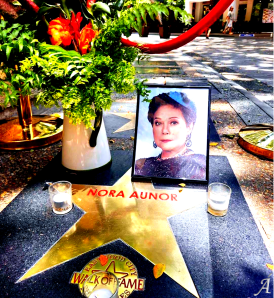
The Nora Aunor star at the Eastwood City Walk of Fame. [Megaworld Lifestyle Malls Facebook page]

Back to top

11011Corrales preceded Aunor’s emergence, which was no surprise considering that the latter was over a decade and a half younger. What will sound incredible is each one’s respective career trajectory: despite Corrales gaining global recognition and immediate local fame, Aunor was the artist whose records sold like proverbial hotcakes, snapped up by fans directly from delivery vans even before they could be inserted and plastic-wrapped in cardboard jackets.[1]

11011Corrales was an engaging, spirited onscreen presence – which makes understandable the major film producers’ hesitation in launching Aunor, who was physically everything that Corrales was not; yet a small independent outfit with ears attuned to box-office performances noted how the movies where Aunor made guest appearances were delivering above-average receipts, which is how Tower Productions devised a string of potboilers and made a killing just by posting her in various romantic locales and getting her to lip-synch the contents of her current long-playing albums.

11011The challenge for scholars of Foucauldian genealogy is to track at what point Aunor decided that phenomenal success was not going to be enough for her, where she aspired not for the expected greater returns on investments, but for artistic peaks that only an exceptional status like hers could facilitate. Perhaps it was when she opted to swing away from cover versions of international hits and standards, toward what we might term the Philippine songbook by classically trained composers as well as the original pop songs that would later segue into what became known as the Manila sound – an innovation where Corrales had actually preceded her.[2] But she knew from her multimedia exposure that there would be no further development possible in this direction, unless she ventured into composition and arrangement herself.

Nora Aunor’s coffin during her wake at Heritage Memorial Park at Fort Bonifacio, Taguig City. [Heritage Park Cemetery Facebook page]

Back to top

11011Preferring interpretive exertions, she must have deduced that histrionic craft was the obvious next stage. Her own outfit, NV (for Nora Villamayor) Productions, started as early as the year after the declaration of martial law, with now-lost films that were box-office flops because of their art-film qualities. After recovering with a few hit projects, she came up with the tribal epic Banaue (1975), the last film by Gerardo de Leon, and the next year produced a period film, Tatlong Taóng Walang Diyos, her first collaboration with Second Golden Age figure Mario O’Hara. Once more her audience could not catch up with her, but she managed to win the first critics’ performance award, a distinction that may have been precipitate (at least one nominee, Mona Lisa in Insiang, demonstrates superior abilities) but may have been a substitutionary reward for the substantial producer’s risk that she had taken.

11011This led to a short-lived valorization of her stature as a critics’ darling, cut down in 1982 with the group’s inexplicable downgrading of her reading of the lead character in Ishmael Bernal’s Himala, now regarded as one of the possible peaks in Philippine film performance, in contrast with the never-mentioned-since hysterical delivery that the critics selected. (Inside information: I was with the group during this period and made the proper choice, affirmed by the director and writer of both competing films.) As if to demonstrate that their selection was unassailable, the critics continued rejecting her achievements in succeeding years, sometimes against the preferences of all the other award-giving groups, even when the directors of their selected performances complained about their awardees.

11011Aunor of course was more secure in her self-assessment. When the National Artist award was withheld from her twice in succession, she assured everyone that she was disinterested in how the process played out. In case anyone had the impression that she was merely attempting to save face, complaints emerged from film researchers that she did not worry if her collection of prizes was maintained or if certain items were pilfered. Following the principle that dying folks tell no lies, we find her assuring more than one confidant that her source of pride lay in the series of films, whether funded by her outfit or by others, that she was able to see through to completion.[3]

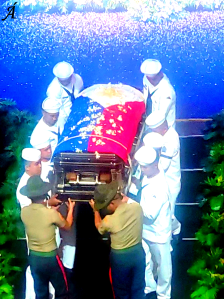
Half-mast state tribute accorded to recipients of the Order of National Artists. [Daily Tribune]

Back to top

11011Proof that her pride was not misplaced lies in the products themselves. Those familiar with only the standard Aunor canon are missing out on the most impressive single-person display of performing-arts ability in the country’s history. The stage plays she appeared in might now be a permanently unavailable opportunity for millennium-era audiences, but any avid Aunor follower (as I was during her active years) will be able to confirm that, even in trashy or dismissible films, she demonstrated skills beyond anyone else’s reach. The critics who downgraded her deserve to be installed in a hall of shame, but then she wouldn’t have given a hoot about them anyway.

Notes

First published April 18, 2025, as “Nora Aunor: How She Aspired for Artistry,” in The FilAm.

[1] The 1960s through the mid-’70s may be considered the final period of internal labor migration, when job-seekers in the country would move from the rural margins to the urban centers, primarily Manila and suburbs (now Metro Manila); afterward, systemic labor migration would treat Manila as only a way station for overseas work, to be able to compensate for the Marcos dictatorship’s economic mismanagement. Hence the period of emergence of several new stars led by Aunor turned on the presence of working-class Filipinos who had sufficient disposable income to demand a new breed of stars – those who resembled them as closely as possible, instead of the Euro-manqué types foisted on the audience by local producers.

[2] Contrary to conventional belief, her artistic aspiration may have started earlier, when one of her “dismissible” teen musicals, Nora, Mahal Kita (Nora, I Love You, dir. Orlando Nadres, 1972), actually featured original compositions by composer Doming Valdez and lyricist Levi Celerio, later recognized as a National Artist for Music & Literature. Similarly, the major actor-producers who emerged in the wake of the First Golden Age also made sure to invest in “award-worthy” though less commercially successful projects before she came along: Amalia Fuentes (with her AM Productions outfit), Fernando Poe Jr. (FPJ Productions), and Joseph Estrada (Emar, later JE, Productions). What makes Aunor’s record as producer distinctive is that, while at least two of her predecessors (Poe and Dolphy with his RVQ Productions) had longer records of self-produced titles, she had far and away the higher percentage of quality projects. Film critic Mauro Tumbocon observed (via Facebook Messenger chat-group messages) how Poe, Estrada, and Dolphy recognized a kindred spirit in her and never hesitated to provide her with funds or equipment whenever she called on them. A further distinction of her producer’s record, recalled during summations of the career of Ricky Davao (who died not long after she did), was how she also invested in stage material: “In 1982, he made his theater debut in Convent Bread, produced by the late Nora Aunor and directed by Maryo J. de los Reyes” (“Ricky Davao’s Career Through the Years,” Rappler, May 3, 2025).

“Nora Aunor’s State Funeral” from National Flag Days Serye, May 28 – June 12, on Charles Bautista’s Facebook account, posted on May 31, 2025.

[3] I had been privy to some filmmakers’ discussions of projects with Aunor; two first-hand accounts so far include an interview with scriptwriter and her National Artist co-winner for film Ricky Lee, with whom she planned, among other things, a multi-installment autobiographical feature as well as a museum – see Allan Diones’s “Reaksyon ni Sir Ricky Lee sa Pagpanaw ni Ate Guy” [Ricky Lee’s Reaction to Ate Guy’s Death], YouTube, April 18, 2025); as well as Nestor Cuartero’s “Larger than Life, Even in Death,” Manila Bulletin, April 19, 2025, where she volunteers to provide seed money for a welfare fund for film workers. Stories also abound regarding her readiness to distribute her earnings to co-workers, fans, and even strangers whom she perceived as suffering financial deprivation. This perspective contextualizes the only expression of anxiety that she articulated regarding the National Artist Award, to her acting colleague Ruby Ruiz: “Para pag namatay ako, wala nang poproblemahin ang mga maiiwan ko (So that when I’m gone, my heirs won’t have to worry [about money])” – see Jerry Olea’s “Why Ruby Ruiz Declined Offer to Be Nora Aunor’s [Production Assistant],” Philippine Entertainment Portal, April 21, 2025. A final revelation, which she divulged with only her closest circle, was the medical discovery of an advanced stage of cancer, which possibly complicated her health condition although her official cause of death was her long-time heart ailment. I would hesitate speculating on what motives she had and prefer to focus for now on the incomparable legacies that she insisted on enhancing all the way to the end.

Back to top


Canon Decampment: Marie Jamora

[Click here (recommended) for desktop mode.]

Ang Nawawala

English Title: What Isn’t There
Year of Release: 2012
Director: Marie Jamora
Screenwriters: Marie Jamora & Ramon de Veyra
Producers: Brainchild Studios, Cinemalaya, National Commission for Culture and the Arts

Cast: Dominic Roco, Dawn Zulueta, Felix Roco, Boboy Garrovillo, Alchris Galura, Mercedes Cabral, Kelvin Yu, Jenny Zamora, Marc Abaya, Annicka Dolonius, Sabrina Man, Dayang Enriquez, Ethan Fabella, Leah Johnson, Boy Laguipo, Zarah Pagay, Sunshine Teodoro, Lianne Valentin, Joy Vargas

Traumatized when his twin brother had a fatal accident because of a dare he made, Gibson Bonifacio lapsed into silence, never speaking to anyone since then. He remained particularly wary of his mother, who openly preferred Jamie, his brother. Things remained the same even after Gibson’s sojourn in the US, although unknown to anyone, Gibson maintains imaginary conversations with Jamie, who has also grown up along with him. His relations with himself, his family, and his friends come to a head when he falls for Enid, a pop musician who encourages him but later admits that she’s on the rebound from a breakup with another musician, for whom she still has some affection.

No other contemporary indie production has proved as divisive as Ang Nawawala, owing for the most part to its Fil-Am source. The controversy raised unfair expectations regarding its merits, although these were premised on mutually indefensible ideological differences. The film was denounced on the basis of two crucial properties: its acquiescence to mainstream values, as if a work on pop music could have justified high-art stylistics without courting the danger of pretension; and its focus on a milieu that did not foreground the sociological components of poverty. Its appreciators, also symptomatic of another type of affliction in Pinas film criticism, insistently rhapsodized over what they read as its celebration of bourgeois Americanized culture. Excepting these polarities, and now with the advantage of temporal distance, Ang Nawawala may be more properly considered for its critical take on precisely the culture that both sides misperceived and quarreled over. With a modest retinue of domestic helpers, the Bonifacio family members feel entitled enough to wallow in tragic errors that they sustain for years. It is Gibson’s relatively less-privileged intimates—his socially awkward brother-in-law, his independent-minded fling, and finally his decently discreet father—who provide him with motivations to work on his dysfunctional condition as well as his mother’s. Director Marie Jamora conveys these points without spelling them out (a liability for ideologically fixated evaluators, as it turned out), as well as by drawing out fully sympathetic and lived-in performances from Dominic Roco as Gibson and Dawn Zulueta as his mother, both of whom she tasked with delineating the least reasonable characters in the film.

Back to top
Return to Canon Decampment contents
Go to alphabetized filmmakers list

Á!

Canon Decampment: Pablo Santiago

[Click here (recommended) for desktop mode.]

Amado Pagsanjan’s Asiong Salonga

Alternate Title: Asiong Salonga
Year of Release: 1961 / B&W
Director: Pablo Santiago
Screenwriter: Tommy C. David
(From a story serialized in Bulaklak magazine by Amado Pagsanjan)
Producer: Larry Santiago Productions

Cast: Joseph Estrada, Jose Padilla Jr., Yolanda Guevarra, Guia Gomez, Boy Francisco, Paquito Diaz, Vic Diaz, Vicente Liwanag, Dely Atay-Atayan, Jane Palomar, Nello Nayo, Francisco Cruz, Dencio Padilla, Arsenio Alonzo, Cleng-Cleng Diaz, Fred Ramirez, Bert Silva, Tony Santos

Nicasio Salonga, better known by his nickname Asiong, uses a combination of charm and propensity for violence to rise in the ranks of the most notorious gangs in the crime-ridden district of Tondo. Because of his notoriety, his elder brother has to give up his job as a police official while his mother dies during one of his incarcerations. He maintains a circle of mostly loyal followers and succeeds in courting Fidela and later convinces Emilia to be his mistress. A lesser-ranking hoodlum, Totoy Golem, starts out as a rival but eventually professes to be his friend and supporter while convincing Erning, one of Asiong’s malcontented and unruly recruits, to join his side.

Political democracy never wasted a bigger Philippine talent than it did Joseph Estrada. Newcomers to his screen record might be shocked to find, in the context of his era, a risk-taking performer with solid performative instincts with a willingness to depict the dregs of society—possibly the best we ever had in the action genre. His early starring roles, with Asiong Salonga comprising his star turn, were still free of the bad-boy mannerisms and intense-aspirated delivery that had already overtaken contemporaneous stars starting with Fernando Poe Jr. (The latter of course made his mark in other compensatory auteurist terms, starting with film production.) Erap’s later self-produced films took advantage of his rising political influence by focusing on personalities associated with the pre-1968 Communist armed movement, a productive mode that he gave up in exchange for the pursuit of presidential and local-government perks. The original cut of Asiong Salonga suffered from the excessive moralizing understandably imposed by society’s moral guardians, since the real-life model physically resembled Erap too closely and burned out far too quickly. Fortunately, the shortened version posted online by Solar Entertainment makes judicious use of fadeouts and a few jump cuts in the interest of cutting short several onscreen sermons and, in one case, a song number by Erap himself. The file still nears the two-hour mark anyway, an indicator of how incident-packed Salonga’s short life was (keep alert for Tony Santos’s reflexive cameo where he in effect passes on his bad-boy aura to Estrada via Salonga). The genre-studies principle that melodrama undergirds all the other genres, with the action movie as essentially melodrama for men, starts here before it proceeds to the rest of the the local action-film samples in the forthcoming decades.

Back to top
Return to Canon Decampment contents
Go to alphabetized filmmakers list

1—Pepeng Kaliwete

English Title: Left-Handed Pepe
Year of Release: 1982
Director: Pablo Santiago
Screenwriters: Fred Navarro & Alex M. Sunga
(Based on a character created by Alex M. Sunga)
Producer: FPJ Productions

Cast: Fernando Poe Jr., Marianne de la Riva, Paquito Diaz, Rodolfo “Boy” Garcia, Anita LInda, Ruel Vernal, Victor Bravo, Vic Varrion, Nello Nayo, Robert Rivera, Amay Bisaya, Ken Metcalf, Teody Belarmino, George Gyenes, Michael Pigar, Cesar Abejuela, Amy Anzures, Tony Carreon, Ernie David, Diog de Castro, Joe Estrada, Bert Garon, Eddie Gicoso, Romy Guarin, Benny May, Rony Montero, Bob Padilla, Wilson Red, Jimmy Reyes, Eddie Samonte, Thunder Stuntmen, Eddie Tuazon, Rudy Fernandez, Don Pepot

Pepe’s father plans to leave the hacienda in Del Pilar because of the owner’s avarice and cruelty, but gets gunned down in the presence of his wife and son. The owner entrusts Pepe to the care of Davis, a benign American caretaker who teaches Pepe how to clean and shoot a .45-caliber pistol. When Merill, the abusive American who killed Pepe’s father, brings over a female tenant to ravish, Pepe uses the pistol to warn him but winds up shooting Merill dead. Pepe and his mother flee to another town, where he grows up anonymously and acquires a reputation as a defender of the oppressed. His mother understands how he hankers to help the people in Del Pilar, so she tells him to do what his heart desires. Despite the scion of the hacienda owner still being as abusive as his father before him, the town mayor is genuinely people-oriented. Although presenting as a migrant worker, Pepe helps him get rid of corrupt police elements and expresses a desire to join the police force. The mayor instead appoints him chief, and he successfully woos Salud, the mayor’s niece; but when the landowner tries to win him over, Pepe declares himself on the side of the workers, earning the enmity of the haciendero.

2—Annie Sabungera

English Title: Annie the Cockfighter
Year of Release: 1982
Director: Pablo Santiago
Screenwriter: Tommy C. David
Producer: GPS Film Productions

Cast: Nora Aunor, Ace Vergel, Rey Valera, Marilou Bendigo, Nova Villa, Dencio Padilla, Chito Arceo, Amay Bisaya, Hero Bautista, Ramon D’Salva, Tony Santos, German Moreno, Tintoy, Dodong Gonzales, Protacio Dee, Angie Salinas, Richard King, Samson

Mang Intong has turned to gambling as a way of forgetting the sudden death of his wife. When he gets drunk, he loses his temper and beats up his daughter Annie, but expresses regret afterward. He teaches Annie the best way to raise gamecocks and she proves to be an adept trainee when she takes her father’s best rooster and wins a difficult round. Mang Intong’s excitement causes him to suffer a fatal heart attack in the cockpit. Like he did for his late wife, Annie devotes her life to cockfighting. Her father appears one night and tells her that he arranged to provide for her a sure winner. Following his instructions, she finds a new gamecock that speaks only to her, names him Samson, and sets out for Manila to try her luck. Her childhood friend, Domeng, carries a torch for her but has to stay behind to work. Annie’s triumph with Samson piques the interest of Randy, an apparently well-bred gentleman who’s really a henchman for a gambling lord. Randy’s boss takes an interest in Samson but Annie refuses to give up her father’s gift, so the boss asks Randy to help him trick Annie.

Although the nephew of one of the founders of Premiere Productions, Pablo Santiago succeeded in independent productions for his own outfit as well as for those of his cousins Cirio (famed for foreign coproductions) and Larry. More significantly, he specialized in projects that featured the biggest stars of their time—Fernando Poe Jr. and Joseph Estrada during the First Golden Age, and Nora Aunor and Vilma Santos during the Second. He might have been remembered for “developmentalist” projects such as Batingaw (Church Bell, 1974) or Kasal-Kasalan, Bahay-Bahayan (Playing Married, Playing House, 1979), or his later crossover assists between romantic-comedy and action performers; but in one propitious year he accepted assignments for Poe and Aunor that allowed him to foreground the skills and ease he accumulated in over a quarter-century of commercial practice. Pepeng Kaliwete had FPJ embarking on his usual role as champion of the oppressed, treading the same ground as the raved-over Sakada (Sugar-Plantation Migrant Workers, dir. Behn Cervantes, 1976). Its observations of backbreaking labor and dehumanizing treatment are on the mark, although certain concessions to the power structure, notably in depicting a sympathetic local-government official and a persecuted American, threaten to upend its leftist leanings. Fortunately, FPJ himself knew when he had to minimize his crowd-pleasing antics in order to allow the interests of the populace to be filtered through his persona, and comes close to violating the taboo against allowing his character to die, although only in a symbolic sense. Annie Sabungera is an even further throwback, to an era when fantastic developments were allowed to intervene in a lead character’s material predicaments. The real miracle lay in Aunor’s resolve to play the proceedings straight, layering her performance with the same set of superior performative skills that she brought to her prestige projects;[1] this had always been her approach throughout her career, but one only has to inspect any other local actor of equal or lesser status to find how exceptional her achievement was. The buildup to an unexpectedly devastating resolution, where social corruption prevails over supernatural powers, requires a complex of conflicting responses that would have defeated most capable actors. Aunor’s description of her fallow moments as a consequence of downgrading by film critics who should have known better, only revealed how impossible it was for them to fulfill their worst expectations of her. [Tech note: existing video transfers of Annie Sabungera suffer from an unacceptable cropping of the right portion of the screen, in addition to the usual degraded surface.]

Note

[1] Appropriately enough, the first time cockfighting was documented by a Westerner was when Antonio Pigafetta observed the sport upon arriving in what is now the Philippines, in Relazione del primo viaggio intorno al mondo (An Account of the First Voyage Around the World), his 1525 chronicle of Ferdinand Magellan’s voyage. A contemporary cockfight specialist who recollected the films he had seen, took exception with Annie Sabungera’s fantasy elements, but nevertheless observed how the film had “a considerable amount of sabong vocabulary employed as well as some handling and conditioning techniques”—see Rolando S. Luzong, “Finally, a New Sabong Movie in the Making,” Animal Scene Magazine (supplement of Manila Bulletin), March 2009 issue. The film referenced in the article title was Rozie Delgado & Miguel Kaimo’s Sabungero (The Cockfighter, 2009), although a more recent release, Bryan Kristoffer Brazil’s Lost Sabungeros (2024), has become an unusual cause célèbre because of its civic significance: produced by GMA Public Affairs, the documentary raised questions about the abduction and disappearance of thirty cockfighters whose interests conflicted with those of politically connected gambling lords. One final observation about the Pablo Santiago film, never made anywhere, might be historical in nature, inasmuch as the backstory of Annie’s father resembles the real-life narrative of Gregorio Fernandez, a major First Golden Age director-actor (also represented in Canon Decampment): the death of his wife apparently led to his eventual abandonment of career and family, fostering a new vocation as champion cockfighter in his hometown of Lubao, Pampanga; see Joel David, “A Missing Installation in the Philippine Pantheon: Gregorio ‘Yoyong’ Fernandez (1904–1973),” Pelikula: A Journal of Philippine Cinema and Moving Image, vol. 9 (2024), pp. 24–35.

Back to top
Return to Canon Decampment contents
Go to alphabetized filmmakers list

Á!


Canon Decampment: Alphabetized List of Filmmakers with Their Respective Film Titles [embargoed]

[For a larger image, please click on picture.]

Click here to return to the book’s landing page. To read the links below in desktop mode (recommended), click here. Titles (306 so far, from 128 directorial entries) connected by an ampersand (“&”) are sufficiently related and will thereby share the same singular review in their respective descriptions and synopses.

Click on the following to navigate more quickly through the list: B; C; D; E; F; G; I; J; K; L; M; N; O; P; Q; R; S; T; V; Z.

Abaya, Matthew: Vampariah, 2016.

Abe Yutaka – see de Leon, Gerardo, & Abe Yutaka.

Abrahan, Giancarlo: Dagitab, 2014; Sila-Sila, 2019.

Acedillo, Vic Jr.: Ang Nerseri, 2009.

Aguiluz, Tikoy: Boatman, 1985; Segurista, 1995; Biyaheng Langit, 2000.

Alix, Adolfo Jr.: Tambolista [as Adolfo Borinaga Alix Jr.], 2007; Imoral [as Adolfo B. Alix Jr.], 2008; Isda, 2011; Porno [as Adolfo Borinaga Alix Jr.], 2013; Madilim ang Gabi [as Adolfo Borinaga Alix Jr.], 2017.

Altarejos, Joselito: Ang Lihim ni Antonio, 2008; Unfriend [as J Altarejos], 2014; Jino to Mari, 2019.

Aunor, Nora: Greatest Performance [as Guy; unfinished], 1989.

Avellana, Lamberto V.: Anak Dalita, 1956; Sarjan Hassan, 1958; Nick Joaquin’s A Portrait of the Artist as Filipino, 1965; The Evil Within, 1970.

Back to top

Barbarona, Arnel: Tu Pug Imatuy, 2017.

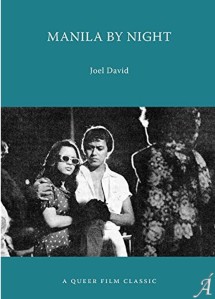
Bernal, Ishmael: Pagdating sa Dulo, 1971; Lumapit … Lumayo ang Umaga, 1975; Ligaw na Bulaklak, 1976; Nunal sa Tubig, 1976; Nonoy Marcelo’s Tisoy!, 1977; Ikaw Ay Akin, 1978; Salawahan, 1979; Aliw, 1979; Manila by Night, 1980; Pabling, 1981; 1) Relasyon, 1982 & 2) Broken Marriage, 1983; Himala, 1982; Working Girls, 1984; Hinugot sa Langit, 1985.

Bernal, Joyce: 1) Booba [as Binibining Joyce Bernal], 2001 & 2) Masikip sa Dibdib: The Boobita Rose Story [as Binibining Joyce Bernal], 2004; Kimmy Dora: Kambal sa Kiyeme [as Binibining Joyce Bernal], 2009.

Bernardo, Sigrid Andrea: Ang Huling Cha-Cha ni Anita (Anita’s Last Cha-Cha) [as Sigrid Andrea P. Bernardo], 2013; Lorna [as Sigrid Andrea P. Bernardo], 2014; UnTrue [as Sigrid Andrea P. Bernardo], 2019.

Borlaza, Emmanuel H.: 1) Bukas Luluhod ang mga Tala, 1984; 2) Bituing Walang Ningning, 1985; Stolen Moments, 1987.

Brocka, Lino: Tubog sa Ginto, 1970; Stardoom, 1971; Tinimbang Ka Ngunit Kulang, 1974; Maynila: Sa mga Kuko ng Liwanag, 1975; Insiang, 1976; Jaguar, 1979; Bona, 1980; Cain at Abel, 1982; 1) Bayan Ko: Kapit sa Patalim, 1984 & 2) Orapronobis, 1989; Miguelito: Batang Rebelde, 1985; Babangon Ako’t Dudurugin Kita, 1989; Hahamakin Lahat, 1990; Gumapang Ka sa Lusak, 1990.

Back to top

Cabreira, Junn P.: Beloy Montemayor Jr.: Tirador ng Cebu, 1993.

Castillo, Celso Ad.: Asedillo, 1971; Daluyong at Habagat, 1976; Burlesk Queen, 1977; Celso Ad. Castillo’s Totoy Boogie, 1980; Uhaw na Dagat, 1981; Paradise Inn, 1985.

Castro, Jade: Zombadings 1: Patayin sa Shokot si Remington, 2011; LSS, 2019.

Cayado, Tony: Mga Ligaw na Bulaklak, 1957.

Chionglo, Mel: Playgirl, 1981; Sinner or Saint, 1984; 1) Nasaan Ka Nang Kailangan Kita, 1986 & 2) Paano Kung Wala Ka Na, 1987; Babaing Hampaslupa, 1988; Developing Stories: Lucia, 1992; 1) Sibak: Midnight Dancers, 1994 & 2) Burlesk King, 1999 & 3) Twilight Dancers, 2006; Iadya Mo Kami, 2016.

Chui Chung-San, Alan, & Yuen Bun: Mabangis na Lungsod, 1995.

Conde, Conrado: Talipandas, 1958.

Conde, Manuel: Genghis Khan [credited to Lou Salvador], 1950.

Cruz-Alviar, Mae: Bride for Rent [as Mae Czarina Cruz], 2014.

Back to top

Dayao, Dodo: Midnight in a Perfect World, 2020.

Dayoc, Sheron R.: Halaw, 2010.

de Castro, Eduardo: Zamboanga: A Fanciful Tale of Moro Sea Gypsies, 1937.

de Guia, Eric – see Tahimik, Kidlat.

de Guzman, Susana C.: Lupang Pangako [incomplete], 1949.

dela Cruz, Abbo Q.: Hubad na Pangarap, 1987.

Dela Cruz, Emmanuel: Sarong Banggi, 2005.

de Leon, Gerardo: Sisa, 1951; Dyesebel, 1953; Pedro Penduko, 1954; Sanda Wong, 1955; Terror Is a Man [as Gerry de Leon], 1959; The Moises Padilla Story, 1961; El Filibusterismo, 1962; Women in Cages [as Gerry de Leon], 1971.

de Leon, Gerardo, & Abe Yutaka: Dawn of Freedom, 1944.

De Leon, Mike: Itim, 1976; Kakabakaba Ka Ba?, 1980; 1) Kisapmata, 1981 & 2) Batch ’81, 1982; Sister Stella L., 1984; Bilanggo sa Dilim, 1986; Bayaning 3rd World, 1999.

Deligero, Keith: Iskalawags, 2013; Lily, 2016; A Short History of a Few Bad Things, 2018.

de los Reyes, Maryo J.: Schoolgirls, 1982; Diosa, 1982; Bagets, 1984; Kaya Kong Abutin ang Langit, 1984; Anak ni Waray vs. Anak ni Biday, 1984; Dinampot Ka Lang sa Putik, 1988; Magnifico, 2003.

del Rosario, Joey: Kahit Pader Gigibain Ko, 1998.

Deramas, Wenn V.: Ang Tanging Ina, 2003.

Diaz, Lav: Hesus, Rebolusyunaryo, 2002; Florentina Hubaldo, CTE, 2012; Norte, Hangganan ng Kasaysayan, 2013.

Diaz-Abaya, Marilou: 1) Brutal, 1980 & 2) Moral, 1982; Karnal, 1983; Sensual, 1986; May Nagmamahal sa Iyo, 1996; Milagros, 1997.

Dulay, Zig Madamba: Bambanti, 2015.

Dulu, Dolly: The Boy Foretold by the Stars, 2020.

Back to top

Espia, Hannah: Transit, 2013.

Esteban, Tata: Alapaap, 1984.

Estella, Ramon A.: Kembali Saorang, 1957; Samseng, 1959; Saudagar Minyak Urat, 1959; Pusaka Pontianak, 1965.

Back to top

Fajardo, Lawrence: Amok, 2011; Posas, 2012; The Strangers, 2012; Imbisibol, 2015.

Fernandez, Gregorio: Kontrabando, 1950; Prinsipe Teñoso, 1954; 1) Higit sa Lahat [as Dr. Gregorio Fernandez], 1955 & 2) Luksang Tagumpay [incomplete], 1956; Hukom Roldan [as Dr. Gregorio Fernandez], 1957; Malvarosa [as Dr. Gregorio Fernandez], 1958.

Fiola, Bagane: Baboy Halas: Wailings in the Forest, 2016.

Back to top

Gallaga, Peque: Oro, Plata, Mata, 1982; Virgin Forest, 1985; Scorpio Nights, 1985.

Gallaga, Peque, & Lore Reyes: 1) Tiyanak, 1988 & 2) Aswang, 1992; Sonata, 2013.

Gallardo, Cesar: Geron Busabos: Ang Batang Quiapo, 1964.

Garces, Armando: Sino ang Maysala?, 1957.

Garcia, Eddie: Saan Nagtatago ang Pag-Ibig?, 1987.

Garcia-Molina, Cathy – see Garcia-Sampana, Cathy.

Garcia-Sampana, Cathy: One More Chance [as Cathy Garcia-Molina], 2007.

Gosiengfiao, Joey: La Paloma, 1974; Underage, 1980.

Guillen, Laurice: Kasal?, 1980; Salome, 1981; Init sa Magdamag, 1983; Kung Mahawi Man ang Ulap, 1984; Sumayaw Ka Salome, 1992; Dahil Mahal Kita: The Dolzura Cortez Story, 1993.

Back to top

Ignacio, Louie: Area [as Luisito Lagdameo Ignacio], 2016.

Illenberger, Tara: Brutus, ang Paglalakbay, 2008; High Tide [as Tara Barrera Illenberger], 2017.

Intalan, Perci M.: Dementia, 2014.

Back to top

Jadaone, Antoinette: That Thing Called Tadhana, 2014.

Jamora, Marie: Ang Nawawala, 2012.

Jarlego, Ike Jr.: Tigasin, 1999.

Jeturian, Jeffrey: Pila-Balde, 1999; Tuhog, 2001; 1) Bridal Shower, 2004 & 2) Minsan Pa, 2004; Kubrador, 2006; Ekstra, 2013.

Jover, Ralston: 1) Da Dog Show [as Ralston G. Jover], 2015 & 2) Hamog [as Ralston G. Jover], 2015; Rene Villanueva’s Hiblang Abo [as Ralston G. Jover], 2016; Bomba [as Ralston Gonzales Jover], 2017; Latay (Battered Husband) [as Ralston Gonzales Jover], 2019.

Back to top

Kayko, Sixto – see Roño, Chito S.

Khavn: 1) Ang Pamilyang Kumakain ng Lupa, 2005 & 2) Ang Napakaigsing Buhay ng Alipato, 2016; Pusong Wazak: Isa Na Namang Kwento ng Pag-ibig sa Pagitan ng Kriminal at Puta, 2014; Desaparadiso: Corrido at Buhay na Pinagdaanan nang Tatlong Principeng Magcacapatid na Anac nang Haring Fernando at nang Reina Valeriana sa Cahariang Berbania, 2015; Balangiga: Howling Wilderness, 2017.

Kim Bong-han: The Golden Holiday, 2020.

Back to top

Lamangan, Joel: Hubog [as Joel C. Lamangan], 2001; Walang Kawala [as Joel C. Lamangan], 2008; Burgos, 2013.

Lamasan, Olivia M.: Minsan, Minahal Kita, 2000; Milan, 2004.

Lana, Jun Robles: Die Beautiful, 2016.

Lao, Armando: Biyaheng Lupa, 2009.

Laxamana, Jason Paul: The Day After Valentine’s, 2018.

Lerner, Irving: Cry of Battle, 1963.

Back to top

Mambo, Rico – see dela Cruz, Abbo Q.

Marcos, Pepe: Tubusin Mo ng Dugo, 1988.

Mardoquio, Arnel: Ang Paglalakbay ng mga Bituin sa Gabing Madilim, 2012.

Marquez, Artemio: The Untold Story of Melanie Marquez, 1987; Sa Puso Ko Hahalik ang Mundo, 1988.

Martin, Raya: Independencia, 2009.

Martinez, Chris: Here Comes the Bride, 2010.

Matti, Erik: On the Job, 2013.

Meily, Mark: Crying Ladies, 2003.

Mendoza, Brillante: 1) Foster Child, 2007 & 2) Tirador, 2007; Serbis [as Brillante Ma. Mendoza], 2008; Lola [as Brillante Ma. Mendoza], 2009; Ma’ Rosa, 2016.

Milan, Willy, & Fernando Poe Jr. – see Poe, Fernando Jr., & Willy Milan.

Monteras, Treb II: Respeto, 2017.

Montgomery, George: Samar, 1962.

Back to top

Natividad, Toto: Totoy Guwapo: Alyas Kanto Boy, 1992; Amang Capulong: Anak ng Tondo, Part II, 1992; Ka Hector, 1994; Wangbu, 1998; Notoryus, 1998; 1) Double Barrel (Sige! Iputok Mo.), 2017 & 2) Riding in Tandem, 2017.

Navoa, J. Erastheo: Totoy Buang: Mad Killer ng Maynila, 1992.

Back to top

O’Hara, Mario: Tatlong Taóng Walang Diyos, 1976; 1) Condemned, 1984 & 2) Bulaklak sa City Jail, 1984; Bagong Hari, 1986; Pangarap ng Puso, 2000; Babae sa Breakwater, 2003.

Ongkeko-Marfil, Ellen: Boses, 2008; Indigo Child, 2016.

Back to top

Palisoc, King: Tandem, 2015.

Paolo, Steve – see Esteban, Tata.

Parungao, Monti: 1) Bayaw [as Monti Puno Parungao], 2009; 2) The Escort [as Monti Puno Parungao], 2011.

Pascual, William: Takaw Tukso, 1986.

Pasion, Francis Xavier: Jay, 2008.

Perez, Elwood: Silip, 1985; Bilangin ang Bituin sa Langit, 1989; Ang Totoong Buhay ni Pacita M., 1991; Otso, 2013.

Perez, Roman Jr.: Sol Searching, 2018.

Poe, Fernando Jr.: 1) Ang Panday [as Ronwaldo Reyes], 1980 & 2) Pagbabalik ng Panday [as Ronwaldo Reyes], 1981 & 3) Ang Panday: Ikatlong Yugto [as Ronwaldo Reyes], 1982 & 4) Ang Panday IV [as Ronwaldo Reyes], 1984; Ang Maestro [as Ronwaldo Reyes], 1981; Ang Dalubhasa [as Ronwaldo Reyes], 2000.

Poe, Fernando Jr., & Willy Milan: Kahit Butas ng Karayom … Papasukin Ko [as Ronwaldo Reyes & Wilfredo “Willy” Milan], 1995.

Poe, Fernando Jr., & Augusto Salvador: Eseng ng Tondo [as Ronwaldo Reyes], 1997.

Portes, Gil: Gabi Kung Sumikat ang Araw [as Gil M. Portes], 1983; ’Merika [as Gil M. Portes], 1984; Bukas … May Pangarap [as Gil M. Portes], 1984.

Posadas, Francis: Amanos: Patas ang Laban [as Francis “Jun” Posadas], 1997; ’Di Puwedeng Hindi Puwede! [as Francis “Jun” Posadas], 1999.

Back to top

Quintos, Rory B.: Kailangan Kita, 2002.

Back to top

Raquiza, Jun: Krimen: Kayo ang Humatol, 1974.

Red, Jon: Still Lives, 1999.

Red, Mikhail: 1) Birdshot, 2016 & 2) Neomanila, 2017.

Relucio, Brandon, & Ivan Zaldarriaga: Di Ingon ’Nato, 2011.

Reyes, Efren: Ang Daigdig Ko’y Ikaw, 1965.

Reyes, Jose Javier: Minsan May Isang Puso, 2001; Kung Ako Na Lang Sana, 2003.

Reyes, Lore – see Gallaga, Peque, & Lore Reyes.

Reyes, Ronwaldo – see Poe, Fernando Jr.

Richardson, George – see Suarez, Bobby A.

Rivera, Marlon N.: Ang Babae sa Septic Tank, 2011.

Romero, Eddie: The Passionate Strangers, 1966; Savage Sisters, 1974; Ganito Kami Noon … Paano Kayo Ngayon?, 1976; Banta ng Kahapon, 1977.

Roño, Chito S.: 1) Private Show [as Sixto Kayko], 1984 & 2) Curacha: Ang Babaeng Walang Pahinga, 1998; 1) Itanong Mo sa Buwan, 1988 & 2) La Vida Rosa, 2001; Bakit Kay Tagal ng Sandali?, 1990; Alyas Stella Magtanggol, 1992; Bata Bata Paano Ka Ginawa?, 1998; Caregiver, 2008; Signal Rock, 2018.

Back to top

Salvador, Augusto: Masahol Pa sa Hayop, 1993.

Salvador, Augusto, & Fernando Poe Jr. – see Poe, Fernando Jr., & Augusto Salvador.

Salvador, Leroy: Badlis sa Kinabuhi, 1968; Beloved, 1985.

Salvador, Lou – see Conde, Manuel.

Santiago, Pablo: Amado Pagsanjan’s Asiong Salonga, 1961; 1) Pepeng Kaliwete, 1982 & 2) Annie Sabungera, 1982.

Santos, Teodorico C.: Taufan [as T.C. Santos], 1957.

Sayles, John: Amigo, 2010.

Siguion-Reyna, Carlos: 1) Hihintayin Kita sa Langit, 1991 & 2) Ikaw Pa Lang ang Minahal, 1992; Ang Lalake sa Buhay ni Selya, 1997; Tatlo … Magkasalo, 1998.

Silos, Manuel: Biyaya ng Lupa, 1959.

Solito, Auraeus: Ang Pagdadalaga ni Maximo Oliveros, 2005.

Somes, Richard V.: Yanggaw, 2008.

Suarez, Bobby A.: They Call Her … Cleopatra Wong [as George Richardson], 1978; Red Roses for a Call Girl, 1988.

Suzara, Romy V.: Pepeng Shotgun, 1981.

Back to top

Tahimik, Kidlat: Mababangong Bangungot, 1977.

Tarog, Jerrold: Heneral Luna, 2015.

Topacio, Soxy: Ded Na si Lolo [as Soxie Hernandez Topacio], 2009.

Torres, Mar S.: Jack en Jill, 1954.

Back to top

Vander Tolosa, Carlos: Giliw Ko, 1939.

Velasco, Veronica: Nuuk [as Veronica B. Velasco], 2019.

Villaluna, Paolo: Pauwi Na, 2016.

Villamor, Irene: Meet Me in St. Gallen, 2018; Ulan, 2019; On Vodka, Beers, and Regrets, 2020.

Villegas, Dan: Hintayan ng Langit, 2018.

Back to top

Zaldarriaga, Ivan – see Relucio, Brandon, & Ivan Zaldarriaga.

Zapata, Dominic: Boy Pick-Up: The Movie, 2012.

Zialcita, Danny L.: T-Bird at Ako, 1982; Palabra de Honor, 1983.

Zuasola, Remton Siega: Ang Damgo ni Eleuteria, 2010.

Back to top

Á!


Canon Decampment [embargoed]

Original Digital Edition (2023)
Cover design by Paolo Miguel G. Tiausas
“Bomba” © 2019 by Mina Saha
[Click on pic to enlarge]

ACKNOWLEDGMENTS

The textual contents on this page, although still under development, have been embargoed. Please await the forthcoming PDF file. Thank you for your interest.

National Library of the Philippines CIP Data

David, Joel.
11011Canon Decampment / Joel David. — Original Digital Edition. — Quezon City : Amauteurish Publishing, [2023], © 2023.
11011146+x pages ; 15×23 cm

11011ISBN 978-621-96191-8-9 (pdf)

110111. Motion pictures — Criticism and interpretation — Philippines. 2. Motion pictures — Philippines. 3. Film criticism. I. Title.

791.4375111111011PN1995.67.P51111110112023111111011P320230298

US Copyright Office Certificate of Registration:
TXu 2-402-907
Canon Fire!and mini-reviews
separately registered as TXu 2-054-744

Back to top

Contents
© 2025 by Amauteurish Publishing &
College of Social Sciences, Inha University
All Rights Reserved

Introduction

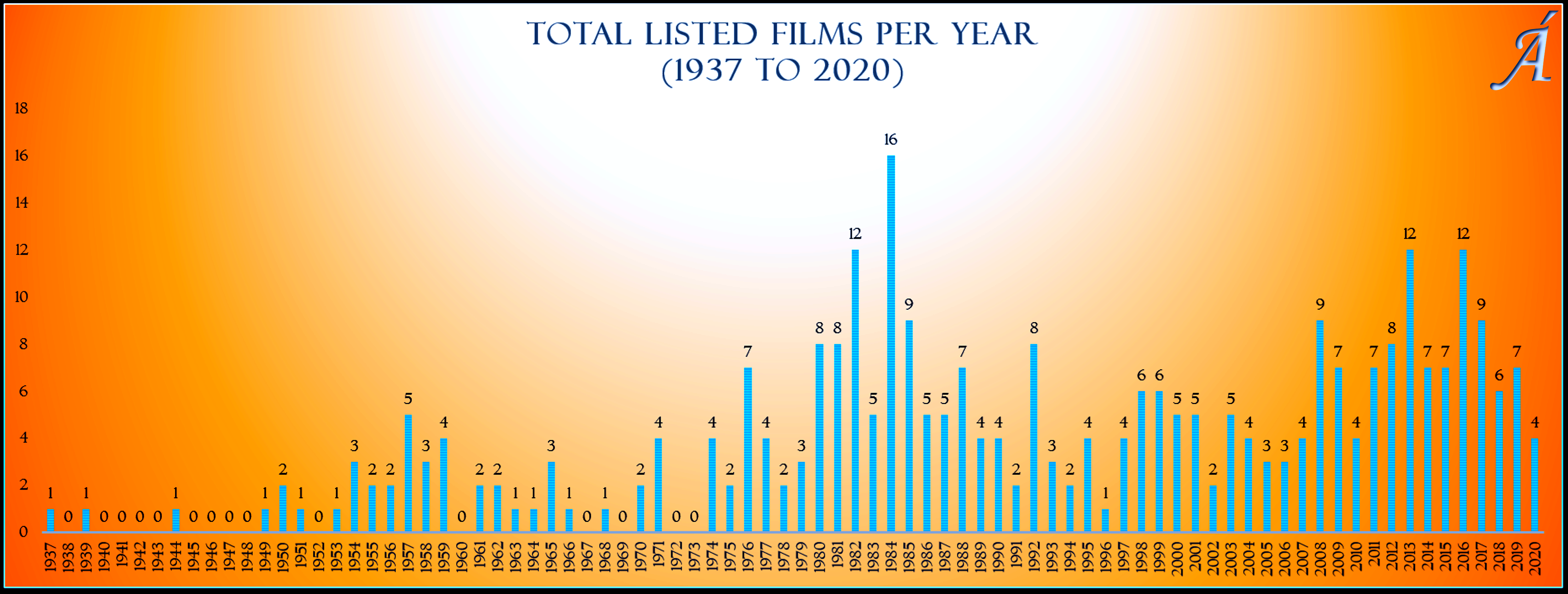
Canon Munitions: From the Beginning to 2020
Note: This list is ordered chronologically according to premiere or initial release date, each of these 128 entries followed by the inclusive years of the directors’ selected films as well as by the total number of selected titles. For an alphabetical arrangement of directors, including each entry’s film(s) and year(s) of release, click here. Not all commentaries and synopses are complete as of this time.

Eduardo de Castro (1937: 1 title)
Carlos Vander Tolosa (1939: 1 title)
Gerardo de Leon & Abe Yutaka (1944: 1 title)
Gerardo de Leon (1951-71: 8 titles)
Susana C. de Guzman (1949: 1 title)
Gregorio Fernandez (1950-58: 6 titles)
Manuel Conde (1950: 1 title)
Mar S. Torres (1954: 1 title)
Lamberto V. Avellana (1956-70: 4 titles)
Tony Cayado (1957: 1 title)
Armando Garces (1957: 1 title)
Ramon A. Estella (1957-65: 4 titles)
Teodorico C. Santos (1957: 1 title)
Conrado Conde (1958: 1 title)
Manuel Silos (1959: 1 title)
Pablo Santiago (1961-82: 3 titles)

George Montgomery (1962: 1 title)
Irving Lerner (1963: 1 title)
Cesar Gallardo (1964: 1 title)
Efren Reyes (1965: 1 title)
Eddie Romero (1966-77: 4 titles)
Leroy Salvador (1968-85: 2 titles)
Lino Brocka (1970-90: 14 titles)
Celso Ad. Castillo (1971-86: 6 titles)
Ishmael Bernal (1971-85: 15 titles)
Jun Raquiza (1974: 1 title)
Joey Gosiengfiao (1974-80: 2 titles)
Mike De Leon (1976-99: 7 titles)
Mario O’Hara (1976-2003: 6 titles)
Kidlat Tahimik (1977: 1 title)
Bobby A. Suarez (1978-88: 2 titles)
Laurice Guillen (1980-93: 6 titles)

Marilou Diaz-Abaya (1980-97: 6 titles)
Fernando Poe Jr. (1980-2000: 6 titles)
Fernando Poe Jr. & Willy Milan (1995: 1 title)
Fernando Poe Jr. & Augusto Salvador (1997: 1 title)
Mel Chionglo (1981-2016: 10 titles)
Romy V. Suzara (1981: 1 title)
Peque Gallaga (1982-85: 3 titles)
Peque Gallaga & Lore Reyes (1988-2013: 3 titles)
Maryo J. de los Reyes (1982-2003: 7 titles)
Danny L. Zialcita (1982-83: 2 titles)
Gil Portes (1983-84: 3 titles)
Emmanuel H. Borlaza (1984-87: 3 titles)
Tata Esteban (1984: 1 title)
Chito S. Roño (1984-2018: 9 titles)
Elwood Perez (1985-2013: 4 titles)
Tikoy Aguiluz (1985-2000: 3 titles)

William Pascual (1986: 1 title)
Abbo Q. dela Cruz (1987: 1 title)
Eddie Garcia (1987: 1 title)
Artemio Marquez (1987-88: 2 titles)
Pepe Marcos (1988: 1 title)
Nora Aunor (1989: 1 title)
Carlos Siguion-Reyna (1991-98: 4 titles)
Toto Natividad (1992-2017: 7 titles)
J. Erastheo Navoa (1992: 1 title)
Junn P. Cabreira (1993: 1 title)
Augusto Salvador (1993: 1 title)
Alan Chui Chung-San & Yuen Bun (1995: 1 title)
Francis Posadas (1997-99: 2 titles)
Joey del Rosario (1998: 1 title)
Jeffrey Jeturian (1999-2006: 6 titles)
Ike Jarlego Jr. (1999: 1 title)

Jon Red (1999: 1 title)
Olivia M. Lamasan (2000-04: 2 titles)
Joyce Bernal (2001-09: 3 titles)
Jose Javier Reyes (2001-03: 2 titles)
Joel Lamangan (2001-13: 3 titles)
Lav Diaz (2002-13: 3 titles)
Rory B. Quintos (2002: 1 title)
Wenn V. Deramas (2003: 1 title)
Mark Meily (2003: 1 title)
Khavn (2016-17: 5 titles)
Auraeus Solito (2005: 1 title)
Emmanuel Dela Cruz (2005: 1 title)
Brillante Mendoza (2007-16: 5 titles)
Cathy Garcia-Sampana (2007: 1 title)
Adolfo Alix Jr. (2007-17: 5 titles)
Joselito Altarejos (2008-19: 3 titles)

Ellen Ongkeko-Marfil (2008-16: 2 titles)
Francis Xavier Pasion (2008: 1 title)
Tara Illenberger (2008-17: 2 titles)
Richard V. Somes (2008: 1 title)
Soxy Topacio (2009: 1 title)
Raya Martin (2009: 1 title)
Vic Acedillo Jr. (2009: 1 title)
Monti Parungao (2009-11: 2 titles)
Armando Lao (2009: 1 title)
Chris Martinez (2010: 1 title)
John Sayles (2010: 1 title)
Sheron R. Dayoc (2010: 1 title)
Remton Siega Zuasola (2010: 1 title)
Lawrence Fajardo (2011-15: 4 titles)
Marlon N. Rivera (2011: 1 title)
Jade Castro (2011-19: 2 titles)

Brandon Relucio & Ivan Zaldarriaga (2011: 1 title)
Dominic Zapata (2012: 1 title)
Marie Jamora (2012: 1 title)
Arnel Mardoquio (2012: 1 title)
Erik Matti (2013: 1 title)
Hannah Espia (2013: 1 title)
Sigrid Andrea Bernardo (2013-19: 3 titles)
Keith Deligero (2013-18: 3 titles)
Mae Cruz-Alviar (2014: 1 title)
Giancarlo Abrahan (2014-19: 2 titles)
Perci M. Intalan (2014: 1 title)
Antoinette Jadaone (2014: 1 title)
Zig Madamba Dulay (2015: 1 title)
Ralston Jover (2015-19: 5 titles)
King Palisoc (2015: 1 title)
Jerrold Tarog (2015: 1 title)

Matthew Abaya (2016: 1 title)
Paolo Villaluna (2016: 1 title)
Louie Ignacio (2016: 1 title)
Bagane Fiola (2016: 1 title)
Jun Robles Lana (2016: 1 title)
Mikhail Red (2016-17: 2 titles)
Arnel Barbarona (2017: 1 title)
Treb Monteras II (2017: 1 title)
Irene Villamor (2018-20: 3 titles)
Jason Paul Laxamana (2018: 1 title)
Roman Perez Jr. (2018: 1 title)
Dan Villegas (2018: 1 title)
Veronica Velasco (2019: 1 title)
Kim Bong-han (2020: 1 title)
Dodo Dayao (2020: 1 title)
Dolly Dulu (2020: 1 title)

Conclusion

Index

Back to top


Canon Decampment: Brandon Relucio & Ivan Zaldarriaga

[Click here (recommended) for desktop mode.]

Di Ingon ’Nato

English Title: Not Like Us
Language: Cebuano
Year of Release: 2011
Directors & Screenwriters: Brandon Relucio & Ivan Zaldarriaga
Producer: Cinema One Originals

Cast: Rez Cortez, Franco Reyes, Mercedes Cabral, Donna Gimeno, Jeffrey Ogario, Gabriel Jon Abanto, Gregg Tecson, Marlon Hofer, Bernard Catindig, Aya Ng, Nathaniel Rubio, Cara Muaña Rosende, Ria Araneta, Lito Cardeño, Daday Melgar, Joe Monteño, Ligaya Rabago, Vingenr Tan, Lord Padua, Diane, Mata, Rita Sabal, Ronyel Compra, Dodong, Fatima Padua, Aurora Pacure

Lauro, the captain of a remote barangay or village in Cebu Province, is alerted by some of his constituents to a deadly infectious outbreak, tracked from mysterious instances of residents or outsiders getting killed in apparently violent ways. His daughter, who works as medic in the barangay health center, is able to determine that the diseased return to life after they die and acquire a hankering for human flesh. A priest and a pagan healer contend in having the right explanation (and consequent solution) for the phenomenon, but their use of magic doesn’t stop the illness from spreading. In a parallel development, Istoy, a farmer, sees one such hacked-up body. When his wife is attacked by a neighbor, he uses his bolo to kill the assailant. His wife worries that he committed a crime, but he becomes more anxious when her condition rapidly deteriorates.

The zombie-apocalypse subgenre is so overfamiliar that one could already predict how its elements of contagion and consequent social breakdown could function in any sample. But Di Ingon ’Nato’s impoverished agricultural context provides a resonance that compatriots and invaders alike might do well to learn from: “Filipino farmers hacking the undead,” as co-director Ivan Zaldarriega half-jokingly stated in a journal interview with genre specialist Andrew Leavold. Beyond the admittedly distressing representation of the repressed, historical incidents after the film’s release added retrospective value on stations both national (the practice of extrajudicial killings during the authoritarian regime of a Visayan President) and international (the intensification of the global Covid-19 pandemic). A narrative that turns on unstoppable contagion that results in widespread and arbitrary casualties would be hampered by severely constricted budgetary resources, a problem that Di Ingon ’Nato, alongside countless other indie productions, confronted. The filmmakers atypically resolved this quandary by taking advantage of their limitations: minimizing the casting of professional performers, shooting in remote locales, apportioning the use of gore in judiciously effective closeups, furnishing sound effects for subtle and well-timed blasts. Along with a few careful strokes at character development, the effect curiously results in an embrace of the monstrous—more pronounced than in the usual zombie-apocalypse outing. With the possibly permanent loss of what may be Philippine cinema’s supreme zombie film, Celso Ad. Castillo’s Kung Bakit Dugo ang Kulay ng Gabi (Night of the Zombies, 1973), Di Ingon ’Nato compensates satisfactorily enough; the fact that both are set in rural locales, as are several other horror entries in this list, could have made for productive analysis if the Castillo film could be recovered and considered as the others’ predecessor.

Back to top
Return to Canon Decampment contents
Go to alphabetized filmmakers list

Á!


Canon Decampment: Adolfo Alix Jr.

[Click here (recommended) for desktop mode.]

Tambolista

English Translation: Drummer
English Title: Drumbeat
Year of Release: 2007 / B & W
Director: Adolfo Alix Jr. [as Adolfo Borinaga Alix Jr.]
Screenwriter: Ave Regina S. Tayag
Producers: Cinema One Originals & Ignite Media

Cast: Jiro Manio, Coco Martin, Sid Lucero, Anita Linda, Fonz Deza, Ricky Davao, Susan Africa, Simon Ibarra, Jhersie Young, Zyra dela Cerna, Mosang

Jason and Billy, whose parents have to stay in a hospital when their mother delivered their sister, invite their neighbor Pablo after he leaves his rental space because his landlord caught him in bed with his wife. All are short of money: Billy needs to spring for an abortion for his girlfriend, Jason wants to buy a drum set so he can play for a band, and Pablo has to find a new place to stay. The brothers get by doing favors for their neighbors while Pablo offers his body to prospective clients of either gender. When the eccentric and quarrelsome elderly lady across the street asks them to exchange smaller bills for her money, they cook up the idea of burglarizing her.

An appreciation for Tambolista can be enhanced by situating it in the tradition of the multicharacter youth films of the previous millennium. The male-focused entries tended then to depict the characters’ hijinks, carefree and harmless; but as a millennial product, released toward the end of a still-democratic era, the film enables us to see how neoliberalism has finally caught up with the very citizens we’re expected to shield from the harsh realities of modern existence. Director Adolfo Alix Jr. observed twin strategies, one old-timey and one forward-looking, to enhance his material: in shooting in black and white, he facilitates a throwback to the social-realist treatments of the First Golden Age, while in fractalizing the temporal order of events, he provides an equivalent of the social media-engendered confusion and distractedness that would increasingly afflict young people. The combination is unexpectedly yet remarkably effective, but also, in being too new-fashioned yet old-looking, accounts for how easily the film could be overlooked in comparison with his other output. Tambolista, rather than any number of prematurely acclaimed works, is where to start with this restless, unpredictable, admittedly uneven filmmaker.

Back to top
Return to Canon Decampment contents
Go to alphabetized filmmakers list

Imoral

English Title: Immoral
Year of Release: 2008
Director: Adolfo Alix Jr. [as Adolfo B. Alix Jr.]
Screenwriter: Jerry Gracio
Producer: Bicycle Pictures

Cast: Katherine Luna, Paolo Paraiso, Arnold Reyes, Edgar Allan Guzman, Perla Bautista, Kristoffer King, Adriana Agcaoili, Cherrie Madrigal, Angeli Bayani, Adrian Racho, Agnes de Guzman, Rolly Palmes, Armando A. Reyes, Maxie Evangelista, Melvin Catubag, Kennyron Aroffo, Jerome Zamora, Marcie Rosario, Lisa Arnaiz, Herwey Naredo, Jojo Manalili, Johnson Orca

Finding they cannot afford the living spaces they want to rent, Abi and Dante allow their friend Jonathan to get a residence for them. He introduces Abi as his wife and Dante as his brother-in-law to the religious landlady, when in fact Dante is the lover that he and Abi share. Jonathan pays for the rent using his income as construction foreperson while Dante barely scrapes by as a cab driver, longing for the time when he can leave for overseas work. Aside from defending their arrangement with her mother and sister, Abi makes sure that Dante doesn’t lose hope from their destitution and strives to be a friend to Jonathan, whose friendship with a construction worker incites Dante’s jealous rage. A sudden and unexpected windfall, however, threatens to throw their lives into disarray.

Before the internet-assisted boys’ love (BL) craze disseminated throughout Southeast Asia and reached the Philippines during the lockdown period of the last global pandemic, gay cinema was a specialized trend that actually occasioned the country’s first digital-format theater screenings. The films did not differ all that much from the then-forthcoming BL entries, which in turn also mirrored the same masculinist middle-class limitations of several new “queer” cinema samples from the US. Imoral may initially resemble the typical essentially conservative text in being low-end, domestic-focused, and anti-feminine, but it makes enough subtle adjustments to distinguish itself as one of the rare gay films with social awareness, more responsive actually to indigent conditions. It doesn’t shy away from class- and gender-based discord, but it also finds ways of uncovering how less-privileged citizens attain measures of acceptance on their own terms, with the striving for basic decency always an ideal within reach, if difficult to grasp. The one character tactfully rejected by the central trio is the pushy proselytizer who owns their space—a sign that better days may yet be in the offing for the gender outlaws in our midst.

Back to top
Return to Canon Decampment contents
Go to alphabetized filmmakers list

Isda

English Title: Fable of the Fish
Additional Language: Bikol
Year of Release: 2011
Director: Adolfo Alix Jr.
Screenwriter: Jerry Gracio
Producers: Cinemalaya Foundation & Phoenix Features

Cast: Cherry Pie Picache, Bembol Roco, Anita Linda, Rosanna Roces, Angel Aquino, Alan Paule, Evelyn Vargas, Arnold Reyes, Jess Evardone, Darlene Anderson, Pamela Juan, Angeli Bayani, Leon Miguel, Bjorn Aguilar, Kerbie Zamora

Merlina Sagaral and her husband Miguel migrate from distant Pangasinan province. They rent space in a landfill where the residents scrounge for materials they could resell. The wives talk about how having a child enables them to keep their husbands; despite being elderly, Lina longs to bear a child when her landlady shares news of her own pregnancy. Eventually Lina shows signs of gestation and Miguel, who gets angry when his neighbors tease him about infertility, is overjoyed. Lina’s birth pains occur during a typhoon, when their floor is flooded, but her baby leaps into the water and is discovered to be a fish. A TV reporter takes an interest in Lina’s story and becomes her friend, but Miguel cannot accept that he fathered a non-human child and becomes an alcoholic. When the couple discover an anonymous victim of extrajudicial killing dumped on the landfill and look for anything valuable he might have on him, they find a stash of money that enables them to upgrade their living condition.

Despite its English title, Isda unfolds as a straightforward realist narrative, and uses the fantastic premise of (for want of a better term) monstrous childbirth as its means of providing an intimate account of the lives of a dispossessed elderly couple. Even the fact that they could get pregnant is miraculous enough, considering the travails of migration as well as the health hazards of living amid the methane emission of the landfill. Yet the cast’s proficient realization of the absurd, essentially comic situation in which their characters are lodged, promotes a mounting empathy that acquires conflictive dimensions when the central couple find their marriage foundering because of the unusual nature of their offspring. As portrayed by Cherry Pie Picache, whose rendition of benevolence is unmatched among local actors, Lina becomes the character whose devotion to her fish-child is full-fledged—making understandable how the women in her orbit share in her maternalistic concerns and even how her husband occasionally finds himself bending to her will despite his shame and resentment. The film material itself takes off from a tabloid report that turned into a short-lived urban legend, but the means by which its collection of talents reified what would have otherwise remained an incredulous account is the movie’s singular hook, line, and sinker attraction.

Back to top
Return to Canon Decampment contents
Go to alphabetized filmmakers list

Porno

Year of Release: 2013
Director: Adolfo Alix Jr. [as Adolfo Borinaga Alix Jr.]
Screenwriter: Ralston Jover
Producers: Cinemalaya Foundation, Phoenix Features, Deux Lux Mea Films

Cast: Adriana Gomez, Janvier Daily, Yul Servo, Rosanna Roces, Bembol Roco, Yumi, Alan Paule, Carlo Aquino, Peggy Rico Tuazon, Lucky Mercado, Bong Villanueva, Ronnel Lintag, Star Ledesma, Jeremy Ian, Nasser Lubay, TJ dela Paz, Ricky Davao, Anita Linda, Ermie Concepcion, Armando A. Reyes, Divine Tetay, Angel Aquino, Paul Holmes, John Arkin Tan, Liza Diño, Brent Michael Borro

A man and woman in a motel room enact an excessive form of sadomasochistic activity. A separate couple, Xander and Mimi, have what appears to be a less unusual encounter, with Xander servicing Mimi for money; later Digos arrives and berates Xander, who’s been temporarily spirited from prison, for failing an assassination assignment. Aleks, who professionally dubs silent footage surreptitiously taken of couples in motel rooms, is teased by his female colleague and criticized by their employer for lacking in authenticity in his voice-overs; he nevertheless persists with his private webcam flirtations. Finally Alessandra (Alex for short), a star attraction in her workplace’s Follies de Mwah shows, has to figure out a way to interact with the upcoming birthday celebration of her estranged son, who hasn’t seen her since before her gender transition.

Although a 16mm. print of Celso Ad. Castillo’s Nympha (1971) might still be tracked to the inconsiderate borrower who failed to return it to the government film archive, it would be safe to conclude that no sample from the first era of pornographic film production (building up to the declaration by Ferdinand Marcos Sr. of martial law in 1972) can be accessed. A few titles fortunately remain from the next period, coinciding with the struggling years of the dictatorship through the early years after the people-power revolt in 1986. Porno though can be classed with a number of globally celebrated mindfucks, even if it doesn’t adhere to all the definitional requirements of the genre as spelled out in Linda Williams’s seminal volume Hard Core (1989). The multiversal chain of events invites diverse and conflictive readings—a result of deliberate asymmetrical and ambivalent plotting, per scriptwriter Ralston Jover (Facebook Messenger, March 9, 2025). The final episode, where the trans woman character’s nickname resembles that of the preceding episode’s sexually troubled young man, either can provoke a reconsideration of the film’s entire narratory design, or it can incite nothing more momentous than a shrug. Both responses would be equally appropriate for a film whose concern for the complications of sex work that contemporary working-class natives confront on a daily basis necessarily has to bypass the niceties of moral and anecdotal orderliness.

Back to top
Return to Canon Decampment contents
Go to alphabetized filmmakers list

Madilim ang Gabi

English Title: Dark Is the Night
Additional Language: Cebuano
Year of Release: 2017
Director & Screenwriter: Adolfo Alix Jr. [as Adolfo Borinaga Alix Jr.]
Producers: Sound Investment Equity LLC, Deux Lux Mea Films, Oro de Siete Productions, Ukon Films, Swift Distribution

Cast: Phillip Salvador, Gina Alajar, Bembol Roco, Felix Roco, Jason Abalos, Archie Alemania, Angel Aquino, Angeli Bayani, Perla Bautista, Iza Calzado, Sebastian Castro, Manuel Chua, Alssandra de Rossi, Julio Diaz, Flora Gasser, Cherie Gil, Laurice Guillen, Ben Isaac, Angelina Kanapi, Kristoffer King, Anita Linda, William Lorenzo, Sid Lucero, Zanjoe Marudo, Jess Mendoza, Mikoy Morales, Kenken Nuyad, Kenneth Ocampo, Elizabeth Oropesa, Alan Paule, Ross Pesigan, Cherry Pie Picache, Rosanna Roces, Jeremy Sabido, Arvic Tan, Erlinda Villalobos, Cris Villonco, Kirst Viray

Sara, who functions as enforcer for Kidlat, the neighborhood drug lord, worries when the effects of the war on drugs declared by then-President Rodrigo Duterte result in the extrajudicial killing of several of her neighboring acquaintances. Her son Felix, a drug user, worries when he hears that his mother’s name is on a law-enforcement kill list. With her husband Lando, she pleads with Kidlat to be relieved of her designation and requests exemption from having to pay for their last batch of sachets of shabu or methamphetamine. Kidlat imposes a final assignment, which Sara attempts to bypass, but when Felix fails to return home, she and Lando contact the police force for help.

Cinéma vérité is better known among regular audiences as the practice of developing a film fiction around events as these unfold in real life. The French New Wave auteurs who popularized it actually drew from a documentarian, Jean Rouch, who made films in Africa. Not surprisingly, our major Second Golden Age practitioners took to the approach after it proved feasible in the New American Cinema. Celluloid production, however, was both too pricey and clunky to enable seamless integration of documentary footage with staged scenes. This in no way should diminish the triumph of Madilim ang Gabi, although it makes understandable how critical evaluators could believe that its bona fides are inadequate in relation to its predecessors, or that better samples will presently be presented. The timeline and locales cannot be denied: the film was made as soon as President Rodrigo Duterte declared and implemented his disastrous war on drugs, with the actors roaming the slums of Manila to be able to capture the authenticity of historical realities that appalled observers everywhere. The use of name thespians even in minor roles becomes understandable in retrospect—authorities would think twice before harassing production activities that involved prestige performers, with Gina Alajar and Phillip Salvador retreading the doomed working-class characters they played in Lino Brocka’s Bayan Ko: Kapit sa Patalim (My Country, 1984) but with a more realistic twist: as in the previous year’s war-on-drugs entry, Brillante Mendoza’s Ma’ Rosa, poverty implicates everyone in the state’s fascistic affirmations, whether they’re guilty of drug-trade involvement or not. MaG relies on an informed audience’s recollection of scene highlights from antiauthoritarian film-texts, and may be accused of drawing in possibly more then-current issues than the narrative could sustain. But its cinéma-vérité accomplishment abides and proves that we can look forward to more laudable attempts in the foreseeable future.

Back to top
Return to Canon Decampment contents
Go to alphabetized filmmakers list

Á!

Canon Decampment: Dodo Dayao

[Click here (recommended) for desktop mode.]

Midnight in a Perfect World

Year of Release: 2020
Director & Screenwriter: Dodo Dayao
(From a story by Dodo Dayao & Carljoe Javier)
Producers: Globe Studios & Epicmedia Productions

Cast: Jasmine Curtis-Smith, Glaiza de Castro, Anthony Falcon, Dino Pastrano, Bing Pimentel, Soliman Cruz, Dolly de Leon, Charles Aaron Salazar, Brian Sy, Aljhon Agnila, Nate Agustin, Rolly Catchuela, Elmar Flores, Timmy Harn, Patti Lapus, Joey Pinera, Jerico Ramota, Veronica Reyes, Jeriko Tan, Hank Valentine

In an unspecified future that still resembles the present, when the country has attained a level of developmental sanguinity, four friends decide to venture outdoors despite the possibility of a localized midnight blackout and their awareness that a mutual acquaintance has disappeared. They go to a club to score a new kind of powerful hallucinogenic drug but after their seller is killed, they leave the place. A power outage causes them to panic and they run along with a crowd of strangers fleeing from a death squad. One of them, Tonichi, knows of a safehouse where they could hide; but when they arrive, they realize he’s no longer with them. His panicked phone calls make them realize he’s lost. As they attempt to figure out their hiding place, they meet Alma, an older lady who says she’d already been to two other safehouses. They plan to go outdoors to save Tonichi but then Glenn gets left behind. Mimi and Jinka have to rely on each other for survival, not just from the death squad but also from a monster that lurks in the darkness.

Midnight in a Perfect World embodies the exception that proves the rule: that independent cinema should not necessarily be valorized just for existing, or else it raises the vexed predicament of dismissing a mainstream that had proved capable of containing great work in the past. It sets up the challenge of working in sci fi-horror, a generic hybrid routinely associated with developed economies because of its technological assumptions. What an adequately exposed practitioner like Dodo Dayao has figured out from existing samples provides the key for his audacious approach: that, on a certain level, the social impact of late capital does not differ much from one culture or period to another. The spaces, services, and law-enforcement policies for underclass citizens will be recognizable to anyone whose political sensibilities are sufficiently rooted in the here and now. From this point moving forward, the apparent limits of indigent production get transformed into useful resources, with darkness, squalor, inhospitable outdoors and constrictive indoors, and barely adequate hardware serving to intensify the atmospherics of fear. The attentive readings of an age-grouped collection of responsive performers draw us into a series of geographical and narrative culs-de-sac, while the seemingly unrelated prelude initiates the slasher structure that more or less gets observed along the way; the standard global-indie earnest demonization of lumpen characters that marred his debut feature has also apparently decamped for now. Once we realize that the confusion—of the characters and therefrom the audience—becomes an essential component of the presentation’s promise of pleasure, we’re well on our way.

Back to top
Return to Canon Decampment contents
Go to alphabetized filmmakers list

Á!

Canon Decampment: Zig Madamba Dulay

[Click here (recommended) for desktop mode.]

Bambanti

English Title: Scarecrow
Additional Language: Pangasinan
Year of Release: 2015
Director & Screenwriter: Zig Madamba Dulay
Producers: Sinag Maynila, Solar Entertainment, Center Stage Productions

Cast: Alessandra de Rossi, Shamaine Buencamino, Micko Laurente, Julio Diaz, Delphine Buencamino, Lui Manansala, Erlinda Villalobos, Celio Aquino, Kiki Baento, Abegail Edillo, Jillian Pearl Paraggua, Noli Tamayo, Cristina Agustin, Ofelia Utanes, Verna Riza Agonoy, Santiago Norberte, Ligaya Rivera, Jeffrey Rivera, Angeles Reginaldo, Helson Cadiz, Jerival Guanco

After her husband was killed by unidentified assassins, Belyn performs laundry tasks for her better-off sister-in-law Martha, in order to continue the elementary education of her two children and nurse the youngest. She takes her son Popoy along with her because she can count on his intelligence to help her. One day, however, Martha realizes that her teen daughter’s expensive watch is missing. A fortuneteller says that a boy and his mother took it, so she queries Popoy, who denies committing the theft. Martha files a complaint with the village officials and the townfolk begin to turn on mother and son.

Zig Madamba Dulay’s extensive practice in film storytelling has prepared him for the standard low-budget exercise on which Bambanti is premised. Proceeding like any typical indie production, the film draws its strength from the delivery of its narrative’s central trio of mother, son, and sister-in-law. Dulay’s point of departure, however, lies in allowing the familial and community players to enact their roles as concerned bystanders without casting aspersions on any of them, in contrast with the way that several contemporaneous entries succeeded with the local elite and even foreign markets by indulging in the victim-centered demonization of Manila’s Others. So the film’s plot twists, when they arrive, prove as much surprising to the attentive viewer as they do to the characters, and underline the insight that so much potential in this type of material has been wasted in the past because of the essentially exploitative approach of filmmakers who wished to impress their colleagues and superiors at the expense of the hapless folk they trained their equipment on.

Back to top
Return to Canon Decampment contents
Go to alphabetized filmmakers list

Á!


Canon Decampment: Dan Villegas

[Click here (recommended) for desktop mode.]

Hintayan ng Langit

Additional Language: English
English Title: Heaven’s Waiting
Year of Release: 2018
Director: Dan Villegas
Screenwriter: Juan Miguel Silverio
(Based on his one-act play)
Producers: QCinema International Film Festival, Globe Studios, Quezon City Film Development Commission

Cast: Eddie Garcia, Gina Pareño, Kat Galang, Joel Saracho, Mary Joy Apostol, Jomari Angeles, Geraldine Villamil, Dolly de Leon, Francis Mata, Karl Medina, Che Ramos, Mel Kimura, Reynald Raissel Santos, Errine Danan, Neil Guillen, Martin Lazaro, Hadaneeah Cubico, Monina Fe Meraces, Jonel Pusing, Miguel Mascareñas, Nina Ybanez, Miko Yu, Angelica Tapia, Elizabeth dela Cerna

Upon his arrival, Manolo’s informed by the halfway place’s concierge that the room allotted to him has been damaged, so he’ll have to share sleeping quarters with someone he used to know. He finds out that it’s Lisang, who used to be his girlfriend before he married someone else several decades ago. After remembering how he died, he figures out that he’s in Purgatory, awaiting a final trip to a higher realm along with the other residents. What he wonders about is why Lisang keeps delaying her own ascent, even committing an infraction in his presence.

Hintayan ng Langit would literally translate as “heaven’s waiting room,” so the idea of Purgatory, problematic even to enlightened Catholics, serves as the closest possible equivalent of the concept of a way station in the afterlife where the recently deceased could resolve their personal issues before attaining a state of eternal peace and happiness. Those with enough historical awareness might also recall that colonial-era Spanish clergy earned for the local church incalculable wealth and property based on instilling the fear of purgatorial suffering on vulnerable wealthy natives, in order to claim their inheritance right before they expired. The challenge for the filmmakers therefore lay in selling the fantasy—which the narrative unexpectedly performs by fusing classical values with a covert modern sensibility. Traditionalists will have to be inordinately picky to find fault with HnL’s visual design as well as the first-time pairing of two studio-era old-timers known for both their consummate skills and their willingness to tackle daring roles: their extended exchanges and individual monologues are reserved for the film’s climactic section, and unsurprisingly they make it worth the trouble. The modern element, in terms of Hollywood samples, requires a recollection of which American film came closest to HnL’s example. In general, US productions could not resist resending their dead characters back to the real world, so even in these terms, HnL remains distinctive; but the first American film to focus on a woman’s post-life predicament was Gerard Damiano’s The Devil in Miss Jones (1973), arguably the first undisputed masterpiece of the Golden Age of Porn.[1] It shouldn’t be too surprising that what was so unusual for Americans that it could only be initially made on the fringes of their industry became standard fare for Pinas cinema in the late twentieth century, after the collapse of the country’s authoritarian adventure.

Note

[1] The title once appeared in the decadal Sight & Sound survey of 2002; I was the respondent who entered it, along with another X-rated title, The Opening of Misty Beethoven (Radley Metzger a.k.a. Henry Paris, 1976). See “Sight & Sound ’02,” Amauteurish (May 30, 2014), amauteurish.com/2014/05/30/sight-sound-2002/.

Back to top
Return to Canon Decampment contents
Go to alphabetized filmmakers list

Á!