Category Archives: Book

Canon Decampment: Carlos Siguion-Reyna

[Click here (recommended) for desktop mode.]

1—Hihintayin Kita sa Langit

English Title: I’ll Wait for You in Heaven
Year of Release: 1991
Director: Carlos Siguion-Reyna
Screenwriter: Racquel Villavicencio
Adapted from the William Wyler film Wuthering Heights (1939)
Producer: Reyna Films

Cast: Richard Gomez, Dawn Zulueta, Jackie Lou Blanco, Michael de Mesa, Eric Quizon, Vangie Labalan, Jose Mari Avellana

While growing up, Carmina and her adopted brother Gabriel develop feelings for each other, much to the disapproval of her real sibling Milo. When their father dies, Milo relegates Gabriel to the status of family servant. Despite her commitment to her true love, Carmina is forced to marry the wealthy Alan as Gabriel seeks his fortune elsewhere. Years later, Gabriel has become rich himself and vows to get back at those who made him suffer.

2—Ikaw Pa Lang ang Minahal

English Translation: You’re the Only One I’ve Loved
English Title: Only You
Year of Release: 1992
Director: Carlos Siguion-Reyna
Screenwriter: Racquel Villavicencio
Adapted from the William Wyler film The Heiress (1949)
Producer: Reyna Films

Cast: Maricel Soriano, Richard Gomez, Eddie Gutierrez, Charito Solis, Armida Siguion-Reyna, Dawn Zulueta

As sole heir to a vast fortune, naïve Adela has all the money she needs. However, all she longs for is the love of her father Maximo, who in turn disdains her, blaming her for her mother’s postpartum death. When a stranger named David courts her, she is quickly smitten. Though Maximo warns her that her suitor is only after her wealth, she elopes with David. Soon, she realizes that this act of rebellion will teach her the harsh realities of life and love.

The presence of “the foreign” has tended to raise contentious exchanges about what exactly constitutes Filipinoness. The success of these two adaptations of Classical Hollywood movies, themselves adapted from 19th-century English-language novels (Emily Brontë’s Wuthering Heights and Henry James’s Washington Square), might confirm nationalist author Renato Constantino’s assertion, in Synthetic Culture and Development (1985), that Philippine cinema was merely “reflective” of the West. On the other hand, one may respond by pointing out that because of its universality, film is arguably the least Filipino mass medium, and therefore the idealizing of originality would be a futile pursuit. Moreover, there have been other avid non-Western moviegoers aside from Filipinos. For now, we may regard the success of these twin attempts as evidence of a cosmopolitan strain in our mass audience—a quality that enables them to find nostalgia in rural-set narratives, identify with protagonists of either gender who leave defeated yet return triumphant, and take pleasure in complex narratives, grand production values, and operatic gestures. In such a globalized mode of practice as ours, adaptations of non-indigenous material will be unavoidable; hence we can certainly do worse than have models, with Hihintayin Kita sa Langit and Ikaw Pa Lang ang Minahal as our long-standing state-of-the-craft, that may serve as challenges for future filmmakers to emulate, resist, or outdo.

Back to top
Return to Canon Decampment contents
Go to alphabetized filmmakers list

Ang Lalake sa Buhay ni Selya

English Title: The Man in Selya’s Life
Year of Release: 1997
Director: Carlos Siguion-Reyna
Screenwriter: Bibeth Orteza
Producer: Reyna Films

Cast: Rosanna Roces, Ricky Davao, Gardo Versoza, Alan Paule, Eva Darren, Crispin Pineda, Gigi Locsin, Cednic Millado, Macky Villalon, John Nielsen Apilado, Virgie Lopez, Manny Mendoza, Loraine Torrado, Cyrill Torrado, Kristofer Curameng, Sunny Castillo, Richard Melu, Dennis Selis, Marilyn Mortiz, Joseph Buncalan, Joey Luna, Irene Medez, Alex Orlanda, Peregrino Tadem, Vicky Pagaron, Jerome Gampani, John Elizar Pascua, Resty Isabel Valido, Joseph Olfindo, Jun Leyva, Ernesto Lavariño, Nestor de la Peña, Lina Trinidad, Anita Edu

Bobby, Selya’s virile but promiscuous boyfriend, disappears from her life when she tells him that she’s pregnant with his child. The desperate public-school teacher travels to his hometown to look for him but is informed by Piling, his landlady, that he just left and she has no idea where he went. Ramon, the owner of the boardinghouse and a principal at the local high school, is also undergoing a difficult breakup with his married lover. Aware of the rumors that Ramon’s gay relationship has caused in the conservative community, Piling devises a scheme where Selya can rent a room and teach at Ramon’s school. She also brings the two together, lying to Ramon that she informed Selya of his preference. A visit from Ramon’s ex causes discord in the newlywed’s life together, but this is minor compared to the sudden reappearance of Bobby.

If we count Rufa Mae Quinto as a comedy specialist, then Rosanna Roces was the country’s last sex-film star. Following the trajectory that all her predecessors aspired to achieve, she agreed to appear in distinctly serious projects, starting with two outings in the same year at Reyna Films. One of these, Ligaya ang Itawag Mo sa Akin (They Call Me Joy), met with acclaim and a slew of recognitions, despite the fact that the entry was too early-wave feminist to be considered useful for gender analysis, much less activism; even right-wing moralists would find its positions on sex work acceptable—so no wonder the elderly critics group embraced it. Downgraded in comparison was her other project, Ang Lalake sa Buhay ni Selya (The Man in Selya’s Life), which may have been misperceived as belonging on the same order as the other film, as well as a corrective to her bawdy and witty public persona. Such an oversight burdened ALBS with baggage it never intended to bear. The key is in looking over the (married) director-writer partnership’s initial collaboration, Misis Mo, Misis Ko (Your Wife, My Wife, 1988), as well as an earlier script by the same writer, Lino Brocka’s Palipat-lipat, Papalit-Palit (Changing, Exchanging, 1982): not only is ALBS queer in sensibility, as the earlier two were, it is also essentially a comedy of manners despite its occasional stroll into melodramatic territory. Roces holds her own in light-handed ensemble work, actually a more difficult performing challenge than tragic drama, while the theater-trained Ricky Davao (recently deceased) elucidates a delicate balance of desire, frustration, and hope, often in impressively modulated combinations. One of our best-achieved queer texts, sneaking and persisting under the radar, just as it should.

Back to top
Return to Canon Decampment contents
Go to alphabetized filmmakers list

Tatlo … Magkasalo

English Translation: Three … Sharing
English Title: Three
Year of Release: 1998
Director: Carlos Siguion-Reyna
Screenwriter: Bibeth Orteza
Based on a story by Jun Lana
Producer: Reyna Films

Cast: Ara Mina, Tonton Gutierrez, Rita Avila, Gina Alajar, Sharmaine Suarez, Eva Darren, Roy Rodrigo, Philip Lazaro, Mailes Kanapi, Kaye Congmon, Lorraine Fernandez, Reggie Gonzales, Sam Intano, Audrey Ignacio, Joel Olivera

Elsie and Tito, a newly married couple, find their union destabilized by Tito’s fiery temper and continuing attraction to his mistress, Susan. Alice, who had a discreet affair with Elsie before the latter got married, resumes their acquaintance—to the consternation of Barok, an out lesbian who pines after Alice. Elsie finds Alice hard to turn away, not only because of Tito’s abusive behavior but also because she finds out that her ex-lover has a terminal illness. Tito’s discovery of the women’s conflicted relationship induces a shift in his regard for his wife, as well as a fascination in and growing respect for the love that women are capable of providing each other.

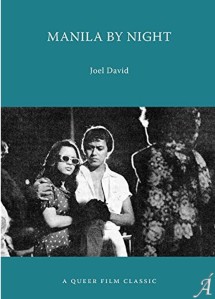
The imaging of lesbian desire in Philippine cinema has encountered the same difficulties that beset queer folk in conservative cultures everywhere. Since women are recipients of the male gaze, their bodies are allowed to be objectified, but love or sometimes even physical intimacy between them may be permitted only up to the point where male characters have to exercise their prerogative of owning their female partners. Lesbians in Philippine cinema have been more fortunate than their counterparts in other non-Western film cultures, with some depictions departing from the usual tragic or murderous or forcibly heterosexualized (“correctively raped,” to use the right-wing oxymoron) types of characters. The fountainhead of modern queer imaging in local films would be Ishmael Bernal’s Manila by Night (1980), where the butch lesbian figure is nevertheless punished by the narrative for her drug-peddling activities. Mel Chionglo’s Isabel Aquino: I Want to Live (1990) may perhaps be the closest to a politically correct adaptation of a real-life narrative, while Sigrid Andrea Bernardo’s Ang Huling Cha-Cha ni Anita (Anita’s Last Cha-Cha, 2013) is an exemplary and charming coming-out tale. Between these two samples, Tatlo … Magkasalo (1998) proves how difficult the journey has been. Its central female characters comprise a married woman conflicted by her bisexuality, a dying lesbian unable and unwilling to let go of her now-unavailable former partner, and an openly man-hating butch woman attached to both once-and-future lovers and creating difficult triangulated relations. Yet the narrative finds a way to reconcile all these impossible desires, ironically by allowing the straight male to realize, via a process of enlightenment, that his sexual exclusion matters less than the privilege he has of observing how women capable of same-sex love work out their differences among themselves. This makes understandable how Tatlo initially generated disapproving responses among PC observers as well as critics who tend to reject genre products. More recent observers have been attuned to its upholding of queer values, along with a cautiously realistic handling of class differences, where women without men have to constantly endure borderline-poverty conditions: the movie’s social contribution consists in asserting that the realization of radically novel familial relations, no matter how short-lived, is worth the cost of suffering the rejection of patriarchal systems.

Back to top
Return to Canon Decampment contents
Go to alphabetized filmmakers list

Á!


Canon Decampment: Eddie Garcia

[Click here (recommended) for desktop mode.]

Saan Nagtatago ang Pag-Ibig?

English Translation: Where Is Love Hiding?
Year of Release: 1987
Director: Eddie Garcia
Screenwriter: Armando Lao
Adapted from the komiks by Gilda Olvidado
Producer: Viva Films

Cast: Vilma Santos, Tonton Gutierrez, Ricky Davao, Gloria Romero, Alicia Alonzo, Cherie Gil, Alicia Vergel, Eddie Arenas, Perla Bautista, Joonee Gamboa, Suzanne Gonzales, Vicky Suba

When Rick unexpectedly gets his girlfriend Estella pregnant, he fears that his rich grandmother will refuse to give him a large inheritance out of disappointment. To prevent that, he convinces Estella to marry his mentally handicapped half-brother, Val. She reluctantly obliges and eventually lives with Rick’s family. But complications arise when she starts to develop feelings for Val.

Eddie Garcia’s directorial strength lay in glossy handling of complicated narratives, making him an ideal match for Viva melodramas. He also none too soon moved away from conservative male-centered material toward feminist subject matter. And with this Vilma Santos-starrer, he attained a peak of sorts with the help of an unusually inspired komiks adaptation and an equally inspired ensemble delivery. Known mainly for the line “Lagi na lang si Val, ang walang-malay na si Val” [Always blaming Val, the innocent Val], the film might be wrongly regarded as trafficking in sympathy for the mentally disabled. In fact it unexpectedly reverses the disadvantaged son’s marginal situation and makes us comprehend how he could win the loyalty and affection of his pretend-wife.

Back to top
Return to Canon Decampment contents
Go to alphabetized filmmakers list

Á!


Canon Decampment: William Pascual

[Click here (recommended) for desktop mode.]

Takaw Tukso

English Translation: Constant Craving
Year of Release: 1986
Director: William Pascual
Screenwriter: Armando Lao
Producer: Ultravision Films

Cast: Gino Antonio, Julio Diaz, Jaclyn Jose, Anna Marie Gutierrez, Anita Linda, Lucita Soriano, Eva Darren, Tony Rubio

A solid friendship exists among Nestor, his fiancée Debbie, his cousin Boy, and Debbie’s friend Letty. But it gets shattered when a distraught Debbie elopes with Boy after she gets into a fight with her mother. The two get married but settle in the car-repair shop where Nestor lives and works. Tensions rise even further when true-hearted Letty weds Nestor and they live right beside Debbie and Boy.

Tragedy has conveniently become the coin of the realm of the senses, mainly because the medieval tendencies of Philippine Catholicism prefer that people who indulge in sexual pleasure must be made to pay—extravagantly, if possible—for their perceived transgression(s). The creative forces behind this project managed a way out of the predictability of this narrative approach by returning to the basics. It does this by grounding the material in the originary spirit of neorealism, as embodied in the frank sensuality of Luchino Visconte’s Ossessione (Obsession, 1943), a then-daring adaptation of James M. Cain’s occasionally banned crime novel The Postman Always Rings Twice (1934). With an observational expertise that would be the envy of veteran ethnographic filmmakers, Takaw Tukso (like Ossessione) envisions economically impoverished characters involved in dangerous games of seduction and clandestine assignations. Passion ultimately gets the better of their professional and friendly relations, and a comeuppance elevates the drama to the level of some of the most innovative strains in classical Greek theater.

Back to top
Return to Canon Decampment contents
Go to alphabetized filmmakers list

Á!


Canon Decampment: Chito S. Roño

[Click here (recommended) for desktop mode.]

1—Private Show

Year of Release: 1984
Director: Chito S. Roño (as Sixto Kayko)
Screenwriter: Ricky Lee
Producer: Clock Work Films International

Cast: Jaclyn Jose, Gino Antonio, Leopoldo Salcedo, Lucita Soriano, Yvonne, Aurora Boulevard, Vicky Varga, Johnny Vicar, Bella Flores, Ella Luansing, Angie Ferro

Myrna is a young but worldly-wise lass who shows up at Ador’s live-sex den to apply as a performer. She falls in love with Jimmy, her regular partner. However, her drug habit and his kidney problems strain their relationship. After breaking up with him, he decides to return to his hometown. She grows increasingly dependent on drugs and becomes indifferent to the worsening decadence in her environment and the degradations being done to her.

2—Curacha: Ang Babaeng Walang Pahinga

English Title: Curacha: A Woman Without Rest
Year of Release: 1998
Director: Chito S. Roño
Screenwriter: Ricky Lee
Producer: Regal Films

Cast: Rosanna Roces, Jaclyn Jose, Ara Mina, Ruby Moreno, Lucita Soriano, Maureen Mauricio, Mike Magat, Dick Israel, Tito Arevalo, Lito Legaspi, Richard Bonnin, Roy Alvarez, Tony Mabesa, Alex Cortez, Tom Olivar

Curacha, a friend of Myrna’s and a live-sex performer herself, witnesses an apparition of the Virgin Mary while praying in church: the lady walks down the altar toward her, slaps her, and she awakens to the announcement of another ongoing coup d’état. Since security forces blockaded the street where she exited, she has to find her way out, only to discover that the rest of the city has also lost its bearing.

Live-sex performers function as an index of the country’s destitution, restoring pornographic spectacle to its voyeuristic theatrical origin. The act of capturing their lives in film raises a paradox—How can a society with a media industry still need live-sex performances?—that, depending on how well the question is answered, can lead to several possible conclusions. In the instance of the martial-law era’s Private Show and the post-martial law period’s Curacha, the viewer is provided with a chronicle of the country’s continuing descent into an abyss of social and moral depravity, notwithstanding an undeniable step-up in the affluence of the elite. A perceptible maturation is also suggested by the casting of the best “bold” performers of their respective periods—the heartbreakingly waifish Jaclyn Jose of the 1980s and the boundlessly voluptuous Rosanna Roces of the ’90s. Both play characters who lose all claims to dignity yet refuse to surrender to unmitigated debauchery by foregrounding the fierce and unyielding combination of talent, warmth, humor, and sensual presence that mark the Filipina as the world has come to know her.

Back to top
Return to Canon Decampment contents
Go to alphabetized filmmakers list

1—Itanong Mo sa Buwan

English Translation: Go Ask the Moon
English Title: Moon Child
Additional Languages: English & Chabacano de Cavite
Year of Release: 1988
Director: Chito S. Roño
Screenwriter: Armando Lao
Producer: Double M Films

Cast: Mark Gil, Anjo Yllana, Jaclyn Jose, Anita Linda, Tita Muñoz, Susan Africa, Mia Gutierrez, Lucita Soriano, Fernando Morato, Cris Vertido, Resty Vergara, Gamaliel Viray, Alan Glinoga, Jing Jing Manaloto, Aljon Jimenez, Jojo Reyes, Bodjie Pascua, Archi Adamos, PETA Kalinangan Ensemble

In the course of a botched bank robbery, a teller, Josie, is taken hostage by Angel, when his partner is killed. He takes her to the isolated rural home of Juana, an elderly lady. After Josie is rescued and Angel is seriously wounded, her husband, Sammy, has difficulty coming to terms with her version of events, especially since his mother is intent on maligning the woman he married. Conflicting statements made by Juana as well as the hospitalized Angel cast further doubt not just on Josie’s narrative but on her character as well.

2—La Vida Rosa

English Title: The Life of Rosa
Additional Languages: English & Chabacano de Cavite
Year of Release: 2001
Director: Chito S. Roño
Screenwriter: Armando Lao
Producer: Star Cinema

Cast: Rosanna Roces, Diether Ocampo, Liza Lorena, Jiro Manio, Angel Aquino, Pen Medina, Jhong Hilario, Nonie Buencamino, Vic Diaz, Albert Martinez, Aurora Yumul, Olga Natividad, Katrina Nazario, Ihman Esturco, Rey Behar, Angie Ferro, Dodie Acuña, Joe Gruta, Cris Vertido, Krystle Zamora, Jackie Castillejos, Cris Michelena, Irma Adlawan, Tom Olivar, Connie Chua, Aurora Uding

After swiping a car from a mark charmed by Rosa, Dado decides he wants to transform the vehicle into a taxicab. Their decision incenses Tiyong, their gangleader, who sets in motion a series of events that leads to Dado whacking him. Lupo, Tiyong’s right-hand person, accepts the assassination since it allows him to take over the criminal organization. Rosa and Dado, however, dream of their own racket, one that will allow them to resettle Rosa’s son and blind mother and enable them to live in peace abroad.

Recognizing when a team effort provides productive dividends over time, Chito S. Roño reattempted the same approach that had worked for him with the twin triumphs of Private Show and Curacha: get a gifted scenarist to write material for the most talented sex symbol of the era. The formula didn’t pan out the same way it did for Ricky Lee’s scripts, since La Vida Rosa falters in comparison with Itanong Mo sa Buwan, despite an undeniable upgrade in Roño’s directorial skills. Then again, Itanong Mo surpasses most unruly-woman films anywhere, its novel structure and use of flashback enabling the narrative to raise issues not just about the reality of events but also the insidious effects of media celebrity, decades before the internet made this debilitating property of modern existence commonplace. For most of its running time until its main character capitulates to the dictates of her partner’s personal interests, La Vida Rosa similarly relishes its opportunity to function as an objective correlative of its lead performer’s remarkable autobiography.

Back to top
Return to Canon Decampment contents
Go to alphabetized filmmakers list

Bakit Kay Tagal ng Sandali?

English Translation: Why Does a Moment Take So Long?
English Title: A Moment Too Long
Year of Release: 1990
Director: Chito S. Roño
Screenwriters: Orlando Nadres
With additional dialogue by Emmanuel H. Borlaza
Producer: Viva Films

Cast: Dina Bonnevie, Julio Diaz, Eddie Garcia, Janice de Belen, Charito Solis, Ai-Ai de las Alas, Eva Ramos, Vangie Labalan, Elsa de Venecia, Gamy Viray, Koko Trinidad, Pocholo Montes, Jess Ramos

In his bid to get rich, Ted convinces his girlfriend Niña to marry his ailing and widowed boss, Edmundo. Ted believes that once Edmundo dies, his wealth will be inherited by Niña, which she can then share with her lover. But when Ted’s plan fails, he marries his boss’s daughter after she takes over Edmundo’s company. Soon, Ted and Niña realize how their ambitions extract a price they may each be unprepared to pay.

By its capacity for depicting the plight of women under a patriarchal system, melodrama has always had the potential to cross over into horror, and nowhere in Philippine cinema has that potential been realized than in the constant discharge of blood, sweat, and copious tears manifested in this film. Along the way a curious development takes place: the characters seem to have been aware that the country’s masculinist authoritarian experiment had recently failed, so the women wind up wresting control of the narrative, and wage war, and negotiate peace, with one another. For their part, the ultimately excluded males display some strength, and never of a constructive nature, only when they’re older—which means that eventually, they die off. The director’s benign bemusement with this lurid and giddy state of affairs provides the darkly comic distance that turns the presentation into a display of what literary and cultural critics call the carnivalesque (from Soviet-era scholar Mikhail Bakhtin’s marvelous dissertation), a seriocomic mode that enables its authors to combine contradictory effects such as tears, fears, and pained laughter.

Back to top
Return to Canon Decampment contents
Go to alphabetized filmmakers list

Alyas Stella Magtanggol

English Translation: Alias Stella Magtanggol
Alternate Title: Stella Magtanggol
Additional Languages: English, Japanese
Year of Release: 1992
Director: Chito S. Roño
Screenwriter: Ricky Lee
Producer: Seiko Films

Cast: Rita Avila, Romnick Sarmenta, Maritoni Fernandez, Gardo Verzosa, Lito Legaspi, Sylvia Sanchez, Vanessa Escaño, Allan Paule, Karen Timbol, Alicia Alonzo, Tony Mabesa, Ray Ventura, Lolie Mara, Dexter Doria, Shirley Tesoro, Evelyn Vargas, Edmund Cupcupin, Turko Cervantes, Dante Javier, Lora Luna

Adopted by a devout rural couple after she was abandoned by her birth mother, Stella grows up alienated from the values of her small town. In high school, the only friendship she maintains is with Wendy, who never runs out of pocket money but has to endure the sadistic treatment of the mayor. Frustrated by the sexual abstinence of her wholesome boyfriend, Stella turns to the family driver for stud service. The latter’s wife stabs him out of jealousy and he falls off a rooftop, where he and Stella were trysting, exposing their affair to the rest of the townspeople. After her father suffers a fatal heart attack because of her scandal, her mother banishes her from home. She adopts her mother’s family name, Magtanggol, and lives with Wendy, but they have to flee after the mayor’s heavy-handedness traumatizes her friend, nearly killing her. Both women wind up in Manila’s red-light district, where Stella finds gainful employment as a nightclub singer while manipulating the blandishments of a rich suitor and fooling around with a younger lover. Her strokes of good fortune, however, are compromised by her discovery that her boyfriend turns out to have a violently jealous streak.

A rare instance in Philippine cinema where an unruly-woman tale resolves in the main character’s favor without subjecting her to death, disability, or religious conversion, Alyas Stella Magtanggol even more surprisingly claims to have been based on a real-life story. The narrative facilitates this arrangement by devising a parallel scenario where Stella’s BFF is the character who pays the price of faithfully observing patriarchal and familial demands, thus making understandable Stella’s insistence on personal independence and readiness to rebel when her autonomy is challenged. A number of other ethical dictates are upended as well, starting with the configuration of homespun rusticity as an ideal to be upheld over productive female labor, even if the only available option happens to be sex work. The expected dangers of underworld involvement make their appearance even with a supposedly benign and cowardly potentate, but the film also provides a reversal in the historically specific disaster caused by the pyroclastic mudflows of Mount Pinatubo’s 1991 eruption: the now-abandoned structures half-buried in lahar, made to represent their former occupants’ defeated aspirations, serve as useful hiding places for people on the run in ASM. When the surviving characters find themselves in the same territory during the film’s climax, we find ourselves grasping for hope among the ruins, as they do as well.

Back to top
Return to Canon Decampment contents
Go to alphabetized filmmakers list

Bata Bata Paano Ka Ginawa?

English Translation: Little Child, How Were You Created?
English Title: Lea’s Story
Year of Release: 1998
Director: Chito S. Roño
Screenwriter: Lualhati Bautista
Based on her novel
Producer: Star Cinema Productions

Cast: Vilma Santos, Carlo Aquino, Serena Dalrymple, Albert Martinez, Ariel Rivera, Raymond Bagatsing, Cherry Pie Picache, Angel Aquino, Rosemarie Gil, Dexter Doria, Cita Astals, Andrea del Rosario, Lucy Quinto, Menggie Cobarrubias

For years, Lea has juggled both social work and single motherhood, for the sake of her children Ojie and Maya. But things get complicated when Raffy, Ojie’s father, returns with plans to bring along his son when he migrates to the US with his new wife. Worse, Maya’s father Ding often lashes out to mask his shortcomings as Lea’s live-in partner. As tensions rise, Lea learns what surviving in a patriarchal system really entails.

All the usual reservations about middle-class feminism get tempered by a necessary qualification when situated in a Third-World context. Lea, the central character of Bata Bata Paano Ka Ginawa?, is sufficiently gender-enlightened to know that she cannot expect any treatment equal to the men she opts to live with and live like. Hence in contrast with them, she winds up having to juggle egotistic partners, nosy neighbors, judgmental colleagues (in an educational institution, at that), and freaked-out offspring, all the while scrambling to earn just enough to maintain her independence. An overlay of irony stems from the fact that the film’s setting, like the source novel’s, was more or less after a people’s movement succeeded in ousting a fascist dictatorship, though not the oligarchic, clerical, and foreign-imperialist dominions that gave rise to it. After a few decades playing catch-up with Nora Aunor despite prematurely matching her in terms of local recognition, Vilma Santos manages to come into her own like never before or since. In BBPKG? she dexterously calibrates her trademark mix of charm, vulnerability, calculation, stubbornness, and restrained lust and rage into an unambiguously intoxicating cocktail, reminiscent of Aunor at her best. As a consequence, the movie’s thematic complexities and more-bitter-than-sweet conclusions can be gulped down without much resentment.

Back to top
Return to Canon Decampment contents
Go to alphabetized filmmakers list

Caregiver

Year of Release: 2008
Director: Chito S. Roño
Screenwriter: Chris Martinez
Based on a story by Jewel C. Castro, Chris Martinez, Chito S. Roño
Producers: ABS-CBN Film Productions & Star Cinema

Cast: Sharon Cuneta, John Estrada, Rica Peralejo, John Manalo, Makisig Morales, Jhong Hilario, Mickey Ferriols, Lotlot de Leon, Saul Reichlin, Matthew Rutherford, Claire Jeater, Marita Zobel, Anita Linda, Monique Wilson, Ima Castro, Boots Anson-Roa, Dexter Doria, Neil Ryan Sese, Gary Granada

Sarah Gonzales has to bid farewell to her colleagues, students, and family members when her husband, Teddy, asks her to join him abroad. She will be giving up a bright career as an English teacher to work as a caregiver, in exchange for far better pay. In London, she worries about Teddy’s profligacy and discovers he has not yet been certified as a nurse. In the meanwhile, a grumpy elderly patient, Mr. Morgan, finds in Sarah’s charm and honesty the kind of attention that his family failed to provide him with.

Released during the period when local critics considered mainstream releases unworthy of their attention, Caregiver stands as proof that blind willingness to mimic Western-sourced aesthetic evaluation standards leads down nonsensical and sometimes harmful pathways. Otherwise, the type of attention lavished on artsy “politicized” exercises that regular audiences would resolutely ignore could have been directed toward a standard-issue product that could finally serve as a useful starter text in comprehending the multilevelled complexities of the country’s labor-export policy. The narrative befittingly focuses on a young mother’s travails (apropos of the statistical reality of Overseas Filipino Worker demographics comprising mostly women), from giving up her expertise in a psychically fulfilling local career in exchange for better-paying menial work abroad, ensuring that the family members who’ll be left behind will continue functioning in her absence, and contending with the several domestic and professional challenges that beset migrants Othered by their race, class, and gender. Sharon Cuneta embodied the character at a perfect juncture in her career trajectory as a mature performer capable of acknowledging all manner of predicaments, complemented by perfectly cast players including foreign actors. The film portrays its OFW characters’ triumph in bittersweet terms—a final observational truth that ultimately reflects on a system of governance that cares less for its citizens’ capacity to thrive within their country’s borders, among their own people, than for their placement in a global slave economy so as not to stanch the flow of remittances.

Back to top
Return to Canon Decampment contents
Go to alphabetized filmmakers list

Signal Rock

Additional Languages: English, German, Waray
Year of Release: 2018
Director: Chito S. Roño
Screenwriter: Rody Vera
Producers: Available Light Productions & Regal Films

Cast: Christian Bables, Daria Ramirez, Nanding Josef, Mon Confiado, Elora Españo, Keanna Reeves, Francis Magundayao, Archie Adamos, Sue Prado, Jomari Umpa, Ces Quesada, Kokoy de Santos, Mara Lopez, Ruby Ruiz, Dido de la Paz, Judy Ann Santos (voice)

Intoy serves as go-between of his Finland-based sister Vicky (whom he contacts via the stable reception provided by the Magasang Rock Formation, colloquially called signal rock) and his family. He also helps out various townsfolk in his capacity as jack of all trades, proud member of his community, and occasional delinquent indulged by everyone, including the police chief. When he falls in love with Rachel, however, he realizes that like his sister and the other young women of the town, she might eventually leave him to work elsewhere and marry a rich foreigner for convenience. At this point, his sister informs him that she might lose custody of her daughter to her abusive ex-boyfriend unless Intoy helps her prove that she has the means to support the child. Intoy realizes he has no choice except to call on people to return the favors he had extended them.

Intended as the middle installment in a trilogy on Biri Island in Samar province, Signal Rock distinguishes itself from its predecessor, Badil (Dynamite Fishing, 2013) by being less overtly political yet more impactful via its more extensively developed thematic discourse. Once more, the narrative is focalized via the crisis situations confronted by a young man, who this time needs to solicit the support of his tight-knit community in order to prevent his sister, a migrant wife, from being deported through the machinations of the abusive foreigner that she married. Intoy, the central character, realizes that the same forces that swept up his sister and his best friend’s girlfriend will soon deprive him of his own shot at small-town happiness, and that all he could do is ensure that the women who left maintain enough stature and equanimity so that their role as their respective families’ providers does not get compromised. Yet Signal Rock works out a persuasive critique of the Philippines’s continuing reliance on labor export, by counterposing the benefits (and excesses) of globalization with the manifold pleasures and satisfactions of homespun values and practices. The strategy may seem conventional, but the film turns out to be anything but. The emphasis on male characters, for example, proceeds from the outflow of women from the town into the world of effective overseas slave labor; the remaining citizens’ insistence on indulging in tradition locks them in a cycle of perpetual reliance on foreign-currency remittances; the perjurious claim that the entire town conspires in making is intended to save one of their own, but it also suggests where the tendency of elected officials to engage in plundering the national treasury comes from. Signal Rock is a throwback as well as a tribute to the achievement of the artists of the Marcos dictatorship, who were able to package essential and painful analyses of then-existing conditions in seemingly fun-filled, devil-may-care celebrations of the quotidian. Above all, as much as it casts a distrustful eye on the system that afflicts the most helpless among us, it also invites us to share in extolling the life force and survival instinct of these same people. It would not be such a stretch to realize that the movie embodies not just Filipino characters (literally), but the Filipino spirit itself.

Back to top
Return to Canon Decampment contents
Go to alphabetized filmmakers list

Á!

Canon Decampment: Tikoy Aguiluz

[Click here (recommended) for desktop mode.]

Boatman

Additional Language: English
Year of Release: 1985
Director: Tikoy Aguiluz [as Amable Aguiluz IV]
Screenwriters: Alfred Yuson & Raffy Guerrero
From a story by Tikoy Aguiluz, with additional dialogue by Jose F. Lacaba
Producer: AMA Communications

Cast: Ronnie Lazaro, Sarsi Emmanuelle, Suzanne Love, Josephine Manuel, Jonas Sebastian, Eddie Arenas, Bella Flores, Mario Escudero, Alfredo Navarro Salanga, Susan Africa, Dennis Marasigan, Cloyd Robinson, Ding Navasero

Felipe leaves his job as a boatman ferrying tourists to and from Laguna’s Pagsanjan Falls to try his luck in Manila. He ends up as a live-sex performer and falls in love with his partner Gigi. He also starts a relationship with Emily, an American woman who hires him as her boytoy. As city life consumes him, Felipe realizes that there is a price he must pay for his carnal exploits.

At the height of the people-power movement, critics of the Marcoses were eager to charge the regime with immorality, and the revitalization of the sex-film genre was meant to stand as proof. Admittedly the libertarian atmosphere of the time was cynically intended to demonstrate to foreign observers that film artists enjoyed crucial amounts of freedom and institutional support. Despite this unstable situation, the local industry did manage to yield a number of noteworthy outputs. Boatman, with its disturbing, fevered fusion of high-art aesthetics and underworld debauchery, counts as one of them. The talents behind the film overlapped with those involved in anti-dictatorship projects, so the spectacle of a commercially successful sex-obsessed product criticizing the same socio-political system that gave rise to it can now be better appreciated and evaluated in retrospect.

Back to top
Return to Canon Decampment contents
Go to alphabetized filmmakers list

Segurista

English Translations: Perfectionist; Dead Sure
English Title: The Insurance Agent
Year of Release: 1995
Director: Tikoy Aguiluz
Screenwriters: Jose F. Lacaba & Amado Lacuesta
From a story by Tikoy Aguiluz, Jose F. Lacaba, Amado Lacuesta
Producer: Neo Films

Cast: Michelle Aldana, Gary Estrada, Ruby Moreno, Albert Martinez, Julio Diaz, Pen Medina, Eddie Rodriguez, Liza Lorena, Suzette Ranillo, Teresa Loyzaga, Anthony Castelo, Roy Rodrigo, Manjo del Mundo, Celsar Bendigo, Evelyn Vargas, Melisse Santiago, Vangie Labalan, Pocholo Montes, Edgar Santiago, Mon Fernandez, Allan Garcia, Elan Villafuerte, Philip Lazaro, Ace Espinosa, Taka Musara, Maritess Fuentes, Tess Dumpit

To support her family devastated by the inundation of lahar from Mount Pinatubo, Karen hits upon the novel idea of selling insurance to the clients she encounters as a guest relations officer (the Philippine euphemism for bar hostess), through which she attains a level of success that makes her the highest earner in her batch of insurance agents. Her husband and daughter in Pampanga remain unaware of her less-than-savory strategy, and she knows enough about her patrons, from the example of her constantly lovelorn roommate Ruby, to keep professional distance from them even while allowing them access to her body. A number of clients, however, are attracted to her unattainability: one of them courts Ruby to get close to her while another decides to break up with his family despite her protestation. An even more dangerous obsessive, one that she fails to account for, is the person who conceals his desire for her.

Segurista is a film very much worth watching, for the most part. It starts out as a soft-core sex comedy, exceptional in the face of the usual tragic-moralistic depictions of carnal transgressions in Philippine cinema. It then takes a step forward without abandoning its observational wryness, into a laudable and women-sympathetic colloquy on social mores and inadequate disaster response, as well as on contrasts and parallels among various professions. Along the way it boasts of accomplished technique and performances, although it underutilizes the exceptional Ruby Moreno (who had made her own star turn in a 1993 Japanese masterwork, Sai Yôichi’s All Under the Moon). Its only serious misstep is when it opts for a (mercifully shortish) resolution that demonizes the lowest-ranking worker in its narrative universe—the usual exclusion of the lumpen proletariat from progressive concerns that orthodox leftists unfortunately still consider acceptable, and that has marred too many otherwise noteworthy works in the country.

Back to top
Return to Canon Decampment contents
Go to alphabetized filmmakers list

Biyaheng Langit

English Translation: Trip to Heaven
English Title: Paradise Express
Year of Release: 2000
Director: Tikoy Aguiluz
Screenwriters: Ianco dela Cruz & Rey Ventura
From a story by Tikoy Aguiluz & Mirana Medina-Bhunjun
Producers: GMA Films & Viva Films

Cast: Joyce Jimenez, Mark Anthony Fernandez, Susan Africa, Christian Alvear, Kent Ambos, John Arcilla, Jack Barri, Nida Blanca, Menggie Cobarrubias, Cholo Escaño, Bong Gutierrez, Jeanette Joaquin, Vangie Labalan, Rj Leyran, Bert Martinez, Ali Navarro, Robert Oliviero, Bembol Roco, Boy Roque, Shermaine Santiago, Bert Martinez

Bea, a Filipino-American visiting the Philippines without her parents, finds herself drawn to the world of gambling where her grandmother amuses herself as a senior citizen. She winds up losing the money she was hoping to save so she could live independently, and finds herself buried deeper in debt when an amount she borrows from her best friend also gets squandered on a bad bet. She hooks up with Danny, an orphaned enforcer who collects debts for Bossing, a gambling lord. Still hoping to recover, both of them splurge on funds that belong to Bossing. But their losses force them to hide out in Danny’s slum residence and work out ways to appease Bossing, who has taken an interest in Bea. Their confrontation with Bossing results in bloodshed, so Danny flees out of town with Bea to ask help from a semi-retired ganglord who also has a score to settle with Bossing.

Biyaheng Langit is atypically straightforward for a Tikoy Aguiluz film. That reflects as much on the anxieties that beset local practitioners ever since critical awareness and global validation became ideals to be cherished and pursued. It also indicates how consistently productive filmmakers can occasionally find coasting irresistible, with enough collegial support from local genre specialists to assure them that getting by has its own rewards. Pinoy action films during the late 20th century were at peak productivity, so enough personnel and actors could be conscripted to execute an undertaking with just the right amount of thrills and (courtesy of Aguiluz’s earlier specialization) ribaldry. Folks may be inclined to point out Mark Anthony Fernandez’s relation to his aunt Merle, who pioneered in bomba films, plus his father Rudy, a top action star. But the link goes farther and deeper: not only was his grandfather Gregorio an overlooked First Golden Age director, he was also a remarkable performer, although unfortunately only his supporting performances in his own films remain, and MAF proves himself fully worthy of the association. Beyond these admittedly incidental felicities (marred by the harrowing killing of Nida Blanca under resemblant circumstances), the film probes into the phenomenon of underworld-organized gambling—a concern that was already showing signs of infesting the higher seats of government by this time, and that would continue causing official vexations through subsequent administrations.

Back to top
Return to Canon Decampment contents
Go to alphabetized filmmakers list

Á!


Canon Decampment: Elwood Perez

[Click here (recommended) for desktop mode.]

Silip

English Translation: Peek
English Title: Daughters of Eve
Year of Release: 1985
Director: Elwood Perez
Screenwriter: Ricky Lee
Producer: Viking Films International

Cast: Maria Isabel Lopez, Sarsi Emmanuelle, Mark Joseph, Myra Manibog, Pia Zabale, Daren Craig Johnson, Michael Angelo, Arwin Rogelio, Gloria Andrade, Cherriebee Santos

In a remote village, Tonya teaches catechism to the local children while trying to repress the lust she still feels for Simon, her former suitor. Tensions rise when Tonya’s childhood friend Selda returns to the village after years of living in the city. Selda’s sexual emancipation challenges Tonya’s pious facade and soon, their clashing beliefs lead to dire consequences for themselves and the people around them.

Even in terms of its best intentions, Ferdinand Marcos’s martial-law dictatorship inadvertently managed to subvert itself. Silip, admired by the “wrong” crowd, might ultimately serve as the means by which this principle could be demonstrated. It was set in the same locale, written by the same scenarist, and screened at the same venue as the Experimental Cinema of the Philippines’s most celebrated work, Ishmael Bernal’s Himala (1982). Yet Silip re-envisions its unacknowledged predecessor’s female bonding, between the miracle worker and her brothel-operating best friend, as a quest for sexual awakening and fulfillment, and pursues this earthy project to its nihilistic extreme. The ambition itself is quite jaw-dropping, considering the reputations that the artists and the support institution had staked on the project. Not surprisingly, the Church-supported February 1986 people-power uprising ensured that the movie would never be able to contribute to mainstream cultural discourse. As a result, Silip has remained associated with the type of disreputable films that could be shown only at censorship-exempt theaters during the Marcos period and at far more dubious venues afterward. Incredible as it may sound, this may be the closest Philippine cinema has ever come to the smutty sublimity of queer poet, philosopher, and filmmaker Pier Paolo Pasolini, several of whose spiritually inflected film discourses were also infused with pornographic imagery and denounced by moralists accordingly.

Back to top
Return to Canon Decampment contents
Go to alphabetized filmmakers list

Bilangin ang Bituin sa Langit

English Translation: Count the Stars in Heaven
Additional Language: English
Year of Release: 1989
Director: Elwood Perez
Screenwriters: Jake Cocadiz & Jigz Recto
Producer: Regal Films

Cast: Nora Aunor, Tirso Cruz III, Gloria Romero, Perla Bautista, Miguel Rodriguez, Ana Margarita Gonzales, Vangie Labalan, Mario Escudero, Flora Gasser, Beverly Salviejo, Rolando Tinio, Ella Luansing, Deborah Sun, Tess Dumpit

Peasant girl Magnolia has always loved her cruel landowner’s son, Anselmo. But their relationship turns sour as Magnolia, through hard work, becomes rich, and the indolence of Anselmo’s family causes them to lose their wealth. When Magnolia gets pregnant after a drunken tryst with Anselmo, she keeps this a secret from him. Years later, a romance between her daughter and Anselmo’s son forces her to deal with the resentment she has been harboring.

In an ideal world this film would be held up as Philippine cinema’s most successful sample of progressive genre transformation, a concept derived from the ground-breaking Cahiers du Cinéma editorial “Cinema/Ideology/Criticism,” written in 1969 by Jean-Louis Comolli and Jean Narboni. The essay argued, among other points, that certain films, especially commercial projects, may be saddled with conventional material; yet filmmakers (such as Alfred Hitchcock) with sufficient mastery in the medium can utilize style as a means of providing critical commentary on content. Regal Films, with Elwood Perez as director, revived the wildly successful but then-already long-dormant Guy-and-Pip love team via the production company’s previous installments, Till We Meet Again and I Can’t Stop Loving You (both 1985). Perez continued to tinker with the components—usually involving class conflicts—to come up with increasingly ambitious diversions. With Bilangin ang Bituin sa Langit, he went whole-hog with an epic melodrama with period elements and fan-pleasing contrivances, including having Nora Aunor voice a mestiza singer and getting the central couple to play parents as well as their own children. No other local performer could pull off a role that required over-the-top dramatization and playful self-awareness in the same instance, and Aunor had by then attained a performing peak that seemed destined to run for as long as she could stay alive.

Back to top
Return to Canon Decampment contents
Go to alphabetized filmmakers list

Ang Totoong Buhay ni Pacita M.

English Title: The Real Life of Pacita M.
Year of Release: 1991
Director: Elwood Perez
Screenwriter: Ricky Lee
Producer: MRN Film International

Cast: Nora Aunor, Armida Siguion-Reyna, Lotlot de Leon, Juan Rodrigo, Subas Herrero, Marissa Delgado, Dexter Doria, Marilyn Villamayor, Eddie Infante, Alma Moreno, John Rendez

Pacita is a sassy nightclub singer by night, famed for her bawdy songs and repartee. But by day, she is a loving single parent to her only child, Grace, who is about to leave for Australia after bagging a college scholarship. When a shooting accident leaves Grace in a coma, Pacita’s resolve as a mother will be tested as she faces a slew of problems, not the least of which is her meddlesome and judgmental mother-in-law.

When Nora Aunor undertook the role of an unruly, obsessive nightclub performer, she had just decided to shelve her own auteur production, Greatest Performance (1989), on which she had completed principal photography as performer, writer, and director. Ang Totoong Buhay ni Pacita M. resonates with her understanding of the creative process as well as the insights she had accumulated from decades in the profession. Also by then making an impressive crossover to the legitimate stage via a couple of strenuous productions mounted by the Philippine Educational Theater Association, she apparently decided to amplify her execution of the title character in Pacita M., and only wound up proving that even when it comes to histrionic overkill, no one could do it as well as she could. The movie advances an enlightened pro-euthanasic argument, which serves the purpose of providing a useful message for those who prefer to find any.

Back to top
Return to Canon Decampment contents
Go to alphabetized filmmakers list

Otso

English Translation: Eight
Additional Language: English
Year of Release: 2013 / B&W with Color
Director: Elwood Perez
Screenwriters: Vince Tañada & Elwood Perez
Producers: Film Development Council of the Philippines & Earth Moving Pictures

Cast: Vince Tañada, Monique Azerreda, Gabby Bautista, Anita Linda, Jun Urbano, Vangie Labalan, Mark Joseph Garde, Jordan Ladra, Adelle Ibarrientos, Cris Lim, Cindy Liper, Andrew Leavold

Lex returns from Los Angeles to Manila to work on a script for an indie film. After moving to a unit in a run-down condominium, he meets his neighbors—including the sultry Sabina and her aunt, actress Anita Linda, who owns the condo—and they inspire him as he writes. But during a birthday party for Anita, Lex realizes that his observations about what goes on around him are not what they seem.

Philippine cinema has never been known for late-career swings. In contrast with what John Grierson once said of Josef von Sternberg, “When a director dies, he becomes a photographer,” Filipino directors tend to turn into religious moralizers, if not proselytizers. This probably explains why the bewildering left-field turn of a box-office enfant terrible into a full-blown exponent of semi-autobiographical explorations has left mainstream film critics—i.e., the ones organized into award-giving bodies—out in the dark, pun incidental. Elwood Perez had brought on board enough of his audience-oriented skills to ensure that Otso could still work on the level of visual pleasure. The spectacle however of an always-too-successful blockbuster director returning from retirement and not just challenging established taste-mongers, but also overturning their list of favored indie-digital practitioners, must have stung those who preferred to conduct their business with self-certain constancy. The key to the film’s unique and unexpected triumph is scriptwriter and lead performer Vince Tañada, liberated for the moment from his history-based stage material. With Otso, he committed to the fever-dream collaboration with the fervor of someone who has been given an opportunity to make history, rather than interpreting it, for a change. Perez intended Otso, which was about a scriptwriter’s travails, to be the first installment of a personal trilogy drawn from his professional experiences: it was followed by Esoterika: Maynila (Esoterica: Manila, 2014), also with Tañada in a prominent role, about a komiks illustrator; and by the still-to-be-completed and provisionally titled #Mnemonics (Vaya con Dios) (meaning God Be with You), his tribute to 1960s movie queen Amalia Fuentes, with whom he made some of his early films.

Back to top
Return to Canon Decampment contents
Go to alphabetized filmmakers list

Á!


Canon Decampment: Emmanuel H. Borlaza

[Click here (recommended) for desktop mode.]

Bituing Walang Ningning

English Translation: Star without a Sparkle
Additional Language: English
Year of Release: 1985
Director: Emmanuel H. Borlaza
Screenwriter: Orlando Nadres
From a story by Nerissa Cabral
Producer: Viva Films

Cast: Sharon Cuneta, Christopher de Leon, Cherie Gil, Jay Ilagay, Tommy Abuel, Joel Torre, Chanda Romero, Lorli Villanueva, Vicky Suba, Lito Pastrana, Timothy Diwa

Dorina Pineda is so obsessed with famous singer Lavinia Arguelles that she spends her spare time and money to attend her live appearances, and sneaks out extra garlands of sampaguita (jasmine) from the handicraft shop where she works, to offer them to her idol. She also sings at casual or small-time venues, in order to better emulate Lavinia, who pretends to appreciate Dorina’s fanaticism despite finding her repulsive because of her poverty. When Lavinia, in a fit of pique, refuses to fulfill her commitment to a producer’s programs, Dorina volunteers to take her place, and Lavinia’s ex-boyfriend is pleasantly surprised by Dorina’s talent and drawn to her kindness. All of which increases Lavinia’s ire toward her still-worshipful follower.

Bituing Walang Ningning has proved to be crucial to the two most significant Philippine star-studies articles not focused on Nora Aunor: “Sharon’s Noranian Turn” (2009) by Bliss Cua Lim and “Dulsita” (2015) by Jerrick Josue David. Its historical circumstances provide a useful context: Emmanuel H. Borlaza developed his audience-friendly approaches during the wholesome teen-idol musicals meant to provide a moral counterweight to the soft-core bomba films of the late 1960s and early ’70s; he also (more than once) assisted in the revival of Cebuano-language cinema by introducing smart reworkings of commercial genres. Viva Films, for its part, intended to foster conservative values in film material and production during the Marcos era, with Sharon Cuneta as its signature performer. This assumption served to challenge Filipino filmmakers, who were by then already used to devising ways to bypass or subvert the many restrictions that government authorities imposed on the country’s most popular mass medium. Not surprisingly, several Viva productions have proved worthier of long-term appreciation than observers initially thought. As the last of a series of Hollywood-style movie queens to stake her claim on pop-culture history, Cuneta took note of the lessons of her predecessors (hence her “Noranian” turn) and has been shaping her life according to her perception of what history expects from her: feminist responsibility then, democratic politics today, always with a well-known affection for her followers. Not only is she the only movie queen whose fan vehicle (where she ironically plays a starstruck devotee) deserves to be honored, even before she upgraded to mature roles; she has also persisted in finding her way, high-profile as ever, even with the rambunctiously vexatious arrival of new media and new politics in the new millennium. Among the many other pleasures the film bestows are its evergreen title song and the line uttered by exasperated but self-amused drama queens since then: “You’re nothing but a second-rate, trying-hard copycat,” preferably with a glass of well-aimed cold water in hand.

Back to top
Return to Canon Decampment contents
Go to alphabetized filmmakers list

Á!


Canon Decampment: Gil Portes

[Click here (recommended) for desktop mode.]

Gabi Kung Sumikat ang Araw

English Title: Sun Rises at Night
Additional Language: English
Year of Release: 1983
Director: Gil Portes
Screenwriter: Ricky Lee
From a story idea by Manny Pichel
Producers: Four N Films & Gold Lion Productions

Cast: Gina Alajar, Charito Solis, Sandy Andolong, Kristine Garcia, Edgar Mande, Juan Rodrigo, Bebong Osorio, Willy Cruz, Glenda Tuazon, William Martinez

A nightclub singer, Rosita is used to entertaining male customers and occasionally sleeping with them for the money. After a while, she falls in love with Danny, but winds up quarreling with him. Lota, Danny’s ex, searches for him to be able to reconcile with him. Via a detective, she finds out that he died after his last date with Rosita. The detective also warns Rommel, who’s apparently falling for Rosita’s charms, that a number of other people have been found dead after associating with her.

More typical of Gil Portes’s output, Gabi Kung Sumikat ang Araw furnishes strong material with less-than-satisfactory execution. Enough integrity remains to reveal certain concerns of the period, specifically the late martial-law era of the elder Ferdinand Marcos, when pent-up dissatisfaction with the regime’s mismanagement and corruption was just about to be detonated by the assassination of returning oppositionist Benigno S. Aquino Jr. The mid-plot revelation of a community of nighttime normies who transform into old people during the day could readily be read as an allegory for Communist-rebel outsiders, amplified by their wariness about being discovered. Yet the contemporary decline in rebel militancy enables the film to command an even stronger signification—as a metaphor for outlaw sexualities. The climactic onslaught of geriatric folk evokes parallels with the Spanish horror classic Island of the Damned (dir. Narciso Ibáñez Serrador, 1976), where the seemingly harmless children are replaced by initially benign elders. The situation in GKSA is arguably more distressing, since people who age are presumed to have acquired wisdom and enough apathy to let go of survival issues.

Back to top
Return to Canon Decampment contents
Go to alphabetized filmmakers list

’Merika

English Translation: America
Additional Language: English
Year of Release: 1984
Director: Gil Portes
Screenwriters: Clodualdo del Mundo Jr. & Gil Quito
Producer: Adrian Films

Cast: Nora Aunor, Bembol Roco, Marilyn Concepcion, Cesar Aliparo, Boogie Abaya, Chiquit Reyes, Marshall Factora, Brenda Duque

For five years, Mila has been living well in New Jersey as a hospital nurse and a nursing-home aide. However, she is beset with loneliness and constantly questions whether or not she should stay in America. It is when she falls in love with fellow Filipino immigrant Mon that she truly sees the situation she is in and finds the answers she has long sought out.

The Nora Aunor persona embodied the working-class Filipina, tracking the latter’s transition from local domestic to foreign care professional. ’Merika would necessarily exhibit alienation and weariness, since these are essential components of the overseas worker’s experience. The film sports a rarely encountered reality effect, drawn from filmmaker Gil Portes’s training in official (and therefore “objective”) documentary practice. Local film observers would be hard-put to find a movie whose production elements are so subtle and unobtrusive, perfectly matched as usual by Aunor’s delivery. Toward the end of the narrative, a series of editorial interventions points up the fictional nature of the material by interweaving simultaneous scenes from disparate locales. At this point, and by this means, the text’s reality-based presentation transforms into a call to empathy and attention.

Back to top
Return to Canon Decampment contents
Go to alphabetized filmmakers list

Bukas … May Pangarap

English Translation: Tomorrow … There’s a Dream
Year of Release: 1984
Director: Gil Portes
Screenwriter: Ricky Lee
Producer: Tri Films

Cast: Gina Alajar, Tommy Abuel, Ruben Rustia, Michael Baluyot, Richard Baluyot, Joy Glorioso, Lucy Quintos, Bebong Osorio, Dante Balois, Daniel Martin, Eric Lava, Tony Pascua, Beda Orquejo, Thea Cleofe, Chito Vicente, Evelyn Vargas, Josie Galvez, Mel Ladongga, Lucy Baldorado, Bes Flores, Sammy Morales

When her husband Udong becomes a contract worker in Saudi Arabia, Mering adopts an optimistic disposition despite the hardship of rural poverty. After a month without hearing from him, she tries to allay her fears for the sake of their two young sons. When he returns with nothing, victimized by his recruiter and imprisoned as an illegal alien in the country he had pinned his hopes on, she has to figure out ways to pay their creditors and survive from one day to the next, since Udong is obsessed with avenging himself on the recruiter. Nothing that the couple can do is able to stave off hunger, the contempt of unsympathetic neighbors, and the negligence of an unresponsive government system, compounded with their growing disaffection for each other.

One way of accounting for the critical negligence suffered by Bukas … May Pangarap is that it functioned too effectively as a cautionary protest film, the same way that early social-realist texts presented difficulties suffered then by our impoverished compatriots that have since been redressed, or that war films delineated conditions that no longer exist. An even more insidious factor may have been at work as well: Gil Portes did not belong to the front- or even second-rank of elite practitioners favored by local tastemongers, so he apparently could not be capable of accomplishing two vital samples in a row, no matter that they happened to cover the same topic of overseas work. ’Merika, the film with a triumphant narrative, has been the one that shows up in extensive canon listings, although Bukas can similarly boast of a storytelling triumph of its own. As an entry in the country’s yearend film festival, it has even proved to endure better than the films that out-earned and out-awarded it. As in the case of Nora Aunor in ’Merika, Portes hands to Tommy Abuel what has been far and away his defining performance; but it is Gina Alajar’s also-overlooked turn as the conflicted housewife, stressed beyond humanly endurable limits, that remains frighteningly and recognizably real.

Back to top
Return to Canon Decampment contents
Go to alphabetized filmmakers list

Á!


Canon Decampment: Mel Chionglo

[Click here (recommended) for desktop mode.]

Playgirl

Additional Language: “Swardspeak” [Philippine gay lingo]
Year of Release: 1981
Director: Mel Chionglo
Screenwriter: Ricky Lee
Producer: Regal Films

Cast: Charito Solis, Gina Alajar, Phillip Salvador, Alicia Alonzo, Mary Walter, Al Tantay, Gabby Concepcion, Lily Miraflor, Jimi Melendez, Ernie Zarate, Deborah Sun, Emma Valeros, Joonee Gamboa, Renee Johnson

Tonya endures her profession as a middle-aged Chinatown hooker to enable her daughter to finish high school. Cindy, however, prefers to audition at singing contests despite having no talent, and hang out with her good-time pals, through whom she meets Boogie, a smooth-talking pimp. Tonya’s discovery that Cindy never completed her studies drives the latter to finding any available job. When Tonya learns that Cindy has become a prostitute, she drives her daughter away, further intensifying Cindy’s resolve to succeed in sex work.

Although he had dabbled in other aspects of film production, Mel Chionglo became best known as a production designer, prior to debuting as a filmmaker. Not surprisingly, Playgirl foregrounds this element (with Benjie de Guzman in charge), with a deliberately measured pace allowing its audience to partake of its impressively detailed environment. What got overlooked, in the initial flurry of reservations regarding languid sensibility and sordid subject matter, was the carefully calibrated treatment that inhered in Ricky Lee’s screenplay. The women realize that it may be next-to-impossible to break out of the life, but it also motivates them to redefine the terms of their relationships with men and, when afforded an opportunity, with their exploiters as well. Its compassionate dissection of mothering evokes several high points in Classical Hollywood cinema (notably King Vidor’s 1937 Stella Dallas), with Playgirl qualifying the female parent’s readiness to sacrifice by counterweighting it with an essential component of righteous rage.

Back to top
Return to Canon Decampment contents
Go to alphabetized filmmakers list

Sinner or Saint

Year of Release: 1984
Director: Mel Chionglo
Screenwriter: Ricky Lee
Producer: Regal Films

Cast: Claudia Zobel, Charito Solis, Gloria Romero, Patrick dela Rosa, Ricky Davao, Raffy Bonanza, Rey Malte Cruz, Julio Diaz, Joey Galvez

Despite being a wife to Fred and a mother to their child, Dina cannot resist her youthful restlessness. Against familial objections, she goes to Manila to pursue her studies but ends up having an affair with a classmate. When Fred learns of this, he takes his wife back to their hometown where they have another child. But it does not take long before Dina’s promiscuity gets her into trouble again.

Sex goddess Claudia Zobel died in a vehicular accident right after completing work on a film whose narrative bizarrely paralleled her peripatetic and unconventional existence, and uncannily predicted her tragic end. Based on the tabloid report of a woman who kept abandoning her well-appointed rural middle-class family for a series of dangerous big-city encounters, the film maintained the abject elements of her tale while providing Dina, the central character, with heightened self-awareness, as a sometime student of literature and occasional critic of traditional gender roles. Despite the harrowing depths of Dina’s self-degradation, the film is remarkably non-judgmental about the decisions she makes and their effects on her family and lovers—a rare local achievement in film naturalism.

Back to top
Return to Canon Decampment contents
Go to alphabetized filmmakers list

1—Nasaan Ka Nang Kailangan Kita

English Translation: Where Were You When I Needed You
Additional Language: English
Year of Release: 1986
Director: Mel Chionglo
Screenwriter: Ricky Lee
Producer: Regal Films

Cast: Susan Roces, Hilda Koronel, Snooky Serna, Janice de Belen, Eddie Garcia, Aga Muhlach, Richard Gomez, Chanda Romero, Anita Linda, Katrin Gonzales, Vangie Labalan, Ernie Zarate, Alfred Barretto

Cristy finishes high school at the top of her class, but her mother Rosa informs her that she cannot afford to send her to college, asking her instead to help her expand her food-catering operation. Cristy instead seeks help from her estranged father Julio, whose wealthy wife resents Cristy’s presence in their household. Rosa refuses to reconcile with Cristy and instead pressures her younger daughter to work harder so she can prove to Julio that his abandonment did not crush her. The older generation’s concerns intensify with the younger people as their pawns, until Julio’s undiscovered medical condition gets the better of him.

2—Paano Kung Wala Ka Na

English Title: What Will Happen When You’re Gone
Additional Language: English
Year of Release: 1987
Director: Mel Chionglo
Screenwriter: Ricky Lee
Producer: Regal Films

Cast: Susan Roces, Eddie Gutierrez, Charo Santos-Concio, Snooky Serna, Miguel Rodriguez, Mona Lisa, Marissa Delgado, Debraliz, Ramil Rodriguez, Chanda Romero, Romeo Rivera, Linda Montenegro, Raquel Villavicencio, Becky Misa, Malou de Guzman, Luis Benedicto

After raising Ampy, a mature and level-headed daughter, Raffy feels suffocated by his marriage to Ruby and wishes he could start anew with Doris, his mistress. Ampy meanwhile is perturbed when her boyfriend Don insists on going abroad for further training even after she tells him that she’s pregnant with their child. Sonny, her long-time admirer, takes a job in Raffy’s firm so he could get closer to Ampy. Ruby’s old flame Gary also starts hanging out with Ruby even though he’s still married to a mutual acquaintance of theirs. As someone who believes in propriety and keeping her feelings to herself, Ruby realizes that she has to undergo a process of adjusting to a messy and constantly changing world.

Despite some problems brought on by her attempting monopolistic control as well as by the meddling of self-appointed culture authorities led by then First Lady Imelda Marcos, Lily Monteverde was a true-blue cinema fan who made sure to introduce old-time talents, genres, and traditions whenever the opportunities presented themselves. Her success with First Golden Age movie queen Susan Roces had all the hallmarks of laudatory tributes, at a time in Philippine production history when such attempts were too retrograde for the hip crowd yet too advanced for screen-culture scholars. No matter though, since the films were warmly welcomed by their intended audiences and earned Roces a younger set of admirers. Around this time “Mother” Lily also successfully revived the Guy & Pip tandem, the country’s most successful multimedia love team; but it’s the Roces films that set the template. Both focus on conflicts in the domestic sphere, with the interests of mothers and daughters colliding with shifting social values. Nasaan Ka Nang Kailangan Kita negotiates class-crossed outings while Paano Kung Wala Ka Na confines itself to the privileged sector. Each one makes sure to arrive at a point where the women can have a satisfactory resolution, with Roces’s histrionic confidence building up as the earlier film leads to the later one. No one will commit the mistake of wishing she tackled the historical and/or working-class tragediennes on which, say, Anita Linda or Nora Aunor founded their reputations, but within the circumscribed terms that her persona observes, no one will wish that someone else had taken her part either.

Back to top
Return to Canon Decampment contents
Go to alphabetized filmmakers list

Babaing Hampaslupa

English Title: Vagrant Woman
Alternate Title: Babaeng Hampaslupa
Additional Language: English
Year of Release: 1988
Director: Mel Chionglo
Screenwriter: Ricky Lee
Producer: Regal Films

Cast: Maricel Soriano, Richard Gomez, Edu Manzano, Rowell Santiago, Gina Alajar, Janice de Belen, Liza Lorena, Leni Santos, Carmina Villaroel, Anita Linda, Mario Escudero, Vangie Labalan, Roscoe Martin, Eva Ramos, Lucy Quinto, Josie Galvez, Rosanna Jover, Sylvia Garde, Maribel Legarda, Tita de Villa, Aida Carmona, Ilonah Jean, Alma Lerma, Evelyn Vargas, Joe Jardi, Malou de Guzman, Hazel Atuel, Bing Davao, Edgar Palomar, Elaine Eleazar, Lollie Mara, Bon Vibar, Valerie Mayor, Patty Calupitan, Romy Bermudo, Troy Martino

After their mother elopes with a neighborhood suitor, Remedios assumes responsibility for her two younger sisters. She couldn’t make ends meet via farmwork, so she entrusts her sisters to relatives and migrates to Manila. She finds work as a dunk-tank girl in a carnival, where Vincent, a slumming entrepreneur, takes pity on her and recruits her for his bus company. She agrees to be a ticket conductor since it’s the only job opening at the moment, and becomes fast friends with another lady conductor as well as her route driver, Jimmy, who offers her residential space in his small family home. When Vincent finally finds a less stressful position for her, she realizes that he and Jimmy are both interested in her and resolves to pursue her pragmatism, since it had enabled her to upgrade her stature in society.

Maricel Soriano’s star persona was popularly described as taray (fierce or sassy) but its expansion in film roles necessarily transmuted into street-tough combativeness (butangera would be the closest equivalent), where its comic roots served to temper her characters’ harsh behavior. That she would turn out to be the most successful among the Regal Babies crop of young talents also indicated a perfect fit with the company’s (and its owner’s) unruly reputation, constantly running into trouble with the hypocritical moral guardians of the martial-law regime of the earlier Ferdinand Marcos. Babaing Hampaslupa provides what may be the closest to a standard version of her persona’s trajectory: a ferocious personal struggle against destitution that mirrors her real-life narrative, leading to early triumph via charm, talent, and chutzpah, with an ill-advised turn into the excesses and indulgences of the high life leading either to catastrophic loss or, as in this film, to (re)discovering fulfillment in returning to the family and community she once left behind. The moralism of this type of closure might have accounted for the apparent cold reception by conservative critics resistant to the challenges posed by genre studies, consequently missing out on a vital opportunity to connect popular culture with then-emerging trends in feminist empowerment and queer politics after the collapse of the military dictatorship.

Back to top
Return to Canon Decampment contents
Go to alphabetized filmmakers list

Developing Stories: Lucia

Alternate Title: Lucia
Additional Language: English
Year of Release: 1992
Director: Mel Chionglo
Screenwriter: Ricky Lee
From a story by Lino Brocka
Producers: Manila Inter-Film Productions, BBC Television, Television Trust for the Environment, One World Group of Broadcasters

Cast: Lolita Rodriguez, Gina Alajar, Suzette Ranillo, Elvira Baldomero, Jonathan Darca, Lorenzo Mara, Mario Escudero, Aurelio Estrada, Marilou Garingalao, Nanding Josef, Vangie Labalan, Mark Jason, Aida Carmona, Pocholo Montes, Malou de Guzman, Dante Balois, Eva Ramos, Edgar Santiago, Carmen Serafin, Mike Montey, Evelyn Vargas, Fred Capulong, Estrella Antonio, Reggie Lasam, Joel Lamangan, Rey Malte Cruz, Prones Gonzales, Jun dela Paz, Domingo Landicho, Renato Morado, Edna May Landicho, Nonie Buencamino, Pons de Guzman, Loida Damondon, Chie Concepcion, Kess Burias, Rody Vera, Rey Ventura, Lucy Quinto, Josie Galvez, Mari Sambilay, Ireneo Flores, Lucita Soriano, Sylvia Sanchez

After an oil-tanker spill, most residents of a fishing village migrate outward, to be able to earn a living. Since Lucia’s husband and father refuse to leave, she stays on with her family. After her husband and his fellow fishermen are gunned down for venturing too close to privately owned fish pens, Lucia decides to move her family to Manila, although her daughter Cynthia remains to be with her husband Ador, a peasant organizer. In Manila, her daughter Chedeng, who also lost her spouse in the same incident where her father was killed, is able to secure sweatshop work. Lucia however could not watch over her younger daughter Jenny, who gets drawn into the red-light district overrun by foreign pedophiles. She sends her young son to school but he gets waylaid by child hoodlums and soon partakes of their use and selling of illegal drugs. When Cynthia clandestinely asks to see Chedeng to report that Ador was abducted by soldiers and that she has become a wanted figure, Chedeng also confides her involvement in union work. Lucia’s family and neighbors are driven out of the slum area by a developer and reduced to scrounging for resellable scraps at the notorious Smokey Mountain landfill.

Lucia stands as the best-realized of the many projects left behind by Lino Brocka, after his sudden death in a 1991 vehicular accident. It exhibits his late-career preference for incident-packed storytelling, resembling Orapronobis (1989) but with the narrative driven by a woman whose heroic efforts at overseeing the welfare of her family are thwarted by the inhumane malignancy of uneven neoliberal development. Only Brocka could have bestowed full justice to this tale, but Chionglo manages with enough compensatory achievements to make the film worth one’s time. His sense of socioeconomic milieu is arguably superior to Brocka’s—no mean achievement by any measure, and essential in a narrative that barrels ahead almost without pause for its characters’ (and audiences’) recovery. Even more impressively, he extracts from Lolita Rodriguez veristic depths that she was never able to display in any of her outings with Brocka, enabling her to claim to being one of Philippine cinema’s acting greats. Anyone who still harbored doubts about Chionglo attempting a global master’s material might find further confirmation in his then-forthcoming trilogy on male erotic dancers, a takeoff from Macho Dancer (1988), Brocka’s biggest overseas hit.

Back to top
Return to Canon Decampment contents
Go to alphabetized filmmakers list

1—Sibak: Midnight Dancers

English Translation: Hacked: Midnight Dancers
Alternate Title: Midnight Dancers
Additional Language: English
Year of Release: 1994
Director: Mel Chionglo
Screenwriter: Ricky Lee
Producer: Tangent Films International

Cast: Alex del Rosario, Gandong Cervantes, Lawrence David, Luis Cortes, Richard Cassity, Danny Ramos, John Mendoza, Leonard Manalansan, Perla Bautista, Ryan Aristorenas, Soxy Topacio, Gino Paul Guzman, Maureen Mauricio, Jeffrey Suarez, Ray Ventura, Nonie Buencamino, RS Francisco, Cherry Pie Picache, Cezar Xerez-Burgos, Romy Romulo, Anthony Taylor, Leonard Obal, Gino Fernando, Frannie Zamora, Armando A. Reyes, Cherry Cornell, Edel Templonuevo, Archi Adamos, Francis Villacorta, Chie Concepcion, Roden Biag, Herbie Go, Frank Rivera

Arriving from Cebu to join his family, Sonny is informed by his mother that the family can’t afford to fund the continuation of his studies yet. His brothers bring him to their workplace, a gay bar, so he can observe them and maybe earn some money from customers who invite him to their tables; eventually the manager notices his popularity and asks him to try his luck in dancing, like his brothers. Dave, who once lived with Joel, visits the place again because he couldn’t stand being apart and accepts Joel’s married status and desire to continue working. Dennis, Sonny’s other brother, gets fired because of his drug habit and winds up jacking cars with a small gang. He also meets Bogart, an apparently homeless youth, and brings him to their residence to be fed and sheltered. The family’s links to the underworld, despite their careful conduct, leads to dangerous consequences when it shows up to haunt them.

2—Burlesk King

Additional Language: English
Year of Release: 1999
Director: Mel Chionglo
Screenwriter: Ricky Lee
Producer: Seiko Films

Cast: Rodel Velayo, Leonardo Litton, Elizabeth Oropesa, Raymond Bagatsing, Cherry Pie Picache, Gino Ilustre, Nini Jacinto, Joonee Gamboa, Joel Lamangan, Tonio Ortigas, Ross Rival, Frannie Zamora, Joseph Buncalan, Arthur Casanova, Joey Galvez, Joseph Pe, Sofia Valdez, Aila Marie, Lucy Quinto, Teresa Jamias, Jazzi Oropesa, John Wayne Sace, Jake Mendoza, Edgar Santiago, Eric Hegazy, Dante Gomez, Jonathan Paguio, Jhim Tarrosa, Dennis Coronel, Jude Molato, Marvin Lim, Patrick Suarez, Natz Ordon, Jerry de Vera, Reden Villar, Bojo Roa, Leandro Reyes, Jun dela Paz, Alex Cabudil, Marcel Geronimo, Francis Angeles, Jeffrey Lopez, Raneth Jordan, Yessa Jordan, Gino Fernando, Diding de Andres, Daniel Isherwood, Kevin Isherwood, Patrick Richardson, Lee Walco, Amid Eton, Mark Dionisio, Rey Fernando, Justine Perez, Pinky Roces, Remy Aquino Talents

Harry is introduced to a croupier’s job by his best friend James. After the latter fends off extortionists who target the gambling den, they attack him on the street and he winds up killing one of them. He and Harry then flee to Manila, where they find employment as erotic dancers. Harry’s only quirk is his refusal to accommodate American customers, since he still remembers having been traumatized by his American father. He and James live with Harry’s lesbian sister and her partner, while Harry becomes the favorite of a brokenhearted writer and successfully courts a gold-hearted female sex worker who never turns away street urchins asking for food or money. Harry’s pursuits come to a head when he finds out one day that his mother, stabbed by his father when she tried to escape his clutches with Harry, survived the attack.

3—Twilight Dancers

Additional Language: Pampango
Year of Release: 2006
Director: Mel Chionglo
Screenwriter: Ricky Lee
Producer: Center Stage Productions

Cast: Tyron Perez, Cherry Pie Picache, Allen Dizon, Lauren Novero, Ana Capri, William Martinez, Arnel Ignacio, Joel Lamangan, Jerry Lopez Sineneng, Glaiza de Castro, JE Sison, IC Mendoza, Terence Baylon, Kris Martinez, Chester Nolledo, Dennis Recto, Dino Dizon, Marvin Bautista, Harold Montano, Christian Navesis, Johnron Tañada, Topher Castro, Randy Macapagal, Jack Gabaisen, Tyrone Trias, Kryven Lacson, Perry Escano, Miggs Espina, Paolo Larosa

Rescued by Alfred from an abusive family, Dwight joins his friend to work as an erotic dancer. Since his wife disapproves of his profession, Dwight becomes instead a ballroom-dance instructor, despite the smaller income. Madam Loca, who’s fond of rentboys, takes a liking to Dwight and hires him to entertain the murderous and decadent town mayor. Dwight tells his sponsor that he’s saving up to be able to work overseas, so she conscripts him for a well-paying special assignment, which Alfred asks to join for extra income.

After Macho Dancer (1988) became Lino Brocka’s most profitable overseas release, it became possible for his confrere Mel Chionglo, conscripting one of the film’s scriptwriters, to propose another project along the same lines. The still-successful release of Sibak led to two other films also dealing with the lives of working-class male erotic dancers. The first essential point about these entries, despite some of their titles’ attempts to resemble Macho Dancer, is that they were sequels neither to Brocka’s films nor to one another (Ricky Lee, Facebook Messenger, February 22, 2025), thus lending credence to Joel Lamangan’s claim that his Anak ng Macho Dancer (Son of Macho Dancer, 2021) was the first actual sequel to the Brocka film. But a rewatch of the three Chionglo titles in succession also makes another point evident: the trilogy as a whole surpasses the Brocka film—admittedly not a tall order, considering how Brocka himself was still a few projects away from dispensing with conscienticizing foreign viewers, toward recapturing the local mass audience with a light-handed skills display, the likes of which have never been replicated. Nevertheless, the Chionglo films also perform the careful mission of reworking (a different creature from remaking) Macho Dancer, more or less following its chronological presentation: Sibak introduces the social milieu where erotic dancers attempt to redefine family and friendship on workable terms, Burlesk King focuses on the personal circumstances of the typical worker’s extensive sojourn, and Twilight Dancers inspects the sexual and political exploitation conducted by the very officials tasked with overseeing the welfare of the dispossessed. Where Macho Dancer was hesitant in suspending its judgment of the seamier elements of the underworld, the trilogy embraces the entire gamut of so-called perverse sexualities and prohibitions, the better to cast in relief the instances when these options are exercised at the expense of Others. The universe they reveal is peopled by characters who’re loud, theatrical, violent, inclined to camp and drama, with genuinely affecting backstories even when they function as villains, an acquiantanceship worth making when one is in need of intensive rehumanizing.

Back to top
Return to Canon Decampment contents
Go to alphabetized filmmakers list

Iadya Mo Kami

English Title: Deliver Us
Additional Languages: English, Ilocano
Year of Release: 2016
Director: Mel Chionglo
Screenwriter: Ricky Lee
Producer: BG Productions International

Cast: Allen Dizon, Eddie Garcia, Aiko Melendez, Ricky Davao, Diana Zubiri, Rolando Inocencio, Allan Paule, Ana Feleo, Elora Españo, Tabs Sumulong, Carlo Juan, Brian Arda, Leo Sarmiento, Jess Evardone, James Pascual, James Alanis, Mark Nino Brinsuwela, Minerva Torrejos, Bongjon Jose

Father Greg, a young priest, is transferred by his order to a far-flung diocese, where he learns that the small town is dominated by Julian, an overbearing landlord. He carefully navigates his way around the place, especially since Carla, with whom he had a child out of wedlock, followed him to work out their relationship. The womanizing Julian, whose tolerant wife also takes a shine to the priest, discovers Father Greg’s secret and discusses the situation with him over drinks. When Julian is discovered murdered afterward, Father Greg’s life takes a spin that he barely manages to handle.

Mel Chionglo’s entire career proved most productive in his collaborations with Ricky Lee, yet his last film remains an enigmatic entry, since neither talent had exhibited any leaning toward the spiritual. Yet with Iadya Mo Kami, they managed to advance the strongest religious text in Philippine cinema, ironically by focusing on a cleric teetering on the precipice of moral collapse, more concerned about the human cost of his actuations than about his standing in heaven. Chionglo pulls off this feat by infusing the film with a strong undercurrent of melancholy, allowing the ravishing beauty of the mountain setting to do the necessary work of seducing the audience. Topnotch performances abound, with special attention to Allen Dizon’s quietly authoritative delivery and Aiko Melendez’s fire-and-ice reading of an unpredictable yet fearsomely secure political wife.

Back to top
Return to Canon Decampment contents
Go to alphabetized filmmakers list

Á!


Canon Decampment: Maryo J. de los Reyes

[Click here (recommended) for desktop mode.]

Schoolgirls

Additional Language: English
Year of Release: 1982
Director: Maryo J. de los Reyes
Screenwriter: Jake Tordesillas
Producer: Regal Films

Cast: Snooky Serna, Dina Bonnevie, Maricel Soriano, Edu Manzano, Joel Alano, Edgar Mande, Mitch Valdes, Anita Linda, Louella, Benggot Pe Benito, Melvi Pacubas, Mary Walter, Balot, Matimtiman Cruz, Alma Lerma, Domingo Landicho, Estrella Antonio, Manny Castañeda, Rina Peredo, Willie Natividad, Donna Sanchez, Sandy Andolong, Ricky Davao, Soxy Topacio, Eric Borbon, Ed Villapol, Tessie Tomas, Lito Pimentel

Three teenage girls contend with the various challenges and constraints of college life while parrying the insults of mean girls. Margot insists on her prerogative to play the field even after a squarish young professor takes an interest in her. Sora decides to drop an abusive boyfriend when an apparently well-fixed folk singer pursues her. Matthew is frustrated in courting Margot so he confides in tomboyish Ella, who thinks no guy will notice her because of her homely appearance. Tet, their former teacher, acts as their life coach but also has difficulty in maintaining a partner because of her high standards.

Unexpectedly banned by the militarized censors board when it was submitted for approval in late 1981, Schoolgirls may be seen as a victim of circumstances beyond its control. Regal Films was still in the government’s crosshairs after the brouhaha over Ishmael Bernal’s Manila by Night’s disallowment from participating in the Berlin International Film Festival led to bad press overseas for the regime. The “dry run” for the Manila International Film Festival was raising expectations for a liberal spell (meaning, among other things, no censorship), so the country’s right-wing agents desperately needed one last show of force on the cultural front. The fact that the film turned out to be a slightly risqué though essentially wholesome romp, more of a sequel to Joey Gosiengfiao’s Underage (1980) than Underage Too (1991, also directed by Maryo J. de los Reyes), may have led to the all-around dismissal of the presentation, aside from the obvious conclusion that the female Regal Babies had a longer-running marketability potential than their male counterparts. Yet Schoolgirls has endured better than it had any right to. De los Reyes’s immersion in the teen wing of progressive Philippine theater, complemented by his application of film techniques in his university teaching, enabled him to unfurl a complex, class-crossed, women-positive, and gender-evolved narrative with a rowdy bunch of quirky characters and a contagious and inexhaustible sense of joie de vivre.

Back to top
Return to Canon Decampment contents
Go to alphabetized filmmakers list

Diosa

English Translation: Goddess
Additional Languages: English, Spanish
Year of Release: 1982
Director: Maryo J. de los Reyes
Screenwriters: Soxy Topacio, Khryss Adalia, Jake Tordesillas
Producer: Regal Films

Cast: Lorna Tolentino, Lloyd Samartino, Alfie Anido, Tita Munoz, Jenny Ramirez, J. Antonio Carreon, Ed Villapol, Venchito Galvez, Francisco Cruz, Willie Natividad, Donna Sanchez, Alberto Villaruz, Raoul Casado

During the colonial occupation, a Spanish soldier encounters a bejeweled diwata or nature spirit. After they make out, he steals her ornaments. In the present time, Don Jaime, tycoon-owner of Alegre Amalgamated, writes a note and keeps it in a box before killing himself. He cedes the business to his elder son Jun and a 30-hectare rural property to the younger Teddy. Jun begins a casual affair with Katrina, whom he picks up in a disco, and calls off his impending marriage. Meanwhile Teddy, while on research in his hometown for his thesis in anthropology, pursues the origin of a legend in the aptly named Barrio Alitaptap, where a forest king supposedly slapped his promiscuous daughter and her scattered gemstones turned into fireflies.

Of all his attempts at paying tribute to classical-era film trends, Diosa is Maryo J.’s only effort to reconnect with period fantasy, though still rooted in the present and using the past only as background material. It’s necessarily a mixed bag, but contains evidence of Regal Films matriarch “Mother” Lily Monteverde’s all-out support, considering her even more nostalgic affinity for old (though still not entirely then-lost) cinema. But what made the film too easy to dismiss when it came out renders it indispensable to the present, when its major creatives have passed away. Although we can be grateful that Gregorio Fernandez’s Prinsipe Teñoso (1954) has been preserved, nothing else of its kind remains. And now that our scholars and audiences might finally be capable of welcoming queer-camp appreciation, Diosa will be ready for its closeup. A forest fairy unapologetic about soliciting carnal pleasure from unsuspecting mortals who’re sometimes too eager to claim everything she possesses, capable of wreaking epochal havoc when men overstep their privilege? Plus she’s able to formulate a critique of colonization and spare anyone able to comprehend and placate her rage. Her predominance has been long overdue.

Back to top
Return to Canon Decampment contents
Go to alphabetized filmmakers list

Bagets

English Translation: Pubescent Kids
Additional Language: English
Year of Release: 1984
Director: Maryo J. de los Reyes
Screenwriter: Jake Tordesillas
Producer: Viva Films

Cast: William Martinez, J.C. Bonnin, Herbert Bautista, Raymond Lauchengco, Aga Muhlach, Eula Valdez, Jobelle Salvador, Chanda Romero, Yayo Aguila, Baby Delgado

Arnel is burdened by his family’s wishes for him. Tonton has been a high school repeater for the past four years. Adie falls in love with his neighbor even if she is married. And while Toffee is neglected by his actress mother, Gilbert deals with a philandering father. As these five friends finish their last year in high school, they undergo a fun-filled but ultimately meaningful journey toward adulthood.

Youthfulness has held an overwhelming universal fascination in the photographic arts, supposedly because we see our reflections fixed in the artwork at a moment that is always past, even as we continue to approach mortality. In fact the formula that fueled the Bagets juggernaut had already been in place as early as the 1960s, with Sampaguita Pictures effectively commodifying it by casting the Stars ’66 group members in so-called smorgasbord projects. Ishmael Bernal initially demonstrated how to devise narratives that successfully maintain multiple-character lines of action and resist depicting singular heroes (or dual heroes and anti-heroes) for Seven Stars’ Siyete Belyas and Regal Films’ Regal Babies casts. After a few film exercises of his own, Maryo J. de los Reyes was primed to handle Viva Films’ so-called Bagets batch: his first film, High School Circa ’65 (1979), signalled his willingness to deploy a large circle of characters, while his disco series with Nora Aunor (five films starting with Annie Batungbakal in 1979) developed his mastery in handling feel-good musicals. The plot of Bagets does not resolve into anything out of the ordinary, but the celebratory mood—drawn from an appealing mélange of pastel designs, New-Wave music, MTV-style montage, gay lingo, and freshly scrubbed second-generation film personalities—provided a much-needed momentary diversion from the then-gathering anti-dictatorship storm, and still proves irresistible today.[1]

Back to top
Return to Canon Decampment contents
Go to alphabetized filmmakers list

Kaya Kong Abutin ang Langit

English Translation: I Can Reach Heaven
Additional Language: English
Year of Release: 1984
Director: Maryo J. de Los Reyes
Screenwriter: Jake Tordesillas
Producer: VH Films

Cast: Maricel Soriano, Gina Alajar, Charito Solis, Liza Lorena, Ronaldo Valdez, Jaime Fabregas, Michael de Mesa, William Martinez, Arlene Muhlach, Francis Martinez

Having grown up poor, Clarissa ardently desires to live in luxury after being exposed to the lavish lifestyle of her godmother, Monina Gardamonte. The girl’s ambitions eventually consume her after Therese, Monina’s daughter, dies. Clarissa manipulates Monina to adopt her so that she can be the new heiress of the Gardamonte fortune. Driven by greed and eager to turn her back on her past, a heartless Clarissa will stop at nothing to reach her goals.

The downtrodden woman who finds her own inner strength and discovers the pleasures of excesses archetypically reserved for men sets herself up for the worst kind of tragic comeuppance. The appeal of melodrama is in providing ordinary mortals like us, the movie attendees, a handle on the process, able to identify with the misbehaving heroine without having to suffer her inevitably unhappy ending. The hard-knock personal background of former child star Maricel Soriano provided some intertextual credibility in her rags-to-riches-to-dust role here (and no spoilers actually: the movie begins with the end). Along the way the captive viewer will be treated to the spectacle of a nice young girl turned into an awful older-than-her-years woman, desperately rejecting her past and mouthing lines that mingled with the more serious slogans against a dictatorship already in decline: “Ayoko ng masikip! Ayoko ng walang tubig! Ayoko ng mabaho! Ayoko ng walang pagkain! Ayoko ng putik!” [I hate cramped spaces! I hate running out of water! I hate smelly places! I hate going hungry! I hate filth!] Maryo J. de los Reyes had an unusually productive year in 1984, with an often-overlooked title also worth tracking down, Anak ni Waray vs. Anak ni Biday, produced as a tribute to the First Golden Age studios of LVN and Sampaguita, and channeling the spirit of musical-comedy expert Manuel Conde; it features the lead stars in Kaya Kong Abutin ang Langit (plus movie queens Nida Blanca and Gloria Romero as the title characters) in fine mettle.

Back to top
Return to Canon Decampment contents
Go to alphabetized filmmakers list

Anak ni Waray vs. Anak ni Biday

English Translation: Southern Lady’s Daughter vs. Northern Lady’s Daughter
Additional Languages: English, Ilocano, Waray
Year of Release: 1984 / Color with B&W
Director: Maryo J. de los Reyes
Screenwriter: Jake Tordesillas
Producer: Regal Films

Cast: Nida Blanca, Gloria Romero, Snooky Serna, Maricel Soriano, Nestor de Villa, Luis Gonzales, Gabby Concepcion, William Martinez, Chichay, Bella Flores, Zeny Zabala, Rez Cortez, Louella, Debraliz, Opalyn Forster, Donna Sanchez, German Moreno, Ike Lozada, Lillian Laing, Dencio Padilla, Balot, Flora Gasser

In the 1950s, two couples—Biday and Eli, and Idang and Narcing—are declared co-winners in a dance contest. Biday, an Ilocana, and Idang, a Waray, marry their respective partners and become next-door neighbors in a middle-class subdivision. Both couples have daughters (Susie and Amy respectively) who are courted by Eddie and Joey, while Eli and Narcing fool around with Carol and Patricia, two rich widows. Bella and Zeny, the widows’ daughters, have set their sights on Eddie and Joey, so it’s up to the married mothers and their daughters to win back their men.

Anak ni Waray vs. Anak ni Biday opens with a dedication to the founders of LVN and Sampaguita, the two most popular studios of the First Golden Age of Philippine cinema (roughly coinciding with the 1950s). LVN could boast of having the most gifted local auteur of comedies and musicals in the person of Manuel Conde (as well as the period’s master of melodrama in Gregorio Fernandez), but Sampaguita was the country’s counterpart of Metro-Goldwyn-Mayer Studios, which claimed to have “more stars than there are in heaven.” AnW v AnB may be seen as nothing more than a compendium of standard musical and comic (and occasionally fantastic) elements associated with its sources of inspiration, executed in top-flight cineliterate fashion: nostalgic appreciators could have a field day identifying the procession of references evoked in the characters’ names, not to mention having the elderly but still-sprightly couples, along with the femmes fatales, portrayed by actual stars of the time. The fathers could only initially afford to ride a tricycle to work, then upgrade to a calesa (horse-drawn carriage) to rush their parturient wives to hospital, thus signaling the filmmaker’s intent to provide a critique of gentrification; but then the horse proceeds to comment on the action and secures another throwback to old-time cinema (by way of komiks material). Already known for his handling of multiply performed scenes right from the start of his filmmaking career, Maryo J. de los Reyes piles on additional skills accumulated from his disco series (mostly starring Nora Aunor), orchestrates frenetic quarrels and chases, and stages arch exchanges undergirded by familial warmth amid comic confusion. AnW v AnB never steps beyond the gay old time it celebrates, but it also remains true to its belief that our now-rare old films were indeed worthy of the adulation that their audiences lavished on them.

Back to top
Return to Canon Decampment contents
Go to alphabetized filmmakers list

Dinampot Ka Lang sa Putik

English Translation: You Were Merely Scooped Up from the Mud
Additional Language: English
Year of Release: 1991
Director: Maryo J. de los Reyes
Screenwriter: Jose Javier Reyes & Jake Tordesillas
From a story by Jose Javier Reyes
Producer: Regal Films

Cast: Maricel Soriano, Christopher de Leon, Charo Santos-Concio, Monsour del Rosario, Maritoni Fernandez, Luis Gonzales, Sylvia Sanchez, Orestes Ojeda, Ronnie Henares, Bennette Ignacio, Gloria Romero, Eddie Arenas, Dexter Doria, Malou de Guzman, Glenda Garcia, Angela Figueras, Oliver Osorio, Eric Francisco, Naty Mallares, Nonoy Gates, Alfonso Garcera, Dennis Baltazar, Aries Bautista, James Cooper, Petit Calupitan, Joey Hipolito, Gina Leviste, Lollie Mara, Renato del Prado, Frederick Peralta, Cloyd Robinson, Eva Ramos, Lucy Quinto, Bella Flores, Jordan Castillo, Tita de Villa, Dinky Doo Jr., Arlene Tolibas, Melanie Tiangco, Tony Angeles, Dido de la Paz, Albert Gonzales, Jimmy Long

Ambet agrees to participate in a warehouse burglary so he can help alleviate the financial straits that his family’s confronting. When he gets arrested, his wife Malou leaves with their son for Manila to seek better financial opportunities. Her supportive neighbors invite her to work as a nightclub dancer, but at a stag party, Edmond notices her discomfort and extends some support toward her. His girlfriend and sister call attention to Malou’s class difference but Edmond insists that he can help her overcome her social limitations, until she points out that many of their conflicts are irreconcilable.

Regal Films had always had a long-running streak of nostalgia for Philippine film trends of an earlier era, a tendency that intensified after the fall of the Marcos Sr. regime led to an alarming decline in film attendance. Instead of taking into account these industrial and generational dynamics, critics of that time reverted to their usual lamentation of the absence of aestheticized and politicized material. Dinampot Ka Lang sa Putik may be regarded as one of the more brazen attempts, with its earnest and straightforward treatment of a class-conciliatory narrative, Cinderella without the wonder-tale elements. This, however, is where ignorance of its talents’ maturity fails the serious observer: with over a decade in intensive film practice and even longer in theater work, Maryo J. de los Reyes was more than ready to accept the challenge without reverting to the usual satirical or ironic fallback. Complemented by actors who’d been essaying these roles long enough to deliver them with nary a false note, the result is recognizably superior maize—possibly not recommendable for regular consumption, but perfect for any occasion when only the best kind of corn will do: gorgeous, savory, unexpectedly nutritious to boot.

Back to top
Return to Canon Decampment contents
Go to alphabetized filmmakers list

Magnifico

Year of Release: 2003
Director: Maryo J. de los Reyes
Screenwriter: Michiko Yamamoto
Producer: Violett Films Production

Cast: Lorna Tolentino, Albert Martinez, Jiro Manio, Isabella de Leon, Mark Gil, Celia Rodriguez, Gloria Romero, Tonton Gutierrez, Amy Austria, Cherry Pie Picache, Danilo Barrios, Susan Africa

Despite coming from a poor family plagued by many misfortunes, youngster Magnifico wants to build a nice coffin for his grandmother. He also goes to great lengths to take his little sister, who has cerebral palsy, to a local carnival. As he gets different people to help him, Magnifico reciprocates their kindness in a way that gradually changes his community.

Philippine celluloid production bowed out in grand style with the release of two epic productions, by filmmakers who even have similar-sounding names. In contrast with Mario O’Hara’s Babae sa Breakwater (2003), Magnifico proffers a linear tale focused on domestic issues, its central character a young innocent whose acts of kindness transform his family and community. A number of observers marveled at how a male-centered narrative could still pack an old-school wallop this late in history, but the reasons are all on open display, so to speak: compassion even for the most deeply flawed characters, wonderful performances revolving around the precocious Jiro Manio in the title role, and relaxed, hand-on-heart storytelling expertise. Maryo J. de los Reyes keeps his narrative engine ambling along, occasionally pausing for us to savor its sharply observed character sketches, until a sudden plunge takes everyone to a place of no return. The analogy with developments in film technology is undeniable, but to wish for a different ending would be to deny the inevitable, and Magnifico shows us how grace and humor can make the journey worth the while.

Note

[1] Terminological notes in order of presentation: A. Siyete Belyas literally means “Seven Beauties,” although belyas in Tagalog is also a euphemism for sex workers. The compound term belyas-artes is literally “fine arts” (from the Spanish), but with the alternative meaning of belyas, it could also denote “indecent or vulgar conduct.” B. The other four Nora Aunor disco films are: Bongga Ka ’Day (You’re Fab, Sis, 1980), Totoo Ba ang Tsismis? (Is the Rumor True?), Ibalik ang Swerti (Restore the Luck), and Rock and Roll (all 1981). Subsequent non-disco-themed Maryo J. films with Nora Aunor were Minsan, May Isang Ina (Once There Was a Mother, 1983), the “Querubin: Maria Leonora Theresa” episode of Mga Kwento ni Lola Basyang (“Cherubim” in The Tales of Grandma Basyang, 1985), I Love You Mama, I Love You Papa (1986), and Naglalayag (Silent Passage, 2004). C. The director had possibly the highest hip quotient among local filmmakers during his heyday, as evident even in the string of wordplay that bagets begets: originally a diminutive of bagito or fresh teen, its configuration was deconstructed in order to generate several variations. Hence from an amalgamation of bago (new) and gets (to pick up or acquire), period slang proffered nagets (already obtained), pagets (deluded about one’s attractiveness), lagets (constantly available, with lagi contracted for the first syllable), and forgets (no longer desirable); the same year in fact yielded Erpat Kong Forgets (My No-Longer Desirable Father, dir. J. Erastheo Navoa), which featured the most popular of the Bagets actors.

Back to top
Return to Canon Decampment contents
Go to alphabetized filmmakers list

Á!