Category Archives: Book

Canon Decampment: Lamberto V. Avellana

[Click here (recommended) for desktop mode.]

Anak Dalita

English Translation: Child of Sorrow
English Title: The Ruins
Year of Release: 1956 / B&W
Director: Lamberto V. Avellana
Screenwriter: Rolf Bayer
Producer: LVN Pictures

Cast: Rosa Rosal, Tony Santos, Joseph de Cordova, Vic Silayan, Vic Bacani, Leroy Salvador, Rosa Aguirre, Oscar Keesee, Alfonso Carvajal, Johnny Reyes, Eddie Rodriguez, Arturo Moran

Vic comes home from the Korean War and finds that his mother is not only on the verge of death, but has also been living in the ruins of old Intramuros with nightclub hostess Cita. After his mother dies, he moves in with Cita but they realize that money is hard to come by. Driven by desperation, Vic makes choices that will test his love for Cita and his resolve for a better life.

The first triumphant use of neorealism in Philippine cinema is a testament to an impoverished past—that of World War II devastation—that the country managed to vanquish, only to see it return over and over with increasing regularity, culminating in what has been described by political expert Walden Bello as “the anti-development state” in his eponymously titled 2005 volume. In the context of Cold-War conservatism, when government and religious leaders sought to infantilize the public with wholesome father-knows-best material, Anak Dalita made a then-daring decision to uphold as its heroes a highly unlikely pair, a Korean-War veteran turned petty criminal and a prostitute seeking to turn over a new leaf. To attain a hopeful resolution, the narrative requires the conventional intervention of an authoritarian figure, a decorous priest, to help the duo find the light of personal redemption as well as convince slum dwellers to give up their homestead claims. Consistently high-caliber performances nevertheless provide the crucial component of credibility, with star turns by its charismatically hard-edged lead performers.

Back to top
Return to Canon Decampment contents
Go to alphabetized filmmakers list

Sarjan Hassan

English Title: Sergeant Hassan
Language: Malay
Additional Languages: Japanese, English
Year of Release: 1958 / B&W
Director: Lamberto V. Avellana
Screenwriter: P. Ramlee
From a story by Ralph Modder
Producer: Malay Film Productions Ltd.

Cast: P. Ramlee, Sa’adiah, Jins Shamsuddin, Salleh Kamil, John Gray, David Downe, Daeng Idris, Aini Jasmin, Nyong Ismail, Leng Hussein, Omar Rojik, Pon M.R., S. Shamsudin, Rashid M.R., M. Raffee, Adek Ja’afar, Kemat Hassan, Habibah Harun, Omar Suwita, Zainol Bakar, Ali P.G.

Before his father dies, Hassan is entrusted to the family of his father’s friend. Unfortunately, his adoptive brother Ajis resents the newcomer and conspires with Buang to bully Hassan. Their friend Salmah defends Hassan although the latter refuses to fight back. When they grow up, Ajis leaves for military training while Hassan is left behind to look after the family. Hassan writes his adoptive father an apology to be able to train as well, upon which the Japanese declare war. Buang arranges with the invaders to volunteer his services as informant and uses his newfound authority to pressure Salmah to marry him. Salmah refuses, since she has fallen for Hassan. But the unit that Hassan and Ajis joined, along with their American commander, falls into enemy hands. Buang arranges for Ajis to be brought to Malacca for execution, informing Salmah that only their marriage will save her brother. Hassan hears about a British-led guerrilla force and realizes that he has to take charge of his fate as well as those of the family and townsfolk that he learned to value as his own.

To celebrate its independence in 1957, the then-Federation of Malaya, with Run Run Shaw producing, conscripted Lamberto V. Avellana to direct a biographical feature on one of the country’s World War II heroes, Hassan bin Haji Othman. As a film event, Sarjan Hassan’s subject is potentially complex and controversial: awarded a Military Medal by Queen Elizabeth, Othman later became known (and feared) as an anti-Communist crusader. The film itself, however, has been celebrated in Malaysia through the decades, primarily because of the person regarded as the country’s superstar, P. Ramlee. One claim is that when Avellana was unable to finish the film, Ramlee took over. His performance as Sergeant Hassan betokens an accomplished performer’s easy handling of a role steeped in dramatic heroism—small wonder that he’d been better known for film comedies and musicals.[1] The narrative itself, again owing to Ramlee, is also spared Avellana’s usual social conservatism. The tension between Avellana’s famed expertise at staging epic material and Ramlee’s purveyance of his people’s decent charms results in one of the more fascinating war films that our filmmakers had the good fortune to be associated with.

Back to top
Return to Canon Decampment contents
Go to alphabetized filmmakers list

Nick Joaquin’s A Portrait of the Artist as Filipino

Alternate Title: A Portrait of the Artist as Filipino
Language: English
Additional Language: Spanish
Year of Release: 1965 / B&W
Director: Lamberto V. Avellana
Screenwriters: Donato Valentin & Trinidad Reyes
From the play A Portrait of the Artist as Filipino: An Elegy in Three Scenes by Nick Joaquin
Producers: Diadem Pictures & Cinema Artists

Cast: Daisy H. Avellana, Naty Crame-Rogers, Conrad Parham, Vic Silayan, Sarah K. Joaquin, Nick Agudo, Pianing Vidal, Koko Trinidad, Oscar Keesee, Veronica Palileo, Nena Perez Rubio, Manny Ojeda, Rino Bermudez, Alfred X. Burgos, Nena Ledesma, Polly Anders, Miriam Jurado

In need of extra funds to maintain their house in Intramuros, the sisters Candida and Paula Marasigan take in a border, the caddishly handsome Tony Javier, also to be able to withstand the insistence of their other siblings to sell the property and live with them. When Bitoy Camacho, a long-unseen family friend, visits them one day, they’re delighted by the reminiscences he occasions but eventually figure out, when he admits to being a writer, that he’s really snooping around to be able to report on the painting that their father, Don Lorenzo, completed as his final masterpiece, titled “Un retrato del artista como Filipino” (also the Spanish name of the play and film). Tony himself also admits that, when he learned about the existence of the painting, he found an American willing to purchase it for a price that would allow Don Lorenzo and the sisters to live comfortably. But since the patriarch refuses to give up his house, Candida and Paula hang on to the painting to honor his wish. With World War II about to break out, everyone familiar with the family grows increasingly desperate in disposing of the house and selling the painting, with Tony figuring out a way to persuade the sisters using his charm.

The film adaptation of Nick Joaquin’s stage masterwork may require some degree of willingness to depart from realism, with what is essentially a staged production in which characters, even vaudeville performers, speak in English. To remark that it may be the most successful existing evidence of a Classical Hollywood achievement in the Philippines would therefore be not much of a compliment, although Joaquin’s text does sustain the cumulative power it more efficiently discloses onstage. What Joaquin instead achieves in A Portrait of the Artist as Filipino is an implicit critique of Americanization—ironic when considering his deployment of English. Joaquin’s detractors correctly point out that his ideological project relies on a dangerous capitulation to colonial nostalgia in preferring Old-World culture. Yet the other aspect of this critical process cannot be discounted: in providing a convincing deconstruction of US influence, he also effectively warns against an uncritical acceptance of other forms of foreign domination. Lamberto V. Avellana enables this reading via opening and closing voice-overs, purportedly from Bitoy Camacho, the least deluded member of the generation that Candida and Paula belong to. Beyond these admittedly dated issues, the film also endures as a sample of one of the spoken languages (the other being Spanish) that attempted to lay claim on Philippine cinema before Tagalog succeeded in ensconcing itself, with Cebuano being its only serious challenger.

Note

[1] See Amir Muhammad’s “P. Ramlee, Superstar” in Moving Image Source, March 18, 2011, excerpted from Asia Laughs! A Survey of Asian Comedy Films, ed. Roger Garcia (Centro Espressioni Cinematografiche, 2011). Additional relevant material can be found in Lee Yow Chong and Candida Jau Emang’s “Selling the Past in Films: Shaw Brothers and the Japanese Occupation of Malaya,” in Jurnal Komunikasi—Malaysian Journal of Communication, vol. 32, no. 2, 2016, pp. 1-16.

Back to top
Return to Canon Decampment contents
Go to alphabetized filmmakers list

Á!


Canon Decampment: Gregorio Fernandez

[Click here (recommended) for desktop mode.]

Kontrabando

English Title: Contraband
Year of Release: 1950 / B&W
Director: Gregorio Fernandez
Screenwriter: Armando Garces (as Armando Garcez)
From the story “G-2, Ang Tiktik ng Hukbong Pilipino (G-2, The Detective of the Philippine Army)” by Major Amado A. Esguera
Producer: LVN Pictures

Cast: Jaime de la Rosa, Celia Flor, Tony Santos, Milagros Naval, Gregorio Fernandez (as G.M.F.), Eusebio Gomez, Ezar Visenio, Armando Garces (as Armando Garcez), Martin Marfil, Jose Corazon de Jesus Jr., Juanito Montes, Citas Javellana, Natoy B. Catindig, Joe Evangelista, Tita Ramirez, Ray Bayona, Mauro Cajigal, Flor Bien, Franco Quintana

Diego Malvar, a G-2 undercover operative, is able to infiltrate the smuggling syndicate run by Lim. In order to help him bust the trafficking of opium, surreptitiously brought in by deported aliens, his supervisor provides him with a newfangled spy camera as well as a code word, “Divina.” In pursuit of his objective, he falls in love with Celia, the daughter of Lim’s family friend. Lim’s adopted daughter, Minda, comes from Jolo and is secretly promised by Lim to Asad, his Muslim henchman. Unaware of the arrangement, Minda has set her sights on Datu Ali, whom Lim misleads so he can land contraband shipments in Mindanao. As Lim’s biggest operation comes to a head, Diego has to find someone he can trust, identify the gang’s kingpin whose orders Lim follows, and find the best possible way to survive the risky project with head and heart intact.

Kontrabando is by and large the perfect encapsulation in Philippine cinema of a riddle wrapped in a mystery inside an enigma. Virtually forgotten by subsequent generations, Gregorio Fernandez had enough evidence of then being the most talented director inside the LVN Pictures lot, so it made sense that he was the first filmmaker deployed to fulfill the studio’s commitment (via Manuel de Leon, the most enthusiastic Filipino participant in the US-sponsored Federation of Motion Picture Producers in Asia-Pacific) to provide three projects for the cause of anti-Communist agitation.[1] It will be impossible to fully evaluate this trilogy since the second installment, Korea from 1952, has been lost for the longest time, despite having been scripted by Benigno S. Aquino Jr. Then again, the fact that this second entry as well as the third one (Huk sa Bagong Pamumuhay or Rebel in a New Life, 1953) were both directed by Lamberto V. Avellana, suggests that Fernandez failed in what he was tasked to do. In fact, what may have been a propagandistic disappointment has ironically turned out to be a vital contribution to Philippine film culture, with the only definitive evidence of “Yoyong” being the best director-actor we ever had constituting a minor detail in context. The demonization of Chinese nationals was part and parcel of the anti-Commie thrust, but Fernandez reduces the threat to ideologically irrelevant drug smuggling and sets up the distinctively chinita Celia Flor as prospective femme fatale with a twist, in much the same way that his previous year’s Capas featured a conflicted Japanese Imperial Army official confronted by a guerrilla masquerading as collaborator. Moreover, the swagger, suavity, and situational ruses enacted by Jaime de la Rosa, drawn from global film sources from all over, predate their amalgamation in the James Bond franchise. Most impressively, Fernandez mounts a challenge to the supposed (Christian) godliness of Western democracy by allowing organized Muslim Filipinos to save the narrative heroes from certain perdition. The question of whether he intended to fail as a Cold War champion becomes inconsequential when set beside such multivalent triumphs in film innovation.

Back to top
Return to Canon Decampment contents
Go to alphabetized filmmakers list

Prinsipe Teñoso

English Translation: Prince Teñoso
Year of Release: 1954
Director: Gregorio Fernandez
Screenwriter: Johnny Legarda
Based on an earlier script by Manuel Conde, adapted from the korido on Prince Don Juan Teñoso
Producer: LVN Pictures

Cast: Delia Razon, Mario Montenegro, Tony Santos, Alfonso Carvajal, Ven Medina, Frankie Gordon, Oscar Obligacion, Arturo Moran, Carmencita Abad, Cecilia Lopez, Liza Rivera, Lourdes Yumul, Natoy B. Catindig, Mario Taguibulos, Gregorio Fernandez (as G.M.F.), Sim Pajarillo, Manuel Lizaso, Merle Fernandez (as Merly Fernandez), T. Valenzuela, L.M. Fernandez, Perla Garcia

Prince Teñoso, an idealistic youth, returns to his father’s kingdom and sees a giant who was captured and imprisoned by the king for the sake of sport. After he determines that the prisoner is benign, he steals the giant’s magic gemstone from his father’s crown to help the creature escape. [Missing sequence: Grateful for the prince’s help, the giant provides him with a magical handkerchief. The king realizes what his son had done and banishes him from the kingdom. To atone for his father’s anger, Prince Teñoso disguises himself as an old beggar and wanders into a neighboring territory.] The king in the new kingdom is worried that he will be unable to marry off his daughters, who are too independent-minded for their suitors. An assistant suggests a contest of skills, where the princesses can pick the men who impress them. The youngest princess, however, spies on the newly arrived beggar and sees him transform into a handsome young man when he bathes in the river. She decides to favor him during the competition—a decision that baffles the court and angers her father.

Prinsipe Teñoso may be the oldest available Pinoy feature film in color, and for once our luck turned for the better. After several pioneering attempts with Ansco Film, LVN Pictures decided to hand the project, essentially a remake of a prewar Manuel Conde spectacle, to a resident director who was carefully harnessing his crowd-pleasing skills with a distinctly modern sensibility. Gregorio Fernandez’s cultural sophistication, in fact, may have been so highly evolved that evaluators of the era (and even up to the present) do not seem to have the necessary handle with which to approach his output. Fortunately for him, LVN has been the most responsible among the First Golden Age studios in caring for their celluloid legacy, so enough Fernandez movies have been lying around to demonstrate how seriously neglected his stature as major artist has been. Prinsipe Teñoso still exhibits some of the limitations of its origin in Spanish-era metric romances, camouflaged by its Ruritanian world-building where monarchs and magic hold sway, with the Christianization project championed above everything. Unlike many of his contemporaries, however, Fernandez raises questions about filial devotion to patriarchs, advocates for specific types of Otherness (in this instance a captive nonindigenous giant as well as a diseased stranger in rags—the title character in disguise), and provides a Muslim partner for one of the princesses. But it is his celebration of female agency that sets the film off from even the typical Hollywood samples of its time: the princesses question the logic of requiring them to be paired off with husbands, accept early widowhood as a welcome option, and pick out the men they want—with the youngest among them insisting on a beggar whose attractiveness she ascertained by snooping on his naked form. Prince Teñoso’s self-redemption consists of chastising his future brothers-in-law while saving his bride-to-be’s kingdom and acquiring his father’s forgiveness in the process, with Fernandez’s storytelling skills easing our journey over now-missing portions of the narrative. Surge, splendor, and extravagance are the terms used by film scholar Vivian Sobchack in describing films of this type—but Fernandez made sure to add an edginess that makes Prinsipe Teñoso still meaningful for our times as definitely as it provided entertainment way back when.

Back to top
Return to Canon Decampment contents
Go to alphabetized filmmakers list

1—Higit sa Lahat

English Translation: Most of All
Year of Release: 1955 / B&W
Director: Gregorio Fernandez [as Dr. Gregorio Fernandez]
Screenwriter: Gregorio Fernandez
From a story by Mario Mijares Lopez
Producer: LVN Pictures

Cast: Rogelio de la Rosa, Emma Alegre, Ike Jarlego Jr., Oscar Keesee, Jose Corazon de Jesus Jr., Vic Silayan, Eddie Rodriguez, Cynthia Gomez, Rosa Aguirre, Ludy Carmona, Lita Gutierrez, Gerry delos Reyes, Venchito Galvez, Natoy B. Catindig, Leonardo Fernandez

Rodrigo is disowned by his rich family when he decides to marry Rosa. He finds work in a factory where his supervisor covets a necklace that Rosa had gifted him with. He decides to hand over the ornament but, while on a trip assigned by the supervisor, the factory goes up in flames. Investigators find the necklace and inform Rosa that her husband had died. When Roberto realizes that his family will receive a substantial amount of insurance money, he decides to maintain the delusion and watches over them from afar.

2—Luksang Tagumpay

English Translation: Mournful Victory [incomplete]
Year of Release: 1956 / B&W
Director: Gregorio Fernandez
Screenwriters: Mike Velarde & Consuelo O. Padilla
From a story by Mike Velarde, “as inspired by [Sergei] Rachmaninoff’s 2nd Piano Concerto” [per opening credit title]
Producer: LVN Pictures

Cast: Jaime de la Rosa, Delia Razon, Rebecca del Rio, Eddie Rodriguez, Rudy Fernandez, Oscar Obligacion, Leonora Ruiz, Fe Galvez, Rudy Llamas, Jesus Caballero, Gerry Gabaldon, Leandro Fernandez, Jaime Palma, Joseph de Cordova, Alfonso Carvajal, Manuel Silos, Oscar Keesee

Because her husband, Bustamante, has been presumed dead as a combatant in the Korean War, Anita decides to marry Ricardo, a doctor. But when Bustamante returns, Ricardo treats his blindness and keeps his distance from them. Alone on a night out, Bustamante meets Ricardo’s ex-girlfriend and learns from her that Anita and Ricardo were once a couple. Bustamante decides to inflict blindness on Anita but Ricardo warns her of the danger. Ricardo discovers Bustamante fatally wounded by his ex and gets arrested for murder. To save him from certain conviction, his ex-girlfriend confesses.

A definite clue to the downgrading of Gregorio Fernandez’s abilities is his specialization in the weepie, the type of melodrama acknowledging and directed at female audiences. (No use in denying that Pinoy action and sex films also rely on melodramatic conventions, even if their target audience endows them with a bit more respect, in the eyes of the hopelessly old-fashioned.) His talent definitely earned him the top industry awards he deserved for Higit sa Lahat, a gender-reversed neorealist variation on the Hollywood perennial Stella Dallas, whose 1937 King Vidor-directed version is regarded as definitive. Rogelio de la Rosa barely matches Barbara Stanwyck’s performance, but it matters little since Emma Alegre is made the object of his (and the audience’s) gaze, and she’s the most incandescent and skilled performer in any available Fernandez film until Charito Solis’s casting a few years later. Luksang Tagumpay, although a more ambitious piece, only won for direction. Its narrative is admittedly twisty and resolves more conventionally than any of the titles in Fernandez’s remarkable final run at LVN Pictures. Yet its now-lost denouement features the apocalyptic dissolution of the primary male character’s domestic environment, referencing both his psychological breakdown as well as his recent wartime traumatic experience. The use of expressive and hyper-exuberant filmic strategies would be introduced to global observers a few years afterward, via the French New Wave as well as the post-Stalinist “thaw cinema” of the Soviet Union; without an equivalent critical team providing an evaluation of the limits of Hollywood classicism and suggesting ways to challenge then-existing standard film language, Fernandez embarked on a critique all his own and attempted a carefully sustained series of formal experimentations that would distinguish his 1950s work as the first uncontestable flowering of artistic genius in local cinema.

Back to top
Return to Canon Decampment contents
Go to alphabetized filmmakers list

Hukom Roldan

English Translation: Judge Roldan
Year of Release: 1957 / B&W
Director: Gregorio Fernandez [as Dr. Gregorio Fernandez]
Screenwriter: Consuelo P. Osorio
From a story by Luz del Mundo
Producer: LVN Pictures

Cast: Jaime de la Rosa, Emma Alegre, Nenita Vidal, Oscar Keesee, Alfonso Carvajal, Nela Alvarez, Marie Paz, Boots Socorro, Cholly Ulla, Gerry Gabaldon, Dulo Valenzuela, Vic Cabrera

Judge Alberto Roldan is an upright official who resists the entreaties of his influential friend, Don Silvestre, against handing down a guilty verdict against a business associate of his. In retaliation, Silvestre blackmails Alberto’s wife Cita by getting his accomplice Hernan to drug and photograph her in scandalous circumstances, succeeding in breaking up the couple’s union. Alberto sends their daughter Gloria to the US and claims upon her return that her mother is dead. Warned by Hernan that her husband and daughter will be harmed if she reveals the truth, Cita endures her husband’s harsh judgment of her character while setting out to earn a decent living on her own while keeping tabs on her estranged family.

The official canonical assessment of Gregorio Fernandez’s career has been lopsided and ultimately inadequate. Two of his mid-1950s films, Higit sa Lahat (1955) and Luksang Tagumpay (1956), garnered nominations and prizes in industry and foreign film-festival competitions whereas superior entries such as Principe Teñoso and Hukom Roldan were overlooked, while Malvarosa (1958), deservingly regarded as his masterpiece, was given a token local award. As a studio-system stalwart (whose career unsurprisingly faltered when the independent production system replaced the First Golden Age players),[2] he demonstrated an unerring capability of critically evaluating his past output and setting up more ambitious thematic and formal challenges while continuing to provide popular entertainment. With Hukom Roldan, he set up reversals and ironies one after the other, starting with a switch in narrative emphasis from the masculine title character to his multiply victimized wife, signaled by an onscreen swirling motion that mimics her confusion, interrupted by the major characters directly addressing the audience. These violations of Classical Hollywood conventions (already evident even in his preceding melodramas) were to become standard approaches a short time later in European cinema, and may account for local evaluators’ befuddlement with Fernandez’s innovations, since these seemingly came from out of nowhere. In retrospect, we should be in a better position to appreciate an intelligent and socially concerned practitioner’s dissatisfaction with the limits of genre and storytelling while remaining steadfast in his commitment to his audience as well as to his family of creatives. The charismatic de la Rosa brothers (Jaime and Rogelio) were comfortable working with him—together at one point, while his children (Rudy in Luksang Tagumpay, Merle in Hukom Roldan) fleshed out characters who would figure prominently later as grown-ups. More poignantly, reminiscent of how appreciation for his achievements turned out, Hukom Roldan’s central mother-daughter tandem is essayed by fully capable performers—Emma Alegre and Nenita Vidal respectively—who had too-short careers in the medium. Serious observers of Philippine cinema who may think they have seen and/or read everything about the country’s film history will be rewarded anew by asking themselves who the very best studio system practitioner was and watching Fernandez’s films vis-à-vis the standard lineup.

Back to top
Return to Canon Decampment contents
Go to alphabetized filmmakers list

Malvarosa

English Translation: Geranium
Year of Release: 1958 / B&W
Director: Gregorio Fernandez [as Dr. Gregorio Fernandez]
Screenwriter: Consuelo P. Osorio
Adapted from the serialized komiks by Clodualdo del Mundo Sr.
Producer: LVN Pictures

Cast: Charito Solis, Leroy Salvador, Vic Silayan, Carlos Padilla Jr., Vic Diaz, Rey Ruiz, Eddie Rodriguez, Rebecca del Rio, Linda Roxas, Johnny Reyes, Perla Bautista, Caridad Sanchez

Rosa lives in Manila’s slums and is a sister to five brothers who treat her like a servant. Adding to her troubles is how her father’s tragic death left her mother catatonic. Fortunately, her fiancé and her fifth (youngest) brother always help her. But just when her luck is about to turn for the better, Rosa faces some major obstacles that make her doubt if her lot will ever improve.

Before Sampaguita Studios launched its Stars ’66 batch of talents, complemented by its “smorgasbord” (multiple-stars) presentations, LVN Pictures embarked on what initially appeared to be a commercially motivated project, drawn from a komiks serial and featuring their biggest male stars, mostly playing brothers, plus their bombshell attraction, Charito Solis, as youngest sister as well as devoted daughter and upright girlfriend. Exploiting the full potential of its “low-brow” literary origin, Malvarosa opens with a palm reader’s accurate prediction of five sons and an only daughter being born to a dissolute couple, piles on the irony as well as the slum-colony lingo, and resolves in a large-scale apocalyptic event that cleanses not so much their material suffering as their collective soul, or whatever remains of it. Fluid direction, spitfire performances, and Solis’s timeless beauty provide much-appreciated icing for this still-urgent slice of urban life.

Notes

[1] A comprehensive account of the US government’s exploitation of film to anathematize Communism in Asia can be found in Lee Sangjoon’s Cinema and the Cold War: US Diplomacy and the Origins of the Asian Cinema Network (Cornell University Press, 2020). For the specifics of the participation of LVN Pictures, see Mike de Leon’s Last Look Back (Contra Mundum Publishing, 2022). I also wrote, as far as I know, the first scholarly attempt to recuperate the filmmaker in “A Missing Installation in the Philippine Pantheon: Gregorio ‘Yoyong’ Fernandez (1904–1973)” in Pelikula: A Journal of Philippine Cinema and Moving Image, issue 9 (2024), pp. 24–35, after initially drafting and continually revising a preprint version on Amauteurish, my academic website.

[2] The possibility of scandal would now be entirely circumstantial, considering the circumspection attendant to early Cold War culture. Nevertheless the prospects are compelling: Fernandez’s wife Maria Paz, younger sister of prominent actors Carlos and José “Pempe” Jr., died from a self-inflicted gunshot wound on October 8, 1957, with their young son Rudy discovering her body; as in the case of Mizoguchi Kenji, though from vastly differing conditions, Fernandez’s LVN films exhibited fierce critiques of patriarchy afterward. I submit that possible factors may be adduced from Fernandez’s output that build up toward this incident, though I can only maintain that these will be speculative at best: with Higit sa Lahat (1955), as an example, he not only reverted to using the title of “Dr.” though his degree was in dental medicine, but also assumed scriptwriting responsibility–in which he indisputably also excelled. Three of his films during this period featured a performer exceptional for her performative skill and onscreen magnetism, but who, like Fernandez, largely disappeared from public life afterward. His cessation of film activity did not stop the press from occasionally looking him up as well as from a Lubao, Pampanga townmate prevailing on him to help his presidential re-election campaign by directing a biographical movie, but he had largely retreated by then not just from professional colleagues but also from his immediate family, earning a local reputation as an outstanding cockfighter in his distant provincial dwelling.

Back to top
Return to Canon Decampment contents
Go to alphabetized filmmakers list

Á!


Canon Decampment: Mar S. Torres

[Click here (recommended) for desktop mode.]

Jack en Jill

English Translation: Jack and Jill
Year of Release: 1954 / B&W
Director: Mar S. Torres
Screenwriter: Luciano B. Carlos
Adapted from the serialized komiks novel of the same name by Mars Ravelo
Producer: Sampaguita Pictures

Cast: Lolita Rodriguez, Dolphy, Rogelio de la Rosa, Matimtiman Cruz, Jose de Villa, Horacio Morelos, Etang Discher, Luis Gonzales, Bella Flores, Bruno Punzalan

Tomboyish Luisa and cross-dressing Gorio are the children of Ambo, a chauffeur for a rich couple and their son, Gardo. When Ambo gets sick, Luisa takes over his job by pretending to be a boy. Later, Gorio is adopted by Gardo’s parents when they mistake him for a girl. As the siblings get into all sorts of high jinks, the arrival of Gardo’s ladylove complicates matters even further.

Dolphy has always been a difficult figure to revaluate. The strategies he used to attain respectability did not permit much creative leeway, so his innovations as comedian generally tended to observe the limits expected of wholesome family fare. Several of his collaborations with Luciano B. Carlos, another too-eager-to-please major talent, hold up well as pleasant diversions, particularly during the libertarian bomba [soft-core] period of the early 1970s. Among his sex-themed comedies, the ones where he toyed with the concept of masculinity have provided a legacy that several later generations of comedians were able to draw from.[1] Mar S. Torres’s Jack en Jill, for all its dated assumptions, including its problematic misogyny, marks the moment when the figures of the so-called inverts (effeminate male and masculine female), though prevented from exhibiting same-sex desire and falsely provided with the last-minute discovery of their heterosexual tendencies, were foregrounded and set on a quite-lengthy journey to social acceptability.

Note

[1] A later Sampaguita Pictures production, Kaming mga Talyada (We Who Are Sexy) from 1962, emblematizes a far more complicated discourse, although its problematic nature makes it too unwieldy to enshrine in the present canon list. Directed by Tony Cayado, it features seven sissy men, desired by seven young women but resistant to harsh military discipline by their absentee father, whose “conversion” into the straight and narrow is expedited when they are deployed to Mindanao and have to suppress an Islamic uprising. The film’s selling point was the series of nightclub performances in Manila of Christine Jorgensen, an American inaccurately billed as the first postoperative transgender woman. The essential text that teases out these issues is Susan Stryker’s “We Who Are Sexy: Christine Jorgensen’s Transsexual Whiteness in the Postcolonial Philippines,” Social Semiotics, vol. 19, no. 1 (March 2009), pp. 79–91, doi 10.1080/10350330802655551.

Back to top
Return to Canon Decampment contents
Go to alphabetized filmmakers list

Á!

Canon Decampment: Manuel Conde

[Click here (recommended) for desktop mode.]

Genghis Khan

Additional Language: English
Year of Release: 1950 / B&W
Director: Manuel Conde (credited to Lou Salvador)
Screenwriters: Manuel Conde & Carlos V. Francisco
English Narration Written by James Agee & Read by John Storm
Producer: MC Productions

Cast: Manuel Conde, Elvira Reyes, Inday Jalandoni, Jose Villafranca, Lou Salvador, Africa de la Rosa, Darmo Acosta, Juan Monteiro, Andres Centenera, Ric Bustamante, Ely Nakpil, Leon Lizares, Tony Cruz

Temujin and his fellow Mongol tribespeople are attacked by a rival tribe led by Burchou. He is soon captured but manages to escape. Upon returning to his village, he learns that his father was killed by Burchou’s men. In his quest for vengeance, he and his army bring down his enemy’s camp. But when he meets Burchou’s daughter, Lei Hai, Temujin’s resolve is put to the test.

As a then-prosperous US-aligned neocolonial entity during the Cold War, the Philippines could presume to appropriate and spoof, however good-naturedly, another country’s highly cherished historical figure—something it may never be able to do again today—and garner accolades in the process. Those fortunate enough to have attended any of the last few screenings of Manuel Conde’s musical comedies will be able to aver that his true genius lay in contemporary satire. To Genghis Khan’s advantage, it manifests his capacity for razor-sharp social commentary dispensed with madcap humor, bridging both the meaningful ebullience of Bahala Na (Come What May, 1957) and the caustic critiques of his long-running also-lost Juan Tamad (Lazy Juan) series (1947, 1948, 1959, 1960, 1963).[1] The original Genghis Khan print, presumed gone for good, ran for much longer than the hour-and-a-half version that was dubbed in English and sent to the Berlin International Film Festival. As a measure of Conde’s achievement, Howard Hughes subsequently produced Hollywood’s own Genghis Khan version, Dick Powell’s The Conqueror (1956), featuring an all-American icon, John Wayne; the movie wound up on a canon listing of its own—Harry Medved and Randy Dreyfuss’s The Fifty Worst Films of All Time (And How They Got That Way) (Popular Library, 1978).

Note

[1] Some of the final screenings of still-available Manuel Conde musicals were for the one-shot Focus on Filipino Films module of the 1983 edition of the Manila International Film Festival (where I’d been a technical assistant), including Ikaw Kasi (You’re the Cause, 1955) and Basta Ikaw (As Long as It’s You, 1957); both were ironically earlier made than Bahala Na, with the former in a monochrome print although it was also supposedly processed in Eastmancolor. While The Conqueror (1956), the US Genghis Khan counterpart, is generally regarded with derision, mention must also be made that the cast and crew suffered from nearly twice the normal incidence of cancer, with director Dick Powell and actors John Wayne, Susan Hayward, Agnes Moorehead, Pedro Armendáriz, and Lee Van Cleef (not all of them smokers) dying from it. Although the federal government announced that their film locale, downwind from a then-still-active nuclear testing site, was safe from radioactive fallout, the fact that even family and guests who visited the production were also subsequently diagnosed with various forms of the disease strongly suggests that an epidemic of illness befell the production. (See Rory Carroll, “Hollywood and the Downwinders Still Grapple with Nuclear Fallout,” The Guardian, June 6, 2015.)

Back to top
Return to Canon Decampment contents
Go to alphabetized filmmakers list

Á!


Canon Decampment: Gerardo de Leon

[Click here (recommended) for desktop mode.]

Sisa

Additional Language: Spanish
Year of Release: 1951 / B&W
Director: Gerardo de Leon
Screenwriter: Teodorico C. Santos
Based on the title character created by José Rizal
Producer: Premiere Productions

Cast: Anita Linda, Reynaldo Dante, Eduardo del Mar, Eddie Infante, Naty Rubi, Tony Tolman, Pancho Pelagio

Sisa’s life takes an unfortunate turn after her husband is wrongfully jailed. To make matters worse, her sons—altar boys Basilio and Crispin—are falsely accused of stealing from their local church by the head sacristan. The two are severely punished and, although Basilio escapes, Crispin is killed. As Sisa looks for her children, her search leads to one ordeal after another.

How aware was José Rizal that, in fleshing out the narrative of a native woman forced to endure unbearable suffering and loss by all manner of men—from her abusive husband to colonial soldiery, officials, and clerics—he was providing an iconic representation of his own country that would have prevailed into the new millennium? Composited from the experiences of the author’s real-life acquaintances, including his own mother, Sisa-as-character affirms a protofeminist strain usually overlooked in appreciations of Rizal’s novels. Anita Linda, herself a politicized celebrity who got blacklisted at one point for her pro-labor activities, embodied the role so completely that it became the gold standard for outstanding performance for several decades afterward. As developed by Gerardo de Leon and Teodorico C. Santos, the handling of Rizal’s Sisa turned out to be so overpowering and self-contained that even a decade later, when de Leon subsequently attempted an adaptation of the source novel, Noli Me Tángere (Touch Me Not), the result paled in comparison.[1] The reason that Sisa succeeds where adaptations of the Noli have tended to flounder is because of its unqualified and unrelenting critique of patriarchy, in all its naked, malignant prevalence, in the de Leon film.

Back to top
Return to Canon Decampment contents
Go to alphabetized filmmakers list

Dyesebel

Years of Release: 1953 / B&W
Director: Gerardo de Leon
Screenwriter: Pierre L. Salas
Adapted from Mars Ravelo’s komiks series
Producer: Manuel Vistan Jr. Productions

Cast: Edna Luna, Jaime de la Rosa, Carol Varga, Fernando Royo, Etang Discher, Max Alvarado, Vicente Madrigal, Mary Williams, Nello Nayo, Luis San Juan, Neonita Bona, Paquito Salcedo, Lito Ansurez, Jesus Lapid, Isa Rino, Belen Campillos, Jose Buencamino, Nieves Abrera Anita Hanna, Loudes Galicia

[Note: spoilers provided] Dyesebel, who is born with a fishtail, is raised by her parents away from civilization to avoid persecution. Diangga, a benign sea-witch, provides her with the ability to breathe underwater like regular merfolk. When she ventures on a beach that she thought was abandoned, she gains the attention of Fredo, who falls in love with her. Fredo’s ex-girlfriend Betty gets wind of his new flame and discovers her mercreature condition. Still in love with Fredo, Betty schemes with conniving henchmen to abduct Dyesebel and banish her to a circus, where she becomes a sideshow attraction. Fredo sees the circus announcement in a newspaper and rescues her, but he is overpowered by Betty’s goons. He throws Dysebel in the sea, where Diangga perishes in acquiring an amulet for her. When Dysebel reaches shore, Betty espies her and sees the mermaid use the amulet to acquire human legs. Impressed by its ability to endow Dyesebel with perfection, Betty steals the amulet and rubs it like Dyesebel did, but discovers her legs have turned into a fishtail. Fredo and Dyesebel reunite and wed.

Mythical characters, whatever their origin, should all be so lucky as to be launched by the most gifted visual stylist among all Filipino filmmakers. In fact the original Dyesebel and its sequel (Anak ni Dyesebel or Child of Dyesebel, 1964)—both recently rediscovered after having been officially declared lost—had an element that the subsequent versions could already take for granted, but which was then unthinkable for a children’s fantasy: a reference to, and constant awareness of, the mermaid’s sexual difference. And in stark contrast with Hans Christian Andersen’s “Den lille havfrue (The Little Mermaid),” the Dyesebel character has no claim to royalty, whether undersea or on land, and gets spared the fairy tale’s cornball metaphysical closure, where the lead character sacrifices herself for love and earns the right to ultimately earn a soul. Our heroine fights for her heart’s desire although she understandably has to be discreet about it, and endures the several indignities her socially—and anatomically—advantaged rival visits on her. Small wonder that the descriptive term for her kind, sirena, eventually became synonymous with queer subjects—and as if to goad along this interpretation, Gerardo de Leon mischievously makes sure to depict the process of mer-transformation as a sight that never fails to freak out “normal” citizens.[2]

Back to top
Return to Canon Decampment contents
Go to alphabetized filmmakers list

Pedro Penduko

Additional Language: English
Years of Release: 1954 / B&W
Director: Gerardo de Leon
Screenwriter: Ding M. de Jesus
From the komiks series by Francisco V. Coching, as serialized in Liwayway
Producers: People’s Pictures & Premiere Productions

Cast: Efren Reyes, Edna Luna, Lopito, Ramon d’Salva, Ruben Rustia, Lito Anzures, Nello Nayo, Paquito Salcedo, Purita Alma, Dely Atay-Atayan, Felisa Salcedo, Venchito Galvez, Max Alvarado, Juanito Lindo, Francisco Cruz, Francisco Martin, Tony Palomer, Jose Monasterial, Bino Garcia, Benny Panganiban, Onching Balibol, Nina Morales, Renato Robles

Pedro Penduko, a rural layabout, is goaded by his hunchback pal Terio to assist the limp Amparo, convincing him by saying she might offer them rice cakes. When Tony, a rich suitor, tells them to scram, Terio quarrels with him so Pedro has to help out. Marina, an heiress for whom Terio and Amparo work as househelp, invites Pedro to her welcome party celebrating her return from the US. Pedro’s father meantime promises his son an amulet that will protect him from harm, if Pedro agrees to bathe and court Amparo. Marina though has set her sights on Pedro and maltreats Amparo as her rival, further aggravating Tony’s rivalry. Their small-town concerns are brought to a head when Tirong, a bandit, kills Marina’s father and kidnaps Amparo, challenging Pedro to a duel if he wants to win the latter’s freedom.

In contrast with the previous year’s Dyesebel, Pedro Penduko, another of Gerardo de Leon’s komiks adaptations, has its soundtrack intact, although in unfortunately degraded video format. All to the best for Pinas cultural interests, since Francisco V. Coching’s material operates on a different plane in relation to literary artists of his era. (For a more straightforward treatment of another of his stories, see Conrado Conde’s Talipandas or Traitor, from 1958.) Even from among contemporary comic heroes, one would be hard-put to find someone who not only prefers to laze around but also whose body odor becomes his defining social marker, not to mention his preference for physically disabled chums. The psychoanalytic implications only intensify even as the characters are able to work through some of their prior hindrances, resulting in the best kind of comic situation: one where laughter is short-circuited by tragic backstories and where the requisite happy endings are well-earned. De Leon mounts an entire slew of contrarian readings by casting the agential roles against type: when hefty action star Efren Reyes in the amusingly harmless title role confronts the benign and contemplative Ruben Rustia as the ruthless outsider, the resulting instability requires an offbeat justification—one that Coching provides, with de Leon ensuring that it smacks the viewer as effectively as it would have on the printed page.

Back to top
Return to Canon Decampment contents
Go to alphabetized filmmakers list

Sanda Wong

Additional Language: Chinese
Year of Release: 1955 / B&W
Director: Gerardo de Leon
Screenwriter: Teodorico C. Santos
Producers: Manuel Vistan Jr. Production & Chapman Productions

Cast: Jose Padilla Jr., Lilia Dizon, Danilo Montes, Lola Young, Gil de Leon, Ligaya Lopez

Lau Chien’s marriage to Lan Ying is stopped when bandits Sanda Wong and Yuen Fei try to steal from Chien’s vast inheritance. Shady garrison captain Koh Loo traps the two robbers to get the wealth for himself but Chien unexpectedly intervenes. Wong and Chien become unlikely allies but their bond is tested throughout Chien’s quest to be reunited with Lan Ying and reclaim his wealth.

Gerardo de Leon had already tackled the theme of an armed outsider reforming corruption in “straight” society in Sawa sa Lumang Simboryo (Snake in the Old Belfry, 1952); although weighed down by a surfeit of pulpy elements, the latter film resonated with the Philippines’s anti-US resistance movements, when the foreign occupants slandered our freedom fighters by calling them bandits—exactly the type of characters depicted in the film. In transposing the setting to an indeterminate “ancient China,” and introducing a male-bonding strategy that would intensify the conflicts in several of his forthcoming major films, de Leon managed to devise complex character interactions that could serve as the narrative counterpart of his diagonal deep-focus compositions. Moreover, he elevated his level of accomplishment to stake a claim on a type of Asian film that would proliferate later, where a lone hero sets himself or occasionally herself against a backward social order, exposing its barbarism in the process: Easterns, in effect, in contrast to Hollywood’s Westerns.

Back to top
Return to Canon Decampment contents
Go to alphabetized filmmakers list

Terror Is a Man

Alternate Titles: Creature from Blood Island; Blood Creature
Language: English
Year of Release: 1959 / B&W
Director: Gerardo de Leon [as Gerry de Leon]
Screenwriter: Harry Paul Harber
Unofficially adapted from H.G. Wells’s The Island of Doctor Moreau (1896)
Producer: Lynn-Romero Productions

Cast: Francis Lederer, Greta Thyssen, Richard Derr, Oscar Keesee, Lilia Duran, Peyton Keesee, Flory Carlos

When William gets shipwrecked on an island, he is taken in by Dr. Charles Girard. He also encounters the doctor’s disturbing experiment: a panther being turned into a human. William argues that the procedure is unethical although Dr. Girard believes otherwise. But when the creature manages to escape, the two men must find a way to stop the monster’s murderous rampage.

Because of its association with American B-film production, Terror Is a Man was largely overlooked in the home country. Nevertheless this reworking of H. G. Wells’s The Island of Doctor Moreau performed profitably enough to initiate the Philippines’s strongest contribution to US pop culture, before Imelda Marcos came along and provided ready-made punchlines for comic and/or melodramatic material. The Blood-Island film cycle—named after Val Guest’s The Camp on Blood Island (1958), a fairly successful Malaya-set entry about a Japanese concentration camp, from horror specialists Hammer Films—in fact figured in film historian Robert Sklar’s genealogy of the Hollywood Vietnam-War movie genre. According to Sklar, prior to the US’s pullout during the fall of Saigon in 1975, Blood-Island movies were the only way that English-speaking white male characters could be shown confronting literally animal savagery in unidentifiable tropical settings. A later rendition, John Frankenheimer’s The Island of Dr. Moreau (1996), headlining Marlon Brando, reveled in the material’s camp elements—the same singular skill that de Leon would successfully develop much later, notably in his vampire cult films Kulay Dugo ang Gabi (Blood Is the Color of Night, 1964) and Ibulong Mo sa Hangin (Whisper to the Wind, 1966), plus his controversial local horror entry Lilet (1971). Among straight-faced adaptations of the Wells novel, however, Terror Is a Man is the version to beat.

Back to top
Return to Canon Decampment contents
Go to alphabetized filmmakers list

The Moises Padilla Story

Year of Release: 1961 / B&W
Director: Gerardo de Leon
Screenwriter: Cesar Amigo
Producer: MML Productions

Cast: Leopoldo Salcedo, Joseph Estrada, Lilia Dizon, Ben Perez, Oscar Roncal, Rosa Aguirre, Robert Arevalo, Joseph de Cordova, Alfonso Carvajal, Jose Garcia, Mila Montañez, Max Alvarado, Martin Marfil, Bruno Punzalan

Moises Padilla decides to run for town mayor after witnessing multiple counts of abuse done by the private army of Negros Occidental governor Rafael Lacson. Along the way, Moises gets his former war comrade, who is now the town’s police chief, as his bodyguard. But since Lacson controls the area’s military and police, he vows to ensure that Moises’s mayoral bid will not prosper.

By all credible accounts, Philippine cinema’s gravest single loss is that of its best directorial stylist’s allegedly best film, Ang Daigdig ng mga Api (The World of the Oppressed, 1965). An estimate of just how appalling this calamity is can be inferred from the still-existing, fairly competent propagandistic film-biography Iginuhit ng Tadhana (Determined by Destiny): The Ferdinand Marcos Story, directed by Mar S. Torres, Jose de Villa, and Conrado Conde, which Gerardo de Leon’s entry was meant to counter when they competed in the first Manila Film Festival: the de Leon film went on to deservingly sweep the industry awards, but it is the Marcos movie that remains available.[3] A more effective and poignant way would be to take a look at de Leon’s earlier exercise in political advocacy, The Moises Padilla Story, based on the brutal treatment of a reformist who supported then-Defense Secretary Ramon F. Magsaysay. The narrative creates a polarized situation and unfortunately typecasts as villains Max Alvarado, Martin Marfil, and Bruno Punzalan—three great character actors with East Asian features; it then overlays the plot with the conflictive relationship between the title character and his former World War II guerrilla buddy, depicted as a deeply moving bromantic tragedy by Leopoldo Salcedo and Joseph Estrada respectively. De Leon’s solutions to these dramaturgical limitations are mostly technical, but breathtakingly so; even in the surviving print’s disjointed condition—missing, in addition, some portions of a grisly, extensive, cenaculo-worthy torture scene—one could believe that anyone who watched it would have cast a vote for the Guy (Magsaysay’s nickname), had he still been alive, all over again.

Back to top
Return to Canon Decampment contents
Go to alphabetized filmmakers list

El Filibusterismo

English Translation: The Anarchist
Additional Language: Spanish
Year of Release: 1962 / B&W
Director: Gerardo de Leon
Screenwriter: Adrian Cristobal, Jose Flores Sibal, Gerardo de Leon
From the 1891 novel by José Rizal
Producer: Arriva Productions

Cast: Pancho Magalona, Charito Solis, Teody Belarmino, Edita Vital, Ben Perez, Carlos Padilla Jr., Lourdes Medel, Robert Arevalo, Oscar Keesee, Ramon d’Salva, Joseph de Cordova

After touring the world, Crisostomo Ibarra returns to the Philippines as the mysterious jeweler Simoun. Wanting to spark a revolution to overthrow the Spanish colonial government, he allies with Basilio—the only one who knows Simoun’s true identity. After their initial attempt fails, their new plan will ultimately determine their fates.

Several possible reasons can be propounded as to why José Rizal’s much-acclaimed first novel, Noli Me Tángere (Touch Me Not), did not translate onscreen as well as his second one, or even compared with the former’s Sisa subplot, which had been adapted by Gerardo de Leon in 1951. In one of his later books, The Age of Globalization (2013, formerly titled Under Three Flags), the late Benedict Anderson argued that, among the late 19th-century’s several radical options, anarchism was the movement that eventually appealed to Rizal’s particular quest for identity and justice. Hence, although El Filibusterismo utilized a linear narrative, in contrast with the Noli’s use of multiple plot strands, it also had a more focused, nearly dogmatic ideological position. Any reader expecting a repeat of Noli’s grand humanist closure, its anti-colonial thrust blunted by its author’s still-reformist impulses, would therefore be understandably frustrated. Crisostomo Ibarra’s transmutation into Simoun in the Fili also heralded a darker, borderline-nihilist resolve in Rizal’s new realization: that only the full-scale purgation of the Philippine colonial system could lead to a brighter future for the country. De Leon’s ominous lighting and unsettling compositions, as executed by the great black-and-white cinematographic master Mike Accion, unexpectedly served the material better than anyone could hope for. If for nothing else, El Filibusterismo stands as proof that de Leon’s skills extended beyond technical expertise to include adept recognition and handling of politically complex material.

Back to top
Return to Canon Decampment contents
Go to alphabetized filmmakers list

Women in Cages

Alternate Title: Bamboo Doll House
Initial Title: Playpen
Language: English
Year of Release: 1971
Director: Gerardo de Leon [as Gerry de Leon]
Screenwriters: James H. Watkins & David Osterhout
Producers: New World Pictures & Balatbat Productions

Cast: Judith Brown, Roberta Collins, Jennifer Gan, Pam Grier, Bernard Bonnin, Charlie Davao, Johnny Long, Holly Anders, Dwight Howard, Roberta Swift, Paul Sawyer, Jeffrey Taylor, Marissa Delgado, Paquito Diaz, Sofia Moran, Carpi Asturias, Ruben Rustia

Thinking that her double-dealing boyfriend will eventually save her, a woman nicknamed Jeff agrees to be sentenced for drug-dealing at the aptly named Carcel del Infierno. There she meets level-headed Sandy, heroin addict Stokes (who secretly agrees to murder Jeff in exchange for drugs), and Theresa, a native woman who’s the girlfriend of Alabama, the sadistic warden. The women come to realize that with all their differences, their only hope for escape is in agreeing to help one another.

The women-in-prison genre (more accurately a hybrid subgenre of several film types including action, melodrama, and soft-core pornography) has been around from nearly the beginning of narrative film history, or ever since producers realized that they could reap profits from catering to the male gaze. Even Gerry de Leon’s contribution, Women in Cages (hereafter WiC), was preceded by a few months by Jack Hill’s The Big Doll House, which shared the same producer and several actors. The Philippines-set confections are remembered for Pam Grier’s breakout performances, to be cemented the year after WiC with Eddie Romero’s proto-blaxploitation entry Black Mama, White Mama. Grier’s participation alone makes WiC worth the attention, despite—or even because of—several eyebrow-raising elements attendant to her prison-warden character: as if swapping the male-gender casting wasn’t unusual enough, she was also a politically aware sadist who picked out the women she fancied for her sexual amusement. In addition to her name, her sarcastic question to the prisoners brought to work at a sugar plantation clues us into her function: “Don’t it make you pine for those cane fields in the South?” Her comeuppance in the hands of the maniacal posse she designated to hunt down escapees may be seen as a form of ironic justice, but then it arrives after a series of severe and sometimes mortal punishments that she inflicts on her unruly charges. Small wonder that Grier fan Quentin Tarantino described the film as “just harsh, harsh, harsh” while making sure to reference WiC in several of his own exploitation projects and providing Grier with her best role ever, in Jackie Brown (1997). More than Terror Is a Man (1959), WiC proves that de Leon at his peak was capable of drawing in insights and significations from a wide range of film genres and historical traumas, while centering one of the most beautiful foreign actors to ever grace an anonymous Pinas locale.

Back to top
Return to Canon Decampment contents
Go to alphabetized filmmakers list

Notes

[1] Another Noli Me Tángere (1930), by the legendary Jose Nepomuceno, garnered even more acclaim than any subsequent version, declared by some commentators as the best Filipino movie ever made up to that point. Like another more recent all-time best, Gerardo de Leon’s Ang Daigdig ng mga Api (The World of the Oppressed, 1965), it has been lost to posterity. Other local films through the years took the cue from de Leon’s Sisa by also featuring characters from Rizal’s fiction—e.g., Jun Aristorenas’s (as Junar) Elias, Basilio at Sisa (Elias, Basilio and Sisa, 1972). The last major adaptation of the Noli was the 1992 TV series produced by the Cultural Center of the Philippines and directed by de Leon’s confrere, Eddie Romero. In 1999, Mario O’Hara directed and wrote his own Sisa, where the title character interacted with the real-life Rizal.

[2] A nitrate-stock print of Dyesebel and its sequel, Anak ni Dyesebel (Child of Dyesebel, 1964), also directed by Gerardo de Leon, are the earliest Filipino films I remember watching, in a second-run provincial theater. Understandably my memory of either is patchy, with certain scenes of one film being confused with the other. Fortunately, I was able to figure out some details from conversations with the late GDL enthusiast Vic Delotavo, most memorably the line of dialogue where Dyesebel’s rival asks the male lead, “What does she have that I don’t have?”; my recollection of male mer-transformation, which incited what psychoanalysts might describe as a mild form of castration anxiety, is possibly in the sequel’s narrative. According to archivist-critic Jojo Devera, the existing videocopy available in the Philippines was struck from a film print in Thailand, which replaced the original soundtrack with a Thai-dubbed version and separated the film sound in audiotape format; unfortunately Teddy Co, the tape’s custodian, died before he could secure resources to facilitate the sound transfer. Monchito Nocon, member and board trustee of the Society of Film Archivists of the Philippines, directed my attention to Dyesebel Film Soundtrack Digitization and Restoration, a private Facebook group, that posted a copy of the much-contested tape. Pending further developments (which could take years to realize), the existing Dyesebel video may be regarded for now as essentially a silent film, the only such title in this entire canon listing—which is also mainly why this canon entry’s storyline is exhaustive.

[3] Another Ferdinand Marcos Sr. film-bio, Eddie Garcia’s Pinagbuklod ng Langit (Joined Together by Heaven, a.k.a. Heaven’s Fate, 1969), was produced for the dictator-to-be’s successful re-election campaign. A year later, a crony-owned company produced Jerry Hopper’s Maharlika (Royalty), a retelling of the Marcos-concocted myth about his World War II exploits as commander of the Maharlika unit. Possibly intended to justify his claim about having been the most decorated soldier in the Philippines, the movie also featured the story of Isabella, the American female soldier who fought alongside him and died in the effort, and with whom he fell in love. Dovie Beams, the American starlet who got the role, claimed that Marcos fell in love with her—in real life. The scandal acquired lurid and surreal dimensions when Beams called a press conference to claim that her life was being threatened by Imelda Marcos, and played apparently authentic and unexpurgated recordings of her intimate sessions with the President. For this reason, the movie’s local release was permanently postponed, although it was apparently screened in Guam and elsewhere; a year after the Marcos regime was ousted, however, Maharlika was finally shown in Manila.

Back to top
Return to Canon Decampment contents
Go to alphabetized filmmakers list

Á!


Canon Decampment: Gerardo de Leon & Abe Yutaka

[Click here (recommended) for desktop mode.]

Dawn of Freedom

Alternate Titles: Liwayway ng Kalayaan; Fire on That Flag!; Ano hata o ute
Additional Languages: English, Japanese
Year of Release: 1944 / B&W
Directors: Gerardo de Leon [as Associate Director] & Abe Yutaka
Screenwriters: Ryuichiro Yagi & Hideo Oguni
Producers: Eiga Heiku Sa, Toho Company, & X’Otic Films

Cast: Leopoldo Salcedo, Fernando Poe, Angel Esmeralda, Norma Blancaflor, Rosa Aguirre, Shigenobu Kawazu, Ichirô Tsukida, Denjirô Ôkochi, Fred Montilla, Carmen Rosales

During World War II, Filipino soldiers Captain Reyes, Captain Gomez, and Lieutenant Garcia leave their families in Manila to join the fight against invading Japanese forces in Bataan. Once there, they discover that Filipino troops are abused by their American counterparts. Gomez wanders into the Japanese camp and discovers a different reality, while Reyes and Garcia are betrayed by their American allies.

This singular epic, produced by the official film agency of the Japanese during World War II,[1] provided themes that other Filipino filmmakers would only be able to take up years later, after the emergence of anti-imperialist nationalism in the late 1960s initiated questions about the country’s one-sided preference for US domination. Seen today, the images of (homoerotic) fellow-Asian camaraderie set against unmitigated American duplicity are capable of delivering a primeval jolt. It is a wonderment drawn from the parallel-universe speculation of how things might have turned out if the West—as fantasized, understandably, in Dawn of Freedom—had lost the war, and probably not as badly as our worst fears might have convinced our forefathers then. After the defeat of the Japanese, Gerardo de Leon avoided the wrath of the returning US colonizers because certain members of his production team testified that he had assisted their guerrilla activities. Since then, he understandably avoided any overt suggestion of the pan-Asian ideal tackled in this film: his immediate postwar output was either silent on the question of the Philippines’s Asian identity or, as in the unnecessarily extended World War II prologue in 48 Oras (48 Hours, 1950), insistently and apologetically opposed to any such possibility. Dawn of Freedom’s propagandistic function, including footage of the Japanese’s victorious battles in the Philippines, may have required false depictions of the realities of the Imperial Army’s atrocities as well as of the local resistance to the occupation, but then any number of action quickies produced after the war were similarly guilty of plugging into the reverse bias of being pro-US, and therefore anti-fellow-Asian. Reduced to the question of which type of propaganda film has a more constructive message, Dawn of Freedom deserves to be high, if not on top, of the list, its cinematic integrity serving as icing on the cake.

Note

[1] The goal of imperial Japan was to promote a “Greater East Asian Cinema” as an essential component of its “Greater East Asian Co-Prosperity Sphere” (Janine Hanse, “The New Earth: A German-Japanese Misalliance in Film,” in In Praise of Film Studies: Essays in Honor of Makino Mamoru, ed. Aaron Gerow and Abé Mark Nornes, Kinema Club, 2001, pp. 184–97). For a sample of (necessarily pro-American) anti-Japanese propaganda, the well-known Atrocities of the Orient (also known as Outrages of the Orient or Beast of the East, directed by Carlos Vander Tolosa with new footage provided by William H. Jansen, 1948) may be sourced at YouTube.

Back to top
Return to Canon Decampment contents
Go to alphabetized filmmakers list

Á!


Canon Decampment: Eduardo de Castro

[Click here (recommended) for desktop mode.]

Zamboanga: A Fanciful Tale of Moro Sea Gypsies

Alternate Title: Fury in Paradise; Native Bride
Languages: English, Tausug
Year of Release: 1937 / B&W
Director: Eduardo de Castro
Screenwriters: Bob Wagner & Billy Icasiano
Producer: Filippine Films

Cast: Fernando Poe, Rosa del Rosario, Johnny Monteiro

Minda, granddaughter of Datu Tanbuong, is set to be married to the pearl diver Danao. But the leader of another tribe, Hadji Razul, also wants Minda. He connives with a renegade American captain to kidnap the young lady when Danao goes on a journey. When the pearl diver returns, a massive tribal war ensues and ultimately determines Minda’s fate.

The earliest available Pinoy feature film until 2021[1] also manages to be the best among all surviving pre-World War II local features. None of the early critical accounts gave it much importance, since it was intended to showcase the country’s potential as the Asian counterpart of Hollywood. But those limitations—excessive polish and exoticization, half-naked eye-candy performers, gimmicky underwater photography, manic-yet-dismissible, though also politically incorrect, plot developments—became key to its foreign success and gave it a rare shot at preservation. The current available print has characters speaking native languages, but a voice-of-god narrator overlays the entire proceedings and tells the intended foreign audience how to respond. A seemingly easy-to-forget diversion, whose extreme watchability gives it a distinction that most latter-day films would be grateful to possess, and whose innocent, rambunctious spirit sets it off from the too-reverential though occasionally also prurient handling that marked later treatments of Philippine ethnic material.

Note

[1] Film archivist-historian Teddy O. Co explained in a message that the only known copy of Carlos Vander Tolosa’s Diwata ng Karagatan (Spirit of the Ocean, produced in 1936 by Parlatone Hispano Filipino) “is at the Royal Belgian Film Archives. It’s been there for decades, hidden under the title Wong le tyran, and dubbed into French. Its movie ad advertised it as having been released in Europe. But it’s less than 60 minutes, so a lot has been excised. Perhaps the musical parts, to make it a more action-packed film. It was also released (according to Hammy Sotto) under the title South Seas. To date no one has acquired a copy yet here so far, but a few people know about it…. It has a very young Rogelio de la Rosa” (Facebook Messenger exchange, Sept. 9, 2021). See as well an unresolved query about a 49-minute film (screened at Manila’s silent film festival), produced in 1934 and directed by John Nelson, titled “Is Silent Flick Brides of Sulu Pinoy or Kano?” (Carmela G. Lapeña, GMA News Online, Aug. 27, 2011). On October 31, 2025, film historian Nick Deocampo announced that was able to confirm in person the existence of the filmprint.

Back to top
Return to Canon Decampment contents
Go to alphabetized filmmakers list

Á!


Canon Decampment: Alphabetized List of Filmmakers with Their Respective Film Titles

[For a larger image, please click on picture.]

Click here to return to the book’s landing page. To read the links below in desktop mode (recommended), click here. Titles (293 so far, from 122 directorial entries) connected by an ampersand (“&”) are sufficiently related and thereby share the same singular review after their respective descriptions and synopses.

Click on the following to navigate more quickly through the list: D to E; F to K; L to O; P to R; and S to Z.

Abaya, Matthew: Vampariah, 2016.

Abe Yutaka – see de Leon, Gerardo, & Abe Yutaka.

Abrahan, Giancarlo: Dagitab, 2014; Sila-Sila, 2019.

Acedillo, Vic Jr.: Ang Nerseri, 2009.

Aguiluz, Tikoy: Boatman [as Amable Aguiluz IV], 1985; Segurista, 1995; Biyaheng Langit, 2000.

Alix, Adolfo Jr.: Tambolista [as Adolfo Borinaga Alix Jr.], 2007; Imoral [as Adolfo B. Alix Jr.], 2008; Isda, 2011; Porno [as Adolfo Borinaga Alix Jr.], 2013; Madilim ang Gabi [as Adolfo Borinaga Alix Jr.], 2017.

Altarejos, Joselito: Ang Lihim ni Antonio, 2008; Unfriend [as J Altarejos], 2014; Jino to Mari, 2019.

Avellana, Lamberto V.: Anak Dalita, 1956; Sarjan Hassan, 1958; Nick Joaquin’s A Portrait of the Artist as Filipino, 1965.

Barbarona, Arnel: Tu Pug Imatuy, 2017.

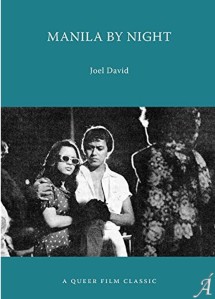
Bernal, Ishmael: Pagdating sa Dulo, 1971; Lumapit … Lumayo ang Umaga, 1975; Ligaw na Bulaklak, 1976; Nunal sa Tubig, 1976; Nonoy Marcelo’s Tisoy!, 1977; Ikaw Ay Akin, 1978; Salawahan, 1979; Aliw, 1979; Manila by Night, 1980; Pabling, 1981; 1) Relasyon, 1982 & 2) Broken Marriage, 1983; Himala, 1982; Working Girls, 1984; Hinugot sa Langit, 1985.

Bernal, Joyce: 1) Booba, 2001 & 2) Masikip sa Dibdib: The Boobita Rose Story [as Binibining Joyce Bernal], 2004; Kimmy Dora: Kambal sa Kiyeme [as Binibining Joyce Bernal], 2009.

Bernardo, Sigrid Andrea: Ang Huling Cha-Cha ni Anita (Anita’s Last Cha-Cha) [as Sigrid Andrea P. Bernardo], 2013; Lorna [as Sigrid Andrea P. Bernardo], 2014; UnTrue [as Sigrid Andrea P. Bernardo], 2019.

Borlaza, Emmanuel H.: Bituing Walang Ningning, 1985.

Brocka, Lino: Tubog sa Ginto, 1970; Stardoom, 1971; Tinimbang Ka Ngunit Kulang, 1974; Maynila: Sa mga Kuko ng Liwanag, 1975; Insiang, 1976; Jaguar, 1979; Bona, 1980; Cain at Abel, 1982; 1) Bayan Ko: Kapit sa Patalim, 1984 & 2) Orapronobis, 1989; Miguelito: Batang Rebelde, 1985; Babangon Ako’t Dudurugin Kita, 1989; Hahamakin Lahat, 1990; Gumapang Ka sa Lusak, 1990.

Cabreira, Junn P.: Beloy Montemayor Jr.: Tirador ng Cebu, 1993.

Castillo, Celso Ad.: Asedillo, 1971; Daluyong at Habagat, 1976; Burlesk Queen, 1977; Celso Ad. Castillo’s Totoy Boogie, 1980; Uhaw na Dagat, 1981; Paradise Inn, 1985.

Castro, Jade: Zombadings 1: Patayin sa Shokot si Remington, 2011; LSS, 2019.

Cayado, Tony: Mga Ligaw na Bulaklak, 1957.

Chionglo, Mel: Playgirl, 1981; Sinner or Saint, 1984; 1) Nasaan Ka Nang Kailangan Kita, 1986 & 2) Paano Kung Wala Ka Na, 1987; Babaing Hampaslupa, 1988; Developing Stories: Lucia, 1992; 1) Sibak: Midnight Dancers, 1994 & 2) Burlesk King, 1999 & 3) Twilight Dancers, 2006; Iadya Mo Kami, 2016.

Chui Chung-San, Alan, & Yuen Bun: Mabangis na Lungsod, 1995.

Conde, Conrado: Talipandas, 1958.

Conde, Manuel: Genghis Khan [credited to Lou Salvador], 1950.

Back to top
Return to Canon Decampment contents

Dayao, Dodo: Midnight in a Perfect World, 2020.

Dayoc, Sheron R.: Halaw, 2010.

de Castro, Eduardo: Zamboanga: A Fanciful Tale of Moro Sea Gypsies, 1937.

de Guia, Eric – see Tahimik, Kidlat.

de Guzman, Susana C.: Lupang Pangako [incomplete], 1949.

dela Cruz, Abbo Q.: Hubad na Pangarap, 1987.

Dela Cruz, Emmanuel: Sarong Banggi, 2005.

de Leon, Gerardo: Sisa, 1951; Dyesebel, 1953; Pedro Penduko, 1954; Sanda Wong, 1955; Terror Is a Man [as Gerry de Leon], 1959; The Moises Padilla Story, 1961; El Filibusterismo, 1962; Women in Cages [as Gerry de Leon], 1971.

de Leon, Gerardo, & Abe Yutaka: Dawn of Freedom, 1944.

De Leon, Mike: Itim, 1976; Kakabakaba Ka Ba?, 1980; 1) Kisapmata, 1981 & 2) Batch ’81, 1982; Sister Stella L., 1984; Bilanggo sa Dilim, 1986; Bayaning 3rd World, 1999.

Deligero, Keith: Iskalawags, 2013; Lily, 2016; A Short History of a Few Bad Things, 2018.

de los Reyes, Maryo J.: Schoolgirls, 1982; Diosa, 1982; Bagets, 1984; Kaya Kong Abutin ang Langit, 1984; Anak ni Waray vs. Anak ni Biday, 1984; Dinampot Ka Lang sa Putik, 1988; Magnifico, 2003.

del Rosario, Joey: Kahit Pader Gigibain Ko, 1998.

Deramas, Wenn V.: Ang Tanging Ina, 2003.

Diaz, Lav: Hesus, Rebolusyunaryo, 2002; Florentina Hubaldo, CTE, 2012; Norte, Hangganan ng Kasaysayan, 2013.

Diaz-Abaya, Marilou: 1) Brutal, 1980 & 2) Moral, 1982; Karnal, 1983; Sensual, 1986; May Nagmamahal sa Iyo, 1996; Milagros, 1997.

Dulay, Zig Madamba: Bambanti, 2015.

Dulu, Dolly: The Boy Foretold by the Stars, 2020.

Espia, Hannah: Transit, 2013.

Esteban, Tata: Alapaap, 1984.

Estella, Ramon A.: Kembali Saorang, 1957; Samseng, 1959; Saudagar Minyak Urat, 1959; Pusaka Pontianak, 1965.

Back to top
Return to Canon Decampment contents

Fajardo, Lawrence: Amok, 2011; Posas, 2012; Imbisibol, 2015.

Fernandez, Gregorio: Kontrabando, 1950; Prinsipe Teñoso, 1954; 1) Higit sa Lahat [as Dr. Gregorio Fernandez], 1955 & 2) Luksang Tagumpay [incomplete], 1956; Hukom Roldan [as Dr. Gregorio Fernandez], 1957; Malvarosa [as Dr. Gregorio Fernandez], 1958.

Gallaga, Peque: Oro, Plata, Mata, 1982; Virgin Forest, 1985; Scorpio Nights, 1985.

Gallaga, Peque, & Lore Reyes: 1) Tiyanak, 1988 & 2) Aswang, 1992; Sonata, 2013.

Gallardo, Cesar: Geron Busabos: Ang Batang Quiapo, 1964.

Garces, Armando: Sino ang Maysala?, 1957.

Garcia, Eddie: Saan Nagtatago ang Pag-Ibig?, 1987.

Garcia-Molina, Cathy – see Garcia-Sampana, Cathy.

Garcia-Sampana, Cathy: One More Chance [as Cathy Garcia-Molina], 2007.

Gosiengfiao, Joey: La Paloma, 1974; Underage, 1980.

Guillen, Laurice: Kasal?, 1980; Salome, 1981; Init sa Magdamag, 1983; Kung Mahawi Man ang Ulap, 1984; Sumayaw Ka Salome, 1992; Dahil Mahal Kita: The Dolzura Cortez Story, 1993.

Ignacio, Louie: Area [as Luisito Lagdameo Ignacio], 2016.

Illenberger, Tara: Brutus, ang Paglalakbay, 2008; High Tide [as Tara Barrera Illenberger], 2017.

Intalan, Perci M.: Dementia, 2014.

Jadaone, Antoinette: That Thing Called Tadhana, 2014.

Jamora, Marie: Ang Nawawala, 2012.

Jarlego, Ike Jr.: Tigasin, 1999.

Jeturian, Jeffrey: Pila-Balde, 1999; Tuhog, 2001; 1) Bridal Shower, 2004 & 2) Minsan Pa, 2004; Kubrador, 2006; Ekstra, 2013.

Jover, Ralston: 1) Da Dog Show [as Ralston G. Jover], 2015 & 2) Hamog [as Ralston G. Jover], 2015; Rene Villanueva’s Hiblang Abo [as Ralston G. Jover], 2016; Bomba [as Ralston Gonzales Jover], 2017; Latay (Battered Husband) [as Ralston Gonzales Jover], 2019.

Kayko, Sixto – see Roño, Chito S.

Khavn: 1) Ang Pamilyang Kumakain ng Lupa, 2005 & 2) Ang Napakaigsing Buhay ng Alipato, 2016; Pusong Wazak: Isa Na Namang Kwento ng Pag-ibig sa Pagitan ng Kriminal at Puta, 2014; Desaparadiso: Corrido at Buhay na Pinagdaanan nang Tatlong Principeng Magcacapatid na Anac nang Haring Fernando at nang Reina Valeriana sa Cahariang Berbania, 2015; Balangiga: Howling Wilderness, 2017.

Kim Bong-han: The Golden Holiday, 2020.

Back to top
Return to Canon Decampment contents

Lamangan, Joel: Hubog, 2001; Burgos, 2013.

Lamasan, Olivia M.: Minsan, Minahal Kita, 2000; Milan, 2004.

Lana, Jun: Die Beautiful [as Jun Robles Lana], 2016.

Lao, Armando: Biyaheng Lupa, 2009.

Laxamana, Jason Paul: The Day After Valentine’s, 2018.

Lerner, Irving: Cry of Battle, 1963.

Mambo, Rico – see dela Cruz, Abbo Q.

Marcos, Pepe: Tubusin Mo ng Dugo, 1988.

Mardoquio, Arnel: Ang Paglalakbay ng mga Bituin sa Gabing Madilim, 2012.

Marquez, Artemio: The Untold Story of Melanie Marquez, 1987; Sa Puso Ko Hahalik ang Mundo, 1988.

Martin, Raya: Independencia, 2009.

Martinez, Chris: Here Comes the Bride, 2010.

Matti, Erik: On the Job, 2013.

Meily, Mark: Crying Ladies, 2003.

Mendoza, Brillante: 1) Foster Child, 2007 & 2) Tirador, 2007; Serbis [as Brillante Ma. Mendoza], 2008; Lola [as Brillante Ma. Mendoza], 2009; Ma’ Rosa, 2016.

Milan, Willy, & Fernando Poe Jr. – see Poe, Fernando Jr., & Willy Milan.

Monteras, Treb II: Respeto, 2017.

Montgomery, George: Samar, 1962.

Natividad, Toto: Totoy Guwapo: Alyas Kanto Boy, 1992; Amang Capulong: Anak ng Tondo, Part II, 1992; Ka Hector, 1994; Wangbu, 1998; Notoryus, 1998; 1) Double Barrel (Sige! Iputok Mo.), 2017 & 2) Riding in Tandem, 2017.

Navoa, J. Erastheo: Totoy Buang: Mad Killer ng Maynila, 1992.

O’Hara, Mario: Tatlong Taóng Walang Diyos, 1976; 1) Condemned, 1984 & 2) Bulaklak sa City Jail, 1984; Bagong Hari, 1986; Pangarap ng Puso, 2000; Babae sa Breakwater, 2003.

Ongkeko-Marfil, Ellen: Boses, 2008; Indigo Child, 2016.

Back to top
Return to Canon Decampment contents

Palisoc, King: Tandem, 2015.

Paolo, Steve – see Esteban, Tata.

Pascual, William: Takaw Tukso, 1986.

Pasion, Francis Xavier: Jay, 2008.

Perez, Elwood: Silip, 1985; Bilangin ang Bituin sa Langit, 1989; Ang Totoong Buhay ni Pacita M., 1991; Otso, 2013.

Perez, Roman Jr.: Sol Searching, 2018.

Poe, Fernando Jr.: 1) Ang Panday [as Ronwaldo Reyes], 1980 & 2) Pagbabalik ng Panday [as Ronwaldo Reyes], 1981 & 3) Ang Panday: Ikatlong Yugto [as Ronwaldo Reyes], 1982 & 4) Ang Panday IV [as Ronwaldo Reyes], 1984; Ang Maestro [as Ronwaldo Reyes], 1981; Ang Dalubhasa [as Ronwaldo Reyes], 2000.

Poe, Fernando Jr., & Willy Milan: Kahit Butas ng Karayom … Papasukin Ko [as Ronwaldo Reyes & Wilfredo “Willy” Milan], 1995.

Poe, Fernando Jr., & Augusto Salvador: Eseng ng Tondo [as Ronwaldo Reyes], 1997.

Portes, Gil: Gabi Kung Sumikat ang Araw, 1983; ’Merika, 1984; Bukas … May Pangarap, 1984.

Posadas, Francis: Amanos: Patas ang Laban [as Francis “Jun” Posadas], 1997; ’Di Puwedeng Hindi Puwede! [as Francis “Jun” Posadas], 1999.

Raquiza, Jun: Krimen: Kayo ang Humatol, 1974.

Red, Jon: Still Lives, 1999.

Red, Mikhail: Birdshot, 2016.

Relucio, Brandon, & Ivan Zaldarriaga: Di Ingon ’Nato, 2011.

Reyes, Efren: Ang Daigdig Ko’y Ikaw, 1965.

Reyes, Jose Javier: Minsan May Isang Puso, 2001; Kung Ako Na Lang Sana, 2003.

Reyes, Lore – see Gallaga, Peque, & Lore Reyes.

Reyes, Ronwaldo – see Poe, Fernando Jr..

Richardson, George – see Suarez, Bobby A.

Rivera, Marlon N.: Ang Babae sa Septic Tank, 2011.

Romero, Eddie: The Passionate Strangers, 1966; Savage Sisters, 1974; Ganito Kami Noon … Paano Kayo Ngayon?, 1976; Banta ng Kahapon, 1977.

Roño, Chito S.: 1) Private Show [as Sixto Kayko], 1984 & 2) Curacha: Ang Babaeng Walang Pahinga, 1998; 1) Itanong Mo sa Buwan, 1988 & 2) La Vida Rosa, 2001; Bakit Kay Tagal ng Sandali?, 1990; Alyas Stella Magtanggol, 1992; Bata Bata Paano Ka Ginawa?, 1998; Caregiver, 2008; Signal Rock, 2018.

Back to top
Return to Canon Decampment contents

Salvador, Augusto: Masahol Pa sa Hayop, 1993.

Salvador, Augusto, & Fernando Poe Jr. – see Poe, Fernando Jr., & Augusto Salvador.

Salvador, Leroy: Badlis sa Kinabuhi, 1968; Beloved, 1985.

Salvador, Lou – see Conde, Manuel.

Santiago, Pablo: Amado Pagsanjan’s Asiong Salonga, 1961; 1) Pepeng Kaliwete, 1982 & 2) Annie Sabungera, 1982.

Santos, Teodorico C.: Taufan [as T.C. Santos], 1957.

Sayles, John: Amigo, 2010.

Siguion-Reyna, Carlos: 1) Hihintayin Kita sa Langit, 1991 & 2) Ikaw Pa Lang ang Minahal, 1992; Ang Lalake sa Buhay ni Selya, 1997; Tatlo … Magkasalo, 1998.

Silos, Manuel: Biyaya ng Lupa, 1959.

Solito, Auraeus: Ang Pagdadalaga ni Maximo Oliveros, 2005.

Somes, Richard V.: Yanggaw, 2008.

Suarez, Bobby A.: They Call Her … Cleopatra Wong [as George Richardson], 1978; Red Roses for a Call Girl, 1988.

Suzara, Romy V.: Pepeng Shotgun, 1981.

Tahimik, Kidlat: Mababangong Bangungot, 1977.

Tarog, Jerrold: Heneral Luna, 2015.

Topacio, Soxy: Ded Na si Lolo [as Soxie Hernandez Topacio], 2009.

Torres, Mar S.: Jack en Jill, 1954.

Vander Tolosa, Carlos: Giliw Ko, 1939.

Villaluna, Paolo: Pauwi Na, 2018.

Villamor, Irene: Meet Me in St. Gallen, 2018; Ulan, 2019; On Vodka, Beers, and Regrets, 2020.

Villegas, Dan: Hintayan ng Langit, 2018.

Zaldarriaga, Ivan – see Relucio, Brandon, & Ivan Zaldarriaga.

Zapata, Dominic: Boy Pick-Up: The Movie, 2012.

Zialcita, Danny L.: T-Bird at Ako, 1982; Palabra de Honor, 1983.

Zuasola, Remton Siega: Ang Damgo ni Eleuteria, 2010.

Back to top
Return to Canon Decampment contents

Á!


Canon Decampment: Forward March

One advantage of having been present at the birth, so to speak of formal Philippine film studies is that I could initiate some of the activities that preoccupied global practitioners for a while, then proceed to repudiate these activities’ premises (usually still pursuant to foreign trends, especially when no local colleagues pick up on the provocations). The most insistent instances of these oscillations between creation and deconstruction occur in evaluative film activities, and for good reason: as the supposedly inferior, younger counterpart of literature, film is regarded as forever self-limited in terms of discursive ability and potential for complexity, and even its advantages over canonical lit (mainly its incontestable long-term popularity) render it comparable at best to lit’s pulp and trash manifestations.

11011These are utterly erroneous and definitely irrelevant premises, of course. But when we seek out canon-construction exercises in cinema, we find people reverting to these assumptions, whether by (sometimes unconsciously) upholding them or by openly contesting them—which effectively acknowledges their ascendancy. I’ve stopped wondering whether a critically conscious mode of practice can be devised, and within the modes I’ve devised, what I would recommend (to myself and the others I can persuade) is to stop short of certain commonplaces: the touchstones that we associate with even our most casual or fun-filled attempts at canon formation, that tend to trip us into conforming to standards that our better judgments caution us against.

11011Like any self-serious film scholar, I began creating canons in the usual areas; in increasing degrees of conflictedness, these would be instruction, criticism, and award-giving. Canons are unavoidable in teaching because of the requirements and limitations of the semestral arrangement in higher education: only so many weeks, with concomitant impositions on reading and screening lists, for the average university-level course. The properties of the lecture class and (barring an instructor’s inability to comprehend screen cultural studies) the possibility of insightful majors speaking up: these ensure that the subject’s particular canon need not permanently impair the students’ understanding of film issues, whether aesthetic or social in nature. Award-giving, the other extreme, is even more obviously a matter of any film appreciator exercising basic logic, since the inconsistencies are so conspicuous that one would need to devise grandiose structures of collective narcissism (as in the statement “We have the most prestigious and incorruptible awards ever”) to override the reality that award-giving may be profitable or glamorous but is, at bottom, a false claim to critical supremacy.

11011The middle term, criticism, is where I have found the most productive, and most difficult, issues to resolve. I may have been able to avoid the tendency of the least-reflective critics circle members in their performance of what we can term awards-speculative writing (embarrassing rubbish like “This performance should win an award”), but my festival reports wound up with rankings, specified or otherwise, of from-best-to-worst entries; my period-enders (usually of specific years, sometimes of entire decades) also proceeded to list outstanding entries. But in order to declare an end to my predilection for comparative assessments, I laid out sample canons for the widest possible areas of coverage: highlights of 1980s releases, for example, or winners for awards categories for all films from the beginning of local cinema to the present, meaning the early 1990s. (These exercises, including the next one I will be describing, appeared in my second book, Fields of Vision, while the personal listings may be found in my digital edition-only release, Millennial Traversals.)

Back to top

Interpolations

At a point when I had refined my film-criticism classes to include quantitative-analysis methods (always controversial in terms of findings), I asked an enthusiastic batch whether the idea of a canon survey project appealed to them. This was the same group of students that couldn’t wait to get into cultural production, some of whom gave up completing their degrees for the sake of exploring and exploiting breaks that they knew may never come along again, fully and frankly aware that nothing their teachers could provide them would be comparable to what they could learn in the field. (As a then-recent former student, deep down inside I had to agree.)

11011We formulated, finalized, and reproduced questionnaires, and drew up a list of “critical” practitioners using the widest possible definition—i.e., not just regular critics but also film-production personnel who exhibited a capacity for artistic assessment and growth in their output. Nearly thirty, or about half of the potential respondents, turned in their personal list of ten best Filipino films, all except in two cases ranked from first to tenth, with a few (including myself) deviating from the round-figure total. When the results were tallied, another issue came up: how would a respondent rank the other films that she may not have mentioned but that she might have also seen? We wound up creating a second questionnaire comprising the “master list” of all the films mentioned by the respondents, intending to send these back to those who had participated, asking them to further rank the rest of the films not on their respective lists.

11011One can imagine the nightmarish demand we would have been making on the respondents, forced to split hairs until they could rank whatever they had seen among the eighty-plus titles we confronted them with. Fortunately the semester was scheduled to end in a couple of weeks, so I had to conceal the relief I felt when the students said that sending out copies of the new questionnaire, awaiting the answers, and retrieving the sheets would definitely cause the project to spill over beyond the deadline for submission of grades. I submitted the report to the publication where I was declared the “resident critic,” National Midweek, which made it their cover feature and their bestselling issue ever. Perhaps unsurprisingly, I saw the procedure replicated by blogger-aggregators during the new millennium. A bit more surprisingly, I received an email invitation to participate in Sight & Sound’s archetypal decadal survey for 2002, probably facilitated by a British Film Institute-connected lecturer at New York University’s Department of Cinema Studies who appreciated the copy of Fields of Vision that I gave him. (This person, Questions of Third Cinema co-editor Paul Willemen, as well as my dissertation adviser Robert Sklar and national-university mentor and fellow Sight & Sound respondent Ellen J. Paglinauan, have all passed away, as have nearly thirty percent of the National Midweek survey participants.)

11011The Sight & Sound exercise affirmed for me that the National Midweek survey was more correct in its differences: in combining the tallies for critics and practitioners (the second of which S&S limited strictly to directors), I came up with just one listing instead of separate critics’ and directors’ choices; more important, in taking into account the individual rankings provided by the respondents, it became possible to tabulate not just the movies most often mentioned (including, separately, those mentioned as top-rankers) but also arrange these according to their relative worth for each respondent. But the Sight & Sound survey also provided its own curious lesson—and that is, certain people from all walks of life, all over the world, pay attention to film canons. The magazine printed my specific choices on the same page that it discussed the top-ranking film, Citizen Kane (“The Critics” 29), and included my explanation of why I preferred to downgrade the Orson Welles film (“too whiney-white-guy precious” was my dismissive remark).

11011Reports regarding the survey results, from blogs and discussion boards as well as “legit” outlets like Slate and The Guardian, mentioned my list for including a porn film (in fact I listed two, three if we include Pier Paolo Pasolini’s Salo in the category), although only once, in an email from an Australian scholar, were my other choices mentioned: a Bollywood film, an American B-movie, a structural-materialist piece, two documentaries (one radical-left and the other fascist-right), and standard choices for a film scholar (Jean Renoir’s La regle du jeu) who happened to hail from the Philippines (Ishmael Bernal’s Manila by Night). In reality, mine was not the only listing that featured a porn film or two, since the very first porn feature, Gerard Damiano’s Deep Throat, also appeared on the comprehensive listing. (I provided a more detailed narration of the process on my blog, titled “Sight & Sound ’02.”)

Back to top

Final (so far) Canon

My Sight & Sound submission, the only one I participated, coincided with the completion and defense of my doctoral dissertation. Upon returning to the Philippines, my concerns focused on repaying the student loans I had accumulated during graduate school—an impossible mission so long as I confined my prospects to the national university. I make no secret about finding the political intramurals dispiriting and pathetic, considering the never-sufficient amount of money at stake. Upon stumbling on a near-ideal overseas arrangement with which I could conduct research and publication without worrying excessively about time and funding, I set up the archival blog by which I hoped to make available my published materials without requiring researchers either to track them down via distant repositories or to purchase them at exorbitant rates.

11011After laying out a workable plan for attaining tenure, I was contacted by Jo-Ann Q. Maglipon, an acquaintance from my post-collegiate freelance period, now an entertainment editor about to retire and working out some legacy activities. No need to look farther than your field, I told her; see how new media has led to an explosion of personal and group canons, almost entirely on Philippine cinema? Since your publication (Summit Media’s YES! magazine) has its annual “canon” of beautiful faces and power players, we can come up with the ultimate local film canon, if you’re willing to sponsor a one-shot long-term project. I explained how I took charge of a local survey project, inspired by Sight & Sound, and how the most ambitious internet-era aggregator websites were conducting similar projects. I mentioned the predicament I and my students faced with the National Midweek survey—how the attempt at (in effect) ranking everything could raise unnecessarily oversubtle pettifoggery, reducing discussions to explaining why film b comes between a and c and not in either position or elsewhere, instead of expounding on a film’s merits and limitations without accounting for its precise position on a linear spectrum from best to, say, hundredth-best.

11011Two special arrangements had to be finalized: in order to ensure that one person’s idiosyncracies wouldn’t mark the project as a whole, a screening committee whose members would be readily available from beginning to end of the project should be constituted; and in order to determine the inclusion or exclusion of borderline titles, a system of multiple screenings of titles in contention should be arranged, with films being watched as often as necessary until the body arrives at a sufficient consensus on whether a film deserves to belong or not to the final canon list. Ideally the committee should have comprised Philippine film experts; less ideally, though still passably, the members should be film enthusiasts—a qualification that could encompass a vast majority of the population. Fortunately, though the YES! staff could be considered less than (qualified) experts, they were more than mere aficionados. I came on board as project consultant, while Maglipon, with the time she logged with celebrity interviews, showbiz coverage, and entertainment editing (plus all the film-screening that those activities entailed) would definitely be a Philippine-cinema specialist.

11011I should beg the reader’s indulgence in outlining the process, if only for posterity’s sake. I started by compiling the then-recent 2012 Sight & Sound survey (where Citizen Kane was finally toppled, after forty years of dominance, and where nine Filipino titles showed up), plus all the canonical listings—the PinoyRebyu blog survey, Mel Tobias’s One Hundred Acclaimed Tagalog Movies (with titles alphabetized), the Facebook Cinephiles! Group’s “Top 100 Favorite Films Poll Results” (with twenty-five Filipino movies, slightly less than France’s and over four times less than the US’s), the Busan International Film Festival’s Asian Cinema 100 (edited by Kim Ji-seok and Kim Young-woo, with four Filipino titles), plus the list of awards handed out by the Filipino Academy of Movie Arts and Sciences (including its two-year predecessor, the Manila Times’ Maria Clara Awards) and the two critics groups, the Manunuri ng Pelikulang Pilipino and the Young Critics Circle (all of which are available online on either the organizations’ websites or information-database websites such as Wikipedia and the Internet Movie Database); finally, titles usually listed in global retrospectives, starting with those that appear in the government encyclopedia (Tiongson, Philippine Film) and the Manila International Film Festival’s Focus on Filipino Films, would constitute a core or standard canon.

11011For the sake of completion, the YES! project team considered even films shortlisted or nominated whenever and wherever the information was available, cross-checking the list against the available filmographic listings in Maria Carmencita A. Momblanco’s thesis and Nicanor G. Tiongson’s Urian anthologies. The task may have sounded daunting, but was considerably lightened by another, more tragic requisite: only films available in reasonably viewable audiovisual quality may be considered, since we envisioned any canonized film itself as sole empirical proof, regardless of awards, acclaim, oversight, or controversy. On the other hand, any movie included in the standard canon which generated reservations (either during or after the moment of its inclusion in the canon) would be marked as “must rewatch”; certain titles may be boosted by historical significance, but all had to meet a reasonable measure of entertainment value and discursive insight. The final “outer” boundaries were defined by technical requirements: the films had to be feature presentations, full-length with a minimum of sixty minutes’ running time, and inclusively and recognizably Filipino even with the participation of foreign capital, talent, and/or setting.

Back to top

Film-Canon Discourse

I was aware that I had to find metadiscursive literature that could enable me to provide useful bases for the project as well as situate the activity in contemporary conceptual currents. We were apparently building on the “scientific” totalizing taxonomies attempted by Andrew Sarris (himself building on French projects) and updated by Jonathan Rosenbaum, but the launch of the project was benefited by two extremely useful recent texts. The first was a book-length study by James F. English, The Economy of Prestige, which discussed, among other things, the rise of “modern” awards (starting with the Nobel Prize), the role of controversy, and the tendency toward proliferation. The second, Paul Schrader’s “Canon Fodder,” was a would-have-been book, abandoned by the author but with the most crucial findings published in Film Comment.

11011Schrader’s self-imposed challenge was supposedly a film-focused volume patterned after The Western Canon (34). The book by the late Harold Bloom has been a fairly recent publication, so its denunciation of political correctness premised on identity politics benefited from seeming radical in terms of countervailing then-prevalent revisions and revaluations of the literary canon. Schrader does not pinpoint a singular material reason for dropping the book project despite having received a commencement fee from the publisher. But his avowed reason, that “my foray into futurism had diminished my appetite for archivalism” (35), appears to detract from the fate that befell The Western Canon: despite its reviewers’ acknowledgment of the author’s critical seriousness and acuity, its intent to restore the literary canon as it used to be known never really took off. Instead, the book was inexorably conscripted as one of the more sober manifestos of the conservative faction of the still-ongoing US culture wars. At best, its effect was to retain the titles that dominated the so-called DWM (dead white male) canon; it certainly did not stop people from expanding the canon by including titles by authors who used to be ignored or excluded as a matter of course.

11011Since Schrader apparently had no urge to deconstruct the Bloom volume, his output would have been patterned after the same introductory apology, a call to observe fixed, impossibly eternal aesthetic values, and a reading of the “objectively” top-of-the-line titles. I was momentarily inspirited by his selection of La regle du jeu as his all-time-best, but the rest did feel like Sight & Sound redux, where any cinema-studies freshman can instantly identify the title based on the auteur entry: Yasujiro Ozu (Tokyo Story), Charles Chaplin (City Lights), Robert Bresson (Pickpocket), Fritz Lang (Metropolis), Welles (one guess), Jean Cocteau (Orphée), Jean-Luc Godard (Masculin-Feminin), Ingmar Bergman (Persona), and Alfred Hitchcock with Sight & Sound’s recent post-Citizen Kane champ, Vertigo (48). Despite Schrader’s acknowledgment of Rosenbaum’s limitation, wherein the latter (in Essential Cinema) “discusses hundreds of films, describing many as ‘classics’ [yet] for the life of me, I’ve been unable to discover the criteria by which he culls these films” (42), he runs into his own culs-de-sac by first over-defining the canon, tracking the idea from scriptural applications through Hegel’s tautological insight that “the philosophy of Aesthetics is the history of Aesthetics” (Schrader 34), to the canon’s rise and subsequent fall, replaced with the “rise of the non-judgmentals” (40). From here he observes Bloom’s imposition of a set of criteria, describing his specifications for film as “refurbished” (42) when in fact it resembles Bloom’s retrospective efforts: that is, given these long-uncontested titles, these are the criteria that can be propounded and maintained, or (from another perspective) imposed.

11011The seven standards that Schrader lists have varying degrees of applicability: beauty, strangeness, unity of form and subject matter, tradition, repeatability, viewer engagement, and morality (44-45). The first and last (beauty and morality) are too amorphous and problematic when narrowly defined, while unity betokens a classical bias. The others would be qualities that similarly informed the YES! magazine project, still in different degrees of urgency. As mentioned earlier, repeatability would be the method we relied on—well, repeatedly. Strangeness would be the value I found myself upholding, but the rest of the youthful members understandably focused on viewer engagement. Tradition had to be invoked in a few cases, usually with polemic texts whose topicality (e.g. anti-dictatorship politics) had long elapsed. One solution I devised was to combine the less-preferred titles so that one could strengthen the other. By doing a series of such combinations, I was able to maintain the round number of one hundred entries up to a point. However, the logic (not to mention the citations) tended to become too defensive in several of these instances. In the end, the title was slightly revised to accommodate the larger figure: SINÉ: The YES! List of 100+ Films That Celebrate Philippine Cinema.

Back to top

Future Views

Each of the canon-forming exercises I conducted had the express purpose of providing an “ultimate” example. However, when we look at the instance of the basic recognition provided by awards (and studied, as earlier mentioned, by James F. English), we find some strange, counter-intuitive trends. First is the issue of controversy: scandals supposedly and inevitably befall awards that exist long enough to become institutions (English 187-96), like the Nobel Prize, Booker Prize, Oscars, Cannes Film Festival Awards—and in the Philippines, the Orders of National Artist and National Scientist, the National Book Awards, the Film Academy of Movie Arts and Sciences (FAMAS) Awards, and (as in the US) the critics’ awards handed out by the Manunuri ng Pelikulang Pilipino and the Young Critics Circle. English maintains that, although a controversy may be able to maim and possibly defeat a newly installed award, stronger, long-term awards in fact actually benefit from controversy and are strengthened by it. (This accounts for my bemusement whenever I attack my former colleagues in the MPP and observe the members’ responses—manifested at one point in an earlier roundtable, on film criticism, in these same pages: per English, and per existing evidence, the Urian should simply get strengthened, although I could never imagine myself demanding the members’ gratitude for it.)

11011Awards, of course, will always be theoretically capable of discontinuing themselves, temporarily or permanently, for some reason or other. The other issue is ultimately and definitely irresolvable, and more distressing for people concerned with order, integrity, and logic. Members of a certain generation were able to witness this in the Philippines. The intervention of the Marcoses in film activities led to the government rectifying the FAMAS by decreeing the formation of the Film Academy of the Philippines. During the FAP inauguration in 1982, the Director-General of the Experimental Cinema of the Philippines, Imee Marcos, declared that the FAMAS would be dissolved, since its claim to being an academy was anomalous and, by then, unnecessary. Joseph Estrada, who was gunning for the first Hall of Fame as Best Actor multi-awardee, led the lobby for its maintenance (he got his HoF prize the next year, along with a simultaneous HoF as Best Producer); he also won a post-Marcos presidency, but that ought to be a separate discussion.

11011Since the Catholic Mass Media Award was arguably the revival of a pre-martial law set of Church-sponsored media awards, the only other film award set up during the martial-law period was the Urian, with some of its members forming the Manila Critics Circle to administer the National Book Award. The FAP had its own problematic procedures; on a more advanced level, so did the Urian. After the ouster of the Marcoses, a breakaway FAP group formed. I helped found the Young Critics Circle as an alternative to the Urian, then broke away once more to organize Kritika (which lasted for only three years, since all of its members departed for foreign countries for work or graduate studies). More film groups formed (educators, online critics, etc.), with breakaways and breakaways-of-breakaways being threatened or actually being realized. Since this trend resembles the persistence of local canon-forming surveys decades after the National Midweek report, I can conceivably imagine another future, intensive, consensus-driven canon-forming activity in future, possibly even within my lifetime.

11011One might say that an authoritarian regime (like the Marcos martial-law dispensation) would have the ability to control the proliferation of awards; however, English reasonably adopts the assumption that liberal democracy will be the once-and-future system, and concludes, rather persuasively, that there may be some slowdowns, but there will essentially be no end to awards proliferation (50-68).[1] Within the larger ironic framework that canon discourses will be occasionally capable of scholarly contribution on the meta level, the theoretical endlessness of awards (and hence basic canon) formations will shape up as the primary challenge, or at least the primary distraction, to the future of film discourse.

Back to top

Note

[1] Another foreign trend that still has to take root in the Philippines is that of ratings aggregation (as famously featured by Rotten Tomatoes) as well as awards aggregation (à la Metacritic). The 2017 edition of the latter lists 58 annual non-festival awards in the US, 38 of them handed out by self-identified critics circles. At the present time, these types of functions are performed by a number of Filipino film buffs on Facebook, with such blogs as Pinoy Rebyu, Film Police Reviews, and #Pop #Culture #Diva providing casual summaries of local and foreign ratings, awards, and/or festival results.

Works Cited

Bloom, Harold. The Western Canon: The Books and School of the Ages. Harcourt Brace & Co., 1994.

“The Critics.” Sight & Sound, volume 12, issue 9, September 2002, pp. 28-36.

David, Joel. Fields of Vision: Critical Applications in Recent Philippine Cinema. Digital edition, Amauteurish Publishing, 2014.

———. Millennial Traversals: Outliers, Juvenilia, & Quondam Popcult Blabbery. Digital edition, Amauteurish Publishing, 2016.

———. “Sight & Sound ’02.” Amauteurish, 30 May 2014.

Kim Ji-seok and Kim Young-woo, eds. Asian Cinema 100. BIFF Special Programs in Focus Series, Busan International Film Festival, 2015.

English, James F. The Economy of Prestige: Prizes, Awards, and the Circulation of Cultural Value. Harvard University Press, 2005.

Manila International Film Festival. Focus on Filipino Films: A Sampling, 1951-1982. Brochure for a retrospective as selected by “Filipino Film Screening Committee,” Metropolitan Manila Commission Information Group, 1983.

Momblanco, Maria Carmencita A. “Philippine Motion Pictures, 1908-1958: A Checklist of the First Fifty Years.” Thesis, (2 volumes), University of the Philippines, 1979.

Rosenbaum, Jonathan. Essential Cinema: On the Necessity of Film Canons. Johns Hopkins University Press, 2004.

Sarris, Andrew. The American Cinema: Directors and Directions 1929-1968. Da Capo Press, 1996.

Schrader, Paul. “Canon Fodder.” Film Comment, volume 42, issue 5, September-October 2006, pp. 33-49.

Tiongson, Nicanor G., ed. Philippine Film. Volume 8 of the CCP Encyclopedia of Philippine Art. Cultural Center of the Philippines, 1994.

———, ed. The Urian Anthology. Decadal compilations covering 1970-1979 (Manuel L. Morato, 1983); 1980-1989 (Antonio P. Tuviera, 2001); 1990-1999 (University of the Philippines Press, 2010); and 2000-2010 (University of the Philippines Press, 2013).

Tobias, Mel. One Hundred Acclaimed Tagalog Movies. Peanut Butter Publishing, 1998.

Back to top


Canon Decampment

Original Digital Edition (2023)
Cover design by Paolo Miguel G. Tiausas
“Bomba” © 2019 by Mina Saha
[Click on pic to enlarge]

ACKNOWLEDGMENTS

The manuscript began as a project with Summit Media. The process is elaborated in the introductory article, “Canon Fire!” and revaluated in the closing article, “Forward March.” I wish to extend thanks to the editor of the now-defunct YES Magazine, Jo-Ann Q. Maglipon, as well as her inhouse staff, for undertaking a film-viewing and deliberation process that was both extensive and intensive. The book title indicates my readiness to let go of canon exercises after this point. I will still be celebrating outstanding work as it comes along, but the practice of determining whether it belongs on an all-time-best list will just have to be taken up by other interested parties—of which I’m sure history will never run out of eager and willing participants. With all this book’s flaws and limitations, I nevertheless hope that any succeeding canonizer (a word that will always embarrass me for all my past associations with it) will take note of the time- and labor-intensive process that went into this current exercise, and either attempt to measure up to it or outdo it, or else admit failure.

11011The volume also happens to coincide with my retirement as tenured professor, in a place where I happen to be the equivalent of a sui-generis canonical entry. It is not a condition that I gloat about, because to me it reflects an entire national culture’s (specifically the Philippines’s) failure in training its regular faculty to become competent scholar-researchers. Nevertheless I’d opt to acknowledge, if I may, all the students I ever taught, in three countries or two continents over close to four (discontinuous) decades, regardless of how they decided to perceive me afterward; I’m at the stage where my stature, not to mention my ego, stands distant and resilient against whatever sticks and stones anyone might feel justified in aiming at me. (Regarding an alarming recent uptick in cheating, though generally not among my students in Korea—that would be one of a few headaches I’ll be relieved to pass on to future generations of teachers.) Always treasurable are the several names who look me up, sometimes years or decades later, just to see how I’ve done since they took my classes. I only hope that I’d managed to seem higher-evolved than I did in the past, although of course several things (starting with the concern for teaching and careful preparation in mentoring) deserve to remain the same. But if I were to pick out just one name to represent the best of the rest, it would be Corina Bedonia Millado, over whom I’ve been exultant for the past few decades and who’ll deserve more accolades than I could bestow.

11011Canon Decampment is an e-book uploaded in fulfillment of final publication obligations at Inha University. The author acknowledges assistance provided by the Inha University Faculty Research Grant as well as by Summit Media. “Canon Fire!” was drafted in 2015 and posted 2022 at Amauteurish, while “Forward March” was published in 2017 as “Muzzled Bombardments: The Philippine Film Canon and Its Discontents” at Plaridel: A Philippine Journal of Communication, Media, and Society. Films that were not included in the original list are, in chronological order: Gregorio Fernandez’s Higit sa Lahat (1955) and Luksang Tagumpay (1956); Gerardo de Leon’s Women in Cages (1971); Jun Raquiza’s Krimen: Kayo ang Humatol (1974); Ishmael Bernal’s Lumapit … Lumayo ang Umaga (1975); Celso Ad Castillo’s Daluyong at Habagat (1976), Paradise Inn (1985), and Ang Daigdig Ay Isang Butil na Luha (1986); Lino Brocka’s Stardoom (1971), Bona (1980), and Cain at Abel (1982); Mario O’Hara’s Condemned (1984) and Pangarap ng Puso (2000); Maryo J. de los Reyes’s Anak ni Waray vs. Anak ni Biday (1984); Marilou Diaz-Abaya’s May Nagmamahal sa Iyo (1996); Arnel Mardoquio’s Ang Paglalakbay ng mga Bituin sa Gabing Madilim (2012); Peque Gallaga and Lore Reyes’s Sonata (2013); Paolo Villaluna’s Pauwi Na (2016); Khavn’s Ang Napakaigsing Buhay ng Alipato (2016); Irene Villamor’s Meet Me in St. Gallen (2018) and On Vodka, Beers, and Regrets (2020); and Joselito Altarejos’s Jino to Mari (2019).

11011All these titles, except for the two earliest, were films that I urged for inclusion but were rejected, sometimes even after a few rescreenings, or that were unavailable at the time. In the case of the Gregorio Fernandez films, I’d initially counted them as overrated because of the major industry prizes that they won, but realized later that they were indispensable to the director’s pursuit of transformation of standard material via a careful working over of its constitutive elements. As film critic Bienvenido Lumbera once remarked, regarding the accumulation of citations for annual film evaluations: in an endeavor where the possibility of error can never be eradicated, it will always be best to err on the side of liberality.

A note on translation: Non-English entry titles are provided with both direct translation and their official version, when these diverge from each other. Any subsequent mention of the title in the same section will therefore be untranslated, while other non-English film titles will be similarly translated only when they are first mentioned. Whenever possible, I have tried to coordinate translations and credits with whatever appears in the far-from-perfect Internet Movie Database, with existing copies serving as final authority; in the case of GDL’s Women in Cages, I managed to identify several performers who were unlisted in the film credits, and included them in the canonical entry.

National Library of the Philippines CIP Data

David, Joel.
11011Canon Decampment / Joel David. — Original Digital Edition. — Quezon City : Amauteurish Publishing, [2023], © 2023.
11011146+x pages ; 15×23 cm

11011ISBN 978-621-96191-8-9 (pdf)

110111. Motion pictures — Criticism and interpretation — Philippines. 2. Motion pictures — Philippines. 3. Film criticism. I. Title.

791.4375111111011PN1995.67.P51111110112023111111011P320230298

US Copyright Office Certificate of Registration:
TXu 2-402-907
Canon Fire!and mini-reviews
separately registered as TXu 2-054-744

Back to top

Contents
© 2023 by Amauteurish Publishing
All Rights Reserved

Part 1. Canon Fire!

Part 2. Canon Munitions: From the Beginning to 2020
Note: This list is ordered chronologically according to premiere or initial release date, each of these 122 entries followed by the inclusive years of the directors’ selected films as well as by the total number of selected titles. Credits and synopses were prepared by the author and/or staff members of YES Magazine. For an alphabetical arrangement of directors, including each entry’s film(s) and year(s) of release, click here. Not all commentaries and synopses are complete as of this time. The links in this section will best be read in desktop mode.

Eduardo de Castro (1937: 1 title)
Carlos Vander Tolosa (1939: 1 title)
Gerardo de Leon & Abe Yutaka (1944: 1 title)
Gerardo de Leon (1951-71: 8 titles)
Susana C. de Guzman (1949: 1 title)
Gregorio Fernandez (1950-58: 6 titles)
Manuel Conde (1950: 1 title)
Mar S. Torres (1954: 1 title)
Lamberto V. Avellana (1956-65: 3 titles)
Tony Cayado (1957: 1 title)
Armando Garces (1957: 1 title)

Ramon A. Estella (1957-65: 4 titles)
Teodorico C. Santos (1957: 1 title)
Conrado Conde (1958: 1 title)
Manuel Silos (1959: 1 title)
Pablo Santiago (1961-82: 3 titles)
George Montgomery (1962: 1 title)
Irving Lerner (1963: 1 title)
Cesar Gallardo (1964: 1 title)
Efren Reyes (1965: 1 title)
Eddie Romero (1966-77: 4 titles)
Leroy Salvador (1968-85: 2 titles)

Lino Brocka (1970-90: 14 titles)
Celso Ad. Castillo (1971-86: 6 titles)
Ishmael Bernal (1971-85: 15 titles)
Jun Raquiza (1974: 1 title)
Joey Gosiengfiao (1974-80: 2 titles)
Mike De Leon (1976-99: 7 titles)
Mario O’Hara (1976-2003: 6 titles)
Kidlat Tahimik (1977: 1 title)
Bobby A. Suarez (1978-88: 2 titles)
Laurice Guillen (1980-93: 6 titles)
Marilou Diaz-Abaya (1980-97: 6 titles)

Fernando Poe Jr. (1980-2000: 6 titles)
Fernando Poe Jr. & Willy Milan (1995: 1 title)
Fernando Poe Jr. & Augusto Salvador (1997: 1 title)
Mel Chionglo (1981-2016: 10 titles)
Romy V. Suzara (1981: 1 title)
Peque Gallaga (1982-85: 3 titles)
Peque Gallaga & Lore Reyes (1988-2013: 3 titles)
Maryo J. de los Reyes (1982-2003: 7 titles)
Danny L. Zialcita (1982-83: 2 titles)
Gil Portes (1983-84: 3 titles)
Tata Esteban (1984: 1 title)

Chito S. Roño (1984-2018: 9 titles)
Elwood Perez (1985-2013: 4 titles)
Emmanuel H. Borlaza (1985: 1 title)
Tikoy Aguiluz (1985-2000: 3 titles)
William Pascual (1986: 1 title)
Abbo Q. dela Cruz (1987: 1 title)
Eddie Garcia (1987: 1 title)
Artemio Marquez (1987-88: 2 titles)
Pepe Marcos (1987: 1 title)
Carlos Siguion-Reyna (1991-98: 4 titles)
Toto Natividad (1992-2017: 7 titles)

J. Erastheo Navoa (1992: 1 title)
Junn P. Cabreira (1993: 1 title)
Augusto Salvador (1993: 1 title)
Alan Chui Chung-San & Yuen Bun (1995: 1 title)
Francis Posadas (1997-99: 2 titles)
Joey del Rosario (1998: 1 title)
Jeffrey Jeturian (1999-2006: 6 titles)
Ike Jarlego Jr. (1999: 1 title)
Jon Red (1999: 1 title)
Olivia M. Lamasan (2000-04: 2 titles)
Joyce Bernal (2001-09: 3 titles)
Jose Javier Reyes (2001-03: 2 titles)

Joel Lamangan (2001-13: 2 titles)
Lav Diaz (2002-13: 3 titles)
Wenn V. Deramas (2003: 1 title)
Mark Meily (2003: 1 title)
Khavn (2005-17: 5 titles)
Auraeus Solito (2005: 1 title)
Emmanuel Dela Cruz (2005: 1 title)
Brillante Mendoza (2007-16: 5 titles)
Cathy Garcia-Sampana (2007: 1 title)
Adolfo Alix Jr. (2007-17: 5 titles)

Joselito Altarejos (2008-9: 3 titles)
Ellen Ongkeko-Marfil (2008-16: 2 titles)
Francis Xavier Pasion (2008: 1 title)
Tara Illenberger (2008-17: 2 titles)
Richard V. Somes (2008: 1 title)
Soxy Topacio (2009: 1 title)
Raya Martin (2009: 1 title)
Vic Acedillo Jr. (2009: 1 title)
Armando Lao (2009: 1 title)
Chris Martinez (2010: 1 title)
John Sayles (2010: 1 title)

Sheron R. Dayoc (2010: 1 title)
Remton Siega Zuasola (2010: 1 title)
Lawrence Fajardo (2011-15: 3 titles)
Marlon N. Rivera (2011: 1 title)
Jade Castro (2011-19: 2 titles)
Brandon Relucio & Ivan Zaldarriaga (2011: 1 title)
Dominic Zapata (2012: 1 title)
Marie Jamora (2012: 1 title)
Arnel Mardoquio (2012: 1 title)
Erik Matti (2013: 1 title)
Hannah Espia (2013: 1 title)

Sigrid Andrea Bernardo (2013-19: 3 titles)
Keith Deligero (2013-18: 3 titles)
Giancarlo Abrahan (2014-19: 2 titles)
Perci M. Intalan (2014: 1 title)
Antoinette Jadaone (2014: 1 title)
Zig Madamba Dulay (2015: 1 title)
Ralston Jover (2015-19: 5 titles)
King Palisoc (2015: 1 title)
Jerrold Tarog (2015: 1 title)
Matthew Abaya (2016: 1 title)
Paolo Villaluna (2016: 1 title)

Louie Ignacio (2016: 1 title)
Jun Lana (2016: 1 title)
Mikhail Red (2016: 1 title)
Arnel Barbarona (2017: 1 title)
Treb Monteras II (2017: 1 title)
Irene Villamor (2018-20: 3 titles)
Jason Paul Laxamana (2018: 1 title)
Roman Perez Jr. (2018: 1 title)
Dan Villegas (2018: 1 title)
Kim Bong-han (2020: 1 title)
Dodo Dayao (2020: 1 title)
Dolly Dulu (2020: 1 title)

Part 3. Forward March

Appendix. An Empirical Exercise

Back to top