Category Archives: Book

Writing Pinas Film Commentary: Forebearance

Film is an illusion. The audience just sees a lot of shadows on the screen. The emotion is in the audience. The trick is giving them something that unleashes that and suddenly they endow the images with their emotion. My theory is, when people say a movie is beautiful, I don’t think it can be unless there is beauty in the audience.

Francis Ford Coppola[1]

Essential disclosure first: I’ve never enjoyed teaching film criticism the same way I relish teaching theories of film (some more than others, understandably). My reluctance in teaching writing that requires the development of personal style is precisely because of what the term denotes: writing style is something that one approaches the same way that one deals with knowledge – incrementally, instructed by the best available models, ideally with sufficiently useful feedback and room for failure, shaped primarily by one’s needs and preferences.

11011Fortunately film programs never want for instructors eager to teach students how to write on film.[2] From another perspective, this was the reason I could not take the Paulettes, named after their idol and role model Pauline Kael, as seriously as the original: there has been only one occasion in film history for a female critic with a jazz-inflected writing style who made no bones about the subjectivity of her responses and took to demolishing all opposing opinions mercilessly; no matter how delightfully she wrote and spoke, the act of replicating her quirks and mannerisms in another time and place no longer seemed essential. When I noticed Filipino film students writing the same way that their teachers did, I felt sorrier for their being unable to realize what was delimiting and sometimes flawed about their instructors’ prescriptions.

11011On the other hand, once I had completed the apprenticeship I set out for myself by performing as resident film critic of a weekly newsmagazine in the late 1980s to early 1990s, I became increasingly focused on scholarly writing. As I just finished pointing out, I managed to figure out that, like any other literary genre, film commentary set out an entire clutch of rules to follow, but the basic requisites for competent film writing remained unchanged. Those who have been following my output even during the past few years will also realize that I’ve allowed myself the pleasure of engaging in scandal discourse, an activity I couldn’t get enough of, to be honest about it. Unfortunately the incidence of sensational showbiz developments that could withstand allegorizing as an embodiment of the national condition has been rarer than color celluloid prints from the studio-system era.

Notes

[1] From“Life Is a Great Screenwriter,” an interview feature by James McMahon.

[2] Another matter I have tackled elsewhere but can’t pursue here: writing on film, to me, involves the widest possible spectrum of activity, including scriptwriting and celebrity-gossip reporting; generally a bad writer in one area will wind up writing badly elsewhere. One may elect to do careless film commentary with the resolve to rein in one’s gifts until a “real” industry break comes along or until a “worthy” literary undertaking presents itself, but this kind of cynicism merely masks a poverty of spirit that will always become evident at crucial moments to knowledgeable observers.

Back to top
Proceed to next section
Return to table of contents


Writing Pinas Film Commentary

Original Digital Edition (2021)
Cover design by Paolo Miguel G. Tiausas
“Bomba” © 2019 by Mina Saha
[Click on pic to enlarge]

ACKNOWLEDGMENTS

Writing Pinas Film Commentary’s entire text was written during the Covid-19 pandemic that left me (and several other citizens) stranded in foreign locales. The Twosome Place coffeehouse branch of Inha University in Incheon, Korea, became my virtual workplace during the several months it was allowed to operate, under the first-rate management of Lee Sanghun, with my occasional craving for Turkish coffee adequately covered by Sinan Çakiltepe’s Itaewon diner. Affairs in the home country were worked out by my brother Aris David, colleague Ellen Ongkeko-Marfil, and scholars Juan Miguel Manansala and John Cris Velasquez. Upon deactivating from social media and discovering I preferred to remain virtually stranded as well, my connections to the digital world were sustained by a small circle of contacts, primarily Mauro Feria Tumbocon Jr. and Jerrick Josue David (not a relation). An accumulation of self-doubt was relieved by welcome news from Louie Jon A. Sánchez.

11011As always I managed to count on my colleague, Ha Ju-Yong, to make sure I could accomplish official work requirements that entail reporting or coordinating in my host country’s language (which I still to struggle to learn, embarrassing as that sounds), with Kwon Sungjin and Yoo Hee-chan taking care of the more casual end. The work of scholars from all over such as Patricio N. Abinales, Lulu Torres-Reyes, Caroline S. Hau, and Paul Grant continues to inspire me to be productive, and I share with overseas Filipinos everywhere the fond hope that in a future that ought to arrive soon, we can finally thank everyone who helped us in person, rather than in print. The individual with the most impact on my development as a writer was my high-school English teacher, Teret de Villa, now a professorial lecturer at the national university’s Open University; I dedicated my first book to her and my other HS English teachers, but her influence abides throughout all my publications. In the same spirit of acknowledging formative influences, this book is dedicated to the first circle of friends I made in Korea: 박신구, 박해석, 손범식, 유태윤.

Disclaimer: The manuscript occasionally makes use of literary devices, including satire, hyperbole, and absurd humor, and thereby assumes basic competence in comprehension. The author will not be responsible for any person who observes a literal application of these passages in real life.

National Library of the Philippines CIP Data

David, Joel.
11011Writing Pinas film commentary / Joel David. — Original Digital Edition. — Quezon City : Amauteurish Publishing, [2020], © 2021.
1101152+vi pages ; 30 cm

11011ISBN 978-621-96191-7-2

110111. Film criticism — Philippines — Handbooks, manuals, etc. 2. Film criticism — Philippines. 3. Philippine essays (English). I. Title.

791.43702841101111011PN19951101111011P120210039

US Copyright Office Certificate of Registration:
TXu 2-255-122

Back to top

Contents
© 2021 by Amauteurish Publishing
All Rights Reserved

Introduction: Forebearance

Turning Point

Inklings 1
There is no such thing as too much preparation
Start with the long view: history, theory, long-form study
Look inward at your personal motive(s)
Insist on the use of basic study tools
11011Break: But where are the shortcuts?

Inklings 2
Review or critique, or is there a difference? (Part 1)
Review or critique, or is there a difference? (Part 2)
Watch and read the necessary texts more than once
Pay attention to your stylistic approach, to determine its adequacy
11011Break: You call these writing tips?

Inklings 3
Be prepared to revise constantly
Submit or upload your text, then attempt further revisions
Own your errors
Careful with the claims you make
11011Break: What about my actual motives?

Persistence of Vision

Mini-Appendices [including Works Cited section]
11011• A: Self-Study
11011• B: Deconstruction

Works Cited

Back to top


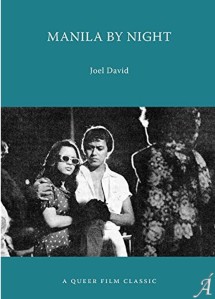
List of Illustrational Problematics for Manila by Night: A Queer Film Classic

Illustrational Problematics is a self-descriptive category spun off from the list of textual problematics. I designated it to explain issues with visual content. These affect pages 38, 45, 50, 82, and 127. For discussions of textual problematics, click here. To return to the corrigenda page, click here. The problematics are listed according to the order they appear in the book; for a topical list of issues linked to the discussions:

Bernal, Elena (Ishmael’s mother)
Bongbong at Kris (1987), play by Boy Noriega
Estregan, George, pic of Eric (1969)
Iginuhit ng Tadhana (1965), “Bongbong” Marcos in
Manila Film Center’s Malakas at Maganda mural
11011Si Malakas, si Maganda, at si Mahinhin (1980)
Paloma, Pepsi rape case
Presidential children as film performers
When It Is a Gray November in Your Soul Coffee Shop

Page 38, Figure 4:

Several elements in this pair of pictures are capable of generating discussions in themselves, but would detract significantly from the concerns of the book text. To bring up a novel example: one figure is common to both – Ferdinand “Bongbong” Marcos Jr., only son of the Marcos couple and latter-day frustrated vice presidential aspirant. This detail would alter most people’s impression that the first presidential offspring to perform in movies was Corazon Aquino’s daughter Kris. (At one point, Lino Brocka was considering casting Imee Marcos in the title role of his Cannes breakout entry Insiang, but fortunately managed in time to cast aside that phantasmagoria; see pp. 125-26 of Jo-Ann Q. Maglipon’s “The Brocka Battles,” in Lino Brocka: The Artist and His Times, ed. Mario A. Hernando, Manila: Sentrong Pangkultura ng Pilipinas, 1993, pp. 118-54.) During the euphoric period that followed the 1986 “people-power” revolt that deposed the Marcoses and installed Cory Aquino, playwright Bienvenido M. Noriega Jr. (formerly with Imee Marcos’s Experimental Cinema of the Philippines) wrote a popular stage comedy premised on a speculative Romeo & Juliet-inspired romance titled Bongbong at Kris (1987).

Back to top

Page 45, Figure 7:

I would have preferred to use the evocative pic below (click to enlarge) in place of this solo portrait of Elena Bernal. Unfortunately its source, the phenomenal Pro Bernal Anti Bio volume (Manila: ABS-CBN Publishing, 2017) – drafted as an autobiography of Ishmael Bernal, passed on to his confidant Jorge Arago, and completed by Angela Stuart-Santiago in honor of her late friends – came out about the same time as Manila by Night: A Queer Film Classic. It would also have corrected the commonly misspelled and uncompleted name of the café run by Bernal, with “When It Is a Gray November in Your Soul Coffee Shop” rather than “When It’s a Grey November in Your Soul.”

Back to top

Page 50, Figure 9:

The pic in question came from a framed entry in Cinema Paraiso (Film Paradise), an exhibit of Filipino movie memorabilia with film screenings and lectures, held February to April 2003 at the National Commission for Culture and Arts gallery in Intramuros, Manila. According to historian and archivist Teddy Co, one of the organizers, “It’s actually from my collection of bomba magazines, ca. 1969-70. I cannot find the issue anymore so I cannot name the magazine and what month it was in. The other exhibit curators were Josephine Atienza and Cesar Hernando…. The pic was in a section called A History of Kissing in Filipino Movies, starting from the first smooch between Dimples Cooper and Luis Tuazon to a digitally rendered kiss from Lastikman [dir. Tony Y. Reyes, 2003]” (Facebook Messenger exchange, June 5, 2020). The explanation may be too long for a caption and should be written as a footnote.

Back to top

Page 82, Figure 15:

I could have replaced either one of two exterior shots of the Manila Film Center with the mural in the lobby, painted by Victor Cabisada Jr. and Peter Alcántara, then-impossible to access after a fire damaged the building (see this blog’s header image). In September 2020, an art historian, John Paul “Lakan” Olivares, posted the pic below (click to enlarge), apparently taken when the object was still new, on his blog Lakbay ng Lakan, and granted me permission to use the illustration. It depicts the native myth of the first cis couple, Malakas (strong) and Maganda (beautiful), the latter resembling Imelda Marcos; both were supposedly locked together in a node of bamboo, pecked open by a curious bird. Although many other Malakas at Maganda murals with the same intent of identifying the Marcoses as first Filipinos can still be found in various government buildings, the Manila Film Center version was far and away the best-rendered of the lot.


11011Incidental observation, which I admit being unprepared to fully comment on: the couple were notoriously sensitive to criticism (not to mention mockery) about themselves, but the biggest queer-themed hit up to that point, Danny L. Zialcita’s Si Malakas, si Maganda, at si Mahinhin [The Strong, the Pretty, and the Timid] (Trigon Cinema Arts, 1980), came out around this time. The surest speculation I can make is that, inasmuch as the movie was released just as the controversy over Manila by Night was making headlines all over the world, Imelda was certainly not going to risk her culture-czarina status over what appeared to be a potboiler that would never attract the same amount of attention as the production she deemed was a smear on her dream of setting up what she termed the City of Man.

Back to top

Page 127, Figure 26:

Re the caption: upon the prompting of director-writer and actor Bibeth Orteza, a close associate of the accused comedians (one of whom had died), I reread available material on the controversy and was surprised to find that the case for reasonable doubt was strong. Pepsi Paloma advanced her accusation of rape in the media on the basis of a photograph where she was apparently being held against her will. Splashed on the front pages of tabloids and now inexplicably unavailable, the picture showed Joey de Leon kissing an unwilling Paloma, with the other comedians looking on with amusement. The worst that the picture denotes would be molestation, rather than rape.

11011The photographer was Guada Guarin, an actress who was also a ward of talent manager Rey de la Cruz; she has since refused to speak on the matter, as do the surviving accused. The rape story attracted renewed attention from an extended article and its follow-ups that were subsequently withdrawn by the Philippine Daily Inquirer, after the current Philippine Senate President, who was part of the comedy team but not present during the incident, successfully contested the timeline of events claimed in the articles (see “INQUIRER.net Statement on the Pepsi Paloma Stories,” July 5, 2018).

11011I had to conclude that the rape accusation may have been one of the publicity gimmicks de la Cruz (whom I’d interviewed more than once) was known for. The softdrink beauties and the comedy trio used to have their own regular projects with Regal Films (also Manila by Night’s production outfit). When the production company severed its ties with de la Cruz and his talents as a result of the controversy, that indicated to me that the accused had enough of a strong case to demand that Regal either take their side or risk a lawsuit.

11011The circumstances behind the incident, where the alleged rapists invited the actresses to visit a room in a five-star hotel, had no indication of coercion or the use of an incapacitating agent; each side claimed that the other was enthusiastic about extending invitations to visit the room. The last few weeks before Paloma announced she was dropping her case, only de la Cruz continued to denounce the comedians. The Senate President, unfortunately, is a right-wing pro-Church bigot with the expected sexist and homophobic trains of thought; the condition gives rise to less-informed liberals readily believing that he shares the same type of malevolence with his associates – which, according to people within showbiz circles, is far from true. Everyone familiar with the team avers that incumbent Pasig City Mayor Vico Sotto, regarded as a future liberal favorite for national politics, holds values closer to his father than to his uncle.

11011As a direct result of the suppression of the Inquirer articles, several misimpressions about the incident have proliferated. In one instance, Eraserheads frontperson Ely Buendia found it necessary to debunk the long-standing rumor that the song “Spoliarium” (titled after the celebrated 1884 painting of Juan Luna) was about the rape of Pepsi Paloma. One other verifiably erroneous claim making the rounds of internet posts concerns the ungrammatical suicide note supposedly left by Paloma, stating “This is a crazy planets.” This was in fact the message left by a near-contemporaneous suicide, Stella Strada, who like Paloma also became famous as a sex-film ingenue.

Back to top

Á!


List of Textual Problematics for Manila by Night: A Queer Film Classic

Textual Problematics is the term I use to refer to issues that occasionally are unresolved, or that otherwise would be too cumbersome to attend to, within the physical and/or editorial limits of the publication. Most of these issues already inhered in the material during the process of its creation, although in one instance, the problem arose some time after publication. They range from the aforementioned complication in attribution, to a queer controversy involving a different film, to the usual quirks in historical interpretation. These affect pages 11-12, 36-38, 53-59, 56, 57n10, 61, 64, 69, 78-79, 88, 111, 128, and 148-49. For discussions of illustrational problematics, click here. To return to the corrigenda page, click here. The problematics are listed according to the order they appear in the book; for a topical list of issues linked to the discussions:

Availability of First Golden Age titles
Bernal, Ishmael
11011Cooperation with the Metro Manila Commission
11011Traumatized in his first film project
Book writing process, including close reading
Brocka, Lino’s last-minute rejection of commerce-vs.-artistry binary
Censorship politics during the Marcos presidency
Manila by Night (1980)
11011As a comedy film
11011Erroneous title (Manila after Dark)
11011Production design problem
11011Storyline
Maynila: Sa mga Kuko ng Liwanag (1975)
11011Internal censorial troubles
11011Missing sequences’ similarities with Midnight Cowboy (1969)
Pito ang Asawa Ko, Huwag Tularan (1974)
11011Falling out with film producer
11011Homage to a François Truffaut film
Plot & structure, rather than characters
Smorgasbord movies
11011Iginuhit ng Tadhana (1965), elements in
11011Partial list of prototypes

Pages 11-12:

I prepared for the project by rereading some of my favorite volumes in the British Film Institute Film Classics series (renamed BFI Film and TV Classics) as well as some of the recent Queer Film Classics texts. As far as I could tell, their approaches reflected their respective authors’ scholarly concerns. What they all had in common though was close readings of the specific films after which each volume was titled. In anticipation of this exercise, I drafted a detailed account of Manila by Night’s plotline, running for several pages. To my relief, the editors described it as too long and asked for a story summary instead. (I posted on Ámauteurish! the said extensive storyline.)

11011In writing out the book, I had to provide expositions of the Philippines and its cinema in the first of the standard three chapters, so I thought I could do the close reading in the second chapter. But then I wound up explicating Philippine queer cinema and the auteur I was covering, and in the final chapter I had to explain how the multicharacter movie functioned as a politically responsive genre product. I provided some relevant technical observations and decided to see where the editors might think I could insert the missing close reading of the entire film. To be honest, though, I thought that any scene-by-scene analysis would disrupt the textual flow, if not stanch it altogether. So once more I was relieved when their list of revisions did not include the specification I dreaded.

Back to top

Pages 36-38:

In a manner of speaking, the first Ferdinand Marcos biopic that Sampaguita Pictures produced had the trappings of a smorgasbord production (see page 88) – multi-episodic and multi-directed – except where it mattered: it featured a singular (pseudo-)heroic character. I am only certain of the availability of few of the proto-smorgasbord Sampaguita films in this listing, Tony Cayado’s Mga Ligaw na Bulaklak and Kaming mga Talyada, Armando Garces’s Sino ang Maysala?, as well as the final one referenced here, Iginuhit ng Tadhana: The Ferdinand E. Marcos Story. All the other ones are apparently lost. Will update if any of the others surfaces. [Update: An apparent smorgasbord-movie predecessor, produced by LVN Pictures and more aligned in fact with the late-1950s bad-boy Lo’ Waist Gang trend initiated by Larry Santiago of Premiere Productions, has surfaced: Barkada [Gang], a 1958 release directed by Lou Salvador Sr., may be accessed at Mike de Leon’s Citizen Jake Vimeo page.]

Back to top

Pages 53-59:

I ought to express with utmost care the dynamics behind censorship as a political process during the Marcos martial-law era. When the Philippines began to acquire a higher global profile and a then-upstart studio, Regal Films, made its bid for overseas presence via Manila by Night, only someone with the right combination of motives and connections could step up and make sure that the powers-that-be develop an animosity toward the film. Why against Ishmael Bernal but not against the Cannes Film Festival celebrants, Lino Brocka and Mike de Leon? The person in question, Marichu Vera-Perez Maceda, may have been connected as much with Brocka, or at least with the Philippine Educational Theater Association, as with the Marcoses. Brocka and de Leon worked for Maceda’s outfit. Bernal however had a celebrated falling-out over Huwag Tularan: Pito ang Asawa Ko, the film project he completed with Sampaguita Pictures, the studio run by her father, after the latter shot additional scenes without the director’s approval. This means that reports of her behavior in mediating between the conflicting sides in the censorship controversy must be subjected to intensive critical scrutiny.

11011I had the opportunity to observe, as an insider in the Marcos film agency, how Maceda opted for the program that directly handled the disbursement of funds to favored film projects. When a project she produced potentially conflicted with the output of Marilou Diaz-Abaya, an associate of Bernal, I heard her make an excessively dramatic claim to mediating between the creative team and the forces of censorship. Bernal carefully demonstrated deference for someone who was after all part of the inner circle of the First Lady, but condemned her in the strongest terms after she left, for once more finding ways to advance her political and financial standing at the expense of some of the most outstanding films of the time. The Philippine critical community continues to hold Maceda in high esteem, mainly because of her association with a noteworthy period in film history; for this reason the many significant accomplishments of her family’s studio (active during and beyond the First Golden Age) will have to be qualified with the underhanded intrigues she fomented during a period when the act of opposing figures of power carried inordinate political, professional, and personal risks.

Back to top

Page 56, second (parenthesized) sentence:

Bernal’s familiarity with official government communication policy derived from his working relation with another functionary, similar in terms of access to power as the two-faced censoring agent in the preceding entry, but benevolent for a change. Marita Manuel, whose tracks since the end of the Marcos dispensation have become scarce, ran Metro Manila Commission, one of many agencies that accommodated people with radical backgrounds who needed to be “rehabilitated” after a spell in political detention. By this means Marcos was able to harness talent that would have otherwise remained dormant or that would have returned to underground activities. In 1980, apparently as a means of mollifying the government, she initiated a “documentary” project titled Manila, with Bernal directing and several of the Manila by Night talents appearing. Rediscovered in 2018, the 45-minute curiosity was more of a travelogue that aimed to persuade foreign viewers to tour the city. See Edwin P. Sallan, “Ishmael Bernal’s ‘Lost’ Manila Docu Evokes Nostalgia,” Daily Tribune (July 8, 2018).

Back to top

Page 57, footnote 10:

This may well be an unnecessary inclusion but I’ll just be placing it here for thoroughness’s sake. Manila by Night’s still-ongoing troubles begin with its title, which for some reason left-identified Pinas cultural officials refuse to use. City after Dark was the military censors’ designation, so any film screened with that title should be considerably shorter and replete with aural deletions of cusswords and references to the capital city. The claim I made however that another moniker, Manila after Dark, does not exist anywhere in Philippine cinema now has to be qualified, as of mid-2021, with the streaming release of Joel C. Lamangan’s Lockdown. It’s a meta-detail though, since it’s a fiction within a fiction, fascinating in itself and utterly attuned to the world envisioned by Manila by Night. A police-protected proprietor’s illicit vidjakol website – which provides erogenous solo-male or man-on-man displays for paying customers – is depicted as using the title in question, as screen-capped below. (The internet-specific coinage vidjakol, a pun on “video call,” is a portmanteau conflating “video” with the Tagalog slang word for masturbation, jakól, from the word “ejaculate.”)

Screen cap from Joel C. Lamangan’s 2021 film Lockdown.

Back to top

Page 61, end of first paragraph:

The out-of-court settlement between the author of the novel Sa mga Kuko ng Liwanag and the production team of the film adaptation Maynila: Sa mga Kuko ng Liwanag may have involved a demand from the novelist to delete the improvised gay-hustler sequences. The current existing product, including the Blu-ray versions released by the British Film Institute and the Criterion Collection, contains the section from Julio Madiaga (Rafael Roco Jr.) wandering the Metropolitan Theater’s adjacent Mehan Garden, where he is befriended by Bobby (Jojo Abella), through Julio’s first night at Bobby’s apartment where he witnesses Bobby accommodating a client, to his initial attempt at gay-for-pay sex in the brothel where Bobby works.

11011We may be allowed to speculate here (based on scriptwriter Clodualdo del Mundo Jr.’s account) that Edgardo Reyes, the novelist, demanded that the entire rentboy detour be excised, while Lino Brocka held fast on retaining its opening section. The fact that a literary figure insisted on anti-queer censorship while a filmmaker immersed his material in homophobic imaging – both artists left-identified and left-supported – may be reflective of a period when perversion was regarded as immoral rather than potentially transgressive. Hence unlike Manila by Night, Maynila’s censorial difficulties were internal, waged by one progressive side against another, one outraged by the attempt “to sissify a manly novel about an ever-masculine city” (actual words used in an article written by a defender of the novelist’s claims) and the other insistent on presenting the underworld of male hustling in the worst possible light.

Back to top

Page 64, second paragraph, third sentence continuing to next page:

The Ideal Theater sequence recalls a similar episode in John Schlesinger’s Midnight Cowboy (1969), where Joe Buck (Jon Voight), broke and homeless after being fleeced by “Ratso” Rizzo (Dustin Hoffman), agrees to be fellated by a student (Bob Balaban) in a grindhouse along the Deuce, the stretch of pre-Disneyfied 42nd Street known for sleaze and petty crime. Afterward the latter reveals he has no money, angering Joe but ending with him letting the kid go. Midnight Cowboy turns out to have had a broader connection with Maynila, in the sense that, symptomatic of their era, their moralism and homophobia were in effect rewarded by top industry prizes in their respective countries.

11011Similar incidents in both films culminate in a more striking parallel, where male strangers behave abusively. Both narrative heroes, their fists clenched and shaking with rage, restrain themselves from further attacking the men – with Joe Buck clutching a broken bottle and Julio Madiaga managing to return a lady’s snatched handbag.

Back to top

Page 69, second sentence:

My primary source for this still-to-be-standardized insight has been Ricky Lee, who kept me updated during the making of Gumapang Ka sa Lusak [Dirty Affair] (1990), the project he was working on with Lino Brocka. Lee mentioned how delighted Brocka was that he could accept an outright commercial assignment yet imbue it with political relevance. This occurred at a felicitous intersection in Brocka’s career, where he had accumulated enough skills in a wide variety of popular genres during the precise historical moment when demonizing elected officials became extremely profitable box-office material. Lee devised a postmodern narrative that blended elements of the dance musical, suspense, melodrama, action, comedy, and soft-core porn to which Brocka once devoted specific projects in the past, within a brazenly reflexive premise. Brocka rose to the challenge while making sure to enjoy himself in the process, and was rewarded with not just what may have been his strongest box-office hit, but also a recognizable mass following: when he died in an accident the year after, the folk-hero dimension of his wake and funeral march would have been the envy of popular movie stars. A summary of Lee’s account appears on page 76 of Jose Dalisay Jr.’s “From Gingoog to Greenhills: Lino and His Writers” (in Lino Brocka: The Artist and His Times, ed. Mario A. Hernando, Manila: Sentrong Pangkultura ng Pilipinas, 1993, pp. 74-85).

Back to top

Page 78-79, second sentence:

One consequence of David Bordwell’s formulation would be a study focused on plot and structure rather than on characters. A noteworthy example would be Dan Hassler-Forest’s well-regarded master’s thesis titled “Multiple Narrative Structures in Contemporary Cinema” (University of Amsterdam, April 1999).

Back to top

Page 88, Figure 18:

The “first” smorgasbord title is nominal; Sampaguita Pictures had been known for multi-performer presentations as early as the late 1950s, with Tony Cayado’s Mga Ligaw na Bulaklak [Wildflowers] (1957). A sampling of titles up to and including the year of Maraming Kulay ang Pag-ibig [Love Has Many Colors] (1966), featuring large casts in “epic” narratives: Armando Garces’s Sino ang Maysala? [Who Is to Blame?] (1957) Ding M. de Jesus’s Ginang Hukom [Madame Judge] (1960); Octavio Silos’s Mga Kwela sa Eskwela [The Cool Kids of School] (1963); Tony Santos’s Pinakamalaking Takas (ng 7 Atsay) [Biggest Escape (of 7 Domestic Helpers)] (1963); Mar S. Torres’s Bathing Beauties and Mga Bata ng Lagim [Kids of Horror] (1964); Tony Cayado’s Kaming mga Talyada [We Who Are Sexy] (1962), Mga Batang Iskwater [Slum Kids] and Pitong Desperada [Seven Women Bandits] (1964); Octavio Silos’s Mga Batang Bakasyonista [Vacationing Kids], Mga Batang Milyonaryo [Millionaire Kids], and Mga Batang Artista [Showbiz Kids] (1964); Conrado Conde’s Apat na Kagandahan [Four Daughters] (1965); Octavio Silos’s Mga Batang Turista [Tourist Kids] (1965); Jose de Villa’s Paano Kita Lilimutin [How Will I Forget You] (1966); and Luciano B. Carlos’s Jamboree ’66 (1966).

11011Closer to the multiply directed example of Maraming Kulay ang Pag-ibig would be Sweet Valentines, directed by Tony Cayado, Conrado Conde, Rosa Mia, Octavio Silos, Carlos Vander Tolosa, Jose de Villa, and Romy Villaflor (1963); and Umibig Ay Di Biro [Love Is No Joke], directed by Emmanuel H. Borlaza, Luciano Carlos, Conrado Conde, Rosa Mia, Octavio Silos, Carlos Vander Tolosa, and Romy Villaflor (1964). All were produced by Sampaguita Pictures and/or its subsidiary, VP Pictures; in the instance of Pinakamalaking Takas, Sampaguita linked up with a rival studio’s subsidiary, Dalisay Pictures. Pitong Desperada was by Ambassador Productions, but its talents and stars were all also identified with Sampaguita.

11011The other First Golden Age studios were of course more than willing to replicate the success of the Sampaguita projects. LVN Pictures produced the recently rediscovered Barkada [Gang] (dir. Lou Salvador Sr.) in 1958, which Premiere in turn repurposed into its successful Lo’-Waist Gang bad-boy films. This may have possibly convinced Sampaguita to find a way to profit from an innovation it initiated – hence the smorgasbord concept as well as the Stars ’66 batch of talents, two strategies that proved influential (because profitable) throughout the Second Golden Age and thereafter. Interestingly, two mid-1950s titles by Premiere Productions featured omnibus projects by different filmmakers: Apat na Kasaysayang Ginto [Four Golden Stories] (1956), with Gerardo de Leon, Cesar Gallardo, Cirio H. Santiago, & Teodorico C. Santos; and Bicol Express (1957), with Josefino Cenizal, Abraham Cruz, Gerardo de Leon, Efren Reyes, Eddie Romero, Cirio H. Santiago, & Teodorico C. Santos (an incredible seven segments!). Such chutzpah may have derived from the studio’s reputation for prestige, in terms of boasting of award-winning film artists. No surprise, however, in the subsequent observation that Filipino film releases may have occasionally lengthened, requiring ten-hour screenings in two instances so far, but none have attempted an equivalent number of filmmakers working in a singular commercial project.

11011Final unrelated though intriguing insight: the initial smorgasbord film practice of recruiting several directors, each of whom would direct an episode in an omnibus project, was observed in two competing entries from 1965 that were anything-but-multicharacter: the then-incumbent president’s campaign film Tagumpay ng Mahirap [Triumph of the Poor] (featuring directors associated with Premiere, specifically Lamberto V. Avellana, Gerardo de Leon, & Eddie Romero) as well as the pseudo-heroic Sampaguita production Iginuhit ng Tadhana [Drawn by Destiny]: The Ferdinand E. Marcos Story (dir. Conrado Conde, Jose de Villa, & Mar S. Torres), annoyingly available for what it’s worth. (Also FWIW, Sampaguita was where then-hopeful movie aspirant Imelda Romualdez screen-tested, before she was Marcosed away.) The smorgasbord and Stars ’66 trends were launched the year after FM won, when an interesting new era for Pinas cinema (and Pinas history) took off. As far as I could find, the multi-directed local film presentation has culminated so far with the 3.5-hour-long Dugo at Pag-ibig sa Kapirasong Lupa [Blood and Passion on a Parcel of Land], released June 12, 1975 (the third Independence Day after the declaration of martial law), with five segments handled by Ding M. de Jesus, Cesar Gallardo, Armando A. Herrera, Johnny Pangilinan, & Romy Suzara.

Back to top

Page 111, first paragraph:

Around the time I was drafting the book, Manila by Night production designer Peque Gallaga reminisced, on his own and on others’ Facebook posts, regarding his participation in the project. He expressed extreme frustration with the cinematographer’s failure to use the proper filters for the breakwater sequence. Ishmael Bernal also mentioned this as one of the scenes he wanted to trim for the print expected to be finalized for the film’s Berlinale participation – which Moritz de Hadeln overruled (see page 55).

11011Gallaga’s recollection of his problem went as follows: “I talked to Sergio Lobo who was the cameraman. I said, ‘For their LSD sequence what I want to do is to get those little cups for the candles and float them by fitting them in small Styropors. But is it possible if you can put Vaseline around your lens so that it will just be out-of-focus lights and it’s only the faces of Cherie [Gil] and William [Martinez] that are going to be seen, so that all of a sudden these lights come on?’ He said ‘Yeah just paint the Styropor orange so that the lights would still be warm.’ So we bought about 200 [candles on Styropor] and on two [small outrigger boats], we lit each and every one of them and swept them with bamboo so that as the scene goes on these things start floating in.

11011“When we saw the rushes, I said, ‘Bernie, that’s shit! He didn’t defocus it in any way!’ All of a sudden they were surrounded by stupid candles and Styropors. ‘It’s ridiculous. This is really bad. We have to reshoot it!’ He said ‘No, just remember this scene will keep you humble the rest of your life’” (“Brocka-Bernal Interviews, 2018-2019,” for the exhibit Brocka, Bernal, and the City, January 24 to April 29, 2019, at the De La Salle – College of Saint Benilde’s School of Design and Arts, excerpted from “Peque on Bernie: Full Interview,” posted on YouTube by Benilde Campus Art).

11011A further insight that necessarily entails provisional and speculative conclusions was provided by one of Bernal’s colleagues, who must remain anonymous for now: Bernal was bullied by the cinematographer on the set of his first film assignment, Ah, Ewan! Basta sa Maynila Pa Rin Ako! (I am indebted to the innovative and dedicated archivist Jojo Devera for this exclusive bit of information.) Apparently angered and/or traumatized enough to refuse directorial credit (too late for the celluloid print, but observed in all the film’s print announcements), Bernal’s maltreatment may account for his hesitation in trying out other directors of photography until years later, when younger filmmakers could assure him of the reliability of their own cinematographers. Once more, homophobia (on the part of the house staff of Virgo Productions) may have factored in their engagement with the then-newbie. (See footnote 15 on page 99.)

11011Regarding the cinematographer fondly addressed as Mang Serge, one must also keep in mind that, apart from the aforementioned bullying that Bernal experienced in his first film project, he also insisted on maintaining Lobo during the period when the latter had to prepare for retirement. Lobo had provided superior work in his earlier output for Bernal, but it became apparent around this time that the lure of better-paying co-production projects with foreign investors was proving too strong to ignore. They would continue collaborating on several major projects for a couple of years afterward, but Bernal finally yielded to his associates’ request to consider other directors of photography. Unfortunately, a prospective project with Conrado Baltazar, Lino Brocka’s signature cinematographer, fell through with Baltazar’s sudden demise due to an accident. [Update: the Eddie Garcia Law, intended to secure the on-set safety of workers in the film and television industries, was passed in 2024, more than three decades after Baltazar’s case.] Most of his major projects after Manila by Night were helmed by Manolo Abaya, husband of the director he mentored, Marilou Diaz-Abaya; other DOPs in subsequent Bernal films read like a who’s who of the best younger talents in the field.

Back to top

Page 128, second sentence of second paragraph:

Not a correction, more of a reminder for myself. I heard of Huwag Tularan: Pito ang Asawa Ko years before I saw it, which meant I’d seen most of François Truffaut’s films by then. I vaguely remembered a connection between a Truffaut film and this specific Bernal title, so I concluded that it must have been L’Homme qui aimait les femmes, since their main characters resembled each other. (Pito ang Asawa Ko is privileged by the same queer twist that appeared in a near-contemporaneous Truffaut film, La nuit américaine, and I insist on following the popular practice of dropping Huwag Tularan since it was imposed by the censors and was not present in initial publicity announcements.) In writing the Queer Film Classic text I checked the usual sources, and was flabbergasted at how my memory had tricked me: The Man Who Loved Women (as it was known in English) came out three years after Pito ang Asawa Ko.

Back to top

Pages 148-49, paragraph in common:

I ought to have proposed considering Ishmael Bernal as a comic filmmaker, with Manila by Night as black comedy – similar to the way that a review of Robert Altman’s Nashville was anthologized in The National Society of Film Critics on Movie Comedy (ed. Stuart Byron, New York: Grossman, 1977). The perspective would have been unthinkable for people who approach the text with advanced knowledge of its censorship troubles. The notion of laughter as subversive force, however, would have considerably explained why its persecution by the Marcos administration exceeded that of the other city movie, Lino Brocka’s Maynila: Sa mga Kuko ng Liwanag. This would also have enabled me to raise issues of masquerade and irony more logically.

Back to top

Á!


Bibliographic Mini-Essay 3: The Rise in Spin-offs

One game I’ve been playing in uploading and updating the Pinas film bibliography is predicting what category would be first to require splitting up because of a too-large number of entries. A few categories had to be handled this way right after I first posted the categorized file – which only meant that I observed how the majority of categories tended toward the same range. So after a period where some categories needed to be expanded – Novelizations added to Screenplays, Teleplays, and (filmmaking) Accounts; Special Journal Issues added to Studies & Festschrifts – the next stage was a reclassification of the largest groups in order to align them within the same range as the others.

11011Initially it seemed to me that the Reviews and Criticism category might be the first to require this treatment. As it turned out, the first three that needed to be adjusted, over a year since the bibliography went online, were: Histories – a good sign, since that meant that people were paying more attention to film development, with enough material to constitute its own pre-Marcos category); Auteurist Materials and Memoirs – essentially an overlapping differentiation, since the objects of the biographical issues would be auteurs in either instance, but I enforced a distinction wherein Memoirs would be personalized accounts of a subject’s private and professional experiences, while Auteurist Materials would be screen cultural studies that proceeded (partly or entirely) from an auteur’s psychobiography; and Screenplays, Teleplays, Novelizations, Accounts (the first to be expanded) – an extensive-seeming group that actually neatly subdivided itself in the middle.

11011My critical-academic biases, the same ones that led me to expect that Reviews and Criticism would be the fastest-growing category, caused me to pay the least attention to the last category I mentioned until the number of entries called for adjustment. One film-derived adaptation comprised short stories while another was a musical (of which several more can be published even at this point), so I changed the subcategory’s title, from Novelizations to Literary Adaptations. And had to confront the proverbial can of (book)worms: a great number of local films, especially during the early years, may not have been spun off into literary texts but were definitely adapted from pre-existing material. We may think that the end of our equivalent of the Classical Hollywood period, the First Golden Age, finally liberated us from relying on “worthy” samples like metric romances and historical novels, but look more closely. Some of the best output of that period actually originated from a still grossly underappreciated source: serialized graphic novels called komiks, to differentiate them from the US innovation that inspired and inspirited them.

Back to top

11011Komiks at one point became the primary print form for Philippine readers, so it naturally made sense for producers to schedule projects at around the time when a serialization was expected to conclude. This symbiosis between film and print proved fail-safe, so in fact we might make two corollary claims: that Filipinos were the most avid consumers per-capita of visual media (of which film was merely one among several possible instances), and that the closest to a unifying national language we ever had was, propitiously yet problematically, audiovisual.

11011If this sounds like an apology for an extensive gap in bibliographical material – Where are the literary sources of our film products? – I don’t see how it can be anything else but.[1] It’s a doable challenge for ambitious cultural historians, but it lies beyond the scope of other tasks I’ve designated for myself. For one thing, someone already counting down to retirement (as I am) will have to reset her timetable to accommodate the equivalent of a doctoral dissertation, just to accomplish the empirical groundwork. Let this goblet pass from me and I promise to fill it later with some delightfully filthy potables. Patience is our key.

11011As for the recent adaptational flurry of publishing activity on the part of pop-oriented publishers and alert production houses, education officials should be able to recognize how a decline in komiks patronage may have been replaced by our audience members’ willingness to read texts that recapture or enhance their movie-watching experience. It may have been a few years’ trend that does appear to be waning, another opportunity to upgrade young people’s literacy wasted by local educators’ inability to cope with the fairly dated challenge of teaching audiovisual appreciation.

Note

[1] The emergence of new media has occasioned several novel instances of narrative renewal and adaptation. Those written about in books include films derived from Wattpad stories, Facebook exchanges, viral videos (converging on the TikTok app during the Covid-19 pandemic), and online games. Mobile-phone content – in terms of oral conversations as well as SMS chats – have also become standard fiction-film features.

11011One might also have to face the possibility that the challenge of tracking every possible prior influence in Philippine cinema might amount to a snipe hunt, inasmuch as the country’s Westernization provided a wide range of influences from two continents through premodern to postmodern periods. Moreover, the still-unresolved obsession with “originality” that (at least during the early years of organized criticism) constantly intruded on useful film evaluation, along with the ever-present concern for moral values, promise to constitute stumbling blocks even for progressive thinkers. Finally, Pinas is nothing if not a globalized entity, from its inception to the foreseeable future; as a specific prominent sample, consider John du Pont’s Philippine Birds, a 1971 monograph published by the Delaware Museum of Natural History, determinedly innocuous if not for the subsequent sensation of its Forbes 400 author’s “guilty but mentally ill” conviction for the fatal shooting in 1996 of Dave Schultz, an Olympic freestyle wrestler. Du Pont died in prison, with the tragedy subsequently dramatized in Bennett Miller’s Foxcatcher (2014), a prestige project named after the family estate where he sponsored and trained a number of athletes.

Back to top

Á!


Book Texts – Non-Film Reviews

Home Sweet Home

In My Father’s House
Playwright Elsa Martinez Coscolluela
Directed by Tony Mabesa

As an extra-active in-house editor for the Experimental Cinema of the Philippines (ECP), I was once assigned to the screening committee of the third (and last) scriptwriting contest. Only two winners were chosen, both of which were endorsed to the board of judges by none other than yours truly. The inside news, however, was that the preferred top-prize winner was disqualified on a double technicality: not only did the script proposal require a more-than-modest budget (for which the consideration of a few other entries would have to be set aside), it would also have duplicated the themes and setting of the first ECP production, Oro, Plata, Mata. Flashforward to the present, when one of the contest’s judges, out of a refusal to allow the ECP’s demise to negate its noteworthy aims, convinces the writer of the said screenplay to revise her work for the medium out of which he has made a lifetime career: the theater.

11011Like Oro, Plata, Mata, In My Father’s House has seen rough commercial sailing. And if we take an optimistic course and regard its ultimate destination as the celluloid product it was originally intended to be, then its odyssey from judges’ favorite to future film product through the legitimate stage may well be one of the most unusual transitions in contemporary local culture. To be sure, In My Father’s House stands several cuts above the disturbing succession of stage plays that actually aim for ultimate preservation on film (or even just video, via television). Our local playwriting contests have much to answer for in this case; works are judged according to how they read, not how they may be performed, and in several depressing instances writers who employed misappropriated cinematic techniques tended to impress their respective jurors, who should have known better.

11011I hope I don’t sound too condemnatory in pointing out that these cinematically obsessed playwrights were in a sense the predecessors of our so-called independent film practitioners, who dabble in media or formats apparently alien from the mainstream movie industry, but actually aim for stable long-term employment within (as evidenced in their output as well as the number who grab too eagerly at opportunities for commercial film assignments). Nothing wrong with having to survive, I submit, except that sometimes the struggle has resulted all too often in a hierarchism of media forms and assignments: this here’s a mere short film (or play or article), it could get me some attention so I could get away with a little slothful artisanship – after all, this isn’t the big time … yet.

11011Hence my sense of appreciation and gratitude for In My Father’s House. The play’s film-script origins are still detectable, particularly in the inordinate number of blackouts (equivalent to the film medium’s fadeouts), but the whole presentation has amounted to a cherishable and well-grounded discourse on the dehumanizing effects of war on the best intentions of those caught up in it. The story details the plight of a Negros-based family, chronicling the members’ confrontation with the realities of the Japanese occupation from the start of the war until the impending liberation (or, as per Renato Constantino, the re-occupation) of the country by American forces. The siblings find themselves in opposing camps, though hardly by the passive nature of their characters: one realizes firsthand the effectiveness of the enemy’s brutality and decides to collaborate to preclude whatever further harm may be committed against his loved ones, while another is outraged by the very same reports, though from a comfortable distance, and decides to join the guerrilla movement.

11011The worst that the invading forces visit upon the family is the occupation of their residence by an officer, who is never seen; instead he is represented by his clown of a deputy. In the end the tragedy that befalls the family is directly caused by the guerrilla offering to save his collaborator-brother but inadvertently betraying him to a rival unit. An acknowledgment of classical traditions pervades the entire production, with deaths occurring offstage and the action being continually summarized and assessed by the survivors. The only onstage tragedy, the suicide of the fiancée who could endure repeated rape by the Japanese officer but not the contempt of her guerrilla-lover, serves to maintain the essential context of the drama – i.e., that the enemy, no matter how harmless in appearance, is capable, on a near-bestial level, of the civilized but still-harmful actuations of his captive hosts, and that in a sense this doesn’t make him any different from them after all.

11011Such perceptions about the wartime behavior of the bourgeoisie could only have come from finely observed and fully felt experience, and whatever the arguments against the dangers of romanticism, there ought to be room for such theses in the first place, the better to form possible answers from. In My Father’s House can be taken on its own, with the reservations (and then some) I already mentioned, but it can also be appreciated as a creative inspiration’s long (and unfinished) journey to realization. I suggest viewing it as a companion piece to Oro, Plata, Mata, with the notion of the voyeuristic peek into the bourgeoisie’s not-so-discreet charms this time replaced by an Areopagitica of sorts, a plea for tolerance and soberness from a people who are still figuring out what to do with themselves.

[First published December 2, 1987, in National Midweek]

Back to top
Return to Book Texts contents

Time and Again

Translating Time: Cinema, the Fantastic, and Temporal Critique
By Bliss Cua Lim
(Durham: Duke University Press, 2009)

No less than feminist film and trauma specialist E. Ann Kaplan has hailed Translating Time as one of the most influential books in the field of cinema studies, a distinction made more remarkable by the fact that Bliss Cua Lim’s volume has only recently been published. Kaplan cites Lim’s achievement in drawing on “genre theory, feminist film research, postcolonialism, and feminist cine-psychoanalysis to think through the meanings that emerge in films about fantasy” (2009: 190). Well on its way to solidifying its early stature as a classic in the field, Translating Time bears the prestigious imprint of a John Hope Franklin Book Award, an annual honor given by Duke University Press to four books selected from the hundred-plus titles that it publishes every year. (Personal disclosure: Lim and I were classmates and fellow Fulbright scholars in graduate school.)

11011Prior to Translating Time, Lim was known for her volumes of poetry in her native Philippines, and her expertise in this mode of expression enhances the present book’s correlation of seemingly disparate concerns, unified by the much-vilified yet inevitably overriding element of pleasure – the same factor that links Translating Time with an impressive array of feminist predecessors, from Laura Mulvey (who, in calling for the destruction of pleasure in Classical Hollywood, motivated an entire generation of scholars to revaluate its importance and function) down to the present and, from what we can discern from current media studies trends, far into the future.

11011Translating Time reworks Henri Bergson’s philosophical critique of so-called homogeneous time, regarded as the primary ideological mechanism for the historical ascendancy of European modernity, by infusing it with a postcolonial critique. Lim recounts how, starting with the late thirteenth-century invention of precise timepieces, homogeneous time became ensconced as the standard universal method of reckoning temporal experience, pervading all available areas of human endeavor within and outside Europe via the mechanisms of state control and colonial expansion. Crucially, she argues that homogeneous time overlays human societies with the twinned processes of measuring everyone, without exception, according to the timeline of Eurocentric development, as well as excluding from historical significance any form of anachronism – thus resulting, for example, in the refusal to accept people falling within certain categories – such as the “savage,” the “primitive,” the “superstitious,” and the “premodern” – as belonging to the present. Homogeneous time means that people who exist, as it were, in periods marked as “past” by Eurocentric development cannot be considered of this moment, unless they were “modernized” one way or another. This reminds me of one of the standard arguments that links the colonizer with the rapist: the purported victim was merely being claimed by patriarchy in order to protect it (the nation) or her (the woman) from other claimants, as well as to provide it or her with the benefits of modernist progress presumably unavailable to those cursed with “backwardness.” The narrative of the centuries-long quest of homogeneous time for global preeminence would sound fantastic in itself if it were told to, say, a Renaissance-era subject or a contemporary Third-World tribesperson. Lim’s retelling captures the appropriately fantastic quality of the now-seemingly-inexorable advance of this phenomenon.

11011Lim initiates her departure from Bergson’s critique by propounding a concept of immiscible times, which she defines as “multiple times that never quite dissolve into the code of modern time consciousness, discrete temporalities incapable of attaining homogeneity with or full incorporation into a uniform chronological present” (12). As she puts it:

an anti-colonial critique of homogeneous time points out that the modern notion of progress and its corollary, the accusation of noncontemporaneousness, translate multiple ways of inhabiting the world into a single, homogeneous time. This translation is arguably a deliberate mistranslation in that the allochronic gesture – the appraisal of the other as an anachronism – served as a potent temporal justification for the colonial project. (83)

Tellingly, inasmuch as Bergson had prematurely denounced film as the culmination of the popular perception of homogeneous time, Lim finds useful samples of immiscible times imbricated in the cinema of the fantastic. By her own admission, she incorporates Bergson further by resisting him at this juncture, specifically his dismissal of cinema for its collusion with homogenized, spatialized time, as well as its deceptive re-presentation of duration as an atomized succession of still moments.

11011Lest one acquire the misimpression that Lim’s espousal of immiscible heterogeneous times could play into the cynical religious revivalism of conservative political leaders (as exemplified in the U.S. Republican Party’s deplorable turn-of-the-millennium strategies), she takes the trouble to point to examples of what we could obversely term real fantasies, like the studies of Jean and John Comaroff on the “enchantments of capital” (2002: 782-87) in the Third World, wherein “amid glaring asymmetries . . . the enigmatic appearance of ‘wealth without work’ . . . is felt by the disenfranchised in particular to be opaque, occult, spectral” (135).

11011Translating Time is exceptional as an extended study not only for what its so-far mostly western appreciators prize it for, but also for what mainly subaltern scholars will be able to perceive: Lim’s thorough immersion in postcolonial culture, to a point beyond mere familiarity, well within the realm of (for want of more appropriately academic terminology) sheer and unadulterated passion. A disheartening number of cultural studies scholars in particular, once they realize the exploitative potential of the Philippines’s unique status as the U.S.’s only ex-/neo-/post-colony, tend to indulge in the country’s popular culture only to come up with undeniably well-meaning but erroneous, if not preposterous or potentially injurious, interpretations of local phenomena. Perhaps the most famous example was Fredric Jameson’s one-time incursion into Third-World, including Philippine, popular culture in The Geopolitical Aesthetic (1992), whose long list of Filipino objectors included Lim (1993).

11011While explicating her take on Bergson (partly by way of Gilles Deleuze – on which more later), Lim proceeds to survey the fantastic in cinema, beginning with a Philippine “Second Golden Age” prestige production, Mike de Leon’s Itim (1976), coursing through Etienne-Jules Marey’s proto-filmic motion studies and Fatimah Tobing Rony’s personal experimental film On Cannibalism (1994). Her bravura readings of the recent aswang (segmented viscera-sucking monster) horror-film cycle of the Peque Gallaga and Lorenzo Reyes directorial team (commencing with their eponymous 1992 blockbuster), and the female specters of Butch Perez’s Haplos (1982) and Hong Kong filmmaker Stanley Kwan’s Yin ji kau (English title Rouge, 1987), are models of close textual inspections that enrich the too-scant literature on these largely overlooked marvels of Asian film-genre productions, even as she painstakingly develops her notions on the values and limitations of immiscibilities in subaltern cinema.

11011After duly disclosing how early colonial chroniclers insisted on the feminine nature of the aswang as a way of demonizing the baylan (pre-Hispanic female shaman), Lim proceeds to discuss the politicized peasantry’s conflation of World War II’s Japanese occupation army with the contemporary Philippine Constabulary (hence Haplos’s always-already doomed revenant), and acknowledges CIA operative Edward G. Lansdale’s (1972, rpt. 1991) possibly fictional and definitely self-aggrandizing psy-war exploitation of the aswang myth in his counter-insurgency operations in the Philippine countryside. More to the point of feminist interest, Lim owns up to the necessarily patriarchal containment which Haplos’s and Rouge’s resolutions build toward, yet insists on pointing out how the real-life female characters find themselves attracted to their supernatural rivals, to the point of even fusing with the specter, as in the case of the ending of Haplos.

11011In advancing toward Rouge, in fact, Lim might initially appear to be falling into the same predicament of engaging with the unfamiliar that scholars like she and I excoriate overeager outsiders for. Yet Lim’s differences – as woman, as Chinay (Chinese-Filipina), as gender and queer theory specialist – secure for her an enviable position from which to read not just the spectrally inflected relations between Hong Kong as a former crown colony (not quite a nation yet not fully striving for integration) and the People’s Republic of China, but also the role that the larger regional area of East Asia has played vis-à-vis the cannibalization of the Asian horror cycle by Hollywood. By looking at the trajectory of particular examples like Takashi Shimizu’s Ju-on (2002) as well as its U.S. remake, The Grudge (Shimizu, 2004), she manages to point out how such a ground-breaking scholar of national cinema as Andrew Higson (1989) “remains regrettably one-sided” (230) in discussing the role of Hollywood:

His argument emphasizes Hollywood’s contributions to national cinema, especially national-popular cinema, but he fails to mention the converse: Hollywood’s debts to other national cinemas, its founding reliance on émigré talent, its appropriation of aesthetic hallmarks, its practices of borrowing and remaking, and its eye on foreign markets. (230)

Just as it had done with earlier film trends in Europe, Hollywood’s appropriation of story material and qualities associated with Asian genre cinemas results in a deracination via the process of transforming “mark[s] of innovation, of originality, of newness or novelty greeted by vigorous, profitable audience demand” into signs of iterability (222-23) that result in a “softening of contrast, the quickly accomplished reduction of the distance between generic innovation and generic repetition” (223).

11011As a detailed demonstration of a home-grown achievement whose qualities would prove immiscible when (as it actually turned out) a Hollywood producer attempted to remake it, Lim discusses a Korean horror film, Kim Ji-woon’s Janghwa, Hongryeon (English title A Tale of Two Sisters, 2003), an experience that “slowly unfurls its secrets, yielding narrative clues and formal motifs whose significances are only apprehended on repeated viewing” (243). The scandal of the DreamWorks remake (Charles and Thomas Guard’s appositely titled The Uninvited, 2009, repudiated by Kim), wherein the production pitch “was based only upon having watched the trailer – not the entire source film – beforehand” (304n), thus resulting in divergent second halves between the two versions, is aggravated by the fact that such a supercilious approach was never even exposed and regarded as a scandal in the first place.

11011Lim concludes her book by recounting similar predicaments experienced by Bergson and a subaltern scholar who explored a postcolonial critique of homogeneous time: Bergson described how, in the midst of writing Time and Free Will, “the hour strikes on a neighboring clock but my inattentive ear does not perceive it” (1889, trans. 2001: 127; qtd.: 247); Dipesh Chakrabarty (2000: 102-03), from another place and period, recounted how an ironically sympathetic historian had wound up distorting a rebel leader’s account of political agency in an anti-colonial uprising, only because the leader had expressed his tribe’s action in supernatural terms. Given such lapses in even the most well-intentioned people’s best efforts, Lim echoes Elizabeth Grosz’s call to restore ontology “to its rightful place at the center of knowledges and social practices, [inasmuch as] the ways in which ontology has been previously conceptualized – as static, fixed, composed of universal principles or ideals, indifferent to history, particularity, or change – require transformation and revitalization” (2005: 5; qtd.: 251).

11011Within the specific area (film studies) that it sets as its donnée, Translating Time fills a gap noticeable in the otherwise densely constructed work of Gilles Deleuze, who had set out in two volumes (1983 and 1985, trans. 1986 and 1989) to reclaim Bergson for film, but whose critique of homogeneous time’s insidious valorization of European modernity is severely blunted by his use of canonical samples from art cinema (mostly European, with the usual Hollywood favorites such as Orson Welles’ Citizen Kane [1941], the standard all-time critics’ favorite, thrown in). As a cineaste-come-lately, Deleuze may have been understandably swept up by what David Bordwell (1994) has termed the “standard version of stylistic history” and its aftermath, in which the aesthetic innovations that radicalized film style originated in Europe; such a formulation required the existence of Classical Hollywood film as a mode of practice that had dominated world cinema for the better half of the previous century – and which indeed was challenged and eventually overturned roughly by mid-century Euro art-film practice. What Deleuze could not overcome was the limited range of his subjective universe of western film culture, so when he in effect celebrates the deconstruction of Classical Hollywood film language enabled by filmmakers who could trace their inspiration, if not their training, to such movements as Italian neo-realism, the French New Wave, and avant-garde filmmaking, he is actually upholding a higher stage of modernism over an earlier one – in effect locking his argument within the same sphere of Eurocentrism that he had sought to contest.

11011Several other types of cinema whose recuperation is being spearheaded mostly by feminist critics – trash, porn, camp, in short anything subsumable under “pleasure” including even select Classical Hollywood titles – have already been reinscribed, with varying degrees of success, as emblems of transgression in popular culture. With Translating Time, Lim manages to liberate Bergsonian critique by convincingly demonstrating how resistance to an ultimate western temporal ideal finds its most useful samples in similarly pleasurable products that originate in places far removed from the center. In doing so, she contributes her share to a valiant multi-generational project, one initiated by Bergson himself over a century ago but only recently being tackled in earnest, in acknowledgment of struggles by European and non-European peoples that have somehow persisted all the way to the present. On the one hand, one may argue that this proves that homogeneous time is an exceedingly difficult system to dismantle (and in fact just now I remember telling Lim, when she first described her project to me, that she was confronting an ultimately impossible task). On the other hand, it may be precisely the excessive, extravagant nature of the challenge that has yielded material as wondrous and forward-looking as the works of the authors Lim has engaged, with her own volume taking its rightful place in a deservingly exalted but still-too-short list.

[First published Winter 2009 in Asian Journal of Women’s Studies]

Works Cited

Bergson, Henri. Time and Free Will: An Essay on the Immediate Data of Consciousness. 1889. Trans. F.L. Pogson. Mineola, NY: Dover, 2001.

Bordwell, David. On the History of Film Style. Cambridge: Harvard University Press, 1997.

Chakrabarty, Dipesh. Provincializing Europe: Postcolonial Thought and Historical Difference. Princeton: Princeton University Press, 2000.

Comaroff, Jean, and John Comaroff. “Alien-Nation: Zombies, Immigrants, and Millennial Capitalism.” South Atlantic Quarterly 101.4 (2002): 779-805.

De Leon, Mike, dir. (1976), Itim [Black / Rites of May]. Scr. Clodualdo del Mundo Jr. and Gil Quito. Cinema Artists, 1976.

Deleuze, Gilles. Cinema 1: The Movement-Image and Cinema 2: The Time-Image. 1983 and 1985. Trans. Hugh Tomlinson, Barbara Habberjam, and Robert Galeta. Minneapolis: University of Minnesota Press, 1986 and 1989.

Gallaga, Peque, and Lore Reyes, dirs. (1992), Aswang [Viscera Sucker]. Scr. Pen P. Medina and Jerry Lopez Sineneng. Regal Films, 1992.

Grosz, Elizabeth. Time Travels: Feminism, Nature, Power. Durham: Duke University Press, 2005.

Guard, Charles, and Thomas Guard, dirs. The Uninvited. Scr. Craig Rosenberg, Doug Miro, and Carlo Bernard. DreamWorks SKG, Cold Spring Pictures, MacDonald/Parkes Productions, Montecity Picture Co., Vertigo Entertainment, Medien 5 Filmproduktion, 2009.

Higson, Andrew. “The Concept of National Cinema.” Screen 30.4 (1989): 36-46.

Jameson, Fredric. The Geopolitical Aesthetic: Cinema and Space in the World System. Bloomington: Indiana University Press, 1992.

Kaplan, E. Ann. “Toward Interdisciplinary Film Studies.” Cinema Journal 49.1 (2009): 188-91.

Kim Ji-woon, dir. & scr. Janghwa, Hongryeon [A Tale of Two Sisters]. B.O.M. Film Productions & Masulpiri Films, 2003.

Kwan, Stanley, dir. Yin ji kau [Rouge]. Scr. Lillian Lee. Golden Harvest and Golden Way Films Ltd., 1987.

Lansdale, Edward G. In the Midst of Wars: An American’s Mission to Southeast Asia. 1972. New York: Fordham University Press, 1991.

Lim, Bliss Cua [as Felicidad C. Lim]. “Perfumed Nightmare and the Perils of Jameson’s ‘New Political Culture.’” Philippine Critical Forum 1.1 (1993): 24-37.

Perez, Antonio Jose, dir. Haplos [Caress]. Scr. Ricardo Lee. Mirick Films International, 1982.

Rony, Fatimah Tobing, dir. & scr. On Cannibalism. Women Make Movies, 1994.

Shimizu, Takashi, dir. & scr. Ju-on [Ju-on: The Grudge]. Pioneer LDC, Nikkatsu, Oz Co., & Xanadeux Co., 2002.

———, dir. (2004), The Grudge. Scr. Stephen Susco. Senator International, Ghost House Pictures, Vertigo Entertainment, Renaissance Pictures, & Fellah Pictures, 2004.

Welles, Orson, dir. Citizen Kane. Scr. Herman J. Mankiewicz & Orson Welles. Mercury Productions & RKO Radio Pictures, 1941.

Back to top
Return to Book Texts contents

Disorder & Constant Sorrow

Subversive Lives: A Family Memoir of the Marcos Years
By Susan F. Quimpo & Nathan Gilbert Quimpo, with David Ryan F. Quimpo, Norman F. Quimpo, Emilie Mae Q. Wickett, Lillian F. Quimpo, Elizabeth Q. Bulatao, Caren Q. Castañeda, Jun F. Quimpo, & Maria Cristina Pargas-Bawagan
(Manila: Anvil Publishing, 2012)

In the process of finalizing the current issue of Kritika Kultura, Ateneo’s online journal, on Ishmael Bernal’s Manila by Night, I went over some of the notes I took during the too-few interviews I had with the director. One of the statements he made, that our stories as a people are better told as a collective, became the basis of several articles and an entire dissertation I wrote on the film and its author. The format, which we can call by its description “multiple-character,” is a tricky one to pull off. Seemingly “social” fictions like Gone with the Wind or, closer to home, Noli Me Tangere typically begin with a large group of characters, then reduce the narrative threads until they focus on a hero, sometimes with a romantic interest or against an antihero, or (in the case of GWTW) a love triangle—which, by presenting a character torn between two options, invites singular identification and thus maintains the heroic arrangement.

11011The multicharacter film format actually originated in literature, so it would not be surprising to find it deployed more readily in fiction and theater, where the “star” demands of cinema can be more easily ignored. The more ambitious samples, like Manila by Night (and Bernal’s avowed model, Nashville), succeed in portraying, via the interaction of its characters, an abstract, singular, social character that embodies the conflicts, frustrations, and aspirations that the milieu text’s figures represent. The unexpected delight of my current Pinoy reading experience, in this wise, was in recognizing several of these qualities (and then some) in a recent book, titled Subversive Lives. Listing Susan F. Quimpo and Nathan Gilbert Quimpo as authors, the Anvil publication actually comprises contributions from the Quimpo siblings and the widow of their brother.

11011The Quimpos achieved fame (or notoriety, depending on one’s perspective) for several of the siblings having participated in the anti-dictatorship movement during the martial-law regime of Ferdinand Marcos. Since the only genuine opposition during most of this period was provided by the outlawed Communist underground, the Quimpo family, by its association, underwent dramatic upheavals, acute heartbreak, and occasional but still-too-rare moments of grace that would appear almost fantastic had the book been announced as a fiction. The fact that these events actually happened, related by the individuals who directly experienced them, provides the reader with a sense of how irreparably damaging authoritarianism has always been for our particular national experience.

11011I remember how, as a student at the state university, I could always rely on the fact that my smartest classmates would be sympathetic, if not involved outright, with student-activist causes—in sharp contrast with the situation I later observed as a teacher. Subversive Lives provides a panoramic chronicle of how the militarized dictatorship, profitable only to foreign and mercenary local business and religious interests, upheld the worst legacies of colonial education and magic-patriarchal morality: backward thugs armed, fed, and protected by the machinery of an irredeemably corrupted state were allowed to wield life-or-death mastery over the very people in whom, by virtue of their capacity to exercise discernment, creativity, and determination, the future of the nation would have resided.

11011The Quimpo children, in this respect, may be regarded as representative of the country’s best and brightest, had they emerged in another place, another time. Starting out as stereotypical overachievers, the only source of pride of their financially distressed parents, they grew up just when the storm clouds of tyranny were gathering; having moved to a cramped apartment near the presidential palace, they were initially witnesses, then active participants, in the increasingly violent protest actions then taking place in their neighborhood.

11011One of the most powerful dramatic undercurrents in the book is how the Quimpos’ parents coped with the spectacle of several of their children giving up their scholarships, then their bright futures, by moving from school dropouts to wanted figures, hunted down and tortured by the military. One of the sons recollects his reconciliation with his father at the latter’s deathbed, and his story suddenly breaks free of the storytelling mode, addressing his father in the present as if he were still alive, and as if no reader would wonder: “Talk to me. I’m your son…. Why don’t you express all your heartaches, disappointments, and frustrations?” The siblings never shake free the realization that the paths they chose were not what their parents had hoped for them. If their parents lived long enough, they would have seen that the Quimpo children had been able to attain impressive career trajectories, covering several continents and participating in impactful projects (of which the book serves as group memoir) that would have been the envy of the more privileged families with their utterly predictable and vision-impoverished choices.

11011Even the sister who had opted for life as an Opus Dei numerary found inevitable parallels between her Order and the fascist system that her siblings were struggling against. The story of the retrieval of their brother’s body is hers to tell, and one would probably wind up smiling, in the face of the long-anticipated heartbreak, at how she had managed to muster enough reserves of strength to confront and intimidate the military officers who felt like aggravating her and her grieving female companions, just for the heck of it. When, famished after the confrontation, one of them mistakenly brings one too many orders of Coke and the driver of their vehicle innocently asks whom the spare bottle is for, then they turn toward their brother’s body and cry all over again, I could not help turning as well toward the best moments in Pinoy cinema, where our film-authors are so casually able to incite these tender combinations of humor and warmth amid overwhelming sadness.

11011The book ends with a controversy that has shaken up, and continues to do so, the Philippine revolutionary movement. The Quimpos who were then still involved were major participants, and express the opinion that the leadership they challenged had taken on qualities of the dictatorship that they had fought against and (in a sense) succeeded in ousting. Like the best Filipino multicharacter texts, Manila by Night foremost among them, Subversive Lives is sprawling, occasionally meandering, sometimes indulgent, and necessarily open-ended. It is also gripping, heartfelt, insightful, and forward-looking, so much so that the aforementioned “flaws” would be a small price to pay for its still-rare literary largesse, just as the Quimpo children’s rebellion has made the country’s journey to a more meaningful present a trip for which we as their witnesses ought to be grateful.

[First published September 18, 2012, as “The Marcos Dictatorship and the Irreparable Damage to a Family and the Filipino Experience” in The FilAm]

Back to top
Return to Book Texts contents

The Novel Pinoy Novel

Si Amapola sa 65 na Kabanata
By Ricky Lee
Quezon City: Philippine Writers Studio Foundation, 2011

The results of the recently concluded American presidential elections seemed guaranteed to make everyone happy—except for the Republican Party and its now less-than-majority supporters. American conservatives could have spared themselves their historic loss if they had taken the trouble to inspect the goings-on in a country their nation had once claimed for itself, the Republic of the Philippines. The admittedly oversimplified lesson that Philippine cultural experience demonstrates is: when conservative values seek to overwhelm a population too dispossessed to have anything to lose, the pushback has the potential to reach radical proportions.

11011This is my way of assuring myself that a serendipitous sample, Ricky Lee’s recent novel Si Amapola sa 65 na Kabanata (Amapola in 65 Chapters), could only have emerged in a culture that had undergone Old-World colonization followed by successful American experimentations with colonial and neocolonial arrangements, enhanced by the installation of a banana republic-style dictatorship followed by a middle-force uprising, leaving the country utterly vulnerable to the dictates of globalization and unable to recover except by means of exporting its own labor force—which, as it turns out, proved to be an unexpectedly successful way of restoring some developmental sanguinity, some stable growth achieved via the continual trauma of yielding its best and brightest to foreign masters.

11011Si Amapola is one of those rare works that will fulfill anyone who takes the effort to learn the language in which it is written. A serviceable translation might emerge sooner or later, but the novel’s impressive achievement in commingling a wide variety of so-called Filipino—from formal (Spanish-inflected) Tagalog to urban street slang to class-conscious (and occasionally hilariously broken) Taglish to fast-mutating gay lingo—will more than just provide a sampling of available linguistic options; it will convince the patriotically inclined that the national language in itself is at last capable of staking its claim as a major global literary medium. In practical terms, the message here is: if you know enough of the language to read casually, or enjoy reading aloud with friends or family—run out and get a copy of the book for the holidays. The novels of Lee, only two of them so far, have revived intensive, even obsessive reading in the Philippines, selling in the tens of thousands (in a country where sales of a few hundreds would mark a title as a bestseller), with people claiming to have read them several times over and classrooms and offices spontaneously breaking into unplanned discussions of his fictions; lives get transformed as people assimilate his characters’ personalities, and Lee himself stated that a few couples have claimed to him that their acquaintance started with a mutual admiration of his work.

11011This is the type of response that, in the recent past, only movies could generate—and the connection may well have been preordained, since Lee had previously made his mark on the popular imagination as the country’s premier screenwriter. The difference between the written word and the filmed script, per Lee, is in the nature of the reader’s participation: film buffs (usually as fans of specific performers) would strive to approximate the costume, performance, and delivery of their preferred characters, while readers would assimilate a novel’s characters, interpreting them in new (literally novel) ways, sometimes providing background and future developments, and even shifting from one personage to another.

11011Si Amapola affords entire worlds for its readers to inhabit, functioning as the culmination of its author’s attempts to break every perceived boundary in art (and consequently in society) in its pursuit of truth and terror, pain and pleasure. For Lee, the process began with his last few major film scripts (notably for Lino Brocka’s multi-generic Gumapang Ka sa Lusak [Dirty Affair]; 1990) and first emerged in print with his comeback novellette “Kabilang sa mga Nawawala” (Among the Missing; 1988). More than his previous novel Para Kay B (O Kung Paano Dinevastate ng Pag-ibig ang 4 Out of 5 sa Atin) (For B [Or How Love Devastated 4 Out of 5 of Us]; 2008), Si Amapola is a direct descendant of “Kabilang,” at that point the language’s definitive magic-realist narrative.

11011Despite this stylistic connection, Si Amapola is sui generis, impossible to track because of its fantastically extreme dimensions that abhor any notion of middle ground. The contradictions begin with the title character, a queer cross-dressing performer who possesses two “alters”: Isaac, a macho man (complete with an understandably infatuated girlfriend), and Zaldy, a closeted yuppie. His mother, Nanay Angie, took him home after she found him separated from his baby sister and, notwithstanding the absence of blood relations and any familial connections, raised him (and his other personalities) with more love and acceptance than most children are able to receive from their own “normal” relatives. A policeman named Emil, a fan of real-life Philippine superstar Nora Aunor, then introduces Amapola to his Lola Sepa, a woman who had fallen in love with Andres Bonifacio, the true (also real-life) but tragically betrayed hero of the 19th-century revolution against Spanish colonization. Lola Sepa moved through time, using a then-recent technology—the flush toilet—as her portal, surviving temporal and septic transitions simply because she, like her great-grandchild Amapola, happens to be a manananggal, a self-segmenting viscera-sucking mythological creature.

11011Already these details suggest issues of personal identity and revolutionary history, high drama and low humor, cinematic immediacy and philosophical discourse, and a melange of popular genres that do not even bother to acknowledge their supposed mutual incompatibilities; if you can imagine, for example, that a pair of manananggal lovers could be so abject and lustful as to engage in monstrous intercourse in mid-air, you can expect that Lee will take you there. The novel’s interlacing with contemporary Philippine politics provides a ludic challenge for those familiar with recent events; those who would rather settle for a rollicking grand time, willing to be fascinated, repulsed, amused, and emotionally walloped by an unmitigated passion for language, country, and the least and therefore the greatest among us, will be rewarded by flesh-and-blood (riven or otherwise) characters enacting a social drama too fantastic to be true, yet ultimately too true to be disavowed.

11011At the end of the wondrously self-contained narrative, you might be able to look up some related literature on the novel and read about Lee announcing a sequel. Pressed about this too-insistent meta-contradiction of how something that had already ended could manage to persist in an unendurable (because unpredictable) future time, he replied: “Amapola the character exists in two parts. Why then can’t he have two lives?” Nevertheless my advice remains, this time as a warning: get the present book and do not wait for a two-in-one consumption. The pleasure, and the pain, might prove too much to bear by then.

[First published November 9, 2012, as “High Drama and Low Humor in Ricky Lee’s New Fiction about a Cross-Dressing Manananggal” in The FilAm]

Back to top
Return to Book Texts contents

Seeds in the Garden of Letters

The End of National Cinema: Filipino Film at the Turn of the Century
By Patrick F. Campos
(Quezon City: University of the Philippines Press, 2016)

It would be easy to subject a text like Patrick F. Campos’s The End of National Cinema to critical reservation, given the scope of the material and the magnitude of the challenges it sets out to confront.[1] Subtitled Filipino Film at the Turn of the Century, the book is definitely the most voluminous debut publication by any Filipino film practitioner, weighing in at 665 pages (including bibliography and index) plus thirteen preliminary pages. Unlike a few initial film books, however, The End of National Cinema (hereafter ENC) is neither a dramatic work nor a celebrity appreciation; it resembles the more typical product, a compilation of film reviews and criticism—except in this case, what we get is a surprisingly small total of nine articles, ten if we include the similarly lengthy introduction. For 550 compact pages of body text, this works out to an average of fifty-five pages per article, a fact that makes possible one more distinction for the book: it actually is a personal anthology—but of monographs, rather than articles.

11011An awareness of the complete life cycle of the academic paper might help us better appreciate Campos’s project. An author would typically draft one for a class or seminar, present it at conferences (preferably published in proceedings), submit it to a journal, and offer it afterward to an anthology of similar material; once the author has made a name, she may decide to compile her articles in one volume in order to provide researchers with the equivalent convenience of a one-stop shop for her material. With ENC, Campos in effect skipped the stage of handing out his journal-published papers to appear in various volumes, thus making himself vulnerable to the question of what authority he had in assuming that he could start out in such a grand manner.

11011At this point I will have to disclose that I recognized two of the ENC articles, the first (post-intro) and the last one, as Campos’s contributions to special journal collections that I had edited. The first, “Ishmael Bernal’s Manila by Night as Thirdspace,” was so innovative and forward-looking that I knew it would make a near-perfect closing piece for the issue. The rest of the chapters deal with auteurs, specifically Mike de Leon in Chapter 2 and Kidlat Tahimik in Chapter 3; the Cinemalaya Philippine Independent Film Festival and its attendant Film Congress in Chapter 4; filmic topographies divided between urban realism in Chapter 5 and rural landscapes in Chapter 6; cinematic imaginaries focused on folklore in Chapter 7; historical memory in Chapter 8; and ghost narratives in Chapter 9. Despite Campos’s disavowal of any linearly constructed design, one can already perceive here some gestures toward expanding the book’s coverage, from traditional local concerns (auteurs and film events) to transnational films and issues. In ENC’s introductory essay, after which the book is titled, Campos articulates his argument that national cinema is at an “end”—not so much in terms of the virtually complete phaseout of celluloid production, but rather in the sense that Philippine cinema can be better understood in relation to political and cultural developments in the larger Southeast Asian region and its interaction with Western-determined and -dominated global cinema. His final deployment of the term “end”—as a call to alertness to the purpose of discourses on national cinema—affirms his claim that ENC was not in itself meant to provide any definitive kind of closure.

11011In fact, the book best functions as a quite effective starting point for any film devotee who seeks to discover the contemporary concerns of Filipino film scholarship. I would not suggest that the casual reader run through everything in it in one go (although I had to do exactly that in order to provide a review), and Campos, not surprisingly, makes the same recommendation. Yet the act of finishing the chapters in brisk succession allowed me the advantage of drawing up a list of urgent research tasks in my mind, with the pleasure (and, to be honest, the frustration) of finding ENC carefully and methodically tackling each item on the list.

11011Not every attempt in ENC is as resounding a success as the first chapter, but the ones that work demonstrate Campos’s ability to evaluate a research challenge and formulate a compelling strategy as his response. The Mike de Leon chapter evinces his training in film and literature in his patiently close comparative readings of the director’s output, but his Kidlat Tahimik article breaks down the academically prescribed distance between author and artist, and provides exceptional readings that are enhanced by the access that the director, his family, and his hometown granted him. In conducting survey-like introductions to the other, later chapters, Campos similarly manages to highlight crucial similarities and differences in groups of films—an exercise that can sometimes be let down by any film collection that cannot make sufficiently significant contributions beyond belonging to a notable, novel, and rarely covered area (which is what happens in his discussion of rural-set digital-era titles—[Campos 366-407]).

11011At a certain point in perusing the volume, I realized I could also name-check the several active critics and scholars—including, again for proper disclosure, myself—who emerged (or, in my case, re-emerged) since the book’s coverage, the turn of the century. At the same time, I initially appreciated Campos’s desistance from critiquing his colleagues (who, after all, would also be his rivals), but I started getting the impression that his citations would eventually amount to merely a comprehensive review of related literature. At about this point, almost midway through the book, he brings up a startlingly irresponsible remark made by a major culture official, at that time the dean of his college at the national university, during a Cinemalaya Film Congress (Campos 241), to the effect that independent films should reject “Hollywood” strategies (e.g., suturing) as well as their “middle-class” audiences, and proceed to elevate the mass audience’s film preferences by resorting to alternative aesthetics, as exemplified by the alienating devices and durationally extreme output of Lav Diaz (Tolentino, “Indie Cinema Bilang Kultural na Kapital”). In dismantling the aforementioned position’s premises in the next few paragraphs, the critique Campos performs is subtle, constructive, elegant, and firmly rooted in lived experience, so much so that I found myself looking forward to (and dreading) the time when he would begin clearing more space for his own ideas by being more firmly selective about existent abstractions in and on Philippine cinema.

11011ENC is, therefore, a conceptual coup, ambitious in providing an overview of scholarly urgencies in contemporary Philippine film studies, modest and painstaking in pursuit of its objectives, ingenious in re-imagining problems that do not seem to promise much in the way of providing conclusive answers, so that these become worthy of careful consideration. At one point, Campos juxtaposes two historians and uncovers an exceptional instance where Renato Constantino, the more avowedly Marxist author, falls short compared to Zeus Salazar, in terms of their discourses on popular Philippine culture (Campos 420-21). In two other separate instances, he astutely points out how two filmmakers usually touted as Lino Brocka’s heirs—Kidlat Tahimik (for his international recognition) and Jeffrey Jeturian (for his movies on the urban underclass)—are actually closer in spirit, by virtue of their use of humor and intellectual distance, to Ishmael Bernal (Campos 155, 290). In fact, given ENC’s consistently clear-eyed and occasionally brilliant insights, lay readers may find it difficult, if not impossible, to perceive whatever errors or inconsistencies the book may have.[2] After finishing the volume, one could reconsider the author’s introduction—disparaged by an early reviewer (Mai 306) as leading to material that Campos addresses only toward the end—and realize that it in effect constitutes a study plan that extends beyond the coverage of the text. ENC thereby functions as Campos’s scholarly mission statement as well as his proof of qualifications. Each of the chapters could serve as a blueprint for a sustained thesis-length effort, and if all other scholars of Philippine cinema suddenly and simultaneously turn inactive right now for whatever reason, film studies in the country will still be able to proceed on the strength of Campos’s forthcoming contributions.

11011I would prefer, however, to suggest one further direction, one that we can glean from Campos’s timely correction of his senior’s conflicted bias (mentioned earlier) regarding art and populism. In ENC, the closest that Campos comes to any recent mainstream output is in the chapter wherein he inspected the folkloric roots of the Enteng Kabisote series. I regard this to be as noteworthy by academic standards as the rest of the book. But while thereby insightful, the argument that the films hinged on the ethnoepic tradition (specifically the Sulod Labaw Donggon saga) would have minimal bearing on the movies’ stature as Christmas-festival audience-pleasers, from the perspective of its makers and consumers. It were as if Campos still needed to step away from film-specific approaches like generic pleasure, narrative design, and multimedia star construction even when these quotidian concerns already inhered in the texts’ blockbuster status and demanded to be taken almost exclusively in those terms. An even more extensive area of practice—what could arguably be the “real” Philippine cinema in terms of audience attendance and box-office results—would be the romantic comedies that have become the closest to a surefire guarantee of return on investment in local film production since the turn of the century. Campos’s determination to pursue national cinema to its ends, beyond the limits of medium, technology, geography, and period, would provide him with the kind of handle that he wielded when he started the book by discussing Manila by Night, a movie packaged as a mainstream commercial release during its time. To extrapolate from ENC, the movement he seems to be making—from periphery to exterior—would yield greater benefits if the center became his ultimate long-term target.

[First published July-December 2017, in Humanities Diliman: A Philippine Journal of Humanities]

Notes

[1] From my Facebook announcement of October 26, 2017: “Essential personal disclosures, aside from the ones in the review: Campos and I were technically non-colleagues at the University of the Philippines Film Institute, since he joined the faculty after I left. Also, as editor of Humanities Diliman, his only participation in this article was in acceding to my suggestion that I review his book; all the editing, proofreading, and peer-reviewing coordination tasks were conducted entirely by HD staff members. In fact I was the one who caught a minor inaccuracy in my first draft – when as book author, he could have been the one to point it out to me. (Which means, whether he read the submission or not, he maintained a hands-off approach.)”

[2] Since the chapters were intended to be capable of existing independent of one another, a question such as the zero-point of digital cinema yields varying responses. Campos first mentions Jon Red’s Still Lives (1999), then Mike de Leon’s Bilanggo sa Dilim (1986), then Cris Pablo’s Duda (2003) in different chapters (1, 98, and 236 respectively); all three are of course valid entries depending on how “first” is defined. Only one name, Ditto Sarmiento (actually Abraham Jr., hence the term “ditto”), is written as “Lito” (99), and only one picture, from Raymond Red’s 1984 short “Hikab,” is mistakenly presented as a still from Red’s 1983 debut “Ang Magpakailanman” (230). The text also uses “self-reflexive” apparently to mean “reflexive,” from a popular semantic slippage (reflexive meaning self-reflective). On the other hand, on the basis of a single run-through, there is a total of zero errors in the use of cultural and film-technological terms, including that of “reification,” a word occasionally misapplied by a prominent authority in the field.

Works Cited

Campos, Patrick F. The End of National Cinema: Filipino Film at the Turn of the Century. Quezon City: University of the Philippines Press, 2016.

Constantino, Renato. Synthetic Culture and Development. Quezon City: Foundation for Nationalist Studies, 1985.

Mai, Nadin. “The End of National Cinema in the Philippines?” Kritika Kultura 28 (February 2017): 305-09.

Salazar, Zeus. “Ang Kulturang Pilipino sa Harap ng mga Institusyong Panlipunan sa Pelikulang Bakbakan [Philippine Culture in the Context of Social Institutions in the Action Movie].” Unang Pagtingin sa Pelikulang Bakbakan: Tatlong Sanaysay nina Zeus Salazar, Prospero Covar, Agustin Sotto [First Glimpse of the Action Movie: Three Essays by Zeus Salazar, Prospero Covar, Agustin Sotto]. Manila: Museo ng Kalinangang Pilipino, 1989.

Tolentino, Rolando B. “Indie Cinema Bilang Kultural na Kapital [Indie Cinema as Cultural Capital].” Rolando Tolentino WordPress site (August 11, 2008).

Back to top
Return to Book Texts contents


Pelikula Review of Manila by Night: A Queer Film Classic

The following is a translation of Chuckberry J. Pascual’s “Mahalaga ang Marami: Rebyu ng Manila by Night: A Queer Film Classic ni Joel David [The Masses Matter: A Review of Manila by Night: A Queer Film Classic by Joel David],” published in Pelikula [Film]: A Journal of Philippine Cinema 5 (2020), pp. 76-77. The excerpted pages may be found on this link, while the complete issue may be found on the journal website.

Joel David’s Manila by Night: A Queer Film Classic (2017) may be read in many ways, because like the multiple-character film it champions, the book also offers a myriad of narratives and discourses.

11011Here’s an example: film is history. David links the film narrative with the story of the nation, which may be read as a continuation of the assertion of film attendance as our national pastime. And why not? In the first chapter, David mapped how the histories of film as well as of the Philippines share the same umbilical cord. And its Janus-like opposite, rarely mentioned because of how painful it is to articulate and accept: the colonial nature of the country (also reflected in how Bernal’s work builds on the innovation of Robert Altman’s Nashville). David provides more of such explications and recollections in the book, as in his take on the common view of the years between the two Golden Ages of Philippine Cinema. In contrast with Lumbera’s pronouncement that this was a period of “rampant commercialism and artistic decline,” David counters that “In fact, the 1960s was marked by a pioneering, taboo-breaking, politically charged vulgarity never seen before or since in the country, which is essential to explaining why the Second Golden Age (1975-86) held far more promise and managed to meet more expectations than the first.” This revelation is significant because it deals with the same period where Manila by Night is set, particularly its narrative emphasis on genders and sexualities of individuals considered outsiders, eccentric, if not riffraff.

11011In historicizing Manila by Night, David gives weight to Bernal’s biographical background. (It may be tempting to use the word “development,” but like his film, Bernal did not evolve in linear fashion. As David put it, Manila by Night was a “mid-career work” even if it did not mark the start or the end of Bernal’s tinkering with multiple-character format films.) And Bernal and his film will never be fully comprehended unless we consider his contemporary, Lino Brocka. David correlates Manila by Night with Maynila: Sa mga Kuko ng Liwanag [Manila: In the Claws of Neon], and it turns out that the latter was also criticized for its stance on the issue of gender and sexuality (although eventually the controversy could be problematized: David unveils the “homoerotic” aspect of Ave Perez Jacob’s essay and itemizes the reasons for considering the anti-queerness of Maynila), though the film was nevertheless successful in obtaining the appreciation of the public and various institutions and garnered several distinctions. Whereas Bernal’s film negotiated a trickier passage: the censors mangled several scenes, while the critics upheld it for its political content and undervalued its offbeat aesthetics. David also brings up a comparison of the personas of the two filmmakers: Bernal was effeminate and loquacious, Brocka was stern and largely avoided local interviews.

Back to top

11011This then is an additional discourse that the book proffers: that film is an art. Integral to understanding this principle is the discussion of form, of craft. Per David, the representation of characters and their queer narratives are not the only means by which Manila by Night derives its impact, inasmuch as these are grounded in the film’s narrative structure and formal elements. In recognizing the political potential inherent in Bernal’s film style – which was initially regarded by critics as a directorial weakness, especially when set against Brocka and their other contemporary Mike de Leon – and once again, David clarifies – reminds us – that substance and form are not discrete properties, and in fact both are essentially inextricably linked. In his words, “Bernal determined that documentary aesthetics would provide the most apposite (or the least objectionable) way of matching what was, after all, Western-sourced technology with Third World realities.” This actualizes a recuperation from Manila by Night’s critical setback in being regarded as a political tract, and demonstrates as well the power of appropriation: the same style that aimed to capture “actualities” – inclusive of the output of the likes of Dean C. Worcester and Thomas Alva Edison – via a technology that was once deployed [by Americans] to occupy and subjugate, was exploited in turn by Bernal, a representative of the once-colonized population, for liberative purposes. The said appropriation though was not straitlaced – it was noisome and occasionally flirtatious, and was thereby misrecognized as “slapdash” and “flawed.” (How many folks would be able to perceive the reflexive sequence that David points out as more than a series of in-jokes at first glance?) But when beheld at length, one can finally realize how much more sophisticated this style is than the ones utilized by movies that are considered polished and perfected.

11011This leads us to the third discourse we can derive from the book: a film is its characters. Most of the industry’s output prior to the Second Golden Age featured singular heroes, but eventually, the viewing public also accepted the presence of several other characters. One reason David indicates is the resemblance of theaters to the churches set up during the Spanish colonial era. This is an interesting and enlightening proposition, more so because of its several implications – that audiences remain obedient, observant yet defiant in the same instance (only one God yet several saints, only one altar yet several objects of worship) – juxtaposed against his reading of Manila by Night’s productive deconstruction of our traditional notions regarding character, his provocative assertion of the film’s lesbianic orientation. As he writes, “the constant shifting of identification from one subject to another without any singular subject predominating enables the envisioning of a social formation – an abstract super-character that is literally socially constructed.” From this point, David proposes the radical potential of this super-character, whose queer manifestation is distinctly lesbian, and how this might depose, if not continually haunt and confound, the dominant order.

11011The book Manila by Night: A Queer Film Classic opens and ends on a personal discourse. In the beginning, David narrates how his life indubitably intertwined with Bernal’s film (and we may speculate, with Bernal’s life as well). It closes with an interview with the late Bernardo Bernardo, the actor who portrayed Manay Sharon, who’s commonly regarded as the “protagonist” of the movie. Bernardo would bring up once more the speculation that Manay Sharon “embodies” Bernal in the movie. David follows through several discourses in order to revert to this reading. From my own perspective, this return to an originary point is most apposite at the end, even if it threatens to upend all the foregoing arguments. Because the Manila by Night of Bernal and the Manila by Night of David are the same and different, even if both sprung from Bernal and David. And in the final reckoning, the Manila by Night of Bernal and David also surpasses what both of them have been.

[Author bio: Chuckberry J. Pascual is a Filipino writer and author of Pagpasok sa Eksena: Ang Sinehan sa Panitikan at Pag-aaral ng Piling Sinehan sa Recto [Scene Entrance: The Movie House in Literature and the Study of Selected Theaters along Recto (Avenue)] (University of the Philippines Press, 2016), among others. He was graduated at UP Diliman, teaches at the University of Santo Tomas, and is a resident fellow of the UST Center for Creative Writing and Literary Studies as well as a research fellow of the UST Research Center for Culture, Arts, and Humanities.]

Back to top


Authoring Auteurs: The Comprehensive Pinas Film Bibliography

Fields of Vision

Original Digital Edition (2020)
Cover design by Paolo Miguel G. Tiausas
“Bomba” © 2019 by Mina Saha
[Click on pic to enlarge]

Preface

Authoring Auteurs: The Comprehensive Pinas Film Bibliography had its origin in an annotated bibliography that I completed in a directed-research class under my dissertation supervisor, the late film historian Robert Sklar. I’d intended to include it as an appendix in my last premillennial volume, Wages of Cinema: Film in Philippine Perspective (Quezon City: University of the Philippines Press, 1998). Unfortunately, as I recounted in the book’s digital edition (Amauteurish Publishing, 2014),

this was one of the rare moments I was adjusting computer hardware usage – from DOS to late-adapting Windows, with the notorious Iomega ZIP drive as a means of storage, prior to my subscription to an online storage service – and it was too late when I realized that I had deleted the original copies in my regularly emptied home and office hard drives. It wasn’t the first – or even last – time that I had lost an important file, but it was one of a few instances of carelessness that I keep regretting to this day.

11011I retained the entries (minus annotations) that I was able to prepare for the print version’s final “Selected Bibliography” section and continued updating the Philippine entries, in the hope of reconstructing what I had lost. Life lesson: an annotated bibliography is something you might be able to do early in your scholarly career, unless annotational writing turns out to be one of your callings. In my case, I realized early on that I preferred to create long-form pieces, but that I also didn’t mind aggregating useful data and watched with frustration as the Internet Movie Database presumed to cover all film-production territories while handling outlying areas with the usual cavalierism of Western-centered undertakings.

11011Nevertheless I also realized almost as early that there were enough enthusiasts covering Pinas cinema – a fabulous handful of them non-Filipinos. On the other hand, even with my own growing list of bibliographic titles, I kept finding myself performing internet searches every time I was in the process of finalizing papers or articles, whether as author or as editor. So the calling, such as it was, also sounded itself over a decade ago, when I had to strive anew for tenureship, this time in an overseas university. With the tenure confirmed in the early 2010s, I only had to tick off a few other projects – setting up an archival blog, updating and posting my out-of-date materials, writing a millennial volume as well as a film monograph (plus an intervening canon project) – before I could finally announce the current Pinas film-bibliography project in its rudimental form in late 2019.

11011The present material expanded not only the listings but also the formats; the latter entailed rearranging the original category-grouped entries into listings that were alphabetical (by author, then by title) as well as chronological (though first in reverse). I managed to draft and post a bibliographic essay, which now serves as the introduction to this volume, as well as a few shorter articles, including a collection of mini-reviews. All these were in addition to descriptions, whenever useful or necessary, that I provided for some of the bibliographic entries; apparently I am entitled by bibliographic tradition to still claim this material as my own set of annotations, a fair-enough arrangement when I reconsidered the effort that went into them.

11011They remain free in the spirit of the short list of internet hacktivists all over the world, many of whom paid severe or mortal costs in liberating essential information for the rest of humanity. In the case of the Philippines, I would like to name two, Jojo Devera and Mike de Leon, for pioneering in selflessly sharing with the public their invaluable and lovingly curated collections of rare film titles; they are Authoring Auteurs’ dedicatees, if they do not mind the gesture. All I can share in comparison are book titles, almost all of which I did not even write, and which cost next-to-nothing to track down and process. If succeeding generations realize the benefits of sharing whatever resources they own, I will find nothing more satisfying than that.

11011Help in finalizing the bibliography came from the following: Teddy Co, Deogracias Antazo, Rofel G. Brion, Byron Bryant, Jerrick Josue David, Madie Gallaga, Michelle Gallaga, Cristina Gaston, Joni Gutierrez, Mike de Guzman, Nestor de Guzman, Patrick Flores, Ellen Ongkeko-Marfil, Roumella Nina L. Monge, Eric Nadurata, Jim Paranal, Eduardo J. Piano, Jojo Terencio, Mauro Feria Tumbocon Jr., Boy Villasanta, Ram Banal, and Lio Mangubat (editor-in-chief of Summit Books). Assistance for the study was jointly provided by the Inha University Faculty Research Fund as well as the blog sponsor, Pelikulove.

National Library of the Philippines CIP Data

David, Joel.
11011Authoring auteurs : the comprehensive Pinas film bibliography / Joel David. — Original Digital Edition. — Quezon City : Amauteurish Publishing, [2020], © 2020.
11011N/A pages ; N/A cm

11011ISBN 978-621-96191-6-5

110111. Motion pictures — Philippines — Bibliography. I. Title.

016.79143095991101111011Z5784.M81101111011P020200161

“The Rise in Spin-offs” © 2021 by Amauteurish Publishing.

US Copyright Office Certificate of Registration:
TXu 2-239-240

Back to top

Contents
© 2020 by Amauteurish Publishing
All Rights Reserved

Introduction: Authoring Auteurs

List of Lists
11011Categorized List: A Dozen Classifications
11011Alphabetized List by Author
11011Alphabetized List by Title
11011Chronologized List: Latest to Earliest
11011Chronologized List: Earliest to Latest

Mini-Essays
11011• To Once and Future Entertainment Publishers
11011The Aunor Effect
11011The Rise in Spin-offs

Mini-Reviews: Memoirs & Bios

Back to top


Book Texts – Pinoy Film Reviews II: Late Celluloid Era (The 1990s)

Persistence of Vision

Bakit Kay Tagal ng Sandali?
Directed by Chito Roño
Written by Orlando R. Nadres

Someone sooner or later has to correlate the current paucity of fresh filmmaking talent with the decline in filmmaking quality, and I think we’ve had enough time – about an academic generation since the 1986 revolution – to arrive with confidence at such a conclusion. The political irony in this case should not be lost on any concerned observer: never was the movie industry more democratic in giving breaks to genuine talents than during the dictatorship, unlike in these, uh, democracy-spaced times. As further proof, the last of the major film talents to have emerged in these here parts is Bakit Kay Tagal ng Sandali? director Chito Roño – whose debut film, Private Show, was completed way before February 1986 but was released afterward only because of a series of freak (and again ironic, Roño being the son of a Marcos-era minister) occurrences.

11011Only now does it seem like a near-miracle that most of our best and brightest actually emerged within a few months of one another – Lino Brocka, Ishmael Bernal, Jun Raquiza, Peque Gallaga, Butch Perez, Elwood Perez, Romy Suzara, and Danny Zialcita during the early ’70s, Behn Cervantes, Mike de Leon, Lupita Kashiwahara, Mario O’Hara, and Gil Portes during the mid-’70s, and Mel Chionglo, Abbo Q. de la Cruz, Marilou Diaz-Abaya, Laurice Guillen, Maryo J. de los Reyes, Pepe Marcos, and Wilfredo Milan during the late ’70s and early ’80s. Of course one can point to at least two worth-watching newcomers since Roño’s debut – Augusto Salvador and Carlos Siguion-Reyna – but until anyone between them comes up with a follow-up comparable to their first films (Siguion-Reyna, in fact still hasn’t followed up so far at all!), I’d rather stick to the larger issue: that one or even two sparrows don’t a unit make.

11011Figuring out the possible reasons and disentangling them in order to effect a reversal would be worth a discourse in itself, so meantime I guess the next best thing to do would be to point out what we’ve been depriving ourselves of. This I think can be done by inverse implication – i.e., appreciating anything done by the above-named that deserves attention, so as to connote that we could have more such delights if we only had more such names around in the first place. Fortunately certain significant pronouncements can already be made about the last of the majors, this early in his career. This is because Roño clearly belongs to the whiz-kid category – an elite circle in these parts, comprising those whose expressive skills alone could ensure a holistic, if essentially flawed, creation; other names we can count herein are Peque Gallaga, Mike de Leon, and, closer to the fringes, Laurice Guillen.

11011Roño bears comparison with Gallaga, the most accomplished (in career terms) of the lot, since both of them, to begin with, exhibit a flair for intense, operatic camera-gestures. Not surprisingly, it is Gallaga who, among all Filipino filmmakers, has the most impressive track record in epic filmmaking, stylistically surpassing those of earlier masters like the late Gerardo de Leon and Celso Ad. Castillo. And then again, when we think of problematic film statements, we also refer to the works of the stylists and the whiz-kids, especially Gallaga. For nowhere than in the creative process is such a situation as “too good to be true” possible: the McLuhanesque aphorism about the medium being the message can get carried to the logical extreme of there being no more message (of import, that is) within an over-elaborated medium. Bakit Kay Tagal ng Sandali? upholds Roño’s distinction – that among his peers, only he has been able to apply a visual quotient comparable to Gallaga’s, with a psychological bent of an order never seen since the heyday of Castillo. The effect, when you think about it, is pretty awesome. All our major directors, including the whiz kids, require appropriate resources in order to achieve epic feats; in contrast, Roño simulates the properties of the epic by enlarging what are actually modest givens.

11011These skills were on display as early as the first phase of his career, when he did a series of projects for a number of independent producers. The next phase began when he finally decided, after a series of burns and false starts with other independents, to work with a mainstream outfit, Viva Films. Kasalanan Ba’ng Sambahin Ka? saw him barely maintaining his equanimity, what with a commercialist cop-out in the end. Bakit Kay Tagal, however, more fully exhibits the director’s creative potentials, perched as it is (like the earlier film) between dismissible material and an invaluable, or at least instructive, skills display, with no let-up in the balancing act and a successful steerage of material toward the requisite build-up and denouement.

11011It would even be possible to appreciate Bakit Kay Tagal as komiks-sourced material, though not in the old sense, wherein the adapter was expected to temper the excesses of the origins. Hence, while Lino Brocka, for example, has been and should be esteemed for his capability to invest visual and episodic (and therefore non-rational and fragmented) material with literary values, Roño in Bakit Kay Tagal may similarly be complimented, albeit for taking the entirely opposite tack – the more dangerous, if usual, one of observing rather than defying the material’s convolutions and disproportions. Normally this approach falls flat but works commercially anyway, since it allows the multitude of komiks readers to recognize in the film the story that they’ve been following in print. Successful local stylistic exercises – Gallaga’s Oro, Plata, Mata, Mike de Leon’s Kakabakaba Ka Ba?, and some lesser works by Castillo – prove that local artists and subject matter could lend themselves to medium-based indulgence, but the lesson provided by Bakit Kay Tagal is that what lies behind these triumphs is actually the komiks spirit.

11011Bakit Kay Tagal may therefore be regarded as a long-overdue definitive adaptation of komiks material, in terms of the nature, rather than the literary potential, of the original form. A certain thematic strain runs through the film – the satisfying, if overworked, thesis of how class conflicts induce moral transformations in those who survive them; although the proletarian characters win over the rich ones, the movie invokes conservative caution by qualifying that the change in status also alters one’s social constitution – in short, the higher one climbs the class ladder, the more individualistic one becomes (or has to be). There is nothing unique about the sequence of events in this particular story, apart from what can be expected in an adequately structured tale; the actors themselves don’t add much to their roles, since their characters are developed according to contrasting though predictable extremities, either from rich and proud to humble and dead, or from poor and downtrodden to heritable and haughty, with a measure of redemptive repentance in the end. Such grandiosity of vision has been the standard recourse of komiks writers, who compensate it seems for the unwieldiness of their medium by cloaking their stories with all-encompassing draperies, which in turn are rendered flimsy precisely by their functional universality.

11011As mentioned earlier, in the hands of a less capable (read: typical) director, the inherent limitations of this type of material would have been readily discernible: mere filmmaking competence would focus the viewer’s attention on the more perceivable mechanism of the work instead of its bigger but essentially abstract statements. Bakit Kay Tagal manages to direct viewership concerns where it matters – to the larger though fundamentally trite abstractions, instead of the lapses and illogicalities. I cannot overemphasize the fact that the solution in this instance is really a stylistic one, since this should constitute a warning in itself. The fact that a Filipino filmmaker can finally surmount the deficiencies of her material through sheer skill may be good news in our context, but one only has to look across the Pacific, to Hollywood, to see how an early blessing could easily and naturally metamorphose into a latter-day curse.

11011In fact, if there’s anything Roño’s achievement in Bakit Kay Tagal imparts, it’s the realization that his approach is far more difficult than the traditional one; in practical terms it would be physically and financially easier to fashion and execute a well or even over-developed script than to figure out how to continually abstractify flawed material using limited technical resources. The key to Bakit Kay Tagal’s effectiveness lies not in how the project required terrific casting and brilliant technical back-up (with a concomitant budgetary complement), but in how the filmmaker provided the illusion of a seamless whole, using technique (matched transitions, expertly timed dissolves, purposeful camera movements) to promote an unusual sensibility.

11011In the end I guess it would be fair to state that it’s the substance of the style and not the style itself that salvages Bakit Kay Tagal from the unenviable fate of faithful komiks adaptations. The best elements of our most highly praised naturalist product, Oro, Plata, Mata, can also be found herein: an authentic sense of aristocracy, a predisposition toward perverse progressions, a subtle awareness of classic film traditions. Yet Oro, Plata, Mata, which is of more ambitious stuff than Bakit Kay Tagal, could not sustain its strong initial impact. Bakit Kay Tagal I feel will be able to get by primarily because of lesser expectations, but it ought to make us all hope for the day when a Roño project would have the ideal combination of major budget and sober material, to enable him to improve on what may already be good enough instead of merely making do with what can never be momentous to begin with.

[Submitted in 1991 to National Midweek; unpublished]

Back to top
Return to Book Texts contents

Indigenous Ingenuity

Andrea, Paano Ba ang Maging Isang Ina?
Directed by Gil M. Portes
Written by Ricardo Lee

I knew that I’d be involuntarily associated with the project, so I took the opportunity to formalize my participation. It all started when the members of the film-student organization I was advising, unabashedly Nora Aunor fans, could only talk about (and work on) the comeback project of the actress. Never had the heretofore insurmountable challenge of breaking into the local movie industry seemed so easy – due largely to the endorsement of my coadviser, Ricardo Lee, who was also the scriptwriter of the project. My only previous direct experience in a mainstream production was in a Vilma Santos-starrer, where I was, among other things, an atmosphere person. They had inserted some lines for a human-rights lawyer character in the Nora Aunor movie to demonstrate the desperation of the character in seeking help to recover her baby. The lawyer was supposed to be unable to do anything for her, so my role was to have been limited to a one-scene exchange; imagine, I told myself, only two full-length film exposures in my life thus far, and these with Vilma Santos and Nora Aunor….

11011The day after I did the role, the production folded up, reportedly because the original financier backed out. And with its director Gil M. Portes scheduled to leave for New York soon after, everyone was pessimistic about the film ever getting finished. I relate all this because I never really understood, until this project, how precarious serious filmmaking can be, especially in these times. With a record-setting eleven trophies from the Metro Manila Film Festival (MMFF), plus a Gold Prize, Special Critics Prize, and Individual Achievement awards (Lee and Aunor) from the first batch of the Young Critics Circle winners, it is dangerously easy to assume that the movie, now known as Andrea, Paano Ba ang Maging Ina?, had been fated to be a winner from the start.

11011It is also just as dangerously difficult to dislike Andrea. The worst thing I can say, in all objectivity, about the film is that it may be existing way past its time. This is, in fact, its primary distinction: not since the boldest years of the Marcos era has there been an overtly anticommercial local production – independently (and indigently) sourced and featuring nonbankable perfomers in nonformulaic material. Rarer still is the circumstance of such an effort reaping such rewards, and I mainly mean the post-Metro filmfest box-office restitution rather than the various prestigious distinctions that invariably followed. The MMFF contribution to Andrea’s fortune may be more than incidental in this regard. For all its past oversights – and these were many and cruel, directed even at some of Andrea’s makers – the MMFF has also honored, exclusively even, some of the better outputs of the local film industry: Celso Ad. Castillo’s direction of Burlesk Queen and Vilma Santos’s performance therein (both the director’s and actress’s best ever), Nora Aunor’s performance in Himala (her best and that of Philippine cinema as well), and Ricardo Lee’s screenplay of Moral (still another all-time best entry).

11011The value of the MMFF results, which no other award-giving institution possesses, lies in their capability to improve the financial performance of any film on which they bestow recognition. This adds a unique combination of sum and substance to the event’s moral obligation to render credible and well-considered judgments at all times. Conversely, no amount of postfestival revaluation had been able to recuperate whatever results were consequentially incurred by its negligence of such entries as Lino Brocka’s Bona (starring Nora Aunor), Bukas … May Pangarap (with the same director-writer team as Andrea’s), and Chito Roño’s Itanong Mo sa Buwan. As for Andrea, the measure by which the film has succeeded may at least partly be at the MMFF’s expense: not only had some of its personnel previously suffered the lapses in judgment of the jurors of the festival, the director and writer themselves have on record an entry, Birds of Prey, that was disallowed participation some years back on the basis of the ridiculous and inconsistent technicality of its having been financed by foreign sources. Meanwhile, what we have on hand is a product that happens to serve as the juncture of three auteurs – director, writer, and lead performer – at felicitous turning points in their respective careers.

11011Portes is the Andrea talent whose reputation advances with the film, from project originator to metteur en scène. Actually, though Andrea may be his best, it is not his coming-out film: that distinction belongs to his previous Nora Aunor-starrer, ’Merika, the project that immediately preceded Bukas … May Pangarap. (Andrea, Bukas, and Birds of Prey also feature Gina Alajar, who starred in the latter two as well as in another underrated Portes-Lee collaboration, Gabi Kung Sumikat ang Araw [1981]). The misfortune of Gil Portes is that his flair for uncovering independent production sources has attracted more attention than his growth as a filmmaker. No other Filipino, not even Celso Ad. Castillo, has been able to sustain a directorial career for years on the basis of a few modest hits, and more recently, despite a string of financial flops. Not surprisingly, the major production houses, having drifted toward increased commercialization since the February 1986 Revolution, have closed their doors to the likes of Portes. Other serious filmmakers, notably Brocka (and Lee, to a certain extent), have managed to maintain mainstream status only by accepting the givens and working within them.

11011The filmmakers marginalized by this shift in the system of local production have practically inhibited themselves – except for Portes. At one point, both he and Brocka sought foreign funding for their respective pet projects, and both similarly found themselves up against the Aquino administration’s deviously self-effacing censorship tactics. Birds of Prey and Orapronobis may yet find their way onto local screens, but meanwhile both Portes and Brocka again made a show of how film artistry could be made to fit opposing modes of production: where Brocka’s Gumapang Ka sa Lusak is 1990’s outstanding mainstream film, Andrea is the same year’s outstanding independent entry.

11011Significantly, both films were scripted by Lee, and may therefore provide, if only in a literal sense, a common basis for evaluation. Gumapang Ka marks a high point in the appropriation by serious artists of commercial elements in putting across what may be considered a non-commercial theme – that of the depravity of traditional politics. In forced contrast, Andrea proves that a non-commercial approach to commercial (at least in the latent sense) material is feasible. In fact, the more optimistic could argue that at no other point in our recent history would non- or maybe even anti-commercial products prosper that at present, given the mainstream saturation effected by the predominance of monolithic studios since February 1986.

11011In the case of Lee, the twofold scriptwriting triumph of 1990 (not counting a number of more conventional works, including Brocka’s Hahamakin Lahat [1990]) can be creatively attributed to his return to more literary pursuits, especially journalism and fiction. The scene where Andrea has to hold back her emotions during her husband’s wake, as well as the heroine’s death-by-assassination in both films, all recall similar portions in the scripwriter’s latest, essentially unclassifiable work, the metafictional “Kabilang sa mga Nawawala.” Necessarily, the overall impact of “Kabilang,” where the author had total personal control, is greater, though it still has to be played out more thoroughly since its medium’s potential for popular response is disadvantaged compared to film.

11011But what Andrea (more than Gumapang Ka) supplies is in effect a preparation for the unqualified treat of works like “Kabilang.” The film constitutes a throwback to a point – perhaps our filmic past, as well as a beyond-Hollywood expansion of appreciation – where cinema defines itself more in terms of dramatic and thematic richness than in the accumulation of plastic-perfect points. Most buffs and historians (the distinction tends to blur in the case of film) would identify this ideal as neorealist, although Andrea, truer to its time and place, evinces a sophistication, not to mention a performance, far removed from the extremes allowed by the 1940s Italian movement.

11011What will probably outrage partisan viewers of opposing persuasions in another political clime is the same thing that has managed to impress those in today’s: Andrea, though it deals with the plight of a specific stripe of political animal, actually winds up repudiating not the political line, but the notion of politics itself, in order to facilitate a dramatic (as opposed to a purely intellectual) catharsis. Again this resembles the resolution in “Kabilang,” where the child, this time as central character, is orphaned as much by social intransigence as by his mother’s insistence on countering this force. Andrea, centering as it does on the title-character mother, provides the temperance factor in the person of the lead’s best friend. The ploy is slyly though transparently manifested in the standing agreement between the friends to override their ideological differences for the sake of friendship. Andrea’s subsequent martyrdom is all the more ennobled by her submission to solomonic wisdom: at considerable personal anguish, she decides to leave her son to her friend, for the brighter future the latter offers (in contrast to the bleakness of her own), and because the child has revived the friend’s married life.

11011The movie’s tearjerker outcome is thus provided a crucial dimension of ambiguity: Andrea may have suffered in the hands of a mean-spirited society, but her son will not. Her death provides not only a well-deserved spiritual release for herself, but the necessary means for her son (and his adoptive parents) to start anew. Andrea may therefore be taken as a plea to reconsider a return to unorthodox modes and material in filmmaking. Using this sort of approach has seemed reckless in the past, but it in fact appears now to have been so simply because serious filmmakers seemed intent on alienating the mass audience at all costs. Andrea stands as evidence that given the proper kind of creative and industrial strategizing, local viewers are now ready to be won over to attempts at uncompromised artistry.

11011On a symbolic plane this argument can be extended to Andrea actress Nora Aunor. I do not refer alone to the fact that, if there ever were an auteuristic performer, Aunor is our one and only. Andrea may yet represent the renascence of the actress, after a series of popular rejections (starting at EDSA) traceable to her ill-advised participation in the Marcos-Tolentino presidential campaign. Aunor has died spectacularly before on film – in Himala, a previous association with Lee. The movie, in retrospect, eerily presages her fall from grace owing to the mortal combination of her awareness of her populist origins and her rebellion against any expectation attendant to this.

11011Andrea is Nora Aunor’s long-overdue phoenix-like reemergence and successfully contravenes her ugly-duckling ex-superstar has-been status. No way can she hope for a return to the glory days of her teen-idol years; that much was already evident as early as Himala, where she boxed herself, by the sheer magnitude of her histrionic genius, into a category all her own. Andrea proves that she did not waste the intervening years, traumatic though they may have been for her; if anything, it was the years that wasted her – but only, and strictly, on a physical level. In fact the performer in Andrea can be regarded in many ways as superior to the still-too-pretty and sexually tentative creature embodying Himala’s Elsa. Her via dolorosa segment in the earlier film was a triumph of technique, amorphous at best, whereas in Andrea, which consists of one long journey to a final heartbreak, the pain can be visualized as a line traveling straight from her heart to the viewer’s.

11011Just how precisely accomplished is Nora Aunor as an actress?[1] In the past I would have answered this by sizing up her Himala performance against that of any perceived competitor’s, but this has proved to be too obvious with time. Meanwhile I had been given in Andrea what amounted to a monologue in Filipino, which I had to memorize in a few minutes. Since my memory and my command of the language are both my gravest performative disadvantages, I inquired about the setup required and learned that that scene would consist of one long take, with close-ups for the final one-sentence exchanges. A bottle of beer, one camera rehearsal, and scores of memory aids later, I still could not get beyond the first sentence without directorial prompting. But during the take I connected for the first time with those eyes, and the lines all came to me naturally and clearly, requiring no retakes whatsoever. I marveled at this phenomenon; I was entirely aware of, apprehensive about, and alert to the warning of how strong co-actors tend to upstage weak ones. I was also conscious of the possibility that the opposite could hypothetically exist. But I never expected to so casually come across a performer whose very strength could bolster, rather than demolish, everyone else’s. That’s a tale which, like Andrea, I would not mind turning into a legend.

[Submitted in 1991 to National Midweek; unpublished]

Note

[1] Surprisingly, my attempt to answer this question led to verbal denunciations in the national university, including from my own colleagues (who should have known better, but then the place has never moved much past its status as a bastion of self-proclaimed progressive orthodoxy). The incongruity between advocating for Marxist praxis yet feeling disgusted about practitioners who refuse to cling to the immaculacy of criticism by immersing in the activities of their objects of criticism – whether artists or audiences – accounts in large measure for the persistently sorry state of critical practice in the country.

Back to top
Return to Book Texts contents

Head Held High

Gumapang Ka sa Lusak
Directed by Lino Brocka
Written by Ricardo Lee

When Lino Brocka walked out on the 1986 Constitutional Commission it seemed like an act of futility, a typical if outsized artist’s tantrum. Predictably, the Concom carried on, drafting a document that met with popular approval, thereby paving the way for the return of authentically elected officials to power. What we mostly failed to realize was that Brocka intended to continue conducting his side of the political debate in the venue where his expertise lay – the mass medium of film – and more menacingly, that his decision to do so would be accompanied by a quantum leap in his creative faculties. Both developments have been long overdue. Political discourse in local cinema since the 1986 revolution tended to falter by the tradition of anti-Marcos dissent, which tended to be either too frontal for comfort (especially the artist’s) or too subtle to be appreciated in relation to the work’s over-all merits. Brocka himself took a leading role in this kind of perilous undertaking, but the business of surviving in an extensively controlled local industrial system as well as developing an international audience must have distracted him from paying full attention to the nature and potentials of his medium.

11011Of course he was not alone; he merely led in his specific field, and I maintain that the fact that many were able to follow proves that the Marcos government, for all its hard-nose ways, had a soft spot for film. Philippine cinema thereby assumed a schizoid character, awfully harmless in its commercialist aspects and awesomely threatening in its serious phases. The gravest possible consequence then was the displeasure of government authorities. But when these cultural boneheads were ousted by people power (only to be replaced by a similar set), the long-term effects of this split-level one-on-the-other approach became clear: the film artists could not relate with their audience, who in turn quickly learned to reject all old-time attempts at serious film presentations.

11011Hence the much-lamented dry spell in serious (normally associated with politicized) filmmaking. Even the real film artists took on a good measure of critical scolding for openly indulging in generic movie-making, at best turning out items that could be considered good only if one accepts the premises of mainstream local cinema. In Brocka’s case, this meant a string of extremely successful melodramas that could never quite break away from the imperatives of mass entertainment, save perhaps for the first, Maging Akin Ka Lamang. And even then….

11011Well since then Brocka came up with the still-to-be-released Orapronobis, and has followed up with his latest hit, Gumapang Ka sa Lusak, and in the purest filmic terms both titles are indistinguishable from his post-revolution crowd-pleasers. In both cases he also drew from his Marcos-era specialization in film noir, but basically he has hewn close to the plot twists and character entanglements that commercially rehabilitated him. In so doing, he advanced a proposition audacious even for himself: Philippine politics, per Brocka’s latest, is more than just a matter of intrigues and chases and shoot-outs; it is actually one big noisy and unending melodrama. Everyone gets to participate; unlike in Brocka’s gangster films, the political figures are this time identifiable and given active roles to play. The gods have now been invested with feet of clay, very wet ones at that.

11011It is an indication of the gap between our officials and the masses they claim to represent when no one among the former thus far has raised a peep about the wholesale (and well-deserved) defamation being visited upon them by our movie-makers. All of a sudden, politicians have become commercially viable – as villains. The two Brocka films are merely among the better-intentioned ones so far, and something must also urgently be said about the way the mass audience laps it all up. For too long, and especially since 1986, the Filipino movie-goer has been the object of scorn among the intelligentsia, who find no difficulty tracing the sorry state of local cinema to its market. No matter that the producers happen to agree; even the highest Marcos cultural official, Madame Iron Butterfly, prescribed the production of wholesome love stories among the true, the good, and the beautiful (though pretty would do), following the collapse of the martial-law era’s “developmentalist” requisites. In short, everyone agreed (many still do) that the movie-going masses are too bull-headed to take even themselves seriously. No bitter pill will they swallow, unless candy-coated and brightly colored; in which case why risk the danger of contaminating their brazen delights with the acridity of nourishment? Actually the evidence of past artistic works occasionally making money belies this notion, just as the people can take disapprobation if they have to: after all, who elected those officials in the first place?

11011Brocka’s Gumapang Ka sa Lusak, which has completed the filmmaking process from inspiration to exhibition, evinces a careful working out of viewership psychology, particularly when placed in the context of its director’s body of work. Inside information alleges that the project was originally intended as a sequel to Jaguar, which was written by Gumapang Ka’s Ricardo Lee and Orapronobis’s Jose F. Lacaba. Jaguar was a Brocka landmark in the strict sense that it was scripted by his most productive collaborators and first enabled the country to be represented in the Cannes Film Festival competition; in another equally significant area, the box-office, it flopped. The Jaguar re-viewer though will readily realize that Gumapang Ka is more than just a decade removed from its predecessor. As already mentioned, it’s not as straight-faced as one would be led to expect, given the scary social premises of Jaguar. Gumapang Ka is as grave as Brocka has been known to be, make no mistake; yet its lead character, who this time is female, and who dies along with the (re-named) Jaguar character, gives out what may arguably be the most blissful smile ever seen in local cinema, right before she expires.

11011A happy ending? In a serious film? By Lino Brocka?! And there’s more: you can even play the game of name-that-historical personage. I went as far as recognizing Dovey Beams and Rolando Galman and Carlito Dimailig (Imelda Marcos’s bolo-wielding assailant, here transmuted into an elderly woman), plus the female lead’s assumption of the former First Lady’s amnesiac attitude toward her childhood destitution, and still had enough room in my head to allow for a catch in my throat when her moralist admonition was replayed over the last shot of the “next” Jaguar – her naïve and sentimental and, yes, comic-Platonic lover. The most obvious explanation is that with Orapronobis, Brocka remembered to grow in his medium; with Gumapang Ka, he remembered to relax. Not since Jaguar has there been a dramatically involving villain in a Brocka film, and in Gumapang Ka there are even three of them: the Marcos couple and Fabian Ver equivalents. And where in the past his stories could not allow for loose ends, or otherwise resulted in an embarrassment of loose ends, here the frills – the in-jokes, the performance numbers, the open ending – are part of an expertly constructed design.

11011The means by which such frivolity in the midst of social grimness could be facilitated harkens back to Brocka’s disillusionment with politics. He returned to showbiz, of course, and in Gumapang Ka he set one against the other. The politicians dominate the opening gambit (like they always do in real life), with the mayor plucking his mistress from a checkered career in sex films and the couple recruiting their main henchman from a stable of stuntmen. But by living out her fantasy of justice, the mistress attains a moral triumph that makes her payment with her life, not to mention that of many others, seemingly worth the price. In this manner does Gumapang Ka attain its unique brand of salvation. As opposed to Jaguar it doesn’t run away from fantasy, but instead utilizes non-credible elements to build an expansive yet sturdy framework that allows for a whole lot of valid connections with historical reality. The fact that this approach happens to sit well with local audiences indicates some drastic re-thinking for media practitioners in the immediate future.

11011As if that weren’t bonus enough, Gumapang Ka also proffers generally high-caliber performances. Dina Bonnevie stakes a privileged position in an already impressive roster of local female lead performances, with hers ranking the highest in sensuality; never had she been so effective before. Her antagonists provide the flint by which she lights her fire: in a reversal of the real-life conjugal dictatorship, Eddie Garcia exhibits the charm and Charo Santos-Concio the intelligence. Come to think of it, the Gumapang Ka production outfit was once suspected of executing Imelda Marcos’s conceits for Philippine cinema, using funds whose release were made possible by her all-encompassing influence. How ironic that in violating her vision and almost her person, the producers have managed to come up with their best picture so far.

[First published June 20, 1990, in National Midweek]

Back to top
Return to Book Texts contents

Family Affairs

Pido Dida (Sabay Tayo)
Directed by Tony Cruz
Written by Tony Cruz and Roger Fuentebella

The contrast between opposing opinions on Kris Aquino’s first film, Pido Dida (Sabay Tayo), indicates the extent of the polarization between official and independent pronouncements on local culture. Those who want or need to maintain a favored status take the cue from Aquino’s doting mother – who, the more ardent appreciators point out, was just continuing what her late husband, who happens to be our own modern-day Messiah, had started – in proclaiming the presidential daughter’s performance, and the movie by association, adequate at the very least. Those who can afford to do otherwise, for whatever motive possible, resort to any pronouncement along the rest of the spectrum, from adequate downward. In the end Pido Dida’s adequacy will remain unresolved, largely because of the political coloration that has attended its critical reception, compounded by the favorable box-office response. On the surface the film appears to be easily dismissible per se, but this may be the key to the alienation of the elite, especially the intelligentsia, from the masses: if we condemn an item as unacceptable out of our concern for its consumers, what does it make of us (and the item in question) when the consumers themselves refuse to listen?

11011The fascinating thing about this entire enterprise is that the crucial commercial element in Pido Dida, comedian Rene Requiestas, manages to acquit himself, well, adequately, notwithstanding the heaviest creative burden he has been made to bear in his career thus far. In his past films, Requiestas had proved himself inimitable in his capability to draw humor from event the most mediocre lines and situations given him. In fact, his success en solo has given cause for worry to his discoverer, Joey de Leon, as well as relief to the latter’s toilet-humor detractors. Requiestas proves for our place and time what Pauline Kael discovered about Barbra Streisand: not that ugly is (or will ever be) in, but that talent is beauty. No other Filipino of movie-star status has had such a reliable record of stage performances behind him, save perhaps for Roderick Paulate; but where the latter was eventually delimited by his screaming-meemie persona, Requiestas, by his everyday-person projection, would be ideal for the versatility once appropriated by Dolphy – from Requiestas’s current (and deplorable) ugly-clown gimmick to perhaps a foray into Paulate territory or an assumption of a dramatic, possibly even sexy, role, with his falsies all in place of course. If I may be allowed to invest my two-cents’ worth, Requiestas seems to me to consist of far richer potential than anyone before him.

11011But talent, as Dolphy himself once discovered, can only go so far, especially in a medium as inevitably collaborative as film. We should only hope that in Requiestas’s case he (or his managers) opt for expanding his repertoire to include other approaches to film performance, rather than building on a so-far bankable but increasingly depletive type of role. He could wind up as an industry fixture like Dolphy, recycling past glories in customary productions every so often, though not often enough … but why be merely comfortable when you can be terrific? Pido Dida in itself could constitute a serious warning notice for the Requiestas credit, with the creative team ostensibly out to run down his gifts with the most unimaginative and sluggish lines and situations available – ugly-face jokes, cutesifications, indiscriminate inside references to politics and show business, and worst of all, a patronizing beauty-and-beast romantic angle with Ms. Guess-Who.

11011On the other hand the movie could also signal the emergence of a reliable competitor to the conservative young-star iconography of Sharon Cuneta. With Aquino, we have the same right-wing political wealth and back-up source, plus the additional advantages of prettiness and earnestness. The terrible reality of this kind of image-building exercise is that it doesn’t much matter to what end these girls have opted to devoted what talent they happen to possess; they could probably even get away with taking its development for granted, as Cuneta has so far managed to do.[1] The ideal entertainment ethic would be for us to relegate these strays from the political corral to their proper positioning according to their potential for contributing to Philippine culture – i.e., straight to the slaughterhouse of collective memory. Unfortunately this presumes that our non-political systems could afford to ignore the influence of establishment politics.

11011So in the meantime that our producers and audiences try to upgrade, consciously or otherwise, their capacity for intelligence and independence, we remain at the mercy of the dictates of those who couldn’t really care less about the quality of our creature comforts. In Pido Dida we see this principle played out in the manner by which a leading lady in a comedy gets handled like a leading lady, instead of a comedienne. Nothing funny that the Aquino character does is of her own volition, unless it be to emphasize her already obvious pictorial superiority to her leading man. In the end this kind of approach – a political decision, actually – becomes (a no-no in comedy) predictable: we get to know when the laughs are coming, indicated as they are by Requiestas’s presence, and when we’re only supposed to smile, which is when Aquino’s around. And when funnybone responses are determined by factors beyond the work’s inner mechanism, then the responses aren’t really that much fun in the end.

11011It should be of national interest to see the Kris Aquino persona evolve alongside her mother’s political career. If the Sharon Cuneta model is any indication, the daughter could have a better chance of outshining her politician parent, though the latter need not fade away entirely, so long as she learns in turn how to pick up a trick or two from her fair-haired child. We couldn’t do away yet with politically sponsored as aspirants to showbiz stardom, but perhaps a worse scenario – two aspirants instead of only one – might be the next best thing after all: either their rivalry repositions one or the other to a more enlightened political stance, or it rages to the extent of eventually consuming them both, symbols of impositions by an uncaring elite on our popular preferences.

[First published October 24, 1990, in National Midweek]

Note

[1] This remark must have sounded irresistible at the time. Since then Sharon Cuneta has demonstrated how precipitate (and therefore unfair) it was. She had been in the process of completing her four projects with Lino Brocka and was about to hire herself out to producers other than Viva Films, solidifying her independent-woman stature in a number of Star Cinema productions before attempting a series of noteworthy digital-indie projects. Jerrick Josue David, film scholar and close Cuneta observer, coined the term “dulsita,” a portmanteau of “dulce” (sweet) and “maldita” (catty) to describe the adjustment she made in her persona, as a way of preparing the public for the less-wholesome characters in the roles she took on. See his “Dulsita, ang Kabuuan ng Kontradiksyon ng Imahen ni Sharon Cuneta sa Pelikulang Pilipino [The Totality of the Contradicting Images of Sharon Cuneta in Philippine Cinema],” Kritika Kultura 25 (August 2015): 314-43.

Back to top
Return to Book Texts contents

Men and Myths

Bala at Rosaryo
Directed by Pepe Marcos
Written by Olivia M. Lamasan and Humilde “Meek” Roxas

The danger in becoming aware of the ancient conflict between so-called high art and mass culture is the acquisition of the convenient misimpression that both sides are essentially irreconcilable. Nowhere in modern times has this dialectic been more successfully demonstrated than in cinema, and the Philippines is no exception: on the one hand we have the world-renowned (a past Guinness edition, to be specific) movie-going habit of our people, and on the other lies what must be another world record, given our context of film output, viewership, and Third-World status – an excess of movie award-giving bodies.[1] What this has resulted in is a positioning of a handful of “prestige” practitioners, favored for some reason or other (and not always fairly, it must be stressed) by one or more award groups, vis-à-vis, well, The Rest. The first always strive to put in some well-meaning elements in their output, while the rest remain content with the politics of survival.

11011A whole lot more improvement – and by this I refer to criteria of both art and commerce – would be realized if both sides dispense with this deplorable dichotomy. Our film-as-art practitioners were forced to explore local popular preference by the breakdown of official cultural pretensions wrought by the 1986 revolution; the larger challenge remains of convincing the much-maligned “commercialist” majority that quality can be both fun and profitable. A recent random release illustrates this point. Bala at Rosaryo is done by the same producer-director team that gave us the most significant lesson in the mergence of imaginativeness and mass appeal in action films after EDSA, the unfortunately underrated Tubusin Mo ng Dugo. Pepe Marcos et al.’s strong suit still surfaces occasionally in their recent effort, but the entire enterprise bogs down from the combined weight of defective structuring (the material was komiks-derived) and conventional moralizing – nothing that a good rewrite couldn’t have remedied.

11011Actually Bala at Rosaryo comes close to literate entertainment precisely when it veers too close to its danger points – i.e., when the plot detours into its gangster-and-virgin subconcern and the protagonists pretend that their respective positions of righteousness and mercy matter above everything else; the mass audience, who of course see through the charade, are titillated by its interplay with our folk-Catholic wisdom, which means they know that both parties are merely undergoing a courtship ritual whose sexual climax will offset the initially dominant religious stance. These “encounters” between the avenging hero and the pretty novice who falls for him are, well, blessed with a dramatic tension heightened by the use of satirical humor, particularly when the hero mistakes the hell-driving sister for his blood-feud enemy and, later, dreams of sexually conquering her under the usual tacky circumstances (he takes a bath under a waterfall and discovers her there), only to be awakened by the very object of his lust.

11011Meantime the peasant-class hero also has to contend with a too-circumstantial involvement with a landed family’s internal conflict. The fact that he’s used by the villain as scapegoat for a fratricidal crime doesn’t hold up too well; of course he’s paroled as reward for good behavior, and look Sis, it doesn’t ever occur to him to blackmail his tormentor once the facts clear up. Eddie Garcia bears his mark of Cain with gleeful malice; he’s finally been given full rein to go to town with his trademark hamminess and the result is one of those rare instances where the performance gets better as it gets worse. How can a pair of stuffy symbols surmount such infernal inspiration? Bala at Rosaryo attempts an answer by showing us the sound and fury of Good Overpowering Evil in the End. It’s strictly a technical answer, though, and I’m sure most viewers would prefer a full-scale resurrection of the Eddie Garcia character to a sequel of the now-sanctified union of the purged-to-pureness couple. Or maybe if we restore to them their original-sin sense of guilt, and this time exploit their fall from grace for all the laughs that modern existence could wring from it, I’m sure Garcia would make a terrific serpent.

[First published June 6, 1990, in National Midweek]

Note

[1] Several years later, a study of the “modern” award (with the Nobel as precursor) argued persuasively that the future portends proliferation, not streamlining: “Prizes, an instrument of cultural hierarchy, would themselves come increasingly to describe a hierarchical array, a finely indexed system of greater and lesser symbolic rewards, the negotiation of which constitutes a kind of second-order game or subsidiary cultural marketplace” (54). See James F. English, The Economy of Prestige: Prizes, Awards, and the Circulation of Cultural Value (Cambridge, MA: Harvard University Press, 2005).

Back to top
Return to Book Texts contents

I.O.U.

Kahit Singko Hindi Ko Babayaran ang Buhay Mo
Directed by Jesus Jose
Written by Joji Vitug

Lito Lapid during his heyday was somehow worth watching if only for the promise of a well-made action epic. The subject himself had something to do with the semi-serious attention: among successful local action stars, he alone was (and still is) readily identifiable as Pinoy in the traditional brown-skinned, not-too-tall, well-stocked model. The closest a Lapid movie ever came to fulfillment was Celso Ad. Castillo’s Pedro Tunasan, although a handful of smaller works, notably Mario O’Hara’s Kastilyong Buhangin, were more systematic in maximizing his competence as actor. Given a two-decade-long career that was mostly characterized by his absence from the moviemaking scene, he must have decided to go the way of Fernando Poe Jr. by taking matters into his own hands and directing a project starring himself.

11011The risk seems to have paid off so far in the literal monetary sense in Kahit Singko Hindi Ko Babayaran ang Buhay Mo, much better at least than in Pedro Tunasan, wherein Lapid was producer. The influences of Castillo and Poe (who was directed by and has also considerably drawn from the former) are very much in evidence, particularly in the build-ups toward scenes of violence and the staging of agitated masses of people moving across picturesque panoramas. Where Castillo retains an upper hand over his actor-successors is in his appropriation of Gerardo de Leon’s diagonal deep-focus compositions, which in turn were adapted from international trend-setters long before most of us were born. Kahit Singko is the usual morality play that lends credence to the generally unsatisfactory thesis that our action films are ascribable to the komedya tradition. The characters are rounded out as far as one-dimensional premises would allow them to, and interact according to rules of conflict that pit goodness against evil; one or the other triumphs in the end (this time it’s goodness), but in Kahit Singko I somehow came to realize why such a profoundly dissatisfying simplification of dramatic issues is more deeply rooted in this genre than in any other.

11011Provide the characters with the requisite reasonable motivations, and you negate the necessity of looking for other solutions to resolve their conflicts. Meaning to say, once the situation becomes dramatically valid, then all you’d ever really need is a dramatic resolution – and if you append the climactic apocalypse that action aficionados always expect, your movie would have ended way before the last frame. If on the other hand you deprive the audience of real dramatization, you could hook them until the finish with increasing doses of violence and give them a semblance of having closed the issues through the sheer relief of eliminating the cause of any further shootouts. There’s one easy way of ensuring that the formula always seem new, and this is what has contributed to the perpetuity of the genre: the constant updating of issues. In Kahit Singko, two related thrusts enable the film to make a bid for historical, or at least journalistic, significance: the use of an elected government official as villain, and the portrayal of a law officer as torn between loyalty to political authority (his professional superiors) and principle (his family). A provocative contrast is set up between the hero and his best friend, also a policeman, who succumbs to an overwhelming barrage of invitations to petty corruption.

11011The movie doesn’t pursue its concerns to their logical extremes, which is why I couldn’t be enthusiastic enough given its critical slant. The weak-willed police partner gets killed off almost as soon as he agrees to play dirty, his fate foreshadowed by what happened to an even more notorious colleague within the same precinct. Our hero’s moral dilemma actually arrives at a pinnacle at this point, but he’s pushed back to the comfortable side of righteousness by the bad guy’s psychotic actuation in having the rest of the policeman’s family massacred during a wake already caused by his goons. The Lapid character does a Dirty Harry – surrendering his badge prior to going on a rampage – without a realization of the underlying appeal of the Clint Eastwood creation. Dirty Harry succeeds precisely because he’s true to his name: the liberal-humanist “system” of justice has taught him, a subversive from within, to resort to brutal and illegal methods in dealing with crime. Kahit Singko’s avenger turns out to be too much of an angel to be distinguishable from the rest of the canon, beyond the fact that he looks like Lito Lapid.

11011Along the way we get treated to the simpler pleasures of listening to a small-person’s debate on human rights and to all the characters addressing the central object of hatred as “Congressman.” In the moviehouse where I saw the film, a trailer from a rival production outfit showed another villain whom everyone called “Mayor” and whose wife looked and behaved like Imelda Marcos. The forthcoming title was by Lino Brocka, and I could swear that the unusually quiet attention being paid to it by the lower-class audience who filled the theater meant that they were busy making serious connections, as we all ought to be doing, between one movie experience and another yet to come.

[First published June 6, 1990, in National Midweek]

Back to top
Return to Book Texts contents

Movable Fists

Walang Awa Kung Pumatay
Directed by Junn P. Cabrera
Written by Jun Lawas and Enrique Mariano

Iisa-Isahin Ko Kayo
Directed by Francis Posadas
Written by Erwin T. Lanad

Apoy sa Lupang Hinirang
Directed by Mauro Gia Samonte
Written by Joe Carreon and Mauro Gia Samonte

Action films are back with a vengeance. Actually, Filipino action films, wherever they happen to be around, are almost always with vengeance – as a central theme, that is. It wasn’t of course always thus. What I remember of old action films was their emphasis on the instability of their violent characters’ psychological constitution, the premise dwelling on the officiated view that normal people commit no harm. Once in a while an action film would dare to be different by presenting a normal person misunderstood by the establishment (Robin Hood must have been the prototype in this instance), but this only served to reverse the preceding attitude rather that challenge it. I guess the contemporary Pinoy action film can be traced to the first item that acknowledged that a character can (and should) change in the course of her development, even if necessary to the extreme of the opposite of her original self. It may be difficult, perhaps impossible, to pinpoint a singular source, although by the end of the ’70s what was once daring and occasionally subversive (remember Maynila: Sa mga Kuko ng Liwanag?) became commonplace enough to become a staple ingredient in the action-film formula.

11011What we’re witnessing at the moment is the local consequence of what obtains once a once-suppressed tendency becomes, to use the appropriate poststructuralist terminology, dominant: said idea, in observance of the inevitable dialectical mode of progression, demands to be successfully challenged in its turn, just as it had once successfully challenged the very idea it had supplanted. In concrete terms, this can be observed in how the vengeance pattern, which had taken the place of the psychotic-gangster approach, is now undergoing permutations and qualifications with each action-film output, rather than its formerly straightforward application. With three recent action releases, just as many distinct reformulations of the vengeance principle are presented us. Walang Awa Kung Pumatay provides the easiest innovation – a technical one, which I doubt was deliberately worked out right from the start. The project’s premises seem to be safely dismissible: a fair-to-middling story, inadequate budget (resulting in below-average production values), and mannered delivery from its lead performer, Robin Padilla.

11011But instead of devoting attention to improving its most reliable and inexpensive element, the filmscript, Walang Awa opted to fall back on expert editorial execution, and in this manner managed to somehow salvage its one other weakness. In the year or so since his emergence, Padilla quickly learned the ham-acting local action stars use to enhance the excessive stylization required by the genre. In his case, however, Padilla built on his cutesy-boyish features, which in overextended takes (as what happened in his previous film, Barumbado), gives rise to an obnoxious projection – Sean Penn, as it were, trying to impress the critics. In Walang Awa, Padilla’s mannerisms, like the film’s defective production values, are cut right before they cross the line separating bravura from brazenness. What ensues is a lead performance charming in spite of itself (and the film as well), capable of carrying the uncritical appreciator over abundant moral, sexual, and geographic blunders, and making the requisite shootouts seem like impressive set-pieces by their contrast with the foregoing deficiencies and their deployment of Padilla’s lissome maneuvers.

11011Iisa-Isahin Ko Kayo has a heavier-set lead actor traversing the same Lethean course as Walang Awa. In fact, Iisa-Isahin lead Ronnie Ricketts suffers the burden of being too handsome in the conventional macho tradition, replete with broad features that don’t seem disposed toward nuances; his role in the film has been tailor-made for his capabilities – a whole lot of hell-raising, instead of strategizing, constitute the responses to what essentially are workable conflicts. It is in this instance, however, that the film manages to extenuate its efforts. Both Walang Awa and Iisa-Isahin need to have done better by their respective materials, although in a sense the same statement holds true for local action films in general: add a perceptible amount of beyond-competence complexity to an action-film framework and you’ll have something like a Peque Gallaga epic, which wouldn’t be classifiable anymore under the same genre, as defined by current standards.

11011The difference between Walang Awa and Iisa-Isahin is that the latter’s creators didn’t wait until their footage had been accumulated before figuring out their project’s salience. Iisa-Isahin appropriates, on a smaller scale, the strategy used by Wilfredo Milan in Anak ng Cabron some years back: I must say that the attempt works better this time around, since the film starts with a relatively realistic tone and builds up toward a totally anarchic climax, with some semiotic insights – notably one involving the Supreme Court building’s symbol of Blind Justice – neatly worked in. Yet the requisite of proper dramatic treatment eventually does Iisa-Isahin in: the good-guy police lead’s brutality is justified by his excessive enthusiasm for the implementation of law and order; the bad cop’s moll, whom he abducts, admires him for not responding to her sexiness, eventually deciding to save him at the expense of her life; and just to make sure that we all get on the side of righteousness, a couple of street kids are thrown in to save the hero and comfort his hostage and get killed by the goonies. We all know that some cops and tarts and street urchins can’t be as bad as they may seem to be in real life, but can they ever really be so wholesome as to individually profess wonderment at all the evil around them?

11011The last title, Apoy sa Lupang Hinirang, is the most interesting among the three, primarily because its makers did their homework where it mattered – at the conceptual level – and effectively exploited a once-sacrosanct ideological framework in the process. Students of Philippine political history will readily recognize the consistent and expert observation of the orthodox Marxist analysis of local class relations here, though only the most fanatically committed will fail to make out the glaring cynicism with which it was appropriated. Apoy also manages to get by with an entirely inexpedient set of actors by making them perform what their too-pretty features seem useful for: kissing and coupling, with the political interventions serving as obstacles to the literally sexual climax, which is quite demurely suggested in the end. I cannot help but approach the film with the ambivalence of cold comfort, since its source is anything but aesthetic. On the one had I’d survived those days when the merest acknowledgement of Apoy’s political framework could physically endanger its advocate, so my nostalgic response originates from witnessing formerly forbidden but still-familiar material being presented not just in a creative manner, but in a popular medium as well. On the other hand, its insufficiency in redeeming the work in question, which may not necessarily negate its adequacy in real-life practice, assures me, as it should assure those who worry about the current decline of culture as the national priority it should be, that there still exist problems that politics alone won’t solve.

[First published November 28, 1990, in National Midweek]

Back to top
Return to Book Texts contents

Sedulously Cebuano

Eh … Kasi … Bisaya!
Directed by Junn P. Cabreira
Written by Cabreira & Associates

There are less divisive forms that regionalist fervor could take other than a staunch refusal to use Tagalog-sourced Filipino. The obvious logical recourse is to use whatever language happens to be appropriate – and in narrative discourse that’s set in most of the Visayas and Mindanao, this would usually entail Cebuano. There’s a type of narrative presentation that used to thrive in the region (and occasionally beyond) that also happens to have an industrial base perfect for the drive toward economic expansion in the South. We’re talking about Cebuano-language cinema, of course, which historically has been the only viable local alternative to Manila-based film production. The difference thus far has been strictly geographic and linguistic, but that doesn’t mean that more preferable differences couldn’t be worked out, or that more appealing similarities couldn’t be enhanced.

11011The latest Cebuano production, Eh … Kasi … Bisaya!, may be forgiven on a number of counts, all premised on the reality that the last Visayan film was released about eight years ago – too far back for anyone to even imagine the possibility that the region was doing its own films as early as the 1930s, reigning supreme over Manila and even foreign films whenever and wherever they happened to compete. Several major Filipino film talents, mostly in the field of acting, were recruited from Cebuano cinema, and a whole lot of innovations in terms of production and promotions has been tried and tested in the region. Somewhat more qualifiable are the titles themselves, the more reputable ones including the late Natalio Bacalso’s Salingsing sa Kasakit, Emmanuel H. Borlaza’s Anino sa Villa Lagrimas, Amado Cortez’s Gimingaw Ako…, and Leroy Salvador’s Badlis sa Kinabuhi. The cause of dissatisfaction can be traced to the fact that the Cebuano market, although highly dependable, is not as large (and therefore not as profitable) as that for Tagalog films.

11011Hence, it’s the cost-cutters who’ve attracted more attention: the past two decades, for example, saw the likes of Borlaza’s The Batul of Mactan, which revived regional production through its combination of a faded Manila star, Eddie Peregrina, and a rising one, Chanda Romero; Joe Macachor’s Ang Manok ni San Pedro, which was shot in super-8mm. and blown up, grains and all, to 35mm., thus inexpensively providing the region with its first color film; and Borlaza’s Rosaryohan sa Kasakit, the last Cebuano film previous to the current one, which enabled its producers to invest handsomely afterward in Manila-based production with Shake, Rattle & Roll, then lose disreputably with a less-than-adequate skin flick.

11011With Bisaya! a form of incentive long denied the Manila-based industry has supposedly been extended: the film was reportedly exempted from paying taxes. If this is true (or legally possible), then we ought to see more financiers following the example of the Bisaya! producers, plus perhaps an Iloko-language film or two, what with northern regional production boasting of a grand total of two titles on record (Karayo in 1941 and Soldado in 1978, as per a report by film historian Teddy Co).[1] Cinema should always go beyond reviviscence whenever possible, and one can only hope that Cebuano cinema could eventually serve to demonstrate its people’s claims to self-sufficiency. Any incentive granted to Bisaya! may be made to apply to future Cebuano productions, this time with emphasis on qualitative achievements. Even better, a Cebuano-language film retrospective can and should be organized, prior perhaps to the holding of a Cebuano-language film festival consisting of all-new entries.

11011Manila-based practitioners may find reasons to work in the South, and these should not necessarily be always monetary in nature. Cebuano officials might find that the idea of offering greater creative freedom could prove to be the crucial turning point in upgrading the stature of Cebuano-language cinema from a mere adjunct of Manila’s to a valid global capital in itself. Some future producer might want to retain the regional language in a Manila release, providing translations through subtitles.[2] Other just-as-urgent measures would be the provision of formal film education and training in Visayan schools as well as the completion of a comprehensive filmography of Cebuano-language films drawn, since not all such films were released in Metro Manila, from regional sources instead. The possibilities for growth are numerous, and we haven’t even begun to consider what themes and materials can be put to good use, given such a conscious and feasible alternative to Manila centralism. Bisaya! itself hints, daintily as it were, at the intrusions of both Manileños and Manilanized Visayans in the lives of ordinary Southern folk, and it isn’t even half-serious to begin with … or is it? In any case, we could hardly go wrong with expanding our boundaries of national film practice, tinood lagi, and there are entire islands of speakers, a linguistic nation practically, waiting to hear and see themselves onscreen once more.

[First published November 28, 1990, in National Midweek]

Notes

[1] See Teddy Co, “In Search of Philippine Regional Cinema,” Movement: Towards a New Visual Literacy 2.1 (1987): 17-20.

[2] Circa the present (2014), the emergence of the more accessible digital format resulted in a number of significant regional-language film texts. Strangely, however, these works originated as proposals selected and funded by Manila-based film festivals. With the recent introduction of the country’s second full-blown film program in Cebu, appropriately enough, it may be a matter of time before full-steam regional production can get under way once more. In contrast with the spectacle of the Cebuano-language prints of Bisaya! being pulled out of Manila theaters after non-Cebuano-speaking audiences complained that they couldn’t understand the dialogue, it would also be a far simpler and less costly matter to ensure that the releases feature translations for non-Cebuano viewers.

Back to top
Return to Book Texts contents

Black & Blue & Red

Bayani
Directed and written by Raymond Red

Not much has already been written about Bayani, considering its significance in the local context, but what we’ve got may be enough to start off a long round of discussion. I don’t think the debate could center on its merits as film, since even a first screening could yield some pretty obvious (and painful) lessons on the nature and purpose of cinema, or any cultural vehicle for that matter. One also has to lay aside of course the arguments of the film’s apologists, who may be seen to come from a direction similar to most religious or political fundamentalists – namely, that the film is automatically validated by the very fact of the nobility of its origin and its maker’s intentions. The difficulty in assessing the achievement of Bayani from a strictly formalist standpoint lies precisely in its conformity to a long-outmoded notion of cinema as art, one that ascribes the medium to its technological parent, photography, and thence to its spiritual forebear, painting, by way of the realist mode.

11011This is not surprising considering the filmmaker’s background, but it also serves as a commentary on the difficulty (or perhaps futility) of film study and training within academically prescriptible methods. As it stands, Bayani is an impressively realized work of visual art, and it just-as-impressively struggles toward cinematic realization, but it somehow falls – not flat, but short. Considering its impossibly minimal (by mainstream industry standards) Php 2-million budget, as well as its unwieldy technical process (35mm. blown up from 16mm.), one simply ought to give it to Raymond Red et al. for turning natural light sources and field recording into a semblance of acceptable competence and occasional brilliance.

11011Yet one has to deal with the experience of Bayani as film, and without even counting in the Filipinoness of the material and its audience, the work urgently requires a raison d’être bigger than itself. Which fortunately exists: for, if nothing else, Bayani can rest on the historical claim of being the first assault of a highly vocal (and critical) circle of authentically independent film practitioners who, it now turns out, do possess aspirations to supplanting the mainstream after all. This may account for the holy-as-thou response of those who purport to represent the “popular” side of the conflict – a response that could backfire if one takes into account the actual potential of the group, or even of Raymond Red alone.

11011I would agree with the consensus of those in the know that Red has done far better work in the short format, but I would hasten to add that it’s actually misadventures like Bayani that provide clearer lessons and incentives for growth, especially for those who stake their reputation on art above all else. Red was totally ill-advised to venture on a historical feature with nothing more than technical prowess under his hat, even if it were (and this I could believe) the biggest hat of its kind in the country at the moment.

11011What Bayani has resulted in can therefore be attributed to the greenness of Red’s preparation in two crucial areas: history and drama, which conspired in rendering the end-product no different from an action-genre sample, complete with strictly observed moralistic judgments (Bonifacio and his followers on the saints’ side and “Heneral” et al. on the sinners’) and the requisite tragic bloodbath. Typical of Red’s self-captivity is his refusal to enjoy what is after all a formula for entertainment, as well as his perception of gender roles according to subjective heterocentrist positioning: the good guys are wholly masculine, Bonifacio most of all (with smashing looks for safe measure), while the bad guys are performed with theatrical drag-queen flourishes – fie on them for not knowing, unlike Gregoria de Jesus and her friends, where women ought to belong.

11011Yet to castigate Bayani for its incapability to understand what Philippine cinema, historically speaking, has been all about (not to mention a whole heap of identity-politics complications), may be drawing a bit too much from the lessons of what is after all our model industry, Hollywood. Not that Red didn’t promise a lot in the first place; but if we look forward to whiz-kids conquering our industry before their maturation (as Steven Spielberg and the Hollywood brats had managed in the US), we may just be consigning ourselves to a future of nothing but terrifically prepared and packaged popcorn fare. It says a lot about Bayani’s choice of subject matter that Red would refuse to settle for such an easy triumph. And perhaps the last laugh belongs to those who would hesitate to conclude, Bayani notwithstanding, that local cinema’s Red scare is over.

[First published July 1, 1992, in Manila Standard]

Back to top
Return to Book Texts contents


Book Texts – Commentaries: Pinas

People-Power Cinema

To begin with, there isn’t any celluloid commemoration, whether factual or fictionalized, of the February 1986 revolution. The only one ever attempted, Four Days in February (Marilou Diaz-Abaya directing from Jose Dalisay Jr.’s script) has been shelved and, due to the recent reversals in the political fortunes of the Armed Forces “reformists,” has been for all practical purposes rendered stale as yesterday’s pan de sal. All this may be for the better. For one thing, the revolution is widely perceived by all its major participants, regardless of their positions on the political spectrum, as still finished, although I shudder to think what further upheavals await us. More important, those heady days 20-or-so months ago (more like a generation since, you’ll agree) seem better consigned to memory: at least there’ll be a multitude, millions literally, of versions of what actually transpired, rather than a few interpretations unfairly imbued with the aura of credibility through plastic manipulations.

11011A problematic, however, can be sensed from the fact that local film criticism has been thrown into disarray by what outputs actually turned up, rather than by what have been turned down or out. Not a single serious product made since February 1986 – serious releases immediately after, but those could only have been made before the revolution! After is what matters, and the trail so far is littered with melodrama and fantasy, hardly the stuff for the sensible artistic discussion we used to know…. Well, not quite, if we count in the occasional bold and action film. But save for last year’s critics’ awardee Takaw Tukso, the former has been nothing if not the now-standard exploitation vehicle, while the latter has evolved into that most unsatisfactory mutant, the real-life hero’s story.

11011There may be a more positive stance one can take, and I believe it’s not only practicable, but absolutely indispensable, if our so-called critics are to assume once more their relationship of mutual nourishment with the industry. The problem is that the dark days of dictatorship, pardon the bromide, fostered in us an equation of grimness with seriousness. The fact that our culture is predominantly Catholic didn’t help: what comes easy is always suspicious, if not downright sinful, so value increases in proportion so suffering. The application of this sometimes-but-not-always valid assumption to film criticism becomes painfully obvious if we re-view (watch all over, that is) the titles that seemed to matter during the Marcos years. Admittedly a handful of great ones will continue to stand out, but I’ll bet my sense of vision that a disturbing proportion will emerge as having been admirable for some form of political or social daring, and nothing more. To an extent more than we care to admit, we were actually putting a premium on titles with an eye to watching the powers-that-were, who never had enough good taste to begin with, squirm from the references. Artistic achievement assumed secondary value, the icing on the pie in Imelda’s face, and sometimes, especially in the case of genre (standard box-office) titles, even became a liability because of its threatening nature. Why, if a bold or fantasy or action or melodrama movie were to be given serious consideration, who’ll pay attention to the latest academically engineered agitprop work of what’s-his-name, when his budget, not to mention his skills, couldn’t even begin to compare with the industry’s full-blast capabilities?

11011Of course this entire state of things became possible only because the viewing public occasionally made known its support through its patronage, and so our sociological framework of the masses seeking enlightenment during a period of oppression comes full circle. But now they’ve come to prefer escapist entertainment, and our pinpointing responsibilities on film- and policymakers will only amount to so much barking up the wrong signpost. The February 1986 revolution remains, after all, a happy memory, a veritable dream-come-true no scripted theatrical experience could ever hope to match. The desire to somehow extend the good feelings, even if only in the confines of a movie house, is where we’re starting from. If we’re loaded with titles that provide nothing but happy endings – which is actually the current case, even among our favorite pre-revolution filmmakers – then we better start looking for new values to champion, rather than imposing old ones. And if I may add the obvious, this is a good an opportunity as we’ll ever have to return to simple virtues of classicism in cinema – the well-told tale done with utmost competence, adding appropriate points for imagination. Where this will take us is anybody’s guess, including mine, but what matters right now is that film artistry, though always somehow with us, has never had, for reasons often beyond our control, its proper place in our hearts.

[First published October 28, 1987, in National Midweek]

Back to top
Return to Book Texts contents

Studious Studios

The return of the studio system used to be one of the most abused bogeyisms brandished before us by prophets of gloom of various persuasions and motivations in the local movie industry. The scare died down recently, for the simple reason that the threat of studio re-domination never really returned. That was then, of course, and now all developments, to use a euphemism, indicate that no other setup exists other than that founded by and upon our modern-day movie moguls.

11011To be sure, the early confusion may have been numerological in nature. The last time a studio system flourished, it was manifested in the form of a trinity: a major, a rival, and an underdog, more popularly known as Sampaguita, LVN, and Premiere after the war. Movie stars, in an apparently instinctive bid to appropriate the axis of power among themselves, contributed greatly to the reshuffling, by attempting to violate the rule against shuttling from one outfit to another. The collapse of the studio system may have been due to the studios’ resistance to the upward mobility of their personnel, including their most prized possessions, their contract stars. All that was needed was for an entire pack of aspiring underdogs, then as now calling themselves independents, to provide lucrative options for discontented performers who’d break away from their mother companies only to find themselves blacklisted (as a form of collective protection) by the other biggies.

11011The star system, however, never really prospered beyond an individualized basis, for roughly the same reasons that the independents eventually yielded to the superstars: the individual entrants were too self-sufficient to coalesce or forge alliances, and the local market could only accommodate so much – three at a time, it seems. In a manner of speaking, the industry’s system has never really been based on independents or stars, not once; only on studios. Once the inadequacies of the alternatives between independents and superstars became clear, the time was ripe for another season of studio domination. Three at a time, then. With Agrix and Bancom Audiovision battling for supremacy during the 1970s, and a number of worthy stragglers, notably Crown-Seven, striving for third place, warnings began to be raised. Agrix folded up, so did Crown-Seven, leaving Bancom at the top and Regal, for a time an underdog, the closest rival. Bancom was then dissolved along with its larger conglomerate, and the apparent jinx suffered by those in the position of major was enough to pacify the pessimists.

11011Without much fanfare Regal took top place, while Viva came on strongly enough to claim the status of rival. Only an underdog-newcomer, the Marcos government’s Experimental Cinema of the Philippines (ECP), made enough noise by way of threatening to dislodge both occupants, and the rest of the movie industry as well, from their profitable circumstances. It took the February 1986 upheaval to eliminate, among others, this last obstacle in the re-establishment of the studio system. Seiko assumed the unlamented ECP’s underdog role, and happy days, at least for the mogul-owners, were here again.

11011So far all the evidence favors the reincarnated versions over their predecessors. They’ve been wise enough to allow the sharing of contract stars among themselves – to the detriment of the personalized social-cum-thespic training the old studios used to proffer, impose even, on an in-house basis. Lately they’ve even outdone themselves on a conceptual level. For where the old studios employed certain generic trademarks with which to identify themselves – LVN with musicals and costume spectacles, Sampaguita with fantasies and tearjerkers, Premiere with gangster stories – the present ones have taken to exchanging their corporate images with one another: Viva, which prided itself on gloss, has been attaching its name, rather than that of its sister company Falcon, to low-budget crime stories like Ex-Army and Boy Negro (formerly associable with Seiko) and recently came up with a Regal staple, a quickie musical comedy, in Buy One, Take One; Regal, on the other hand, has been taking tentative steps toward comparatively big-budget but komiks-based products (after its quickie formula failed to work in recent succession), with Nagbabagang Luha and the forthcoming update of Dyesebel; Seiko likewise has begun glossy productions in earnest, what with the satisfactory box-office returns of Hiwaga sa Balete Drive (more Regal in its comic-horror bent) and Isusumbong Kita sa Diyos (definitely a Viva formula).

11011Most of these efforts were premised on the prospects of renewed moviegoer interest after the usual approaches became too predictable for (financial) comfort. No doubt the novelty of the old images carrying over into the new offerings had something to do with the encouraging turnout of viewers: Viva’s Sharon Cuneta and Phillip Salvador shedding their long-cultivated glamor, Seiko’s struggling also-rans suddenly basking in lustrous production values, Regal’s campiness to be enhanced (or perhaps defeated) by an uncharacteristically big budget. What is left for these modern-day mammoths to do is confront their one last impediment to immortality. In more than just the spiritual sense, the old studios passed away along with their founder-owners. The way the present ones are being run, it becomes easy for opponents to hope, if not in the progressive enlightenment of the moguls, in the eventual demise of Mother Lily, the del Rosarios, and Robbie Tan – a sure thing anyway, given the still-limited lifespan we have all been heir to. Decentralization may be the immediate logical response, although there remains one better strategy, the very factor that keeps certain First Golden Age titles in the consciousness of current film observers despite the virtual inactivity of the original producers: the word – but are we ready for it? – is, of course, quality.

[First published July 20, 1988, in National Midweek]

Back to top
Return to Book Texts contents

Shooting Crap

When Joey de Leon claims he couldn’t care less about critics’ complaints regarding his use of toilet humor, the issue doesn’t revolve on the soundness of his argument. Toilet humor, as used in the context of this debate, is unofficially understood to be a sub-category of obscenity – in direct opposition to our moral guardians’ shibboleth of wholesomeness. By extension, the argument goes, toilet humor, as a form of obscenity, is socially undesirable and therefore should be subject to suppression. No one has ventured to raise the issue of legality so far, although this would clinch the controversy in a convenient way. Anyone, de Leon included, could easily answer that the antiquated nature of our censorship laws renders such an approach amorphous at best; still, the issue at stake remains unarticulated.

11011Joey de Leon gets away with toilet humor – has the right to it, in a manner of speaking – simply because he has been so darn successful of late. During the early days of his trio with the Sotto brothers he might have taken the pounding with, well, a grain of salt; their always moderate and occasionally pleasing box-office returns could serve to ease the sting somehow. But now he has struck it rich, and it’s not so much the power he holds over the characteristically purchasable movie press: appearances to the contrary, he’s not that crude, and he need not be so in the first place. It’s the implication of so fail-safe a formula on so financially frank a system, when any project without de Leon’s pretensions to satire – without de Leon himself, even – could now be assured of record-shattering box-office returns by merely purveying shit jokes on primetime.

11011In short, the moguls owe so much quantifiable gratitude to Joey de Leon for this good-as-gold discovery. Not even Imelda Marcos’s pera-sa-basura [money-in-trash] projects could prove as conclusively as Starzan et al. did that the sound of cash registers ringing could compensate for the fumes of unflushed concepts. And even if a movie writer had enough sense (and guts) to dismiss the big-timers’ current sanguinity with what may eventually be known as the de Leon formula (endless swigs of castor oil following entire plateloads of goodies, with a movie crew on the alert), a rebuttal happens to be waiting in the wings from the opposite direction. The logic runneth thus: to question a person on the basis of principle is a simple thing to do, but when that principle happens to enjoy popular support, then the possibility of claiming to be better than the majority, antithetical to the democratic premise of raising questions on their behalf in the first place, emerges. This puts the de Leon “critic” in a position too awkwardly similar to that of the cultural censor, who derives his raison d’être from the perverse notion that the people, even (or especially) in a democracy, could not know what is good for them.[1]

11011There may be two ways out of the impasse that both sides find themselves ranged against at the moment. One is that of historical materialism – which basically posits that nothing lasts forever, least of all a thing of no real value. Just as Dolphy’s piss jokes and Tito, Vic and Joey’s snot jokes saw their respective heydays come and go, so will Joey de Leon’s fecal fixations – if not in the near future, then along with de Leon himself, may his sould find peace (no critics in heaven?) come the time. The trouble with this attitude is of course its superciliousness, consciously partaking as it does of the same judgmentalist approach that it initially seeks to distance itself from. The only other option, which may seem the least desirable because of its passivity, used to be impossible to adopt because of the polarizing consequences of the previous political dispensation; if Marcos were still around, the toilet-humor controversy would have been resolved in favor of one side or the other, eventually depending on the perceived benefits to the state.

11011It may be time for a little more sophistication then. How about regarding such devices as attempts at cultural innovations, the breaking down of taboos in preparation for possibly more serious discourses in future? Part of my reservations about de Leon’s objectors is the sneaking suspicion that the campaign would not have taken on a strong degree of outrage had Starzan, if not the rest, been a Critically Defensible Work of Art. But what if, then? Would we have expended all our intellectual resources defending a crap scene (as was proved aesthetically viable in an early Wim Wenders exploit, Kings of the Road) – eyeball-to-eyeball with Manuel Morato if necessary, just because art’s sake was at stake in this instance?

11011One way of looking at the situation is through the perspective of guerrilla strategy. Filipino film censors have traditionally been suckers for artistic provocation; the best way to get their danders up in the past was to inject an offensive aural or visual detail in an otherwise integral prestige project. But beyond the delight of watching them mouth the most culturally illiterate justifications for the imposition of already ill-advised policies, the consequences – stricter censorship procedures, mangled or banned products – were definitely too exorbitant for all those involved. Since in their view the less artistically minded products pose proportionately less harm to the community, why not allow such items to take the lead in toppling the ramparts of convention? Come the time when a real and responsible filmmaker will find it absolutely necssary to put in a cussword or a toilet scene or a subversive idea, the precedents would have been set, the producers would have been satisfied, the masses would have been bored with the usual treatment, and everyone might be a bit happier with the attempt. Had Ishmael Bernal done Manila by Night (whose entire toilet pick-up scene, among countless others, was deleted in the original release) late last year, he might have to thank, among others, Joey de Leon for the trophies he’d now be collecting.

[First published April 4, 1990, in National Midweek]

Note

[1] Viewers of the TV program where Joey de Leon found himself fending off attacks from both political positions would have recognized Manuel L. Morato, designated chief censor by then-President Corazon Aquino and subsequent candidate for the presidency, representing the conservative sector; and Behn Cervantes, theater and film director, critic, actor, and professor, and former political detainee, representing orthodox progressives.

Back to top
Return to Book Texts contents

Fleshmongering

One of the early distinctions, dubious though it seems, of the 1990s is our latest designation of what we’d all known the past two decades or so: that the sex film is marketed primarily for its audience’s carnal titillation. Ever since institutional controls on the treatment of sex eased up (though gave up would be the more satisfactory description) during the ’60s, our film practitioners had been relying on a series of merely suggestive, sometimes even coy, labels for what were in a sense products of a worldwide and continuing cultural revolution. The first word was bomba, drawn from the political turbulence of the period of its emergence, the pre-martial law years. One would expect that the original namesake – the pro-activist sector, not Roger Arienda (whose nickname would not have stuck had his public ignored him) – would have resented the industry’s adoption of one of its virtues to refer to a diametrically opposed form of passion, personal rather than social. Instead, both sides seemed to have arrived at an understanding that they had more in common as subversives committed to certain material ends, and so demonstrators then were not averse to patronizing the latest sex flick, just as the more sensible bomba practitioners, particularly Ishmael Bernal, Lino Brocka, and Celso Ad. Castillo, would turn out socially critical subjects once 1081 had effectively closed the season of open expression for both camps.

11011Bold, the next term, served to consolidate a number of mildly descriptive labels, among which “wet look” proved to be the most graphic (and therefore most popular). “Bold” is of course antediluvian relative to bomba; even Gerardo de Leon’s FAMAS record-setter, Huwag Mo Akong Limutin, which copped out on an abortion scene (reputedly its most shocking feature), was called worse things by the censors – and this was during the 1950s.[1] But what revitalized the genre, allowing it to even surpass its predecessor, was precisely the aforementioned social consciousness that our filmmakers developed along the way. No bold film was ever as, well, frontal as the typical bomba movie was; on the other hand, no bomba product could equal in significance the best martial law-era movies that employed sex either as additional come-on or as legitimate topic for filmic discourse.

11011The decline of the Marcos regime made possible an approximation of the bomba era, while the fall of the Marcoses led to a complete backslide. Obviously “bold” wasn’t bold enough anymore. The acronym penekula (from penetration + pelikula) was coined ex post facto, with the renewed moralism generated by the 1986 revolution plus the cheaper resources afforded by video combining to making graphic sex films too notorious and small-time for a reputable and long-term undertaking. And so we now have sex trip, although where it will take us is really the big question. The name is still too novel for generalized considerations, associated as it is with an aspirant-to-major studio, Seiko Films, which still has to pay its dues for industrial success by way of awards-worthy projects. If the term sticks, it won’t be the first time a studio engineered a classifiable trend in movie-making: if my memory serves me right, Regal Films, then also a struggling outfit, identified itself with bold-film production, to the point of incurring the ire of a culture-meddling Imelda Marcos.

11011The main difference, however, is that all these titles – bomba, bold, even penekula – managed to redeem themselves with projects memorable for more than just their extent of skin exposure, while “sex trip” just happens to be more frank a description than the rest.[2] Nothing on the order of Nympha, Pagdating sa Dulo, or Tubog sa Ginto from the bomba era, Aliw, Brutal, Burlesk Queen, Karnal, Moral, Salome, Sinner or Saint, or Manila by Night from the bold period, or Boatman, Private Show, Scorpio Nights, or Takaw Tukso prior to (but within the spirit of) the penekula trend can serve to so far justify the sex-trip films as worthy of, say, aesthetic appreciation by the year 2000. Not even the emergence of a performer comparable to Yvonne, Chanda Romero, Rio Locsin, Amy Austria, Lorna Tolentino, or Jaclyn Jose, or the spectacle of an established star like Eddie Garcia, Vic Vargas, Rita Gomez, Vilma Santos, or Gina Alajar trying on genre for the possibility of career enhancement.

11011A kind remark is in order, though, and it is the recognition of the fact that the sex-trip trend is laboring under a severely imposing tradition. Any self-respecting artist would think twice, to say the least, before allowing her product to be called, under whatever currently fashionable appellation, a Pinoy sex film. What the name “sex trip” has going for it, however, is something stronger than a mere sense of history: there appears to be the promise of profit in the term, not to mention the convenience of an abbreviation. How far the potential can be contracted, pardon the puns, should give way to every imaginative attempt at its expansion.

[First published April 18, 1990, in National Midweek]

Notes

[1] Sharing this admittedly anecdotal detail regarding what may be Gerardo de Leon’s other major missing film (aside from Daigdig ng mga Api): the scriptwriter of Huwag Mo Akong Limutin, Jose Flores Sibal, turned out to have been a distant relative on my father’s side. We had our first and only conversation literally on the eve of his departure as migrant to the US – I didn’t know then that I would have my own opportunity to pursue graduate studies in the same country a few years later, and got too busy when I arrived to be able to contact anyone. Before he left he turned over a copy of his script for the missing de Leon title, which I read before depositing the manuscript with the University of the Philippines Film Center. It deserves a more extensive discussion, but I might opt to provisionally echo the same response when I read how dismayed Petronilo Bn. Daroy was when he managed to watch Daigdig before it got lost. The narratives that de Leon was handed could only hope to touch on sensitive material (agrarian reform in Daigdig, abortion in HMAL). Daroy was the best culture critic of his generation and de Leon the best Filipino film stylist who ever lived. Cold War culture abhorred any hint of resistance to contemporary patriarchal authority – which is why one will have to search elsewhere for evidence of a successful collaboration, starting with de Leon’s subsequent project with Sibal, the period adaptation of José Rizal’s El Filibusterismo.

[2] The sex-film trend that succeeded Seiko Films’ sex-trip was termed titillating film, intended to designate more open anatomical depictions, including female and male genitalia. This predictably resulted in conflicts between liberals and moralists, with the Catholic church (via the interventionist Cardinal Sin) weighing in at one point. Significantly, both sex-trip and titillating-film trends constituted the first instance of more than one sex-themed fad being initiated by the same studio (Seiko Films, whose hype was handled by seasoned publicist Oskee Salazar – per Mauro Feria Tumbocon Jr., founding chair of the Young Critics Circle and founding director of the US-based Filipino Arts & Cinema International). José B. Capino, in “Soothsayers, Politicians, Lesbian Scribes: The Philippine Movie Talk Show,” ascribed the new trend to “more relaxed censorship laws” (Planet TV: A Global Television Studies Reader, eds. Lisa Parks and Shanti Kumar [New York University Press, 2002], 262-73).

11011Caution should be exerted in the historical exercise of recollecting the acronyms carefully and cleverly formulated by Salazar. ST for sex-trip was meant to evoke a jokey Taglish vulgarism, “standing titi” or erect penis (the masculine counterpart of HP or “happy puki”), while titillating film was shortened to TF and nothing more; the immediate pop-culture referent in this case was “talent fee” – an utterly innocuous expression, inasmuch as the transgression was already performed in the very descriptor “titillating,” as suggested in the foregoing ST. The claim by a film authority that the actual abbrevation was TT Film must be regarded as culturally illogical and therefore spurious, erroneous, and presumptive.

Back to top
Return to Book Texts contents

Firmament Occupation

Generally but strangely regarded as one of the perennial problems of Philippines cinema is what has come to be called the “star system.” Stars, or extremely successful movie performers, demand astronomical figures that invariably limit a project’s allocations for other aspects of production. The obvious logical lapse in this formulation is the way performers are distinguished from the rest of the elements of film – as if directing, scriptwriting, cinematography, editing, and clapboard operation, among other activities, can contribute to a movie’s excellence, while acting cannot. Worse, this assumes that characters, the central feature of commercial cinema and a whole lot of non-commercial movies as well, are separable from all the other things that go into the completion of a filmwork.

11011The problem lies in the fusion of two highly charged terms to a situation that isn’t remediable by any long shot, much less a close-up. “Stars” exist wherever intense human activity is complemented with high visibility; cinema happens to be the most obvious and permeative modern-day example, but one can have stars in other contexts too – politics, academe, religion, fashion design, smuggling, entomology, etc. The absurdity of aspiring toward a star-less ideal can be seen in the execution of a political system that averred as much: first, the masses themselves became the supposed stars; eventually, the leaders, in the guise of representing their constituencies, assumed for themselves positions of prominence. The other word, “system,” is the one that compounds the problem. As far as movie histories anywhere have exhibited, there may have been vacillations between a studio system and an independent system (and a trend toward total government intervention locally during the latter part of Marcos rule), but there has never been so far such a thing hereabouts as a star system. Strictly and analogously speaking, a star system depends, in full material terms, on the existence of stars – meaning, stars not only facilitate productions by the guarantee of their presence, but also provide the wherewithal for the productions themselves.

11011The combination is crucial. A star may have been the entire motivation for a particular project, while on another occasion she may have engaged in film production, but unless she invested her own money in the first instance and carried enough box-office clout to be the movie’s main attraction in the second, then she would never have been essential part of the movie system; she’d be just a star, if that were semantically possible, in the first place, or a star who happened to produce in the second.[1] In the beginning it wasn’t all that simple, precisely because matters were much simpler then. Anyone who had both money and ego could go into movie-making: one could cook up her own project, assemble a production staff, direct them and herself, and collect the returns in good time. The giants of early Hollywood cinema – Charles Chaplin, D.W. Griffith – and their local counterparts – Jose Nepomuceno, Vicente Salumbides, among others – were virtual one-person studios, with every possible filmmaking skill, including lead performing, arrogated unto one and the same individual.

11011To a certain extent we still have devotees of this almost-ancient era who try to keep the faith when they can: America’s Woody Allen and our very own … well, Celso Ad. Castillo. Filmmaking, however, and turn-of-the-millenium life too, have becoome too complex and fast-paced and expensive to allow for integral approaches to anything, especially creative endeavors. This we saw for ourselves with the story of our studio system. The producers, three of them actually, who had enough foresight and managerial skill to allow for specialization and long-term planning, eventually dominated the industry, giving rise to a so-called Golden Age of stability and consistency of output during the 1950s. But because the Big Three moguls refused to recognize the even more specialized claims of movie workers, including stars, to extreme fluctuations in income, insisting instead on fixed salaries as the basis for industrial professionalism, the less principle-obsessed outfits were able to bid for the services of the talents who mattered, and consequently toppled the system of studios.

11011These more pragmatic producers, who called themselves independents, gave rise once more to the possibility of self-production, this time with a more lucrative twist: not only would a star entitle herself to the proceeds of her own film, she would also be able to guard against creative sabotage and, most important, boost her stocks further in the market for acting services. The rate of a Fernando Poe Jr. or a Dolphy would now be computed on the basis of the profits either of them could realize if the FPJ or RVQ production houses took charge of the projects, rather than how much their previous films had made for their respective financiers. Hence what we have at present is really a historical confluence of two opposing systems – studio domination (three major outfits) and independent production, with a highly distinctive and restricted (and aging) star subsystem subsumable under the latter; there also happens to be an even smaller but less definite circle of performers who produce films, but not necessarily themselves in these films, and much less themselves to sell such films.

11011Are these categorizations always significant? Not so much in the consideration of how the presence or absence of a star in her own production provides any form of psychological (or now-emergent ideological) modifications, but more in the area of pinpointing what constitutes a problem for study, rather than an occasion for well-worn rhetoric. Take out censorship or taxation, and you could conceivably realize some forms of improvement in film production, if not in film quality; Marcos-era experiments in industry control provided more-than-adequate proof of the workings of such dynamics. Eliminate stars, and if they don’t get replaced, then maybe the movie system itself has burned out.
[First published May 30, 1990, in National Midweek]

Note

[1] I was not surprised to learn later that this insight had already been articulated, although I first heard the name Edgar Morin as the co-director of Jean Rouch of the pioneering cinema vérité entry Chronique d’un été (1961). In a later class on film stardom, I read an English translation of his 1957 book Les stars – which was not the first time a notion I’d worked out turned out to have been affirmed (or challenged) by a previously articulated idea.

Back to top
Return to Book Texts contents

Blues Hit Parade

What may soon evolve into a form of cultural schizophrenia, if it isn’t at that stage already, is the current contrariety of attitudes toward the state of Philippine cinema. On the one hand are the pessimists, who resumed their lamentation once it became clear that the four-year-old 1986 revolution was not going to result in anything on the order of the best outputs of the Marcos years; on the other hand, the optimists point out that, after the revolution’s alarming dead stretch, local movie producers never had it so good, with one box-office record after another being broken in rapid succession. I must stress at the outset that my sympathies lie with the latter group, and that the lure of lucre just happens to be one obvious and too-practical reason. For too long the critics of Filipino movies took their calling in an adulterated sense – i.e., judging severely instead of judging fairly, which is the primary definition of criticism. What we may be hearing now is a reassessment of the worsening portion of Marcos rule as the glory years of local cinema, but if you go back to that era, you may have difficulty distinguishing the condemnatory tone of critical writing then from what you may be able to find today.

11011The upshot is that since our industry practitioners were not made aware of the excellence of their collective performance then, they had to accept the rejection of their situation along with the system that spawned whatever merits it contained. In short, after the change in political administration, everyone was completely in the dark as to where to begin: a return to active institutional support (Marcos’s example) was out of the question, while on the other hand the movie-going public seemed to have fled along with the regime, leaving almost a year-long period of nothing but box-office traumas.

11011Congratulations then are in order for our industry leaders, for the success of their concept of a turnabout. I feel confident enough to even bet that no other local industry has managed its own resurrection in as financially triumphant a manner as did our movie practitioners. Balancing the absence of absolutely reliable box-office reports with the assurance that no one in her right mind would readily boast of grand profits owing to an ornery tax situation, the recent feats of box-office records being broken much more often than they ever used to be would be something quite phenomenal. And yet … this time our critics are on target in bemoaning the decline in quality of our movies, and we have enough reason to fear that the enthusiasm of local producers may be verging on recklessness. The reason hinges on the correlation of both factors: box-office returns are not enough precisely because of the absence of quality in the outputs that facilitate these returns – not so much because of the absence of long-term or overseas profitability, much less a non-material consideration of the implications on cultural hygiene.

11011The danger of relying primarily on lighweight material to draw in heavyweight profits lies in the demonstrable possibility that what used to be relatively lighweight may not turn out to be so anymore, especially if it proves profitable enough. The mechanics can result in some truly panicky complications: quickies make more money, so more people want to be in on the action, thereby spreading thin the amount of cash available for profits. Among the interested parties would be the government, which can (and did) increase its share through taxes, thereby diluting even further the profitability of easy movie-making. The possible scenario veers between less box-office winners (and record-setters) and cheaper quickies – with the worst case combining both. And the closer we approach either situaton, the farther away we get from the possible solutions. The decline in local, or more accurately Metro Manila-based, profitability points to the potential of exploring the only regional market that has proved historically viable: the Cebuano-language circuit, now worth another serious consideration because of the economic resurgence of the South; Cebuano movie production, however, petered out in the past precisely because the region could not provide the profits that Metro Manila can offer, so this results in a closed circle, with everyone left out.

11011The other option is the exportation of our products, and here we must initially contend with both our colonial sense of inferiority plus the slow pace of returns – possibly necessitating the offering of initial titles as sacrifices to the altar of long-term investments. Once these are surmounted, an even greater hitch emerges: the international-scale quickie would of course be Cecil B. DeMillean beside its Pinoy counterpart, and coming from our premise that big-budget production would be too infeasible at this point, camote cultivation might not seem so small-time an alternative after all. A sadder consequence awaits those who appreciate film for reasons that render mammon secondary. The big, proud, expensive movie would be as much a part of the past as the mammoth, its appropriate namesake, while the modest achievement will become too costly to produce on a regular basis. We can fantasize about Hollywood brats coming to the rescue of our masters the way they did elsewhere – until we wake up and realize that the countries these now-needy filmmakers represent once worked hard to create a favorable impression on the international film community, while all we every really did was produce quickies to break our box-office records, with our own government making sure that the profits did not outstrip its capacity for “sharing” them.

11011Ah well. Maybe then we can all learn to read and write in a common language and arrive at some plateau of achievement, before we discover how to level it down once more, but that would be another (non-filmic) story.

[First published June 27, 1990, in National Midweek]

Back to top
Return to Book Texts contents