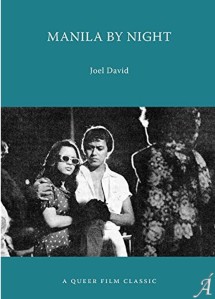
Category Archives: Book

Canon Decampment: Gerardo de Leon

[Click here (recommended) for desktop mode.]

Sisa

Additional Language: Spanish
Year of Release: 1951 / B&W
Director: Gerardo de Leon
Screenwriter: Teodorico C. Santos
(Based on the title character created by José Rizal in his 1887 novel Noli Me Tángere [Touch Me Not])
Producer: Premiere Productions

Cast: Anita Linda, Reynaldo Dante, Eduardo del Mar, Eddie Infante, Naty Rubi, Tony Tolman, Pancho Pelagio, Ruben Rustia, Rosita Noble, Bebong Osorio, Francisco Cruz, Fernando Santiago, Don Dano, Andres Benitez, Boy Francisco

Sisa’s life takes an unfortunate turn after her husband is wrongfully jailed. To make matters worse, her sons—altar boys Basilio and Crispin—are falsely accused of stealing from their local church by the head sacristan. The two are severely punished and, although Basilio escapes, Crispin is killed. As Sisa looks for her children, her search leads to one ordeal after another.

How aware was José Rizal that, in fleshing out the narrative of a native woman forced to endure unbearable suffering and loss by all manner of men—from her abusive husband to colonial soldiery, officials, and clerics—he was providing an iconic representation of his own country that would have prevailed into the new millennium? Composited from the experiences of the author’s real-life acquaintances, including his own mother, Sisa-as-character affirms a protofeminist strain usually overlooked in appreciations of Rizal’s novels. Anita Linda, herself a politicized celebrity who got blacklisted at one point for her pro-labor activities, embodied the role so completely that it became the gold standard for outstanding performance for several decades afterward. As developed by Gerardo de Leon and Teodorico C. Santos, the handling of Rizal’s Sisa turned out to be so overpowering and self-contained that even a decade later, when de Leon subsequently attempted an adaptation of the source novel, Noli Me Tángere (Touch Me Not, 1961), the result paled in comparison.[1] The reason that Sisa succeeds where adaptations of the Noli have tended to flounder is because of its unqualified and unrelenting critique of patriarchy, in all its naked, malignant prevalence, in the de Leon film.

Back to top
Return to Canon Decampment contents
Go to alphabetized filmmakers list

Dyesebel

Years of Release: 1953 / B&W
Director: Gerardo de Leon
Screenwriter: Pierre L. Salas
(Adapted from Mars Ravelo’s komiks series)
Producer: Manuel Vistan Jr. Productions

Cast: Edna Luna, Jaime de la Rosa, Carol Varga, Fernando Royo, Etang Discher, Max Alvarado, Vicente Madrigal, Mary Williams, Nello Nayo, Luis San Juan, Neonita Bona, Paquito Salcedo, Lito Ansurez, Jesus Lapid, Isa Rino, Belen Campillos, Jose Buencamino, Nieves Abrera Anita Hanna, Loudes Galicia

[Note: spoilers provided] Dyesebel, who is born with a fishtail, is raised by her parents away from civilization to avoid persecution. Diangga, a benign sea-witch, provides her with the ability to breathe underwater like regular merfolk. When she ventures on a beach that she thought was abandoned, she gains the attention of Fredo, who falls in love with her. Fredo’s ex-girlfriend Betty gets wind of his new flame and discovers her mercreature condition. Still in love with Fredo, Betty schemes with conniving henchmen to abduct Dyesebel and banish her to a circus, where she becomes a sideshow attraction. Fredo sees the circus announcement in a newspaper and rescues her, but he is overpowered by Betty’s goons. He throws Dysebel in the sea, where Diangga perishes in acquiring an amulet for her. When Dysebel reaches shore, Betty espies her and sees the mermaid use the amulet to acquire human legs. Impressed by its ability to endow Dyesebel with perfection, Betty steals the amulet and rubs it like Dyesebel did, but discovers her legs have turned into a fishtail. Fredo and Dyesebel reunite and wed.

Mythical characters, whatever their origin, should all be so lucky as to be launched by the most gifted visual stylist among all Filipino filmmakers. In fact the original Dyesebel and its sequel (Anak ni Dyesebel or Child of Dyesebel, 1964)—both recently rediscovered after having been officially declared lost—had an element that the subsequent versions could already take for granted, but which was then unthinkable for a children’s fantasy: a reference to, and constant awareness of, the mermaid’s sexual difference. And in stark contrast with Hans Christian Andersen’s “Den lille havfrue (The Little Mermaid),” the Dyesebel character has no claim to royalty, whether undersea or on land, and gets spared the fairy tale’s cornball metaphysical closure, where the lead character sacrifices herself for love and earns the right to ultimately have a soul. Our heroine fights for her heart’s desire although she understandably has to be discreet about it, and endures the several indignities her socially—and anatomically—advantaged rival visits on her. Small wonder that the descriptive term for her kind, sirena, eventually became synonymous with queer subjects—and as if to goad along this interpretation, Gerardo de Leon mischievously makes sure to depict the process of mer-transformation as a sight that never fails to freak out “normal” citizens.[2]

Back to top
Return to Canon Decampment contents
Go to alphabetized filmmakers list

Pedro Penduko

Years of Release: 1954 / B&W
Director: Gerardo de Leon
Screenwriter: Ding M. de Jesus
(From the komiks series by Francisco V. Coching, as serialized in Liwayway)
Producers: People’s Pictures & Premiere Productions

Cast: Efren Reyes, Edna Luna, Lopito, Ramon d’Salva, Ruben Rustia, Lito Anzures, Nello Nayo, Paquito Salcedo, Purita Alma, Dely Atay-Atayan, Felisa Salcedo, Venchito Galvez, Max Alvarado, Juanito Lindo, Francisco Cruz, Francisco Martin, Tony Palomer, Jose Monasterial, Bino Garcia, Benny Panganiban, Onching Balibol, Nina Morales, Renato Robles

Pedro Penduko, a rural layabout, is goaded by his hunchback pal Terio to assist the limp Amparo, convincing him by saying she might offer them rice cakes. When Tony, a rich suitor, tells them to scram, Terio quarrels with him so Pedro has to help out. Marina, an heiress for whom Terio and Amparo work as househelp, invites Pedro to her welcome party celebrating her return from the US. Pedro’s father meantime promises his son an amulet that will protect him from harm, if Pedro agrees to bathe and court Amparo. Marina though has set her sights on Pedro and maltreats Amparo as her rival, further aggravating Tony’s rivalry. Their small-town concerns are brought to a head when Tirong, a bandit, kills Marina’s father and kidnaps Amparo, challenging Pedro to a duel if he wants to win the latter’s freedom.

In contrast with the previous year’s Dyesebel, Pedro Penduko, another of Gerardo de Leon’s komiks adaptations, has its soundtrack intact, although in unfortunately degraded video format. All to the best for Pinas cultural interests, since Francisco V. Coching’s material operates on a different plane in relation to literary artists of his era. (For a more straightforward treatment of another of his stories, see Conrado Conde’s Talipandas or Traitor, from 1958.) Even from among contemporary comic heroes, one would be hard-put to find someone who not only prefers to laze around but also whose body odor becomes his defining social marker, not to mention his preference for physically disabled chums. The psychoanalytic implications only intensify even as the characters are able to work through some of their prior hindrances, resulting in the best kind of comic situation: one where laughter is short-circuited by tragic backstories and where the requisite happy endings are well-earned. De Leon mounts an entire slew of contrarian readings by casting the agential roles against type: when hefty action star Efren Reyes in the amusingly harmless title role confronts the benign and contemplative Ruben Rustia as the ruthless outsider, the resulting instability requires an offbeat justification—one that Coching provides, with de Leon ensuring that it smacks the viewer as effectively as it would have on the printed page.

Back to top
Return to Canon Decampment contents
Go to alphabetized filmmakers list

Sanda Wong

Additional Language: Chinese
Year of Release: 1955 / B&W
Director: Gerardo de Leon
Screenwriters: Ding Santos, Tony Santos, Teodorico C. Santos
(From a story by Teodorico C. Santos)
Producers: Manuel Vistan Jr. Production & Chapman Productions

Cast: Jose Padilla Jr., Lilia Dizon, Danilo Montes, Lola Young, Gil de Leon, Ligaya Lopez, Vicente Liwanag, Mario Barri, Bruno Punzalan, Ligaya Lopez

Lau Chien’s marriage to Lan Ying is stopped when bandits Sanda Wong and Yuen Fei try to steal from Chien’s vast inheritance. Shady garrison captain Koh Loo traps the two robbers to get the wealth for himself but Chien unexpectedly intervenes. Wong and Chien become unlikely allies but their bond is tested throughout Chien’s quest to be reunited with Lan Ying and reclaim his wealth.

Gerardo de Leon had already tackled the theme of an armed outsider reforming corruption in “straight” society in Sawa sa Lumang Simboryo (Snake in the Old Belfry, 1952); although weighed down by a surfeit of pulpy elements, the latter film resonated with the Philippines’s anti-US resistance movements, when the foreign occupants slandered our freedom fighters by calling them bandits—exactly the type of characters depicted in the film. In transposing the setting to an indeterminate “ancient China,” and introducing a male-bonding strategy that would intensify the conflicts in several of his forthcoming major films, de Leon managed to devise complex character interactions that could serve as the narrative counterpart of his diagonal deep-focus compositions. Moreover, he elevated his level of accomplishment to stake a claim on a type of Asian film that would proliferate later, where a lone hero sets himself or occasionally herself against a backward social order, exposing its barbarism in the process: Easterns, in effect, in contrast to Hollywood’s Westerns.

Back to top
Return to Canon Decampment contents
Go to alphabetized filmmakers list

Terror Is a Man

Alternate Titles: Creature from Blood Island; Blood Creature
Language: English
Year of Release: 1959 / B&W
Director: Gerardo de Leon [as Gerry de Leon]
Screenwriter: Harry Paul Harber
(Unofficially adapted from H.G. Wells’s 1896 The Island of Doctor Moreau)
Producer: Lynn-Romero Productions

Cast: Francis Lederer, Greta Thyssen, Richard Derr, Oscar Keesee, Lilia Duran, Peyton Keesee, Flory Carlos

When William gets shipwrecked on an island, he is taken in by Dr. Charles Girard. He also encounters the doctor’s disturbing experiment: a panther being turned into a human. William argues that the procedure is unethical although Dr. Girard believes otherwise. But when the creature manages to escape, the two men must find a way to stop the monster’s murderous rampage.

Because of its association with American B-film production, Terror Is a Man was largely overlooked in the home country. Nevertheless this reworking of H. G. Wells’s The Island of Doctor Moreau performed profitably enough to initiate the Philippines’s strongest contribution to US pop culture, before Imelda Marcos came along and provided ready-made punchlines for comic and/or melodramatic material. The Blood-Island film cycle—named after Val Guest’s The Camp on Blood Island (1958), a fairly successful Malaya-set entry about a Japanese concentration camp, from horror specialists Hammer Films—in fact figured in film historian Robert Sklar’s genealogy of the Hollywood Vietnam-War movie genre. According to Sklar (in several books starting with Movie-Made America: A Cultural History of American Movies, Vintage Books, 1994), prior to the US’s pullout during the fall of Saigon in 1975, Blood-Island movies were the only way that English-speaking white male characters could be shown confronting literally animal savagery in unidentifiable tropical settings. A later rendition, John Frankenheimer’s The Island of Dr. Moreau (1996), headlining Marlon Brando, reveled in the material’s camp elements—the same singular skill that de Leon would successfully develop much later, notably in his vampire cult films Kulay Dugo ang Gabi (Blood Is the Color of Night, 1964) and Ibulong Mo sa Hangin (Whisper to the Wind, 1966), plus his controversial local horror entry Lilet (1971). Among straight-faced adaptations of the Wells novel, however, TIaM is the version to beat.

Back to top
Return to Canon Decampment contents
Go to alphabetized filmmakers list

The Moises Padilla Story

Year of Release: 1961 / B&W
Director: Gerardo de Leon
Screenwriter: Cesar Amigo
(From a story by Leon O. Ty)
Producer: MML Productions

Cast: Leopoldo Salcedo, Joseph Estrada, Lilia Dizon, Ben Perez, Oscar Roncal, Rosa Aguirre, Robert Arevalo, Joseph de Cordova, Alfonso Carvajal, Jose Garcia, Mila Montañez, Max Alvarado, Martin Marfil, Bruno Punzalan, Alfonso Carvajal, Mila Montañez, Salvador Zaragoza, Ric Bustamante, Bino Garcia, Paquito Salcedo, Francisco Cruz, Quiel Mendoza, Eddie Arce

Moises Padilla decides to run for town mayor after witnessing multiple counts of abuse done by the private army of Negros Occidental governor Rafael Lacson. Along the way, Moises gets his former war comrade, who is now the town’s police chief, as his bodyguard. But since Lacson controls the area’s military and police, he vows to ensure that Moises’s mayoral bid will not prosper.

By all credible accounts, Philippine cinema’s gravest single loss is that of its best directorial stylist’s allegedly best film, Ang Daigdig ng mga Api (The World of the Oppressed, 1965). An estimate of just how appalling this calamity is can be inferred from the still-existing, fairly competent propagandistic film-biography Iginuhit ng Tadhana (Determined by Destiny): The Ferdinand Marcos Story, directed by Mar S. Torres, Jose de Villa, and Conrado Conde, which Gerardo de Leon’s entry was meant to counter when they competed in the first Manila Film Festival: the de Leon film went on to deservingly sweep the industry awards, but it is the Marcos movie that remains available.[3] A more effective and poignant way would be to take a look at de Leon’s earlier exercise in political advocacy, The Moises Padilla Story, based on the brutal treatment of a reformist who supported then-Defense Secretary Ramon F. Magsaysay. The narrative creates a polarized situation and unfortunately typecasts as villains Max Alvarado, Martin Marfil, and Bruno Punzalan—three great character actors with East Asian features; it then overlays the plot with the conflictive relationship between the title character and his former World War II guerrilla buddy, depicted as a deeply moving bromantic tragedy by Leopoldo Salcedo and Joseph Estrada respectively. De Leon’s solutions to these dramaturgical limitations are mostly technical, but breathtakingly so; the remastered version managed to restore crucial portions of a grisly, extensive, cenaculo-worthy torture scene, enabling one to believe that anyone who watched it would have cast a vote for the Guy (Magsaysay’s nickname), had he still been alive, all over again.

Back to top
Return to Canon Decampment contents
Go to alphabetized filmmakers list

El Filibusterismo

English Translation: The Anarchist
Additional Language: Spanish
Year of Release: 1962 / B&W
Director: Gerardo de Leon
Screenwriters: Adrian Cristobal, Jose Flores Sibal, Gerardo de Leon
(From the 1891 novel by José Rizal)
Producer: Arriva Productions

Cast: Pancho Magalona, Charito Solis, Teody Belarmino, Edita Vital, Ben Perez, Carlos Padilla Jr., Lourdes Medel, Robert Arevalo, Oscar Keesee, Ramon d’Salva, Joseph de Cordova, Paquito Diaz, Boy Francisco, Alfonso Carvajal, Jose Garcia, Nello Nayo, Patring Carvajal, Jerry Pons, Francisco Cruz, Paquito Salcedo, Dadang Ortega, Felisa Salcedo, Primo Yumol, Tommy Nepomuceno, Quiel Mendoza, Manny Ojeda, Fred Ramirez, Turing Ramirez, Johnny Fernandez

After touring the world, Crisostomo Ibarra returns to the Philippines as the mysterious jeweler Simoun. Wanting to spark a revolution to overthrow the Spanish colonial government, he allies with Basilio—the only one who knows Simoun’s true identity. After their initial attempt fails, their new plan will ultimately determine their fates.

Several possible reasons can be propounded as to why José Rizal’s much-acclaimed first novel, Noli Me Tángere (Touch Me Not), did not translate onscreen as well as his second one, or even compared with the former’s Sisa subplot, which had been adapted by Gerardo de Leon in 1951. In one of his later books, The Age of Globalization (2013, formerly titled Under Three Flags), the late Benedict Anderson argued that, among the late 19th-century’s several radical options, anarchism was the movement that eventually appealed to Rizal’s particular quest for identity and justice. Hence, although El Filibusterismo utilized a linear narrative, in contrast with the Noli’s use of multiple plot strands, it also had a more focused, nearly dogmatic ideological position. Any reader expecting a repeat of Noli’s grand humanist closure, its anti-colonial thrust blunted by its author’s still-reformist impulses, would therefore be understandably frustrated. Crisostomo Ibarra’s transmutation into Simoun in El Fili also heralded a darker, borderline-nihilist resolve in Rizal’s new realization: that only the full-scale purgation of the Philippine colonial system could lead to a brighter future for the country. De Leon’s ominous lighting and unsettling compositions, as executed by the great black-and-white cinematographic master Mike Accion, unexpectedly served the material better than anyone could hope for. If for nothing else, El Fili stands as proof that de Leon’s skills extended beyond technical expertise to include adept recognition and handling of politically complex material.

Back to top
Return to Canon Decampment contents
Go to alphabetized filmmakers list

Women in Cages

Alternate Title: Bamboo Doll House
Initial Title: Playpen
Language: English
Year of Release: 1971
Director: Gerardo de Leon [as Gerry de Leon]
Screenwriters: James H. Watkins & David Osterhout
Producers: New World Pictures & Balatbat Productions

Cast: Judith Brown, Roberta Collins, Jennifer Gan, Pam Grier, Bernard Bonnin, Charlie Davao, Johnny Long, Holly Anders, Dwight Howard, Roberta Swift, Paul Sawyer, Jeffrey Taylor, Marissa Delgado, Paquito Diaz, Sofia Moran, Carpi Asturias, Ruben Rustia, Nick Cayari, Andres Centenera

Thinking that her double-dealing boyfriend will eventually save her, a woman nicknamed Jeff agrees to be sentenced for drug-dealing at the aptly named Carcel del Infierno. There she meets level-headed Sandy, heroin addict Stokes (who secretly agrees to murder Jeff in exchange for drugs), and Theresa, a native woman who’s the girlfriend of Alabama, the sadistic warden. The women come to realize that with all their differences, their only hope for escape is in agreeing to help one another.

The women-in-prison genre (more accurately a hybrid subgenre of several film types including action, melodrama, and soft-core pornography) has been around from nearly the beginning of narrative film history, or ever since producers realized that they could reap profits from catering to the male gaze. Even Gerry de Leon’s contribution, Women in Cages, was preceded by a few months by Jack Hill’s The Big Doll House, which shared the same producer and several actors. The Philippines-set confections are remembered for Pam Grier’s breakout performances, to be cemented the year after WiC with Eddie Romero’s proto-blaxploitation entry Black Mama, White Mama. Grier’s participation alone makes WiC worth the attention, despite—or even because of—several eyebrow-raising elements attendant to her prison-warden character: as if swapping the male-gender casting wasn’t unusual enough, she was also a politically aware sadist who picked out the women she fancied for her sexual amusement. In addition to her name, her sarcastic question to the prisoners brought to work at a sugar plantation clues us into her function: “Don’t it make you pine for those cane fields in the South?” Her comeuppance in the hands of the maniacal posse she designated to hunt down escapees may be seen as a form of ironic justice, but then it arrives after a series of severe and sometimes mortal punishments that she inflicts on her unruly charges. Small wonder that Grier fan Quentin Tarantino described the film as “just harsh, harsh, harsh” while making sure to reference WiC in several of his own exploitation projects and providing Grier with her best role ever, in Jackie Brown (1997). More than Terror Is a Man (1959), WiC proves that de Leon at his peak was capable of drawing in insights and significations from a wide range of film genres and historical traumas, while centering one of the most beautiful foreign actors to ever grace an anonymous Pinas locale.

Back to top
Return to Canon Decampment contents
Go to alphabetized filmmakers list

Notes

[1] Another Noli Me Tángere (1930), by the legendary Jose Nepomuceno, garnered even more acclaim than any subsequent version, declared by some commentators as the best Filipino movie ever made up to that point. Like another more recent all-time best, Gerardo de Leon’s Ang Daigdig ng mga Api (The World of the Oppressed, 1965), it has been lost to posterity. Other local films through the years took the cue from de Leon’s Sisa by also featuring characters from Rizal’s fiction—e.g., Jun Aristorenas’s (as Junar) Elias, Basilio at Sisa (Elias, Basilio and Sisa, 1972). The last major adaptation of the Noli was the 1992 TV series produced by the Cultural Center of the Philippines and directed by de Leon’s confrere, Eddie Romero. In 1999, Mario O’Hara directed and wrote his own Sisa, where the title character interacted with the real-life Rizal.

[2] A nitrate-stock print of Dyesebel and its sequel, Anak ni Dyesebel (Child of Dyesebel, 1964), also directed by Gerardo de Leon, are the earliest Filipino films I remember watching, double-billed in a second-run provincial theater. Understandably my memory of either is patchy, with certain scenes of one film being confused with the other. Fortunately, I was able to figure out some details from conversations with the late GDL enthusiast Vic Delotavo, most memorably the line of dialogue where Dyesebel’s rival asks the male lead, “What does she have that I don’t have?”; my recollection of male mer-transformation, which incited what psychoanalysts might describe as a mild form of castration anxiety, is possibly in the sequel’s narrative.

11011According to archivist-critic Jojo Devera, the existing videocopy available in the Philippines was struck from a film print in Thailand, which replaced the original soundtrack with a Thai-dubbed version and separated the film sound in audiotape format; unfortunately Teddy Co, the tape’s custodian, died before he could secure resources to facilitate the sound transfer. Monchito Nocon, member and board trustee of the Society of Film Archivists of the Philippines, directed my attention to Dyesebel Film Soundtrack Digitization and Restoration, a private Facebook group, that posted a copy of the much-contested tape. Pending further developments (which could take years to realize), the existing Dyesebel video may be regarded for now as inadvertently a silent film, a status it shares with Arnel Mardoquio’s 2013 entry Ang mga Tigmo sa Akong Pagpauli (Riddles of My Homecoming) in this entire canon listing—which is also mainly why this canon entry’s storyline is exhaustive.

[3] Another Ferdinand Marcos Sr. film-bio, Eddie Garcia’s Pinagbuklod ng Langit (Joined Together by Heaven, a.k.a. Heaven’s Fate, 1969), was produced for the dictator-to-be’s successful re-election campaign. A year later, a crony-owned company produced Jerry Hopper’s Maharlika (Royalty), a retelling of the Marcos-concocted myth about his World War II exploits as commander of the Maharlika unit. Possibly intended to justify his claim about having been the most decorated soldier in the Philippines, the movie also featured the story of Isabella, the American female soldier who fought alongside him and died in the effort, and with whom he had fallen in love. Dovie Beams, the American starlet who got the role, claimed that Marcos fell in love with her—in real life. The scandal acquired lurid and surreal dimensions when Beams called a press conference to claim that her life was being threatened by Imelda Marcos, and played apparently authentic and unexpurgated recordings of her intimate sessions with the President. For this reason, the movie’s local release was permanently postponed, although it was apparently screened in Guam and elsewhere; a year after the Marcos regime was ousted, however, Maharlika was finally shown in Manila.

Back to top
Return to Canon Decampment contents
Go to alphabetized filmmakers list

Á!
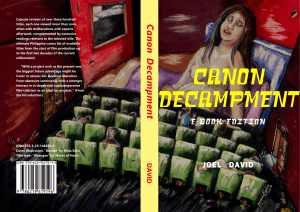

Canon Decampment: Gerardo de Leon & Abe Yutaka

[Click here (recommended) for desktop mode.]

Dawn of Freedom

Alternate Titles: Liwayway ng Kalayaan; Fire on That Flag!; Ano Hata o Ute
Additional Language: Japanese
Year of Release: 1944 / B&W
Directors: Gerardo de Leon [as Associate Director] & Abe Yutaka
Screenwriters: Ryuichiro Yagi & Hideo Oguni
Producers: Eiga Heiku Sa, Toho Company, & X’Otic Films

Cast: Leopoldo Salcedo, Fernando Poe, Angel Esmeralda, Norma Blancaflor, Rosa Aguirre, Shigenobu Kawazu, Ichirō Tsukida, Denjirō Ōkochi, Fred Montilla, Carmen Rosales

During World War II, Filipino soldiers Captain Reyes, Captain Gomez, and Lieutenant Garcia leave their families in Manila to join the fight against invading Japanese forces in Bataan. Once there, they discover that Filipino troops are abused by their American counterparts. Gomez wanders into the Japanese camp and discovers a different reality, while Reyes and Garcia are betrayed by their American allies.

This singular epic, produced by the official film agency of the Japanese during World War II,[1] provided themes that other Filipino filmmakers would only be able to take up years later, after the emergence of anti-imperialist nationalism in the late 1960s initiated questions about the country’s one-sided preference for US domination. Seen today, the images of (homoerotic) fellow-Asian camaraderie set against unmitigated American duplicity are capable of delivering a primeval jolt. It is a wonderment drawn from the parallel-universe speculation of how things might have turned out if the West—as fantasized, understandably, in Dawn of Freedom—had lost the war, and probably not as badly as our worst fears might have convinced our forefathers then. After the defeat of the Japanese, Gerardo de Leon managed to avoid the wrath of the returning US colonizers because certain members of his production team testified that he had assisted their guerrilla activities. Since then, he understandably avoided any overt suggestion of the pan-Asian ideal tackled in this film: his immediate postwar output was either silent on the question of the Philippines’s Asian identity or, as in the unnecessarily extended World War II prologue in 48 Oras (48 Hours, 1950), insistently and apologetically opposed to any such possibility. DoF’s propagandistic function, including footage of the Japanese’s victorious battles in the Philippines, may have required false depictions of the realities of the Imperial Army’s atrocities as well as of the local resistance to the occupation, but then any number of action quickies produced after the war were similarly guilty of plugging into the reverse bias of being pro-US, and therefore anti-fellow-Asian. Reduced to the question of which type of propaganda film has a more constructive message, DoF deserves to be high, if not on top, of the list, its cinematic integrity serving as icing on the cake.

Note

[1] The goal of imperial Japan was to promote a “Greater East Asian Cinema” as an essential component of its “Greater East Asian Co-Prosperity Sphere” (Janine Hanse, “The New Earth: A German-Japanese Misalliance in Film,” in In Praise of Film Studies: Essays in Honor of Makino Mamoru, ed. Aaron Gerow and Abé Mark Nornes, Kinema Club, 2001, pp. 184–97). For a sample of necessarily pro-American anti-Japanese propaganda, the well-known Atrocities of the Orient (also known as Outrages of the Orient or Beast of the East, directed by Carlos Vander Tolosa with new footage provided by William H. Jansen, 1948) may be sourced at YouTube.

Back to top
Return to Canon Decampment contents
Go to alphabetized filmmakers list

Á!
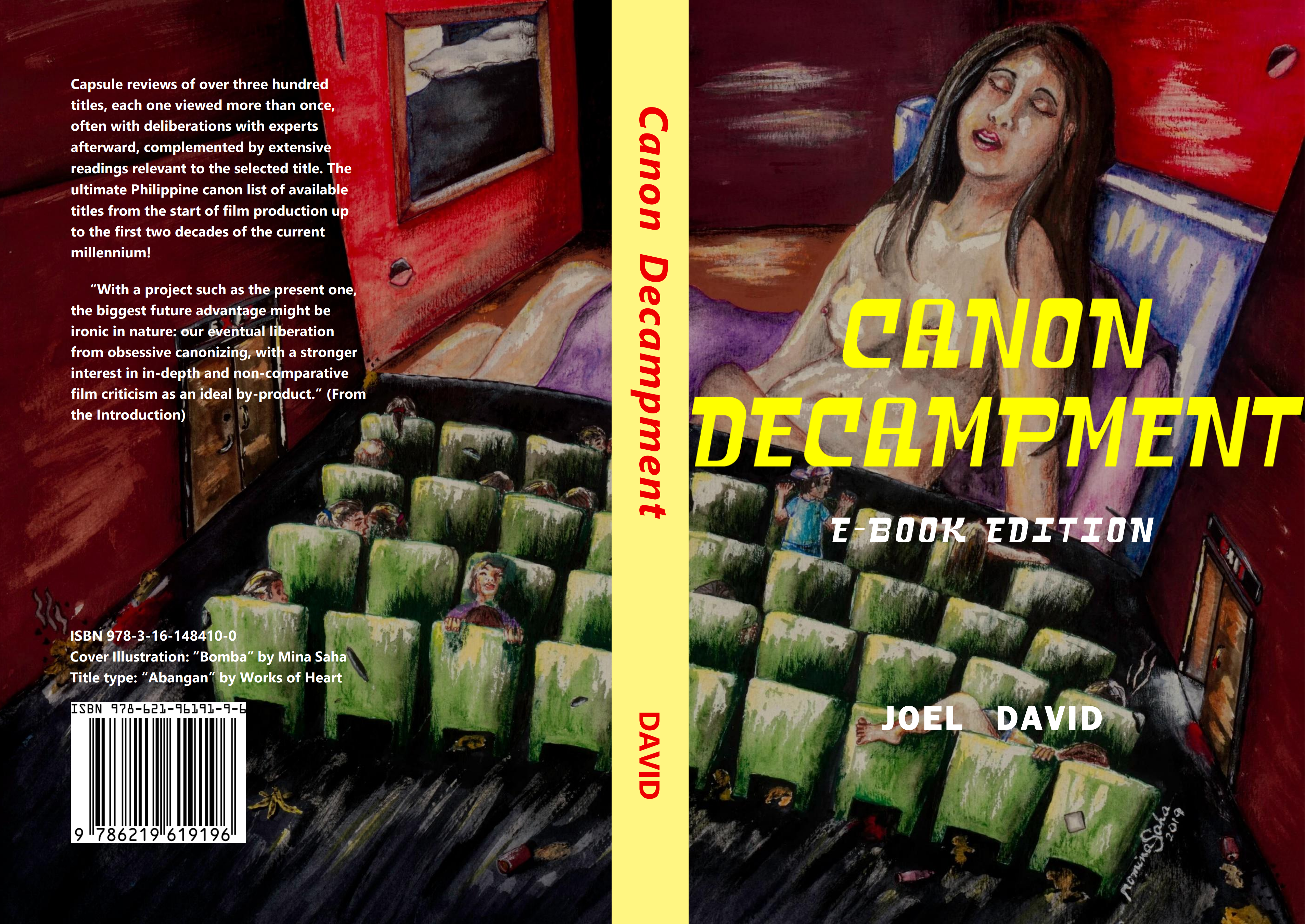

Canon Decampment: Eduardo de Castro

[Click here (recommended) for desktop mode.]

Zamboanga: A Fanciful Tale of Moro Sea Gypsies

Alternate Title: Fury in Paradise; Native Bride
Languages: English, Tausug
Year of Release: 1937 / B&W
Director: Eduardo de Castro
Screenwriters: Bob Wagner & Billy Icasiano
Producer: Filippine Films

Cast: Fernando Poe, Rosa del Rosario, Johnny Monteiro

Minda, granddaughter of Datu Tanbuong, is set to be married to the pearl diver Danao. But the leader of another tribe, Hadji Razul, also wants Minda. He connives with a renegade American captain to kidnap the young lady when Danao goes on a journey. When the pearl diver returns, a massive tribal war ensues and ultimately determines Minda’s fate.

The earliest available Pinoy feature film until 2021[1] also manages to be the most impressive among all surviving pre-World War II local features. None of the early critical accounts gave it much importance, since it was intended to showcase the country’s potential as the Asian counterpart of Hollywood. But those limitations—excessive polish and exoticization, half-naked eye-candy performers, gimmicky underwater photography, manic-yet-dismissible, though also politically incorrect, plot developments—became key to its foreign success and gave it a rare shot at preservation. The current available print has characters speaking native languages, but a voice-of-god narrator overlays the entire proceedings and tells the intended foreign audience how to respond. A seemingly easy-to-forget diversion, whose extreme watchability gives it a distinction that most latter-day films would be grateful to possess, and whose innocent, rambunctious spirit sets it off from the too-reverential though occasionally also prurient handling that marked later treatments of Philippine ethnic material.

Note

[1] Film archivist-historian Teddy O. Co explained in a message that the only known copy of Carlos Vander Tolosa’s Diwata ng Karagatan (Spirit of the Ocean, produced in 1936 by Parlatone Hispano Filipino) “is at the Royal Belgian Film Archives. It’s been there for decades, hidden under the title Wong le tyran, and dubbed into French. Its movie ad advertised it as having been released in Europe. But it’s less than 60 minutes, so a lot has been excised—perhaps the musical parts, to make it a more action-packed film. It was also released (according to Hammy Sotto) under the title South Seas. To date no one has acquired a copy yet here so far, but a few people know about it…. It has a very young Rogelio de la Rosa” (Messenger exchange, Sept. 9, 2021). See as well an unresolved query about a 49-minute film (screened at Manila’s silent film festival), produced in 1934 and directed by John Nelson, titled “Is Silent Flick Brides of Sulu Pinoy or Kano?” (Carmela G. Lapeña, GMA News Online, Aug. 27, 2011). On October 31, 2025, film historian Nick Deocampo announced that was able to confirm in person the existence of the filmprint.

Back to top
Return to Canon Decampment contents
Go to alphabetized filmmakers list

Á!


Canon Decampment: Alphabetized List of Filmmakers with Their Respective Film Titles

Desktop mode is strongly recommended. This link will open the PDF version. The book’s landing page has been retitled “Chronological Listing according to Auteur.”

Titles (350 in total, from 144 directorial entries), if numbered and linked by ampersands (“&”), are sufficiently related and thereby share the same singular review after their respective descriptions and synopses.

Click on the following to navigate more quickly through the list: B; C; D; E; F; G; H; I; J; K; L; M; N; O; P; Q; R; S; T; V; Y; Z.

Abaya, Matthew: Vampariah, 2016.

Abe Yutaka – see de Leon, Gerardo, & Abe Yutaka.

Abrahan, Giancarlo: Dagitab, 2014; Sila-Sila, 2019.

Acedillo, Vic Jr.: Ang Nerseri, 2009.

Aguiluz, Tikoy: Boatman, 1985; Segurista, 1996; Biyaheng Langit, 2000.

Alix, Adolfo Jr.: Tambolista [as Adolfo Borinaga Alix Jr.], 2007; Imoral [as Adolfo B. Alix Jr.], 2008; Isda, 2011; Porno [as Adolfo Borinaga Alix Jr.], 2013; Madilim ang Gabi [as Adolfo Borinaga Alix Jr.], 2017.

Altarejos, Joselito: Ang Lihim ni Antonio, 2008; Unfriend [as J Altarejos], 2014; Jino to Mari, 2019.

Aunor, Nora: Greatest Performance [as Guy; unfinished], 1989.

Avellana, Lamberto V.: Anak Dalita, 1956; Sarjan Hassan, 1958; Nick Joaquin’s A Portrait of the Artist as Filipino, 1965; The Evil Within, 1970.

Back to top

Barbarona, Arnel: Tu Pug Imatuy, 2017.

Bayani, Ruel S.: No Other Woman [as Ruel Santos Bayani], 2011.

Bernal, Ishmael: Pagdating sa Dulo, 1971; Lumapit … Lumayo ang Umaga, 1975; Ligaw na Bulaklak, 1976; Nunal sa Tubig, 1976; Nonoy Marcelo’s Tisoy!, 1977; Ikaw Ay Akin, 1978; Salawahan, 1979; Aliw, 1979; Manila by Night, 1980; Pabling, 1981; 1) Relasyon, 1982 & 2) Broken Marriage, 1983; Himala, 1982; Working Girls, 1984; Hinugot sa Langit, 1985.

Bernal, Joyce: Tunay na Tunay: Gets Mo? Gets Ko! [as Bb. Joyce Bernal], 2000; 1) Booba [as Binibining Joyce Bernal], 2001 & 2) Masikip sa Dibdib: The Boobita Rose Story [as Binibining Joyce Bernal], 2004; Kimmy Dora: Kambal sa Kiyeme [as Binibining Joyce Bernal], 2009.

Bernardo, Sigrid Andrea: Ang Huling Cha-Cha ni Anita (Anita’s Last Cha-Cha) [as Sigrid Andrea P. Bernardo], 2013; Lorna [as Sigrid Andrea P. Bernardo], 2014; UnTrue [as Sigrid Andrea P. Bernardo], 2019.

Boborol, Theodore: Vince & Kath & James, 2016.

Borlaza, Emmanuel H.: 1) Bukas Luluhod ang mga Tala, 1984; 2) Bituing Walang Ningning, 1985; Stolen Moments, 1987.

Brocka, Lino: Tubog sa Ginto, 1970; Stardoom, 1971; Tinimbang Ka Ngunit Kulang, 1974; Maynila: Sa mga Kuko ng Liwanag, 1975; Insiang, 1976; Jaguar, 1979; Bona, 1980; Cain at Abel, 1982; 1) Bayan Ko: Kapit sa Patalim, 1984 & 2) Orapronobis, 1989; Miguelito: Batang Rebelde, 1985; Babangon Ako’t Dudurugin Kita, 1989; Hahamakin Lahat, 1990; Gumapang Ka sa Lusak, 1990.

Back to top

Cabreira, Junn P.: Beloy Montemayor Jr.: Tirador ng Cebu, 1993.

Castillo, Celso Ad.: Asedillo, 1971; Daluyong at Habagat, 1976; Burlesk Queen, 1977; Celso Ad. Castillo’s Totoy Boogie, 1980; Uhaw na Dagat, 1981; Paradise Inn, 1985.

Castro, Jade: Zombadings 1: Patayin sa Shokot si Remington, 2011; LSS, 2019.

Cayado, Tony: Mga Ligaw na Bulaklak, 1957.

Chionglo, Mel: Playgirl, 1981; Sinner or Saint, 1984; 1) Nasaan Ka Nang Kailangan Kita, 1986 & 2) Paano Kung Wala Ka Na, 1987; Babaing Hampaslupa, 1988; Developing Stories: Lucia, 1992; 1) Sibak: Midnight Dancers, 1994 & 2) Burlesk King, 1999 & 3) Twilight Dancers, 2006; Lauriana, 2013; Iadya Mo Kami, 2016.

Chui Chung-San, Alan, & Yuen Bun: Mabangis na Lungsod, 1995.

Conde, Conrado: Talipandas, 1958.

Conde, Manuel: Genghis Khan [credited to Lou Salvador], 1950.

Cruz-Alviar, Mae: Babe, I Love You [as Mae Czarina Cruz], 2010; Bride for Rent [as Mae Czarina Cruz], 2014.

Cruz, Prime: Ang Manananggal sa Unit 23B, 2016.

Back to top

Dayao, Dodo: Midnight in a Perfect World, 2020.

Dayoc, Sheron R.: Halaw, 2010.

de Castro, Eduardo: Zamboanga: A Fanciful Tale of Moro Sea Gypsies, 1937.

de Guia, Eric – see Tahimik, Kidlat.

de Guzman, Susana C.: Lupang Pangako [incomplete], 1949.

dela Cruz, Abbo Q.: Hubad na Pangarap, 1987.

Dela Cruz, Emmanuel: Sarong Banggi, 2005.

de Leon, Gerardo: Sisa, 1951; Dyesebel, 1953; Pedro Penduko, 1954; Sanda Wong, 1955; Terror Is a Man [as Gerry de Leon], 1959; The Moises Padilla Story, 1961; El Filibusterismo, 1962; Women in Cages [as Gerry de Leon], 1971.

de Leon, Gerardo, & Abe Yutaka: Dawn of Freedom, 1944.

De Leon, Mike: Itim, 1976; Kakabakaba Ka Ba?, 1980; 1) Kisapmata, 1981 & 2) Batch ’81, 1982; Sister Stella L., 1984; Bilanggo sa Dilim, 1986; Bayaning 3rd World, 1999.

Deligero, Keith: Iskalawags, 2013; Lily, 2016; A Short History of a Few Bad Things, 2018.

de los Reyes, Maryo J.: Schoolgirls, 1982; Diosa, 1982; Bagets, 1984; Kaya Kong Abutin ang Langit, 1984; Anak ni Waray vs. Anak ni Biday, 1984; Dinampot Ka Lang sa Putik, 1988; Magnifico, 2003.

del Rosario, Joey: Kahit Pader Gigibain Ko, 1998.

Deramas, Wenn V.: Ang Tanging Ina, 2003; Moron 5 and the Crying Lady, 2012.

Diaz, Lav: Hesus, Rebolusyunaryo, 2002; Florentina Hubaldo, CTE, 2012; Norte, Hangganan ng Kasaysayan, 2013.

Diaz-Abaya, Marilou: 1) Brutal, 1980 & 2) Moral, 1982; Karnal, 1983; Sensual, 1986; May Nagmamahal sa Iyo, 1996; Milagros, 1997.

Dulay, Zig Madamba: Bambanti, 2015.

Dulu, Dolly: The Boy Foretold by the Stars, 2020.

Back to top

Espia, Hannah: Transit, 2013.

Esteban, Tata: Alapaap, 1984; Gayuma: Sana’y Mahalin Mo Rin Ako, 1995.

Estella, Ramon A.: Kembali Saorang, 1957; Samseng, 1959; Saudagar Minyak Urat, 1959; Pusaka Pontianak, 1965.

Back to top

Fajardo, Lawrence: Amok, 2011; Posas, 2012; The Strangers, 2012; Imbisibol, 2015.

Fernandez, Gregorio: Kontrabando, 1950; Prinsipe Teñoso, 1954; 1) Higit sa Lahat [as Dr. Gregorio Fernandez], 1955 & 2) Luksang Tagumpay [incomplete], 1956; Hukom Roldan [as Dr. Gregorio Fernandez], 1957; Malvarosa [as Dr. Gregorio Fernandez], 1958.

Fiola, Bagane: Baboy Halas: Wailings in the Forest, 2016.

Back to top

Gallaga, Peque: Oro, Plata, Mata, 1982; Virgin Forest, 1985; Scorpio Nights, 1985; Pinoy/Blonde, 2005.

Gallaga, Peque, & Lore Reyes: 1) Tiyanak [as Lorenzo A. Reyes], 1988 & 2) Aswang, 1992; Sonata, 2013.

Gallardo, Cesar: Geron Busabos: Ang Batang Quiapo, 1964.

Garces, Armando: Sino ang Maysala?, 1957.

Garcia, Eddie: Saan Nagtatago ang Pag-Ibig?, 1987.

Garcia-Molina, Cathy – see Garcia-Sampana, Cathy.

Garcia-Sampana, Cathy: One More Chance [as Cathy Garcia-Molina], 2007.

Gibraltar, Ray: Wanted: Border [as Ray Defante Gibraltar], 2009.

Gosiengfiao, Joey: La Paloma, 1974; Underage, 1980.

Guillen, Laurice: Kasal?, 1980; Salome, 1981; Init sa Magdamag, 1983; Kung Mahawi Man ang Ulap, 1984; Sumayaw Ka Salome, 1992; Dahil Mahal Kita: The Dolzura Cortez Story, 1993.

Back to top

Habac, JP: I’m Drunk, I Love You., 2017.

Back to top

Ignacio, Louie: Area [as Luisito Lagdameo Ignacio], 2016.

Ilarde, Rico Maria: Sa Ilalim ng Cogon, 2005; Altar, 2007.

Illenberger, Tara: Brutus, ang Paglalakbay, 2008; High Tide [as Tara Barrera Illenberger], 2017.

Intalan, Perci M.: Dementia, 2014.

Back to top

Jadaone, Antoinette: Six Degrees of Separation from Lilia Cuntapay, 2011; That Thing Called Tadhana, 2014; Fan Girl, 2020.

Jamora, Marie: Ang Nawawala, 2012.

Jarlego, Ike Jr.: Tigasin, 1999.

Jeturian, Jeffrey: Pila-Balde, 1999; Tuhog, 2001; 1) Bridal Shower, 2004 & 2) Minsan Pa, 2004; Kubrador, 2006; Ekstra, 2013.

Jover, Ralston: 1) Da Dog Show [as Ralston G. Jover], 2015 & 2) Hamog [as Ralston G. Jover], 2015; Rene Villanueva’s Hiblang Abo [as Ralston G. Jover], 2016; Bomba [as Ralston Gonzales Jover], 2017; Latay (Battered Husband) [as Ralston Gonzales Jover], 2019.

Back to top

Kayko, Sixto – see Roño, Chito S.

Khavn: 1) Ang Pamilyang Kumakain ng Lupa, 2005 & 2) Ang Napakaigsing Buhay ng Alipato, 2016; Pusong Wazak: Isa Na Namang Kwento ng Pag-ibig sa Pagitan ng Kriminal at Puta, 2014; Desaparadiso: Corrido at Buhay na Pinagdaanan nang Tatlong Principeng Magcacapatid na Anac nang Haring Fernando at nang Reina Valeriana sa Cahariang Berbania, 2015; Balangiga: Howling Wilderness, 2017.

Kim Bong-han: The Golden Holiday, 2020.

Back to top

Lamangan, Joel: Hubog [as Joel C. Lamangan], 2001; Walang Kawala [as Joel C. Lamangan], 2008; Burgos, 2013.

Lamasan, Olivia M.: Minsan, Minahal Kita, 2000; Milan, 2004.

Lana, Jun Robles: Die Beautiful, 2016.

Lao, Armando: Biyaheng Lupa, 2009.

Laranas, Yam: 1) Radyo, 2001 & 2) Sigaw, 2004; 1) Abomination, 2018 & 2) Nightshift, 2020.

Laxamana, Jason Paul: The Day After Valentine’s, 2018.

Lerner, Irving: Cry of Battle, 1963.

Linaban, Christian: Aberya, 2012; Superpsychocebu, 2016.

Lopez, Pedring: Nilalang, 2015.

Lorca, Lemuel: Water Lemon, 2015.

Back to top

Mambo, Rico – see dela Cruz, Abbo Q.

Marcos, Pepe: Tubusin Mo ng Dugo, 1988.

Mardoquio, Arnel: Ang Paglalakbay ng mga Bituin sa Gabing Madilim, 2012; Ang mga Tigmo sa Akong Pagpauli (Riddles of My Homecoming), 2013.

Marquez, Artemio: The Untold Story of Melanie Marquez, 1987; Sa Puso Ko Hahalik ang Mundo, 1988.

Martin, Raya: Independencia, 2009; How to Disappear Completely, 2013.

Martinez, Chris: Here Comes the Bride, 2010.

Matti, Erik: On the Job, 2013.

Meily, Mark: Crying Ladies, 2003.

Mendoza, Brillante: 1) Foster Child, 2007 & 2) Tirador, 2007; Serbis [as Brillante Ma. Mendoza], 2008; Lola [as Brillante Ma. Mendoza], 2009; Ma’ Rosa, 2016.

Miike Takashi: The Guys from Paradise, 2000.

Milan, Willy – see Poe, Fernando Jr., & Willy Milan.

Miras, Pam: Pascalina, 2012; Medusae, 2017.

Montano, Cesar: Ligalig, 2006.

Monteras, Treb II: Respeto, 2017.

Montgomery, George: Samar, 1962.

Back to top

Natividad, Toto: Totoy Guwapo: Alyas Kanto Boy, 1992; Amang Capulong: Anak ng Tondo, Part II, 1992; Ka Hector, 1994; Wangbu, 1998; Notoryus, 1998; 1) Double Barrel (Sige! Iputok Mo.) [as Toto Natividad Jr.], 2017 & 2) Riding in Tandem, 2017.

Navoa, J. Erastheo: Totoy Buang: Mad Killer ng Maynila, 1992.

Back to top

O’Hara, Mario: Tatlong Taóng Walang Diyos, 1976; 1) Condemned, 1984 & 2) Bulaklak sa City Jail, 1984; Bagong Hari, 1986; Sindak!, 1999; Pangarap ng Puso, 2000; Babae sa Breakwater, 2003.

Ongkeko-Marfil, Ellen: Boses, 2008; Indigo Child, 2016.

Back to top

Palisoc, King: Tandem, 2015.

Paolo, Steve – see Esteban, Tata.

Parungao, Monti: 1) Bayaw [as Monti Puno Parungao], 2009; 2) The Escort [as Monti Puno Parungao], 2011.

Pascual, William: Takaw Tukso, 1986.

Pasion, Francis Xavier: Jay, 2008.

Perez, Elwood: Silip, 1985; Bilangin ang Bituin sa Langit, 1989; Ang Totoong Buhay ni Pacita M., 1991; Otso, 2013.

Perez, Roman Jr.: Sol Searching, 2018.

Poe, Fernando Jr.: 1) Ang Panday [as Ronwaldo Reyes], 1980 & 2) Pagbabalik ng Panday [as Ronwaldo Reyes], 1981 & 3) Ang Panday: Ikatlong Yugto [as Ronwaldo Reyes], 1982 & 4) Ang Panday IV [as Ronwaldo Reyes], 1984; Ang Maestro [as Ronwaldo Reyes], 1981; Ang Dalubhasa [as Ronwaldo Reyes], 2000.

Poe, Fernando Jr., & Willy Milan: Kahit Butas ng Karayom … Papasukin Ko [as Ronwaldo Reyes & Wilfredo “Willy” Milan], 1995.

Poe, Fernando Jr., & Augusto Salvador: Eseng ng Tondo [as Ronwaldo Reyes], 1997.

Portes, Gil: Gabi Kung Sumikat ang Araw [as Gil M. Portes], 1983; ’Merika [as Gil M. Portes], 1984; Bukas … May Pangarap [as Gil M. Portes], 1984.

Posadas, Francis: Amanos: Patas ang Laban [as Francis “Jun” Posadas], 1997; ’Di Puwedeng Hindi Puwede! [as Francis “Jun” Posadas], 1999.

Back to top

Quintos, Rory B.: Kailangan Kita, 2002.

Back to top

Raquiza, Jun: Krimen: Kayo ang Humatol, 1974.

Red, Jon: 1) Still Lives, 1999 & 2) Ang Pirata, 2013.

Red, Mikhail: 1) Birdshot, 2016 & 2) Neomanila, 2017.

Relucio, Brandon, & Ivan Zaldarriaga: Di Ingon ’Nato, 2011.

Reyes, Efren: Ang Daigdig Ko’y Ikaw, 1965.

Reyes, Jose Javier: May Minamahal, 1993; Minsan May Isang Puso, 2001; Kung Ako Na Lang Sana, 2003.

Reyes, Lore – see Gallaga, Peque, & Lore Reyes.

Reyes, Ronwaldo – see Poe, Fernando Jr.

Richardson, George – see Suarez, Bobby A.

Rivera, Marlon N.: Ang Babae sa Septic Tank, 2011.

Romero, Eddie: The Passionate Strangers, 1966; Savage Sisters, 1974; Ganito Kami Noon … Paano Kayo Ngayon?, 1976; Banta ng Kahapon, 1977.

Roño, Chito S.: 1) Private Show [as Sixto Kayko], 1984 & 2) Curacha: Ang Babaeng Walang Pahinga, 1998; 1) Itanong Mo sa Buwan, 1988 & 2) La Vida Rosa, 2001; Bakit Kay Tagal ng Sandali?, 1990; Alyas Stella Magtanggol, 1992; Bata Bata Paano Ka Ginawa?, 1998; Caregiver, 2008; Boy Golden: Shoot to Kill, 2013; Signal Rock, 2018.

Roy, Eduardo W. Jr.: Lola Igna, 2019.

Back to top

Salvador, Augusto: Ikasa Mo … Ipuputok Ko, 1990; Masahol Pa sa Hayop, 1993.

Salvador, Augusto – see also Poe, Fernando Jr., & Augusto Salvador.

Salvador, Leroy: Badlis sa Kinabuhi, 1968; Beloved, 1985.

Salvador, Lou – see Conde, Manuel.

Sanchez, Sherad Anthony: Huling Balyan ng Buhi o ang Sinalirap nga Asoy Nila, 2006; Jungle Love, 2012.

Santiago, Pablo: Amado Pagsanjan’s Asiong Salonga, 1961; 1) Pepeng Kaliwete, 1982 & 2) Annie Sabungera, 1982.

Santos, Teodorico C.: Taufan [as T.C. Santos], 1957.

Sayles, John: Amigo, 2010.

Siguion-Reyna, Carlos: 1) Hihintayin Kita sa Langit, 1991 & 2) Ikaw Pa Lang ang Minahal, 1992; Ang Lalake sa Buhay ni Selya, 1997; Tatlo … Magkasalo, 1998.

Silos, Manuel: Biyaya ng Lupa, 1959.

Solito, Auraeus: Ang Pagdadalaga ni Maximo Oliveros, 2005.

Somes, Richard: Yanggaw [as Richard V. Somes], 2008; Mariposa: Sa Hawla ng Gabi [as Richard V. Somes], 2012.

Suarez, Bobby A.: They Call Her … Cleopatra Wong [as George Richardson], 1978; Red Roses for a Call Girl, 1988.

Suzara, Romy: Pepeng Shotgun, 1981; Tinik, 2013.

Back to top

Tahimik, Kidlat: Mababangong Bangungot, 1977.

Tarog, Jerrold: Heneral Luna, 2015.

Tiglao, J.E.: Metamorphosis [as Jose Enrique Tiglao], 2019.

Topacio, Soxy: Ded Na si Lolo [as Soxie Hernandez Topacio], 2009.

Torres, Mar S.: Jack en Jill, 1954.

Back to top

Vander Tolosa, Carlos: Giliw Ko, 1939.

Velasco, Veronica: Nuuk [as Veronica B. Velasco], 2019.

Villaluna, Paolo: Pauwi Na, 2016.

Villamor, Irene: Meet Me in St. Gallen, 2018; Ulan, 2019; On Vodka, Beers, and Regrets, 2020.

Villegas, Dan: 1) #WalangForever, 2015 & 2) How to Be Yours, 2016; Hintayan ng Langit, 2018.

Vinarao, Edgardo: Tatak ng Kriminal [as Edgardo “Boy” Vinarao], 1993.

Back to top

Yuen Bun – see Chui Chung-San, Alan, & Yuen Bun.

Back to top

Zaldarriaga, Ivan – see Relucio, Brandon, & Ivan Zaldarriaga.

Zapata, Dominic: Boy Pick-Up: The Movie, 2012.

Zialcita, Danny L.: Masquerade [as DLZ], 1967; T-Bird at Ako, 1982; Palabra de Honor, 1983.

Zuasola, Remton Siega: Ang Damgo ni Eleuteria, 2010.

Back to top

Á!


Canon Decampment: Forward March

One advantage of having been present at the birth, so to speak of formal Philippine film studies is that I could initiate some of the activities that preoccupied global practitioners for a while, then proceed to repudiate these activities’ premises (usually still pursuant to foreign trends, especially when no local colleagues pick up on the provocations). The most insistent instances of these oscillations between creation and deconstruction occur in evaluative film activities, and for good reason: as the supposedly inferior, younger counterpart of literature, film is regarded as forever self-limited in terms of discursive ability and potential for complexity, and even its advantages over canonical lit (mainly its incontestable long-term popularity) render it comparable at best to lit’s pulp and trash manifestations.

11011These are utterly erroneous and definitely irrelevant premises, of course. But when we seek out canon-construction exercises in cinema, we find people reverting to these assumptions, whether by (sometimes unconsciously) upholding them or by openly contesting them—which effectively acknowledges their ascendancy. I’ve stopped wondering whether a critically conscious mode of practice can be devised, and within the modes I’ve devised, what I would recommend (to myself and the others I can persuade) is to stop short of certain commonplaces: the touchstones that we associate with even our most casual or fun-filled attempts at canon formation, that tend to trip us into conforming to standards that our better judgments caution us against.

11011Like any self-serious film scholar, I began creating canons in the usual areas; in increasing degrees of conflictedness, these would be instruction, criticism, and award-giving. Canons are unavoidable in teaching because of the requirements and limitations of the semestral arrangement in higher education: only so many weeks, with concomitant impositions on reading and screening lists, for the average university-level course. The properties of the lecture class and (barring an instructor’s inability to comprehend screen cultural studies) the possibility of insightful majors speaking up: these ensure that the subject’s particular canon need not permanently impair the students’ understanding of film issues, whether aesthetic or social in nature. Award-giving, the other extreme, is even more obviously a matter of any film appreciator exercising basic logic, since the inconsistencies are so conspicuous that one would need to devise grandiose structures of collective narcissism (as in the statement “We have the most prestigious and incorruptible awards ever”) to override the reality that award-giving may be profitable or glamorous but is, at bottom, a false claim to critical supremacy.

11011The middle term, criticism, is where I have found the most productive, and most difficult, issues to resolve. I may have been able to avoid the tendency of the least-reflective critics circle members in their performance of what we can term awards-speculative writing (embarrassing rubbish like “This performance should win an award”), but my festival reports wound up with rankings, specified or otherwise, of from-best-to-worst entries; my period-enders (usually of specific years, sometimes of entire decades) also proceeded to list outstanding entries. But in order to declare an end to my predilection for comparative assessments, I laid out sample canons for the widest possible areas of coverage: highlights of 1980s releases, for example, or winners for awards categories for all films from the beginning of local cinema to the present, meaning the early 1990s. (These exercises, including the next one I will be describing, appeared in my second book, Fields of Vision, while the personal listings may be found in my digital edition-only release, Millennial Traversals.)

Back to top

Interpolations

At a point when I had refined my film-criticism classes to include quantitative-analysis methods (always controversial in terms of findings), I asked an enthusiastic batch whether the idea of a canon survey project appealed to them. This was the same group of students that couldn’t wait to get into cultural production, some of whom gave up completing their degrees for the sake of exploring and exploiting breaks that they knew may never come along again, fully and frankly aware that nothing their teachers could provide them would be comparable to what they could learn in the field. (As a then-recent former student, deep down inside I had to agree.)

11011We formulated, finalized, and reproduced questionnaires, and drew up a list of “critical” practitioners using the widest possible definition—i.e., not just regular critics but also film-production personnel who exhibited a capacity for artistic assessment and growth in their output. Nearly thirty, or about half of the potential respondents, turned in their personal list of ten best Filipino films, all except in two cases ranked from first to tenth, with a few (including myself) deviating from the round-figure total. When the results were tallied, another issue came up: how would a respondent rank the other films that she may not have mentioned but that she might have also seen? We wound up creating a second questionnaire comprising the “master list” of all the films mentioned by the respondents, intending to send these back to those who had participated, asking them to further rank the rest of the films not on their respective lists.

11011One can imagine the nightmarish demand we would have been making on the respondents, forced to split hairs until they could rank whatever they had seen among the eighty-plus titles we confronted them with. Fortunately the semester was scheduled to end in a couple of weeks, so I had to conceal the relief I felt when the students said that sending out copies of the new questionnaire, awaiting the answers, and retrieving the sheets would definitely cause the project to spill over beyond the deadline for submission of grades. I submitted the report to the publication where I was declared the “resident critic,” National Midweek, which made it their cover feature and their bestselling issue ever. Perhaps unsurprisingly, I saw the procedure replicated by blogger-aggregators during the new millennium. A bit more surprisingly, I received an email invitation to participate in Sight & Sound’s archetypal decadal survey for 2002, probably facilitated by a British Film Institute-connected lecturer at New York University’s Department of Cinema Studies who appreciated the copy of Fields of Vision that I gave him. (This person, Questions of Third Cinema co-editor Paul Willemen, as well as my dissertation adviser Robert Sklar and national-university mentor and fellow Sight & Sound respondent Ellen J. Paglinauan, have all passed away, as have nearly thirty percent of the National Midweek survey participants.)

11011The Sight & Sound exercise affirmed for me that the National Midweek survey was more correct in its differences: in combining the tallies for critics and practitioners (the second of which S&S limited strictly to directors), I came up with just one listing instead of separate critics’ and directors’ choices; more important, in taking into account the individual rankings provided by the respondents, it became possible to tabulate not just the movies most often mentioned (including, separately, those mentioned as top-rankers) but also arrange these according to their relative worth for each respondent. But the Sight & Sound survey also provided its own curious lesson—and that is, certain people from all walks of life, all over the world, pay attention to film canons. The magazine printed my specific choices on the same page that it discussed the top-ranking film, Citizen Kane (“The Critics” 29), and included my explanation of why I preferred to downgrade the Orson Welles film (“too whiney-white-guy precious” was my dismissive remark).

11011Reports regarding the survey results, from blogs and discussion boards as well as “legit” outlets like Slate and The Guardian, mentioned my list for including a porn film (in fact I listed two, three if we include Pier Paolo Pasolini’s Salo in the category), although only once, in an email from an Australian scholar, were my other choices mentioned: a Bollywood film, an American B-movie, a structural-materialist piece, two documentaries (one radical-left and the other fascist-right), and standard choices for a film scholar (Jean Renoir’s La regle du jeu) who happened to hail from the Philippines (Ishmael Bernal’s Manila by Night). In reality, mine was not the only listing that featured a porn film or two, since the very first porn feature, Gerard Damiano’s Deep Throat, also appeared on the comprehensive listing. (I provided a more detailed narration of the process on my blog, titled “Sight & Sound ’02.”)

Back to top

Final (so far) Canon

My Sight & Sound submission, the only one I participated, coincided with the completion and defense of my doctoral dissertation. Upon returning to the Philippines, my concerns focused on repaying the student loans I had accumulated during graduate school—an impossible mission so long as I confined my prospects to the national university. I make no secret about finding the political intramurals dispiriting and pathetic, considering the never-sufficient amount of money at stake. Upon stumbling on a near-ideal overseas arrangement with which I could conduct research and publication without worrying excessively about time and funding, I set up the archival blog by which I hoped to make available my published materials without requiring researchers either to track them down via distant repositories or to purchase them at exorbitant rates.

11011After laying out a workable plan for attaining tenure, I was contacted by Jo-Ann Q. Maglipon, an acquaintance from my post-collegiate freelance period, now an entertainment editor about to retire and working out some legacy activities. No need to look farther than your field, I told her; see how new media has led to an explosion of personal and group canons, almost entirely on Philippine cinema? Since your publication (Summit Media’s YES! magazine) has its annual “canon” of beautiful faces and power players, we can come up with the ultimate local film canon, if you’re willing to sponsor a one-shot long-term project. I explained how I took charge of a local survey project, inspired by Sight & Sound, and how the most ambitious internet-era aggregator websites were conducting similar projects. I mentioned the predicament I and my students faced with the National Midweek survey—how the attempt at (in effect) ranking everything could raise unnecessarily oversubtle pettifoggery, reducing discussions to explaining why film b comes between a and c and not in either position or elsewhere, instead of expounding on a film’s merits and limitations without accounting for its precise position on a linear spectrum from best to, say, hundredth-best.

11011Two special arrangements had to be finalized: in order to ensure that one person’s idiosyncracies wouldn’t mark the project as a whole, a screening committee whose members would be readily available from beginning to end of the project should be constituted; and in order to determine the inclusion or exclusion of borderline titles, a system of multiple screenings of titles in contention should be arranged, with films being watched as often as necessary until the body arrives at a sufficient consensus on whether a film deserves to belong or not to the final canon list. Ideally the committee should have comprised Philippine film experts; less ideally, though still passably, the members should be film enthusiasts—a qualification that could encompass a vast majority of the population. Fortunately, though the YES! staff could be considered less than (qualified) experts, they were more than mere aficionados. I came on board as project consultant, while Maglipon, with the time she logged with celebrity interviews, showbiz coverage, and entertainment editing (plus all the film-screening that those activities entailed) would definitely be a Philippine-cinema specialist.

11011I should beg the reader’s indulgence in outlining the process, if only for posterity’s sake. I started by compiling the then-recent 2012 Sight & Sound survey (where Citizen Kane was finally toppled, after forty years of dominance, and where nine Filipino titles showed up), plus all the canonical listings—the PinoyRebyu blog survey, Mel Tobias’s One Hundred Acclaimed Tagalog Movies (with titles alphabetized), the Facebook Cinephiles! Group’s “Top 100 Favorite Films Poll Results” (with twenty-five Filipino movies, slightly less than France’s and over four times less than the US’s), the Busan International Film Festival’s Asian Cinema 100 (edited by Kim Ji-seok and Kim Young-woo, with four Filipino titles), plus the list of awards handed out by the Filipino Academy of Movie Arts and Sciences (including its two-year predecessor, the Manila Times’ Maria Clara Awards) and the two critics groups, the Manunuri ng Pelikulang Pilipino and the Young Critics Circle (all of which are available online on either the organizations’ websites or information-database websites such as Wikipedia and the Internet Movie Database); finally, titles usually listed in global retrospectives, starting with those that appear in the government encyclopedia (Tiongson, Philippine Film) and the Manila International Film Festival’s Focus on Filipino Films, would constitute a core or standard canon.

11011For the sake of completion, the YES! project team considered even films shortlisted or nominated whenever and wherever the information was available, cross-checking the list against the available filmographic listings in Maria Carmencita A. Momblanco’s thesis and Nicanor G. Tiongson’s Urian anthologies. The task may have sounded daunting, but was considerably lightened by another, more tragic requisite: only films available in reasonably viewable audiovisual quality may be considered, since we envisioned any canonized film itself as sole empirical proof, regardless of awards, acclaim, oversight, or controversy. On the other hand, any movie included in the standard canon which generated reservations (either during or after the moment of its inclusion in the canon) would be marked as “must rewatch”; certain titles may be boosted by historical significance, but all had to meet a reasonable measure of entertainment value and discursive insight. The final “outer” boundaries were defined by technical requirements: the films had to be feature presentations, full-length with a minimum of sixty minutes’ running time, and inclusively and recognizably Filipino even with the participation of foreign capital, talent, and/or setting.

Back to top

Film-Canon Discourse

I was aware that I had to find metadiscursive literature that could enable me to provide useful bases for the project as well as situate the activity in contemporary conceptual currents. We were apparently building on the “scientific” totalizing taxonomies attempted by Andrew Sarris (himself building on French projects) and updated by Jonathan Rosenbaum, but the launch of the project was benefited by two extremely useful recent texts. The first was a book-length study by James F. English, The Economy of Prestige, which discussed, among other things, the rise of “modern” awards (starting with the Nobel Prize), the role of controversy, and the tendency toward proliferation. The second, Paul Schrader’s “Canon Fodder,” was a would-have-been book, abandoned by the author but with the most crucial findings published in Film Comment.

11011Schrader’s self-imposed challenge was supposedly a film-focused volume patterned after The Western Canon (34). The book by the late Harold Bloom has been a fairly recent publication, so its denunciation of political correctness premised on identity politics benefited from seeming radical in terms of countervailing then-prevalent revisions and revaluations of the literary canon. Schrader does not pinpoint a singular material reason for dropping the book project despite having received a commencement fee from the publisher. But his avowed reason, that “my foray into futurism had diminished my appetite for archivalism” (35), appears to detract from the fate that befell The Western Canon: despite its reviewers’ acknowledgment of the author’s critical seriousness and acuity, its intent to restore the literary canon as it used to be known never really took off. Instead, the book was inexorably conscripted as one of the more sober manifestos of the conservative faction of the still-ongoing US culture wars. At best, its effect was to retain the titles that dominated the so-called DWM (dead white male) canon; it certainly did not stop people from expanding the canon by including titles by authors who used to be ignored or excluded as a matter of course.

11011Since Schrader apparently had no urge to deconstruct the Bloom volume, his output would have been patterned after the same introductory apology, a call to observe fixed, impossibly eternal aesthetic values, and a reading of the “objectively” top-of-the-line titles. I was momentarily inspirited by his selection of La regle du jeu as his all-time-best, but the rest did feel like Sight & Sound redux, where any cinema-studies freshman can instantly identify the title based on the auteur entry: Yasujiro Ozu (Tokyo Story), Charles Chaplin (City Lights), Robert Bresson (Pickpocket), Fritz Lang (Metropolis), Welles (one guess), Jean Cocteau (Orphée), Jean-Luc Godard (Masculin-Feminin), Ingmar Bergman (Persona), and Alfred Hitchcock with Sight & Sound’s recent post-Citizen Kane champ, Vertigo (48). Despite Schrader’s acknowledgment of Rosenbaum’s limitation, wherein the latter (in Essential Cinema) “discusses hundreds of films, describing many as ‘classics’ [yet] for the life of me, I’ve been unable to discover the criteria by which he culls these films” (42), he runs into his own culs-de-sac by first over-defining the canon, tracking the idea from scriptural applications through Hegel’s tautological insight that “the philosophy of Aesthetics is the history of Aesthetics” (Schrader 34), to the canon’s rise and subsequent fall, replaced with the “rise of the non-judgmentals” (40). From here he observes Bloom’s imposition of a set of criteria, describing his specifications for film as “refurbished” (42) when in fact it resembles Bloom’s retrospective efforts: that is, given these long-uncontested titles, these are the criteria that can be propounded and maintained, or (from another perspective) imposed.

11011The seven standards that Schrader lists have varying degrees of applicability: beauty, strangeness, unity of form and subject matter, tradition, repeatability, viewer engagement, and morality (44-45). The first and last (beauty and morality) are too amorphous and problematic when narrowly defined, while unity betokens a classical bias. The others would be qualities that similarly informed the YES! magazine project, still in different degrees of urgency. As mentioned earlier, repeatability would be the method we relied on—well, repeatedly. Strangeness would be the value I found myself upholding, but the rest of the youthful members understandably focused on viewer engagement. Tradition had to be invoked in a few cases, usually with polemic texts whose topicality (e.g. anti-dictatorship politics) had long elapsed. One solution I devised was to combine the less-preferred titles so that one could strengthen the other. By doing a series of such combinations, I was able to maintain the round number of one hundred entries up to a point. However, the logic (not to mention the citations) tended to become too defensive in several of these instances. In the end, the title was slightly revised to accommodate the larger figure: SINÉ: The YES! List of 100+ Films That Celebrate Philippine Cinema.

Back to top

Future Views

Each of the canon-forming exercises I conducted had the express purpose of providing an “ultimate” example. However, when we look at the instance of the basic recognition provided by awards (and studied, as earlier mentioned, by James F. English), we find some strange, counter-intuitive trends. First is the issue of controversy: scandals supposedly and inevitably befall awards that exist long enough to become institutions (English 187-96), like the Nobel Prize, Booker Prize, Oscars, Cannes Film Festival Awards—and in the Philippines, the Orders of National Artist and National Scientist, the National Book Awards, the Film Academy of Movie Arts and Sciences (FAMAS) Awards, and (as in the US) the critics’ awards handed out by the Manunuri ng Pelikulang Pilipino and the Young Critics Circle. English maintains that, although a controversy may be able to maim and possibly defeat a newly installed award, stronger, long-term awards in fact actually benefit from controversy and are strengthened by it. (This accounts for my bemusement whenever I attack my former colleagues in the MPP and observe the members’ responses—manifested at one point in an earlier roundtable, on film criticism, in these same pages: per English, and per existing evidence, the Urian should simply get strengthened, although I could never imagine myself demanding the members’ gratitude for it.)

11011Awards, of course, will always be theoretically capable of discontinuing themselves, temporarily or permanently, for some reason or other. The other issue is ultimately and definitely irresolvable, and more distressing for people concerned with order, integrity, and logic. Members of a certain generation were able to witness this in the Philippines. The intervention of the Marcoses in film activities led to the government rectifying the FAMAS by decreeing the formation of the Film Academy of the Philippines. During the FAP inauguration in 1982, the Director-General of the Experimental Cinema of the Philippines, Imee Marcos, declared that the FAMAS would be dissolved, since its claim to being an academy was anomalous and, by then, unnecessary. Joseph Estrada, who was gunning for the first Hall of Fame as Best Actor multi-awardee, led the lobby for its maintenance (he got his HoF prize the next year, along with a simultaneous HoF as Best Producer); he also won a post-Marcos presidency, but that ought to be a separate discussion.

11011Since the Catholic Mass Media Award was arguably the revival of a pre-martial law set of Church-sponsored media awards, the only other film award set up during the martial-law period was the Urian, with some of its members forming the Manila Critics Circle to administer the National Book Award. The FAP had its own problematic procedures; on a more advanced level, so did the Urian. After the ouster of the Marcoses, a breakaway FAP group formed. I helped found the Young Critics Circle as an alternative to the Urian, then broke away once more to organize Kritika (which lasted for only three years, since all of its members departed for foreign countries for work or graduate studies). More film groups formed (educators, online critics, etc.), with breakaways and breakaways-of-breakaways being threatened or actually being realized. Since this trend resembles the persistence of local canon-forming surveys decades after the National Midweek report, I can conceivably imagine another future, intensive, consensus-driven canon-forming activity in future, possibly even within my lifetime.

11011One might say that an authoritarian regime (like the Marcos martial-law dispensation) would have the ability to control the proliferation of awards; however, English reasonably adopts the assumption that liberal democracy will be the once-and-future system, and concludes, rather persuasively, that there may be some slowdowns, but there will essentially be no end to awards proliferation (50-68).[1] Within the larger ironic framework that canon discourses will be occasionally capable of scholarly contribution on the meta level, the theoretical endlessness of awards (and hence basic canon) formations will shape up as the primary challenge, or at least the primary distraction, to the future of film discourse.

Back to top

Note

[1] Another foreign trend that still has to take root in the Philippines is that of ratings aggregation (as famously featured by Rotten Tomatoes) as well as awards aggregation (à la Metacritic). The 2017 edition of the latter lists 58 annual non-festival awards in the US, 38 of them handed out by self-identified critics circles. At the present time, these types of functions are performed by a number of Filipino film buffs on Facebook, with such blogs as Pinoy Rebyu, Film Police Reviews, and #Pop #Culture #Diva providing casual summaries of local and foreign ratings, awards, and/or festival results.

Works Cited

Bloom, Harold. The Western Canon: The Books and School of the Ages. Harcourt Brace & Co., 1994.

“The Critics.” Sight & Sound, volume 12, issue 9, September 2002, pp. 28-36.

David, Joel. Fields of Vision: Critical Applications in Recent Philippine Cinema. Digital edition, Amauteurish Publishing, 2014.

———. Millennial Traversals: Outliers, Juvenilia, & Quondam Popcult Blabbery. Digital edition, Amauteurish Publishing, 2016.

———. “Sight & Sound ’02.” Amauteurish, 30 May 2014.

Kim Ji-seok and Kim Young-woo, eds. Asian Cinema 100. BIFF Special Programs in Focus Series, Busan International Film Festival, 2015.

English, James F. The Economy of Prestige: Prizes, Awards, and the Circulation of Cultural Value. Harvard University Press, 2005.

Manila International Film Festival. Focus on Filipino Films: A Sampling, 1951-1982. Brochure for a retrospective as selected by “Filipino Film Screening Committee,” Metropolitan Manila Commission Information Group, 1983.

Momblanco, Maria Carmencita A. “Philippine Motion Pictures, 1908-1958: A Checklist of the First Fifty Years.” Thesis, (2 volumes), University of the Philippines, 1979.

Rosenbaum, Jonathan. Essential Cinema: On the Necessity of Film Canons. Johns Hopkins University Press, 2004.

Sarris, Andrew. The American Cinema: Directors and Directions 1929-1968. Da Capo Press, 1996.

Schrader, Paul. “Canon Fodder.” Film Comment, volume 42, issue 5, September-October 2006, pp. 33-49.

Tiongson, Nicanor G., ed. Philippine Film. Volume 8 of the CCP Encyclopedia of Philippine Art. Cultural Center of the Philippines, 1994.

———, ed. The Urian Anthology. Decadal compilations covering 1970-1979 (Manuel L. Morato, 1983); 1980-1989 (Antonio P. Tuviera, 2001); 1990-1999 (University of the Philippines Press, 2010); and 2000-2010 (University of the Philippines Press, 2013).

Tobias, Mel. One Hundred Acclaimed Tagalog Movies. Peanut Butter Publishing, 1998.

Back to top


Canon Decampment: Chronological Listing according to Auteur

E-Book Edition (2026)
Cover design by Paolo Miguel G. Tiausas
“Bomba” © 2019 by Mina Saha
[Click on pic above to enlarge;
desktop mode is highly recommended.
This link will open the PDF version.
For an alphabetically arranged list of auteurs,
films, & years of release, click here.
]

Contents
© 2026 by Amauteurish Publishing &
College of Social Sciences, Inha University
All Rights Reserved

Credits & Copyright Info

Part 1. Preface & Introduction

Part 2. Canon Munitions: From the Beginning to 2020
Note: This list is ordered chronologically according to premiere or initial release date, each of these 144 entries followed by the inclusive years of the directors’ selected films as well as by the total number of selected titles. Credits and synopses were prepared by the author and/or staff members of YES Magazine.

Beginnings through First Golden Age (1950–1959)
and end of the interval (1960–1973)

Eduardo de Castro (1937: 1 title)
Carlos Vander Tolosa (1939: 1 title)
Gerardo de Leon & Abe Yutaka (1944: 1 title)
Gerardo de Leon (1951–1971: 8 titles)
Susana C. de Guzman (1949: 1 title)
Gregorio Fernandez (1950–1958: 6 titles)
Manuel Conde (1950: 1 title)
Mar S. Torres (1954: 1 title)
Lamberto V. Avellana (1956–1970: 4 titles)
Tony Cayado (1957: 1 title)
Armando Garces (1957: 1 title)
Ramon A. Estella (1957–1965: 4 titles)
Teodorico C. Santos (1957: 1 title)
Conrado Conde (1958: 1 title)
Manuel Silos (1959: 1 title)
Pablo Santiago (1961–1982: 3 titles)
George Montgomery (1962: 1 title)
Irving Lerner (1963: 1 title)
Cesar Gallardo (1964: 1 title)
Efren Reyes (1965: 1 title)
Eddie Romero (1966–1977: 4 titles)
Danny L. Zialcita (1967–1983: 3 titles)
Leroy Salvador (1968–1985: 2 titles)
Lino Brocka (1970–1990: 14 titles)
Celso Ad. Castillo (1971–1986: 6 titles)
Ishmael Bernal (1971–1985: 15 titles)

Second Golden Age (1974–1986)

Jun Raquiza (1974: 1 title)
Joey Gosiengfiao (1974–1980: 2 titles)
Mike De Leon (1976–1999: 7 titles)
Mario O’Hara (1976–2003: 7 titles)
Kidlat Tahimik (1977: 1 title)
Bobby A. Suarez (1978–1988: 2 titles)
Laurice Guillen (1980–1993: 6 titles)
Marilou Diaz-Abaya (1980–1997: 6 titles)
Fernando Poe Jr. (1980–2000: 6 titles)
Fernando Poe Jr. & Willy Milan (1995: 1 title)
Fernando Poe Jr. & Augusto Salvador (1997: 1 title)
Mel Chionglo (1981–2016: 11 titles)
Romy Suzara (1981–2013: 2 titles)
Peque Gallaga (1982–2005: 4 titles)
Peque Gallaga & Lore Reyes (1988–2013: 3 titles)
Maryo J. de los Reyes (1982–2003: 7 titles)
Gil Portes (1983–1984: 3 titles)
Emmanuel H. Borlaza (1984–1987: 3 titles)
Tata Esteban (1984–1995: 2 titles)
Chito S. Roño (1984–2018: 10 titles)
Elwood Perez (1985–2013: 4 titles)
Tikoy Aguiluz (1985–2000: 3 titles)
William Pascual (1986: 1 title)

Back to top

End of Second Golden Age
to end of the past millennium
(1987–1999)

Abbo Q. dela Cruz (1987: 1 title)
Eddie Garcia (1987: 1 title)
Artemio Marquez (1987–1988: 2 titles)
Pepe Marcos (1988: 1 title)
Nora Aunor (1989: 1 title)
Augusto Salvador (1990–1993: 2 titles)
Carlos Siguion-Reyna (1991–1998: 4 titles)
Toto Natividad (1992–2017: 7 titles)
J. Erastheo Navoa (1992: 1 title)
Junn P. Cabreira (1993: 1 title)
Edgardo Vinarao (1993: 1 title)
Jose Javier Reyes (1993–2003: 3 titles)
Alan Chui Chung-San & Yuen Bun (1995: 1 title)
Francis Posadas (1997–1999: 2 titles)
Joey del Rosario (1998: 1 title)
Jeffrey Jeturian (1999–2013: 6 titles)
Ike Jarlego Jr. (1999: 1 title)
Jon Red (1999–2013: 2 titles)

First decade of the millennium (2000–2009)

Olivia M. Lamasan (2000–2004: 2 titles)
Joyce Bernal (2000–2009: 4 titles)
Miike Takashi (2000: 1 title)
Yam Laranas (2001–2020: 4 titles)
Joel Lamangan (2001–2013: 3 titles)
Lav Diaz (2002–2013: 3 titles)
Rory B. Quintos (2002: 1 title)
Wenn V. Deramas (2003–2012: 2 titles)
Mark Meily (2003: 1 title)
Khavn (2005–2017: 5 titles)
Auraeus Solito (2005: 1 title)
Emmanuel Dela Cruz (2005: 1 title)
Rico Maria Ilarde (2005–2007: 2 titles)
Sherad Anthony Sanchez (2006–2012: 2 titles)
Cesar Montano (2006: 1 title)
Brillante Mendoza (2007–2016: 5 titles)
Cathy Garcia-Sampana (2007: 1 title)
Adolfo Alix Jr. (2007–2017: 5 titles)
Joselito Altarejos (2008–2009: 3 titles)
Ellen Ongkeko-Marfil (2008–2016: 2 titles)
Francis Xavier Pasion (2008: 1 title)
Tara Illenberger (2008–2017: 2 titles)
Richard Somes (2008–2012: 2 titles)
Soxy Topacio (2009: 1 title)
Raya Martin (2009–2013: 2 titles)
Vic Acedillo Jr. (2009: 1 title)
Monti Parungao (2009–2011: 2 titles)
Armando Lao (2009: 1 title)
Ray Gibraltar (2009: 1 title)

Back to top

Second decade of the millennium:
first half
(2010–2014)

Mae Cruz-Alviar (2010-14: 2 titles)
Chris Martinez (2010: 1 title)
John Sayles (2010: 1 title)
Sheron R. Dayoc (2010: 1 title)
Remton Siega Zuasola (2010: 1 title)
Lawrence Fajardo (2011–2015: 4 titles)
Marlon N. Rivera (2011: 1 title)
Jade Castro (2011–2019: 2 titles)
Ruel S. Bayani (2011: 1 title)
Brandon Relucio & Ivan Zaldarriaga (2011: 1 title)
Antoinette Jadaone (2011–2020: 3 titles)
Dominic Zapata (2012: 1 title)
Marie Jamora (2012: 1 title)
Arnel Mardoquio (2012–2013: 2 titles)
Christian Linaban (2012–2016: 2 titles)
Pam Miras (2012–2017: 2 titles)
Erik Matti (2013: 1 title)
Hannah Espia (2013: 1 title)
Sigrid Andrea Bernardo (2013–2019: 3 titles)
Keith Deligero (2013–2018: 3 titles)
Giancarlo Abrahan (2014–2019: 2 titles)
Perci M. Intalan (2014: 1 title)

Second decade of the millennium:
second half to cutoff year
(2015–2020)

Zig Madamba Dulay (2015: 1 title)
Lemuel Lorca (2015: 1 title)
Ralston Jover (2015–2019: 5 titles)
King Palisoc (2015: 1 title)
Jerrold Tarog (2015: 1 title)
Pedring Lopez (2015: 1 title)
Dan Villegas (2015–2018: 3 titles)
Matthew Abaya (2016: 1 title)
Paolo Villaluna (2016: 1 title)
Louie Ignacio (2016: 1 title)
Bagane Fiola (2016: 1 title)
Prime Cruz (2016: 1 title)
Jun Robles Lana (2016: 1 title)
Mikhail Red (2016–2017: 2 titles)
Theodore Boborol (2016: 1 title)
JP Habac (2017: 1 title)
Arnel Barbarona (2017: 1 title)
Treb Monteras II (2017: 1 title)
Irene Villamor (2018–2020: 3 titles)
Jason Paul Laxamana (2018: 1 title)
Roman Perez Jr. (2018: 1 title)
Eduardo W. Roy Jr. (2019: 1 title)
Veronica Velasco (2019: 1 title)
J.E. Tiglao (2019: 1 title)
Kim Bong-han (2020: 1 title)
Dodo Dayao (2020: 1 title)
Dolly Dulu (2020: 1 title)

Part 3. Conclusion

Back to top

National Library of the Philippines CIP Data

David, Joel.
11011Canon decampment : E-book edition / Joel David. — Quezon City : Amauteurish Publishing ; Incheon, Korea : The College of Social Sciences, Inha University, [2026], © 2026.
11011380+xxvi pages ; 15 × 23 cm

11011ISBN 978-621-96191-9-6: PDF (downloadable)

110111. Motion pictures — Philippines — History — 20th century. 2. Motion pictures — Philippines — History — 21st century. 3. Motion pictures producers and directors. 4. Motion picture industry — Philippines. I. Title.

791.430959911111111PN1993.5.P6111111112026111111011P420260101

US Copyright Office Certificate of Registration:
TXu 2-402-907

Digital Object Identification:
DOI

Back to top


A Future for Pinas Film Criticism

A Foreword to Post-Dilawan Cinema and the Pandemic (Revised Edition)

Difficult truths have always been the unspecified challenge for Philippine critics. The complications have concrete manifestations in film, with its industrial nature, institutional interests, and global networks. This is why the arrival of any new practitioner has to be regarded with caution, especially since the emergence of social media has democratized the activity. What ought to have been a welcome development turned into a debilitating stricture owing to the romantic-humanist siren call of the Western film-as-art movement, compounded by the avant-gardist presumptions of local educators of all kinds of ideological orientations.

11011Epoy Deyto would have had the warning marks of the type of young critic that I quickly learned to be wary of. He could be abrasive (as I used to be, and still occasionally am), bent on sampling as much product as he could absorb, and alert to fine distinctions in theory. What became a source of wonder for me was how he managed to have the orientation that took me decades to finesse: a valuation of the mass audience that proceeded from an identification with them, in recognition of the progressive critic’s call to measure the success of works that bear the descriptor “Filipino” with how effectively they correspond with their intended viewers’ demands and desires, in effect reconfiguring media literacy to a kind “that arms the population to make use of technology to their own advantage.”

11011For this reason, Deyto’s the only Philippine-based film critic I could approach with the combination that I applied to the best film-studies material I have read: confidence that the author is carefully working out a progressive critical project as he goes along, and trepidation that I or some people I hope to uphold might find ourselves in his crosshairs. Then again, critical thinking is a constant process of reflexive development. In writing out a single-volume critique of Manila by Night, I realized that the monographic format is what might be missing in Pinoy film criticism. Not surprisingly, Deyto arrived at the same conclusion on his own and, while I fumbled with a monograph-length layperson’s manual on film criticism, he published the first edition of Post-Dilawan Cinema and the Pandemic (henceforth PDCP) and made it an open-access text.

Back to top

11011One might realize, from past observation of Deyto’s Missing Codec blog, that the contents of PDCP originally appeared on it as stand-alone uploads. I might be accused of defensive motives in defending what is essentially a compilation title, since the two-volume book I published in 2019, with a deliberately overelaborated title that starts with Millennial Traversals, similarly constituted material that I had first posted on my Amauteurish! blog. Yet properly trained graduate students will be (or ought to be) familiar with the process of selecting courses related to their final research project, writing papers that could ideally serve as drafts of chapters, and gathering, organizing, and reframing each one in order to submit a cohesive and defensible thesis or dissertation.

11011Obviously Deyto’s instincts are sharp enough to have figured out the higher potentials of blogging, even without local grad-school advisers informing him of this academic survival strategy. He’d engaged in zine publication, an activity that, more than blogging, is directly linkable to Shonenbat Collective, his publishing proprietorship. He is bilingually capable as well, and has been regularly producing films throughout the preceding decade. In a fuller sense than most millennials can claim, language – the imperative to connect with readers and audiences – is both his vocation and advocation.

11011The radical, borderline-anarchic reworking of Philippine cinema that Deyto presents in PDCP proceeds from a disappointment with the self-identified progressive sector’s notion of the “independence” in local cinema that they champion: “ironic for a nation that has a very long history of struggle for independence … [this notion] comes from a very loose sense of freedom that does not struggle – a freedom that acts with impunity and never faces adversaries” and that sees “‘mainstream’ as its discursive enemy, that later became negotiated with it so that even the very figures of cinematic independence … failed to dodge the interpellation of the state apparatus.”

Back to top

11011Toward this discursive purpose, Deyto trains his observational and analytic skills on the Philippine industry’s political economy, roping in the occasional auteur or film-text that helps to further exemplify the points he raises. Always, he remains anchored by and with the sector for whom he writes – thus recognizing, contrary to conventional wisdom, the usefulness of sex-themed output as a means of challenging censorship. This perspective enables him to regard the shift from liberal-democratic to authoritarian leaderships as “just a change of face and guards but still elitism.” The critique he formulates between the former (dilawan) camp’s hugot or emo-obsessiveness and the latter (post-dilawan) camp’s tokhang or punitive attitudinizing uncovers more disturbing similarities than we have been led by either camp to presuppose.

11011His investigation leads him down pathways too dark and scary for most of us to traverse without anyone leading the way. In contrast, my own practice mainly consisted of pointing out the futility and irrelevance of the critical activities of my colleagues and their followers, yet I could not resist demonstrating how to do these activities properly to begin with. I may have been hoping that by correctly performing (to cite examples) award-giving or canon formation or higher education, they could be induced to move on to more productive stages afterward. In the first edition of PDCP, Deyto skipped these admittedly quotidian concerns and presumed a circle of readers ready for long-overdue change.

11011He takes no prisoners even through the present edition. Be ready to duck as you read, but make sure to go through everything at the pace you require. Deyto has been singularly enduring the material consequences of fearlessly and favorlessly assessing where his peers and predecessors are going wrong – and he’s just getting started. If I expire in the next moment, my anxiety about the future of the field to which I devoted a lifetime will no longer be part of my final-shutdown drama.

Back to top

Á!


In the Beholder’s Eyes

A Foreword to Feel Beautiful

Jojo Devera and I share more than just the same pen-name initials. It was 2015, and then-President PNoy Aquino had just rejected the National Commission for Culture and the Arts’s recommendation for Nora Aunor to be one of that year’s recipients of the Order of the National Artist. The response I wrote was the most-shared post I did during the few years I spent traipsing around on social media. I organized as many of the sharers as I could gather into an online chat group, mostly in preparation for a special journal issue on media stardom that I was editing.

11011After I found that we had the same generational markers as well as some friends in common, I continued corresponding with Jojo on a regular basis. I was able to write on an auteurist project (produced, directed, written, starring, and sung by the artist we fondly called Ate Guy) even though no celluloid copies of the rough cut could be found after she abandoned the project and ordered all evidence of it destroyed. Jojo not only forwarded the only known remnant, on fast-degrading video, to me, but also secured Aunor’s permission after I concluded that the material could sustain a regular Web of Science-indexed journal article. Greatest Performance may have been exceptional, but Jojo’s support was just as remarkable. For a later project, I (and the team that solicited my assistance) managed to watch several now-rare titles from copies he provided, in order to finalize an “ultimate” list of canon-worthy Filipino films.

11011In fact, I already knew that I wasn’t the first scholar that Jojo assisted. Several other names, regarded as global authorities in areas that pertain to or focus on Philippine cinema, kept including him in their list of acknowledgments. It was therefore no surprise for Jojo and I to learn that we shared the same attitude regarding the necessity of upholding the public domain, in our function as collectors. All that this entailed was making our holdings available to everyone, if possible without even being asked to. Since my materials were primarily in printed form (alongside some knowledge gained from operating covertly during the Marcos martial-law dictatorship), I encountered less trouble. With the same brand of camp-inspired playfulness and transgressiveness, Jojo became someone I regarded as my high-profile counterpart, a lightning rod for people who mistook his attempts at selfless pastiche and appropriation for serious challenges at whatever authority they wanted to claim.

11011This would also be the same values we shared with Elwood Perez, the subject of the book he wrote. I remember speculating with some activist friends whether Elwood or his then-producer, Lily Monteverde, would wind up heavily penalized, if not worse, after Imelda Marcos made her extreme displeasure known over one of their “bold” projects, Disgrasyada (1979). Like another filmmaker, Ishmael Bernal, who had close calls with censorship officials and similarly upset the meddlesome Imelda with Manila by Night (1980), Elwood persisted and brought his craft to several peaks of achievement that still have to be matched by any of the artists who succeeded him. Unlike in Ishma’s case, however, organized film critics have been remiss in acknowledging Elwood’s record. The members of the Manunuri ng Pelikulang Pilipino could not bring themselves to recognize and honor Celso Ad. Castillo’s Burlesk Queen in 1977, but they never even acknowledged their own founding chair’s Ang Isinilang Ko Ba’y Kasalanan? and Elwood’s Masikip, Maluwang: Paraisong Parisukat; over a decade later, in 1989, they honored Ishma’s Pahiram ng Isang Umaga but not Bilangin ang Bituin sa Langit; not long afterward, it was Ang Totoong Buhay ni Pacita M.’s turn to be snubbed.

Back to top

11011Fortunately, a breakaway group of critics that I associated with provided Pacita M. with the prizes it deserved, as did most of the local award-giving bodies for that year (1991). This millennium, the installments of Elwood’s planned autobiographical trilogy on the Filipino artist’s condition (Otso in 2013 and Esoterika: Maynila in 2014) elicited gasps of wonderment from a few observers paying attention, but with nothing from self-proclaimed “credible” critical voices. But history, as one of its victims memorably uttered, will always wind up correcting anomalies and injustices in its own time (remarkably, and movingly, Gregoria de Jesus, the country’s first and fully deserving First Lady, maintained her truth despite having been grossly abused and betrayed by people who were supposed to be her comrades and protectors, and never was indemnified to the end of her life).

11011In an ideal world, everyone would be scrambling to ensconce Elwood in his rightful place as the most successful transformer of Pinas film genres, fusing edgy sociological insight with the subtle deployment of formal requisites, along with the one quality that endeared him to mass audiences as much as it encouraged know-it-alls to conclude that he had no notion of serious discourse: humor. In my defense, I need first to attend to an even more badly neglected talent from an earlier period of film practice, director-actor Gregorio Fernandez. But remember the canon project I mentioned? While I had long ago crossed the line in regarding auteurism as an ultimately futile and useless means of analysis, I agreed to participate therein in order to ensure, once and for all, that a “most definitive” list can be drawn up. The names regarded as our usual Second Golden Age suspects – Ishmael Bernal, Lino Brocka, Mike de Leon – dominate, in quantitative terms (and I might add that after the First Golden Age’s Gerardo de Leon, next in line is Yoyong Fernandez). And Elwood Perez? Up there with next-placers Marilou Diaz-Abaya and Chito Roño – also names that might surprise local old-timers as much as it took the canon-deciders aback after watching and rewatching all of the old films we could lay our eyes on in over a decade of screenings and deliberations; feisty old Fernando Poe Jr. also snuck in, by having the Panday titles he directed honored as a series.

11011So the Elwood Perez recuperation project has only just begun, and I’m endlessly flattered and humbled to herald the very first major contribution by Jojo Devera, the Elwood Perez of Pinas film archiving. One final point that should seal the deal for any remaining doubters out there regarding this present volume’s worthiness: the only Philippine critics’ group that awarded an Elwood film was spearheaded by Mauro Feria Tumbocon Jr., a discontented straggler from the older award-giving organization (as I was). Mau took the matter of introducing Philippine cinema to a global audience in ways that organized critics only believed they could but never did, by founding and running the annual film festival of the Filipino Arts & Cinema International in San Francisco, California, these past several decades. In separate years, Elwood, Jojo, and I dropped by, to be recognized for our separate specializations. For obvious and admittedly selfish reasons I’ve always maintained that FACINE’s prizes trump those of our former organized colleagues, but to my pleasant surprise, the years have been consistently affirming that claim. Elwood should of course be able to demand much more than that, but every moment that he’s denied his rightful recognition begins to reflect more and more on people who’ve assumed the audacity to impose their poorly considered decisions on the rest of us. Our starting point should of course be Elwood’s entire body of work, but for a one-stop initial explainer, just Feel Beautiful.

Back to top

Á!


Canon Decampment: Canon Fire!

Film canons in the Philippines are recent enough so that some elderly Filipinos might be able to remember a time when none had been available. As far as anyone can tell, the first local film canons were, perhaps unintentionally, initiated by award-giving institutions—and so the most well-known ones are still those created and propagated by local academies, organizations, and festivals.

11011Are canons then synonymous with the lists of winners selected by award-giving bodies? Put another way, when an award-giving body is formed, do its jurors envision their selections as “best” choices, not just of the period in question—whether festival, quarter, year, decade, etc.—but also among all other possible all-time choices? As a rule, yes, although there may be significant exceptions: for one, the awards bodies that never persisted long enough to make a long-term impact; and for another, the canons drawn up by individuals and more recently, groups provisionally formed by these individuals.

11011As concrete historical examples, we can point to lost classics—in ancient Greek drama, especially—that we now only remember because they were considered worthy of formal recognition during their time. Sadly, this is reminiscent of how a number of Filipino films can only be recollected but never screened again, because of how they were celebrated during their time, whether via rave reviews or through awards. Also, in the present, we have the spectacle of winners of different awards claiming that their specific awards are better than those won by others, similar to how graduates of certain schools claim to be superior to the alumni of other schools by virtue of their association with their own institutions.

11011Hence if we were to inspect the strengths and weaknesses of film canons, we should begin by looking at film awards. As a distinctly modern phenomenon, film activity bears with it the contemporary notion of awards. Most people who look closely at both phenomena (films and awards) might be unaware of the fact that the first awards acknowledged as modern arrived almost at the same time that films emerged. James F. English, in his in-depth sociological study published in 2005 by Harvard University Press, The Economy of Prestige: Prizes, Awards, and the Circulation of Cultural Value, traces the idea of the contemporary award—as opposed to classical prizes—to the Nobel Prize, introduced during the late 19th century, when film was also striving to create its now-permanent long-term impact.

11011A few other insights in J. F. English’s book might help us better understand the condition of film awards, and what we might call the institutional film canon, in the Philippines. For one thing, “prestige,” as we understand it nowadays, often functions ironically. During the Cold War era (roughly the 1950s through the 1980s), people could still believe in the authority of institutions; evidence of irregularities in, say, the Filipino Academy of Movie Arts and Sciences (FAMAS) Awards were aberrations that could be corrected internally—as in 1974-75 as well as in recent years, when critics and academics were invited to conduct the awards process—or externally, when critics formed their own organization in 1976 as a counterweight to the older institution. Nowadays, when we think of the most highly coveted global awards—the Oscars, the A-list European festivals of Cannes, Berlin, and Venice, even (to step outside of film) the Magsaysay, Pulitzer, Booker, or Nobel prizes—controversy tends to be associated with these institutions’ decisions so often that it becomes the rule more than the exception. J. F. English, in fact, winds up concluding that “the most prestigious awards draw the most intensely critical sniping,” something that any close observer of Filipino movie prize-giving will readily recognize.

11011Another fraught question might appear to be a recent development for us, although it has long become a matter of course for Western countries: the proliferation of award-giving bodies. The primary reason why the number of award-givers stabilized for a long while in the Philippines is the same reason that production of quality film projects also stabilized: while more films may have been produced during the 1960s, the ratio of prestige productions to total output was far lower than during the martial-law regime. Precisely, and ironically, because of the authoritarian intervention by the dictatorship of Ferdinand E. Marcos, film’s status as a favored medium was cemented. Permits for new projects would be granted only upon presentation of written screenplays, thus requiring the services of some of the country’s best writers, and the scandalous proliferation of award-giving bodies could be discouraged. As an example, during that period, schisms in government bodies, notably within the local film academy, were carefully mediated by the presidential daughter, Ma. Imelda (Imee) R. Marcos. Her father would eventually consolidate her influence in her capacity as Director-General of the industry’s support group, the Experimental Cinema of the Philippines. How the state of existing Philippine film awards contended with dictatorial influence should be worth a close recounting.

Back to top

Academic Controversies

The main focus of local award-giving controversy was the aforementioned FAMAS, which was evidently falling under the sway of too-influential producers and actors. For its first decade of existence, its choices could be counted on as the result of careful comparative assessment, regardless of the status of its nominees within the industry or in society and politics. Gerardo de Leon was a consistent awardee, with his Daigdig ng mga Api (World of the Oppressed) even defeating the biographical movie of the newly elected President, Iginuhit ng Tadhana: The Ferdinand E. Marcos Story (Determined by Destiny, dir. Conrado Conde, Jose de Villa, and Mar S. Torres), for the 1965 competition. By the time Marcos ran for re-election, the tables had been reversed: Pinagbuklod ng Langit (Heaven’s Fate, 1969, dir. Eddie Garcia), the sequel to Iginuhit ng Tadhana, bypassed at least one superior canonical title, Leroy Salvador’s Badlis sa Kinabuhi (Course of Life, 1968, released in Manila in 1969). The next year, Armando de Guzman’s Mga Anghel na Walang Langit (Angels without a Heaven, produced and written by a future presidential candidate, Fernando Poe Jr. or FPJ), won over three of Lino Brocka’s early films, specifically Wanted: Perfect Mother (his blockbuster debut), Santiago! (his major-budget FPJ starrer), and Tubog sa Ginto (Gold-Plated, included in the present canon listing). The year after, Gerardo de Leon’s less-than-competent Lilet defeated Celso Ad. Castillo’s Asedillo, while Ishmael Bernal’s Pagdating sa Dulo (Reaching the Top) was not even a best-film nominee. Incidentally, the Salvador, Castillo, and Bernal “loser” films are also included in the current listing.

11011Hence for the then-approaching mid-1970s years, the FAMAS strove to recover its lost credibility by relinquishing its awards decisions to media experts, with Gloria D. Feliciano, the founding Dean of the University of the Philippines’s College of Mass Communication (then an institute) acting as chair of its board of jurors. These years coincided with Brocka’s independently produced sleeper hit, Tinimbang Ka Ngunit Kulang (Weighed but Found Wanting, 1974), as well as his most widely acclaimed production, Maynila: Sa mga Kuko ng Liwanag (Manila: In the Claws of Light, 1975), both of which swept the prizes during their respective years. The recovery of the FAMAS’s reputation was short-lived, however. In 1976, a few members of its “credible” jurors formed the first local film critics’ circle, the Manunuri ng Pelikulang Pilipino, implicitly continuing its members’ occasionally explicit critiquing of the FAMAS, but this time as an independent outfit competing for public attention by conducting its own award-giving activities.

11011The FAMAS’s travails did not end just yet. By the start of the 1980s, an actual Film Academy of the Philippines (FAP) comprising workers’ guilds was founded by presidential decree and mandated to hand out awards selected by the guild members themselves, again as a corrective to the FAMAS claim that it constituted, per its name, an “academy,” when in fact it had mainly comprised movie writers, including scriptwriters and reporters, rather than filmmakers, performers, and technicians. A year after the FAP’s first awards (covering 1983), the Philippine Movie Press Club announced its Star Awards in two events, one for film and another for television. Thus all the claims of the FAMAS—that it was an academy, that its members were capable of criticism, that these same members were movie press practitioners—were contested by the emergence of various groups that arrogated these functions unto themselves, one by one.

11011The most direct challenge, the formation of the FAP—which carried the term “academy” in its name, just like the FAMAS—was overseen by the eldest Marcos daughter Imee, who was preparing to wrest control of the still-to-be-launched Experimental Cinema of the Philippines away from her mother, Imelda.[1] To minimize the tension between the two award-giving groups, Imee declared that the FAMAS would have to be dissolved to make way for the FAP. Only the intervention of the FAMAS multiple winners, led by Joseph Estrada, then the powerful mayor of San Juan City, resulted in the anomaly of having two “academy” awards in the same year.

Back to top

Canons to the Left and Right

With the ouster of the Marcoses after the people-power uprising in 1986, critical film activity underwent a ferment that replicated the several developments that it realized in Western academia. Several now-forgotten local debates raged regarding the function and value of film and other critical discourses in popular culture; inevitably, a few breakaway groups comprising former and would-have-been members of the original film critics’ circle, the Manunuri ng Pelikulang Pilipino (MPP), were founded. Personal disclosure, part 1: I was involved with all the organized critics’ groups.

11011Hence after the academy, the critics were the film participants contending with one another for visibility in the national culture. A difference, however, has to be pointed out: in the case of the FAP vs. the FAMAS, only one group, the former, was technically an academy. In the case of the MPP and its breakaway group, the Young Critics Circle, most members of either group could be considered practicing critics at best, inactive dilettantes at worst. In terms of my personal experience, the challenge was to reconcile the advantage of organizing with colleagues with the requisite of conducting responsible and effective criticism. In 1990, I and a colleague, Mauro Feria Tumbocon, Jr. (currently the festival director of the Filipino Arts & Cinema International or FACINE, the most successful Filipino-American annual film event), contacted other active film critics who shared our differences with the MPP, in order to found the YCC.

11011In short order, further differences arose within the new group, this time regarding ideology and strategy: do we reject the task of providing intermediate (though limited) educational lessons in favor of complete and radical deconstruction?[2] As a concrete example, if we know that creating canons like the present Top-100+ listing might be a futile, potentially misleading, and necessarily open-ended exercise, should we skip this stage and proceed with reading films for their radical cultural-studies value, without worrying about their contribution to a discourse of significance and excellence? This would mean opting for critical exercises, the more intensive the better, leading whenever possible to book-length or multivolume scholarship. Another way of stating this is: when we begin with the basic, immediate critical response to a new movie (called the film review), we may push it in the direction of further critique-based activity: film criticism, scholarship, long-term studies, etc., instead of consumerist recommendations. This is meant to challenge the present direction of most institutional reviewing, which leads to periodic assessments, ending with annual awards results, sometimes extended with longer-period declarations like best of the decade, best of the quarter-century, etc.—until we reach something like the present exercise, which is best of all time. My personal position was, and remains, that both options are not necessarily in conflict with each other, although then again, critics who are organized will find themselves having to uphold one at the expense of the other.

11011After helping found still another critics’ group called Kritika, I found my next direction determined by circumstance: I had to leave for foreign graduate studies, while the other members similarly found themselves having to take overseas trips for similar or related reasons. Since then I’ve written about further disturbing trends in award-giving groups, notably the MPP’s consistent abandonment of providing critical output coupled with its current tendency to recruit new members mainly from the media and communication programs of the country’s major academic institutions. This strategy has apparently ensured that the group’s orthodox orientation—where film is regarded as a technical challenge whose form may be evaluated according to discrete categories—can be maintained in educational programs and will continue to enhance and promote the group’s annual award-giving agenda.[3] Hopes for the emergence of dissent with the MPP’s current hegemony lie in the recent proliferation of unaffiliated, though occasionally also inadequately prepared, blogger-critics. The period after the 1980s had seen similar breakaway attempts within the industry and movie press circles, but an even bigger motive for the formation of more award-giving bodies was to emerge after the present millennium arrived.

11011The turning point for film criticism was provided by the sudden technological transition in film production, from exceedingly expensive celluloid to the extraordinarily democratic (because affordable) digital format—including its outlet, the World Wide Web. Seemingly overnight, anyone who wanted to create a movie did not have to shell out millions and arrange for studio-controlled distribution, waiting for decades while slaving away at menial production tasks for just this kind of break; merely whipping out, say, a mobile phone, finalizing the file on a computer, and posting the result on YouTube would suffice to complete the process.

11011This revolution in technology may be qualified because it actually strengthened the position of certain companies and countries and government-surveillance agencies: it provided profits for manufacturers of miniaturized technologies and owners of successful websites; it ensured Western dominance while redefining the global sphere of development to include East Asia; and it enabled security-conscious countries led by the US to eavesdrop into the private affairs of local and even foreign citizens. Nevertheless, several once-near-impossible functions became everyday activities: not just in terms of media production, as already mentioned, but also in the realm of media consumption. For the Philippines, the crucial stepping-stone was the so-called illegal piracy-disc sales center, wonderfully dubbed (by scholar Jasmine Nadua Trice, among others) the Quiapo Cinematheque and defended by every major filmmaker and scholar who had closely studied the situation and who was not receiving some form of largesse from government bodies influenced or pressured by the US’s International Intellectual Property Alliance.

11011Via the Quiapo Cinematheque’s “pirated”—or, from the perspective of cultural education, fairly priced—discs, and later via internet outlets including YouTube, observers of Philippine cinema could gain increasing access to movies from most historical periods, as long as they could understand the language(s) being spoken and forgive uneven surface qualities. Not surprisingly, several blogs that specialized in film commentaries sprouted during the past couple of decades—and here is where the idea of the canon took its latest and, as always, still-controversial turn.

Back to top

Scattered Shots

Although the organized, award-giving critics maintained their own websites—an example followed by other award-giving institutions—individual bloggers had the advantage of maintaining independence from the ideological pressures that organizations impose, overtly or otherwise, on their members. More important, by having their own ready outlets, they had the means to maintain steady, even voluminous, output, according to how the spirit of commentary moved them.

11011Hence although the organized groups continued their annual declarations, the new, decidedly more numerous online critics managed to out-perform their career predecessors in terms of critical output, albeit with far less media fanfare. Individual top-round-number listings, from ten to a hundred, started appearing, and at least three enterprising internet and social-network aggregators announced and conducted extensive surveys. Two of these were completed, one for the Facebook Cinephiles! group and another for the Pinoy Rebyu group blog, both in 2013. The Cinephiles! “Top 100 Favorite Films Poll” included foreign films, with only nine local titles figuring in the total, and the highest, Mike de Leon’s Bayaning 3rd World (Third World Hero, 2000), ranked 22nd. Pinoy Rebyu’s “100 Greatest Pinoy Films of All Time” focused exclusively on Filipino movies, including documentaries, but included already-unavailable choices such as Manuel Conde’s Juan Tamad Goes to Congress and Gerardo de Leon’s Huwag Mo Akong Limutin (Forget Me Not), both 1960 releases. Both provided ranked listings from 1st to 100th, with the Pinoy Rebyu’s first half (1 to 50) accentuated by short paragraphic citations.

11011Although late in monitoring social network activity—forced into it, in fact, by a cyberculture teaching assignment—I managed to observe this peak in internet-based canon-forming frenzy. Personal disclosure, part 2: both surveys acknowledged the groundwork I laid in my earlier stint as resident film critic in National Midweek, with the output, titled “Ten Best Filipino Films Up to 1990,” anthologized in my second volume, Fields of Vision: Critical Applications in Recent Philippine Cinema (published in 1995 by the Ateneo de Manila University Press), and the updated version posted on my archival blog, Amauteurish. The original National Midweek exercise was a survey of local critics and practitioners that I and my students conducted, in which the respondents were asked to submit their list of ten-best films, with the results tabulated and fine-tuned to yield variations on canonical presentations: films most cited as number one, films most cited regardless of ranking, and films most cited according to ranking provided by the respondents.[4]

11011Even that early, for the “ten-best” activity, I already noted certain problems. For one thing, although the number of respondents was the largest in any film survey up to that point (1990), their individual competence could not be determined. I had planned a second phase—which unfortunately did not materialize due to lack of time—where the complete list of all films cited would be returned to the respondents, who would then be asked to indicate which ones they had seen and rank those further, as assiduously as they could. For another thing, the results were not generated according to a group consensus facilitated by exchanges of opinions and ideas; consequently, no justification (in the form of citations or mini-reviews) could be articulated for the specific films that showed up in the results.

11011The most serious lack, to my mind, was the absence of the only useful guarantee I could make about comparative film evaluations: despite the differences between me and the MPP that eventually proved irreconcilable, I managed to pick up a lesson that has proved to be the surest means of determining comparative value. That is, in an instance when two films appear to have equally strong value, repeated viewings will almost always lead to a point where the evaluator can rationalize, however provisionally, the preference for one over the other. Having outlasted the conflictive period I mentioned, when critics with opposed ideological opinions insisted on the correctness of their pet theories, the practice of rescreening films—or, in a larger cultural sense, resampling entries—has turned out to be a far more reliable measure of a text’s worth than conformity to any predetermined framework.

Back to top

Artillery

From this critique of the ten-best exercise I conducted, applicable to the other, more recent exercises as well, I managed to formulate a more ideal form of canon-formation: convene a group committed to the project, instead of listing survey respondents who might be unfamiliar with one another and who would be contacted only a few times; source all available films, using pre-existing canons (i.e., awards listings or surveys) as well as strong word-of-mouth recommendations; watch the films, rewatching those that appear to have so-far indeterminate value, especially when it comes to filling out the remaining slots in a fixed-number list—and be prepared to be flexible about “fixing” the said number; conduct informed deliberations about what films should be preferred and why; list the films without bringing up the further and ultimately frustrating hair-splitting complication of ranking them relative to one another; and articulate, to the best of one’s critical ability, why each specific film was selected.

11011I would have preferred a less-definite, or more mutable, set of guidelines that allow for no limits in terms of year of release and running time and total number of choices—as in, far less or far greater than the target number (over one hundred, in this case), depending on how the finalization of the list turns out. The digital era might make this wider goal easier to accomplish, particularly through the use of a periodically updated website where the results may be uploaded for further future revisions. But for purposes of setting the results of the project in a commemorative volume, more constrictive rules will always be more useful … as long as the project’s proponents foreground enough humility to admit to every possible limitation and commit to any opportunity to do better in future. At this point, for example, I could point out one major advantage in having a for-now “final” canon, rather than relying on the annual critics’ choices that I mentioned earlier: if we arrange the films chronologically, we would notice that “excellent” films do not get released once every year, the way that an annual awards listing would suggest. Rather, noteworthy projects tend to cluster during certain periods, and the talents and audiences that support these projects also subsequently tend to take time off to recuperate, usually after a wearying spell of excessive seriousness or box-office traumas.

11011Hence it would make more sense for any recognition body to note each “deserving” title as it comes along, rather than forcibly compiling a list of, say, five nominees and declaring one of them the year’s only possible winner. Like all the other canonical listings before it, the current listing suggests that certain years might have no release worthy of attention, although most years may yield maybe one or two, and a few fortunate years have gifted the culture with armloads of works to cherish. Given this reality, why should we insist that audiences keep focusing on always-only one “best” film every year, when the honest thing to do would be to admit that the award-givers might need annual public attention in order to, among other things, collect on the publicity benefits of awards ceremonies?

11011Any enthusiast would not find it difficult to locate starting points for future attempts that might seek to improve on the present canon project, although attempting a coverage of expanded canons might take far longer than the five-plus years it took for the present project to be finalized. Short films can be sourced from the early workshop output of the Mowelfund Film Institute[5] and the thesis projects of the country’s film-degree programs: the University of the Philippines Film Institute’s, De La Salle—College of Saint Benilde’s, and University of San Carlos’s in Cebu City. A documentary collection can be compiled from the output of the now-defunct Asia Visions, featuring the works of the now-forgotten Lito Tiongson; the several film-producing non-government organizations—Ditsi Carolino and Sari Dalena would be the names to start with; and the outstanding TV magazine programs, specifically the output of Howie Severino’s I-Witness (2008-14). Television itself promises to be a gold mine—or a mine field, depending on one’s preference—with a whole range of genres to pick from. Just as enticing would be the entire range of now mostly lost regional cinema, a realm of practice that might help us acquire a better understanding not just of Manila-centered production but also of our neighboring countries’ own regional issues.[6]

11011A similarly ambitious film-research project, with its own canon as by-product, can be made of the hundreds of non-Filipino and non-Filipino-hyphenated (e.g. Fil-Am) productions, whether or not shot in the Philippines, that deal with the country in some way or other—as a nation’s or people’s name, as deliberate or accidental linguistic crutch, as anonymous or non-Filipino (especially Vietnam) locale, as overseas presences, or even just as a globally recognizable entity; a corollary, sadder but just as essential, would be studies of films that are lost, or practitioners who have died.[7] One final area worth exploring would be films that may be apparently mainstream feature releases, but which partake of certain marginalized qualities because of their subject matter: queer films, for example, or diasporic projects, or some other still-to-emerge specialized categories. Some of these groups have entries in the present canon list, but their modes of production, talent hierarchies, distribution strategies, and the audience responses they induce will need to be teased out as distinct phenomena vis-à-vis what passes for “regular” Philippine cinema.

11011One of the hopes I expressed when I conducted my earlier batch of canon projects during the early 1990s, including the ten-best films survey, was that the existence of sturdier, more credible options will satisfy the curiosity of critics and audiences and enable us to advance to the more urgent questions of how to achieve a presence in the global cultural community, or how to use popular culture to productively intervene in issues of national identity and development. That is, instead of obsessing over finalizing canons and revising them every so often, we might be able to begin with a fairly acceptable listing and simply keep adding to it as more significant films get released. However, as it turned out since then, even more award-giving groups were to be formed, several of them overlapping in functions, and more canon projects were conducted.

11011A stable system of canon-formation, if that can be achieved for Philippine film culture, will enable scholars and audiences to devote attention to the wider issues surrounding cinema, where the question of quality can be set aside whenever necessary. James F. English, whom I referenced earlier, provides no further assurance when he states, still in The Economy of Prestige, that “each new prize that fills a gap or void in the system of awards defines at the same time a lack that will justify and indeed produce another prize…. There are not only more prospective founders and sponsors of awards than ever before, but also, and less intuitively, more positions on the fields of culture where new prizes can be installed” (emphasis in the original). If any new canons that emerge after this project can claim the same qualities of patient and multiple re-screenings, earnest deliberations, informed rationales, and minimal reliance on institutional influences, then they might yield similar results. That prospect alone ought to suggest that, with a project such as the present one, the biggest future advantage might be ironic in nature: our eventual liberation from obsessive canonizing, with a stronger interest in in-depth and non-comparative film criticism as an ideal by-product.

Postscript: Since this piece was drafted, the Covid-19 global health crisis intervened and made media streaming the only safe means of consumption for the general public for two years (and counting). A few short works premised on online interaction, mostly so-called Boys Love teleseries but also including the instant-classic Lola Doc (directed and performed by Nora Aunor from the short “monovlog” written by Layeta Bucoy), functioned as reflexive experiences, with actors directly addressing supposed webcam viewers. The claustrophobic effect of having the performer confined within a limited space, along with the frustration of lacking an audience to interact with, ensures that theater attendance will not be permanently supplanted by this particular new-media trend. But the middle way between movie-going and online learning is being claimed and redefined by the streaming—of media, not just of film.

11011It may be possible to stream a film-viewing audience as well, similar to how participants appear in Zoom classes; even more excitingly, the interactive aspects of live theater attendance (ritualistic call and response, for example, or maverick activities in cult screenings) may just be around the bend. And since digitalization lends itself to a level of flexibility whose fuller potential can be seen in the more advanced games that anticipate the just-announced metaverse, “film” as we know it will once more have to confront the question of whether the medium has ended, to make way for a further stage of development, or reiteration, or devolution.

Back to top

Notes

[1] Millennials whose familiarity with the Marcos family has been defined by the strong and affectionate alliance between Imelda and her daughter might be surprised to know that the two women used to have a conflictive relationship. Psychoanalysis would traditionally ascribe this to their competition for the attention of the patriarch, Ferdinand Sr. This division between mother and daughter would explain how artists—including progressive figures, initially led by Lino Brocka—gravitated toward the ECP after Imee succeeded in taking charge of the agency. It also lends credibility to the belief that Imee’s parents were responsible for the “kidnapping” and subsequent “rescue” of their daughter’s paramour Tommy Manotoc—a sportsman, identified with an opposition family, who had then just divorced his wife, 1970 Miss International Aurora Pijuan; the “Communist terrorists” allegedly responsible for the crime were of course killed, supposedly in a firefight with Manotoc’s rescuers.

[2] At that time a new buzzword, deconstruction is a philosophically prescribed critical procedure that attempts to uncover the possible hidden meaning(s) in a text, whether a written or uttered statement, an audiovisual presentation, or any seemingly innocuous cultural product. Based on the theoretical output of Jacques Derrida, among several other authors, it proceeds from the premise that certain individuals and institutions may have vested interests in maintaining or influencing power imbalances in their favor. In order to attain this condition, they create, promote, favor, and/or standardize texts that uphold their points of view. Popular culture is a productive area for deconstructive exercises, because the texts in this field have to address, and consequently uphold, the interests of the audience—which provides opportunities for certain texts to oppose, repress, or question the advocacies of the ruling class.

[3] I have written elsewhere about the MPP’s contribution to Philippine film awareness, as well as its limitations. Since my criticisms clustered around the group’s awards activities, most of the MPP officials tended to take offense and voiced their disapprobation in several outlets and forums. The positive lessons I learned from the MPP are the ones I recount in this article, techniques of viewing and comparative analyses that have proved useful in drawing up a film canon.

11011Re the awards (called the Urian), my remarks merely rounded up already existing comments from various sources, and cover three aspects. First, the Urian uses a form-vs.-content approach, with their best-film criterion stating: “In the case of two films which are equally well-made, the film with the more significant subject matter is to be preferred” (“MPP Criteria” in The Urian Anthology 1970-1979). This separation between technique and “subject matter” is in fact more useful for the film practitioner, rather than the critic; when the work is completed, form is inseparable from content, and the other dynamics—social, political, industrial, financial, global, etc.—that impact the film and influence people’s perceptions should become part of its evaluation. Second, the awards format is misleading because it makes people think that films, after their completion, can still be reduced to distinct categories such as technical, performative, and creative ones, when in fact the work is already functioning as an organic whole. Third, the awards activity’s effect belies its claim: it supposedly supports the community of film artists by recognizing their best output on a regular basis, but in practice, it always insists on singular winners in artificial categories, thus having a divisive effect on colleagues by forcing them to compete with one another and finding ways to lobby for their respective entries. As the present canon listing implies, certain years may be more fruitful than others, while other years may yield no canon-worthy titles. The awards practice therefore of recognizing one film, or one practitioner, per year leads to the problematic impression that each year’s winner fulfills the Urian’s criteria and that all the annual winners are equivalent to one another.

Back to top

[4] This was intended to rectify the incognizance of individual rankings practiced by the British Film Institute’s Sight and Sound survey of film critics, regarded as the definitive canon for global cinema and claimed, in a 2012 article by Michael Atkinson, as the originator of published film canons. The results have been announced decadally starting in 1952, with the next one expected around this time, in 2022. Vittorio de Sica’s Bicycle Thieves (1948) was the 1952 first-placer, with all the succeeding decades dominated by Orson Welles’s Citizen Kane (1941) except for the last: the 2012 top winner was Alfred Hitchcock’s Vertigo (1958). Since 1992, film directors were also consulted, with the top results mirroring the critics’ choices except for 2012, when the directors selected Yasujirō Ozu’s Tokyo Story (1953) as their all-time best. Final personal disclosure: I participated once, during the 2002 survey, and received responses from all over—including commentaries from the Observer, Slate magazine, and Roger Ebert—for my offbeat choices as well as my questioning of Citizen Kane’s worthiness.

[5] A series of mostly self-produced super-8mm. films by Noel F. Lim is still awaiting rediscovery, along with the short-film entries of various independent film festivals as well as those produced for the Cine Rehiyon festival of the National Commission for Culture and the Arts—not to mention the material commissioned by the hundreds of non-government organizations that proliferated since the collapse of the martial-law regime of Ferdinand E. Marcos.

[6] While the present canon project was fortunate enough to rediscover Leroy Salvador’s Badlis sa Kinabuhi (Hand of Fate, 1968), the impressive showing of contemporary digital-era regional cinema suggests that more celluloid samples of Cebuano movies should be unearthed, if they still exist. The reputed all-time best, Natalio Bacalso’s Salingsing sa Kasakit (Consequence of Pain, 1955) shares the same depressing fate of Gerardo de Leon’s Ang Daigdig ng mga Api (The World of the Oppressed, 1965), both masterpieces that in all likelihood have been lost to posterity. Even several other well-received entries by the likes of Emmanuel H. Borlaza, better known for his Manila-based work; Gene Labella, who never made films outside the region; Leroy Salvador, acknowledged in Manila as an actor; and Amado Cortez, remembered today as Gloria Sevilla’s husband—are nowhere to be found. Scholarly attention being paid to regional cinema would be better late than never, with Paul Grant and Misha Boris Anissimov’s 2016 volume Lilas: An Illustrated History of the Golden Ages of Cebuano Cinema (published by the University of San Carlos Press) as an outstanding sample of a pioneering study.

[7] Preliminary studies, with extensive listings, of non-Filipino productions dealing with the Philippines and/or Filipinos can be found in the “Media and the Diaspora” special issue, dated August 2014, of the University of the Philippines College of Mass Communication journal Plaridel, as well as in the “OFWs and Foreign Cinema” monograph of the August 2013/February 2014 issue of Ateneo de Manila University’s cultural studies journal Kritika Kultura. Clodualdo del Mundo Jr.’s Daigdig ng mga Api: Remembering a Lost Film (De La Salle University Press & Film Development Council of the Philippines, 2022) constitutes a valiant attempt at reconstructing a long-lost film classic based on the traces it left behind, while Pro Bernal Anti Bio (ABS-CBN Publishing, 2017), initiated by Ishmael Bernal, continued by Jorge Arago, and completed by Angela Stuart Santiago, may be the most impressive Filipino biography ever written.

Back to top


Bringing Theater to the Home

Click here to jump to the following sections: The First Medium; The Transition to Film; Brocka’s Children; Enter Broadcast & Film Inc.; Specialized Training, Awards and Demise; Note.

The Philippine Educational Theater Association (PETA) was a momentarily anachronistic entity when it first arrived. Productions by so-called legitimate Philippine theater companies had never been performed in any local language before. After the Spanish era, “serious” Philippine theater had always been done in the English language, with the occasional original productions in Spanish.

11011The advantage was that the English-language productions introduced dramatic realism, in contrast with the Spanish-language forms of the sinakulo, komedya, and sarswela. The only scripts that would ever include Filipino words would be those for the social-realist dramas of Alberto Florentino, where impoverished characters would speak fluent English and an occasional Tagalog or mispronounced English word.

11011Not surprisingly, when PETA announced a search for Philippine literary classics to be adapted into teleplays for its groundbreaking weekly anthology titled Balintataw, Florentino was among the earliest responders. Nick Joaquin, whose Portrait of the Artist as Filipino was filmed in the original English by Lamberto V. Avellana for Diadem Pictures, agreed to have his globally acclaimed short fiction to be adapted. In fact, it was via Balintataw that the public realized that the local language could be an entirely sufficient vehicle for delivering serious dramatic discourse.

11011Movies, of course, had already resolved the national language issue by the time PETA was founded, with Tagalog winning over English and Spanish, and Cebuano lording it over in the southern regions. Meanwhile, English-language Philippine theater had its last valiant gasp the same year, 1967, that PETA was formed. PETA’s same-age sibling, Repertory Philippines, had its own walk in the sun during the late 1980s when several of its performers, led by Lea Salonga, were cast for the original West End and subsequent Broadway runs of Miss Saigon.

11011Hence from the beginning, PETA had set for itself an ambition that would have sounded quixotic if it had been formulated in a different place and time. In her master’s thesis titled “A Prospectus for the National Theater of the Philippines” (published as Theatre for the Nation in 2003), PETA founder Cecile Guidote Alvarez described how “theater does not solely refer to the legitimate stage, which has been a powerful influence on human civilization for 2,500 years, but also includes its amazing twentieth-century offspring – film, radio, and television.”

11011If PETA was the first Philippine theater group to feature plays in local languages, Repertory Philippines turned out to be the last English-language local theater guild. Teatro Pilipino, for example, endeavored to present plays in both English and contemporary Filipino (translated by its founder, Rolando Tinio) – something that was regarded as “best practice” among local theater groups, notably those in the University of the Philippines, where bachelor’s and master’s degrees in theater are being offered.

11011The only logical explanation for the persistence of what we may call the PETA spirit is that its founders were attuned to then-emergent social ferment: various interest groups, not all of them selflessly motivated, were invoking love of country as a means to lay claim to public patronage. What is remarkable about PETA, additionally, is that its early movers and shakers did not let patriotic fervor overcome their realistic assessment of what type of media could best provide the association with a foothold in the public consciousness.

11011Although pioneering among local media in its use of Filipino languages, film had just freed itself from the genteel and monopolistic strictures of the 1950s studio system – romanticized, problematically, as the First Golden Age – and was deliriously (and profitably) looking for barriers to demolish, hitting triple-digit annual output for the first time and building up to the taboo-busting bomba era by the turn of the 1970s. Radio acted as the support medium for film and print, providing news as well as entertainment series that would occasionally be adapted for the big screen.

Back to top

The First Medium

Like PETA, television was the Johnny-come-lately in Philippine mass media. Most observers attributed the success of Balintataw, PETA’s first mass-media effort, to serendipity. But it was more clearly a result of a well-considered survey of the field and an extremely sensible judgment of the local audience’s emerging preferences. Since film was in the throes of what film critic Bienvenido Lumbera described in his essay Problems in Philippine Film History as “rampant commercialism and artistic decline,” any well-intentioned newcomer would have easily been figuratively swallowed whole by the system.

11011On the other hand, the audience had been sufficiently modernized and would likely refuse to return to the wholesome patriarchal values at work during the First Golden Age. As written in A Continuing Narrative on Philippine Theater: The Story of PETA (edited by Laura Samson, Brenda Fajardo, Cecile Garrucho, Lutgardo Labad, and Malou G. Santos-Cabangon), Balintataw provided the middle ground from 1967 to 1971, with its adaptations of contemporary literary classics, handled with expert emphasis on performances, with a willingness and ability to innovate within budgetary constraints:

One unique aspect of this drama anthology was the use of a full teleplay script (15-20 mimeographed pages) to replace the former practice of working from a synopsis or sequential notes. Another was the scheduling of a separate day for rehearsals before the actual taping day. Of the many TV drama anthologies of the time, Balintataw was the only one that consistently followed the above practice. (Samson et al., 2008)

11011Resounding acclaim and a string of Citizens Awards for Television (then, ultimately, a CAT Hall of Fame recognition) affirmed the soundness of the PETA strategy and imprinted on the minds of attentive viewers the names to watch out for: Lino Brocka, Lupita Kashiwahara (then Lupita Aquino), Joey Gosiengfiao, Elwood Perez, Mario O’Hara, Nick Lizaso, Tony Perez, Frank Rivera, Lutgardo Labad, Orlando Nadres, Laurice Guillen, and several others. The newbies were not lacking in film-trained mentors, most prominent among them Pierre Salas, a veteran scriptwriter who was starting to venture into directing, and who was also known for his association with master filmmaker Gerardo de Leon.

11011Balintataw brought to the TV screen stories written by the outstanding authors of the time, starting with Nick Joaquin, N.V.M. Gonzalez, Jose Garcia Villa, Edith Tiempo, Narciso Reyes Jr., Sinai Hamada, Alberto Florentino, and so on. It also adapted material from authors who were barely known in classrooms for being too recent (Ernest Hemingway), non-Euro-American (Anton Chekhov), or sexually frank (D.H. Lawrence).

11011Although overwhelmed by the subsequent triumph of PETA talents in film, the story of Balintataw provides interesting angles that challenge existing assumptions. Nora Aunor, for instance, is celebrated for her seamless transition from film to theater via early 1990s PETA productions, specifically Minsa’y Isang Gamugamo and DH (Domestic Helper). Her friendly rival, Vilma Santos, is regarded as a runner-up in this regard – yet it was Santos who preceded Aunor at PETA, via Balintataw.[1] The spectacle of other highly regarded film performers like Vic Silayan, Robert Arevalo, Charito Solis, Rosa Rosal, and Barbara Perez lending their hard-earned prestige to the show, together with younger talents like Santos and Hilda Koronel – all this made it easier for even the most successful film performers (like Aunor, Lolita Rodriguez, and Chanda Romero) to consider invitations to appear in PETA stage productions.

Back to top

The Transition to Film

Brocka may have been the first PETA talent to land a movie credit, with his adaptation of Mars Ravelo’s Wanted: Perfect Mother in 1970. He started as a stagehand at the UP Dramatic Club and embarked on a stint as a Mormon missionary and California migrant before returning to the Philippines in time for the founding of PETA. With his emergence in Philippine cinema, he immediately set the template for the serious talents who would follow in his footsteps, including his close friend (who was also regarded as his rival), the stage- and film-trained Ishmael Bernal. The two would compete in completing city movies (Brocka with Maynila: Sa mga Kuko ng Liwanag in 1975, and Bernal with Manila by Night in 1980) and would stake their advocacies in different areas (Brocka in politics, Bernal in film form). Each one would, however, exhibit the influences of the other in their later output. Brocka and Bernal also periodically returned to TV and the stage, with Brocka, who was already a celebrated filmmaker, acting in Hanggang Dito Na Lamang at Maraming Salamat (PETA’s longest-running production) and directing Larawan, the Filipino translation of Joaquin’s Portrait of the Artist. Tragically, both of them died early – Brocka in a vehicular accident in 1991 and Bernal from health complications five years later.

11011It was through Brocka and Bernal that PETA members found their footing in Philippine cinema, with Bernal also recruiting talents from the other repertory groups. Like Brocka, Bernal carried a theater background from the University of the Philippines, where he was to return after his effective retirement from film practice. Several PETA talents, specifically Joel Lamangan, Ellen Ongkeko-Marfil, and Mae Quesada, worked in Bernal’s media projects, with Ongkeko-Marfil later recruiting him to train the members for film and TV.

11011While Bernal’s impact may have been more medium-specific, introducing the multiple-character format by reconfiguring the earlier “smorgasbord” gimmick of Sampaguita Pictures and insisting on a societal analogy where no single character could claim to be the center of the narrative, Brocka’s industrial innovations were no less crucial. After Brocka’s own debut in 1970 (with Bernal following the year after), he had a flurry of film outputs, writing three scripts for his own projects and one script, a comedy, for a popular comedian. Contracted to work exclusively for a major studio, he slogged through a period action vehicle (Santiago!) with the top local actor Fernando Poe Jr., and had two hits in a row. Critics hemmed and hawed over these works, but by Christmas Day, Brocka provided a present that would resound through the rest of his career and prove himself to be equal to the best practitioners of the then-raging bomba (soft-core pornographic) trend.

11011Still considered a vital text in Philippine queer cinema, Tubog sa Ginto also provided Eddie Garcia, an extremely capable actor already being relegated to villain roles, with an opportunity to foreground a conflicted, obsessed, lustful-yet-closeted gay family man. Garcia responded by turning in what has since become a benchmark for Filipino male performance. Although Brocka would eventually suffer from creative burnout a few years later, the example he set with accepting a few commercial impositions before insisting on a project that enabled him some creative leeway (which he demonstrated again the following year with Stardoom) became a pattern that he and Bernal, together with several of the talents they mentored, would observe in their big-studio careers.

11011More impressively, Brocka ushered in a renewed Golden Age after his studio stint by taking time off to organize an independent production company and coming up with a personal project based on his small-town experience, with the assistance of a talent he introduced in Tubog, Mario O’Hara. Tinimbang Ka Ngunit Kulang was not just a sleeper hit; with its audience primed by Brocka’s campus and office tours to discuss the movie, it also swept the industry awards and enabled Brocka to come up with his city movie, Maynila, which is possibly the most well-known Filipino movie among foreign film enthusiasts and also the first Filipino movie to be made available in Blu-ray, through a remastering by Martin Scorsese’s World Cinema Project. The year after Maynila, 1976, was considered a milestone in Philippine cinema, with local financiers seeking to replicate Brocka’s one-two punch by producing their own anti-formulaic film projects.

Back to top

Brocka’s Children

Brocka’s impact on Philippine cinema was so all-encompassing that his name has become a virtual shibboleth for most contemporary “indie” practitioners who declare his example as their ideal and who aspire, in their own way, to be “the next Brocka.” In fact, if Bernal and a few other filmmakers did not emerge, it would be possible to define the Second Golden Age as Philippine cinema’s Brocka period. Since he effectively remained the custodian of PETA during Guidote-Alvarez’s political exile in the US, eventually being appointed its executive director, the public was inclined to perceive PETA through him.

11011On a personal note, I was surprised to realize that several film talents associated with PETA productions were actually fielded by Brocka, and that a few filmmakers associated with Brocka films (notably Mike de Leon, cinematographer and co-producer of Maynila; and Laurice Guillen, performer in several titles including Tinimbang Ka) were not from PETA either. After he made a name in European film festivals, starting with Cannes, a number of other personnel from Brocka Productions – notably Orlando Nadres, Bey Vito, Lito Tiongson, Soxie Topacio, Jeric Soriano, and Joel Lamangan (all deceased except for the last two) – were also able to initiate their directorial careers. Except for Soriano, all were PETA personnel. Tiongson, Lamangan, and Topacio were mentored by Brocka (along with Balintataw veterans O’Hara and Nadres) via another drama anthology, Tanghalan, which aired for only one season in 1977, as well as via a follow-up program, Lino Brocka Presents.

11011O’Hara (also deceased), de Leon, Guillen, and Lamangan established significant directorial careers. Nadres focused on writing (both scripts and plays), Topacio continued directing and occasionally performing mainly for theater. He took over PETA’s executive directorship after Brocka. Tiongson forged a still-to-be-rediscovered career as political documentarian via an NGO, AsiaVisions. Another PETA talent, recruited by Lutgardo Labad, was Maryo J. de los Reyes, who became a member of the theater’s pool of directors. When Labad was assistant director for Lupita Kashiwahara’s Alkitrang Dugo, Labad endorsed de los Reyes as acting coach. Since then, de los Reyes (also recently deceased) became a successful blockbuster director and the festival director of To Farm Film Festival.

11011Finally, one of the strangest career turns is that of Labad, who is musically gifted and is also an all-around PETA hand and cultural-policy expert with a solid foundation in people’s aesthetics. He directed, among others, May-i May-i, Dupluhang Bayan, Nasa Puso ang Amerika, and Radiya Mangandiri, and has been spearheading cultural tourism in Bohol, his home province. In film, Labad is known almost exclusively as a music director (Tinimbang Ka Nguni’t Kulang, Ganito Kami Noon… Paano Kayo Ngayon, Magnifico, Independencia). If closer attention were to be paid to the overlooked aspect of production, he would arguably be the country’s finest film scorer since Bayan Ko composer Constancio C. de Guzman.

11011Looking at the larger picture of PETA’s participation, it would be possible to conclude that the theater group would have found itself in film, via television, even if Brocka had not come along. But inasmuch as Brocka embodied PETA’s ideals and visions, it would be more appropriate to assert that Philippine cinema has distinct characteristics that may be traced to PETA itself: the concern for issues of national and global significance, the drive to reach the widest possible sector of the public at large, the willingness to work within industrial limitations, and the readiness to introduce formal and thematic innovations that have the potential of advancing audience appreciation of both medium and material. Even in the face of shifts in presidential regimes, industrial dynamics and technologies, these ideals have persisted, a testament to the theater group’s solid grounding and adaptability.

11011Evidence of this persistence may be seen in PETA’s handling of Balintataw. The declaration of martial law in 1972 resulted in the closure of Channel 5, which aired the program. By then, Brocka already had a solid foothold in the Philippine movie industry. As PETA was witness to the dismantling of the Marcos regime in 1986, as well as to the mass media’s power to mobilize participants in the people power uprising, PETA endeavored to revive the program in its original medium – it initially reappeared as Radyo Balintataw, under Guidote Alvarez’s tutelage, on DZRH. With Soxie Topacio overseeing the process, the TV program was reintroduced in 1988. From the start, Balintataw was never envisioned as a profit-generating venture; this time around, it was primarily intended to demonstrate PETA’s aim to upgrade the media literacy of its audience within politically progressive terms. Because of the then-novel atmosphere of democratic space, the program was able to assume a more confrontational tack, telling stories “of marginalized sectors in Philippine society – peasants, workers, urban poor, indigenous peoples, women, and others” (Samson et al.).

Back to top

Enter Broadcast & Film Inc.

In order to facilitate the orderly transition of talents from stage to mass media, PETA set up in 1987 a unit called Broadcast & Film Inc., or PETA-BFI, under the supervision of Soxie Topacio. It was, according to Joel Lamangan, “a continuation of Lino’s desire to bring to TV and film PETA’s commitment to truth” – Balintataw was, in effect, its laboratory. When Brocka’s commitment to the Concerned Artists of the Philippines heightened following the assassination of Senator Benigno S. Aquino Jr., PETA was, in turn, guided by Soxie Topacio. One controversial detail that slowly came to light during that time pertained to Brocka’s political journey: he had not always been what you may call a fully formed social radical. In fact, at separate points during his tenure as executive director, he discouraged queer behavior and later denounced members who were allegedly Communist-underground partisans using their PETA membership as legal cover (see Johven Velasco’s “Brocka’s Theater: Something for the Heart,” in Lino Brocka: The Artist and His Times, ed. Mario A. Hernando). PETA stalwarts like Topacio and Labad were the ones organizing general assemblies so members could collectively articulate the organization’s position.

11011Funds for the PETA-BFI program had to be sourced from abroad and were solicited on the basis of a Community Media Education Program facilitated by trained theater counterparts. The program brought episodes to various rural communities using videocassette technology. Ellen Ongkeko-Marfil, who had become the most active film director among the PETA-BFI trainees, was in charge of the PETA-BFI following her participation in the directing workshop. Her first directorial output was an early episode for Handog ng PETA series. She was originally assigned to assist Marilou Diaz-Abaya, who eventually declined because the deadline was too tight. Ongkeko-Marfil organized a PETA-BFI directing workshop with Ishmael Bernal as main facilitator, in cooperation with the Mowelfund Film Institute. The MFI students, including renowned cinematographer Neil Daza, attended the workshop. Topacio brought in Brocka to lecture on lighting and provide feedback on the participants’ output. Lamangan was requested to mentor individual students. Finally, as if to provide contrast between the series’ pilot program and Brocka’s less politically pointed TV series Lino Brocka Presents, Topacio set the tone for Handog ng PETA by tackling the long-standing yet always controversial agrarian conflict between landholders and tenants – the basis for over half a century of resistance and armed rebellion reflected in his teleplay, “Si Panyong at ang Hatol ng Guhit na Bilog,” an adaptation of Bertolt Brecht’s The Caucasian Chalk Circle.

11011Unlike its earlier incarnation, which garnered the enthusiastic support of its home TV station, the revival of Balintataw confronted a situation where the media technology was about to transition from film to TV, and then with other media and the internet. Hence, the rampaging commercialism that marked Philippine cinema during the 1960s was starting to make its presence felt in TV, culminating in the current scenario where TV studios have taken over mainstream film production. But unlike the commercial cinema predicament where several independent studios could occasionally challenge the major producers – which they continue to do at present – TV can only count on a limited number of players and has to contend with stricter censorship centered on family values, not to mention competing for advertisers based on the results of hotly contested audience surveys.

11011As a result, the new Balintataw’s reliance on grants could not be sustained. The realities of commercial production – where name stars, for example, get the bulk of the budget – made the PETA-BFI members realize that all the attention they devoted to production and creativity would be for naught if they continued to overlook the business and management aspects of their undertaking. The most successful PETA-associated filmmakers since Brocka’s demise were Mario O’Hara and Joel Lamangan, with O’Hara (who died in 2012) dealing with box-office traumas during his debut year (1976) by incorporating happy endings even in his darkest material. Lamangan rose to prominence as the mainstay director of Viva Films (to which he was introduced by Brocka), a major studio during the Second Golden Age. Lamangan succeeded by fostering a reputation for swiftness and budgetary discipline. He ended up with an extensive filmography, nearly the equal of the combined number of films by Brocka and Bernal, and managed to embark on an ongoing legacy project of telling the overlooked stories of the struggles against the martial-law dictatorship of Ferdinand Marcos.

11011From the perspective of PETA-BFI insiders, however, the unit was still a part of PETA. Brocka and the practitioners who followed may have come from PETA but they were shared with the rest of the country and the world, given media’s universal appeal and accessibility. Hence, on the basis of the outpouring of sadness and the wealth of recollections that followed his recent death, Soxie Topacio has remained foremost in PETA-BFI members’ remembrances. He was almost literally a PETA mainstay, starting out at 17 and never leaving until death claimed him nearly 50 years later. Topacio also had a string of some of the most memorable PETA productions to his name as director: Pilipinas Circa 1907, Canuplin, Macli-ing Dulag, Kung Paano Ko Pinatay si Diana Ross, DH (Domestic Helper), and Minsa’y Isang Gamugamo. His devotion to PETA was so complete that he managed to make himself known in Philippine media in only one instance each time. For TV, his role as Neneng in Duplex was regarded as too groundbreaking so that RPN-9 executives, probably worried that the censors might inspect their programming, decided to dissuade all other depictions of gay characters so they could focus on upholding Neneng – and like a true trouper, Topacio delivered. Interestingly, when the Directors Guild of the Philippines Inc. got funding for “indie” productions, Topacio came up with Ded Na si Lolo, adjudged not only the best in the series, but as the Filipino movie worthy of sending to the Oscar competition for Best Foreign Language Film. Based on Topacio’s experience of family wakes, Ded Na si Lolo necessarily had a gay character, played by Neneng’s successor, Roderick Paulate.

11011In a real sense, PETA-BFI provided its own set of lessons for members who started out as talents trained for the people’s theater. Even those who had passed on left indelible marks – Soxie Topacio with his fluid, cinematically staged plays and rambunctious characters in various performing arts media; and Johven Velasco, with a long list of trainees including award-winning performers, and an impressive record of scholarship on theater, film, and TV at the University of the Philippines. Those who passed on in a different sense, by migrating abroad, continue to demonstrate the lessons they accumulated. Evelyn Vargas-Knaebel supplements the efforts of her husband in promoting Philippine indie films in foreign venues. Her husband, Martial Knaebel, is Director of the Fribourg International Film Festival, formerly the Third-World Film Festival, in Switzerland. Beth Mondragon Williams brought her experience in CMEP (as grants-person and video director) to her job as large-scale show producer and fundraiser in Australia. Louie Pascasio left for the US and is now pursuing a Ph.D. in mass communication while teaching mass communication theory and production and participating in Circa Pintig, Chicago’s Fil-Am theater company.

11011The members who remain Philippine-based followed and expanded on the lessons and examples bequeathed by their predecessors and mentors. Mae Quesada-Medina joined PETA-BFI while doing a stint for another TV drama anthology, Dear Teacher, directed by Ishmael Bernal. Her participation peaked as the executive producer of Petabisyon. Avic Ilagan branched out to audiovisual productions for various activist NGOs, along with a stint, like Johven Velasco’s, at a local university’s film scholarship and instruction program. Ellen Ongkeko-Marfil responded to PETA-BFI’s traumatic experience with funding shortages by resolving to explore mainstream TV and film setups, with the objective of disseminating the PETA-BFI ideal to wider audiences. This while confronting the media industry’s limitations and exploiting their potentials, which she managed as director for Maalaala Mo Kaya and Pira-Pirasong Pangarap and as manager for Star Cinema’s children’s films and GMA-7’s News and Public Affairs programs. When digital technology arrived and enabled everyone to create and distribute content more easily, financially and technically speaking, she opted to venture into self-produced independent filmmaking – the first PETA talent to immerse actively in this mode of practice. The only effort by another PETA member that came close to a “personal” production outfit would be Brocka’s Cinemanila, which only managed to put out four films during the director’s mid-1970s comeback. Ongkeko-Marfil’s Erasto Productions and Erasto Films have the same number of titles, with more projects in the pipeline. An even newer area of exploration is new media, which Ongkeko-Marfil is also exploring as PETA pioneer, via her recently launched website Pelikulove (https://www.pelikulove.com/).

Back to top

Specialized Training, Awards and Demise

The first scriptwriting workshop was held at the Philippine High School for the Arts in Mount Makiling, Los Baños, Laguna. Ricardo Lee acted as facilitator for the original materials, while Rene Villanueva and Velasco took on the materials adapted from the stage. There were participants from various theater groups and regional partners, including George de Jesus and Bundo Deoma from Negros, and PETA’s Liza Magtoto. The second Writing for Television Workshop was supported by the National Commission for Culture and the Arts and was facilitated by Rene Villanueva. Avic Ilagan also re-collected a season-long TV anthology titled Handog ng PETA, directed by the PETA-BFI members plus PETA veterans. This TV anthology was essentially composed of televisual adaptations of past PETA productions. This became the culminating activity of the BFI workshop participants who, in effect, added TV production skills to their stage expertise.

11011The first major directing workshop was held at the UP Film Center in cooperation with the Cultural Center of the Philippines through the office of Rowena Concepcion. Soxie Topacio and Lito Tiongson participated, while Lino Brocka, Joel Lamangan, Lutgardo Labad, and Peque Gallaga were invited as guest lecturers. The second batch of workshops was held in cooperation with the Mowelfund Film Institute, with Ishmael Bernal lecturing on directing, Amado Lacuesta on scriptwriting, Manolo Abaya on cinematography, Jaime Fabregas on musical scoring, Peque Gallaga on production design, Noel Clemente on sound, and Nick Deocampo on film theory.

11011PETA-BFI’s Handog ng Peta and Petabisyon series, its Children’s Television Program Sige Sali Ka Na, and its Telesine specials won awards from various recognition bodies. By the end of the millennium, however, PETA-BFI stopped producing any more programs. Ellen Ongkeko-Marfil explains:

While we were all focused on this newfound creativity, we found the managerial and financial requirements to survive the industry too daunting. We couldn’t break the rules because, in fact, we disagreed with the rules. Perhaps another time, a new strategy could be found to conquer the medium…. For this particular period, victory was giving birth to programs that fulfilled the needs of that particular time as well as in giving birth to another generation of practitioners who would carry and implement the vision at their own time and place and hopefully pass it on to others as well. (Samson, et al.)

11011The call for PETA-BFI would be to recognize the ongoing transformation of mass media, with TV merely as the transitional medium and the internet as an even more challenging option and, so far, the ultimate destination. The internet promises to be the next major area of confluence and contention, directly responsible for the decrease in profitability of the so-called analogue media: print, film and TV – although these have been undergoing digital transformations as well. Ellen Ongkeko-Marfil, who had stints in Second Golden Age film projects as well as the TV-dominated digital-era productions, took to heart the lesson learned from the revival of Balintataw and made sure to develop a CMEP-type marketing strategy for her projects, starting with Boses (2008) and continuing through Lakbay2Love (2016). She kept away from new film productions in order to set up Pelikulove, still at its initial stage but aiming to be a women-centered website that provides content resembling the PETA package: films, trainings, coverage, and, as a tribute to theater, plays on video, starting with its coverage of the political play Indigo Child, a story based on martial law, written by Rody Vera and staged by Jose Estrella. Unlike previous approaches (e.g., Avellana’s Portrait of the Artist as Filipino), the ideal represented by Indigo Child retains the integrity of the play while simultaneously maximizing the strength of cinema, such as its ability to tear down the fourth wall to facilitate intimacy with its audience. Online distribution is also part of Indigo Child’s future trajectory.

11011The democratic nature of new media (the academic term for the internet) is its strength, since those without financial resources could register and post their material and have the same chance as major corporate players at attracting public attention. But the same democratic nature is also its weakness, since it would be relatively easy for the malicious minded, including hackers, to spoil people’s interactions to push whatever motive they might have. In this case, Joel Lamangan’s insight on performance comes to mind:

11011Acting is not the monopoly of so-called stars or actors in the industry. For ordinary citizens – as long as it’s their personal stories and they’re familiar with the emotions, the conflicts, that are being narrated, even more if they’re the main characters of the story and if they’re convinced by the resolution that the story wishes to uphold, because they experienced it – like the material I directed for Petabisyon, a story from Davao about urban-poor folk who fought back, got killed or arrested – all the actors were Davaoeños – they knew the story, the life, so it was so easy for them. I didn’t have the heart to teach them. I could only adjust what they were doing, for the medium. (Phone interview translated to English, conducted by E.O. Marfil, September 4, 2017)

11011Perhaps the most useful insight, as far as the broadcast and film training and application unit within a theater association is concerned, would be the concept of reciprocal integration. Mass media possess the technological advantages of streamlining human exertion (one only needs a single staging of a filmed event), perfecting the presentation even after production via editing, graphic enhancement, and sound and music effects, and then providing reproducible material that could be marketed everywhere simultaneously, even abroad, to ensure bigger returns for the equivalent investment in a stage play. On the other hand, theater is capable of harnessing individuals and challenging them to perform at their peak capacity, usually with an unpredictable ensemble and an approach that resists atomizing or focusing on only one specialized element to the exclusion of everything else. So it makes perfect sense for PETA to start with the stage, then move on to mass media, especially considering that at both ends of the process are the people. They provide the raw material for the research that gets turned into plays, which are then refined and presented in media, and then returned back also to the people, as the audience this time. PETA-BFI, during its existence, performed as the conduit by which a nation was able to witness, assess, and critique itself. The ending of the PETA-BFI narrative is open, and a passage from A Continuing Narrative on Philippine Theatre might provide us with some realistic insights for moving forward:

…the vision to use “theater’s offsprings” of television and film to bring forth a national theater of cultural and social significance to the people, to give a country a name and a soul through the stories of its children,… would find fruition… for a time, but sadly thwarted as well in the end, first by the dictates of one man, later through the dictates of an industry. But it would be far from the truth to say that these efforts were in vain. PETA     has also grown and learned through these difficult and trying years, undaunted in making its voice heard, uncompromising in its conviction and principles. Many Filipinos from the city to remote barrios have seen and heard the stories and been touched by the fire of this vision (Samson, et al.)

Back to top

Note

[1] I must clarify that I have not found any definitive first-hand proof of this claim, beyond the account of old-timers.