Category Archives: Book

Canon Decampment: Ishmael Bernal

[Click here (recommended) for desktop mode.]

Pagdating sa Dulo

English Title: At the Top
Alternate English Title: Reaching the Top
Year of Release: 1971 / B&W
Director & Screenwriter: Ishmael Bernal
Producers: Mever Films & Frankesa Films

Cast: Rita Gomez, Vic Vargas, Eddie Garcia, Rosemarie Gil, Ronaldo Valdez, Elvira Manahan, Zeneida Amador, Rosemarie Gil, Subas Herrero, Joonee Gamboa, Ernie Zarate, Ellen Esguerra, Ramon Moral, Edwin Tecson, Robert Arevalo, Panchito, Nida Blanca, Lillian Laing, Eddie Mesa, Romy Nario, Barbara Perez, Jerry Pons, Pepito Rodriguez, Gloria Romero, Tange, Ramon Zamora, Johnny F. Capistrano, Delia Javier, Letty de Guzman, Manny Habalo, Noel Mallonga, Roy Alvarez, Pete Daroy, Jonas Sebastian, Noel Anonuevo, Edru Abraham, Victor Velasco, Max Taeza, Bert Maclang, Zosimo Silvestre, Eddie Villanueva, Felimon T. Diño, Boy Garner, Ben Emasa, Val Hidalgo, Roque Garces, Reynaldo Abaya

Driven by great financial need, Ruben, a filmmaker, reluctantly agrees to helm a bomba or soft-core sex movie and launches nightclub dancer Ching as leading lady. To ensure that no one discovers her background, Ching creates a fake backstory and assumes a new name. She then convinces her former lover Pinggoy to enter showbiz too. But the dangerous allure of celebrity life soon triggers Ching and Pinggoy’s downward spiral.

Having returned from higher studies in film and literature in India and France respectively, Ishmael Bernal may have picked up a cosmopolitan sensibility that accommodated both European and native values. Flaunting this same sensibility before media practitioners were convinced that it could work in “low” cultural exercises, he risked getting fired from his first film project—Luis Enriquez’s Ah Ewan! Basta sa Maynila Pa rin Ako! (I Don’t Care! I Still Prefer Manila!, 1970)—and needed to get together a team of investors just to be able to finance his own low-budget debut. Pagdating sa Dulo proceeds from the English-language pun of a taxi driver falling in with a taxi dancer, then ventures into the tragicomic world of showbiz sexploitation. Bernal’s subject, for the most part of his career, had been the fallen Pinay; though one could sense the tension between his highly schooled training and his enthusiastic acceptance of mass culture, his sense of literary proportion and critical perspective on social issues provide heft to potentially lightweight material, and his propensity for satire spices it up.

Back to top
Return to Canon Decampment contents
Go to alphabetized filmmakers list

Lumapit … Lumayo ang Umaga

English Translation: The Morning Arrived … and Departed
English Title: Near, Far the Morning
Year of Release: 1975
Director & Screenwriter: Ishmael Bernal
(Based on the story by Liwayway Arceo serialized in Liwayway Magazine)
Producer: Lea Productions

Cast: Dante Rivero, Elizabeth Oropesa, George Estregan, Anita Linda, Caridad Sanchez, Renato Robles, Estrella Kuenzler, Michael Cavestany, Joseph Cavestany, Carmen Jimenez, Baby Alwin dela Cruz, SOS Daredevils

Innocent about the ways of men because of having grown up fatherless, Amy falls for a handsome stranger who keeps showing up at the market stall where she works as a fish vendor. She and Vic start a family after her mother dies, but Vic’s criminal past catches up with him and he has to take leave of his family on the pretext that he has to work in Mindanao. After an absence of over seven years where neither Amy nor her friends can track him, William, the Chinoy owner of the shop where Amy works, offers her marriage even after finding out that she has a son by another man. The new family have a prosperous and contented existence, until Vic returns to reclaim the family he left.

Ishmael Bernal continued working for Lea Productions long after Lino Brocka cut off ties with the studio. Evaluators unthinkingly downgraded Bernal’s 1975 studio entry in favor of Brocka’s independently produced Maynila: Sa mga Kuko ng Liwanag. As it turned out, Lumapit … Lumayo ang Umaga outshines all the other available Lea films (except possibly for a now-lost 1967 title, Armando de Guzman’s Maruja). Understandably, Brocka’s abhorrence of compromise garnered better notices—and more trophies—than the delicate balance between popular appeal and the sober dissection of social relations in Ishma’s attempt. Elizabeth Oropesa’s performance, a first in Filipino film naturalism, exemplifies the manner in which a typical everyday provincial-accented Pinay strives to acquire wisdom and sophistication in accordance with her rise in social status. In final contrast with MSKL, the film acknowledges how a Chinoy may fall for a native lass but without necessarily turning monstrous out of lust. The film may have definitely benefited from a period in Bernal’s career before he turned too arch and satirical for his own good, but Brocka may have also been taking notes, as his own personal aesthetic development eventually circled back to this very same set of filmmaking values.

Back to top
Return to Canon Decampment contents
Go to alphabetized filmmakers list

Ligaw na Bulaklak

English Title: Wildflower
Year of Release: 1976
Director: Ishmael Bernal
Screenwriter: Edgardo Reyes
(From his novel titled Bulaklak ng Apoy [Flower of Fire] serialized in Kislap Magazine)
Producer: Crown Seven Film Productions

Cast: Vic Silayan, Marissa Delgado, Yvonne, Charina Alonzo, Anita Linda, Jun Mariano, Alma Moreno, Elvie Escarro, Edgar Garcia, Ria, Jesse Lee

Abandoned as a child, Evelyn is raised in a working-class kabaret (taxi-dance hall) by its proprietor and manager; like everyone else, Evelyn calls her Mommy, although she happens to be Evelyn’s godmother. Although delayed in her studies, Evelyn finishes her elementary education in their town’s public school, where the principal insists on civic propriety for her entire constituency. Mang Juan, the school gardener, lives on the premises and takes a fatherly interest in the young woman. When Mommy drives her away for using her jewelry for her graduation ceremony, Evelyn winds up sharing Mang Juan’s on-campus living quarters. And when the principal’s promiscuous son visits his mother during vacation, he too is drawn to Evelyn’s pubescent charms.

One of the mysteries in a close tracking of Ishmael Bernal’s career trajectory is how he could come up with such an impressively edgy depiction of Philippine rural existence—then abandon the approach in his future major film projects; for all their merits, Nunal sa Tubig (1976) and Himala (1982) both assumed the perspectives of outsiders looking in. Bernal was such a creature, after all, but Ligaw na Bulaklak possessed sufficient urban resonances with, say, an earlier period when Manila residents were more naïve and easy-going. His familiarity with that type of milieu can be perceived in how he managed to sneak in a critique of authoritarian developmentalist policies in what is essentially a psychosexual study of desire and how, unbridled, it easily transmutes into a destructive force. Most observers focused on the interaction among randy stud, willing nymphet, and repressed senior disabled worker, but the truly powerful figures in their narrative situations are the ones who drive the increasingly malevolent succession of events: the whorehouse madame whose unflinching honesty enables her to assess the readiness of her hapless ward for sex work, and the upstanding school principal whose hypocrisy dictates that she police her students’ and employees’ moral behavior even while she maintains a paramour on the downlow. The bleakly lurid future that the town faces will hold no glad tidings for the triangle at the story’s center, but these two opposing forces will likely be able to move on from what will be for them just one of many possible setbacks.

Back to top
Return to Canon Decampment contents
Go to alphabetized filmmakers list

Nunal sa Tubig

English Translation: Mole on the Water
English Title: A Speck in the Water
Year of Release: 1976
Director: Ishmael Bernal
Screenwriter: Jorge Arago
Producer: Crown Seven Film Productions

Cast: Elizabeth Oropesa, Daria Ramirez, George Estregan, Ruben Rustia, Pedro Faustino, Nenita Jana, Ven Medina, Leticia de Guzman, Tita de Villa, Ella Luansing, Rustica Carpio, Paquito Salcedo, Lem Garcellano, Carlos Padilla Jr., Tony Carreon, Bong Perez, Joey Bolisay, Rey Tabla, Ida Bautista, Al Garcia, Jimmy Preña, Erna Menesses, Ricky Garcia, Bles Cruz, Milo Sario, Santiago Balse

Benjamin shares his affection between island natives Chedeng, who is a midwife, and Chedeng’s friend Maria. Chedeng decides to practice her profession in a nearby town and leaves the island. Benjamin also leaves so he can join the navy, but only after he gets Maria pregnant. Upon Chedeng’s return, her relationships with her lover and her friend require some drastic adjustments.

Ishmael Bernal’s friendly rivalry with Lino Brocka resulted in a productive series of projects for both of them, although Brocka’s flashier attempts tended to outshine Bernal’s. Nevertheless, after his debut in 1971, Bernal managed a more consistent level of quality from one project to the next, in contrast with Brocka’s uneven output. Nunal sa Tubig typifies Bernal’s predicament: a writerly obsession with abstract issues pertaining to material and medium, so that the result yields insights over time rather than make a strong first impact. This also explains why Bernal tended to utilize exploitative strategies, specifically raunchy language and scenes of sexual coupling, in addition to his offbeat humor. In this specific outing, which was set in a fishing village too far away from his deep-urban comfort zone, he appears to have had no other choice except to fall back on his extensive documentarian training. So startlingly well-observed it could trump most real-life footage from the same period, Nunal was nevertheless genuinely “bold” (the then-current term for sexually frank cinema) in depicting its trio of characters’ awakening to erotic desire. It was also forward-looking in terms of the ecological effects of development and empathetic regarding the plight of rural labor. If the viewing experience, as affirmed by agitated mass audiences during the movie’s initial release, turned out to be occasionally tedious, the long-term rewards will be worth every effort.

Back to top
Return to Canon Decampment contents
Go to alphabetized filmmakers list

Nonoy Marcelo’s Tisoy!

Alternate Title: Tisoy!
Year of Release: 1977
Director: Ishmael Bernal
Screenwriter: Nonoy Marcelo
(From the comics strip originally featured in Manila Times)
Producer: NV Productions

Cast: Christopher de Leon, Jay Ilagan, Lorli Villanueva, Bert “Tawa” Marcelo, Ruffy Mendoza, Dexter Doria, Soxy Topacio, Pongay, Jun Morales, Moody Diaz, Nora Aunor, Dranreb Belleza, Feling Cudia, Marianne de la Riva, Johnny Delgado, Angie Ferro, Ernie Garcia, Sandy Garcia, Trixia Gomez, Hilda Koronel, Edgar Mortiz, Orestes Ojeda, Elizabeth Oropesa, Rolly Quizon, Bembol Roco

Preceded by Tikyo, who loads his companion in an ambulance, Tisoy arrives with Clip from the US and is met by his rich friend Boy. He seeks out Maribubut, the girlfriend he left behind, who resents him for not keeping in touch. Tisoy explains that he left to find his American father, but returned because he heard that his father traveled to Pinas. They round up their old friends Pomposa, a compulsive eater, and Gemmo, an artist who’s not beneath swiping someone else’s commission so he can earn extra. Clip meanwhile visits his mother Aling Otik, who still lives atop the Intramuros wall but also joined Imelda Marcos’s crew of street sweepers, the Metro Manila Aides. They see Tikyo at his campaign sortie for barangay captain, but he knows nothing about Tisoy’s father. The wander around Manila’s scenic areas and nightspots to help Tisoy’s mission, while Tikyo amuses his American friend by trading puns in various global languages.

Tisoy! is an illustrious undertaking involving the best film talents working at peak capacity, from Ishma Bernal to a more-than-game cast, plus Nora Aunor in her less-appreciated function as film producer. Its source material was from the country’s top comics artist, Nonoy Marcelo, although ultimately its weakness will have to be tracked to the team deciding (unusual for Bernal) to take his script at face value. The director and performers deliver a procession of puns, witticisms, in-jokes, foreshadowings, and reflexive references with a zippy energy that might prove too fast even for contemporary viewers, and manage to slip in a few satirical barbs that the martial-law censors decided were unacceptable enough to cause the film to be unavailable for the rest of the fascist dispensation (typical example: before cast members danced to Festival’s “Don’t Cry for Me Argentina” in a disco in Manila by Night, “Pamulinawen” gets played here on the way to Pangasinan, whence the friends stage a beauty contest where Pomposa mouths the First Lady’s tourism bromides).[1] Most of these elements were of course ascribable to Marcelo, although the overriding quest of a son seeking to reunite with his father, plus the revelation of who said father might be, would be obvious to any Disney-raised preteen. The measure of how impressively the film prevailed can be seen in how, a few years later, most of the same cast was reassembled for Mike de Leon’s Kakabakaba Ka Ba? (Are You Nervous? 1980), but could barely recapture the spirit of loony inspiration that marked their presence in Tisoy!

Back to top
Return to Canon Decampment contents
Go to alphabetized filmmakers list

Ikaw Ay Akin

English Translation: You Are Mine
Year of Release: 1978
Director: Ishmael Bernal
Screenwriter: Jose N. Carreon
(From a story by Ishmael Bernal & Jose N. Carreon)
Producer: Tagalog Ilang-Ilang Productions

Cast: Nora Aunor, Vilma Santos, Christopher de Leon, Nick Romano, Ellen Esguerra, Zandro Zamora, Odette Khan, Ven Medina, Ernie Zarate, Anton Juan, Angel Confiado, Rene Requiestas, Ricky Rivero, Ogie Sanchez, Eddie Recto, Rose Gacula, Joey Sison, Cris Vertido, Catherine Santos, Charmie Benavidez, Philippine Air Force Sky Diving Team, Apolonio de Jesus Jr., Ed Calvo, Aida Carmona, Estrella Antonio, Edgar Zabala, William Tan, Helen Plata, Louella, Butch Borromeo, Ricky Alvendia, Ernie Plata, Evelyn Vargas, Sandy Andolong

Jeepney manufacturing company executive Rex and orchid cultivator Teresita have been lovers for five years. But when Rex meets artist-designer Sandra, sparks fly and an affair ensues. When Teresita discovers this, Rex has to decide which woman he truly wants to be with in his life.

With the qualified success of Nunal sa Tubig (Mole on the Water, 1976) and the impressive mark made by Ikaw Ay Akin, Bernal started being called a “poet of the middle class”—a description that never caught on, fortunately. In fact, a careful inspection of the present film would demonstrate that his insider status becomes evident only once, in a highly proscribed milieu, one that used to be called “bohemian.” His decision to aestheticize the middle-class situation leads to similar-yet-different results as with the rural village in NsT; for one thing, the man caught between two equally desirable women, played by long-time friends and rivals Nora Aunor and Vilma Santos, this time endeavors to articulate his dilemma to each one of them, instead of running away. And while it may be true that Filipinos, Pinays included, rarely engage in moments of silence, Bernal’s approach—highlighted in the dialogue-less confrontation that serves as the film’s closure—provides a certain weight that any native who has experienced any kind of tongue-tying befuddlement will recognize.

Back to top
Return to Canon Decampment contents
Go to alphabetized filmmakers list

Salawahan

English Translation: Fickle-Hearted
Year of Release: 1979
Director: Ishmael Bernal
Screenwriter: Jose N. Carreon
Producer: Regal Films

Cast: Jay Ilagan, Mat Ranillo III, Sandy Andolong, Rio Locsin, Rita Gomez, Mark Gil, Ruthie Roces, Rene Requiestas, Bongchi Miraflor, Lily Miraflor, Stella Ruiz, Pinky Arambulo, Boots W. Fernandez, Joey Aquino, Lea Soriano

Cousins Manny and Gerry always seem to strike out when it comes to love. Manny is a playboy and easily gets into trouble with his many girlfriends. Gerry values monogamy but takes too long before he makes his move. When they agree to switch dating styles to see where it takes them, a myriad of comic misadventures ensues, involving their respective girlfriends as well as Marianne, an elderly sex researcher.

Ishmael Bernal had been interrogating middle-class lifestyles for so long—from early in his career with Daluyong! (Storm Surge!) (1971) up to as recently as 1978’s Ikaw Ay Akin—that when he provided the equivalent of a mid-career summation, only his mass audience took note. Yet Salawahan stands as tall as anything since 1976 to the end of the decade, and has aged better than any title in, say, its year of release, which saw Lino Brocka’s Jaguar being the toast of local awards groups and the Cannes Film Festival. To be sure, Salawahan’s comic façade, which enabled it as well as several other Bernal films around this time to sneak past the militarized board of censors, undoubtedly resulted in mainstream critics downgrading its worth. Perversely, the same body would occasionally ban harmless entries for no perceivable reason except to keep practitioners on the alert—so in retrospect, Salawahan was more daring than people had presumed. Also, a minor to-do among critical observers over who delivered the year’s best male performance—i.e., Dindo Fernando in Danny L. Zialcita’s Ikaw at ang Gabi (You and the Night) vs. Phillip Salvador in Jaguar—would have been easily averted if everyone had paid closer attention then to Jay Ilagan.

Back to top
Return to Canon Decampment contents
Go to alphabetized filmmakers list

Aliw

Alternate Title: Aliw, Sir
English Title: Pleasure
Additional Languages: Japanese, Spanish
Year of Release: 1979
Director: Ishmael Bernal
Screenwriter: Cecille Lardizabal[2]
Producer: Seven Star Productions

Cast: Lorna Tolentino, Amy Austria, Suzette Ranillo, Butz Aquino, George Estregan, Jojo Santiago, Rustica Carpio, Manny Castañeda, Laura Danao, Menggie Cobarrubias, Dick Israel, Ruby Regala, Ruthie Roces, Juan Rodrigo, Cesar Topacio, Junix Inocian, Edmund Farolan, Antonette Bass, Alma Bonnevie, Ramon Recto, Edmund Farolan

Ayet, Lingling, and Esper are nightclub hostesses dealing with a bevy of problems. Ayet is torn between easy money and true love. Lingling keeps ending up with men who stifle her independence. Esper struggles to support a family (her own and her mother’s) while maintaining a relationship with a married man, with whom she raises their love child. As they deal with issues of money, addiction, professional rivalry, abusive lovers, and social prejudice, they find that their pursuit of personal happiness will constantly have to be deferred.

One would expect that critics would have given Ishmael Bernal, with all his extensive academic and practical training in film, the benefit of the doubt when he turned to low-end aesthetic strategies. Unfortunately the type of US film-studies influence that first arrived here must have come from directly across the Pacific, with Hollywood the locus of application. Otherwise, with Aliw on hand, observers should not have been too surprised when its expanded version, Manila by Night (1980), emerged right afterward. The conceptual and creative intelligence that went into the seemingly casual outing that was Aliw, distinguishes it as the first successful instance of a multicharacter film narrative—i.e., one where the number of lead performers exceeds the standard singular or dual (hero/antihero) arrangement. After the box-office trauma of Nunal sa Tubig (1976, financed by the same producer as Aliw), Bernal’s sharpened sense of commercial contingency enabled the movie to market itself as part of an unnamed subgenre of local melodrama. In retrospect, and with a nod to Korean film scholars, we may now refer to these types of movies as the “tragic-hostess” films, where the socio-economic conditions underlying women’s sex work are exposed, as a way of implicating patriarchy and martial rule. Apart from its innovative storyline, Aliw endows its material with a mix of pathos, humor, insight, and accuracy, automatically rendering less consequential all other films in its league.

Back to top
Return to Canon Decampment contents
Go to alphabetized filmmakers list

Manila by Night

Censors-Approved Title: City after Dark
Additional Languages: Hiligaynon, Chinese, Japanese
Year of Release: 1980
Director & Screenwriter: Ishmael Bernal
Script consultants: Jorge Arago, Toto Belano, Jose Carreon, Ricky Lee, Peque Gallaga, George Sison
Producer: Regal Films

Cast: Charito Solis, Alma Moreno, Lorna Tolentino, Rio Locsin, Cherie Gil, Gina Alajar, Orestes Ojeda, William Martinez, Bernardo Bernardo, Maya Valdes, Johnny Wilson, Jojo Santiago, Aida Carmona, Sharon Manabat, Lucy Quinto, Abbo de la Cruz, Dante Castro, Dennis Marasigan, Tony Angeles, Rolly Lapid, Rey Tomenes, Bong Benitez, Roger Saulog, Perry Fajardo, Vangie Labalan

Drug-addicted nightclub singer Alex employs the services of blind masseuse Bea. She, in turn, is the object of affection of lesbian drug pusher Kano. Meanwhile, playboy taxi driver Febrero juggles affairs with naïve waitress Baby, night nurse Adelina, and gay couturier Manay Sharon, who also eventually manages to pick up Alex. Manay is persuaded by Alex to help Bea by soliciting the help of Adelina. As these interactions among them and with their families and friends grow more complex, each person is led to a path where the line between salvation and doom becomes harder to perceive.

The Filipino entry that towers over everything else made by Ishmael Bernal and, by extension, the rest of Philippine cinema. The storytelling element alone (over a dozen lead characters) already invites comparison to few other examples in global film, and Bernal’s refusal to provide closure raises the possibility of its singularity among existing multicharacter film texts. Too easily taken for granted is a further accomplishment, one that eluded even Bernal himself in most of his future attempts at implementing the format: the successful depiction of dramatic themes drawn not from any (anti-)hero in the narrative, but from the equal-emphasis interaction of all the major characters. As a consequence, the city of Manila emerges as an ultimate abstract super-character, ensnaring everyone in its seductive web of deceit and desperation. Once more, critics were (and still are?) misled by Bernal’s reliance on Third-World aesthetics, where the proliferation of misery onscreen ironically heralds a richness of conception and unconditional sympathy for a wide range of social misfits and rejects.

Back to top
Return to Canon Decampment contents
Go to alphabetized filmmakers list

Pabling

English Translation: Playboy
Year of Release: 1981
Director & Screenwriter: Ishmael Bernal
(Unofficially adapted from Ah Ewan! Basta sa Maynila Pa rin Ako!, dir. Luis Enriquez, 1970)
Producer: Regal Films

Cast: William Martinez, Maricel Soriano, Gina Alajar, Joel Alano, Alfie Anido, Michael de Mesa, Subas Herrero, Jay Ilagan, Alma Moreno, Balot, Jimi Melendez, Al Tantay, Chanda Romero, Bernardo Bernardo, Chito Alcid, Angge, Amy Austria, Bernardo Bernardo, Tirso Cruz III, Vincent Daffalong, Debraliz, Opalyn Forster, Cherie Gil, Mark Gil, Cecilia Guevarra, Tonio Gutierrez, Jay Ilagan, Rio Locsin, Alfie Lorenzo, Sharon Manabat, Anna Marin, Albert Martinez, Ronnie Martinez, Mike Moreno, Edgar Mortiz, Orestes Ojeda, Bibeth Orteza, Palito, Daria Ramirez, Jenny Ramirez, Rene Requiestas, Bembol Roco, Celia Rodriguez, Chanda Romero, Snooky Serna, Gay Pobre, Joy Pobre, Douglas Quijano, Peewee Quijano, Charito Solis, Lucita Soriano, Deborah Sun, Macoy Symaco, Al Tantay, Noel Trinidad, Mitch Valdes

Suave playboy Berto and sassy charmer Maya leave their rural town in search of greener pastures in Manila. Once there, some shared misfortunes help them to strike a friendship that slowly leads to love. As they take up several odd jobs, Berto gets into all sorts of high jinks with various women and eventually loses contact with Maya. Eventually, however, their paths cross again as their fortunes change.

Even when Ishmael Bernal took a much-deserved breather from his visionary contributions to Philippine cinema, he could not help his newfound innovative bent. Hitting upon an update of Luis Enriquez’s long-lost Ah Ewan! Basta sa Maynila Pa rin Ako! (1970), his first script project and repudiated directorial debut, he imbued the picaresque narrative with situations from and references to his own and his colleagues’ popular films. In addition, he opted to surrealize as well as satirize the absurdity of the triteness of the situation. And just as 1980’s Manila by Night was his ethnographic answer to the excessive romanticism and unexamined stereotyping of Lino Brocka’s Maynila: Sa mga Kuko ng Liwanag (1975), so was Pabling a playful reversal of many of Maynila’s narratory obsessions. It commences with a rural couple’s migration to the big city and realizes a central twist in the girlfriend managing to survive—and exploiting her lover in the process. In the end, social and emotional developments generically conspire to restore a semblance of the normative, a criticism that attended all of the major Bernal movies up to this point. However, as in the aforementioned films, it’s the journey, not the destination, that matters.

Back to top
Return to Canon Decampment contents
Go to alphabetized filmmakers list

1—Relasyon

English Translation: Relationship
English Title: Affair
Year of Release: 1982
Director: Ishmael Bernal
Screenwriters: Ricky Lee, Raquel N. Villavicencio, & Ishmael Bernal
Producer: Regal Films

Cast: Vilma Santos, Christopher de Leon, Jimi Melendez, Lucy Quinto, Ernie Zarate, Manny Castañeda, Bing Fabregas, Beth Mondragon, Thaemar Achacoso, Dante Castro, Tony Angeles, Olive Madridejos, Augusto Victa, Dante Castro, Myrna Rosales, Evelyn Loreto, Christopher Tuazon, Gigette Reyes, Raquel Villavicencio

After temporarily parting ways with his wife, Emil moves to an inherited house with his mistress, Marilou. Things start well but later on, Emil’s chauvinistic attitude causes Marilou to leave him. She eventually misses their relationship and returns to her lover. But Emil and Marilou’s supposedly happy reunion hits a snag when Emil’s wife suddenly returns, and Marilou discovers that Emil has a potentially fatal illness.

2—Broken Marriage

Year of Release: 1983
Director: Ishmael Bernal
Screenwriters: Jose N. Carreon & Bing Caballero
Producer: Regal Films

Cast: Vilma Santos, Christopher de Leon, Harlene Bautista, Richard Arellano, Len Santos, Lito Pimentel, Rey Ventura, Orestes Ojeda, Tessie Tomas, Spanky Manikan, Cesar Montano, Rey Ventura, Laura Hermosa, Beth Mondragon, Evelyn Vargas, Idda Yaneza, Marivic Mercado, Lucy Quinto, Tony Angeles, Frank Rivera, Tony Rubio, Zorayda Sanchez, Tirs Calin, Miriam E. Agustin, Sandy Andolong, Rey “PJ” Abellana, Nick Lizaso, Rudy Meyer

Over the years, Rene and Ellen’s marriage has been gradually crumbling. They decide to temporarily split up, with Rene living with his friends and Ellen taking care of their two children. But soon, their separation makes matters worse as their marital problems start to affect their jobs and their family. Eventually, they are forced to reevaluate the terms of their relationship.

The plight of the other woman has been a recurrent theme in Philippine film and literature, and will persist for as long as the country remains the only secular nation where divorce is unavailable. Relasyon is as close to an archetypal film sample as we can get, and the fact that Ishmael Bernal and Ricky Lee had previously succeeded in painted-women narratives might have had a bearing on the degree of empathy and quality of insight that the film manifested. Vilma Santos, whose consummate performances lay elsewhere, nevertheless gives the role her best shot—meaning a load of charm and feminine flourishes alongside an occasional misfire. At his peak, Bernal could be pressured to repeat himself, but he would always manage to wind up with something new. After the success of Relasyon, its producer Regal Films brought together the movie’s lead performers and had the director tackle once more the theme of disorder and early sorrow in modern relationships. Both actors emerged with better performances than in the earlier film, and the feminist slant is developed with more subtlety, mainly by contrasting the central relationship with those of several others—from a giggly engaged couple to an elderly single-male parent, plus a ground-breaking depiction of a fairly viable same-sex arrangement. Although Relasyon is more distinctive as a study of the other woman, in contrast with Broken Marriage’s overworked wife, any imperfect film by Bernal can still trump the best efforts of most other filmmakers anywhere.

Back to top
Return to Canon Decampment contents
Go to alphabetized filmmakers list

Himala

English Title: Miracle
Year of Release: 1982
Director: Ishmael Bernal
Screenwriter: Ricky Lee
Producer: Experimental Cinema of the Philippines

Cast: Nora Aunor, Veronica Palileo, Spanky Manikan, Gigi Dueñas, Vangie Labalan, Laura Centeno, Ama Quiambao, Ben Almeda, Pen Medina, Aura Mijares, Cris Daluz, Rey Ventura, Tony Angeles, Joe Gruta, Lem Garcellano, Vicky Castillo, Joel Lamangan, Estela de Leon, Cesar Dimaculangan, Mahatma Canda, Vicky Castillo, Richard Arellano, Erwin Jacinto, Potenciano Guzman, Reynaldo Mababangloob III, Nelson Obach

Crowds gather at Cupang, a drought-stricken town, in search of Elsa, a girl who claims that she saw the Virgin Mary and could now heal the sick. Inundated by the sick and the fortune-seekers, Cupang begins to prosper but material values take hold of everyone. Eventually, Elsa and her friend Chayong are raped, causing Chayong to hang herself and Elsa to lose her confidence in healing. When some unusual natural events occur, people believe that miracles are possible once more and clamor for Elsa again. But this time, she has come to her own moral awakening.

The challenge for Manila-based artists when they explore areas beyond the metropolis is how to depict what may essentially be a foreign world while being true to the place as well as to their roots. The Experimental Cinema of the Philippines, which produced Himala, was already guaranteed an authentic “rural” narrative, period-historical at that, with Peque Gallaga’s Oro, Plata, Mata (1982). Himala, which in contrast was set in the north, also decided on a different tack by exploring how “Manila” becomes an imagined ideal, distant yet somehow attainable, in the lives of people in the rest of the country. Even the least secular personality, a faith healer, aspires to the politicized stature of a media celebrity and realizes her ethical predicament too late, via her own process of enlightenment. The fact that the project had managed to cast Nora Aunor in the central role gave the film institutional value beyond the issue of the separate worth of her performance—which, if it ever still needed pointing out, was as unassailable then as it remains today. Himala was initially welcomed with qualified enthusiasm, since commentators may have been put off by its makers’ refusal to create clear-cut moral identities as well as by the movie project’s authoritarian sponsorship. Since then, though, it has grown in stature and represents Bernal’s ability in responding to classical-humanist filmmaking challenges with his critical intelligence intact.

Back to top
Return to Canon Decampment contents
Go to alphabetized filmmakers list

Working Girls

Additional Language: Spanish
Year of Release: 1984
Director: Ishmael Bernal
Screenwriter: Amado Lacuesta
Producer: Viva Films

Cast: Hilda Koronel, Rio Locsin, Gina Pareño, Tommy Abuel, Carmi Martin, Chanda Romero, Maria Isabel Lopez, Baby Delgado, Robert Arevalo, Edu Manzano, Joel Lamangan, Raul Aragon, Chris Michelena, Johnny Wilson, Koko Trinidad, Eddie Arenas, Roy Alvarez, Gamaliel Viray, Romeo Rivera, Ben Almeda, Robert Campos, Delia Razon, Orestes Ojeda, Jaime Fabregas, Victor M. Ordonez, Alma Lerma, Aura Mijares, Luis Benedicto, Jesse Lee, Madeline Nicolas, Lou Veloso, Jograd de la Torre, Beverly Salviejo, Mon Carpo, Cesar Montano, Encar Benedicto, Pinky Arambulo, Vicky Suba, Susan Katigbak, Edgar Garcia, Peter Corpuz, Mario Taguiwalo, Evelyn Vargas, Leila Lopez, Shalimar Alcantara, Tanya Gomez, Gregg de Guman, Marilou Diaz-Abaya, Zorayda Sanchez

Seven women show the ups and downs of working in a corporate world ruled by men. Carla has to compete with a womanizing coworker for a promotion. Isabel suddenly gets pregnant but is too meek to stand up for herself. Suzanne and Rose use womanly wiles to reach their goals. And while Nimfa and Amanda compete to marry the same man, Anne tries to keep her crumbling marriage from affecting her job.

Ishmael Bernal’s tribute to, and documentation of, the then-raging anti-dictatorship protest movement might appear to be asking to be differentiated from the typical entries, notably Mike de Leon’s Sister Stella L. (1984) and Lino Brocka’s Bayan Ko: Kapit sa Patalim (1985). Yet Working Girls partakes of certain elements of these related texts, specifically the women-centeredness of Sister Stella L. and the labor-rights issues of Bayan Ko; otherwise Working Girls stands apart, in terms of its middle-class milieu, its multicharacter structure, and its comedic strategies. Another way of understanding it is to regard it as another version of Aliw (1979), updated and expanded but also gentrified, becoming more conventional in its equal-rights feminist argument but also more distinctive as the rare protest (and multicharacter) film with a happy ending—and just as vital at present, if not more so, than its contemporaries.

Back to top
Return to Canon Decampment contents
Go to alphabetized filmmakers list

Hinugot sa Langit

English Title: Wrenched from Heaven
Year of Release: 1985
Director: Ishmael Bernal
Screenwriter: Amado Lacuesta
Producer: Regal Films

Cast: Maricel Soriano, Charito Solis, Dante Rivero, Al Tantay, Amy Austria, Rowell Santiago, Rey Ventura, Ronald Bregendahl, Gamaliel Viray, Tony Mabesa, Mario Taguiwalo, Jaime Asencio, Susan Africa, Cris Michelena, Loida Domondon, Antonio B. Pascua, Arbie Antonio, Malou de Guman, Santy Valenciano, Amiel Leonardia, Leticia Tison, Virgilio Hidalgo, Elba Abanco Allan, Mercy Santa Maria, Evelyn Vargas, Aurora Yumul, Madeleine Gallaga, Dante Castro, Vic Jose, Tony Rubio, Perry Fajardo, Pen Medina, Cesar Montano, Ronnie Valdez, Jonas Mariano, Josie Galvez, Eva Ramos

Carmen gets into an affair with a married man despite having a persistent suitor. When she becomes pregnant, her cousin Stella tells her to get an abortion. Carmen’s overly religious landlady Juling discourages her. As Carmen mulls her unborn baby’s fate, a series of events and personal issues cause her to evaluate her role in society as a woman.

Stung by ill-considered criticism of his technical abilities, Ishmael Bernal spent the most part of his late career polishing his films’ surfaces, prior to committing to orthodox-left ideals and succumbing to substance dependency—all arguably unnecessary for someone of his stature and capabilities. An occasional project, such as Hinugot sa Langit, would engage him with its impossible-to-resolve ethical and sociological questions, specifically on the usefulness of abortion as a legally unavailable option in a national culture that aspires toward liberal ideals yet makes impossible demands on its female citizens. Confronted with a clutch of thorny questions, Bernal could focus once more on his discursive strengths and provide entertainment that could endure extended evaluations. Significantly, and sadly, he had to step back afterward—to the vicinities of television and advertising, theater performance, and café proprietorship—to allow his peers, notably Lino Brocka, an opportunity to assimilate the lessons he had accumulated in film form, structure, characterization, and thematic development. But with Brocka’s sudden demise, Bernal’s spirit (as he himself averred) also seemed to give out. Yet no one since has been able to consistently transform complex material into accessible, even occasionally fun-to-watch, film presentations. A woefully early end to an extremely productive career.

Notes

[1] “Don’t Cry for Me Argentina” was a song from Evita (1976), initially a concept album and later a musical by Andrew Lloyd Webber and Tim Rice; despite the multimedia success of the pair’s previous musical Jesus Christ Superstar (1971), Imelda Marcos disallowed the staging of Evita because of her denial of any similarities between herself and Eva Perón, although its hit song could not be targeted because of its ubiquity, especially in discos. “Pamulinawen” (literally “alabaster”) is an Ilocano folk song allegedly sung by Ferdinand E. Marcos to his mistress Dovie Beams, whose voice she recorded along with their bouts of fornication; the audiotape managed to be copied and circulated among media practitioners, including rebel broadcasters at DZUP during the Diliman Commune of February 1971, and was transcribed for the “X-Rated Sex Tapes” chapter of Hermie Rotea’s Marcos’ Lovey Dovie, Liberty Publishing, 1983, pp. 143–181. Apart from the parody of the Kabataang Barangay, the updating of Aling Otik as a Metro Manila Aide, while far from satirical per se, harbored some political baggage: the workers, mostly elderly working-class women, were initially assigned frontline work during street protests—a harebrained and mercifully short-lived decision.

[2] The screenwriter repudiated her credit in a letter to newspaper editors when the film was nominated for the Urian awards; her name was replaced by those of Franklin Cabaluna & Ishmael Bernal. For a structural reading of Aliw, see Joel David, “From Hostesses to Working Girls: Sex Workers in Late 1970s Philippine Cinema,” Kritika Kultura, vol. 40, February 2023, pp. 276–319, doi:10.13185/1656-152x.2028.

Back to top
Return to Canon Decampment contents
Go to alphabetized filmmakers list

Á!


Canon Decampment: Lino Brocka

[Click here (recommended) for desktop mode.]

Tubog sa Ginto

English Translation: Gold-Plated
English Title: Dipped in Gold
Year of Release: 1970
Director & Screenwriter: Lino Brocka
(Adapted from the serialized komiks by Mars Ravelo)
Producer: Lea Productions

Cast: Eddie Garcia, Mario O’Hara, Lolita Rodriguez, Jay Ilagan, Hilda Koronel, Marissa Delgado, Jimmy Morato, Veronica Palileo, Luis Gonzales, Joonee Gamboa, Joe Avelino, Lorli Villanueva, Angie Ferro, Tony Carreon, Glenn Bernardo, Josie Perez, Baby K. Jimenez, Inday de la Cruz, Lito Franquelli

Businessman Don Benito goes to great lengths to conceal his homosexuality. But one night, he crosses paths with the handsome Diego and they become lovers. Benito decides to hire his lover as his driver so they could continue their affair. Along the way, Benito’s wife Emma and his son Santi learn of his secret. Worse, Benito discovers that Diego’s motives are more sinister than he had let on.

The breakout film that would make Lino Brocka a force to reckon with already cast his weaknesses and strengths in stark relief. The hot-button material of same-sex desire would gain increasing topicality in years to come, although the treatment in Tubog sa Ginto, regarded as shockingly new during its time, would seem current only to those who still believe that moral discomfort should be minimized in popular culture. Eddie Garcia was not new to the character, either: he’d portrayed the role of a closeted manly man about a decade earlier, in Tony Cayado’s 1962 comedy Kaming mga Talyada (We Who Are Sexy); but his and Brocka’s fierce-spirited attack made TsG more definitive than Brocka’s several subsequent attempts at repudiating his own homophobic prejudices. Refusing to be upended by the novelty of Garcia’s role—which still endures as a benchmark for male performance—Lolita Rodriguez and Jay Ilagan provide credible support as the wife and son who cope with their family head’s devastative desire.

Back to top
Return to Canon Decampment contents
Go to alphabetized filmmakers list

Stardoom

Year of Release: 1971
Director: Lino Brocka
Screenwriters: Lino Brocka & Orlando Nadres
Producer: Lea Productions

Cast: Lolita Rodriguez, Eddie Garcia, Hilda Koronel, Walter Navarro, Jimmy Morato, Caridad Sanchez, Lotis Key, Tita Muñoz, Mario O’Hara, Edmund Cupcupin, Mary Walter, Ruben Rustia, Veronica Palileo, Joonee Gamboa, Celeste Legaspi, Estrella Kuenzler, Marissa Delgado, Joseph Estrada, Eddie Mercado, Gloria Romero, Daisy Romualdez, Jeanne Young

Toyang’s primary realization is that her hopes will keep getting dashed. As a starstruck collegian, she hopes to be discovered for the movies as her classmates acknowledge her standout beauty, but the nuns who teach her disapprove of such plans. When her father dies and leaves their family destitute, a film producer contacts her with plans to launch her as a star, but World War II forces him to flee. She marries a man who she thinks is wealthy but he turns out to be some well-off family’s driver, so she neglects their elder son. When her husband forces himself on her and she gives birth to another son, fortune immediately begins to smile on the kid and Toyang displaces onto him all the dreams she failed to fulfill for herself. What she failed to anticipate is that the showbiz world is filled with lust, intrigue, and treachery, which her son Joey now has to face up to, with or without his mother’s (often unwelcome) help.

Lino Brocka described his tenure with Lea Productions in unflattering terms. As the most active studio during the period between the First and Second Golden Ages, Lea certainly had none of the luxury of slating noncommercial (mostly neorealist) products for foreign film-festival exhibitions, even as it struggled for the industry dominance that Regal, Viva, and the Marcos government’s Experimental Cinema of the Philippines later enjoyed. Apparently without being aware of it, Brocka wound up with crowd-pleasing expertise—a skills set he readily set aside when he attempted to replicate the “quality production” processes that the old studios used to proffer their favored filmmakers. Stardoom may now be revaluated as Brocka’s road-not-taken, fortunately only until he rebelled against another set of limits: that of polished realist protest filmmaking unofficially stipulated as his ticket to successful Euro filmfest domination. Observers who were equally admiring and scandalized by his return to audience-friendly strategies toward the end of his career would have found his roots in his Lea phase. We might be even tempted to state that these early films’ reliance on generic play preempted the sanctimonious bourgeoisification of the characters in his “serious” breakout texts. Both mother and son’s cynical willingness to weaponize their bodies as a means of escaping the multilayered oppression of slum life in Manila betoken a step forward from the moralistic attitude toward perverse promiscuity in Tubog sa Ginto, an early indication of Brocka’s capacity for critical self-regard that he upheld throughout the rest of his career.

Back to top
Return to Canon Decampment contents
Go to alphabetized filmmakers list

Tinimbang Ka Ngunit Kulang

English Title: Weighed but Found Wanting
Year of Release: 1974 / Color with Sepia
Director: Lino Brocka
Screenwriter: Mario O’Hara
(From a story by Lino Brocka)
Producer: Cinemanila Corporation

Cast: Lolita Rodriguez, Mario O’Hara, Christopher de Leon, Eddie Garcia, Lilia Dizon, Hilda Koronel, Rosa Aguirre, Laurice Guillen, Alicia Alonzo, Joseph Sytangco, Ernie Zarate, Lorli Villanueva, Joonee Gamboa, Lily Miraflor, Estrella Kuenzler, Cita Javellana, Ursual Carlos, Bey Vito, Lota Garcia, Jerry O’Hara, Anita Linda, Orlando Nadres, Chito Ponce Enrile, Rolly Papasin, Nina Lorenzo, Melvi Pacubas, Paz Brosas, Dante Balois, Lito Cruz, Fred Alvarez, Ernie David, Edwardo Montiel, Robert Miller, Minda D. Azarcon, Roger Mariscal, Max Azacon, Lily Gamboa Mendoza, Avi Mendoza, Lupa, PETA Kalinangan Ensemble

While most townspeople mock madwoman Kuala, the equally derided leper Berto sees in her a second chance to have a family. Junior, the mayor’s son, befriends the two as he becomes increasingly critical of the many excesses of his father’s and friends’ lifestyles. When Kuala gets pregnant with Berto’s child, the ostracized couple, with Junior as their only advocate, have to find ways to defend themselves from the hypocritical interventions of the townsfolk.

Independent cinema was redefined for the future with Tinimbang Ka Ngunit Kulang; prior to Lino Brocka’s coming-of-age text, the term “independent” had referred to the mostly performer-owned studios that successfully challenged the 1950s’ vertically integrated system of producers who monopolized the means of distribution, consequently discouraging competition, by also owning their theaters. After a long-term studio contract had run its course, Lino Brocka rounded up reform-minded financiers, engaged the talents of personalities from theater and “serious” cinema, drew an ambitious narrative from his small-town upbringing, and embarked on speaking tours in schools and offices across the country. He was rewarded with a sleeper hit and a slew of industry prizes although, as even observers during the time pointed out, the film was too self-serious to take to heart. TKNK’s delightful slice-of-life satire eventually devolves into a high-minded moralistic assault on hypocrisy, wherein an entire town is virtually forced to genuflect before its martyred Others and an angry young man handsomely lifts up an infant who might represent a future that they still have to earn. Essential viewing for wide-eyed indie-film aspirants who wield Brocka’s name as their messianic ideal and fixate on his mid-career European successes, discounting his later self-critical adjustments.

Back to top
Return to Canon Decampment contents
Go to alphabetized filmmakers list

Maynila: Sa mga Kuko ng Liwanag

English Title: Manila in the Claws of Light
Alternate Title: The Nail of Brightness
Year of Release: 1975 / Color with B&W
Director: Lino Brocka
Screenwriter: Clodualdo del Mundo Jr.
(Adapted from the 1968 novel Sa mga Kuko ng Liwanag by Edgardo M. Reyes)
Producer: Cinema Artists

Cast: Bembol Roco, Hilda Koronel, Lou Salvador Jr., Joonee Gamboa, Tommy Abuel, Tommy Yap, Lily Gamboa, Pio de Castro III, Pancho Pelagio, Danilo Posadas, Jojo Abella, Joe Jardi, Spanky Manikan, Edipolo Erosido, Pancho Pelagio, Purita Yap, Josephine Gutierrez, Gina Zegui, Ronnie Magalong, Anna Marie Nicolas, Victor Diendo, Lily Gamboa Mendoza, Abelardo Reyes, Joe Gruta, Julie de Guzman, Nina Lorenzo, Brenda Fajardo, Mely mallari, Cita Avellana, Juling Bagabaldo, Ellen Cacho, Fred Capulong, Chiqui Xeres-Burgos, Rikki Jimenez, Sabrina, Pitay, Veronica, Jun Macapinlac, Jerry O’Hara, Bobby Roldan, Rudy Hermano, Orlando Nadres, Ricardo de Guzman, Socrates B. Jose, Greg Llenado, Estrella Kuenzler, Edwin O’Hara, Lorli Villanueva, Arturo Soquerata, Mario O’Hara

Julio leaves for Manila to look for his childhood sweetheart Ligaya. Once there, he becomes a construction worker but is exposed to exploitative labor conditions. He loses his job and ends up in the company of male hustlers, but eventually he crosses paths with Ligaya. Their reunion proves to be bittersweet, however, as she divulges the tragic fate she suffered since she left their hometown.

To be fair, many of the problems evident in Maynila: Sa mga Kuko ng Liwanag stem from the movie’s source novel, an impassioned semi-autobiographical pro-labor account that still impresses the type of left-leaners who regard its portrayal of weak helpless women and sex-crazed exploitative Chinese as minor setbacks that the novel’s searing social perspective overrides. This trend among progressive artists of the time may have been rooted in the colonial bias against East Asians that worsened during World War II and the Cold War, and led to objections by Chinese-Filipino community leaders and to critiques by major scholars like Caroline S. Hau. The artists’ intent may have been well-intentioned—i.e., to foster suspicion of foreign domination by using a minority as a sample; yet the fact that the said minority has become vulnerable to violent reprisals, like the rash of kidnappings for ransom during the 1990s, shows how fundamentally flawed this line of thinking was. By adding an extended improvised sequence—originally running for nearly a quarter of the film’s total running time—where lead character Julio Madiaga gets drawn into the gay-for-pay underworld of male prostitution,[1] Lino Brocka added homophobia to this list of injuries, but was ironically denounced for it by the novelist and his more-homophobic-than-thou supporters. Nevertheless Brocka at this point had enough conviction and skill to focus on the plight of the appealing and always-wholesome young man overwhelmed by the big bad city, creating an unforgettable impression of beauty and wonder from all the filth and squalor of the reality he had sought to capture. Despite the aforementioned limitations, MSKL’s appeal has remained so overwhelmingly transcendent that several observers through the years uphold it as the best Filipino film of all time.

Back to top
Return to Canon Decampment contents
Go to alphabetized filmmakers list

Insiang

Year of Release: 1976
Director: Lino Brocka
Screenwriters: Mario O’Hara & Lamberto E. Antonio
(From a story by Mario O’Hara)
Producer: Cinemanila Corporation

Cast: Hilda Koronel, Mona Lisa, Ruel Vernal, Rez Cortez, Marlon Ramirez, Nina Lorenzo, Mely Mallari, Carpi Asturias, Joe Jardi, Danilo Posadas, Tommy Yap, George Atutubo, Eddie Pagayon, Estrella Antonio, Jimmy Calaguas, Belen Chikote, PETA Kalinangan Ensemble

The relationship between Tonya and her daughter Insiang becomes strained with the arrival of Dado, who becomes Tonya’s young lover. In truth, Dado had long been lusting after Insiang and manipulates his arrangement with Tonya so he could live in the same house as the two women. After he rapes Insiang, he convinces Tonya that it was her daughter who seduced him. Insiang plots her own revenge against her mother, Dado, and her feckless boyfriend Bebot, still unaware of how her scheme would also transform her own character.

Although it was overshadowed by the scope and political daring of the previous year’s Maynila: Sa mga Kuko ng Liwanag, Insiang demonstrated Lino Brocka’s capacity for self-critical reassessment. Confining the dramatic highlights to the domestic sphere, he finally found a means of focusing on women’s social and sexual privations, extracting career-peak performances from Mona Lisa and Hilda Koronel in the process. This time the reservation regarding the title character being too beautiful for the milieu she lives in can be more easily justified by the reduction in scale: the mother’s and daughter’s contrasting personalities meld effectively with their reckless competition for the affection of the slum superstud, who turns out helpless in the face of their womanly onslaughts.

Back to top
Return to Canon Decampment contents
Go to alphabetized filmmakers list

Jaguar

Year of Release: 1979
Director: Lino Brocka
Screenwriters: Jose F. Lacaba & Ricky Lee
(Based on “The Boy Who Wanted To Become ‘Society,’” from the 1977 book Reportage on Crime: Thirteen Horror Happenings That Hit the Headlines by Quijano de Manila)
Producer: Bancom Audiovision Corporation

Cast: Phillip Salvador, Amy Austria, Johnny Delgado, Anita Linda, Menggie Cobarrubias, Mario Escudero, Jimmy Santos, Deborah Sun, Aida Carmona, Dexter Doria, Cloyd Robinson, Tonio Gutierrez, Roi Vinzon, Cloyd Robinson, Joe Cunanan, Fred Param, Nonoy de Guzman, Eddie Gicoso, Nando Tiongson, Eddie Laburiante, Domingo Landicho, Estrella Antonio, Joey Luna, Joey Zuniga, Peachy Carmona, Ellen O’Hara, Eddie Pagayon, Greg Sta. Inez, Ram Xerex-Burgos, Boy C. de Guia, Lando Jacob, Joe Viterbo, Cloyd Robinson

Poldo’s dream of living amid luxury comes true when Sonny, whose father owns a publishing company, turns him from security worker to personal bodyguard. The playboy Sonny gets into a tussle with his friend, Direk San Pedro, over Cristy, a nightclub dancer that Direk had discovered and was building up for the movies. Although Sonny succeeds in convincing Cristy to leave Direk for him, she winds up falling for Poldo. When Direk attempts to extract revenge on Sonny, Poldo has to defend his boss by killing Direk. From hereon, Poldo’s dream suddenly transforms into a living nightmare.

The commendable aspect of Lino Brocka’s career is easy to pass over in favor of the early triumphs that introduced him to European film-festival audiences: most of his subsequent films, mistaken for and downgraded as supposed recyclings of his earlier material, are actually rectifications of his youthful missteps in the admittedly slippery arena of identity politics. Jaguar picks out a lumpen character, an on-the-run former bodyguard who wound up killing his boss’s friendly rival, the very type who would have harassed Julio Madiaga and probably participated in lynching him at the end of Maynila: Sa mga Kuko ng Liwanag (1975). By carefully distilling an actual crime story from literary journalist Nick Joaquin, and getting a pair of Joaquin’s younger colleagues to refashion the material into a contemporary narrative, Brocka wound up with an entry that provided a few firsts. From the point of view of Philippine film productivity, Jaguar’s well-received qualification at the Cannes Film Festival competition section was only incidentally significant: it introduced a credible and versatile action star in Phillip Salvador, and initiated a genuine “noir” look via the shadows-and-fog tenebrism of Conrado Baltazar, the best cinematographer during and beyond his unfortunately short moment.

Back to top
Return to Canon Decampment contents
Go to alphabetized filmmakers list

Bona

Year of Release: 1980
Director: Lino Brocka
Screenwriter: Cenen Ramones
(Adapted from the same author’s teleplay written for Babae [Woman] series)
Producer: NV Productions

Cast: Nora Aunor, Phillip Salvador, Marissa Delgado, Raquel Monteza, Venchito Galvez, Rustica Carpio, Nanding Josef, Spanky Manikan, Archi Adamos, Rene Hawkins, Joel Lamangan, PETA Kalinangan Ensemble

Slum resident Bona is such a fan of bit player Gardo that she doesn’t hesitate to help him out after a band of men gang up on him for violating the sister of one of the men. Her father beats her up for staying out all night so she returns to Gardo’s shanty and lives there in exchange for assisting him. She witnesses how he can’t resist temptations to drink and womanize, but one night he opts to sleep with her, raising her hopes about their arrangement. When she realizes that he counts her as just another of his conquests, her demeanor toward him and her stature in his life darkens.

Bona was the first film that provided insurmountable evidence that Nora Aunor could read the proverbial phone directory and still come up with an intelligent, credible, humane, and insightful performance. Lino Brocka was similarly functioning at the peak of his abilities, although the material that he had chosen nearly tripped him up despite his casting of some of the best supporting players of the period, mainly because the narrative’s fuller queer potential went over his head. Both artists learned to be more discerning about identifying promising intellectual properties, after virtually saving each other from near-disaster; but their subsequent respective choices of superior media projects never resulted in another collaboration of this order. Of the few other reflexive films she performed in, Bona remains Aunor’s showcase, with another production of hers, Greatest Performance (which she also wrote and directed), having the potential to show all the other Second Golden Age filmmakers how her extraordinary personal narrative could have been put to better use, if she had opted to complete the project. One sample of how insistently encompassing Aunor in Bona has been lies in how the only other star-reversed reflexive project of the period, Emmanuel H. Borlaza’s Bituing Walang Ningning (Viva Films, 1985), needed to identify its villain as a “superstar” in order to clear the field, in a manner of speaking.

Back to top
Return to Canon Decampment contents
Go to alphabetized filmmakers list

Cain at Abel

Year of Release: 1982
English Title: Cain and Abel
Director: Lino Brocka
Screenwriter: Ricky Lee
Producer: Cine Suerte

Cast: Christopher de Leon, Phillip Salvador, Carmi Martin, Cecille Castillo, Baby Delgado, Mona Lisa, Ruel Vernal, Michael Sandico, Venchito Galvez, Tonio Gutierrez, Bey Vito, Joe Jardi, Fred Capulong, Jumbo Salvador, Greg Sta. Inez, Naty Mallares, Dante Balois, Ryan Soler, James Acuesta, Jonathan Romulo, Roger Moring, Eddie Ortega, Baby Shanny, Grace Torres, SOS Daredevils

Señora Pina blames her eldest son for the heart attack that befell his father and treats him as a scoundrel, withholding the support he needs to run the family hacienda efficiently; as a result, Lorenzo or Lorens hangs out with influential but outcast members of their town. When his younger brother Ellis arrives with his new girlfriend Zita and announces his intention to drop out of college, Pina decides to replace Lorens with Ellis in order to dissuade the latter from marrying Zita. Becky, Lorens’s wife, is upset because Pina already coddled their housekeeper when Ellis impregnated her, in order to have a grandchild by her favored son. Becky reaches her tipping point when she learns that Pina intends to designate Ellis as her sole heir, in effect precluding their children from the fruits of Lorens’s years of labor. Becky’s confrontation of Pina turns violent, but Ellis’s attempt to push the pregnant Becky away results in a tragic accident that Lorens counts as Ellis’s blood debt. Matters between the brothers keep escalating, with their friends and loved ones becoming collateral victims of their resentments and retaliations.

The action-film genre was the country’s most popular movie category, until the Marcos Sr. regime’s opportunistic provisions of exemptions from censorship made sex films even more profitable. Lino Brocka’s tremendous empathy with victims of domestic abuse and social injustice made the action genre ideal for the skills set he cultivated alongside his preferred circle of performers and technicians. In Cain at Abel, he proceeds from a seemingly carefully knit pattern of professional and familial relations that start to tear along the lines of toxic interactions induced by a phallic mother playing favorites between her two differentially neglected and emotionally stunted sons. The members of this tragic trinity insist on imposing their version of righteousness on one another, realizing too late that their anger and hatred have plunged the town they rule over into modes of distrust, secrecy, and frequent shootouts. Underappreciated when it first came out, the film deserves to be celebrated as evidence of Brocka at peak technical ability, alongside the emergence of Phillip Salvador as our most capable male lead actor; a film he produced and headlined around this time, Ako ang Hari (I Am King, 1981), just as satisfyingly turned out to have been Mike Relon Makiling’s personal best, although it could no longer be found.

Back to top
Return to Canon Decampment contents
Go to alphabetized filmmakers list

1—Bayan Ko: Kapit sa Patalim

English Translation: My Country: Clutching a Blade
English Title: Bayan Ko: My Own Country
Year of Release: 1984
Director: Lino Brocka
Screenwriter: Jose F. Lacaba
(Based on “A Strike” by Jose F. Lacaba and “Host or Hostage” by Jose N. Carreon)
Producers: Malaya Films & Stephan Films

Cast: Phillip Salvador, Gina Alajar, Venchito Galvez, Ariosto Reyes Jr., Bey Vito, Aida Carmona, Khryss Adalia, Nomer Son, Paquito Diaz, Raoul Aragonn, Rez Cortez, Claudia Zobel, Carmi Martin, Mona Lisa, Louella, Gamay Arkoncel, Peachy Atutubo, Rey Malte-Cruz, Adjay de la Cruz, Cesar Dimaculangan, Bituin Rada, Tony Rubio, Evelyn Vargas, Jess de la Paz, Lorli Villanueva, Bongchi Miraflor, Tanya Shipley, Connie Chua, Mae Paner, Raul Aragon, Fred Capulong, Jippi Reyes, Roger Moring, Fred Param, Thunder Stuntmen, Allan Noble, Maharlika, Lost Eden Dancers, Gerard Peter Models, SOS Daredevils, Nanding Fernandez, Edna May Landicho, Bing Magtoto, Nanette Venturanza, Lucita Soriano, Lucy Quinto, Greg Sta. Inez, Joe Taruc, PETA Kalinangan Ensemble

Desperate to maintain his only source of income, printing press laborer Turing has no other choice but to turn his back on his co-workers when they launch a labor strike. His problems grow when his wife, Luz, experiences a difficult pregnancy. Pushed to his breaking point when the hospital refuses to release his wife and newborn unless he can cough up some payment, Turing agrees to join a burglary gang but winds up facing worse consequences than he initially imagined.

2—Orapronobis

English Translation: Pray for Us
English Title: Fight for Us
Additional Language: Latin
Year of Release: 1989
Director: Lino Brocka
Screenwriter: Jose F. Lacaba
Producers: Bernadette International Association & Special People Productions

Cast: Phillip Salvador, Dina Bonnevie, Gina Alajar, Bembol Roco, Abbo de la Cruz, Ginnie Sobrino, Pen Medina, Joel Lamangan, Gerard Bernschein, Ernie Zarate, Jesus O. Ramos, Obby Castañeda, Pocholo Montes, Bon Vibar, Raquel Villavicencio, Joe Taruc, Dodie Lacuna, Thea Cleofe Salvador, Archie Adamos, Fred Capulong, Rene Hawkins, Ester Chavez, Estrella Kuenzler, Ruben Rustia, Apo Chua, Tess Dumpit, Raquel Tan, Suzette Rigor, William Lorenzo, Mae Quesada, Ramon Hodel, Lito Tiongson, Madeleine Nicolas, Mari Roberts, Larry Marshall, Nanding Josef

Freed political detainee Jimmy visits a rural town to investigate the massacre of alleged rebels caused by the Orapronobis vigilante cult. He soon meets ex-girlfriend Esper and their love child Camilo, even as he learns that the military actually supports the cult’s activities. But when Esper and Camilo are suddenly apprehended by the cult, Jimmy’s investigation turns into a personal crusade.

Associates of Lino Brocka date his full commitment to nationalist politics alongside the anti-dictatorship movement that emerged after the 1983 assassination of Senator Benigno S. Aquino Jr. In fact, his political awakening was such a turnaround from his earlier less-progressive orientation that it resulted in a pair of hard-hitting topical films, both written by Jose F. Lacaba, that were banned by two successive presidential regimes. The first, the Marcos-era Bayan Ko: Kapit sa Patalim, demonstrates the risks that attend advocacy filmmaking; not only because it made Brocka a target for repression, but also because its guerrilla-filmmaking style and predilection for melodrama make it most definitively a product of its time. Fortunately—for the film, not the title country—the Philippines has retained several characteristics that render BKKP as timely as ever. Brocka had become such a filmmaking expert that the movie could risk offending formalism-obsessed viewers yet move them at the same time—thus turning into an ironic anomaly in its director’s filmography: a work whose achievement, despite itself and Brocka’s track record, lies in an impressive stylistic consistency rather than in well-wrought raw material. Not long after accomplishing one major collective project in the dismantling of the Marcos dictatorship, Brocka found himself leading the charge against Marcos’s supposedly democratic successor. Not only did many of his former allies find Orapronobis, the embodiment of his disillusionment with the Corazon Aquino government, too much too soon, in spite (or maybe because) of its technical prowess; critics who prided themselves on fairness regarded its conflation of discrete historical personalities and events improper, to put it mildly. In an interview, Lacaba recalled how Brocka, presented during this period with possible radical options, expressed a preference for anarchy. Brocka’s intention to tackle an adaptation of José Rizal’s material would have been a tantalizing prospect, considering recent speculation on Rizal’s own political growth. As it turned out, all that fate has left us are the likes of BKKP and Orapronobis: films that are accomplished in articulating their maker’s social conscience and that simultaneously exemplify his long-overdue awakening to the medium’s potential to impact an audience.

Back to top
Return to Canon Decampment contents
Go to alphabetized filmmakers list

Miguelito: Batang Rebelde

English Translation: Miguelito: Rebel Child
Year of Release: 1985
Director: Lino Brocka
Screenwriter: Jose Dalisay Jr.
Producer: D’Wonder Films

Cast: Nida Blanca, Eddie Garcia, Gloria Romero, Aga Muhlach, Liza Lorena, Beth Bautista, Rey “PJ” Abellana, Ronaldo Valdez, Robert Arevalo, Mario Montenegro, Ric Rodrigo, Delia Razon, Paquito Diaz, Leni Santos, Lito Pimentel, Gretchen Barretto, Chito Babasa, Fred Capulong, Edgar Garcia, Jun Vizconde, Ding Alvaro, Maricar Jurado, Caloy Salvador, Reymond Rodriguez, Sammy Dehitta, Jonas Mariano, Vangie Labalan, Aida Carmona

Auring is set free after serving fifteen years in jail for a crime she did not mean to commit. She now aims to get justice and reclaim Miguelito, her son from an affair she had with town mayor Venancio. Soon, Miguelito learns the truth about Auring and finally meets her. But their reunion can possibly be cut short by Venancio’s desire to keep things the way they were before Auring’s interference.

Unassailable proof that despite his defensive pronouncements, Lino Brocka was capable of recognizing where he may have faltered and how he might be able to stage a rebound. Small-town politics, angry young man, wronged woman, corrupt official of a father: this was Tinimbang Ka Ngunit Kulang (1974) all over again, except that this time, the exercise could hardly be bettered. The teen at the center is torn between his understandably resentful mother and his nurturing legal parents; his father’s political valences point to beyond-personal abuses that wound his immediate constituency; and coolest of all, our hero is able to count on the ready and efficient support provided by a gangster and a couple of, well, former virgins. Though predictable, the moral tragedy at the close of this trajectory—the sacrifice of innocent victims, as in TKNK—occasions a catharsis that this time is fully earned, no longer directed against hapless-though-hypocritical small-town inhabitants. It also provides a more pointed anti-authoritarian critique, inspired by the then-raging anti-Marcos protest movement, to instill hope—both in the responsiveness of a people in crisis, and in the self-aware abilities of a major Filipino filmmaker.

Back to top
Return to Canon Decampment contents
Go to alphabetized filmmakers list

Babangon Ako’t Dudurugin Kita

English Translation: I Will Rise and Crush You
English Title: Sweet Revenge
Year of Release: 1989
Director: Lino Brocka
Screenwriter: Joen Chionglo
(Adapted from the serialized komiks by Gilda Olvidado)
Producer: Viva Films

Cast: Sharon Cuneta, Hilda Koronel, Christopher de Leon, Bembol Roco, Mona Lisa, Ruben Rustia, Tom Olivar, William Lorenzo, Tony Tacorda, Jimmy Reyes, Pocholo Montes, Gina Perez, Fred Capulong, Joe Jardi, Nanding Josef, Beth Mondragon, Evelyn Loreto, Boy Roque, Ver de Guzman, Millet Advincula, Eva Ramos, Bituin Rada, Archi Adamos, Joel Adesas, Ding Mirasol, Thunder Stuntmen

Because of filial piety, Salve obeys her father’s request to marry a man with a bright future, which he saw in Alfred. Via, a rich lady with political ambition, believes that Alfred will have greater success as her life partner. They arrange for Via’s feckless cousin to date-rape her, to provide Alfred with an excuse to leave her. After her father dies from witnessing her heartbreak, she works for a series of abusive employers. Finally, she winds up homeless and unconscious in the rain, where Rod, a gangster who grew up in poverty, brings her to his home and shows her the strength she had in her all along.

The most memorable collaboration between the country’s biggest directorial name and its biggest star, circa the late 1980s, was also a crucial juncture in their individual journeys. He was attempting to meld political commentary with popular appeal, effectively abandoning the commerce-vs.-art binary he insisted on for most of his career, while she was bent on dumping her wholesome-teenybopper persona for good. It was an all-too-unexpected shift for either of them, so no one took any notice except for her mass followers. Sharon Cuneta should have had more exciting future projects if Lino Brocka’s car didn’t make that fatal swerve along a desolate stretch of road on his way home after meeting with prospects for future projects. Even the transformations he required of her—a Smoky Mountain scavenger in an earlier project, Pasan Ko ang Daigdig (I Carry the World, 1987), and a feminist avenger after this, in Biktima (Victim, 1990)—provided her with offbeat imagery that she still occasionally tried out afterward, with upgraded performative skills though lesser fierceness. Babangon Ako’t Dudurugin Kita remains a satisfying watch and the ideal appetizer for Gumapang Ka sa Lusak (Dirty Affair, 1990), Brocka’s next (and sadly final) peak achievement, while all the Cuneta movies not long afterward have been just as watchable … but that dream Cuneta-Brocka project will just have to reside in our imagination.

Back to top
Return to Canon Decampment contents
Go to alphabetized filmmakers list

Hahamakin Lahat

Alternate Title: Hahamakin ang Lahat
English Title: All Be Damned
Year of Release: 1990
Director: Lino Brocka
Screenwriter: Ricky Lee
Producer: Regal Films

Cast: Vilma Santos, Snooky Serna, Gabby Concepcion, Eric Quizon, Dennis Roldan, Maritoni Fernandez, Perla Bautista, Ruben Rustia, Gina Perez, Pocholo Montes, Archi Adamos

Two married couples play out a tragic game of love and obsession in a small urban capital. Lucinda uses her influence as the town mayor’s wife to help out her cousin Theresa, although in fact she aims to rekindle her affair with Theresa’s hot-headed husband Renato. She goes to the extent of arousing her philandering husband’s interest in Theresa and setting up the latter with her own boy-toy blackmailer, all in order to isolate Renato and claim him for her own. When she pleads for help with her biological father, whom she had refused to acknowledge all her life for abandoning her mother, she realizes how similar they turned out to be in their ruthlessness and readiness to exploit other people.

Overshadowed by the fireworks display of Gumapang Ka sa Lusak, Hahamakin Lahat has nevertheless maintained over the years as evidence that even given vastly reduced resources, Lino Brocka could still shine through with his artistic and political integrity intact. He happened to be operating at a juncture where a post-Marcos trend he started—of badmouthing elected officials for their willingness to engage in corruption—became a profitable theme in commercial Philippine cinema. He’d also successfully extracted an all-time-great performance from Lorna Tolentino for playing a postfeminist character, a strong manipulative woman, in Maging Akin Ka Lamang (If You Were Only Mine, 1987), and managed an equivalent feat here with Vilma Santos.[2] His insistence on never losing sight of the cause of the downtrodden might make even the major entries in his body of work predictable, but whenever he ventures to overlay the proceedings with filmmaking skills never beheld before or since on local screens, an attentive viewer will have no other choice except follow, in anticipation of the marvelous revelations he constantly conjures up with ease.

Back to top
Return to Canon Decampment contents
Go to alphabetized filmmakers list

Gumapang Ka sa Lusak

English Translation: Crawl through the Muck
English Title: Dirty Affair
Year of Release: 1990
Director: Lino Brocka
Screenwriter: Ricky Lee
Producer: Viva Films

Cast: Dina Bonnevie, Christopher de Leon, Eddie Garcia, Charo Santos-Concio, Bembol Roco, Alan Paule, Francis Magalona, William Lorenzo, Perla Bautista, Anita Linda, Lucita Soriano, Timothy Diwa, Maureen Mauricio, Ernie Zarate, Tess Dumpit, Ray Ventura, Fredmoore de los Santos, Fred Capulong, Jimmy Reyes, Archi Adamos, Rey Malte-Cruz

Rachel has become the mistress of unscrupulous mayor Edmundo Guatlo. Rowena, the mayor’s wife, pressures him to find a way to silence his paramour, since he soon has to launch his congressional campaign. In promising to leave him and his wife in peace during the campaign, Rachel extracts a promise from Edmundo that her boyfriend Levi will be freed from jail. Edmundo however contracts Levi to assassinate the mayor’s rival, upon which the mayor’s henchmen kill him and abduct Rachel’s parents. Jonathan, a slum teen who likes to hang with his better-off peers and who develops a crush on Rachel, calls upon his friends to find ways they can help Rachel.

Final and tragically insufficient evidence that Lino Brocka was capable of building on not just his early material, but on his own revision of said material. Gumapang Ka sa Lusak was meant to be a sequel to Jaguar (1979), which itself was a culmination-of-sorts of his problematic approach to the socially dispossessed. As it turns out, GKsL reintroduces the (renamed) Jaguar character briefly, only to see him snuffed out, and proceeds to follow his girlfriend, now the drug-addled mistress of a corrupt and ambitious mayor. The Jaguar type is also reprised, this time as a fun-seeking teen still too attached to his better-off pals. With this “reunited” (though mismatched) couple, Brocka steps into postmodern practice for the first time, boldly and winningly, his fearlessness finally finding an aesthetic component. He whips into the mix all the genres he had ever attempted, tosses in a few reworked historical personages, and builds up a frenzy where all the major players find their comeuppances in a deadly power game. And lest anyone think this could not be further improved on: he made the movie to please not his Euro-festival crowd, but the local mass audience, who responded excitedly as early as GKsL’s extended trailer screenings, and remembered to pay their respects not long after, during Brocka’s funeral wake.

Notes

[1] Having viewed the initial run of Maynila: Sa mga Kuko ng Liwanag only once and learning from scriptwriter Clodualdo del Mundo Jr. that the deleted material might be lost for good, I attempted to reconstruct the missing sequences with crowdsourced assistance from scriptwriter Rody Vera and actor Bernardo Bernardo. The results are in my Queer Films Series volume Manila by Night: A Queer Film Classic, Arsenal Pulp Press, 2017, pp. 64–66; see as well “Thinking Straight: Queer Imaging in Lino Brocka’s Maynila (1975),” Plaridel: A Philippine Journal of Communication, Media, and Society, vol. 9, no. 2, August 2012, pp. 21–40, doi:10.52518/2013.9.2-02dvd. Elwood Perez rendered a homage to the lost sequences by providing a similar misadventure for his lead character, played by Brocka protégé Christopher de Leon, in Masikip, Maluwang: Paraisong Parisukat (Tight and Loose: Square Paradise, 1977), his well-made adaptation of a hit play in the Brocka-supported Philippine Educational Theater Association. As typical celluloid-era misfortunes go, the entire film, prematurely dismissed by supposedly knowledgeable observers, is now presumed lost.

[2] Lino Brocka’s generally sure hand with female actors imbued him with an indispensable expertise during an age when female stars exceeded the impact of their male counterparts. Aside from capstone performances of Nora Aunor (in Bona), Lolita Rodriguez (Stardoom), Mona Lisa and Hilda Koronel (Insiang), Nida Blanca (Miguelito), and Dina Bonnevie (Gumapang Ka sa Lusak), to name the titles included in this list, he also directed Chanda Romero’s personal best in the still-unrecovered Mananayaw (The Dancer, 1978), a film once feared to have been lost to posterity but still awaiting overdue retrieval as of this writing, from Philippine government officials.

Back to top
Return to Canon Decampment contents
Go to alphabetized filmmakers list

Á!


Canon Decampment: Leroy Salvador

[Click here (recommended) for desktop mode.]

Badlis sa Kinabuhi

English Translation: Line of Life
English Title: Hand of Fate
Alternative English Title: Destined
Language: Cebuano
Year of Release: 1968 / B&W
Director: Leroy Salvador
Screenwriter: Junipher (Leroy Salvador & Gloria Sevilla)
Producer: MG Productions

Cast: Gloria Sevilla, Mat Ranillo Jr., Frankie Navaja Jr., Felix de Catalina, Danilo Nuñez, Martha Dee, Aurora Villa, Siux Cabase

Celia lives a peaceful life with her husband Domeng and their son Lito. The only thorn in her side is her foster father Simon, who disapproves of her marriage because of his lust for her. When Simon’s incestuous behavior goes too far, Celia kills him. But this traumatizes Lito and leads Domeng to abandon her. As Celia’s trial unfolds, her fate hangs in the balance.

Philippine cinema must have been granted a much-needed stroke of luck in that even in a degraded pre-restored state, the fullest available single sample for a long time, from early regional production,[1] has turned out to be one of our best commercial films ever. This will be news mainly for Manila-centrified observers, since Badlis sa Kinabuhi is not only fondly remembered among elderly Cebuano audiences, it was also the first Filipino feature to screen at the Berlin International Film Festival. Director Leroy Salvador must have picked up insight and inspiration from the several genres he appeared in as an LVN Pictures performer; surrounded by practitioners who were out to prove themselves equal to Manila’s output, he and they managed the tricky balance between heavy melodrama and judicious humor, with a genuinely involving race-against-time finale. Gloria Sevilla, a rare instance of a popular figure who also encompasses folk-artist significance, combines strong presence with skilled delivery—enough to make her plight sympathetic even to those who barely understand the language.

Back to top
Return to Canon Decampment contents
Go to alphabetized filmmakers list

Beloved

Year of Release: 1985
Director: Leroy Salvador
Screenwriter: Orlando Nadres
(Based on the komiks by Nerissa Cabral)
Producer: Viva Films

Cast: Nora Aunor, Hilda Koronel, Christopher de Leon, Dindo Fernando, Deborah Sun, Fred Montilla, Virginia Montes, Metring David, Rudy Meyer, Tino de Lara, Nick Lizaso, Danny Cruz, Roy Alvarez, Herminio “Butch” Bautista, Mario Taguiwalo, Encar Benedicto, Ena Alli, Susan Soler, Lucy Baldorado, Arthur Nieto

After a friendly encounter on a flight to Manila, Adora and Renée meet again when Adora’s boyfriend Dindo lands a job at the company owned by Renée’s father. Renée also succeeds in hiring Adora as her secretary. Due to her attraction to Dindo, Renée quickly promotes him, which angers sly sales manager Ver. What follows is a chain of events fueled by lust, betrayal, revenge, and greed for power.

Those who regard Nora Aunor’s populist persona as necessarily opposed to the original Viva Films’ house image (mainly represented by glossy melodramas) will find their logic challenged by this offbeat entry. Rather than bring up the expected gender issues, the movie superimposes the characters’ class dynamics and observes how gender differences play out within this framework. The central quartet of mature performers ensures that the sudden shifts in character behavior turn out to be revelations rather than inconsistencies, and intensify the tugs-of-war with just the right balance of charm and deviousness, so that it becomes impossible to pinpoint a definitive winner among all four of them once the dust has settled.

Note

[1] The 2015 Cinema Rehiyon festival featured as opening film a basic digital remastering of the available print, still with missing sound in the equivalent of one reel; this may be the closest we might ever be able to get at present to the original screening. In 2026, social networks started casually sharing a Cebuano-language film, also from 1968, uploaded on a Russian website. Titled Dugay Na sa Maynila (Tonto Ka Pa) or, roughly, You’ve Been a While in Manila (And You’re Still Moronic), the Gem Productions comedy was directed by Luis San Juan from a screenplay by Johnny Pangilinan and a story by Bert Ariola.

Back to top
Return to Canon Decampment contents
Go to alphabetized filmmakers list

Á!
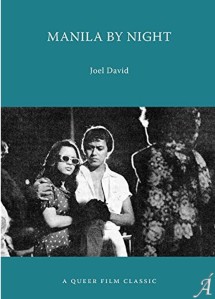

Canon Decampment: Eddie Romero

[Click here (recommended) for desktop mode.]

The Passionate Strangers

Language: English
Additional Language: Filipino
Year of Release: 1966 / B&W
Director & Screenwriter: Eddie Romero
(From a story by Cesar Amigo and Reuben Canoy)
Producer: MJP Productions

Cast: Michael Parsons, Valora Noland, Mario Montenegro, Celia Rodriguez, Vic Diaz, Butz Aquino, Claude Wilson, Jose Dagumboy, Bong Calumpang, Cesar Aguilar

In trying to uncover his wife’s affair with another man, Adam accidentally kills a labor union leader. An initial investigation insinuates the involvement of the American company Adam works for, inasmuch as its previous negotiations with the slain union leader did not push through. Soon, Adam’s crime of passion escalates into a murder dealing with issues of racial difference.

As a protégé of Gerardo de Leon, Eddie Romero’s curse also became his advantage: as long as he could work with de Leon, he never needed to worry about focusing on directorial expertise, just as de Leon could always count on a pool of outstanding writers for his scripts. The best Romero films would therefore tend to be so well-written that their technical shortcomings can be overlooked. An outstanding sample would be the now-lost Sa Atin ang Daigdig (The World Is Ours, 1963, credited to Cesar J. Amigo but claimed in interviews by Romero, who’s credited as scriptwriter). The Passionate Strangers is even more ambitious in tackling neocolonial US presence, labor unrest, and interracial romance, unfolding the tinderbox situation via the opportunistic investigations conducted by a cynical, perceptive, yet paradoxically humane local-government official—wonderfully essayed by the usually taken-for-granted Vic Diaz. Despite its US B-film pedigree, this entry, rather than Romero’s well-received apology for US military presence, The Day of the Trumpet (a.k.a. Cavalry Command, 1958), earns its designation as “Filipino” more than most other projects by him, if not by other Filipinos. Adults who mess up their lives despite their best intentions: that appears to have been Romero’s recurrent theme, and it has never been encapsulated any better than in this overlooked gem.

Back to top
Return to Canon Decampment contents
Go to alphabetized filmmakers list

Savage Sisters

Language: English
Additional Language: Filipino
Year of Release: 1974
Director: Eddie Romero
Screenwriters: H. Franco Moon & Harry Corner
Producer: Cinema Projects International & Hemisphere Pictures

Cast: Gloria Hendry, Cheri Caffaro, Rosanna Ortiz, Sid Haig, Eddie Garcia, Rita Gomez, Leopoldo Salcedo, Vic Diaz, Dindo Fernando, Angelo Ventura, Romeo Rivera, Alfonso Carvajal, Robert Rivera, Subas Herrero, John Platter, Bruno Punzalan, Joonee Gamboa, Max Rojo, Johnny Long, John Ashley

Jo Turner, a white American fighting for the same cause as her revolutionary lover Ernesto, has been arrested along with her Asian comrade Mei Ling. The two are brought along with other women to a correctional, where a black warden, Lynn Jackson, recognizes Mei Ling as a former sex-work colleague. Jo and Mei Ling are aware that Ernesto’s team plans to swipe a million dollars from a government delivery vehicle so they can be rescued and overthrow the corrupt military regime running the island territory. Ernesto and his friends, however, are double-crossed by the mercenaries who promised to help them for a share of the money. Jo and Mei Ling plot to escape so they can recover the funds but when Lynn learns about their plan, she volunteers to help them for an equal portion. Working as a threesome, the women encounter Billingsley, whom the mercenaries contacted to provide them with a ship to get off the island. When he tells them that he wants to be of help, they have to determine first whether he can be trusted.

Although dismissive of his coproduction projects, Eddie Romero was able to claim some bragging rights when an American colleague, Jonathan Demme, managed to parlay his B-filmmaking training (spent partly in the Philippines) into critical acclaim, culminating in an Oscar for The Silence of the Lambs (1991).[1] His Demme collaboration was the project prior to Savage Sisters, Black Mama White Mama (1973), which provided Pam Grier with her blaxploitation breakout role. SS proceeded from BMWM’s pointed critiques of race and power, but evades the latter’s heavy-handedness by adding not just an extra racial subject (via an Oriental character) but also an expanded number of satirical targets, mostly patriarchal but including an oversexed prison matron. The proliferation of players dilutes the film’s ideological purpose just enough to enable it to provide the diversions required of genre entertainment, inasmuch as the locales of these projects, extending back to the Blood Island films of the 1960s, were never meant to be identifiable in the first place. Ironically, Romero’s immersion in exploitation-film practice may have been key to his further (though not complete) distancing from Cold War ideals. Filmic expertise had never been a previous component of his store of capabilities, since he could always rely on Gerardo de Leon to accomplish his vision; but with the latter’s semi-retired status, Romero had no choice except to overcome his hesitation about creating films for American drive-in audiences and reached a point, with SS, from which he was able to embark on his most successfully realized material in his next film, Ganito Kami Noon … Paano Kayo Ngayon? (As We Were, 1976).

Back to top
Return to Canon Decampment contents
Go to alphabetized filmmakers list

Ganito Kami Noon … Paano Kayo Ngayon?

English Translation: This Was How We Were Then … What Happens to You Now?
English Title: As We Were
Additional Languages: Spanish, Chinese
Year of Release: 1976
Director: Eddie Romero
Screenwriters: Eddie Romero & Roy Iglesias
Producer: Hemisphere Pictures

Cast: Christopher de Leon, Gloria Diaz, Eddie Garcia, Dranreb, Leopoldo Salcedo, Rosemarie Gil, E.A. Rocha, Johnny Vicar, Tsing Tong Tsai, Jaime Fabregas, Peque Gallaga, Odette Khan, Laida Lim-Perez, Teresita Non, George Albert Romero, Alfonso Carvajal, Andres Centenera, Joonee Gamboa, Joey Romero, Ernie Zarate

After his hut burns down, Kulas meets a priest who asks the young man to bring his illegitimate son to Manila. Kulas and the priest’s son soon meet a traveling theater group. Though Kulas falls for the actress Diding, he prioritizes his assignment. Upon arriving in Manila, he becomes a sophisticate with the help of the priest’s lawyer. But he will face a bigger change just as Diding re-enters his life and the country, confronted by US imperialism right after expelling its Spanish colonizers, marks a pivotal point in its history.

Rarely has a Filipino film project had better timing than Ganito Kami Noon … Paano Kayo Ngayon? Eddie Romero had just ended a fairly successful run of Fil-Am co-productions; his mentor Gerardo de Leon had just completed his last movie even as Lino Brocka was leading the charge in effectively announcing a renewed film consciousness; an uncertain stability had been forcibly imposed by the military takeover of film-censorship functions barely three years after the declaration of martial rule; and someone had to be able to demonstrate that people from the previous Golden Age could still productively contribute to the then-dawning new cinema. Like the earlier volumes of the martial-law government’s official Tadhana (Fate) book series on Philippine “history,” Ganito Kami Noon also benefited—where Romero’s subsequent Aguila (1980) did not—from maintaining a focus on the past. The project could by then successfully formulate a progressive perspective regarding the influx of foreign invaders and the emergence of a native bourgeois class. Despite a whiff of sexism in the movie’s moral downgrading of a strong woman character, Romero’s cosmopolitanism served him well against the usual accusation of xenophobia that accompanies nationalist texts: GKN was one of the first films on Philippine history that acknowledged the revolutionary contribution of Chinese-Filipino citizens.[2] On the whole, its humanism turned out to be just right for a narrative that sought to present multiple conflicting points of view. And though such an equal-opportunity approach could not permit intensive discursive analysis, Romero’s wit and humor allow the viewer to digest the proceedings with less of the bitterness that tends to lace grand-scale historical conflicts.

Back to top
Return to Canon Decampment contents
Go to alphabetized filmmakers list

Banta ng Kahapon

English Translation: Yesterday’s Warning
English Title: Doublecross
Year of Release: 1977 / Sepia (faded coloration)
Director & Screenwriter: Eddie Romero
Producers: Hemisphere Pictures & Shelter Films

Cast: Bembol Roco, Vic Vargas, Chanda Romero, Roland Dantes, Lito Legaspi, Roderick Paulate, Ruben Rustia, Celita de Castro, Romeo Rivera, Karim Kiram, Olvia O’Hara, Henri Salcedo, Johnny Vicar, Jose Garcia, Roma Roces, Rose Gacula, Gil Arceo, Herman Magsipok, Roger Robles, Zahn Garduce, Joe Watts, Ramon “Palaka,” PMP Stuntmen

In the present time, Greg pauses from working as a janitor in a colonial government building to take a look at the political headlines on a broadsheet. He recalls an earlier period, the turbulent election year of 1969, when a mute convict, addressed as Mangubat by the prison warden, is released after serving his time. He’s followed by shady characters in a car to his home in the slums, where he arrives just as his father dies from an illness and his sister berates him for failing to assist their situation. When he steps out, the men following him address him as Kuwago [Owl] and offer him a well-paying one-shot job to assassinate an elected official. After he turns over his earnings to his sister, his contacts double-cross him but he’s able to escape them. Police bring him to a hospital where more men arrive to finish him off. He flees the hospital and encounters a street urchin, Berto, who offers to help him by asking his sister, who lives on a small island community, to help in his recovery. Greg, who’s helping Bobby, the son of the assassinated politician, to track down the people who want his father killed, follows Kuwago to the island and offers him help in arresting the men who double-crossed him.

Eddie Romero tended to have better results when he worked on small-scale undertakings, with the singular exception of Ganito Kami Noon … Paano Kayo Ngayon? (As We Were, 1976). Aside from the titles selected in the current canon listing, his unfortunately lost peak achievement would include the screenplay of Cesar J. Amigo’s Sa Atin ang Daigdig (The World Is Ours, 1963). Intended as part of a loose series on Philippine history, Banta ng Kahapon covers the more-or-less contemporary era, after GKN tackled colonial transition and Kamakalawa (The Day Before Yesterday, 1981), too directorially slapdash to be given more than passing attention, depicted the magical world of the country’s precolonial era yielding to social governance and material productivity; a special case would be Aguila (1980), an epic tale appropriately headlined by Fernando Poe Jr., which was so much a celebration of Philippine history that it was willing to accept the lies and excesses of the fascist dictatorship in arriving at its present period. Like The Passionate Strangers (1966) and unlike his epic works, the characters in BnK do not seek to influence or disrupt Philippine history, doing instead the best they can to claim what they regard as their rightful share while adhering to their idea of principled behavior. They eventually get overpowered by forces beyond their control, but like the great film-noir heroes, their best efforts provide us with illumination, if not much inspiration. We can count ourselves fortunate that the most dismissible narrative element in BnK, the framing story, is set in the historical present, knowing how enthusiastically Romero welcomed the avowals of Ferdinand Marcos Sr.’s New Society. His depiction of the violence-ridden recent past managed to bring out the light-handed cynicism that constantly elevated his outstanding output—of which, in this particular instance, apparently and alarmingly what remains is the telecine transfer of a faded copy of the print created for the 1983 Manila International Film Festival’s Focus on Filipino Film module.

Notes

[1] Eddie Romero’s unbecoming and objectionably classist assertion appears in Bliss Cua Lim’s article “‘American Pictures Made by Filipinos’: Eddie Romero’s Jungle-Horror Exploitation Films,” Spectator vol. 22, no. 1, April 2002, pp. 23–45. The Blood Island film cycle (drawn from the reissue title of Gerardo de Leon’s Terror Is a Man, 1959) was in fact appropriated from an earlier Hammer Films release, Val Guest’s The Camp on Blood Island (1958), which was all about Japanese atrocities during World War II set on a Malayan island—see the capsule review of Terror Is a Man in the relevant de Leon entry. The Noypi series, all reworkings of or variations on H.G. Wells’s 1896 novel The Island of Doctor Moreau, covers about a dozen titles made throughout the 1960s to the early 1970s, by either de Leon and/or Romero, plus Al Adamson’s Brain of Blood (1971); Hammer Films, for its part, returned to the Oriental setting with a prequel, The Secret of Blood Island (Quentin Lawrence, 1965) and coproduced with Shaw Brothers a hybrid East-meets-West entry, The Legend of the 7 Golden Vampires (Roy Ward Baker, 1974). A new Pinas-grown cycle, in which Savage Sisters may be counted, emerged in the early 1970s, comprising far more pliable narratives of women in island prisons breaking out in pursuit of various personal or political agendas. The new imprisoned-women genre is actually subsumable under a longer exploitation-film tradition directed at the male gaze.

[2] Worth mentioning is the fact that accounts of uprisings by the Chinese community in the Philippines during the Spanish period had appeared in historical records: the Parián de Arroceros transformed from a marketplace into a Sangley ghetto adjacent to Intramuros, which effectively excluded its residents from the Walled City and made them vulnerable to abuses by colonial forces. Some of these narratives found their way into literature and even film samples prior to Ganito Kami Noon. In the previous year, Xing long fu hu (Sleeping Dragon), a film codirected by Ishmael Bernal and Jimmy L. Pascual and cowritten by Wilfrido D. Nolledo and Ophelia San Juan, was set during the Parián rebellion of 1603. It was screened in the country as well as overseas, but the full print is apparently lost and only a trailer is available. See Andrew Leavold, “Sleeping Dragon (1975),” The Bamboo Gods Project (November 4, 2023), posted online.

Back to top
Return to Canon Decampment contents
Go to alphabetized filmmakers list

Á!


Canon Decampment: Cesar Gallardo

[Click here (recommended) for desktop mode.]

Geron Busabos: Ang Batang Quiapo

English Translation: Geron the Tramp: The Quiapo Kid
English Title: Geron the Tramp
Year of Release: 1964 / B&W
Director: Cesar Gallardo
Screenwriter: Augusto Buenaventura
Producer: Emar Pictures

Cast: Joseph Estrada, Imelda Ilanan, Oscar Roncal, Vic Andaya, Bebong Osorio, Avel Morado, Boy Alvarez, Angelo Ventura, Angel Confiado, Larry Silva, Leni Trinidad, SOS Daredevils

Geron is known for defending his fellow slum dwellers of Quiapo. But this earns the ire of a gang that mulcts the people of the area. Along the way, Geron befriends the hustler Digno and street kid Beto and tries to win the love of sampaguita [jasmine] vendor Nena. But when Digno’s shady past is revealed, he joins the locally feared gang and they hatch a plot that puts Geron’s life at stake.

Like, yet unlike, Fernando Poe Jr., disgraced former President Joseph Estrada also possesses his own set of unfulfilled promises that might have affirmed his artistic reputation if he had not allowed politics to intervene in his film career. Geron Busabos and the more pointed, though also more deeply flawed, Asiong Salonga (1961, dir. Pablo Santiago) demonstrate why Erap and Da King functioned as yin and yang to each other: unlike FPJ, Estrada started out as movie villain and, in what was then a star-text innovation, clambered up the ladder to lead roles by maintaining, rather than jettisoning, his bad-guy persona. Through most of his career he remained resistant to the heroic gentrification that Poe came to prefer, and the fact that his real-life stint as villainous Chief Executive reflected his fictional persona turned out to be a disappointment not just for his film stature, but for his historical legacy as well. Though less moralistic than Pablo Santiago’s Amado Pagsanjan’s Asiong Salonga (1961), GB plays safer by stressing from the beginning the lead character’s occasionally misperceived obeisance to law and order; what distinguishes the film from a long list of Pinoy noirs is in its well-observed distillation of Quiapo-district archetypes. Estrada’s insistent and eloquent championing of society’s underdogs, coupled—at least in his early breakout films—with finely honed delivery, makes understandable how he managed to capture the imagination of the widest segment of the voting public in any Philippine presidential election.

Back to top
Return to Canon Decampment contents
Go to alphabetized filmmakers list

Á!


Canon Decampment: Manuel Silos

[Click here (recommended) for desktop mode.]

Biyaya ng Lupa

English Title: Blessings of the Land
Alternate English Title: Bounty of the Earth
Year of Release: 1959 / B&W
Director: Manuel Silos
Screenwriters: Celso Al. Carunungan & Pablo Naval
(From a story by Celso Al. Carunungan)
Producer: LVN Pictures

Cast: Rosa Rosal, Tony Santos, Joseph de Cordova, Leroy Salvador, Carlos Padilla Jr., Marita Zobel, Danilo Jurado, Carmencita Abad, Tony Dantes, Miguel Lopez, Priscilla Ramirez, Mario Roldan, Jerry Reyes, Mila Ocampo, Pedro Faustino, Carmen del Ocampo, Vic Cabrera, Narding Pineda, Ricardo Geronimo, Carmen Mariano, Santiago Diamzon, Emerson Medina, Irene Sanchez, Far Eastern University Dance Troupe

Jose, Maria, and their four children live on a lanzones orchard. All is well until the arrival of Bruno, who resorts to villainy after his pursuit of a new wife was hampered by Jose. To get even, Bruno rapes Jose’s daughter. When Jose seeks revenge, he is killed by Bruno. For Maria, this only marks the beginning of the challenges she has to face while sustaining her family and the orchard.

The past tends to be remembered as idyllic, and this film reinforces that impression in several ways: by being set on a modest lanzones plantation (eyed by a covetous wealthy neighbor), upholding family values and the quiet dignity of rural folk, and emphasizing the indispensability of the bayanihan or cooperational spirit to communal order and productivity. Even the elements incidental to the narrative—its use of black and white, its half-century vintage, its now-elderly cast—provide a final veneer of nostalgia. Although later filmmakers, notably Lino Brocka, managed to make some of their movie villains understandable, if not sympathetic, Biyaya ng Lupa can nevertheless defend its sole shortcoming, the demonization of the taong-labas or outsider, as less a matter of malice than an act of naïveté.

Back to top
Return to Canon Decampment contents
Go to alphabetized filmmakers list

Á!


Canon Decampment: Armando Garces

[Click here (recommended) for desktop mode.]

Sino ang Maysala?

English Translation: Who Is at Fault?
Year of Release: 1957 / B&W
Director: Armando Garces
Screenwriters: Luciano B. Carlos & Armando Garces
(Based on the komiks by Fausto Galauran)
Producer: Sampaguita Pictures

Cast: Rogelio de la Rosa, Gloria Romero, Paraluman, Ric Rodrigo, Lolita Rodriguez, Luis Gonzales, Rosa Mia, Susan Roces, Romeo Vasquez, Van de Leon, Etang Discher, Eddie Garcia, Zeny Zabala, Bella Flores, Panchito, Tony Cayado, Jose de Villa, Aring Bautista, Mercy Guia

A fairly wealthy family’s three daughters and only son revel in their material comforts—clothes, jewelry, cars, lovers—until one wild party night, when their father commits suicide. When they discover that their fortune is all gone, the daughters scramble to maintain as much of their lifestyle as they could salvage. Carmen, the eldest, administers the family’s finances and resumes her romance with a formerly impoverished but now-rich suitor, who already happens to be married; Gloria, abandoned by her beau, resolves to focus on her career; Lolita indulges in relationships that she refuses to take seriously. Their youngest brother, Bobby, starts acting out and goes on trial for participating in criminal activity, causing the family to arrive at a reckoning of their transgressions for his sake.

One of the problems in film evaluation still plaguing unreflective academically trained commentators up to the present is the valorization of politicized material invested with the discipline of classical unities, dramatic logic, and Western performative reserve. Which is why works like Sino ang Maysala? get overlooked by critics and scholars except for seriously neglected practitioners like the late Johven Velasco. Not only do the characters’ concerns remain resolutely domestic and (predictably) increasingly melodramatic, the characters themselves are named after the actors who play them; in the case of Paraluman, her character is called “Carmen” because the original performer was supposed to be Carmen Rosales. The arrangement contributed significantly to the film’s popular appeal when “Bobby” Vasquez lived out his bad-boy behavior the way his fictional version did. Yet SaM provided more than just motives for its characters’ actions. The sisters’ survival strategies may have seemed morally unacceptable during their time, but anyone who returns for another viewing will realize that women who take stock of their situation and determine their own future paths (as our very own mostly female Overseas Filipino Workers regularly do) will be preferable to the spoiled spendthrifts that their characters had been at the start. The accumulated effect on Bobby of the decline in their social stature occasions a collective reflection that could have prevented the initial tragedy that befell their father if they had had enough experience of pain and suffering to be able to recognize his situation in time to save him. Hence the judge’s climactic sermon actually functions semi-ironically, the way that SaM does in Philippine film history. Velasco points out how the film provides a local counterpart to the universally popular (though similarly belatedly appreciated) Douglas Sirk melodramas of Classical Hollywood, but claims as well that the lost-generation psychological dramas of Nicholas Ray and Elia Kazan were probably just as influential. These are worthy examples for any film product to be compared with, but the best part about SaM is that it set out to provide grown-up popular entertainment and made sure that it fulfilled that mission well, before everything else.

Back to top
Return to Canon Decampment contents
Go to alphabetized filmmakers list

Á!


Canon Decampment: Tony Cayado

[Click here (recommended) for desktop mode.]

Mga Ligaw na Bulaklak

English Title: Wild Flowers
Year of Release: 1957 / B&W
Director: Tony Cayado
Screenwriters: Medy Tarnate & Emmanuel Borlaza
(Adapted from the serialized komiks by Pablo S. Gomez & Petrolino Z. Marcelo)
Producer: Sampaguita Pictures

Cast: Daisy Romualdez, Susan Roces, Romeo Vasquez, Tony Marzan, Bella Flores, Eddie Garcia, Marlene Dauden, Nelly Baylon, Bella Flores, Martin Marfil, Bert Olivar, Nori Dalisay

Cora is lured by a drug syndicate after she encounters a glamorous crook, Greta. Conrado is also recruited by Greta and discovers that his boss, Big Boy, wants him to attract more female patrons to their gang’s smuggled opium. But as the authorities get closer to cracking down on the syndicate, Cora’s life is imperilled while Conrado begins to plot a takeover of Big Boy’s gang.

Film noir is the style that initially lends cover, in a manner of speaking, to this tale of moral corruption in the big city; eventually the noir element takes over everything and lends a solemn aura to the star-oriented house image of Sampaguita Pictures, including the narrative’s ingénue, played by the then-barely legal Susan Roces. The sight of the wholesome, winsome teen actress descending into an underworld of gangsters and sex workers eventually enabled her to “stretch” her persona from young-idol vehicles to drama and horror, setting a template that her contemporaries and successors have since been able to benefit from. Tony Cayado’s smart, confident direction of material adapted from a then-disreputable source, komiks literature, similarly pointed the way for successive generations seeking a balance between pulp pleasure and social discourse. Best of all, the expected antagonist in the virgin-vs.-whore dichotomy, depicted by Bella Flores with her trademark voluptuous swagger, turns out to be strong-woman enough to take the initiative in delivering our innocent from the certain calamity awaiting her.

Back to top
Return to Canon Decampment contents
Go to alphabetized filmmakers list

Á!


Canon Decampment: Lamberto V. Avellana

[Click here (recommended) for desktop mode.]

Anak Dalita

English Translation: Child of Sorrow
English Title: The Ruins
Year of Release: 1956 / B&W
Director: Lamberto V. Avellana
Screenwriter: Rolf Bayer
Producer: LVN Pictures

Cast: Rosa Rosal, Tony Santos, Joseph de Cordova, Vic Silayan, Vic Bacani, Leroy Salvador, Rosa Aguirre, Oscar Keesee, Alfonso Carvajal, Johnny Reyes, Eddie Rodriguez, Arturo Moran

Vic comes home from the Korean War and finds that his mother is not only on the verge of death, but has also been living in the ruins of old Intramuros with nightclub hostess Cita. After his mother dies, he moves in with Cita but they realize that money is hard to come by. Driven by desperation, Vic makes choices that will test his love for Cita and his resolve for a better life.

The first triumphant use of neorealism in Philippine cinema is a testament to an impoverished past—that of World War II devastation—that the country managed to vanquish, only to see it return over and over with increasing regularity, culminating in what has been described by political expert Walden Bello as “the anti-development state” in his eponymously titled 2005 volume. In the context of Cold-War conservatism, when government and religious leaders sought to infantilize the public with wholesome father-knows-best material, Anak Dalita made a then-daring decision to uphold as its heroes a highly unlikely pair, a Korean-War veteran turned petty criminal and a prostitute seeking to turn over a new leaf. To attain a hopeful resolution, the narrative requires the conventional intervention of an authoritarian figure, a decorous priest, to help the duo find the light of personal redemption as well as convince slum dwellers to give up their homestead claims. Consistently high-caliber performances nevertheless provide the crucial component of credibility, with star turns by its charismatically hard-edged lead performers.

Back to top
Return to Canon Decampment contents
Go to alphabetized filmmakers list

Sarjan Hassan

English Title: Sergeant Hassan
Language: Malay
Additional Languages: Japanese, English
Year of Release: 1958 / B&W
Director: Lamberto V. Avellana
Screenwriter: P. Ramlee
(From a story by Ralph Modder)
Producer: Malay Film Productions Ltd.

Cast: P. Ramlee, Sa’adiah, Jins Shamsuddin, Salleh Kamil, John Gray, David Downe, Daeng Idris, Aini Jasmin, Nyong Ismail, Leng Hussein, Omar Rojik, Pon M.R., S. Shamsudin, Rashid M.R., M. Raffee, Adek Ja’afar, Kemat Hassan, Habibah Harun, Omar Suwita, Zainol Bakar, Ali P.G.

Before his father dies, Hassan is entrusted to the family of his father’s friend. Unfortunately, his adoptive brother Ajis resents the newcomer and conspires with Buang to bully Hassan. Their friend Salmah defends Hassan although the latter refuses to fight back. When they grow up, Ajis leaves for military training while Hassan is left behind to look after the family. Hassan writes his adoptive father an apology to be able to train as well, upon which the Japanese declare war. Buang arranges with the invaders to volunteer his services as informant and uses his newfound authority to pressure Salmah to marry him. Salmah refuses, since she has fallen for Hassan. But the unit that Hassan and Ajis joined, along with their American commander, falls into enemy hands. Buang arranges for Ajis to be brought to Malacca for execution, informing Salmah that only their marriage will save her brother. Hassan hears about a British-led guerrilla force and realizes that he has to take charge of his fate as well as those of the family and townsfolk that he learned to value as his own.

To celebrate its independence in 1957, the then-Federation of Malaya, with Run Run Shaw producing, conscripted Lamberto V. Avellana to direct a biographical feature on one of the country’s World War II heroes, Hassan bin Haji Othman. As a film event, Sarjan Hassan’s subject is potentially complex and controversial: awarded a Military Medal by Queen Elizabeth, Othman later became known (and feared) as an anti-Communist crusader. The film itself, however, has been celebrated in Malaysia through the decades, primarily because of the person regarded as the country’s superstar, P. Ramlee. One claim is that when Avellana was unable to finish the film, Ramlee took over. His performance as Sergeant Hassan betokens an accomplished performer’s easy handling of a role steeped in dramatic heroism—small wonder that he’d been better known for film comedies and musicals.[1] The narrative itself, again owing to Ramlee, is also spared Avellana’s usual social conservatism. The tension between Avellana’s famed expertise at staging epic material and Ramlee’s purveyance of his people’s decent charms results in one of the more fascinating war films that our filmmakers had the good fortune to be associated with.

Back to top
Return to Canon Decampment contents
Go to alphabetized filmmakers list

Nick Joaquin’s A Portrait of the Artist as Filipino

Alternate Title: A Portrait of the Artist as Filipino
Language: English
Additional Language: Spanish
Year of Release: 1965 / B&W
Director: Lamberto V. Avellana
Screenwriters: Donato Valentin & Trinidad Reyes
(From the play A Portrait of the Artist as Filipino: An Elegy in Three Scenes by Nick Joaquin)
Producers: Diadem Pictures & Cinema Artists

Cast: Daisy H. Avellana, Naty Crame-Rogers, Conrad Parham, Vic Silayan, Sarah K. Joaquin, Nick Agudo, Pianing Vidal, Koko Trinidad, Oscar Keesee, Veronica Palileo, Nena Perez Rubio, Manny Ojeda, Rino Bermudez, Alfred X. Burgos, Nena Ledesma, Polly Anders, Miriam Jurado

In need of extra funds to maintain their house in Intramuros, the sisters Candida and Paula Marasigan take in a border, the caddishly handsome Tony Javier, also to be able to withstand the insistence of their other siblings to sell the property and live with them. When Bitoy Camacho, a long-unseen family friend, visits them one day, they’re delighted by the reminiscences he occasions but eventually figure out, when he admits to being a writer, that he’s really snooping around to be able to report on the painting that their father, Don Lorenzo, completed as his final masterpiece, titled “Un retrato del artista como Filipino” (also the Spanish name of the play and film). Tony himself also admits that, when he learned about the existence of the painting, he found an American willing to purchase it for a price that would allow Don Lorenzo and the sisters to live comfortably. But since the patriarch refuses to give up his house, Candida and Paula hang on to the painting to honor his wish. With World War II about to break out, everyone familiar with the family grows increasingly desperate in disposing of the house and selling the painting, with Tony figuring out a way to persuade the sisters using his charm.

The film adaptation of Nick Joaquin’s stage masterwork may require some degree of willingness to depart from realism, with what is essentially a staged production in which characters, even vaudeville performers, speak in English. To remark that it may be the most successful existing evidence of a Classical Hollywood achievement in the Philippines would therefore be not much of a compliment, although Joaquin’s text does sustain the cumulative power it more efficiently discloses onstage. What Joaquin instead achieves in A Portrait of the Artist as Filipino is an implicit critique of Americanization—ironic when considering his deployment of English. Joaquin’s detractors correctly point out that his ideological project relies on a dangerous capitulation to colonial nostalgia in preferring Old-World culture. Yet the other aspect of this critical process cannot be discounted: in providing a convincing deconstruction of US influence, he also effectively warns against an uncritical acceptance of other forms of foreign domination. Lamberto V. Avellana enables this reading via opening and closing voice-overs, purportedly from Bitoy Camacho, the least-deluded member of the generation that Candida and Paula belong to. Beyond these admittedly dated issues, the film also endures as a sample of one of the spoken languages (the other being Spanish) that attempted to lay claim on Philippine cinema before Tagalog succeeded in ensconcing itself, with Cebuano being its only serious challenger.

Back to top
Return to Canon Decampment contents
Go to alphabetized filmmakers list

The Evil Within

Alternate Title: Passport to Danger
Language: English [dubbed]
Additional Language: Hindi
Year of Release: 1970
Director: Lamberto V. Avellana
Screenwriter: Rolf Bayer
Producers: Arbee Productions & Navketan Studios

Cast: Dev Anand, Kieu Chinh, Tita Muñoz, Vimal Ahuja, Henry Duval, Premnath Malhotra, Iftekhar, Zeenat Aman, Bipin Gupta, Manvendra Chitnis, Allen Fitzpatrick, Rod Perry, Jagdish Raj, M.B. Shetty, Kuljit Singh, Yog Raj, Akbar Bakshi, Dhannalal, Dharamvir, Henry Feist, Sudesh Issar, Fazal Khan, Ken Metcalfe, Joseph Zucchero, Lucita Soriano, Lena, Birbal, Sudesh, Radish Khan, R.B. Henni, Tony Lee, Barbara Allen, Vic Silayan, Kim Ramos

A violent agent called Fatman evades a series of arrest attempts in Hongkong by killing the people involved, but he’s unable to survive an assassination by the opium-smuggling syndicate to whom he offers his services. Superspy Dev Verma is assigned to bust the syndicate in the Golden Triangle, assisting Interpol agent Rod Stevens. They discover that Fatman’s death was part of a complex mesh of intrigue, involving the daughter of the handler, all the way up to Kamar Souria, a princess who lives in the desert. To get to her, Dev interrogates her brother’s lover, Amal, but then he discovers that her relationship with the princess transcends her lover’s ambition to wrest control of the smuggling operation.

Lamberto V. Avellana’s problematic stature as a local artist squarely in step with the demands of imperial and authoritarian regimes brings up the similar issue of collaboration raised by Gerardo de Leon’s acquiescence to the Japanese occupation’s film agency when it embarked on its big-budget propaganda project, albeit minus GDL’s subsequent progressive turn as well as the counter-reading instigated by the anti-American messaging of Dawn of Freedom (1944, codir. Abe Yutaka). Nevertheless, as a still critically capable practitioner, Avellana has managed to come up with works that enable contrarian readings.[2] The Evil Within has the same Cold War superspy configuration as the James Bond series, and indeed announced its intent to launch its lead actor as global heroic star in the mold of Hollywood’s cool, wisecracking, sexually confident superstuds. Pujita Guha tracked in expert historical detail how Dev Anand’s final stab at breaking into Western film production, after an initially failed attempt in Ted Danielewski’s The Guide (1965), faltered just as badly this time around. Despite a number of inaccuracies in her evaluation of Avellana’s record, Guha also provides the reason for Indian censors’ disapproval of the film—i.e., its glamorization in effect of opium-smuggling activities. Yet the actual unnamed reason may have lain in the very factor that Anand could not overcome: he was outshone by the female cast that his character supposedly dominated and outwitted. The youngest, Zeenat Aman, was Indian and killed off too early in the plot; the other two were Vietnamese and Filipina, Kiểu Chinh and Tita Muñoz respectively, playing frenemies who become separately involved with Dev Verma (Anand’s character), but who turn out to be as much lovers as rivals. This was in accordance with reports pertaining to Olive Yang, a real-life opium warlord who was eventually captured, released, and lived to a ripe old age until her death in 2017. The fact that Avellana positioned lesbian desire front and center, with two attractive and well-matched performers, will surprise everyone (as it did me) who assumed he would resist the then-raging bomba film trend in his home country. To his credit, and despite the fate that befell TEW, he managed to embody his delight in cinematic spectacle with a rarely achieved smart and queenly alpha-female pair.

Notes

[1] See Amir Muhammad’s “P. Ramlee, Superstar” in Moving Image Source, March 18, 2011, excerpted from Asia Laughs! A Survey of Asian Comedy Films, ed. Roger Garcia, Centro Espressioni Cinematografiche, 2011. Additional relevant material can be found in Lee Yow Chong and Candida Jau Emang’s “Selling the Past in Films: Shaw Brothers and the Japanese Occupation of Malaya,” in Jurnal Komunikasi—Malaysian Journal of Communication, vol. 32, no. 2, 2016, pp. 1–16, doi:10.17576/JKMJC-2016-3202-10.

[2] The most highly regarded among the contrarian readings of a Lamberto V. Avellana film was that provided by Petronilo Bn. Daroy. In “Main Currents in the Filipino Cinema,” published March 23–29, 1976, in the Philippines Daily Express, he pointed out how Gerardo de Leon’s Daigdig ng mga Api (World of the Oppressed, 1965, now lost), copped out in the end by endorsing the agrarian-reform program of then re-electionist President Diosdado Macapagal. Daroy instead posited Avellana’s Anak Dalita (Child of Sorrow, 1956) as a less reactionary work, possibly overwhelmed by its neorealist daring and consequently disinformed by its incipient clericofascism. Pujita Guha’s study of Dev Anand appeared in her article “Traversing The Evil Within (1970): Transnational Aspirations, Stardom, and Infrastructure in a Cold-War Asia,” published in the anthology edited by Monika Mehta and Madhuja Mukherjee and titled Industrial Networks and Cinemas of India: Shooting Stars, Shifting Geographies, and Multiplying Media (Routledge, 2021). Her assertion, drawn from Jack Halberstam and inspired by Michel Foucault, that failure can be viewed as “the embodiment of defiance,” may be lost to readers unfamiliar with the ironic logic of screen cultural studies; the fact that TEW itself was never shown in India, released only in Pinas and possibly in a limited US run, further seals the negligence with which it has been regarded.

Back to top
Return to Canon Decampment contents
Go to alphabetized filmmakers list

Á!


Canon Decampment: Gregorio Fernandez

[Click here (recommended) for desktop mode.]

Kontrabando

English Title: Contraband
Year of Release: 1950 / B&W
Director: Gregorio Fernandez
Screenwriter: Armando Garces
(From the story “G-2, Ang Tiktik ng Hukbong Pilipino [G-2, The Detective of the Philippine Army]” by Major Amado A. Esguera)
Producer: LVN Pictures

Cast: Jaime de la Rosa, Celia Flor, Tony Santos, Milagros Naval, Gregorio Fernandez (as G.M.F.), Eusebio Gomez, Ezar Visenio, Armando Garces (as Armando Garcez), Martin Marfil, Jose Corazon de Jesus Jr., Juanito Montes, Citas Javellana, Natoy B. Catindig, Joe Evangelista, Tita Ramirez, Ray Bayona, Mauro Cajigal, Flor Bien, Franco Quintana

Diego Malvar, a G-2 undercover operative, is able to infiltrate the smuggling syndicate run by Lim. In order to help him bust the trafficking of opium, surreptitiously brought in by deported aliens, his supervisor provides him with a newfangled spy camera as well as a code word, “Divina.” In pursuit of his objective, he falls in love with Celia, the daughter of Lim’s family friend. Lim’s adopted daughter, Minda, comes from Jolo and is secretly promised by Lim to Asad, his Muslim henchman. Unaware of the arrangement, Minda has set her sights on Datu Ali, whom Lim misleads so he can land contraband shipments in Mindanao. As Lim’s biggest operation comes to a head, Diego has to find someone he can trust, identify the gang’s kingpin whose orders Lim follows, and find the best possible way to survive the risky project with head and heart intact.

Kontrabando is by and large the perfect encapsulation in Philippine cinema of a riddle wrapped in a mystery inside an enigma. Virtually forgotten by subsequent generations, Gregorio Fernandez had enough evidence of then being the most talented director inside the LVN Pictures lot, so it made sense that he was the first filmmaker deployed to fulfill the studio’s commitment (via Manuel de Leon, the most enthusiastic Filipino participant in the US-sponsored Federation of Motion Picture Producers in Asia-Pacific) to provide three projects for the cause of anti-Communist agitation.[1] It will be impossible to fully evaluate this trilogy since the second installment, Korea from 1952, has been lost for the longest time, despite having been scripted by Benigno S. Aquino Jr. Then again, the fact that this second entry as well as the third one (Huk sa Bagong Pamumuhay or Rebel in a New Life, 1953) were both directed by Lamberto V. Avellana, suggests that Fernandez failed in what he was tasked to do. In fact, what may have been a propagandistic disappointment has ironically turned out to be a vital contribution to Philippine film culture, with the only definitive evidence of “Yoyong” being the best director-actor we ever had constituting a minor detail in context. The demonization of Chinese nationals was part and parcel of the anti-Commie thrust, but Fernandez reduces the threat to ideologically irrelevant drug smuggling and sets up the distinctively chinita Celia Flor as prospective femme fatale with a twist, in much the same way that his previous year’s Capas featured a conflicted Japanese Imperial Army official confronted by a guerrilla masquerading as collaborator. Moreover, the swagger, suavity, and situational ruses enacted by Jaime de la Rosa, drawn from global film sources from all over, predate their amalgamation in the James Bond franchise. Most impressively, Fernandez mounts a challenge to the supposed (Christian) godliness of Western democracy by allowing organized Muslim Filipinos to save the narrative heroes from certain perdition. The question of whether he intended to fail as a Cold War champion becomes inconsequential when set beside such multivalent triumphs in film innovation.

Back to top
Return to Canon Decampment contents
Go to alphabetized filmmakers list

Prinsipe Teñoso

English Translation: Prince Teñoso
Year of Release: 1954
Director: Gregorio Fernandez
Screenwriter: Johnny Legarda
(Based on an earlier script by Manuel Conde, adapted from the korido on Prince Don Juan Teñoso)
Producer: LVN Pictures

Cast: Delia Razon, Mario Montenegro, Tony Santos, Alfonso Carvajal, Ven Medina, Frankie Gordon, Oscar Obligacion, Arturo Moran, Carmencita Abad, Cecilia Lopez, Liza Rivera, Lourdes Yumul, Natoy B. Catindig, Mario Taguibulos, Gregorio Fernandez (as G.M.F.), Sim Pajarillo, Manuel Lizaso, Merle Fernandez, T. Valenzuela, L.M. Fernandez, Perla Garcia

Prince Teñoso, an idealistic youth, returns to his father’s kingdom and sees a giant who was captured and imprisoned by the king for the sake of sport. After he determines that the prisoner is benign, he steals the giant’s magic gemstone from his father’s crown to help the creature escape. [Missing sequence: Grateful for the prince’s help, the giant provides him with a magical handkerchief. The king realizes what his son had done and banishes him from the kingdom. To atone for his father’s anger, Prince Teñoso disguises himself as an old beggar and wanders into a neighboring territory.] The king in the new kingdom is worried that he will be unable to marry off his daughters, who are too independent-minded for their suitors. An assistant suggests a contest of skills, where the princesses can pick the men who impress them. The youngest princess, however, spies on the newly arrived beggar and sees him transform into a handsome young man when he bathes in the river. She decides to favor him during the competition—a decision that baffles the court and angers her father.

Prinsipe Teñoso may be the oldest available Pinoy feature film in color, and for once our luck turned for the better. After several pioneering attempts with Ansco Film, LVN Pictures decided to hand the project, essentially a remake of a prewar Manuel Conde spectacle, to a resident director who was carefully harnessing his crowd-pleasing skills with a distinctly modern sensibility. Gregorio Fernandez’s cultural sophistication, in fact, may have been so highly evolved that evaluators of the era (and even up to the present) do not seem to have the necessary handle with which to approach his output. Fortunately for him, LVN has been the most responsible among the First Golden Age studios in caring for their celluloid legacy, so enough Fernandez movies have been lying around to demonstrate how seriously neglected his stature as major artist has been. PT still exhibits some of the limitations of its origin in Spanish-era metric romances, camouflaged by its Ruritanian world-building where monarchs and magic hold sway, with the Christianization project championed above everything. Unlike many of his contemporaries, however, Fernandez raises questions about filial devotion to patriarchs, advocates for specific types of Otherness (in this instance a captive nonindigenous giant as well as a diseased stranger in rags—the title character in disguise), and provides a Muslim partner for one of the princesses. But it is his celebration of female agency that sets the film off from even the typical Hollywood samples of its time: the princesses question the logic of requiring them to be paired off with husbands, accept early widowhood as a welcome option, and pick out the men they want—with the youngest among them insisting on a beggar whose attractiveness she ascertained by snooping on his naked form. Prince Teñoso’s self-redemption consists of chastising his future brothers-in-law while saving his bride-to-be’s kingdom and acquiring his father’s forgiveness in the process, with Fernandez’s storytelling skills easing our journey over now-missing portions of the narrative. Surge, splendor, and extravagance are the terms used by film scholar Vivian Sobchack in describing films of this type—but Fernandez made sure to add an edginess that makes PT still meaningful for our times as definitely as it provided entertainment way back when.

Back to top
Return to Canon Decampment contents
Go to alphabetized filmmakers list

1—Higit sa Lahat

English Translation: Most of All
Year of Release: 1955 / B&W
Director: Gregorio Fernandez [as Dr. Gregorio Fernandez]
Screenwriter: Gregorio Fernandez
(From a story by Mario Mijares Lopez)
Producer: LVN Pictures

Cast: Rogelio de la Rosa, Emma Alegre, Ike Jarlego Jr., Oscar Keesee, Jose Corazon de Jesus Jr., Vic Silayan, Eddie Rodriguez, Cynthia Gomez, Rosa Aguirre, Ludy Carmona, Lita Gutierrez, Gerry delos Reyes, Venchito Galvez, Natoy B. Catindig, Leonardo Fernandez

Rodrigo is disowned by his rich family when he decides to marry Rosa. He finds work in a factory where his supervisor covets a necklace that Rosa had gifted him with. He decides to hand over the ornament but, while on a trip assigned by the supervisor, the factory goes up in flames. Investigators find the necklace and inform Rosa that her husband had died. When Roberto realizes that his family will receive a substantial amount of insurance money, he decides to maintain the delusion and watches over them from afar.

2—Luksang Tagumpay [incomplete]

English Translation: Mournful Victory
Year of Release: 1956 / B&W
Director: Gregorio Fernandez
Screenwriters: Mike Velarde & Consuelo O. Padilla
(From a story by Mike Velarde, “as inspired by [Sergei] Rachmaninoff’s 2nd Piano Concerto” [per opening credit title])
Producer: LVN Pictures

Cast: Jaime de la Rosa, Delia Razon, Rebecca del Rio, Eddie Rodriguez, Rudy Fernandez, Oscar Obligacion, Leonora Ruiz, Fe Galvez, Rudy Llamas, Jesus Caballero, Gerry Gabaldon, Leandro Fernandez, Jaime Palma, Joseph de Cordova, Alfonso Carvajal, Manuel Silos, Oscar Keesee

[Note: spoilers provided] Because her husband, Bustamante, has been presumed dead as a combatant in the Korean War, Anita decides to marry Ricardo, a doctor. But when Bustamante returns, Ricardo treats his blindness and keeps his distance from them. Alone on a night out, Bustamante meets Ricardo’s ex-girlfriend and learns from her that Anita and Ricardo were once a couple. Bustamante decides to inflict blindness on Anita but Ricardo warns her of the danger. Ricardo discovers Bustamante fatally wounded by his ex and gets arrested for murder. To save him from certain conviction, his ex-girlfriend confesses.

A definite clue to the downgrading of Gregorio Fernandez’s abilities is his specialization in the weepie, the type of melodrama acknowledging and directed at female audiences. (No use in denying that Pinoy action and sex films also rely on melodramatic conventions, even if their target audience endows them with a bit more respect, in the eyes of the hopelessly old-fashioned.) His talent definitely earned him the top industry awards he deserved for Higit sa Lahat, a gender-reversed neorealist variation on the Hollywood perennial Stella Dallas, whose 1937 King Vidor-directed version is regarded as definitive. Rogelio de la Rosa barely matches Barbara Stanwyck’s performance, but it matters little since Emma Alegre is made the object of his (and the audience’s) gaze, and she’s the most incandescent and skilled performer in any available Fernandez film until Charito Solis’s casting a few years later. Luksang Tagumpay, although a more ambitious piece, only won for direction. Its narrative is admittedly twisty and resolves more conventionally than any of the titles in Fernandez’s remarkable final run at LVN Pictures. Yet its now-lost denouement features the apocalyptic dissolution of the primary male character’s domestic environment, referencing both his psychological breakdown as well as his recent wartime traumatic experience. The use of expressive and hyper-exuberant filmic strategies would be introduced to global observers a few years afterward, via the French New Wave as well as the post-Stalinist “thaw cinema” of the Soviet Union; without an equivalent critical team providing an evaluation of the limits of Hollywood classicism and suggesting ways to challenge then-existing standard film language, Fernandez embarked on a critique all his own and attempted a carefully sustained series of formal experimentations that would distinguish his 1950s work as the first uncontestable flowering of artistic genius in local cinema.

Back to top
Return to Canon Decampment contents
Go to alphabetized filmmakers list

Hukom Roldan

English Translation: Judge Roldan
Year of Release: 1957 / B&W
Director: Gregorio Fernandez [as Dr. Gregorio Fernandez]
Screenwriter: Consuelo P. Osorio
(From a story by Luz del Mundo)
Producer: LVN Pictures

Cast: Jaime de la Rosa, Emma Alegre, Nenita Vidal, Oscar Keesee, Alfonso Carvajal, Nela Alvarez, Marie Paz, Boots Socorro, Cholly Ulla, Gerry Gabaldon, Dulo Valenzuela, Vic Cabrera

Judge Alberto Roldan is an upright official who resists the entreaties of his influential friend, Don Silvestre, against handing down a guilty verdict against a business associate of his. In retaliation, Silvestre blackmails Alberto’s wife Cita by getting his accomplice Hernan to drug and photograph her in scandalous circumstances, succeeding in breaking up the couple’s union. Alberto sends their daughter Gloria to the US and claims upon her return that her mother is dead. Warned by Hernan that her husband and daughter will be harmed if she reveals the truth, Cita endures her husband’s harsh judgment of her character while setting out to earn a decent living on her own while keeping tabs on her estranged family.

The official canonical assessment of Gregorio Fernandez’s career has been lopsided and ultimately inadequate. Two of his mid-1950s films, Higit sa Lahat (1955) and Luksang Tagumpay (1956), garnered nominations and prizes in industry and foreign film-festival competitions whereas superior entries such as Principe Teñoso and Hukom Roldan were overlooked, while Malvarosa (1958), deservingly regarded as his masterpiece, was given a token local award. As a studio-system stalwart (whose career unsurprisingly faltered when the independent production system replaced the First Golden Age players),[2] he demonstrated an unerring capability of critically evaluating his past output and setting up more ambitious thematic and formal challenges while continuing to provide popular entertainment. With HR, he set up reversals and ironies one after the other, starting with a switch in narrative emphasis from the masculine title character to his multiply victimized wife, signaled by an onscreen swirling motion that mimics her confusion, interrupted by the major characters directly addressing the audience. These violations of Classical Hollywood conventions (already evident even in his preceding melodramas) were to become standard approaches a short time later in European cinema, and may account for local evaluators’ befuddlement with Fernandez’s innovations, since these seemingly came from out of nowhere. In retrospect, we should be in a better position to appreciate an intelligent and socially concerned practitioner’s dissatisfaction with the limits of genre and storytelling while remaining steadfast in his commitment to his audience as well as to his family of creatives. The charismatic de la Rosa brothers (Jaime and Rogelio) were comfortable working with him—together at one point, while his children (Rudy in LT, Merle in HR) fleshed out characters who would figure prominently later as grown-ups. More poignantly, reminiscent of how appreciation for his achievements turned out, HR’s central mother-daughter tandem is essayed by fully capable performers—Emma Alegre and Nenita Vidal respectively—who had too-short careers in the medium. Serious observers of Philippine cinema who may think they have seen and/or read everything about the country’s film history will be rewarded anew by asking themselves who the very best studio system practitioner was and watching Fernandez’s films vis-à-vis the standard lineup.

Back to top
Return to Canon Decampment contents
Go to alphabetized filmmakers list

Malvarosa

English Translation: Geranium
Year of Release: 1958 / B&W
Director: Gregorio Fernandez [as Dr. Gregorio Fernandez]
Screenwriter: Consuelo P. Osorio
(Adapted from the serialized komiks by Clodualdo del Mundo Sr.)
Producer: LVN Pictures

Cast: Charito Solis, Leroy Salvador, Vic Silayan, Carlos Padilla Jr., Vic Diaz, Rey Ruiz, Eddie Rodriguez, Rebecca del Rio, Linda Roxas, Johnny Reyes, Perla Bautista, Caridad Sanchez, Priscilla Ramirez, Ramon Olmos, Nita Ramos, Johnny Legarda, Levi Celerio, Segundo Maniquiz

Rosa lives in Manila’s slums and is a sister to five brothers who treat her like a servant. Adding to her troubles is how her father’s tragic death left her mother catatonic. Fortunately, her fiancé and her fifth (youngest) brother always help her. But just when her luck is about to turn for the better, Rosa faces some major obstacles that make her doubt if her lot will ever improve.

Before Sampaguita Studios launched its Stars ’66 batch of talents, complemented by its “smorgasbord” (multiple-stars) presentations, LVN Pictures embarked on what initially appeared to be a commercially motivated project, drawn from a komiks serial and featuring their biggest male stars, mostly playing brothers, plus their bombshell attraction, Charito Solis, as youngest sister as well as devoted daughter and upright girlfriend. Exploiting the full potential of its “low-brow” literary origin, Malvarosa opens with a palm reader’s accurate prediction of five sons and an only daughter being born to a dissolute couple, piles on the irony as well as the slum-colony lingo, and resolves in a large-scale apocalyptic event that cleanses not so much their material suffering as their collective soul, or whatever remains of it.[3] Fluid direction, spitfire performances, and Solis’s timeless beauty provide much-appreciated icing for this still-urgent slice of urban life.

Notes

[1] A comprehensive account of the US government’s exploitation of film to anathematize Communism in Asia can be found in Lee Sangjoon’s Cinema and the Cold War: US Diplomacy and the Origins of the Asian Cinema Network (Cornell University Press, 2020). For the specifics of the participation of LVN Pictures, see Mike de Leon’s Last Look Back (Contra Mundum Publishing, 2022). I also wrote, as far as I know, the first scholarly attempt to recuperate the filmmaker in “A Missing Installation in the Philippine Pantheon: Gregorio ‘Yoyong’ Fernandez (1904–1973)” in Pelikula: A Journal of Philippine Cinema and Moving Image, issue 9, 2024, pp. 24–35, doi:10.5281/zenodo.20717178, after initially drafting and continually revising a preprint version on Amauteurish, my academic website.

[2] The possibility of scandal would now be entirely circumstantial, considering the circumspection attendant to early Cold War culture. Nevertheless the prospects are compelling: Fernandez’s wife Maria Paz, younger sister of prominent actors Carlos and José “Pempe” Jr., died from a self-inflicted gunshot wound in October 1957, with their then-five-year-old-son son Rudy discovering her body; as in the case of Mizoguchi Kenji, though from vastly differing conditions, Fernandez’s LVN films exhibited fierce critiques of patriarchy afterward. I submit that possible factors may be adduced from Fernandez’s output that build up toward this incident, though I can only maintain that these will be speculative at best: with Higit sa Lahat (1955), as an example, he not only reverted to using the title of “Dr.” though his degree was in dental medicine, but also assumed scriptwriting responsibility—in which he indisputably also excelled. Three of his films during this period featured a performer exceptional for her performative skill and onscreen magnetism, but who, like Fernandez, largely disappeared from public life afterward. His cessation of film activity did not stop the press from occasionally looking him up as well as from a Lubao, Pampanga townmate, Diosdado Macapagal, prevailing on him to help his presidential re-election campaign by directing a biographical movie, but he had largely retreated by then not just from professional colleagues but also from his immediate family, earning a local reputation as an outstanding cockfighter in his distant provincial dwelling.

[3] An inspection of Malvarosa’s exceptional stature in relation to the other prestige productions of the First Golden Age can be found in Joel David, “A Certain Tendency: Europeanization as a Response to Americanization in the Philippines’s ‘Golden-Age’ Studio System,” UNITAS: Semi-Annual Peer-Reviewed International Online Journal of Advanced Research in Literature, Culture, and Society, vol. 89, no. 2, November 2017, pp. 24–53, doi:10.5281/zenodo.20693614.

Back to top
Return to Canon Decampment contents
Go to alphabetized filmmakers list

Á!