Tag Archives: canon

Canon Decampment: Lav Diaz

[Click here (recommended) for desktop mode.]

Hesus, Rebolusyunaryo

Alternate Title: Hesus, Rebolusyonaryo
English Translation: Hesus, the Revolutionary
English Title: Jesus the Revolutionary
Year of Release: 2002
Director & Screenwriter: Lav Diaz
Producer: Regal Films

Cast: Mark Anthony Fernandez, Donita Rose, Joel Lamangan, Ronnie Lazaro, Pinky Amador, Ricardo Cepeda, Bart Guingona, Richard Joson, Orestes Ojeda, Marianne de la Riva, Lawrence Espinosa, Arvin “Tado” Jimenez, Dido de la Paz

It is the year 2011 and a military junta has taken over the Philippines. Underground resistance forces are present but paranoia has infested their ranks. Caught in the middle is freedom fighter Hesus, a rebel from within the ranks. But as he advocates his ideologies, the words of his mysterious superior Miguel and those of manipulative junta member Colonel Simon make him question what he should really fight for.

The so-far last regular-length film made by long-form master Lav Diaz is an overlooked achievement in at least two respects: it was the last canon-worthy action entry during the celluloid era, and it remains the best science-fiction (in the qualified futuristic sense) local movie. A third distinction—an up-front skills display—was fortunately only temporarily abandoned by Diaz, who appears, with 2013’s Norte, Hangganan ng Kasaysayan, to have reconciled recently with the commercial preferences of Filipino spectators. Set almost a decade in a future (2011) that again fortunately never came to pass, the movie envisions a junta-led dictatorship of such vicious efficiency that only the best-trained military officers can be capable of providing revolutionary resistance.[1] The notion that Philippine society as we know it can turn dystopic even before it has reached a decent level of developmental comfort raises a few questions, such as “What are we fighting over then?” and “What happened to our strong women?” Hesus, Rebolusyunaryo operates as a cautionary text that raises the question of whether any form of dictatorship by Armed Forces reformists can be better than the one that the country experienced under Ferdinand E. Marcos, and does not hesitate to give out one resounding answer: “Never.”

Back to top
Return to Canon Decampment contents
Go to alphabetized filmmakers list

Florentina Hubaldo, CTE

Year of Release: 2012 / B&W
Director & Screenwriter: Lav Diaz
Producer: Sine Olivia

Cast: Hazel Orencio, Kristine Kintana, Noel Sto. Domingo, Willy Fernandez, Joel Ferrer, Dante Perez, Brigido Tapales, Ana Arrienda, Cesar Arrienda, Martina and Julia, Edelyn Nava, Erica Nava, Jeffrey Sigua, Christopher Tapales

Florentina Hubaldo keeps running away from her home in a rural town in Southern Luzon, but her father always manages to track her down and punish her while exploiting her for his drinking and gambling expenses. One of the effects of his severe physical abuse is chronic traumatic encephalopathy or CTE, a condition where she suffers from migraine and other signs of brain trauma; for example, she keeps repeating a short spiel she had prepared about herself but has difficulty completing it. Her grandfather is concerned about her plight but is too old and weak to help. In a parallel narrative, a group of friends search for some treasure supposedly buried in one of the friends’ yard. The friend who owns the place takes care of a sickly girl whom he calls his daughter, whose health keeps worsening. These two stories eventually intertwine in an unexpected manner.

Waves of admiration greeted Lav Diaz’s venture into a self-styled version of long-form filmmaking—called “slow cinema” by most observers, a term that Diaz abhors. His first attempt, Batang West Side (West Side Kid, a.k.a. West Side Avenue, 2001), broke the four-hour maximum running time for commercial releases. His next long-form entry, Ebolusyon ng Isang Pamilyang Pilipino (Evolution of a Filipino Family, 2004), ran for about double BWS’s five-hour length, at 9 to nearly 11 hours, depending on which version is being screened. Ebolusyon bore the qualities that would mark the rest of Diaz’s long-form films: done in digital video, utilizing black-and-white cinematography, filled with long takes and long shots, completed with a small crew whose members double as the movie’s actors, with material drawn from harrowing historical memory. To further challenge audience expectations, he announced a trilogy based on the theme of trauma.[2] Florentina Hubaldo, CTE is the trilogy’s last entry, and the shortest at six hours. It stands out from Diaz’s other early work in that it was the first and, until recently, the only one to focus on a woman. The title character’s suffering is so distressful and heartrending that only a mean-spirited viewer would attempt to look away and ponder the movie’s allegorical issues. Unlike its long-form predecessors, it also foregrounds the tranquil beauty of the countryside, with the majestic presence of the Bicol region’s Mayon Volcano overlooking the proceedings. The movie’s stately and formal perfection provides the anchor by which Florentina’s experience becomes bearable enough to witness; in fact, it is the mercifully few moments when she cannot be seen, when only her cries can be heard, that the movie comes closest to visceral horror. Diaz’s storytelling strength is in his handling of time and duration, and Florentina Hubaldo provides further evidence in its interweaving of seemingly distinct strands that, by the movie’s sad-yet-hopeful close, fully reward the patient viewer.

Back to top
Return to Canon Decampment contents
Go to alphabetized filmmakers list

Norte, Hangganan ng Kasaysayan

English Title: Norte, The End of History
Year of Release: 2013
Director: Lav Diaz
Screenwriters: Rody Vera & Lav Diaz
Producer: Wacky O Productions

Cast: Sid Lucero, Archie Alemania, Angeli Bayani, Hazel Orencio, Mae Paner, Soliman Cruz, Angelina Kanapi, Ian Lomongo, Kristian Chua, Noel Sto. Domingo, Perry Dizon, Moira, Sheenly Gener

Fabian is a smart albeit radically oriented student who puts off finishing his last year in law school, while Joaquin is a simple man who struggles to provide for his family amid various financial setbacks. Their lives intersect when one of them commits a crime but it’s the other who gets arrested for it. The varying degrees of punishment they endure lead to a path of either moral degeneration or personal enlightenment.

The movie that strains at the four-hour mark replicates what Eddie Romero’s Aguila (1980) managed to prove in an earlier film generation: that the Filipino spectator is capable of attending extra-lengthy presentations, given the proper motivations—major stars then, widespread acclaim this time. The fact that Norte, more than any previous three-hour-plus local commercial release, delivers on its promise has certainly helped its case and, more important, its often-reviled audience’s. Its success in indigenizing Russian source materials, notably Fyodor Dostoevsky’s 19th-century novel Crime and Punishment, may be ultimately impossible to resolve. Nevertheless Lav Diaz ensures that we won’t be deprived of the cinematic equivalents of literary wonderment, generously providing ravishing scenery, arresting performances, and twists of fate that swerve, often without warning, from the ethical to the corrupt, the sublime to the horrific, the quotidian to the phenomenal.

Notes

[1] A provocative reading was ventured via confidential message by RCO, an independent researcher from the Department of European Languages at the University of the Philippines’s College of Arts and Letters. Drawing from the context of the film’s year of production, he stated that its period setting and use of military stragglers may have been a way of allegorizing the then-ongoing internal conflicts among various factions in the Communist Party of the Philippines and their armed operators, specifically the Alex Boncayao Brigade; see Alecks P. Pabico’s “Reaffirmist–Rejectionist Schism: The Great Left Divide” in i: The Investigative Reporting Magazine, vol. 5, no. 2 (April–June 1999). Circumstantial corroboration may be found in the critical remarks Lav Diaz expressed regarding in his review of a 1988 film, Cesar S.B. Abella’s Patrolman, whose lead character is targeted for assassination by the ABB despite his having been an upright citizen; see Diaz’s “Propaganda ng Pulis (Police Propaganda),” Manila Standard (January 4, 1989), page 15.

[2] The materials as well as the narratives in the trilogy are unrelated, and may therefore be viewed individually. For those curious about the other titles, these are the nine-hour Kagadanan sa Banwaan ning mga Engkanto (Death in the Land of Encantos, 2007) and the 7.5-hour Melancholia (2008).

Back to top
Return to Canon Decampment contents
Go to alphabetized filmmakers list

Á!


Canon Decampment: Joel Lamangan

[Click here (recommended) for desktop mode.]

Hubog

English Translation: Shape
English Title: Wretched Lives
Year of Release: 2001
Director: Joel Lamangan [as Joel C. Lamangan]
Screenwriter: Roy Iglesias
Producer: Good Harvest Productions

Cast: Assunta de Rossi, Alessandra de Rossi, Wendell Ramos, Jay Manalo, Romel Villamor, Jackie Castillejos, Mel Kimura, Jim Pebanco, Tony Mabesa, Mhalouh Crisologo, Mario Magallona, Joanne Quintas, Ryan Eigenmann

Vanessa, a casual worker, strives to provide for her intellectually disabled younger sister Nikka in order to stave off social workers bent on taking her, following the death of their mother. Vanessa’s boyfriend Oliver offers little support given his work as both cabbie and petty criminal. Eventually, Vanessa leaves him for Uno, a bodyguard who seems more capable of providing for her and Nikka. As discontent among slum dwellers intensifies with the 1998 ouster of President Joseph Estrada, a breakdown in peace and order extends to the personal relationships among Vanessa, the men in her lives, and the community she lives in.

Shorn of its cynical intentions and reduced to its generic elements, “poverty porn” need not bear the derogation that has made it an easy satirical target among contemporary observers and filmmakers. Hubog is a case in point: early commentators may have been put off by its political allegories—specifically referencing the EDSA III rallies that sought to restore deposed President Joseph Estrada—as well as its literal approach to the “porn” aspect. Way over a decade since its release, however, it has shed off its aura of eager exploitation, retained its confidence in engaging in social discourse, and daringly foretold a right-wing pro-fascist drift, along with an extensive reliance on social-networking, among the dispossessed—a then-contained vision that became a reality during the 2016 presidential election and its aftermath. The movie cleverly modifies the standard inscription of “nation” on women’s bodies by splitting the usual singular representative into two: a mature contract worker who makes herself sexually available as a matter of survival, and her mentally challenged and therefore readily abused younger sister. No happy resolution awaits such a situation, especially when the only choice they can make among male prospects is whoever can be the least evil. Nevertheless the film attains a note of poignant triumph, as the sisters prove not just their devotion to each other but also their willingness to struggle valiantly in a society that can only hold forth the bleakest outcome for its least-privileged members.

Back to top
Return to Canon Decampment contents
Go to alphabetized filmmakers list

Walang Kawala

English Title: No Way Out
Year of Release: 2008
Director: Joel Lamangan [as Joel C. Lamangan]
Screenwriter: Eric Ramos
From a story by Jose Lamangan, Manny Valera, Eric Ramos
Producer: DMV Entertainment

Cast: Polo Ravales, Joseph Bitangcol, Emilio Garcia, Jean Garcia, Paolo Rivero, Althea Vega, Marco Morales, Ermie Concepcion, Mike Magat, Jon Romano, Anthony Taylor, Alchris Galura, Wilson Go, Aaron Domingo, Beth Rivera, Mellow Johnson, Evelyn Tagalog, Danilo Regala, Lea Regala, Ida Pumarejos, Sue Prado, Ace Castro, Arron Cadawas, Aldrich Darren, Renz Cruz, Miguel Morales, John Lalu, Miggy Valdez, Vicvic Villavicencio, Noel “Chino” Sarenas, Joel Giray, Vic Romano, Tony Tambobong, Noel Elmido, Vic Gabion, Romy Salvador, Ernie Andrade, Macmac Jingo, Joel Luciano, Richard Mijares, Caroline Mirrales, Anna Liza Pallen, Vanessa Sambo, Belle Zarate

Everyone in Cynthia’s fishing village is surprised when she suddenly returns from the Middle East. She tells her husband Joaquin that she wanted to spring a surprise, and that she wants to bear their eldest child before she returns to overseas work. Joaquin gets increasingly worn out because he has to suspend his intimacy with Waldo, the troubled orphan whom he helped complete high-school studies, but with whom he fell in love. Fired by jealousy, Waldo’s unstable condition returns and he leaves for Manila. Joaquin confesses to Cynthia about his new preference and she makes a scene as he deserts her to search for Waldo. He’s able to track the latter to his last known residence and workplace, a gaybar. When he finds out that Rufo Bansuelo, a married police officer who likes young men, offered Waldo a place to stay, he hangs out at the places where Waldo worked and quickly draws Rufo’s attention. Rufo takes him to his home, where Joaquin discovers that he physically abuses his wife and that Waldo is nowhere to be found; Rufo rapes him and keeps him locked in a room.

Walang Kawala can be regarded as one of the culminations of Joel Lamangan’s interest in the plight of sex workers, inasmuch as he and Lino Brocka were once associated with the Philippine Educational Theater Association, and he played a gaybar madam in Brocka’s Macho Dancer (1988). Preceded by Mel Chionglo’s informal trilogy on male erotic dancers—Sibak: Midnight Dancers (1994), Burlesk King (1999), and Twilight Dancers (2006)—WK distinguishes itself by being a closer reworking of Brocka’s biggest global hit, minus the several digressions intended to elevate the earlier work’s political and postcolonial significance but that also resulted in an unwieldy overblown text. One unfortunate result in both cases, carefully negotiated in the Chionglo trilogy, is the marginal and occasionally villainous handling of women roles. But the pathos of working-class men unable to react responsibly to the call of same-sex desire is rounded out admirably, with high-powered readings by a trio of actors fully committed to their roles: the temperamental youth unable to avail of therapeutic treatment and therefore constantly endangered by his own volatility; the earnest newcomer to homodesire who realizes that prostitution will be the only means of urban survival available to someone in his station; the striver who finds a respectable profession but winds up lashing out at the wife that his image requires him to maintain, and whose only means of upgrading his income is by engaging in corruption. The tinderbox situation is compounded by the intensity of each character’s passion, and one might even be relieved that the narrative resolves tragically but not for everyone. The real victim is the vanquishment of a love doomed only because of its nature, prevented from performing productively for subjects who happen to belong to the class of citizens counted as socially unacceptable.

Back to top
Return to Canon Decampment contents
Go to alphabetized filmmakers list

Burgos

Year of Release: 2013
Director: Joel Lamangan
Screenwriter: Ricky Lee
Producer: Heaven’s Best Entertainment

Cast: Lorna Tolentino, Tirso Cruz III, Rocco Nacino, Allen Dizon, Ina Feleo, Dimples Romana, Bangs Garcia, Kerbie Zamora, Barbara Miguel, Jim Pebanco, Tony Mabesa, Gilleth Sandico, Raquel Villavicencio, Madeleine Nicolas, Anna Luna, Menggie Cobarrubias, Lollie Mara, Joe Gruta, Arlyn de la Cruz, Dorothy Gilmore, Ruby Ruiz, Jess Evardone, Brian Arda

Edita Burgos persists in tracking down the whereabouts of her missing son Jonas. The farmer’s collective he was working for claims that the military abducted him for his alleged subversive activities. Widowed when her husband Joe died of a stroke in 2003, Edita warned Jonas about associating with people considered outlaws by the military; when he responded that she and his father similarly undertook a dangerous form of activism by pioneering in what became known as the “mosquito press” by the fascist Marcos administration, she had no choice but to reluctantly allow him to continue with his commitment to radical change. The other members of her family as well as an organization of desaparecido seekers assist her in her quest, although the Carmelite order, which she joined as a lay nun, expresses misgivings about her increasingly high-profile image as well as her seeming refusal to forgive the people who might have disappeared her son.

Part of Joel Lamangan’s announced legacy project of documenting the human-rights record of the martial-law regime of the first Ferdinand Marcos (1972-86), including its aftereffects in the turbulent post-dictatorship era, Burgos also stands out as a departure from his tendency to incorporate sermonizing in his narrative resolutions. Possibly necessitated by budgetary restrictions, the approach is well-complimented by his maturation as film director, benefiting from striking use of closeups, fluid editing, and sharp coaching of performers. The film presents an open-ended delineation of Edita Burgos’s still-ongoing search for her son Jonas, with Lorna Tolentino embodying what must be the most credible figuration of a formally consecrated individual increasingly conflicted by an activist commitment she thought she could already leave behind. Proceeding in medias res, Burgos necessarily relies on flashbacks in order to explicate Edita’s frustration with a democratized system to which she and her late husband had devoted their most productive years, only to revert to a covert fascism that cut down one of her own, in case she wanted to still harbor any delusions about it. Her strategy of drawing strength from her past builds up to a quietly devastating finale, with Lamangan demonstrating a subtlety and sophistication that betokens a newfound reliance on the capacities of the medium he’d been working in for the past several decades already.

Back to top
Return to Canon Decampment contents
Go to alphabetized filmmakers list

Á!


Canon Decampment: Olivia M. Lamasan

[Click here (recommended) for desktop mode.]

Minsan, Minahal Kita

English Translation: Once, I Loved You
Year of Release: 2000
Director: Olivia M. Lamasan
Screenwriters: Ricky Lee & Olivia M. Lamasan
Producer: Star Cinema Productions

Cast: Sharon Cuneta, Richard Gomez, Edu Manzano, Angel Aquino, Carmina Villaroel, Ciara Sotto, Rosemarie Gil, Sandra Gomez, Marvin Agustin, Kristine Hermosa, Bonggoy Manahan, Ama Quiambao, Andrea del Rosario, Gabe Mercado, Patty Wilson

Diane and Albert are stuck in loveless marriages but after an initial meeting, their paths keep crossing. They fall in love and proceed with a discreet romance. When their affair is discovered, Albert begs Diane to elope with him to the US. Diane is persuaded because her husband, Louie, tends to be physically abusive. But when Albert’s wife Jackie asks for another chance, Diane and Albert’s plans are left in uncertainty.

The team and studio behind Madrasta (Stepmother, 1996), Sharon Cuneta’s breakout as serious actress, devised an even more challenging role for her, this time as the other woman, and were matched with a superior performance, and film, that got taken for granted—possibly in response to a perceived overrating of the earlier project. Cuneta, as well as her director Olivia A. Lamasan, deserve to be remembered more for this type of melodrama entry, one that implicitly critiques her earlier teen-star roles by presenting her as an emotionally and physically battered woman, forced to resort to subterfuge for the sake of love. In Minsan, Minahal Kita, grown-up issues are handled with just the right attention to thematic development and fan-pleasing devices, not to mention an uncompromising stance toward women’s prerogatives in terms of their bodies, desires, and preferences.

Back to top
Return to Canon Decampment contents
Go to alphabetized filmmakers list

Milan

Additional Language: Italian
Year of Release: 2004
Director: Olivia M. Lamasan
Screenwriters: Moira Lang & Olivia M. Lamasan
(From a story by Moira Lang)
Producers: ABS-CBN Film Productions & Star Cinema

Cast: Piolo Pascual, Claudine Barretto, Iza Calzado, Ward Luarca, Irma Adlawan, Ilonah Jean, Ryan Eigenmann, Pia Moran, Lotlot de Leon, Cecil Paz, At Maculangan, Lollie Mara, Richard Arellano, Maritess Joaquin, Cathy Garcia-Sampana, Nuel C. Naval, Elvis Vargas, Chona Zaballa, Melogin Evangelista, Matteo Luca, Ernie Cortez, Esting Cortez, Jay Rivera, Longo Francisco, Cristina Cortez, Cesare Cortez, Rochelle Tolentino, Ricardo Lorenzi, Jennifer Arcena, Yulan Tejada, Michael Garland

Wondering why his wife Mary Grace hasn’t been responding to his letters for a long time, Lino decides to leave his job as a factory supervisor and look for her in Milan, Italy. In order to do so, he has to join a group of Filipinos who illegally cross the Swiss border under cover of night. Upon arriving in Milan, he asks Filipino-looking residents if they can remember Mary Grace from a photograph, but no one recognizes her. Jenny, a Filipina who passes herself off as Italian, takes pity on his plight and provides him with bedspace in the apartment she arranged to share with several other migrants, as well as some of the part-time work that she has no difficulty in sourcing, while asking her contacts about the possible whereabouts of Mary Grace. When Lino falls for Jenny’s intelligence and strength of character, she suddenly receives a lead on where Mary Grace might be located.

Of the several OFW-themed rom-coms that Star Cinema produced, Milan distinguishes itself as the most accomplished and heartfelt. The subject of overseas migrant work is by definition nearly inexhaustible, but the budget and resources that the material requires have proved to be obstacles that only the most successful film producer of the millennium can confront, and even then with a full list of commercial compromises. Milan comes close to losing its footing after its midportion, when the central pair begin their preordained process of courtship, coupling, frustration, and reconciliation. The film traverses these treacherous requisites by falling back on the strengths of the traditions it draws from: one is the pre-Code phase of Classical Hollywood, where social and legal violations are acknowledged but treated with nonchalance; the other is the documentalist potential of social realism, realized in the film via on-cam interviews with compatriots who’re apparently living out in real life the specifics of the plot. With such fail-safe measures, the film could actually dispense with cinematic values—but Milan nevertheless provides a tactile, emo-laden captivation of the forlorn enchantments of a long-advanced system running just to stay in place, with performers skilled in their designated tasks and a then-youthful Claudine Barretto uncovering a useful range of performative abilities as she goes along.

Back to top
Return to Canon Decampment contents
Go to alphabetized filmmakers list

Á!

Canon Decampment: Jeffrey Jeturian

[Click here (recommended) for desktop mode.]

Pila-Balde

English Translation: Queue of Pails
English Title: Fetch a Pail of Water
Year of Release: 1999
Director: Jeffrey Jeturian
Screenwriter: Armando Lao
Producer: Good Harvest Productions

Cast: Ana Capri, Marcus Madrigal, Harold Pineda, Allen Dizon, Estrella Kuenzler, Becky Misa, Jess Evardone, Engelbert de Ramos, Darylynn Dajao, Amaya Meynard, Rina Rosal, Lawrence Roxas, Cris Corpuz, Edwin Amado, Rosemarie Cane, Erica Masinam

Gina lives in the slums with her laundrywoman grandmother Cion and her younger siblings, Boyet and Maria. In hopes of a better life, Gina rejects Nonoy—a fellow slum dweller who truly loves her—in favor of Jimboy, the playboy son of one of Cion’s better-off patrons, Mrs. Alano. Jimboy gets Gina pregnant, but problems arise when Mrs. Alano forbids her son from consorting with the slum folk.

The folly of declaring Golden Ages is exposed by works of this type, one that draws from the strengths of two opposed masters—Lino Brocka’s proletarian sympathies and Ishmael Bernal’s sardonic irreverence—and outdoes either option by combining both qualities. Produced after the end of the so-called Second Golden Age (roughly mid-1970s to the end of the Marcos era in 1986), the film can best be read as an update of the First Golden Age’s Malvarosa (1958, dir. Gregorio Fernandez), this time deploying the carnal allure of the sex-comedy to explore the complexities and paradoxes of class and gender politics. When exploitation threatens to become the norm even among the movie’s heroic proletariat, the narrative pulls them back from the abyss and provides them with a well-earned shot at redemption, a rare instance of an upbeat closure perfectly complementing a hard-core realist text.

Back to top
Return to Canon Decampment contents
Go to alphabetized filmmakers list

Tuhog

English Translation: Skewered; Long Take (film production parlance)
English Title: Larger than Life
Year of Release: 2001
Director: Jeffrey Jeturian
Screenwriter: Armando Lao
Producers: Available Light Productions & Regal Films

Cast: Ina Raymundo, Klaudia Koronel, Jaclyn Jose, Irma Adlawan, Dante Rivero, Nante Montreal, Raymond Nieva, Eric Parilla, Crispin Pineda, Frank Rivera, Desi Rivera, Celeste Lumasac, Albert Zialcita, Jessette Prospero, Russell Zamora, Rhett Romero, Menggie Cobarrubias

Perla endures her father’s attempts at incestuous rape. But when he takes an interest in his granddaughter Floring (Perla’s daughter by a lover who had abandoned her), Perla’s moral outrage leads to her killing her own father. An enterprising director and scriptwriter interview mother and daughter in order to make an exploitation movie titled Hayok sa Laman (Lust for Flesh), where a mother, Violeta, melodramatically seeks to protect her concupiscent daughter, Hasmin, from the depraved attentions of her father even while the girl makes out at every opportunity with her boyfriend Adan. Perla and Floring attend a screening with their friends and neighbors, and are appalled by how their narrative is trivilialized and sensationalized onscreen.

The last scriptwriting contest of the Experimental Cinema of the Philippines declared two co-equal winners, but the agency shut down before it could find producers willing to finance the projects. One of the winners, Armando Lao, managed to make a name for himself as an outstanding practitioner. His ECP-winning entry, Pinilakan (Silvered or Silvery), was updated and released during the period of unrest building up to the massive demonstrations attempting to (unsuccessfully) reinstall deposed President Joseph Estrada. One may be tempted to draw a parallel between the people-power events aimed at “correcting” the anomaly of having unpopular and dysfunctional Chief Executives—Ferdinand Marcos in 1986’s original EDSA uprising, Estrada in 2001’s EDSA II—and the parodic and cynical replication of people power subsequently labeled EDSA III. Viewed from a historical distance, Tuhog demonstrates an ability to interrogate the machinations of urban, capitalist, male gaze-dominated cinema and its disregard for the interests of its polar opposites—the rural, agricultural, feminized world of the Third-World subject. It refuses the moral streamlining that renders the typical reflexive treatment sanctimonious and predictable, and makes understandable how media exploitation manages to thrive even while it cannibalizes the misery and suffering of its sources of material. The contrasts between the cinematic polish of the film-within-a-film and the documentary plainness of the real-life narrative, as well as the generic performances of the “fictional” characters, all come to a head when the two stories’ violent resolutions lead to distressing excesses, with the Hayok sa Laman film-within-a-film characters provided with a pornographic equivalent of their real-life counterparts’ domestic happy ending. In this manner, Tuhog implicates not so much its exploitative (fictional and real-life) filmmakers as its (fictional and real-life) audience: who can resist the titillation in the three-dimensional characters’ situation, and the carnal attractions of their onscreen representations?

Back to top
Return to Canon Decampment contents
Go to alphabetized filmmakers list

1—Bridal Shower

Additional Language: English
Year of Release: 2004
Director: Jeffrey Jeturian
Screenwriter: Chris Martinez
(From a story by Chris Martinez, with script supervision by Armando Lao)
Producer: Seiko Films

Cast: Dina Bonnevie, Cherry Pie Picache, Francine Prieto, Christian Vazquez, Douglas Robinson, JR Valentin, Alfred Vargas, Pinky Marquez, Rodel Velayo, Gina Pareño, Boots Anson Roa, Lester Llansang, Angel Jacob, Gerald Lauron, Jacob Dionisio, Christine Carlos, flora Gasser, Yvette Marie Tagura, Pocholo Montes, Irma Adlawan, Bon Vibar, Grace Patricia Francisco, Basil Bolinao, Cynthia San Juan, Roher Tierra

Tates, Sonia, and Katie all work as fairly successful advertising executives under the benign supervision of Emily. It is their love lives, however, that prove problematic and potentially upsetting for their friendship. Mickey, an underachiever, is dismayed every time he bumps into one of Tates’s casual flings, although he relies on her contacts so he can annul his marriage to be able to wed her. Sonia enjoys having sex with the poor but passionate Bryan, but when she discovers she’s pregnant, she decides to settle with the wealthy but boring Juancho, despite being unsure which boy toy is the child’s father, just so she can fulfill her trophy-wife aspiration. From their superior vantage point, the two friends cast aspersions on overweight Katie’s choice of Joebert, a male stripper whom she tries to guide toward a more socially acceptable profession.

2—Minsan Pa

Additional Languages: Cebuano, Japanese, Korean
English Title: One Moment More
Year of Release: 2004
Director: Jeffrey Jeturian
Screenwriter: Armando Lao
Producer: MLR Films

Cast: Jomari Yllana, Ara Mina, Christian Vasquez, Tirso Cruz III, Rio Locsin, Dimples Romana, Criselda Volks, R.U. Miranda, Malu Barry, Dulce, Anna Fegi, Jonathan Badon, Marru Hadraki, R.R. Jacob, Natasha Denser, Ramon Villanueva, Sari Santillan, Nico Antonio, Jennifer Donaire, Kristopher Relucio, Ben Estur Jr., Gigette Reyes, Donnah Alcantarah, Ed Murillo, Dot Ramos-Gancayco, Kate Pamela Natividad, Igi Boy Flores, Adan Bolivar, Jacqueline Etulle, Roger Rayala, Teresa Tunay, Fonz, Kristopher Grundstrome, Malou Crisologo

Since his father abandoned their family, Jerry has had to play the role of sole breadwinner for his mother, brother, and sister. He earns a living as a tour guide for Japanese men who travel to Cebu for the sights as well as the women. When the influx of foreign tourists declines as a result of the 9/11 terrorist attacks, he agrees to accommodate local tourists and falls for Luna, a well-off adopted Manileña who’s engaged to her companion Alex. Jerry’s pride makes him resist his father’s attempts to reconcile with them; he punishes his younger brother as well when he catches him gambling in a casino. When Luna drops her camera into the sea, Jerry sees an opportunity to win her affection away from Alex.

The teamup of Jeffrey Jeturian with script specialist Armando Lao is comparable to the Second Golden Age’s collaborations between their mentors Marilou Diaz-Abaya and Ricky Lee, with Jeturian taking an extensive break from film directing and Lao dying prematurely (both fates of which tragically befell Diaz-Abaya). In a millennial year whose exceptionality has never been adequately appreciated, much less explicated, they came up with a pair of works that seemed generically and structurally opposed, set in the country’s contending major cities. Yet the ready-made response to those willing to find fault with either release is surprisingly simple: watch both in succession and see how one ingeniously complements the other. Bridal Shower’s seemingly frivolous pursuits collapse (normally a disparagement) onto one character’s plot concerns and ends with an ambivalently conclusive coupling, in contrast with the other characters’ resolutions. Minsan Pa meanwhile extends the dilemma of the dispossessed male in Bridal Shower: it would be commonplace in the country to find young working-class hunks who decide to return to their rural roots in order to have a better shot at success. Their objectification by higher-stationed admirers persists nevertheless, whether they like it or not, so they live essentially feminized lives, assured of patriarchal privilege but with their notion of ideal happiness permanently suspended by their social limitations. After traversing the central character’s journey marked by the melancholia of mature acceptance, what awaits the expectant viewer is a quality unique in the works of both director and writer—a happy ending, as smartly disposed and emotionally well-earned as it would be possible for fully attuned affiliates to concoct.

Back to top
Return to Canon Decampment contents
Go to alphabetized filmmakers list

Kubrador

English Title: The Bet Collector
Year of Release: 2006
Director: Jeffrey Jeturian
Screenwriter: Ralston Jover
Producer: MLR Films

Cast: Gina Pareño, Fons Deza, Nanding Josef, Soliman Cruz, Joe Gruta, Domingo Landicho, Neil Ryan Sese, Johnny Manahan, Miguel Castro, Nico Antonio, Jess Evardone

Despite her old age, Amy’s persuasiveness and her special way of recalling numbers boost her work as a bet collector for jueteng, an illegal game popular in her slum neighborhood. As she goes about her duties, she evades the cops, sits in for her boss at a rigged gambling draw, and even performs some good deeds for her community. All this leads Amy to a fateful encounter after a visit to her son’s grave on All Saints’ Day.

The early post-celluloid production that set hard-to-match standards in directorial style, with real-time storytelling, fluid long takes, and powerhouse performances demonstrating how the strengths of digital filmmaking, granting the participation of genuine talent, could be enhanced. The filmmakers allude to the limits of the medium by introducing a metaphysical element—the mother’s dead son, a reminder of dreams that will never come true—yet we only realize in retrospect how such a device, devoid of its usual tearjerker function, served to prepare us for the mother’s own near-death encounter. On Gina Pareño’s ravaged-yet-hopeful features, a rare mergence of life lessons and masterly performance, we find an epitomization of the hope and despair that the narrow, suspicious, and normativized slum spaces seek to conceal from outsiders.

Back to top
Return to Canon Decampment contents
Go to alphabetized filmmakers list

Ekstra

English Title: The Bit Player
Year of Release: 2013
Director: Jeffrey Jeturian
Screenwriters: Zig Madamba Dulay, Antoinette Jadaone, Jeffrey Jeturian
Producers: Cinemalaya Foundation & Quantum Films

Cast: Vilma Santos, Cherry Pie Picache, Richard Yap, Ruby Ruiz, Nenita Deonoso, Karen Leslie Dematera, Boobsie, Christopher Ad. Castillo, Raymund Ocampo, Abi Niesta, Zyrus Imperial, Ronaline Ronn Enriquez, Tart Carlos, Antonette Garcia, Erlinda Villalobos, Raymond Rinoza, Hazel Faith dela Cruz, Rex Lantano, Martha Comia, Jake Seneres, Ricky Pascua, Zachary Ezekiel Diaz, Angelica Luis, Mhel Seduco, Michael Bayot, Fatima Centena, Almira Alcid, Cris Garrido, Norberto Portales, Marlon Rivera, Sunshine Teodoro, Vincent de Jesus, Louie Kim Sedukis, Miguel Cruz, Bobby Contiga, Piolo Pascual, Marian Rivera, Cherie Gil, Nico Antonio, Orlando Marcos, Vida Masakayan, Marx Topacio, Afi Africa, Toni Lopengco, Eula Valdez, Rosejean Sevilla, Salvador Zapanta, Glen Elizalde

Even after becoming an unwed mother, Loida refuses to give up her pursuit of bit parts in movies, banking on the awareness that she has more talent than most of her work colleagues. Josie, their coordinator, herds them to out-of-town locales in order to work on a stressful and prolonged TV drama. The bit players maintain the camaraderie necessary for the mutual support they need at work, but Josie also awaits any opportunity for a break so she can raise the tuition money that her daughter tells her is already due.

Calibrating one’s expectation in approaching Ekstra will be the key to uncovering its reflexive charm and cultural circumspection. Vilma Santos had attained the underappreciated ability to maintain a personable presence in her films without upstaging any of her coplayers, in contrast with her rival Nora Aunor’s auteuristic skill in perceiving and seizing a work’s central mechanism in order to override it for the purpose of enhancing, if not bettering, the final product. Jeffrey Jeturian had over a decade’s worth of working through this type of material and demonstrates in Ekstra a delicacy that manages to salvage what could have easily been a devastating, melodramatic resolution. In-joke references to Aunor’s expertise, as well as spot-on parodies of TV-drama conventions, serve to enhance the affecting and all-knowing humiliation that Santos allows her character to endure. Fans of either or both stars—that is, of Philippine cinema in its contemporary entirety—need not hesitate: Ekstra will be more than enough to hold us over until its filmmaker manages to return to creative activity once more.

Back to top
Return to Canon Decampment contents
Go to alphabetized filmmakers list

Á!


Canon Decampment: Carlos Siguion-Reyna

[Click here (recommended) for desktop mode.]

1—Hihintayin Kita sa Langit

English Title: I’ll Wait for You in Heaven
Year of Release: 1991
Director: Carlos Siguion-Reyna
Screenwriter: Racquel Villavicencio
(Adapted from the 1939 William Wyler film Wuthering Heights)
Producer: Reyna Films

Cast: Richard Gomez, Dawn Zulueta, Jackie Lou Blanco, Michael de Mesa, Eric Quizon, Vangie Labalan, Jose Mari Avellana

While growing up, Carmina and her adopted brother Gabriel develop feelings for each other, much to the disapproval of her real sibling Milo. When their father dies, Milo relegates Gabriel to the status of family servant. Despite her commitment to her true love, Carmina is forced to marry the wealthy Alan as Gabriel seeks his fortune elsewhere. Years later, Gabriel has become rich himself and vows to get back at those who made him suffer.

2—Ikaw Pa Lang ang Minahal

English Translation: You’re the Only One I’ve Loved
English Title: Only You
Year of Release: 1992
Director: Carlos Siguion-Reyna
Screenwriter: Racquel Villavicencio
(Adapted from the 1949 William Wyler film The Heiress)
Producer: Reyna Films

Cast: Maricel Soriano, Richard Gomez, Eddie Gutierrez, Charito Solis, Armida Siguion-Reyna, Dawn Zulueta

As sole heir to a vast fortune, naïve Adela has all the money she needs. However, all she longs for is the love of her father Maximo, who in turn disdains her, blaming her for her mother’s postpartum death. When a stranger named David courts her, she is quickly smitten. Though Maximo warns her that her suitor is only after her wealth, she elopes with David. Soon, she realizes that this act of rebellion will teach her the harsh realities of life and love.

The presence of “the foreign” has tended to raise contentious exchanges about what exactly constitutes Filipinoness. The success of these two adaptations of Classical Hollywood movies, themselves adapted from 19th-century English-language novels (Emily Brontë’s Wuthering Heights and Henry James’s Washington Square), might confirm nationalist author Renato Constantino’s assertion, in Synthetic Culture and Development (1985), that Philippine cinema was merely “reflective” of the West. On the other hand, one may respond by pointing out that because of its universality, film is arguably the least Filipino mass medium, and therefore the valorizing of originality would be a futile pursuit. Moreover, there have been other avid non-Western moviegoers aside from Filipinos. For now, we may regard the success of these twin attempts as evidence of a cosmopolitan strain in our mass audience—a quality that enables them to find nostalgia in rural-set narratives, identify with protagonists of either gender who leave defeated yet return triumphant, and take pleasure in complex narratives, grand production values, and operatic gestures. In such a globalized mode of practice as ours, adaptations of non-indigenous material will be unavoidable; hence we can certainly do worse than have models, with Hihintayin Kita sa Langit and Ikaw Pa Lang ang Minahal as our long-standing state-of-the-craft, that may serve as challenges for future filmmakers to emulate, resist, or outdo.

Back to top
Return to Canon Decampment contents
Go to alphabetized filmmakers list

Ang Lalake sa Buhay ni Selya

English Title: The Man in Selya’s Life
Year of Release: 1997
Director: Carlos Siguion-Reyna
Screenwriter: Bibeth Orteza
Producer: Reyna Films

Cast: Rosanna Roces, Ricky Davao, Gardo Versoza, Alan Paule, Eva Darren, Crispin Pineda, Gigi Locsin, Cednic Millado, Macky Villalon, John Nielsen Apilado, Virgie Lopez, Manny Mendoza, Loraine Torrado, Cyrill Torrado, Kristofer Curameng, Sunny Castillo, Richard Melu, Dennis Selis, Marilyn Mortiz, Joseph Buncalan, Joey Luna, Irene Medez, Alex Orlanda, Peregrino Tadem, Vicky Pagaron, Jerome Gampani, John Elizar Pascua, Resty Isabel Valido, Joseph Olfindo, Jun Leyva, Ernesto Lavariño, Nestor de la Peña, Lina Trinidad, Anita Edu

Bobby, Selya’s virile but promiscuous boyfriend, disappears from her life when she tells him that she’s pregnant with his child. The desperate public-school teacher travels to his hometown to look for him but is informed by Piling, his landlady, that he just left and she has no idea where he went. Ramon, the owner of the boardinghouse and a principal at the local high school, is also undergoing a difficult breakup with his married lover. Aware of the rumors that Ramon’s gay relationship has caused in the conservative community, Piling devises a scheme where Selya can rent a room and teach at Ramon’s school. She also brings the two together, lying to Ramon that she informed Selya of his preference. A visit from Ramon’s ex causes discord in the newlywed’s life together, but this is minor compared to the sudden reappearance of Bobby.

If we count Rufa Mae Quinto as a comedy specialist, then Rosanna Roces was the country’s last sex-film star. Following the trajectory that all her predecessors aspired to achieve, she agreed to appear in distinctly serious projects, starting with two outings in the same year at Reyna Films. One of these, Ligaya ang Itawag Mo sa Akin (They Call Me Joy), met with acclaim and a slew of recognitions, despite the fact that the entry was too early-wave feminist to be considered useful for gender analysis, much less activism; even right-wing moralists would find its positions on sex work acceptable—so no wonder the elderly critics group embraced it. Downgraded in comparison was her other project, Ang Lalake sa Buhay ni Selya (The Man in Selya’s Life), which may have been misperceived as belonging on the same order as the other film, as well as a corrective to her bawdy and witty public persona. Such an oversight burdened ALBS with baggage it never intended to bear. The key is in looking over the (married) director-writer partnership’s initial collaboration, Misis Mo, Misis Ko (Your Wife, My Wife, 1988), as well as an earlier script by the same writer, Lino Brocka’s Palipat-lipat, Papalit-Palit (Changing, Exchanging, 1982): not only is ALBS queer in sensibility, as the earlier two were, it is also essentially a comedy of manners despite its occasional stroll into melodramatic territory. Roces holds her own in light-handed ensemble work, actually a more difficult performing challenge than tragic drama, while the theater-trained Ricky Davao (recently deceased) elucidates a delicate balance of desire, frustration, and hope, often in impressively modulated combinations. One of our best-achieved queer texts, sneaking and persisting under the radar, just as it should.

Back to top
Return to Canon Decampment contents
Go to alphabetized filmmakers list

Tatlo … Magkasalo

English Translation: Three … Sharing
English Title: Three
Year of Release: 1998
Director: Carlos Siguion-Reyna
Screenwriter: Bibeth Orteza
(Based on a story by Jun Lana)
Producer: Reyna Films

Cast: Ara Mina, Tonton Gutierrez, Rita Avila, Gina Alajar, Sharmaine Suarez, Eva Darren, Roy Rodrigo, Philip Lazaro, Mailes Kanapi, Kaye Congmon, Lorraine Fernandez, Reggie Gonzales, Sam Intano, Audrey Ignacio, Joel Olivera

Elsie and Tito, a newly married couple, find their union destabilized by Tito’s fiery temper and continuing attraction to his mistress, Susan. Alice, who had a discreet affair with Elsie before the latter got married, resumes their acquaintance—to the consternation of Barok, an out lesbian who pines after Alice. Elsie finds Alice hard to turn away, not only because of Tito’s abusive behavior but also because she finds out that her ex-lover has a terminal illness. Tito’s discovery of the women’s conflicted relationship induces a shift in his regard for his wife, as well as a fascination in and growing respect for the love that women are capable of providing each other.

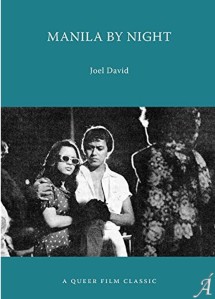
The imaging of lesbian desire in Philippine cinema has encountered the same difficulties that beset queer folk in conservative cultures everywhere. Since women are recipients of the male gaze, their bodies are allowed to be objectified, but love or sometimes even physical intimacy between them may be permitted only up to the point where male characters have to exercise their prerogative of owning their female partners. Lesbians in Philippine cinema have been more fortunate than their counterparts in other non-Western film cultures, with some depictions departing from the usual tragic or murderous or forcibly heterosexualized (“correctively raped,” to use the right-wing oxymoron) types of characters. The fountainhead of modern queer imaging in local films would be Ishmael Bernal’s Manila by Night (1980), where the butch lesbian figure is nevertheless punished by the narrative for her drug-peddling activities. Mel Chionglo’s Isabel Aquino: I Want to Live (1990) may perhaps be the closest to a politically correct adaptation of a real-life narrative, while Sigrid Andrea Bernardo’s Ang Huling Cha-Cha ni Anita (Anita’s Last Cha-Cha, 2013) is an exemplary and charming coming-out tale. Between these two samples, Tatlo … Magkasalo (1998) proves how difficult the journey has been. Its central female characters comprise a married woman conflicted by her bisexuality, a dying lesbian unable and unwilling to let go of her now-unavailable former partner, and an openly man-hating butch woman attached to both once-and-future lovers and creating difficult triangulated relations. Yet the narrative finds a way to reconcile all these impossible desires, ironically by allowing the straight male to realize, via a process of enlightenment, that his sexual exclusion matters less than the privilege he has of observing how women capable of same-sex love work out their differences among themselves. This makes understandable how Tatlo initially generated disapproving responses among PC observers as well as critics who tend to reject genre products. More recent observers have been attuned to its upholding of queer values, along with a cautiously realistic handling of class differences, where women without men have to constantly endure borderline-poverty conditions: the movie’s social contribution consists in asserting that the realization of radically novel familial relations, no matter how short-lived, is worth the cost of suffering the rejection of patriarchal systems.

Back to top
Return to Canon Decampment contents
Go to alphabetized filmmakers list

Á!


Canon Decampment: Eddie Garcia

[Click here (recommended) for desktop mode.]

Saan Nagtatago ang Pag-Ibig?

English Translation: Where Is Love Hiding?
Year of Release: 1987
Director: Eddie Garcia
Screenwriter: Armando Lao
(Adapted from the komiks by Gilda Olvidado)
Producer: Viva Films

Cast: Vilma Santos, Tonton Gutierrez, Ricky Davao, Gloria Romero, Alicia Alonzo, Cherie Gil, Alicia Vergel, Eddie Arenas, Perla Bautista, Joonee Gamboa, Suzanne Gonzales, Vicky Suba

When Rick unexpectedly gets his girlfriend Estella pregnant, he fears that his rich grandmother will refuse to give him a large inheritance out of disappointment. To prevent that, he convinces Estella to marry his mentally handicapped half-brother, Val. She reluctantly obliges and eventually lives with Rick’s family. But complications arise when she starts to develop feelings for Val.

Eddie Garcia’s directorial strength lay in glossy handling of complicated narratives, making him an ideal match for Viva melodramas. He also none too soon moved away from conservative male-centered material toward feminist subject matter. And with this Vilma Santos-starrer, he attained a peak of sorts with the help of an unusually inspired komiks adaptation and an equally inspired ensemble delivery. Known mainly for the line “Lagi na lang si Val, ang walang-malay na si Val” [Always blaming Val, the innocent Val], the film might be wrongly regarded as trafficking in sympathy for the mentally disabled. In fact it unexpectedly reverses the disadvantaged son’s marginal situation and makes us comprehend how he could win the loyalty and affection of his pretend-wife.

Back to top
Return to Canon Decampment contents
Go to alphabetized filmmakers list

Á!


Canon Decampment: William Pascual

[Click here (recommended) for desktop mode.]

Takaw Tukso

English Translation: Constant Craving
Additional Language: Chabacano de Cavite
Year of Release: 1986
Director: William Pascual
Screenwriter: Armando Lao
Producer: Ultravision Films

Cast: Gino Antonio, Julio Diaz, Jaclyn Jose, Anna Marie Gutierrez, Anita Linda, Lucita Soriano, Eva Darren, Tony Rubio

A solid friendship exists among Nestor, his fiancée Debbie, his cousin Boy, and Debbie’s friend Letty. But it gets shattered when a distraught Debbie elopes with Boy after she gets into a fight with her mother. The two get married but settle in the car-repair shop where Nestor lives and works. Tensions rise even further when true-hearted Letty weds Nestor and they live right beside Debbie and Boy.

Tragedy has conveniently become the coin of the realm of the senses, mainly because the medieval tendencies of Philippine Catholicism prefer that people who indulge in sexual pleasure must be made to pay—extravagantly, if possible—for their perceived transgression(s). The creative forces behind this project managed a way out of the predictability of this narrative approach by returning to the basics. It does this by grounding the material in the originary spirit of neorealism, as embodied in the frank sensuality of Luchino Visconte’s Ossessione (Obsession, 1943), a then-daring adaptation of James M. Cain’s occasionally banned crime novel The Postman Always Rings Twice (1934). With an observational expertise that would be the envy of veteran ethnographic filmmakers, Takaw Tukso (like Ossessione) envisions economically impoverished characters involved in dangerous games of seduction and clandestine assignations. Passion ultimately gets the better of their professional and friendly relations, and a comeuppance elevates the drama to the level of some of the most innovative strains in classical Greek theater.

Back to top
Return to Canon Decampment contents
Go to alphabetized filmmakers list

Á!


Canon Decampment: Chito S. Roño

[Click here (recommended) for desktop mode.]

1—Private Show

Year of Release: 1984
Director: Chito S. Roño (as Sixto Kayko)
Screenwriter: Ricky Lee
Producer: Clock Work Films International

Cast: Jaclyn Jose, Gino Antonio, Leopoldo Salcedo, Lucita Soriano, Yvonne, Aurora Boulevard, Vicky Varga, Johnny Vicar, Bella Flores, Ella Luansing, Angie Ferro

Myrna is a young but worldly-wise lass who shows up at Ador’s live-sex den to apply as a performer. She falls in love with Jimmy, her regular partner. However, her drug habit and his kidney problems strain their relationship. After breaking up with him, he decides to return to his hometown. She grows increasingly dependent on drugs and becomes indifferent to the worsening decadence in her environment and the degradations being done to her.

2—Curacha: Ang Babaeng Walang Pahinga

English Title: Curacha: A Woman Without Rest
Year of Release: 1998
Director: Chito S. Roño
Screenwriter: Ricky Lee
Producer: Regal Films

Cast: Rosanna Roces, Jaclyn Jose, Ara Mina, Ruby Moreno, Lucita Soriano, Maureen Mauricio, Mike Magat, Dick Israel, Tito Arevalo, Lito Legaspi, Richard Bonnin, Roy Alvarez, Tony Mabesa, Alex Cortez, Tom Olivar

Curacha, a friend of Myrna’s and a live-sex performer herself, witnesses an apparition of the Virgin Mary while praying in church: the lady walks down the altar toward her, slaps her, and she awakens to the announcement of another ongoing coup d’état. Since security forces blockaded the street where she exited, she has to find her way out, only to discover that the rest of the city has also lost its bearing.

Live-sex performers function as an index of the country’s destitution, restoring pornographic spectacle to its voyeuristic theatrical origin. The act of capturing their lives in film raises a paradox—How can a society with a media industry still need live-sex performances?—that, depending on how well the question is answered, can lead to several possible conclusions. In the instance of the martial-law era’s Private Show and the post-martial law period’s Curacha, the viewer is provided with a chronicle of the country’s continuing descent into an abyss of social and moral depravity, notwithstanding an undeniable step-up in the affluence of the elite. A perceptible maturation is also suggested by the casting of the best “bold” performers of their respective periods—the heartbreakingly waifish Jaclyn Jose of the 1980s and the boundlessly voluptuous Rosanna Roces of the ’90s. Both play characters who lose all claims to dignity yet refuse to surrender to unmitigated debauchery by foregrounding the fierce and unyielding combination of talent, warmth, humor, and sensual presence that mark the Filipina as the world has come to know her.

Back to top
Return to Canon Decampment contents
Go to alphabetized filmmakers list

1—Itanong Mo sa Buwan

English Translation: Go Ask the Moon
English Title: Moon Child
Additional Language: Chabacano de Cavite
Year of Release: 1988
Director: Chito S. Roño
Screenwriter: Armando Lao
Producer: Double M Films

Cast: Mark Gil, Anjo Yllana, Jaclyn Jose, Anita Linda, Tita Muñoz, Susan Africa, Mia Gutierrez, Lucita Soriano, Fernando Morato, Cris Vertido, Resty Vergara, Gamaliel Viray, Alan Glinoga, Jing Jing Manaloto, Aljon Jimenez, Jojo Reyes, Bodjie Pascua, Archi Adamos, PETA Kalinangan Ensemble

In the course of a botched bank robbery, a teller, Josie, is taken hostage by Angel, when his partner is killed. He takes her to the isolated rural home of Juana, an elderly lady. After Josie is rescued and Angel is seriously wounded, her husband, Sammy, has difficulty coming to terms with her version of events, especially since his mother is intent on maligning the woman he married. Conflicting statements made by Juana as well as the hospitalized Angel cast further doubt not just on Josie’s narrative but on her character as well.

2—La Vida Rosa

English Title: The Life of Rosa
Additional Language: Chabacano de Cavite
Year of Release: 2001
Director: Chito S. Roño
Screenwriter: Armando Lao
Producer: Star Cinema

Cast: Rosanna Roces, Diether Ocampo, Liza Lorena, Jiro Manio, Angel Aquino, Pen Medina, Jhong Hilario, Nonie Buencamino, Vic Diaz, Albert Martinez, Aurora Yumul, Olga Natividad, Katrina Nazario, Ihman Esturco, Rey Behar, Angie Ferro, Dodie Acuña, Joe Gruta, Cris Vertido, Krystle Zamora, Jackie Castillejos, Cris Michelena, Irma Adlawan, Tom Olivar, Connie Chua, Aurora Uding

After swiping a car from a mark charmed by Rosa, Dado decides he wants to transform the vehicle into a taxicab. Their decision incenses Tiyong, their gangleader, who sets in motion a series of events that leads to Dado whacking him. Lupo, Tiyong’s right-hand person, accepts the assassination since it allows him to take over the criminal organization. Rosa and Dado, however, dream of their own racket, one that will allow them to resettle Rosa’s son and blind mother and enable them to live in peace abroad.

Recognizing when a team effort provides productive dividends over time, Chito S. Roño reattempted the same approach that had worked for him with the twin triumphs of Private Show and Curacha: get a gifted scenarist to write material for the most talented sex symbol of the era. The formula didn’t pan out the same way it did for Ricky Lee’s scripts, since La Vida Rosa falters in comparison with Itanong Mo sa Buwan, despite an undeniable upgrade in Roño’s directorial skills. Then again, Itanong Mo surpasses most unruly-woman films anywhere, its novel structure and use of flashback enabling the narrative to raise issues not just about the reality of events but also the insidious effects of media celebrity, decades before the internet made this debilitating property of modern existence commonplace. For most of its running time until its main character capitulates to the dictates of her partner’s personal interests, La Vida Rosa similarly relishes its opportunity to function as an objective correlative of its lead performer’s remarkable autobiography.

Back to top
Return to Canon Decampment contents
Go to alphabetized filmmakers list

Bakit Kay Tagal ng Sandali?

English Translation: Why Does a Moment Take So Long?
English Title: A Moment Too Long
Year of Release: 1990
Director: Chito S. Roño
Screenwriter: Orlando Nadres
(With additional dialogue by Emmanuel H. Borlaza)
Producer: Viva Films

Cast: Dina Bonnevie, Julio Diaz, Eddie Garcia, Janice de Belen, Charito Solis, Ai-Ai de las Alas, Eva Ramos, Vangie Labalan, Elsa de Venecia, Gamy Viray, Koko Trinidad, Pocholo Montes, Jess Ramos

In his bid to get rich, Ted convinces his girlfriend Niña to marry his ailing and widowed boss, Edmundo. Ted believes that once Edmundo dies, his wealth will be inherited by Niña, which she can then share with her lover. But when Ted’s plan fails, he marries his boss’s daughter after she takes over Edmundo’s company. Soon, Ted and Niña realize how their ambitions extract a price they may each be unprepared to pay.

By its capacity for depicting the plight of women under a patriarchal system, melodrama has always had the potential to cross over into horror, and nowhere in Philippine cinema has that potential been realized than in the constant discharge of blood, sweat, and copious tears manifested in this film. Along the way a curious development takes place: the characters seem to have been aware that the country’s masculinist authoritarian experiment had recently failed, so the women wind up wresting control of the narrative, and wage war, and negotiate peace, with one another. For their part, the ultimately excluded males display some strength, and never of a constructive nature, only when they’re older—which means that eventually, they die off. The director’s benign bemusement with this lurid and giddy state of affairs provides the darkly comic distance that turns the presentation into a display of what literary and cultural critics call the carnivalesque (from Soviet-era scholar Mikhail Bakhtin’s marvelous dissertation), a seriocomic mode that enables its authors to combine contradictory effects such as tears, fears, and pained laughter.

Back to top
Return to Canon Decampment contents
Go to alphabetized filmmakers list

Alyas Stella Magtanggol

English Translation: Alias Stella Magtanggol
Alternate Title: Stella Magtanggol
Additional Languages: English, Japanese
Year of Release: 1992
Director: Chito S. Roño
Screenwriter: Ricky Lee
Producer: Seiko Films

Cast: Rita Avila, Romnick Sarmenta, Maritoni Fernandez, Gardo Verzosa, Lito Legaspi, Sylvia Sanchez, Vanessa Escaño, Allan Paule, Karen Timbol, Alicia Alonzo, Tony Mabesa, Ray Ventura, Lolie Mara, Dexter Doria, Shirley Tesoro, Evelyn Vargas, Edmund Cupcupin, Turko Cervantes, Dante Javier, Lora Luna

Adopted by a devout rural couple after she was abandoned by her birth mother, Stella grows up alienated from the values of her small town. In high school, the only friendship she maintains is with Wendy, who never runs out of pocket money but has to endure the sadistic treatment of the mayor. Frustrated by the sexual abstinence of her wholesome boyfriend, Stella turns to the family driver for stud service. The latter’s wife stabs him out of jealousy and he falls off a rooftop, where he and Stella were trysting, exposing their affair to the rest of the townspeople. After her father suffers a fatal heart attack because of her scandal, her mother banishes her from home. She adopts her mother’s family name, Magtanggol, and lives with Wendy, but they have to flee after the mayor’s heavy-handedness traumatizes her friend, nearly killing her. Both women wind up in Manila’s red-light district, where Stella finds gainful employment as a nightclub singer while manipulating the blandishments of a rich suitor and fooling around with a younger lover. Her strokes of good fortune, however, are compromised by her discovery that her boyfriend turns out to have a violently jealous streak.

A rare instance in Philippine cinema where an unruly-woman tale resolves in the main character’s favor without subjecting her to death, disability, or religious conversion, Alyas Stella Magtanggol even more surprisingly claims to have been based on a real-life story. The narrative facilitates this arrangement by devising a parallel scenario where Stella’s BFF is the character who pays the price of faithfully observing patriarchal and familial demands, thus making understandable Stella’s insistence on personal independence and readiness to rebel when her autonomy is challenged. A number of other ethical dictates are upended as well, starting with the configuration of homespun rusticity as an ideal to be upheld over productive female labor, even if the only available option happens to be sex work. The expected dangers of underworld involvement make their appearance even with a supposedly benign and cowardly potentate, but the film also provides a reversal in the historically specific disaster caused by the pyroclastic mudflows of Mount Pinatubo’s 1991 eruption: the now-abandoned structures half-buried in lahar, made to represent their former occupants’ defeated aspirations, serve as useful hiding places for people on the run in ASM. When the surviving characters find themselves in the same territory during the film’s climax, we find ourselves grasping for hope among the ruins, as they do as well.

Back to top
Return to Canon Decampment contents
Go to alphabetized filmmakers list

Bata Bata Paano Ka Ginawa?

English Translation: Little Child, How Were You Created?
English Title: Lea’s Story
Year of Release: 1998
Director: Chito S. Roño
Screenwriter: Lualhati Bautista
(Based on her 1988 novel)
Producer: Star Cinema Productions

Cast: Vilma Santos, Carlo Aquino, Serena Dalrymple, Albert Martinez, Ariel Rivera, Raymond Bagatsing, Cherry Pie Picache, Angel Aquino, Rosemarie Gil, Dexter Doria, Cita Astals, Andrea del Rosario, Lucy Quinto, Menggie Cobarrubias

For years, Lea has juggled both social work and single motherhood, for the sake of her children Ojie and Maya. But things get complicated when Raffy, Ojie’s father, returns with plans to bring along his son when he migrates to the US with his new wife. Worse, Maya’s father Ding often lashes out to mask his shortcomings as Lea’s live-in partner. As tensions rise, Lea learns what surviving in a patriarchal system really entails.

All the usual reservations about middle-class feminism get tempered by a necessary qualification when situated in a Third-World context. Lea, the central character of Bata Bata Paano Ka Ginawa?, is sufficiently gender-enlightened to know that she cannot expect any treatment equal to the men she opts to live with and live like. Hence in contrast with them, she winds up having to juggle egotistic partners, nosy neighbors, judgmental colleagues (in an educational institution, at that), and freaked-out offspring, all the while scrambling to earn just enough to maintain her independence. An overlay of irony stems from the fact that the film’s setting, like the source novel’s, was more or less after a people’s movement succeeded in ousting a fascist dictatorship, though not the oligarchic, clerical, and foreign-imperialist dominions that gave rise to it. After a few decades playing catch-up with Nora Aunor despite prematurely matching her in terms of local recognition, Vilma Santos manages to come into her own like never before or since. In BBPKG? she dexterously calibrates her trademark mix of charm, vulnerability, calculation, stubbornness, and restrained lust and rage into an unambiguously intoxicating cocktail, reminiscent of Aunor at her best. As a consequence, the movie’s thematic complexities and more-bitter-than-sweet conclusions can be gulped down without much resentment.

Back to top
Return to Canon Decampment contents
Go to alphabetized filmmakers list

Caregiver

Year of Release: 2008
Director: Chito S. Roño
Screenwriter: Chris Martinez
(Based on a story by Jewel C. Castro, Chris Martinez, Chito S. Roño)
Producers: ABS-CBN Film Productions & Star Cinema

Cast: Sharon Cuneta, John Estrada, Rica Peralejo, John Manalo, Makisig Morales, Jhong Hilario, Mickey Ferriols, Lotlot de Leon, Saul Reichlin, Matthew Rutherford, Claire Jeater, Marita Zobel, Anita Linda, Monique Wilson, Ima Castro, Boots Anson-Roa, Dexter Doria, Neil Ryan Sese, Gary Granada

Sarah Gonzales has to bid farewell to her colleagues, students, and family members when her husband, Teddy, asks her to join him abroad. She will be giving up a bright career as an English teacher to work as a caregiver, in exchange for far better pay. In London, she worries about Teddy’s profligacy and discovers he has not yet been certified as a nurse. In the meanwhile, a grumpy elderly patient, Mr. Morgan, finds in Sarah’s charm and honesty the kind of attention that his family failed to provide him with.

Released during the period when local critics considered mainstream releases unworthy of their attention, Caregiver stands as proof that blind willingness to mimic Western-sourced aesthetic evaluation standards leads down nonsensical and sometimes harmful pathways. Otherwise, the type of attention lavished on artsy “politicized” exercises that regular audiences would resolutely ignore could have been directed toward a standard-issue product that could finally serve as a useful starter text in comprehending the multilevelled complexities of the country’s labor-export policy. The narrative befittingly focuses on a young mother’s travails (apropos of the statistical reality of Overseas Filipino Worker demographics comprising mostly women), from giving up her expertise in a psychically fulfilling local career in exchange for better-paying menial work abroad, ensuring that the family members who’ll be left behind will continue functioning in her absence, and contending with the several domestic and professional challenges that beset migrants Othered by their race, class, and gender. Sharon Cuneta embodied the character at a perfect juncture in her career trajectory as a mature performer capable of acknowledging all manner of predicaments, complemented by perfectly cast players including foreign actors. The film portrays its OFW characters’ triumph in bittersweet terms—a final observational truth that ultimately reflects on a system of governance that cares less for its citizens’ capacity to thrive within their country’s borders, among their own people, than for their placement in a global slave economy so as not to stanch the flow of remittances.

Back to top
Return to Canon Decampment contents
Go to alphabetized filmmakers list

Signal Rock

Additional Languages: German & Waray
Year of Release: 2018
Director: Chito S. Roño
Screenwriter: Rody Vera
Producers: Available Light Productions & Regal Films

Cast: Christian Bables, Daria Ramirez, Nanding Josef, Mon Confiado, Elora Españo, Keanna Reeves, Francis Magundayao, Archie Adamos, Sue Prado, Jomari Umpa, Ces Quesada, Kokoy de Santos, Mara Lopez, Ruby Ruiz, Dido de la Paz, Judy Ann Santos (voice)

Intoy serves as go-between of his Finland-based sister Vicky (whom he contacts via the stable reception provided by the Magasang Rock Formation, colloquially called signal rock) and his family. He also helps out various townsfolk in his capacity as jack of all trades, proud member of his community, and occasional delinquent indulged by everyone, including the police chief. When he falls in love with Rachel, however, he realizes that like his sister and the other young women of the town, she might eventually leave him to work elsewhere and marry a rich foreigner for convenience. At this point, his sister informs him that she might lose custody of her daughter to her abusive ex-boyfriend unless Intoy helps her prove that she has the means to support the child. Intoy realizes he has no choice except to call on people to return the favors he had extended them.

Intended as the middle installment in a trilogy on Biri Island in Samar province, Signal Rock distinguishes itself from its predecessor, Badil (Dynamite Fishing, 2013) by being less overtly political yet more impactful via its more extensively developed thematic discourse. Once more, the narrative is focalized via the crisis situations confronted by a young man, who this time needs to solicit the support of his tight-knit community in order to prevent his sister, a migrant wife, from being deported through the machinations of the abusive foreigner that she married. Intoy, the central character, realizes that the same forces that swept up his sister and his best friend’s girlfriend will soon deprive him of his own shot at small-town happiness, and that all he could do is ensure that the women who left maintain enough stature and equanimity so that their role as their respective families’ providers does not get compromised. Yet Signal Rock works out a persuasive critique of the Philippines’s continuing reliance on labor export, by counterposing the benefits (and excesses) of globalization with the manifold pleasures and satisfactions of homespun values and practices. The strategy may seem conventional, but the film turns out to be anything but. The emphasis on male characters, for example, proceeds from the outflow of women from the town into the world of effective overseas slave labor; the remaining citizens’ insistence on indulging in tradition locks them in a cycle of perpetual reliance on foreign-currency remittances; the perjurious claim that the entire town conspires in making is intended to save one of their own, but it also suggests where the tendency of elected officials to engage in plundering the national treasury comes from. Signal Rock is a throwback as well as a tribute to the achievement of the artists of the Marcos dictatorship, who were able to package essential and painful analyses of then-existing conditions in seemingly fun-filled, devil-may-care celebrations of the quotidian. Above all, as much as it casts a distrustful eye on the system that afflicts the most helpless among us, it also invites us to share in extolling the life force and survival instinct of these same people. It would not be such a stretch to realize that the movie embodies not just Filipino characters (literally), but the Filipino spirit itself.

Back to top
Return to Canon Decampment contents
Go to alphabetized filmmakers list

Á!


Canon Decampment: Tikoy Aguiluz

[Click here (recommended) for desktop mode.]

Boatman

Year of Release: 1985
Director: Tikoy Aguiluz
Screenwriters: Alfred Yuson & Raffy Guerrero
(From a story by Tikoy Aguiluz, with additional dialogue by Jose F. Lacaba)
Producer: AMA Communications

Cast: Ronnie Lazaro, Sarsi Emmanuelle, Suzanne Love, Josephine Manuel, Jonas Sebastian, Eddie Arenas, Bella Flores, Mario Escudero, Alfredo Navarro Salanga, Susan Africa, Dennis Marasigan, Cloyd Robinson, Ding Navasero

Felipe leaves his job as a boatman ferrying tourists to and from Laguna’s Pagsanjan Falls to try his luck in Manila. He ends up as a live-sex performer and falls in love with his partner Gigi. He also starts a relationship with Emily, an American woman who hires him as her boytoy. As city life consumes him, Felipe realizes that there is a price he must pay for his carnal exploits.

At the height of the people-power movement, critics of the Marcoses were eager to charge the regime with immorality, and the revitalization of the sex-film genre was meant to stand as proof. Admittedly the libertarian atmosphere of the time was cynically intended to demonstrate to foreign observers that film artists enjoyed crucial amounts of freedom and institutional support. Despite this unstable situation, the local industry did manage to yield a number of noteworthy outputs. Boatman, with its disturbing, fevered fusion of high-art aesthetics and underworld debauchery, counts as one of them. The talents behind the film overlapped with those involved in anti-dictatorship projects, so the spectacle of a commercially successful sex-obsessed product criticizing the same socio-political system that gave rise to it can now be better appreciated and evaluated in retrospect.

Back to top
Return to Canon Decampment contents
Go to alphabetized filmmakers list

Segurista

English Translations: Perfectionist; Dead Sure
English Title: The Insurance Agent
Year of Release: 1995
Director: Tikoy Aguiluz
Screenwriters: Jose F. Lacaba & Amado Lacuesta
(From a story by Tikoy Aguiluz, Jose F. Lacaba, Amado Lacuesta)
Producer: Neo Films

Cast: Michelle Aldana, Gary Estrada, Ruby Moreno, Albert Martinez, Julio Diaz, Pen Medina, Eddie Rodriguez, Liza Lorena, Suzette Ranillo, Teresa Loyzaga, Anthony Castelo, Roy Rodrigo, Manjo del Mundo, Celsar Bendigo, Evelyn Vargas, Melisse Santiago, Vangie Labalan, Pocholo Montes, Edgar Santiago, Mon Fernandez, Allan Garcia, Elan Villafuerte, Philip Lazaro, Ace Espinosa, Taka Musara, Maritess Fuentes, Tess Dumpit

To support her family devastated by the inundation of lahar from Mount Pinatubo, Karen hits upon the novel idea of selling insurance to the clients she encounters as a guest relations officer (the Philippine euphemism for bar hostess), through which she attains a level of success that makes her the highest earner in her batch of insurance agents. Her husband and daughter in Pampanga remain unaware of her less-than-savory strategy, and she knows enough about her patrons, from the example of her constantly lovelorn roommate Ruby, to keep professional distance from them even while allowing them access to her body. A number of clients, however, are attracted to her unattainability: one of them courts Ruby to get close to her while another decides to break up with his family despite her protestation. An even more dangerous obsessive, one that she fails to account for, is the person who conceals his desire for her.

Segurista is a film very much worth watching, for the most part. It starts out as a soft-core sex comedy, exceptional in the face of the usual tragic-moralistic depictions of carnal transgressions in Philippine cinema. It then takes a step forward without abandoning its observational wryness, into a laudable and women-sympathetic colloquy on social mores and inadequate disaster response, as well as on contrasts and parallels among various professions. Along the way it boasts of accomplished technique and performances, although it underutilizes the exceptional Ruby Moreno (who had made her own star turn in a 1993 Japanese masterwork, Sai Yôichi’s All Under the Moon). Its only serious misstep is when it opts for a (mercifully shortish) resolution that demonizes the lowest-ranking worker in its narrative universe—the usual exclusion of the lumpen proletariat from progressive concerns that orthodox leftists unfortunately still consider acceptable, and that has marred too many otherwise noteworthy works in the country.

Back to top
Return to Canon Decampment contents
Go to alphabetized filmmakers list

Biyaheng Langit

English Translation: Trip to Heaven
English Title: Paradise Express
Year of Release: 2000
Director: Tikoy Aguiluz
Screenwriters: Ianco dela Cruz & Rey Ventura
(From a story by Tikoy Aguiluz & Mirana Medina-Bhunjun)
Producers: GMA Films & Viva Films

Cast: Joyce Jimenez, Mark Anthony Fernandez, Susan Africa, Christian Alvear, Kent Ambos, John Arcilla, Jack Barri, Nida Blanca, Menggie Cobarrubias, Cholo Escaño, Bong Gutierrez, Jeanette Joaquin, Vangie Labalan, Rj Leyran, Bert Martinez, Ali Navarro, Robert Oliviero, Bembol Roco, Boy Roque, Shermaine Santiago, Bert Martinez

Bea, a Filipino-American visiting the Philippines without her parents, finds herself drawn to the world of gambling where her grandmother amuses herself as a senior citizen. She winds up losing the money she was hoping to save so she could live independently, and finds herself buried deeper in debt when an amount she borrows from her best friend also gets squandered on a bad bet. She hooks up with Danny, an orphaned enforcer who collects debts for Bossing, a gambling lord. Still hoping to recover, both of them splurge on funds that belong to Bossing. But their losses force them to hide out in Danny’s slum residence and work out ways to appease Bossing, who has taken an interest in Bea. Their confrontation with Bossing results in bloodshed, so Danny flees out of town with Bea to ask help from a semi-retired ganglord who also has a score to settle with Bossing.

Biyaheng Langit is atypically straightforward for a Tikoy Aguiluz film. That reflects as much on the anxieties that beset local practitioners ever since critical awareness and global validation became ideals to be cherished and pursued. It also indicates how consistently productive filmmakers can occasionally find coasting irresistible, with enough collegial support from local genre specialists to assure them that getting by has its own rewards. Pinoy action films during the late 20th century were at peak productivity, so enough personnel and actors could be conscripted to execute an undertaking with just the right amount of thrills and (courtesy of Aguiluz’s earlier specialization) ribaldry. Folks may be inclined to point out Mark Anthony Fernandez’s relation to his aunt Merle, who pioneered in bomba films, plus his father Rudy, a top action star. But the link goes farther and deeper: not only was his grandfather Gregorio an overlooked First Golden Age director, he was also a remarkable performer, although unfortunately only his supporting performances in his own films remain, and MAF proves himself fully worthy of the association. Beyond these admittedly incidental felicities (marred by the harrowing killing of Nida Blanca under resemblant circumstances), the film probes into the phenomenon of underworld-organized gambling—a concern that was already showing signs of infesting the higher seats of government by this time, and that would continue causing official vexations through subsequent administrations.

Back to top
Return to Canon Decampment contents
Go to alphabetized filmmakers list

Á!


Canon Decampment: Elwood Perez

[Click here (recommended) for desktop mode.]

Silip

English Translation: Peek
English Title: Daughters of Eve
Year of Release: 1985
Director: Elwood Perez
Screenwriter: Ricky Lee
Producer: Viking Films International

Cast: Maria Isabel Lopez, Sarsi Emmanuelle, Mark Joseph, Myra Manibog, Pia Zabale, Daren Craig Johnson, Michael Angelo, Arwin Rogelio, Gloria Andrade, Cherriebee Santos

In a remote village, Tonya teaches catechism to the local children while trying to repress the lust she still feels for Simon, her former suitor. Tensions rise when Tonya’s childhood friend Selda returns to the village after years of living in the city. Selda’s sexual emancipation challenges Tonya’s pious facade and soon, their clashing beliefs lead to dire consequences for themselves and the people around them.

Even in terms of its best intentions, Ferdinand Marcos’s martial-law dictatorship inadvertently managed to subvert itself. Silip, admired by the “wrong” crowd, might ultimately serve as the means by which this principle could be demonstrated. It was set in the same locale, written by the same scenarist, and screened at the same venue as the Experimental Cinema of the Philippines’s most celebrated work, Ishmael Bernal’s Himala (1982). Yet Silip re-envisions its unacknowledged predecessor’s female bonding, between the miracle worker and her brothel-operating best friend, as a quest for sexual awakening and fulfillment, and pursues this earthy project to its nihilistic extreme. The ambition itself is quite jaw-dropping, considering the reputations that the artists and the support institution had staked on the project. Not surprisingly, the Church-supported February 1986 people-power uprising ensured that the movie would never be able to contribute to mainstream cultural discourse. As a result, Silip has remained associated with the type of disreputable films that could be shown only at censorship-exempt theaters during the Marcos period and at far more dubious venues afterward. Incredible as it may sound, this may be the closest Philippine cinema has ever come to the smutty sublimity of queer poet, philosopher, and filmmaker Pier Paolo Pasolini, several of whose spiritually inflected film discourses were also infused with pornographic imagery and denounced by moralists accordingly.

Back to top
Return to Canon Decampment contents
Go to alphabetized filmmakers list

Bilangin ang Bituin sa Langit

English Translation: Count the Stars in Heaven
Additional Language: English
Year of Release: 1989
Director: Elwood Perez
Screenwriters: Jake Cocadiz & Jigz Recto
Producer: Regal Films

Cast: Nora Aunor, Tirso Cruz III, Gloria Romero, Perla Bautista, Miguel Rodriguez, Ana Margarita Gonzales, Vangie Labalan, Mario Escudero, Flora Gasser, Beverly Salviejo, Rolando Tinio, Ella Luansing, Deborah Sun, Tess Dumpit

Peasant girl Magnolia has always loved her cruel landowner’s son, Anselmo. But their relationship turns sour as Magnolia, through hard work, becomes rich, and the indolence of Anselmo’s family causes them to lose their wealth. When Magnolia gets pregnant after a drunken tryst with Anselmo, she keeps this a secret from him. Years later, a romance between her daughter and Anselmo’s son forces her to deal with the resentment she has been harboring.

In an ideal world this film would be held up as Philippine cinema’s most successful sample of progressive genre transformation, a concept derived from the ground-breaking Cahiers du Cinéma editorial “Cinema/Ideology/Criticism,” written in 1969 by Jean-Louis Comolli and Jean Narboni. The essay argued, among other points, that certain films, especially commercial projects, may be saddled with conventional material; yet filmmakers (such as Alfred Hitchcock) with sufficient mastery in the medium can utilize style as a means of providing critical commentary on content. Regal Films, with Elwood Perez as director, revived the wildly successful but then-already long-dormant Guy-and-Pip love team via the production company’s previous installments, Till We Meet Again and I Can’t Stop Loving You (both 1985). Perez continued to tinker with the components—usually involving class conflicts—to come up with increasingly ambitious diversions. With Bilangin ang Bituin sa Langit, he went whole-hog with an epic melodrama with period elements and fan-pleasing contrivances, including having Nora Aunor voice a mestiza singer and getting the central couple to play parents as well as their own children. No other local performer could pull off a role that required over-the-top dramatization and playful self-awareness in the same instance, and Aunor had by then attained a performing peak that seemed destined to run for as long as she could stay alive.

Back to top
Return to Canon Decampment contents
Go to alphabetized filmmakers list

Ang Totoong Buhay ni Pacita M.

English Title: The Real Life of Pacita M.
Year of Release: 1991
Director: Elwood Perez
Screenwriter: Ricky Lee
Producer: MRN Film International

Cast: Nora Aunor, Armida Siguion-Reyna, Lotlot de Leon, Juan Rodrigo, Subas Herrero, Marissa Delgado, Dexter Doria, Marilyn Villamayor, Eddie Infante, Alma Moreno, John Rendez

Pacita is a sassy nightclub singer by night, famed for her bawdy songs and repartee. But by day, she is a loving single parent to her only child, Grace, who is about to leave for Australia after bagging a college scholarship. When a shooting accident leaves Grace in a coma, Pacita’s resolve as a mother will be tested as she faces a slew of problems, not the least of which is her meddlesome and judgmental mother-in-law.

When Nora Aunor undertook the role of an unruly, obsessive nightclub performer, she had just decided to shelve her own auteur production, Greatest Performance (1989), on which she had completed principal photography as performer, writer, and director. Ang Totoong Buhay ni Pacita M. resonates with her understanding of the creative process as well as the insights she had accumulated from decades in the profession. Also by then making an impressive crossover to the legitimate stage via a couple of strenuous productions mounted by the Philippine Educational Theater Association, she apparently decided to amplify her execution of the title character in Pacita M., and only wound up proving that even when it comes to histrionic overkill, no one could do it as well as she could. The movie advances an enlightened pro-euthanasic argument, which serves the purpose of providing a useful message for those who prefer to find any.

Back to top
Return to Canon Decampment contents
Go to alphabetized filmmakers list

Otso

English Translation: Eight
Year of Release: 2013 / B&W with Color
Director: Elwood Perez
Screenwriters: Vince Tañada & Elwood Perez
Producers: Film Development Council of the Philippines & Earth Moving Pictures

Cast: Vince Tañada, Monique Azerreda, Gabby Bautista, Anita Linda, Jun Urbano, Vangie Labalan, Mark Joseph Garde, Jordan Ladra, Adelle Ibarrientos, Cris Lim, Cindy Liper, Andrew Leavold

Lex returns from Los Angeles to Manila to work on a script for an indie film. After moving to a unit in a run-down condominium, he meets his neighbors—including the sultry Sabina and her aunt, actress Anita Linda, who owns the condo—and they inspire him as he writes. But during a birthday party for Anita, Lex realizes that his observations about what goes on around him are not what they seem.

Philippine cinema has never been known for late-career swings. In contrast with what John Grierson once said of Josef von Sternberg, “When a director dies, he becomes a photographer,” Filipino directors tend to turn into religious moralizers, if not proselytizers. This probably explains why the bewildering left-field turn of a box-office enfant terrible into a full-blown exponent of semi-autobiographical explorations has left mainstream film critics—i.e., the ones organized into award-giving bodies—out in the dark, pun incidental. Elwood Perez had brought on board enough of his audience-oriented skills to ensure that Otso could still work on the level of visual pleasure. The spectacle however of an always-too-successful blockbuster director returning from retirement and not just challenging established taste-mongers, but also overturning their list of favored indie-digital practitioners, must have stung those who preferred to conduct their business with self-certain constancy. The key to the film’s unique and unexpected triumph is scriptwriter and lead performer Vince Tañada, liberated for the moment from his history-based stage material. With Otso, he committed to the fever-dream collaboration with the fervor of someone who has been given an opportunity to make history, rather than interpreting it, for a change. Perez intended Otso, which was about a scriptwriter’s travails, to be the first installment of a personal trilogy drawn from his professional experiences: it was followed by Esoterika: Maynila (Esoterica: Manila, 2014), also with Tañada in a prominent role, about a komiks illustrator; and by the still-to-be-completed and provisionally titled #Mnemonics (Vaya con Dios) (meaning God Be with You), his tribute to 1960s movie queen Amalia Fuentes, with whom he made some of his early films.

Back to top
Return to Canon Decampment contents
Go to alphabetized filmmakers list

Á!