Tag Archives: canon

Canon Decampment: Eduardo de Castro

[Click here (recommended) for desktop mode.]

Zamboanga: A Fanciful Tale of Moro Sea Gypsies

Alternate Title: Fury in Paradise; Native Bride
Languages: English, Tausug
Year of Release: 1937 / B&W
Director: Eduardo de Castro
Screenwriters: Bob Wagner & Billy Icasiano
Producer: Filippine Films

Cast: Fernando Poe, Rosa del Rosario, Johnny Monteiro

Minda, granddaughter of Datu Tanbuong, is set to be married to the pearl diver Danao. But the leader of another tribe, Hadji Razul, also wants Minda. He connives with a renegade American captain to kidnap the young lady when Danao goes on a journey. When the pearl diver returns, a massive tribal war ensues and ultimately determines Minda’s fate.

The earliest available Pinoy feature film until 2021[1] also manages to be the best among all surviving pre-World War II local features. None of the early critical accounts gave it much importance, since it was intended to showcase the country’s potential as the Asian counterpart of Hollywood. But those limitations—excessive polish and exoticization, half-naked eye-candy performers, gimmicky underwater photography, manic-yet-dismissible, though also politically incorrect, plot developments—became key to its foreign success and gave it a rare shot at preservation. The current available print has characters speaking native languages, but a voice-of-god narrator overlays the entire proceedings and tells the intended foreign audience how to respond. A seemingly easy-to-forget diversion, whose extreme watchability gives it a distinction that most latter-day films would be grateful to possess, and whose innocent, rambunctious spirit sets it off from the too-reverential though occasionally also prurient handling that marked later treatments of Philippine ethnic material.

Note

[1] Film archivist-historian Teddy O. Co explained in a message that the only known copy of Carlos Vander Tolosa’s Diwata ng Karagatan (Spirit of the Ocean, produced in 1936 by Parlatone Hispano Filipino) “is at the Royal Belgian Film Archives. It’s been there for decades, hidden under the title Wong le tyran, and dubbed into French. Its movie ad advertised it as having been released in Europe. But it’s less than 60 minutes, so a lot has been excised. Perhaps the musical parts, to make it a more action-packed film. It was also released (according to Hammy Sotto) under the title South Seas. To date no one has acquired a copy yet here so far, but a few people know about it…. It has a very young Rogelio de la Rosa” (Facebook Messenger exchange, Sept. 9, 2021). See as well an unresolved query about a 49-minute film (screened at Manila’s silent film festival), produced in 1934 and directed by John Nelson, titled “Is Silent Flick Brides of Sulu Pinoy or Kano?” (Carmela G. Lapeña, GMA News Online, Aug. 27, 2011). On October 31, 2025, film historian Nick Deocampo announced that was able to confirm in person the existence of the filmprint.

Back to top
Return to Canon Decampment contents
Go to alphabetized filmmakers list

Á!
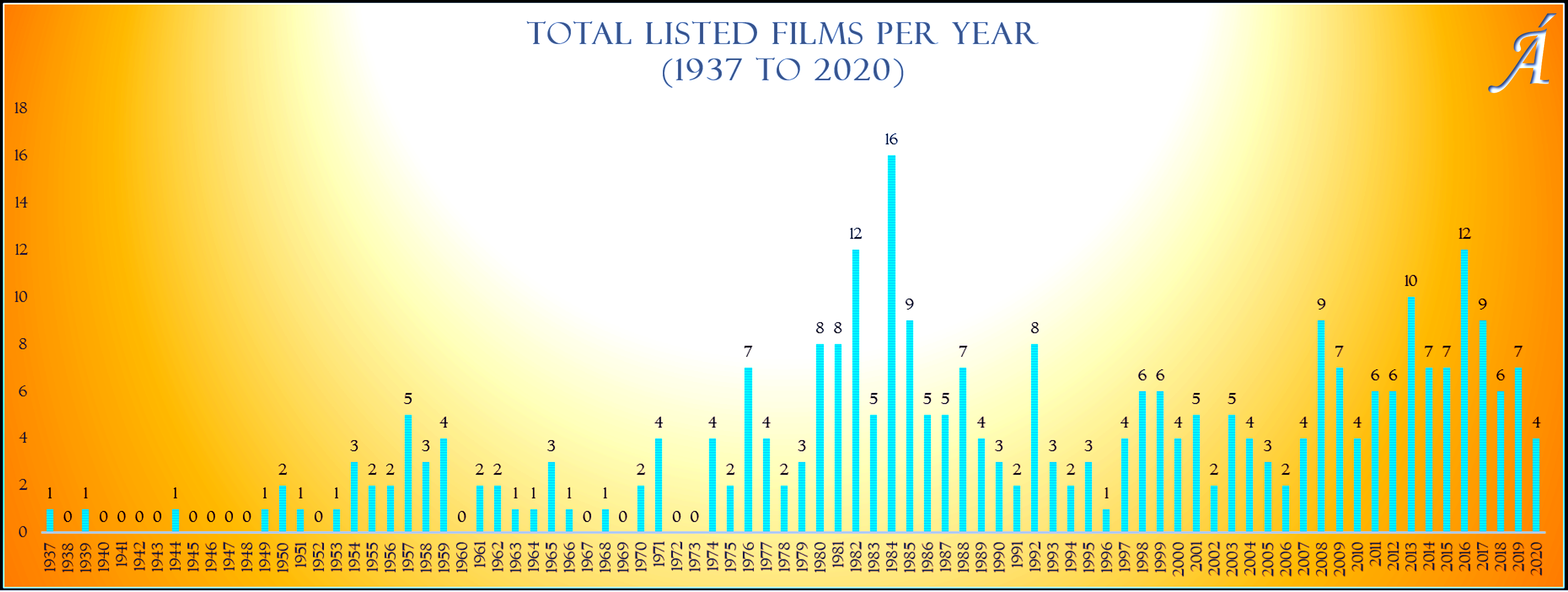

Canon Decampment: Alphabetized List of Filmmakers with Their Respective Film Titles

[For a larger image, please click on picture.]

Click here to return to the book’s landing page. To read the links below in desktop mode (recommended), click here. Titles (305 so far, from 127 directorial entries) connected by an ampersand (“&”) are sufficiently related and thereby share the same singular review after their respective descriptions and synopses.

Click on the following to navigate more quickly through the list: B; C; D; E; F; G; I; J; K; L; M; N; O; P; R; S; T; V; Z.

Abaya, Matthew: Vampariah, 2016.

Abe Yutaka – see de Leon, Gerardo, & Abe Yutaka.

Abrahan, Giancarlo: Dagitab, 2014; Sila-Sila, 2019.

Acedillo, Vic Jr.: Ang Nerseri, 2009.

Aguiluz, Tikoy: Boatman, 1985; Segurista, 1995; Biyaheng Langit, 2000.

Alix, Adolfo Jr.: Tambolista [as Adolfo Borinaga Alix Jr.], 2007; Imoral [as Adolfo B. Alix Jr.], 2008; Isda, 2011; Porno [as Adolfo Borinaga Alix Jr.], 2013; Madilim ang Gabi [as Adolfo Borinaga Alix Jr.], 2017.

Altarejos, Joselito: Ang Lihim ni Antonio, 2008; Unfriend [as J Altarejos], 2014; Jino to Mari, 2019.

Aunor, Nora: Greatest Performance [as Guy; unfinished], 1989.

Avellana, Lamberto V.: Anak Dalita, 1956; Sarjan Hassan, 1958; Nick Joaquin’s A Portrait of the Artist as Filipino, 1965; The Evil Within, 1970.

Back to top

Barbarona, Arnel: Tu Pug Imatuy, 2017.

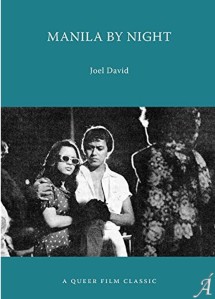
Bernal, Ishmael: Pagdating sa Dulo, 1971; Lumapit … Lumayo ang Umaga, 1975; Ligaw na Bulaklak, 1976; Nunal sa Tubig, 1976; Nonoy Marcelo’s Tisoy!, 1977; Ikaw Ay Akin, 1978; Salawahan, 1979; Aliw, 1979; Manila by Night, 1980; Pabling, 1981; 1) Relasyon, 1982 & 2) Broken Marriage, 1983; Himala, 1982; Working Girls, 1984; Hinugot sa Langit, 1985.

Bernal, Joyce: 1) Booba [as Binibining Joyce Bernal], 2001 & 2) Masikip sa Dibdib: The Boobita Rose Story [as Binibining Joyce Bernal], 2004; Kimmy Dora: Kambal sa Kiyeme [as Binibining Joyce Bernal], 2009.

Bernardo, Sigrid Andrea: Ang Huling Cha-Cha ni Anita (Anita’s Last Cha-Cha) [as Sigrid Andrea P. Bernardo], 2013; Lorna [as Sigrid Andrea P. Bernardo], 2014; UnTrue [as Sigrid Andrea P. Bernardo], 2019.

Borlaza, Emmanuel H.: 1) Bukas Luluhod ang mga Tala, 1984; 2) Bituing Walang Ningning, 1985; Stolen Moments, 1987.

Brocka, Lino: Tubog sa Ginto, 1970; Stardoom, 1971; Tinimbang Ka Ngunit Kulang, 1974; Maynila: Sa mga Kuko ng Liwanag, 1975; Insiang, 1976; Jaguar, 1979; Bona, 1980; Cain at Abel, 1982; 1) Bayan Ko: Kapit sa Patalim, 1984 & 2) Orapronobis, 1989; Miguelito: Batang Rebelde, 1985; Babangon Ako’t Dudurugin Kita, 1989; Hahamakin Lahat, 1990; Gumapang Ka sa Lusak, 1990.

Back to top

Cabreira, Junn P.: Beloy Montemayor Jr.: Tirador ng Cebu, 1993.

Castillo, Celso Ad.: Asedillo, 1971; Daluyong at Habagat, 1976; Burlesk Queen, 1977; Celso Ad. Castillo’s Totoy Boogie, 1980; Uhaw na Dagat, 1981; Paradise Inn, 1985.

Castro, Jade: Zombadings 1: Patayin sa Shokot si Remington, 2011; LSS, 2019.

Cayado, Tony: Mga Ligaw na Bulaklak, 1957.

Chionglo, Mel: Playgirl, 1981; Sinner or Saint, 1984; 1) Nasaan Ka Nang Kailangan Kita, 1986 & 2) Paano Kung Wala Ka Na, 1987; Babaing Hampaslupa, 1988; Developing Stories: Lucia, 1992; 1) Sibak: Midnight Dancers, 1994 & 2) Burlesk King, 1999 & 3) Twilight Dancers, 2006; Iadya Mo Kami, 2016.

Chui Chung-San, Alan, & Yuen Bun: Mabangis na Lungsod, 1995.

Conde, Conrado: Talipandas, 1958.

Conde, Manuel: Genghis Khan [credited to Lou Salvador], 1950.

Cruz-Alviar, Mae: Bride for Rent [as Mae Czarina Cruz], 2014.

Back to top

Dayao, Dodo: Midnight in a Perfect World, 2020.

Dayoc, Sheron R.: Halaw, 2010.

de Castro, Eduardo: Zamboanga: A Fanciful Tale of Moro Sea Gypsies, 1937.

de Guia, Eric – see Tahimik, Kidlat.

de Guzman, Susana C.: Lupang Pangako [incomplete], 1949.

dela Cruz, Abbo Q.: Hubad na Pangarap, 1987.

Dela Cruz, Emmanuel: Sarong Banggi, 2005.

de Leon, Gerardo: Sisa, 1951; Dyesebel, 1953; Pedro Penduko, 1954; Sanda Wong, 1955; Terror Is a Man [as Gerry de Leon], 1959; The Moises Padilla Story, 1961; El Filibusterismo, 1962; Women in Cages [as Gerry de Leon], 1971.

de Leon, Gerardo, & Abe Yutaka: Dawn of Freedom, 1944.

De Leon, Mike: Itim, 1976; Kakabakaba Ka Ba?, 1980; 1) Kisapmata, 1981 & 2) Batch ’81, 1982; Sister Stella L., 1984; Bilanggo sa Dilim, 1986; Bayaning 3rd World, 1999.

Deligero, Keith: Iskalawags, 2013; Lily, 2016; A Short History of a Few Bad Things, 2018.

de los Reyes, Maryo J.: Schoolgirls, 1982; Diosa, 1982; Bagets, 1984; Kaya Kong Abutin ang Langit, 1984; Anak ni Waray vs. Anak ni Biday, 1984; Dinampot Ka Lang sa Putik, 1988; Magnifico, 2003.

del Rosario, Joey: Kahit Pader Gigibain Ko, 1998.

Deramas, Wenn V.: Ang Tanging Ina, 2003.

Diaz, Lav: Hesus, Rebolusyunaryo, 2002; Florentina Hubaldo, CTE, 2012; Norte, Hangganan ng Kasaysayan, 2013.

Diaz-Abaya, Marilou: 1) Brutal, 1980 & 2) Moral, 1982; Karnal, 1983; Sensual, 1986; May Nagmamahal sa Iyo, 1996; Milagros, 1997.

Dulay, Zig Madamba: Bambanti, 2015.

Dulu, Dolly: The Boy Foretold by the Stars, 2020.

Back to top

Espia, Hannah: Transit, 2013.

Esteban, Tata: Alapaap, 1984.

Estella, Ramon A.: Kembali Saorang, 1957; Samseng, 1959; Saudagar Minyak Urat, 1959; Pusaka Pontianak, 1965.

Back to top

Fajardo, Lawrence: Amok, 2011; Posas, 2012; The Strangers, 2012; Imbisibol, 2015.

Fernandez, Gregorio: Kontrabando, 1950; Prinsipe Teñoso, 1954; 1) Higit sa Lahat [as Dr. Gregorio Fernandez], 1955 & 2) Luksang Tagumpay [incomplete], 1956; Hukom Roldan [as Dr. Gregorio Fernandez], 1957; Malvarosa [as Dr. Gregorio Fernandez], 1958.

Fiola, Bagane: Baboy Halas: Wailings in the Forest, 2016.

Back to top

Gallaga, Peque: Oro, Plata, Mata, 1982; Virgin Forest, 1985; Scorpio Nights, 1985.

Gallaga, Peque, & Lore Reyes: 1) Tiyanak, 1988 & 2) Aswang, 1992; Sonata, 2013.

Gallardo, Cesar: Geron Busabos: Ang Batang Quiapo, 1964.

Garces, Armando: Sino ang Maysala?, 1957.

Garcia, Eddie: Saan Nagtatago ang Pag-Ibig?, 1987.

Garcia-Molina, Cathy – see Garcia-Sampana, Cathy.

Garcia-Sampana, Cathy: One More Chance [as Cathy Garcia-Molina], 2007.

Gosiengfiao, Joey: La Paloma, 1974; Underage, 1980.

Guillen, Laurice: Kasal?, 1980; Salome, 1981; Init sa Magdamag, 1983; Kung Mahawi Man ang Ulap, 1984; Sumayaw Ka Salome, 1992; Dahil Mahal Kita: The Dolzura Cortez Story, 1993.

Back to top

Ignacio, Louie: Area [as Luisito Lagdameo Ignacio], 2016.

Illenberger, Tara: Brutus, ang Paglalakbay, 2008; High Tide [as Tara Barrera Illenberger], 2017.

Intalan, Perci M.: Dementia, 2014.

Back to top

Jadaone, Antoinette: That Thing Called Tadhana, 2014.

Jamora, Marie: Ang Nawawala, 2012.

Jarlego, Ike Jr.: Tigasin, 1999.

Jeturian, Jeffrey: Pila-Balde, 1999; Tuhog, 2001; 1) Bridal Shower, 2004 & 2) Minsan Pa, 2004; Kubrador, 2006; Ekstra, 2013.

Jover, Ralston: 1) Da Dog Show [as Ralston G. Jover], 2015 & 2) Hamog [as Ralston G. Jover], 2015; Rene Villanueva’s Hiblang Abo [as Ralston G. Jover], 2016; Bomba [as Ralston Gonzales Jover], 2017; Latay (Battered Husband) [as Ralston Gonzales Jover], 2019.

Back to top

Kayko, Sixto – see Roño, Chito S.

Khavn: 1) Ang Pamilyang Kumakain ng Lupa, 2005 & 2) Ang Napakaigsing Buhay ng Alipato, 2016; Pusong Wazak: Isa Na Namang Kwento ng Pag-ibig sa Pagitan ng Kriminal at Puta, 2014; Desaparadiso: Corrido at Buhay na Pinagdaanan nang Tatlong Principeng Magcacapatid na Anac nang Haring Fernando at nang Reina Valeriana sa Cahariang Berbania, 2015; Balangiga: Howling Wilderness, 2017.

Kim Bong-han: The Golden Holiday, 2020.

Back to top

Lamangan, Joel: Hubog [as Joel C. Lamangan], 2001; Walang Kawala [as Joel C. Lamangan], 2008; Burgos, 2013.

Lamasan, Olivia M.: Minsan, Minahal Kita, 2000; Milan, 2004.

Lana, Jun Robles: Die Beautiful, 2016.

Lao, Armando: Biyaheng Lupa, 2009.

Laxamana, Jason Paul: The Day After Valentine’s, 2018.

Lerner, Irving: Cry of Battle, 1963.

Back to top

Mambo, Rico – see dela Cruz, Abbo Q.

Marcos, Pepe: Tubusin Mo ng Dugo, 1988.

Mardoquio, Arnel: Ang Paglalakbay ng mga Bituin sa Gabing Madilim, 2012.

Marquez, Artemio: The Untold Story of Melanie Marquez, 1987; Sa Puso Ko Hahalik ang Mundo, 1988.

Martin, Raya: Independencia, 2009.

Martinez, Chris: Here Comes the Bride, 2010.

Matti, Erik: On the Job, 2013.

Meily, Mark: Crying Ladies, 2003.

Mendoza, Brillante: 1) Foster Child, 2007 & 2) Tirador, 2007; Serbis [as Brillante Ma. Mendoza], 2008; Lola [as Brillante Ma. Mendoza], 2009; Ma’ Rosa, 2016.

Milan, Willy, & Fernando Poe Jr. – see Poe, Fernando Jr., & Willy Milan.

Monteras, Treb II: Respeto, 2017.

Montgomery, George: Samar, 1962.

Back to top

Natividad, Toto: Totoy Guwapo: Alyas Kanto Boy, 1992; Amang Capulong: Anak ng Tondo, Part II, 1992; Ka Hector, 1994; Wangbu, 1998; Notoryus, 1998; 1) Double Barrel (Sige! Iputok Mo.), 2017 & 2) Riding in Tandem, 2017.

Navoa, J. Erastheo: Totoy Buang: Mad Killer ng Maynila, 1992.

Back to top

O’Hara, Mario: Tatlong Taóng Walang Diyos, 1976; 1) Condemned, 1984 & 2) Bulaklak sa City Jail, 1984; Bagong Hari, 1986; Pangarap ng Puso, 2000; Babae sa Breakwater, 2003.

Ongkeko-Marfil, Ellen: Boses, 2008; Indigo Child, 2016.

Back to top

Palisoc, King: Tandem, 2015.

Paolo, Steve – see Esteban, Tata.

Parungao, Monti: 1) Bayaw [as Monti Puno Parungao], 2009; 2) The Escort [as Monti Puno Parungao], 2011.

Pascual, William: Takaw Tukso, 1986.

Pasion, Francis Xavier: Jay, 2008.

Perez, Elwood: Silip, 1985; Bilangin ang Bituin sa Langit, 1989; Ang Totoong Buhay ni Pacita M., 1991; Otso, 2013.

Perez, Roman Jr.: Sol Searching, 2018.

Poe, Fernando Jr.: 1) Ang Panday [as Ronwaldo Reyes], 1980 & 2) Pagbabalik ng Panday [as Ronwaldo Reyes], 1981 & 3) Ang Panday: Ikatlong Yugto [as Ronwaldo Reyes], 1982 & 4) Ang Panday IV [as Ronwaldo Reyes], 1984; Ang Maestro [as Ronwaldo Reyes], 1981; Ang Dalubhasa [as Ronwaldo Reyes], 2000.

Poe, Fernando Jr., & Willy Milan: Kahit Butas ng Karayom … Papasukin Ko [as Ronwaldo Reyes & Wilfredo “Willy” Milan], 1995.

Poe, Fernando Jr., & Augusto Salvador: Eseng ng Tondo [as Ronwaldo Reyes], 1997.

Portes, Gil: Gabi Kung Sumikat ang Araw [as Gil M. Portes], 1983; ’Merika [as Gil M. Portes], 1984; Bukas … May Pangarap [as Gil M. Portes], 1984.

Posadas, Francis: Amanos: Patas ang Laban [as Francis “Jun” Posadas], 1997; ’Di Puwedeng Hindi Puwede! [as Francis “Jun” Posadas], 1999.

Back to top

Raquiza, Jun: Krimen: Kayo ang Humatol, 1974.

Red, Jon: Still Lives, 1999.

Red, Mikhail: 1) Birdshot, 2016 & 2) Neomanila, 2017.

Relucio, Brandon, & Ivan Zaldarriaga: Di Ingon ’Nato, 2011.

Reyes, Efren: Ang Daigdig Ko’y Ikaw, 1965.

Reyes, Jose Javier: Minsan May Isang Puso, 2001; Kung Ako Na Lang Sana, 2003.

Reyes, Lore – see Gallaga, Peque, & Lore Reyes.

Reyes, Ronwaldo – see Poe, Fernando Jr.

Richardson, George – see Suarez, Bobby A.

Rivera, Marlon N.: Ang Babae sa Septic Tank, 2011.

Romero, Eddie: The Passionate Strangers, 1966; Savage Sisters, 1974; Ganito Kami Noon … Paano Kayo Ngayon?, 1976; Banta ng Kahapon, 1977.

Roño, Chito S.: 1) Private Show [as Sixto Kayko], 1984 & 2) Curacha: Ang Babaeng Walang Pahinga, 1998; 1) Itanong Mo sa Buwan, 1988 & 2) La Vida Rosa, 2001; Bakit Kay Tagal ng Sandali?, 1990; Alyas Stella Magtanggol, 1992; Bata Bata Paano Ka Ginawa?, 1998; Caregiver, 2008; Signal Rock, 2018.

Back to top

Salvador, Augusto: Masahol Pa sa Hayop, 1993.

Salvador, Augusto, & Fernando Poe Jr. – see Poe, Fernando Jr., & Augusto Salvador.

Salvador, Leroy: Badlis sa Kinabuhi, 1968; Beloved, 1985.

Salvador, Lou – see Conde, Manuel.

Santiago, Pablo: Amado Pagsanjan’s Asiong Salonga, 1961; 1) Pepeng Kaliwete, 1982 & 2) Annie Sabungera, 1982.

Santos, Teodorico C.: Taufan [as T.C. Santos], 1957.

Sayles, John: Amigo, 2010.

Siguion-Reyna, Carlos: 1) Hihintayin Kita sa Langit, 1991 & 2) Ikaw Pa Lang ang Minahal, 1992; Ang Lalake sa Buhay ni Selya, 1997; Tatlo … Magkasalo, 1998.

Silos, Manuel: Biyaya ng Lupa, 1959.

Solito, Auraeus: Ang Pagdadalaga ni Maximo Oliveros, 2005.

Somes, Richard V.: Yanggaw, 2008.

Suarez, Bobby A.: They Call Her … Cleopatra Wong [as George Richardson], 1978; Red Roses for a Call Girl, 1988.

Suzara, Romy V.: Pepeng Shotgun, 1981.

Back to top

Tahimik, Kidlat: Mababangong Bangungot, 1977.

Tarog, Jerrold: Heneral Luna, 2015.

Topacio, Soxy: Ded Na si Lolo [as Soxie Hernandez Topacio], 2009.

Torres, Mar S.: Jack en Jill, 1954.

Back to top

Vander Tolosa, Carlos: Giliw Ko, 1939.

Velasco, Veronica: Nuuk [as Veronica B. Velasco], 2019.

Villaluna, Paolo: Pauwi Na, 2016.

Villamor, Irene: Meet Me in St. Gallen, 2018; Ulan, 2019; On Vodka, Beers, and Regrets, 2020.

Villegas, Dan: Hintayan ng Langit, 2018.

Back to top

Zaldarriaga, Ivan – see Relucio, Brandon, & Ivan Zaldarriaga.

Zapata, Dominic: Boy Pick-Up: The Movie, 2012.

Zialcita, Danny L.: T-Bird at Ako, 1982; Palabra de Honor, 1983.

Zuasola, Remton Siega: Ang Damgo ni Eleuteria, 2010.

Back to top

Á!


Canon Decampment: Forward March

One advantage of having been present at the birth, so to speak of formal Philippine film studies is that I could initiate some of the activities that preoccupied global practitioners for a while, then proceed to repudiate these activities’ premises (usually still pursuant to foreign trends, especially when no local colleagues pick up on the provocations). The most insistent instances of these oscillations between creation and deconstruction occur in evaluative film activities, and for good reason: as the supposedly inferior, younger counterpart of literature, film is regarded as forever self-limited in terms of discursive ability and potential for complexity, and even its advantages over canonical lit (mainly its incontestable long-term popularity) render it comparable at best to lit’s pulp and trash manifestations.

11011These are utterly erroneous and definitely irrelevant premises, of course. But when we seek out canon-construction exercises in cinema, we find people reverting to these assumptions, whether by (sometimes unconsciously) upholding them or by openly contesting them—which effectively acknowledges their ascendancy. I’ve stopped wondering whether a critically conscious mode of practice can be devised, and within the modes I’ve devised, what I would recommend (to myself and the others I can persuade) is to stop short of certain commonplaces: the touchstones that we associate with even our most casual or fun-filled attempts at canon formation, that tend to trip us into conforming to standards that our better judgments caution us against.

11011Like any self-serious film scholar, I began creating canons in the usual areas; in increasing degrees of conflictedness, these would be instruction, criticism, and award-giving. Canons are unavoidable in teaching because of the requirements and limitations of the semestral arrangement in higher education: only so many weeks, with concomitant impositions on reading and screening lists, for the average university-level course. The properties of the lecture class and (barring an instructor’s inability to comprehend screen cultural studies) the possibility of insightful majors speaking up: these ensure that the subject’s particular canon need not permanently impair the students’ understanding of film issues, whether aesthetic or social in nature. Award-giving, the other extreme, is even more obviously a matter of any film appreciator exercising basic logic, since the inconsistencies are so conspicuous that one would need to devise grandiose structures of collective narcissism (as in the statement “We have the most prestigious and incorruptible awards ever”) to override the reality that award-giving may be profitable or glamorous but is, at bottom, a false claim to critical supremacy.

11011The middle term, criticism, is where I have found the most productive, and most difficult, issues to resolve. I may have been able to avoid the tendency of the least-reflective critics circle members in their performance of what we can term awards-speculative writing (embarrassing rubbish like “This performance should win an award”), but my festival reports wound up with rankings, specified or otherwise, of from-best-to-worst entries; my period-enders (usually of specific years, sometimes of entire decades) also proceeded to list outstanding entries. But in order to declare an end to my predilection for comparative assessments, I laid out sample canons for the widest possible areas of coverage: highlights of 1980s releases, for example, or winners for awards categories for all films from the beginning of local cinema to the present, meaning the early 1990s. (These exercises, including the next one I will be describing, appeared in my second book, Fields of Vision, while the personal listings may be found in my digital edition-only release, Millennial Traversals.)

Back to top

Interpolations

At a point when I had refined my film-criticism classes to include quantitative-analysis methods (always controversial in terms of findings), I asked an enthusiastic batch whether the idea of a canon survey project appealed to them. This was the same group of students that couldn’t wait to get into cultural production, some of whom gave up completing their degrees for the sake of exploring and exploiting breaks that they knew may never come along again, fully and frankly aware that nothing their teachers could provide them would be comparable to what they could learn in the field. (As a then-recent former student, deep down inside I had to agree.)

11011We formulated, finalized, and reproduced questionnaires, and drew up a list of “critical” practitioners using the widest possible definition—i.e., not just regular critics but also film-production personnel who exhibited a capacity for artistic assessment and growth in their output. Nearly thirty, or about half of the potential respondents, turned in their personal list of ten best Filipino films, all except in two cases ranked from first to tenth, with a few (including myself) deviating from the round-figure total. When the results were tallied, another issue came up: how would a respondent rank the other films that she may not have mentioned but that she might have also seen? We wound up creating a second questionnaire comprising the “master list” of all the films mentioned by the respondents, intending to send these back to those who had participated, asking them to further rank the rest of the films not on their respective lists.

11011One can imagine the nightmarish demand we would have been making on the respondents, forced to split hairs until they could rank whatever they had seen among the eighty-plus titles we confronted them with. Fortunately the semester was scheduled to end in a couple of weeks, so I had to conceal the relief I felt when the students said that sending out copies of the new questionnaire, awaiting the answers, and retrieving the sheets would definitely cause the project to spill over beyond the deadline for submission of grades. I submitted the report to the publication where I was declared the “resident critic,” National Midweek, which made it their cover feature and their bestselling issue ever. Perhaps unsurprisingly, I saw the procedure replicated by blogger-aggregators during the new millennium. A bit more surprisingly, I received an email invitation to participate in Sight & Sound’s archetypal decadal survey for 2002, probably facilitated by a British Film Institute-connected lecturer at New York University’s Department of Cinema Studies who appreciated the copy of Fields of Vision that I gave him. (This person, Questions of Third Cinema co-editor Paul Willemen, as well as my dissertation adviser Robert Sklar and national-university mentor and fellow Sight & Sound respondent Ellen J. Paglinauan, have all passed away, as have nearly thirty percent of the National Midweek survey participants.)

11011The Sight & Sound exercise affirmed for me that the National Midweek survey was more correct in its differences: in combining the tallies for critics and practitioners (the second of which S&S limited strictly to directors), I came up with just one listing instead of separate critics’ and directors’ choices; more important, in taking into account the individual rankings provided by the respondents, it became possible to tabulate not just the movies most often mentioned (including, separately, those mentioned as top-rankers) but also arrange these according to their relative worth for each respondent. But the Sight & Sound survey also provided its own curious lesson—and that is, certain people from all walks of life, all over the world, pay attention to film canons. The magazine printed my specific choices on the same page that it discussed the top-ranking film, Citizen Kane (“The Critics” 29), and included my explanation of why I preferred to downgrade the Orson Welles film (“too whiney-white-guy precious” was my dismissive remark).

11011Reports regarding the survey results, from blogs and discussion boards as well as “legit” outlets like Slate and The Guardian, mentioned my list for including a porn film (in fact I listed two, three if we include Pier Paolo Pasolini’s Salo in the category), although only once, in an email from an Australian scholar, were my other choices mentioned: a Bollywood film, an American B-movie, a structural-materialist piece, two documentaries (one radical-left and the other fascist-right), and standard choices for a film scholar (Jean Renoir’s La regle du jeu) who happened to hail from the Philippines (Ishmael Bernal’s Manila by Night). In reality, mine was not the only listing that featured a porn film or two, since the very first porn feature, Gerard Damiano’s Deep Throat, also appeared on the comprehensive listing. (I provided a more detailed narration of the process on my blog, titled “Sight & Sound ’02.”)

Back to top

Final (so far) Canon

My Sight & Sound submission, the only one I participated, coincided with the completion and defense of my doctoral dissertation. Upon returning to the Philippines, my concerns focused on repaying the student loans I had accumulated during graduate school—an impossible mission so long as I confined my prospects to the national university. I make no secret about finding the political intramurals dispiriting and pathetic, considering the never-sufficient amount of money at stake. Upon stumbling on a near-ideal overseas arrangement with which I could conduct research and publication without worrying excessively about time and funding, I set up the archival blog by which I hoped to make available my published materials without requiring researchers either to track them down via distant repositories or to purchase them at exorbitant rates.

11011After laying out a workable plan for attaining tenure, I was contacted by Jo-Ann Q. Maglipon, an acquaintance from my post-collegiate freelance period, now an entertainment editor about to retire and working out some legacy activities. No need to look farther than your field, I told her; see how new media has led to an explosion of personal and group canons, almost entirely on Philippine cinema? Since your publication (Summit Media’s YES! magazine) has its annual “canon” of beautiful faces and power players, we can come up with the ultimate local film canon, if you’re willing to sponsor a one-shot long-term project. I explained how I took charge of a local survey project, inspired by Sight & Sound, and how the most ambitious internet-era aggregator websites were conducting similar projects. I mentioned the predicament I and my students faced with the National Midweek survey—how the attempt at (in effect) ranking everything could raise unnecessarily oversubtle pettifoggery, reducing discussions to explaining why film b comes between a and c and not in either position or elsewhere, instead of expounding on a film’s merits and limitations without accounting for its precise position on a linear spectrum from best to, say, hundredth-best.

11011Two special arrangements had to be finalized: in order to ensure that one person’s idiosyncracies wouldn’t mark the project as a whole, a screening committee whose members would be readily available from beginning to end of the project should be constituted; and in order to determine the inclusion or exclusion of borderline titles, a system of multiple screenings of titles in contention should be arranged, with films being watched as often as necessary until the body arrives at a sufficient consensus on whether a film deserves to belong or not to the final canon list. Ideally the committee should have comprised Philippine film experts; less ideally, though still passably, the members should be film enthusiasts—a qualification that could encompass a vast majority of the population. Fortunately, though the YES! staff could be considered less than (qualified) experts, they were more than mere aficionados. I came on board as project consultant, while Maglipon, with the time she logged with celebrity interviews, showbiz coverage, and entertainment editing (plus all the film-screening that those activities entailed) would definitely be a Philippine-cinema specialist.

11011I should beg the reader’s indulgence in outlining the process, if only for posterity’s sake. I started by compiling the then-recent 2012 Sight & Sound survey (where Citizen Kane was finally toppled, after forty years of dominance, and where nine Filipino titles showed up), plus all the canonical listings—the PinoyRebyu blog survey, Mel Tobias’s One Hundred Acclaimed Tagalog Movies (with titles alphabetized), the Facebook Cinephiles! Group’s “Top 100 Favorite Films Poll Results” (with twenty-five Filipino movies, slightly less than France’s and over four times less than the US’s), the Busan International Film Festival’s Asian Cinema 100 (edited by Kim Ji-seok and Kim Young-woo, with four Filipino titles), plus the list of awards handed out by the Filipino Academy of Movie Arts and Sciences (including its two-year predecessor, the Manila Times’ Maria Clara Awards) and the two critics groups, the Manunuri ng Pelikulang Pilipino and the Young Critics Circle (all of which are available online on either the organizations’ websites or information-database websites such as Wikipedia and the Internet Movie Database); finally, titles usually listed in global retrospectives, starting with those that appear in the government encyclopedia (Tiongson, Philippine Film) and the Manila International Film Festival’s Focus on Filipino Films, would constitute a core or standard canon.

11011For the sake of completion, the YES! project team considered even films shortlisted or nominated whenever and wherever the information was available, cross-checking the list against the available filmographic listings in Maria Carmencita A. Momblanco’s thesis and Nicanor G. Tiongson’s Urian anthologies. The task may have sounded daunting, but was considerably lightened by another, more tragic requisite: only films available in reasonably viewable audiovisual quality may be considered, since we envisioned any canonized film itself as sole empirical proof, regardless of awards, acclaim, oversight, or controversy. On the other hand, any movie included in the standard canon which generated reservations (either during or after the moment of its inclusion in the canon) would be marked as “must rewatch”; certain titles may be boosted by historical significance, but all had to meet a reasonable measure of entertainment value and discursive insight. The final “outer” boundaries were defined by technical requirements: the films had to be feature presentations, full-length with a minimum of sixty minutes’ running time, and inclusively and recognizably Filipino even with the participation of foreign capital, talent, and/or setting.

Back to top

Film-Canon Discourse

I was aware that I had to find metadiscursive literature that could enable me to provide useful bases for the project as well as situate the activity in contemporary conceptual currents. We were apparently building on the “scientific” totalizing taxonomies attempted by Andrew Sarris (himself building on French projects) and updated by Jonathan Rosenbaum, but the launch of the project was benefited by two extremely useful recent texts. The first was a book-length study by James F. English, The Economy of Prestige, which discussed, among other things, the rise of “modern” awards (starting with the Nobel Prize), the role of controversy, and the tendency toward proliferation. The second, Paul Schrader’s “Canon Fodder,” was a would-have-been book, abandoned by the author but with the most crucial findings published in Film Comment.

11011Schrader’s self-imposed challenge was supposedly a film-focused volume patterned after The Western Canon (34). The book by the late Harold Bloom has been a fairly recent publication, so its denunciation of political correctness premised on identity politics benefited from seeming radical in terms of countervailing then-prevalent revisions and revaluations of the literary canon. Schrader does not pinpoint a singular material reason for dropping the book project despite having received a commencement fee from the publisher. But his avowed reason, that “my foray into futurism had diminished my appetite for archivalism” (35), appears to detract from the fate that befell The Western Canon: despite its reviewers’ acknowledgment of the author’s critical seriousness and acuity, its intent to restore the literary canon as it used to be known never really took off. Instead, the book was inexorably conscripted as one of the more sober manifestos of the conservative faction of the still-ongoing US culture wars. At best, its effect was to retain the titles that dominated the so-called DWM (dead white male) canon; it certainly did not stop people from expanding the canon by including titles by authors who used to be ignored or excluded as a matter of course.

11011Since Schrader apparently had no urge to deconstruct the Bloom volume, his output would have been patterned after the same introductory apology, a call to observe fixed, impossibly eternal aesthetic values, and a reading of the “objectively” top-of-the-line titles. I was momentarily inspirited by his selection of La regle du jeu as his all-time-best, but the rest did feel like Sight & Sound redux, where any cinema-studies freshman can instantly identify the title based on the auteur entry: Yasujiro Ozu (Tokyo Story), Charles Chaplin (City Lights), Robert Bresson (Pickpocket), Fritz Lang (Metropolis), Welles (one guess), Jean Cocteau (Orphée), Jean-Luc Godard (Masculin-Feminin), Ingmar Bergman (Persona), and Alfred Hitchcock with Sight & Sound’s recent post-Citizen Kane champ, Vertigo (48). Despite Schrader’s acknowledgment of Rosenbaum’s limitation, wherein the latter (in Essential Cinema) “discusses hundreds of films, describing many as ‘classics’ [yet] for the life of me, I’ve been unable to discover the criteria by which he culls these films” (42), he runs into his own culs-de-sac by first over-defining the canon, tracking the idea from scriptural applications through Hegel’s tautological insight that “the philosophy of Aesthetics is the history of Aesthetics” (Schrader 34), to the canon’s rise and subsequent fall, replaced with the “rise of the non-judgmentals” (40). From here he observes Bloom’s imposition of a set of criteria, describing his specifications for film as “refurbished” (42) when in fact it resembles Bloom’s retrospective efforts: that is, given these long-uncontested titles, these are the criteria that can be propounded and maintained, or (from another perspective) imposed.

11011The seven standards that Schrader lists have varying degrees of applicability: beauty, strangeness, unity of form and subject matter, tradition, repeatability, viewer engagement, and morality (44-45). The first and last (beauty and morality) are too amorphous and problematic when narrowly defined, while unity betokens a classical bias. The others would be qualities that similarly informed the YES! magazine project, still in different degrees of urgency. As mentioned earlier, repeatability would be the method we relied on—well, repeatedly. Strangeness would be the value I found myself upholding, but the rest of the youthful members understandably focused on viewer engagement. Tradition had to be invoked in a few cases, usually with polemic texts whose topicality (e.g. anti-dictatorship politics) had long elapsed. One solution I devised was to combine the less-preferred titles so that one could strengthen the other. By doing a series of such combinations, I was able to maintain the round number of one hundred entries up to a point. However, the logic (not to mention the citations) tended to become too defensive in several of these instances. In the end, the title was slightly revised to accommodate the larger figure: SINÉ: The YES! List of 100+ Films That Celebrate Philippine Cinema.

Back to top

Future Views

Each of the canon-forming exercises I conducted had the express purpose of providing an “ultimate” example. However, when we look at the instance of the basic recognition provided by awards (and studied, as earlier mentioned, by James F. English), we find some strange, counter-intuitive trends. First is the issue of controversy: scandals supposedly and inevitably befall awards that exist long enough to become institutions (English 187-96), like the Nobel Prize, Booker Prize, Oscars, Cannes Film Festival Awards—and in the Philippines, the Orders of National Artist and National Scientist, the National Book Awards, the Film Academy of Movie Arts and Sciences (FAMAS) Awards, and (as in the US) the critics’ awards handed out by the Manunuri ng Pelikulang Pilipino and the Young Critics Circle. English maintains that, although a controversy may be able to maim and possibly defeat a newly installed award, stronger, long-term awards in fact actually benefit from controversy and are strengthened by it. (This accounts for my bemusement whenever I attack my former colleagues in the MPP and observe the members’ responses—manifested at one point in an earlier roundtable, on film criticism, in these same pages: per English, and per existing evidence, the Urian should simply get strengthened, although I could never imagine myself demanding the members’ gratitude for it.)

11011Awards, of course, will always be theoretically capable of discontinuing themselves, temporarily or permanently, for some reason or other. The other issue is ultimately and definitely irresolvable, and more distressing for people concerned with order, integrity, and logic. Members of a certain generation were able to witness this in the Philippines. The intervention of the Marcoses in film activities led to the government rectifying the FAMAS by decreeing the formation of the Film Academy of the Philippines. During the FAP inauguration in 1982, the Director-General of the Experimental Cinema of the Philippines, Imee Marcos, declared that the FAMAS would be dissolved, since its claim to being an academy was anomalous and, by then, unnecessary. Joseph Estrada, who was gunning for the first Hall of Fame as Best Actor multi-awardee, led the lobby for its maintenance (he got his HoF prize the next year, along with a simultaneous HoF as Best Producer); he also won a post-Marcos presidency, but that ought to be a separate discussion.

11011Since the Catholic Mass Media Award was arguably the revival of a pre-martial law set of Church-sponsored media awards, the only other film award set up during the martial-law period was the Urian, with some of its members forming the Manila Critics Circle to administer the National Book Award. The FAP had its own problematic procedures; on a more advanced level, so did the Urian. After the ouster of the Marcoses, a breakaway FAP group formed. I helped found the Young Critics Circle as an alternative to the Urian, then broke away once more to organize Kritika (which lasted for only three years, since all of its members departed for foreign countries for work or graduate studies). More film groups formed (educators, online critics, etc.), with breakaways and breakaways-of-breakaways being threatened or actually being realized. Since this trend resembles the persistence of local canon-forming surveys decades after the National Midweek report, I can conceivably imagine another future, intensive, consensus-driven canon-forming activity in future, possibly even within my lifetime.

11011One might say that an authoritarian regime (like the Marcos martial-law dispensation) would have the ability to control the proliferation of awards; however, English reasonably adopts the assumption that liberal democracy will be the once-and-future system, and concludes, rather persuasively, that there may be some slowdowns, but there will essentially be no end to awards proliferation (50-68).[1] Within the larger ironic framework that canon discourses will be occasionally capable of scholarly contribution on the meta level, the theoretical endlessness of awards (and hence basic canon) formations will shape up as the primary challenge, or at least the primary distraction, to the future of film discourse.

Back to top

Note

[1] Another foreign trend that still has to take root in the Philippines is that of ratings aggregation (as famously featured by Rotten Tomatoes) as well as awards aggregation (à la Metacritic). The 2017 edition of the latter lists 58 annual non-festival awards in the US, 38 of them handed out by self-identified critics circles. At the present time, these types of functions are performed by a number of Filipino film buffs on Facebook, with such blogs as Pinoy Rebyu, Film Police Reviews, and #Pop #Culture #Diva providing casual summaries of local and foreign ratings, awards, and/or festival results.

Works Cited

Bloom, Harold. The Western Canon: The Books and School of the Ages. Harcourt Brace & Co., 1994.

“The Critics.” Sight & Sound, volume 12, issue 9, September 2002, pp. 28-36.

David, Joel. Fields of Vision: Critical Applications in Recent Philippine Cinema. Digital edition, Amauteurish Publishing, 2014.

———. Millennial Traversals: Outliers, Juvenilia, & Quondam Popcult Blabbery. Digital edition, Amauteurish Publishing, 2016.

———. “Sight & Sound ’02.” Amauteurish, 30 May 2014.

Kim Ji-seok and Kim Young-woo, eds. Asian Cinema 100. BIFF Special Programs in Focus Series, Busan International Film Festival, 2015.

English, James F. The Economy of Prestige: Prizes, Awards, and the Circulation of Cultural Value. Harvard University Press, 2005.

Manila International Film Festival. Focus on Filipino Films: A Sampling, 1951-1982. Brochure for a retrospective as selected by “Filipino Film Screening Committee,” Metropolitan Manila Commission Information Group, 1983.

Momblanco, Maria Carmencita A. “Philippine Motion Pictures, 1908-1958: A Checklist of the First Fifty Years.” Thesis, (2 volumes), University of the Philippines, 1979.

Rosenbaum, Jonathan. Essential Cinema: On the Necessity of Film Canons. Johns Hopkins University Press, 2004.

Sarris, Andrew. The American Cinema: Directors and Directions 1929-1968. Da Capo Press, 1996.

Schrader, Paul. “Canon Fodder.” Film Comment, volume 42, issue 5, September-October 2006, pp. 33-49.

Tiongson, Nicanor G., ed. Philippine Film. Volume 8 of the CCP Encyclopedia of Philippine Art. Cultural Center of the Philippines, 1994.

———, ed. The Urian Anthology. Decadal compilations covering 1970-1979 (Manuel L. Morato, 1983); 1980-1989 (Antonio P. Tuviera, 2001); 1990-1999 (University of the Philippines Press, 2010); and 2000-2010 (University of the Philippines Press, 2013).

Tobias, Mel. One Hundred Acclaimed Tagalog Movies. Peanut Butter Publishing, 1998.

Back to top


Canon Decampment

Original Digital Edition (2023)
Cover design by Paolo Miguel G. Tiausas
“Bomba” © 2019 by Mina Saha
[Click on pic to enlarge]

ACKNOWLEDGMENTS

The manuscript began as a project with Summit Media. The process is elaborated in the introductory article, “Canon Fire!” and revaluated in the closing article, “Forward March.” I wish to extend thanks to the editor of the now-defunct YES Magazine, Jo-Ann Q. Maglipon, as well as her inhouse staff, for undertaking a film-viewing and deliberation process that was both extensive and intensive. The book title indicates my readiness to let go of canon exercises after this point. I will still be celebrating outstanding work as it comes along, but the practice of determining whether it belongs on an all-time-best list will just have to be taken up by other interested parties—of which I’m sure history will never run out of eager and willing participants. With all this book’s flaws and limitations, I nevertheless hope that any succeeding canonizer (a word that will always embarrass me for all my past associations with it) will take note of the time- and labor-intensive process that went into this current exercise, and either attempt to measure up to it or outdo it, or else admit failure.

11011The volume also happens to coincide with my retirement as tenured professor, in a place where I happen to be the equivalent of a sui-generis canonical entry. It is not a condition that I gloat about, because to me it reflects an entire national culture’s (specifically the Philippines’s) failure in training its regular faculty to become competent scholar-researchers. Nevertheless I’d opt to acknowledge, if I may, all the students I ever taught, in three countries or two continents over close to four (discontinuous) decades, regardless of how they decided to perceive me afterward; I’m at the stage where my stature, not to mention my ego, stands distant and resilient against whatever sticks and stones anyone might feel justified in aiming at me. (Regarding an alarming recent uptick in cheating, though generally not among my students in Korea—that would be one of a few headaches I’ll be relieved to pass on to future generations of teachers.) Always treasurable are the several names who look me up, sometimes years or decades later, just to see how I’ve done since they took my classes. I only hope that I’d managed to seem higher-evolved than I did in the past, although of course several things (starting with the concern for teaching and careful preparation in mentoring) deserve to remain the same. But if I were to pick out just one name to represent the best of the rest, it would be Corina Bedonia Millado, over whom I’ve been exultant for the past few decades and who’ll deserve more accolades than I could bestow.

11011Canon Decampment is an e-book uploaded in fulfillment of final publication obligations at Inha University. The author acknowledges assistance provided by the Inha University Faculty Research Grant as well as by Summit Media. “Canon Fire!” was drafted in 2015 and posted 2022 at Amauteurish, while “Forward March” was published in 2017 as “Muzzled Bombardments: The Philippine Film Canon and Its Discontents” at Plaridel: A Philippine Journal of Communication, Media, and Society. Films that were not included in the original list are, in chronological order: Gregorio Fernandez’s Higit sa Lahat (1955) and Luksang Tagumpay (1956); Gerardo de Leon’s Women in Cages (1971); Jun Raquiza’s Krimen: Kayo ang Humatol (1974); Ishmael Bernal’s Lumapit … Lumayo ang Umaga (1975); Celso Ad Castillo’s Daluyong at Habagat (1976), Paradise Inn (1985), and Ang Daigdig Ay Isang Butil na Luha (1986); Lino Brocka’s Stardoom (1971), Bona (1980), and Cain at Abel (1982); Mario O’Hara’s Condemned (1984) and Pangarap ng Puso (2000); Maryo J. de los Reyes’s Anak ni Waray vs. Anak ni Biday (1984); Marilou Diaz-Abaya’s May Nagmamahal sa Iyo (1996); Arnel Mardoquio’s Ang Paglalakbay ng mga Bituin sa Gabing Madilim (2012); Peque Gallaga and Lore Reyes’s Sonata (2013); Paolo Villaluna’s Pauwi Na (2016); Khavn’s Ang Napakaigsing Buhay ng Alipato (2016); Irene Villamor’s Meet Me in St. Gallen (2018) and On Vodka, Beers, and Regrets (2020); and Joselito Altarejos’s Jino to Mari (2019).

11011All these titles, except for the two earliest, were films that I urged for inclusion but were rejected, sometimes even after a few rescreenings, or that were unavailable at the time. In the case of the Gregorio Fernandez films, I’d initially counted them as overrated because of the major industry prizes that they won, but realized later that they were indispensable to the director’s pursuit of transformation of standard material via a careful working over of its constitutive elements. As film critic Bienvenido Lumbera once remarked, regarding the accumulation of citations for annual film evaluations: in an endeavor where the possibility of error can never be eradicated, it will always be best to err on the side of liberality.

A note on translation: Non-English entry titles are provided with both direct translation and their official version, when these diverge from each other. Any subsequent mention of the title in the same section will therefore be untranslated, while other non-English film titles will be similarly translated only when they are first mentioned. Whenever possible, I have tried to coordinate translations and credits with whatever appears in the far-from-perfect Internet Movie Database, with existing copies serving as final authority; in the case of GDL’s Women in Cages, I managed to identify several performers who were unlisted in the film credits, and included them in the canonical entry.

National Library of the Philippines CIP Data

David, Joel.
11011Canon Decampment / Joel David. — Original Digital Edition. — Quezon City : Amauteurish Publishing, [2023], © 2023.
11011146+x pages ; 15×23 cm

11011ISBN 978-621-96191-8-9 (pdf)

110111. Motion pictures — Criticism and interpretation — Philippines. 2. Motion pictures — Philippines. 3. Film criticism. I. Title.

791.4375111111011PN1995.67.P51111110112023111111011P320230298

US Copyright Office Certificate of Registration:
TXu 2-402-907
Canon Fire!and mini-reviews
separately registered as TXu 2-054-744

Back to top

Contents
© 2025 by Amauteurish Publishing &
College of Social Sciences, Inha University
All Rights Reserved

Part 1. Canon Fire!

Part 2. Canon Munitions: From the Beginning to 2020
Note: This list is ordered chronologically according to premiere or initial release date, each of these 127 entries followed by the inclusive years of the directors’ selected films as well as by the total number of selected titles. Credits and synopses were prepared by the author and/or staff members of YES Magazine. For an alphabetical arrangement of directors, including each entry’s film(s) and year(s) of release, click here. Not all commentaries and synopses are complete as of this time. The links in this section will best be read in desktop mode.

Eduardo de Castro (1937: 1 title)
Carlos Vander Tolosa (1939: 1 title)
Gerardo de Leon & Abe Yutaka (1944: 1 title)
Gerardo de Leon (1951-71: 8 titles)
Susana C. de Guzman (1949: 1 title)
Gregorio Fernandez (1950-58: 6 titles)
Manuel Conde (1950: 1 title)

Mar S. Torres (1954: 1 title)
Lamberto V. Avellana (1956-70: 4 titles)
Tony Cayado (1957: 1 title)
Armando Garces (1957: 1 title)
Ramon A. Estella (1957-65: 4 titles)
Teodorico C. Santos (1957: 1 title)
Conrado Conde (1958: 1 title)

Manuel Silos (1959: 1 title)
Pablo Santiago (1961-82: 3 titles)
George Montgomery (1962: 1 title)
Irving Lerner (1963: 1 title)
Cesar Gallardo (1964: 1 title)
Efren Reyes (1965: 1 title)
Eddie Romero (1966-77: 4 titles)

Leroy Salvador (1968-85: 2 titles)
Lino Brocka (1970-90: 14 titles)
Celso Ad. Castillo (1971-86: 6 titles)
Ishmael Bernal (1971-85: 15 titles)
Jun Raquiza (1974: 1 title)
Joey Gosiengfiao (1974-80: 2 titles)
Mike De Leon (1976-99: 7 titles)

Mario O’Hara (1976-2003: 6 titles)
Kidlat Tahimik (1977: 1 title)
Bobby A. Suarez (1978-88: 2 titles)
Laurice Guillen (1980-93: 6 titles)
Marilou Diaz-Abaya (1980-97: 6 titles)
Fernando Poe Jr. (1980-2000: 6 titles)
Fernando Poe Jr. & Willy Milan (1995: 1 title)

Fernando Poe Jr. & Augusto Salvador (1997: 1 title)
Mel Chionglo (1981-2016: 10 titles)
Romy V. Suzara (1981: 1 title)
Peque Gallaga (1982-85: 3 titles)
Peque Gallaga & Lore Reyes (1988-2013: 3 titles)
Maryo J. de los Reyes (1982-2003: 7 titles)
Danny L. Zialcita (1982-83: 2 titles)

Gil Portes (1983-84: 3 titles)
Emmanuel H. Borlaza (1984-87: 3 titles)
Tata Esteban (1984: 1 title)
Chito S. Roño (1984-2018: 9 titles)
Elwood Perez (1985-2013: 4 titles)
Tikoy Aguiluz (1985-2000: 3 titles)
William Pascual (1986: 1 title)

Abbo Q. dela Cruz (1987: 1 title)
Eddie Garcia (1987: 1 title)
Artemio Marquez (1987-88: 2 titles)
Pepe Marcos (1988: 1 title)
Nora Aunor (1989: 1 title)
Carlos Siguion-Reyna (1991-98: 4 titles)
Toto Natividad (1992-2017: 7 titles)

J. Erastheo Navoa (1992: 1 title)
Junn P. Cabreira (1993: 1 title)
Augusto Salvador (1993: 1 title)
Alan Chui Chung-San & Yuen Bun (1995: 1 title)
Francis Posadas (1997-99: 2 titles)
Joey del Rosario (1998: 1 title)
Jeffrey Jeturian (1999-2006: 6 titles)

Ike Jarlego Jr. (1999: 1 title)
Jon Red (1999: 1 title)
Olivia M. Lamasan (2000-04: 2 titles)
Joyce Bernal (2001-09: 3 titles)
Jose Javier Reyes (2001-03: 2 titles)
Joel Lamangan (2001-13: 3 titles)
Lav Diaz (2002-13: 3 titles)

Wenn V. Deramas (2003: 1 title)
Mark Meily (2003: 1 title)
Khavn (2005-17: 5 titles)
Auraeus Solito (2005: 1 title)
Emmanuel Dela Cruz (2005: 1 title)
Brillante Mendoza (2007-16: 5 titles)
Cathy Garcia-Sampana (2007: 1 title)

Adolfo Alix Jr. (2007-17: 5 titles)
Joselito Altarejos (2008-9: 3 titles)
Ellen Ongkeko-Marfil (2008-16: 2 titles)
Francis Xavier Pasion (2008: 1 title)
Tara Illenberger (2008-17: 2 titles)
Richard V. Somes (2008: 1 title)
Soxy Topacio (2009: 1 title)

Raya Martin (2009: 1 title)
Vic Acedillo Jr. (2009: 1 title)
Monti Parungao (2009-11: 2 titles)
Armando Lao (2009: 1 title)
Chris Martinez (2010: 1 title)
John Sayles (2010: 1 title)
Sheron R. Dayoc (2010: 1 title)

Remton Siega Zuasola (2010: 1 title)
Lawrence Fajardo (2011-15: 4 titles)
Marlon N. Rivera (2011: 1 title)
Jade Castro (2011-19: 2 titles)
Brandon Relucio & Ivan Zaldarriaga (2011: 1 title)
Dominic Zapata (2012: 1 title)
Marie Jamora (2012: 1 title)

Arnel Mardoquio (2012: 1 title)
Erik Matti (2013: 1 title)
Hannah Espia (2013: 1 title)
Sigrid Andrea Bernardo (2013-19: 3 titles)
Keith Deligero (2013-18: 3 titles)
Mae Cruz-Alviar (2014: 1 title)
Giancarlo Abrahan (2014-19: 2 titles)
Perci M. Intalan (2014: 1 title)

Antoinette Jadaone (2014: 1 title)
Zig Madamba Dulay (2015: 1 title)
Ralston Jover (2015-19: 5 titles)
King Palisoc (2015: 1 title)
Jerrold Tarog (2015: 1 title)
Matthew Abaya (2016: 1 title)
Paolo Villaluna (2016: 1 title)

Louie Ignacio (2016: 1 title)
Bagane Fiola (2016: 1 title)
Jun Robles Lana (2016: 1 title)
Mikhail Red (2016-17: 2 titles)
Arnel Barbarona (2017: 1 title)
Treb Monteras II (2017: 1 title)
Irene Villamor (2018-20: 3 titles)

Jason Paul Laxamana (2018: 1 title)
Roman Perez Jr. (2018: 1 title)
Dan Villegas (2018: 1 title)
Veronica Velasco (2019: 1 title)
Kim Bong-han (2020: 1 title)
Dodo Dayao (2020: 1 title)
Dolly Dulu (2020: 1 title)

Part 3. Forward March

Appendix. An Empirical Exercise

Back to top


Trauma at Length

Florentina Hubaldo, CTE
Directed & written by Lav Diaz

Waves of admiration greeted Lav Diaz’s venture into a self-styled version of long-form filmmaking – called “slow cinema” by most observers, a term that Diaz abhors. His first attempt, Batang West Side (West Side Kid, a.k.a. West Side Avenue, 2001), broke the four-hour maximum running time for commercial releases. His next long-form entry, Ebolusyon ng Isang Pamilyang Pilipino (Evolution of a Filipino Family, 2004), ran for about double BWS’s five-hour length, at 9 to nearly 11 hours, depending on which version is being screened. Ebolusyon bore the qualities that would mark the rest of Diaz’s long-form films: done in digital video, utilizing black-and-white cinematography, filled with long takes and long shots, completed with a small crew whose members would double as the movie’s actors, with material drawn from harrowing historical memory. To further challenge audience expectations, he announced a trilogy based on the theme of trauma.[1] Florentina Hubaldo, CTE (2012) is the trilogy’s last entry, and the shortest at six-plus hours. It stands out from Diaz’s other early work in that it was the first and, until recently, the only one to focus on a woman. The title character’s suffering – CTE refers to chronic traumatic encephalopathy, inflicted on her by her father – is so distressful and heartrending that only a mean-spirited viewer would attempt to look away and ponder the movie’s allegorical issues. Unlike its long-form predecessors, it also foregrounds the tranquil beauty of the countryside, with the majestic presence of the Bicol region’s Mayon Volcano overlooking the proceedings. The movie’s stately and formal perfection provides the anchor by which Florentina’s experience becomes bearable enough to witness; in fact, it is the mercifully few moments when she cannot be seen, when only her cries can be heard, that the movie comes closest to visceral horror. Diaz’s storytelling strength is in his handling of time and duration, and Florentina Hubaldo provides further evidence in its interweaving of seemingly distinct strands that, by the movie’s sad-yet-hopeful close, fully reward the patient viewer.

Note

From Canon Decampment (2023), from Amauteurish Publishing.

[1] The materials as well as the narratives in the trilogy are unrelated, and may therefore be viewed individually. For those curious about the other titles, these are the nine-hour Kagadanan sa Banwaan ning mga Engkanto (Death in the Land of Encantos, 2007) and the 7.5-hour Melancholia (2008).

Back to top


Shout Out Film Festival citations

In line with my coverage of tiered film awards, first fully initiated by Kritika (1990-92) and currently exclusively practiced up to this point by the Filipino Arts & Cinema International (FACINE), I am providing the citations I wrote for the selected entries in the first Shout Out Film Festival of Pelikulove. The entries consisted of short films funded via subsidies from the National Commission for Culture and the Arts, and the council of evaluators comprised me (as chair), Bibeth Orteza, and Glenn Sevilla Mas, with Pelikulove founder and chief creative producer Ellen Ongkeko-Marfil and Raffy Tejada, program director for the board of festival directors, present during deliberations to be able to answer queries that we, the evaluators, might raise. (The complete roster of filmfest directors included Ricky Lee, Rody Vera, Jeffrey Jeturian, Issa Manalo Lopez, and Cristina Juan.) At the end of this set of citations, I appended the description of the process that I read before we started announcing the entries, proceeding from the last listed selection to the first one. The highest compliment, in so far as I was concerned, was stated by the Pelikulove GM when she described the results as “the most progressive set of local awards” that she knew of.[1]

Back to top

CITATIONS

I. FILM

Gold

11011• “How to Make an Effective Campaign Ad” (Indiopendente Productions, Roman Perez Jr., Mary Ann Perez, & Ferdy Lapuz) – for its compression of a social reality that functions as multi-leveled metaphor and cautionary tale in the same instance, with the several recent concerns over media, representation, and bureaucratic corruption raising the questions of who exactly are society’s prisoners, and who among us deserve to be imprisoned.

11011• “No Trespassing” (La Salle Film Society, Tanya Lopez, Julius de la Peña, & Dada Grifon) – for its ultimately moving explication of how age-old problems remain and beset people who are conveniently hidden from us because of their distant locale and several cultural and linguistic differences, and how their very existence is threatened because of our social superiors’ drive to attain wealth and prosperity at all cost.

11011• “Quarantine 5” (Sining Banwa, Reymark Boaloy, & Elmira Jasmin Broncano) – for its novel reformulation of the standard reunion scenario, friends who grew apart coming together to mourn someone who represented their past idealism, with the mediations and interventions of new-media technology.

Silver

11011• “Libro for Ransom” (Giya Productions, Ralph Morales, Khaye Medina, Arjanmar H. Rebeta, & August Espino) – for its concern for the endangered status of history in our revisionist present, without the usual grim-and-determined approach that makes progressive material difficult to approach.

11011• “When a Manananggal Loves a Man” (IPAG & Arlen Abanes) – for its formulation of a tragic situation – a mother who wishes only the best for a daughter who resists because of a love that has never succeeded before – leavened with a language and sensibility that can only be described as hip, healthy, and transgressive.

Particularly Noteworthy

11011• “Hypertext” (Maria Cristina Juan & Jovi Juan) – for its willingness to provide a slice of life far removed from the here and now of Philippine reality, in a foreign context that may soon become a reality for global citizens including overseas Filipinos.

Back to top

II. WRITING

Characterization, Gold

11011• Paul Exequiel dela Cruz (“How to Make an Effective Campaign Ad”) – for the consistent and well-rounded development of a key collection of male characters from various social strata, while the central figure turns into the personification of bureaucrat corruption with a benevolent visage.

11011• Andrew Estacio (“Quarantine 5”) – for the careful delineation of former comrades with enough commonalities that signal their past experience as a tight-knit unit yet with enough indications of how they had grown apart, with the bonus of also revealing one final character, someone who will never be able to meet with them again.

Characterization, Silver

11011• Salvador Bolano (“Ilaw sa Labas ng Tahanan”) – for presenting a dialectical opposition between sisters confronting a fight-or-flight option in seeking justice for the deaths of their husbands.

Structure

11011• Paul Exequiel dela Cruz (“How to Make an Effective Campaign Ad”) – for the clever and ironic use of various settings as both plot device and a means of unveiling increasingly distressing scenarios for its viewpoint characters.

11011• Andrew Estacio (“Quarantine 5”) – for the nearly imperceptible buildup to mounting tension among a close-knit group of mostly ex-activists brought together by the death of their most committed member and their reckoning of how the past has shaped their understanding of the present.

Dialogue

11011• Raymund Barcelon (“When a Manananggal Loves a Man”) – for the humorous yet insightful combination of traditional expressions with millennial lingo in order to demonstrate the separation between generations as well as the emergence of the acceptance of differences in the younger generation.

11011• Dada Grifon and Members of the Cast (“No Trespassing”) who translated Filipino into their own language – thereby allowing Hiligaynon to function as a language of dispossessed Filipinos, articulated with the required native expertise and credibility despite the complex political crises confronting the characters.

Theme

11011• Viva Andrada O. Flynn (“Cooking with Love”) – for highlighting a loved one’s devotion to familial duties even at the expense of sacrificing personal happiness and paying tribute through continuation of her passion and good deed.

11011• Jovi Juan (“Hypertext”) – for literally transporting an overseas Filipina through her encounter with new forms of prospective relationships with posthuman entities.

11011• Ralph Morales (“Libro for Ransom”) – for demonstrating the importance of historical accuracy within the contemporary period of revisionism, ironically by revising an event dismissed in the past but using fact-based evidence to demonstrate the only acceptable way of moving forward, in effect holding up a magnifying glass both to see the past in better detail and to shine a brighter light on the present.

Back to top

III. PERFORMANCES

Ensemble, Gold

11011• Ley Dornilla, Christine Fel Viernes, Milton Dionzon, John Arceo, Mary Jane Quilisadio, Wee Trinidad, Roem Ortiz, Ramil Satingasin Jr., Rose Fransz, Kathryn Baynosa, Jeffrey Lazaro, Kent Ontanieza, Harley Hojilla, Marion Opuan, Rodney Jarder Jr. (“No Trespassing”) – for the impressive realness of a wide array of characters in a milieu whose distance from middle-class urbanity results in difficulty for mainstream professionals to realize, with even the smallest players succeeding in maintaining a documentary-like authenticity.

Ensemble, Silver

11011• Elmira Jasmin Broncano, Jobert Grey Landeza, Breco Halum, Ma. Quency Castillo (“Quaratine 5”) – for meeting the challenge of a theatrical staging by making a collection of distinct personalities believable while also performing as entities separated yet brought together by internet media.

Actresses

11011• Desiree Joy Briones (“Libro for Ransom”) – for conveying the ease and humor with which millennials deal with new-media activities while trying to solve professional and historical challenges.

11011• Elmira Jasmin Broncano (“Quarantine 5”) – for anchoring the various conflicting emotional outbursts of her comrades in a sympathetic and conciliatory acceptance of her friends’ differences with one another.

11011• Maria Cristina V. Macapagal (“When a Manananggal Loves a Man”) – for voicing the traditional argument in enforcing the separation between humans and monsters, based on an experience of heartbreak from the betrayal of a mortal lover.

Actors

11011• Soliman Cruz (“How to Make an Effective Campaign Ad”) – for the expert use of warmth and avuncularity in the process of revealing an unexpected depth of cynicism and depravity.

11011• John Arceo (“No Trespassing”) – for embodying the painful realization that the struggle for justice has no end in sight and exacts a tragic toll on the most helpless among us.

11011• Jobert Grey Landeza (“Quarantine 5”) – for the portrayal of a mature activist who has to own up to his youthful errors while confronting the loss of a dearly loved comrade.

Back to top

IV. TECHNICAL ELEMENTS

Direction

11011• Roman Perez Jr. (“How to Make an Effective Campaign Ad”) – for successfully depicting the conditions in a congested prison while building up to the horrific realization that criminal corruption by elected officials effectively imprisons the rest of society.

11011• Sari Saysay (“Quarantine 5”) – for the innovative arrangement of providing a singular indoor space wherein characters convey the experience of communicating via mobile devices as suggested by actors situated in close proximity with one another.

Visual Design

11011• Nathan Bringuer, DOP; Charley Sta. Maria, PD (“No Trespassing”) – for the authenticity of the depiction of the private and work spaces of disenfranchised rural citizens.

11011• Alex Espartero, DOP; JC Catigay, PD (“How to Make an Effective Campaign Ad”) – for the ironic use of setting, where a prison courtyard turns out to be a safer space than a privileged prisoner’s inner sanctum.

11011• PJ Tavera & Arjanmar H. Rebeta, DOP; Jeric Delos Angeles, PD (“Libro for Ransom”) – for incorporating historical and topical issues within an identifiably contemporary situation.

Editing

11011• AB Mactao (“How to Make an Effective Campaign Ad”) – for providing a series of unexpected transitions without losing believability by assuming the perspective of two innocents drawn into a hidden web of corruption.

Sound

11011• Jovi Juan (“Hypertext”) – for the spare use of subway sounds and announcements as well as phone keyboard haptics that contrasts with the characters’ stressful exchanges.

11011• Fatima Nerikka Salim (“How to Make an Effective Campaign Ad”) – for the subtle transformation from the camaraderie of the prison setting to the increasingly hostile domestic space where the voice of the candidate reveals a hidden monstrosity.

11011• Raymund John Sugay & Jayson Baluno (“No Trespassing”) – for the uncanny use of silence punctuated by an ominous drone that lends the proceedings a mysterious and inexplicable aura of danger.

Music

11011• BJV Music Productions (“Quarantine 5”) – for the affective and heartfelt use of song as a means of remembering the past and commemorating the ideals it represented.

Back to top

PROCESS

Online Recognition Ceremony
September 24, 2022

Good evening, let me start by explaining the process we observed. It was a simple one really, because if your final results have the potential to get really complicated, it’s always best to agree on basic principles. Believe it or not, these steps were drawn from lessons that I learned from my membership in the Filipino Film Critics Circle, which hands out annual awards that many practitioners consider the most widely coveted.

11011Since I was an insider during their early years, I can tell you that a lot of the procedures we followed then are no longer being observed today. But I’ll leave you to figure out what those are. My plan was for the evaluation team to watch all the entries together and discuss each one right afterward, but since many of the workshop participants did not meet their deadlines, we had to watch individually, as each one was submitted. We also planned to convene with the filmmakers to inquire about their intentions and production difficulties, but for the same reason that did not become feasible any longer.

Back to top

11011So we set an appointment for an online deliberation session, with some Pelikulove officials attending so they could fill us in on any questions we might ask. We agreed on a basic number of groups, similar to the basic challenge that each production team would face: recognition for writing, performance, technical achievement, and overall excellence. The refinement of the recognition within each group was an innovation that I was able to introduce along with another member of the local critics group, who resigned like me, for many reasons including the highly unsatisfactory option of conducting traditional film awards.

11011What I mean by trad awards is the one you’re familiar with. Categories are fixed, and a fixed number of nominees are announced, and then during a special ceremony, the winner of each category is proclaimed. It probably works for beauty contests and presidential elections, but my former colleagues were academics like me, and that’s not how academia works. There’s a standard everyone has to meet to attain tenure and win promotion, with a non-negotiable point system to follow. So if no one in your batch of instructors makes the cut, the university replaces everyone with other candidates. If everyone makes it, that’s a headache for the administration’s budget, but on the other hand, your department gets bragging rights about having faculty who can survive in the highly competitive world of globally recognized research and publication.

11011So when Mauro Feria Tumbocon Jr. (FACINE’s founder) and I set up our critics orgs, we made sure that we would have this type of system. You’ll have certain basic prizes available for film and performance and tech achievements, but within those areas, you can have no winner or one winner or several winners. Also, the types of winning might differ from one another, and we gave ourselves leeway to announce that. You’ll notice that here when the writing awards get announced. In cases where two or more entries provided impressive work, but some faced greater challenges than others, we used a tiering system – gold and silver and so on.

11011We also had a few later rounds via Messenger chat, where we talked about whether we might have overlooked or misclassified some of the achievements we recognized. In those cases, we made adjustments and additions. This is why for a short film competition, we were able to come up with not just several categories, but also mostly several winners per category. Compare this to the critics’ awards for short film, where only a small number of entries are announced as nominees, and only one awardee is declared. During the awards nights that I attended, I went home angry and brokenhearted for the nominees who weren’t announced as winners, who put on a brave face and tried to strike up civil and spirited conversations. This also comes from knowing how some winners were picked – mostly from camaraderie, and sometimes in order to punish the other nominees.

11011I’m sharing this because I always believed that the artistic process can only be completed with critical thinking, and that artists should be conversant with critical ideas in film and media and cultural studies, just as critics should be informed about the artistic process, especially when they set out to write on any specific film. I always get criticized by other critics for saying this, but I’m now at the stage where I can say I don’t care and, more important, that they are seriously in error. No wonder we have so many problems not just in culture but also in politics.

11011Final words for everyone – whatever you think you’ll be going through after we announce our selections, we, all your elders, went through the same things before. If you were hoping for a specific recognition and didn’t make it, that’s actually better than winning and deluding yourself that you have nothing more to prove. (At least that’s how it worked for me.) If on the other hand you won something, just think that it’s your first work so you had it too easy. You’ll need to convince everyone and yourself that you have to keep getting better in order to have proof that you deserved the early recognition you got. This year’s National Artist winners for Film – I was able to observe how they conducted themselves after early triumphs and frustrations. For them, the recognition they got was just icing on the cake. The real prize always lay in the future achievements that they planned for themselves.

11011With that introduction, we’ll proceed to the awards for technical achievement….

Note

[1] Update: I belatedly remembered the first and only set of Philippine film festival awards accompanied by citations. It was for the 1977 Metro Manila Film Festival, whose board of jurors was chaired by Rolando S. Tinio. The awards format followed traditional practice and generated heated responses from some filmmakers associated with the losing entries, since all the available prizes went to the same film, Celso Ad. Castillo’s Burlesk Queen, with a special prize for technical excellence for Mike de Leon’s Kung Mangarap Ka’t Magising. The citations were distributed via the filmfest awards ceremony brochure (which I was able to read) and a now-lost publication of the Metro Manila Commission. Written in Tinio’s impeccable and dexterous prose, the citations unfortunately indulged in elitist overvaluation of the winning entry while nitpicking on the other films’ shortcomings. Aside from the easy-way-out of jurors keeping silent since then, this may have been one of the reasons for their avoidance of citations in subsequent award-giving efforts.

Back to top


Acceptance message for the 2021 Gawad Balagtas for Film Criticism

The Covid-19 global pandemic necessitated an online program for the recognition ceremony of the annual awards of the Unyon ng mga Manunulat sa Pilipinas (Writers Union of the Philippines). With three minutes set as the limit for the recorded acceptance message, I read out the text below.[1].

An anachronistic pabebe wave to everyone.[2] I will admit that my response to the news of winning the Gawad Balagtas was immensely moving, partly because it reminded me that people at home were keeping tabs on me, and partly because these people represented an organization for whom criticism used to be distinct from (and less essential than) literature. The big secret I’ve kept to myself was that I never regarded criticism as any different from other forms of literature. I could sense throughout my career that some artists and authors appreciated the efforts I invested in my output, just as I also admired them when they were able to critique their own work and plow back their lessons and insights in their future products.

11011The reason why the UMPIL recognition is meaningful for a still-active critic like me is that the field where I function has been making occasionally valiant efforts at moving forward, to keep up with advances in other areas of criticism as well as in art and literature. But the distractions of more lucrative options in public relations as well as the dangerous assumption that film criticism should never challenge its readers’ intelligence all conspire against introducing new ideas and approaches.

11011This is why whenever I step back to assess how far I’ve been able to arrive, my journey was extensive only in terms of time and space. As public intellectual, I always feel like I’ve barely moved from where I started. I am hopeful that UMPIL will allow me the option of meandering down new pathways, playing with new concepts, championing practitioners who I feel have been overlooked, stumbling around once in a while, and maybe looking like I’m having too much fun – because I’ve learned that that’s the best way that difficult innovations can be announced and implemented.

11011I always delight in pointing out how I keep attacking canon-formation activities but ironically have to set up canons the right way in the first place. And at this stage in my life, I find myself being canonized as well, sometimes by institutions whose premises and motives I find necessary to contend with. This of course is always the risk we face when we announce our approbation of individuals who are still capable of, and intent on, changing.

11011For all the timeliness of the Gawad Balagtas, the careful deliberation that I’m sure must have gone in deciding to add me to the roster, and the symbolic consequence of being cited by the most credible and accomplished community of Pinas citizens, considerately extending their reach overseas, in defiance of a still-ongoing historic health disaster: my sincerest gratitude, lubos na pasasalamat sa inyo, 여러분 정말 더럽.[3]

Notes

Thanks to the people who provided advice on what I should (and shouldn’t) be saying: 박신구, 박해석, and 손범식, as well as to 권성진 for helping me pick out an appropriate final greeting. Special shoutout to UMPIL Board Member Louie Jon A. Sánchez, who made sure I had enough time to prepare for the occasion.


[1] The text of the citation was in Filipino and appears in the preceding illustration. It may be translated as follows:

For his vigilant advocacy of his field of practice, his faithful guidance in its nationalist and democratic aspirations, and his interventions in upholding film as a vital component of the everyday life of Filipinos and as a crucial factor in the unfolding of the history of the Philippines.

11011He is not only foremost in his field, but also the primary developer of [Philippine] film criticism, which has become a flourishing and indispensable literary form because of his tireless contributions.

[2] “Pabebe” is a Taglish term that may be approximated as “trying to be baby-like.” It was first used for the popular phenomenon on Philippine TV that enjoyed its own coinage, AlDub. The baby-ism specifically referred to a voiceless character appropriating the beauty-queen wave, which in turn was an imitation of the Queen of England’s distinctive hand wave.

[3] The standard utterance, “yeoreobun jeongmal dureob,” is a comic insult that translates to “you’re all really dirty.” The L and R sounds are represented by the same letter (ㄹ) in the Korean featural system, so with the adjustment of a consonant in the last word (to “duleob”), the statement aurally registers as “you’re really all the [ones I] love” in Konglish. Understandably, the wordplay will be recognizable mostly to younger generations of Koreans.

Back to top


Signal Rock and a Hard Place

Directed by Chito Roño
Written by Rody Vera

Signal Rock is a deceptively simple film whose complications begin with its current emergence in the public consciousness. It is released as an entry to the Pista ng Pelikulang Pilipino, so to single it out as the excellent entry that it is should not be taken as a downgrading of the other entries. To make matters worse, the PPP follows yet another event, the older Cinemalaya Philippine Independent Film Festival, so audiences who already splurged in watching this year’s entries might be understandably reluctant to spend further on the current (and pricier) lineup. PPP also features previously unreleased films from earlier festivals – this time a more definite guarantee of jury approval, notwithstanding the Cinema Evaluation Board’s weirdly moralistic downgrading of a couple of aspirants.

11011In fact, some of the PPP entries are also regional films like Signal Rock – Tara Illenberger’s Iloilo-set High Tide and Arnel Barbarona’s Manobo tale Tu Pug Imatuy come to mind, as well as the only one I’ve seen of the lot, Khavn’s CEB-victimized Balangiga: Howling Wilderness, which like Signal Rock is also set in Samar. A comparison of Balangiga and Signal Rock would be a useful place to start then. Where Balangiga’s narrative enlarges on the incomprehensible historical trauma of genocidally motivated colonial warfare, Signal Rock demonstrates the impact that globalization has made on even a far-flung Third-World island.

11011The movie is the director’s and writer’s second project set in Biri island, part of a municipality in Northern Samar – which makes it one of the Visayan islands closest to Luzon.[1] Their earlier Biri film, Badil (2013), featured a young man attending to his father’s unsavory (and ultimately bloody) vote-buying activities during an election period where the still-running mayor asks for support from his cohorts. Intoy, the Biri lad at the center of Signal Rock, is more recognizably provincial, by our usual cynical-urbane standards: laid-back, easy-going, content with helping everyone and indulging in occasional youthful hijinks, with an equally indulgent police chief making sure that he and his homies get their token share of punishment.

Back to top

11011His initiation into worldliness, in more ways than one, occurs when he falls in love with a local lass, whose father regards him as unworthy for a prospective in-law. Intoy’s naïveté catches himself off-guard: he could have known the kind of future he’d be facing if he reflected on the troubles that his sister had been struggling with as an abusive foreigner’s mistress, forced to seek refuge by herself in a foreign land. The lesson becomes even more pronounced in the dilemma of his best friend, whose childhood sweetheart returns as the now-prosperous wife of an elderly Caucasian, upon which his still-besotted friend is reduced to being his ex-girlfriend’s paramour. Intoy’s epiphany, that the women of the town are being groomed to work for – and eventually be claimed by – overseas masters, is something that most Filipino intellectuals have known for some time. Signal Rock’s first singular achievement is in restoring the sting to this revelation, by allowing the kind of Filipino we used to know to be overcome by it.

11011That insight alone would have been enough to add depth to any number of romantic comedies (and you might find it unusual for me to claim here that Signal Rock is, literally, a romantic comedy – more conventional in fact that the contemporary mainstream versions whose terms were set four years ago by That Thing Called Tadhana, Antoinette Jadaone’s indie-crossover hit). But the director-writer team have a better treat in store: where the usual melodrama, even the long-drawn-out telenovelas, would bypass a bureaucratic process and get by with merely mentioning it, the movie delineates the process itself and draws dramatic tension out of it, as well as some light comedy, essential suspense, and insightful glimpses into small-town relationships. Here the filmmakers manage to traverse the tricky depiction of desperation and corruption among the destitute without falling into the trap of poverty porn, via the still-rare culturalist strategy of refusing to pass judgment on any of the characters and by partaking of any instance in their celebration of their existence, no matter how paltry or seemingly pathetic.

11011This approach even enables them to engage in reflexive touches, as when the plot follows Intoy’s venture into Manila’s talons of neon, thereby equating his character with that of Julio Madiaga in Lino Brocka’s Maynila: Sa mga Kuko ng Liwanag. In this particular instance, Signal Rock signifies its ideological superiority over Philippine cinema’s global critics’ favorite, just as Christian Bables’s performance as Intoy will prove to be more enduring than Bembol Roco’s still-impressive Julio M.: Maynila may remain one of the most technically accomplished Filipino film epics ever made, but none of its identity problems (sexism, homophobia, racial and anti-lumpen prejudice) mars Signal Rock’s engagement with a wide variety of working-class and lumpenprole types. A mother’s hard-heartedness toward her husband is explained via his past cruelty and negligence toward her; the said husband (Intoy’s father) is able to draw on his limited English-language expertise in order to redeem his daughter’s own standing as an overseas resident; a hotheaded fratricidal slacker retains enough of a conscience to surrender to authorities thanks to his close relationship with the parish priest, with whom he may or may not be lovers; and so on. The movie’s emphasis on mostly male characters derives not from a desire to heroize them (least of all Intoy), but from the circumstantial result of women abandoning the community in order to earn a living for everyone via foreign labor.

Back to top

11011The clue to understanding how the film can pull off the delightful hat trick of melding process, lead character, and community into one arresting narrative is in looking over the director’s background. I don’t refer to the fact that he happens to be a Samareño who acquired familiarity with the Philippine capital as well as with other global centers, or that his father was the longest-serving minister of Ferdinand Marcos’s martial-law administration while he oversaw the “alternative cinema” screening schedule of the Experimental Cinema of the Philippines. Chito Roño is generally overlooked in accounts of still-active survivors of the Marcos-era Golden Age, partly because of the progressive sector’s eagerness to reject anyone associated with the regime, but also partly because he devoted himself to so-called “low” genres, specifically those dealing with sex, horror, lurid melodrama, and action films centered on women.

11011Those who bothered to look more closely into his output were rewarded with some of the most innovative attacks as well as delectable performances in commercial cinema, in packages that weren’t burdened by the “prestige” imprint. More than Badil, Signal Rock would be the equivalent of David Lynch abandoning his usual offbeat material and methods in order to do his appropriately titled 1999 film, The Straight Story. Yet the same creative and critical sensibility infuses Signal Rock’s “regular” world. Intoy’s awakening to illicit relationships, for example, begins when he witnesses his friend resume his affair with his now-married girlfriend, and intensifies when the town mayor confides in him the paternity of his illegitimate son. When he starts witnessing people in similarly unexpected and possibly incriminating situations, he learns to practice discretion – a skill that comes in handy when he finally meets up with his girlfriend in the big city.

11011Roño’s directorial flourishes are more foregrounded in Signal Rock than they were in Badil, yet they remain unintrusive (as discreet as Intoy learns to be) – a sign of the filmmaker’s maturation. In the first few scenes with the title object alone, we already see expert overlappings of image and sound so that more than one event transpires in single scenes; the first time Intoy visits the place by himself, we hear the wind transformed into the sound of a woman weeping.[2] The movie is so full of these throwaway gems that the only advisable response I can provide for a first screening is to sit back and take in the pleasure of a conglomeration of talents who love what they do and know how to go about making it happen.

[First published August 17, 2018, in the Philippine Entertainment Portal]

Note

[1] Because of the Northern Samar islands’ diagonal position in relation to Luzon, Capul island lies closer to Sorsogon Province although Biri is the northernmost Visayan municipality.

[2] Interestingly, the similarly named Signal Hill, in St. John’s, Newfoundland, was named for its setting as the site of the first wireless transatlantic transmission, when Guglielmo Marconi awaited a signal from England on December 12, 1901. See Diana Lambdin Meyer, “Canada’s Vital Role in the Communications Revolution” (BBC.com, September 2, 2017).

Back to top


Innocence Regained

Balangiga: Howling Wilderness
Directed [“not a film”] by Khavn
Written by Jerry Gracio, Achinette Villamor, & Khavn

A small town (now a municipality) on the eastern part of Samar island in the Philippines, Balangiga [balan-HEEga] was the site of the bloodiest conflict during the Philippine war of resistance against American colonization. In 1901, after the capture of “first President” Emilio F. Aguinaldo allowed Americans to hope that the war was nearing its end, Philippine revolutionaries succeeded in overpowering the 9th Infantry’s Company C soldiers stationed in the town, as a retaliation for the harsh measures it imposed to hasten the process of colonial attrition.[1] Less than 50 Americans were killed, but at that point it was considered the US’s worst overseas defeat, and evoked memories of the then-25-year-old Battle of the Little Big Horn (more popularly known as Custer’s Last Stand), where over 270 American soldiers died.

11011Little Big Horn had massive and far-reaching consequences for Native American opposition to Manifest Destiny, which by then had transmuted into “Indian removal.” The US’s overseas expansion was also premised on this mystical self-serving belief, with several veterans of the wars against Native Americans participating in the resubjugation of the first formal European territory in the Orient, then known as Las Islas Filipinas (translated by the next colonizers as Philippine Islands). General Jacob H. Smith claimed to be one such veteran, but had actually only seen action in the Civil War. Deploying racist and apocalyptic language, he ordered his subordinates to “kill and burn … [all persons] capable of bearing arms” on the entire island of Samar (the third biggest in the Philippines, after Luzon and Mindanao). Smith earned for himself the nickname “Howling” by announcing his intention to turn the island into a “howling wilderness.”

11011The US Army’s retaliation made American newspapers’ term for the account of the Philippine revolutionaries’ attack, the Balangiga massacre, ironic in contrast. A number of Filipino authors have called the retaliation the burning of Samar (with a 1974 Joey Gosiengfiao movie, scripted by novelist Wilfrido Nolledo, titled Sunugin ang Samar [Burn Down Samar]). The entire occurrence makes it the precursor of subsequent American atrocities in Viet Nam and the Middle East, but is lesser known than the later media-covered incidents or even the historical recounting of the “pacification” offensives directed against Native Americans.

11011A recent release, titled Balangiga: Howling Wilderness, is premised on the retaliatory campaign, and made its own mark on local film history by winning best-film prizes in both the original academy as well as the original critics’ competitions. (Both groups have selected only five similar best-picture winners earlier, in over four decades of their rivalrous coexistence.[2] The version of Balangiga that they awarded, and which I also viewed, was a work-in-progress prior to being further trimmed to significantly less than its two-hour running time.) The film is scheduled for theatrical release mid-August in the Philippines and will be screened at a few major (non-Euro) festivals, with US screenings still in the planning stage.

Back to top

11011Balangiga details the flight of an old man and his eight-year-old grandson, from whose perspective and consciousness the entire narrative unfolds.[3] The boy’s name, Kulas, links him with another contemporaneous though older character from an earlier film, Eddie Romero’s Ganito Kami Noon … Paano Kayo Ngayon? [As We Were] (1976); both share the pre-automotive road-trip structure encompassing their lead characters’ coming-of-age. But whereas the earlier Kulas was also a dispossessed peasant traversing the turn-of-the-century Philippine countryside, good fortune smiles on him at several points in his journey and adequately prepares him for participating in the anticolonial resistance movement suggested by a benevolent and principled Chinese Filipino that he meets along the way. Balangiga’s Kulas, despite his and his grandfather’s flight from conflict, cuts an even more radical figure. The fact that the movie resolutely refuses to share the feel-good humanism of Ganito Kami Noon and strews the otherwise ravishing archipelagic landscape with dead mammals (mostly human corpses) is only the starting point in articulating this difference.

11011What makes Kulas transgressive is the authenticity of his participation in the nightmare of war, whenever the opportunity presents or imposes itself. He saves a toddler, the only survivor in a village massacre, and successfully attacks an American soldier-straggler, by way of avenging the murder of Melchora, his beloved water buffalo. Yet in defiance of the war’s horrific reality, he persists in having playful, though understandably surreal, dreams, and plays childhood games by himself and with Bola, the kid he saved and calls his brother. Balangiga is, in a sense, simply a commemoration of Kulas’s rites of passage – confronting death, rescuing Melchora and Bola from harm, contending with older men’s cruelty, learning to pacify a traumatized infant and cook food properly, ministering to the sick, and burying the dead, among other skills that Filipino children have since then been forced to learn on their own.

11011The narrative also allows Kulas to be haunted by his memory of the massacre of his hometown, with the still-controversial church bells (confiscated by the US Army but being reclaimed by the Philippine government) worked in seamlessly via some of Kulas’s nightmares. The notion of haunting resonates with several turning points in Philippine history, most eloquently (and just as poignantly) with the still-contemporary reputation of Samar as a rebel-supportive territory during the period of growth of the New People’s Army.[4]

11011The reconfiguration of hauntology to mark the end of Communism as a historical option and its subsequent spectral transformation that reminds resisters of neoliberalism and globalization that the past once held a reason to hope in the future: this may be, in a parallel sense, the lesson of Balangiga as well. The US Army retaliation convinced several anti-colonial fighters that resisting the advance of the Americans was futile, when in fact the Balangiga attack can be seen as one of the most forward-looking acts in the history of guerrilla warfare: the freedom fighters cross-dressed in women’s mourning attire and organized a procession of children’s coffins that actually contained the weapons that would be used in the attack.[5]

Back to top

11011The film’s director, Khavn (whose credit is preceded by “This is not a film by”), has made over fifty feature films and over a hundred film shorts (in a list he titles “This Is Not a Filmography”) since the 1990s. Aside from already being the most prolific Filipino filmmaker at such a relatively youthful age, he also has the distinction of presenting the temporally longest Filipino film, the 13-hour Simulacrum Tremendum, classifiable as a poetic, creative, or hybrid documentary screened at the Rotterdam Film Festival in 2016, with the director accompanying the presentation, on the piano.

11011Self-identifying as punk, Khavn collaborated on Balangiga with his partner, Achinette Villamor, as writer and producer, and the gifted queer author Jerry B. Gracio as co-scriptwriter. Villamor and Gracio are articulate, humorous, and (not surprisingly) unruly social-media influencers, while Khavn prefers a more low-key presence. In one of his rare past interviews, he extolled the system of independent production for how it had allowed him to be extraordinarily productive; some of his more recent work, Pusong Wazak: Isa Na Namang Kwento ng Pag-ibig sa Pagitan ng Kriminal at Puta [Ruined Heart: Another Lovestory between a Criminal and a Whore] (2014) and Ang Napakaigsing Buhay ng Alipato [Alipato: The Very Brief Life of an Ember] (2016), possibly even more impressive a work than Balangiga, already evince a longing to speak to the Philippine mass audience.

11011Yet it is Balangiga that manages the feat, with little better than a shoestring budget enhanced by percipient performers and audacious cameos by other Pinoy punk celebrities. Khavn deploys cinematic tricks (stop-motion animation, disorienting lenses, startling drone footage, ghostly superimpositions, etc.) as well as basic special effects that serve to emblematize the childhood world of Kulas. His persistent though inevitably sordid humor, tenderhearted embrace of Otherness, and contempt for everything represented by modern existence and its enforcement via wholesale genocidal-if-necessary violence – these make of Balangiga all that Filipinos can claim so far as their retribution for the incredible injustice visited on the country’s distant central island over a century ago. Its triumph as a work of art keeps the memory alive, marks the emergence of the first people’s artist from the high-art Valhalla of European film festivals, and calls for further progressive people’s initiatives that the still-ravaged nation will have to find ways of summoning.

[First published July 16, 2018, as “Amid the Nightmare of War, a Coming-of-Age” in The FilAm]

Notes

[1] In a social-media post, Rolando Borrinaga, one of the prime movers in the campaign to recover the bells of Balangiga, recalled “what happened on the afternoon of Sunday, September 22, 1901”:

After a tuba store incident wherein two drunken American soldiers who tried to molest the girl waiting on them were mauled by her two brothers, Capt. Thomas Connell, commander of Company C, 9th US Infantry Regiment, then called for a town meeting and ordered the setting up of two Sibley tents off the northwest corner of the municipal building. When the townspeople had gathered, Connell ordered the arrest of all males, about 143 of them, and their detention overnight under the two tents without food and water. This act started the build-up of tensions that resulted in the famous attack one week later on September 28, 1901 and the subsequent taking of the now-returned bells. (Facebook, December 23, 2018)

[2] These five were: Celso Ad. Castillo’s Pagputi ng Uwak, Pag-itim ng Tagak [When the Crow Turns White and the Heron Black] (1978); Lino Brocka’s Jaguar (1979); Carlos Siguion-Reyna’s Ikaw Pa Lang ang Minahal [You Were the Only One I Loved] (1992); Gil Portes’s Mga Munting Tinig [Small Voices] (2002); and Maryo J. de los Reyes’s Magnifico (2003).

[3] “Howling Jake” Smith had originally defined people “capable of bearing arms” as those who were ten years old and above. In the frenzy of carrying out his command, however, US soldiers could no longer allow themselves the luxury of determining the precise age of preteen individuals, or trust the natives’ claims about the ages of their children. Hence a child such as Kulas was in as much danger as any other young teenager, and would have had to flee the site of carnage that had been his hometown (Facebook Messenger note from Khavn de la Cruz, July 21, 2018).

[4] More than a year prior to the attack by Filipino revolutionaries on the US unit in Balangiga, a guerrilla group laid siege to the town of Catubig, in what is now Northern Samar; the US Army’s efforts to regain control of the island accounted for the harsh measures that built up to the so-called Balangiga massacre (see endnote 1 for a more recent historical insight). From another period, in “The Fate of the People’s War,” an interview with Denis Rogatyuk in Jacobin Mag, José Mariá Sison said of the New People’s Army “that there is always a region which shines during a certain period. It shines in terms of being effective during offensives…. The most conspicuous development was Samar in 1976, with the NPA repeatedly taking over the police stations and construction companies in a few years’ time” (July 28, 2018).


11011The most popular global impression of Samareños derives from the song “Waray, Waray” – recorded by Eartha Kitt and available in her 1965 live album, In Person at the Plaza. It uses the popular term for the people and their language, and humorously focuses on women to reinforce their typology as a hot-headed and always battle-ready ethnic group. (A translation of the song’s lyrics is available on this link.) With regard to the bells confiscated from the Church of San Lorenzo de Martir, these were repatriated to the Philippines by the US Department of Defense in December 2018, after 117 years.

[5] In A Question of Heroes (1977, rpt. Mandaluyong City: Anvil, 2005), Nick Joaquin disputes the “[Gregorio] del Pilar legend: how [in 1897,] he and his men [supposedly] entered Paombong dressed as women, carrying their arms dressed as babies, and heard Sunday mass along with the unsuspecting guardia civil, on whom, at the bell of the Sanctus, they sprang with knife and gun, slaying the Spanish soldiers and making away with their arms” (p. 192). The fact that revolutionary sentiment at the moment of the inception of the nation found cross-dressing a feasible weapon against the invading American troops demands a scholarly treatment of its own.

Back to top


Film May Be Dead, but Film Culture Is Alive and Well

Respeto [Respect]
Directed by Treb Monteras II
Written by Treb Monteras II & Njel de Mesa

A little over a decade ago, Philippine cinema succumbed to the inevitable: the outpacing of celluloid production by digital technology, with filmographic and critical evaluators resisting the shift, insisting on recognizing “real” films as opposed to (paraphrasing a Hollywood filmmaker) “TV on the big screen.” As it turned out, the change would be inevitable for the rest of the world as well – the Philippines was merely more vulnerable to this end-time development because it was weaker and poorer than most other active film-producing countries.

11011As in several other cases of national endeavors, our practitioners persisted in the new medium until the rest of the world took notice – almost the same time that our local taste-mongers did. A little-known fact is that the first Filipino video-feature film, Mike de Leon’s Bilanggo sa Dilim, was made over three decades ago, the same year that the Marcos fascist dictatorship was overthrown. Since the country’s full digital turn, all the exciting film developments have occurred in either independent production or in that liminal space where indies and mainstream keep attempting to coexist despite the unavoidable tensions between them.

11011The most prominent crossover examples would be where an indie release unexpectedly reaches a mainstream crowd, previously realized two years ago when Jerrold Tarog’s Heneral Luna kept drawing increasingly larger audiences until it finally assumed blockbuster proportion – the opposite of the usual mainstream crowd-drawers, where the audience numbers tend to dwindle as the weeks go by. The latest example of this left-field conquest is Sigrid Andrea Bernardo’s Kita Kita, a romantic comedy set in Sapporo, Japan, with a “temporarily blind” Beauty (played by Alessandra de Rossi) falling for her unlikely Beast (comedian Empoy Marquez). The movie has been criticized for inadvertently validating a stalker situation, but de Rossi is such a confident and fearless performer that she manages to convince viewers that her character’s resistance and eventual capitulation to her co-performer’s insistent courtship was hers alone to make.

11011The second crossover type of movie is the one where a mainstream actor stretches, so to speak, by gracing an indie project with her or his presence. Of the younger performers, male stars like John Lloyd Cruz and Piolo Pascual have been able to boost their stock by appearing in the European festival winners of Lav Diaz. But when we speak of the previous Golden Age (roughly coinciding with the martial-law period of Ferdinand Marcos), it’s the women who reigned supreme. Local superstar Nora Aunor and her perennial rival Vilma Santos have added Cinemalaya entries to their filmographic lists, and this year it is Sharon Cuneta’s turn, with Mes de Guzman’s Ang Pamilyang Hindi Lumuluha. The film further enhances Cuneta’s bid as mature star-performer, and will be distributed by Star Cinema, the country’s primary mainstream entity, but might be revised based on critical responses from its Cinemalaya screenings (which were nevertheless always full).

11011A third type deserves to be mentioned: a movie that deserves to cross over but gets lost in the shuffle as well as the vagaries of audience preferences. This occurred in the post-Cinemalaya event, the Pista ng Pelikulang Pilipino. Pauwi Na is the kind of movie that could move you despite all your doubts about its surface qualities and its (literally) old narrative, drawn from an early 2000s newspaper report. Each performer is provided with her or his moments of grace, and as in all family histories, the mother is the one that holds the whole unit together. To say that Cherry Pie Picache outshines everyone is not to demean an excellent ensemble; it just affirms what has become increasingly evident since the turn of the millennium – that the former distracted and clueless “bold” newcomer has transformed herself into the performer to beat in local cinema, never hesitant about displaying raw emotions, but also consummate in processing those emotions so that they function in precise increments, in perfect consonance with her co-actors and the plot machinery. Sadly, the PPP screenings I attended of Pauwi Na were always less than half-full, which made the audience’s enthusiastic applause at the end feel like small consolation. If you haven’t seen this movie, do yourself a favor and make the acquaintance of something that is whole and perfect after you’ve uncovered it, instead of the usual perfect-looking product that has nothing much worth treasuring inside.

11011The movie that generates the most excitement, in terms of our discussion, is the one that attempts the example embodied by releases like Heneral Luna: an indie production that, unlike Kita Kita, does not aspire to any existing commercial formula, but instead works out one of its own, introducing the audience to a new form that they could take to heart. In effect, this practice replicates the innovations successfully attempted by such past Golden Age masters as Lino Brocka and Ishmael Bernal (to name the two most prominent ones). Serendipitously, one such release broke out in this year’s Cinemalaya edition, proffering music and street poetry, drawn-from-headlines incidents, and locales that the impoverished majority of movie-goers would be intimately familiar with.

Back to top

11011Titled Respeto, the film is directed by Treb Monteras II (introduced via a cameo in the movie as O.G. Birador), a long-time hiphop events organizer. The local rap scene has been documented in indie films before, most famously in Jim Libiran’s Tribu (2007), which like Respeto also won Cinemalaya’s top prize. This time around, the entry focuses on the YouTube sensation FlipTop Battle League, which is the talent competition (founded by Alaric “Anygma” Yuson, son of poet Krip Yuson) for aspiring Pinoy rap artists. The millions of FlipTop fans will recognize stars of the genre like Abra and Loonie (who play lead and antagonist) and several others, and will immediately understand why the movie has probably the biggest number of words ever uttered in any Filipino release: at the level of basic survival, when one has nothing to one’s name except a multitude of problems, the only wealth that one can lay claim to is one’s words.

11011This is not to say that Respeto has no visual acuity to speak of; on the contrary, it renders the slums of Manila as they’re rarely seen. To say that poverty becomes picturesque in the film would normally be tantamount to accusing the artists of denying the painful realities of depressed and congested living conditions. Yet the quotidian elements in the film help explain why people manage to survive despite poverty and degradation: what Respeto’s images celebrate are not the economic conditions, but rather the sense of community and the striving for betterment of slum residents. An early episode, where the government attempts to demolish the residents’ homes, depicts how the people in the neighborhood – employees, vagrants, even criminals – come together armed with potent yet not-illegal weapons (something that you’ll have to find out for yourself when the movie reaches your screen).

11011The scene ends an extensive expository section where Hendrix (Abra riffing on his comic bully-prone FlipTop persona) engages a hiphop gang in a street showdown and gets chased for smacking his opponent. He and his homies wind up being shooed away by an ornery bookstore owner whom they eventually call Doc because of his ability in improvisational (pre-rap) poetry, known to scholars and old-time enthusiasts as balagtasan. Doc recognizes Hendrix’s hunger for “respeto” and decides to mentor him in the craft of language. The unusual thing about Hendrix is that when he narrates his own experience, he’s able to rap expertly; but in competitive situations, he all but “chokes” (a term for a tongue-tied word warrior). Hendrix’s model, who also becomes his rival, is Breezy G, a mean and brutal champ who refuses to be outdone by anyone, even outside FlipTop scenarios. Driven to desperation, Hendrix decides to short-circuit his lessons from Doc by cribbing some verses tossed away by the old man.

11011The interaction between Hendrix and Doc provides the spiritual core of Respeto. Dido de la Paz compensates for his late introduction by investing Doc with a full range of quirks and contradictions that only become clear to Hendrix (and the audience) when he provides a backstory that turns his relationship with his biological son, a corrupt police officer, into a painful paradox (a word that Hendrix initially does not understand). Respeto moves in and out of anti-realist touches – an exchange between mentor and student that turns out to have been rhymed and metered, or between rapper and girlfriend that talks about each other’s pain entirely without words – but its self-assured stylistic expertise allows its audience to take pleasure, rather than feel resentment, in such liberties. Monteras, here making his feature-length directorial debut, has actually been an old hand in music videos, counting over 300 entries; Monster Jimenez, the film’s producer, had also been a writer and documentary filmmaker, and shares with Monteras a progressive political orientation even in such matters as gender issues.

11011Respeto is Exhibit A in how oppositional and critical politics, highly resisted (for now) by the local population, can be conveyed to the ordinary working-class audience: by using language they understand and places that are recognizable to them, enacted by characters they may have known all their lives. I conducted my own little experiment by bringing a couple of solid pro-administration youths to my second screening, and saw how their delighted response effected a new view toward the negation of due process in the Duterte administration’s deadly drug war. At a time when intellectual responses to policy debates no longer suffice, it is time for true artists, with their freedom from pre-existing ideological biases, to intervene; as Jimenez said in an exchange, “it wasn’t so much a system of ideas that [she and Monteras] were looking for…. We placed the story where violence is so ingrained in the characters’ narratives, they find it no longer shocking and it becomes part of their everyday life.” What Respeto heralds, in an immediate sense, is the emergence of fully formed talents who had been paying their dues in overlooked or disrespected formats. What it may succeed at best is in initiating a long-overdue historical demand for a humane approach to addiction as a serious health problem. This is how change is gladsomely achieved.

[First published August 18, 2017, in The FilAm]

Back to top