Tag Archives: Profession

The Petty Politics of Anonymity

In a country like Pinas with its history of several systemic impediments to social change, such as colonial occupation and authoritarian regimes, anonymity has proved to be a useful, even honorable, device. Underground opposition groups benefit from posting their critiques in their long-running cat-and-mouse skirmishes, proceeding from the guerrilla-warfare examples of predecessors throughout global history.

From “The Joy of Anonymity in a World that Craves Attention” by Zach D, Medium, November 2, 2018. [Photo by Jaroslav Devia]

11011What I find concerning in my circumscribed area of specialization though is a contemporary “viral” poster who’s been dispensing judgmental remarks and ratings for the past several years. I’d previously posted observations about the flaws in this person’s methods, and apparently several practitioners as well as some of his followers have started expressing dissent or dissatisfaction wtih his pronouncements. But what alarms me is the lack of objections among practitioners to his insistence on maintaining anonymity.

11011It’s producers and artists I have to call out, because as far as I know, they’re the ones who’re aware of the identity of this so-called critic, who requests attendance at their press previews. Organized groups have responded differently (or worse, indifferently), as would be their wont. The most recent group, honest enough to drop the C word in their name, was the Society of Filipino Film Reviewers, which offered to provide membership to the writer in question on condition of identifying himself in his public posts. On the other extreme is the Manunuri ng Pelikulang Pilipino (Filipino Film Critics Circle, on which more later), which remained quiet except for one of its members expressing amusement with and tolerance of this particular commentator’s practice.

11011The most successful anonymous activist group at the moment is called, aptly enough, Anonymous, a hacker group that punishes abusive Western institutions by launching cyberattacks against their internet operations. I’m old enough to acknowledge participating in underground media in some antidictatorship projects in the distant past; but I also found myself at the receiving end of so-called critics, organized by a publicist suspected of being a government informant, who wrote a series of anonymized attacks against personalities they considered compromised because of popular success and therefore fraudulent in their claims to progressivity, and included writers they considered supportive of such individuals. Part of my entire critical mission, even before these ideological purists came along, was to point out that the condemnation of mass patronage leads to unproductive culs-de-sac, premised on flawed readings of leftist culture theory and not much different from reactionary critical approaches.

Back to top

11011Anyone who’ll say that the current author in question is spearheading new ways of thinking on media that could potentially endanger his personal safety is as much of an ignoramus as he and should be permitted to withdraw from our present discussion. The only argument left for said writer to wield is that of privacy, which should normally be observed by anyone including myself, regardless of my unqualified support for outing closeted celebrities. However, as I’m sure most practitioners are aware of, media producers and creatives are not entitled to the same luxury of privacy, unless they prefer to withhold from themselves the benefits that accrue from successful (and therefore profitable) practice.

11011There are two speculative possibilities then, one mildly positive and the other positively awful. One is that media practitioners don’t really have much regard for criticism: whether you append your name to a review or use an alias, they’ll pretend to be concerned but really couldn’t care less, since for the most part the commercial performance of any release can be historically overdetermined (e.g., James Cameron’s Titanic will make its global box-office record even if all the world’s critics unite in describing it as an entry that deserves to sink to the depths of forgettability). The other possibility is that artists keep quiet when some of them acquire acclaim from an author, and resolve to just wait their turn, hoping it comes sooner than later.

11011This second option parallels what happens on a more comprehensive annual scale, when bands of critics retreat into the anonymity of film awards, as the Manunuris were first to exemplify. Like the writer under discussion, they declare their decisions as unhampered by influence and motivated by concern for artists and audience—both self-serving distractions, as any intensive analysis of the historical record will reveal. The community of artists appears less inclined to buy into these shameless lies at present, compared to earlier generations’ responses, but enough of a supportive press machinery springs to action during awards season to celebrate these critics’ decisions; which means those excluded from nominations or awards are expected to display good sportspersonship, allow their winning colleagues to praise the critics’ critique-less integrity, and hope their own good behavior will be rewarded at some future point.

Strasbourg Roi des rats (rat king) by Edelseider, modified by Lämpel.

11011As I wrote in a prior study, the practice is not even modern if we were to look for Western equivalents. The uncommon practice of less-than-adequate writers who benefit from collective protection and keep their interests intertwined, resulting in a scary but fascinating spectacle, resembles the hold that the Rattenkönig or rat king once had on the public imagination. Defenders of tradition might respond that our contemporary viral critic is unnamed, unlike the members of the critics’ group that I compare him to. But the analogy I make is simple enough to be comprehensible to anyone: when any local industry practitioner tolerates his anonymity, she may just as well be replicating her response to organized critics when they unify their individual identities in a judgmental scam that purports to be above everyone, most especially the recipients who compete for it and feel fulfilled even without the benefit of productive critical commentary.

Back to top

Á!


From Nightfall Jitters to Morning Calm

My first trip to Korea, as an exchange professor from the national university, was strictly transactional: I had a number of student and personal loans to repay from nearly a decade of graduate studies in the US, and a state institution would be incapable of assisting me no matter how hard I worked. Engaging in corruption, petty or otherwise, was out of the question for me, regardless of how many instances I saw people openly practicing it, using the rationale that “we never get paid enough” as essentially government personnel.

11011My personal quirk as a traveler was that I abhor touring. I prefer to remain for as long as I could tolerate a place, so I could learn what makes it tick for its native population. As an academic, I could not avoid the usual swift passage for the purpose of participating in some scholarly event or other, but whenever I had a program to complete, I always attempted to maximize my stay without bothering with the usual tourist spots. I only visited the World Trade Center in the Financial District of Manhattan when some foreign visitors insisted on sipping coffee at the Windows of the World (I told friends then that for me, the towers diminished the impact of the Manhattan skyline).

11011This was how I reached the conclusion that the first item to check out in a new place is the people. I arrived in Korea a few years before one of the Presidents was honest enough to remark that the country had the worst appearance among the OECD members: rows of buildings that looked like yellow shoeboxes stood end-to-end, with red crucifixes atop many of them at night like distant hilltop cemeteries. The same President said that the country should aspire to attain the title of world design center, just as he later said that the country’s recovery during the last global financial crisis should take less than a year. The fact that these and other declarations of national purpose happened, sometimes ahead of schedule, clued me in to the culture’s ability to focus attention on whatever was the common-good goal of the moment.

11011This made my teaching and advising difficult in ways I did not anticipate, since the premise of Western-sourced instruction is always individual growth and excellence. I quickly realized that encouraging outstanding candidates to consider higher studies was always a matter of helping them negotiate with their entire social circle of family, classmates, and friends – and often, their decision was always hindered by their hesitation to leave everyone else behind. The usual counter-argument that worked elsewhere, that the person advising them might be wrong, was never sufficient, and sometimes even unacceptable when the advice came from familial authority figures. Yet when news of a serious global pandemic began spreading during the winter break of 2019, I knew that my best hope of survival was by advancing my return trip to Korea. Friends thought I was deliberately endangering myself, since the first area to be hit by the Covid-19 infection outside of China was Daegu, courtesy of a proselytizing superspreader.

Back to top

11011I’d been in Korea long enough by then to know that the population’s unusual abiltiy to coalesce during crisis periods was going to be the key to its now-renowned response to the pandemic. The very same quality that I wished I didn’t have to contend with as an educator was what kept me safe through the seemingly interminable period when the virus dominated human affairs everywhere. The pandemic also preempted a painstakingly finalized move to another teaching post in China, near the origin of the breakout, as it turned out. I accepted the inevitable and waited out the last few years until I retired, which happened at the end of February 2024.

11011Aside from the several adjustments in teaching methods plus the arrival of so many foreign students that Koreans numbered less than half of my total students, I also had to contend with the many rituals and voluminous exit reports that were typical of major transitions in East Asian culture. My experience as a migrant worker from the Philippines may not be typical in the sense that I didn’t work in a factory or on a farm, but I still regard teaching as labor-intensive as any of the jobs I used to hold down. Providing classroom instruction requires intensive performances to convey knowledge effectively (in a less-than-familiar language) to a heterogeneous mix of listeners, while the research and publication projects I had to complete outside of teaching required tracking down sources and experts, presenting findings at conferences, and constant drafting and revision.

11011Was Korea worth expending the peak and culmination of an extensive academic career? I cannot provide a definitive answer, but in relative terms: it was a better site than any of the other countries I’d known, sadly including my own. Are there lessons for people who find themselves in a similar migratory situation? My conceit is that my journey has been so idiosyncratic that it probably will be impossible to replicate. But the real motive underlying that assertion is that I had proceeded from too many failed instances of risk-taking, which is why I tend to have definitive words of advice for people that I mentor. I still believe that errors bear useful lessons for intellectuals – more than triumphs would, in fact – but I’d prefer that people be fully aware of the price they’re paying before they fully commit themselves to an unconventional option.

11011The overriding context here is that contemporary life changes faster than any set of lessons can assure for success. What had worked for me (and, more important, what had failed) during the time and place I attempted an analysis of the world and my place in it will not always guarantee success for anyone who repeats anything I attempted then in the here and now. So any lesson I impart will necessarily have to be conceptual at best, and probably overfamiliar to many people: determine the area where you’ll be sure to excel, with alternate routes in case of setbacks, and devote your existence in pursuit of that ideal. The only reward I can promise is that the prospect of permanent rest that you’ll be able to perceive toward the end will not seem so weary.

[Published in Dáyo / 이민자: Stories of Migration, ed. Erlinda Mae T. Young, Seoul: Philippine Embassy in Seoul, Korea, 2024.]

Back to top


Bold in Heaven

With the announcement of Jaclyn Jose’s sudden demise last March 2, a significant number of mostly middle-aged Filipino film observers were stunned to realize that, in keeping aware of her, a full, challenging, and ultimately triumphant life became their privilege to witness. Even the trajectory of her physical appearance, from anxious young waif to authoritative full-bodied matron, bespoke a life conducted at peak critical tension, constantly in search of solutions to creative challenges and grateful to be afforded the opportunity to find fulfillment in a specialized type of stardom where her work discipline and moral integrity ensured that she would have next to no rivals whatsoever.

Jaclyn Jose in her early waifish phase. [From her Facebook fan page]

11011She was of course intelligent enough to realize from the start that “bold star” status was a title that most women anywhere would find unappealing, if not appalling. But having been born in poverty, and realizing that sex-film production was on full blast because of the Marcos (Sr.) regime’s desperation in looking for ways to discourage mass participation in the burgeoning antidictatorship movement, she realized that this was a unique opportunity that might never come her way again.[1]

11011In a remarkable interview with Ricky Lee, who was writing a number of screenplays for her, she foregrounded the debates her professional self was having with her religious orientation. (Titled “Walang Bold sa Langit” or “Bold Not Allowed in Heaven” and retitled “May Bold Ba sa Langit?” or “Is Bold Allowed in Heaven?” for a later anthology, the piece was reprinted in a number of Philippine outlets as a tribute to her.) She admitted, among other things, that she was hoping to compensate for what she considered were transgressions, by performing the standard penance of good work.

11011In fact, she was already overcompensating even that early. William Pascual, who directed her in the ensemble Chikas [Chicks], picked her out to star in the superior chamber piece Takaw Tukso [Constant Craving], where she outshone the then-best available names for a crime-of-passion melodrama. She achieved the same feat of upstaging more established actors in White Slavery – which happened to be directed by Lino Brocka, who consequently made sure that she would be the sole female lead in Macho Dancer. Chito S. Roño’s debut, Private Show, showcased what was arguably the most challenging “bold” role possible, that of a live-sex performer, which another star, Sarsi Emmanuelle, had already made definitive in Tikoy Aguiluz’s Boatman.

Back to top

11011Private Show was railroaded by the February 1986 people power uprising, since it was the type of extreme sample that could only be screened in the Marcoses’ censorship-exempt venue, the Manila Film Center. More than any of Jose’s earlier work, it contained passages that were also bold in the sense of being expressionist and surreal, expertly (possibly even lovingly) melded with an approach to material that combined naturalism with social critique. When Roño, still with Lee scripting, decided to unfold a diptych with Curacha: Ang Babaeng Walang Pahinga [Curacha: A Woman Without Rest], he cast the post-Marcos era’s top sex siren, Rosanna Roces, but he also provided a climactic moment where Jose’s character reappeared to suggest solidarity – not just between two generations of live-sex characters, but also between the best bold stars of their respective eras.

Jaclyn Jose in a midcareer supporting role, in Marilou Diaz-Abaya’s May Nagmamahal sa Iyo (1996). [Screenshot by Jojo Devera][2]

11011As she had correctly anticipated, roles that featured the character types she specialized in quickly dwindled. Nevertheless Jose had enough acclaim and acting trophies to ensure that she could still be cast in supporting roles, usually as the lead actor’s mistress or lead actress’s best friend. At this stage, she apparently had another round of figuring out (complemented by an intensive theater experience, in Lee’s Pitik-Bulag sa Buwan ng Pebrero or Playing Blind-Guess in the Month of February), and arrived at a workable solution: for minor roles, she would attempt a consistently affectless delivery, then let loose at peak level wherever the character had a dramatic opportunity, usually in her final scene. The approach served to remind audiences and colleagues that she remained a talent who refused to be taken for granted.[3]

11011With the emergence of digital technology and streaming services in the new millennium, Jose was able to secure greater opportunities in her career path. She could once more land an occasional lead role, and explore her potential for class-parodic comedy in TV series. The lesson she provided as exemplar was undeniable to anyone who bothered to take stock: one may already have the rare fortune of emerging fully formed, but longevity can only be attained through hard work, in her case in both analytic and physical terms. From this perspective, her Cannes Film Festival prize merely affirmed what Filipino audiences already realized and admired about her through several decades of familiarity.

11011The few instances where she mentioned feeling abandoned should not be conflated with the tragic circumstances of her death from a bad fall when no one was present to check on her well-being. She’d always known that life would be hard, and that the pursuit of artistic excellence will always be a lonely undertaking. Her initial appearance reminded observers, no doubt including Brocka, of a talented predecessor, Claudia Zobel, who died in a horrific car accident – as Brocka also would a few years later; two other waifish bold stars, Pepsi Paloma and Stella Strada, died by their own hands at the time when Jose was contending with a decline in film assignments. One might wish she lived longer than she did, but we could just as well marvel at how she managed to thrive as long as she had.

Near-contemporaneous nymphets, in order of emergence: Claudia Zobel (1965-84), Pepsi Paloma (1966-85), Stella Strada (1965-84), Jaclyn Jose (1963-2024). [Various screenshots posted and saved from internet sources]

Back to top

Notes

First published March 9, 2024, in The FilAm. The author would like to thank filmmakers Lawrence Fajardo and Ellen Ongkeko-Marfil, and film critics Jerrick Josue David, Jojo Devera, and Mauro Feria Tumbocon Jr., for providing additional insight and information.

[1] Jaclyn Jose’s extraordinarily sharp instincts as performer were complemented by her manager Ed Instrella’s preparation in nationalist theater (with the Philippine Educational Theater Association) and inclination toward independent projects. At their respective career peaks, Instrella’s talents – among whom were Cherry Pie Picache, Julio Diaz, Gardo Verzosa, and Alan Paule – were consistently highly valued for their willingness to immerse in sex-themed films while delivering fine performances. I am grateful to Mau Tumbocon for bringing up this frequently overlooked background detail. I also made a belated appreciative social-media post of her performance in Emmanuel Dela Cruz’s Sarong Banggi [One Night] (2005), which will be part of the Amauteurish Publishing volume of Philippine canon choices titled Canon Decampment.

[2] In his tribute post to Jaclyn Jose’s triumph at Cannes, critic Jojo Devera mentioned that “if I were to choose one small, elegantly wrapped gift [from Marilou Diaz-Abaya] above all others, it would be the role she created for Jose in the ensemble of May Nagmamahal sa Iyo [Madonna and Child] (1996), where she’s both exacting and brilliant. In an immensely sad film, her Editha is one of the saddest things, carrying her disappointment with a show of lightness we know is just an attempt to save face” (Facebook, May 24, 2016).

[3] In his article “Back in Her Element,” film scholar Johven Velasco wrote: “Although she’s gifted with one of local cinema’s most haunting and eloquently mobile faces capable of articulating a gamut of emotions, detractors have criticized her monotonic speech pattern. In due time, she would correct this shortcoming as she did television soap operas and drama series that required a style of acting that contrasted markedly with the subtlety and control that she was becoming known for” (Huwaran/Hulmahan Atbp., University of the Philippines Press, 2009, p. 15).

11011In editing Velasco’s posthumous volume, I queried Ed Instrella (see endnote 1) regarding the Internet Movie Database’s misspelling (since corrected) of Jose’s screen appellation. Instrella clarified that her given name should be spelled without a k – hence, the films that credited her as “Jacklyn” were in error; Mary Jane Guck (Jose’s real name, possibly a deliberate and playful reference to cannabis) expressed her concurrence in an SMS forwarded by Instrella: “nagkakamali lang yung iba pero hayaan mo na [others are mistaken but just let them be]” (February 17, 2008, 4:41 p.m.).

Back to top


Copyright info

Certificates of Registration from the US Copyright Office, for both blog and self-published books, are all on file with Amauteurish Publishing. After the relevant portion of the current document, CoR numbers per year of blog publication are as follows:

2023: TXu 2-409-106
2022: TXu 2-357-770
2021: TXu 2-341-343
2020: TXu 2-238-206
2019: TXu 2-179-142
2018: TX 8-772-632
2017: TX 8-772-622
2016: TXu 2-035-798
2015: TX 8-238-609
2014: TXu 1-940-201

Á!


Anonymity & Its Discontents

The presence of a couple (so far) of unidentifiable Pinas cinema-focused film-evaluation websites on the social network, one of which has accumulated a following in the thousands, induces a strong measure of unease and disgust in me. It didn’t require any extensive Freudian cure to figure out the cause. In what now seems like a lifetime ago, right before I embarked on foreign graduate studies, I found myself on one side of a conflict with an organized band of self-identified critics. A movie reporter suspected of being a government agent provided them with an outlet – a tabloid that only a few people bothered to read – from which they launched their attacks on everyone whom they considered guilty of supporting pop-culture capitalism.

11011Obviously the most complicit sector, the mass audience, became the structuring absence in their critiques, since their supposed Marxist position was intended to benefit the “people,” presumably including pop-product consumers. Their write-ups were, I kid you not, extremely convoluted and horrendously unreadable, with fog-index ratings that would overshoot Robert Gunning’s comprehensibility charts several times over. The reason was easy to deduce even then: call yourself a progressive, then denounce the people who produce and support samples that prove to be popular, and you’ll find yourself crawling and jumping through all the bumps, hoops, and handicaps that your own logic instantly sets up on your way to the self-valorizing endpoint where you install yourself as society’s cultural messiah. Add to this an unexamined aspiration to be an alternate and superior source of literature and you wind up with attempts at obscure metaphorical flights and unnecessary syntactic complexities, closer to doggerel than to poetry.

11011No wonder nothing from that outburst of self-righteous pretension survived to the present. The only vexation that gang provided was in masculinistically identifying their perceived “enemies of the people” (while fearlessly maintaining their invisibility of course) – specifically artists who took the extra effort of investing their social and political critiques with popular appeal,[1] and critics (like me and a few others) who made sure that their troubles were rewarded with good notices, if nothing else. A cousin of mine, who was then an experienced lawyer and later became a judge but died recently from the pandemic, said he could help me file a case for libel if I wanted to; I replied that I was already on my final extension in postponing the commencement of my Fulbright grant, so I couldn’t focus on anything else until I completed the study program.

Back to top

11011Where the contemporary socnet-based reviewers and the self-declared progressive critics of that era intersected was, as I belatedly realized, in their cowardly resort to anonymity. I would even argue that their motives were similar, even if the current anonymous reviewers would, from the looks of it, deny any left sympathies. Both types attempt to draw from an association with the heroic record of freedom fighters (initially against colonialism, subsequently against fascism) evading tyrannical systems by operating underground. Both are also, ironically and hypocritically, impelled by essentially antipopular animosities – which is why you can find the same kind of logic in the current anonymous socnet reviewers: they’ll find and grasp onto any academically validated excuse to denounce successful practitioners, although they’ve made exceptions for certain auteurs.[2] This is the reason why their claim to objectivity can be easily deconstructed, if our school-trained population only knew how to go about the process; if their actual identities were known, it would be a far simpler matter of determining how they benefit from the practitioners and producers they support.

11011Best we can do for now is turn to an analogous recent situation in politics. In the wake of an extremely divisive electoral exercise that was actually more regionalistic than ideological, certain supporters on either side of conflicting party-led campaigns started adopting aliases before issuing hard-hitting social-media posts. Their aggrieved opponents would then conduct investigations to uncover who these authors were, and initiate name-and-shame blitzes once their identities were determined. It would be easy to comprehend the tendency of an avid supporter of either side to inevitably harbor and express hatred for the opposite side, inasmuch as religious fundamentalists would be encouraged to do the same, and guess where this secular tendency springs from. The resort to the concealment of identity would likewise be understandable, but morally indefensible in the same instance, whichever side happened to be benefiting from the ruckus. As in the case of the tabloid gang I mentioned, the Philippine state no longer looms as an enforcer of proper behavior with total authority over one’s existence, where one can be legally declared a menace to morality and/or national security without the benefit of a public trial and consequently openly apprehended and punished by state agents.

11011Owing to the lessons from that highly contentious political transition about a half-decade ago, political propagandists have known better since then than to attempt romantic underground-activism drama the way that we used to practice it during the martial-law era of Marcos Sr. Hence to put it bluntly, these current anonyms infesting film commentary need to be flushed out as well, their backgrounds and affiliations held up to the light, the way that the rest of us – including the very folks I have differences with today, unlike the deservingly forgotten tabloidists of yesteryear – allow ourselves. Then again, just to uphold my constant contrarianism, how else would we be able to have examples of failed criticism that needs to cower behind masked identities, if bad critics were to think twice before making their declarations and announcing their ratings?[3] They’d be ridiculed out of existence, even if they were too clueless to realize their own mediocrity.

Back to top

11011They may have a few thousand followers now, but then there will always be privileged people too miseducated to be able to appreciate anything local, much less pop-cultural. One side fulfills a pathological need in the other, and I’d venture to bring in organized critics while we’re on a search for people who ought to know the right thing to do and have the means of doing it. While I’d expect critics’ orgs to watch out for these samples and call them out for their adverse impact on critical practice, once more I can figure out why they’d rather pretend they have better things to attend to. Because who else would be invested in protecting failed practice using organizational prerogatives? That doesn’t excuse their passivity, and when one day the history of Pinas film criticism gets drafted, their inaction regarding reviewers who function as faceless terrorizers of otherwise serious practitioners (who also offer up their names for historical judgment) will definitely be listed under the category of destructive negligence.

11011The long-term game is what these pseudonymous losers will be unable to play, unless they draw on humongous self-promotional resources. Extensive (and still-growing) is the list of critics who thought their claims to fame entitled them to compile their output for posterity, and whose volumes will be forgotten as soon as they’re no longer around to hype them up themselves. Then again, how about more anonymous film reviewers joining the fray and eventually organizing their own invisible critics organization, complete with annual awards dispensing air trophies for untitled films made by hidden talents, with a secret anthology to celebrate their historical intervention? Might as well have as much imaginative fun as possible while it lasts.

Notes

[1] While I would caution against regarding awards as infallible indicators of prestige, the processes of the Order of the National Artist have been irreproachable for the most part, outside of the meddling of Philippine politicians. As of 2022, all of the artists who were singled out for attack by these state university-based know-it-alls have become recipients of the award. Not to play the game of whether or not these names deserved the recognition, but what the title of the order bestowed was exactly what they strove for – artistry made for the nation, intended to be comprehended and valued by the nation. Which is where I put an end to this line of argument.

[2] One fascinating point made by observers is that the more popular anonymous reviewer(s) seemed to prefer selected openly queer practitioners, a commendable progressive turn in and by itself. But without foregrounding the website’s familiarity or benefit (or lack of either) with its author’s or authors’ favored practitioners, this kind of bias can be described with any number of adjectives, all of them neutral or unflattering. To my mind, the worst possible descriptor for its championing of some (but not all) Others for not-all-that-exceptional accomplishments, while denigrating these Others’ rivals as lesser artists and using a strategy associated with subversive activists, is that it’s as conservatively unqueer as it’s possible to get. Anyone remember that social mechanism called the closet?

[3] Another point that must be raised, which might help explain my seeming ambivalence. In media I remain libertarian, so just as the tabloid writers of long ago were unfairly mistaken in thinking I wanted to censor criticism that I disliked, I just as strongly would insist that awful net-era authors go about their business, so long as we know who they are, and so that any potentially sensible reader could be better informed before she continues patronizing the garbage they spew. As an enthusiastic appreciator of certain achievements in “trash” cinema, I wouldn’t mind making room for trash criticism, which has always been around anyway and which serves an admittedly selfish purpose for my occasional bouts of insecurity: how else would I know that I’m not really as terrible as my hypercritical inner self often declares, if none of these lousy practitioners ever existed?

Back to top


From Cloud to Resistance (appendix)

“CATEGORY E” SAMPLES

Although a stand-alone post, this section should be read in conjunction with the original article, “From Cloud to Resistance.” Click here for Part 1 (“The Problem of Our Critical Approaches”) and here for Part 2 (“Toward a More Responsive Critical Practice”). Here’s a link to this section’s Note on Sources.

In the same way that I listed titles that came closest to fulfilling the highest ideal prescribed by “Cinema/Ideology/Criticism,” I had a separate listing of films that were arguably seen as “firmly within the ideology and to be completely under its sway, but which [turned] out to be so only in an ambiguous manner.” Not only was this group unwieldy by necessity, I also found it inadvisable to insist on elaborating on the editorial’s fifth category once I had pointed out its importance, rather than wander down the admittedly meandering and subjectively determined pathway that this appendix section explores.

11011Most of the titles in the list I mentioned were drawn from the counter-canon book project I started working on over ten years ago with a now-defunct entertainment publication. The volume is still undergoing finalization and ought to come out in a few months. The process involved the selection of films by an inhouse team of media practitioners, who voted on the titles they deemed worthy of inclusion, rewatching borderline choices as many times as necessary until they could arrive at a consensus. The coverage would be comprehensive, starting with the earliest available samples all the way to a recent end date. The target number was one hundred titles, but this was of course impossible to maintain; the final tally is closer to 120. My role as project consultant was to prepare the team for specialized instances of historical, high-art, or low-genre screenings, and write citations for the films that the team approved for inclusion. [Update: See Canon Decampment, which now includes over 170 films from 80+ filmmakers.]

11011The fact that several films lionized during their time could not sustain their reputation, while a larger number of overlooked works unexpectedly held up better at present, should not surprise anyone familiar with the complex and contentious canonization processeses that experts encounter in art and literature. Nevertheless, the historical implications of the team’s left-field choices impressed me enough to sound a call for political-economy studies of Philippine film production houses and policy institutions at the close of “From Cloud to Resistance.” Also, although certain already-canonized works were accommodated in the list, many of these turned out more definitely reactionary, borderline or outright fascistic even, particularly in terms of their downgrading or exclusion of Othernesses: Lamberto V. Avellana’s Anak Dalita (1956) and Manuel Silos’s Biyaya ng Lupa (1959) from the First Golden Age, and several of the Filipino Film Critics Circle’s choices through the years.

Back to top

11011It would prove more rewarding, for example, to jettison the FFCC’s very first best-film winner, Eddie Romero’s Ganito Kami Noon … Paano Kayo Ngayon? (1976), in favor of the same director’s The Passionate Strangers (1966), a film noir that tracks the investigation of the murder of a labor leader and uncovers neocolonial intervention and interracial liaisons in the process. The martial law-era sex films, denounced during their time for allegedly helping the regime distract the mass audience’s attention from the then-percolating anti-dictatorship movement, deserve credit for highlighting the poverty and decadence that induce the least-privileged to seek solace or resistance in carnal gratification: Peque Gallaga’s Scorpio Nights (1985) deservingly recovered lost ground, but Elwood Perez’s Silip (1985) proved to be metatextually indispensable in functioning as a witty and transgressive answer film to the Experimental Cinema of the Philippines’s most celebrated production, Ishmael Bernal’s Himala (1982), while Mel Chionglo’s lesser-known Sinner or Saint (1984) deployed naturalism to track the journey of a defiantly wayward housewife and succeeded in implicating the moralistic society that insists on judging her at every turn. An effective summation of these films’ common theme of courtly love games turning deadly when played by the underprivileged, is proffered by William Pascual’s Takaw Tukso (1986), made ostensibly for the Marcos era’s censorship-exempted Manila Film Center but released after the collapse of the regime.

11011The Pinoy sex film was an outgrowth of melodrama, much-maligned historically for its appeal to female viewers (which helps explain the grudging respect accorded sex cinema, for its orientation toward male viewers). Yet certain offbeat samples demonstrate more deconstructive intelligence in this area of practice than in, say, action or art films that tend to be dominated by males on either side of the profit-vs.-prestige divide. Armando Garces’s Sino ang Maysala? (1957), from the First Golden Age, foregrounded its production history by naming the characters after the actors who portrayed them – even calling Paraluman “Carmen” because the role was originally intended for Carmen Rosales – and thereby enabled a reel-to-real correlation when “Bobby” Vasquez was actually arrested for unruly behavior. Leroy Salvador’s Badlis sa Kinabuhi (1969) made use of a dramatic race-against-time recovered testimony of a traumatized underage witness in order to facilitate the acquittal of a woman accused of killing her abusive stepfather.

11011Surprisingly, and unexpectedly, the filmic repudiation of the patriarchal excess fostered by Marcos’s declaration of martial law occurred in two bodies – one an individual’s and another an institution’s, both closely associated with the regime. The individual was Nora Aunor, whose full-scale attempt at critiquing her “superstar” status inhered in her post-Marcos auteurist project, Greatest Performance, which she attempted to rub out before she could finish it; the institution was Viva Films, sequestered (though subsequently cleared) by the Presidential Commission on Good Government after the fall of the Marcoses, which spearheaded a series of glossy strong-women projects and conditioned the fan base of the country’s final movie star, Sharon Cuneta, to welcome her transition from teenybopper to independent woman.

11011The Viva Films output, like that of Aunor, tended to be downgraded by the FFCC because of its association with the regime, among other reasons. This persisted even with Lino Brocka’s post-Marcos (and post-Cannes) switch to developing projects for the outfit, including a number of Cuneta films, as well as his merger of politics and commercial appeal in Gumapang Ka sa Lusak (1990), whose success on both fronts caught him by surprise and led to his attempts to commission a series of similar projects – all cut short by his sudden demise. The first major local artist to accept a Viva-melodrama assignment was Laurice Guillen, whose Kung Mahawi Man ang Ulap (1984) not only affirmed the rich potential available in still-scorned komiks-sourced material but also signalled the audience’s readiness to accept the narrative of a woman directly confronting a patriarchally dominated system, and winning.

Back to top

11011The Viva contribution persisted beyond the Marcos era and even introduced postfeminist notions: in Eddie Garcia’s Saan Nagtatago ang Pag-ibig? (1987), women realize a solidarity among themselves by rejecting familial arrangements, while in Chito Roño’s Bakit Kay Tagal ng Sandali? (1990), a network of women succeeds in excluding the interests of men by openly misbehaving against (though eventually reconciling with) one another. In fact, Elwood Perez’s Bilangin ang Bituin sa Langit (1989), an Aunor-starrer regarded as the ultimate Filipino melodrama, can be considered an acknowledgment of the triumph of what became known then as the Viva Films house look, a successful branding strategy that relied on surface gloss and visual excess that, to be sure, was used in a number of insidious ways as well.

11011A extraordinary achievement in Philippine melodrama, Marilou Diaz-Abaya’s independently produced Milagros (1997), made use of elements of sex-film intrigues in order to disclose the strength and nobility behind a “ridiculous” woman’s willingness to repay her just-deceased impoverished father’s debt by servicing an all-male household while aspiring to consummate a pilgrimage to a mystical destination; more than Ishmael Bernal’s Nunal sa Tubig (1976), Milagros may be espoused as the Philippines’s supreme “category e” sample, operating on several prodigious levels of authorial, generic, narratological, and cinematic aporias. From an institutional perspective, the now-historical millennial success of romantic comedies enjoyed primarily by Star Cinema (including two exemplary mature-woman texts featuring Sharon Cuneta, Olivia M. Lamasan’s Minsan Minahal Kita from 2000 and Jose Javier Reyes’s Kung Ako Na Lang Sana from 2003) can also be traced to the production traditions set by Viva Films. In fact the genre-transformative samples of the primary rom-com practitioner of the present, Irene Villamor’s Meet Me in St. Gallen (2018) and On Vodka, Beers, and Regrets (2020), were both Viva-produced.

11011The institution has dominated the Philippines’s streaming subscription services via its Vivamax arm, and has inevitably participated in the politicization of film-prod discourse mentioned in the opening of “From Cloud to Resistance.” Of the contending filmmakers, right-wing apologist Darryl Yap has in fact provided an indispensable entry, Sarap Mong Patayin (2021), which must be ascribed for now to an idiot-savantish fluke, whereas Vince Tañada’s artistic promise lies in his future attempts. Other directors with avowedly political intentions worth noting would be Joselito Altarejos (with an ongoing trilogy that expresses leftist commitment in terms of queer sexual preferences) and Joel Lamangan, who has been able to recently fulfill an early commitment to infuse entertainment with social discourse. A definite “category e” tinkerer who started out by specializing in Ishmael Bernal’s multicharacter innovations is one more Vivamax talent, Lawrence Fajardo, while long-term practitioner Jun Lana, with his recent non-Viva product Big Night (2021), has proved himself ready to confront the tricky challenge of upending conventional-seeming material with creative handling.

A Note on Sources

The right-wing content of specific entries in the First Golden Age canon was an occasional topic of online chats that I had with filmmaker Lawrence Fajardo, affirmed whenever I rewatched the titles we discussed. Andrew Leavold’s rediscovery of Silip occasioned a galvanizing reconsideration of one of the many (typically dismissed) sex films screened at the now-defunct Manila Film Center. Sino ang Maysala?’s metaradical achievement was impressed on me by the great film scholar Johven Velasco, more convincingly articulated in his posthumous volume Huwaran/Hulmahan Atbp. (University of the Philippines Press, 2009); another title he was planning to write on was Pangarap ng Puso, which he regarded as preferable to the other works of Mario O’Hara that were honored by critics’ prizes. The early left-field properties of specific Viva Films productions as well as the generic accomplishment of Bilangin ang Bituin sa Langit were subjects of exchanges I had with Patrick Flores during the early 1990s. Most of my insights on Milagros derived from neither the recognition provided by the FFCC nor the few (frankly unimpressive) reviews by its members, but from discussions with Bliss Cua Lim and the late Agustin Sotto, right after the entry was screened in a Filipino film retrospective at the Lincoln Center in New York City. The text that alerted me to the eccentric merits of Sarap Mong Patayin, along with a few other recent titles, was the indispensable 2021 monograph by Epoy Deyto, titled Post-Dilawan Cinema and the Pandemic (downloadable for free at his Missing Codec blog). Jerrick Josue David cited Big Night as his preferred title for its year of release. During the historical moment when watching films has attained a level of unnecessary difficulty, the recommendation of friends has become the primary means for me to seek which titles to track down.

Back to top


From Cloud to Resistance (2nd of 2 parts)


TOWARD A MORE RESPONSIVE CRITICAL PRACTICE

[Click here for the previous (opening) installment. To go to the following sections, click here: Continuities; Final Category; Filmic Implications; Notes & Works Cited. An Appendix is posted separately.]

Before concluding our consideration of the applicability of what has proved to be an effective and engaging, though admittedly difficult, set of prescriptions from an avowedly progressive Western sector, I ought to stress that the goal here is not to substitute one set of left-appropriated dogmas (either the orthodox left’s or the FFCC’s) with another. Rather, the goal is to explore a new, necessarily open-ended approach to see what destinations it might lead to, not just for Filipino critics but for local practitioners as well.

11011In the previous half, we considered the types of films that Comolli and Narboni warned against accepting wholesale – those that unironically uphold reactionary material using conventional technique. They caution that even with “political” subject matter (as well as the “realist” orientations advanced by advocates of cinéma-direct, promoted in the Philippines by the UPFI’s predecessor, the UP Film Center), the uncritical adoption of standardized narrative treatments and the assumption that the depiction of what is real is capable of presenting truth: these need to be regarded as complicit with the arsenal of tricks used by the dominant ideology to maintain the delusive goal behind acceptable capitalist entertainment, which is to lull audiences into accepting the certainties that their respective social spheres assure them as the reality they recognize and operate from within.

11011Hence the authors’ opprobrium regarding artists who identify as progressive but who fail to realize that any alternative they set up to replace the system they rail against “takes no account of the fact that any other system is bound to be a reflection of the one [they wish] to avoid.” In much the same way, they assert that “every film is political” (underscoring theirs), which makes it essential to create a category to problematize films “which have an explicitly political content … but which do not effectively criticize the ideological system in which they are embedded because they unquestioningly adopt its language and its imagery.” This categorization would suffice to apply to the general run of nearly all the movies identified as explicitly or metaphorically against the historic martial-law dictatorship, whether made during the Marcos regime or afterward, regardless of the responses of the FFCC or European film festivals. The only challenge here would be to point out how and why these texts fall short.

11011As I also strove to demonstrate previously, not all such attempts failed. But the recognition provided by local taste-mongers would prove to be inadequate barometers of these film samples’ worth: some garnered limited rewards, many more passed under the radar, so to speak, and in a few cases even endured disapprobation from people who should have known better. The case of our most avowedly political filmmaker, Lino Brocka, is instructive: his exposure to an arena of exhibition and distribution that rewarded him for conforming to its idea of what a proper Third-World artist should be, merely served to delay his own growth as practitioner. But even with his too-short persistence into the post-Marcos era, Filipino filmmakers were afforded a useful model for emulation, or even resistance.

Back to top

Continuities

It is in this recognition of Brocka’s own martial law-era discourse extending beyond the first Marcos presidency that we find works like the contemporary contending releases, one favoring and the other disavowing the era of military dictatorship. (The psychosis that induces an artist to believe that any instance of tyranny can be justified deserves its own separate treatment, which this article unfortunately cannot cover satisfactorily; the forces of reaction may resolve to find ways to upgrade their own aesthetic practice, which is tantamount to an oxymoronic pursuit, but the goal for progressive players is to leave them behind, rather than match their mediocrity.)

11011A few locally produced post-Marcos-era texts may be regarded as incontrovertibly fulfilling the requirement of simultaneously challenging both ideological material and ideological form, in effect honoring the legacy of the Second Golden Age practitioners better than most academic write-ups and formal recognition mechanisms (here or in Europe – same difference) have been able to do. Once more, we need to exercise caution in going over these samples: a couple succeeded in garnering institutional honors, but the rest continue to reside in a limbo that local critics have been unable to break open because of their tendency, per Comolli and Narboni, to aim “either for speculation (commentary, interpretation, de-coding even) or for spacious raving[1] … [rather than providing] a rigidly factual analysis of what governs the production of a film (economic circumstances, ideology, demand and response) and the meanings and forms appearing in it, which are equally tangible.”

11011Hence the admittedly delimited practice of post-Marcos “martial-law cinema” will benefit from the close evaluation of works like Chito S. Roño’s Curacha: Ang Babaeng Walang Pahinga (1998), intended as a sequel of the same director’s Marcos-era debut, Private Show (1984), but opening with an unexpectedly marvelous incident that implicitly juxtaposes the Catholic establishment’s seizure of political power with military rebels’ less-successful attempts; Mario O’Hara’s Pangarap ng Puso (2000), a fabular tale that proceeds to subvert historical perception alongside its characters’ political radicalization; Jeffrey Jeturian’s Tuhog (2001), the realization of a script originally intended as a production of the Marcos film agency, which exposes the manner in which sex films bastardize their underprivileged real-life source materials for the sake of maximizing lucrative sensationalism; Keith Deligero’s Lily (2016), the tale of a haunting that spreads from rural wildlife to urban sprawl and transforms its own cinematic unfolding; Khavn’s Balangiga: Howling Wilderness (2017), a dramatization of the country’s first 20th-century colonization trauma that focalizes the unbearable via the perspective of a child responding to his infernal environment with wonderment and courage and heartbreak; and Brillante Ma Mendoza’s Resbak (2021), an ostensibly standardized staging of the impact of bureaucrat-capitalist corruption on a typical slum resident that builds up to the title’s realizable vision of retributive justice in the face of the social order’s self-restoration. For a cinéma-direct sample, I can only name for now a special case, Ellen Ongkeko-Marfil’s Indigo Child (2016), the coverage of a play on military torture wherein the psychiatrically damaged victim’s accounts are complemented by digital mediations that raise essential questions of historical credibility.

11011One may insist on a dogmatic reading of the Cahiers du Cinéma editorial in order to point out a number of other titles I overlooked. At this stage, however, it would be expedient to foreground an assumption whose ubiquity could be taken for granted in French cinema – so much so that it did not have to be articulated beside the many other words of caution specified by the authors. This would be the relative affordability of film production in the First World, coupled with the reliability of film subsidy and patronage in Europe. As a result, a wide array of film practice would be more financially viable in the specific historical context that the article addresses – a condition that the contemporary digitalization of film comes close to approximating, though still with vital differences in place.

11011Hence the added criterion that I took pains to observe, for which I consistently get denounced by apologists for the UPFI/FFCC axis: the requisite of popular appeal or, as perfectly phrased by a Pinay filmmaker, observing a non-negotiable respect for the mass audience[2] (it can never be emphasized enough that capitalists should be allowed to recover their expenses only as a strategic measure, to be able to finance more projects). Not all works that follow this principle garner commercial success, inasmuch as the elements that factor into this type of result are actually rarely perfectly conducive with one another. Yet we should insist on recognizing and respecting any instance where a filmmaker intends to ensure that her production project recover its cost, and once more, just to be clear: not as a means of enriching her investor, but for the sake of maintaining the continuation of production activity.

11011Nevertheless, in what should be regarded as an unnatural, opportunistic, yet also ultimately workable option, a privileged circle of Filipino practitioners has been able to parlay the support of the film-culture elite in Pinas (usually working in conjunction with European filmfest impresarios) into sustaining the production of a series of deliberately alienating material that purports to provide political or historical discourse. Understandably, global scholars without immediate access to Philippine popular culture will have no other choice except to work through this type of output. Filipino scholars who do the same are exercising their right to write according to their preference, but we should hesitate in accepting their claim to progressivity, regardless of the frameworks and buzzwords they trumpet. For if a Philippine practitioner has been able to convince Western (or Westernized) investors that they could assuage their postcolonial guilt by throwing money at a film project that has minimal or no chance of earning back its expense, then that may be counted as a separate though minor victory all its own, with concomitant Western acclaim as frosting on the madeleine. Critics groups might believe that some glamour rubs off on them when they mimic Western award-givers, but the only historical question that must be asked here is devastatingly simple: how authentic is a product that makes use of native elements but guarantees that only non-natives will be able to tolerate it?

Back to top

Final Category

A corollary to this concern for popular acceptance is the manner in which films that belong to the very first category mentioned by Comolli and Narboni – where they described the majority of film productions as belonging to this order of output that neither politicizes its material nor devises ways to expose, if not subvert, the mechanisms of ideology – should be treated. In the era of new media, when the possibility of comprehensive commentary has become increasingly realizable, the act of dismissing an entire group of entries should not be regarded as tantamount to ignoring them altogether. What should be cultivated by what they termed scientific criticism is discursive action, with activism always a potential ideal. A textual failure, for example, requires that film critics “look into the way the ideological system and its products merge at all levels: to study the phenomenon whereby a film being shown to an audience becomes a monologue, in which the ideology talks to itself.”

11011In fact, Comolli and Narboni prescribe a more passive response to their fifth category (out of seven – the final two were covered in the previous section): “we have absolutely no intention of joining the current witch-hunt against [these films]…. They criticize themselves, even if no such intention is written into the script, and it is irrelevant and impertinent to do so for them. All we want to do is show the process in action.” The advantage of hindsight allows us to see that the more mature a national industry has become, the more films than in any category, other than the first, wind up in this category. Unsurprisingly, these films could be mistaken by careless observers as classifiable in the first category, “at first sight [belonging] firmly within the ideology and to be completely under its sway, but which turn out to be so only in an ambiguous manner. For though they start from a non-progressive standpoint, ranging from the frankly reactionary through the conciliatory to the mildly critical, they have been worked upon, and work, in such a real way that there is a noticeable gap, a dislocation, between the starting point and the finished product.”

11011The article’s elaboration on this category, about as long as the first one, turns on an awareness and acceptance of deconstructive principles. This places young Filipino critics at a grave disadvantage, since this now-standard Western approach still has to be introduced in the country’s secondary and core university curricula. Intensive self-study in poststructural philosophies and methods should therefore be part of the basic training for aspiring critical practitioners, inasmuch as the right-wing clericalist domination of Philippine education still has to be dismantled.[3] Other historical and theoretical contexts presumed in the article will also have to be pursued more intensively in specialized film studies, starting with the film-realist concepts of André Bazin and the politique des auteurs of the New-Wave participants in Cahiers du Cinéma (already mentioned in the previous section’s historical contextualizing).[4] All of these will have to be worked through even before the study of deconstruction can be initiated, which in turn will bring the serious critic up to date on the theoretical concepts in film theory right after Bazin effectively declared an end to concerns with the specificities of the medium.

11011For these reasons I would recommend caution in navigating the two opposed tendencies we find in politicized Philippine film criticism: either a leapfrogging from the humanist pseudo-Marxism underlying the auteurism that enables critics everywhere to imagine themselves in conversation with the global film community, to contemporary abstractions in identity or intersectional activism, usually adopted without the authors’ appreciation of how these were rooted in a now seemingly distant call to read Marxist texts anew and reconfigure these discoveries in the constantly evolving present, thereby enabling right-wing cooptation; or a return to some form of Marxist orthodoxy, usually affirmed by organizational practice, with necessarily a resolute denial of how circumstances in the specific ideas’ historical context exposed the weaknesses and inadequacies of the ideas in question, and how these had to be replaced with more useful applications. As usual in materialist cultural studies, a tracking of the circuits of pelf and power will reveal which critical institutions benefit from these twin regressive ideologies of auteurism and high-brow aestheticization of film discourse; concerned critical thinkers owe it to themselves, the mass audience, and outstanding practitioners, to identify the UPFI/FFCC and call to question its members’ claims to progressive credibility, instead of allowing the axis to trap them in an unnecessary, unproductive, and unending orbit.

Back to top

Filmic Implications

All this hemming and hawing on my end though is in fact a prelude to a final spot of brightness. Despite the editorial authors’ near-virtual dismissal of films in this fifth group (sometimes called “category e” – see Appendix), the study of these types of works and the artists who created them has constituted the largest body of film criticism in the West’s politicized journals. It provided an impetus for revaluating the earlier Cahiers batch members’ appreciation of the works of Alfred Hitchcock as well as their recuperation of B-(and lower-)film productions. The challenge is something that only genuine film connoisseurs will be able to welcome, rather than fraudsters who make a pretense at upholding outmoded political ideals and use their commitments as an excuse to spend as little time as possible in repeatedly watching entries that they admit fondness for, delving into the films’ production circumstances, inspecting how these apparatuses reconfigure themselves as transmitters of pleasure, querying how their appreciation of the films’ political achievements matches or departs from the audiences’ response, and so on.

11011One means by which these types of more definitively materialist and observational criticism can be facilitated is via a more intensive awareness of the political economy of the studios and governmental institutions responsible for film production and policy implementation. Even in the instance of “Cinema/Ideology/Criticism,” this lack was immediately noted, critiqued, and addressed by Western film scholars. The not-so-great news for progressively inclined Filipino critics is that these studies will also have to be undertaken, if we desire to have more solid grounding for the practice of post-canonical, anti-auteurist, genuinely politically responsive film appreciation in the Philippines.

Back to top


Notes

The idea of using the Cahiers du Cinéma editorial to critique the state of Pinas film criticism stemmed from intensive discussions with the participants of Writing Pinas Film Commentary, a short online course held during March-April 2022; thanks to enrollees Manuel A. Alindogan Jr., Ace Balbarez, Roland Cartagena, Luna Sicat Cleto, Christine Marie L. Magpile, Homer B. Novicio, Ryan Oquiza, Josh Paradeza, and Jianne Piguing, and auditors Jerrick Josue David, Ellen Ongkeko-Marfil, and Raffy Tejada. The article is for unaffiliated Philippine film critics, among whom Jojo Devera, Epoy Deyto, and Mauro Feria Tumbocon Jr. have continued to provide me with useful insights over the years. I can only keep hoping that my output becomes worthy of the high standards they maintain for themselves.

[1] This may have been a typo for “specious,” although the non-literal definition of “spacious” can also make sense, in a less useful way.

[2] This was stated in a number of interviews by Marilou Diaz-Abaya, which I recollected in the obituary I wrote on her. See “The Carnal Moral of a Brutal Miracle,” Millennial Traversals: Outliers, Juvenilia, & Quondam Popcult Blabbery (Part II: Expanded Perspectives) (Quezon City: Amauteurish Publishing, 2019): 24-28.

[3] One of the ironies in the ongoing years-long attempt to revise the country’s education curriculum is that the participants in the Commission on Higher Education’s Technical Committee for Humanities Education are mostly associated with secular institutions. The members of the conservative left, having been rooted in state universities (where they once epitomized the only radical option during the latter Cold-War era, roughly coexistent with the Marcos dictatorship), now benefit too immensely from the control of perks, positions, grants, exchanges, and so on, to be able to initiate significant adjustments in their ideological positions. This resembles the “retreat” of Western leftists to the halls of academia after May ’68, with one crucial difference: those practitioners made use of a free and stable environment in order to continually develop their critique of orthodox Marxism, to make it more useful for contemporary conditions.

[4] Although acknowledging André Bazin’s contributions, the Cahiers editorial writers preferred to endorse Sergei Eisenstein’s revolutionary praxis. They also repudiated the phenomenological positivism of the then-fashionable Maurice Merleau-Ponty as well as the mechanical materialism of orthodox Marxists and the debates on economic determinism that it generated, while acknowledging the usefulness of Louis Althusser’s critiques of both Stalinism and Marxist humanism as well as the semiotic tradition that emerged from Ferdinand de Saussure’s linguistic studies. I am unaware which of Mikhail Bakhtin’s texts were already available in France around this time, although Comolli and Narboni evince an awareness of dialogism. I would strongly suggest an inspection of the carnivalesque for the purpose of furthering progressivity in media practice, but this notion seems to have bypassed the authors.

Appendix: “Category E” Samples
[Posted separately]

Works Cited

Comolli, Jean-Luc, and Jean Narboni. “Cinema/Ideology/Criticism.” Editorial. Cahiers du Cinéma 216 (October 1969): 11-15. Trans. Susan Bennett. Screen 12.1 (Spring 1971): 27-36. See as well The Red Years of Cahiers du Cinéma (1968-1973), ed. Daniel Fairfax (Amsterdam: Amsterdam University Press, 2021), for a fuller grasp of this era. The book is in 2 volumes (1, Ideology & Politics; and 2, Aesthetics & Ontology), and may be availed in open-access formats directly from the publisher in certain locales.

David, Joel. “Pinoy Film Criticism: A Lover’s Polemic.” Manila Review 3 (August 2013): 6-8.

Deleuze, Gilles. Cinema 1: The Movement Image and Cinema 2: The Time Image. Trans. Hugh Tomlinson, Barbara Habberjam, and Robert Galeta. New York: Athlone Press, 1983 & 1985.

“On Poetics and Practice of Film Criticism in the Philippines: A Roundtable Discussion.” Ed. Patrick F. Campos. Plaridel: A Philippine Journal of Communication, Media, and Society 13.1 (June 2016): 148-87.

[Click here to return to the opening section and here to proceed to the Appendix]

Back to top


From Cloud to Resistance (1st of 2 parts)

THE PROBLEM OF OUR CRITICAL APPROACHES

[Click to go to the following sections: What Dreams Have Gone; Geneses; Refinements; Notes. Here are further links for the separately posted second of two parts as well as for the Appendix.]

You are so fortunate, a colleague from my long-ago activist past told me, that the debate over political ideals is now being conducted in terms of rival releases. Typically I neither assented nor demurred, since I didn’t know how to tease out the implications of the statement. For one thing, I wasn’t in the spaces where the conflicts were taking place – the cinemas of the urban capital, rather than in one or more of the streaming services available to overseas viewers. For another thing, I was familiar with the “canon” of anti-dictatorship texts, most of them films and books, with certain netizens bravely circulating links to digital files intended to showcase the most vital among the films that took a stance against the regime of Ferdinand Marcos (Sr.), some of them even while he was still in power. (A similar collection of PDFs has also been in circulation, and I enjoin readers who have the hard-drive space to download what they can, if only out of duty to liberal commitments, while taking care to continue reading.) Finally the national university’s film institute, which I was instrumental in founding, announced a number of simultaneous courses on film and martial law, which I imagine draw up screenings of works intended to highlight the most exemplary samples, possibly many of the same titles that appear in the aforementioned collection of links.

11011With the essential proviso that I have neither seen the twin battling films of the moment, nor glanced at any of the so-far unposted syllabi of the University of the Philippines Film Institute courses, I maintain that it would still be possible to draw up a critique of contemporary critical approaches to what we might term “martial-law cinema” in the Philippines. The critique necessarily has to begin with the institution that purports to provide guidance in endorsing supposedly appropriate methods for evaluating cinema: the UPFI itself, which was molded by personalities associated with the Filipino Film Critics Circle (hereafter FFCC), whose most senior member claimed critical credibility on the basis of belonging to a group that handed out incorruptible (in his words, non-purchasable) awards. This was apparently in response to a critique of Filipino film criticism that I published almost a decade ago, where I deplored the model proffered by the FFCC – a predictable series of evaluations predicated on the prospect of announcing nominees and winners on an annual basis, premised on the false assumption that a finalized organic work can be broken down and discussed according to discrete creative, histrionic, and technical elements.

11011To the FFCC’s credit, after sponsoring a UPFI “roundtable” held while I had to attend my overseas classes where my points were attacked without naming either me or the article I wrote, the group’s awards started exhibiting a concern for ideological discourse, which their elder members insisted on announcing especially during instances when their choices of winners raised more issues than they resolved. All that this served to do, however, was paper over the larger issue that I raised: that in so far as film criticism should be concerned, award-giving can only be a secondary concern at least, or at best should be of zero concern whatsoever. To make matters worse, the FFCC’s guiding lights appeared to take the cue from their supposedly most highly qualified member, who outlined a prescription for evaluating the worthiness of films. The best ones, he asserted, should deal explicitly with poverty while using high-art principles; works that refuse to eschew what he derided as mainstream aesthetics should be condemned as essentially reactionary.

Back to top

What Dreams Have Gone

One can and should date the source of these progressive-sounding notions. A Western school of Marxism refused the orthodox (Soviet) reduction of artworks and literature to the nature of the economic systems that generated them – which is to say, successful socialist works can only be produced in a socialist system. The positive contribution of this new school – which at one point did call itself New School – was to allow authors to operate within pre-socialist systems, following the orthodox teleology of capitalism eventually succumbing to socialism. You can imagine how such a rejection of orthodox prescriptions could induce guilt in Christianized (especially Catholicized) practitioners, including critics, despite the fact that they were finally permitted to indulge in pop-culture commentary. This is why this school insisted on upholding the “highest” aesthetic standards formulated by modernism, which was after all the ultimate goal of post-capital development. This is the reason why this school’s acolytes in the Philippines could think it only appropriate to select their most-awarded filmmaker as their youngest life-achievement winner; the reality that the mass audience (not just in the Philippines) will never be persuaded to attend the screening of black-and-white movies dominated by extremely long shots with running times reaching up to 11 hours didn’t seem to be an issue whatsoever with these trophy-givers.

11011Hence Filipino movie-goers can be occasionally interested in politicized discourses in films, as they are at the moment and as they had been in the past. But in the general course of film history, they will turn to whatever available fare of “reactionary” material happens to be on offer, whether these be sex, violence, toilet-humor comedy, feel-good fantasies, melodramas on the rich and powerful, regurgitations of the latest global film trend, and so on. Within this scenario, critics and professors will feel justified in their uppity disdain for mass culture and continue insisting on so-called progressive material infused with the exclusivist aesthetics that they presumably studied and assimilated, pointing to mass rejection as proof that they deserve to latch onto their institutional perks while they patiently seek to disseminate their ideals via awards, courses, books, articles, and reviews.

11011This would be the kind of scenario we should all settle for if there weren’t any other option available. But I would not be writing this if this were so. The failure of the UPFI/FFCC axis is in insistently overlooking the aforementioned option, actually a once-new though now long-established progressive tradition, for the sake of maintaining their claims to credibility, premised on handing out recognition to the practitioners they favor (and withholding the same to practitioners they wish to punish, but that’s an entire other can of worms). From this point it should be evident that a bit of overseas historical contextualizing will be necessary, and most of it was overlooked by Noypi progressives – mainly because it didn’t directly involve the then-flourishing socialist bloc and it bypassed the country’s neocolonial centers (specifically the US and Vatican State); its impact on Western film studies, though, was immediate and overwhelming and still persistent, but one would not be able to appreciate its prevalence if one remained ignorant of its origin.

Back to top

Geneses

The event that marked this turning point in Western film discourse was the May 1968 turmoil in Paris. It’s considered the closest instance that a Western country ever came to a Marxist revolution; the fact that it failed because of the Communist leadership’s capitulation became the starting point for reconsidering the principles and strategies behind socialist ideals, with the then-existent systems increasingly labeled as “orthodox” or “vulgar” in their misreadings and misappropriations of progressive thinkers starting with good old Karl. The full-scale collapse of this bloc around two decades later, in a series of mostly peaceful upheavals, led to a renewal of debates and expressions of mourning, with Communism returning to the spectral position that it had earlier assumed in The Communist Manifesto (1848).

11011Progressive cultural scholars did not look on helplessly during all this time; neither were they content to rely on prescriptions that preceded May 1968 (which groups like the FFCC apparently regard as sufficient for their purposes). The male critics who advocated for a dubious filmic revolution, who converged in the early editions of Cahiers du Cinéma, had moved on to flourishing careers as the guiding lights of the French New Wave. If you want to look into the aspiration of film institutions, including the UPFI, to train young people to become film critics who could later succeed as directors, it all derives from an attempt to replicate a cultural phenomenon that should have occurred only once, in a developed society primed for this kind of intervention, with standard film language still straining to break free of Classical Hollywood strictures. To see it being reconfigured as a model worthy of emulation in cultural contexts far removed from Cold War tensions and late-European modernity, is to find parodic elements emerging in the mix; to insist that it can be productively applied to a postcolonial culture necessarily positioned against Euro-American traditions, is to find parody slipping into pathos.

11011By the time the late 1960s rolled around, the original French New-Wave batch was sufficiently ensconced in their country’s film establishment while a new generation of Cahiers critics, politicized yet wary of a wholesale rejection of historical lessons, found its approaches challenged by a more trad-left publication, Cinéthique. In late 1969, Cahiers published its groundbreaking editorial titled “Cinema/Ideology/Criticism,” initially a short dozen pages that ventured to explain its stance toward what constituted films that were worthy of critical attention (a translated copy of which is uploaded here). The article listed seven categories under which films may be classified, with the first three describing the types of films that may be regarded without reservation. The first category, comprising films that should be dismissed (though see my later qualifier), would be works that “are imbued through and through with the dominant ideology in pure and unadulterated form, and give no indication that their makers were even aware of the fact.” Significantly, this covers the majority of productions, “even those whose discourse is explicitly political” (another category covers this seeming contradiction more definitively). The next two categories, comprising works that the publication welcomed as its objects of study, would be “those [films] which attack their ideological assimilation … by direct political action, on the level of the ‘signified,’ … [and by formal innovation, when they] challenge the concept of ‘depiction’ and mark a break with the tradition embodying it” in one category; and in another, those films which operate like the second case, “whose content is not explicitly political, but in some way becomes so through the criticism practiced on it through its form.”

11011With this enumeration of categories, the editorial authors, Jean-Luc Comolli and Paul Narboni, not only signalled their acceptance of long-standing progressive ideals in aesthetic evaluation; they also engaged in what was even then a problematic reduction of a collaborative product into elements that could be more clearly distinguished before the entire process of production has been completed. The separation of content from form could prove tricky enough in the fine arts and literature, as anyone who attempts to compare, say, a ratty volume of a Sergei Eisenstein collection on stained newsprint with barely stable binding, with one of the FFCC’s ultra-elegant and generously illustrated coffee-table anthologies, will presently realize. One ought to cost more than the other, but then the FFCC’s, may we say, uncritical acquiescence to the values of (among other things) bourgeois comfort, Western institutional validation, and ideological stagnation – should no longer render surprising their conviction that their decisions are beyond assailment. I would pay more for the Eisenstein, and so should you, but we may have to wait for too long before an FFCC anthology sells at the price it deserves to be pegged at.

Back to top

Refinements

The last two items listed by Comolli and Narboni concern a larger category of a once-flourishing venture called cinéma direct (actually a specialized approach to documentary film practice), so we may mention them next for representing just as small a proportion of output as the favored initial categories. The first, more typical sample would be those that “suffer under the primary and fundamental illusion that if they once break off the ideological filter of narrative traditions … reality will then yield itself up in its true form,” a flawed assumption since “reality holds within itself no hidden kernel of self-understanding, of theory, of truth,” where “ideology goes on display to prevent itself from being shown up for what it really is, contemplates itself but does not criticize itself.” In the second type of “‘live cinema,’ [the] director is not satisfied with the idea of the camera ‘seeing through appearances,’ but attacks the basic problem of depiction by giving an active role to the concrete stuff of his film, [thus making it] productive of meaning and not just a passive receptacle for meaning produced outside it (in the ideology).” The final category, per the authors, deserves the same treatment as the second and third groups mentioned previously, where evaluators are tasked to demonstrate “how the films operate critically on the level of signified and signifiers” – or in so many words, how they succeed as progressive texts.

11011In the case of Philippine films, overt political discourse is extremely rare since an atmosphere of a special type of real-life anxiety (most obviously, political campaigns) first has to be fostered in order to convince viewers to attend to works that purport to deal with provisory issues, just as other films get produced according to certain pop-culture markers: sports or beauty-contest victories, dramatic (preferably bloody) combat stories, rags-to-riches narratives, lurid sex crimes, bedroom-to-boardroom scandals of the rich and powerful, and so on. Hence one has to be prepared to accept a certain degree of awkward, sometimes inadequate technical competence if one were to scout for passable samples, with critical responses sometimes on the mark, more often way off. From the First Golden Age of the 1950s studio system, Gregorio Fernandez’s Malvarosa (1958) presents a large impoverished family, overseen by their youngest daughter, struggling against a callous and indomitable patriarchal system, while the post-studio system’s Sa Atin ang Daigdig (dir. Cesar J. Amigo, 1965) reworks a similar situation of a poor woman confronting challenges to her social mobility using the unexpected framework of a romantic comedy.

11011The martial-law period (1972-86) of Ferdinand E. Marcos ironically led to a flowering of filmic expressions, primarily because the dictatorship regarded cinema as an ideal showcase for its claims to benevolence, with the country’s artists concomitantly finding in the medium an opportunity to practice their respective professions while being able to earn a decent living. Before Lino Brocka or Ishmael Bernal came up with genuinely progressive texts using Cahiers du Cinéma’s prescription of transforming form alongside content (which, to be clear, Brocka’s 1975 Maynila: Sa mga Kuko ng Liwanag fails on several levels at attempting), Celso Ad. Castillo stepped up with Daluyong at Habagat in 1976, and Elwood Perez countered the next year with Masikip, Maluwang: Paraisong Parisukat (alongside Castillo’s far-less-vital Burlesk Queen). Perez’s work was resolutely ignored by most local observers, while Daluyong at Habagat was bafflingly excoriated by both conservative and progressive members of the FFCC.[1] As a result, several of the aforementioned films, except for Malvarosa and Maynila, are either extremely rare or lost.

11011What tends to trip up local evaluators is the relationship of progressive film discourse with genre. The FFCC and its ilk adheres to a Marxian prescription tethered to the mid-20th-century celebration of the revolutionization of film technique via the innovations introduced by the French New Wave and its aftermath. From the perspective of US-dominated global distribution, these products were initially arthouse material, particularly in contexts (including the US’s) that required specialized handling, including exemptions from censorship. The keyword here is “initially”: once any innovation becomes viable in the sense of being both affordable and profitable, it inevitably gets cannibalized and plugged into a system of blanket commodification. What was posited as the challenge to the hegemony of Classical Hollywood posed by the transmogrification of New-Wave principles to a just-as-hegemonic European art cinema (unfortunately accepted as a progressive standard by an over-eager but surprisingly inadequately prepared Gilles Deleuze in his Cinema books) eventually devolved into a generic formularization that can be deduced from the Brocka “triumphs” at Cannes Film Festival: observant of Classical Hollywood narrative unities, tackling realist subject matter reflective of the country’s Third-World condition, with a nihilistic or defeatist resolution that signals the decadence and/or desperation that a neocolonial dictatorship levies on its population.

11011The reduction of Euro art-film practice to increasingly remunerative generic practice should not be surprising to long-term observers of global film trends. But rather than point out how deplorable this way of all flesh, or celluloid, has turned out, I prefer to point back to the remaining categories in the Cahiers editorial, after this admittedly subjective recollection of what our progressive-film achievements have been. What should not surprise us is how the filmmakers under discussion regarded it as their prerogative to deploy whatever genre happened to lend itself to commercial exploitation at their specific moment of production. The question of worthiness among genres has of course been a constant stumbling block in narrative criticism, preceding film analyses by several centuries of literary practice. Even Comolli and Narboni were experienced enough to describe the “ideological filter” of narrative in no uncertain terms as “not the most important one.”[2]

11011Not surprisingly, it would take Brocka’s breakaway from his Cannes contacts for him to embark on what was an auspicious start in progressive film production, with his multigeneric metatextual Gumapang Ka sa Lusak (1990). Certain gestures toward this achievement were made earlier, in Gregorio Fernandez’s trailblazing Hukom Roldan (1957) as well as Mike de Leon’s shift from metaphorical treatments to the more openly (though timidly) metonymic Sister Stella L. (1984). Prior to these achievements by the country’s globally recognized auteurs, Bernal carved out a vigorous social critique while developing a distinctly homegrown genre, the multicharacter film format, with two films that should more properly be regarded as an originator text and its sequel: Aliw (1979) and Manila by Night (1980).[3] Further studies will need to be done to answer the question of why such a productive individual was never able to attain the several future peaks that these mid-career concoctions promised. Meanwhile we need to move on to the crux of our argument on Philippine political cinema, proceeding from the rest of the categories brought up in the Cahiers editorial.

Back to top

Notes

Acknowledgments and list of works cited appear in the Notes section of the second (concluding) part of this article.

[1] The deeply weird reversals of fortune of Celso Ad. Castillo’s standing with the critics’ group will require more intensive research into the dynamics of the organization. All I can attempt for now is a sketch of the occurrences and the possible reasons that lay behind them, based on one observable premise and another speculative one. The group, despite its claim, has been unable to resist its preference for personalities associated with a geopolitical designation that we may provisionally, though admittedly not entirely accurately, call Dilimanian – i.e., nominees associated with the primary scholastic consortium comprising the national university, Ateneo de Manila, and De La Salle (in decreasing order of preference), as well as their non-Manila campuses, will have a stronger chance of winning their annual competitions. Castillo, Elwood Perez, and a long list of other talents, on the other hand, hail from the University Belt of Manila, if not elsewhere.

11011The other, more regrettable, form of discrimination can only be inferred circumstantially. The year the group was founded and Castillo released Daluyong at Habagat, a national university member had a similarly overtly political entry, Sakada. D&H tackled labor unrest but set itself in a past era, while Sakada’s depiction of rural troubles was more identifiably contemporary (though ideologically problematic and occasionally risible in execution). Said faculty filmmaker was supposed to have resigned, in observance of a rule that industry figures should no longer participate in award-giving activities. During the next year’s deliberations, where Castillo’s Burlesk Queen was far and away the strongest entry, he attended meetings to openly denounce the film using words never heard before or since in such gatherings, resulting in zero wins for BQ – a turnout that caught media observers by surprise.

11011The next year, with an overly romanticized epic on peasant rebellion, Castillo finally managed to score his first and only critics’ prize. Although this third entry, like the earlier two, was period in scope, the critics’ reviews interpreted it as if it were still an ongoing contemporary concern (which, as in the previous films’ instances, it was). My reading of these developments, pending plausible confirmation or repudiation by expert observers, is that the members’ Dilimanian parochialism was compounded by political partisanship: the erstwhile revolutionaries referenced in Castillo’s material would have been affiliated with the pro-Soviet Communist party, whose leadership (much like France’s) had unilaterally capitulated to the government’s inducements to surrender, in exchange for estates in Mindanao. Nevertheless Castillo’s cinematic treatments never wavered in upholding his rebel characters’ opposition to the establishment. Only with the addition of members more inclined to acknowledge his talent and daring was he able to finally win favor with the organization.

[2] See Barbara Klinger’s “‘Cinema/Ideology/Criticism’ Revisited” in the Film Genre Reader IV (ed. Barry Keith Grant, Austin: University of Texas Press, 2012, pp. 93-109) for a provocative – though necessarily dated – formulation of what might constitute a progressive genre film. In a another volume titled Camera Politica: The Politics and Ideology of Contemporary Hollywood Film (Bloomington: Indiana University Press, 1988), Michael Ryan and Douglas Kellner enact a similar enumeration of properties to identify a progressive film text beyond generic requisites, but include the useful admonition that “the criterion for judging such matters should be pragmatic, one that measures the progressive character of a text according to how well it accomplishes its task in specific contexts of reception. What counts as progressive varies with time and situation, and what works in one era or context might fail in another. Moreover, the notion of progressive is always differentially or relationally determined” (268). The Cahiers du Cinéma editorial may be problematized within these terms, although we can maintain for now that its focus on content and form furnishes it with transhistorical value.

[3] I elaborated on the multicharacter narrative mode, including a discussion of its radical potential as well as its impact on Philippine cinema, in my book on Bernal’s 1980 film, Manila by Night: A Queer Film Classic (Vancouver: Arsenal Pulp Press, 2017). Also see “This Genre Which Is Not One: The Philippine Multicharacter Film,” UNITAS: Semi-Annual Peer-Reviewed International Online Journal of Advanced Research in Literature, Culture, and Society 95.2 (July 2022): 315-47, DOI:10.31944/2022950211.

[Click here for the concluding section and here for the Appendix]

Back to top


Artist in a Hurry

There will always be ambivalence surrounding the Filipino word for performer: artista. The word it suggests in English is in many ways opposed to the notion of an artist, who supposedly stands apart from issues of popularity and financial success. This is why the first film star recognized as National Artist, Nora Aunor, underwent such a difficult process that politicians involved in two successive final rounds regarded her omission as no big shakes.

11011Cherie Gil, who died before she could turn 60, started as a star, became an active and reliable supporting actress, left the country to attend to her family, and returned when she found she wasn’t cut out to merely be a wife to Rony Rogoff, a globally acclaimed violinist. When news of her death broke recently, folks in my limited netizen circle were as shocked as I was that she was already more than the sum of everything she was before she first departed, during the preceding millennium. Gil belonged to the renowned Eigenmann clan of performers, where ironically only her parents and elder sibling, Michael de Mesa, remain after another brother, Mark Gil, passed away in 2014; both he and Cherie were admirably stoical about keeping their illnesses private.

11011Before her mother, Rosemarie Gil, retired from acting, production projects that required a good-looking villainess only needed to decide whether she should be older or younger, then contact the Eigenmanns. Cherie Gil’s film appearances since her comeback were authoritative owing to a renewed seriousness, and radiant from the loveliness endowed by her mixed-race heritage; she opted to teach acting and study scriptwriting, signs of a restlessness of spirit; she produced her own dream project, a reworking of an earlier prestige film titled Oro, Plata, Mata (1982) with the same director, Peque Gallaga, in tandem with Lore Reyes.

11011Sonata, her 2013 Gallaga-Reyes production, brandishes what on paper might seem like a fantasy figure: an opera diva traumatized by losing her voice, who returns to her rural estate and learns to overcome her reclusive state by taking an interest in the several munchkins who hang around the place. Only someone who underwent an equivalent process in real life and resolved to heal her heartbreak by plunging into artistic fulfillment would be able to display the full measure that the character required, and we will always be fortunate that Gil was already exactly that person. As if by way of preparation, she had portrayed a similar role onstage a few years earlier, as a vocally damaged Maria Callas in Terrence McNally’s Master Class.

Back to top

11011It was these theatrical forays of hers that the local cognoscenti looked forward to, and Gil accommodated the offers whenever she could. The mass audience still had some catching up to do, but her pre-departure appearances were already proving iconic to different kinds of people. Her role as lesbian drug dealer Kano in Ishmael Bernal’s Manila by Night (1980) combined a tough exterior with a movingly self-destructive faith in true love,[1] while her performance in Bilanggo sa Dilim (1986), Mike de Leon’s exceptional video adaptation of John Fowler’s 1963 novel The Collector, presaged her triumphant collaboration with the same director’s Citizen Jake (2018), where she demonstrated how malignant damage could be delineated with a minimum of words and gestures.

11011It was her premillennial turn as nasty celeb Lavinia Arguelles, won over eventually by the humility of Sharon Cuneta’s loyal fandom in Bituing Walang Ningning (1985), that inspired generations of drag queens to memorize her single-sentence fulmination, glass of cold water at the ready. Cuneta posted the bittersweet farewell she was able to have in person with Gil – which led to the heavier realization that descended on observers: these were two chums who were able to mature together, in parallel but impressive ways, so many of us hoped it may only be a matter of time before Gil could persuade her BFF to explore the legitimate stage together with her.

11011That, and many other potential treats, will now only have to be relegated to the realm of speculation forever. But the lesson that Gil modeled for later generations of pop-culture jobholders abides: that one can always upgrade one’s craft, and in so doing, leave this world a better place even ahead of schedule. Politicians will always make their self-serving claims and will die off in time, but real art is what will always remain and be worth treasuring.

Note

First published August 7, 2022, in The FilAm, reprinted in The FilAm: Newsmagazine Serving Filipino Americans in New York 55 (September 2022). The author would like to acknowledge the information and feedback provided by Mauro Feria Tumbocon Jr., Jerrick Josue David (no relation), and Jojo Devera.

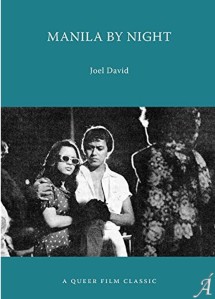
[1] In drafting my 2017 monograph Manila by Night: A Queer Film Classic, I planned to interview the film’s most prominent then-surviving participants: production designer and script consultant Peque Gallaga, and the primary queer-character performers Bernardo Bernardo and Cherie Gil. Gallaga had several Facebook posts which I could draw from, while BB proved to be such a printed-word raconteur that the series editors decided to use our Q&A exchange (originally posted on Ámauteurish!) as an appendix. Gil could only reply sparingly, apologetic that she could not remember much about that period of her life, which was understandable; I requested use of a photo that she had with BB for one of their dinner-theater productions and slated her for a possible future career lookback. All three are now gone, a reality that induced a personal degree of regret the moment I learned about Gil’s demise.

Back to top


Addendum for “Critic in Academe”

Professor Lumbera died in September 2021, a few months before he could turn 90. The whole country mourned for him, if we were to go by the combined simulacra of traditional and new media. That ought to be more than enough for anyone’s legacy, and before everything else, I ought to acknowledge that he deserved all the accolades pertaining to his role as teacher of literature, through which he influenced several generations of national university students. I cannot pretend to have full competence in evaluating the musical librettos and books of poetry on which part of his literary legacy rested, but I do have a passing acquaintance with his critical output as well as his exploits as film administrator, scholar, and critic.

11011While I was pursuing my graduate studies in the US, he was declared a Magsaysay Award winner. A few acquaintances tried ribbing me by claiming that the interview I conducted contributed significantly to a favorable evaluation by the jurors of his nomination. I had no way of finding out for sure, but I felt that even without it, he would have won anyway because of his prior record as author and activist.

11011I was foreign-based again, this time in the country where I was striving for tenure via the more rigorous global process, when I found out he was declared a recipient of the Order of National Artists of the Philippines. I had a longish personal short list of fellow citizens who I expected to place way before he did, and when Carlo J. Caparas, who was being excluded by previous winners led by Lumbera, complained that the decision-making process was dominated by an academic in-group, I felt that Caparas’s points deserved to be addressed, even if he did not deserve the Order.

11011I will raise just two related issues, one regarding Lumbera’s administration of the University of the Philippines Film Center (the springboard for the aforementioned interview) and the other regarding his role as academic adviser. Upon my return from US graduate school, I was appointed to the same position Lumbera held – also the position that was being prepared beforehand for Ishmael Bernal if only the latter had not suddenly been cut down by an aneurysm. Why was Lumbera replaced if he had certain sufficient qualifications, specifically as founding member of the Manunuri ng Pelikulang Pilipino and as author of books honored for their film scholarship?

Back to top

11011Because he refused to recognize the attachment of the center to an academic program, effectively depriving the national university’s film students of access to facilities and equipment, not to mention a sizable collection of funds from film screenings and theater rentals. He parroted the canard that only the UPFC deserved to offer film courses and thereby allowed the institution to operate independently, with a lot of controversial practices by its officials, duly noted in the records of the university administration’s human resources office. Even when I was in charge, it attempted to solicit a million-dollar donation of equipment from the Japanese government on its own – which finally provided the singular opportunity for university officials to advocate for its abolition and irrevocable merger with the film program.

11011To his credit, Lumbera supported the merger, but this indicated a larger problem by then, one where he claimed to be either bird or beast depending not on whose side he was interacting with, but on which side was gaining the upper hand. I saw him only once since my return to Pinas in the early aughts, and thought that my disquietude that time came from his inability to recognize me. Which was unlikely, however, since I was forewarned by my faculty mentor, then also my supervisor, that he’d been suffering from memory loss. An acquaintance whose parent was coping with dementia taught me to watch for signs where the sufferer performs the markers of recognition but only comes alive when she encounters someone she actually recognizes.

11011The mentor I mentioned, Ellen J. Paglinauan, mapped out a strategy for graduate studies for me around the time I interviewed Lumbera. Since all that UP had then was a limited collection of grad-level film subjects mostly at the College of Mass Communication, I could major in the interdisciplinary Philippine Studies program and declare film as one of my areas. With MA in hand, I could proceed to a PhD also in film, in an American university via the Fulbright grant. Upon fast-tracking myself and reaching all-but-thesis status, I applied for and got the Fulbright grant, and applied for and got accepted to all the universities I listed as my preference. I necessarily had to specify MA-level studies since I still had to complete my degree, but Ellen assured me I could apply for a change in status before the scholarship commenced.

11011I’d also focused on a specific narratological interest (with inherent sociological potential) throughout my Pinas program. Lumbera was the only member of the faculty that the Phil. Studies coordinator endorsed as thesis adviser for film material, and I of course looked forward to an overlap between my study and his specialization in literature and society. He said he could not understand the first draft of the study proposal I submitted, so I prepared a second. After the third one, he said he’d prefer that I undertake the study of a Pinoy auteur or studio, and I had to explain that I was unprepared for that kind of project; take a few more courses, he said, but I said my coursework was complete and my US grad study program was looming up. Finish your MA there then, he went.

Back to top

11011I still refused to give up and requested a deferment of my Fulbright program, which the sponsor approved for no more than one sem. Lumbera wouldn’t budge. I finally started the foreign-studies grant as a master’s student, and subsequently got accepted to the doctoral program, with CMC officials instructing me to stay put and apply for a work-study arrangement. This was the most expensive school in the most expensive city in the US, so I had to take out student loans via a guarantor, aside from working for a pittance. The pressures building up in that corner of the world came to a head with twin explosions at the World Trade Center – the first one when I arrived in 1993, and the second one demolishing the structure during the 9/11 attacks. The study proposal that got me accepted to the PhD program (as one of four out of a few hundred applicants) and invited by Robert Sklar to be his dissertation advisee was exactly the same submission that Lumbera insisted on turning down. It formed the basis of several articles and a book that film scholars from all over seemed capable of comprehending.

11011I knew I was suffering from some potentially serious psychological issues during my foreign grad studies but I wagered that these were linked to the locale, and for the most part I was right: they dissipated when I finally departed from the school, office, city, and country that dominated my existence for nearly a decade. That was how I knew, after seeing Lumbera again, that I would be adding to my list of must-avoids. I’d already resolved early on to reject his prescription of writing criticism sans style and disposition – flaunt it if you got it, is my stance. I made sure during my UPFC term that film students should have better opportunities via access to heretofore unavailable resources, before I sought overseas employment to repay my grad-student loans. I also have been making every effort since then to accommodate the topics in which my advisees express interest and demonstrate expertise; I’d conduct any necessary self-study to ensure sufficient competence on my end, and recommend other experts when I feel that the students’ selected materials exceed my grasp. Whatever Bien Lumbera was in these areas of film criticism, policy, and mentorship, I found myself functioning more productively by doing exactly what he would have avoided or refused in the same situation.

11011He was the last to die among my academic advisers, and I hope I’ll never need to point out again that he served as my antipodean figure, the one who showed me what not to do by demonstrating in actual practice how wrong it was. Ellen was diagnosed with cancer after being savagely pilloried for months by faculty whom she had accused of corruption; she told me she was mistaken in asking me to return to Pinas and, as her final counsel, urged me to seek tenure abroad. While Ellen was undergoing treatment, Bob Sklar perished in a vehicular accident while on vacation. Ellen followed my example in resigning, without any prodding from me, from the Manunuri ng Pelikulang Pilipino, and succumbed to her illness around the same time that my tenure status in Korea was being decided. I may have been first among Pinas profs to clinch the distinction, but it was still too late for me to express my gratitude to these two for their letters of recommendation, among other more-essential matters. I was also on the verge of convincing myself that my grad-school traumas were entirely my fault, until the news about Lumbera’s passing enabled me, in his final inadvertent act of kindness, to be less harsh on myself.

Back to top

Á!