
SUGGESTED FEATURES
TROUBLE in PARADISE!
⇒ Pinas political film criticism in 3 nasty uploads! – Part 1, “The Problem of Our Critical Approaches”; Part 2, “Toward a More Responsive Critical Practice”; and Appendix, “‘Category E’ Samples” (whatever that means).

Psychology Today
SPECIAL GUEST FEATURE:
The Performances of Nora Aunor
(Order of the National Artist, 2022)
& Her Contemporariesby Jojo Devera
(Facebook posts to May 2023;
click pic to access)
⇒ My only millennial-era review of an Aunor film: Adolfo Borinaga Alix Jr.’s Kontrabida (so far unreleased!)
⇒ Read as well my Nora Aunor obituary (definitely not the last time she’ll be mentioned!)STILL AVAILABLE!
(Click pic to order)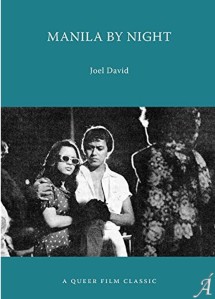
Read the script @ Kritika Kultura
or the storyline here.
Here’s a review in Jump Cut,
another in Plaridel, and
the latest (translated) in Pelikula.“Many of [JD’s] writings explore transgressive or subversive cinema, such as his tribute to Manila by Night, a film banned by the Marcos regime for its vivid depiction of the city’s underworld” – “8 Scholars & Critics Expanding Our Understanding of Culture” (Ezvid Wiki editorial, Aug. 25, 2020).
REALLY NOW
• Who can we blame for dislodging Citizen Kane from its #1 perch? (or I wish better trolls could find me)
(Click pic to open)
⇒ More fascinating shit in this Fil(m)ipiniana listingSPECIAL LISTS
• Film auteurs, play directors, & book authors
• Experimental Cinema of the Philippines (article format)
• CCP Encyclopedia entries
• National Midweek articlesBOOKS exclusively ON THIS BLOG
(Click pic to open)
⇒ Did I say “books”? All right: Writing Pinas Film Commentary
FUN READ
• Barretto family scandal (ca. 2019)
(Click pic to open)
ABS-CBNNews
⇒ More titillations in Remarks section
COMMEMORATION
• Anita Linda (1942-2020) – with never-before-known anecdotes!
(Click pic to open)
GONE TOO SOON (both at 60)….
• Sisters-in-law & gifted performers – Jaclyn Jose (“Bold in Heaven”); Cherie Gil (“Artist in a Hurry”)
From MaCherieAmour page
⇒ More tributes in Remembrances
REVIEW
• “2 Guys,” an originally censored commentary on Avatar!
(Click pic to open)
⇒ More reviews in, where else, ReviewsCATFIGHTS
• “Are you just another Noranian / Marcosian / gossip writer / anti-left basher / smut peddler in intellectual disguise?”⇒ More scrapes in Selected Exchanges
ANOTHER BOOK exclusively ON THIS BLOG
(Click pic to open)
⇒ More titles in Books
THIS BLOG (& Me)
• How to Use Ámauteurish!
• Reviews & Recommendations
• Joel Who?
• Marcos & the Movies
• Movie LaborOMG call the CHASTITY POLICE!
• Review of Erotica Manila: Foursome (as if one weren’t enough) – with no complaints about its subject matter, SMHx4
(Click pic nervously to open)
IN a JIFFY (or 2 or –)
• Longest and shortest films reviewed: 6+ hours – Florentina Hubaldo, CTE (2012); vs. 1.5 minutes – “Balot” (2023), Gigil Agency’s viral cola ad (with English subs!)
(Click pic to open)
⇒ More recent reviews in RemarksTHESE BLOGS (for Me)
• Recommended blogs, Facebook pages & groups, video channels, and historical websites⇒ The complete list has been moved to the blogpost that was originally an introduction to this sidebar feature.
DOVIE BEAMS LOVE CHILD Exists!
• An intro to her raunchy Marcos’ Lovey Dovie performance, with jaw-dropping updates!
(Click pic to open – then pray for forgiveness, you incorrigible you)
⇒ More clickbait in ExtrasBET YOU DIDN’T KNOW…
• That Ámauteurish! is pronounced “\ám-\o-′tərish” (says I);
• That it’s a coinage that mashes up auteur & amateur; and
• That if you misspell the blog name, you get something else.⇒ More useless info in the Abouts section.
Á!
 ORCID ID


Full Beast Mode
Beast
Directed by Lawrence Fajardo
Written by Jim Flores
[Click here (recommended) for desktop mode.]
To hear the cacophony of responses to Lawrence Fajardo’s Beast, currently screening in Manila as part of the ongoing Puregold CinePanalo Film Festival, would be tantamount to missing out on its laudable achievements. One might even be inclined to agree with its most extreme appreciators’ declaration that it’s the director’s best work – fulsome praise enough, considering Fajardo’s stature as one of the best Filipino filmmakers in the current millennium.
11011The film concerns the travails of an ordinary farmer, Mang Omeng, who’s determined to spend the rest of his life maintaining his subsistence existence as tenant on property which urban development is slowly but surely creeping up. He narrates tales to an imaginative kid, virtually a surrogate son, who prefers to hang around the farm and whatever he hears and sees when it strikes his fancy. Although Omeng refuses to sell his land, the owner brings a lawyer to inform him that his wishes have been overridden. As part of his acceptance of defeat, he decides to sell Bob, his beloved water buffalo; but upon learning that the buyer plans to slaughter the animal, he decides to harness the beast and set out to Manila to find a niece whom he hadn’t heard from in years.
Lolo Omeng tells Pepe about the legend of the abandoned woman whose tears watered her crops.
Back to top
11011What makes the entry singularly remarkable is its left-field status in the director’s track record. With over forty film and TV titles to his directorial credit, and an even larger number of works he edited (including his own, as in the current case), nothing in the list can be categorized as an apparently children’s tale. The choice of unexpected material may be reminiscent of David Lynch deciding to abandon offbeat topics to narrate a straightforward adaptation of a news item in The Straight Story (1999), and Beast works for the same reason: whether or not Fajardo avoided the material, his accumulation of skills in diametrically opposed subjects could only have not only fortified any longing he was repressing, but also inspired him to determine how he could enrich such topics using counter-intuitive skills sets.
In the tale, the lover promises to return from Manila but never shows up again.
Back to top
11011The closest Pinas cinema has come to such a parallel attempt was when action specialist Romy Suzara, toward the end of his career, tackled queer-themed substance in Tinik (2013). His triumph was not as definitive as Fajardo’s, but neither was the attempt an embarrassment for him. One could initiate an appreciation of Beast by stating that it purveys childlike wonder, but ends up far from children’s entertainment. The trailer element that might imprint on viewers would be the spectacle of a carabao that speaks adult human language, although this proceeds from the opening episode where Omeng, narrates a tale of a barrio lass whose lover took leave to work in the capital city and never returned: her farm menagerie kept imploring her to move on, but she insisted on looking forward to his reappearance in her life.
The landlord and his lawyer inform Omeng that his land will be sold.
Back to top
11011This premise is simple enough, except that history refuses to be molded into such a neat outline. While the thesis draws from European sources such as tales of the fairy-like vila and partakes of topflight feminist entertainment in Keith Deligero’s little-seen Lily (2016), real-life contemporary abandonment in the country is performed statistically by Filipinas, who comprise the majority of overseas migrant workers. Beast’s creatives are sufficiently mindful of this irony and are careful to incorporate it in their narrative resolution, although for discovery’s sake we should desist from spoiling it for potential audiences.
Bob speaks to Omeng for the first time.
Back to top
11011Bob, the incorrigibly garrulous carabao, is voiced by stage and screen veteran Lou Veloso, who demonstrates how a sufficiently gifted performer may be saddled by costumes or makeup or, in this case, absence from the screen, yet still be capable of a larger-than-life presence. This is facilitated by the dynamic he forms as comic foil to lead actor John Arcilla, who not surprisingly makes every effort to divest himself of the neurotic-strongman persona he assumed in Jerrold Tarog’s Heneral Luna (2015), but winds up rendering a characterization of such rarely realized pathos that it could be easily misrecognized as a documental depiction of typical rural reticence: the fact that Bob first chatters after Lolo Omeng is informed that he will lose what he expected was a lifetime tenancy, suggests the traumatization that our citizens have to find ways of handling on their own.
Omeng takes Bob to Manila to search for a niece who never returned.
Back to top
11011The performative groundwork laid by this theater-honed pair, complemented by the disciplined delivery of an ensemble who might be recognizable to viewers familiar with Fajardo’s multicharacter-reliant work, facilitates one of the more satisfying plot twists in recent local cinema – and we’re not even talking about narrative closure yet, when the story transcends the limitations that historical reality imposes on it. One may or may not come across the director’s own account of how, at some point in postproduction, he stopped worrying about technical finesse. Formalist evaluators may take him to task for it, but it only makes of Beast a genuine throwback to Pinas cinema’s Golden Ages productions, when entertainment (not to mention artistic confidence) was of such paramount importance that audience approval mattered more than critical or festival recognition.
11011In the best Third-cinema and B-film traditions, Beast relies on the acceptance of mass viewers out to seek some respite from a harried and cruel existence, and sneaks in political insight of such longstanding usefulness that audiences could wind up wondering just what hit them and return for surer answers and recurrent pleasures.
Published October 11, 2026, in The FilAm, as “A Children’s Tale but Not for Kids.” Beast is produced by Puregold CinePanalo Film Festival, Wild Coyote Pictures, Butlak Banaag Studios, PostPro, Pelikulaw, and Allied Artists of Asia.
Back to top
Share this:
About Joel David