
SUGGESTED FEATURES
TROUBLE in PARADISE!
⇒ Pinas political film criticism in 3 nasty uploads! – Part 1, “The Problem of Our Critical Approaches”; Part 2, “Toward a More Responsive Critical Practice”; and Appendix, “‘Category E’ Samples” (whatever that means).

Psychology Today
SPECIAL GUEST FEATURE:
The Performances of Nora Aunor
(Order of the National Artist, 2022)
& Her Contemporariesby Jojo Devera
(Facebook posts to May 2023;
click pic to access)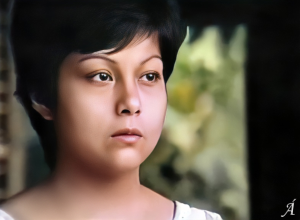
⇒ My only millennial-era review of an Aunor film: Adolfo Borinaga Alix Jr.’s Kontrabida (so far unreleased!)
⇒ Read as well my Nora Aunor obituary (definitely not the last time she’ll be mentioned!)STILL AVAILABLE!
(Click pic to order)
Read the script @ Kritika Kultura
or the storyline here.
Here’s a review in Jump Cut,
another in Plaridel, and
the latest (translated) in Pelikula.“Many of [JD’s] writings explore transgressive or subversive cinema, such as his tribute to Manila by Night, a film banned by the Marcos regime for its vivid depiction of the city’s underworld” – “8 Scholars & Critics Expanding Our Understanding of Culture” (Ezvid Wiki editorial, Aug. 25, 2020).
REALLY NOW
• Who can we blame for dislodging Citizen Kane from its #1 perch? (or I wish better trolls could find me)
(Click pic to open)
⇒ More fascinating shit in this Fil(m)ipiniana listingSPECIAL LISTS
• Film auteurs, play directors, & book authors
• Experimental Cinema of the Philippines (article format)
• CCP Encyclopedia entries
• National Midweek articlesBOOKS exclusively ON THIS BLOG
(Click pic to open)
⇒ Did I say “books”? All right: Writing Pinas Film Commentary
FUN READ
• Barretto family scandal (ca. 2019)
(Click pic to open)
ABS-CBNNews
⇒ More titillations in Remarks section
COMMEMORATION
• Anita Linda (1942-2020) – with never-before-known anecdotes!
(Click pic to open)
GONE TOO SOON (both at 60)….
• Sisters-in-law & gifted performers – Jaclyn Jose (“Bold in Heaven”); Cherie Gil (“Artist in a Hurry”)
From MaCherieAmour page
⇒ More tributes in Remembrances
REVIEW
• “2 Guys,” an originally censored commentary on Avatar!
(Click pic to open)
⇒ More reviews in, where else, ReviewsCATFIGHTS
• “Are you just another Noranian / Marcosian / gossip writer / anti-left basher / smut peddler in intellectual disguise?”⇒ More scrapes in Selected Exchanges
ANOTHER BOOK exclusively ON THIS BLOG
(Click pic to open)
⇒ More titles in Books
THIS BLOG (& Me)
• How to Use Ámauteurish!
• Reviews & Recommendations
• Joel Who?
• Marcos & the Movies
• Movie LaborOMG call the CHASTITY POLICE!
• Review of Erotica Manila: Foursome (as if one weren’t enough) – with no complaints about its subject matter, SMHx4
(Click pic nervously to open)
IN a JIFFY (or 2 or –)
• Longest and shortest films reviewed: 6+ hours – Florentina Hubaldo, CTE (2012); vs. 1.5 minutes – “Balot” (2023), Gigil Agency’s viral cola ad (with English subs!)
(Click pic to open)
⇒ More recent reviews in RemarksTHESE BLOGS (for Me)
• Recommended blogs, Facebook pages & groups, video channels, and historical websites⇒ The complete list has been moved to the blogpost that was originally an introduction to this sidebar feature.
DOVIE BEAMS LOVE CHILD Exists!
• An intro to her raunchy Marcos’ Lovey Dovie performance, with jaw-dropping updates!
(Click pic to open – then pray for forgiveness, you incorrigible you)
⇒ More clickbait in ExtrasBET YOU DIDN’T KNOW…
• That Ámauteurish! is pronounced “\ám-\o-′tərish” (says I);
• That it’s a coinage that mashes up auteur & amateur; and
• That if you misspell the blog name, you get something else.⇒ More useless info in the Abouts section.
Á!
 ORCID ID


Workforce of Overseas Pleasures
Predecessors: Aliw (1979) & All Under the Moon (1993)
Midnight Girls
Directed by Irene Villamor
Written by Rod Marmol & Irene Villamor
[Click here (recommended) for desktop mode.]
Real-life interviewees in Midnight Girls.
Scholars of intercultural exchanges, myself included, might be surprised to realize that the Philippines has had the best film crossover examples with Japan. Even their severely unpopular occupation of the country during World War II yielded superior propaganda in Dawn of Freedom (1944), codirected by Abe Yutaka and National Artist Gerardo de Leon. Their postwar soul-searching gave the world Kon Ichikawa’s Fires on the Plain (1959, remade by Tsukamoto Shin’ya in 2014), based on accounts of stragglers stranded in the country by their Emperor’s sudden surrender to invading US forces.
11011The only other Asian capital with a similar record during the period would be yet another unheralded discovery: Malaysia, where Sir Run Run Shaw decided to hire the Filipino talents he could lure overseas (including Lamberto V. Avellana, Teodorico C. Santos, Eddie Infante, and Rolf Bayer) and lucked out with Ramon A. Estella, whom he persuaded to stay on and finish about a dozen more projects before allowing him to explore other overseas film industries.
Sanya Lopez as Paris, Jodi Sta. Maria as Vicky, and Jane Oineza as Saki.
Back to top
11011Japan nevertheless holds the distinction of having must-watch output, both by Japanese filmmakers and Filipino auteurs, all the way to the current millennium: Miike Takashi’s The Guys from Paradise (2000) may have disappointed his usual fanboys by being far less comically violent than his usual product, but it nevertheless manages to provide discursive insights drawn from the source novel by Hayashi Yōji; only the more recent Korean film, Kim Bong-han’s The Golden Holiday (2020), manages to exceed it as sheer entertainment, given the effervescent proficiencies of contemporary Korean popular culture.
Loisa Andalio as Wanna, a newcomer, is welcomed by Vicky (left), and briefed on omise rules by Saki (right).
Back to top
11011The export of labor as a national survival strategy resulted in the accumulation of mostly working-class Filipinas in nearly every country in the world, with Japanese film culture taking due notice. The still-awaiting-rediscovery of Sai Yōichi’s masterwork All Under the Moon (1993) enlarges on its narrative of Zainichi or Japan-based ethnic Koreans, by allotting its main character, a cab driver, with a Filipina girlfriend (impressively played by Ruby Moreno), who happens to work as an entertainer in his mother’s nightclub.
11011All this is by way of building up to Midnight Girls (2026), Irene Villamor’s latest of several peaks as director and only her second overseas setting, after 2018’s FACINE grand prize winner Meet Me in St. Gallen. MG might seem remarkable for featuring multiple protagonists, until we remember that another peak achievement by yet another Noypi filmmaker, Lawrence Fajardo’s Imbisibol (2015), an adaptation of a multicharacter play, was also set in Japan.
Saki expresses jealousy over the re-emergence of Paris’s ex-BF (left), as Carmi Martin as Mama Charry namedrops a famous director of the 2nd Golden Age (right).
Back to top
11011MG was beset by a perfect storm of climate and political disasters during its initial midyear release in Manila, but has since started to thrive in streaming platforms. The narrative features three omise or hospitality-club veterans, who welcome a newcomer into their fold. Each of the four contends with distinct but complex personal challenges, all premised on supporting family members back home while being driven onward by the attainment of dreams that would have been unavailable to them if they had remained in the home country. The fiction is intercut with real-life documentary interviews that suggest even more complex and tragic (as well as uplifting) narratives that would have weighed down the presentation if these had been pursued. The film judiciously leaves in just enough to affirm that its material would be validatable without much difficulty, before restoring the fictional accounts that manage to earn their bittersweet resolutions.
11011Villamor confirmed in an email interview that she referred to Marilou Diaz-Abaya’s Moral (1982), a similarly empowering work that featured four young women, as a benchmark for MG. The definitive female sex-work film happened along a few years earlier, with Ishmael Bernal’s Aliw (1979), where a trio of painted ladies plied their trade in one of the then-flourishing “supper clubs” fronting Manila Bay, with Japanese sex tourists among the clientele. In MG, the women’s mama-san is portrayed by Carmi Martin, who first made a splash as an unapologetic gold-digger in Bernal’s Makati-based Working Girls (1985); for her birthday celebration, her character crows about how Bernal discovered her in the working-class department store Ever Gotesco, and predicted that she would go places, which she takes to mean the spot where she now stands.
Vicky attends to Hideo (Sumioku Masakatsu), an abandoned customer who remained loyal to her (left); later, the coworkers encounter one another because Mama Charry had a medical emergency (right).
Back to top
11011The larger property that MG shares with these samples is its use of humor and irony. It may be precipitate to evaluate it in relation to these and the other titles discussed so far, although in terms of Villamor’s still-evolving body of work, one can understand how observers are describing it as her best: where her earlier films expressed a reserve about her characters and how they felt, in MG, as the friends state in several of their conversations, they confront the difficulty of caring for the people they love. We can only be grateful that the director appreciates their predicament, but has decided to embrace them for us without any reservations anyway.
Published October 24, 2026, in The FilAm, as “Midnight Girls Explores Lives of Filipina Entertainers in Japan.” The film was produced by TJAV Productions. Aliw was by Seven Stars Productions, while All Under the Moon was by Cine Qua Non Films. All screen caps from MG were taken by the author, who wishes to acknowledge Mauro Feria Tumbocon Jr. for recommending the film and Jek Josue David for providing access.
Back to top
Share this:
About Joel David