Warning: you might find this (incomplete but still-growing) section too extensive for casual browsing. For chronologically ordered listing, click here.
11011A number of entries may appear bloated because of my insistence in tracking where they may have been reprinted; similarly, the reprints would be extended by the acknowledgments of original publication. I do not hold copies any longer of everything listed here. The claim I can make, however, is that each entry existed in a legally definable published format (including on the internet) that I once laid eyes on, if not actually possessed, except for a number of reviews whose non-publication arose from the editor’s backward orientation or the periodical’s inability to come out. When I realized that I would have to leave most of my collected materials behind to commence graduate studies abroad, I endeavored to list everything I had – a wise decision, since nearly the entirety of my possessions were either pilfered or damaged by the time I returned. My work as university faculty similarly inculcated in me the discipline of summarizing my output every yearend.
11011Pointedly missing from this list are three types of mimeographed material, some of which I was able to jot down, as well as news items generated in my capacity as journalism intern or reporter. The latter were contractually anonymized although my initials started appearing as taglines in some of the later published material; but the requirement of writing up to four reports a day, none of which were guaranteed to see print unless a desk editor happened to favor them, resonates in the most disagreeable way with me. Of the mimeo publications, one was legitimate but literally juvenile: my stint as editor-in-chief of the low-end student paper of my public elementary school (during the time when such institutions were markedly superior to private schools, which I had also attended). The other two types, where I first made use of pseudonyms, were juvenile in other senses: college-era fundamentalist-Christian newsletters and orthodox-Marxist underground propaganda, both types of which are, for better or worse, still around, and not much different from each other, if I may speak from direct experience.
11011To jump to half-decade marks, please click here for: 2020; 2015; 2010; 2005; 2000; 1995; 1990; 1985; 1980. To find an entry’s link in the blog, enter the title in the Search box in the footer (for the website version). Or track the source of the article using these means of identification: book titles (including anthologies and conference proceedings) in Books; journal and non-journal titles in Articles; non-journal periodicals after 2016 and independent statements in Remarks; and all other unclassifiable texts in Extras. If you’re searching for any number of commentaries on film, book, or stage titles, I recommend you look them up in Reviews instead, or in Auteurs & Authors if you prefer to search according to artist. For a tentative evaluation of these listings as tallied data entries, I prepared a page titled Empiricals.
Back to top
2023
David, Joel. Canon Decampment (Quezon City: Amauteurish Publishing, 2023).
David, Joel. “Bringing Theater to the Home.” The PETA Milestone Book Project. Eds. Brenda Fajardo, CB Garrucho, Maribel Legarda, & Beng Cabangon (Quezon City: Philippine Educational Theater Association, 2023 forthcoming).
———. “Chaotic Waters and Well-Tempered Specters: The Philippines as Source of Overseas Labor.” Mobility in Islandic Geographies and Textual Representations in Literature, Culture, and Media Forms. Proceedings of the 2023 International Colloquium on Literary and Cultural Studies. (Jeju Island: Konkuk University & National Research Foundation of Korea, 2023): 45-51.
———. “Introduction: A Forum on Genders and Sexualities in Asian Cinema.” Kritika Kultura 40 (February 2023): 272-75. Posted online.
———. “From Hostesses to Working Girls: Sex Workers in Late 1970s Philippine Cinema.” Kritika Kultura 40 (February 2023): 276-310. Posted online.
———. “Anonymity & Its Discontents.” On social-media practice by unidentified film critics. Amauteurish! (February 9, 2023).Posted online.
———. “Sharon Torch Song Used in Absurd Soda Ad.” Originally titled “Pop for All Seasons.” Review of “Balot,” dir. Marius Talampas, advertising short produced by Gigil Agency for RC Cola Philippines. The FilAm (April 24, 2023).Posted online.
———. “Pop for All Seasons.” Review of “Balot,” dir. Marius Talampas, first published April 24, 2023, as “Sharon Torch Song Used in Absurd Soda Ad” in The FilAm. Amauteurish! (April 26, 2023). Posted online.
———. “Trauma at Length.” Review of Florentina Hubaldo, CTE, dir. Marius Talampas. Amauteurish! (May 7, 2023). Posted online.
———. “Mystique of the Past.” Separately posted update to “An Intro to Chapter 16 of Marcos’ Lovey Dovie,” published February 2, 2021, in Ámauteurish! Amauteurish! (May 11, 2023).Posted online.
Back to top
2022
David, Joel. “The Marcos Dictatorship and the Irreparable Damage to a Family, the Filipino Experience.” Abridgment of “The Marcos Dictatorship and the Irreparable Damage to a Family,” published September 18, 2012. The FilAm: Newsmagazine Serving Filipino Americans in New York 47 (January 2022): 14. Print edition.
———. “The Political Is Personal.” Review of “Marcos and Memory: The Past in Our Future,” Sheila Coronel’s Adrian E. Cristobal Lecture of the Writers Union of the Philippines. The FilAm (March 6, 2022). Posted online.
———. “The Political Is Personal.” Expanded version of review of “Marcos and Memory: The Past in Our Future,” Sheila Coronel’s Adrian E. Cristobal Lecture of the Writers Union of the Philippines, first published March 6, 2022, in The FilAm. Amauteurish! (March 10, 2022).Posted online.
———. “Jesusa Sonora Is Gone; Long Live Susan Roces.” Obituary for Susan Roces. The FilAm (May 24, 2022). Posted online.
———. “The Studio System’s Final Movie Queen.” Expanded version of “Jesusa Sonora Is Gone; Long Live Susan Roces,” first published May 24, 2022, in The FilAm. Amauteurish! (May 27, 2022).Posted online.
———. “What Lies Above: A Mini-Commentary.” On the failure of editorial supervision of cultural submissions in self-identified “serious” local publications. Amauteurish! (June 3, 2022).Posted online.
———. “National Artist Endorsement for Ricky Lee.” Letter addressed to the Order of National Artist Secretariat, dated October 20, 2020, uploaded February 2, 2021, embargoed until the proclamation of awardees. Amauteurish! (June 11, 2022).Posted online.
———. “A Season of Comebacks.” On the recently declared batch of recipients of the Order of the National Artist, coinciding with the presidential win of Ferdinand Marcos Jr., son of the dictator who openly patronized cultural activities. Amauteurish! (June 26, 2022).Posted online.
———. “This Genre Which Is Not One.” UNITAS: Semi-Annual Peer-Reviewed International Journal of Advanced Research in Literature, Culture, and Society 95.2 (July 2022): 315-47. Posted online.
———. “A Formative Sojourn.” On the process of learning about best and worst practices in film criticism based on organizational experience. Amauteurish! (August 6, 2022).Posted online.
———. “Artist in a Hurry.” Obituary for Cherie Gil. The FilAm (August 7, 2022). Posted online.
———. “Artist in a Hurry.” Expanded version of obituary for Cherie Gil, first published August 7, 2022, in The FilAm. Amauteurish! (August 9, 2022).Posted online.
———. “From Cloud to Resistance.” On political film criticism in the Philippines, comprising three separate uploads: Part 1, “The Problem of Our Critical Approaches” (August 30, 2022); Part 2, “Toward a More Responsive Critical Practice” (September 7, 2022); and Appendix, “‘Category E’ Samples.” Amauteurish! (September 13, 2022).Posted online.
———. “Shout Out Film Festival Citations.” Tiered award results as determined by a board of jurors. Amauteurish! (October 16, 2022).Posted online.
Back to top
2021
David, Joel. Writing Pinas Film Commentary. (Quezon City: Amauteurish Publishing, 2021). Posted online.
———. “Videodisc Piracy as an Instance of Resistance.” International Journal of Diaspora & Cultural Criticism 11.1 (January 2021): 98-137. Posted online.
———. “Selected Exchanges.” In Queries section. Amauteurish! (January 13, 2021). Posted online.
———. “An Intro to Chapter 16 of Marcos’ Lovey Dovie.” Belated tribute to Dovie Beams (1932-2017). Amauteurish! (February 2, 2021). Posted online.
———. “Experimental Cinema of the Philippines: A Hasty Recollection.” Landing page (et al.) for uploaded ECP materials. Amauteurish! (February 15, 2021). Posted online.
———. “Bibliographic Mini-Essay 3: The Rise in Spin-offs.” Amauteurish! (February 21, 2021). Posted online.
———. “[Nestor U. Torre] to Film Critics: ‘Don’t Take Things Too Seriously.’” The FilAm (April 14, 2021). Posted online.
———. “NUT’s Kernel.” Expanded version of “[Nestor U. Torre] to Film Critics: ‘Don’t Take Things Too Seriously,’” previously published April 14, 2021, in The FilAm. Amauteurish! (April 15, 2021). Posted online.
———. “Writer, Director, Critic Nestor U. Torre, 78.” Abridgment of “NUT to Film Critics: ‘Don’t Take Things Too Seriously,’” published April 14, 2021, in The FilAm. The FilAm: Newsmagazine Serving Filipino Americans in New York 39 (May 2020): 9. Print edition.
———. “Acceptance Message for the 2021 Gawad Balagtas for Film Criticism.” Amauteurish! (May 1, 2021). Posted online.
———. “An Error in the Urian’s Internet Record.” Amauteurish! (July 16, 2021). Posted online.
———. “In Nerisa, Viva Brings Back Regal’s Low-Budget Blockbuster Formula.” Review of Nerisa, dir. Lawrence Fajardo. The FilAm (August 23, 2021). Posted online.
———. “Siren Call.” Expanded version of review of Nerisa, dir. Lawrence Fajardo, first published August 23, 2021, as “In Nerisa, Viva Brings Back Regal’s Low-Budget Blockbuster Formula” in The FilAm. Amauteurish! (August 25, 2021). Posted online.
———. “A Missing Installation in the Philippine Pantheon.” Draft of an article on director-actor Gregorio Fernandez (1904-73). Amauteurish! (September 13, 2021). Posted online.
———. “Macho Dancing Goes Virtual in Joel Lamangan’s Lockdown.” Review of Lockdown, dir. Joel C. Lamangan. The FilAm (September 27, 2021). Posted online.
———. “Nether Nation.” Expanded version of review of Lockdown, dir. Joel C. Lamangan, first published September 27, 2021, as “Macho Dancing Goes Virtual in Joel Lamangan’s Lockdown” in The FilAm. Amauteurish! (September 28, 2021). Posted online.
———. “Nearly 3 Decades-Old FACINE Is the Longest-Running Fil-Am Film Festival.” The FilAm (October 30, 2021). Posted online.
———. “Macho Dancing Goes Virtual in Joel Lamangan’s Lockdown.” Abridgment of the same-titled article published September 27, 2021, in The FilAm. The FilAm: Newsmagazine Serving Filipino Americans in New York 45 (November 2021): 13. Print edition.
———. “Every Tier a Victory; Or Why Film Awards Don’t Have to Be So Divisive.” Published as a postmortem to “Nearly 3 Decades-Old FACINE Is the Longest-Running Fil-Am Film Festival,” in the October 30, 2021, issue of The FilAm. Amauteurish! (November 16, 2021). Posted online.
———. “FACINE: The Longest-Running FilAm Film Festival at Nearly 3 Decades.” Abridgment of “Nearly 3 Decades-Old FACINE Is the Longest-Running Fil-Am Film Festival,” published October 30, 2021, in The FilAm. The FilAm: Newsmagazine Serving Filipino Americans in New York 46 (December 2021): 14. Print edition.
Back to top
2020
David, Joel. Authoring Auteurs: The Comprehensive Pinas Film Bibliography (Quezon City: Amauteurish Publishing, 2020). Posted online.
———. “Authoring Auteurs: A Bibliographical Essay.” In relation to the Comprehensive Pinas Film Biblio posted on December 4, 2019. Amauteurish! (January 18, 2020). Posted online.
———. “Bibliographic Mini-Essay 1: The Aunor Effect in Philippine Film Book Publications.” A spinoff of the bibliographical essay “Authoring Auteurs,” posted on January 18, 2020. Amauteurish! (January 28, 2020). Posted online.
David, Joel, and Joyce L. Arriola. “Film Criticism in the Philippines: Introduction to a Symposium.” UNITAS: Semi-Annual Peer-Reviewed International Journal of Advanced Research in Literature, Culture, and Society 93.1 (May 2020): 1-16. Posted online.
David, Joel. “Auteurs & Amateurs: Toward an Ethics of Film Criticism.” UNITAS: Semi-Annual Peer-Reviewed International Journal of Advanced Research in Literature, Culture, and Society 93.1 (May 2020): 17-36. Posted online.
———. “My Peque Gallaga Interview.” Commemoration of the recently departed filmmaker. Amauteurish! (May 9, 2020). Posted online.
———. “Peque’s Rage: A Retelling.” Abridgment of “My Peque Gallaga Interview,” printed in Amauteurish! on May 9, 2020. The FilAm (May 12, 2020). Posted online.
———. “Peque’s Rage: A Retelling.” Abridgment of the same-titled article published May 9, 2019, in The FilAm. The FilAm: Newsmagazine Serving Filipino Americans in New York 28 (June 2020): 17. Print edition.
———. “Corrigenda & Problematics for Manila by Night: A Queer Film Classic.” A supplement to the Arsenal Pulp Press 2017 publication. Amauteurish! (June 6, 2020). Posted online.
———. “Remembering Anita Linda: She Devoted Her Life So Completely to Her Craft that It Defined Her.” Tribute to the late film actress. ABS-CBN News Channel [ANCX, formerly ABS-CBNnews.com] (June 13, 2020). Posted online.
———. “Comprehensive Pinas Film Biblio: Reverse-Chronologized.” Amauteurish! (June 22, 2020). Posted online.
———. “Empiricals; or the Bearable Heaviness of Having-Been.” Amauteurish! (June 29, 2020). Posted online.
———. “Mother Pinas, Onscreen.” Expanded version of “Remembering Anita Linda: She Devoted Her Life So Completely to Her Craft that It Defined Her,” published June 13, 2020, in ABS-CBN News Channel. Amauteurish! (July 9, 2020). Posted online.
———. “Bibliographic Mini-Reviews: Memoirs & Bios.” Amauteurish! (July 30, 2020). Posted online.
———. “The Marcos Dictatorship and the Irreparable Damage to a Family.” Abridgment of “The Marcos Dictatorship and the Irreparable Damage to a Family and the Filipino Experience,” published September 18, 2012, in The FilAm. The FilAm: Newsmagazine Serving Filipino Americans in New York 30 (August 2020): 8. Print edition.
———. “By Way of an Epilogue: Commemorating Laura Samson (September 1, 1953 – September 10, 2020).” Commemoration of the co-conceptualizer and publisher of Wages of Cinema (University of the Philippines Press, 1998). Amauteurish! (September 16, 2020). Posted online.
———. “Comprehensive Pinas Film Biblio: Alphabetized List by Title.” Amauteurish! (October 2, 2020). Posted online.
———. “Comprehensive Pinas Film Biblio: Chronologized List: Earliest to Latest.” Amauteurish! (October 4, 2020). Posted online.
———. “The Masses Matter: A Review of Manila by Night: A Queer Film Classic by Joel David.” Translation of “Mahalaga ang Marami: Rebyu ng Manila by Night: A Queer Film Classic ni Joel David” by Chuckberry J. Pascual, 2020 in Pelikula: A Journal of Philippine Cinema. Amauteurish! (December 21, 2020), pp. 76-77. Posted online.
Back to top
2019
David, Joel. Millennial Traversals: Outliers, Juvenilia, & Quondam Popcult Blabbery. Book Edition (single-volume, back-to-back). Quezon City: Ámauteurish Publishing, 2019.
———. “Theater, Film, & Everything in Between.” Introduction. Two Women as Specters of History: Lakambini & Indigo Child by Rody Vera. Ed. Ellen Ongkeko Marfil (Quezon City: Ateneo de Manila University Press, 2019): xiii-xxii.
———. “A Salute to Our Pinay Filmmakers.” Amauteurish! (March 26, 2019). Originally posted March 25, 2019, on Facebook.
———. “Auteurs & Amateurs: Toward an Ethics of Film Criticism (Lecture Version).” Plenary lecture delivered during the International Conference on Ethical Literary Criticism: Celebrating Literature as a Distinctive Ethical Expression. Amauteurish! (May 1, 2019). Posted online.
———. “Manoy Takes His Leave.” Tribute to the late Eddie Garcia. The FilAm (June 23, 2019). Posted online.
———. “Manoy Takes His Leave.” Tribute to Eddie Garcia, first published June 23, 2019, in The FilAm. Amauteurish! (June 27, 2019). Posted online.
———. “Di/Visibility: Marks of Bisexuality in Philippine Cinema.” Survey article. Journal of Bisexuality 19.3 (September 2019): 440-54. Posted online.
———. “The Barrettos and the Privilege of Behaving Badly.” On the latest saga in the long-running showbiz family scandal. The FilAm (October 28, 2019). Posted online.
———. “Showbiz Babylon: A Tribute-of-Sorts to the Barretto Sisters.” Expanded version of “The Barrettos and the Privilege of Behaving Badly,” published October 28, 2019, in The FilAm. Amauteurish! (October 29, 2019). Posted online.
———. “Barretto Sisters: The Privilege of Behaving Badly.” Abridgment of “The Barrettos and the Privilege of Behaving Badly,” published October 28, 2019, in The FilAm. The FilAm: Newsmagazine Serving Filipino Americans in New York 22 (December 2019): 6. Print edition.
———. “Comprehensive Pinas Film Biblio: Categorized.” Amauteurish! (December 4, 2019). Posted online.
———. “Comprehensive Pinas Film Biblio: Alphabetized.” Amauteurish! (December 4, 2019). Posted online.
Back to top
2018
David, Joel. “The Storyline of Ishmael Bernal’s Manila by Night (1980).” Originally drafted for Arsenal Pulp Press’s Manila by Night: A Queer Film Classic. Amauteurish! (February 9, 2018). Posted online.
———. “Parallel Growths.” Kolum Kritika on the 30th Anniversary. Kritika Kultura 30/31 (February-August 2018): 90-91. Posted online.
———. “Farewell Farewell, Bernardo Bernardo” “Toward the End, a Hopeful Outlook for the Philippines.” The FilAm (March 21, 2018). Posted online.
———. “Farewell Farewell, Bernardo Bernardo.” First published March 21, 2018, in two parts, as “Farewell Farewell, Bernardo Bernardo” and as “Toward the End, a Hopeful Outlook for the Philippines,” The FilAm. Amauteurish! (March 23, 2018). Posted online.
———. “Statement on the Availability of Filipino Films during the Internet Era.” Amauteurish! (April 15, 2018). Posted online.
———. “High Five for Ninotchka Rosca’s Gang of 5.” Abridgment of “High Five for Ninotchka Rosca’s Sanaysay Anthology,” published February 21, 2013, in The FilAm. The FilAm: Newsmagazine Serving Filipino Americans in New York 3 (May 2018): 6. Print edition.
———. “Amid the Nightmare of War, a Coming-of-Age.” Review of Balangiga: Howling Wilderness, dir. Khavn. The FilAm (July 16, 2018). Posted online.
———. “Innocence Regained.” Review of Balangiga: Howling Wilderness, dir. Khavn, first published July 16, 2018, as “Amid the Nightmare of War, a Coming-of-Age” in The FilAm. Amauteurish! (July 30, 2018). Posted online.
———. “Queerness as Defiance in Manila by Night.” Lecture delivered during the launch of Angela Stuart-Santiago’s Pro Bernal, Anti Bio. Amauteurish! (August 7, 2018). Posted online.
———. “The Millennial Traversals of Millennial Traversals.” Lecture delivered during the launch of the University of Santo Tomas’s UNITAS website. Amauteurish! (August 16, 2018). Posted online.
———. “Signal Rock and a Hard Place.” Review of Signal Rock, dir. Chito Roño. Philippine Entertainment Portal (August 17, 2018). Posted online.
———. “Signal Rock and a Hard Place.” Review of Signal Rock, dir. Chito Roño, first published August 17, 2018, in the Philippine Entertainment Portal. Amauteurish! (August 24, 2018). Posted online.
———. “Tears Go By.” Review of Ang Pamilyang Hindi Lumuluha, dir. Mes de Guzman. All Things Sharon (October 18, 2018). Posted online.
———. “Tears Go By.” Review of Ang Pamilyang Hindi Lumuluha, dir. Mes de Guzman, first published October 18, 2018, in All Things Sharon. Amauteurish! (December 25, 2018). Posted online.
Back to top
2017
David, Joel. Manila by Night: A Queer Film Classic. Queer Film Classics series, eds. Thomas Waugh & Matthew Hayes. Vancouver, BC: Arsenal Pulp Press, 2017.
———. Various entries for Film, vol. 6 of the Cultural Center of the Philippines Encyclopedia of Philippine Art, ed. Nicanor G. Tiongson (Manila: CCP & the Office of the Chancellor, University of the Philippines Diliman, 2017): “Aksyon” (with Lynn Pareja, updated by Mesandel Arguelles), 112-13; “Animation” (with Lynn Pareja, updated by Michael Kho Lim), 114-17; “Horror” (with Lynn Pareja, updated by Erika Carreon), 134-35; “Komedi” (with Lynn Pareja, updated by Mesandel Arguelles), 136-38; “Musical” (with Lynn Pareja & Nicanor G. Tiongson, updated by Johann Vladimir J. Espiritu), 139-40; “Acting in Film” (with Justino Dormiendo, updated by Johann Vladimir J. Espiritu), 146-47; “Cinematography” (with Nick Cruz, updated by Elvin Valerio and Clodualdo del Mundo Jr.), 161-64; “Distribution in Film” (with Rosalie Matilac, updated by Albert Almendralejo), 179-82; “Producing for Film” (with Nick Cruz & Rosalie Matilac, updated by Jose Javier Reyes, 196-99; “Sound Recording in Film” (with Nick Cruz, updated by Rica Arevalo), 210-11; and “Training and Education for Film” (with Lynn Pareja, updated by Johann Vladimir J. Espiritu), 213-14.
David, Joel. “Velasco, Johven.” Theater, vol. 9 of the Cultural Center of the Philippines Encyclopedia of Philippine Art, ed. Nicanor G. Tiongson (Manila: CCP & the Office of the Chancellor, University of the Philippines Diliman, 2017) 796.
호세 에르나니 S. 다비드. “녹슨 팔과 가려운 손가락; 두테르테 대통령의 마약과의 전쟁에 대한 문화적 시각.” 제5회 국가폭력과 트라우마 국제회의. Trans. n.a. (Gwangju: Trauma Center, 2017) 103-12.
David, Jose Hernani S. “Rusty Arms and Itchy Fingers: A Cultural Perspective on President Duterte’s War on Drugs.” The 5th International Conference on State Violence and Trauma. (Gwangju: Trauma Center, 2017) 113-27.
David, Joel. “Contestable Nation-Space: Cinema, Cultural Politics, and Transnationalism in the Marcos-Brocka Philippines. By Rolando B. Tolentino. Quezon City: University of the Philippines Press, 2014. Pp. 267 + xii. ISBN-10: 971-5427359; ISBN-13: 978-9715427357.” Book review. International Journal of Asian Studies (January 2017): 112-15. Posted online.
———. “Pop Culture and Halalan 2016.” First published May 15, 2016, as “How Pop Culture, Social Media Played a Role in Halalan 2016” in The FilAm. Amauteurish! (January 2, 2017). Posted online.
———. “Vampariah as Subversive Aswang Film.” Originally titled “Peerless Vampire Killers.” Review of Vampariah, dir. Matthew Abaya. The FilAm (January 12, 2017). Posted online.
———. “Peerless Vampire Killers.” Review of Vampariah, dir. Matthew Abaya, first published January 13, 2017, as “Vampariah as Subversive Aswang Film” in The FilAm. Amauteurish! (January 23, 2017). Posted online.
———. “Remembering the Forgotten War: Origins of the Korean War Film and Its Development during Hallyu.” Kritika Kultura 28 (February 2017): 112-46. Posted online.
———. “The Transnational Pastime: An Interview with Joel David.” Interviewed by Paul Douglas Grant. Plaridel: A Philippine Journal of Communication, Media, and Society 14.1 (June 2017): 135-45. Posted online.
———. “Seeds in the Garden of Letters: A Review of The End of National Cinema by Patrick F. Campos.” Humanities Diliman: A Philippine Journal of Humanities 14.2 (July-December 2017) 153-57. Posted online.
———. “Film May Be Dead, But Film Culture Is Alive and Well.” Review of Respeto, dir. Treb Monteras II. The FilAm (August 18, 2017). Posted online.
———. “Film May Be Dead, but Film Culture Is Alive and Well.” Review of Respeto, dir. Treb Monteras II, first published August 18, 2017, in The FilAm. Amauteurish! (September 18, 2017). Posted online.
———. “Tribute to Bangy Dioquino.” Delivered May 2013. Amauteurish! (October 5, 2017). Posted online.
Campos, Patrick F. “On Film Polls and Pinoy Rebyu.” Interview of Skilty C. Labastilla. Plaridel: A Philippine Journal of Communication, Media, and Society 14.2 (November 2017): 195-205. With Annex, titled “Matrix of Top 51 Films in the 1989 Joel David Poll and the 2013 Pinoy Rebyu Poll of the Best Filipino Films of All Time,” 203-05. Posted online.
David, Joel. “Muzzled Bombardments: The Philippine Film Canon and Its Discontents.” Roundtable on the Filipino Film Canon. Plaridel: A Philippine Journal of Communication, Media, and Society 14.2 (November 2017): 221-31. Posted online.
———. “A Certain Tendency: Europeanization as a Response to Americanization in the Philippines’s ‘Golden Age’ Studio System.” UNITAS: Semi-Annual Peer-Reviewed International Journal of Advanced Research in Literature, Culture, and Society 90.2 (November 2017): 24-53. Posted online.
———. “The First Glory Awards (2017): A Mini-Album.” Amauteurish! (November 23, 2017). Posted online.
Back to top
2016
David, Joel. Book Texts: A Pinoy Film Course, original digital edition (Amauteurish, 2016).
———. “Grains and Flickers.” Remembering/Rethinking EDSA, eds. JPaul S. Manzanilla and Carolyn Hau (Mandaluyong City: Anvil, 2016): 172-87.
———. “Manay Revisits Manila by Night.” Interview with Bernardo Bernardo. Amauteurish! (January 26, 2016). Formerly posted online, now an Appendix in Manila by Night: A Queer Film Classic.
———. “Roads Less Traveled.” Review of Lakbay2Love, dir. Ellen Ongkeko-Marfil. Rappler (February 10, 2016). Posted online.
———. “Annual Filipino Film Production Chart.” Amauteurish! (February 25, 2016). Posted online.
———. “Grains & Flickers.” First published 2016 in Remembering/Rethinking EDSA (ed. JPaul S. Manzanilla and Caroline S. Hau, Mandaluyong City: Anvil). Amauteurish! (March 25, 2016). Posted online.
———. Millennial Traversals: Outliers, Juvenilia, & Quondam Popcult Blabbery. Part II: Expanded Perspectives – special issue of UNITAS: Semi-Annual Peer-Reviewed International Journal of Advanced Research in Literature, Culture, and Society (May 2016). Posted online.
———. “How Pop Culture, Social Media Played a Role in Halalan 2016.” Commentary on the 2016 Philippine presidential election campaign. The FilAm (May 15, 2016). Posted online.
———. “Doy del Mundo on a Controversy over Maynila: Sa mga Kuko ng Liwanag.” Interview with Clodualdo del Mundo Jr. Amauteurish! (July 2, 2016). Posted online.
———. “In Ma’ Rosa, Cannes Best Actress Jaclyn Jose Plays a Meth Dealer with Eloquence, Warmth.” Originally titled “Ice with a Face.” Review of Ma’ Rosa, dir. Brillante Ma. Mendoza. The FilAm (July 14, 2016). Posted online.
———. “Searched For, But Not Missing.” Review of Ang Nawawala, dir. Marie Jamora. Amauteurish! (September 1, 2016). Posted online.
———. “Fallout over ‘A Lover’s Polemic’.” Amauteurish! (September 19, 2016). Posted online.
———. “Cold Word Wars: Philippine Film as a Critical Activity.” 2016 FACINE Gawad Lingap Sining Lecture, delivered October 18, 2016 at the Diego Rivera Theater, City College of San Francisco. Amauteurish! (October 19, 2016). Posted online.
———. “The Role of the Film Critic in Cultural Discourse.” Abridged version of “Cold Word Wars: Philippine Film as a Critical Activity.” 2016 FACINE Gawad Lingap Sining Lecture. The FilAm (October 23, 2016). Posted online.
———. “President Duterte’s War on Drugs.” Delivered October 6, 2016 at the People’s Solidarity for Participatory Democracy auditorium. Amauteurish! (November 27, 2016). Posted online.
———. “A Festival in Flux.” First published December 22, 2016, as “MMFF: A Festival in Flux” in Philippine Daily Inquirer. Amauteurish! (December 22, 2016). Posted online.
Back to top
2015
David, Joel. Millennial Traversals: Outliers, Juvenilia, & Quondam Popcult Blabbery. Original digital edition. Amauteurish, 2015.
———. Millennial Traversals: Outliers, Juvenilia, & Quondam Popcult Blabbery. Part I: Traversals within Cinema – special issue of UNITAS: Semi-Annual Peer-Reviewed International Journal of Advanced Research in Literature, Culture, and Society (May 2015). Posted online.
———. “Pinoy Filmfests ca. 2013.” Review of the All Masters Edition of the 2013 Sineng Pambansa National Film Festival. First published February 2014 in The Manila Review. Amauteurish! (June 30, 2015). Posted online.
———. “A Lover’s Polemic.” First published August 2013 as “Pinoy Film Criticism: A Lover’s Polemic” in The Manila Review. Amauteurish! (July 1, 2015). Posted online.
———. “On Nora Aunor and the Philippine Star System: An Introduction.” Guest Editor’s introduction. Kritika Kultura 25 (August 2015): 46-48. Posted online.
———. “Firmament Occupation: The Philippine Star System.” Kritika Kultura 25 (August 2015): 248-84. Posted online.
———. “Historical Film Depicts Antonio Luna’s Fall and Rise.” Originally titled “Antonio Luna’s Fall and Rise.” Review of Heneral Luna, dir. Jerrold Tarog. The FilAm (October 15, 2015). Posted online.
———. “Alien Abjection amid the Morning Calm: A Singular Reading of Horror Films from beyond Southeast Asia.” Plaridel: A Philippine Journal of Communication, Media, and Society 12.2 (August 2015): 201-23. Posted online.
———. “Intrigues, Maneuvers, Interventions: Screen Images of the Korean War and its Aftermath.” Keynote lecture. 4PKSS: Proceedings of the 4th Philippine Korean Studies Symposium (Quezon City: University of the Philippines Department of Linguistics, 2015): 25-49.
Back to top
2014
David, Joel. The National Pastime: The Digital Edition. Revision, update, & digitalization of The National Pastime: Contemporary Philippine Cinema (1990). Amauteurish, 2014.
———. Fields of Vision: The Digital Edition. Revision, update, & digitalization edition of Fields of Vision: Critical Applications in Recent Philippine Cinema. Amauteurish, 2014.
———. Wages of Cinema: The Digital Edition. Revision, update, & digitalization edition of Wages of Cinema: Film in Philippine Perspective. Amauteurish, 2014.
———. “Pinoy Filmfests circa 2013.” The Manila Review 4 (February 2014): 29-32. Posted online.
———. “Phantom Limbs in the Body Politic: Filipinos in Foreign Cinema.” Plaridel 11.1 (February 2014): 35-60.
———. “Norte, a Four-Hour Ideological Tearjerker by Lav Diaz.” Originally titled “Beyond Borders.” Review of Norte, dir. Lav Diaz. The FilAm (March 12, 2014). Posted online.
———. “Sight & Sound ’02.” Inside account of the process of my submission to the decadal poll. Amauteurish! (May 30, 2014). Posted online.
———. “A National Artist We Deserve.” The FilAm (June 21, 2014). Posted online.
———. “Nora Aunor: A National Artist We Deserve.” Rappler (June 23, 2014). Posted online.
David, Joel, and Ha Ju-Yong. “A Revaluation of the Use of Trauma as an Approach to Understanding Contemporary Korean Cinema.” Asian Studies: Journal of Critical Perspectives on Asia 50.1 (2014): 16-50.
Back to top
2013
David, Joel. “A Benediction We Deserve.” The FilAm (February 13, 2013). Posted online.
———. “High Five for Ninotchka Rosca’s Sanaysay Anthology.” Originally titled “High Five.” Review of Gang of 5: Tales, Cuentos, Sanaysay ([Los Angeles]: Mariposa Center [for Change], 2012). The FilAm (February 21, 2013). Posted online.
———. “Across the Korean Peninsula, Unease in the Morning Calm.” The FilAm (April 18, 2013). Posted online. Rpt. as “Kwentong Kapuso: Unease in the ‘Land of the Morning Calm,’” GMA News Online (April 19, 2013), also posted online.
———. “OFWs in Foreign Cinema: An Introduction.” Guest Editor’s introduction to Monograph Section. Kritika Kultura 21/22 (August 2013): 557-59. Posted online.
———. “Phantom in Paradise: A Philippine Presence in Hollywood Cinema.” Kritika Kultura 21/22 (August 2013): 560-83. Posted online.
———. “Pinoy Film Criticism: A Lover’s Polemic.” The Manila Review 3 (August 2013): 6-8 [n.b.: print edition is erroneously indicated as issue “1”]. Posted online.
———. “On the Job: On the Edge.” Originally titled “On the Edge.” Review of On the Job, dir. Erik Matti. The FilAm (September 12, 2013). Posted online.
———. “The OFW Finds Well-Deserved Recognition in Hollywood (Part 1).” Originally titled “A Desire Named Oscar,” first part. Including review of Ilo Ilo, dir. Anthony Chen. The FilAm (December 4, 2013). Posted online.
———. “Metro Manila and Transit: Ambitious, Impressive (Part 2).” Originally titled “A Desire Named Oscar,” second part. Reviews of Metro Manila, dir. Sean Ellis; and Transit, dir. Hannah Espia. The FilAm (December 4, 2013). Posted online.
Back to top
2012
David, Joel. “The Dolphy Conundrum.” The FilAm (July 16, 2012). Posted online. Rpt. as “Kwentong Kapuso: The Dolphy ‘Riddle,’” GMA News Online (July 17, 2012), also posted online.
———. “Introduction.” Guest Editor’s introduction to Forum Kritika: A Closer Look at Manila by Night. Kritika Kultura 19 (August 2012): 6-13. Posted online.
———. “Film Plastics in Manila by Night.” Kritika Kultura 19 (August 2012): 36-69. Posted online.
———, transcription and notes. “Ishmael Bernal’s Manila by Night.” Screenplay, with transcription by Alfred A. Yuson. Kritika Kultura 19 (August 2012): 172-272. Posted online.
———. “The Marcos Dictatorship and the Irreparable Damage to a Family and the Filipino Experience.” Review of Subversive Lives: A Family Memoir of the Marcos Years, by Susan F. Quimpo & Nathan Gilbert Quimpo. Originally titled “Disorder & Constant Sorrow (A Review of Subversive Lives).” The FilAm (September 18, 2012). Posted online. Rpt. as “The Marcos Regime and Its Impact on the Pinoy Family,” GMA News Online (September 18, 2012), also posted online.
———. “Marilou Diaz-Abaya, 57: Rule Breaker, Risk Taker.” Obituary. Originally titled “The Carnal Moral of a Brutal Miracle.” The FilAm (October 12, 2012). Posted online. Rpt. as “Acclaimed Filmmaker Marilou Diaz-Abaya Was a Rule Breaker,” GMA News Online (October 12, 2012), also posted online.
———. “High Drama and Low Humor in Ricky Lee’s New Fiction about a Cross-Dressing Manananggal.” Review of Si Amapola sa 65 na Kabanata, by Ricky Lee. Originally titled “The Novel Pinoy Novel.” The FilAm (November 8, 2012). Posted online. Rpt. as “What Republicans Could Have Learned from Ricky Lee’s Amapola,” GMA News Online (November 9, 2012), also posted online.
———. “Thinking Straight: Queer Imaging in Lino Brocka’s Maynila (1975).” Plaridel 9.2 (August 2012): 21-40.
———. “Glimpses of Freedom: Independent Cinema in Southeast Asia [by] May Adadol Ingawanij & Benjamin McKay, eds, Ithaca: Cornell Southeast Asia Program Publications, 2012, viii+246 pp.” Book review. Southeast Asian Studies 1.3 (December 2012): 529-33. Posted online.
Back to top
2011
David, Joel. “Primates in Paradise: Critical Possibilities of the Milieu Movie.” Kritika Kultura 17 (August 2011): 70-104. Posted online.
———. “Punch Tackles Fil-Korean’s Search for Mother.” Film review of Wandeugi, dir. Lee Han. ABS-CBNnews.com (November 28, 2011). Posted online. Rpt. in Chinese News of Las Vegas (November 28, 2011); Filipinos Abroad (November 27, 2011); H3 blog (November 28, 2011); MabuhayCity.com (November 28, 2011); Philippine Times of Southern Nevada (November 28, 2011); Saigon News of Las Vegas (November 28 2011); US News Las Vegas (November 28, 2011); US News Los Angeles (November 28, 2011) – all posted online.
Back to top
2010
David, Joel. “A Few Insights into our Asian Casanovas.” Pinoy Voices column. JungAng Daily (January 25, 2010): 11. Posted online.
———. “The Sins of the Fathers.” Viewpoints (formerly Pinoy Voices) column. JungAng Daily (April 12, 2010): 11. Posted online.
———. “2 Guys Watching Avatar.” Viewpoints (formerly Pinoy Voices) column. JungAng Daily (March 8, 2010): unpublished. Anthologized in Millennial Traversals, Part I: Traversals within Cinema 154-57. Posted online.
———. “Sighs and Whispers.” Film review of Biyaheng Lupa, dir. Armando Lao. Philippine Star (May 2, 2010): E2. Posted online.
David, Joel, and Ha Ju-Yong. “A Yearning for Tenderness in Korean Cinema.” Global Makeover: Media and Culture in Asia, ed. Danilo Araña Arao (Quezon City and Seoul: Development Center for Asia Africa Pacific and Asian Media and Culture Forum, 2010) 35-54.
David, Joel. “Orientalism and Classical Film Practice.” Global Makeover: Media and Culture in Asia, ed. Danilo Araña Arao (Quezon City and Seoul: Development Center for Asia Africa Pacific and Asian Media and Culture Forum, 2010) 139-54.
———. “Las edades de oro del cine Filipino: Una reevaluación crítica.” Cinema Filipinas: Historia, teoría y crítica fílmica (1999-2009), ed. Juan Guardiola ([Andalucía]: Juna de Andalucía, Consejería de Cultura Fundación El Legado Andalusí, [2010]) 37-48.
———. “The Golden Ages of Philippine Cinema: A Critical Reassessment.” Cinema Filipinas 217-24.
Back to top
2009
David, Joel. “Translating Time: Cinema, the Fantastic, and Temporal Critique [by] Bliss Cua Lim, Durham: Duke University Press, 2009, 246+xiv pages.” Book review. Asian Journal of Women’s Studies 15.4 (Winter 2009): 124-32.
———. “Retrospective: Serbis Review.” Film review of Serbis, dir. Brillante Ma. Mendoza. Philippine Entertainment Portal (May 31, 2009). Posted online.
———. “A New Role for Korea in Asia.” Korea Times (June 2, 2009): 15. Posted online.
———. “Kim Dae-jung & the Aquinos.” Korea Times (August 24, 2009): 4. Posted online.
———. “Boses Is for the World.” Film review of Boses, dir. Ellen Ongkeko-Marfil. Philippine Daily Inquirer (October 16, 2009): F2. Posted online.
———. “Clueless Global Hybrid, Now Showing.” Film review of I Come with the Rain, dir. Tran Anh Hung. Pinoy Voices column. JungAng Daily (November 9, 2009): 11. Posted online.
———. “Heartbreak in Mindanao.” Pinoy Voices column. JungAng Daily (December 14, 2009): 11. Posted online.
———. [“Film-Writing.”] Excerpt of book review. Si Tatang at mga Himala ng Ating Panahon: Koleksyon ng mga Akda by Ricky Lee. (Quezon City: Writers Studio Foundation, 2009) 11. Originally in National Midweek (February 8, 1989): 27-28.
———. “Context: An Introduction.” Hulmahan/Huwaran Atbp.: The Film Writings of Johven Velasco, ed. Joel David (Quezon City: University of the Philippines Press, 2009) ix-xiv.
데이비드, 조엘. “냉전시기필리핀의영화정책.” 냉전 아시아의 문화풍경 2: 1960~1970년대, trans. 김수현 (Seoul: Institute for East Asian Studies, SungKongHoe University, 2009) 277-96.
Back to top
2008
David, Joel. “Awake in the Dark: Philippine Film During the Marcos Era.” Philippine Studies: Have We Gone Beyond St. Louis? ed. Priscelina Patajo Legasto (Quezon City: University of the Philippines Press, 2008) 227-43.
———. “The Cold-War and Marcos-Era Cinema in the Philippines.” Paper read at the 8th ASEAN Inter-University Conference on Social Development (Manila, 2008).
———. “Understanding Film.” Paper read at the University of the Philippines College of Mass Communication Faculty Colloquium (Quezon City, 2008).
———. “The Philippine Culture Industry (with Emphasis on Cinema).” Paper read at the Institute of Asian Studies Colloquium. SungKongHoe University (Seoul, 2008).
Back to top
2007
데이비드, 조엘. “필리핀의 냉전 영화정책” and “Cold-War Film Policy in the Philippines.” 동아시아 냉전문화의 역학: 1960~70년대 냉전기 동아시아 지역의 문화변동과 국민국가의 문화정치학 세미나, 성공회대학교 동아시아연구소, translator unknown (Seoul: Institute for East Asian Studies, SungKongHoe University, 2007) 74-86 and 186-99 resp. Paper read at the Dynamics of Cold War Culture in East Asia: Cultural Changes in the Region during the Cold War in the 1960s-70s and Cultural Politics of the Nation-State conference sponsored by the Institute for East Asian Studies, Sungkonghoe University (Seoul, 2007).
Back to top
2006
David, Joel. “Queer Shuttling: Korea – Manila – New York.” Queer Film and Video Festival Forum, Take Two: Critics Speak Out section. Ed. Chris Straayer and Thomas Waugh. GLQ: A Journal of Lesbian and Gay Studies 12.4 (2006): 614-17.
———. “Indochine and the Dynamics of Gender.” Proceedings of the Whither the Orient: Asians in Asian and Non-Asian Cinema Conference, Kimdaejung Convention Center, Gwangju, Korea, 28-29 October 2006, ed. Joel David (Seoul: Asia Culture Forum, 2006) 248-72.
———. “Indochine and the Politics of Gender.” Asian Journal of Women’s Studies 12.4 (Winter 2006): 61-93.
———. “Condemned Property: Film Piracy in the Philippines.” Paper read at The Film Scene: Cinema, the Arts, and Social Change conference sponsored by the Film Culture Project of the Department of Comparative Literature, Department of Music, and the Centre of Asian Studies, University of Hong Kong (Hong Kong, 2006).
Back to top
2005
David, Joel. “Cutthroat Archipelago: Video Piracy in and around the Philippines.” Culture Industry and Cultural Capital: Transnational Media Consumption and the Korean New Wave in East Asia: Conference Proceedings, ed. Kim Shin-dong. Paper read at the Culture Industry and Cultural Capital: Transnational Media Consumption and the Korean New Wave in East Asia conference sponsored by the Institute for Communication Arts & Technology, Hallym University (Seoul, Korea, 2005).
———. “Introduction.” Ordinary People, Extraordinary Lives: A Folio by the Feature Writing Class, Fall Semester 2004-2005, School of Communication, Hallym University (Chuncheon: Hallym University, 2005) 3.
———. “Growing Old in New York (or Small World, Big Apple).” Personal essay. The Hallym Post 21 (May 2, 2005): 4.
———. “A Yearning for Tenderness: A Scenario for Korean Cinema.” Paper for “Waves from Korea and Japan in a Cross-Cultural Context” panel at the National, Transnational, and International: Asian Cinema in the Context of Globalization – Centennial Celebration of Chinese Cinema conference sponsored by the Shanghai University School of Film and TV Arts and Technology, Beijing University Department of Arts Studies, and (US) Asian Cinema Studies Society (Shanghai and Beijing, China, 2005).
Back to top
2004
David, Joel. “Sabel: Heaven in Mind.” Film review of Sabel, dir. Joel C. Lamangan. Philippine Star (July 11, 2004): E6. Posted online. Also posted online at Regalfilms.com. Rpt. as “They Don’t Make Films Like Sabel Anymore,” Philippine Daily Inquirer (July 13, 2004): A23.
———. “They Don’t Make Films Like Sabel Anymore.” Film review of Sabel, dir. Joel C. Lamangan. Philippine Daily Inquirer (July 13, 2004): A23. Also posted online at Inq7.net. Originally published as “Sabel: Heaven in Mind,” Philippine Star (July 11, 2004): E6.
———. “Literalized Communities: The Pinoy Milieu Movie’s Aesthetic and Social Dimensions.” Ramon Cojuangco Professorial Chair lecture read at the UP College of Mass Communication Faculty Colloquia (Quezon City, 2004).
———. “Multiple Choices, Multiple Voices: Critical Possibilities of the Milieu Movie.” Paper read at the 40th Communication Colloquium, Institute for Communication Arts & Technology, Hallym University (Chuncheon, Korea, 2004).
Back to top
2003
David, Joel. “A Certain Tendency: Europeanization as a Response to Americanization and Other Issues in the ‘Golden-Age’ Studio System.” Paper read at the Sangandaan: Arts and Media in Philippine-American Relations, 1899-2002 conference sponsored by the University of the Philippines and the Filipino American National Historical Society (Quezon City, 2003).
———. “Chosen Few: Minimal Multi-Character Patterns in Recent Filipino Films.” Paper read at the Freeze-Frame: New Issues in Philippine Cinema conference sponsored by the University of the Philippines Visayas Cebu College (Cebu City, 2003).
Back to top
2002
David, Jose Hernani Segovia. Primates in Paradise: The Multiple-Character Format in Philippine Film Practice (New York University, 2002 and Ann Arbor: University Microfilms International, 2002). UMI 3048810.
David, Joel. “Ten Best Films of All Time” contribution. Sight & Sound, British Film Institute magazine (September 2002): 29. Posted online.
Back to top
2001
David, Joel. Reviews and essays. The Urian Anthology 1980-1989, ed. Nicanor G. Tiongson (Quezon City: Tuviera, 2001). Originally published in various print outlets.
Back to top
2000
David, Joel. “Philippine Film History as a Site of Postcolonial Discourse.” Geopolitics of the Visible: Essays on Philippine Film Cultures, ed. Rolando B. Tolentino (Quezon City: Ateneo de Manila University Press, 2000) 3-12.
Back to top
1998
David, Joel. Wages of Cinema: Film in Philippine Perspective. Quezon City: University of the Philippines Press, 1998.
———. “A Question of Appositeness: Structuralism to Poststructuralism.” Wages of Cinema: Film in Philippine Perspective (Quezon City: University of the Philippines Press, 1998) 3-13.
———. “The Multiple-Character Film Format.” Wages of Cinema 14-25.
———. “Genre Pastiche in the Horror Film.” Wages of Cinema 26-37.
———. “Auteur Criticism: A Non-Recuperative Reappraisal.” Wages of Cinema 38-47. Originally read at the New York University Annual Student Conference (New York, 1994).
———. “A Cultural Policy Experience in Philippine Cinema.” Wages of Cinema 48-61. Originally read at the Socio-Politics of the Cinema of the Philippines panel at the Asian Cinema (Poetics & Politics) Annual Ohio University Film Conference (Athens, 1994).
———. “Viable Lessons From Another Third-World Model.” Wages of Cinema 65-79.
———. “Race as Discourse in Southeast Asia Film Ethnographies.” Wages of Cinema 80-91.
———. “Ideas in Philippine Film: A Critical Survey.” Wages of Cinema. 92-101. Originally read in altered form at the Pelikulang Pilipino: A Review of Contemporary Philippine Cinema forum at Columbia University, sponsored by Liga Filipina and Arkipelago (New York, 1994).
———. “Practice Makes Perfect: Alternative Philippine Cinema.” Wages of Cinema. 102-12. Originally read at the (In)Dependent Film Practice in a Third-World Setting panel of the Society for Cinema Studies Annual Conference (Syracuse, 1994).
———. “A History of the History of a History-To-Be.” Wages of Cinema. 113-28. Originally read at the PeregriNations: The Philippines as a Nation in Cinema panel of the Society for Cinema Studies Annual Conference (New York, 1995).
———. “Gender as Masquerade in the Vietnam-War Film.” Wages of Cinema 131-45. Originally read at the New York University Annual Student Conference (New York, 1995).
———. “Film in the Light of the ‘History’ of Sexuality.” Wages of Cinema 146-56.
———. “Pornography and Erotica: Boundaries in Dissolution.” Wages of Cinema 157-68.
———. “Womanliness as (Masculine) Masquerade in Psychoanalytic Film-Texts.” Wages of Cinema 169-79.
———. “Postcolonial Conundrum: Third-World Film in Perverse Perspective.” Wages of Cinema. 180-200. Originally read at the New York University Annual Student Conference (New York, 1996).
Back to top
1995
David, Joel. Fields of Vision: Critical Applications in Recent Philippine Cinema. Quezon City: Ateneo de Manila University Press, 1995.
———. “The ‘New’ Cinema in Retrospect.” Fields of Vision 1-36. Anthologized in The Urian Anthology 1990-1999, ed. Nicanor G. Tiongson (Manila: University of the Philippines Press, 2010) 58-83.
Back to top
1994
David, Joel. Various entries for Philippine Film, vol. 8 of the CCP Encyclopedia of Philippine Art, ed. Nicanor G. Tiongson (Manila: Cultural Center of the Philippines, 1994): “Aksyon” (with Lynn Pareja) 82-83; “Animation” (with Lynn Pareja) 83-84; “Horror” (with Lynn Pareja) 90; “Komedi” (with Lynn Pareja) 90-91; “Musical” (with Lynn Pareja & Nicanor G. Tiongson) 92-93; “Acting” (with Justino Dormiendo) 96-97; “Cinematography” (with Nick Cruz) 105-07; “Distribution” (with Rosalie Matilac) 112-14; “Production” (with Nick Cruz & Rosalie Matilac) 124-28; “Sound Recording” (with Nick Cruz) 134-36; and “Studies and Training” (with Lynn Pareja) 136-37.
David, Joel. Various entries for Philippine Literature, vol. 9 of the CCP Encyclopedia of Philippine Art, ed. Nicanor G. Tiongson (Manila: Cultural Center of the Philippines, 1994): “Movie Times” 473; “Notes on Philippine Cinema” 475; “Readings in Philippine Cinema” 484-85; and “The Urian Anthology 1970-1979” 495.
Back to top
1993
David, Jose Hernani S. “Fictions in Flux: Documentary Dimensions of Philippine Cinema.” Paper read at the Documenting Fictions: Documentary Dimensions of the Fiction Film conference sponsored by the Centre Universitaire de Luxembourg American Studies Center, Clark European Center in Luxembourg, Fondation Promomedia, Bibliotheque Nationale, Cinematheque Municipale, and the American Embassy. Luxembourg City, 1993.
———. “Queer Representation in Philippine Cinema.” Paper read at the Lesbian, Gay, Bisexual, and Transgender Community Center sponsored by the Gay Asian & Pacific Islander Men of New York. New York, 1993.
———. “Moving Out of the Outhouse: A Who’s Who in Alternative Filmmaking.” Kultura 6.1 (April-June 1993): 34-40.
Back to top
1992
David, Joel. “Adaptation Comes of Age.” Opera review of Giacomo Puccini’s La Bohéme, dir. Rolando Tinio. Manila Standard (submitted 1992). Anthologized in Millennial Traversals, Part II: Expanded Perspectives 1-3. Posted online.
———. “Some Words on Film Awards.” MediaWatch. [N.d. 1992?]: [Pp. undetermined, 3 pp. + 2-p. sidebar titled “List of Film Awards for 1991 Productions”].
———. “Black and Blue and Red.” Film review of Bayani, dir. Raymond Red. Manila Standard (July 1, 1992): 19.
Back to top
1991
David, Joel. “Sequacious and Second-Rate.” Comparative film review of Pido Dida 2 (Kasal Na), dir. Tony Cruz, and Anak ni Baby Ama, dir. Deo J. Fajardo Jr. National Midweek (submitted 1991): unpublished. Anthologized in Fields of Vision 71-74.
———. “Persistence of Vision.” Film review of Bakit Kay Tagal ng Sandali, dir. Chito Roño. National Midweek (submitted 1991): unpublished. Anthologized in Fields of Vision 47-51.
———. “No End in Sight.” Film review of Kung Tapos Na ang Kailanman, dir. Lino Brocka. National Midweek (submitted 1991): unpublished. Anthologized in Fields of Vision 62-65.
———. “Maryo J. and Mr. de los Reyes.” Comparative film review of My Other Woman and Underage Too, both dir. Maryo J. de los Reyes. National Midweek (submitted 1991): unpublished. Anthologized in Fields of Vision 44-47.
———. “Indigenous Ingenuity.” Film review of Andrea, Paano Ba ang Maging Isang Ina?, dir. Gil Portes. National Midweek (submitted 1991): unpublished. Anthologized in Fields of Vision 56-62.
———. “Directors-Editors.” Comparative film review of Kaaway ng Batas, dir. Pepe Marcos, and Angel Molave, dir. Augusto Salvador. National Midweek (submitted 1991): unpublished. Anthologized in Fields of Vision 41-44.
———. “Horse Yearender.” 1990 in review. National Midweek (February 27, 1991): 30.
———. “Class Clamorers.” Comparative film review of Too Young and Shake, Rattle & Roll II, dir. Peque Gallaga and Lore Reyes, and Biktima and Ama … Bakit Mo Ako Pinabayaan?, dir. Lino Brocka. National Midweek (February 13, 1991): 28-29. Anthologized in Fields of Vision 92-97.
———. “Great Philippine All-Time One-Shot Awards Ceremony.” National Midweek (February 20, 1991): 28-29. Anthologized as “All-Time One-Shot Awards Ceremony” in Fields of Vision 137-42.
———. “Three Careers.” Comparative film review of Umiyak Pati Langit, dir. Eduardo Palmos, Bago Matapos ang Lahat, dir. Joselito “Abbo” de la Cruz, and Ganito Ba ang Umibig?, dir. Laurice Guillen. National Midweek (March 27, 1991): 28-29. Anthologized in Fields of Vision 37-41.
Back to top
1990
David, Joel. The National Pastime: Contemporary Philippine Cinema. Pasig City: Anvil, 1990.
———. “A Second Golden Age.” Kultura 2.4 (January-March 1990): 14-26.
———. “A Second Golden Age: An Informal History.” The National Pastime 1-17. Originally published in Kultura.
———. Reviews and essays. The National Pastime. Originally published in various print outlets.
——— [uncredited]. “After the Revolution.” Film review of Orapronobis, dir. Lino Brocka. National Midweek (January 10, 1990): 28-29. Error in missing credit acknowledged in “Self-Criticism Department” (January 17, 1990): 43. Anthologized in The National Pastime 185-89.
———. “From ‘Sister Stella L.’ to ‘Starzan.’” 1980s Philippine cinema in review. National Midweek (January 24, 1990): 14-16.
———. “Slugged Out.” Comparative film review of Imortal, dir. Eddie Garcia, and Ang Bukas Ay Akin: Langit ang Uusig, dir. Laurice Guillen. National Midweek (January 31, 1990): 30-31. Anthologized in The National Pastime 147-50.
———. “Carnival Cinema.” Exhibition review of Cinevision 2000’s “Adventures of America.” National Midweek (February 7, 1990): 28-29. Anthologized in Fields of Vision 102-05.
———. “…And the First Shall Be the Last.” Film review of The Last Temptation of Christ, dir. Martin Scorsese. National Midweek (March 14, 1990): 31.
———. “’80s Foreign Fare.” 1980s foreign cinema in review. National Midweek (March 28, 1990): 28-29.
———. “No End in Sight.” Film review of Kung Tapos Na ang Kailanman, dir. Lino Brocka. National Midweek (March 28, 1990): 29-30. Anthologized in Fields of Vision 62-65.
———. “Bienvenido Lumbera.” Interview (cover title “Critic in Academe). National Midweek (April 4, 1990): 20-22, 46.
———. “Levels of Independence.” Attempted definition of indie cinema. National Midweek (April 25, 1990): 29-30.
———. “Soldier Blues.” Film review of Casualties of War, dir. Brian De Palma. National Midweek (May 9, 1990): 29.
———. “Ma(so?)chismo.” Comparative film review of Barumbado, dir. Willy Milan, and Kasalanan ang Buhayin Ka, dir. Francisco Posadas. National Midweek (May 23, 1990): 30. Anthologized in Fields of Vision 82-84.
———. “Firmament Occupation.” Discussion of star system. National Midweek (May 30, 1990): 29-30. Anthologized in Fields of Vision 114-16.
———. “I.O.U.” Film review of Kahit Singko Hindi Ko Babayaran ang Buhay Mo, dir. Jesus Jose. National Midweek (June 6, 1990): 31. Anthologized in Fields of Vision 85-87.
———. “Men & Myths.” Film review of Bala at Rosaryo, dir. Pepe Marcos. National Midweek (June 6, 1990): 31. Anthologized in Fields of Vision 80-82.
———. “Head Held High.” Film review of Gumapang Ka sa Lusak, dir. Lino Brocka. National Midweek (June 20, 1990): 28-29. Anthologized in Fields of Vision 65-68; and in The Urian Anthology 1990-1999, ed. Nicanor G. Tiongson (Quezon City: University of the Philippines Press, 2010) 148-51.
———. “Record-Breaking Blues.” Originally titled “Blues Hit Parade.” Discussion of blockbusters. National Midweek (June 27, 1990): 28. Anthologized in Fields of Vision 116-18.
———. “Film on Film.” Film review of Big Flick in the Sky, dir. Kenneth M. Angliongto. National Midweek (June 27, 1990): 29.
David, Joel, with Melanie Joy C. Garduño. “The 10 Best Filipino Films.” Cover story, titled “The 10 Best Filipino Films Ever Made.” National Midweek (July 4, 1990): 3-9. Anthologized as “Ten Best Filipino Films Up to 1990” in Fields of Vision 125-36.
David, Joel. “Gloria in Excessus.” Film review of Glory, dir. Edward Zwick. National Midweek (July 4, 1990): 30.
———. “Frontline.” Film review of Born on the Fourth of July, dir. Oliver Stone. National Midweek (August 22, 1990): 30.
———. “Cool Film.” Film review of Hot Summer, dir. Mel Chionglo. National Midweek (September 5, 1990): 29. Anthologized in Fields of Vision 51-53.
———. “Mudslung.” Comparative film review of Ibabaon Kita sa Lupa, dir. Toto Natividad, and Ayaw Matulog ng Gabi, dir. Carlo J. Caparas. National Midweek (September 19, 1990): 31. Anthologized in Fields of Vision 87-89.
———. “Demachofication.” Film review of Kristobal, dir. Francis Posadas. National Midweek (September 26, 1990): 30. Anthologized in Fields of Vision 77-80.
———. “Worth the While.” Listing of “memorable” ’80s film scenes. National Midweek (September 26, 1990): 30-32. Anthologized in Fields of Vision 119-24.
———. “World’s Longest Footnote.” “From the author’s forthcoming Anvil Publishing volume, Contemporary Philippine Cinema: Reviews and Criticism [sic – title should read The National Pastime: Contemporary Philippine Cinema].” National Midweek (October 3, 1990): 30. Anthologized as “World’s Longest Prequel” in The National Pastime 198-99.
———. “Film Critics Speak.” “Prepared by Mike Feria, Patrick Flores, and the author as State of Criticism statement of the Young Critics Circle.” National Midweek (October 3, 1990): 32. Anthologized in Fields of Vision 80-82. Anthologized in Fields of Vision 107-09.
———. “Woman-Worthy.” Comparative film review of Kasalanan Ba’ng Sambahin Ka?, dir. Chito Roño, and Hahamakin Lahat, dir. Lino Brocka. National Midweek (October 17, 1990): 28-30. Anthologized in Fields of Vision 74-77.
———. “Classroom as Theater.” Discussion of film education policy. National Midweek (October 17, 1990): 31-32. Anthologized in Fields of Vision 105-07.
———. “Nothing Much about Ado.” Film review of Pido Dida (Sabay Tayo), dir. Tony Cruz. National Midweek (October 24, 1990): 28. Anthologized in The Urian Anthology 1990-1999, ed. Nicanor G. Tiongson (Quezon City: University of the Philippines Press, 2010) 136-37; and as “Family Affairs” in Fields of Vision 69-71.
———. “Updates.” Short discussions of the horror, sex, and action genres; melodrama; performers; formats; and media. National Midweek (October 24, 1990): 30. Anthologized in The National Pastime 65, 151, 97, 83, 163 resp.
———. “Movable Fists.” Comparative film review of Walang Awa Kung Pumatay, dir. Junn P. Cabreira, Iisa-Isahin Ko Kayo, Francis Posadas, and Apoy sa Lupang Hinirang, dir. Mauro Gia Samonte. National Midweek (November 28, 1990): 30. Anthologized in Fields of Vision 89-92.
———. “Sedulously Cebuano.” Film review of Eh … Kasi … Bisaya!, dir. Junn P. Cabreira. National Midweek (November 28, 1990): p. unkn. Anthologized in Fields of Vision 97-99.
———. “Film Reviewing and Criticism I,” “Film Reviewing and Criticism II,” & “Film Reviewing and Criticism III.” National Midweek (December 5, 12, & 26 [resp.], 1990): 29, 30, & 29-30 resp. Anthologized as “Film Reviewing and Criticism” in The National Pastime 42-47.
Back to top
1989
David, Joel. “To Give Critical Support to Filmmakers.” Kultura. Quarterly journal of the Sentrong Pangkultura ng Pilipinas. 2.1 (April-June 1989): 52-56. Originally titled “Film Reviewing and Film Criticism” and anthologized as “Film Reviewing and Criticism” in The National Pastime 42-47.
———. “Filmfest Flimflam.” 1988 Metro Manila Film Festival evaluation. National Midweek (January 18, 1989): 8-9. Originally titled “Filmfest Flimflammery”; with cover citation and sidebar “MMFF Winners” 9.
———. “Local Cinema ’88.” 1988 yearend evaluation of Filipino films. National Midweek (January 25, 1989): 28-29.
———. “Film-Writing.” Book review of Ricardo Lee’s Si Tatang at mga Himala ng Ating Panahon. National Midweek (February 8, 1989): 27-28. Anthologized in The National Pastime 161-62. Excerpted in Ricky Lee, Si Tatang at mga Himala ng Ating Panahon: Koleksyon ng mga Akda (Quezon City: Writers Studio Foundation, 2009) 11.
———. “Roño’s Rondos.” Comparative film review of Itanong Mo sa Buwan and Si Baleleng at ang Gintong Sirena, dir. Chito Roño. National Midweek (March 1, 1989): 29-30. Anthologized as “Roño’s Rondo,” excluding Si Baleleng review, in The Urian Anthology 1980-1989 236-37.
———. “High-Flying.” Video review of Imelda: Paruparong Bakal, dir. Chito Roño. National Midweek (March 15, 1989): 32. Anthologized in The National Pastime 81-82.
———. “Macho Dancer: Text vs. Texture.” Cover story, film review of Macho Dancer, dir. Lino Brocka. Kultura 2.2 (July-September 1989): 26-33. Originally titled “Text vs. Texture” and anthologized in The National Pastime 179-84.
———. “Empire of the (Risen) Sun.” Cover topic, interpretive report on contemporary Japanese film scene. National Midweek (April 12, 1989): 3-7.
———. “An Awakening.” Film review of Pahiram ng Isang Umaga, dir. Ishmael Bernal. National Midweek (April 12, 1989): 32. Anthologized in The National Pastime 172-74.
———. “Short Subjects.” Comparative film review of Mga Kuwento ng Pag-ibig, dir. Jun Cabreira, Luciano Carlos, and Artemio Marquez, and 3 Mukha ng Pag-ibig, dir. Emmanuel H. Borlaza, Lino Brocka, and Leroy Salvador. National Midweek (May 10, 1989): 28-29. Anthologized in The National Pastime 68-70.
———. “Life after Life.” Comparative film review of Mississippi Burning, dir. Alan Parker, and They Live, dir. John Carpenter. National Midweek (June 21, 1989): 29-30.
David, Jose Hernani S. “Ethics First (Rather than Aesthetics).” The National Pastime 190-97. Originally read at the Aspects of Philippine Film panel of the Third International Philippine Studies Conference. Quezon City, 1989.
Back to top
1988
———. “A Festival to Forget.” 1987 Metro Manila Film Festival evaluation. Conjuncture [Institute for Popular Democracy publication] 1.4 (January 1988): 8.
———. “Chauvinist’s Nightmare.” Film review of Kumander Gringa, dir. Mike Relon Makiling. National Midweek (January 13, 1988): 33-34. Inside pages erroneously bear “1987” as year. Anthologized in The National Pastime 91-93 and in The Urian Anthology 1980-1989 136-39.
———. “The Curse of Good Intentions.” 1987 Metro Manila Film Festival evaluation. National Midweek (January 20, 1988): 29-31.
———. “Movie(?) of ’87.” Film review of Film Trilogy on the Theme of Poverty and Prostitution, dir. Rosa ng Maynila. National Midweek (January 27, 1988): 29-30. Anthologized as “Movie(?) of the Year” in The National Pastime 75-77 and in The Urian Anthology 1980-1989 260-63.
———. “Bad Takes for the Film Industry,” Conjuncture 1.5-6 (February-March 1988): 8.
———. “’87 in Review: Quo Vadis?” 1987 yearend evaluation of Filipino films. National Midweek (February 3, 1988): 30-31.
———. “Image-Building.” Film review of Huwag Mong Itanong Kung Bakit, dir. Eddie Garcia. National Midweek (February 3, 1988): 31-32.
———. “Down But Not Out.” Comparative film review of Nektar, dir. Francis Posadas, and Tubusin Mo ng Dugo, dir. Pepe Marcos. National Midweek (February 17, 1988): 28-29. Anthologized in The National Pastime 56-58.
———. “Reversals.” Film review of Misis Mo, Misis Ko, dir. Carlos Siguion Reyna. National Midweek (March 2, 1988): 35-36. Anthologized in The National Pastime 138-40 and in The Urian Anthology 1980-1989 238-40.
———. “Renewal of Appreciation.” Film review of Manila by Night, dir. Ishmael Bernal. National Midweek (March 16, 1988): 4-5. Anthologized in The National Pastime 169-71.
———. “Moments of Truth.” Comparative film review of Anak ng Cabron, dir. Wilfredo Milan, and Afuang: Bounty Hunter, dir. Mike Relon Makiling. National Midweek (March 23, 1988): 29-30. Anthologized in The National Pastime 59-61.
———. “Form and Function.” Comparative film review of Silent Voice, dir. Mike Newell, and Full Metal Jacket, dir. Stanley Kubrick. National Midweek (April 6, 1988): 30-31.
———. “Komiks Without Pain.” Film review of Saan Nagtatago ang Pag-ibig?, dir. Eddie Garcia. National Midweek (April 13, 1988): 31.
———. “Balancing Acts.” Film review of Hati Tayo sa Magdamag, dir. Lupita A. Kashiwahara. National Midweek (April 27, 1988): 29-30.
———. “Slow Train to Thailand.” Interpretive report on contemporary Thai film scene. National Midweek (July 20, 1988): 20-22.
———. “Studious Studios.” Interpretive report on re-emergence of Filipino studio system. National Midweek (July 20, 1988): 30-31. Anthologized in The National Pastime 126-28.
———. “Progressions, Retrogressions.” Comparative film review of Isusumbong Kita sa Diyos, dir. Emmanuel H. Borlaza, Kapag Napagod ang Puso, dir. Maryo J. de los Reyes, and Nagbabagang Luha, dir. Ishmael Bernal. National Midweek (August 24, 1988): 31-32. Originally titled “Progressions” and anthologized in The National Pastime 141-43.
———. “Bioflicks.” Comparative film review of Operation: Get Victor Corpus, the Rebel Soldier, dir. Pablo Santiago, Balweg: The Rebel Priest, dir. Butch Perez, and Kumander Dante, dir. Ben (M-7) Yalung. National Midweek (October 26, 1988): 29-30. Anthologized in The National Pastime 62-64.
David, Joel. “Perils of Politics.” Film review of A Dangerous Life, dir. Robert Markowitz. National Midweek (submitted November 1988): unpublished. Anthologized in The National Pastime 78-80.
———. “Campout.” Comparative film review of Natutulog Pa ang Diyos, dir. Lino Brocka, Paano Tatakasan ang Bukas, dir. Emmanuel H. Borlaza, and Sa Puso Ko Hahalik ang Mundo, dir. Artemio Marquez. National Midweek (November 9, 1988): 33. Anthologized in The National Pastime 144-46.
———. “Causes for Cerebration.” Comparative film review of Tiyanak, dir. Peque Gallaga and Lorenzo Reyes, and Babaing Hampaslupa, dir. Mel Chionglo. National Midweek (December 21, 1988): 28-29. Anthologized in The National Pastime 53-55.
———. “Perils of Politics.” Unpublished film review of A Dangerous Life, dir. Robert Markowitz. Submitted to National Midweek, 1988. Anthologized in The National Pastime 78-80.
Back to top
1987
Legaspi, Jojo. “Exploring the World of Dreams.” Film review of Dreamscape, dir. Joseph Ruben. National Midweek (January 7, 1987): 49.
———. “Ten Years of the Metro Filmfest.” National Midweek (January 28, 1987): 39-40.
———. “Niño’s Comeback.” Film review of Kontra Bandido, dir. J. Erastheo Navoa. National Midweek (February 11, 1987): 41. Anthologized in The National Pastime 86-87.
———. “Waiting for a Renaissance.” 1986 yearend evaluation of Filipino films. National Midweek (February 11, 1987): 42-43.
———. “The Return of the Melodrama.” Film review of Kung Aagawin Mo ang Lahat sa Akin, dir. Eddie Garcia. National Midweek (March 18, 1987): 45. Anthologized as “Return of the Melodrama” in The National Pastime 132-33.
David, Joel. “Film Book Publishing.” Philippines Communication Journal 3 (June 1987): 76-79. Rpt. as “Film Books,” National Midweek (December 9, 1987): 34-35.
———. “Searching for Options.” Film review of Kid … Huwag Kang Susuko!, dir. Peque Gallaga. National Midweek (August 19, 1987): 37-38. Anthologized in The National Pastime 110-11.
———. “Mid-Year in Review.” 1987 mid-year evaluation of Filipino films. National Midweek (August 26, 1987): 41-42.
———. “O’Hara Strikes Again.” Film review of Tatlong Ina, Isang Anak, dir. Mario O’Hara. National Midweek (September 2, 1987): 40-41. Anthologized in The National Pastime 103-05.
———. “Film Education Comes of Age.” National Midweek (September 16, 1987): 31-33.
———. “Secret Love.” Film review of Mga Lihim ng Kalapati, dir. Celso Ad. Castillo. National Midweek (September 23, 1987): 34.
———. “Romero’s Flip-Flop.” Film review of Hari sa Hari, Lahi sa Lahi, dir. Eddie Romero for Philippine version and Hsiao Lang and Chou Lili for Chinese version. National Midweek (September 23, 1987): 35. Anthologized in The National Pastime 26-27.
———. “Gay Days.” Film review of Ako si Kiko, Ako si Kikay, dir. Mike Relon Makiling. National Midweek (September 30, 1987): 33-34. Anthologized as “Gross, Gaudy, & Gay” in The National Pastime 88-90.
———. “Classics for College Kids.” National Midweek (October 7, 1987): 32-33.
———. “Mellow Drama.” Film review of Paano Kung Wala Ka Na, dir. Mel Chionglo. National Midweek (October 14, 1987): 36. Anthologized in The National Pastime 134-35.
———. “Grave Burden.” Film review of Pasan Ko ang Daigdig, dir. Lino Brocka. National Midweek (October 21, 1987): 34.
———. “People Power & Cinema.” National Midweek (October 28, 1987): 36. Anthologized as “People-Power Cinema” in The National Pastime 124-26 and as “People Power and Cinema” in The Urian Anthology 1980-1989 56-59.
———. “Regal Fest.” 1987 Regal Films retrospective National Midweek (submitted November 1987): unpublished.
———. “Movie Worker.” Autobiographical account for cover feature on theme “Ordinary People.” National Midweek (November 4, 1987): 15-16.
———. “Bloody Fine.” Film review of The Untouchables, dir. Brian De Palma. National Midweek (November 11, 1987): 36, 44.
———. “Earthbound.” Film review of Pinulot Ka Lang sa Lupa, dir. Ishmael Bernal. National Midweek (November 18, 1987): 36.
———. “Child’s Play.” Film review of Takot Ako, Eh!, dir. Mario O’Hara. National Midweek (November 25, 1987): 34-35. Anthologized in The National Pastime 94-96.
———. “Preeminence of Film as Artistic Mass Medium.” Philippines Communication Journal 5 (December 1987): 43-48. Originally titled “Reflections on a National Pastime”; includes sidebar “Filmography of Titles Cited” 48.
———. “Home Sweet Home.” Theater review of Elsa Martinez Coscolluela’s Sa Tahanan ng Aking Ama, translated by Raul Regalado. National Midweek (December 2, 1987): 34-35. Anthologized in The National Pastime 158-60.
———. “Reactions to UP Film Major’s Letter.” “Feedback” section, addressed to “My dear Mr. UP Film Major.” National Midweek (December 2, 1987): 42-43.
———. “Film Books.” National Midweek (December 9, 1987): 34-35. Originally published as “Film Book Publishing” in Philippines Communication Journal 3 (June 1987): 76-79.
———. “Failed-Safe.” Film review of Walang Karugtong ang Nakaraan, dir. Leroy Salvador. National Midweek (December 16, 1987): 33. Anthologized in The National Pastime 136-37.
———. “The Devil to Pay.” Film review of The Witches of Eastwick, dir. George Miller. National Midweek (December 23, 1987): 35-36.
Back to top
1986
David, J. Hernani. “Censorship and Other Compromises.” New Day, weekend supplement of Business Day (September 15, 1986): 13. Anthologized in The National Pastime 40-41.
David, Joel. “Mike de Leon at His Best in Bilanggo sa Dilim.” Film review of Bilanggo sa Dilim, dir. Mike de Leon. New Day (September 22, 1986): 15. Includes sidebar “Mike de Leon Filmography” 15. Anthologized as “Return to Form” (without sidebar) in The National Pastime 35-37 and in The Urian Anthology 1980-1989 256-59.
———. “A Film Writer’s Experience.” Interview with Ricardo Lee. New Day (September 29, 1986): 13.
———. “The Fantasy World of Rey de la Cruz.” Interview. New Day (October 6, 1986): 12, 14.
———. “Underground, in the Heat of the Night.” Interpretive report on Filipino pornographic komiks. New Day (October 13, 1986): 17. Anthologized in The National Pastime 154-57.
———. “Triumph of 16mm. Film.” “Fantalk” column, film review of Damortis, dir. Briccio Santos. New Day (October 20, 1986): 13. Anthologized as “Triumph in 16mm.” in The National Pastime 71-74.
———. “The Business of Pleasure in ’Gapo.” Interpretive report on Olongapo City. New Day (October 27, 1986): 13-14.
———. “Where Have All Horror Films Gone?” Survey of Filipino horror films. New Day (November 3, 1986): 13. Anthologized as “Where Has All the Horror Gone?” in The National Pastime 50-52.
———. “School Lures Film Buffs to Pioneer UP Course.” New Day (November 10, 1986): 13.
———. “Local Cinema in Today’s Mass Media.” Philippines Communication Journal [quarterly publication of the University of the Philippines Institute of Mass Communication] 1 (December 1986): 69-71. Anthologized as “Film Since February 1986” in The National Pastime 120-23.
Legaspi, Jojo. “Epic Grandstanding.” Film review of The Mission, dir. Roland Joffe. National Midweek (December 10, 1986): 40(?).
Back to top
1985
David, Joel. “Historical Lessons.” Film review of Virgin Forest, dir. Peque Gallaga. Manila Standard (submitted 1985): unpublished. Anthologized in Millennial Traversals, Part I: Traversals within Cinema 60-61. Posted online.
———. “Major Bid.” Film review of Bulaklak sa City Jail, dir. Mario O’Hara. Tinig ng Plaridel (submitted 1985): unpublished. Anthologized in The National Pastime 100-02 and in The Urian Anthology 1980-1989 203-05.
———. “Bulaklak sa City Jail.” Excerpt of unpublished film review of Bulaklak sa City Jail, dir. Mario O’Hara. Ikasiyam na Gawad Urian, MPP souvenir program (March 15, 1985): n.p. Erroneously attributed to “Tinig, a UP publication.”
———. “Search Point.” Personal essay. Ang Aninag (October 1985): 4, 7. Originally titled “Searchpoint.”
Back to top
1984
David, Joel. “Perseverance in a Neglected Dimension.” Interview with soundperson Ramon Reyes. Diliman Review 32.2 (March-April 1984): 66-72. Includes sidebar “Partial Filmography” 69.
———. “Scenario.” Editor’s introduction. SineManila, maiden issue of Experimental Cinema of the Philippines film journal (July-September 1984): 1.
———, introducer and translator. “The Screenplay of ‘Ang Magpakailanman,’” Raymond “Goto” Red, screenwriter. SineManila (July-September 1984): 14-20. Rpt. without credit in Nick Deocampo, Short Film: Emergence of a New Philippine Cinema (Metro Manila: Communication Foundation for Asia, 1985) 143-48.
———. “Critics’ Quarterly Citations.” Report. SineManila (July-September 1984): 44.
———. “Manila Short Film Competition.” Report. SineManila (July-September 1984): 44.
———. “The Critic as Creator.” Interview with Pio de Castro III. Philippine Collegian (December 4, 1984): 4, 7.
Deloso, Rollie. “Review: Misteryo sa Tuwa.” Film review of Misteryo sa Tuwa, dir. Abbo Q. de la Cruz. Bulletin Today (December 28, 1984): 27.
Back to top
1983
ALR Contributor. “Trends: A Fillip for Film Books.” Asiaweek [international weekly newsmagazine; in Literary Review section] (February 25, 1983): 46-47.
David, Joel. “In Defense of Oro.” Opening installment of comparative review of Oro, Plata, Mata, dir. Peque Gallaga, and Moral, dir. Marilou Diaz-Abaya, in Eddie Pacheco’s “Simply Divine” column. Sunday Special, supplement of Times Journal (May 1, 1983): 10. Originally titled “Transcendence” and anthologized in The National Pastime 106-09.
———. “Transcendence.” Concluding installment of comparative review of Oro, Plata, Mata, dir. Peque Gallaga, and Moral, dir. Marilou Diaz-Abaya, in Eddie Pacheco’s “Simply Divine” column. Sunday Special (May 8, 1983): 10. Anthologized in The National Pastime 106-09.
———. “Filipino Films Well-Received in Moscow.” Interview with Ishmael Bernal re Himala. Times Journal (July 10, 1983): 20, 19.
———. “Maestro Bandido: Refreshing Change, Precious Insights.” Film review of Maestro Bandido, dir. Reginald King. Times Mirror, afternoon newspaper of Times Journal (Aug. 15, 1983): 8.
———. “Repression and Rebellion.” Film review of Pedro Tunasan, dir. Celso Ad. Castillo. Jario Scenario, official monthly newsletter of the Experimental Cinema of the Philippines (September 1983): 4.
———. “An Everyday Tragedy.” Feature. Jario Scenario (September 1983): 3, 6.
———. “Dope Godfather: Petty, Deficient.” Film review of Dope Godfather, dir. Junn P. Cabreira. Times Mirror (September 13, 1983): 8.
———. “ECP: Indispensable to Movie Industry.” “Special Report on Film Industry” in Supplement section. Manila Evening Post, afternoon daily newspaper (September 28, 1983): 5.
———. “Pagputi: Birds of Omen.” “The New Cinema” section, film review of Pagputi ng Uwak, Pag-itim ng Tagak dir. Celso Ad. Castillo. The Urian Anthology 1970-1979, ed. Nicanor G. Tiongson (Manila: Morato, 1983) 268-71. Originally published in Philippine Collegian (July 26, 1978): 3, 6.
Back to top
1982
David, Joel. “Ragtime (USA), dir. Milos Forman.” Film review. The Review (February 1982): 13.
———. “Man of Iron (Poland), dir. Andrzej Wajda.” Film review. The Review (February 1982): 14-15.
———. “Insurgency in These Islands.” Feature article. The Review (March 1982): 28-31. Includes as sidebar “The 10-Point Program of the National Democratic Front,” rpt. from Southeast Asia Chronicle (May-June 1978).
———. “Holy Pain.” “Literary Folio” short story. Observer. [Sunday supplement of Times Journal, vice Parade] (May 16, 1982): 24-26. Anthologized in The Literary Apprentice 1981-1982 (Quezon City: UP Writers Club, 1982) 142-51.
———. “Waiting for Godard.” Film review of Batch ’81, dir. Mike de Leon. Who (June 16, 1982): 19-20. Anthologized in The National Pastime 32-34.
———. “Naked Debut.” Film review of Hubad na Gubat, dir. Lito Tiongson. The Review (August 1982): 43.
———. “Cinemasex.” Survey of Filipino sex films. Who (August 25, 1982): 20-22.
———. “Philippine Fisheries: A Fish-Eye View.” Feature article. The Review (September 1982): 23-25.
———. “Holy Pain.” Short story. The Literary Apprentice 1981-1982. University of the Philippines Writers Club anthology. Quezon City: UPWC, 1982. 142-51. Originally published in Observer (May 16, 1982): 24-26.
———. “Revolutionary from the Center.” The Review Corner interview with Nilo S. Tayag re the Daop Palad program. The Review (September 1982): 48.
———. “Big Hopes for Short Films.” The First Experimental Cinema of the Philippines’ Annual Short Film Festival [souvenir program] (November 16-21, 1982): 28-31. Rpt. Who (Nov. 24, 1982): 19-20.
Back to top
1981
David, Joel. “Local Cinema ’80: New Directions for a New Decade.” Yearend evaluation of Filipino films. The Review (January 1981): 13-17.
———. “Nine Days that Shook the Campus.” Feature article. The Review (February 1981): 6-11. Originally published in Philippine Collegian (February 2, 1979): 7; includes sidebar “A Loss Remembered,” feature on Pastor Mesina, Jr. as recounted by his parents.
———. “A Festival to Forget.” Interpretive report on Manila ’81 Event. The Review (February 1981): 51.
———. “Manila by Night Under the Knife: Those Scissors-Happy Censors Don’t Know What They’ve Missed.” Who (February 21, 1981): 28-29. Original of “Bernal’s Manila by Night Mangled,” Times Journal (December 18, 1980): 25-26.
———, transcriber and introducer. “A Review Exclusive: Manila by Night.” Original screenplay by Ishmael Bernal. The Review (March 1981): 23-41.
———. “Brocka’s Satire is Effective.” Film review of Kontrobersyal, dir. Lino Brocka. Times Journal (April 3, 1981): 21-22.
David, Joel, and Geselle Militante. “Student Activism through the Years.” Feature article. The Review (June 1981): 24-29. Includes as sidebar Roberto Z. Coloma, “The Continuing Myth.”
David, Joel. “The Value of Humility.” “Book shorts” review of Philippine Prehistory: An Anthropological Overview of the Beginnings of Filipino Society and Culture by F. Landa Jocano. The Review (June 1981): 61.
———. “Oversimplifying Class Conflicts.” “The Arts” film review of Burgis, dir. Lino Brocka. Who (August 1, 1981): 16.
———. “Our Critical Condition.” Fictional forum on Filipino film criticism. The Review (September 1981): 41-44. Derived from “How to Become a Film Critic,” Who (November 28, 1981): 27-29.
———. “Pinoy in Gangsterland.” Survey of Filipino gangster films. The Review (October 1981): 10-12.
———. “Hateful Love.” Film review of Endless Love, dir. Franco Zeffirelli. The Review (October 1981): 55-56. Originally titled “Brainless Love.”
———. “Sense (or Its Absence) in Censorship.” The Review (November-December 1981): 11-13.
———. “Exceptions.” Comparative film review of Kamakalawa, dir. Eddie Romero, and Kisapmata, dir. Mike de Leon. The Review (November-December 1981): 44-45. Anthologized in The National Pastime 28-31.
———. “How to Become a Film Critic.” “The Arts” feature. Who (November 28, 1981): 27-29. Original of “Our Critical Condition,” The Review (September 1981): 41-44.
Back to top
1980
David, Jose Hernani S. “Malou Mangahas: Child of the Seventies.” “Campus” feature. Who [Who? renamed] (January 5, 1980): 32-33, 35.
———. “Rumpus at the International School.” “Campus” feature. Who (January 19, 1980): 1, 7. Original published as “At the International School: A Striking Story,” Philippine Collegian (January 23, 1980): 1, 7.
David, Joel. “A Festival to Forget.” “The Arts” feature, omnibus film review of 1979 Metro Manila Film Festival entries. Who (January 19, 1980): 40, 42.
David, Jose Hernani S. “At the International School: A Striking Story.” Interpretive report. Philippine Collegian (January 23, 1980): 1, 7.
———. “The World According to Aguila.” “Entertainment” feature, film review of Aguila, dir. Eddie Romero. Who (February 2, 1980): 44, 46. Anthologized in The National Pastime: Contemporary Philippine Cinema (Pasig City: Anvil, 1990) 20-23 and in The Urian Anthology 1980-1989, ed. Nicanor G. Tiongson (Quezon City: Tuviera, 2001) 142-45.
———. “A Clockwork Yellow.” “The Arts” feature, film review of The China Syndrome, dir. James Bridges. Who (February 22, 1980): 24-25, 42.
———. “The Night the Critics Gave Out Their Awards.” Interpretive report. Philippines Daily Express (March 4, 1980): 20-21.
———. “Why Aguila Was a Success at the Box-Office.” Interpretive report. Philippines Daily Express (March 6, 1980): 20-21.
———. “The World is a Newspaper.” Column. Tinig ng Plaridel [University of the Philippines Institute of Mass Communication official newspaper] (March 19, 1980): 8. Rpt. in Who (June 7, 1980): 42.
———. “Lighting Up the Countryside: Lesson in Rural Electrification.” Book review of Lighting Up the Countryside: The Story of Electric Cooperatives in the Philippines by Frank H. Denton. Daluyan [Development Academy of the Philippines bimonthly magazine] 80.1 (May-June 1980): 34- 39.
David, Joel. “Cartooning in the Philippines: A Win, Lose, and Draw Proposition.” “The Arts” feature, critical interviews of Willy Aquino, Pol Galvez, and Boy Togonon. Who (May 17, 1980): 27-29.
———. “Star-Building Pays.” Critical interviews of Dr. Rey de la Cruz, Jesse Ejercito, and Douglas Quijano. Times Journal (May 26, 1980): 21, 23.
David, Jose Hernani S. “The World is a Newspaper.” “Essay” feature. Who (June 7, 1980): 42. Originally published in Tinig ng Plaridel (March 19, 1980): 8.
———. “Second Thoughts on Kramer vs. Kramer.” Film review of Kramer vs. Kramer, dir. Robert Benton. Parade [Sunday supplement of Times Journal] (June 8, 1980): 5. Originally titled “Kramer vs. Women.”
———. “Star-Crossed.” Film review of Star Trek: The Motion Picture, dir. Robert Wise. Parade (June 15, 1980): 20.
———. “Palaban Puts Up a Decent Fight.” Film review of Palaban, dir. Eddie Romero. Times Journal (June 28, 1980): 23. Anthologized as “A Decent Fight” in The National Pastime 24-25.
———. “Rural Immersion for Career Executives.” Book review of The Indang Experience by Ledivina V. Cavino and Emma B. Vineza. Daluyan (July-August 1980): 46-48.
David, Joel. “In Bongga: Commercialism Triumphs Again.” Film review of Bongga Ka ’Day, dir. Maryo J. de los Reyes. Times Journal (August 1, 1980): 23.
David, Jose Hernani S. “Rural Organizations: In Search of Foolproof Answers.” Book review of Rural Organizations in the Philippines, ed. Marie S. Fernandez. Daluyan (November-December 1980): 36, 39.
David, Joel. “Just Another Brocka Film.” Film review of Angela Markado, dir. Lino Brocka. Times Journal (November 21, 1980): 28. Anthologized as “Just Another Exercise” in The National Pastime 175-78.
———. “Bernal’s Manila by Night Mangled.” Comparative report on Manila by Night (preview version) and City after Dark (censored version), dir. Ishmael Bernal. Times Journal (December 18, 1980): 25-26. Original published as “Manila by Night under the Knife: Those Scissors-Happy Censors Don’t Know What They’ve Missed,” Who (February 21, 1981): 28-29.
Back to top
1979
David, J. Hernani S. “When Enough is Enough.” “Tugon” column. Philippine Collegian (January 25, 1979): 8.
———. “The Provisional Directorate of the Diliman Commune, Feb. 1-9, 1971: 9 Days that Shook the Campus.” Feature article. Philippine Collegian (February 2, 1979): 7. Revised and published in The Review (February 1981): 6-11.
———. “NPC Under Water.” “Tugon” column. Philippine Collegian (February 2, 1979): 12.
———. “Oil Mighty.” “Tugon” column. Philippine Collegian (February 22, 1979): 8.
———. “Winning Editorials: Student Participation in University Affairs.” Philippine Collegian (March 2, 1979): 7.
———. “Oil Mighty II.” “Tugon” column. Philippine Collegian (April 20, 1979): 4.
David, Jose Hernani Segovia. “The Events in the Diliman Campus on February 1-9, 1971: A Historical Study.” Undergraduate thesis for B.A. Journalism. Bridget Zubiri, adviser. University of the Philippines, April 1979.
David, Joel. “Focus on the BPI Economic Garden.” Feature article. Greenfields 9.11 (November 1979): 40-45; with sidebar “The Plant Propagators,” 44-45.
David, Jose Hernani S., and Miguel Y. Puzon. “Introducing Fiberglass Fishing Boats in the Philippines.” “Research Features” section. Fisheries Today [Fishery Industry Development Council quarterly magazine] (November 4, 1979): 49-50.
David, Jose Hernani S. “Valiant Try.” Film review of Aliw, dir. Ishmael Bernal. Who (submitted November 1979). Anthologized in The National Pastime: Contemporary Philippine Cinema (Pasig City: Anvil, 1990).
Back to top
1978
David, Joel. “A New Twist to an Old Game.” “Common People” section. Who? [weekly magazine] (May 20, 1978): 6-7.
David, J. Hernani S. “The Student Regent: Work to Do.” “Winning Editorials (Topic: ‘Student Regent, Tuition Fee Hike and Minimum Wage’)” feature. Philippine Collegian [University of the Philippines official weekly student newspaper] (June 16, 1978): 3.
———. “Changes We’d Like to See.” “Innovations” column, “based on the editor’s entry to the layout phase of this year’s editorial exams.” Philippine Collegian (June 16, 1978): 8, 6.
———. “Today’s Press Systems: Four Tunes Western Theorists Sing.” Book review of Four Theories of the Press by Fred S. Siebert, Theodore Peterson, and Wilbur Schramm. Philippine Collegian (June 23, 1978): 3, 6.
———. “Pressed Freedom.” Editorial. Philippine Collegian (June 23, 1978): 8.
———. “Question Time.” “Tugon” column. Philippine Collegian (July 12, 1978): 8.
———. “The Fire Cure.” “Tugon” column. Philippine Collegian (July 20, 1978): 8.
———. “Birds of Omen.” Film review of Pagputi ng Uwak, Pag-itim ng Tagak dir. Celso Ad. Castillo. Philippine Collegian (July 26, 1978): 3, 6. Anthologized in The Urian Anthology 1970-1979, ed. Nicanor G. Tiongson (Manila: Morato, 1983) 268-71.
———. “A Semestral Carol.” “Tugon” column. Philippine Collegian (August 9, 1978): 8.
———. “Low Flight.” “Tugon” column. Philippine Collegian (September 8, 1978): 8.
———. “Youths Stage September 21 Rally.” Interpretive report. Campus Journal [University of the Philippines Institute of Mass Communication semestral laboratory newspaper] (October 2, 1978): 1, 6.
———. “A Clockwork Crimson.” “Tugon” column. Philippine Collegian (October 4, 1978): 12, 10.
———. “Behind Bicutan.” “Tugon” column. Philippine Collegian (November 16, 1978): 8.
Back to top
1975
David, Jose Hernani S. “Trivia.” “Deliberations” column. Ang Aninag (January-February 1975): 3.
Back to top
1974
David, Jose Hernani S. “Facing the Drug Abuse Problem.” “Piece of Mind” column. Ang Aninag (July-September 1974): 12.
———. “Of Population Boom and Errata.” “Deliberations” column. Ang Aninag (October-December 1974): 3.
———. “Eva Fernandez.” “Camera On” feature. Ang Aninag (October-December 1974): 5.
———. “Animal Farm: A Fairy Story by George Orwell.” Book review. Ang Aninag. (October-December 1974): 6.
———. “Lidy Nacpil.” “Camera On” feature. Ang Aninag (Christmas 1974): 3.
———. “But for the Lovers by Wilfrido Nolledo” and “Magister Ludi (The Glass Bead Game) by Hermann Hesse, translated by Richard and Clara Winston.” Book reviews. Ang Aninag (October-December 1974): 4.
Back to top

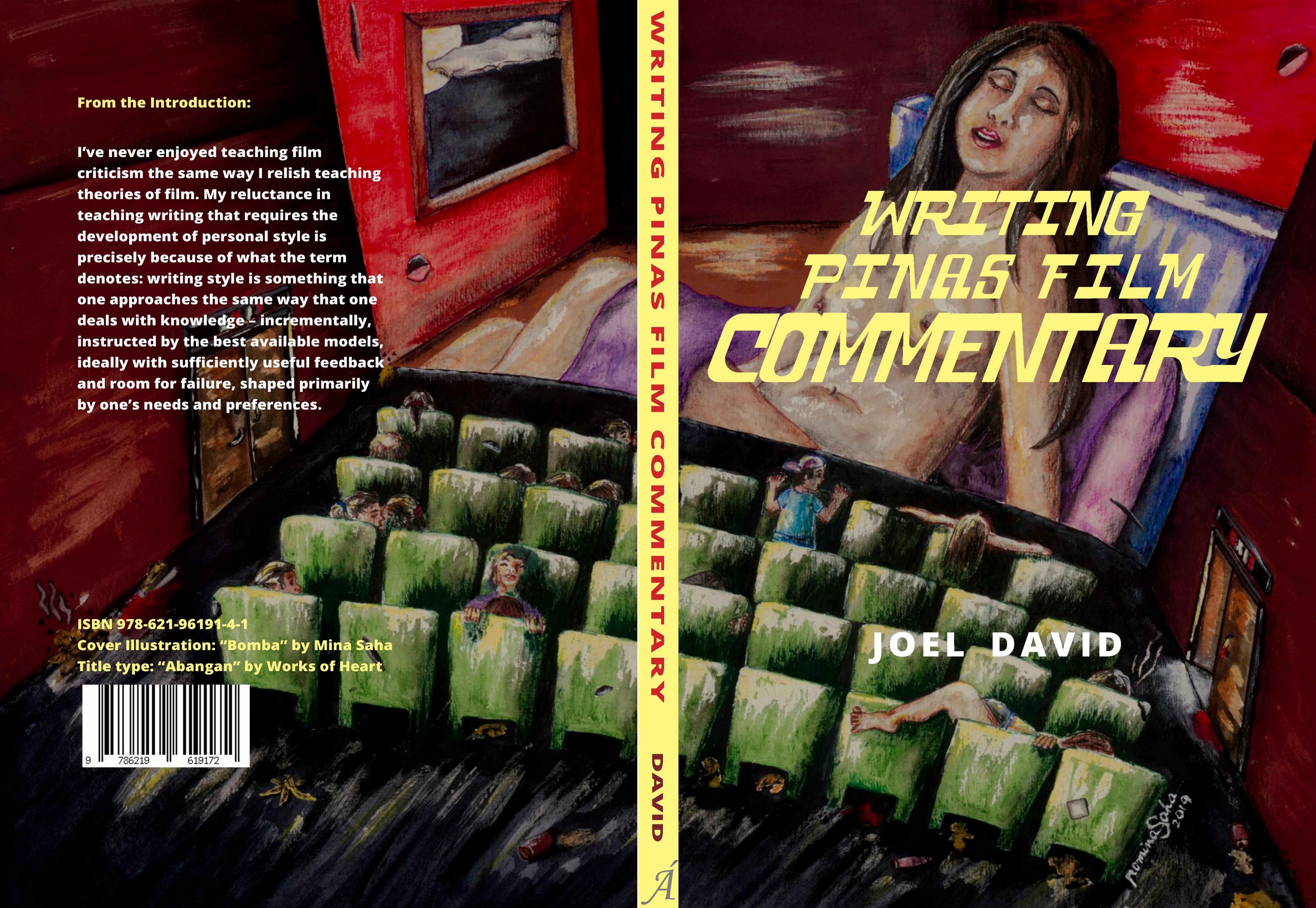
 Several elements in this pair of pictures are capable of generating discussions in themselves, but would detract significantly from the concerns of the book text. To bring up a novel example: one figure is common to both – Ferdinand “Bongbong” Marcos Jr., only son of the Marcos couple and latter-day frustrated vice presidential aspirant. This detail would alter most people’s impression that the first presidential offspring to perform in movies was Corazon Aquino’s daughter Kris. (At one point, Lino Brocka was considering casting Imee Marcos in the title role of his Cannes breakout entry Insiang, but fortunately managed in time to cast aside that phantasmagoria; see pp. 125-26 of Jo-Ann Q. Maglipon’s “The Brocka Battles,” in Lino Brocka: The Artist and His Times, ed. Mario A. Hernando, Manila: Sentrong Pangkultura ng Pilipinas, 1993, pp. 118-54.) During the euphoric period that followed the 1986 “people-power” revolt that deposed the Marcoses and installed Cory Aquino, playwright Bienvenido M. Noriega Jr. (formerly with Imee Marcos’s Experimental Cinema of the Philippines) wrote a popular stage comedy premised on a speculative Romeo & Juliet-inspired romance titled Bongbong at Kris (1987).
 I would have preferred to use the evocative pic below (click to enlarge) in place of this solo portrait of Elena Bernal. Unfortunately its source, the phenomenal Pro Bernal Anti Bio volume (Manila: ABS-CBN Publishing, 2017) – drafted as an autobiography of Ishmael Bernal, passed on to his confidant Jorge Arago, and completed by Angela Stuart-Santiago in honor of her late friends – came out about the same time as Manila by Night: A Queer Film Classic. It would also have corrected the commonly misspelled and uncompleted name of the café run by Bernal, with “When It Is a Gray November in Your Soul Coffee Shop” rather than “When It’s a Grey November in Your Soul.”
 The pic in question came from a framed entry in Cinema Paraiso (Film Paradise), an exhibit of Filipino movie memorabilia with film screenings and lectures, held February to April 2003 at the National Commission for Culture and Arts gallery in Intramuros, Manila. According to historian and archivist Teddy Co, one of the organizers, “It’s actually from my collection of bomba magazines, ca. 1969-70. I cannot find the issue anymore so I cannot name the magazine and what month it was in. The other exhibit curators were Josephine Atienza and Cesar Hernando…. The pic was in a section called A History of Kissing in Filipino Movies, starting from the first smooch between Dimples Cooper and Luis Tuazon to a digitally rendered kiss from Lastikman [dir. Tony Y. Reyes, 2003]” (Facebook Messenger exchange, June 5, 2020). The explanation may be too long for a caption and should be written as a footnote.
 I could have replaced either one of two exterior shots of the Manila Film Center with the mural in the lobby, painted by Victor Cabisada Jr. and Peter Alcántara, then-impossible to access after a fire damaged the building (see this blog’s header image). In September 2020, an art historian, John Paul “Lakan” Olivares, posted the pic below (click to enlarge), apparently taken when the object was still new, on his blog
 Re the caption: upon the prompting of director-writer and actor Bibeth Orteza, a close associate of the accused comedians (one of whom had died), I reread available material on the controversy and was surprised to find that the case for reasonable doubt was strong. Pepsi Paloma advanced her accusation of rape in the media on the basis of a photograph where she was apparently being held against her will. Splashed on the front pages of tabloids and now inexplicably unavailable, the picture showed Joey de Leon kissing an unwilling Paloma, with the other comedians looking on with amusement. The worst that the picture denotes would be molestation, rather than rape.





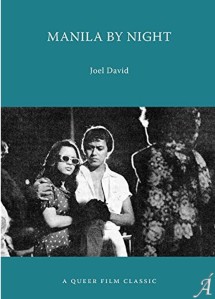









 ORCID ID
 Ámauteurish!