Heaven in Mind
Sabel
Directed by Joel C. Lamangan
Written by Ricardo Lee
Sabel is the type of film, now rarely produced, that ought to serve as reminder to local commentators that film criticism is more than just a matter of collecting their share of booty from annual awards-night telecasts. The movie presents difficult analytical and ethical challenges in a deceptively lyrical, bittersweet, and compassionate manner, a throwback to the original ideals of the French New Wave and its immediate aftermath in Prague Spring cinema.
11011What enables the film to withstand critical scrutiny is its daring plunge through the thickets of radical gender politics. Where it winds up is as far from a politically correct normative position as it’s been possible to depict onscreen in local cinema. (Warning to those who prefer their film surprises unspoiled: a few revelations are coming up.) The eponymous central character undergoes an odyssey that takes her in directions even she could not anticipate. Such unpredictability, coupled with the filmmakers’ refusal to pass judgment on her decisions, may be the key to the largely belligerent responses of film reactors so far.
11011How far does Sabel (the movie’s lead character) wind up from the norm? To modify the response of a character made famous by the late Marlon Brando, how many norms have you got? I managed to count class, gender, sexuality, legal status, social respectability, ethnic affiliation, even nomenclature, as the character we first encounter as Sabel insists in the end on being called by some other name. Her extreme self-transformations of identity mark her journey as more than queer, a concept that originally drew from feminist and gay ideals but now stands independent of and occasionally opposed to them. So more-than-queer, in fact, that she embodies the most radical position possible in the identity-political game, that of lesbian theory and practice.
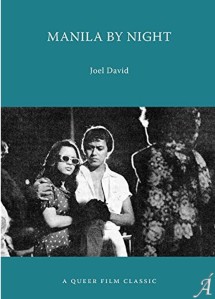
11011At some point in the past I attempted to articulate how, in refusing the reacceptance of norms (also known as mainstreaming) undertaken by the feminist, gay, and now even queer movements, lesbian activism has proved to be the most resistant to civil-rights containment – i.e., the willingness of liberal authorities to provide a place at the table, so to speak, in exchange for good behavior. Although the film-text I was then reading, Ishmael Bernal’s Manila by Night (1980), literalized its queerness by fragmenting its narrative structure, Sabel performs an even queerer reversal by intertwining two strands that I did not imagine could be integrated in the same young-Pinay body: the sexual and the political.
11011In short, where I had simply observed that the political lesbian, by embracing her historical “lack” and exploiting what has been regarded as her weakness by precisely insisting on her right to constant mutation, can be equated with a similar long-running revolutionary, the Third-World guerrilla, the film Sabel presents both options within the same person. And although the twists and turns in the main character’s story could amaze – or dismay – those seeking full understanding from the get-go, the signposts are all in place, ready to be acknowledged if one grants the movie a second screening: the character’s volubility, her bouts of inarticulate rage, her insistence on solitude, her reliance on the support of “sinful” men, her capacity for strategizing, and her recognition of the variable uses for one’s body, starting with her decision, early enough in the narrative, to undress in order to calm down a hysterical male prisoner.
11011In fact, the potentially explosive feminist issue of rape is what provides the film with its most carefully calibrated distinction: although as a nun, Sabel allows her own rape to take place (which, by most legal definitions, decriminalizes the act), she refuses to forgive the land-grabbing lawyer who ravages her lesbian lover. Rape, in this sense, is separated from rough sex by the fine line of personal consent, in much the same way that Freud described the inevitable interrelatedness of pleasure and pain. In this way the movie takes a position regarding the standard American feminist debate on pornography, wherein the right-wing pro-Moral Majority camp insisted on its synonymity with rape and the queer wing took the broader view of considering women’s sexuality a potentially enabling and liberating force.
11011So what have we got so far from the film? A clutch of ironies, actually: a teen slut who falls deeply, near-suicidally, for one of her casual pick-ups; a rebellious daughter who protects her neurotic mom from an abusive husband by setting up his downfall; a nun who turns out to be complicit in her own sexual violation; an absentee wife who admits genuine love for the father of her child; a life-long urbanite who finds solidarity with oppressed tribespeople; an exonerated prisoner who had actually committed the crime she was imprisoned for; a sexual sophisticate who rejects the fashionable trend of lesbian chic in favor of a butch-femme arrangement. Such a head-spinning combination of contradictions makes sense only if we accept that a character could be radical on her own terms, and Sabel’s Sabel proffers terms that are as unorthodox as they come.
11011In comparison with other feminist Filipino films, notably the same scriptwriter Ricardo Lee’s early ’80s output for Marilou Diaz-Abaya plus her more controversial though still indispensable later output (especially Sensual [1986] and Milagros [1997]), Sabel unequivocally demands to be taken as an integral part of the canon. It improves on Brutal (1980) by first seemingly reversing the gender of its investigator, from female to male, then ensuring that this person is sufficiently de-masculinized – as an ex-prisoner castigated by his fiancée’s mother and rendered reverential (feminist, in a sense) by the sacrifice of the nun he thought he had raped and by the love of an ambitious and capable woman – prior to allowing us to share his gaze. More important, it corrects the only sour note in the otherwise pitch-perfect Moral (1982) – the depiction of a minor character, one strong woman, among other strong women, whose only “fault” was that she happened to love other women.
11011Per the Internet Movie Database, this is the director’s and writer’s eighth collaboration. Most of the Joel C. Lamangan films I have seen evinced an admirable willingness to tackle ambitious themes with the heavy-handedness of a self-consciously classically oriented artist. Sabel is that wondrous creature, a work that pulls in issues from all over the map with the skill of an accomplished raconteur, one unafraid to deploy standard-issue devices (jump cuts and quick dissolves, flashback indicators, dramatic echo effects, etc.) for the sake of easing the narrative along. When the genuinely subversive resolution becomes apparent – the conciliation between the less-patriarchalized straight man and his former lover turned lesbian avenger, one accused of murder and the other getting away with it – it registers first as a warm, feel-good moment, sustained by the closure of the other characters’ stories, before the shocking implications take over.
11011Past Lamangan films, whatever their limits, could not be faulted for his direction of actors, but in Sabel he elicits career peaks from all the major performers. Wendell Ramos appears to have correctly judged how to attack his role by utilizing a childish affect during his emotional highlights, instead of the now-hackneyed (and predictable) sensitive-male approach, while Sunshine Dizon demonstrates authority as a medical professional and confidence as a soft-spoken butch lesbian. Most impressively, Rio Locsin turns in a radiant, witty, and mercurial performance as Sabel’s mother, all raw-edged neurotic tenderness that threatens to exterminate anyone unfortunate enough to share screen space with her: when she turns on the charm for her daughter and prospective son-in-law, then turns on him to express her unmitigated disapproval, one can completely understand how he can be spellbound enough to smile through her insults and later consult with her on how to find her missing daughter.
11011How does the lead actress fare in relation to such expert deliveries? It would be nearly impossible to find reference points for evaluation, given the singularity of the character in local cinema. One could attempt a commutational exercise by imagining how, say, the young Nora Aunor could have further enriched the role by lending it the discursive wealth of her persona or how the young Rio Locsin could have added a crucial measure of sensuality, but this also indicates how Judy Ann Santos’s achievement as Sabel is worthy of comparison with our very best talent. I was first appreciative of how unconcerned she was about her looks, considering how far from conventionally beautiful her features are. As she continued to immerse in the difficult metamorphoses of her character, I realized how hard-working this young talent was, and how much justifiable pride she manifested in a job well done. And yes, she does manage to hold her own before the force of nature that is Rio Locsin. If ever, and if only, unapologetically transgressive women characters become a staple in local fiction, Santos’s performance will serve as yardstick not because she was first, but because she made it memorable.
11011One final female auteur has to be cited: she shares story credit for the film, and is its producer as well. Lily Yu Monteverde has never gotten her due as the most productive mogul in our country’s colorful film history, largely because she also has a contradictory reputation as a disruptive producer. But now that even the trashy products of Regal are developing cult reputations, people better start rethinking whether, like Sabel’s, “Mother” Lily’s success wasn’t well earned after all. I’d say, on the basis of previous prestige projects (Mike de Leon’s Sister Stella L. [1984], Lino Brocka’s Makiusap sa Diyos [1991]), the main character’s nunhood phase was her contribution. But the larger contribution was the production itself. When Sabel insists that everything is part of a larger design, one that she later admits she herself could not completely discern, which creator could the filmmakers be referring to?
[First published July 12, 2004, in Philippine Star]
Back to top
Survivor’s Guilt
Boses
Directed by Ellen Ongkeko-Marfil
Written by Froi Medina and Rody Vera
Boses is not the first noteworthy film shut out of awards recognition in Cinemalaya – anyone ever heard of Arah Jell G. Badayos and Margaret G. Guzman’s 2006 Mudraks? It joins a long and still-lengthening list of works, local and foreign, film and non-film, overlooked upon initial release, whose reward(s) would arrive, sooner or later, in the form of belated acclaim, discursive attention, extended shelf-life, or, best of all, a mix of all three. What distinguishes Boses is that it also serves to indicate a peak in the Cinemalaya ideal: the hope that talent from the margins could eventually overrun the mainstream even while playing by the latter’s rules.
11011This may be the reason why the festival jurors may have felt alienated, embarrassed even, by Boses’s accomplishments.[1] Boses takes a grim situation (child abuse), matches it with high-art therapy (classical music), and unfolds the narrative with a strong dose of pleasure, as startling in its effectiveness as it is unexpected, given the nature of its material. In this manner the film betokens not just some of the best moments of the local industry, but also that of Classical Hollywood – the dominant 20th-century film movement that the rest of world cinema attempted to topple, with the European New Wave finally managing the feat just a few decades ago.
11011But what became Boses’s liability also turned out to be the source of its instant turnaround: already the current Cinemalaya top-grosser, it appears capable of attaining blockbuster status, with repeat viewership boosted by word-of-mouth commendation, occasionally hysterical responses even in the staid venues (Cultural Center of the Philippines, University of the Philippines Film Institute) it has graced so far, and star-is-born adulation lavished on its gifted and charismatic child performer, Julian Duque.
11011The trouble with Boses’s context of emergence is that it requires critical observers to weigh the film’s merits vis-à-vis those of the other Cinemalaya entries, especially this year’s winners. One strategy would be to point out the weaknesses of the prize-winners, but this would imply that the goal of figuring out a single “best” film is correct and satisfactory, when all it is, in a situation overwhelmed by an excess of achievements, is individualist in the worst tradition of auteurism (the New Wave “theory” that posited that films can be evaluated according to singular creative contributions, rather than collective efforts). In pursuit of this exercise, a circle of fellow cineastes helped me figure out what ailed the major winners (and, possibly by extension, the current crop of indie practitioners): a valorization of technical supremacy and over-reliance on deconstructive methods by the best-film winner, an endorsement of bourgeois middle-brow ambitions by the best-direction winner, and an infantilizing of outsiders (literalized by depicting them as children, with characters from the nation’s capital providing conflicting versions of modernist enlightenment) by the special jury prize-winner.
11011Yet this type of winner-take-all exercise presents its own form of danger, in the sense that Boses, for all its counter-acclaim, also partakes of some of the winners’ weaknesses. In fact our position as responsible observers makes it necessary to point out that a more radical handling of its material would have us understand, to the point of empathy, the abuser’s dramatic condition, the abused child’s reason for willing to have remained a victim for so long, and the tensions in the social worker’s position of class privilege in relation to abuser and abused. And we still have to bring up its filmmaker’s admission that she had to significantly sanitize the situation, not to mention the language, familiar to real-life child-abuse perpetrators, victims, and therapists. Plus it appears to uncritically question the pro-choice option.
11011With all the ways it might have fallen short, why does Boses remain the favorite of many, me included, anyway? One clue lies in the movie’s first end credit: a dedication to Johven Velasco, a film artist, teacher, and scholar who languished in academe until his sudden and tragic demise about a year ago, unknown to the rest of the world except for a handful of students and friends who swear by his selfless dedication and willingness to share everything he had, even at the expense of his own welfare. The fact that Ellen Ongkeko-Marfil makes this connection between the lives of her characters and that of an actual acquaintance indicates that she recognizes and upholds the power of love, a value that, even more than film pleasure, tends to upset film experts, used as they are to the constant and facile ways it gets exploited in the medium.
11011Indeed the core relationship in Boses, between the young survivor of parental abuse and the violinist who awakens the former’s talent and in the process attains his own closure from a personal tragedy, is what provides, for want of a less corny metaphor, the film’s heartbeat. Not only does the interaction start cute and end passionately, complete with initial misunderstanding, close calls, near-breakdown, and bittersweet separation, it also occasions bravura performances by the actors involved – as thespians and as musicians. Even more surprising, though perfectly logical, was Ongkeko-Marfil’s onstage acknowledgment, during the film’s UPFI screening, that Coke Bolipata and Julian Duque are violin mentor and student respectively in real life.
11011Though Boses benefits immeasurably from the chemistry between the pair’s star turns, the high level of quality displayed by the rest of the film’s cast proves that Ongkeko-Marfil’s background in stage arts (specifically the Philippine Educational Theater Association, where she and Johven Velasco started out) has helped complement the impressive evolution of her cinematic skills. Her earlier films, Angels (2001) and Mga Pusang Gala (2005), already generated appreciative buzz among indie-film observers. With Boses, she hewed close to what Lino Brocka and Ishmael Bernal, misrecognized among indie filmmakers as foreign-festival and anti-mass audience innovators, struggled to achieve throughout their extensive careers: the unapologetic provision of spectatorial pleasure alongside their inevitably intelligent handling of material.
11011The mode that Ongkeko-Marfil chose constituted her gravest challenge to serious film evaluators: melodrama, a type of genre that belongs to the larger group of “body” films, so-called because of their ability to provoke corporeal, as opposed to cerebral, responses – i.e., tear-jerking in this instance, goose bump-raising in horror, sexual arousal in pornography, laughter incitement in comedy. Feminist critics, for the greater part of the last couple of decades, have been spearheading the campaign to recuperate these much-derided genres, but their uphill movement shows no signs of reaching level ground in high-art (and therefore essentially conservative) culture, the indie-film scene included.
11011Boses evinces a systematic working-through of the elements peculiar to the local practice of melodrama, but the mechanisms, subtle as they are, become evident only upon further viewing. I even managed to jot down, in the dark of the screening venue, the Pinoy terms used by native practitioners: kilig, tampuhan, tawanan, kantahan (with violins instead of voices), habulan, and pagwawala, in chronological order as well as according to increasing level of involvement.[2] The penultimate sequence – spoiler alert! – between the teacher and student protagonists encapsulates the film’s earlier depiction of the shifts in their relationship: from farewell bonding, to panic, to relief, to hysteria, to music-making, to a brief comic exchange, to a final display of open-air (and -water) exuberance. One might wish that the performers had been seasoned enough to allow Ongkeko-Marfil to use a single take (a much-abused property of digital technology), but my first impression was that the scene had unfolded in one continuous action covered by multiple cameras (another advantage of the new technology) – such was the brilliance of the said sequence’s nearly wordless conception, grand in its romantic dimension yet sad in its recognition that the just-bonded individuals will never be this close again.
11011In fact the musical number that ends the narrative succeeds precisely because it refuses to provide definitive closure for any of the characters: the teacher will have to contend with his newfound dependence on the validation provided by his prodigy, the child will have to work out his loyalties toward his two needy father figures, the biological father will have to face the reality of his son challenging his vulnerable manhood, the social worker will have to start worrying whether her decision to reconcile the family would work out for the kid, the young girlfriend will have to find a way to attain sexual normality … just as people who have experienced these lives will have to return to places they call home and rethink the relationships they might have taken for granted up to this point.
11011A few films (even Filipino ones) may have incited revolutionary change, but the inward turn that Boses inspires, at a time when many of us have learned to muddle through with severely lowered expectations, ought to be fulfillment enough for the talents behind it. Most local digital practitioners will continue to aspire to attain festival honors in foreign lands, but this is the first movie made by a colleague of theirs that, more than anything else, truly belongs nowhere else but home.
[First published October 16, 2009, as “Boses Is for the World” in Philippine Daily Inquirer]
Notes
[1] An even likelier reason, which I never managed to corelate until now, was the unethical and pretentiously pseudo-Marxist bashing visited on the film by evaluators during the “congress” that the Cinemalaya organizers limit to taste-mongers in Philippine criticism and academia. See the “Indie Cinema Bilang Kultural na Kapital [Indie Cinema as Cultural Capital]” blogpost.
[2] The Filipino terms may be translated, in order of enumeration, as follows: titillation, sulkiness, laughter, musicality, pursuit, and rampaging fury.
Back to top
Sighs and Whispers
Biyaheng Lupa
Directed and written by Armando Lao
The much-ballyhooed emergence of digital film production in the Philippines has brought with it several paradoxes. On the one hand, while it has enabled critics to celebrate the revival of local cinema, the fact remains that genuine industrial-scale production has remained moribund, save for the occasional ultra-commercial event movie that would always, and continues to, embarrass the said critics (on which more later). On the other hand, largely because of the still-evolving shape of the dynamics of production and exhibition, more and more individuals are able to come up with their own releases, here and now, without having to go through the old eye-of-the-needle difficulties posed by then-prevalent but too-expensive celluloid production. Yet, also a consequence of such a sanguinary situation, too few of these would-be innovators see no problem in going over the heads of the local audience, as evidenced in nearly everyone’s eagerness to attain personal artistic validation by opting to make a mark in high-brow, preferably foreign venues.
11011These are problems whose solutions demand immediate attention, if only those in a position to attend to these issues could themselves take a step beyond self-aggrandizement. But one further paradox must be pointed out first, since it may be the most relevant in terms of Biyaheng Lupa. This proceeds from the preceding one, wherein digital production has provided an ever-growing number of prospective filmmakers with directorial breaks – so consistently, in fact, that eventually there might no longer be such a creature as a frustrated filmmaking aspirant. As in writing, where the fairly easy access to a typewriter (now a computer) nullifies any would-be author’s material excuses, so does digital film technology provide any auteur hopeful with a dwindling number of reasons to hesitate in taking her or his first directorial step.
11011Yet the now-unlamented tyranny of monolithic celluloid-dependent production was in fact capable of instilling in some of the best filmmaking candidates certain qualities that today’s film institutions, eager as most of them are to prove the worthiness of their respective trainees, wind up only paying lip service to: a solid grounding in the humanities, a thorough grasp of classical traditions, a philosophical engagement with issues both current and past, an enduring respect for the exigencies of financial risk-taking, and a willingness to engage the mass audience by entertaining and challenging them in turn, or simultaneously whenever possible. For this reason most old-school filmmakers, like today’s young Turks, could come up with creditable first projects … yet the old-timers could also sustain life-long careers by virtue of their intense personal commitment to complete artistic preparation, prolonged by the years, sometimes decades, of awaiting their respective breaks, whereas most of the names populating contemporary Filipino filmographies will be known mainly for the films they first came up with, and will be overstaying their welcome sooner or later.
11011It therefore also makes sense to maintain that the best local debut film, Ishmael Bernal’s Pagdating sa Dulo (1971), had not been surpassed for the past three decades, even in the face of the wild proliferation of first-timers since the turn of the millennium. Pagdating signaled the emergence of a talent distinguished by precociousness, reflexive criticality, intensive interest in social issues, and empathy for Otherness, with comic distance from profound institutional tragedies providing the equivalent of icing on the cake. And it also makes just as much sense to aver that Biyaheng Lupa shares all of Pagdating’s merits and then some, considering the fact that its director-writer, Armando Lao, has had close to a full career in scriptwriting – over a quarter-century, in fact – and had even then already embarked on an unrelated career or two elsewhere beforehand, much like many of the celluloid-era filmmakers once did.
11011A final similarity shared by both debut films resulted in an outcome that should not have happened then, and that has even less justification for occurring today: both display a sense of innovation so thoroughgoing yet so nonchalant that film evaluators have wound up taking the films’ presence, then as now, for granted. It would be newsworthy in itself if any influential institution were to recognize Biyaheng Lupa as the best Pinoy film debut of our time, just as Pagdating sa Dulo held that distinction for decades once people woke up to the fact. What will prove the current weakness of, say, the local critics’ group’s dynamics would be the inadequacy of its current screening methods – a reliance on individual video screeners, mainly, rather than the theatrical exhibitions that once guaranteed that complex film texts would have the potential to maximize their impact by approximating actual viewing experiences.
11011Like no one else except Bernal, Lao has infused his very first outing with a recognizable and fully developed aesthetic philosophy. Those who had been able to follow his scriptwriting career will be able to trace where he had been headed, and how he had managed an extensive self-revaluation and, at the same time, a welcome return to his roots. One could form one’s anticipation based on, say, the earthy handling of William Pascual’s Takaw Tukso (1986), the time-based experimentation of Chito Roño’s Itanong Mo sa Buwan (1988), the tragicomic national allegories of Jeffrey Jeturian’s Pila-Balde (1999), and the reflexivity of Jeturian’s Tuhog (2001), but Biyaheng Lupa would still prove more surprising than what any of these major works could presuppose.
11011Per the filmmaker’s own account, Biyaheng Lupa departs from Lao’s utilization of real-time presentations, notably in his collaborations with Jeturian and Brillante Mendoza. Lao’s real-time narrative strategy was itself a coping mechanism, after the commercial failure of his epic-scale project with Jeturian, titled Minsan Pa (which, like Biyaheng Lupa and Jeturian’s Kubrador [2006], was produced by MLR Films, whose executive producer, Joji Alonso, may yet bid to be the Jesse Ejercito of Pinoy digital productions). Lao has described Biyaheng Lupa as reliant on poetic time, where cosmic principles impinge on the unfolding of the narrative, as opposed to the duration-dependent real time and his earlier deployment of character-based dramatic time. Originally intended as a dramatic-time type of narrative focused on one of the present film’s main characters, the project hibernated, so to speak, as Lao went through his real-time storytelling phase, and re-emerged in the poetically inflected mode it has assumed at last.
11011Lao and his collaborators had endured varying measures of acclaim and grief – sometimes within the same project, as was the case with Mendoza’s 2008 Cannes entry Serbis. Curiously, Biyaheng Lupa both embodies this materialist orientation and transcends it at the same time, via its initial fragmentation of a close-quartered social unit, the passengers of a southbound bus, and the subsequent revelation of the artist’s motive: an amazing reconstitution of this same unit within the terms of the characters’ inner lives and often in spite of their individual selves, to such a degree that when one of them remarks, “My life is not alone,” it serves as a confirmation of what everyone had refused to accept until the fateful end.
11011Biyaheng Lupa sets out its contract with its viewers by asking them to accept its sole artificial element, the premise that people think in terms of words alone, rather than in terms of images or, more likely, in audiovisual stretches. Once we accept this, the film takes us on the journey of several characters – sixteen, if we were to go by the list of major performers, or seventeen if we include the anonymous, unseen ultimate determinant, the bus driver … who may or may not be standing in for the author, but the film’s ontological complications do not end here. At some point during the trip, the conductor operates the ubiquitous video player, and the Biyaheng Lupa producer’s earlier film, the aforementioned Minsan Pa, unfolds. Here the filmmaker may be acknowledging the reduction of finances (from celluloid epic to single-set digital) alongside the increase in scale (from hero-centered love triangle to multi-character dramatic discourse), even as the screen-within-the-screen characters, as stars playing “real” people, interpellate the bus passengers – who in turn “respond” by discussing the presentation, but whose comments reach neither the film being shown nor one another, but the film audience.
11011These polysemic valences come to a head with another video screening, this one more overtly interactive: a sing-along to Louie Ocampo’s pop ballad “Kahit Isang Saglit [Just One Moment],” where the passengers, without their knowing it, literally think of exactly the same thing, thus unconsciously-yet-deliberately forming an extemporaneous community of their own. The measure of Lao’s skill as documentarian is in how he demonstrates this occurrence without the usual humanist throwbacks to shared ideals or unified aspirations. In fact, the characters fall into singing along just as easily as they plot, bicker, judge, reminisce, fantasize, and regret, with one of them even developing at one point a funny-scary paranoid delusion that erupts in a knife-wielding outburst that just as quickly fizzles into abject surrender. One might remark here that, given the radical paring-down of scale and resources, Biyaheng Lupa attempts the same successful delineation of a recognizable Filipino social milieu that Bernal’s Manila by Night (1980) had done, but with more characters, and in reverse: where Bernal started with relative unity and stability and built up toward a monumental breakdown, Lao begins with the more recognizable self-absorbed individuals typical of a harried neoliberal Third-World existence, drifting in and out of their inner lives as they contend with the company of one another.
11011Yet even as they insist on the primacy of their lives prior to and possibly after taking the present trip, a question of haunting arises. The audience is never provided any assurance that the memories conjured up by any of the characters are real (one of them in fact worries that her illegitimate pregnancy will result in the delivery of a monstrous squid-baby, just like her neighbor did before her), which is why when the film follows some of them after they leave the bus, their situations acquire an uncanny quality that never became an issue when they were still taking the trip. On the other hand, most of them are so caught up in their other lives that the proximity of the other passengers results in intrusions that they dismiss, reject, misrecognize (especially in erotic terms), or at best tolerate; in short, while for us the characters’ pre-trip lives might just as well be fantastic, for the characters the other passengers might as well be specters that could dissolve once this transition in their lives has passed.
11011Such insights on transience, destiny, and the abiding power of memory are brought to bear in the film’s bravura climax, simple in conception, casual in execution, yet grand in the best possible way, heralded by a mystifyingly long take of the bus crossing a bridge then pausing in the middle. Without giving away (too much of) this vital closure, I ought nevertheless to remark that we witness a series of rapturous textual ruptures and arrive at one of the most incredible final shots in cinema – and yes, I do include global samples in this declaration: a close-up of the last passenger, her face crowded by translations of the monologues of everyone else around her, building up to her final utterance, devastatingly simple, amusing yet heartbreaking, drawn from a fiction whose reality effect surpasses whatever documentations have been made of life in our wondrous, terrible, much-abused yet constantly hopeful existence.
[First published May 2, 2009, in Philippine Star]
Back to top
On the Edge
On the Job
Directed by Erik Matti
Written by Michiko Yamamoto and Erik Matti
On the Job (hereafter OTJ) commemorates at least one milestone in the still-evolving narrative of Philippine independent cinema: it is the first digital-era action film to attain the genre’s elusive combination of critical acclaim and box-office profitability, reminiscent of the local industry’s social-realist achievements during the martial law period (roughly the ’70s to the mid-’80s). From my sadly delimited perspective, the project seems to have benefited from a serendipitous confluence of its creative forces, director Erik Matti and co-writer Michiko Yamamoto, each attaining a peak in relatively short careers already marked by several high points.
11011One measure of the movie’s impact lies in how it has been able to elicit commentary even from Pinoy reviewers who tend to focus on so-called mainstream releases. This is the key to OTJ’s significance as the latest in a still-rare series of independently produced films that fulfill the dream of a community of practitioners who seek to overrun the studio-dominated mode of production and exhibition. Unlike Aureus Solito’s Ang Pagdadalaga ni Maximo Oliveros (2005), the first digital indie success that turned out to be the exception that proved the rule, all the rest were generically recognizable exercises, notably a pair of comedies (Marlon Rivera’s Ang Babae sa Septic Tank and Jade Castro’s Zombadings 1: Patayin sa Shokot si Remington [both 2011]) and a melodrama (Ellen Ongkeko-Marfil’s Boses [2008]). OTJ claims pride of place in being directed at the patronage-shy male audience while accommodating whatever combination of viewers (female, youth, intelligentsia) still manages to sustain theatrical screenings.
11011In fact the few negative responses to the film dwell on aspects that the movie had no choice but to observe in order to succeed as a genre sample. One might feel that the fact that a woman co-scripted the material might have been nothing more than a stroke of luck for the project, but that would belie the evidence that Michiko Yamamoto was also responsible for the aforementioned Maximo Oliveros and Zombadings, as well as Maryo J. de los Reyes’s Magnifico (2003): if one were to imagine the men her fictions focused on, they would proceed chronologically from son to gay son to grown-up sexually conflicted teen, so there would be no reason to expect that she would be unable to deal (entertainingly) with mature conventional men.
11011What makes OTJ a qualitative leveling up, to use contemporary youth lingo, is not so much its close inspections of father-son relationships (also characteristic of the previous Yamamoto-scripted titles) as the proliferation of dramatis personae representing various social strata and performing diverse conflicting functions. The challenge of rendering these potentially schematic types as recognizable denizens of the urban jungles of Metro Manila was up to the director to realize, and Erik Matti proves himself equal to the task by relying (as Ishmael Bernal before him had been wont to do) on the tension that results from fusing a complex, raging narrative voice with a patient and keenly observed documentarian style, his on-the-prowl camera constantly encircling his major characters the same way that new media (in the form of CCTVs and satellites and camera phones, e.g.) ensure that our private moments might be shared by a voracious viewing public.
11011The icing on the cake is what probably proved irresistible to mass viewers, who are known to re-watch films that treat them to unexpected doses of pleasure: in OTJ’s case, this would comprise the nearly uniform sterling performances by an ensemble of actors who seemed to have been hungry for the opportunity to shine in sharply drawn characterizations, and proceeded to deliver quicksilver line readings, physically exhaustive maneuvers, and emotionally draining demonstrations. Actually it was only during a second viewing where I figured out that it was mainly the performances that accounted for an impression that the movie had set out to tackle Oedipal conflicts in a failed state, despite the fact that of the three sets of fathers in the film, the least visible son was the only one biologically related to his dad, an upstanding (and therefore professionally unsuccessful) police officer. The pair of prisoners who get spirited out by their militarily appointed handlers observe a mentor-student relationship (that occasionally has the potential to virtually replace the student’s own parents, as most teachers can attest), while the police detective that the Senate-aspiring general’s campaign manager assigns to attend to a series of messy clean-up operations is actually an orphan “adopted” by his father-in-law, the campaign manager.
11011If the set-up as presented sounds a mite too complex for a standard-issue actioner, that precisely is the contract the film proffers its media-savvy and issue-starved Pinoy audience, in exchange for headline-worthy acts of violence tempered with unexpected moments of gracious humor. That in itself would be sufficient payoff, but OTJ more daringly builds up its case against the state, where the lowliest character hints at the highest office in the land as implicated in unwholesome underworld skulduggery. The manner in which the father-son tensions are resolved is breathtaking in its cold-bloodedness, yet in both mass-audience and student venues that I attended, the viewers cheered at the end (as foreign-festival attendees reportedly also did).
11011A less forgiving observer might complain that the movie performs as entertainment machine too successfully, trading on its impressive skills display – and while I imagine that for some viewers that would be reason enough to be grateful, I’d hesitate to judge that desire as wrong per se. But I also think that the exchange between OTJ and its audience goes a bit deeper than that: by regarding the viewer as capable of following story threads as endless and labyrinthine as the alleyways and culs-de-sac that the characters keep navigating, hopeful for whatever reward they believe awaits them at the end, OTJ enables its primary audience to realize how Philippine society and its people are imprisoned in an insurmountable system of exploitation. Thwarted by electoral exercises, appalled by high-level corruption, distressed by the prospect of having to follow other people’s commands just to be able to survive – we are what we witness in this sordid, bloody, soul-crushing, painfully funny portrait of the national condition.
[First published September 12, 2013, in The FilAm]
Back to top
A Desire Named Oscar
Ilo Ilo
Directed and written by Anthony Chen
Metro Manila
Directed by Sean Ellis
Written by Frank E. Flowers and Sean Ellis
Transit
Directed by Hannah Espia
Written by Giancarlo Abrahan and Hannah Espia
The present year (2013) will be memorable for Pinoys mainly for the succession of national traumas it proffered, from the usual showbiz decouplings and sex scandals to pork-barrel exposés, militia violence, and record-breaking natural disasters. On the other hand, those who wish to remember whatever positive developments occurred will have enough to account for beyond the first Miss World (and Miss Supernational) beauty queens and the nth boxing triumph of Manny Pacquiao. In fact the equivalent past year, for those old enough to remember, would be 1984, when the country was in the throes of dismantling a discredited (US-sponsored) dictatorship, yet graced with what may have been the most productive Golden Age year for Philippine cinema. As if to compensate for the greater concentration of troubles that befell the republic this year, 2013 supplied not just more wonderful films than usual, but also more festivals to showcase several of these achievements.
11011The rest of the world’s film community must have been taking notes, since the Philippines not only claimed to offer “more fun” in its official tourist announcement, but also actually positioned its citizens in virtually all the inhabited areas of the globe. About one in ten Filipinos, or close to ten million in total, constitutes the official count; no other national economy depends as much on overseas income, even if three other countries (China, India, and Mexico) have, in absolute terms, more overseas citizens and consequently larger remittances. In this respect, the overseas Filipino worker or OFW possesses a status crucial to the survival of her home country, not to mention her usually numerous dependents back home. This fact ties in with several other problems whose solutions lie beyond our reach for now: elected officials, for example, will always be confident about plundering the national treasury since the people in charge of the economy will no longer be able to hold off their money-making activities, the way they did during the Marcos era; if the OFWs withheld their remittances, the pork-barrelists may be frustrated – but only after the OFWs’ families had gone without for too long.
11011Unlike Western and several newly prosperous Asian countries, therefore, the Philippine global presence is far less privileged, manifested by workers in some of the least-preferred stations in their destination countries, rather than by tourists and scholars or professionals on exchange programs. The fascination among foreign cultures with the Pinoys in their midst derives from a recognition tinged with embarrassment and guilt: in an earlier, less-developed period, they could have been us. Hence a lot of conflicted responses to the OFW presence can be explained in terms of how badly the foreign employers wish to deny this reality about themselves, or how sorry they feel for the people who might have been their equal, had history taken other turns (the global response to the victims of supertyphoon Yolanda/Haiyan can also be framed in this way).
11011Meanwhile, part of the pro-filmic renown that 2013 will be marking was the announcement that three official submissions to the Best Foreign Film category of the Academy Awards happen to deal with Filipino workers. The Filipino and Singaporean entries, Transit and Ilo Ilo respectively, are overtly about OFWs (with another country, Israel, as the setting for Transit), while the UK’s submission, Metro Manila, is about a Pinoy worker’s odyssey in his native land. Transit was the first to be screened locally, during the annual Cinemalaya Film Festival; Metro Manila was screened not long after, while Ilo Ilo will be in Metro Manila theaters by the time this article gets published. It is in reverse order of their Philippine release schedules that I will be discussing each one.
11011Anthony Chen’s Ilo Ilo brings with it a number of well-deserved distinctions, including a trophy from Cannes as well as Taiwan’s Golden Horse prize as the best Chinese-language movie of the year. It’s better than what one could hope for, and strengthens the perception of how Singaporeans are attempting to bridge the connections between their people and ours after the several difficulties the Philippines has had with the Singaporean government, from Lee Kuan Yew’s disparaging remarks about OFWs to the Flor Contemplacion tragedy. The earlier OFW-themed Singaporean film, Kelvin Tong’s 2005 horror entry The Maid, was similarly well-intentioned but too derivative and necessarily dualistic in its configuration of the “good” victimized OFW and evil-abusive Singaporean employers.
11011Since Ilo Ilo proceeds from a recollection of its filmmaker’s formative period with his Pinay nanny, it manages to depict a system where harshness and even outright cruelty can be understood even by the purported victim, with the IMF/WB-induced Asian economic crisis of the late 1990s as the invisible monster that inevitably takes over the country, driving its citizens to increasing levels of panic and frustration. Chen maintains a humane grounding for the family at the center of his narrative, with the usually demonized character, the mother, revealed as the force that keeps the family, materially speaking, together, her jealousy at the developing closeness between her son and his nanny kept in check by her realization that the problems she has to solve are larger than all of them put together, since it will mean their survival as citizens. To its credit, Ilo Ilo is able to advance these potentially melodramatic developments in a subdued, humor-leavened manner, the heartbreak of the family (and their country) falling apart and losing the first “other” friend their son has ever had all kept in check and staying with the viewer long after the screening experience has ended. If you happen to be in the vicinity where the film’s being screened, don’t wonder that people are not buzzing excitedly about it, since it’s not that kind of film; just rest assured that it will provide good old-fashioned substantive entertainment, and head to the nearest venue without delay.
11011Sean Ellis’s Metro Manila is made of more ambitious stuff, the same way that Danny Boyle presumed that he was in a position to envision the slums of Mumbai as an Oscar-worthy film in Slumdog Millionaire (2008). Alas, just as Slumdog Millionaire could only hope to repackage a proletarian children’s fantasy via all the razzle-dazzle that state-of-the-art Hollywood filmmaking could offer, so does Metro Manila falter in its attempt to portray the Pinoy underclass. The relationship between a British subject like Boyle and the postcolonial material that Mumbai represents can only work to the extent that, say, an author like Rudyard Kipling could only partially (and problematically) succeed with, and do so by devoting his entire life to living in and writing about India. And just as Slumdog Millionaire managed to get by through appropriating elements of Bollywood cinema, so does Metro Manila attempt to make its case by demonstrating how closely its makers had studied certain Pinoy social-realist samples that happened to be accessible to foreign viewers.
11011What Ellis and his team missed out on was the home-based critique of this tradition. Even worse, they subject the Pinoy psyche to a distinctly Western temperament, when the movie’s central figure (who’s male rather than female) feels shortchanged by the trader who buys his harvest, and decides to trek from faraway Mountain Province to Metro Manila, where he knows no one, bringing his entire family with him. To make things worse, everyone who meets him treats him worse than his rural boss, with a room-for-rent swindle serving as the proverbial last straw; no one even thinks of extending a hand, much less uttering a sympathetic word, at the plight of an incredibly naïve rural migrant – who it turns out can even speak fluent English! Midway through the movie the narrative veers into film-noir territory, so if you can sit out the first hour, you’ll finally be able to appreciate certain developments made more recognizable because of their generic properties.
11011Finally, Hannah Espia’s Transit stands as one of the most impressive first films in an accelerating list of local films filled with impressive debuts, and more striking since she happens to be the only female filmmaker in this trio as well as the youngest. Transit may not have been possible had the filmmaker lacked extensive preparation in her craft, and Espia’s status as a graduate of the national university’s film program evinces how the faculty, along with the better students, might have been able to assess the errors of the program’s earlier emphases on film plastics and found instead the more useful study materials on time, modernity, thirdspace, globalization, memory, and politics of gender and race. Apparently Espia reached into her own history as the child of Israel-based OFWs, and returned to this past in order to evoke it for people – her own, and others – who might find it less familiar than she does.
11011By focusing on a single episode, which may be roughly described as the effects of recent Israeli security policy of deporting the children of migrant workers too young to attend school, and the responses of a small circle of OFW relatives and friends, Espia enables the audience to realize the human cost of such a harsh (through presumably necessary) official decision; like Anthony Chen, she also positions the OFWs’ foreign employers as distinct from their countries’ state forces, and one realizes how well she succeeds with the characters in her narrative when an Israeli employer, a generous and avuncular elderly fellow, suffers an attack – and an OFW child, left alone in the Israeli’s house, now has to risk his resident status by running out into the open to seek for help.
11011The film’s complexities derive from the characters’ difficult relationships with one another, desirous of constantly expressing the warmth that Pinoy culture ingrains in its citizens from birth, yet wary of the way that this surrender to the dictates of the heart could trip them up in relation to their host country’s wartime rules and regulations. The narrative structure is in fact so simple that it actually helps the “readers” (the film’s audiences) to place where an individual character happens to stand in relation to the others, before her or his private moments reveal what thoughts or emotions she or he might actually be harboring deep inside. The same episode gets played out over and over, and in increasing length, from the perspective of characters who are ranged, chronologically, from oldest to youngest, until it ends up with a person directly affected by the country’s policy, a child below the age of five, and attains full circle cinematically while insisting on an open ending, with the characters changing the resolutions of the stories that they exchange with one another.
11011Having once taught at the institute where Espia had studied, I never imagined that an undergraduate would be able to configure how film form can be invested with useful discursive valences – so either this is an unusually gifted person who was fortunate in having previously unexploited material, or we might finally be witnessing an end to all these tiresome shallow experimentations that look like painfully prolonged film theses. Like Anthony Chen (and unlike Sean Ellis), Hannah Espia focused on theme, character, structure, historiography, and politics, and never let go of gentle humor. She apparently used admittedly difficult recent readings to find ways to tinker with these elements, and presumably set aside the usual goofing around with lights and mics and lenses and reflexive references. There’d be no other way for her and Chen to grow, full-grown as they already are, except by becoming fuller film specialists.
[First published December 4, 2013, as “The OFW Finds Well-Deserved Recognition in Hollywood” (Part 1) and as “Metro Manila and Transit: Ambitious, Impressive” (Part 2) in The FilAm]
Back to top
Antonio Luna’s Fall and Rise
Heneral Luna
Directed by Jerrold Tarog
Written by Henry Francia, E.A. Rocha, and Jerrold Tarog
By now, any Filipino in any part of the world who has been extensively plugged into the social network of Facebook would have heard of Heneral Luna, the celebrated blockbuster on Antonio Luna. Among several ironies, Luna (1866-99) was reluctant to participate in the uprising against Spain but led the revolutionary army, the Katipunan, in resisting American occupation; like the Katipunan’s founder, Andres Bonifacio, Luna was assassinated by his own compatriots, possibly on orders (or at least with the compliance) of the “first” Philippine president, Emilio Aguinaldo.
11011The film, directed by Jerrold Tarog and scheduled to screen in the US in a few weeks, boasts of several accomplishments beyond provoking renewed interest in several unresolved century-old controversies: it marked the emergence of vital new players in the burgeoning Philippine film scene; it exemplified ways of reworking a difficult and nearly forgotten local genre, the historical epic; and it demonstrated the material potential of social-network activism, with the movie’s box-office record actually increasing from one week to the next in direct proportion to the buzz generated among Facebook users. (Of special interest to social-science observers will be how this correlation between new-media activity and citizens’ decision-making plays out in next year’s Philippine presidential election.)
11011Only the most assiduous students of Philippine cinema will be able to assert that, contrary to the general impression, Heneral Luna is not the first successful local historical epic. Several other period films, notably Eddie Romero’s Ganito Kami Noon … Paano Kayo Ngayon? (1976), are fondly remembered even though they do not purport to overtly depict any historical personage; Celso Ad. Castillo’s Asedillo (1972) and Peque Gallaga’s Virgin Forest (1985) deal with personalities involved in the Fil-American War and its aftermath; and several other titles, notably those of Gerardo de Leon, Marilou Diaz-Abaya, Mario O’Hara, and Mike de Leon, tackle the novels of Jose Rizal and/or the life of the national hero himself.
11011Heneral Luna, however, stakes a claim on Pinoy historical-epic production, and not only because it is the first well-received one made since the film industry’s transition to digital format. It evinces careful study of the tradition of an admittedly outmoded genre, one that was much-admired during the early years of cinema but has since been regarded with a certain degree of embarrassment, if not disdain, for its indulgence in “surge and splendor and extravagance,” as described by film expert Vivian Sobchack. By his own admission, Tarog reworked an already finished script not only by translating it from English, but also by adding several scenes and details, including a surprising amount of humor; in this way Heneral Luna manages to recall not just Romero’s work, but an unfairly forgotten early film on Artemio Ricarte by Ishmael Bernal, El Vibora (1972).
11011Unlike Romero and Bernal, Tarog exhibits a fluency in film language that enables him to bypass several of the standard elements of the historical epic genre. He had managed to work around the more technical requirements – the use of recognizable performers (as Asedillo, for example, had Fernando Poe Jr.) and the distension of time and space – by casting appealing performers who were capable of larger-than-life delivery without losing histrionic credibility, and by covering so many sociopolitical issues over so much geographic space that the film actually seems to run longer than its barely two-hour limit and seems to be spilling out of the confines of the frame; by the time the American colonial officers congratulate themselves and mock the natives’ attempt at self-determination, and face the audience to deliver their lines, the gesture seems to be so consistent with the film’s disciplined use of postmodern devices that no one feels that some realist contract has been violated.
11011The more significant contribution of Heneral Luna has been in Tarog’s refusal to follow the historical epic tradition of “writing History” (again per Sobchack), but instead opts to write a (version of) history, admitting to the use of fiction (as announced in the prologue) and even rumor (as admitted in a closing-credit notice). In so doing, the film manages to evade and even subvert the several forms of ideological baggage that encumbered Classical Hollywood samples: the rational humanism, bourgeois patriarchy, acceptance of colonialism and imperialism, and validation of entrepreneurial and corporate capitalism that typified early Oscar winners, for example. More than any previous sample of Pinoy historical epics, Heneral Luna comes closest to what may be termed the counter-cultural extravaganzas of post-Classical Hollywood and European cinema. It also reconnects with another moribund local genre, the action film, by repackaging the eponymous lead character as neither (strictly speaking) hero nor villain, but as a complex antihero: the responses of the secondary characters to his temperamental contradictions subtly mirror an audience dynamic, with the less “critical” mass audience more accepting, and appreciative, of the film, in contrast with pickier, logic-obsessed, PC-insistent commentators.
11011Hence anyone who scours the internet for every available response to the film would have eventually stumbled on dissenting commentaries, some of them harsh or outright dismissive. This would be understandable in any work of sufficient ambition and coverage: there will always be elements that will rub some people the wrong way, and in Heneral Luna these have arisen in the text’s critique of parochialism (painful for those who happen to be associated with certain tribes or regions identified as the villains of this specific version of history) as well as in the downplaying of American complicity in the revolution’s most contemptible tendencies. For a preferable corrective, I would refer such would-be critics to another fairly recent period film, ironically by an American, John Sayles’s Amigo (2010), which should be viewed as the history-from-below intertext of Heneral Luna.
11011For it would be to anyone’s future detriment to write off Tarog and his intention of completing a trilogy of filmic discourses on Philippine history. As a non-mainstream filmmaker, he had already come up with a personal series (which he calls his “camera trilogy”), and these indicate a willingness to delve into uncomfortable material via innovative strategies. With Heneral Luna he has managed to be earnest about raising questions of patrimony and identity while remaining playfully distant and allowing the audience to figure out their own takes on the past and on the filmic future. It takes a certain type of commitment (or what the romantically inclined might call “love”) to embark on this kind of long-term project, so anyone about to watch the film better be prepared: displays of love can embarrass, and surrendering to it will be overwhelming.
[First published October 15, 2015, as “Historical Film Depicts Antonio Luna’s Fall and Rise” in The FilAm]
Back to top
Ice with a Face
Ma’ Rosa
Directed by Brillante Ma. Mendoza
Written by Troy Espiritu
Brillante Ma. Mendoza’s Ma’ Rosa holds the distinction of being the second Filipino film to win at the Cannes Film Festival’s main competition. Even more impressive is the fact that the previous winner, Kinatay (2009), was also made by Mendoza, who won for direction. Ma’ Rosa copped a “lesser” prize (best actress for Jaclyn Jose), but as any observer of Philippine movie awards will confirm, any performance award makes a bigger splash with the local public, because of the way it plugs into the star system.
11011Jose’s achievement has the additional allure of the unexpected: among a long list of respected actors, she had long been relegated to secondary status (“supporting,” in awards parlance), although she managed to land a well-received lead role or two every decade since the 1990s. She emerged as an already-accomplished talent in late 1984, and had Lino Brocka scrambling to cast her in as many fallen-women roles as he could commission; in a couple of years, she earned an enviable notoriety for dominating sex-themed films without any compunction about shedding off all her clothes while delivering performances that won her a series of critics’ prizes. (Several of these 1985-86 titles may be found, remastered but unsubtitled, at Jojo Devera’s [now defunct] Magsine Tayo! blog.)
11011The standard procedure among Philippine film experts is to run a commutation test (following John O. Thompson’s prescription) imagining how the role would have turned out if it had been performed by Nora Aunor. Hard though it may be to believe, certain roles had always tended to lie beyond the reach of the country’s foremost film performer – sex roles, for example, like the ones that Jose once specialized in. Jose in Ma’ Rosa acquits herself sufficiently so that by the end of the presentation, one might still be able to speculate how Aunor could have enriched the role, but one would have to be too much of a Noranian to deny that Jose succeeded in creating an iconic character, one that would have been the logical outgrowth of the poverty-stricken sex kittens that she used to portray.
11011Jose’s predicament is matched by Mendoza’s. After witnessing how he had a series of increasingly controversial wins (topped by Roger Ebert’s sustained tirades against Kinatay), people now feel righteous enough to point out that his latest outing proffers yet another variation on his “poverty-porn” material. Once more it is anchored by his long-time collaborator (and Ma’ Rosa consultant) Armando Lao’s vérité-inspired found-story approach, focused on the dregs of society trying desperately to make ends meet, with the police force behaving as a sinister and ruthless extension of a negligent state that leaves its vulnerable Third-World populace to be buffeted by the combined forces of postcolonial neoliberalism, climate change, and uneven development patterns.
11011Yet Ma’ Rosa shares certain properties with some of Mendoza’s best work. It has the suspenseful exposition of Tirador (2007), the warmth of Foster Child (2007), the technical expertise of Serbis (2008), and even casts an actor from his first film, Masahista (2005), to play the same role as a gay sponsor. Jose as the title character and Julio Diaz as her husband appeared as a married couple not just in Serbis but also in William Pascual’s Takaw Tukso (1986), where Mendoza worked as production designer (and performs the same function in Ma’ Rosa, as he did for a number of his previous films).
11011Even more unexpected is the easy way that the current release lends itself to a second screening. Ma’ Rosa appears to promise further insights beyond what an initial viewing conveys, and dutifully manages to fulfill that promise. We see the worst of the policemen behaving tenderly toward a couple of youthful drug users, and the entire corrupt police force bantering playfully with a gay minor, Dahlia, who acts as their office maid.
11011Ma’ Rosa herself comes across as an exemplary businessperson, with enough sense (unlike her good-for-nothing husband) to avoid using the very product she dispenses and to keep a detailed sales record that winds up incriminating her; indeed her strong-woman genes seem to have thankfully persisted, with her daughter (played by Jose’s real-life offspring) the only one among her children still in school. Once we know Ma’ Rosa’s sub-rosa activities, and we see her purchasing instant noodles at the beginning of the film, we then find ourselves noting the irony of how certain products cause extensive health damage yet some of them can be acquired legally while others have to be handled with full awareness and acceptance of the risks involved.
11011An overlooked aspect of Mendoza’s work is his handling of women performers, and Jose’s Cannes prize serves as reminder for us to reconsider the several elderly actresses he had provided with rare opportunities to showcase their abilities: Aunor for Taklub (2015) and Thy Womb (2012), Anita Linda and Rustica Carpio for Lola (2009), Maribel Lopez for Kinatay, Gina Pareño for Serbis, and Cherry Pie Picache for Foster Child; an exceptional case would be Coco Martin, the closest to a Mendoza signature actor, who burst on the scene with Masahista and has become a household name (while occasionally reappearing in Mendoza films) as Philippine independent cinema’s most vital contribution to the mainstream industry.
11011Jose’s reading of her role is complemented by the high level of performance of the rest of the cast. Mendoza is one of the few indie filmmakers who can command people with leading-role backgrounds to play supporting characters, from Lopez’s single-scene appearance as Ma’ Rosa’s resentful sister-in-law Tilde, to Baron Geisler and Mark Anthony Fernandez as police officers who look snappily elegant when they finally don their uniforms but with Ma’ Rosa’s (and the audience’s) complete understanding of their monstrous potential, and Kristoffer King as Ma’ Rosa’s even-tempered drug dealer who grows increasingly menacing when he realizes how she had betrayed him to their neighborhood’s criminal police gang.
11011The film’s much-admired open ending, where Ma’ Rosa nearly chokes on street food as she witnesses a fate she’d been trying to avoid (a homeless family with their ambulatory store) also turns on the several problems that await her: insurmountable debt, spiteful neighbors and relatives, military-sponsored enemies, the loss of her primary source of income. Her husband will seek more solace in his drug habit, her daughter will be unable to finish her studies, her eldest son will complete his transition to street thuggery, her youngest will continue selling his body to predatory gay men. The “ice” she sold merely represented a more extensive underlying sociopolitical and moral corruption, and all she had tried to do was keep her home and family together using resources available to her. Through Jose, via Mendoza’s steerage, the cliché about the woman embodying the nation becomes a cold, hard, inescapable truth.
[First published July 14, 2016, as “In Ma’ Rosa, Cannes Best Actress Jaclyn Jose Plays a Meth Dealer with Eloquence, Warmth” in The FilAm]
Back to top
















 ORCID ID
 Ámauteurish!