
This section comprises material, published in journals, that underwent peer review. Click here to return to the Articles landing page. Journal titles are followed by their ISSN(s), then by their inclusion in the databases of Clarivate Analytics Web of Science, Scopus, and/or the Korea Citation Index (abbreviated as WoS, Sc, and KCI respectively), and/or their defunct status, via superscripted indicators. Note: Articles “transcribed” and made available in PDF format on this web page are corrected and/or slightly expanded versions of the print versions. As such, they may not entirely correspond with the exact wording in the journal’s published form.
11011In citing passages from the versions I have uploaded here, it would be advisable to refer to both the journal publication as well as the blog version. Sample citation, for the first page of the first listed entry on this page: David 61. Sample reference for the same entry:
David, Joel. “Indochine and the Politics of Gender.” Asian Journal of Women’s Studies 12.4 (Winter 2006): 61-93. DOI:10.1080/12259276.2006.11666017. Posted at https://amauteurish.com/wp-content/uploads/2018/03/indochine.pdf.
11011For titles beyond Asian Journal of Women’s Studies, please click here for:
• Forum for World Literature Studies;
• International Journal of Diaspora & Cultural Criticism;
• Journal of Bisexuality;
• Kritika Kultura;
• Plaridel: A Philippine Journal of Communication, Media, and Society; and
• UNITAS: Semi-Annual Peer-Reviewed International Online Journal of Advanced Research in Literature, Culture, and Society.
ASIAN JOURNAL OF WOMEN’S STUDIES
ISSN 1225-9276 [WoS/Sc]
“Indochine and the Politics of Gender.” Asian Journal of Women’s Studies 12.4 (Winter 2006): 61-93. DOI:10.1080/12259276.2006.11666017. Click here to download a PDF transcription.
Abstract: Although filmic discourses on the Vietnam War have been associated with American filmmakers and producers, the last internationally celebrated film release on the subject was French. Fittingly, Indochine (1992) dealt with the French presence in Vietnam and the Vietnamese people’s struggle to free themselves from their colonizers. With the benefit of hindsight, the filmmakers were able to present their film as a critique on the apologetic limitations of US productions, as well as on the hypocrisy of American inattentiveness toward France’s predicament only to be followed by the US attempt to succeed the French as Vietnam’s subsequent colonizing power. The film’s political agenda, however, is ruptured via its use of female protagonists to represent the two warring nations. Where and how this rupture occurs can be better understood using discourses on gender.
Keywords: Vietnam War films; Vietminh; French occupation; gender and nation; spectatorship; masquerade
ASIAN STUDIES: JOURNAL OF CRITICAL PERSPECTIVES ON ASIA
ISSN 2244-5927 (online); ISSN 0004-4679 (print)
“A Critical Consideration of the Use of Trauma as an Approach to Understanding Korean Cinema.” Co-written with Ju-Yong Ha. Asian Studies: Journal of Critical Perspectives on Asia 50.1 (2014): 16-50.
Abstract: A number of reasons have been forwarded to explain the emergence and current dominance of the Korean Wave in film, as well as the larger phenomenon of Hallyu, the term by which the popular-culture Korean wave has been known. Most of these accounts for the New Korean Cinema, the filmic equivalent of the Korean Wave, are tied to attempts to understand other national cinemas in Asia in terms of their respective countries’ encounters with modernization. This paper attempts to (1) provide a historically grounded perspective on why and how film is currently being used in Korea to recapture and revaluate traumatic experiences on the part of both filmmakers and audiences, and (2) to suggest ways in which these uses of trauma may be shifting or eroding.
Keywords: psychoanalysis; realism; auteurism; spectators
FORUM FOR WORLD LITERATURE STUDIES
ISSN 2154-6711 (online); ISSN 1949-8519 (print) [WoS/Sc]
“Predicaments of Prestige: Negotiations and Symbolic Violence in Philippine Cultural Film Practice.” Forum for World Literature Studies 17.2 (June 2025): 272-94. For a PDF extraction, please click here.
Abstract: As with its neocolonial center the US, the Philippine practice of film criticism was closely allied with academic and journalistic professions. The definitive triumph of Ishmael Bernal as film director occasioned several of his contemporaries to emulate his example of writing film reviews in newspapers while developing a film-industry network where they could possibly wangle directorial or scriptwriting breaks. Needless to say, the majority of these aspirants did not amount to any significance, as either critics or practitioners. What also remained unremarked was that this strategy was actually European in origin, modeled by the French nouvelle vague but with a vastly differing historical and cultural context that called for critical reconfiguring. This lecture will attempt an evaluation of the tradition of Philippine film criticism via its self-declared proponents, the organization of media reviewers who banded into an award-giving organization. It will make use of James F. English’s reworking of Pierre Bourdieu’s formulation and development of the concept of culture capital, in English’s The Economy of Prestige (2005), which appropriately problematized the practice of award-giving. Where we can immediately see in how, for better or worse, the critics fostered an academicization of award-giving, positioning them among premodern institutions such as the Académie Française, they were also oblivious to the larger issues raised by the intervention of US interests in Asia during the Cold War era. This accounts for a problematic legacy of short-sightedness amid Euro-style obsession with validation on the part of the Philippine critical and artistic community.
Keywords: academization, award-giving, film critics, cultural politics, Experimental Cinema of the Philippines, Manunuri ng Pelikulang Pilipino
INTERNATIONAL JOURNAL OF DIASPORA & CULTURAL CRITICISM
ISSN 2465-8804; ISSN-L 2005-3037 [KCI/Sc]
“Videodisc Piracy as an Instance of Resistance.” International Journal of Diaspora & Cultural Criticism 11.1 (January 2021): 98-137. DOI:10.15519/dcc.2021.01.11.1.98. Click here to download a PDF transcription.
Abstract: Until the emergence of the internet as the primary means of film distribution, the video piracy situation in Southeast Asia acquired a renewed degree of urgency when the DVD format was unilaterally adopted by American distribution companies. Concerns regarding the proliferation of illegitimate material were expressed not just at the level of the usual policing agencies but also at the more globally involved levels of governments and the US embassy, representing the International Intellectual Property Alliance, with local academicians and artists contributing to the debates. In the case of the Philippines, a former US colony, the involvement of the Muslim community was central to the controversy, as the group primarily responsible for “pirated” products. This paper will attempt to track the various interests represented by the groups of players in the controversy as well as the means by which the issue played itself out.
Keywords: International Intellectual Property Alliance; postcoloniality; RP-US special relations; Muslim presence; Quiapo cinematheque
JOURNAL OF BISEXUALITY
ISSN 1529-9724 (online); ISSN 1529-9716 (print) [WoS/Sc]
“Di/Visibility: Marks of Bisexuality in Philippine Cinema.” Survey article. Journal of Bisexuality 19.3 (September 2019): 440-54. DOI:10.1080/15299716.2019.1656474. Click here to download a PDF transcription.
Abstract: Since the earliest overt depiction of bisexual characters in Philippine cinema in 1954, filmmakers have been attempting to provide various images of bisexuality, initially for comic or melodramatic genre entries, and more recently for serious realist and fantastic social discourses. With the absence of any comprehensive queer-film report that focuses on bisexuality, this article will provide a survey and look at basic trends over two time periods (before and after the current millennium) as well as differences in male and female imaging.
Keywords: queer cinema; Golden Age; taxonomizing; situational bisexuality; open bisexuality; closeting
KRITIKA KULTURA
ISSN 1656-152x (online); ISSN 2094-6937 (print) [WoS/Sc]
“Chaotic Waters and Well-Tempered Specters: The Philippines as Source of Overseas Labor.” Kritika Kultura 43 (March 2024): 222-49. DOI:10.13185/1656-152x.2084. Click here to download a PDF transcription.
Abstract: The precolonial territory that became the Philippines was a participant in maritime Asian politics and warfare that made the Southeast Asian region appear unstable and undefined to newly arrived Western observers. In truth, regional network-building amid labor shortages was a constant concern of the various peoples, with their interdependent arrangements occasionally readjusted because of piratical raids conducted by more capable or determined centers in order to increase their working populations. The Western occupation forces (themselves also subject to limitations in their number) sought to stabilize the communities they subjugated in order to more effectively bankroll their colonial projects, an arrangement that persisted into the Philippine postcolonial administrations’ attempts at national industrialization. The near-total economic shutdown that resulted from national and global objections to the excesses of the authoritarian regime of Ferdinand E. Marcos led to labor export as a stop-gap policy. The success of this specific measure turned it into the equivalent of a singularly permanent national industry, with the overseas presence of Filipino workers showing up in foreign popular culture products. This article will look at film samples in various periods, from the (often anonymous) appearances of Filipinos in Hollywood movies, through their inscription in the cinemas of neighboring Asian countries, to their occasional representation in contemporary Western films, with a focus on two European releases from 2022, Triangle of Sadness and Nocebo. It will inspect correspondences between the so-far persistent labor-export policy and the population’s precolonial disposition to thrive in the face of the vicissitudes wrought by unpredictable shifts in geopolitical circumstances.
Keywords: allegorical function; indentured servitude; island cinema; Overseas Filipino Workers; piracy; transnational imaginary
“A Forum on Genders and Sexualities in Asian Cinema.” Guest Editor’s introduction to Forum Kritika: Genders and Sexualities in Asian Cinema. Kritika Kultura 40 (February 2023): 272-75. DOI:10.13185/1656-152x.2027. Click here to download a PDF transcription.
Abstract: Although neither the first nor the last instance in attempting to provide a snapshot of current concerns in the issue of genders and sexualities in Asian film, there will always be a need to determine the status of female, queer, and non-binary subjects in the region. In a medium as universally “readable” (though not always as readily accessible) as film, the project acquires extra significance during a period when film practice and scholarship are becoming more feasible for a greater number of individuals.
Keywords: feminisms; film apparatus; bachelor machines; East Asia; Othernesses
“From Hostesses to Working Girls: Sex Workers in Late 1970s Philippine Cinema.” Kritika Kultura 40 (February 2023): 276-310. DOI:10.13185/1656-152x.2028. Click here to download a PDF transcription.
Abstract: The depiction of morally wayward women characters as protagonists in Philippine cinema emerged in parallel with the trend in presenting gangsters and so-called bad boys in the late 1950s. Drawing influence from the spread of the French New Wave and its transformation of American cinema into the New Hollywood, the Filipino counterparts (of both genders) required comeuppances that were either tragic or reformist. One other tendency was to provide confederates for these characters, to the point where duos or, more often, groups would dominate the narrative. This article will look at the possible reasons for the narrative strategies used by filmmakers as well as the breakthroughs these characterizations enabled during the late 1970s period of martial law, when the regime of Ferdinand E. Marcos consolidated the militarization of film-censorship prerogatives, resulting in film artists seeking effective ways of presenting social critiques without directly provoking the self-appointed guardians of morality.
Keywords: Golden Ages; “hostess films”; Marcos dictatorship; multiple characters; sex-film trends; sex workers; unruly femininity
“Remembering the Forgotten War: Origins of the Korean War Film and Its Development during Hallyu.” Kritika Kultura 28 (February 2017): 112-46. DOI:10.13185/1656-152x.2113. Click here to download a PDF transcription.
Abstract: As the Cold War proxy conflict that provided a happy ending for the Western alliance that fought for the South Korean side, the Korean War became a recurrent and idealized subject for American film productions. A generally overlooked trend, however, is the fact that Korea itself subsequently embarked on a reflective series of cinematic discourses on the war and its aftermath, during the period when the country’s popular culture (eventually dubbed hallyu) began to attract foreign interest. The contrast between post-war Hollywood images and fairly contemporary Korean output regarding the topic provides a starting point for studying issues pertaining to trauma, history, power, knowledge, and difference.
Keywords: Hollywood; world cinema; New Korean Cinema; war-film genre
“Firmament Occupation: The Philippine Star System.” Kritika Kultura 25 (August 2015): 248-84. DOI:10.13185/1656-152x.1653. Click here to download a PDF transcription.
Abstract: Although vital to the existence of the Philippine movie industry, stardom has rarely garnered scholarly attention apart from the auteurist (film-artist) or biographical modes. Part of the reason is external, in the sense that media-studies approaches to star-text discourses emerged relatively recently, and may still be in the process of further refinement. However, a crucial internal reason is that the primary Philippine example, Nora Aunor, inadvertently affirms the earlier, now-conventional approach by virtue of her singular dominance as both top star and top multimedia performer. This study will track relevant trends in star studies vis-à-vis Philippine scholarly output, and will then look at an extreme example of Aunor-as-auteur by way of demonstrating the predicament her presence has posed for local scholarship.
Keywords: audience; auteurism; Nora Aunor; reflexivity
“Phantom in Paradise: A Philippine Presence in Hollywood Cinema.” Kritika Kultura 21/22 (August 2013/February 2014): 560-83. DOI:10.13185/1656-152x.1530. Click here to download a PDF transcription.
Abstract: The Philippines’s experience with its last foreign occupant, the US, resulted in an entire clutch of problematic “special relations” that, coupled with the country’s responses to the challenges of self-government, ultimately led to a global dispersal of the population, effectively turning the Philippines into the major Asian nation arguably most reliant on its citizens’ overseas remittances. This paper takes the position that diasporic Filipinos, for a variety of reasons starting with the effectiveness of maintaining unintrusive presences in alien cultures (including the acceptance of menial positions), have possibly developed and have enabled others to perceive them as silent and discreet figures once they step into the circuits of globalized labor exchanges. Not surprisingly, elements traceable to the Philippines and its fraught relationship with America show up in the output of Hollywood. The special instance of a transitional (late-Classical and early new-Hollywood) melodrama, Reflections in a Golden Eye, adapted from a Southern Gothic novel by Carson McCullers, will be inspected for its pioneering depiction of queer postcoloniality in the transplantation of a Filipino male “housemaid” in the troubled middle-American home of a war returnee.
Keywords: globalization; novel-to-film adaptation; queerness; postcoloniality
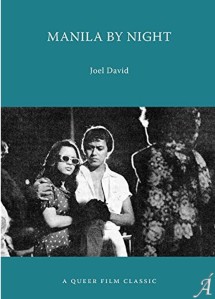
“Film Plastics in Manila by Night.” Kritika Kultura 19 (August 2012): 36-69. DOI:10.13185/1656-152x.1322. Click here to download a PDF transcription.
Abstract: As a sample of Third World cinema, Manila by Night (and by association its director, Ishmael Bernal) endured a reputation for technical inadequacy – an ironic assessment, considering its top-rank status in the Philippine film canon. This paper will attempt to revaluate the movie’s aesthetic stature vis-à-vis movements specific to Third Cinema, focusing on ethnographic filmmaking. First will be an analysis of the film’s visual surface, with a consideration of scene selections/limitations/restrictions, the limiting and liberating aspect of night shooting, and the independent-minded spirit which refused to conform to standards of surface polish in filmmaking, as dictated by critics and practitioners. Second will be a consideration of sound, particularly its director’s successful adaptation of the multi-channel recording system to convey overlapping and even simultaneous lines of dialogue. By this means the paper hopes to argue that, contrary to received impressions, Bernal devoted as much aesthetic deliberation to Manila by Night as he did to its justly celebrated narratological and ideological elements.
Keywords: Philippine cinema; documentary; cinematography; film sound; ethnographic filmmaking; criticism
“Primates in Paradise: Critical Possibilities of the Milieu Movie.” Kritika Kultura 17 (August 2011): 70-104. DOI:10.13185/1656-152x.1253. Click here to download a PDF transcription.
Abstract: The use of multiple lead characters in cinema is a fairly recent development, although the strategy (and its resultant variety of structures) had been present for some time in theater and literature. The typical Classical Hollywood action-driven narrative operated most efficiently through a singular hero, allowing the audience to undergo the film experience via the process of singular identification. With the breakdown in identificatory requisites popularized by various New Wave and Third Cinema movements, and the consequent assimilation of this trend starting with the New American Cinema, mainstream Hollywood was ready to embark upon a series of multi-character movies, with Robert Altman’s Nashville (1975) serving as watershed text. Interestingly, the production of films with multiple lead characters had been a long-standing staple in the national cinema of the Philippines—a country that itself holds multiple distinctions vis-à-vis the US, starting with its historical status as America’s first (and only Asian) colony. This article will be looking at how a mode of practice that recently emerged on the global scene had been functioning in a relatively obscure national cinema, and how the practice ensured for itself a measure of longevity by distinguishing itself as a popular genre.
Keywords: milieu realism; multi-character films; Philippine cinema
PELIKULA: A JOURNAL OF PHILIPPINE CINEMA AND MOVING IMAGE
No ISSN
“A Missing Installation in the Philippine Pantheon: Gregorio ‘Yoyong’ Fernandez (1904–1973).” Pelikula 9 (2024): 24-35. Click here to read only the article without the rest of the issue.
Abstract: Gregorio Fernandez was celebrated for his mid-1950s output, which when regarded by the acclaim bestowed by the Filipino Academy of Movie Arts and Sciences Awards would have indicated a declension: from a sweep of the major categories for Higit sa Lahat (1955), to a best film and technical prize only for Luksang Tagumpay (1956), to nominations for the direction of Hukom Roldan (1957) and Kung Ako’y Mahal Mo (1960), with an “International Prestige Award of Merit” (presumably for foreign film-festival recognition) for Malvarosa. As anyone familiar with award-giving trends might be able to infer by now, these prizes do not track Fernandez’s achievements with satisfactory accuracy. His first incontrovertible world-class masterwork arrived before the FAMAS took notice, in Prinsipe Teñoso (1954), dismissed then presumably for being an overtly commercial adaptation of a literary form, the metrical romance, introduced during the Spanish colonial era and previously filmed in 1942, also for LVN Pictures, by Manuel Conde (who takes story credit in the Fernandez version). From available evidence, Higit sa Lahat would be a gendered twist on the Hollywood melodrama perennial Stella Dallas (silent, dir. Henry King, 1925; B&W/sound, dir. King Vidor, 1937; color/sound version titled Stella, dir. John Erman, 1990), but the succeeding films up to Malvarosa demonstrate even more admirable and often successful risk-taking.
Keywords: Gregorio Fernandez; auteurism; canon; National Artist; Philippine cinema; innovation
PLARIDEL: A PHILIPPINE JOURNAL OF COMMUNICATION, MEDIA, AND SOCIETY
ISSN 1656-2534 [WoS/Sc]
“Alien Abjection amid the Morning Calm: A Singular Reading of Horror Films from beyond Southeast Asia.” Co-written with Ju-Yong Ha. Plaridel 12.2 (August 2015): 201-23. DOI:10.52518/2015.12.2-09hadvd.
Abstract: Although Korean cinema managed to ride the crest of Western appreciation (and appropriation) of Asian horror, Korean horror films had to struggle for recognition within the nation. Horror film production, in fact, was officially downgraded so severely that during certain years, including an extended period starting in the late 1980s, no horror film project was undertaken. This article seeks to look into the causes of the difficulties experienced by horror film production outside Southeast Asia (specifically in Korea), and posits that a hybridic relation with other Asian cinemas – including, as a specialized case, the Philippines’ – has contributed to a stabilization and mainstream acceptance of Korean horror film production since the genre’s revival in the late 1990s. It also attempts an answer to the useful question of the reciprocity of film influences in the larger Asian region: i.e., that as much as East Asian horror has impacted other national film cultures, Southeast Asia, via the Philippines, has also managed to signify as a spectral presence in East Asian cinema.
Keywords: hybridity; Korean horror cinema; folk tales; migrant Filipinos
“Phantom Limbs in the Body Politic: Filipinos in Foreign Cinema.” Plaridel 11.1 (February 2014): 101-26. DOI:10.52518/2014.11.1-06dvd.
Abstract: The Philippines’s experience with its last foreign occupant, the US, resulted in an entire package of fraught “special relations” that, coupled with the country’s problematic responses to the challenges of self-government, ultimately led to a global dispersal of the population, effectively turning the Philippines into the major Asian nation arguably most reliant on its citizens’ overseas remittances. This paper takes the position that diasporic Filipinos, for a variety of reasons starting with the effectiveness of maintaining unintrusive presences in alien cultures (including the acceptance of menial positions), have possibly developed and have enabled others to perceive them as silent and discreet figures once they step into the circuits of globalized labor exchanges. Just as overseas Filipino characters have started being acknowledged in non-Philippine overseas film productions, their presences therein partake of this self-effacing configuration of global citizenship.
Keywords: discourse; OFW films; labor policy
“Thinking Straight: Queer Imaging in Lino Brocka’s Maynila (1975).” Plaridel 9.2 (August 2012): 21-40. DOI:10.52518/2013.9.2-02dvd. For source interview, see “Doy del Mundo on a Controversy over Maynila: Sa mga Kuko ng Liwanag.” A scanned PDF of (and short introduction to) the essay that provoked the controversy can be found here.
Abstract: The separation between so-called public political discourse and private identity issues attained recent cultural cutting-edge status in the articulation of gender issues. In view of the artificiality of disciplinary boundaries, this paper seeks to evaluate the potential of queer politics (focused on gay-male practice) within the exploratory terms provided by a major city film, Lino Brocka’s Maynila: Sa mga Kuko ng Liwanag (1975), produced during martial rule. The area of application of this analysis will be Philippine popular culture, in consideration of the country’s position as a postcolonized territory that had set up a dictatorial regime to facilitate neocolonial control by the US.
Keywords: Philippine cinema; postcoloniality; Marcos era
UNITAS: SEMI-ANNUAL PEER-REVIEWED INTERNATIONAL ONLINE JOURNAL OF ADVANCED RESEARCH IN LITERATURE, CULTURE, AND SOCIETY
ISSN 0041-7149
“This Genre Which Is Not One: The Philippine Multicharacter Film.” UNITAS 95.2 (July 2022): 315-47. DOI:10.31944/2022950211.
Abstract: The use of multiple characters in film may sound like a commonplace occurrence, but by actual standard definitions of characters, most commercial movies have historically only featured primarily heroes, or at most heroes with partners or antagonists. The dismantling of this unarticulated rule, which insisted that the audience be able to identify with the same character throughout a film narrative, began to be explored after the collapse of Classical Hollywood and the influx of European influences in US and global cinema. The Philippines had its own mode of multicharacter presentation, sustained via the launching of multiple stars in distinctively named batches. The persistence of this mode of narrative film practice as a commercially recognized (and profitable) genre preceded the same handling of multicharacter films in the West. It also enabled local viewers and critics to perceive and appreciate formally grounded critiques of Philippine society and culture.
Keywords: smorgasbord movie; milieu realism; Ishmael Bernal; genre progressivity; Marcos dictatorship; Golden Ages
“Auteurs & Amateurs: Toward an Ethics of Film Criticism.” UNITAS 93.1 (May 2020): 17-36.
Abstract: Film criticism in the active film industries of Asia mimics the Western models on which film production is premised as well. The problem of sifting through and determining what constitutes film criticism first encounters the question of motive, admittedly an ethical one: is the critique independent enough to be taken as an evaluation free from the promotional requisite of the film being reviewed? From this distinction between serious commentary and presumably disposable publicity comes a hierarchy of writing on cinema, policed by a growing cadre of commentators on social networks and affirmed by instructors of communication and institutions that seek to bestow recognition for quality achievements. In ascending order, these would be film reporting (including gossip writing), promotions, reviewing, and criticism. I would argue, however, that this ground-level upward-gazing perspective impedes the larger envisioning of the discursive fields of film and culture. Criticism, in the industrially fostered operations of media, also serves its own promotional function, no matter how badly its practitioners claim to disavow the notion. What it promotes are the schools of thought and/or practice that give rise to theories that predetermine writers’ and artists’ orientations. This paper aims to consider the various dominant schools in Asian practice, with focus on the Philippines, and to determine ways in which film theories may be made more responsive to local experience.
Keywords: film theory; industrial practice; film scholarship; spectatorship; film reviewing; new media
“Film Criticism in the Philippines: Introduction to a Symposium.” Co-written with Joyce L. Arriola. UNITAS 93.1 (May 2020): 1-16.
Abstract: The emergence in the Philippines of film commentary as critical practice is fairly recent, if we go by the evidence of book collections. Hence the debates on the theory and application of filmic principles can also be dated to the 1970s, when the first organized organization of film critics began pondering the applicability of principles drawn from earlier art forms such as theater. A measure of the seriousness by which the audience held film as a popular-culture phenomenon is in the fact that, once books on film criticism began appearing, they proliferated to the point of resulting in a glut of virtual volumes during the digital-media era, in the form of film blogs. The paper will look into the motives, causes, and tensions that underlay this condition, and provide speculations on further directions that this trend may take.
Keywords: print publishing; internet blogging; reviews and criticism; Manunuri ng Pelikulang Pilipino; Young Critics Circle; foreign trends
“A Certain Tendency: Europeanization as a Response to Americanization in the Philippines’ ‘Golden-Age’ Studio System.” UNITAS 90.2 (November 2017): 24-53.
Abstract: Malvarosa (Gregorio Fernandez, 1958) possesses a curious reputation in relation to other prestige productions of the so-called first Golden Age of Philippine cinema (roughly the 1950s). Although sharing certain neorealist properties with the other serious outputs of LVN, its production company, it also partakes of the overreliance on coincidence and the mercurial performative style that characterize the then less-reputable undertakings of Philippine cinema. This article attempts a reconsideration of the significance of film texts sourced from Philippine graphic novels (known as komiks) as more properly belonging to the period succeeding the Golden Age, when innovations that would eventually provide the foundation for more accomplished film activity during the martial-law period were first introduced.
Keywords: Malvarosa; neorealism; retablo; Philippine cinema; Philippine architecture; multicharacter narrative
Millennial Traversals: Outliers, Juvenilia, & Quondam Popcult Blabbery (Part II: Expanded Perspectives). Full issue. UNITAS 89.1 (May 2016): 180+xxii.
Millennial Traversals: Outliers, Juvenilia, & Quondam Popcult Blabbery (Part I: Traversals within Cinema). Full issue. UNITAS 88.1 (May 2015): 172+xxiv.











 ORCID ID
 Ámauteurish!